Animals

Since the time Earth developed the quality of sustaining life, life has always gone under the process of evolution. Life started from single celled organisms and developed stage by stage. One organism extinct to develop into its better developed species or even at times it happens that some animals get erased from the surface of the earth due to extreme environmental condition.

EXTINCT ANIMALS: Species of animals which existed in the surface of the earth once upon a time but has no current existence, this may have been a result of extreme environmental condition or some other condition for existence. For example, we have dinosaurs, Dodo.

ENDANGERED ANIMALS: The species of animals which have only a few animals left on the surface of the earth and are in the mouth of being extinct are known as endangered, currently this is a result of poaching i.e., unethical killing of wild animals with purpose or change in the climate due to pollution and other factors. For example, we have the Royal Bengal Tiger.

We cannot do anything for the species which are extinct but we can definitely take steps and save our endangered species. Poaching laws should be made stricter and it should be taken care that people follow them.

Different types of animals :
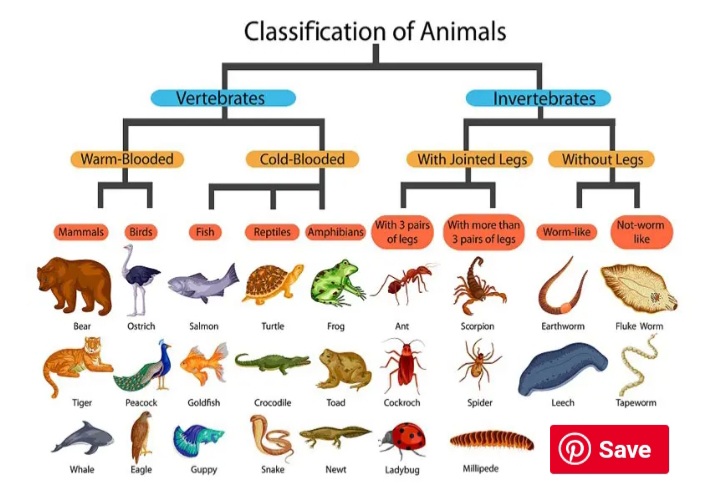
Scientists sort the different types of animals in the world into categories based on certain characteristics. Animals are generally grouped into six types of aninals. The system for animal classifications is called taxonomy.

The Animal Kingdom :

All animals belong to a biological kingdom called kingdom Animalia. This kingdom is then broken down into over 30 groups. About 75% of all species on earth are aninals. Animals are then broken down into two types : vertebrates and invertebrates.
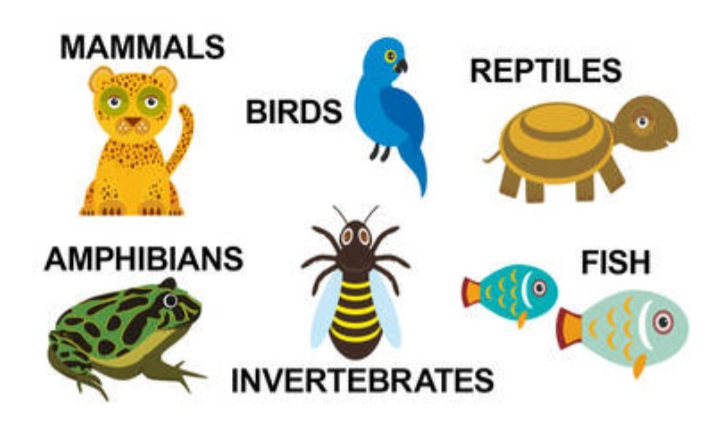
* Animals with a backbone are vertebrates.

* vertebrates belong to the phylum called phylum chordata.

* vertebrates are classified into five classes. They are amphibians, birds, fish,mammals, and reptiles.

* Animals without a backbone are invertebrates.

* Most invertebrates are in the phylum Arthropoda.

1. Amphibians :
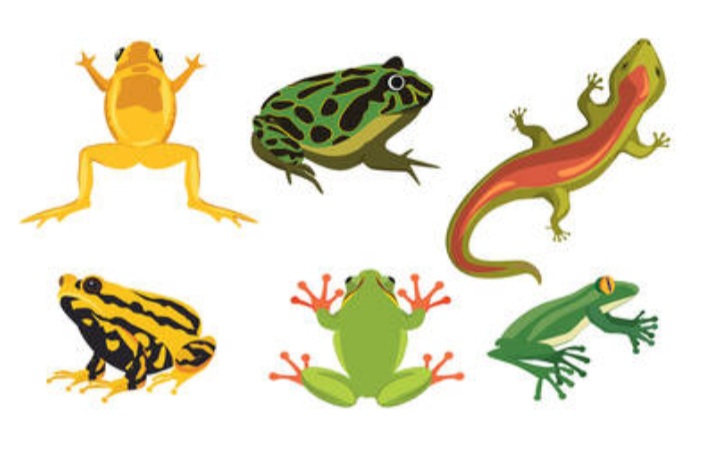
All amphibians are vertebrates, and they need moist environment or water to survive.

* They are cold- blooded.

* They absorb water and breathe through their thin skin

* They have at least one special king gland used for defense.

* Most follow the life cycle of egg-larva- adult.

* examples : frog , newts, salamanders, toads.

2. Birds
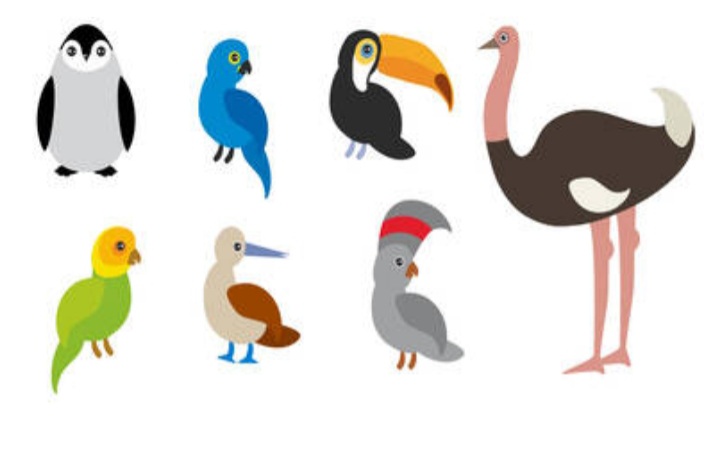
Birds are a type of warm- blooded vertebrate that are adapted to fly.

* Not all birds can fly, but they do all have wings.

* Birds have beaks that help them catch and swallow food.

* The digestive system of a bird allows it to eat whenever it can and digest that food later.

* Birds lay egg to reproduce.

* They are endothermic, mening they maintain their own constant body temperature.

* They are bipedal, which means they have two legs.

* They have hollow bones and their bodies are covered in feathers.

* Birds belong to the class called Aves.

* Examples : albatrosses, chickens, hummin birds, falcons, falmingoes, ostriches, owls, parrot, penguins, pigeons.

3. Fish :
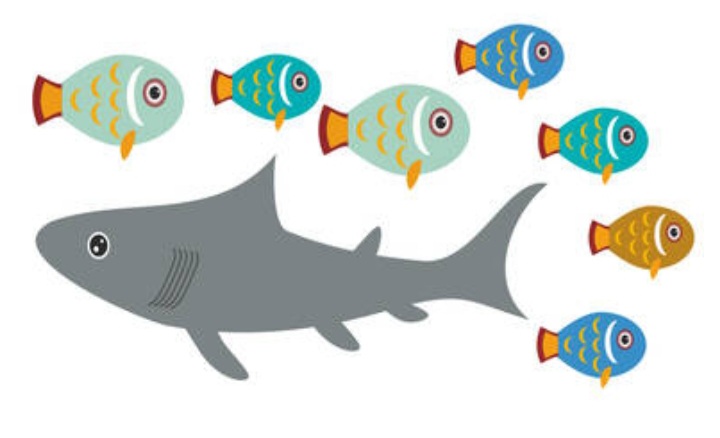
Fish are also vertebrates, and they are considered the oldest-known vertebrates.

* They are ectothermic, or cold- blooded, which means they rely on their surroundings to regulate their body temperature.

* Fish have funs.

* Most, but not all, fish have bodies covered in scales and breathe through gills.

* Fish live under water.

* Examples : eels, hangfish, lampreys, minnows, rays, salmon, seahorses, sharks.

4. Mammals :
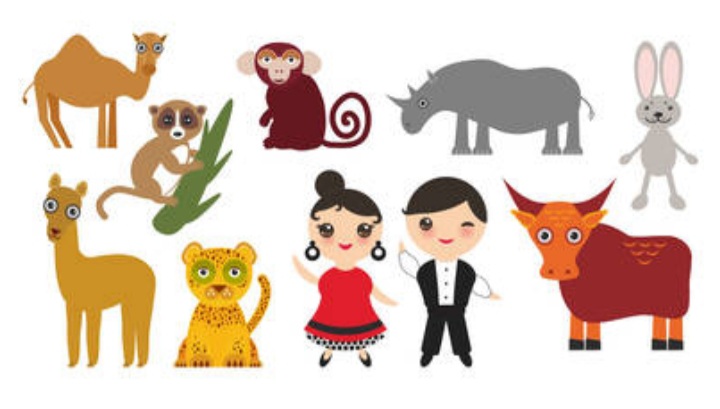
Mammals are another type of vertebrate that belongs to the class Mammalia.

* young mammals get nourishment from milk produced by their mothers.

* Most mammals have hair.

* Their jaw is hinged directly to their skull unlike all other vertebrates.

* Almost aĺl mammals give birth to live bsbies.

* They are endothermic, or warm- blooded.

* Examples : there are over 5500 living species of mammals all over the world. Aardvarks, bats, elephants, hamsters, human, rabbits, rhinoceroses, whales.

5. Reptiles :
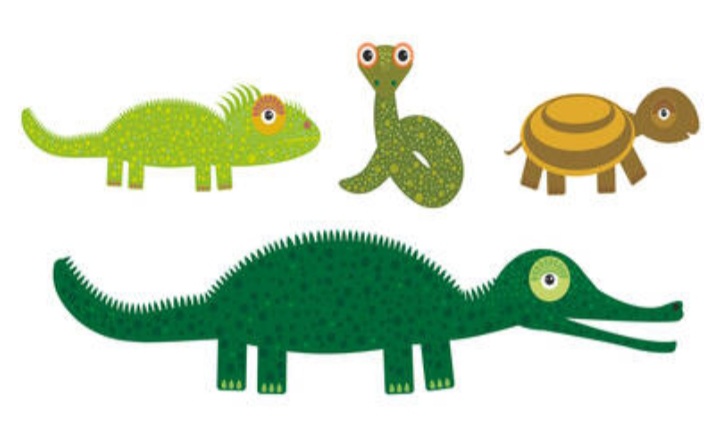
Reptiles are thought to be the first vertebrates to live completely on land. But, not all reptiles live only on land today.

* They are cold- blodded, or ectothermic

* They lay eggs to reproduce.

* They have four legs or descended from animals with four legs.

* They breathe through lungs

* Their bodies are covered in scales or scutes.

* Examples : crocodiles, geckos, lizards, sea turtles, snakes, tortoises.

Invertebrates :
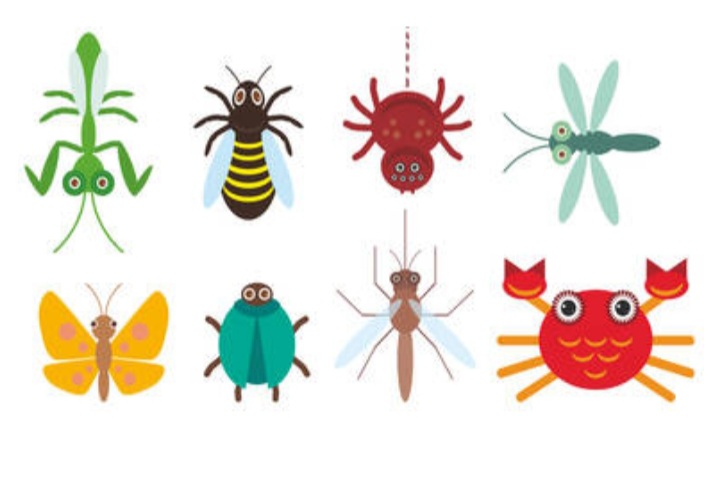
Approximately 95% of all animals are invertebrates. Invertebrates do not have a backbone. There are different types of invertebrates, but they all share a few characteristics.

• They are made up of many cells that work together, or multicellular.

• Most, but not all have tissues, cells that work together in a more complex way.

• Most, but not all, can move.

• There are over 35 phyla of invertebrates.

• They generally have soft babies.

Types of Invertebrates :

There are eight phyla of invertebrayes that are alive today.

* Annelida – have a segmented body and primitive brain

* Arthropoda – have jointed appendages and an exoskeleton.

* Cnidaria – have tissues and an incomplete digestive system

* echinodermata – have some type of spiny structure on their bodies

* Mollusca – generally have sofy bodies and a hard exoskeleton.

* Nematoda – unsegmented with worm- shaped bodies

* platyhelminthes – have soft, ribbon- like worms with no respiratory system.

* porifera – multicellular organisms living in water with no organs or tissues.

Examples : anemone( cnidaria) , clams ( mollusca), coral,
Religion in India

Being a part of a mixed economy , where politics tend to exploit the peace between different religions and so on …….. .

“India was the motherland of our race, and Sanskrit the mother of Europe’s languages: she was the mother of our philosophy; mother, through the Arabs, of much of our mathematics; mother, through the Buddha, of the ideals embodied in Christianity; mother, through the village community, of self-government and democracy. Mother India is in many ways the mother of us all.”

Will Durant, American historian

And now you want to know why I am being so dramatic over such things . Well , if you want to know than start reading the editorial .

Introduction

Indians say it is important to respect all religions, but major religious groups see little in common and want to live separately

More than 70 years after India became free from colonial rule, Indians generally feel their country has lived up to one of its post-independence ideals: a society where followers of many religions can live and practice freely.

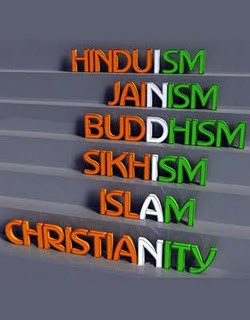
Religion has historically influenced Indian society on a political, cultural and economic level. There is a sense of pride associated with the country’s rich religious history as the traditions of Hinduism, Buddhism, Sikhism and Jainism all emerged out of India. Moreover, while a majority of people in India identify as Hindu (79.8%), the medley of religions that exist within the country continually impact contemporary society.

Census

The 2011 Indian census indicated that 79.8% of Indians identified as Hindu, 14.2% identified as Muslim and 2.3% identified as Christian. A further 1.7% of the population identified as Sikh, 0.7% identified as Buddhist and 0.37% identified as Jain. Due to the massive population size of India, religious minorities still represent a significant number of people. For example, although only 0.37% of India may identify with Jainism, that still equates to over 4 million people. While not all religions in India can be discussed in detail, the following provides an overview of the major religions in the country as well as sizable religions that originated in India.

Social beliefs

“India has two million gods and worships them all. In religion all other countries are paupers; India is the only millionaire.”

Mark Twain

Karma, Acceptance and Personal Choice . Many Indians tend to have a sense of acceptance towards one’s life position or a belief that, due to actions in one’s past life, good or bad personal circumstances are deserved. This attitude partly stems from religious ideas such as ‘karma’ (the idea that one’s actions will affect their current or future life) and ‘samsara’ (the cycle of rebirth).

The interplay of these social, cultural and religious factors allows people to be accepting of life events and trajectories. However, this is not to be interpreted as Indians being unwilling to take responsibility for life circumstances. Many often contemplate how their actions may impact their future and make decisions accordingly. Some of India’s youth are challenging a fatalistic perspective by asserting their free will to choose their vocation, spouse and other life factors. Indeed, as social mobility becomes more common, there is a growing belief that one can change their circumstances.

It’s Role

Religion plays a major role in the Indian way of life. Rituals, worship, and other religious activities are very prominent in an individual’s daily life; it is also a principal organizer of social life. The degree of religiosity varies amongst individuals; in recent decades, religious orthodoxy and observances have become less common in Indian society, particularly amongst young urban-dwellers. As of the politics , they play with religion , people’s belief and with their trust .

Link :

Education in the present

Education is very important in every individual’s life as it is very important for the living. The person who is educated will be well treated by the society and will you have good potential wherever he or she goes. Education as the extra energy to the individual’s life and a moles the individuals character into a good one. It is very important to be educated as the competition in the world is comparatively very high.

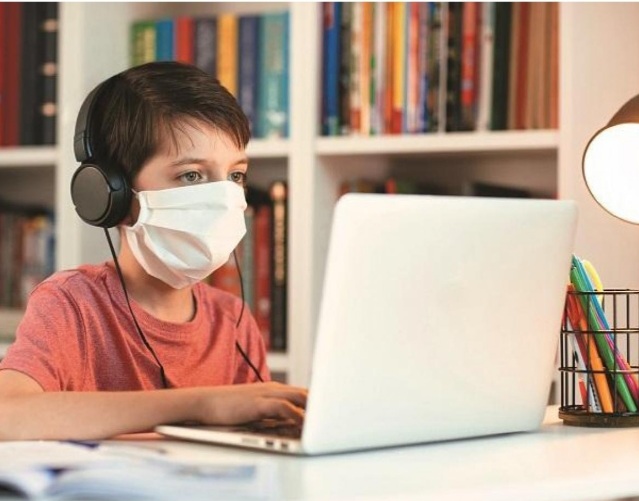
Online classes are the greatest and the biggest task to all the students. It is so difficult for all the students to understand the topics in a detailed manner. Even though the students try their level best to understand the topics during the online class, it is only the 50% of learning but the topics are not understood properly but the students and face lots of difficulties.

It is also equal difficult to conduct exams to all mine because it’s exams are connected through online then there is a chance formal practices. Basically, students commit malpractices during exams in a view to get good marks but not about the knowledge. So,many of the students commit malpractices.

Ways to improve the education system

* skill – based learning :

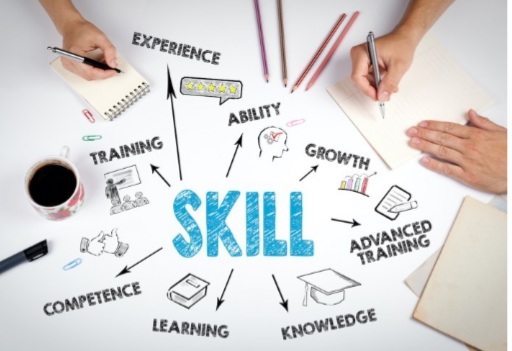
As of now , the education system is such that everyone is forced to study science and math. If this system can be revamped to identify the strengths of a student, then they can be given appropriate training in the chosen field. This will ensure that the child shines in that particular field.

* Rural Education :

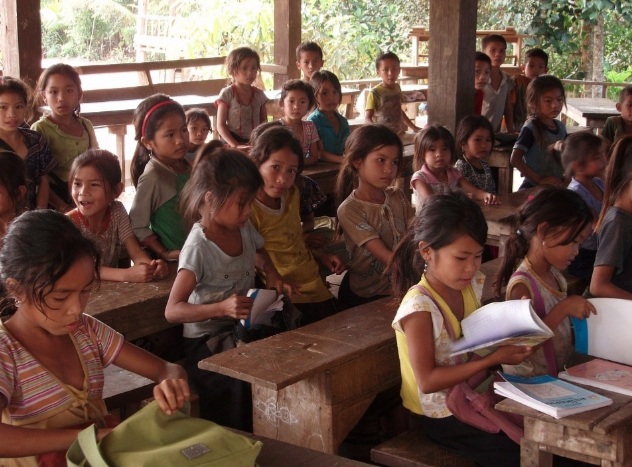
As the sad thing about the Indian education system is the fact that its focus is only on urban clusters. There are hardly any decent centres of learning in the rural areas. This is especially true in terms of higher education. If a country has to actually develop, urban and rural development have to go hand in hand.

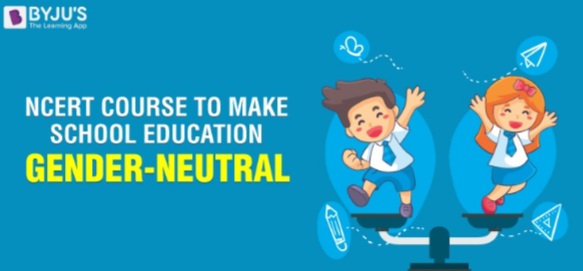
* Gender Neutral Education :

The education system has always favoured men over the fairer sex. The major change that must be brought about is to involve women in the same. Particularly subjects that are now considered to be the strength of men alone ( like carpentry, engineering, etc). Should be made more accessible to women. Pioneer women in these fileds should be given due encouragement and appreciation.

* Teacher Training :

India has a very good quality of dedicated teachers. However, the sad fact here is the fact that after they join this service, they receive little or no training. In such a situation, giving them periodic training will not just ensure that they are updated with the changing times, but will also improve the entire education scene of the country by leaps and bounds.

* Infrastructure :

As in every other sector, the indian education sector is one that suffers from the acute death of infrastructure. Most of the government schools do not even have proper chairs, tables, restrooms, let alone a playground, libraries and laboratories. Thus ,the first step in revamping the education scene in the country should begin with improving the infrastructure so that the students are given an evironment where they can learn to the best of their abilities.

* subsidising professional courses :

It is a sad reality that many meritorious students are not able to afford professional corses because of the sheer expense involved in the same. This is all the way truer in case of students from the general category who do not have access to many scholarships. In such a situation subsidising the cost professional education will ensure that the same is within the reach of deserving students from the lower and lower middle class strata of the Indian society.

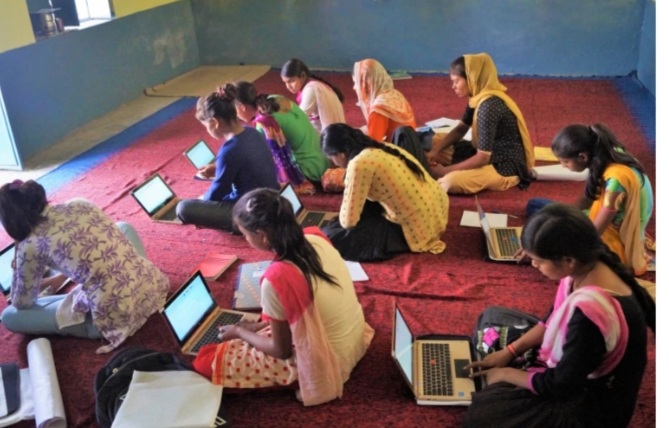
* Basic computing In Rural Areas :

On one hand , India is a land of IT giants; on the other, rural India is completely digitally ill- equipped, in a sitiation like this, the first change that the education system must bring forward is to start free computing classes for skill development in rural areas. Only then will rural Indian move in the same pace as that of the urban Digital India and the country embark on the journey of development.

* Make sports compulsory :

One of the main reasons for the alarming rise in suicide amongst students in the country is the fact that they cannot handle stress. That in turn is because they are subjected to too much mental pressure. By making sports compusory it can be ensured that all the students indulge in some sort of some physical activity. This will lead to their mind performance better and enable them to grasp their theory lessons well.

* Educate parents :

Most of the times it is seen that the children’s woes centre atound that of their parents. In the Indian scenerio, parents are the ones who force their wards into a career they do not like. As a result students do not excel and upon failing to meet their parents expectations, they suffer from a number of mental health issues. To prevent such a thing from happening, the first step that must be taken is to educate the parents about the different carrer options that are available to the students and the possible scope of future in them.

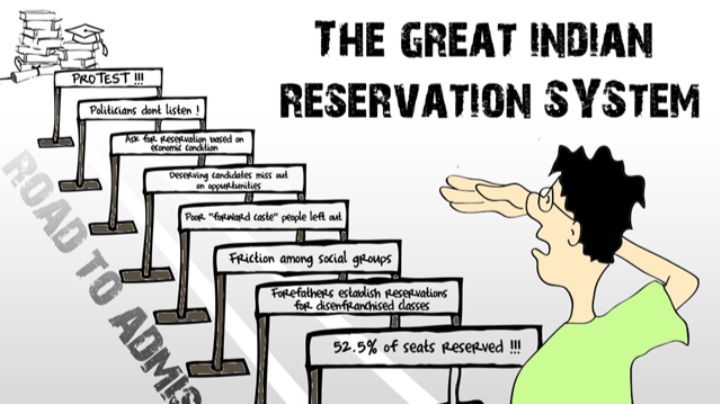
* Remove The Reservation system :

The reservation system in India has been so obsessed with providing the best of opportunities to the reserved that it misses out on many opportunities for the ones who actually deserve the same. This results in not just personal loss for certain people but also brain drain for the entire country and fosters a massive loss to the nation’s economy.

Today’s education system may be good to score marks, but fails to retain the knowledge once students have completed their examinations. This leads to young minds being stifled at an age when they should be asking questions, learning and gaining knowledge, and developing a thirst for more knowledge.

Strengthening from the Grassroots – Ministry of Cooperation

A Ministry of Co-operation has been newly setup by the Central Government realizing the vision of ‘Sahkar se Samriddhi’ (Prosperity through Cooperation) and to give a new push and to strengthen the cooperative movement.

The Government has signaled its deep commitment to community based developmental partnership. It also fulfils the budget announcement made by the Finance Minister in 2021.

Ministry of Co-operation – The right step in the right time!

  • It will provide a separate administrative, legal and policy framework for strengthening the cooperative movement in the country.
  • It will work to streamline processes for ‘Ease of doing business’ for co-operatives and enable development of Multi-State Co-operatives (MSCS).
  • It will help deepen Co-operatives as a true people based movement reaching upto the grassroots.
  • Since the country is going through a deadly second wave of the pandemic, which has led to millions losing their means of food, this initiative comes as the right step to reform the co-operatives and help strengthen it from the grassroots.

What is a co-operative

  • According to the International Labour Organisation (ILO), a cooperative is an autonomous association of persons united voluntarily to meet their common economic, social and cultural needs and aspirations through a jointly owned and democratically controlled enterprise.
  • The cooperative society ensures benefit for its members and serves for the wider interest of the community as well .
  • In India, a Co-operative based economic development model is very relevant where each member works with a spirit of responsibility.
  • India is an agricultural country and laid the foundation of World’s biggest cooperative movement in the world.

Cooperatives and the Indian Constitution

  • The word “cooperatives” was added after “unions and associations” in Article 19(1)(c) under Part III of the Constitution. This enables all the citizens to form cooperatives by giving it the status of fundamental right of citizens.
  • A new Article 43B was added in the Directive Principles of State Policy (Part IV) regarding the “promotion of cooperative societies”.
  • The Constitution (97th Amendment) Act, 2011 added a new Part IXB right after Part IXA (Municipals) regarding the cooperatives working in India.

Cooperatives in India

Some examples of successful cooperatives in India

  • AMUL
  • Indian Coffee House
  • Indian Farmers Fertilizer Cooperative Limited (IFFCO)
  • Karnataka Milk Federation(KMF)
  • Kerala Co-operative Milk Marketing Federation (KCMMF)
  • Pratibha Mahila Sahakari Bank
  • Orissa State Cooperative Milk Producers’ Federation
  • Anyonya Co-operative Bank Limited

Significance of Cooperatives

  • Cooperatives provides credits and funds to its members and is also able to collect investment through voluntary contribution for the development of its members and the cooperative society.
  • Cooperatives creates a conducive environment for small and cottage industries.
  • Cooperatives provides strategic inputs for the cooperative societies.
  • Cooperatives may serve as an organisation for the poor who wish to solve their problems collectively.
  • Such an organisation softens the class conflicts and reduces the social cleavages.
  • Consumer cooperatives societies meet their consumption requirements at concessional rates.

Roadblocks in the path to Cooperatives

  • Lack of Awareness – The people are not aware about the cooperative societies.
  • Management issues – Since it does not have a trained personnel it may face management issues. Also A cooperative with a large membership turns out to be mismanaged unless some secure methods are employed to manage such co-operatives.
  • Manipulation – In the elections to the governing bodies, money became such a powerful tool that the top posts of chairman and vice-chairman usually went to the richest farmers who manipulated the organisation for their benefits

Way Forward

The pandemic has caused large scale disruptions in the economy, hence the network of cooperatives developed to help revive the economy.

The cooperatives have the ability to bring people with knowledge on the same line, together to make a stronger block and its potential can be used to develop our society. The cooperative society has the power to bring the people together and solving the problems as a community. Such stable and powerful blocks can be a powerful tool to achieve great heights.

Public administration and development related

INTRODUCTION:-

public administration at the local, regional, national and international levels where it is directed to managing development processes in low and medium income countries. It gives special attention to investigations of the management of all phases of public policy formulation and implementation which have an interest and importance beyond a particular government and state. PAD has a particular interest in the link between public administration practice and management research and provides a professional and academic forum for reporting on new experiences and experiments. PAD also publishes
articles on development management research in the NGO sector. It is widely read by academics and practitioners alike, including consultants, donors and policy advisers. With its case study approach, it is also frequently used for teaching and training purposes.

Public Administration and Development

Information for Subscribers

Public Administration and Development (Print ISSN 0271‐2075; Online ISSN 1099‐162X at Wiley Online Library, wileyonlinelibrary.com) is published in 5 issues per year. Institutional subscription prices for 2020 are: Print & Online: US$2987 (US and Rest of World), €1929 (Europe), £1528 (UK). Prices are exclusive of tax. Asia‐Pacific GST, Canadian GST/HST and European VAT will be applied at the appropriate rates. For more information on current tax rates, please go to http://www.wileyonlinelibrary.com.tax‐vat. The price includes online access to the current and all online back files to January 1st 2017, where available. For other pricing options, including access information and terms and conditions, please visit wileyonlinelibrary.com/access.

Delivery Terms and Legal Title

Where the subscription price includes print issues and delivery is to the recipient’s address, delivery terms are Delivered Duty Unpaid (DDU); the recipient is responsible for paying any import duty or taxes. Title to all issues transfers FOB our shipping point, freight prepaid. We will endeavour to fulfil claims for missing or damaged copies within six months of publication, within our reasonable discretion and subject to availability.

Services

Adver tisements

Advertisement Sales Department, John Wiley & Sons, Ltd.,

The Atrium, Southern Gate, Chichester, West Sussex

PO19 8SQ, UK.

Tel: +44 (0)1243 770254

Fax: +44 (0)1243 770432

e‐mail: adsales@wiley.co.uk

Commercial Reprints:

E‐mail: corporatesaleseurope@wiley.com;

corporatesalesusa@wiley.com; or

corporatesalesaustralia@wiley.com

Author Reprints (50–300 Copies):

Order online: http://www.sheridan.com/wiley/eoc

Backstock Agent

PSC

Back issues: Single issues from current and recent volumes are

available at the current single issue price from cs‐journals@wiley.com.

Earlier issues may be obtained from Periodicals Service Company,

351 Fairview Avenue ‐ Ste 300, Hudson, NY 12534, USA.

Tel: +1 518 822‐9300

Fax: +1 518 822‐9305,

Email: psc@periodicals.com

General Enquiries

Tel: +44 (0) 1243 779777,

Fax: +44 (0) 1243 775878.

Contact Details within John Wiley & Sons

Journal Customer Services: For ordering information, claims

and any enquiry concerning your journal subscription please go to

http://www.wileycustomerhelp.com/ask or contact your nearest office:

Americas: Email: cs‐journals@wiley.com; Tel: +1 781 388 8598 or

1 800 835 6770 (Toll free in the USA & Canada).

Europe, Middle East and Africa: Email: cs‐journals@wiley.com;

Tel: +44 (0) 1865 778315

Asia Pacific: Email: cs‐journals@wiley.com; Tel: +65 6511 8000

Japan: For Japanese speaking support, Email: cs‐japan@wiley.com;

Visit our Online Customer Help available in 7 languages at

http://www.wileycustomerhelp.com/ask

Copyright and Copying (in any format)

Copyright© 2021 John Wiley & Sons, Ltd. All rights reserved

No part of this publication may be reproduced, stored or trans

mitted in any form or by any means without the prior permission

in writing from the copyright holder. Authorization to copy items

for internal and personal use is granted by the copyright holder

for libraries and other users registered with their local Reproduction

Rights Organisation (RRO), e.g. Copyright Clearance Center

(CCC), 222 Rosewood Drive, Danvers, MA 01923, USA (www

copyright.com), provided the appropriate fee is paid directly to the

RRO. This consent does not extend to other kinds of copying such

as copying for general distribution, for advertising or promotional

purposes, for republication, for creating new collective works or

for resale. Permissions for such reuse can be obtained using the

RightsLink “Request Permissions” link on Wiley Online Library.

Special requests should be addressed to: permissions@wiley.com

Disclaimer

The Publisher and Editors cannot be held responsible for errors

or any consequences arising from the use of information

contained in this journal; the views and opinions expressed do

not necessarily reflect those of the Publisher and Editors, neither

does the publication of advertisements constitute any endorsement

by the Publisher and Editors of the products advertised.

Abstracting and Indexing

Public Administration and Development is covered by the following

abstracting and indexing services: Abstracts on Hygiene &

Communicable Diseases (CABI), ASSIA: Applied Social Sciences

Index & Abstracts (ProQuest), CAB Abstracts® (CABI), CAB

HEALTH (CABI), CABDirect (CABI). Current Contents: Social &

Behavioral Sciences (Thomson Reuters), Emerald Management

Reviews (Emerald), ERA: Educational Research Abstracts Online

(T&F), Forestry Abstracts (CABI), GEOBASE (Elsevier), Global

Health (CABI), Grasslands & Forage Abstracts (CABI), IBSS:

International Bibliography of the Social Sciences (ProQuest),

Journal Citation Reports/Social Science Edition (Thomson Reuters),

PAIS: Public Affairs Information Service (ProQuest), Plant Genetic

Resources Abstracts (CABI), ProQuest Central (ProQuest), Rural

Development Abstracts (CABI), SCOPUS (Elsevier), Social Sciences

Citation Index (Thomson Reuters), Social Services Abstracts

(ProQuest), Sociological Abstracts (ProQuest), Soils & Fertilizer

Abstracts (CABI), Studies on Women & Gender Abstracts (T&F),

Tropical Diseases Bulletin (CABI), Web of Science (Thomson Reuters),

World Agricultural Economics & Rural Sociology Abstracts (CABI),

Worldwide Political Sciences Abstracts (ProQuest).

Online open

Public Administration and Development accepts articles for Open

Access publication. Please visit http://olabout.wiley.com/

WileyCDA/Section/id‐406241.html for further information

about OnlineOpen.

Production Information

For manuscripts that have been accepted for publication,

please contact:

Podhumai Anban

e‐mail: padproofs@wiley.com

Production Details

Printed in Singapore by C.O.S. Printers Pte Ltd.

Identification Statement

PUBLIC ADMINISTRATION AND DEVELOPMENT (Print ISSN

0271‐2075; Online ISSN 1099‐162X) is published in February, May,

August, October and December. US mailing agent: Mercury Media

Processing, LLC 1850 Elizabeth Avenue, Suite , Rahway

NJ 07065 USA. Periodical postage paid at Rahway, NJ.

Postmaster: Send all address changes to PUBLIC ADMINISTRATION

AND DEVELOPMENT, Wiley Periodicals LLC, C/O The Sheridan

Press, PO Box 465, Hanover, PA 17331.

For submission instructions, subscription and all other information

visit: wileyonlinelibrary.com/journal/pad

Wiley’s Corporate Citizenship Initiative Statement

Wiley’s Corporate Citizenship initiative seeks to address the

environmental, social, economic, and ethical challenges faced in

our business and which are important to our diverse stakeholder

groups. Since launching the initiative, we have focused on sharing

our content with those in need, enhancing community philan

thropy, reducing our carbon impact, creating global guidelines

and best practices for paper use, establishing a vendor code of

ethics, and engaging our colleagues and other stakeholders in our

efforts. Follow our progress at http://www.wiley.com/go/citizenship

Statement on Research4Life

Wiley is a founding member of the UN‐backed HINARI, AGORA,

and OARE initiatives. They are now collectively known as

Research4Life, making online scientific content available free or

at nominal cost to researchers in developing countries. Please

visit Wiley’s Content Access – Corporate Citizenship site:

http://www.wiley.com/ WileyCDA/Section/id‐390082.html

Reference Link:-

https://onlinelibrary.wiley.com/journal/1099162x

https://onlinelibrary.wiley.com/loi/1099162x