Assassination Of Former Prime Minister Rajiv Gandhi .

The assassination of former Prime Minister of India Rajiv Gandhi, , occurred on 21 May 1991 as a result of a suicide bombing in Sriperumbudur in Tamil Nadu, India . At least 14 others,we’re killed alongside Rajiv Gandhi in the suicide bombing.

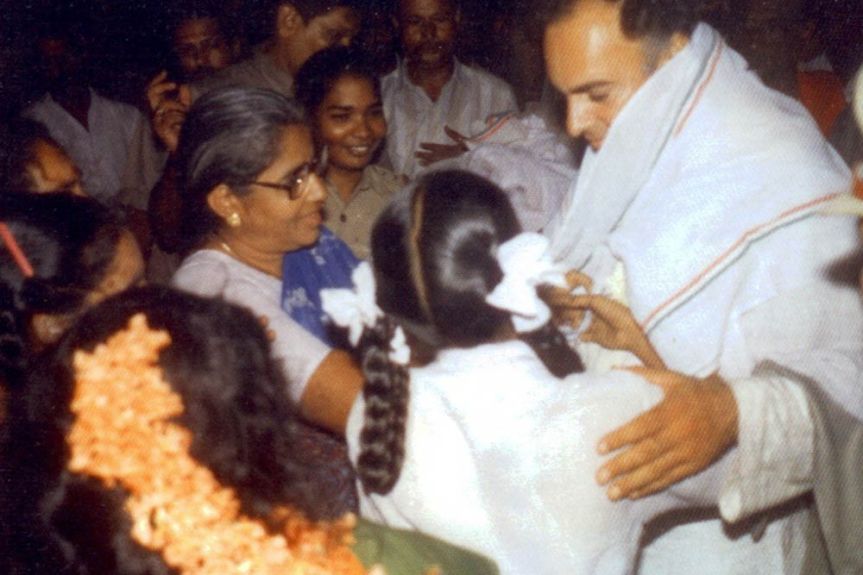
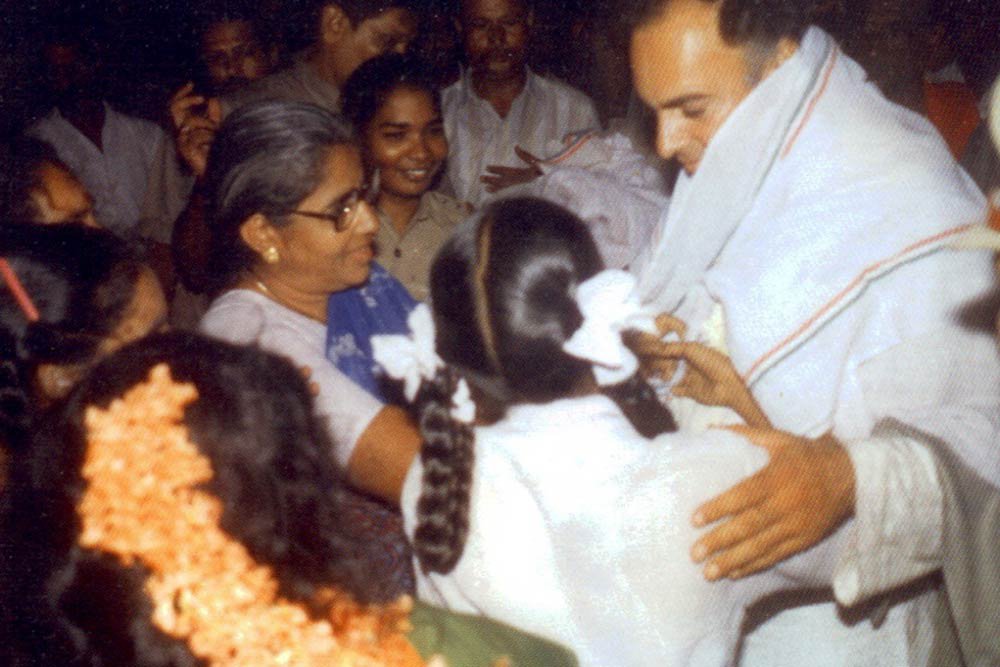
The assassination was carried out by Thenmozhi Rajaratnam, a member of the Tamil Liberation Tigers (LTTE), a Tamil separatist organization in Sri Lanka, and Dr. Jagjit Singh Chohan of the National Council of Khalistan (NCK) and Gurjant Singh Budhsinghwala of the Khalistan Liberation Force. At that time, India had just finished its involvement in the civil war in Sri Lanka through the Indian Peace Keeping Force. Rajiv Gandhi along with G.K. Moupanal started election campaign in southern state of India. After campaigning in Visakhapatnam, Andhra Pradesh on May 21, his next destination was Sriperumbudur, Tamil Nadu. Approximately two hours after arriving in Madras ,Rajiv Gandhi rode a white ambassador car to Slipelumbudur in a convoy, stopping at several other campaign sites along the way. Arriving at the campaign rally at Sriperumbudur, Rajiv left the car and went up to the podium, where he gave a speech. After the soeech the assassin Danu (Thenmozhi Rajaratnam) approached and greeted him. Then she bent over and touched his leg, and at 10:10 pm, detonated a belt loaded with RDX explosives place under her dress. Gandhi, his assassin and 14 others were killed in a subsequent explosion, and 43 were seriously injured. The assassination was filmed by local photographer Haribab. Haribab’s camera and film were found intact on the scene, but he also died in the blast.

Apart from Rajiv Gandhi, former Prime Minister of India and the suicide bomber Thenmozhi Rajaratnam , several people were killed in the blast on 21 May 1991:
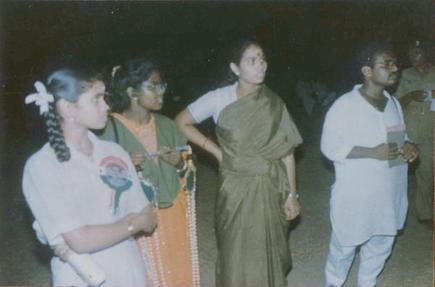
Including Pradeep K Gupta (personal security officer of Rajiv Gandhi ), K.S Mohammed Iqbal (police superintendent), Edward Joseph ( police inspector) ,Dharman,Chandra, Ethiraju Muruganand and Rajguru (police constables), Santhani Begum (Mahila Congressn Leader) ,Latha Kannan ( Mahila Congress worker,who was with her daughter Kokilavani ),Kokilavani (ten-year-old daughter of Latha Kannan, who sang a poem to Gandhi immediately before the blast), Munuswamy (former member of the Tamil Nadu Legislative Council) ,Saroja Devi (seventeen-year-old college student), Ravichandran (Black Cat commando).
Around forty-three spectator present in the campaign including police sub-inspector Anushiya Daisy were also injured in the explosion.

Immediately after the assassination, the Chandrasekhar government handed over the investigation to the CBI on May 22, 1991. Authorities, formed a special research team led by Karthikeyan to determine who is responsible for the assassination. A SIT investigation confirmed the role of the LTTE in assassination and was endorsed by the Supreme Court of India. Judge Millap Chand Jain’s interim report investigated the secret aspects of the assassination and accused DMK of working with the LTTE. The report concluded that the DMK provided the LTTE with shelter and made it easier for rebels to assassinate Rajiv Gandhi. The report also claimed that Jaffna’s LTTE leaders possessed confidential, encrypted messages exchanged between the federal and DMK state governments.Authorities also stated in reports “There is evidence that during this period some of the most important radio messages were exchanged between the LTTE agents stationed in Tamil Nadu and Jaffna. These later deciphered messages are directly related to the assassination of Rajiv Gandhi “. The Congress demanded withdrawal of DMK from the Union Front government, after claiming to have played an important role in Rajiv Gandhi’s death. According to reports Dr. Jagjit Singh Chohan supported the LITTE with logistic and tactical support. His involvement was first revealed in 2016, about 10 years later. Speculation. This was evidence of the Jain Commission’s report and was suspected that the LTTE had contacted Gurjant Singh Budhsinghwala with Jagjit Singh Chohan to plan the plot.

After the investigation on the assassination of former prime minister Rajiv Gandhi ,the court convicted and sentenced the seven persons who were involved in the assassination to life imprisonment. They are currently undergoing life imprisonment in prisons in India.
They are:
Murugan – A LTTE operative from Sri Lanka, Nalini – Wife of Murugan. Nalini is a citizen of India ,Jayakumar – The brother in law of Robert Pious ,Ravichandran – A Sri Lankan national ,T. Suthenthiraraja – A Sri Lankan national ,Robert Pious – A Sri Lankan national and A. G. Perarivalan – An Indian citizen who was arrested for supplying a 9-volt battery for the explosive device.

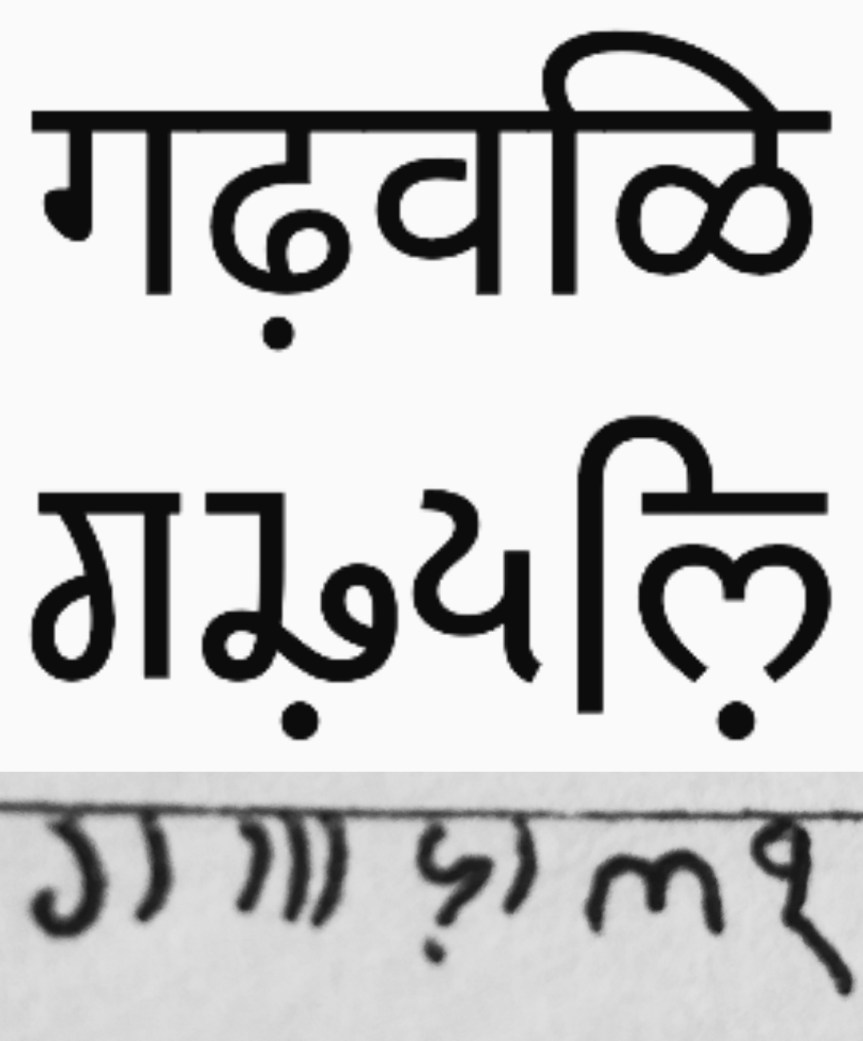
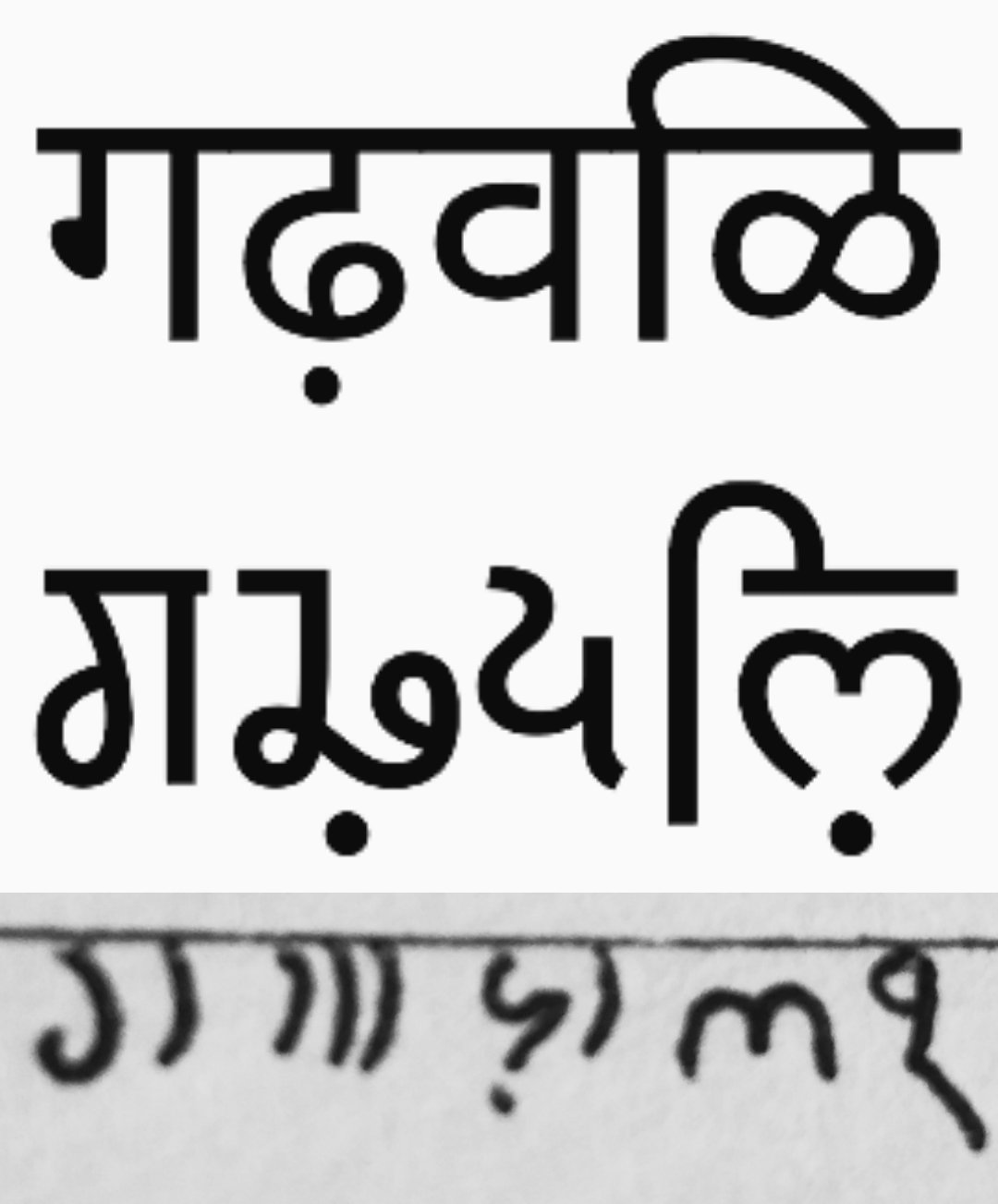
Garhwali Language it’s time to save it from getting fade.

Garhwali is the Indo-Aryan language of the Central Pahari Region which is mainly spoken by more than 2.5 million people in the Garhwal region of Uttarakhand, northern India, in the Himalayas of India, Uttarakhand. Garhwali is also spoken by Garhwali people living in other parts of India, such as Himachal Pradesh, Delhi, Hariyana, Punjab and Uttar Pradesh. According to various estimates, at least 3.5 million Garhwali migrants live in Delhi and other cities.


HISTORY
During the Middle Indo-Aryan era, there were various languages called Prakrit. Of which, Khas Prakrit language is believed to be the source of Garhwali language.The earliest forms of Garhwali can be traced back to the 10th century and can be found in temple stones, including numismatics, royal seals, copper plate inscriptions, royal orders and grants. An example is the inscription of King Jagatpal’s Temple Grant in Dev Prayag in 1335 AD. Most Garhwali literature survives in vernacular form and is transmitted verbally. But since the 18th century, Garhwali has developed a literary tradition.


LITERETURE & WRITERS
Among the famous Garhwali writers in hiastory of literature are Sudarsan Shah, Kumdanand Bahguna, Hari Dutt Sharma (Nautiyal), Hari Krishna Daurga Dutti Rudra, Urvi Dutt Shastri ,Mahidhar Dangwal, etc. , Satyasaran Raturi, Atma Ram Gairola, Devendra Dutt Raturi, Suradutt Saklani and more. Among historians are Mola Ram, Miya Prem Singh, Hari Dutt Shastri, Hari Krishna Raturi and Vijaya Ram Raturi.
Garhwali literature is thriving despite the ignorance of the government. Today, newspapers like Uttarakhand Khabarsar and Rant Raibaar are published entirely in Garhwali. Magazines such as Baduli, Hilaans, Chitti-patri and Dhaad have contributed to the development of GarhwaliGarhwali language.

Some Notable works of Gharwali writers:
•)Abodh Bandhu Bahuguna – (1927–2004) Garhwali writer. Some nitable writings include Gaad, Myateki Ganga, and Bhumyal.
•)Bachan Singh Negi – “Garhwali translation of Mahabharata and Ramayana”.
•)Lalit Mohan Thapalyal – “Achhryun ku taal”
•)Leeladhar Jagudi – (1944) Writer and novelist. PadmaShri
•)Lokesh Nawani – “Phanchi”
•)Madan Mohan Duklaan – “Aandi-jaandi saans”
•)Chandramohan Raturi – “Phyunli”
•)Chinmay Sayar – “Aunar”
•)Dr. Narendra Gauniyal – “Dheet”
•)Durga Prasad Ghildiyal – “Bwari”, “Mwari” and “Gaari”
•)Gireesh Juyal ‘Kutaj’ – “Khigtaat”.

Struggle of Official RecogItion:
Since the establishment of Uttarakhand in 2000, the state governments have made slow progress in promoting and developing the regional language of Uttarakhand. Like other languages in Uttarakhand, Garhwali, the most widely spoken language, is not officially recognized. In 2010, Hindi became the official language and Sanskrit became the second official language of Uttarakhand. In 2014, after making Garhwali the official language of Uttarakhand and demanding that it be taught at schools and universities for many years, the Uttarakhand State Government established Kumaoni and Garhwali departments at Kumaoni and Garhwali universities, respectively, to study the regional languages. At the national level, Garhwali is always required to be included in the 8th schedule of the Indian Constitution in order to be one of India’s schedule languages. In July 2010, Parliamentary member Satpal Maharaj of Pauli Garhwal submitted a legislative bill to Lok Sabha to include the languages of Garhwali and Kumaoni in the eighth schedule of the Constitution. Like most private citizen bills, the bill has not been discussed in Parliament and has since expired.

Anger management

Getting angry on someone is the most easiest thing because it almost happens all the time. Can we control anger? Can we stop before we get it? Anger is a sudden reaction of the pressure inside that occurred due to disagreement of your opinion. Anger has a great impact because we speak without control. Words that come out of our mouth were actually came from our heart. Usually people hide the true opinions and try to fake friendships. But due to this sudden process the opinion of us over others comes out in a sudden manner.

Things done can never be undone so think before you do. Thinking about done doesn’t erase done. Neither can we change the past not set the future. So think about present because it’s the only thing that’s in our control. May be I can modify the sentence as present is also not in our hands atleast we have a feel that it’s in our control. The feel of real is not real but we are atmost in real. It gives us confidence and hope of our chances to change our present. Going with the flow is a old phrase which makes our lives flow like a wave in a sea. Have focus because its something that stops us from making something. Our conscience reacts only when it’s emergency, so depending on it is not trustworthy.

Have a clarity over your doing. Anger can’t be stopped from getting started. But we can decrease the intensity. We don’t know the initial point of the anger when it’s about to start. But we can remember it only after the incident. So try to stop the origin isn’t in our hands because it happens all of sudden and we don’t have control over it. So try to save ourselves from becoming worse is the only option left with us. We get to know about ourself at the time of anger. We need to control ourselves by shifting our thought to some other thoughts.

Manage your anger by thinking of something else and let your brian think in different direction. Have a shift over your thoughts and manage your anger. Don’t try to stop anger because you can’t stop it. Try to control the intense when you have conscience over your doing. It decreases the intense of your anger and thereby letting you mange your anger.

Beyond the legal counsel predicament’s

The ‘vulture’ comment is just a refining of developed anxiety with structures of responsibility.

Or maybe unreasonably, Solicitor-General of India Tushar Mehta has been pulled over the coals for his ongoing exhibition — or, ‘upheaval’ as lawful journalists decided to call it — when the Supreme Court had, on May 26, chose to take suo motu note of the transients’ pitiable predicament in the wake of the across the country lockdown. Tushar Mehta is a contentious legal counselor; he isn’t a law specialist who needs to bring gravitas or grant; he isn’t a Fali Nariman nor is he a Soli Sorabjee. In any case, he has earned the notoriety of a skilful foe who doesn’t recoil over from a piece in the court. He does his expert best for his customer.

A political deputy

What’s more, his customer is as a matter of fact the Modi system. It is important to advise ourselves that a Solicitor-General is a political nominee; which implies that while Article 76 of the Constitution of India puts the Attorney-General for India positively on a raised roost , the Solicitor-General gets the opportunity to play a piecemeal job. He turns out to be a lot of a piece of the decision foundation’s inward coterie, and can’t avoid being sucked into the system’s day by day battles and likes. He can’t have a job or character outside the inclinations and inclinations of the administration of the day. Specialist General Mehta’s faultfinders are maybe not being reasonable for him when they blame him for being unpalatably forceful or unnecessarily presumptuous; all things considered, he is just mirroring his customer’s demeanor, his motivations and tendencies as well as could be expected. He is basically an instrument, a sharp and once in a while heavy-handed contrivance.

Many have resentfully discovered Mr. Mehta’s summon of ‘vulture’ illustration as especially unsuitable and hostile slur on the whole editorial clique. It did maybe verge on impiety since it was expressed in the country’s most elevated legal discussion. Mr. Mehta has accordingly attempted to explain [in a meeting with The Times of India of June 1, 2020] that his ‘vulture’ curse was not aimed at writers; he is qualified for an opportunity to be vindicated. What’s more, however it very well may be no comfort, it is calming to review that similarly harmful put-down and innuendoes have been heaved at the media by the decision foundation. Mr. Mehta’s maligning fails to measure up to Gen. (retd) V. K. Singh’s ‘presstitute’ slander. However, once more, it isn’t the individual tendency of a law official or a bureau serve that ought to keep us for a really long time; rather, it is the aggregate feeling of the system he speaks to that should be investigated by each just soul.

May there be no mix-up. A developed attitude is grinding away. It looks for authenticity for itself from the stuff of an elective majority rule government however utilizes the law based command to etch away at the center of vote based game plan. It is just hesitant to offer responses or clarifications of any sort to anybody.

Blunted establishments

It is not really a mystery that these most recent six years, the Modi system has unobtrusively however steadily and deliberately made broken — without disassembling — all the set up foundations intended to forestall maltreatment of power. Workplaces, for example, the Central Vigilance Commission, the Lokpal, the Central Information Commission, the National Human Rights Commission, India, the Election Commission of India, and so on have been rendered not as much as paper tigers. With extensive artfulness and with commendable road intelligence, the system has made sure that no Vinod Rai would be permitted to strike out on his/her own.

The Modi swarm accepts, earnestly and honestly, in the accuracy of its picked way; it hypnotizes itself with the ideas of respectability and responsibility of its faculty and pioneers and their vast insight. It dislikes just resistance. Of course, such a system sees no compelling reason to listen attentively to the ‘vultures’ in the media or the non-legislative associations.

The vagrant issue

In its decided inclination to pause dramatically of definitiveness and striking initiative, the officeholder system not just neglected to envision the outcomes of its unexpected, sudden and panicky lockdown choice; it additionally would not see the a huge number of half-starved residents trekking back to the wellbeing and security of their towns. It was maybe with a reasonable still, small voice that the Solicitor General could tell the top court that the legislature had the transient issue well under its capable hands.

Here is a law official who had made sure about from the pinnacle court a sort of unlimited authority for his customer to continue with its befuddled remedies . Maybe the Court had felt that given the tremendousness of the COVID-19 test, the administration was qualified for commit its errors and botches as likewise to its obtuseness and skepticism. Because of enticing contentions from the Solicitor-General, the Hon’ble makes a decision about most likely felt that it was not their business to observe huge difficulty incurred on our very own huge number residents. Mr. Mehta had made sure about for his customer a free hand to continue with its hit and preliminary experimentations.

A disaster could without much of a stretch be predicted. A system which has decided to deny itself of real wellsprings of data ends up left helpless when human wretchedness on a phenomenal scale grasps huge wraps of our residents. Since the system has built up a thought about scorn for the free and autonomous media, it just wouldn’t see the pictures of a huge number of hapless residents moving back to their towns. Faced with a surprising emergency of obscure measurements, the system equitably disliked any individual who called attention to the furthest reaches of its sloganised way to deal with administration.

At the point when the Court acted

At that point, a lot to the system’s dismay , unexpectedly the Supreme Court had permitted itself to be prodded to look for answers from the legislature for its bureaucratic lack of care, for its political haughtiness, for its strategy disarray and its managerial awkwardness. It was this volte-face that likely delivered the Solicitor General’s celebrated upheaval. It is conceivable to propose that Mr. Mehta’s resentment was coordinated less against the vultures among the columnists as it was a statement of restlessness with the most noteworthy court.

Implicit hatred was that the Supreme Court was looking for a clarification from the legislature in the wake of listening attentively to the individuals who have no information on the ‘ground circumstance’. In any case, the administration would not share data about the ‘ground’ with anybody. A day or two ago, three expert relationship of disease transmission specialists, general wellbeing professionals and social medication specialists have gotten out the ungainly and confounded dynamic rehearsed by the Leader-driven force structure. Millions have followed through on an overwhelming cost for the system’s haughtiness and ineptitude.

However, the legislature would not face any conversation of its errors and stumbles. Throughout the years the system has utilized a blundering way to deal with set its faultfinders in their proper place. It has brought to hold up under overpowering assets, force, esteem and abilities to fix its faultfinders, anyway little or dissipated. Neither a Sudha Bhardwaj nor a Gautam Navlakha nor the Pinjra Tod activists in upper east Delhi will be permitted to assemble dispute and difference against the system.

It is this oblivious conformity of prejudice and eagerness that was in plain view in the Supreme Court on May 26. Dissimilar to in the tremendously famous Hindi TV-sequential, Taarak Mehta Ka Ooltah Chashmah, Solicitor-General Mehta can be especially supposed to utilize a specially crafted pair of displays, endorsed by the system’s in-house optometrists.

Let’s Give GST council the institutional strength!

Three years after the change to the merchandise and enterprises charge (GST), there is a solid case to reinforce the GST Council for the established body to take educated choices to change the assessment structure, rates and expand the expense base. A strategy paper by the Pune International Center, The GST Compensation Cess: Problems and Solution, by V Bhaskar and Vijay Kelkar suggests the making of a free GST Council Secretariat to offer proficient counsel on charge matters. It likewise basically calls upon the Center to get more to convey on its guarantee to remunerate the states for a long time from 2017-18 for any deficiency in GST assortments according to the past pattern, despite the financial weights looked by it because of the crown pandemic. The two recommendations bode well.

The committee needs nonpartisan, fair-minded exhortation from first class experts in the field. The fund service’s spending plan making wing on aberrant assessments, called the Tax Research Unit, ought to be brought under the GST Council. Appropriately, roping in equipped expense research officials from states, and having a tax collection master of national height as the Secretary General (right now guided by the Revenue Secretary) will help fortify the chamber’s secretariat. GST subsumed 17 focal and state expenses and 23 cesses. It makes different review trails on the pay and creation tie — hurling voluminous information. Huge information examination must be conveyed to follow these path to burden potential. The exchange chain of key crude materials, for example, metals and petrochemicals must be followed up to uncover the worth included getting away from charge right now.

The committee should move towards the general course to lower and join rates and prune exclusions that break the GST chain and mess the expense framework. This will limit arrangement debates and make consistence simple. Rate changes ought to be founded on thorough information examination. The board must not postpone the consideration of oil based goods, land and power obligation in the GST structure, to broaden the assessment base, and likely twofold its present size.

India should not anchor in ‘Erica Lexie !

As a decent global resident, the nation has acknowledged the council’s honor; it must guarantee that Italy completely respects it.

Italy has accomplished its fundamental target in the Enrica Lexie-St. Antony matter. All through this sorry adventure, it needed its two marines, Massimiliano Latorre and Salvatore Girone, to stand preliminary for murdering two Indian anglers, Ajeesh Pink and Valentine Jelastine, not in India however in Italy. The marines were a piece of a security dependent upon the Enrica Lexie, an Italian business oil big hauler while Pink and Valentine were on the Indian fishing vessel, St. Antony. The occurrence occurred on February 15, 2012, in India’s Contiguous Zone, 20. 5 nautical miles off the Kerala coast.

Present and past

The usable piece of the Annex VII arbitral council’s choice, made open a week ago, on July 2, 2020, gave Italy full fulfillment on this vital point in spite of the fact that in a split 3-2 decision, and on unsteady grounds. The court, built up by the International Tribunal for the Law of the Sea (ITLOS) under the arrangements of the United Nations Convention on the Law of the Sea (UNCLOS), held that the marines were “qualified for resistance according to the demonstrations that they submitted during the episode of 15 February, 2012, and that India is blocked from practicing its ward over the Marines”. India had restricted Italy’s solicitation for an arbitral court however ITLOS governed in support of Italy.

ITLOS had requested that the two nations “suspend all court procedures” and “forgo starting new ones” that may “disturb the question” or forestall the usage of the Arbitral Tribunal’s choice. In like manner, the legal procedures against the Italian marines in India were suspended. In May 2016, the Supreme Court of India permitted Girone who was on bail in India to come back to Italy pending the choice of the Tribunal; Lattore was at that point there in light of clinical reasons.

The important part

Italy will presently proceed with the argument it had enrolled against Lattore and Girone. It is profoundly impossible however that any Italian court will convict Lattore and Girone for Pink and Valentine’s unjustified slaughtering. The announced helpful help that the Italian specialists gave their families can never be taken as equity for the carries on with snuffed out by two trigger-cheerful individuals from the Italian military who, with no legitimization, considered the fishing pontoon to be a privateer rowboat.

Just the usable segment of the council’s honor is accessible till now. The point by point grant is being examined by India and Italy for redactions of those parts either nation feels are secret, and along these lines can’t be openly revealed. Plus, the court’s hearing, with the exception of the initial proclamations of the two nations’ specialists, was held privately. It is impossible then that Italy would permit realities biased to its adaptation to be made open. The lawful focuses on the purview of the two nations to attempt the marines and the invulnerability issue ought to open up ideally fairly soon. They would empower a full appraisal to be made of the thinking embraced by the larger part to arrive at its decisions on these significant issues.

The Ministry of External Affairs explanation on the honor noticed “The Tribunal saw that India and Italy had simultaneous ward over the episode and a legitimate lawful premise to organize criminal procedures against the marines. ” Prima facie then the court ought to have permitted the case to proceed in India for the casualties were Indians and the Enrica Lexie came intentionally to India and after examinations a body of evidence was stopped against Lattore and Girone. It is essential that the court didn’t acknowledge Italy’s charge that India brought the Italian oil big hauler by a trick to Kochi. Obviously, in any case, the council dominant part figured out how to guarantee that the case should proceed in Italy by concurring with the Italian request that the marines had resistance for they were state authorities.

A risky point of reference

India’s stand that UNCLOS isn’t worried about issues identifying with insusceptibility was solid. Resistance of state authorities must be represented by explicit multilateral or respective arrangements or understandings. It ought not be digressively gotten to settle issues of ward. Also, regardless of whether Italian marines are considered as state authorities, they were conveyed on an Italian business vessel. Italy did so singularly without the front of any multilateral or reciprocal course of action. There is no show that such people as the marines in such cases are safe from neighborhood criminal locale; just heads of states, heads of governments and remote clergymen generally appreciate insusceptibility abroad separated from certify ambassadors who are secured by the Vienna Convention.

Accordingly, the court’s choice on the marines’ invulnerability sets a hazardous point of reference. Nations may now be enticed to institute explicit laws to offer invulnerability to their military and para-military staff and others by proclaiming them state authorities and from there on place them on various types of business art and use them for daring purposes. This can prompt an expansion in strains by and large and particularly between unfriendly states, and all the more so if there are issues identifying with anglers between coterminous states.

New Delhi must be engaged

India can take fulfillment that the court found that by terminating on the St. Antony, Italy was liable of “disregarding India’s opportunity and right of route”. Thusly, it held that “India is qualified for installment of pay regarding death toll, physical mischief, material harm to property and good damage” executed by Italy. Presently it is officeholder on the administration to guarantee that Italy is made to pay completely for the death toll and the enduring it has caused in this issue. Any slip by on this check will be reprehensible. Contemplations of good relations with Italy or with the European Union (EU) which had remained adjacent to Italy all through this issue ought not be permitted to impact these particular arrangements.

The administration ought to likewise guarantee that it intently screens the case procedures in the Italian court against Lattore and Girone. This is in any case, as referenced prior, that Italy would be slanted to just make an insincere effort of a reasonable preliminary. The administration ought to educate the Embassy in Rome that a negotiator ought to consistently be available during court procedures. It ought not acknowledge Italy’s supplications this would not be conceivable when private data is being introduced under the steady gaze of the court. On the off chance that the Italians had gone to the extraordinary in supporting the marines, India must not show any laxity in making sure about equity for Pink and Valentine even in an Italian court.

For official and legal executive

This is additionally a period for the official and legal parts of the Indian state to introspect on how they dealt with the entire undertaking strategically, carefully and lawfully. Various inquiries emerge. A portion of these are: Was it judicious to name the National Investigation Agency to deal with the case after the Supreme Court had requested for an extraordinary court to be set up to attempt the marines? Ought to essentially fear mongering charges have been leveled against the marines just to be dropped later? Should the Supreme Court not have chosen the ward and invulnerability gives abdominal muscle initio as opposed to leaving them open? Ought not have ways been found to counter Italy making intentional defers defeat the preliminary from starting? This is particularly significant, for it utilized these postponements to construct compassion toward the marines in the EU.

As a decent global resident, India has acknowledged the council’s honor. Presently it must guarantee that Italy completely praises it. The issue stays open.

Be prepared for tough choices

The administration’s plan of action to a law to engage the Reserve Bank of India (RBI) to regulate urban helpful banks is realistic . A powerful management structure of banking tasks, comparable to that for different banks, will decrease issues. UCBs have assumed a valuable job in spreading the scope of formal fund to the unbanked, yet were viewed as too little to even consider creating any foundational damage and entrusted to administrative disregard. Further, state governments were disinclined to surrender their authority over community banks. The result: disappointments have gotten normal because of poor corporate administration and powerlessness to distinguish cheats, leaving scores of contributors in danger.

Joint guideline with the state governments confined the RBI from opportune administrative activity against these banks. Properly, the proposed law enables the RBI to manage UCBs similarly as different banks. The controller should augment its management wing and convey savvy innovation to reinforce oversight. Man-made consciousness empowered checking of exchanges will permit the chief to see designs in interconnected exchanges among numerous banks and shadow banks that today get away from investigation. The piece of the overall industry of UCBs tumbled to 3. 3% in FY17 from 6. 4% in FY02 following the trick at Madhavpura Mercantile Bank in 2001-02. On the off chance that these banks need to remain in business, they should embrace center financial arrangements. Upgrading polished methodology in UCBs and improving administration in these banks, regularly under the thumb of lawmakers, ought to be the core interest.

Both the Malegam Committee and a RBI board under R Gandhi had proposed that a leading group of the board in helpful banks must be designated powers like what business banks have given to their sheets of executives. This is coherent to consider investor delegates answerable.

Welcome supervisory move on co

The administration’s plan of action to a law to enable the Reserve Bank of India (RBI) to administer urban helpful banks is commonsense . A hearty management system of banking tasks, comparable to that for different banks, will diminish issues. UCBs have assumed a valuable job in spreading the range of formal money to the unbanked, however were viewed as too little to even consider creating any foundational mischief and entrusted to administrative disregard. Further, state governments were reluctant to surrender their power over center banks. The result: disappointments have gotten standard because of poor corporate administration and powerlessness to distinguish cheats, leaving scores of contributors in danger.

Joint guideline with the state governments confined the RBI from convenient administrative activity against these banks. Appropriately, the proposed law enables the RBI to administer UCBs similarly as different banks. The controller should amplify its management wing and convey brilliant innovation to fortify oversight. Man-made reasoning empowered observing of exchanges will permit the chief to see designs in interconnected exchanges among various banks and shadow banks that today get away from examination. The piece of the overall industry of UCBs tumbled to 3. 3% in FY17 from 6. 4% in FY02 following the trick at Madhavpura Mercantile Bank in 2001-02. In the event that these banks need to remain in business, they should embrace center financial arrangements. Upgrading demonstrable skill in UCBs and improving administration in these banks, frequently under the thumb of government officials, ought to be the core interest.

Both the Malegam Committee and a RBI board under R Gandhi had recommended that a leading group of the board in agreeable banks must be designated powers like what business banks have given to their sheets of chiefs. This is intelligent to consider investor delegates responsible.

The perils of follow the leader syndrome!

To the reasoning Indian, the administration of the pandemic, among different issues, is both unacceptable and confused.

André Gide, the French author, once stated, “Everything has been said previously, yet since no one listens we need to prop up back and start once more. ” These words possibly underscore the should be vocal particularly when one has the nation’s eventual benefits on a basic level, all the more so when India is going through one of its most troublesome stages since Independence.

Tune in to the inward voice

The tale coronavirus pandemic is causing extraordinary torment. Be that as it may, the purpose behind its most difficult pass up the legislature of the day, influencing the economy as well as the very employments of lakhs of Indians. We have to work up our aggregate still, small voice, the inward voice that cautions us that things are not typical. Be that as it may, how would we do it?

We should help ourselves to remember what B. R. Ambedkar said on November 25, 1949: “‘The second thing we should do as to watch the alert which John Stuart Mill has given to all who are keen on the upkeep of vote based system, in particular, not ‘to lay their freedoms at the feet of even an incredible man, or to confide in him with power which empower him to undermine their organizations. ‘ ‘. . . this alert is unmistakably more fundamental on account of India than on account of some other nation. For in India, Bhakti or what might be known as the way of dedication or legend revere, has an influence in its governmental issues unmatched in greatness by the part it plays in the legislative issues of some other nation on the planet. Bhakti in religion might be a street to the salvation of soul. Be that as it may, in legislative issues, Bhakti or legend revere is a certain street to debasement and to inevitable autocracy’. ” These expressions of alert hold great even today.

Overseeing catastrophe

COVID-19 has represented a grave danger to India directly from the hour of the national lockdown. But then, even now, the organizers in the nation don’t have a national intend to battle the illness. The Disaster Management Act, 2005 explicitly characterizes “Debacle” as “a fiasco, setback, cataclysm or grave event in any territory, emerging from normal or man made causes, or unintentionally or carelessness which brings about significant death toll or human affliction or harm to, and demolition of, property, or harm to, or debasement of, condition, and is of such a nature or greatness as to be past the adapting limit of the network of the influenced region”.

The Act is exhaustive and accommodates, bury alia, the constitution of a National Authority, a National Executive council, the constitution of a warning board of trustees of specialists in the field to make suggestions and to set up a national arrangement. This arrangement must accommodate measures for anticipation or alleviation. The Act sets down “rules for least principles of help, including “ex gratia help because of death toll. . . what’s more, for reclamation of methods for business”. It empowers the formation of a National Disaster Response Fund in which the focal government must make due commitment and requires “any awards that might be made by any individual or foundation with the end goal of catastrophe the board” to be credited into a similar Fund. It additionally accommodates a National Disaster Mitigation Fund, solely for moderation . The Act additionally accommodates State and nearby level plans and for making State Disaster Response Fund among others.

The Act was not authorized for quite a while even by the United Progressive Alliance/Congress government which established it. The Supreme Court of India mediated at the instan’ce of Swaraj Abhiyan (Swaraj Abhiyan versus Union Of India And Ors) and Prashant Bhushan. Judges Madan Lokur and N. V. Ramanna coordinated, in 2016, that the Act be executed, and specifically the planning of a National Plan, a National Disaster Response Fund, or NDRF, and a National Disaster Mitigation Fund, or NDMF. In this way, just because, the administration came out with a National Disaster Management Plan (NDMP), 2016, which managed different sorts of fiascos; it was corrected in 2019. So for what reason is this National Plan not even set up? Without it, the battle against COVID-19 is impromptu, and has brought about a large number of government orders, befuddling the individuals who are to uphold them just as the general population.

Uncaring advances

More regrettable still, the NDRF is inert. On April 3, 2020, the administration of India consented to contribute its offer to the NDRF. Be that as it may, inquisitively, “remembering the requirement for a committed national store with the essential goal of managing any sort of crisis or trouble circumstance, as [that] presented by COVID-19”, an open magnanimous trust under the name of Prime Minister’s Citizen Assistance and Relief in Emergency Situations Fund (PM CARES Fund) was set up to get awards made by people and organizations out of the NDRF, infringing upon Section 46 of the Act. The crores being sent to this reserve are not even inspected by the Comptroller and Auditor General (CAG) of India. It is an absolutely dark exercise. Inquisitively on May 22, the legislature of India gave a warning to battle the insect hazard by expanding help under the NDRF as additionally the SDRF. Along these lines, as per the legislature, the danger of beetles is more serious than the novel coronavirus. Unmistakably, the administration of the day has overlooked the coupling law as well as dodged it. The legislature has chosen to battle the emergency in an impromptu and discretionary way rather than the composed strides as commanded by the Act. In this manner, the specialists have been sidelined.

One-sided choices without the counsel of others just purpose issues, two great models being demonetisation that was constrained on the country in November 2016, and the national lockdown of March 25 that was pushed onto a one billion or more individuals at four hours notice. To add to this is the go head to head among India and China at the Line of Actual Control. To speculation Indians, the treatment of these circumstances isn’t just unsuitable yet additionally confused.

Nobody can deny that the Prime Minister has good intentions, however his activities talk in any case.

With Parliament not in meeting and the legal executive basically quiet, in spite of its suo motu intercession in the transients’ emergency, nobody is in any event, requesting the usage of a quick National Plan for COVID-19. Apparently established bodies have not paid notice to Dr. Ambedkar’s admonition.

The media and common society need to step in to watch the country as they are the last bastions of a dynamic majority rules system. One can just think about the sonnet by Josiah Gilbert Holland, with the line, “. . . A period like this requests, Strong personalities, incredible hearts, genuine confidence and prepared hands. “

As Albert Einstein once stated, “The quality of the Constitution lies totally in the assurance of every Citizen to guard it. “

In this way, let every one of us take a pledge to guard the Constitution of India. I am aware of no other path forward.

Welcome changes to stamp duty rates!

It is welcome that the Center has excused and normalized stamp obligation rates on protections showcase exchanges from July 1, and smoothed out the assortment instrument. Offers, shared reserve buys and obligation instruments for the most part would draw in a stamp obligation of 0. 005%, and for move of security it would be 0. 015%. Stamp obligation and enrollment expenses yield sizeable income for states, around 0. 7% of GDP every year. Be that as it may, till a month ago, we had various stamp obligation rates across states for similar instruments, prompting routine jurisdictional questions and numerous frequencies of obligation. That implied high exchange costs in the protections advertise that basically harmed capital development.

The Finance Act of 2019 amended the Indian Stamp Act, 1899; its usage was deferred by Covid-19. Prior, stamp obligation was payable by both vender and purchaser. In the new framework, it is collected distinctly on one side, payable either by the vender or the purchaser, put something aside for specific instruments of trade where stamp obligation would be borne by the two players in equivalent extent. The guidelines necessitate that stock trades, clearing partnerships and stores gather the stamp obligation and pass it ‘inside three weeks of the finish of every month’ to the concerned state where the living arrangement of the purchaser of the security is found. Most likely, with computerized exchanges, the assets move can be far snappier in order to support income efficiency.

Quite, no stamp obligation is chargeable on exchanges of stock trades and safes arrangement in coastal IFCs like GIFT City. The legitimization implies a lot of lower stamp obligation rates for loan cost, money subordinate instruments and furthermore for repo, or repurchase, commitment in corporate securities. The proceeding with disjointedness of tax collection from protections exchanges needs tending to.

Serological surveys should be intiated across states without delay!

A week ago, Delhi started a serological review which will run for an additional 11 days. The study dependent on an arbitrary example is a piece of a five-pillared procedure planned mutually by the state and focal governments. It will gather 20,000 examples to check the degree of the spread of the novel coronavirus in the populace. This measure ought to have been started before by all states as it’s close to 30 days since ICMR hailed the significance of utilizing serological overviews to direct general wellbeing intercessions in the continuous battle against Covid-19.

Serologic tests that measure the nearness or nonattendance of antibodies give us a superior gauge of what number of individuals have ever gotten the infection. When ICMR started a serological overview in 69 regions across 21 states to measure the degree of the commonness toward the finish of April, the outcomes demonstrated that the real pervasiveness in the populace may have been right around multiple times more than the distinguished cases. Given that the general methodology to battle the infection rotates around ideal portion of restricted assets, progressively precise information will assist specialists with settling on increasingly beneficial choices. And keeping in mind that giving us a superior image of disease spread in the populace, serological tests will likewise do likewise for recuperations.

The continuous overview in Delhi will be recreated at standard spans however this activity should be done over all states – to help get ready for two likely situations. One, the spread of the infection will occur in waves; South Korea and Singapore have recorded a subsequent wave. Two, given India’s size and assorted variety, the pinnacles may differ topographically. Planning for these situations needs preferred data over governments have so far accumulated. Nonattendance of satisfactory data is one motivation behind why a few states have depended on a subsequent lockdown even before movement comes anyplace near ordinary.

Niti Aayog has assumed a significant job in controlling Delhi’s current Covid-19 reaction plan. It needs to expand on this to help states, for example, UP and Bihar structure their reaction plans. So far there has been a solid connection between’s the degree of testing and affirmed cases. States where testing has been restricted ought not be incognizant in regards to the likelihood that their information may essentially think little of the real pervasiveness . To underline, the most effortless approach to measure the degree of the infection spread is through serological studies. We have to see a greater amount of these in states which have been essential beneficiaries of returning work power.

The heavy burden of social suffering!

The wretchedness the pandemic has caused to the helpless focuses to the repulsive manners by which social orders are composed.

It is a cliché that enduring is a piece of life. Nobody, actually nobody, is excluded from it.

A profound philosophical understanding of this case is given by the incomparable Buddha: the simple actuality of human presence involves enduring in light of the fact that everything on the planet is fleeting , transient. Its impending vanishing is experienced as a misfortune, causing anguish. This basic blemish on the planet keeps all of us in a close perpetual condition of ‘dukkha’ or radical uneasiness.

Unpreventable truth

There is a second, critical sense in which every single individual are liable to anguish. We as a whole experience a profoundly negative, undesirable experience when day by day schedule is disturbed by infection, affliction, maturing, demise, characteristic fiasco or when an incident surprisingly collides with our life. Some portion of their life cycle, all people are similarly powerless against it. Buddha conversed with extraordinary shrewdness about it as do the Indian stories. For sure, most religions on the planet endeavor to address and comprehend this pervasive, certain human enduring that is both physical and mental (sentiments of significant futility, misery and gloom). Incomprehensibly, our very ability to reflect, to recollect our past and envision a future increases this affliction.

Buddha talked not just about the profoundly felt enduring brought about by major, troublesome scenes throughout everyday life yet in addition minor, constant, day by day enduring — offense caused inside a person by an exertion going waste, an unfulfilled desire or a botched chance, by the persevering disturbances inside social cooperations. In a roundabout way, he separated enduring by its length — present moment, wordy or long haul, ceaseless. The incomparable Asoka presented another measurement, certainly recognizing enduring by its source, by what causes it, as emerging inside human office or outside it. Claiming up obligation, he communicated regret at the huge and proceeding with anguish he caused to the individuals of Kalinga. He recognized how the misery brought about by a war he pursued started a chain response, making an ever-enlarging circle of co-victims.

The dim and awful Mahabharata additionally talks about war, a moderately short 18-day scene wherein monstrous human enduring was caused by one gathering on another. Accordingly, we may recognize types of human enduring by their (a) source, (b) power and gravity and (c) length. With these, we can home in on a third type of ‘dukkha’ — in which grave disturbances brought about by people become a suffering component of day by day life, as when humankind was constantly assaulted by the two universal wars.

Horrible pictures

Such giant wretchedness dispensed by one gathering of people on another or by the rulers on the managed may be called socio-political affliction. This indefensible experience, a result of different demonstrations of commission or exclusion by influential individuals in the public arena who do battle, force cruel monetary measures, purposely sow social divisions or work to serve a couple with no respect for the government assistance of the bigger, feeble populace, is totally avoidable. As of not long ago in mankind’s history, this foundational brutality and organized persecution was scarcely perceived the truth about: something not given to however made by people.

It is this man-made enduring that has as of late attacked our lives. It is instigated neither exclusively by COVID-19 nor by the choice to lockdown however generally by how the lockdown has been taken care of, helping us to remember Arthur Schopenhauer’s remark that “the world is Hell, and men are from one viewpoint the wounded spirits and on the other the villains in it”. Lakhs of destitute, shoeless specialists walking many kilometers under the searing sun. A pregnant lady conveying a heap on her head, or lying in a truck pushed by her better half; a mother conveying an infant on the asphalt and minutes after the fact rising up to reestablish her excursion or pulling a wrecked bag on wheels with a four-year-old sticking to it; a 10-year-old crumbling on the side of the road, depleted by the heat;a cart puller from Delhi cycling right to Bihar with all his family and common merchandise; scores stowing away in the guts of a dumper to evade the correctional look of the police, thousands spending unlimited evenings on the stage trusting that the guaranteed train will show up and take them home, hundreds killed on the railroad track or the street by speeding vehicles or trains, their food, blood and chappals thronw all over the place.

These pictures that have flashed past us are breaking, first since they show the sheer corporeality of misery — agony and injury, incredible weariness and depletion, presentation to over the top warmth, stomachs throbbing with hunger, dried throats, sickness and tipsiness; and second, since they display unendurable mental trouble — stifled anger, pain at the predicament of old guardians or little youngsters, nostalgia, dread, loss of poise, mortification, social dismissal, selling out, the relentless acknowledgment that you live with other people who treat you as dispensable waste, as trash. They all join to produce a far reaching assault on one’s personhood joined by a sentiment of overpowering misery that one exists by any means. We have been seeing here a concentrated type of what a large number of individuals experience every day in a few or another piece of the world, distinctly bringing into help that huge scope disturbances, for example, the current pandemic compound basic enduring of millions and point to the repulsive manners by which numerous social orders are presently sorted out.

Moral detachment

There is some kind of problem with this world, and gravely, amazingly amiss with our ethical lack of concern to this every day forswearing of mankind to other people. How could it be that we, bodily creatures, similarly powerless against agony and pain, permit others to encounter expresses that we won’t acknowledge for a moment? How might we acknowledge a procedure of self-development that just neglects to make us moral? By what method can a country be worked without sahahridyata (mutual sentiments, empathy)?How can a social structure exist that renders unnecessary those very individuals who put their life and blood in looking after it? Is it accurate to say that we are occupied with an obsolete ceremony of savagery which we know to be inadequate without the penance of the most valuable, the most imperative among us?

Oh dear, this ethical coarseness — the capacity to separate from foiling conditions, to not see or feel for them, hear or consider them — isn’t only a protective mental methodology to keep normal yet an imbued propensity, comprising what we are, a piece of our preparation since adolescence, a quality in our character. Maybe, it is basic to our picked, liberal way of life — one supported by social and financial procedures that begin in the painstakingly shrouded abuse of others. Without a doubt, a portion of these practices have an old genealogy — for example, the various leveled station framework established on abuse of basic others; others are a lot of a result of present day innovation and association. Doesn’t a typical irreverent string go through the remote control bombarding of regular citizen populaces, the sorted out hardware of destructive savagery, the catastrophic demolition of the earth and the auxiliary destitution of millions?

We are largely at fault in this grave bad behavior. However, this common obligation is reviewed. Those with more influence and riches, the individuals who run the state and the huge companies must bear more noteworthy duty regarding aggregate affliction.

There may have been when a great many people arranged themselves to a world that was minimal more than what Schopenhauer called ‘a reformatory province’, where life itself was seen as discipline, in which nothing untoward or unpredictable was found in the tortures of life. Common cataclysms and man-made abuse were seen as a major aspect of the request for things. This appears to have changed all over the place and in India as well, especially by the experience of the counter pilgrim battle and the energy of contemporary political majority rules system. Today an ever increasing number of individuals consider some others liable for part of their anguish and expect governments that are run in their name to take care of business. Undoubtedly, when suitable, they straightforwardly, freely accuse governments as well. Along these lines, individual residents and governments, be careful!

India:- Medical Negligence, can it be pardoned?

Mediacal profession is viewed as the most devout and mindful calling among others. It is one of the most regarded areas of the general public and there is no forswearing of the way that specialists have been given assignment proportionate to that of the God. In the current occasions additionally, everybody is admiring these experts and hailing them as warriors in white uniform.

Nonetheless, a few occurrences put the specialist customer relationship in an air pocket. Because of some careless clinical experts the whole society is addressed and detested. Indeed, even the smallest carelessness of their part can be lethal for the patient and once the word ‘carelessness’ is appended with any clinical expert it is a major hit to the generosity of that individual.

UNDERSTANDING MEDICAL NEGLIGENCE

What is clinical carelessness?

The Supreme Court in Poonam Verma v. Ashwin Patel and Ors. [(1996) 4 SCC 332] talked about the idea of clinical carelessness and characterized as under:

“Carelessness has numerous signs – it might be dynamic carelessness, insurance carelessness, near carelessness, simultaneous carelessness, proceeded with carelessness, criminal carelessness, net carelessness, perilous carelessness, dynamic and detached carelessness, headstrong or crazy carelessness or Negligence essentially.”

A specialist can be held obligated for carelessness just on the off chance that it tends to be demonstrated that he/she is capable of a disappointment that no other specialist with conventional aptitudes would be liable of it, if acting with sensible consideration. A slip in judgment comprises carelessness just if an expert who is sensibly able with the standard aptitudes and has acted with conventional consideration, would not have made a similar mistake.

Legal PRECEDENTS

The expansive standards regarding this matter have been clarified in detail by the three Judge Bench of the Supreme Court in Jacob Mathew v. Province of Punjab and Anr. [(2005) 6 SCC 1]. In section 41 of the choice, the Court saw that:

“The expert must bring to his errand a sensible level of ability and information and must exercise a sensible level of care. Neither the most elevated nor a low level of care and skill is the thing that the law requires.”

Carelessness can be both a Tort and a Criminal risk. Carelessness as a wrongdoing has by and large an exclusive requirement. Under the misdeed Law, carelessness is built up to the degree of the misfortune brought about. In any case, carelessness under the criminal law is dependent on the degree or measure of carelessness. Courts have emphasized that the weight of building up criminal carelessness lies with the individual calling for it. On the off chance that a specialist has a blameworthy psyche and his/her carelessness prompts the foolishness then the individual submitting the demonstration will be held at risk.

In Dr. Suresh Gupta v. Legislature of NCT of Delhi [(2004) 6 SCC 422] the Supreme Court saw that:

“Among common and criminal risk of a specialist causing passing of his patient the court has a troublesome assignment of gauging the level of recklessness and carelessness claimed with respect to the specialist. For conviction of a specialist for supposed criminal offense, the standard ought to be verification of wildness and intentional wrong doing for example a further extent of ethically culpable lead.

To convict, in this way, a specialist, the arraignment needs to come out with an instance of serious extent of carelessness with respect to the specialist. Unimportant absence of legitimate consideration, safeguard and consideration or coincidence may make common obligation however not a criminal one. The courts have, in this manner, consistently demanded on account of supposed criminal offense against specialist causing demise of his patient during treatment, that the demonstration griped against the specialist must show carelessness or imprudence of such a further extent as to show a psychological state which can be portrayed as absolutely emotionless towards the patient. Such gross carelessness alone is culpable.”

A serious extent of carelessness is required to prove the claim of criminal carelessness under Section 304-An of the Indian Penal Code, 1860. For fixing criminal risk on a clinical specialist a unimportant absence of required consideration, expertise and consideration isn’t adequate, it is required to be demonstrated that there was a “gross carelessness”. Under Indian Penal Code, Sections 52, 80, 81, 83, 88, 90, 91, 92 304-A, 337 and 338 examine the law of clinical misbehavior in India.

The direct of clinical negligence was brought under the Consumer Protection Act, 1986, by ethicalness of a milestone instance of the Indian Medical Association v. V. P. Shantha and others [(1995) 6 SCC 651] wherein the Court saw that:

“clinical consideration was characterized as an “administration” under this judgment that was secured by the Act, and it was additionally explained that an individual looking for clinical consideration might be considered as a shopper if certain models were met for instance there was an installment either for treatment or enrollment, or charges were deferred or it was paid by an insurance agency.”

After this judgment, it was viewed as that a few classifications of patients presently could bring charges against the careless medicinal services suppliers for remuneration under the Consumer Protection Act, 1986. Offices and specialists that offered a wide range of assistance liberated from cost to all customers were not to be held obligated under the Act.

The Supreme Court in V.N. Shrikhande v. Anita Sena Fernandes [(2011) 1 SCC 53] saw that:

“18. In instances of clinical carelessness, no restraint equation can be applied for deciding concerning when the reason for activity has collected to the shopper. Each case is to be settled on its own realities. In the event that the impact of carelessness on the specialist’s part or any individual related with him is patent, the reason for activity will be considered to have emerged on the date when the demonstration of carelessness was finished. On the off chance that, then again, the impact of carelessness is inactive, at that point the reason for activity will emerge on the date when the patient or his delegate complainant finds the damage/injury caused because of such act or the date when the patient or his agent complainant could have, by exercise of sensible persistence found the demonstration establishing carelessness.”

In this way, the Court held that there is no sweeping technique to choose with respect to when the reason for activity has resulted the shopper.

Moreover, Sections 80 and 88 of the Code specifies the barriers for specialists blamed for criminal obligation.

As indicated by Section 80:

“80. Mishap in doing a legal demonstration – Nothing is an offense that is finished unintentionally or disaster, and with no criminal expectation or information in the doing of a legitimate demonstration in a legal way by legal methods and with appropriate consideration and alert.”

As per Section 88:

“88. Act not planned to cause passing, done by assent in compliance with common decency for individual’s advantage – Nothing, which isn’t proposed to cause demise, is an offense by reason of any mischief which it might cause, or be expected by the practitioner to cause, or be known by the practitioner to probably cause, to any individual for whose advantage it is done in compliance with common decency, and who has given an assent, regardless of whether express or inferred to endure that hurt, or to face the challenge of that hurt.”

Enactments

Government at both the Central and the State level has attempted to ensure the nature of human services segment at all levels through declaring various statutes, guidelines and acts.

  1. The Medical Council Act, 2001 – The said Act canceled the Indian Medical Council Act, 1956 as was changed in 1964, 1993 and 2001. The Act accommodates the constitution of the Medical Council of India (MCI). The MCI directs principles of clinical instruction, authorization to begin schools, courses or increment the quantity of seats, enrollment of specialists, norms of expert lead of clinical professionals.
  2. Indian Medical Council (Professional Conduct, Etiquette and Ethics) Regulations, 2002-This guideline sets out the lead of clinical experts, indicating the obligations and obligations of the doctors in and has additionally assembled the general rules required for moral clinical practice.
  3. Screening Test Regulations, 2002-The Regulations accommodates:

“An Indian resident having an essential clinical capability granted by any clinical organization outside India who is covetous of getting temporary or lasting enrollment with the Medical Council of India or any State Medical Council on or after 15.03.2002 will need to qualify a screening test led by the endorsed expert for that reason according to the arrangements of area 13 of the Act.”

  1. Indian Nursing Council-It is a national administrative body for medical attendants and medical caretaker instruction in India. It is likewise liable for consistency in nursing instruction.
  2. Medications and Cosmetics Act, 1940-The essential target of the Act is to guarantee that the medications and beauty care products sold in India are sheltered, viable and adjust to state quality guidelines.
  3. Drug store Act, 1948 – The Act accommodates:

“An Act to direct the calling of drug store. To improve arrangement for the guideline of the calling and practice of drug store and for that reason to establish Pharmacy Councils”

  1. Clinical Termination of Pregnancy Act, 1971 – The Act accommodates:

“An Act to accommodate the end of specific pregnancies by enrolled clinical professionals and for issues associated therewith or coincidental thereto.”

  1. Transplantation of Human Organ Act, 1994-This Act fills in as the essential enactment administering the procedures of organ gift and organ transplantation in India.
  2. Pre-natal Sex Determination Test Act, 1994-This demonstration was authorized to stop female foeticides and capture the declining sex proportion in India. The demonstration restricted pre-birth sex assurance.
  3. Medications and Magic Remedies (Objectionable Advertisement) Act, 1954 – The said Act gives as under:

“It disallows notices of medications and cures that guarantee to have supernatural properties, and makes doing so a cognizable offense.”

Finishing up REMARKS

There are no two different ways about the way that specialists owe an obligation of care towards the patients yet.


A split America!

Two differentiating countenances of America were noticeable over the previous week. It saw the principal business space dispatch of individuals into space as SpaceX, a privately owned business, sent two space explorers to the International Space Station on its Dragon container. This features the US holds supremacy in innovation and business; truth be told, for most specialists and experts in the innovation part, it’s as yet the goal of decision. Strangely, the US-Soviet Cold War assumed a significant job in the fruitful American Apollo missions to the moon; presently, as innovation rivalry between the US and China hots up, it could revive the space race.

Close by, a less respectable side of American culture is developing as monstrous fights and mobs emitted in excess of twelve American urban communities over the unfeeling executing of an African-American man named George Floyd by a maverick white cop. The executing has started resentment at far reaching police ruthlessness and organized prejudice. Add to this the populist patriotism of President Donald Trump, which has fanned the fire. Populist patriotism is consistently an ethnic patriotism privileging a specific network seen as the ‘standard’ one, in this manner running contrary to the natural order of things of established assurances of equivalent citizenship for everybody. This offers ascend to an ethnically and politically captivated circumstance that can be combustible.

One may see a comparable procedure of populist patriotism at work in India, with visit occurrences of Muslim teasing just as the biased CAA-NRC combo. It’s similarly too that dubious proposition for an across the nation NRC have been retired for the time being; they merit a calm entombment. It’s additionally vital that boundless enemy of CAA-NRC fights in India have been all around tranquil and deliberate, though plundering, decimation and fire bombings have been signs of their American partners.

Trump, in any case, is endeavoring initiative in another circle by proposing growing the G7 to incorporate India, Australia, South Korea and Russia. This is creative on various fronts. It perceives that G7 is a limited club of rich countries which can’t achieve much without anyone else, it proposes America is back in the multilateral game as opposed to going only it, it perceives the worthlessness of remembering China for multilateral groupings as the last is out to buck the liberal, rules based request. While such a gathering would in reality be welcome and re-underline American authority, continuous residential strife puts a question mark on Washington’s advocating of the liberal request.

Importance of awareness and contemplation

For the greater part, life implies essentially floating through it, battling with ordinary obligations and job and coming full circle in the last exit. Nonetheless, the chance of human life is too valuable to be in any way negligible endurance. As indicated by Aristotle: “a definitive estimation of life relies on mindfulness and the intensity of examination as opposed to upon minor endurance. ” This decree holds the way in to a satisfying and significant life.

In Buddhism, ‘mindfulness’ has been likened to ‘care’. Generally, mindfulness implies carrying on with existence with sharpness and comprehension. It is mindfulness from second to-second about ourselves and our environmental factors.

Mindfulness must be developed with exertion and afterward rehearsed till it turns into a propensity. To begin with, we create mindfulness about our own self – our body, brain and keenness – which at the appropriate time grows to our environmental factors and various features of lives. Cognizance about our body brings about great wellbeing with ideal anticipation and control of sicknesses. Attention to our psyche implies power over our contemplations; nascent , negative musings can be supplanted by solid ones. This thusly trains our discourse, sentiments, feelings and activities.

Mindfulness permits us to be attentive of our environmental factors, encouraging us to associate, relate, open to others’ pain and appropriately broaden our administrations. At the point when we lead a mindful life, we intentionally decide to avoid paltry exercises and enjoy just in those that increase the value of life. We do, peruse and talk just the significant, along these lines rationing valuable time and vitality. Continued mindfulness is equal with center. No errand, managed without mindfulness, can ever accomplish flawlessness. Henceforth, a condition of consistent mindfulness is a certain way to self-upgrade.

Driving a mindful life implies catching every second, along these lines staying absolutely in the present. Melancholy of the past and tensions of things to come get consigned to the foundation; just the present overwhelms. Precipitously, we build up a feeling of worship forever’s favors and can make every second count.

Like mindfulness, the act of consideration is additionally crucial to an agreeable and improved life. Examination and mindfulness are firmly interlinked. Truth be told, mindfulness can appropriately be known as a result of examination.

Consideration is probably the best trait of man, however rehearsed distinctly by a chosen few. It implies significant reflection or mindful perception. By expository reflection on our everyday encounters and a legitimate, basic self-examination, we can bring perfection into our lives.

An upset brain can’t ponder. Just a tranquil brain can think judiciously and with clearness. By means of examination, numerous issues can be worked out with intelligent arrangements. We will in general see our slip-ups and inadequacies and present appropriate reparations in like manner. When considered over brilliantly , numerous circumstances, which seemingly out of the blue, seem terrible or unjustified, lose their poisonousness. Tense connections get backed out. After some time, as thought develops, we begin appreciating the subtleties of life and its working. The ‘how’ and ‘why’ of life encounters begin getting clear . We begin seeing obviously that beneficial encounters are not arbitrary – every one of our deeds (cause) is faultlessly adjusted by its impact (our destiny). The sentiment of being misled by life vanishes. We discover harmony and satisfaction.

In the current situation of the pandemic, attention to our self and our environmental factors is fundamental for our own and others’ prosperity. It is likewise an opportunity to consider profoundly on the positive viewpoints with confidence and expectation – it will light our way through the haziness.