NIVEA Milk Delights Minding besan Facewash does a nice job as it cleanses well, removing redundant canvas and dirt, without leaving skin dry or any slippery u forward. It adds a subtle fluorescence to the skin on regular employment. Suitable for both, dry and gushing skin.
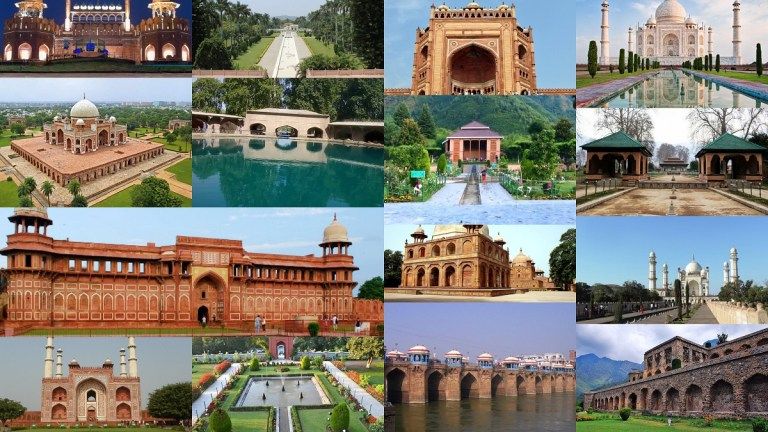
Mughal architecture, is a characteristic Indo-Islamic-Persian building style that flourished in Northern and Central India under the patronage of the Mughal emperors from the mid-16th to the late 17th century. This new style combined elements of Islamic art and architecture, which had been introduced to India during the Delhi Sultanate (1192–1398) and had produced great monuments such as the Qutb Minar, with features of Persian art and architecture. Mughal monuments are found chiefly in the northern parts of India, but there are also many remains in Pakistan. The Mughal period marked a striking revival of Islamic architecture in northern India. Under the patronage of the Mughal emperors, Persian, Indian, and various provincial styles were fused to produce works of unusual quality and refinement.
The tomb of the emperor Humayun (1564) at Delhi inaugurated the new style, though it shows strong Persian influences. The tomb was designed by a Persian architect Mirak Mirza Ghiyas. Set in a garden at Delhi, it has an intricate ground plan with central octagonal chambers, joined by an archway with an elegant facade and surmounted by cupolas, kiosks, and pinnacles.
The first great period of building activity occurred under the emperor Akbar (reigned 1556–1605) at Agra and at the new capital city of Fatehpur Sikri, which was founded in 1569. The latter city’s Great Mosque (1571; Jami Masjid), with its monumental Victory Gate (Buland Darzawa), is one of the finest mosques of the Mughal period. The great fort at Agra (1565–1574) and the tomb of Akbar at Sikandra, near Agra, are other notable structures dating from his reign. Most of these early Mughal buildings use arches only sparingly, relying instead on post-and-lintel construction. They are built of red sandstone or white marble.
Mughal architecture reached its peak during the reign of the emperor Shah Jahan (1628–1658), its crowning achievement being the magnificent Taj Mahal. This period is marked by a fresh emergence in India of Persian features that had been seen earlier in the tomb of Humayun. The use of the double dome, a recessed archway inside a rectangular fronton, and parklike surroundings are all typical of the Shah Jahan period. Symmetry and balance between the parts of a building were always stressed, while the delicacy of detail in Shah Jahan decorative work has seldom been surpassed. White marble was a favored building material as is evidenced with the Wonder of the World. After the Taj Mahal, the second major undertaking of Shah Jahan’s reign was the palace-fortress at Delhi, begun in 1638. Among its notable buildings are the red-sandstone-pillared Diwan-I-Am (“Hall of Public Audience”) and the so-called Diwan-I-Khas (“Hall of Private Audience”), which housed the famous Peacock Throne. He established Delhi as his capital (1638) and built there the famous Red Fort (1639) which contained the imperial Mughal palace.
The architectural monuments of Shah Jahan’s successor, Aurangzeb (reigned 1658–1707), were not as numerous, though some notable mosques, including the Badshahi mosque in Lahore, were built before the beginning of the 18th century. Subsequent works moved away from the balance and coherence characteristic of mature Mughal architecture. In general, however, Mughal architecture had begun to decline during his reign, a process that would accelerate after his death. “Architecture, of all the arts, is the one which acts the most slowly, but the most surely, on the soul.” The Mughal architecture truly was a revolutionary blend of different cultures and till the present day. Some of the buildings constructed under the reign of the emperor’s are some of the most famous and well known and continue to inspire and attract millions towards its timeless design.
Want to know more about them , then start some reading .
Introduction
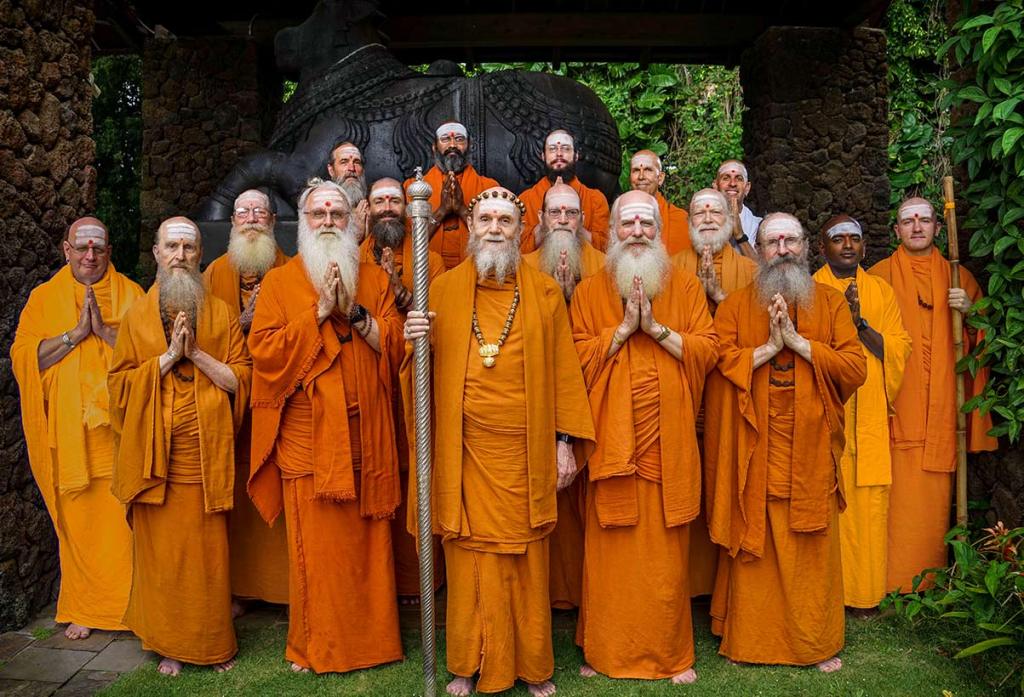
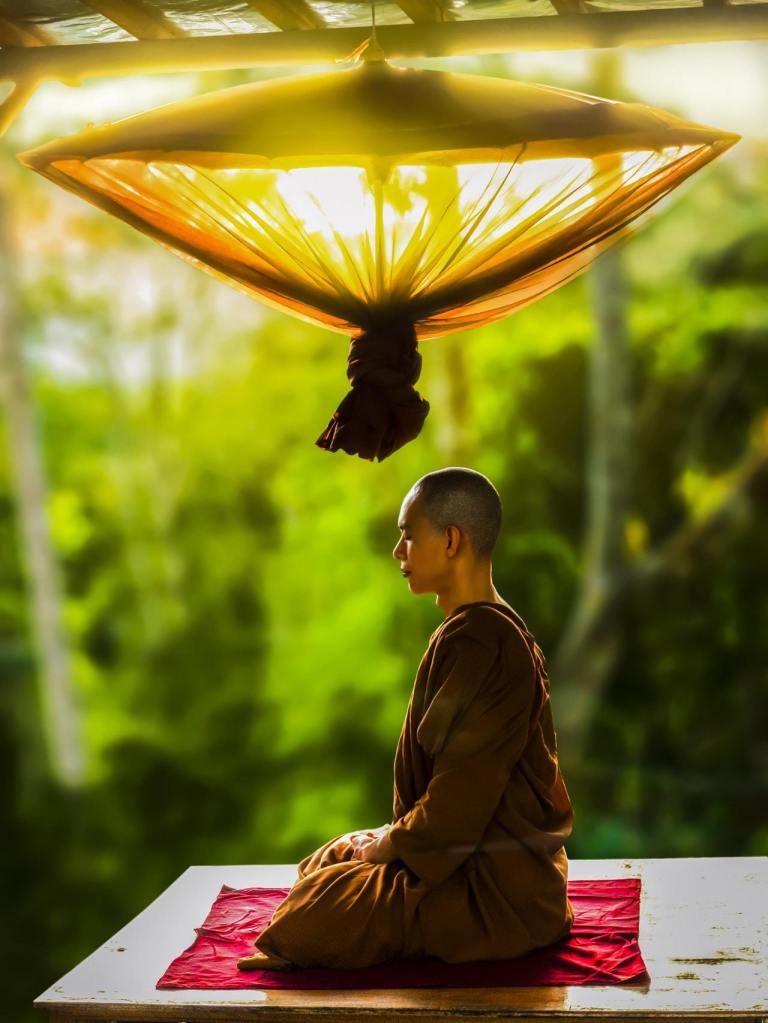
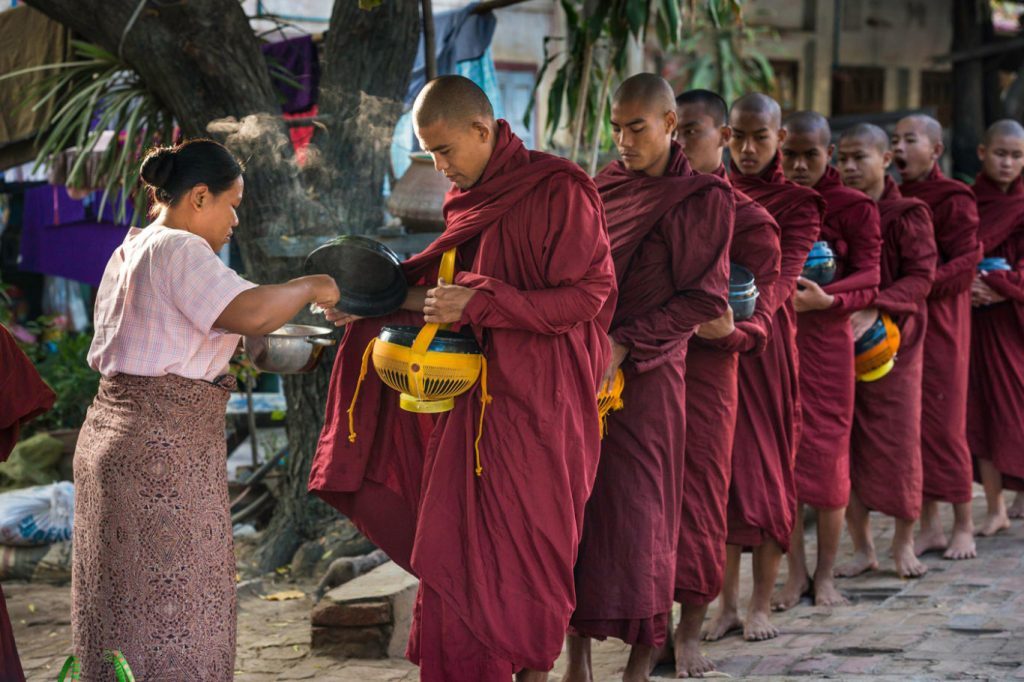
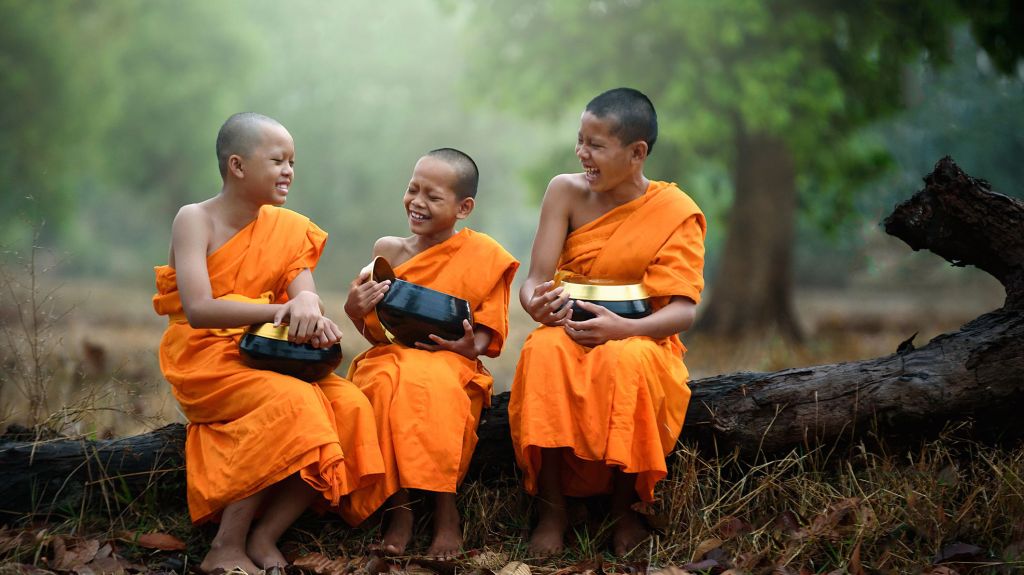
A monk is a person who practices religious asceticism by monastic living, either alone or with any number of other monks . A monk may be a person who decides to dedicate his life to serving all other living beings, or to be an ascetic who voluntarily chooses to leave mainstream society and live his or her life in prayer and contemplation. The concept is ancient and can be seen in many religions and in philosophy.
In simple words , A monk is a man who devoted part or all of his life to a religion. The word comes from Ancient Greek, and can be translated as solitary. In Greek, the word can apply to women, but in modern English it is mainly used for men. The word nun is usually used for female monastics. Monks practice asceticism. They either live alone, or together with other monks who share the same ideals. Monks can be found in different religions, most often in Buddhism, Christianity, Hinduism, Jainism and Taoism.
There living
Monks usually follow rules and regulations for convenient life. As a monk you must obey these rules .
Poverty: the monk cannot own anything.
Chastity: the monk cannot have sex or a sexual relationship and cannot start a family or get married.
Solitude: the monk should always be alone. Some monks choose to not follow this law.
Silence: the monk shall not speak unless it is necessary.
Generosity: the monk should always help other people.
Stillness: the monk cannot travel far unless it is necessary. Sometimes this means that the monk must be cloistered which means that they must not leave their monastery (especially Warsa period). Sometimes they can be allowed to leave, but must not go very far.
Duty: The monk must do some things every day. For example, the monk must pray or meditate and must do some work.
Indian monks
One of the finest and versatile monk in India was Swami Vivekananda . Swami Vivekananda was greatly inspired by Ramakrishna. For Swami, Ramakrishna was just a plain and simple villager, who was a part of the Kali temple. However, his intense spiritual practices intrigued Swami.
For five years, Swami learnt everything from his master, Ramakrishna. After his master left the world, everyone looked up to Swami. He urged the followers of Ramakrishna to leave the worldly pleasures and look up to God.
“You cannot believe in God until you believe in yourself.”
His saying intrigued just not one nation but the whole world .
Life lessons
Being a monk , gives you a pleasure of being yourself . We live in the world where we get pleasure from materialistic things . We become selfish , ruthless, dull, lifeless and worthless. You have to believe in yourself in order to excel in life.
Start learning from lessons.
When you start to do meditation you recognize the egotistical mind.
Trying until you get it right.
The answer to your question is inside of you.
Real wisdom in life comes from doing something and failing.
We must be both compassionate and resilient.
Patience is a virtue.
Detach from your ego.
Happiness come from within, and also comes from outside.
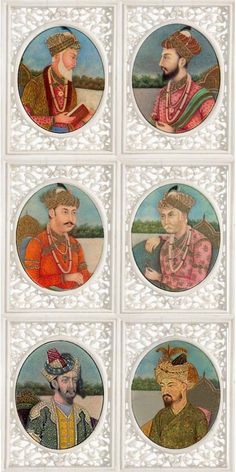
In India, the Mughal Empire was perhaps the best domain ever. The Mughal Empire administered countless individuals. India became joined under one guideline, and had extremely prosperous social and political years during the Mughal rule. There were numerous Muslim and Hindu realms split all through India until the organizers of the Mughal Empire came. There were a few men like Babar, grandson to the Great Asian victor Tamerlane and the vanquisher Genghis Khan from the northern district of Ganges, stream valley, who chose to take over Khyber, and at last, the entirety of India.
Babar (1526-1530):
the extraordinary grandson of Tamerlane and Genghis Khan, was the first Mughal sovereign in Quite a while. He went up against and crushed Lodhi in 1526 at the main skirmish of Panipat, thus came to build up the Mughal Empire in India. Babar governed until 1530, and was prevailed by his child Humayun.
Humayun (1530-1540 and 1555-1556):
the oldest child of Babar, succeeded his dad and turned into the second head of the Mughal Empire. He managed India for almost 10 years however was removed by Sher Shah Suri, the Afghan ruler. Humayun meandered for around 15 years after his loss. In the interim, Sher Shah Suri passed on and Humayun had the option to crush his replacement, Sikandar Suri and recapture his crown of the Hindustan. Nonetheless, before long, he kicked the bucket in 1556 at a youthful age of 48 years.
Sher Shah Suri (1540-1545):
was an Afghan chief who assumed control over the Mughal Empire in the wake of overcoming Humayun in 1540. Sher Shah involved the seat of Delhi for not over five years, but rather his reign end up being a milestone in the Sub-landmass. As a lord, he has a few accomplishments in his credit. He set up an effective policy management. He set up an income assortment framework dependent on the estimation of land. Equity was given to the everyday person. Various common works were completed during his short rule; planting of trees, wells and working of Sarai (hotels) for voyagers was finished. Streets were laid; it was under his standard that the Grand Trunk street from Delhi to Kabul was assembled. The money was additionally changed to finely printed silver coins called Dam. Notwithstanding, Sher Shah didn’t endure long after his increase on the seat and kicked the bucket in 1545 after a short rule of five years.
Akbar (1556-1605):
Humayun’s beneficiary, Akbar, was brought into the world in a state of banishment and was just 13 years of age when his dad kicked the bucket. Akbar’s reign holds a specific noticeable quality ever; he was the ruler who really invigorated the establishments of the Mughal Empire. After a progression of triumphs, he figured out how to curb the greater part of India. Regions not under the realm were assigned as feeders. He additionally embraced a placating strategy towards the Rajputs, henceforth diminishing any danger from them. Akbar was an incredible victor, yet a fit coordinator and an extraordinary manager too. He set up a large group of establishments that end up being the establishment of a managerial framework that worked even in British India. Akbar’s standard additionally stands apart because of his liberal approaches towards the non-Muslims, his strict advancements, the land income framework and his popular Mansabdari framework. Akbar’s Mansabdari framework turned into the premise of Mughal military association and common organization.
Akbar passed on in 1605, almost 50 years after his rising to the seat, and was covered outside of Agra at Sikandra. His child Jehangir then, at that point accepted the seat.
Jehangir:
Akbar was prevailed by his child, Salim, who took the title of Jehangir, signifying “Hero of the World”. He wedded Mehr-un-Nisa whom he gave the title of Nur Jahan (light of the world). He cherished her with dazzle enthusiasm and gave over the total reins of organization to her. He extended the realm through the expansion of Kangra and Kistwar and merged the Mughal rule in Bengal. Jehangir did not have the political endeavor of his dad Akbar. Be that as it may, he was a fair man and an open minded ruler. He strived to change society and was lenient towards Hindus, Christians and Jews. Be that as it may, relations with Sikhs were stressed, and the fifth of the ten Sikh masters, Arjun Dev, was executed at Jehangir’s orders for giving guide and solace to Khusrau, Jehangir’s defiant child. Craftsmanship, writing, and design succeeded under Jehangir’s standard, and the Mughal cultivates in Srinagar stay a suffering declaration to his imaginative taste. He passed on in 1627.
Shah Jahan:
Jehangir was prevailed by his second child Khurram in 1628. Khurram took the name of Shah Jahan, for example the Emperor of the World. He further extended his Empire to Kandhar in the north and vanquished the majority of Southern India. The Mughal Empire was at its apex during Shah Jahan’s standard. This was because of right around 100 years of unmatched thriving and harmony. Therefore, during this rule, the world saw the extraordinary advancement of expressions and culture of the Mughal Empire. Shah Jahan has been known as the “modeler ruler”. The Red Fort and the Jama Masjid, both in Delhi, stand apart as transcending accomplishments of both structural designing and workmanship. However regardless of anything else, Shah Jahan is recalled today for the Taj Mahal, the gigantic white marble sepulcher developed for his better half Mumtaz Mahal along the banks of the Yamuna River in Agra.
Aurangzeb:
Aurangzeb climbed the seat in 1658 and controlled preeminent till 1707. Along these lines Aurangzeb governed for a very long time, coordinating with Akbar’s reign in life span. However, lamentably he got his five children far from the regal court with the outcome that none of them was prepared in the specialty of government. This end up being exceptionally harming for the Mughals later on. During his 50 years of rule, Aurangzeb attempted to satisfy his aspiration of bringing the whole Sub-landmass under one principle. It was under him that the Mughal Empire arrived at its top in matter of region.
Hobbies are very common. Everyone have their own priorities and likes regarding the hobbies. My hobby is listening to the music.
Listening to songs is such a nice thing. Every individual starts listening to the songs when he or she is addicted to them and really cannot come out of it. The music the songs will change the mood of the person. The songs in the musical interrelated with the human beings.
It is so important to prioritize the positive things in and around us in the life. One of the positive things is the music. Music makes Man convertible. Whatever the situation may be, it it helps the individual to come out of the situation and also to move one and into a new situation. The music you listen motivates life. The lyrics in this song will motivate the individual and help the individual at anytime.
It is very important for an individual to prioritize the music and the songs in the life. Because the songs or the music helps the individual to feel stress-free. It also helps the individual to relieve the tension and all the depression he or she had.
Music is described for every emotion. Every emotion is described in its own way in mmusic. Every emotion is clearly explained by the respected song.
Hobbies can often also be very expensive. Luckily, there are still lots of cheap and even free hobbies that are fun, educational and rewarding.
Here some of fun and low-cost hobbies
DIY : Buy a book on DIY and start on anything that needs fixing around your house, make your own clothes or give your friends self-made presents.
WRITE A THEMED LIST, AND WORK THROUGH IT : Make a list of things you want to do or see. It could be anything from films you want to watch to local places you want to visit. Try to work through your list in a month.
WATCH ONLINE DOCUMENTARIES :
You can find lots of free documentaries on the websites of Tv channels, or even on youtube covering hundreds of subjects, such a history or the ocean. You could also finally watch your favourite actor’s ,author’s or musician’s biography.
LEARN NEW THINGS : Educating yourself doesn’t have to be boring. What are you passionate about? It could be science , the oceams or even horror films. Google your interests and become a knowledgeable as you can about your passions.
GO CAMPING :
Try going caming with your friends during the weekend. All you need is a tent, some snacks, and drinks. If you dont live near woods or a forest, you can even try camping in your back garden.
DISCOVER NEW MUSIC :
Look for new music on music websites or youtube or spotify by searching for your favouirte genre. You could find a band you love.
LEARN HOW TO COOK :
cooking is a useful life skill as well as a fun way to spebd your time. Invest in cheap ingredients and learn how to cook all of your favourite meals.
TRY DRAWING :
Drwaing is a really enjoyable way of expressing yourself. There are lots of different ways to draw, from painting to sketchibg to doodling, so choose one you are comfortable with and give it a go!
START INVESTING :
Investing is a great way to earn some extra money, just make sure you do your research properly when you first start.you don’t have to invest large sums, but small ones will be just as rewaeding if you have a plan.
WRITING :
Writing is one of the chepest ways to have fun. From blogging to trying your hand on a book, there are lots of different ways to enjoy writing. All you need is a pencil and paper to get started.PLAYING CARDS : Invite some friends over , and get a pack of cards. There are hundreds of different games. You can play with cards and a pack is fairly cheap.
LEARN TO DANCE :
This hobby is great for your body and enjoyable pastime. Use youtube vidros and tutorials to teach yourself new dance moves.
READING :
Reading is a great way to exercise your mind.you can choose to lose yourself in a fictional world, learn more about your own world, or read the autobiography of someone you adimre. If you decide to pick reading up as a hobby, consider getting a library card for your local library.
Remember , the secret of life, happiness and fulfillment is simple: ” Find three hobbies you love: one to make you money, one to keep you in shape, abd one to be creative” .
Being a part of a mixed economy , where politics tend to exploit the peace between different religions and so on …….. .
“India was the motherland of our race, and Sanskrit the mother of Europe’s languages: she was the mother of our philosophy; mother, through the Arabs, of much of our mathematics; mother, through the Buddha, of the ideals embodied in Christianity; mother, through the village community, of self-government and democracy. Mother India is in many ways the mother of us all.”
Will Durant, American historian
And now you want to know why I am being so dramatic over such things . Well , if you want to know than start reading the editorial .
Introduction
Indians say it is important to respect all religions, but major religious groups see little in common and want to live separately
More than 70 years after India became free from colonial rule, Indians generally feel their country has lived up to one of its post-independence ideals: a society where followers of many religions can live and practice freely.
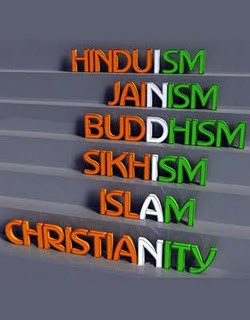
Religion has historically influenced Indian society on a political, cultural and economic level. There is a sense of pride associated with the country’s rich religious history as the traditions of Hinduism, Buddhism, Sikhism and Jainism all emerged out of India. Moreover, while a majority of people in India identify as Hindu (79.8%), the medley of religions that exist within the country continually impact contemporary society.
Census
The 2011 Indian census indicated that 79.8% of Indians identified as Hindu, 14.2% identified as Muslim and 2.3% identified as Christian. A further 1.7% of the population identified as Sikh, 0.7% identified as Buddhist and 0.37% identified as Jain. Due to the massive population size of India, religious minorities still represent a significant number of people. For example, although only 0.37% of India may identify with Jainism, that still equates to over 4 million people. While not all religions in India can be discussed in detail, the following provides an overview of the major religions in the country as well as sizable religions that originated in India.
Social beliefs
“India has two million gods and worships them all. In religion all other countries are paupers; India is the only millionaire.”
Mark Twain
Karma, Acceptance and Personal Choice . Many Indians tend to have a sense of acceptance towards one’s life position or a belief that, due to actions in one’s past life, good or bad personal circumstances are deserved. This attitude partly stems from religious ideas such as ‘karma’ (the idea that one’s actions will affect their current or future life) and ‘samsara’ (the cycle of rebirth).
The interplay of these social, cultural and religious factors allows people to be accepting of life events and trajectories. However, this is not to be interpreted as Indians being unwilling to take responsibility for life circumstances. Many often contemplate how their actions may impact their future and make decisions accordingly. Some of India’s youth are challenging a fatalistic perspective by asserting their free will to choose their vocation, spouse and other life factors. Indeed, as social mobility becomes more common, there is a growing belief that one can change their circumstances.
It’s Role
Religion plays a major role in the Indian way of life. Rituals, worship, and other religious activities are very prominent in an individual’s daily life; it is also a principal organizer of social life. The degree of religiosity varies amongst individuals; in recent decades, religious orthodoxy and observances have become less common in Indian society, particularly amongst young urban-dwellers. As of the politics , they play with religion , people’s belief and with their trust .
Akbar grew up in an environment where remarkable saints like Kabir, Chaitanya emphasized on a religion based on devotion and love rather than one based on rituals and interpretations of revealed books.An atmosphere where liberal sentiments and views propagate greatly influenced Akbar’s religious policy.
Main features of his religious policy:
Protective measures- Abolition of pilgrim tax, giving up policy of religious conversion of the prisoners of war.This laid the foundation of the empire based on equal rights irrespective of religious faiths.
Sulh-I-kul (peace to all)- This involved the adoption of the idea of how a true sovereign should behave . Akbar adopted the idea that a true ruler should show parental love towards his subjects without any discrimination , not allow sectarian strife to rise.
Ibadat khana- Initially Akbar was influenced by the Chief Qazi but after his betrayal he grew increasingly inclined towards mysticism, repeating God’s name . In 1575, he established Ibadat Khana at Fatehpur Sikri where he invited theologians, preachers of different religions. He held discussions about the Quran , features of different religions, the nature of God etc.
“Decree of Infallibility “- To deal with Mullahs Akbar issued a declaration or Mazhar that to consider fit to interpret the Quran among different persons Akbar is the one. Since he is wise , just and ranks higher in the eyes of God so he will choose which interpretation of the Quran is correct among many others.
Maintained contacts- Abar maintained contacts with different religious scholars and continued to invite them to his court. For example , he had invited from Hindu religion Puroshottam and Devi , from Christianity Aquaviva and Monserrate.
Tauhid-I-Illahi- Contact with different religious leaders provided Akbar with great understanding, although all religions had different good points but they all preached the creation of an atmosphere of peace , amity and good for the country. This understanding made Akbar to create a new religion combining all the good of other religions. This was the Tauhid-I-Illahi. It was an order of the Sufistic type, Sunday was the day of initiation where those willing to join placed head at the feet of the Emperor who raised him up and gave him the formula-the shast to repeat upon , Allah-o-Akbar was the motto.
Enrolling Murids- They were a personal band of nobles completely loyal to the Emperor who had to give up their property, life, honour and religion and become devoted to Akbar. Badayuni has criticized this move of Akbar as a strategy to gain loyalists and many unworthy flatterers.
Translation department- Akbar made sure to translate works like Singhasan Battisi , Atharva Veda , Ramayana, Mahabharata etc.
Hence the religious policy of Akbar shows his attempt to maintain peace and cordial relations between different sections in society.
















 Eduindex
You must be logged in to post a comment.