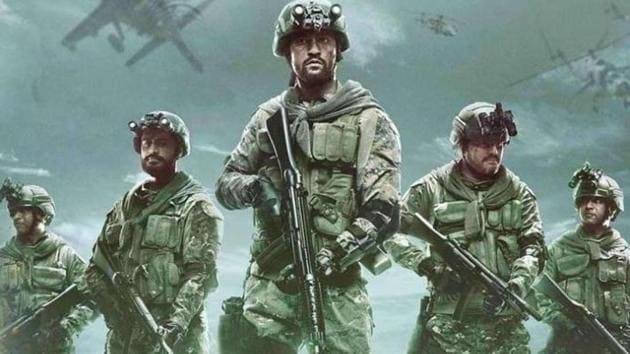
Indian army to get jetpack suits.

In a bid to modernise and upgrade its capabilities, the Indian Army is seeking to acquire jetpack suits and robotic mules through fast-track procedures for emergency procurements under the Buy Indian category.

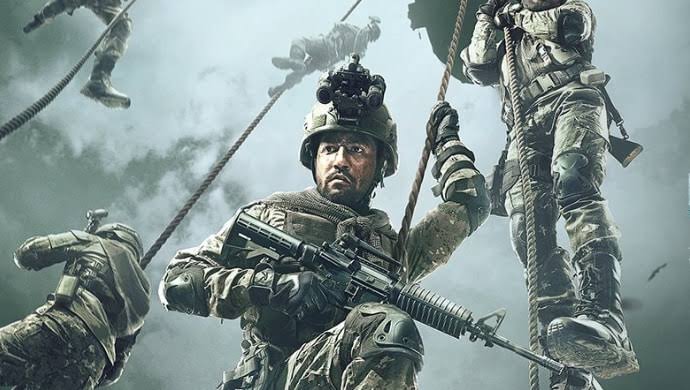
The Army has floated Request for Proposal (RFP) for 48 jetpacks with modern propulsion system including Turbine engines, Electric and Hybrid systems.

Jet Pack suit is a turbine based individual mobility platform, which can lift a man safely across varied terrain.

The suit must provide controls for safe ascent, safe descent, take off and landing and movement in all directions, the Army said in the RFP document.

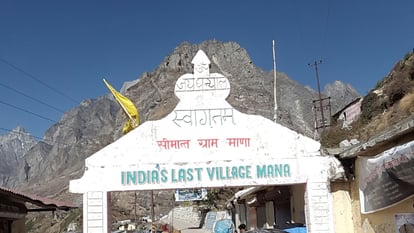
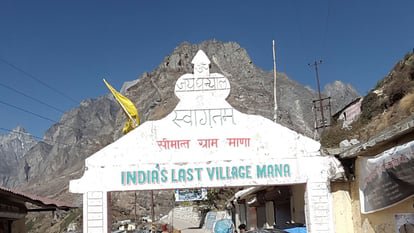
India’s last village Mana.

Mana Village is located in the Chamoli district of Uttarakhand, at an altitude of 3200 m , on the banks of the Saraswati River, about 5 km from the famous Hindu pilgrimage site Badrinath. This beautiful place is located 26 km from the border between India and Tibet and is the last village of India.
According to the 2011 census, the village was home to about 558 households and with population of about 1214 people . Most of the population here belong to Marchhas and Jads or Bhotias. During the winter, the area is covered with snow, so the entire population moves to lower altitudes. Many cafes here tell people that their store is the last cafe on the Indian border. Most of the people here speaks Garhwali Or Hindi languages.
If you visit this place, you will notice that the shopkeepers in the area sell their products under the title “Last Village”, such as “The Last Tea and Coffee Corner in India”.

Religious importance of mana village:

The village of Mana is of great religious importance to Hindus as it is associated with the Mahabharata era. Pandavas, the five mythical figures of the epic Mahabharata, is believed to have passed through the village of Mana on his final journey to heaven. There is also a stone bridge called “Bheempul” near the Saraswati River. It is believed to have been created by Bheem, one of the Pandava’s .

How do you get to Mana village?
You can reach Mana village easily as it is easily accessible from Rishikesh / Haridwar/Dehradun and situated just 5 km from Badrinath Temple. The nearest train station is located in Haridwar, about 275 km away, and you can reach the village by bus / taxi from outside this station. Mana is just 315 km from Dehradun and there is a regular bus in front of the train station.

Mana attractions :

Neelkanth Peak: At an altitude of 6597 feet above sea level, Neelkanth Peak is one of the region’s main attractions. Also known as the “Queen of Garhwal”, this snow-capped peak rises beautifully above the Badrinath Temple and is a must-see for adventure and trekking lovers.

Tapt Kund: According to Hindu mythology, Tapt Kund is the Sanctuary of the Lord of Agni (Fire). This natural hot spring is thought to have medicinal properties, and it is said that soaking in Tapt Kund water will cure skin diseases.

Vasudhara: This is a scenic waterfall about 9km from Badrinath Temple. According to Legend it is the place where Pandavas stayed for some time during their exile.

Vyas Gufa: As the name implies, Ved Vyas, a famous scholar and author of the epic Mahabharata, lived in this cave while writing the four famous vedas. What makes this cave interesting is a small shrine dedicated to him, which is said to be over 5,000 years old.

Beehma Pul: One of Mana Village’s main attractions is Beehma Pul. Beehma is said to have built this Bheem Pul, a stone bridge to allow his wife Draupadi to cross the Saraswati River on a journey to heaven.

Operation Cactus by Indian Armed Forces which saved Maldives freedom.

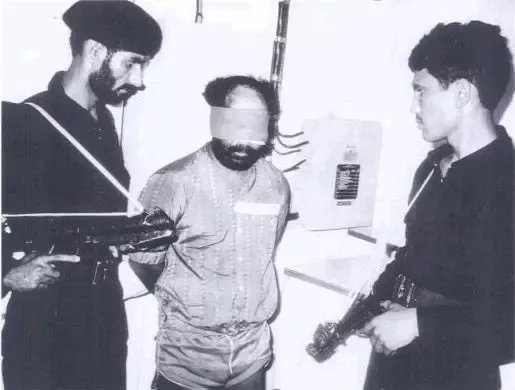
Operation Cactus, led by the Indian Armed Forces in 1988, to stop a group of Maldives mercenaries led by businessman Abdullah Rutufi, and armed mercenaries of the Tamil Elam People’s Liberation Organization (PLOTE), a separatist Tamil organization in Sri Lanka. It’s strategy was to overthrow the government in the Maldivian island republic.

Thier were two coup attempr done before 1988.The 1980 and 1983 coup attempts against President Maumoon Abdul Game were not considered serious, but the third coup attempt in November 1988 surprised the international community. About 80 armed PLOTE mercenaries boarded a speedboat from a Sri Lankan cargo ship hijacked in the capital Male before dawn. A similar number has previously invaded Male in the guise of a visitor. The mercenaries soon gained control of the capital. This includes major government buildings, airports, ports, television and radio stations. The mercenaries then marched to the presidential residence, where President Gayoom lived with his family. However, before they arrived at the presidential residence, President Gayoom was escorted to the Defense Minister’s house by a Maldivian national security forces. The Secretary of Defense then took the president to a safe home.

Meanwhile, the mercenaries occupied the presidential residence and managed to take the Maldivian Minister of Education hostage. President Gayoom called on Sri Lanka and Pakistan government to intervene in the military, but both refused to help because of lack of military power. The president then demanded Singapore’s intervention, but Singapore refused for the same reason. He then contacted the United States and was told that it would take a couple of days for the US military to reach the Maldives from the nearest military base in Diego Garcia, which was almost 1000 km away. The president then contacted Britain and who advised them to seek help from India. After that, President Gayoom sought help from the Indian government. India soon accepted their request and an emergency meeting was convened at the Secretariat Building in New Delhi. Within 16 hours of SOS, India was ready for thier missions.

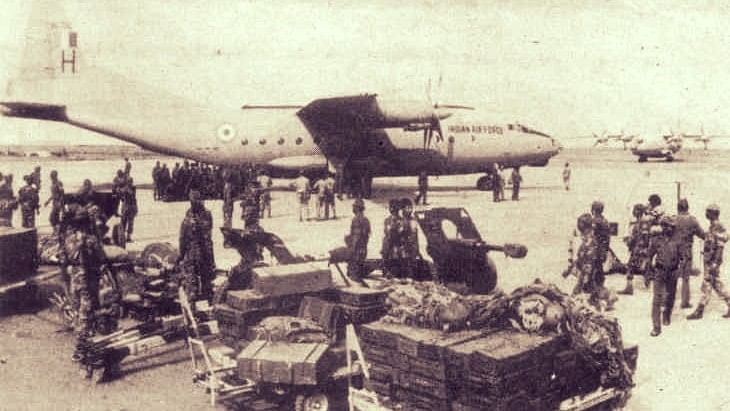
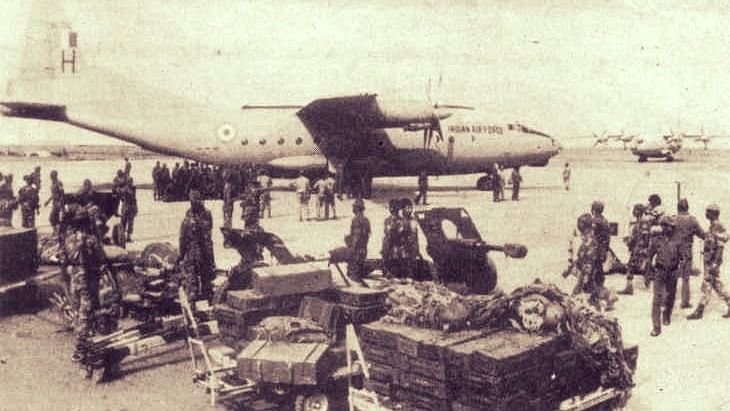
Rejaul Karim Laskar, a member of India’s then ruling party, the Indian National Congress, said that intervention of India in coup d’etat was necessary because without India’s intervention, outsiders powers were tempted to intervene and establish base in the Maldives. . Therefore, India intervened through “Operation Cactus”. On the night of November 3, 1988, the Ilyushin Il-76 aircraft of the Indian Air Force took elements of the 50th Independent Parachute Regiment, the 6th Parachute Regiment Battalion, and the 17th Parachute Field Paratrooper Regiment under Brigadier General Farsala from Agra Air. He flew non-stop for over 2,000 kilometers (1,240 miles) and landed at Male International Airport on Hulhule Island. Indian Army paratroopers arrived in Hulhule nine hours after President Gayoom proceedings.

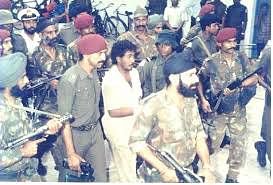
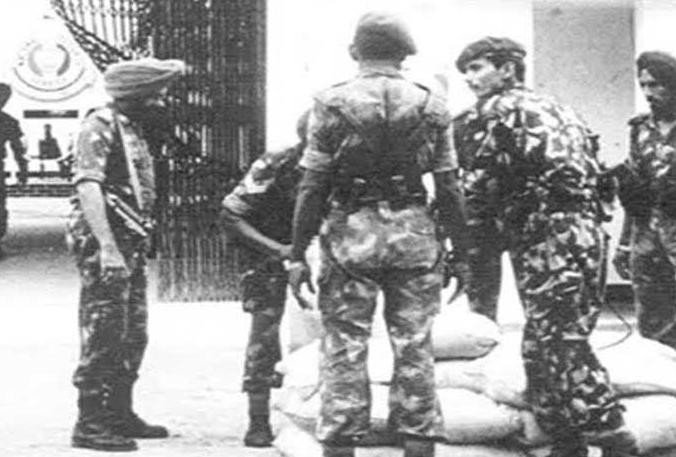
Indian paratroopers quickly secured an airfield and sailed to Male on a confiscated boat to rescue President Gayoom . Paratroopers handed over control of the capital to President Gayoom ‘s government within hours. Some of the mercenaries fled to Sri Lanka on a hijacked cargo ship. Those who could not arrive at the ship in time were immediately rounded up and handed over to the Maldivian armed Forces and government. According to reports, 19 people died in battle, most of them mercenaries. The dead included two hostages killed by mercenaries. And Operation Cactus took 18 hours for Indian Armed Forces from start to finish. Indian Navy frigate Godavari and Betwa intercepted a cargo ship off Sri Lanka and captured mercenaries. The swift intervention and accurate intelligence of the Indian Army was able to successfully subdue the coup attempted in the island nation.

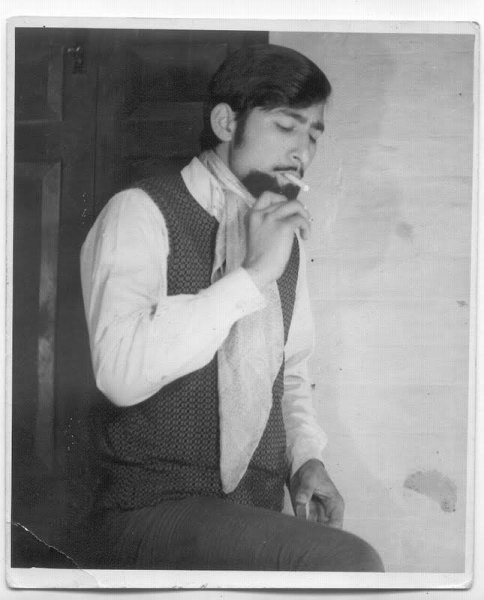
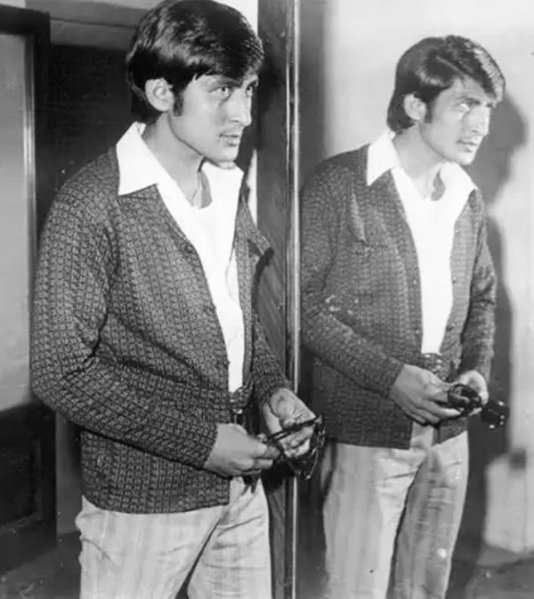
“Black Tiger” Of India Ravindra Kaushik.

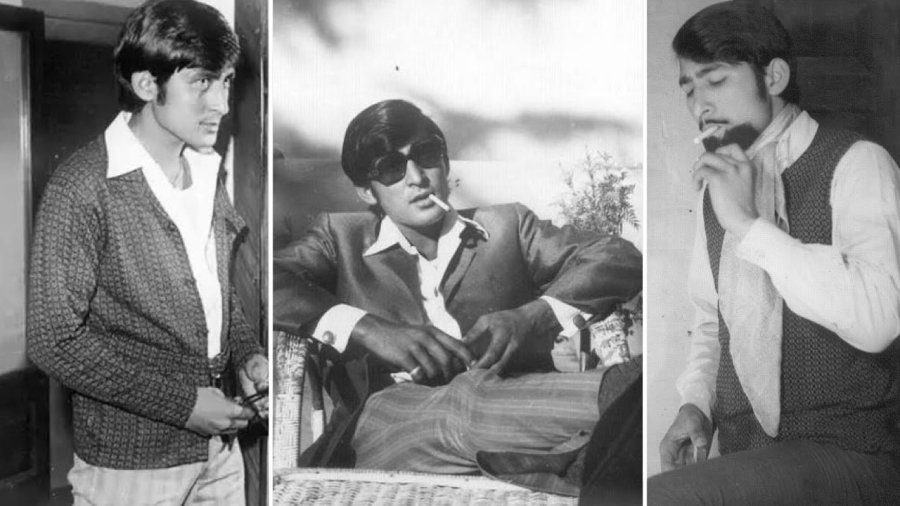
Ravindra Kaushik who served in (R&AW) ,famously known as Black Tiger was born in Sri Ganganagar, Rajasthan on 11 April 1952 in a Brahmin family.
Ravindra during his graduation days used to do drama plays and during this time Kaushik displayed his talent at the national level dramatic meet in Lucknow, Uttar Pradesh, which was witnessed by officials from the Research and Analysis Wing. After which he was contacted and offered a job of being an undercover Operative for Research and Analysis Wing in Pakistan.

After agreeing to work for R&AW Kaushik was given extensive training in Delhi for two years. He underwent circumcision so he could pass as a Muslim. He was taught Urdu, given Islamic religious education and acquainted with the topography and other details about Pakistan. Being from Sri Ganganagar, a city near Rajasthan’s border with Punjab, he was well versed in Punjabi, which is widely understood in Punjab and Pakistan as well., India. In 1975, at the age of 23, He was sent to Pakistan.
Kaushik was given the cover name “Nabi Ahmed Shakir” and entered Pakistan in 1975. He was successful in getting admission in Karachi University and from where he completed his LLB. He then joined Pakistan Army as a commissioned officer and eventually promoted to the rank of a major. While living in Pakistan under his cover he married a local girl named Amanat, the daughter of a tailor in one of the army units, and with whom he fathered a boy .

From 1979 to 1983, while working as an officer, he passed on valuable information to R&AW which was of great help to India. He was given the title of ‘Black Tiger’ by India’s then home minister late S. B. Chavan.

In September 1983, R&AW sent a low-level operative, Inyat Masih, to get in touch with Kaushik. However, Masih was caught by Joint Counterintelligence Bureau of Pakistan’s ISI and blew Kaushik’s cover. Kaushik was then captured, tortured for two years at an interrogation center in Sialkot. He was given the death sentence in 1985. His sentence was later commuted to a life term by the Supreme Court of Pakistan. He was kept in various jails in various cities, including Sialkot, Kot Lakhpat and in Mianwali jail for 16 years. He managed to secretly send letters to his family in India, which revealed his poor health condition and the trauma faced by him in Pakistani jails.He also adresses his thoughts on his country and department. In one of his letters he wrote:
“Kya Bharat jaise bade desh ke liye kurbani dene waalon ko yahi milta hai?” (Is this what people who sacrifice their lives for a big country like India get?”
In November 2001, he was caused with pulmonary tuberculosis and heart disease in Central Jail Mianwali in Pakistan.
He served for Research and Analysis Wing from 1975 to 1983.

“Writing about magic is harder than writing about spies because you’re dealing with something that doesn’t really exist.”

-Anthony Horowitz

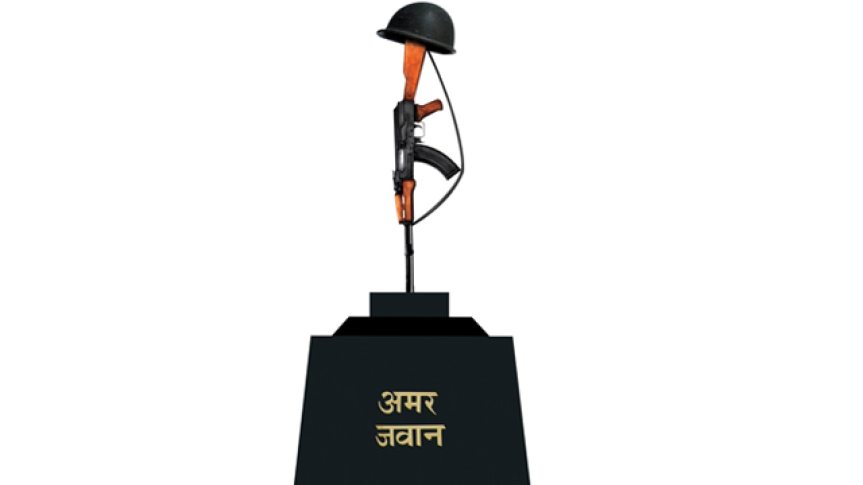
No use of ‘Martyr’ word in Army for death of on duty soldier .

History of the use of the word martyr:
The government has claimed for nearly a decade that the word “martyr” has not been officially recognized. In 2013 and 2014, in response to RTI’s request, the Ministry of Home Affairs revealed that the words “martyr” and “shahid” were not defined anywhere by the Government of India.
In December 2015, then Home Affair Minister Kireen Rijiju said in Lok Sabah that it is advised that the word “martyr” is not refer to any of the victims of the Indian army. He added that such terms were not used by Central Armed Police Forces (CAPF) and Assam Rifles personnel either.
In December 2021, Minister of State Home Nityanand Rai told Rajya Sabha again that there was no formal term like “martyr.”


Objections to the use of martyrs’ words:
The word “martyr” has religious implications and has historically been used to refer to people making sacrifices for their religious beliefs like in Christianity . The word “Shahid”, which is used as a Hindu alternative to the word “Martyr”, also has a religious meaning and is associated with the Islamic concept of Shahadat. The word “martyr” is said to be derived from the Greek word “martur”. In various dictionaries, “martyr” is defined as a person who is willing to die as a punishment for refusing to abandon religion.
Since the Indian army is not affiliated with any religion and does not sacrifice their lives for religious principles, the use of such words for their sacrifice is found wrong,including the supreme leader of the army. Using words like martyr may not be correct in context to armed forces especially in India according to many legal experts and prominent officers of army and retired officers.

Steps Taken By Government To Stop Use Of Martyr Word:
Despite the repeated assertions of the government about the word martyr having no official recognition, it was mostly used in government statements issued by various PR Officers for the defence services and the CAPFs. Many senior serving and retired officers also used it frequently to describe the death of soldiers in action. Thus, the word remained in common use.
The Army in 2022 issued a letter to all its commands asking them to abstain from using the word martyr as it may not be appropriate for soldiers who die in the line of duty. They have been, instead, asked to use phrases such as killed in action, supreme sacrifice for the nation, battle casualty, laid down their lives,veergati etc.

“Either I will come back after hoisting the tricolor, or I will come back wrapped in it, but I will be back for sure. “

-Late Captain Vikram Batra (PVC)

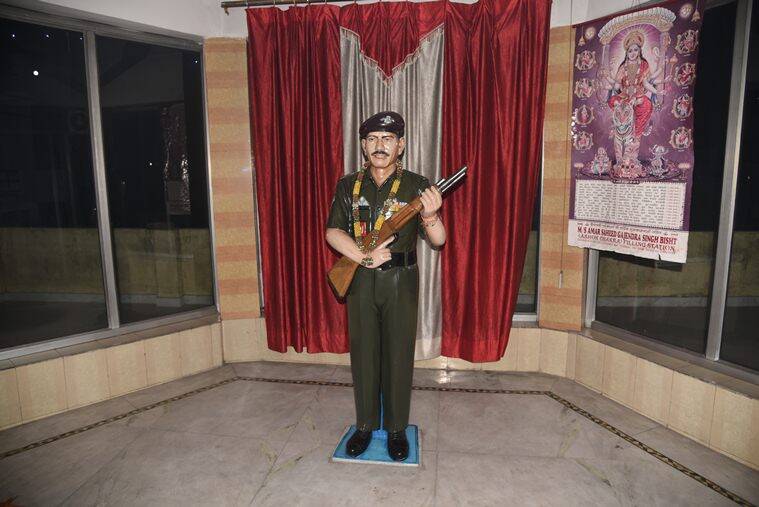
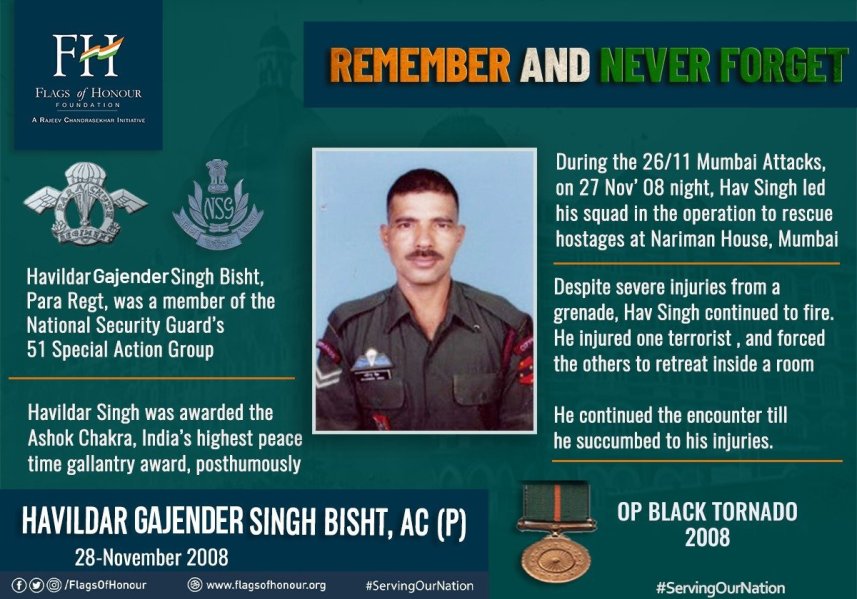
A warrior who can not be forgotten Hav. Gajender Singh Bisht.

Havaldar Gajender Singh Bisht was an NSG commando who was martyred in the 2008 Mumbai attack. His bravery received the Ashoka Chakra Award from the President of India on January 26, 2009, on the Anniversary of the Republic of India.
He was born on 1 July,1972 in Dehradun, Uttarakhand.

He persued his education from the Janata Inter College in Naya Gaon.As a student he used to participate in every event organised in the school, sports or cultural activities. But he had a particular interest in boxing. Havaldar Gajendra Singh joined Garhwal Rifles in 1991 and later decided to become part of the 10 Para (Special Forces). Havaldar Gajendra also actively participated in Operation Kargil in 1999. Havaldar Gajendra was a trained commander of the Indian Army Special Forces, but he was commissioned to serve the National Security Guard’s Elite Special Action Group.
Gajendra Singh Bisht was a member of the 51st Special Action Group of the National Guard. He was part of a team of NSG Command rushed to the roof of Nariman’s house to neutralize an terrorist inside the building who had at least six hostages.


According to NSG Secretary Jyoti Krishna Dutt, Bisht led one of the teams entering the building. The team was hit by a violent terrorist attack and returned to fire while trying to contain the situation. Terrorists also threw some grenades at Commando. At this point,Bisht had the opportunity to retire with his team. But he realized they needed to seize this opportunity and went forward with thier mission.Instead of turning his back on the militants, he made the way to other troops instead, despite the grenades being thrown. He suffered multiple gunshot wounds in the process, but moved forward and was eventually injured. This allowed his team to secure a dominant position in the encounter. On the night of November 27, 2008, Havildar Gajender Singh Bisht led his army in an operation to rescue hostages from terrorists at the Nariman House in Mumbai. While securing the Nariman House during Operation Black Tornado, Bisht got fatally injured at Jewish center attack and died.

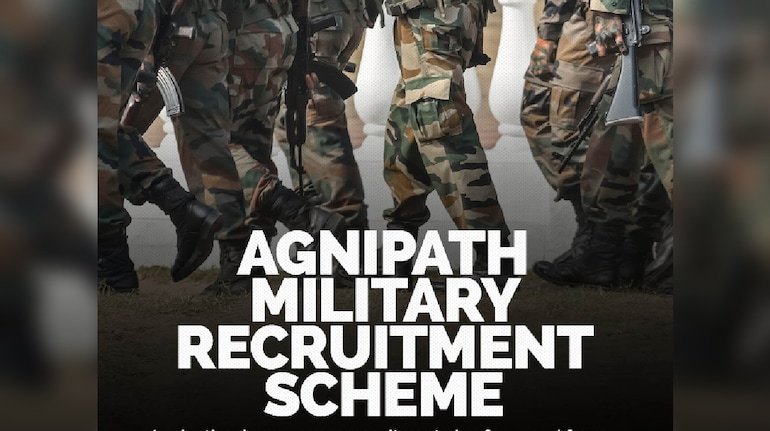
Agnipath Scheme a new vision for future India?


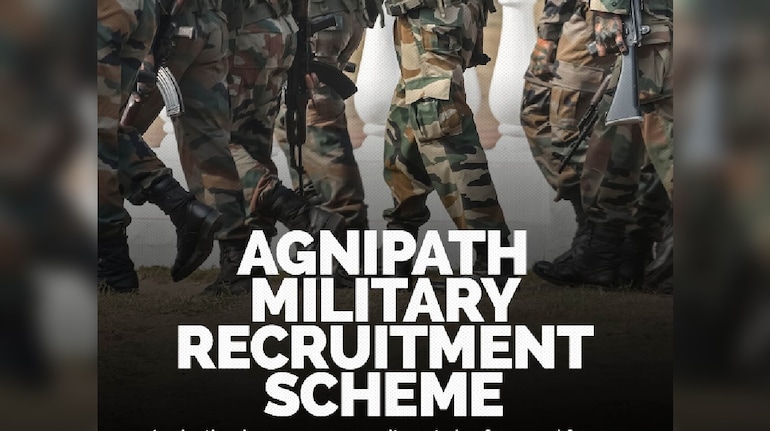
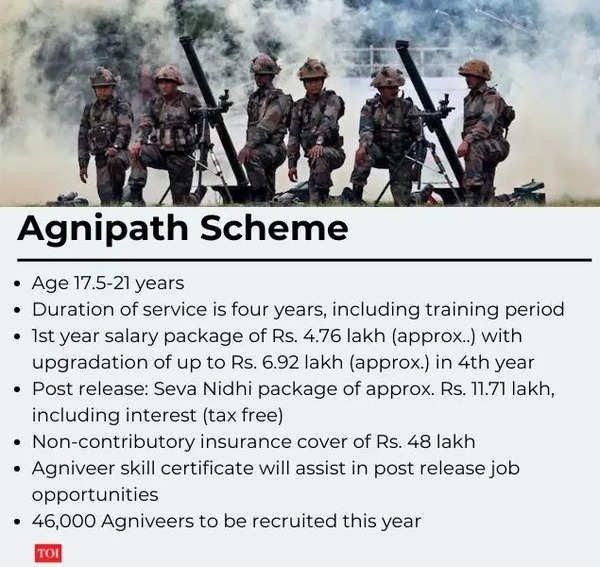
The Agnipath Program is a new program launched by the Government of India on June 14, 2022 to recruit soldiers under Corporal into three armies. The Agnipath program will be the only means of recruiting the military. All new employees will only be hired for 4 years. The personnel hired under this system are called Agniveers, a new military rank. The introduction of this system has been criticized for lack of consultation and open debate. The program is scheduled to start in September 2022. The Agnipath program was approved by the Government of India in June 2022 and will be implemented from September 2022. The announcement was made on June 14, 2022. This program is intended for both male and female applicants between the ages of 17.5 and 21. In widespread protests against the Agnipath program, the central government raised the cap from 21 to 23, but only in 2022. Recruitment under this program is held twice a year by the Indian Army, Indian Navy, and Indian Air Force. The available posts are below the executive list. The Agnipath program is the only way to serve in the army.


New employees, under the Agnipath scheme will be called “Agniveers,”who will have a four-year tenure, including six months of training followed by a 3.5-year deployment. After leaving the service, they have the opportunity to apply to continue in the army. Less than 25 percent of the retired group’s total strength is selected for the permanent roster. Employees who retire after four years of work are not eligible for a pension, but will receive a lump sum of approximately Rs 11,71,000 at the end of their tenure. The Government of India plans to hire 45,000-50,000 new employees each year through this program. In September 2022, 46,000 young people will be hired through this program. Prior to the start of the Agnipath program, soldiers were in the army for more than 15 years of service on a lifetime pension. As of 2019, there was no military recruitment for three years. The Government of India quoted the COVID-19 pandemic in India tye reason for no recruitment. Meanwhile, 50,000 to 60,000 soldiers continued to retire each year, leading to labor shortages and beginning to affect the military’s operational capabilities.


On June 16, 2022, fierce protests took place in several Indian states, where military candidates who were preparing for the armed forces were angry at the new system, demanding its rollback, and damaging public property. By June 17, 12 trains had been fired, affecting the movement of 300 trains. 214 trains were canceled, 11 trains were detoured, and 90 trains ended short of their destination. This scheme does not include long-term holdings, pensions and other benefits that existed in the old scheme. Individuals who wanted to join the army were disappointed with the rules of the new system. Of particular concern were short tenure, no early retirement pension, and an age limit of 17.5-21 years, making many of the current candidates unsuitable for serving in the Indian Army.

On June 20, a national strike called Bharat Bandh was summoned by a protesting organization calling for the withdrawal of the program. The call was made via social media without naming the organization. More than 600 trains were canceled due to a strike. Section 144 was imposed in parts of Rajasthan, Punjab, Uttar Pradesh and Haryana.

‘Sankalp Smarak’ dedicated to the nation by CINCAN

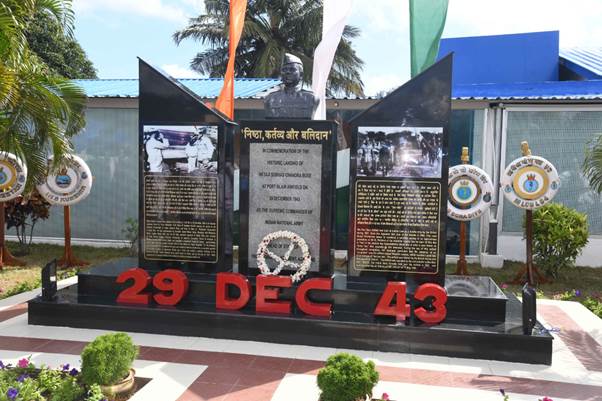
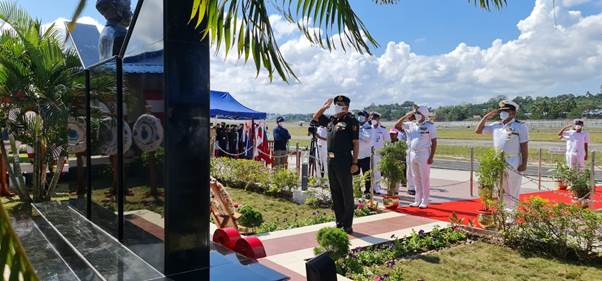
 In order to preserve this important event in history, a Sankalp Smarak was dedicated to the nation by Lt Gen Ajai Singh, Commander-in-Chief Andaman and Nicobar Command (CINCAN), exactly 78 years after Netaji’s arrival on 29 Dec 2021 at 11:30 am. The Smarak is a tribute not only to the resolve of the soldiers of the Indian National Army and their innumerable sacrifices but also reminds us of the values enshrined by Netaji himself, “Nishtha, Kartavya aur Balidan” or “Commitment, Duty and Sacrifice” that continue to underscore the ethos of the Indian Armed Forces and the resolve of the Indian Soldier.

In the saga of India’s freedom struggle, 30 December 1943 holds a special place etched in time. It was on this day that a national flag was hoisted for the first time on Indian soil, at Port Blair. It is also significant is that Netaji escaped British surveillance from Kolkata on 16 Jan 1941 and stepped back on Indian soil after nearly three years, at Port Blair Aerodrome on 29 Dec 1943 at 11:30 am and unfurled a National flag the next day. Netaji’s visit to the islands as the Head of the Provisional Government of Azad Hind and Supreme Commander of Indian National Army marked a symbolic fulfilment of his promise that the Indian National Army would stand on Indian soil by the end of 1943. This historic visit also marked a declaration of Andaman and Nicobar Islands as the “first liberated territory of India”.

The location of Netaji’s historic arrival on 29 Dec 1943 (accompanied by Sarvashri Anand Mohan Sahay (Secretary with Ministerial Rank), Captain Rawat – ADC and Col DS Raju (personal physician of Netaji), lies within the premises of what is now Andaman and Nicobar Command’s Air Station INS Utkrosh, in close proximity to the present-day runway. Upon his arrival as the Supreme Commander of the Indian National Army by a Japanese Air Force Aircraft, Netaji was accorded a ceremonial guard of honour by soldiers of Indian National Army at the Air Field.

During the dedicated ceremony held on the occasion, Soldiers of the only Quad Services Command of India led by the Commander-in-Chief himself along with other senior officers, soldiers and families paid homage, honouring the sacrifices of the soldiers of the Indian National Army. The event was conducted in a simple and solemn ceremony befitting the occasion.


Nampi/Rajib


Kargil War – Why it happened? Real Story of Vikram Batra

Hello, friends! The year was 1999. Some Pakistani soldiers infiltrated Indian territory. And the Indian Defence Forces retaliated bravely. Soon, a full-fledged war ensued between India and Pakistan. The war is now known as the Kargil War. Kargil War of 1999. This place became the centre of much international intrigue and war. Between India and Pakistan. 22 years ago, India was betrayed by its neighbour Pakistan. Prime Minister Atal Bihari Vajpayee, made it clear that India would emerge victorious. The world has seen that we want peace now the world will see that to protect our peace we can use strength if we need to. One of the most famous war heroes of the Kargil War was Captain Vikram Batra. Recently, a film has been made about him. Shersaah. On Amazon Prime Video. 

What was the Kargil War? What were the reasons that led to it? And what happened exactly? The international geopolitics at play there is also very interesting. Come, let’s find the answers to these in today’s video on Kargil War. Our story begins on 3rd May 1999. In a small village in the Batalik region there was a local shepherd Tashi Namgyal. He had lost his yak. He went to look for his yak with a friend. While looking through the binoculars, he saw something strange. He saw that some armed men digging bunkers. He found it quite fishy. “There we saw around 6 men, they were in black outfits, so I continued looking for some time. They were breaking rocks. And digging.” He got suspicious that those people were from the other side of LoC. So he went to the nearest post of the Indian Army. 

To inform the Indian Army. Thankfully, the Indian Army checked this information. And found that the information was correct. But this wasn’t a minor intrusion. This was a well-planned attack by the Pakistani Army. Intrusions were reported in Dras Kaksar and Mushkoh sectors. Overall, they had occupied more than 130 posts. Their aim was to block the critically important national highway NH 1. By blocking it, they could’ve cut off Kashmir from Ladakh. The code name of this operation was Operation Badr. If we look at this action from the perspective of international relations, this was a direct breach of the 1972 Simla Agreement. That was signed by the former Indian Prime Minister Indira Gandhi and the former Pakistani President Zulfiqar Ali Bhutto. According to this agreement, both neighbouring countries had agreed to never violate the LoC. And in case of any issue between India and Pakistan a peaceful resolution would be worked out. Through bilateral approaches. 
The unfortunate thing was that, friends, only a few months before the intrusions, in February 1999, the former Indian Prime Minister Atal Bihari Vajpayee had made a journey to Lahore in a bus. Where he had recited a poem, “Hum Jung Na Hone Denge” (We Will Not Let War Break.) And signed the Lahore declaration as well. Along with the former Pakistani Prime Minister Nawaz Sharif. This was, in a way, a monumental effort by the former Prime Minister Atal Bihari Vajpayee. To establish peace between India and Pakistan. “We’ve been enemies for too long. Now, we should spend some time as friends.” Only 3 months after this, this large-scale intrusion by the Pakistani soldiers, showed very clearly how there was someone in Pakistan that didn’t want this peace to last. But anyway, to retaliate against this, the Indian Army launched a counterattack. That was given the code name Operation Vijay (Victory). 

Thousands of Army troops were mobilized and sent to the Kargil sector. Then the Chief of Army was General Ved Prakash Malik. The Indian Airforce played a very crucial role. On 26th May, they launched the Operation Safed Sagar (White Sea). That aimed at driving out the Pakistani troops from the Indian territory. Traditionally, whenever air-power is used in a conflict, It is considered that all-out war has been declared. It was the first time that India had deployed air-power in such an environment. The Indian Airforce had also planned that they’d cross the LoC into Pakistan and bomb a few targets. But as Air Chief Marshall Anil Yashwant Tipnis has later revealed Prime Minister Vajpayee was completely against it. He had firmly ordered that LoC should not be crossed. And there is a very interesting diplomatic reason for it. Friends, whenever any two countries go on a war against each other, looking at the war from the third perspective, it becomes quite difficult to judge who is right and who’s wrong. Because often, both sides commit mistakes and violations are from both sides. 
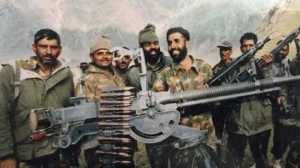
Take your example. When we as Indians watch the war between Israel and Palestine or the war between Azerbaijan and Armenia, it becomes difficult for us to know who is in the right and who is in the wrong because often, both sides have good arguments to justify themselves. Similarly, in the Kargil War of 1999 between India and Pakistan, it was difficult to judge from an international perspective who was right and who was wrong. Which country could be trusted? So India showed a lot of restraint. By not crossing the LoC. It showed the international public that it was a defensive war. “Pakistani soldiers had intruded in the Indian territory we want to push them out, and we are not interested in crossing the LoC and carrying out bombings in Pakistan.” “We simply want to protect our country.” Doing this was a major diplomatic victory for India. Within the next few weeks, the other countries European Union, ASEAN Regional Forum, the United States, G8 Countries, all of them supported India in this Kargil War. The then US President Bill Clinton pressured Nawaz Sharif to withdraw the Pakistani soldiers. The entire world could see that India was in the right and Pakistan was wrong. 

But talking about the ground situation, the Pakistani troops had an advantage. “Taking advantage of the geography of the region, which in many instances, favoured them, Pakistan Army regulars accompanied by fully armed and well-trained militants, sneaked into Indian territory.” The Pakistani soldiers were in an advantageous position in this war because they were on higher grounds in the mountains. Additionally, this region gets very cold. The Dras region is considered to be the coldest inhabited region in India. Often, temperatures fall to -40°C. So it was immensely difficult for the soldiers to fight in such conditions. But there is a popular saying in the Indian Army, ‘When the going gets tough, the tough get going.’ In the Kargil War, the Battle of Tololing is considered to be the turning point. When the war changed its course. To recapture the Tololing Hill, was a difficult task for the Indian Forces.

 At the height of 16,000 feet, temperature between -5°C to -11 °C, with blanket firing from above, because the enemies were placed higher in the hill. Because of all these reasons, for the Indian forces to move or try to climb that hill, was possible only in bad weather and moonless nights. The nights when the moon wasn’t visible in the sky. So that there isn’t much light and when they move, it doesn’t alert the enemies. Captain Ajit Singh was among the officers who attempted this. He recalled how to carry even 1 gram of extra weight meant carrying an extra load. Often the soldiers had to choose, between carrying food rations with them or carrying ammunition. Food packet weighing 2 kg, or 100 bullets. Captain Ajit chose bullets. And he survived for 3 days by smoking cigarettes. Without any food. Considering all these conditions it was estimated that till will take a fit soldier 11 hours to reach the top of the Tololing hill. Major Rajesh Adhikari led the company that tried to climb the mountain. 

And his company was successful to quite an extent. But when they were about 15 meters from the top, Intruders saw them and started firing. Major Adhikari and two other soldiers were martyred in hand-to-hand combat. Because of heavy firing from the enemy, the rest of his company had to retreat, and the company took three positions behind huge rocks. But as soon as the soldiers tried to move from behind the rocks, firing would start from the top. So they were trapped in between. 15,000 feet above the base, And approx 1,000 feet below the top. These soldiers were stuck in the middle. The situation was really bad. Because they did not have any more grenades with them. The Indian Army made it their current priority to recapture Tololing hill. Colonel Ravindranath handpicked 90 soldiers. To go help the soldiers stuck in between, and recapture the hill. Several washermen, cobblers and barbers in the battalion were also helping them because they had to carry the heavy ammunition to the top of the hill. 

So physical strength was needed. More people were needed. On 12th June they were successful at reaching the soldiers stuck in the middle. Around 8 pm. Only a thousand feet away from the enemy, Colonel Ravindranath gave a final pep talk to his soldiers. “I have given you what you wanted. Now you have to give me what I want.” The heavy firing lasted for 4 hours. More than 10,000 shells and more than 120 artillery guns were fired. There was so much firing that later this ridgeline was named Barbaad (Destroyed) Bunker. The plan was to divide the soldiers into 3 teams. Arjun, Bheem and Abhimanyu. (Characters from the Epic Mahabharata.) The first team would lead the frontal attacks. The second team would move to the other side of the cliff to a lower ridge, And the third team will cover fire. The enemies were attacked from the back by the platoon led by Major Vivek Gupta.

 A hand-to-hand battle took place and unfortunately, Major Vivek Gupta along with 6 other soldiers was martyred. But these soldiers were eventually successful in capturing Tololing. Thankfully, the intruders had left behind butter, tinned pineapple and honey, so there were no problems with getting food supplies. For the Indian soldiers who reached the top of this hill. About 1.6 km to the North of Tololing hill, was the Point 5140. It was the highest point in the same ridgeline. At the height of 17,000 feet. Thus, higher than the Tololing hill. Between Tololing and Point 5140, there were 10 high grounds known as Humps. From Hump 1 to Hump 10. 

These Humps were easily captured by the Indian Army. And then the Indian Army reached the base of Point 5140. Known as the Rocky Knob. The task of capturing Point 5140 was assigned to the Lieutenant Colonel Yogesh Kumar Joshi. After this, two groups of soldiers were formed to climb the hill in two different directions. One group was under the command of Lieutenant Sanjeev Singh Jamwal. And the second group was led by Lieutenant Vikram Batra. Whose code name was Shershaah. (Lion King) That’s why friends, the upcoming movie on Amazon Prime Video is named Shershaah. Both Lieutenants were told to choose a success signal. When they’d be successful in their mission, how will they signal the others? Lieutenant Sanjeev chose the signal “Oh! Yeah, Yeah, Yeah!” And Lieutenant Vikram Batra chose the signal “Yeh Dil Maange More.” (lyrics of a song; this heart desires for more) “The other company’s success signal, Oh, yeah, yeah which was passed to our Colonel Joshi on the radio set. 

After that, another bunker was captured. My company’s success signal was ‘Dil Maange More.’ The guys were so highly charged up that they’re wanting that some more bunkers should have been there and we would have got more chaps.” In the early hours of 20th June, Both groups started the climb. And both groups were successful. There were no casualties. And both sent their success signals to the command post. Lieutenant Vikram Batra was promoted because of the successful mission. To the rank of Captain. He called his father and told him, “Daddy, I have captured.” On capturing this point, India got its diplomatic victory. Because at this point, several Pakistani documents were recovered. “What you heard right behind you was the sound of Bofors guns directly targetting the top of Tiger hill. Prelude to the final assault.” 

Another major point was Tiger Hill. One side of Tiger Hill is a vertical cliff of 1,000 feet. And the Indian Army decided to surprise the enemy by climbing this cliff. By using mountaineering equipment. So between the nights of 3rd and 4th July, a group of 22 brave soldiers undertook this mission. One of the soldiers was 19-year-old grenadier Yogendra Singh Yadav. He had volunteered for this mission. They had reached halfway on this 1,000 feet high vertical cliff, when the enemy found out about them. Machine guns, as well as rockets, were fired on them from above. platoon commander along with 2 others were martyred then. But grenadier Yogendra Singh continued climbing despite the firing. He climbed 940 feet. He was only 60 feet away from the top. When three bullets hit him.

 In his legs and shoulder. But even after being hit by three bullets, he continued climbing. And he climbed to the top, threw a grenade and killed 4 enemies. He attacked another bunker with the soldiers. And the remaining soldiers of his platoon, were so motivated by his bravery, that they completed the climb to the top as well. And attacked Tiger Hill. And this mission was successful. Perhaps the most shocking part of this entire mission was despite being hit by multiple bullets, grenadier Yogendra Singh Yadav survived. He was admitted to the hospital And later he was given the title of Honorary Lieutenant. Do you remember Hrithik Roshan’s movie Lakshya? The vertical cliff that’s climbed at the end of the movie and the capture of the Hill, was inspired by the story of Yogendra Singh Yadav. On the other hand, more missions were being conducted to recapture the remaining hilltops.

 Capturing Point 4875 was one of them. For this mission too, Captain Vikram Batra was assigned. This time his battle companion was Captain Anuj Nayyar. On the morning of 8th July, he was successful at his mission of capturing this peak. The mission was almost completed. Captain Vikram Batra came out of his bunker, to rescue a Lieutenant. Who had lost his legs because of an explosion. No sooner than he had gone out to help the Lieutenant, the enemy that was retreating fired a bullet that hit him in the chest. And unfortunately, he was martyred. India won at Point 4875, but had to lose two heroes Captain Vikram Batra and Captain Anuj Nayyar. Today, this point is known as Batra Top. The Battle at Point 4875 was a major landmark of the Kargil War. That had almost sealed India’s victory. 

Two days later, on 11th July, the Pakistani Army started to withdraw. And India had captured the remaining major points of the Batalik. On 14th July, Prime Minister Vajpayee declared Operation Vijay to be a success. And on 26th July, the Kargil War officially ended when the Indian Army announced that all the intruders had been completely evicted from the Indian territory. Now, 26th July is celebrated as Kargil Vijay Diwas (Kargil Victory Day). Some months later, in October 1999, a bloodless coup takes place in Pakistan. Nawaz Sharif gets detained and Pakistan’s Army General Pervez Musharraf suspends the Constitution, declares an emergency in the country and takes over the control of the country. The internal politics of Pakistan becomes clearly evident here. Later it is revealed that Pervez Musharraf was actually the Chief Strategist of the Kargil plan. It was his idea to intrude into India dressed as Kashmiri militants. And do everything. 

All the peace talks between India and Pakistan, to end them all completely. On the other hand, Nawaz Sharif claims that he had no idea that the Pakistani Army had come up with the Kargil plan. In 2019, Pervez Musharraf was given a death sentence by a court in Pakistan. On the charges of treason. To act against his country. Although later, Lahore High Court overturns this. 

On the other hand, in India, India’s highest gallantry medal, that is the Param Vir Chakra, is awarded to 4 soldiers. Captain Vikram Batra, Lieutenant Manoj Kumar Pandey, Rifleman Sanjay Kumar, and Grenadier Yogendra Singh Yadav. Overall, it is estimated that around 527 Indian soldiers were martyred in the Kargil War. And around 1,300 were injured. Another unfortunate thing that happened was that all the efforts made by PM Vajpayee to maintain peace between India and Pakistan, all of it went in vain. 

Surgical Strike

We sleep because our soldiers wake. We live in peace because they guard and protect us. What army does is always and only for the country. Surgical strike is a well planned militant affair of crossing the borders of their nation and destroying the camps, and arms and kill terrorists. In a surgical strike, the forces do no harm to the innocent people and to the public property. The army performs it with proper guidance and instructions of Defence Ministry and Army authorities. That surgical strike was held by Indian Army against Pakistan on 28th and 29th September 2016.

Surgical Strike of 2016

Since 1947, the Indo-Pak cold war is one of the most talked-about rivalries in the world. After that Pakistan has always sought ways to attack our nation. The events leading to surgical strike can be dated back to 18th September 2016 when four Pakistani attacked Indian army at Uri-base in Jammu and Kashmir. It was Jaish-e-Mohammad Fidayeen group of Pakistan who planned the attack.

On 21st September India gave a protest letter to Pakistan High Commissioner Abdul Basit regarding the involvement of Pakistan in those attacks. It, in turn, back-fired India as Pakistani Defence minister blamed us of carrying Uri attack to grab the attention from protestors group in Jammu and Kashmir. These events offended India and consequently led to its outbreak in the form of surgical strike.

On 28th September 2016, at 12.30 am, the commandos of Indian Army were dropped at Line of Control (LoC) in the region of Pakistan. The surgical operation was conducted in Bhimber, Hotspring, Kel and Lipa sectors. India claims that during the surgical strike 7 military launch pads with 38 terrorists and 2 Pakistani soldiers were killed and destroyed.

Before the attack was held the army forces walked for 1-3 km destroying terrorist bases. This kind of operation or strike always requires coordination among the government, intelligence agencies and the security forces for the success.

After Effect of Surgical Strike

After the surgical strike, there was a heated discussion on the political grounds. Pakistan claimed that there had been no surgical strike conducted by India. The formation of allied groups in Pakistan was also seen and they feared another attack by India on a larger scale.

The Modi government got support from the neighboring countries like Japan and Germany whereas Pakistan tried to improve their relationship with China. In today’s political scenario every country is trying to strengthen its powers.

Conclusion.

A nation with no terrorism, extortion, black money and murders is a dream of every citizen. Whereas peace and harmony is yet the ultimate desire of every being. No matter how we justify the cause of destruction which these attacks create on either side of the border, can never be reasonable. At the end of the day what anyone aspires from life is immense happiness, peace, and satisfaction. If every civilian adheres to it the world would be a happy and peaceful place to live in.
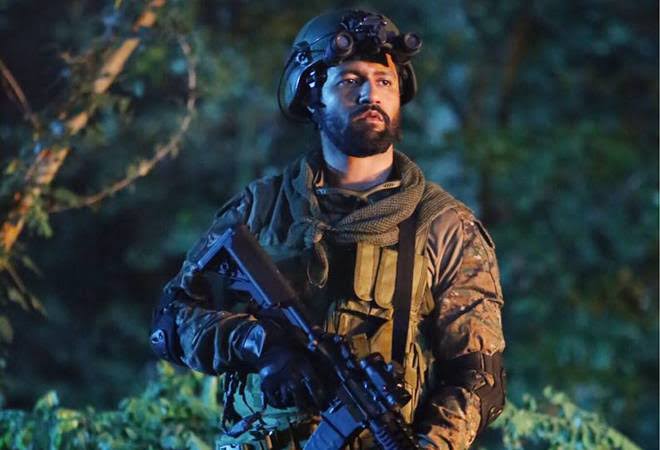
The phrase surgical strike might be more acceptable if it were common practice to perform surgery with high explosives.

—Gesnge Carlin

BTS Converting Yet To Be Opened World Cup Bridge into Their Own Personal Fashion Runway

BTS – Reason Behind Billion “Smiles”

BTS performs “Butter” on the “World Cup Bridge” for Jimmy Fallon’s “The Tonight Show”. Lighting up the sky over Seoul, looking hot & stunning, with their powerful vocals they made sure that the haters will fall for them after watching this performance.

BTS made guest appearance on NBC’s “The Tonight Show” starring Jimmy Fallon on 13th and 14th July. On second day, they performed “Butter” – The No. 1 song on Billboard Hot 100 charts for the last seven weeks, in a location that shocked not only Army’s but also many more people around the world. They performed on the “World Cup Bridge”. Which is under construction, the bridge is planned to cross the Han River in Seoul, South Korea and connect to the Mapo District and Yeongdeungpo District. This bridge is set to open to the public in August 2021.

As you can see in the video this is not pre-recorded. They did all the choreography, with live audio, and rigged up a light show that was coordinated with the song. And! Jimmy Fallon and his show just got their names on a major architectural construction in Seoul that hasn’t even opened yet, it’s an ultimate gift for Jimmy Fallon and The Tonight Show.

BTS has previously borrowed the National Museum of Korea, a historical palace, Seoul’s Incheon International Airport, a Mall and a theatre. When the world was still vibing on “Butter” and the Army was busy breaking their own record of “Dynamite” for “Butter” the band dropped their newest single “Permission to Dance”. “Butter” has spent seven weeks at No. 1 on the Billboard Hot 100, becoming their fourth No. 1 after “Dynamite”.

The biggest boy band in the world BTS members RM, Jin, Suga, Jhope, Jimin, V and Jungkook  dropped their newest single “Permission to Dance” on last friday (9th July) as you can see in the mv they converted the sign language into choreography and showed respect to almost everyone. I don’t understand how can someone still hate them. Criticizing someone is really easy but appreciating  someone for their work is so hard.

“Butter” has spent seven weeks at No. 1 on the Billboard Hot 100, becoming their fourth No. 1 after “Dynamite”. BTS is the most successful music groups in Guinness World Records history, alongside other chart topper like Ariana Grande, Madonna.

No one is saying you have to like BTS but saying that they have no talent can easily debunked.

They are making their whole nation feel proud, everyday they are setting new records, like “Suga” said, “They just want to make people happy with their music”. BTS is breaking their own records with their talent and with their killer looks. Remember before posting trash about them that “They have got ARMY right behind them, ALWAYS” cause,

“We Purple BTS”

Indian army

Indian armed forces are divided into three parts – Indian army, Indian Airforce and the Indian Navy. Indian army is the land-based unit, while Indian Airforce deals in air defence and Indian Navy is the naval unit. Our Indian army is the second largest in the world with about 1.23 million personnel on active rolls and another 9.6 lakhs in reserves.

Indian army is mainly responsible to protect the country against land based attacks. It also lends a helping hand to other agencies in dealing with terrorism, tackling emergency situations in the country and also rescuing people in case of natural calamities like flood, earthquake etc.

The current chief of army staff (COAS) is General Bipin Rawat (as of 2018). As Indian army is very huge, it is divided into regiments. Some important regiments are Punjab regiment, Madras regiment, Rajputana rifles, Sikh regiment etc. It also has its own intelligence unit, known as “Military Intelligence” or “MI” in short.

Indian army before independence (under British rule) had participated in World War I and II. After independence it has also fought many full-fledged wars like the Kargil war (1999), Bangladesh liberation war (1971), India -Pakistan war (1965), India-China war (1962) and first Kashmir war (1947). Besides these, Indian army has also handled some smaller conflicts like Siachen conflict (1984), Operation Polo (1948), India-China conflict (1967) etc.

There is no doubt that our Indian army is one of the best armies in the world.

Meet our Commandos…..!

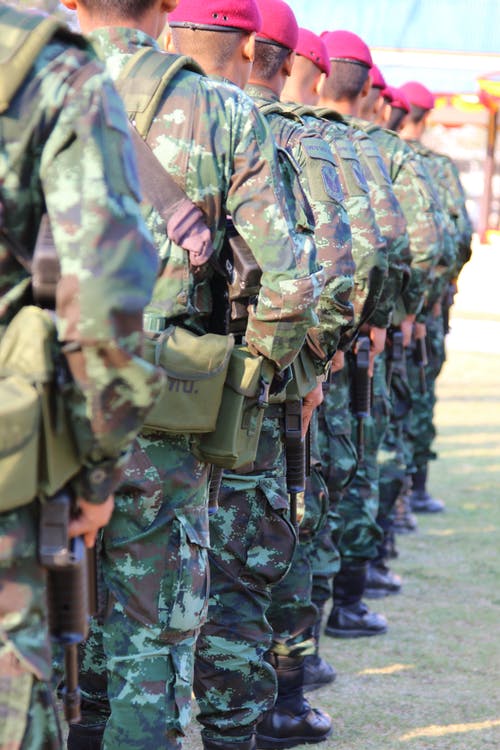
Photo by Somchai Kongkamsri from Pexels

India has many special forces ( SF ). The three branches of Indian armed forces have special forces units. There are other special forces which are operated by the civilian organization. Small groups from the military SF units are deputed in the Armed Forces Special Operations Division, which has a unified command and control structure. Research and Analysis Wing, the external Intelligence agency of India, has separate special forces under its control, namely the Special Group and the Special Frontier Force.


  • Para commandos :
    • The Indian Army has 7 units that are a part of a larger parachute regiment. This unit was created in June 1966 in the aftermath of the 1965 Indo-Pakistani war. An impromptu commando unit called Meghdoot Force, which took part in the 1965 war, formed the first nucleus of the permanent Para commando battalion which was to be raised under the Parachute Regiment. By 1969, the unit had grown into 2 battalions, viz. the 9 Para and the 10 Para. The unit’s first combat missions were conducted during the 1971 Indo-Pakistani war in which they undertook raids against Pakistan’s military. They are trained to carry out intelligence collection subversion and sabotage of vital enemy infrastructure and communication through deep penetration and surgical strike behind enemy lines. In 2002, the 2 Para (SF) participated in Operation Khukri in Sierra Leone to rescue 223 soldiers of the Indian Army’s 5/8 Gorkha Rifles who were deployed as UN peacekeepers but were surrounded by militants from the Revolutionary United Front of Sierra Leone. Some of the later reported missions carried out by Para (SF) include the 2016 ′Surgical Strikes′ and the 2015 Operation Hot Pursuit, purportedly undertaken inside Myanmar.
    • The list of PARA (SF) Battalions is as follows:
      1. 1 PARA (SF)
      2. 2 PARA (SF)
      3. 3 PARA (SF)
      4. 4 PARA (SF)
      5. 9 PARA (SF)
      6. 10 PARA (SF)
      7. 11 PARA (SF)
      8. 12 PARA (SF)
      9. 21 PARA (SF)
  • MARCOS ( Marine Commandos ) :
    • The special force unit of Indian Navy, is modelled on the US Navy SEALS. It was established in 1987. Months after their creation, MARCOS were deployed in Sri Lanka against the Liberation Tigers of Tamil Eelam (LTTE) in July 1987. 
    • Some main operations of MARCOS:
    • 1. Operation Tasha (1991) against the LTTE,
    • 2. Operation Zabardust (1992) against a ship that was smuggling arms,
      3. In support of the United Nations in Somalia (1993),
      4. Participated in 1999 Kargil War,
      5. MARCOS had participated in efforts against the 2008 Mumbai attacks.
    • After a 10 week long basic training, MARCOS are sent to train alongside Indian Army’s Para commandos for 3 weeks. Advanced training follows, during which MARCOS learn skills such as sky-diving, weapons training, counter-insurgency, languages and warfare in different terrains, among other things. Each MARCOS squad, called Prahar, is composed of 8 soldiers.
  • Garud Commando force :
    • The Garud commandos are the special forces of the Indian Air Force (IAF). Their tasks include counter-terrorism, hostage rescue, providing security to IAF’s vulnerably located assets and various air force-specific special operations. First conceived in 2002, this unit was officially established on February 6, 2004. It gets it name from Garuda ( A Hindu mythological God/bird ) .

      All Garuds are volunteers who are imparted a 52-week basic training, which includes a three-month probation followed by special operations training, basic airborne training and other warfare and survival skills. The last phase of basic training sees Garuds been deployed to get combat experience. Advanced training follows, which includes specialised weapons training.
  • Special frontier force :
    • The Special Frontier Force is a confidential special forces unit of the Research and Analysis Wing which was created on 14 November 1962, to conduct covert operations behind Chinese lines in the event of another Sino-Indian war. It works under the operational command of Indian RAW. The units personnel are derived from Tibetan resistance fighters. Is a dedicated mountain and Jungle warfare unit.
  • National security guard or Black cats :
    • The National Security Guard, which is a specialized counter-terrorism Federal Contingency Force. The NSG was formally created in 1986. It is modelled on the basis of the British Special Air Service and the German GSG 9. The commandos are trained to conduct counter terrorist tasks, including counter hijacking on land, sea and air, bomb disposal, post blast investigation and hostage rescue missions.
  • Special protection group :
    • Formed in the 1988, SPG is tasked with proximate security of prime minister, former PMs and their immediate family members. They carry some of the most sophisticated weapons that include the FN Herstal (Assault rifle ), Glock pistol and FN Herstal ( P90 ) .

( The main source of the article : https://en.wikipedia.org/wiki/Special_forces_of_India )

INDIA PAID TRIBUTE TO THE VALIANT MARTYRS OF PULWAMA ATTACK

It’s been two years since the Pulwama terror attack which took the lives of 40 Indian soldiers happened. The 14th of February leaves a deep sigh in the hearts of every patriotic Indian. It is one of the worst hit attacks and is remembered as a ‘ black day’ in the history of India. While paying his tributes to the Pulwama martyrs on the occasion of the second anniversary of the attack, Prime minister Narendra Modi said: “No Indian can forget this day. Two years ago, the PulwamaAttack happened. We pay homage to all the martyrs we lost in that attack. We are proud of our security forces. Their bravery will continue to inspire generations”.

The gruesome incident which shook the whole nation took place on 14th February 2019 after the security convoy of 78 buses carrying around 2500 military personnels of the Indian Army was rammed by an IED-laden vehicle while traveling from Jammu to Srinagar. Investigations have revealed that the car which rammed the convoy was driven by a 22 year old suicide bomber Adil Ahmad Dar and carried nearly 300 Kgs of explosives including 80 Kgs of RDX and ammonium nitrate. The attack which took the lives of 40 CRPF jawans was later claimed by the Pakistan based terrorist group named Jaish-e-Mohammed (JeM). Even though the investigation agency was able to confirm the identity of the suicide bomber through DNA samples, they are yet to trace the source of the explosives used. 

Along with the Prime Minister, many Senior officers of the various armed forces of the country also participated in the remembrance and paid tribute to the valiant heroes of the nation. “Did not Forgive, will not Forget: Salute to our brothers who made the supreme sacrifice for the nation in #PulwamaAttack. Indebted, we stand with the families of our valiant Bravehearts,” the force said in a Twitter post.

One more attack = Indo-China WAR!!!

The relation between Indian and Chinese army are now being worse. India holds a record of never attacking any of the army first till date. Many near by countries think that India is weak and cannot attack first, but this is our spirituality and religion to avoid any fight, but when the things get worse there need to be done something. India never approach any army for fight it always keep the things calm and to solve the problem with words and not the wars. India always gave a extraordinary action in case of any mischief done by the opponents, India carried out many operations like:

  • Operation Vijay
  • Operation Meghdut
  • Operation Surya Hope
  • Operation Brasstackes
  • Operation Cactus and many more to list…

India also gave a very strong answer of the Pulwama attack. India has the strongest army and technology support from Russia and US.

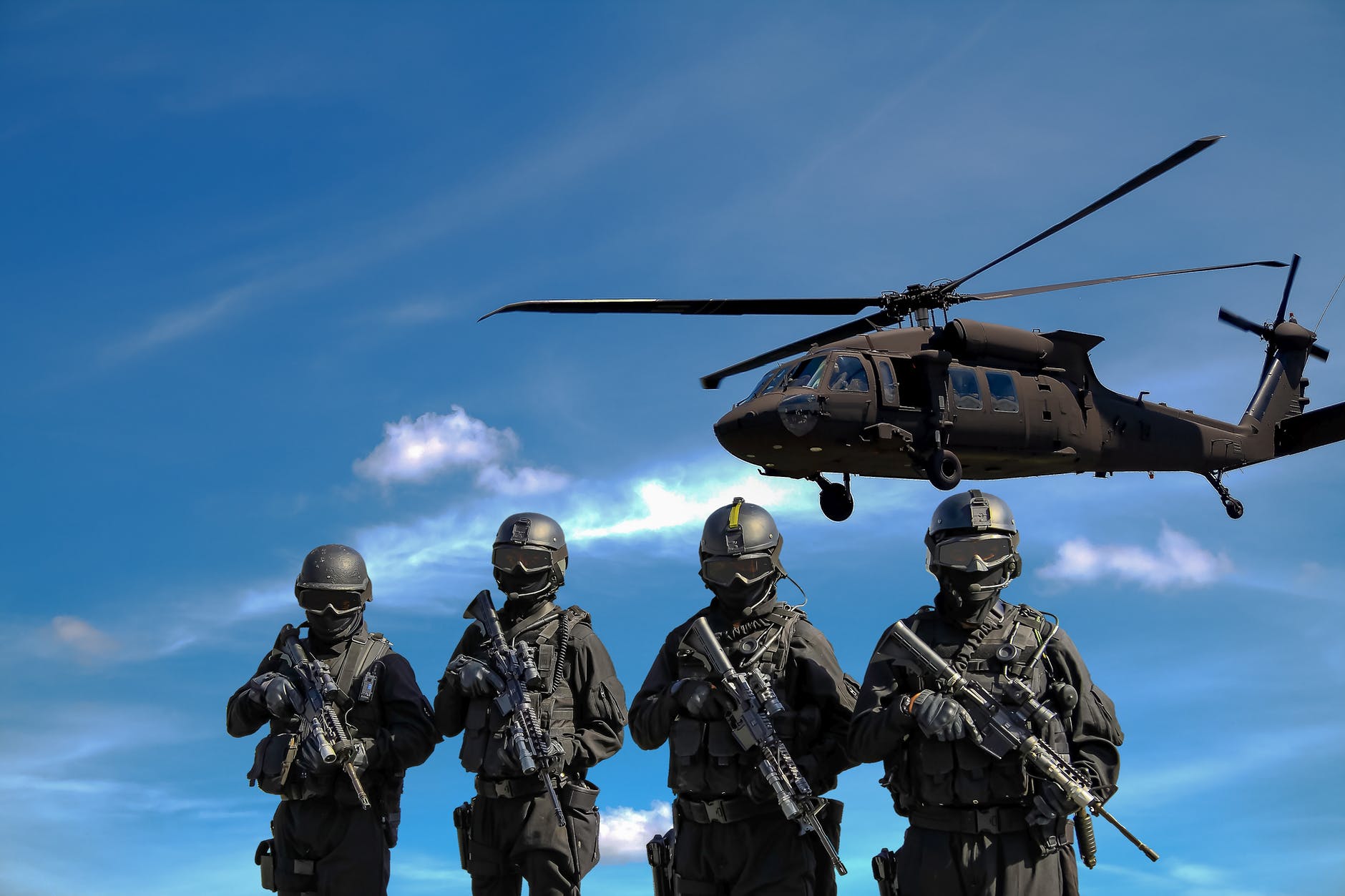
police army commando special task force
Photo by Somchai Kongkamsri on Pexels.com

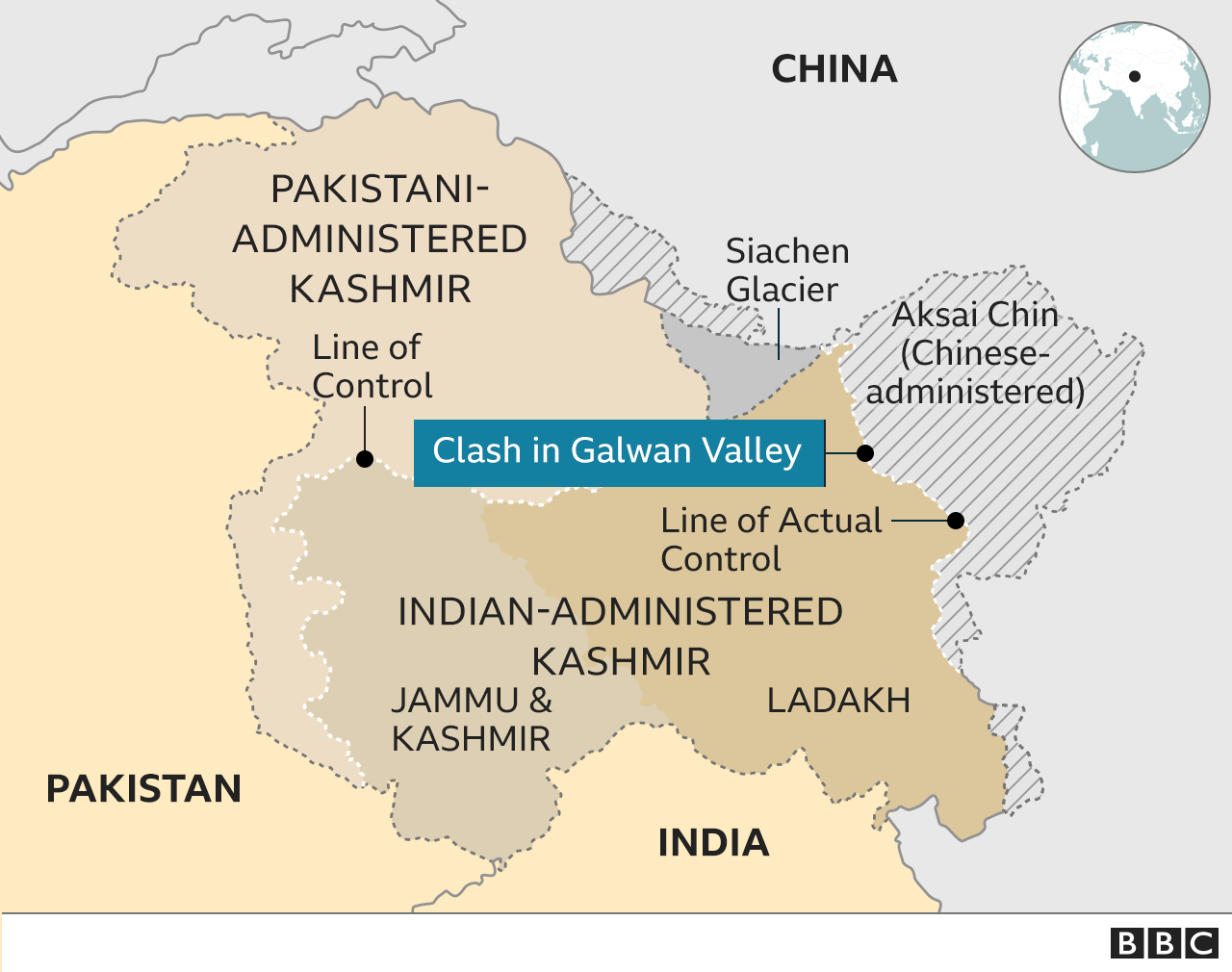
Recantly, India was betrayed by dragons during a normal peace talk Chinese army betrayed Indian army by sudden attack on our prestigious soldiers. In this betrayal our 20 soldiers lost theirs lives for India:


  1.  Col B Santosh Babu
  2.  Nb Sub Nuduram Soren
  3.  Nb Sub Mandeep Singjh
  4.  Nb Sub Satnam Singh
  5.  Hav K Palani
  6.  Hav Sunil Kuma
  7.  Hav Bipul Roy
  8.  Nk Deepak Kumar
  9.  Sep Rajesh Orang
  10.  Sep Kundan Kumar Ojha
  11.  Sep Ganesh Ram
  12.  Sep Chandrakanta Pradhan
  13.  Sep Ankush
  14.  Sep Gurbinder
  15.  Sep Gurtej Singh
  16.  Sep Chandan Kumar
  17.  Sep Kundan Kumar
  18.  Sep Aman Kumar
  19.  Sep Jai Kishore Singh
  20.  Sep Ganesh Hansda

_112919157_kashmir_military_clash_x2_640-nc

Image source: BBCnews

In return Indian army gave an dangerous answer with their 35 troops by killing. PM Modi gave freedom, if in near future again this type of activities are done by Dragons than Indian army can do anything without any upper orders. Indian army are ready with thier backpacks and loaded arms and waiting for activities by dragons and it will be close to WAR.

download (1)

Image source: Navbharatimes.com