AI and ADs!

Summarizing Artificial Intelligence – If you ask 50 various professionals what artificial intelligence is, you’ll possibly get 50 different opinions. But one simple definition comes from Demis Hassabis, CEO of DeepMind, an AI startup acquired by Google. According to Hassabis AI is the “science of making machines smart.” We can give machines the potential to see, hear, speak, move, and write. Of course, we can make them learn and improve themselves. The best example is Alexa. This virtual voice makes predictions on its own. Science geeks who loved the AI technology in the series of Iron Man which made this movie much popular. Also, the AI technology in the series of End-Game (Jarvis, Vision) made the movies a “buster hit”.

Advertising and Artificial Intelligence.

AI creating virtual models for advertising and fashion. A Japanese company named DataGrid developed high-resolution images that can be used as virtual models. Their deep learning algorithm could develop a body that does not exist using Generative Adversarial Networks(GAN). It supported full-body visualization with complete hair, face, and can be used by fashion sites without paying the models. Artificial Intelligence instructs how your funding gets used, who sees your ads, and how beneficial your overall campaigns are. For example Facebook ads, you would have come up with popping ads asking for feedback. Ad frequency and relevance score are key pieces of data that Facebook’s algorithms use-without human involvement-to dictate how much you pay and how your ads are displayed. Advertisers’ campaign performance and budget effectiveness are likely authorized by the complex interplay of data points used in the AI systems that energize today’s ad exchanges. 

  • Optimize budget targeting – Artificial intelligence tools exist today that can automatically optimize advertising spend and targeting. AI can process your ad spend and targeting data, look at your results, then learn what actions (spending changes, targeting changes, etc.) will generate better performance.
  • Ad creation and management – Creating ad, managing, and building ad campaigns also uses AI. AI-powered tool Phrasee actually writes Facebook and Instagram ad copy for you, from scratch, and the ads are developed to convert into clicks based on what’s done in the past. The tool gets better over time on its own, as it learns from each new ad what language directs the better performance. Other AI-powered tools also help in saving time in overall ad campaign surveillance.

“That’s where we stand in the AI today”.

8 WAYS Technology is Helping To Fight the CORONA VIRUS 2020

As Corona virus keeps on getting bigger and spreads so is the technology and innovation. It is making peoples life easier in the lockdown by keeping us all virtually connected. Technology is helping the authorities fight this virus.

The Drones in the Skies-

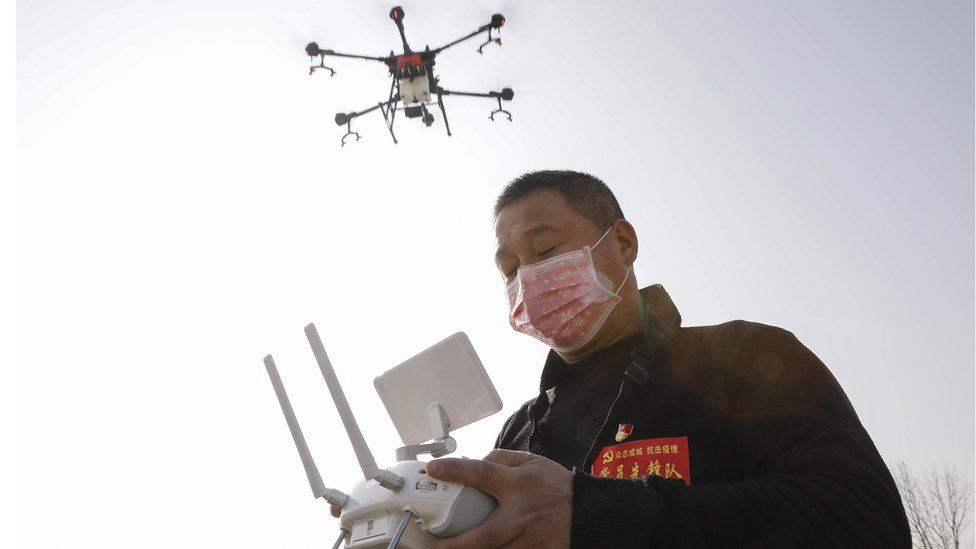
These flying camera birds are helping in patrolling and making sure evrybody is maintaining social distancing. They help the officials check on things and also maintain social distancing at the same time. In remote areas agricultural drones were used for spraying disinfectants. In some parts of the country theyare being used to deliver crucial medical supplies.

Coronavirus: China's tech fights back - BBC News

Online Clinics and Counseling-

Due to this one illness other diseases have lost its importance. People suffering from issues like hypertension and arthiritis are being provided with online medical assistance. Many institutes are also offering online psychological counseling service.

How Technology Has Made Online Medical Consultation Possible ...

Robot nurses and Artificial Intelligence scans

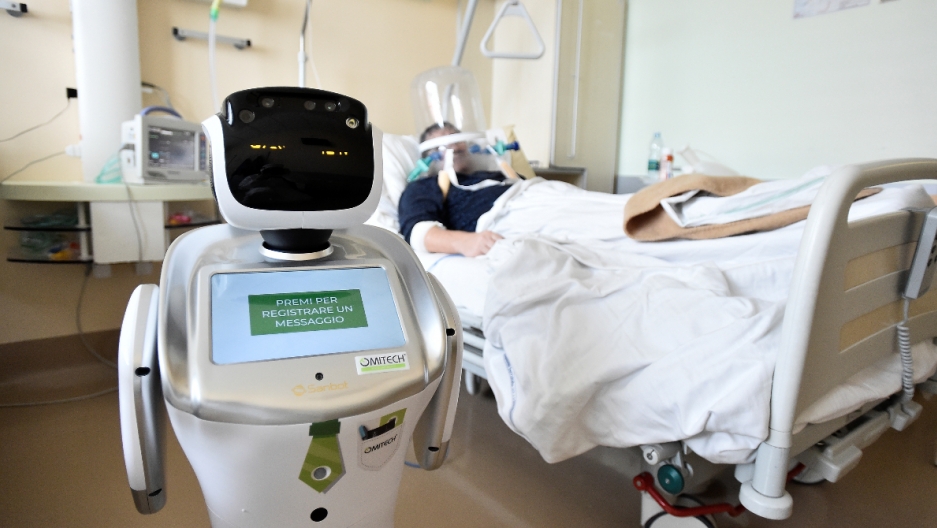
Robots are also used in many Chinese hospitals to deliver food, medicine and other supplies to patients; to disinfect hospitals and other public areas; to check patients temperatures; and to answer common questions. Coronavirus is being   diagnosed using AI, which can read thousands of CT scans in 20 seconds with an accuracy rate of 96%.

Robot nurse helps Italian doctors care for COVID-19 patients

Virtual Classrooms

After weeks of schools being closed, possibly the biggest challenge for parents is keeping children occupied and continuing their schoolwork.  To enable this, many schools have rolled out online learning platforms, where students take courses and teachers give lectures from home, via live-streaming platforms.

With online classes in vogue, schools shift focus to feedback and ...

Research and Development

Within the first few weeks of the virus, China had sequenced the genome. By posting that sequencing online, it trigged a ripple effect in research labs across the world, with a surge in orders for synthetic samples of the virus to build copies of it from scratch. This allowed new treatments to be trialed – even experiments that failed offered vital clues in guiding researchers on where they should focus.

Three TN medical colleges to get virus research labs in 6 months ...

Smartphones and Internet

Smartphones are playing a critical role in reducing exposure. Delivery apps offer contact-less delivery, whereby drivers drop food off at a specific point – including a card stating the temperature of everyone involved in cooking and delivering the food. Another offers users maps marking residential communities with confirmed cases and their proximity to them. Meanwhile, mobile payment apps are reducing transmission along paper money, which can carry viruses for up to 17 days. With the world’s highest penetration of e-wallets and two of the world’s largest mobile pay, Chinese fin-tech is helping to slow the coronavirus spread.

India lockdown throws online delivery out of gear, millions cry

Work From Home

A major challenge during the virus is being able to work.  Several tech companies are offering free online collaborative tools. Other businesses have quickly adopted work-from-home policies, using online meeting software, collaborations platforms and LBS technology to clock in and  ensure employees stay home. At UNDP, the use of Zoom teleconferencing and ERP Platforms have allowed us to keep working.

Coronavirus and Working From Home: How to Keep the Kids Busy - Nelson

Virtually Connected

Compulsory quarantine has disrupted daily life and curtailed social interaction for nearly one fifth of the global population. This is leading millions to meet online instead. Families dine together with relatives in distant cities, raising a glass to each other on camera. Even weddings have been held in Virtual Reality.

Things To Do With Friends While Hanging Out Virtually - Addison ...

While the use of technology can at times present its own challenges, and fuel debates about privacy and public good; in the fight against the coronavirus, it is playing a critical role in offering treatment, information, support, food, schooling and greater safety for many.

How artificial intelligence is transforming the future of digital marketing

From smart search options and personalized messaging to being used in campaigns and marketing, AI and machine learning are increasingly being used in digital marketing.

Digital marketing relies on leveraging insights from the copious amounts of data that gets created every time a customer interacts with a digital asset. Algorithms optimize various factors and data points that influence digital marketing success.
In 2020, we anticipate a significant uptick in the mainstreaming of AI and machine learning use cases in digital marketing across several areas. 

Search will get very smart

In the past year, online search has had several AI and machine learning developments. Google is leading the pack with exciting applications in information retrieval. For example, Google’s BERT technology can process a word in the context of all the other terms in a sentence, rather than one-by-one in order. BERT also enables anyone to train their own state-of-the-art question answering system.  

Customization of search results and the results page based on learning from past interactions and preferences of a user is another application of machine learning used in search.

AI-driven personalization of messaging 

Several attach companies have been focusing on using AI and machine learning to find the right audience to write better ads than humans, and to increase conversion rates and engagement with the target audience. There are also several AI-led developments in the area of creating dynamic ads and landing pages to personalize marketing messages on the fly. 

AI has an application in content creation in terms of determining the logic of personalization as also crating content specific to an individual, using techniques such as natural language generation (NLG).

Use of machine learning in campaign operations 

Platforms such as Google and Face book have been at the forefront of AI/ML applications in marketing. Starting from smart bidding and smart campaigns to auto-generated ads, Google is making it easy for advertisers.

Smart bidding options such as TROAS, TCPA, and others use advanced machine learning algorithms to train on data at a vast scale to make accurate predictions about how different bid amounts might impact conversion or conversion value and assist advertisers in optimizing without getting into too many details. 

Google factors in a wide range of contextual signals (through search data) to predict user behavior and to influence auction time bidding as per the goal set by advertisers. Facebook has also incorporated machine learning across campaign planning and execution, as also in ad placements and ad delivery.

Similarly, on the organic search side, machine learning-based product ALPS reverse engineers Google’s ranking algorithm, and is able to accurately quantify ranking drivers, provide precise recommendations for changes, and predicts the impact of SEO actions before they are implemented.

Similar technology to drive improved ad copy testing in digital marketing exists. These help in evaluating ad copies and landing pages on various parameters like relevancy, use of action promoters/inhibitors, urgency inducers, page layout, load times, etc., to gauge the impact on ad relevance, expected CTR, and landing page experience. 

Future trends 

AI will also have additional application in digital marketing with the uptick in the adoption of technologies such as VR and AR, as commercial use cases of these technologies find wider adoption in retail and other sectors.

Many retailers are also testing AI and VR/AR technologies together to make the user experience personalized to an individual.

Other areas of impact include voice search. We will increasingly see ads about things which we just said or talked about, but haven’t searched for yet. Similarly, image search is also being used by many brands for their consumers to match patterns and identify products using image search. 

The coming years will continue to unfold newer potential uses of AI in digital marketing.