UNESCO World Heritage and India

Daily writing prompt
What is the greatest gift someone could give you?

UNESCO World Heritage is a program that was created by the United Nations Educational, Scientific and Cultural Organization (UNESCO) in 1972. Its aim is to identify and preserve important cultural and natural sites around the world that are considered to be of outstanding universal value.
The program is based on the belief that these sites represent the collective heritage of all people, and that they should be protected and preserved for future generations. UNESCO World Heritage sites can include anything from ancient ruins and historical buildings to natural wonders like mountains and forests.

Currently, there are over 1,100 sites that have been designated as UNESCO World Heritage sites in over 167 countries. These sites are selected based on their cultural or natural significance, and must meet a set of strict criteria to be considered for inclusion on the list.

The designation of a site as a UNESCO World Heritage site brings international recognition and protection to that site, as well as increased tourism and economic benefits to the surrounding area. However, it also comes with a responsibility to ensure that the site is properly maintained and preserved for future generations.

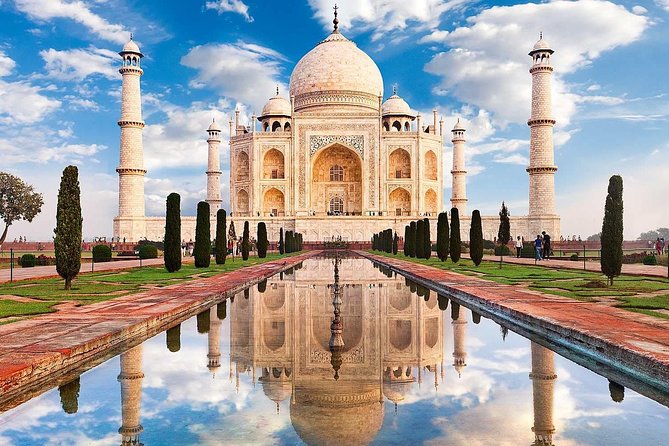
India has a rich cultural and natural heritage, and it is home to a total of 38 UNESCO World Heritage sites. These sites are recognized for their outstanding universal value and are protected and preserved by the Indian government. Here is a list of some of the most famous UNESCO World Heritage sites in India:

  1. Taj Mahal, Agra
  2. Agra Fort, Agra
  3. Fatehpur Sikri, Uttar Pradesh
  4. Ajanta Caves, Maharashtra
  5. Ellora Caves, Maharashtra
  6. Sun Temple, Konark, Odisha
  7. Group of Monuments at Hampi, Karnataka
  8. Khajuraho Group of Monuments, Madhya Pradesh
  9. Mahabodhi Temple Complex, Bodh Gaya, Bihar
  10. Group of Monuments at Pattadakal, Karnataka
  11. Great Living Chola Temples, Tamil Nadu
  12. Mountain Railways of India (Darjeeling, Nilgiri, Kalka-Shimla), West Bengal, Tamil Nadu, Himachal Pradesh
  13. Qutub Minar and its Monuments, Delhi
  14. Red Fort Complex, Delhi
  15. Humayun’s Tomb, Delhi
  16. Elephanta Caves, Maharashtra
  17. Western Ghats, Karnataka, Kerala, Tamil Nadu, Maharashtra, Goa, Gujarat
  18. Chhatrapati Shivaji Terminus (formerly Victoria Terminus), Mumbai, Maharashtra

These sites are a testament to India’s rich cultural and natural heritage and attract millions of tourists from around the world every year.
INTERNATIONAL TOURIST FOOTFALL

The Ministry of Tourism undertakes various promotional activities in important and potential tourist generating markets with the objective of showcasing India’s tourism potential and promoting tourism to the country, including the state of Himachal Pradesh. Details of promotional activities are as follows:

i.          Participation in international travel fairs and exhibitions such as World Travel Market (WTM) London, Feria Internacional de Turismo (FITUR) Madrid, International Travel & Hospitality Show (MITT) Moscow, Asia-Pacific Incentives and Meetings Event (AIME) Sydney, Internationale Tourismusbörse (ITB) Berlin, Arabian Travel Market (ATM) Dubai, International Meeting Exchange (IMEX) Frankfurt, International & French Travel Market (IFTM) Top Resa Paris, Japan Expo, Internationale Tourismusbörse Asia (ITB Asia), Singapore etc.

ii.         The Chalo India initiative has been launched by the Ministry to encourage the huge Indian diaspora to become Incredible India ambassadors and encourage their five non-Indian friends to visit India, every year.

iii.        A Chalo India portal has also been developed for registration of the Indian diaspora. Further gratis e visa to one lakh foreign tourists, visiting India under the referral program was announced.

iv.        Ministry of Tourism has launched the Incredible India Content Hub on the revamped Incredible India digital portal (www.incredibleindia.gov.in) on 27th September, 2024. The Incredible India Content Hub is a comprehensive digital repository of high-quality images, films, brochures and newsletters which can be easily accessed by the industry stakeholders (travel media, tour operators, travel agents) across the globe required to amplify Incredible India in all their marketing and promotional efforts. The revamped Incredible India Digital Portal is a tourist-centric, one-stop digital solution designed to enhance the travel experience for visitors to India.

v.         Inviting media personalities, tour operators and opinion makers to visit the country under the Hospitality Programme of the Ministry.

vi.        The promotions are being carried out in association with the State Governments and the Overseas Indian Missions including the 20 identified Indian Missions.

Ministry of Tourism, Government of India is not the regulatory authority for deciding the rate structure charged by Tourism Stakeholders.

20 students from India to participate in Sakura Programme 2024

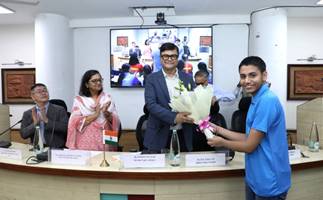
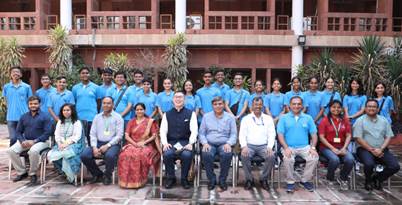
The Department of School Education & Literacy, Ministry of Education (DoSEL), is sending 20 school students and 2 supervisors to Japan to participate in the Sakura Programme 2024 along with 5 other countries from 20-26 October 2024. The enthusiastic and excited children were flagged off by Shri Charanjt Taneja, Deputy Secretary, DoSEL; Dr. Amarendra Prasad Behera, Joint Director, CIET-NCERT; and Ms. Kirti Panwar, Deputy Commissioner, Navodaya Vidyalaya in a ceremony at CIET-NCERT organised by DoSEL. The event was also attended by Mr. Kemmochi Yukio, Manager of the Japan Science and Technology Agency, and officials from DoSEL-MoE. These 20 students (10 boys and 10 girls) are from Navodaya Vidyalayas and alumni of the PRERANA program from across the country.

To develop the intellectual horizon and scientific exploration among young learners, the Japan Science and Technology Agency (JST) has been implementing the “Japan-Asia Youth Exchange Program in Science” also known as the “Sakura Science Programme” since 2014. India was added to the Sakura Program in 2015. The students are invited under the programme for short-term visits to Japan, giving them the opportunity to experience Japan’s cutting-edge science and technology as well as its culture.

The National Education Policy (NEP) 2020, while emphasizing the importance of curriculum and pedagogy in schools, endorses that “Learning should be Holistic, Integrated, Enjoyable and Engaging in itself. Also, NEP-2020 states that in all stages, experiential learning will be adopted as standard pedagogy within each subject, and with explorations of relations among different subjects. It is in this context that educational trips and excursions to various places of importance in terms of historical, cultural, social and technological development are of paramount importance. Japan as a developed nation, a friendly country, along with technological advancements, is also a favourite destination for educational exposure. Therefore, visiting a country like Japan is always enriching and provides an opportunity for the exploration of innovative practices.

India participated in the program for the first time in April 2016. So far, 553 students and 85 supervisors have visited Japan under this programme. The last batch visited Japan in June 2024.

DoSEL flags off 47 students from India for Sakura Science High School Programme 2024

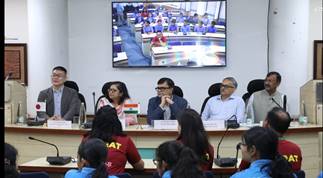
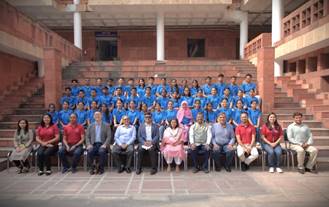
Shri Sanjay Kumar, Secretary, (DoSEL), Ministry of Education, flagged off a group of 47 enthusiastic and excited school children, who have been invited to participate in Sakura Programme 2024 from India along with 5 countries (Indonesia, Marshall Islands, Micronesia, Palau and Peru) from 10th-16th November 2024. The ceremony at CIET-NCERT, New Delhi, was organised by DoSEL and was attended by Prof. Dinesh Prasad Saklani, Director, NCERT; Smt. Archana Sharma Awasthi, Joint Secretary, DoSEL; Mr. Kemmochi Yukio, Manager, Japan Science and Technology Agency, Japan; Dr. Amarendra Prasad Behera, Joint Director, CIET-NCERT; and officials from DoSEL.

In this group, Japan Science and Technology Agency (JST) has invited 47 school students and 4 supervisors. These 47 students (18 boys and 29 girls) are from Kasturba Gandhi Balika Vidyalaya and Government Schools of Telangana, Jharkhand, Sikkim, Chandigarh, Kerala, Manipur, Meghalaya, Haryana, Arunachal Pradesh, Jammu & Kashmir, Uttar Pradesh and Maharashtra and Kendriya Vidyalayas.

To develop the intellectual horizon and scientific exploration among young learners, the JST has been implementing the “Japan-Asia Youth Exchange Program in Science” also known as the “Sakura Science Programme” since 2014. India was added to the Sakura Program in 2015. The students are invited under the programme for short-term visits to Japan, giving them the opportunity to experience Japan’s cutting-edge science and technology as well as its culture.

The National Education Policy (NEP) 2020, while emphasizing the importance of curriculum and pedagogy in schools, endorses that “Learning should be Holistic, Integrated, Enjoyable and Engaging in itself. Also, NEP-2020 states that in all stages, experiential learning will be adopted as standard pedagogy within each subject and with explorations of relations among different subjects. It is in this context that educational trips and excursions to various places of importance in terms of historical, cultural, social and technological development are of paramount importance. Japan, as a developed nation, a friendly country, along with technological advancements, is also a favourite destination for educational exposure. Therefore, visiting a country like Japan is always enriching and provides an opportunity to explore innovative practices.

India participated in the program for the first time in April 2016. So far, 572 students along with 87 supervisors have visited Japan under this programme. The last batch visited Japan in October 2024.

*****

1stCentury would be of Asia with India leading

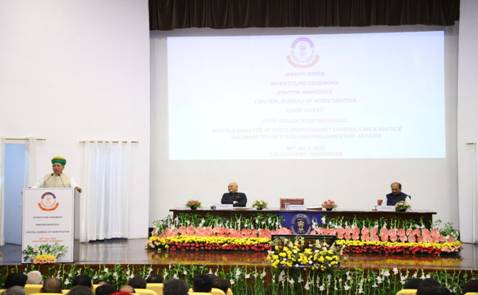
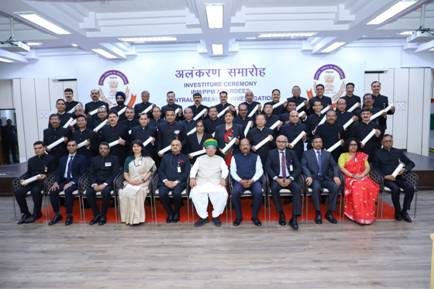
 The Central Bureau of Investigation today organised an Investiture Ceremony at CBI Academy, Ghaziabad (Uttar Pradesh). On this occasion, Shri Arjun Ram Meghwal, Union Minister of State (Independent Charge), Ministry of Law & Justice and Minister of State for Parliamentary Affairspresented the President’s Police Medal (PPM) for Distinguished Service and Indian Police Medal (IPM) for Meritorious Service to 39 CBI officers/officials. Congratulating the medal winners and their familiesShri Meghwal said that it is a proud moment for all of us to have recognized their service rendered to the nation. He added that this also acts as a source of inspiration for all service officials to excel in their job. Appreciating CBI in its role, he observed that not only CBI’s importance is being recognized in the society but also its investigation is the best, which is reflected in high conviction rate in cases investigated by CBI. Shri Meghwal emphasised CBI is rightly regarded as the best investigating agency which is reflected in demand for CBI probe every now and then in complex and sensitive cases by various stakeholders.

WhatsApp Image 2024-07-04 at 3.16.12 PM (1).jpeg

Delving on the new Criminal Laws which has been implemented with effect from 1st July, 2024, Shri Meghwal asserted that these laws will bring in ease of living in a big way for citizenry. These laws will expedite delivery of justice and save crucial time of all the stakeholders spent during litigation. The Minister stressed that this will prove highly productive for the nation as the energies would be channelised towards the process of development of the society and eventually lead to higher progress. Referring to India recently galloping to fifth largest economy in the world from the 11th position few years ago, he underlined that reforms/ improvements in judicial process will also contribute to the endeavour and goal of taking India to 3rd position in the coming few years.

Shri Meghwal underscored the significance of India’s progress as envisioned by Prime Minister Shri Narendra Modi that India would play pivotal role in the 21stcentury on a global scale.Tracing the 19th century with regards to progress as that of Europe, led by England; 20th century that of America led by United States of America (USA), he expressed confidence that 21st century would be of Asia led by India. Reminiscing Swami Vivekananda’s forecast, he said that India is set for the landmark by its varied parameters inter alia democratic setup of the society, progressive growth in the sphere of economy and technology, family value system and family setup, India’s helpful gestures in world arena and roles taken up on international platforms,  growing role of citizenry, environmental initiatives, strategic lead in the sphere of Yoga, Ayurveda, Space etc. have placed India in a leadership position world over.

98ffe62f-a865-4753-9c69-ff43f24174ae.jpg

In his welcome address, Shri Praveen Sood, Director, CBI complimented the medal recipients and stated that they have achieved the laurels due to their professional hard work, resilience and fortitude which have earned CBI great esteem. He further congratulated the recipient’s family members. On this occasion, Shri Sood emphasised that CBI and Law Ministry are working in synergetic and collaborative environment to prioritise more efficient prosecution along with investigation. Director CBI stressed that CBI’s role has been evolving with the passage of time, from handling primarily anti-corruption cases in the beginning to special/ economic crimes, cybercrimes, bank frauds, etc. Shri Praveen Sood also said that CBI is working with Ministry of Law & Justice with regards to successful implementation of three new Criminal Laws informing that CBI has started implementing these laws. He offered that CBI is geared to handhold States and other stakeholders in helping them in implementation of these laws.

Top Scholarship for African Scholars in Asia


  1. Japanese Government Scholarships (Monbukagakusho): These scholarships are offered by the Japanese government to international students, including Africans, for various academic programs at Japanese universities.

  2. Chinese Government Scholarship – Belt and Road Program: China offers scholarships to students from countries along the Belt and Road, including many African nations. These scholarships cover a wide range of academic fields and degree levels.

  3. Korean Government Scholarship Program (KGSP): The Korean government provides scholarships to international students, including Africans, for undergraduate and postgraduate studies in South Korea.

  4. TaiwanICDF Scholarship Program: The Taiwan International Cooperation and Development Fund (TaiwanICDF) provides scholarships for students from developing countries, including African nations, to pursue higher education in Taiwan.

  5. The Asia Foundation Development Fellows Program: While not a traditional scholarship, this program provides opportunities for professionals from Asian countries, including African nations, to enhance their leadership skills and contribute to positive social change.

  6. Malaysia International Scholarship (MIS): The Malaysian government offers scholarships to international students, including Africans, for postgraduate and postdoctoral studies in Malaysia.

  7. INSEAD Africa Leadership Fund: INSEAD, a business school with campuses in France, Singapore, and Abu Dhabi, offers scholarships to students from Africa. Check the specific eligibility criteria and application process on their official website.

It’s important to note that scholarship programs and eligibility criteria may change, so it’s recommended to visit the official websites of the respective scholarship providers for the most up-to-date information. Additionally, you may want to explore scholarship opportunities offered by specific universities or organizations in the Asian countries you are interested in.

Religion in India

Being a part of a mixed economy , where politics tend to exploit the peace between different religions and so on …….. .

“India was the motherland of our race, and Sanskrit the mother of Europe’s languages: she was the mother of our philosophy; mother, through the Arabs, of much of our mathematics; mother, through the Buddha, of the ideals embodied in Christianity; mother, through the village community, of self-government and democracy. Mother India is in many ways the mother of us all.”

Will Durant, American historian

And now you want to know why I am being so dramatic over such things . Well , if you want to know than start reading the editorial .

Introduction

Indians say it is important to respect all religions, but major religious groups see little in common and want to live separately

More than 70 years after India became free from colonial rule, Indians generally feel their country has lived up to one of its post-independence ideals: a society where followers of many religions can live and practice freely.

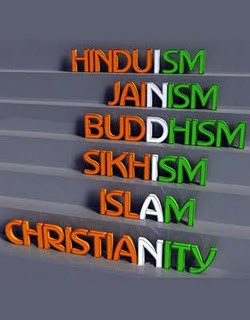
Religion has historically influenced Indian society on a political, cultural and economic level. There is a sense of pride associated with the country’s rich religious history as the traditions of Hinduism, Buddhism, Sikhism and Jainism all emerged out of India. Moreover, while a majority of people in India identify as Hindu (79.8%), the medley of religions that exist within the country continually impact contemporary society.

Census

The 2011 Indian census indicated that 79.8% of Indians identified as Hindu, 14.2% identified as Muslim and 2.3% identified as Christian. A further 1.7% of the population identified as Sikh, 0.7% identified as Buddhist and 0.37% identified as Jain. Due to the massive population size of India, religious minorities still represent a significant number of people. For example, although only 0.37% of India may identify with Jainism, that still equates to over 4 million people. While not all religions in India can be discussed in detail, the following provides an overview of the major religions in the country as well as sizable religions that originated in India.

Social beliefs

“India has two million gods and worships them all. In religion all other countries are paupers; India is the only millionaire.”

Mark Twain

Karma, Acceptance and Personal Choice . Many Indians tend to have a sense of acceptance towards one’s life position or a belief that, due to actions in one’s past life, good or bad personal circumstances are deserved. This attitude partly stems from religious ideas such as ‘karma’ (the idea that one’s actions will affect their current or future life) and ‘samsara’ (the cycle of rebirth).

The interplay of these social, cultural and religious factors allows people to be accepting of life events and trajectories. However, this is not to be interpreted as Indians being unwilling to take responsibility for life circumstances. Many often contemplate how their actions may impact their future and make decisions accordingly. Some of India’s youth are challenging a fatalistic perspective by asserting their free will to choose their vocation, spouse and other life factors. Indeed, as social mobility becomes more common, there is a growing belief that one can change their circumstances.

It’s Role

Religion plays a major role in the Indian way of life. Rituals, worship, and other religious activities are very prominent in an individual’s daily life; it is also a principal organizer of social life. The degree of religiosity varies amongst individuals; in recent decades, religious orthodoxy and observances have become less common in Indian society, particularly amongst young urban-dwellers. As of the politics , they play with religion , people’s belief and with their trust .

Link :

Water

Water is the basic needs of the individual for the Survival. Some of the things like oxygen, water, food are very essential for the individual to live. After the oxygen, water is very much important for the individual survival and for the whole environment as well. Water is used in the daily basis for many of the activities like drinking, cleaning, watering, and also for some of the electric purposes etc.

There are plenty of water in the seas but there is no use of them. Because, all the seawater are salty and not food for drinking purpose. They can be made for drinking by some of the beautification methods which takes lots of processes and also the time. Scarcity of the water is not only the India’s problem but also the global problem.

If the wasteage of water is continued in the same way, there will be a day where no water can be found for drinking purposes and for some of the utility purposes. Most of the people waste water without any need. Using water for the purposes are all good but Wasting the water without any reason is a bad habit that an individual must not develop. It is very easy to waste water rather than saving the drop.

The main sources of water are surface water, ground water and rain water.

Importance of water :

Water is very important to the human body. Every one of your cells,organs and tissues use water to help with temperature regulation, keeping hydrated and maintaining bodily functions. In addition, water acts as a lubricant and cushions your joints. Driniking water is great for your overall health. Because your body loses water through breathing, sweating, and digestion, it’s important to rehydrate by drinking fluids and eating foods that contain water.

Water delivers important nutrients to all of our cells,especially muscle cells, postponing muscle fatigue. Water helps weight loss. Water helps you feel full longer,without adding any additional calories.

Benefits of Drinking water :

* Increases Energy & Relieves Fatigue. Since your brain is mostly water, drinking it helps you think, focus and concentrate better and be more alert.

* promotes weight loss.

* Flushes out Toxins.

* Improves skin complexion

* Maintains Regularity.

Best source of water :

1. Watermelon – water content : 92%

2. Strawberries – water content : 91%

3.cantaloupe – water content : 90%

4.peaches – water content : 89%

5.oranges – water content : 88%

6. Skim Milk – water content : 91%

7. Cucumber – water content : 95%

8. Lettuce – water content : 96%

9. Broths and soups – water content : 92%

10. Zucchini – water content : 94%

11. Celery – water content : 95%

12. Plain yogurt – water content: 88%

13. Tomatoes – water content : 94%

14. Bell peppers – water content : 92%

15.cauliflower – water content : 92%

16. Cabbage – water content : 92%

17. Grape fruit – water content : 88%

18. Coconut water- water content : 95%

19. Cottage cheese – water content: 80%

Disadvantages of water :

It is said that too much consumption of water can lead to fluid overload in the body and imbalance in the body. Excess water can lead it lower sodium levels in the body, which may further lead to nause, vomthing, cramps, fatigue. This condition is known as hyponatremia.

The best method to save water is to use in limited amounts. That is, to limit the water without wasting much water.

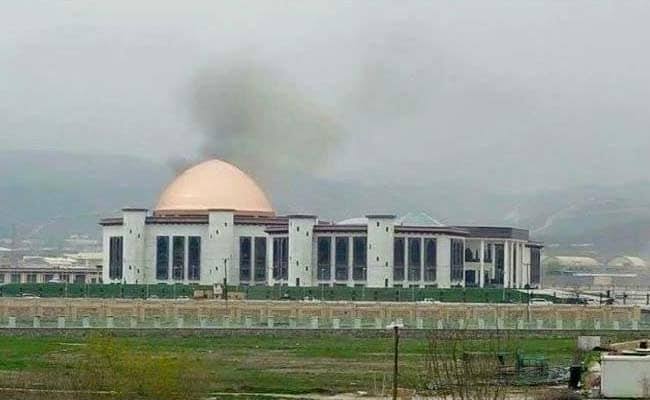
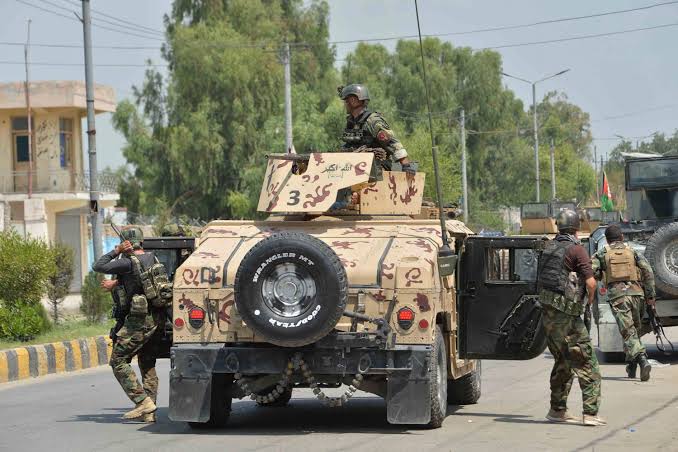
Afghanistan- A war-torn nation

With Al-Qaeda militants carrying out coordinated attacks on American soil,also known as 9/11 Attacks and Taliban government refusing to hand over the main culprit behind these attacks ‘Osama Bin Laden’. A war was declared by US and it’s allies against terrorism and Afghanistan was invaded in 2001.

US tried it’s best to avoid the mistakes done by British & Russia (then USSR),it gained some success by driving out the Taliban government and killing the Terrorists. This whole operation have costed US more than $800 billions and more than 2300 soldiers lives. While on the other side, Afghan civilians had been caught in between this war and have suffered at the hands of both US & Terrorists (Al-Qaeda & Taliban) .

There is a popular saying about Afghanistan – ‘The Graveyard Of Empires’ for those who have tried to conquer it. Afghanistan is tough to rule, not only because of its terrain but also of the hostilities between the different tribes present there.

US Navy seals carried out a mission code-named ‘Operation Neptune Spear’ and killed Laden on 2nd May 2011 in Pakistan. US thought that by killing Laden they had achieved their goal but they were mistaken.

India aided in the overthrow of the Taliban-led government and has been the largest regional provider of humanitarian and reconstruction aid in the country. India have provided over $3 billion in assistance and every year it continues to do so.

Challenges ahead for Afghanistan and it’s neighbours

Taliban is slowly gaining pace and have formed alliance with other terror outfits to overthrow the present government. Civil war is not far, after US withdrawal. Fight is going on between Afghan security forces supported by civilians against the Taliban.

There’s little hope that Taliban will agree on the terms mentioned in peace talks . War-torn Afghanistan is now at the same stage before US invasion and onus now is on China,india,pakistan,Iran to maintain peace and provide stability in the Afghanistan.