Assam Rozgar Mela

 Addressing the gathering, the Prime Minister congratulated the youth and their families who were recruited for government jobs in the Government of Assam. He recalled his visit to the state last month on the occasion of Bihu and said that the memory of the grand event which was a symbol of the glorification of Assamese culture, is still fresh in his mind. He noted that today’s Rozgar Mela is a reflection of the seriousness towards the future of the youth in Assam. Even before this, the Prime Minister said, more than 40 thousand youths have been given government jobs through the Rozgar Mela in Assam. He informed that appointment letters have been handed over to about 45 thousand youths today and wished a bright future for the youth.

“Assam is witnessing a new era of peace and development and this pace of development has spread positivity and inspiration in Assam.”, the Prime Minister said. Reflecting on the processes initiated by the Government of Assam to make government recruitment more transparent, the Prime Minister touched upon the ‘Assam Direct Recruitment Commission’ that has been formed to carry out the recruitment process in various departments. He mentioned that many recruitments could not be completed on time due to the earlier process where each department had different rules and the candidates had to appear for different examinations for different departments. He stated that all these processes have now been made very easy, and congratulated the Assam Government for this feat.

“All of us have taken a pledge to make our country a developed nation in the Azadi Ka Amrit Kaal”, the Prime Minister remarked as he stressed that the next 25 years of Amrit Kaal are as important as Seva Kaal. Underlining the importance of the appointees’ behavior, thinking, approach to work, and impact on the public, the Prime Minister emphasized that the new appointees will be the face of the Assam Government for every common citizen. He mentioned that society is becoming aspirational and no citizen wants to wait for development. “In this era of Twenty20 cricket, the people of the country want quick results”, Shri Modi said as he highlighted the need for government systems to transform themselves accordingly. He underlined the responsibilities of  Government employees in fulfilling the aspirations of the citizens of the country. The Prime Minister urged the appointees to move forward with the same dedication that brought them here and stressed that they can contribute to improving society and the system by being open to learning new things.

The Prime Minister underlined that lakhs of crores of rupees are being spent on modernizing India’s infrastructure at a very fast pace and gave examples of new highways and expressways, railway lines, ports, airports and waterways, these projects. He mentioned that employment and self-employment opportunities are getting a boost in every sector with every new infrastructure project. He gave the example of the requirement of engineers, technicians, accountants, laborers, and various types of equipment, steel and cement for the development of an airport. He also mentioned that employment opportunities are being created by the expansion of railway lines and their electrification. He touched upon the emphasis towards ease of living and stated that since 2014, the government has constructed about 4 crore pucca houses with facilities like toilets, gas connections, tapped water supply and electricity, and handed them to the poor. He lauded the contributions of the manufacturing sector, logistics, skilled workers and laborers who put effort into building these houses and arranging these facilities. The Prime Minister also highlighted the role played by Ayushman Bharat Yojana in employment generation and mentioned that many new hospitals and clinics have been established in the country. Shri Modi also recalled the privilege of dedicating AIIMS Guwahati and 3 Medical Colleges a few weeks ago. Dental colleges have also expanded in Assam in the last few years, he added.  Due to this, the Prime Minister said, employment opportunities have been created for the youth associated with the medical profession.

“Today, youth are moving forward in many such sectors which no one could have imagined ten years ago”, the Prime Minister said as he highlighted the startup ecosystem that has helped in creating lakhs of direct and indirect jobs in the country. He also mentioned the growing demand for drones in agriculture, social events, survey and defence sectors and said that it has created new opportunities for the youth.  The Prime Minister also touched upon the Atmanirbhar Bharat campaign which is contributing towards India’s growth by manufacturing crores of mobile phones in India.  Referring to the expanding broadband connectivity that is reaching every village, the Prime Minister said that it has encouraged employment and self-employment on a large scale. Shri Modi underlined that just one plan or one decision can impact the lives of people.

Crediting the policies of the present government, the Prime Minister underlined that a large number of youths from the North East are coming into the mainstream of development. “The Government is committed to fulfilling the dreams of the youth by giving new opportunities for employment and self-employment. We are also taking rapid steps towards building a new India”, the Prime Minister concluded.

*****

DS/TS


POBITORA WILDLIFE SANCTUARY

Pobitora, 35 km east of Guwahati, is a small wildlife sanctuary in Assam in India with the highest concentration of the Great One-Horned Rhinoceros in the world. The natural boundary of the sanctuary is the Garanga Beel on the South and the river Brahmaputra on the North. An hour-long drive from Guwahati along the river Brahmaputra, passing through the village of Mayong, is an exhilarating experience for visitors. Because of Pobitora’s proximity, to Guwahati one can choose to make a day visit to and from Guwahati one can choose to make a day visit to and from Guwahati and explore the sanctuary on elephant back or stay overnight. It is often referred to as the Kaziranga National Park’s showroom. It is ideal for visitors who have little time to spare and cannot visit Kaziranga.
Pobitora was originally a grazing reserve of the erstwhile Nagaon district of Assam in the flood plains of the river Brahmaputra. Pobitora, comprising of the flat flood plains and the hillock of Raja Mating, was thereafter declared a Reserved Forest in 1971 and a Wildlife Sanctuary in 1987.

FLORA AND FAUNA 
Pobitora comprises of Assam alluvial grasslands with the hilly forest of the Raja Mayong Hill. The riverine composition of the forest with vast stretches of grassland is the ideal habitat for the Indian One-Horned rhino. However, though the total area of the sanctuary comprises of 38.81 square km, only 16 square km of this is suitable for rhino habitat. Pobitora is also home to other animals like the Asiatic buffalo, leopard, wild bear, wild boars, Chinese pangolins, civet cats, etc.
Pobitrota is a bird -watchers paradise, as both migratory and resident birds can be sighted here. A census  done in January 2012 states that there are twenty-six species of birds at Pobitora. The Marsh Babbler, an endemic bird species of Assam, has been recorded in this sanctuary.
The Rajamayong Hill, which form the part of this Sanctuary, also harbors various species of animals like leopards, Lesser cats, barking deer, etc. This hill serves as a sheltering ground during the high floods which is common in the area during the monsoons.
SIGHTSEEING IN POBITORA 
Tourist can enter the Sanctuary either on elephant back or in Jeep. The morning and evening elephant and jeep rides is the main attraction of the Sanctuary.

OTHER ACTIVITIES
1.The Haduk Hanging Bridge. There is also a picnic spot and a children’s park 
2.A visit to the Gauranga Beel.
3.Enjoy the rural charm of Mating, famous for its tradition of black magic. Lying adjacent to the Pobitora Wildlife Sanctuary is the village of Mating, famous for its tradition of black magic. Remnants of old temple on hillocks surrounding Mayong is an indicator to its tantric or black magic past. The four most important temples in the area are the Kechaikhaiti shrine of Burha Mating, Narashinha Ashram of Hiloikhunda, Ganesh temple of Hatimuria and Shiva shrine of Kachashila. The village houses a community museum showcasing ancient magic literature and relics and also an old rock with undeciphered writings. 

Women Boxer clinched Bronze

Women Boxer Lovlina Burgohain won bronze medal for India in Tokyo Olympic after being defeated in semi final. She lost the match to top seed Busenaz Surmenili of Turkey in a 0-5 score.

Lovlina, was assured of bagging a medal after defeating former world champion Nien Chin Chen of Chinese Taipei 4-1 to enter the semi-finals of the welter weight category.

She has became the third Indian boxer after Vijender Singh and Mary Kom to win an Olympic medal.

China’s 5 Year Plan (2021-2025): Proposed Dam on River Brahmaputra

The five-year plans are a sequence of economic and social development initiatives furnished by the CCP (Chinese Communist Party) since 1949. The five-year plans were inspired by the five-year plans from the USSR and the focus was on launching new schemes, reforms and setting new growth targets.

Since the 11th five-year plan (2006-2010), the Chinese government has mentioned it as ‘Guidelines’ instead of plans. Currently China is on its 14th five-year plan/ guidelines. Unlike the previous five year plans, there is no specific GDP growth target and instead, the government announced that growth would be kept in “reasonable range” and an annual target would be set based on the specific conditions each year. The focus of the current plan is on self-sufficiency as the country had to endure difficulty after the United States had restricted China’s major chip makers from using American technology. Other areas of focus will be on the above 7 percent growth in the research and development spending. The government will also try to raise the urban residents to 65 percent of the population while maintaining green development and increasing the life expectancy by 1 year. Infrastructure will also be an area of priority with a focus on high-quality development of the belt and road initiative.

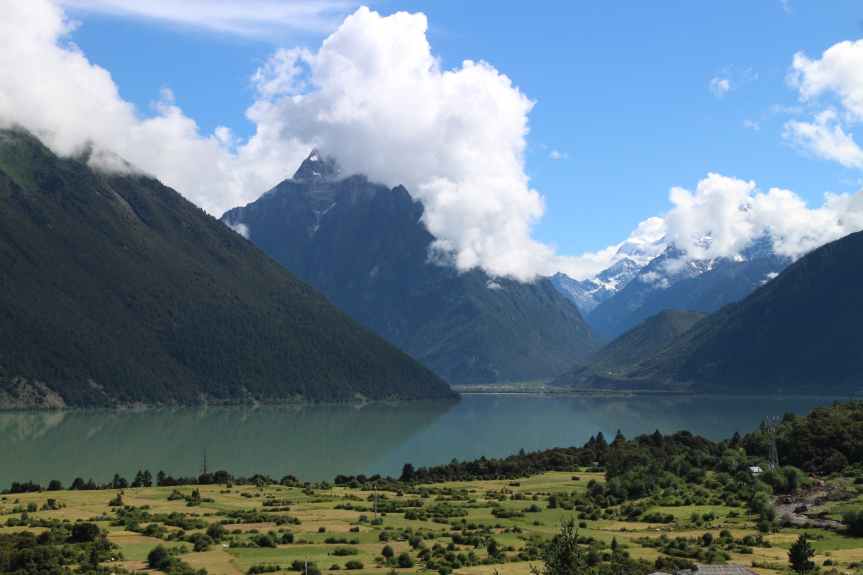
One of the biggest infrastructure projects of the 14th The five-year plan (2021-2025) has been officially approved to build a series of dams in the lower reaches of the Yarlung Zangbo River, as the Brahmaputra is known in Tibet before it flows into India.

The proposed dam would be in Medog, Tibet region will have a maximum possible capacity of 60 gigawatts and could potentially produce 300 billion kWh annually. The location is an area called ‘the great bend’ also known as ‘Yarlung Tsangpo Grand Canyon’ where the river goes through a very drastic U-turn and then the river descents from an elevation of 3000 meters to around 800 meters. Due to the drastic elevation change, the river flow is quite strong and is also an ideal location to build the dam.

The location of the dam could be a strategically risky move by china as it is very close to the Indian border but the other issue is that this proposed dam can undermine the water security of India. India relies heavily on the Brahmaputra River for agriculture and various other purposes.  Due to this, the proposed Dibang Dam by India in downstream (Arunachal Pradesh) might be the solution to offset the effect of the Chinese proposed dam. Although the majority of the catchment area of Brahmaputra is on the Indian side there is still the issue of water flow from the upstream as Assam usually suffers from floods in the rainy season and any additional water flow from the Chinese dam would make the situation worse. The problem will not only affect India but also Bangladesh due to its low-lying land and flood-prone region. Problem is that the region is ecologically diverse and sensitive and any kind of development in this region will negatively affect the ecology of this region. Due to turbulent tectonic plates, there are high chances of landslides and earthquakes as well. India will have to be vigilant and develop its strategy according to the developments on the Chinese side.

References:

Chaloung Sukapha in the light of a recent controversy

Chaolung Sukapha, the founder of Ahom kingdom, was recently referred to as a “Chinese invader”. The name-calling broke media as it showed the illiteracy of knowing his/her own history and culture. To know of Chaolung Sukapha is the least we can do to pay a tribute.

This 13th-century ruler founded the Ahom kingdom that went on to reign over Assam for six centuries.

The contemporary scholars have traced his roots which evidentially belong to Myanmar. He is also widely referred to as the architect of Assam that is recalled as “Bor Asom” or “Greater Assam”. This shows the gratitude given by the indigenous people towards his successful efforts to assimilate so many different communities and tribes that make today a dignified society.

As the state today is fighting with floods, it is the best time to commemorate Sukapha and his rule, which Assam celebrates as “Asom Divas” on the 2nd of December every year.

The Ahom Kingdom ruled from 1228 to 1824. In the 13th century, the Ahoms migrated from the regions of present-day Myanmar to the Brahmaputra valley.

In 1253, this tributary ruler established his capital at Charaidau, Assam. They recognized new states by suppressing the older political systems of the landlords locally called as Bhuiyas. The same was done in 1523 by conquering one of the powerful kingdoms of those times, the Chhutiyas and in 1581 the Koch-Hajo. By the 16th century, Sukapha had subjugated different tribes into their community.

These unpopular kingdoms faced many invasions from the south-western areas of the Indian subcontinent on a repetitive basis and remained under as shackles as they were finally defeated by the Mughals in 1662.

The Burmese invasion of Assam ended the dynasty of this kingdom and later the subsequent annexation was done by the British East India Company which followed the Treaty of Yandaboo in 1826.

The Administration of Ahom society was then divided into clans or khels.  A khel in turn was often in control of several villages. A census was done and the people were transferred from the more populated to the less populated areas.

By the beginning of the 17th century, the administration transformed into almost a centralised version.

The administration involved labourers called ‘paiks’, system of forced labour prevalent in the Ahom kingdoms, who in the name of economic structure were sent and received from each village by rotation.

The Men of the kingdoms were mostly involved in agriculture, construction of dams and other similar public works. During the times of wars, the men also served in the armies. There were also employed in different home manufacturers and cottage industries.

Inclusive of this, the State impressively saw flourishment as the agriculture thrived. It saw many new methods of rice cultivation which were developed by the Ahoms.

The Culture of the Ahoms was originally the worshipping of their tribal gods. But gradually with other developments, Hinduism became a predominant religion during the mid-eighteenth century due to the rule of Hindu kings. However, the entire community of the Ahoms did not adopt Hinduism completely.

Various arts and literature also had a separate culture in the Ahom kingdoms. The Poets and Scholars were specifically given land grants on their valuable performances. Theatre was encouraged thoroughly as well.

The translation works carried out from Sanskrit into the local languages with time. It involved the historical works, known as Buranjis, to be written and converted into first the Ahom language and then in Assamese language.

The technology in the Ahom Kingdoms as the usages of firearms suggest even in the 1530s reflect advancement. The kingdom began to make gunpowder and cannons by 1660s.

The kingdom may not be highlighted by bright colors but their reflection is very well noticed in the developments of the State and importantly, the country as a whole. To be giving them terms without proper knowledge only reflects signs of disrespect towards our own country.

Striking a blow against Assam’s inclusive Ethos

The State’s language law focuses to a homogenized patriotism surpassing minority etymological and social desires.

The Assam government as of late chose to declare a law to make the Assamese language obligatory in all schools, both open and private, including the Kendriya Vidyalayas, from Classes I to X. The State Governor has just given a conventional consent to the Cabinet’s choice. In any case, the law won’t be material in Barak Valley, Bodoland Council and other Sixth Schedule regions, where Bengali, Bodo and different indigenous dialects will come first . The ‘Assamese patriots’ are obviously glad. Some are in any event, requesting for it to be made necessary in the excluded territories. Notwithstanding, none of them is discussing what impacts it will have on networks, for example, the Misings, Deoris, Rabhas and the other littler clans and their first languages.

Information and legislative issues

Measurable information have regularly been utilized as an instrument to build the etymological chain of importance and homogenisation in a district. This thus turns into a component vital for developing and settling the local political financial authorities. We have witnessed that in north India with the statistics driven mutual split of Hindi-Urdu, assuming Muslims to be Urdu speakers, while Hindus to be Hindi speakers. Vitally, this legislative issues underestimated dialects, for example, Magadhi, Awadhi, Bhojpuri, Garhwali with their rich scholarly and phonetic customs as minor tongues of the Hindi language. What’s more, this was a political number game to guarantee the predominance of Hindi and Hindi-Hindu elites, broadly.

A comparable methodology is likewise obvious in Assam. Evaluation information are frequently used to depict a ‘threat’ to the Assamese language — the ‘invasion’ of Bengali-talking networks is viewed as the essential explanation. The quantity of Assamese speakers according to the 2011 Census comes to 48. 38% of the populace. In 1971, the level of speakers was at 60. 89%. In this way, it appears the quantity of Assamese speakers significantly declined in these four decades. However, this information should be taken a gander at experimentally. It must be noticed that most inborn networks communicate in Assamese however return their own separate dialects as their native languages. For instance, in the Mising clan, which I have a place with, a vast dominant part communicate in Assamese. This isn’t a result of school training, yet primarily due to the way that Assamese is the prevailing business sector language, at any rate in the Brahmaputra Valley.

Effect on inborn dialects

The vimposition of Assamese has effectsly affected inborn dialects, particularly on those which detest any sacred insurance. Inborn dialects are for the most part on a consistent decay. For example, while the Mising clan announced a pace of increment of 41. 13% in the quantity of speakers in the 2001 Census, by 2011 it was just 14. 28%. Likewise, the Deoris which announced a decadal increment of 56. 19% in the 2001 Census, the expansion rate by 2011 had declined to 15. 79%. It is to be noticed that solitary the Dibongiya family of the Deoris presently communicate in the language. The Rabhas people group accommodates a progressively inquisitive case. The people group announced an expansion of 18. 23% in the quantity of speakers in the 2001 Census. By 2011, the quantity of speakers had diminished to – 15. 04%, totally pulverizing the language. Different clans, for example, the Sonowal-Kacharis and Tiwas have totally lost their dialects.

Inborn people group since long have been requesting phonetic and regional insurance and consideration from the State government. On October 30, 1985, the administration of Assam, because of a long battle by the Mising people group, through a journal warning presented the Mising Language as an extra subject in Classes 3 and 4 in the Mising-commanded regions.

Likewise, moreover, it was to be the mechanism of guidance at the essential level. The Assam government should take up different undertakings, for example, naming Mising language instructors, making an interpretation of books into Mising, and furthermore presenting Mising course readings. Be that as it may, just 230 instructors were selected till 1994, after which the entire procedure stopped. Further, the endless supply of presenting Mising as the vehicle of guidance never took off.

Ancestral people group have consistently opposed endeavors of constrained homogenisation. It was because of the Official Language Bill in 1960 that the Khasi alongside other inborn networks began dissenting, eventually prompting the development of Meghalaya. The Bodo development for self-governance additionally discovers its underlying foundations in this bill. Clans have regularly featured that the ‘Assamese patriotism’ talk was limited and once in a while included different networks. Be that as it may, clans, for example, the Misings, Deoris, Rabhas, and so on have still reliably bolstered the Assamese development against the burden of Bengali language or Hindi in Assam. Be that as it may, thus they presently wind up reliably underestimated, with their etymological and social legacy derecognised by the State and the domineering powers.

The CAA factor

The counter Citizenship (Amendment) Act (CAA) development could have been a state of takeoff in the ‘Assamese Nationalism’ talk. Throughout the development, another meaning of ‘Assamese indigenous’ was seen rising. This definition was comprehensive of ancestral and other non-Assamese people group and depended on habitation instead of language alone. Requests were raised for security of indigenous land, culture and dialects over the span of the battle.

In any case, at the center of the development, was likewise the dread of penetration that the CAA bill advanced. Such dread and weakness have an inalienable inclination to restraint heterogeneous desires and abandon the comprehensive idea of the development. The legislature is in actuality controlling this component of dread by raising phonetic patriotism to debilitate the comprehensive and against authoritative develop in the counter CAA development in Assam. The planning of the administration’s choice to get a law making Assamese required in schools obviously uncovered its goals. It was first reported in January 2020.

As an occupation prerequisite

Adding to this, the Home Minister of Assam expresses that the administration is likewise thinking about a different enactment which will make just the individuals who learned Assamese till their registration reasonable for government employments in Assam. These moves are away from of a non-comprehensive homogenized Assamese patriotism overshadowing the incorporation of minority phonetic and social yearnings. Such a move estranges different semantic characters, for example, those of clans, for example, the Misings, Deoris and Rabhas, and so forth and limits the meaning of ‘Axomiya’ to simply the speakers of the language. By getting such a law, the State government is looking to conquer the legitimation emergency that its help to CAA had made.

While the clans recognize the danger that penetration stances to nearby dialects and culture, they are additionally careful about the Assamese authority and homogeneity. This law will just build the minimization of these networks, activating social clashes by and by. It is the ideal opportunity for dynamic segments in Assam to go past the governmental issues of dread and attest the comprehensive ethos of Assam.

Preparedness and containment measures taken for COVID-19

Dr. Harsh Vardhan, Union Minister of Health and Family Welfare held a high level meeting today with Arunachal Pradesh, Assam, Manipur, Meghalaya, Mizoram, Nagaland, Tripura and Sikkim to review the status of COVID-19 in the north-eastern States along with the measures being taken for its containment and management, in the presence of Sh. Ashwini Kumar Choubey, MoS (HFW), here today. The review meeting (over video conferencing) was attended by Dr. R Lalthangliana, Health Minister of Mizoram, Sh. Alo Libang, Health Minister of Arunachal Pradesh, and Shri Piyush Hazarika, MoS, Health and Family Welfare, Assam along with senior officers from the eight States.

At the outset, Dr. Harsh Vardhan appreciated the dedication of all the States in combating COVID-19 in the country. “It is a huge relief and very encouraging to see green zones in most North Eastern States. As of date, only Assam and Tripura have active COVID-19 cases; the other States are all in the green zone. Let us focus and work together by converting the orange zones to green zones and maintain the protective status across the States”, he stated. Dr Harsh Vardhan stated that as on 9th May 2020, a total of 59,662 cases have been reported from the country in which 17,847 persons have been cured and 1,981 deaths had occurred. In the last 24 hours, 3,320 new confirmed cases have been added and 1307 patients were found cured. He added that the fatality rate is 3.3% and recovery rate is 29.9%. He also added that (as of yesterday) there are 2.41% present active COVID-19 patients in ICU, 0.38% on ventilators and 1.88% on oxygen support. Dr. Harsh Vardhan also said, “The testing capacity has increased in the country and it is 95,000 tests per day with 332 Government laboratories and 121 private laboratories. Cumulatively, 15,25,631 tests have been done so far for COVID-19.”

During the detailed interaction with the NE States, they highlighted various issues related to testing facilities, health infrastructure, surveillance, contact tracing etc., and also shared their best practices. Dr Harsh Vardhan mentioned about the various measures taken by the Centre to combat COVID-19 so far. “Political commitment at the highest levels of the Government, led by the Hon’ble Prime Minister Shri Narendra Modi is leading the government’s response against Novel Coronavirus Disease (COVID-19). India is prepared and fighting with the pandemic through its various timely measures and sturdy systems of surveillance for Novel Coronavirus”. Dr. Harsh Vardhan said.

The Union Health Minister informed that appropriate measures are being taken to combat COVID-19 and with the cohesive efforts of both Centre and States, adequately growing numbers of dedicated COVID hospitals, Isolation & ICU beds and Quarantine centres being identified and developed. These provide us the assurance that the country is well-prepared to face any eventuality due to COVID-19. Centre is also supporting by providing sufficient number of masks & Personal Protective Equipments, Ventilators etc. to the States/ UTs / Central Institutions, he further added.

To maintain the positive status of COVID-19 management in the North East, Dr. Harsh Vardhan advised the States to ensure that the returning migrant labourers, students and those returning from abroad should be screened and quarantined as per the guidelines and protocol laid down by the by Ministry of Health and Family Welfare and Ministry of External Affairs. He also stated that the guidelines for discharging patients is also revised and needs to be followed by all the States.

Dr. Harsh Vardhan stated, “While some states have worked in this direction, others need to focus on more effective surveillance, contact tracing, house to house survey and early diagnosis”. He said, “Surveillance for Severe Acute Respiratory Infections (SARI)/ Influenza Like Illness (ILI) should be intensified in unaffected districts and districts which have not reported cases from last 14 days and more through the IDSP network in collaboration with Medical College Hospitals”, he added. He urged States to aggressively pursue the download of Aarogya Setu app to aid contact tracing and surveillance, and for self assessment by people. He advised the States to put the information of the earmarked facilities for COVID-19 like the dedicated COVID hospitals, COVID Health Centres and Care Centers in public domain to help people access the services. The States were informed that funds have been allocated by Minister of DONER (Ministry of DoNER) for strengthening of the health infrastructure, and states need to submit their proposals for availing of funds under this fund.

For the States that have international borders, Dr Harsh Vardhan stated that these States need to take adequate measures at the border areas to prevent exposure by conducting screening of all individual entering the State at entry points and following quarantine protocol as per the guidelines.

The States were reminded that in addition to the COVID-19 care, non-COVID-19 health services were equally important and should not be neglected. Due attention was required to be paid to health care services such as ANCs for pregnant women, immunization drives, OPD/IPD services, screening of NCDs and TB diagnosis and treatment. Adequate measures for prevention of vector borne diseases also need to be taken, they were advised. Also, facilities of telemedicine and tele-counselling could be used for reaching to a larger population for their healthcare needs.  States were also advised to ensure that payments, salaries and incentives were paid to the healthcare staff, paramedics and other healthcare workers, for which States were also advised to ensure that the NHM funds were transferred to the Health Department. States were also informed that helpline number 104 in addition to 1075 can be used for grievance redressal for non-COVID essential services, and for providing the needed information to the people on their location etc. States were also advised to keep adequate stock of essential medicines and explore home delivery by engaging volunteers for the purpose.

In view of the larger prevalence of non-smoking tobacco usage in some of the states, Dr Harsh Vardhan advised the States to ensure that concrete actions were taken for prohibiting their wide usage and for prohibiting spitting in public places which shall help in preventing spread of COVID-19. Strong reforms are needed in this direction, he stated. He appreciated the effort of States that have banned the use of chewing tobacco and imposition of fine for  spitting in public places.

Ms. Preeti Sudan, Secretary (HFW), Shri Rajesh Bhushan, OSD (HFW), Ms. Vandana Gurnani, AS & MD (NHM), Dr. Manohar Agnani, Joint Secretary (MoHFW), Dr. S.K. Singh, Director, NCDC along with Principal Secretary (Health) and other senior state health officials participated in the meeting.