

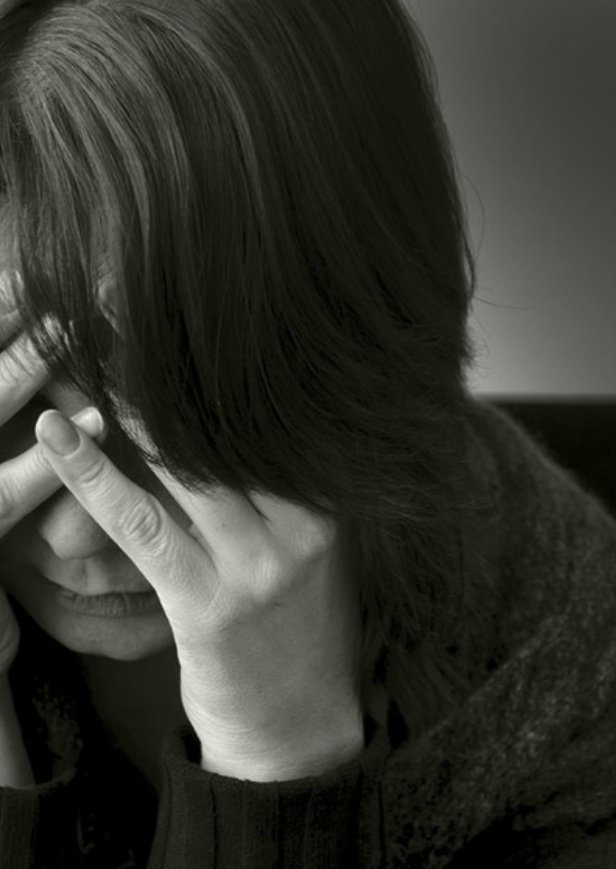
Depression and anxiety are very common problem these days starting from teenager to elderly adults anyone and everyone can face this at any point in life and they equally affect us as any physical disease does, many people don’t take mental health seriously but it is outmost necessary to do so. Here are a few simple daily habits which will help you to deal with depression:
- Stay away from negative thoughts, and always try to focus on the filled part of the glass and try not to worry about the empty.
- Practice meditation regularly it helps to calm one’s mind and helps in relaxing the brain.
- Try to stay out from field where you feel irritated and also do try ignoring unnecessary mess.
- Physical exercising is a must for a healthy mind as it keeps the body fit and also helps keeping negativity away.
- The physical environment where one spends time and the company of people with which one spend time also plays a key role in determining the and dealing with depression issues.
- One must also take care of the diet, consuming fresh fruits and vegetables are highly recommended and one must take care that proper diet is consumed.
Depression symptoms :
Depression can be more than a constant state of sadness or feeling ” blue”. Major depression cane cause a variety of symptoms. Some affect your mood, and others afect your body. Symptoms may also be onging or come and go. The symptoms of depression can be experienced differently among men, women and children differently.
Men may experience symptoms related to their:
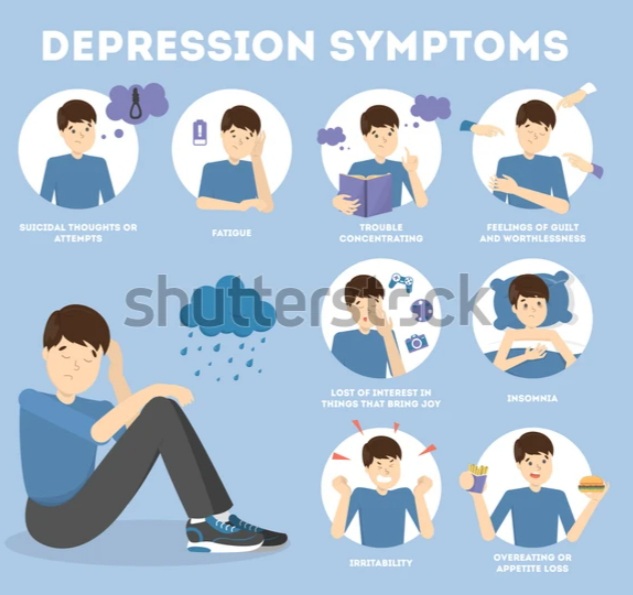
* Mood, such as anger, aggressive, irritability, anxiousness, restlessness.
* Emotional well- being such as feeling empty, sad, hopeless.
* Behavior, such as loss of interest, no longer finding pleasure in favorite activites feeling tired easily , thiughts of suicide, drinking- execessively , using drugs, engaging in high- risk activities.
* sexual interest, such as reduced sexual desire, lack of sexual performance
* cognitive abilities , such as inability to concentrate, difficulty completeing tasks, delayed responses during- conversations.
* sleep patterns, such as insomina, restless slepp, excessive sleepiness, not sleeping through the night.
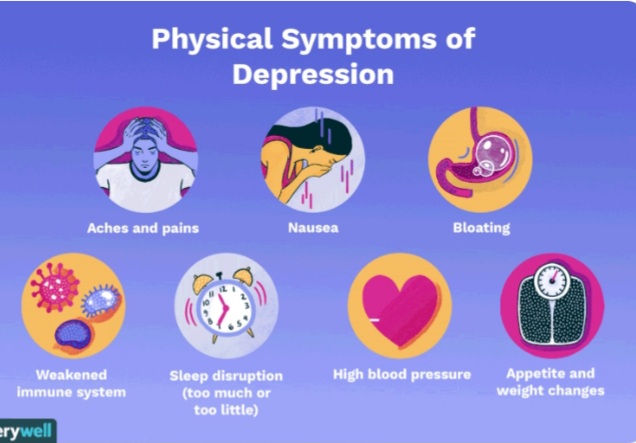
* physical well- being, such as fatigue, pains, headache, digestive problems.
Women may experience symptoms related to their:
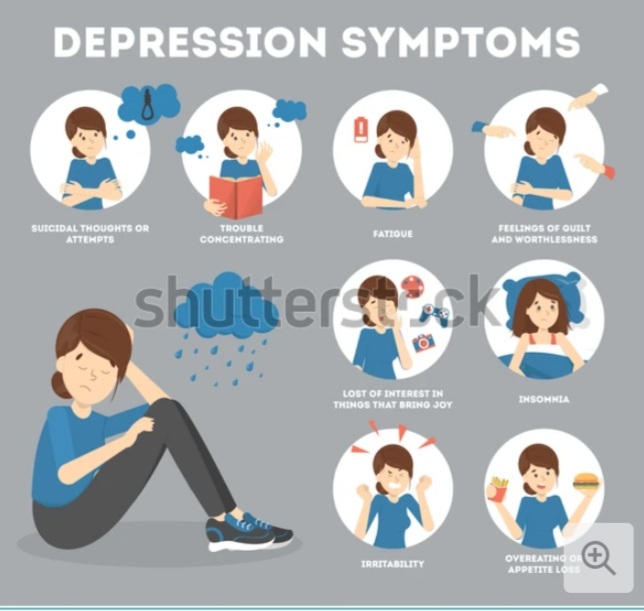
* mood, such as irritability
* emotional well- being, such as feeling sad or empty, anxious or hopless.
* congnitive abilities,such asthinking or talking more slowly
* behavior, such as loss of interest in activities, withdrawing from social engagements, thoughts of suicide
* sleep patterns, such as difficultu sleeping through the night, waling early, sleeping too much.
* physical well- being, such as decreases energy, greater fatigue, changes in appetite, weight changes, aches,pain, headaches, increased cramps.
Children may dxperiences symptoms related to their :

* mood such as irritability, anger, mood swings, crying.
* emotional well- being, such as feelings of incompetence or despair, crying, intense sadness
* behavior, such as gettkng into trouble at school or refusing to go to school, avoiding friends or siblings thoughts of death or suicide.
* cognitive abilities, such as difficulty concentrating, decline in school performance, changes in grades.
* sleep patterns, such as difficulty sleeping or sleeping too much
*physical well- being, such as loss of energy digestive problems, changes in appetite, weight loss or gain.
Depression causes :
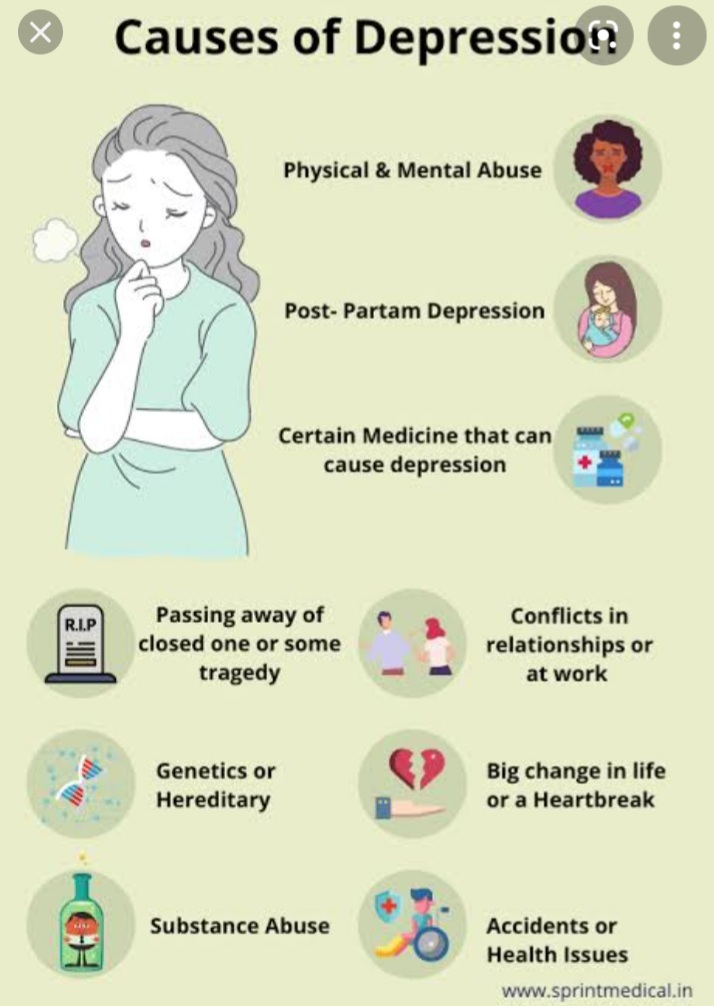
There are several possible causes of depression. They can range from biological to circumstantial.
Common causes include ;
* Family history :
You’re at a higher risk for developing depression if you hace a family history of depression or another mood disorder.
* Early childhood trauma :
Some events affect the way your body reacts to fear and stressful situations
* Brain structure :
There’s a greater risk for depression if her frontal lobe of your brain is less active.
* Medical conditions :
Certain conditions may put you at higher risk, such as chronic illness, insomia, chroinc pain or attention- deficit hyperactivity disorder
* Drug use :
A history of drug or alcohol misuse can affect your risk.
Many factors can influence feelings of depression, as well as who develops the condition . The causes of depression are often tied to other elements of your health. Depression can be linked with to other health problems, your healthcare provider may also conduct a physical examination and order blood work.
Types of depression :
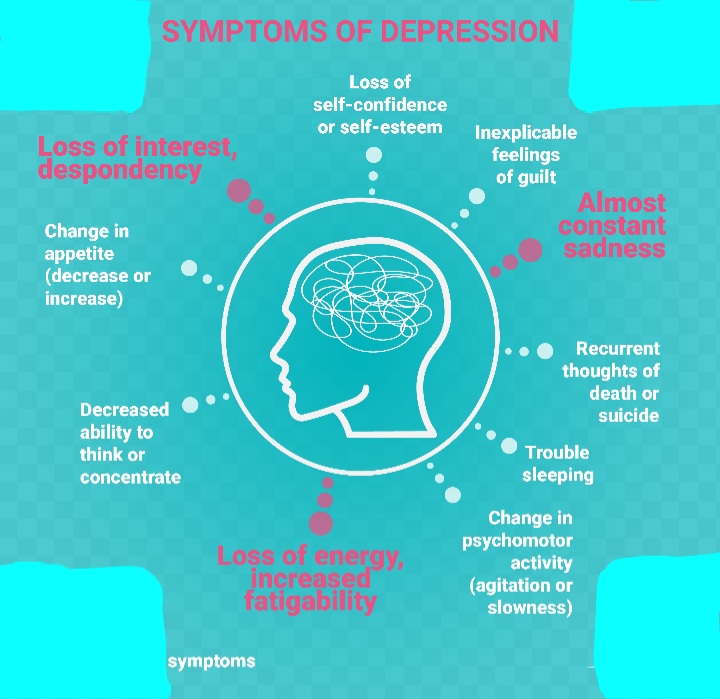
Depression can be broken into categories depending on the severity of symptoms. Some people experience mild and temporary episodes, whike other experience severs and ongoing depressive episodes.
There are two main types. Major depressive disorder and persistent depressive disorder .
Major depressive disorder :
Major depressive disorder is the more severe form of depression. It’s characterized by persistant feelings of sadness, hoplessness and worthlessness that dont’t go away on their own.
Persistent depressive disorder :
Persistent depressive disorder ( pDD) used to be called dysthymia. It is a milder, but chronic, form of depression.
It’s common for people with PDD to
* lose interest in normal daily activites.
* feel hopless
* lack productivity
* haveclow self- esteem
Depression can be treated successfully, but it’s important to stick your treatment plan.
Treatment for depression :

Living with depression can be difficult, but treatment can help improve your quality of life. Talk to your health care provider about possible options. You may successfully manage symptoms with one form of treatment ,or may find that a combinations of treatment works best.





 Eduindex
You must be logged in to post a comment.