
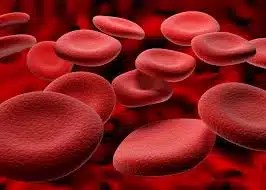
Blood and different blood groups in humans

Blood is a red coloured fluid flowing through the heart and blood vessels.it is also sometimes called as river of life because it circulates all the essential nutrients and oxygen to our body.it is made up of liquid part plasma( water and salts) and solid part( RBC and platelets).blood is pumped by heart to our whole body. Blood is a component of circulatory system of our body.

Structure of blood

Blood is formed mainly of two components that are Plasma and blood cells .plasma is a pale yellow fluid part of our blood .it is about 55 % of our blood composition. Blood cells is also called blood corpuscles. they constitutes about 45% of blood. it is of 3 types that is RBC ( Red blood cells) or erythrocytes , WBC(White blood cells) or leucocytes and blood platelets or thrombocytes.

Some Characteristics of blood

  • Blood is heavier and thicker than water
  • its pH lies between 7.3 to 7.4.
  • Blood’s volume in our body is about 5 to 6 litres.
  • It is saltish in tastes

Functions of blood:-

  1. Transportation of gases : The blood carries oxygen from the lungs to the tissues and carbon dioxide from tissues to the lungs.
  2. Transport of food :- It carries digested food like amino acid , glucose and many other s from our intestine to different organs of the body.
  3. Temperature regulation :-It absorbs heat produced by respiration in internal tissues and transport it in to the skin and lungs for dissipation.
  4. Distribution of hormones :- The endocrine glands secrete hormones directly into the blood . Blood helps to transport them in required organs.
  5. Defence against diseases :- It produces certain antibodies which fights against bacteria. white blood cell (WBC) covers the disease causing bacteria and protect the body.

Blood groups in humans

Karl Landsteiner discovered that human beings have glycoproteins on the surface of RBC called antigens. and globulin proteins in the blood plasma called antibodies. therefore, there is 2 types of antigens A and B and two types of antibodies antibody a and antibody b in our body. Based on this concept , there are 4 types of blood groups found in human body.

  1. ABO blood groups
  • person with antigen A are said to be having blood group A.
  • person with antigen B are said to be having blood group B.
  • persons having both antigen A and antigen B are said to be having blood group AB.
  • Person with no antigen is said to be having blood group O.
    • during blood transfusion , we cannot mix two different types of blood group in a body. when blood groups of 2 different types of groups A and B is mixed , clumping reaction occurs. because either the antibodies of recipient ‘s blood destroys the RBC of donor blood or vice versa.

Person with blood group A are called universal donor , because they can donate blood to any of the blood group. while person with blood group AB are called universal recipients because they have no antibodies and can receive blood from any of the blood group.

2.Rh factor ( Rhesus antigen system) : – Human blood also have Rh antigen . it is of two types Rh positive and Rh negative. Transfusion of Rh negative with Rh negative can be done with no problem and same goes for Rh positive to R h positive transfusion.( Source : Veer Bala Rastogi , 96).

Blood relations:logical reasoning

This is an important topic if you are preparing for any of the competitive exam. To solve such type of questions break the question into generations. For eg I and my brother will belong to one generation. My father and my mother will belong yo3 one generation and so on.

You need to use arrows and represnt Male and females differently. For eg you can use plus sign for males and minus for females. Lets understand with example.

POINTING TO RAJA RANI SAID “HIS MOTHER’S BROTHER IS THE FATHER OF MY SON RAJKUMAR.”HOENIS RAJA RELATED TO RANI. This simplifies that raja ‘s mother’s brother is father of my son. That means rani s husband is uncle of raja. Hence raja is nephew.

eg 2. Amit pointing a photo of girl says she is daughter of only son of my grandfather.

This means the girl is daughter of only son of my grandfather means his father’s daughter is that girl and girl is sister of amit.

eg3. Pointing to a man :-his only brother is the father of my daughter’s father.

My daughter’s father means me and my father’s brother. Now how I am related to my father’s brother Its easy I am his nephew.

Also you can get some questions like p+q means p is brother of q. p-q means p is sister of q.

a+b-c. a is brother of b and b is sister of c.

https://www.google.com/url?sa=t&source=web&rct=j&url=https://www.indiabix.com/verbal-reasoning/blood-relation-test/&ved=2ahUKEwj1ztjFteDxAhXU73MBHfI-C7IQFnoECAQQAQ&usg=AOvVaw0MgoIJWqewxjffJsJzcQZL

https://www.google.com/url?sa=t&source=web&rct=j&url=https://byjus.com/govt-exams/blood-relations-logical-reasoning/&ved=2ahUKEwj1ztjFteDxAhXU73MBHfI-C7IQtwJ6BAgnEAE&usg=AOvVaw1L3I0xndZBU6CMGDQZsoVh

Donate Blood, Save Lives!

See the source image
Your few drops of Blood can be someone’s new ray of hope.

“A drop of blood can save a life! Don’t waste it and donate blood.”

Blood donation is a vital part of worldwide healthcare. It relates to blood transfusion as a life-sustaining and life-saving procedure as well as a form of therapeutic phlebotomy as a primary medical intervention. Over one hundred million units of blood are donated each year throughout the world. Donation is the only way of obtaining blood. In the presence of medical and technological advances it is wrongly thought that blood can currently be made but the only source is through blood donation. In developed countries donors are volunteers who donate for their community and whereas in developing countries many people often donate only when their family and friends need it. The prospective donors are being checked that there blood is safe for use. Specialist medical staffs are available at all times during the donation drive and it safe and painless procedure. There is no risk for donors irrespective of the age factor. There is a constant need for regular blood supply because blood can be stored for only a limited time before use. Regular blood donations by a sufficient number of healthy people are needed to ensure that safe blood will be available whenever and wherever it is needed.

Why should you donate blood

Blood is the most precious gift that anyone can give to another person the gift of life. A decision to donate your blood can save a life, or even several if your blood is separated into its components – red cells, platelets and plasma – which can be used individually for patients with specific conditions.

The reason to donate is simple because it helps to save people’s lives. In fact, every two seconds of every day, someone needs blood. Since blood cannot be manufactured outside the body and has a limited shelf life, the supply must constantly be replenished by generous blood donors only.Many patients are waiting for operation in hospital but because of non-availability of blood donors they have to wait unless they find s reliable source they have to keep on waiting. Every two seconds someone in the world needs blood which are required for surgeries, cancer treatment, chronic illnesses, and traumatic injuries etc.

Who should not donate blood

  1. Pregnant or lactating women, or those who have recently had an abortion.
  2. Persons who are on steroids, hormonal supplements or certain specified medication.
  3. Persons with multiple sexual partners or those who are addicted to drugs.
  4. Persons who have had an attack of infection like jaundice, rubella, typhoid or malaria.
  5. Persons who have undergone surgery in the previous six months.
  6. Persons who have consumed alcohol in the 12 hours prior to donation.
  7. Women should avoid donation during their menstruating period.

Blood donation is a major concern to the society as donated blood is lifesaving for individuals who need it. Blood is scarce. There is a shortage to active blood donors to meet the need of increased blood demand. One of the biggest challenges to blood safety particularly is accessing safe and adequate quantities of blood and blood products. Safe supply of blood and blood components is essential, to enable a wide range of critical care procedures to be carried out in hospitals. Interactive awareness on blood donation should be organized to create awareness and opportunities for blood donation.

VIRUS AND ITS TRANSMISSION

WHAT IS A VIRUS?????
A virus is referred as an infectious agent that can only replicate inside the living cells of an organism i.e. a virus is something which can not at all grow or replicate by its own. It always needs a living cell for its replication process. It is a microorganism which cannot be seen by naked eyes and can infect any life form. It can be infectious for humans, plants and even for other microorganisms like bacteria and archea. Viruses infecting bacteria are known as bacteriophage. Viruses are not restricted to a place and they can be found everywhere at every place of ecosystem whether land, or water or in air. They can cause various infections including air-borne, water-borne or even food-borne. The science dealing with the study of viruses is known as Virology and it is a branch of microbiology. A complete virus particle ranges in size from about 10-400nm in its diameter.
Viruses are near to dead when outside the living cell but once entered any living cell of an organism, they are forced to replicate using the life machinery of that particular organism and thus they produce thousands of their multiple copies and in this way infect the organism. Outside the living cells they are present in the free, independent form which may also be known as a virion.
There are 3 main parts in the structure of a virus i.e. –

  1. Genetic core which is also known as nucleic acid core containing all the genetic material whether DNA or RNA, but not both. It is known as genome.
  2. A protein coat, which is also known as capsid which surrounds the genome of a virus particle.
  3. An envelope which is made of lipid. It is an external coat surrounding the genome as well as capsid.

VIRUS TRANSMISSION
Transmission of virus particles is important for them to survive because as discussed above they can only replicate themselves inside a host living organism. The virus transmits from one organism to another in order to survive, reproduce and continue their species. The effectiveness of the transmission of viral particle depends on 2 main factors i.e. the concentration of virus and its route of transmission. More concentration of virus leads to more transmission.
There are several ways by which a virus particle may get transmitted from one organism to another.

  1. Blood – Virus particles can get transmitted through the blood. The one way is direct viral infection in blood and the other way is by arthropods like dengue or malaria is transmitted. Arthropods bite one organism and collect viral particles from them and then when they bite other organism, the same viral particles are being transmitted to the next organism and this way transmission and infection occurs. Another way is direct viral infection in blood which can be via direct infected blood exposure to a healthy individual. It may be transmitted via sexual contacts with infected person like HIV is transmitted.
  2. Saliva – It is the most commonly seen in kissing the infected individual. The saliva contains the viral particles and thus they are transmitted to healthy individual.
  3. Respiratory secretions – If any infected individual sneezes, or coughs or in any other way its respiratory secretions come in contact with the healthy individual, he may get infected by the same. It may also occur by singing or even breathing.
  4. Feces – This is not a very common method in developed countries but can infect those who do not take sanitary actions after using toilets. The virus particles secreted in feces can infect other healthy individuals if they come in contact with them.

World blood donor day

Every year world’s blood donor day is celebrated across the world on 14th June. This event is established in 2004 to raise awareness about the need of safe blood and blood products and to thank blood donors who voluntarily donate blood and giving life saving gifts to the patients.

Transfusion of blood and blood products saves millions of life. It supports complex medical and surgical procedure and help those who are suffering from life threatening disease. It also plays a life saving role in maternal and prenatal care. So, access of blood and blood products help in saving the rates of death and disability due to severe bleeding during delivery and after childbirth.

In many countries, there is not an adequate supply of safe blood due to which it is the major challenge of making sufficient blood available and also ensuring quality and safety and it can be only assured by regular donation by voluntary unpaid blood donors for all countries. The WHOs goal is to obtain their blood supplies by voluntary unpaid blood donors by 2020. In 2014, only 60 countries have their national blood supply based on 99-100% voluntary impair blood donation, while 73 countries are still dependent on family and pair donor.

WHO CAN DONATE BLOOD

  • The age of the donor should be between 18 and 65 and weight should be atleast 50kg.
  • Your health should be good when you are donating blood and you shouldn’t suffering from cold, flu, and sore throat, cold sore, or any other infection. In that case you cannot donate blood.
  • If you had a tattoo or body piercing recenty then you cannot donate blood for 16 months. If it is performed by a registered health profession and if inflammation settle completely, you can donate after 12hrs.
  • For donating blood, your haemoglobin should not be less than 12.0g/dl for females and not less than 13.0g/dl for males.
  • You must not donate blood if you have ever tested HIV positive and ever injected recreational drugs.
  • It is not advisable to donate blood while breastfeeding.
  • If you have disease like cancer, cardiac disease, severe lung disease, hepatitis B and C and if you are involved in prostitution (high risk occupation) or chronic achololism you cannot donate blood.

So if you are eligible and healthy enough to donate blood, your blood can save upto three lives. It will also benefit you, donating blood reduces harmful iron stones, burn calories, reduce the risk of cancer and preserve cardiovascular health and also give you a sense of pride. So if you can, present others with a gift of blood.

DONATE BLOOD!! SAVE LIFE!!

“Blood Donation- Helping Hand to Humanity”.

Helping others irrespective of their background, caste, religion has been a part of our culture and traditions not only in India but around the world. Helping the one in need has been considered to be the reflection of humanity over everything. Man has achieved development with helping each other and by working hand in hand, establishing a feeling of brotherhood, togetherness and unity to fight out tough circumstances and win over tougher times. Help could be varied as per the conditions and differentiation. It could be monetary help, by helping the one in need of money, or by giving food, or any physical help and so on. People believe that one gets blessed with better opportunities and less struggles as he thinks of others and helps them by even going outta the way. 

Blood donation is one such help which not only helps others in need, but also has many health benefits to the one giving it. It not only reduces the risk of cancer and blood clotting but reduces the risk of severe damage to other body organs like liver , pancreas and many others. But irrespective of this fact, the question which surely arises is “Why should any human donate his blood, what are its advantages, disadvantages”, and many other thoughts do come to the mind of individuals. 

14th June is the day when World Blood Donor Day is celebrated across the globe with the main Idea to spread the “Awareness of blood donation, how it can help to save the life of any person in need , and how we still can save humanity by showing this small gesture of giving”. But why should any individual give such a precious thing which he is born with you any stranger. In today’s world, risk to life’shas increased as number of accidents, suicides attempt and various other things leading to threat have increase. Blood donation helps to provide those injured in such accidents to save their life. Since we know our heart pumps a lot of blood and the amount we give gets recovered soon. So why not we just donate to help others. 

There are also benefits to the one giving as:

 1. It helps in better blood production and circulation around the body.

 2. Replenish the older blood cells and produce new one which surely have better health benefits.

 3. Helps maintain liver, heart and other body parts in better working conditions and reduces the risk of any part to fail. And many more advantages of the same. 

But the disadvantages of blood donation may include:

1.Initial weakness in the body . 

2. Pain. 

3. Continue bleeding. And sometimes it can take time to stop. 

4. Conditions of headache and dizziness

But the main thing to keep in mind before donating blood is that one needs to be at least 17 years old with at least a weight of 50kg. The individual must not be consuming drugs, doesn’t have a high blood pressure , must not have tattoos on their body and many others as per the guidelines of the “World Health Organization”. 

So one should try out to donate blood every month or more as per the health conditions of the human, so as to keep him/ her healthy and also people around them safe by providing them what they need in difficult circumstances. 

As helping others, would definitely turn out to help ourselves in future, as per the theory of Karma, “What goes around, comes around”. 

HEMATOLOGY

Hematology is a branch of medicine concerned with the cause, prognosis, treatment, and prevention of diseases related to blood. Some of the tests carried out in this section are PCV, CBC, ESR, ABO blood grouping, Antigen typing, Cross Matching etc..

MATERIALS USED IN HEMATOLOGY
Pipette, Haematocrit centrifuge machine for PCV, Haematocrit reader for PCV, Hematology analyzer for CBC, Microscope, Glass Slides, Electrophoresis Machine, Cover slips, Bunsen Burner, Capillary Tubes, Test Tubes, EDTA, Scissors, Normal Saline, Immersion Oil etc…

COMPLETE BLOOD COUNT (CBC) TEST
Complete Blood Count, CBC is a very common and easy test to determine the total number of different cells present in the patient’s blood. A doctor may order CBC as a normal routine test or if you have an unexplained symptoms of bleeding.
For the test, Blood Sample is collected in the EDTA bottle and is mixed properly with the anticoagulant.
The main equipment used for the CBC test is HEMATOLOGY ANALYZER. The EDTA bottles are put under the hematology analyzer sensitive probe so that the machine can analyze the samples and give the appropriate results.

PACKED VOLUME (PCV) TEST
It is also known as Hematocrit Test. PCV test is a measurement of percentage of blood that is made up of cells. The test value is expressed in percentage. For eg, if the PCV value comes out to be 30% then it means that there are 30ml of cells present in 100ml of blood. The doctor may order for the test if he finds the symptoms related to Anaemia, Polycythaemia or dehydration. The value of PCV rises when the number of RBCs increases or when the total blood volume is reduced.
Reference values:
Newborn infants – 50 – 70%,
Newborn at one week of age – 37 – 49%,
Infant at three month of age – 30 – 36%,
Infant at one year of age – 28 – 45%,
Child at ten years of age – 36 – 40%,
Adult female – 36 – 46%,
Adult male – 38 – 50%

ERYTHROCYTE SEDIMENTATION RATE (ESR)

It is a test that directly or indirectly tests the inflammation in the body. It also measures the rate at which erythrocytes present in the blood sediments. In the test, blood sample is collected by the patient in the EDTA tube and the rate at which RBCs settle down at bottom is measured.
The followings are considered normal ESR test results:
• Women under age 50 : >20mm/hr
• Men under age 50 : >15mm/hr
• Women over age 50 : >30mm/hr
• Men over age 50 : >20mm/hr
• Newborns : >2mm/hr

BLOOD GROUPING TEST
Blood Grouping, generally known as ABO Blood grouping is a test which can determine the patient’s blood group. The blood group of a patient may be A, B, O or AB type. Three different types of serum are used in this test i.e. Anti-A, Anti-B, Anti-D.
In the test, Blood samples are collected from the patient in the EDTA bottle. A sterile glass slide is taken and was labeled as A,B and D. Blood drops were put on the slide in the three different regions. Anti-A , Anti-B and Anti-D serums were added to the blood on the slide at the respective regions and mixed with a toothpick. Agglutination was observed after some time and results were recorded.