Gukesh Dommaraju ; commonly known as Gukesh D, is an Indian chess grandmaster and the 18th World Chess Champion. He is the youngest world chess champion in history, third-youngest grandmaster in history, the third-youngest to reach a chess rating of 2700, the youngest to reach a rating of 2750, and is the eighteenth-highest rated player in history with a peak rating of 2794. He is also the youngest Candidates Tournament winner and the youngest World Chess Championship winner beating Ding Liren of China. He has won one team and two individual gold medals at the Olympiad as well as one bronze team medal. He is a silver medalist at the Asian Games.
Gukesh Dommaraju, an 18-year-old Indian chess prodigy, made history on December 12, 2024, by becoming the youngest-ever undisputed World Chess Champion. He achieved this remarkable feat by defeating reigning champion Ding Liren in a tense and closely fought match that ended with a score of 7.5–6.5 in Gukesh’s favor
Hailing from Chennai, India, Gukesh began playing chess at the age of seven. Over the years, he trained under the mentorship of Indian chess legend Viswanathan Anand, who played a crucial role in nurturing his talent. Gukesh’s rise to prominence included several milestones, such as surpassing Anand in 2022 to become India’s top-ranked player—a position Anand had held for 36 years
In 2024, Gukesh won the prestigious Candidates Tournament, becoming the youngest winner in its history. He carried this momentum into the World Chess Championship, where his skill, preparation, and psychological resilience were on full display. His journey to the title also saw him shine in the 2024 Chess Olympiad, where he led India to its first-ever team gold medal
Gukesh’s victory marks a new era for chess, as he not only broke records set by legends like Garry Kasparov but also demonstrated the growing dominance of young talent on the global stage
One of the india’s enterprises is amongst the world’s largest chess manufacturing company. originated in india by the name ashtapad, this ancient game has historical references in india where chess was used as a tool to teach military strategy to indian princes.chessboards have been made from numerous materials over the years, such as ebony, ivory, marble, metal, glass, and plastic.
let’s discuss in detail about the states and the leading companies in wooden chess board manufacturing in india. THE WOODEN CHESSBOARD MANUFACTURING IS EXTENSIVELY DISTRIBUTED IN INDIA. HOWEVER, THE TOP MANUFACTURING CITIES ARE:
AMRITSAR
GUJARAT
MOHALI
DELHI
MUMBAI
WE WILL DEAL WITH THE FOLLOWING CITIES ONE BY ONE IN AN ILLUSTRATIVE WAY.
1.AMRITSAR
AMRITSAR IS THE LARGEST MANUFACTURER OF CHESSBOARD IN INIDA. INFACT, THE WORLD’S LARGEST CHESS COMPANY IS BASED IN AMRITSAR, PUNJAB. IT MANUFACTURES CHESSBOARDS IN VARYING SIZES USING DIFFERENT MATERIALS. IT ALSO EXPORTS WORLDWIDE.
THE TOP THREE MANUFACTURING CHESS COMPANIES IN AMRITSAR ARE:
CHESS BY INDIA (VIJAYA ENTERPRISES)
SHRI GANESH
THE CHESS EMPIRE
CHESS BY INDIA (VIJAYA ENTERPRISES)
IT IS THE WORLD’S LARGEST CHESS COMPANY, BASED IN AMRITSAR, PUNJAB. THEY PRODUCE WOODEN CHESSBOARDS, CHESS PIECES, MAGNETIC CHESS SETS, FOLDING CHESS SETS, ANTIQUE CHESS SETS, TRAVEL CHESS SETS AND ALL TYPE OF PUZZLE GAMES. THEY EXPORT WORLDWIDE FROM NEW ZEALAND TO USA, ITALY, FRANCE, RUSSIA, GERMANY, NETHERLANDS IS THEIR BEST-SELLING MARKET.
A.SHRI GANESH
IT IS THE SECOND LARGEST MANUFACTURER OF WOODEN CHESS BOARD IN AMRITSAR. THEY EXPERTISE IN MANUFACTURING WOODEN, STAUNTON, BONE, MAGNETIC AND TRAVEL CHESS SETS. THEY MANUFACTURE AND EXPORT THE MOST EXOTIC CHESS SETS ACROSS THE WORLD. THEY CURRENTLY EXPORT TO COUNTRIES LIKE UK, JAPAN, RUSSIA, SINGAPORE, NEW ZEALAND, USA, AUSTRALIA AND MOST OF EUROPE.
THE CHESS EMPIRE
IT IS THE THIRD LARGEST MANUFACTURER OF WOODEN CHESS BOARD. IT GUARANTEES WORLD’S BEST QUALITY. THEY HAVE EXQUISITE CRAFTSMANSHIP AND THEY PROVIDE WORLDWIDE SHIPPING.
2.GUJARAT
GUJARAT IS THE SECOND LARGEST MANUFACTURER OF WOODEN CHESS BOARD IN INDIA. THERE MIGHT BE FEW SMALL-SCALE MANUFACTURING COMPANIES IN GUJARAT, BUT THE MOST FAMOUS MANUFACTURER IS ONLY ONE WHICH OPERATES ON A LARGE SCALE.
·PARAMOUNT DEALZ
PARAMOUNT DEALZ
THEY MAKE WOODEN SETS FROM EXOTIC AND LUXURIOUS WOODS LIKE SHEESHAM, EBONY, BUD ROSEWOOD TO GIVE ROYAL FEEL TO THE CHESS SET AND MAKE IT LOOK A DISTINCTIVE ONE.
3. DELHI
DELHI IS THE THIRD LARGEST CITY WHEN IT COMES TO THE WOODEN CHESS BOARD MANUFACTURING. DELHI IS THE LARGEST COMMERCIAL CENTRE IN THE NORTHERN INDIA. STILL WHEN IT COMES TO CHESS BOARD MANUFACTURING, THERE IS ONLY A HANDFUL OF MANUFACTURERS IN THE CITY. AMONGST THEM, THERE’S ONLY ONE THAT HAS BEEN MANUFACTURING AND EXPORTING SUPERIOR QUALITY CHESS SETS FOR LAST 3-4 DECADES.
·CHESSNCRAFTS
CHESSNCRAFTS
THEY MANUFACTURE AND EXPORT SUPERIOR QUALITY CHESS SETS OF VARYING MATERIALS AND SIZES. THEY OFFER THE DISTINCTIVE AND EXCELLENT CHESS BOARDS.
4. MUMBAI
IF YOU WANT TO FIND THE CHESS BOARD MANUFACTURER IN MUMBAI, THEN YOU DON’T HAVE TO STRUGGLE A LOT. JUST HEAD STRAIGHT FORWARD TO DOMBIVLI, BECAUSE THAT IS THE MAIN AREA OF IT’S MANUFACTURING. THERE ARE TWO CHESS BOARD MANUFACTURERS IN MUMBAI WHICH ARE WELL KNOWN.
·INDIAN CHESS MANUFACTURERS
·BRAVECHESS
INDIAN CHESS MANUFACTURERS
IT IS INDIA’S WELL- KNOWN MANUFACTURER OF CHESS EQUIPMENTS AND GIANT BOARD GAMES. THEY SUPPLY IT WORLDWIDE. THEY CATER TO THE NEEDS OF THE PEOPLE.
A.BRAVECHESS
THE BRAVECHESS IS THE SECOND KNOWN CHESS BOARD MANUFACTURER IN MUMBAI. THEY DESIGN PRODUCTS WITH THE AIM OF MAKING IT LAST A LIFETIME. THEY ALSO MANUFACTURE A SPECIAL CHESS SET FOR BLIND PEOPLE WHICH IS UNIQUE IN ITS OWN WAY.
HENCE, A DETAILED ANALYSIS HAS BEEN MADE OF THE INDIA’S BEST CHESS BOARD MANUFACTURERS. EACH ONE OF THESE IS DISTINCT IN ITS OWN WAY. THE CRAFTSMANSHIP IS HIGHLY EXQUISITE. THE AMOUNT OF HARDWORK THEY PUT IN SHOWS THEIR DEDICATION TOWARDS FULFILLING THE WANTS OF CHESS LOVERS. INDIA IS NO WAY BEHIND IN TERMS OF CHESS BOARD MANUFACTURING. ALTHOUGH THERE ARE MANY COUNTRIES AHEAD OF INDIA, STILL INDIA STANDS AT A GOOD POSITION IN TERMS OF EXPORT.
Chess is perhaps the most popular and treasured board game in the world. The history of chess goes back to many years, decades and even centuries. But who really invented the game we all love? What was the origin of this famous mind game many millions of people play? How is it made? Many questions arises and rises our curiosity to know about it even more.
So, the tale begins about 1500 years aback when it originated in India. In India, the game was referred as Chaturanga, and has been mentioned in Persian manuscripts. From India, chess travelled to Persia, and through Muslim influence, it spread throughout the Europe. The game became very popular in the Muslim world, and it was carried throughout Islam, across North Africa and eventually into Europe.
With time the rules changed. Chess spread like a wildfire throughout Europe after the rules had been changed so that queen and bishop had greater mobility, and was even called “mad queen chess”. This was the start of our modern chess, and the popularity and growth of chess has not stopped since then. It remains a highly popular pastime in these days. In India, this game is very famous and thanks to the grandmaster Vishwanathan Anand.
Now another big question which arises is that: How are they made? A chessboard is made up of 64 square blocks. Thirty-two squares are dark and 32 are light. The task of making a wooden chessboard is quite challenging but once you master yourself, it’s super easy. The prospect of accurately cutting and gluing together 64 blocks is daunting, so don’t do it. The first thing to do is to select two type of woods, it can also be of same type. Take the boards and put a clean edge on each board. Then, with the newly clean and straightened edge against the fence rip them to about 4” wide and cross-cut them to 28”. Clean up one face on each board. Next clean up one edge on each board. Mark an “X” on the cleaned edge of each board. With the X edge against the fence and the X face on the table of your table saw rip 2 strips from each board 1-1/2” wide. Now you will get some strips about 3/8” thick. Set them aside for use on the border of the board. Now crosscut the 4 boards to 14”. You should now have 8 boards 1.5” wide X 14” long. Now gather up your clamps, set it and glue the edges. Try to keep all the boards held firmly and with even pressure. Let it sit for 3-4 hours. After the interval scrape away all the excess dried glue. Cut perpendicular strips. Lay out the cut strips and flip every other strip to form the chessboard pattern. Now it’s time for the second glue up. Glue up the edges and clamp it like you did before. Once dry, scrape the glue and plane it flat again. Make the border with those 3/8” scrap pieces and sand it up from 150 grit all the way to 320 grit. Then a thorough wipe down with mineral spirits. And then your chessboard will be ready.
Next comes the pieces. The wooden chess pieces are very valuable and expensive in the market because of the exotic woods used. So, we need to handle the process very effectively. So, the first step is to choose a design and then only you will go into the next step of choosing wood. It can be between 1.5-4.5m as long. The blocks are dried before in the sun. It’s only when the blocks turn out to be good the transformation begins. The most challenging part is “fine carving”. You can carve your chess pieces using special tools and your hand. Spinning takes place at 2400 rpm. And then the sanding process starts. It is very important to sand the pieces, in order to get the smooth and even surface. Chess pieces are then treated with a solution to preserve. Then final touches are made and chess pieces are polished to give it a shine.
Hence the transformation of wood into chessboard and chess pieces completes. It is a time-consuming process however it’s also true that it is worth of time.
A board game of strategic skill for two players, played on a chequered board on which each playing piece is moved according to precise rules. The object is to put the opponent’s king under a direct attack from which escape is impossible.
The Rules of Chess
The King may move one square in any direction, so long as no piece is blocking his path. …
The Queen may move any number of squares straight or diagonally in any direction.
Rooks move horizontally or vertically any number of squares.
Bishops move diagonally any number of squares.
Knights move in an ‘L’ shape’: two squares in a horizontal or vertical direction, then move one square horizontally or vertically. They are the only piece able to jump over other pieces.
Pawns move vertically forward one square, with the option to move two squares if they have not yet moved.
History of chess: The game originated in northern India in the 6th century AD and spread to Persia. When the Arabs conquered Persia, chess was taken up by the Muslim world and subsequently, through the Moorish conquest of Spain, spread to Southern Europe.
Chess was the most important indoor game of the nineteenth century in England. It enjoyed centuries-old privileged status. It was considered as a ‘rational recreation’. Chess, unlike any other game, deals more with logic and rationality rather than fun, as we know, Rationalism had taken over the Victorian era abundantly.
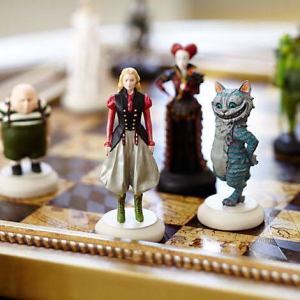
(Alice playing Chess in Looking Glass world)
Alice, at once, recognizes the chess board stretched on the vast land in the Looking Glass World. It shows that although she is just seven and a half years, still familiar to the this game, which signifies the popularity of Chess in England in Victorian Era, especially among the bourgeois class(as it is also called ‘game of royals’) and Alice belonged to the same.
In life we make ‘choices’, in chess we make ‘moves’. In order to attain something valuable in life as to capture the opponent’s castle in chess, initiative has to be taken. Nobody can make decisions for me, I’ll have to play myself, it’s just suggestions that our people may put before us. Here, Alice makes a choice to participate in the game ‘imagining’ her goal where she wants to be in the end. Well, talking about imagination with reference to Victorian era, it significantly brought out a drastic change in society, though previously children along with adults were forced into realism. ‘Imagination’ is quite efficient to presume one’s position in the coming years and then working out to get there can be useful, because life makes it hard to calculate the further possibilities due to lack of information. Alice restrained herself asking the Queens about their arrival, thinking it would be obtrusive, which keeps her away from the information, also we see Alice not able to distinguish between Red Knight and White Knight and actually who’s there to save her declares her ignorance towards information.
Chess is symbolic to attributes of life, we see, there are (apparently) three stages in chess, that is, opening, middle game and the end game, similarly we have childhood, youth and adulthood in life. Alice joins the giant Chess game of life as a white pawn, that is, she holds very limited power and can move once at a time. We always need to start from the beginning, that is, from the very first ladder in order to earn it step by step. Alice has the freedom to setup her ‘goal’ to be a Queen, but she has no power over her inevitable maturation that’s leading her to womanhood. Within the framework of the chess game, Alice has almost no control over her path and she, with certain implied rules of the game, is driven by the corresponding characters in the book, as in chess, every piece moves in answer to the move of the other one. She is pushed towards her goal by the various situations occurring before her in every square, such as, the train ride, no-name forest, Humpty Dumpty and the White Knight. Thus, it can be traced from the narrative that in life, there is some invisible force that’s propelling every individual in the direction of set goal. It can be comprehended that collaboration is the biggest instrument to victory, for example, White Knight saved Alice from the attack of Red Knight without which it had been a Herculean task for her to reach to final square. We will have to rely on our people somehow, otherwise we can’t achieve our dreams just by our own self. In chess, one can take full credit for one’s victories, but in life it would be naive to say that what I achieved is all because of my sole efforts.
(Lewis Carroll)
The game of Chess in Through The Looking Glass represents the interest of Carroll in logics and mathematics, and the agent is ‘Alice’. This game is not about luck unlike other indoor/board games, rather brainy. In the same way, Life is more about randomness, it’s not alone in the hands of fate, though life is much more unpredictable. We need statistics as well as probability in both chess and life. Also, chess possesses two different colors, that is, one is light and the other one is dark, where I suppose, they stand for logic and nonsense respectively. Based on this idea, Alice often proves to be smarter, more prudent than the so-called adults she confronts in the Looking Glass world. This might also be a reverse-reflection of actual world, I guess, where we see adults inclined towards logic and children uttering stuff and nonsense and vice-versa, here, in the world of mirror.
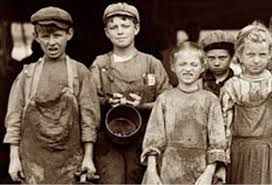
(Children doing factory chores in Victorian England)
Life of the children in Victorian period was totally opposite to that of present-day children. They were considered as miniature adults and were expected to be highly sophisticated, more in the case of rich class children. Children were not allowed to shout, complain, interrupt or disagree with anyone. The children of rich parents were usually looked after by governesses, no matter humble or strict, and they only used to teach them manners and the way of living. Here, in Looking Glass world, Red Queen, the first character to guide Alice in the reverse world,
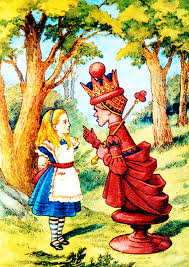
(Red Queen scolding Alice)
resembles very much like a governess of Alice when she teaches her how to not tweedle her fingers while speaking, how to behave, and to curtsey, and how Alice couldn’t go against her. She says, “when you’ve once said a thing, that fixes it, and you must take the consequences.”, because Alice is a Pawn and a Pawn cannot move backward, it is also allusion to the fact that once you have made the decision/choice, you can’t step back and stay committed bearing with it’s outcome, and she also asks Alice only to speak when she was asked to. Even we see TweedleDum-TweedleDee not ready to converse with Alice before she greets them. When Alice thinks that asking the Queens how they arrived would be impertinent, it shows again the social structure built for children in the real Victorian world.
When we are in a state of childhood, we want to turn into an adult soon. Similarly, Alice is excited about her lone-tour of adulthood through the Looking Glass world as she thinks she will be free of all the scolding, she says, “….no one here to scold me away from the fire….and can’t get me!” In the beginning, Alice was thrilled about her journey but as she is heading forward, she encounters the sense of loneliness in her journey to become a Queen(apparently) and acts adult herself. Though she is surrounded by different creatures many a times, but she feels alienated to their foreign ways. Hence, here Chess is a symbol of journey advancing from childhood to adulthood. She undergoes many crucial experiences, putting forward the idea of challenges one has to face in this journey of adulthood in one’s life. In the beginning, we see Alice being rude to Gnat about his jokes and later we see her kindness with White Knight that declares the change in her attitude as moving towards adulthood. When the Queen gives Alice directions as how to be a proper queen, it indicates that Alice wasn’t actually prepared to become a queen, just as it’s hard to prepare to be an adult in real world. Every square leads her to different characters and every character teaches Alice something significant, as we know, advice can come from the most unexpected places. For example, revelation of identity imposed by the situation in the woods of forgetfulness, the White Queen teaches her to believe in impossible, the fall of Humpty Dumpty symbolizes ‘the fall of man for pride’ and also ‘the fall of innocence’ proceeding towards maturity, and likewise all the other characters. These teachings help Alice to inherent the characteristics of adulthood within her. The crown here, symbolizes the transformation of Alice from childhood to adulthood.
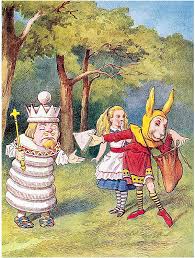
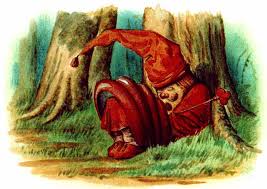
The Red King and the White King are almost doing nothing throughout the game as compared to their Queens. The Red King, as first encountered by Alice, is sleeping and his other pieces are performing their tasks to save him, whereas, the White King seems to be nervous not able to catch up with her Queen.
White King
Red King
Now these characters resemble in moves of both as that of the White and Red King in the real chess board. These actions of Queens and Kings in the world behind the mirror, may portray the position of women in the Victorian era. Women, at that time, used to engage themselves working for their husband and family, and also middle class and the working class women were employed to earn bread for their family, in support of their husbands. Red Queen saying to Alice, “…if you want to get somewhere else, you must run at least twice as fast as that!” may ascertain the idea that in a male-dominated society, women need to work double/toil harder in comparison to men in order to attain recognition. Women in the nineteenth century were not given much of the rights and privileges. This period is named after Queen Victoria, who was in the place of power. It is strange to encounter such a frivolous situation of women at the time when a lady herself was reigning over the society. When we behold Alice as a little woman moving from actual world to Looking Glass world, it may seem as she is struggling to change her confided world. She starts her journey all by herself which reflects the essence of independence in her. The characters like Live flowers resemble the social class structure that pushes Alice to follow their rules. When she chooses to be a Queen, she establishes the path for women/girls to upgrade their status because Alice learns that she must have a powerful authority to control Looking Glass world when one of the servants at once answers her after she turns into a Queen, so is the case for women in Victorian era, for example, Queen Victoria.
We need not be afraid of our high-rated opponents and feel incapable before them and it is then only that Alice is able to shake Red Queen in frustration and raises her voice against her rather than stitching her lips out of fear as evident in the beginning, that is, crown here, symbolizes her transformation from childhood to womanhood, gives her voice and finally renovates her status from a pawn to a queen. All the exclusive pieces are placed right behind the pawns. And a Pawn in comparison to them is just an ordinary, common piece that can slowly and gradually become a Queen. Even a pawn can cut down a King, pertaining to life, a single human being, regardless of his status, is enough to bring about revolution in the society, and win the castle of life. Alice suffering through all the odds, obstructions eventually made it, checkmated the Red King and turned into a Queen.
As a Queen in the game, the Red Queen and the White Queen are able to move swiftly and effortlessly. The White Queen, as she says, “jam-tomorrow and jam-yesterday, but never jam-today.”, and screams before pricking her thumb, travels in past and future which is true for the Queen,
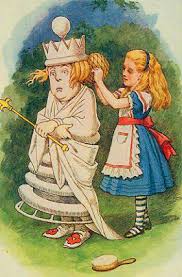
(Alice tying clumsy hair of White Queen)
in general, in chess that she can freely move in every direction possible, but she is seen nervous and messy all the time here, and ultimately at two points passes up a chance to checkmate and on another occasion she missed the opportunity to capture the Red Knight. Similarly, the Red Queen said to Alice, “Speak when you’re spoken to!”, and having supporting her words, she doesn’t announce it after putting White King on the check, hence, the check is ignored. Their individual character traits restrained them from performing their duties. This also discovers their absent-mindedness and reverse effect of the mirror world.
The Knight in the chess moves very distinctively and is allowed to jump over any other pieces. Riding and falling of the White Knight in looking glass world is signifying it’s unique L-shape movement. The inventions of White Knight are here to present his powerful character trait, like in chess board Knight is an only piece imbibed with many powers, unlike other pieces, not even a Queen can move in same way as Knight, though his inventions are unprofitable disclosing the touch of the illusionary world, still it is pointing to the fact that precaution is must, so his horse wears spikes on it’s ankles to protect it from shark bites and he collects things that might be useful in the difficult situation. The White Knight is the only character that is benevolent with Alice and saves Alice from the attack of Red Knight (stopping her to be a Queen/upgrade the position of women in society), but it can be an example of gender-biased society where a man is shown as a powerful figure and woman belongs to a weaker section. Alice, here, is represented as a weak girl and this action of White Knight throws light on the concept of feminism, and make Alice learn that a woman must stand for herself and must discover her own capabilities.
Chess wasn’t just one of the themes in Carroll’s story, indeed, it was the ground for the novel’s structure. The game of chess in real world is ‘logical’ while in looking glass world it can be called as ‘maddening game of chess’. Also as an inverted image created by the mirror, this indoor game is displayed as an outer giant field of chess. The pieces are definitely running and moving under the implied rules, but the pattern is not applied evenly. This game sets the deterministic way of life. Both life and chess are, more or less, synonymous in almost every aspect.
International Chess Day is celebrated on July 20, every year as the founding day of World Chess Federation (FIDE). The concept of celebrating this was presented by UNESCO and this year marks FIDE’s 97th anniversary.
Chess is likely one of the oldest games of our era. It was invented in India in the fifth century and was then named “Chaturanga”. Later, the game moved to Persia, and when the Arabs invaded Persia, chess became an important part of the Muslim population’s existence, and it spread to Southern Europe from there. Chess took on its modern shape in Europe during the 15th century and evolved into a contemporary sport. Ever since then it has been a popular sport. Today, Chess competitions are held with fresh and interesting variations all around the world
Chess helps you increase your fluid intelligence and processing speed , elevates your creativity and enables you to enter a flow state , leads to better planning and strategy skills, and can improve the symptoms of ADHD (Attention Deficit Hyperactivity Disorder). Studies prove that Electronic chess may help stave off a panic attack when you play on the right level. Playing Chess also increases the effectiveness of any mental therapy.
Here are few recommendations of books and movies related to chess
Books
Chess 101 by Dave Schloss
Bobby Fischer teaches chess by Bobby Fischer
The steps method by Rob Brunia and Cor Van Wijgerden
Pandolfini’s Ultimate Guide to Chess by Bruce Pandolfini
Winning Chess strategy for Kids by Jeff Coakley
Tips for young players by Matthew Sadler
How not to play chess by Eugene A. Znosko-Borovsky
Theme this year: “Teach someone how to play chess”
The idea to commemorate International Chess Day was proposed by UNESCO after it was established by FIDE in 1966. FIDE, the International Chess Federation has 181 chess federations as its members organize chess events and competitions across the globe on International Chess Day.
FIDE: Fédération Internationale des Échecs
-Chess was invented in India around 8th Century. It was known as chatrang-
Chess:
Chess is a board game played by two players. It is enjoyed all over the world. There have been many grandmasters and the records get tougher to hold the title. Chess is an abstract strategy game and involves no hidden information.
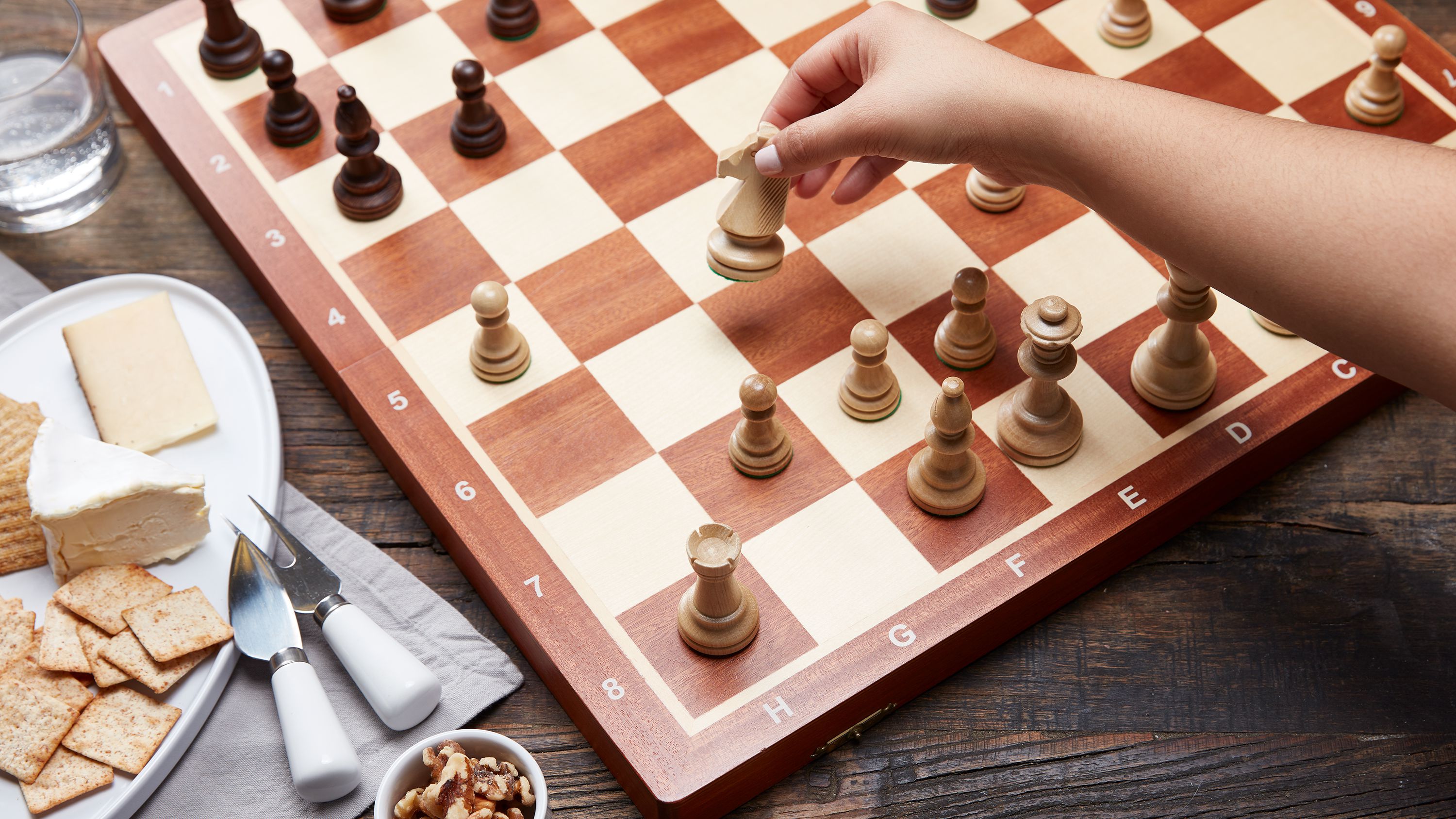
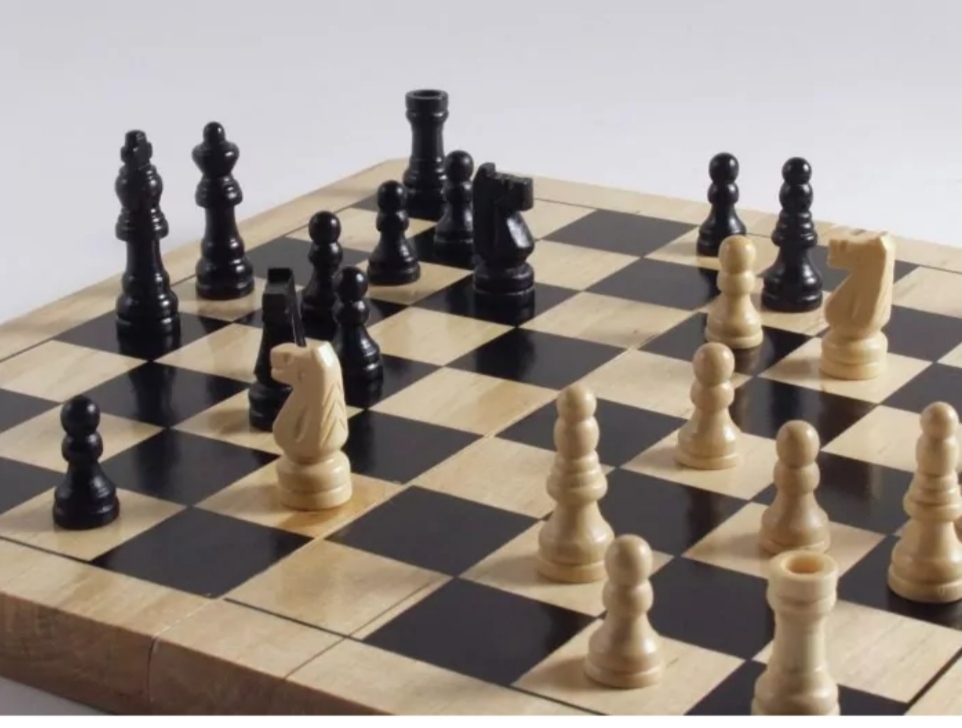
It is played on a square chessboard with 64 squares arranged in an eight-by-eight grid. At the start, each player controls sixteen pieces: one king, one queen, two rooks, two knights, two bishops, and eight pawns. The main chessboard and pawns are black and white.
The goal of the game is to put the opponent’s king under immediate attack .i.e. in “check” and give no way for it to escape. There are also several ways a game can end in a draw. Each pawn has its own limitation of movements.
It is one of the most fun, intellectual, and brainy indoor games.
Players: 2
Abilities: Strategy, tactics
Fact: In 1997, Deep Blue became the first computer to beat the reigning World Champion in a match when it defeated Garry Kasparov.
History:
The origin of chess date around 7-8th century. Three are written in Pahlavi and one, the Harshacharita, is in Sanskrit. Chatrang was named shatranj, after the Islamic conquest of Persia. Xiangqi is the form of chess best-known in China
The modern piece movement rules began to appear in intellectual circles in Valencia, Spain around 1475. The queen replaced the vizier chess piece and by the 15th century had become the most powerful piece.
Prague-born Wilhelm Steinitz laid the foundations for a scientific approach to the game, the art of breaking a position down into components. In addition to his theoretical achievements, his triumph over the leading German master Johannes Zukertort in 1886 is regarded as the first official World Chess Championship.
Significance of chess:
“The United Nations recognizes that sports, the arts and physical activity have the power to change perceptions, prejudices and behaviours, as well as to inspire people, break down racial and political barriers, combat discrimination and defuse conflict, and therefore contrabute in promoting education, sustainable development, peace, cooperation, solidarity, social inclusion and health at the local, regional and international levels.
The designation of World Chess Day of the UN will not only recognize the important role of the FIDE in supporting international cooperation for chess activity and aiming to improve friendly harmony among all peoples of the world, but also to provide an important platform to foster, dialogue, solidarity and culture of peace”
-United Nations
Fact: The rules of chess are published by FIDE (Fédération Internationale des Échecs)
Notable Men and women in the world of chess:
Judit Polgár
Garry Kasparov
Vera Menchik
Magnus Carlsen
Rohini Khadilkar
Andrey Espienko
Nona GAprindashvili
Hou Yifan
Movies to watch:
The Queen’s Gambit
Queen of Katwe
Pawn Sacrifice
Searching for Bobby Fischer
Brooklyn Castle
Hikaru no Go
What to do?
LEARN CHESS!!
Cause why not? Learning moves or moving pieces entirely after thorough thought, being on your toes to find the easiest or quickest win to checkmate, and tricking someone to make the move you wanted them to do! It is a load of exercise for your brain.
The origin of chess is something that is debated and there is not really a consensus on its origin or even the history of chess, from the old to the present.
Some say that versions of chess and its board date back from Ancient Egypt or Dynastic China, but its most supported origin is that it first appeared in India around the 6th century, at that time it would have the name of Chaturanga.
Over time, it eventually reached Persia and its name eventually changed, being now called Xatranje, probably having other rules as well.
It eventually spread throughout Europe slowly and it took about 500 years for Xatranje to begin to look more like the chess we know today.
In the yoer of 1475 began to be consolidated with the current rules and its name also eventually changed to chess but it still took a few hundred years for Europe to play with the most modern pieces and rules as well.
In the middle of the nineteenth century began to appear tournaments and chess competitions, thus giving rise to a sport, which was always dominated by the same players and had World champions who maintained their reign for long periods, 20 / 30 years for example.
Chess game
The game of Chess aims to give the “mate” in the king of the opponent player. This happens in the following situations:
The king can not move to any house (they are all in the attack line of the opponent’s pieces);
No part can stand in front and protect the King;
The piece you are attacking cannot be captured;
If any of these conditions arise, then the “mate” or “checkmate” will occur and the game ends, winning the player who applied the “mate”.
Board and Chess Pieces
The chessboard is composed of squares of white and black color (8 squares of length on each side), being these always alternating.
The pieces also have the same colors and each color corresponds to the pieces of a player.
The board should be positioned so the last house on the right side of the row closest to each player is a white square.
The game of chess consists of the following pieces:
Pawn
Tower
Horse
Queen
Bishop
Rei
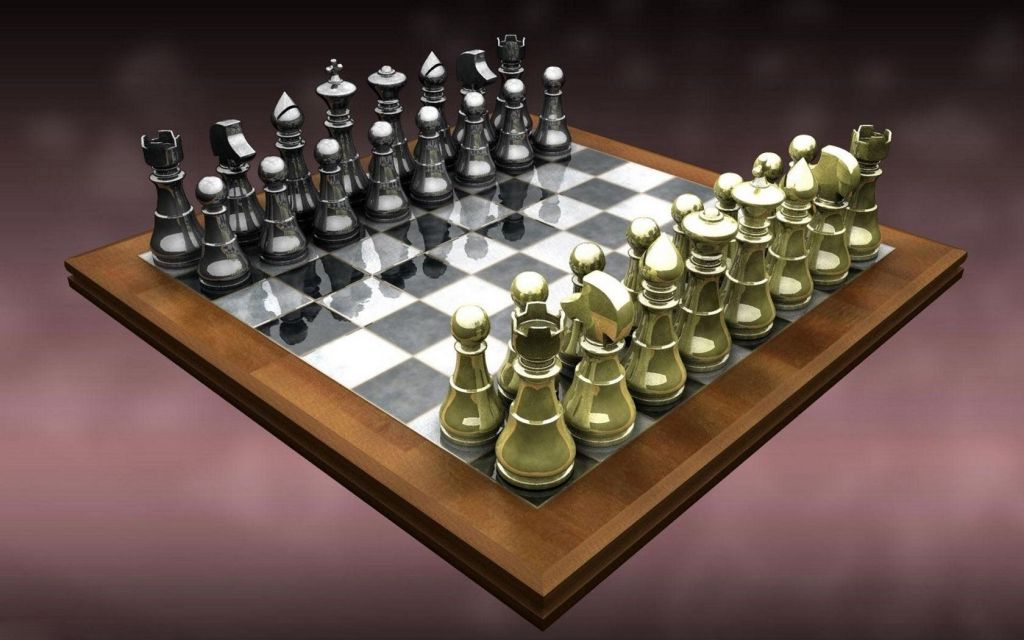
The pieces have their own order to be placed on the board (Follow the positions that are represented in the image);
Please note: The position of the King and Queen changes depending on the player, following the rule:
White King – Black House Black King – White House White Queen – White House Black Queen – Black House
Who starts playing is always the player who owns the white pieces.
Chess Moves / Plays
Each piece has its unique way of moving around on the board, which enables a very large number of patterns and strategies, making chess a strategy sport and more interesting.
The possible plays per house piece are:
Pawn This can only just move forward (no more part has this rule), being that it can only advance 1 home in front, or 2 if it has never been tweaked. It is also the only one that moves differently when it is to take the opponent’s piece, and he can only take the piece that is diagonally forward.
Tower The tower has a fairly simple movement. It can move forward, backward, left or right in a straight line across the entire board as long as it has the path without any part.
Horse The horse is the one that has the most unique movement. It can only move in L. format. This means that you can only walk two houses forward and one to the side at each move. This piece can already make your move jumping over other pieces (it’s the only one with this rule).
Bishop The bishop has a movement similar to that of the Tower, only the latter, instead of moving in a straight line, moves diagonally, and can not pass over any part either.
Queen This is considered the most powerful piece of Chess, this due to its versatility of movements since it can make the same movements of the Tower and the Bishop.
Rei The King can move 1 each in all directions. The only restriction that this has is not being able to go to a house that is “check” (in the line of attack) by some part of the opponent.
Special moves
There are certain moves that can be made under special circumstances that make this magnificent game even more interesting and competitive. The special plays that exist are:
Pedestrian Promotion
When you can get one of your pawns to reach the end of the board (on the first line of the opponent), the pawn must be replaced by another piece (being a bishop, tower, queen, or horse), and is usually chosen the queen since it is the most powerful piece of the game.
Roque
It consists of a movement between the king and the queen, who change positions at the same time, in an attempt to defend the king by taking it from the center of the board and move the tower to a better position of attack.
In this movement, the king moves toward the tower two houses and the tower moves to the king’s side passing over him. There are two rocks: the small and the large, the only difference being its designation. The big rock is when the rock is made with the tower farthest from the king and the small is the opposite.
To make this move, certain conditions must be met:
The king could not have moved;
The tower can not have been moved;
The way between the tower and the king must be clean;
The king can not stand in a position that is in the line of attack of the enemy;
Passing
This is a special way for the pawn to move and can take the opponent’s pawn that passed next to him when he is in the 5 row counting from his field. Observe the images to better understand the move.
For this move there are also special conditions, which are:
Your pawn should be in the 5 row
The pawn of the opponent has advanced two houses and thus have stayed next to his;
The bid must be made immediately to the movement of your opponent;
Some Chess Rules
Chess also has some rules. Let’s just highlight the main rules that are usually addressed.
When a player lifts a piece, it may place it anywhere that is valid for the movement of that piece. After landing the piece cannot be removed, only if it has made an invalid movement.
When promoting a pawn, the player can touch a piece that is outside the board and change for his pawn, thus finishing the move;
During the Roque the player must first take the King and then in the Tower thus making their exchange of positions. If you touch both at the same time you can do it. If this one raises the King with the intention to make the Roque but this is impossible, then it must move the King to a valid house.
Players must not speak during the game, only when asking for a tie or advising the referee of any infraction. In games between amateurs it is common to announce the “check” but among professionals, the same should not be announced.
Chess in itself is a complicated game. Even with all the strategy, sometimes one can go only that much far. Also known as the game of kings, chess has evolved through the passage of time. It is said to have derived its roots from the indian game chaturanga. The standardized rules of chess that are followed unanimously now were discussed and fixed in the 19th century.
In this game, each player is alloted 16 pieces: one king, one queen, two bishops, two knights, two rooks and lastly, eight pawns. Each piece follows a different movement pattern, and the main objective of the game is to checkmate the opponent’s king. Checkmate refers to the position where the opponent’s king is in threat of capture, with no option to safeguard the piece.
It is a fact that change is the only thing that is constant. Same applies to chess too. Many variants of chess, on the basis of different criterias, are popular amongst the population. If anyone is keeping up with the chess developments, then they will surely know about three and four player variants of chess. So what are these variants? Let’s see…
Triple Trouble
Three player chess, also known as three way chess, or three handed chess is specially designed for three players. Usually a non-standardized board is used, and many variations of this form exist. The pieces of three players are usually separated on the basis of colours. Three way chess variants are more tough to design as for disbalance caused by teaming up of two players will be a great disadvantage for the third one, and also not easily lovercomable. Hence, some variants declare the first player to checkmate any of the other two players as the winner. The third player might be declared to have lost, alongside the checkmated player, or, might be rewarded a half point.
The strategy in three way chess differs greatly from the traditional chess variant, as for the face against two opponents, the usual opening and defenses might not hold strong. Also, the third player is given the most advantage when the other two players exchange their pieces. This point opens a plethora of new tactics in the game. Also, in the games where the first one to checkmate wins, the players not only have to build on their attack and defense, but also have to make sure that no other player checksmates before them. Also, checkmate from both the opposing players simultaneously is a tricky situation. As for if the checkmated piece is captured by the second player, which in turn, is captured by the third player, then it is considered that the ultimate checkmate is given by the third player. But with all these complications, three way chess pushes the mind to evaluate the game even with more concentration and critical thinking.
Some variants of three way chess are:
Boards with triangular cells: Patented by Russian Ilshat Tagiev in 2008, this variant uses a hexagonal board with triangular cells. The cells which are not adjacent to the perimeter have three cells adjacent in an oblique fashion.
Boards with quadrilateral cells: Under this, variants can be sub classified on the basis of the geometry of the boards.
Hexagonal board: Some variants under this category are Three Man Chess (96 cell board), Self’s Three Handed Chess (144 cell board), Waidder’s Three Handed Chess (126 cell board), etc.
Other Boards: Megachess (roughly triangular board with 130 cells), Mad Threeparty Chess (10X10 board) etc.
Boards with hexagonal cells: In this type of board, usually three bishops are alloted to each player, in order to include all the cells of the hex- playing field. Some variants with this type of cells are- Chesh, HEXChess etc.
Circular boards: Usually has three or four sided cells. One such variant is Three Man Chess.
From all the directions
Four player chess, also known as four way chess and four man chess, is relatively simpler to understand. It follows some basic rules of traditional chess. The board itself, though, is different. The common board format is the standard 8X8 squares, with an extension of three rows, each of eight cells, on each side. The pieces are again differentiated on the basis of colours. Played in both team and single format, the objective is to mate the opponent kings (two in case of team game and three in case of singles). In a team game, check mating only one king successfully leads to a draw. A fun fact: If two or more players team up during a game, then also it is considered legal.
Four player chess, incidentally, has a set of common rules. Those are:
Pieces of a certain colour can only be moved at their own turns.
Pawn can move diagonally forward only in an attacking case, otherwise it has to move forward in a straight line.
A pawn, on successfully reaching the King’s row of any of the other three opponents, has the option to upgrade to a queen, rook, knight or bishop.
In most of the variations, if the move of one opponent directly places another opponent in a mate position due to the presence of a piece of third opponent, the third opponent is forbidden to capture the mated King, until the mated opponent gets the opportunity to play something in order to defend their king.
The variation in the chess world is much, much more widespread than this. If this seems interesting, check out the other variations too!
Indian inventions and discoveries have been instrumental in shaping the face of the current modern world. I have picked 12 such interesting findings out of a whole bunch that will make you go, “I didn’t know that”.
Shampoo
The word ‘Shampoo’ is derived from chāmpo (चाँपो). It was initially used as a head massage oil for the Nawabs of Bengal during the Mughal Empire around 1762. It evolved into shampoo over the years. Yes, you have India to thank for shampoo.
Buttons
Buttons were first used in Mohenjo-daro for ornamental purpose rather than for fastening. They were first used in the Indus Valley Civilization by 2000 BCE.
The Chess Game
Chess developed out of Chaturanga, which is an ancient strategy board game developed during the Gupta Empire in India around the 6th century AD. Now you know why Vishwanathan Anand is such a pro. It is simply in our roots.
Ruler / Scale
Rulers were first used by the Indus Valley Civilization prior to 1500 BCE. Made of ivory, the rulers found during excavation, reveal the amazing accuracy of decimal subdivisions on it.
Radio / Wire-less Communication
We all know that Marconi received a Nobel Prize in Physics in 1909 for contribution to the development of wireless telegraphy. But the first public demonstration of radio waves for communication was made by Sir Jagdish Chandra Bose in 1895, two years prior to Marconi’s similar demonstration in England.
Sir Bose was posthumously credited (more than a century later) for his achievement. The fact remains that this discovery truly shaped the face of modern wireless communication.
Ink
Many ancient cultures and civilizations independently discovered and prepared ink for writing purposes. The source of carbon pigment used in Indian Ink (called musi) used in ancient India, was India. Since 4th century BC, the practice of writing with ink with a sharp pointed needle was common in South India.
Flush in Toilets
Flush toilets were first used in the Indus Valley Civilization. These existed in most homes and were connected to a sophisticated sewage mechanism. The civilization was prominent in hydraulic engineering.
Diamond Mining
Worldwide, India was the only source of diamonds until the discovery of mines in Brazil in the 18th century. Almost 5000 years ago, diamonds were first recognized and mined in central India.
Cotton – so basically we clothed the World!
The ancient Greeks used to wear animal skins and were not even aware of cotton. But Indians were sort of cool and started cultivating cotton during the 5th – 4th millennium BCE in the Indus Valley Civilization. The word spread to the Mediterranean and beyond and soon everyone was ordering one from Flipkart. Well, pretty much.
Steel and Metal Works
Ancient Indians were pioneers in metallurgy. High quality steel was produced, almost two thousand years before it was understood by the West. One of the most remarkable feat in metallurgy: creating a seamless celestial globe, was invented in Kashmir. It was earlier considered impossible to create a metal globe without seams.
So thanks to India, Iron Man can wear his suit now.
Plastic Surgery & Cataract Surgery
Yes, you heard it right. Indians were pioneers in Plastic Surgery and Cataract surgery, too. It was carried out in India as early as 2000 BCE by Rishi Sushruta also known as the father of surgery.
Snakes & Ladders
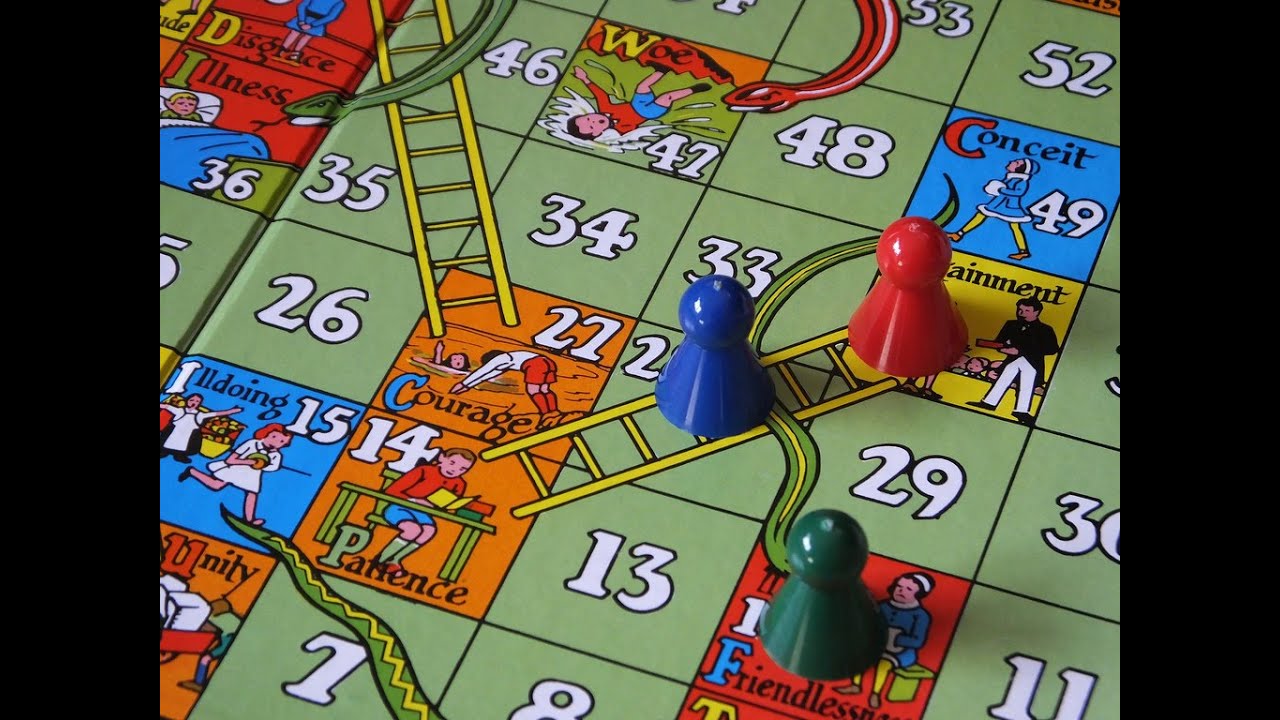
The game, Snakes & Ladders, was invented in India as a game of morals. Later it spread to England and eventually introduced in the USA by game pioneer Milton Bradley in 1943.
Being one of the oldest civilizations in the world, complete with a rich history and culture as well as a strong and long scientific and technological tradition, it comes as no surprise that many significant inventions have come out of INDIA.
Every year on July 20, International Chess Day is celebrated to honour the founding of the Federation Internationale des Echecs, also known as FIDES, in the year 1924. Since ancient times Chess has been a popular game and has been played around the world. ‘With the time Chess game and its rules are evolving. As per reports, Chess became a game of class and only upper class were able to afford this game in a long way. However, the merchandise class later went on to introduce this game to the rest of the people while travelling around the world.
World Chess Day history:
In the fifth century, chess was invented in India. It was called “Chaturanga” at the time. Chess is one of the most ancient games of the period. This game was then spread to Persia. When the Arabs invaded Persia, Chess became an important part of the Muslim population’s life and from there it spread to Southern Europe. Chess evolved in its current form in Europe during the 15th century. And by the late 15th century, it took the shape of a modern game. And beginning on July 20, 1966, the International Chess Day began to celebrate FIDE’s establishment.
CELEBRATION:
World Chess Day, celebrated around the world, is now also recognised by the United Nations. According to reports, UNESCO proposed the idea to celebrate this day as the International Chess Day, and it has been marked as such since 1966 after it was established by FIDE. However, plenty of professional chess players around the world already celebrate the day. A survey published on FIDE reveals that a surprisingly stable 70% of the adult population has played chess at some point during their lives. In countries as diverse as the US, UK, Germany, Russia and India, this number holds approximately the same amount.
CHESS RULES:
The ultimate aim in the chess game is to deliver a checkmate – trapping your opponent´s king. The term checkmate is an alteration of the Persian phrase “Shah Mat”, meaning literally, “the King is ambushed”, and not “the King is dead”, that is a common misconception.
The chessboard is made up of eight rows and eight columns for a total of 64 squares of alternating colors. Each square of the chessboard is identified with a unique pair of a letter and a number. The vertical files are labeled a through h, from White´s left (i.e. the queen side) to White´s right. Similarly, the horizontal ranks are numbered from 1 to 8, starting from the one nearest White´s side of the board. Each square of the board, then, is uniquely identified by its file letter and rank number. In the initial position setup, the light queen is positioned on a light square and the dark queen is situated on a dark square. The diagram below shows how the pieces should be initially situated.
Chess moves:
King can move exactly one square horizontally, vertically, or diagonally. At most once in every game, each king is allowed to make a special move, known as castling.
Queen can move any number of vacant squares diagonally, horizontally, or vertically.
Rook can move any number of vacant squares vertically or horizontally. It also is moved while castling.
Bishop can move any number of vacant squares in any diagonal direction.
Knight can move one square along any rank or file and then at an angle. The knight´s movement can also be viewed as an “L” or “7″ laid out at any horizontal or vertical angle.
Pawns can move forward one square, if that square is unoccupied. If it has not yet moved, the pawn has the option of moving two squares forward provided both squares in front of the pawn are unoccupied. A pawn cannot move backward. Pawns are the only pieces that capture differently from how they move. They can capture an enemy piece on either of the two spaces adjacent to the space in front of them (i.e., the two squares diagonally in front of them) but cannot move to these spaces if they are vacant. The pawn is also involved in the two special moves en passant and promotion.
Castling:
Castling is the only time in the chess game when more than one piece moves during a turn. This chess move has been invented in the 1500´s to help speeding up the game and improving balance of the offense and defense. During the castling, the king moves two squares towards the rook he intends to castle with, and the rook moves to the square through which the king passed.
Castling is only permissible if all of the following conditions hold:
Neither king nor rook involved in castling may have moved from the original position
There must be no pieces between the king and the rook
The king may not currently be in check, nor may the king pass through or end up in a square that is under attack by an enemy piece (though the rook is permitted to be under attack and to pass over an attacked square)
En Passant:
En Passant may only occur when a pawn is moved two squares on its initial movement. When this happens, the opposing player has the option to take the moved pawn “en passant” as if it had only moved one square. This option, though, only stays open for one move. The En Passant move was developed after pawns were allowed to move more than one square on their initial move. The idea behind this rule was to retain restrictions imposed by slow movement, while at the same time speeding up the game.
Pawn promotion:
If a pawn reaches the opponent´s edge of the table, it will be promoted – the pawn may be converted to a queen, rook, bishop or knight, as the player desires. The choice is not limited to previously captured pieces. Thus its´ theoretically possible having up to nine queens or up to ten rooks, bishops, or knights if all pawns are promoted.
First of all, One of the oldest games that is still in existence and is very popular so it tells how humans used to think back then and what’s the difference now.Earlier it was used to make war strategies . Now it enhances your problem solving capabilities. Nowadays whatever we do, whatever place we work in, the most important thing required to grow is the problem solving skills.
Chess improves the logical part of the brain. Every time you learn a new move, a new neuron is developed in your brain, which increases the size and capability of your brain’s neural network thus making your brain fast. So, in simple terms a person playing chess from his childhood will be grown up into a smarted person who will be good with logic, remembering stuffs and numbers.
Chess, a brilliant pass time to hone and develop out mental acumen, has been in our lives for more than a millennium. Chess is a two-player strategy board game played on a checkered board with 64 squares arranged in an 8×8 grid. Played by millions of people worldwide. However, it was not always the same kind of game that it is now, it has evolved immensely from the time that it was made. Over roughly one and a half millennia of its existence, chess has become a tool of military strategy, a metaphor for human affairs and a benchmark of genius. While our earliest records of chess are from the 7th century, legend has it that it was actually originated at sometime in the 6th century. So how did it start and evolve to the game enjoyed by so many today.
Supposedly when the youngest prince of the Gupta empire was killed in battle, his brother devised a way to represent the scene to his grieving mother. Set on an 8×8 ashtapada board used for other popular pastimes, a new game emerged with two new features, different rules for moving different pieces on the board and a single king whose fate decided the outcome of the game. The game originally called chaturanga, a Sanskrit word for four divisions was soon popularised and spread to Sassanid Persia and acquired its current name and terminology – “chess” derived from “shah” meaning “king” and “checkmate” from “shah mat” which means “the king is helpless”. After the 7th century Islamic conquest of Persia, chess got introduced to the Arab world. Thus, transcending its role as a tactical simulation and becoming a rich source of poetic imagery. Diplomats and courtiers used chess terms to describe political power, even ruling caliphs became avid players and historian al-Mas’udi considered the game a testament to human free will compared to the games of chance. Medieval trade along the silk road carried the game to east and south east Asia, where many local variants developed. In china, chess pieces were placed at intersections of board squares rather than inside them as in the native strategy game of Go. In the Mongol times, chess saw an 11×10 board with safe square called citadels while in japan shogi developed where captured pieces could be used by an opposing player. But it was really in Europe that the game acquired its modern form. By 1000 AD, the game had become a part of courtly education with chess becoming an allegory for different classes with different functions. At the same time church remained suspicious of games. Moralists cautioned against devoting too much time to it with chess even briefly being banned in France. Yet the game proliferated and the 15th century saw it cohering into the form we know today. With the enlightenment era, the game moved from royal courts to coffee houses. Chess was now seen as an expression for creativity, encouraging bold moves and dramatic plays. This “romantic” style of play reached its peak in the immortal game of 1851 which is hailed as the most dramatic and game so far. With the emergence of formal competitive play in the 19th century, it saw the dramatic flair being squashed under the strategic calculation that the era had brought forth. This chess took on a new geopolitical stance with the Soviet Union dominating the rest of the century by devoting great resources to cultivate chess talent. But a player emerged who truly upset the Russian dominance and it wasn’t even human. The IBM computer called Deep blue triumphed over Garry Kasparov in 1997 and hailed the emergence of chess software with AI so advanced as to beat human players with ease.
However, these machines are the products of human ingenuity and the same ingenuity can perhaps help us get out of the apparent checkmate.


















 Eduindex
You must be logged in to post a comment.