The Right To Education.

The Right of Children to Free and Compulsory Education Act or Right to Education Act (RTE), is an Act of the Parliament of India authorized on 4 August 2009, which portrays the modalities of the significance of free and obligatory schooling for children somewhere in the range of 6 and 14 in India under Article 21a of the Indian Constitution. India became one of 135 nations to make training a fundamental right of each child when the Act came into power on 1 April 2010.

The Act makes instruction a fundamental right of each child between the ages of 6 and 14 and determines least standards in elementary schools. It requires all non-public schools to save 25% of seats to children (to be repaid by the state as a component of the public-private organization plan). Children are conceded in to tuition based schools dependent on monetary status or rank based reservations. It likewise restricts all unnoticed schools from training, and makes arrangements for no gift or capitation expenses and no meeting of the child or parent for affirmation. The Act likewise gives that no child will be kept down, removed, or needed to breeze through a board assessment until the culmination of elementary schooling. There is likewise an arrangement for uncommon preparing of school quitters to carry them acceptable with understudies of a similar age.

The RTE Act requires overviews that will screen all areas, distinguish children requiring instruction, and set up offices for giving it. The World Bank instruction expert for India, Sam Carlson, has noticed: “The RTE Act is the principal enactment on the planet that puts the obligation of guaranteeing enrolment, participation and fruition on the Government. It is the guardians’ duty to send the children to schools in the US and different nations.”

The Right to Education of people with handicaps until 18 years old is set down under a different enactment – the Persons with Disabilities Act. Various different arrangements with respect to improvement of school framework, instructor understudy proportion and personnel are made in the Act.

Training in the Indian constitution is a simultaneous issue and both focus and states can administer on the issue. The Act sets down explicit obligations regarding the middle, state and neighborhood bodies for its implementation. The states have been clamoring that they need monetary ability to convey instruction of suitable norm in all the schools required for all inclusive training. In this manner plainly the focal government (which gathers the greater part of the income) will be needed to sponsor the states.

A board set up to contemplate the assets requirement and subsidizing at first assessed that INR 1710 billion or 1.71 trillion (US$38.2 billion) across five years was needed to implement the Act, and in April 2010 the focal government consented to sharing the financing for implementing the law in the proportion of 65 to 35 between the middle and the states, and a proportion of 90 to 10 for the north-eastern states. Be that as it may, in mid 2010, this figure was moved up to INR 2310 billion, and the middle consented to raise its offer to 68%. There is some disarray on this, with different media reports expressing that the a lot of the implementation costs would now be 70%. At that rate, most states should not have to expand their schooling financial plans generously.

A basic development in 2011 has been the choice taken on a basic level to stretch out the right to schooling till Class X (age 16) and into the preschool age range. The CABE board is currently investigating the ramifications of rolling out these improvements.

The Ministry of HRD set up an undeniable level, 14-part National Advisory Council (NAC) for implementation of the Act. The individuals included Kiran Karnik, previous leader of NASSCOM; Krishna Kumar, previous overseer of the NCERT; Mrinal Miri, previous bad habit chancellor of North-East Hill University; Yogendra Yadav – social researcher. India

Sajit Krishnan Kutty, Secretary of The Educators Assisting Children’s Hopes (TEACH) India; Annie Namala, an extremist and head of Center for Social Equity and Inclusion; and Aboobacker Ahmad, VP of Muslim Education Society, Kerala.

A report on the situation with implementation of the Act was delivered by the Ministry of Human Resource Development on the one year commemoration of the Act. The report concedes that 8.1 million children in the age bunch six-14 stay out of school and there’s a deficiency of 508,000 instructors country-wide. A shadow report by the RTE Forum addressing the main schooling networks in the nation, nonetheless, testing the discoveries bringing up that few key lawful commitments are falling behind the timetable. The Supreme Court of India has likewise mediated to request implementation of the Act in the Northeast. It has likewise given the lawful premise to guaranteeing pay equality between educators in government and government helped schools. Haryana Government has relegated the obligations and duties to Block Elementary Education Officers–cum–Block Resource Coordinators (BEEOs-cum-BRCs) for viable implementation and persistent checking of implementation of Right to Education Act in the State.

It has been called attention to that the RTE act isn’t new. Widespread grown-up establishment in the demonstration was gone against since the majority of the populace was unskilled. Article 45 in the Constitution of India was set up as a demonstration: The State will attempt to give, inside a time of a long time from the commencement of this Constitution, free of charge and necessary schooling for all children until they complete the age of fourteen years.

As that cutoff time was going to be passed numerous many years prior, the instruction serve at that point, MC Chagla, notably said: “Our Constitution fathers didn’t mean that we just set up cabins, put understudies there, give undeveloped instructors, give them terrible course readings, no jungle gyms, and say, we have consented to Article 45 and essential training is growing… They implied that genuine training ought to be given to our children between the ages of 6 and 14” – (MC Chagla, 1964).

During the 1990s, the World Bank subsidized various measures to set up schools inside simple reach of provincial ommunities. This work was solidified in the Sarva Shiksha Abhiyan model during the 1990s. RTE takes the interaction further, and makes the enrolment of children in schools a state right.
The significance of children’s rights

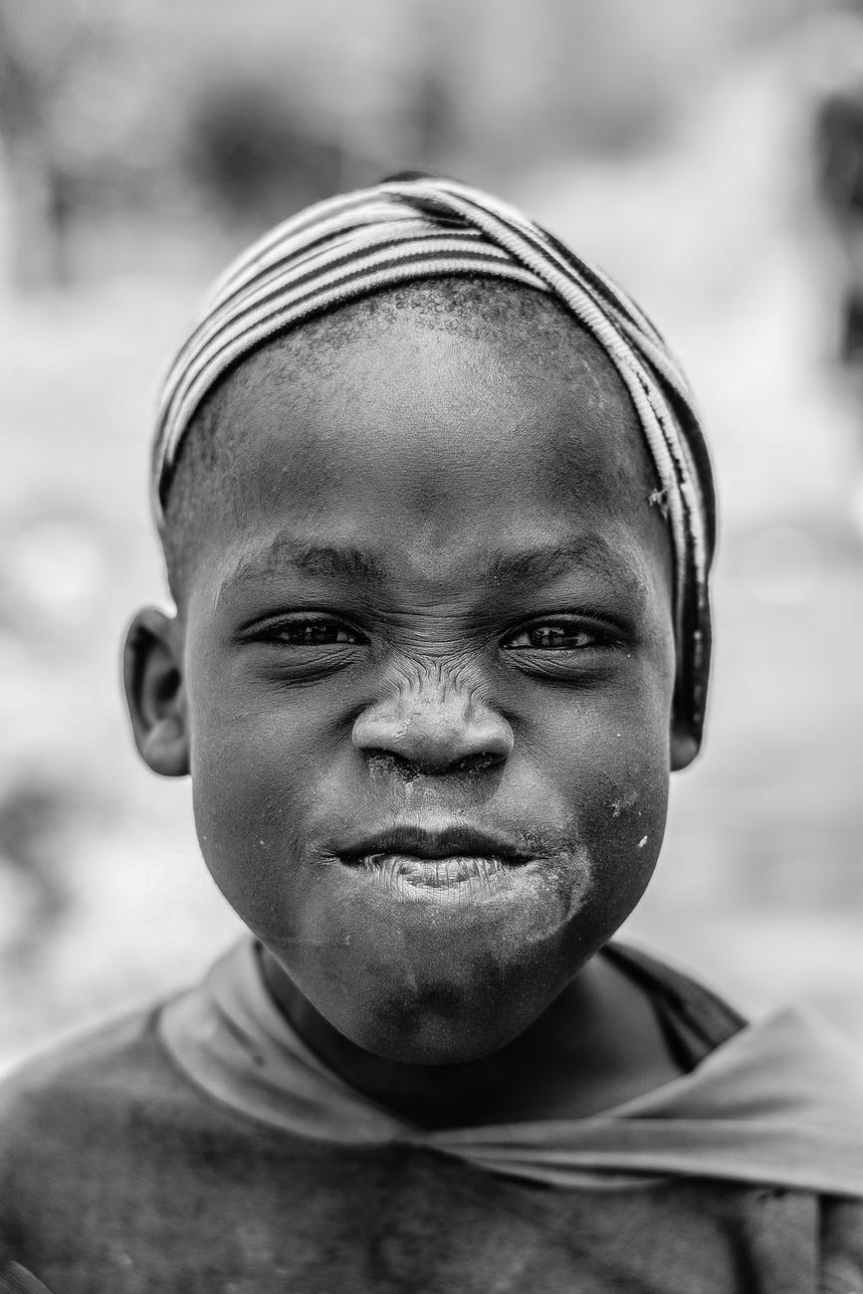
There are numerous purposes behind singling out children’s rights in a different common liberties Convention . Children are neither the assets of guardians nor of the state, nor are they simple individuals really taking shape; they have equivalent status as individuals from the human family.

Children start life as absolutely dependent creatures , Children should depend on grown-ups for the support and direction they need to develop towards freedom. Such support is undeniably found from grown-ups in children’s families, yet when essential grown-up parental figures can’t address children’s issues, it is up to the State as the essential obligation conveyor to track down an option to the greatest advantage of the child. The activities, or inactions, of government sway children more unequivocally than some other gathering in the public eye . Essentially every space of government strategy – from schooling to general wellbeing – influences children somewhat. Childish policymaking that neglects to consider children adversely affects the fate of all citizenry.

Children’s perspectives ought to be heard and considered in the political interaction , Children by and large don’t cast a ballot and don’t generally partake in political cycles. Without extraordinary thoughtfulness regarding the assessments of children – as communicated at home and in schools, in neighborhood networks and surprisingly in governments – children’s perspectives go unheard on the numerous significant issues that influence them now or will influence them later on. Numerous progressions in the public eye are having an unbalanced, and regularly adverse, sway on children . Change of the family structure, globalization, environmental change, digitalization, mass relocation, moving business designs and a contracting social government assistance net in numerous nations all emphatically affect children. The effect of these progressions can be especially decimating in circumstances of equipped clash and different crises.

The solid improvement of children is essential to the future prosperity of any general public. Since they are as yet creating, children are particularly defenseless – more so than grown-ups – to helpless day to day environments like destitution, insufficient medical services, nourishment, safe water, lodging and ecological contamination. The impacts of infection, hunger and neediness undermine the fate of children and hence the eventual fate of the social orders wherein they live. The expenses for society of bombing its children are colossal

Social examination discoveries show that children’s soonest encounters essentially impact their future turn of events. The course of their improvement decides their commitment, or cost, to society throughout their lives.

The effects of video games on a child’s behaviour

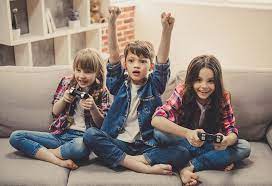
Video gaming has become a popular activity for people of all ages. Many children and adolescents spend large amounts of time playing them, although no one should have more than two hours total of screen time in a day. Video gaming is a multi-billion dollar industry, bringing in more money than movies and DVDs combined. Video games have become very sophisticated and realistic and some games connect to the Internet, which allow children and adolescents to play online with unknown adults and peers.

While some games have educational content, many of the most popular games emphasize negative themes. They promote the killing of people or animals, the use and abuse of drugs and alcohol, criminal behavior, disrespect for the law and other authority figures, sexual exploitation and violence towards women, racial, sexual and gender stereotypes, and foul language obscenities and obscene gestures. Examples of video games not acceptable for children because they have these themes include the popular ones Grand Theft Auto, Call of Duty, and Mortal Kombat.

There is growing research on the effects of video games on children. Studies of children exposed to violence have shown that they can become immune or numb to the horror of violence, imitate the violence they see and show more aggressive behavior with greater exposure to violence. Studies have also shown that the more realistic and repeated the exposure to violence, the greater the impact on children. Children and adolescents can become overly involved and even obsessed with video games, leading to poor social skills, time away from family time, school work and other hobbies, lower grades, reading less, exercising less, becoming overweight, and having aggressive thoughts and behaviors.

So how can you, as a parent, protect your child against these types of video games? First, you can check the Entertainment Software Rating Board ratings to learn about the game’s content. Every video game will actually have a label on the front to tell you what type of game it is. If it says M for mature, it’s not for your child.

Play the video games with your child to experience the game’s content and know exactly what your child is playing. Set clear rules about the game’s content for both playing time in and outside of your home. Strongly warn your children about the potential serious dangers of Internet contacts and relationships while playing online. There are a lot of online predators that will look for children specifically playing video games and this can lead to them meeting in real life. Finally, remember that you are a role model for your child. Make sure the video games you play as an adult are ones that you would want your child to play.

If you are concerned as a parent that your child is spending too much time playing video games or your child starts becoming obsessed with aggressive or violent video games, make sure you set some limits. You’re not allowed to play games for one hour after all the homework is done and encourage your child to participate in other activities so they’re not drawn to those video games. By being aware of what games are out there, you can help your child make appropriate decisions about gaming no matter where your child plays.

CHILD MARRIAGES

CHILD MARRIAGES ; IT IS A VERY SYNONYMOUS TERM TO A LOT OF US. OUR GRANDPARENTS, THEIR PARENTS AND PARENT OF A LOT OF US, WERE FORCED TO GET MARRIED AT A VERY EARLY AGE.

GIRL CHILD IS CONSIDERED TO BE A BURDEN, AS THE PARENTS OF THE GROOM ASK FOR HEAVY DOWRY, IN WHICH THE PARENTS OF THE GIRL CHILD , AT TIMES ARE FORCED TO SELL THEIR HOME AND LAND.

WEDDING OF A YOUNG DAUGHTER, IS CONSIDERED TO AS ” REMOVING THE BURDEN OF THE FATHER”.

WHEN CHILDREN ARE BORN THEIR MARRIAGES GET FIXED, BY THE CONSENT OF THEIR PARENTS. AS SOON AS THE CHILDREN GROW A LITTER OLDER. THEY ARE TOLD TO GET MARRIED.

YOUNG GIRLS ARE ASKED TO DO HOUSEHOLD CHORES, LEAVE THEIR STUDIES AND BEHAVE LIKE A ” SANSKAARI BAHU” [ AN OBEDIENT AND REPECTFUL DAUGHTER-IN LAW].

BOYS ARE OVER-BURDENED WITH RESPONSIBILITIES AND GET DEPRIVED OF A BEAUTIFUL CHILDHOOD.

CHILDREN ARE MADE TO LOSE THEIR CHILDHOOD AND INNOCENCE AND LIVE A LIFE WHEREIN THEY ARE MADE TO WORK UNDER PRESSURE AND DEPRIVATION OF LOVE AND AFFECTION.

INDIAN LAWS HAD PUT A BAN ON CHILD MARRIAGE AND THE STATISTICS OF CHILD MARRIAGE HAVE SIGNIFICANTLY GOT DOWN.

BUT IN A LOT OF VILLAGES THIS IS STILL PRACTICED.

CHILDHOOD IS FOR ENJOYMENT AND LEARNINGS. WHY BURDEN THEM WITH RESPONSIBILTY?

Choosing the Best School for your Child

Well, actually, it’s both … the charm of hummingbirds is most certainly apropos and “a charm” of hummingbirds is actually factual! Yep, that’s right, the collective noun for these unique creatures – just like a gaggle of geese or a flock of birds, is a charm of hummingbirds. Since the definition of the noun ‘charm’ is “the power of giving delight or arousing admiration,” one doesn’t need to be a wordsmith to see how right that is. Hummingbirds are charming. And there are over 330 varieties of the species, Trochilidae, which is their biological family name and they’re found in the Western Hemisphere. When one sees a hummingbird, it’s a stunning, stop-in-your-tracks sight. Their brilliant throat color is actually a result of the iridescence in the arrangement of their feathers, not color pigment. Light level, moisture, angle of viewing and other factors all influence just how bright and colorful their throats may appear. Perhaps you’ve heard them, too – the name hummingbird comes from the buzzing sound of their fast-flapping wings.Hummers are migrant birds, so although many stay close to the Equator, lots of varieties travel this time of year, so there may be a ‘charm’ coming to your backyard soon. If you have the desire to see one up close or are curious about how to attract them to your yard, the folks at Cole’s Wild Bird Feed Co have got you covered. First, they figured out the engineering of an elegant, deceptively simple, easy-to-use (and easy-to-clean!) feeder. The patented Hummer High Rise has a clever design that offers a stress-free position for your charming guests to get their fill, a fantastic 360-degree vista, all the while keeping other unwanted creatures at bay.For example there’s an ant moat that stops the armies of industrious workers who’d love to get some sweet nectar, from beating a path to the liquid food. The genius is, it’s an actual moat, with nothing but H2O keeping the ants at bay, so while it does its job, it doesn’t do harm. Nice! A charm magnet. The second definition for the noun ‘charm’ is a small ornament worn on a necklace or bracelet. Hummingbirds weigh on average the same as a nickel, so while you’ll want to wear a replica from the jewelers, Hummers can be your own garden’s jewelry all season long.And in return for their arousing your admiration, they’ll feed on those annoying garden insects and pests. For their small size, hummers eat a lot. They are voracious eaters, feeding on mosquitos, gnats, spiders, aphids and other six-legged creepy crawlers. But, besides pests for protein, their primary ‘food group’ is nectar, which they get in by flitting from flower to flower and using their long beaks and equally long tongues to get their fill. All that flitting is exhausting!Since hummingbirds drink up to half their body weight a day of nectar you can help them out by keeping your High Rise fully stocked, for a one-stop fill of their favorite nectar treat.Let’s not leave out the definition of the verb, “charm,” which is to “delight greatly.” If you want these Disney-esque caricatures to delight you on a regular basis with their wonder – and bring their distinctive song to your yard – there is something you can buy: the creme-de la creme of what these charmers crave: Nature’s Garden from Cole’s.By identifying and harnessing the nutrients of the hummer’s favorite wildflowers, and tapping their vast store of wild bird knowhow, Cole’s has created the next-best-thing to actual flower nectar – a proprietary formula that’s far and away a cut above your ‘garden-variety’ sugar water. Nature’s Garden is a healthy, all-natural alternative to homemade syrup, no mixing and no boiling required. It comes in an eco-friendly soft pouch; just shake and pour. You’ll be delighted with how easy it is to keep your hummer feeder filled and overjoyed at seeing hummers frequent your yard. Your neighborhood hummingbirds will love it, so they’ll keep coming back.A brief postscript: a natural predator to the hummingbird is the praying mantis. Despite their equally small size and saintly appearance, they feed on our fascinating feathered friends and are a real threat (and a protected species), so if you find a mantis hanging around your High Rise, take care to evict it gently, to a lower piece of real estate and keep hummers safe.

Paternity Benefit Bill: The Gender We Talk About, The Benefit We Don’t

Amidst all the expectations around the male gender since his birth, there is secretly an expectation which every spouse hopes for. Time has developed since the only job of the male co-partner remained until the “sperm fertilised the egg”. The couples grow in love as they call themselves ‘pregnant’ and not just the technical one. The change in the ideologies was very well understood by the law presenters of the country. The idea to give chances to the father to be able to be completely devote to the upbringing of his junior. The benefits to be able to not lose work, not to miss deadlines but to be able to absorb the presence of a new member in the family.

‘Paternity Benefit Bill’ made rounds in the corner of the Parliament in 2017 with a view to benefit the fathers to oblige to their parental duties. It stated to give all workers, including men in the unorganised and private sector, to be benefitted with a paternity leave of fifteen days which could be extended up to three months.

The bill introduced stated for the employees to receive payment at the same rate as the average daily wage or even so, on a minimum rate of wage as revised. The same could be availed from an organisation if he had already served not less than eighty days in the last twelve months immediately preceding the delivery date of the child. However, the clauses require fathers with only less than two surviving children to opt for the same.

The gender benefits do not end here as the bill further stated to introduce proper guidelines in order to provide benefits to every man. A crucial affair that the bill brought was the Parental Scheme Benefit Fund. Under this, the government would create a fund specifically for purposes of paternity benefits where employers irrespective of genders would contribute. It was to meet the costs which would be induced through the availing of the particular benefit and the loss of work. Not to forget to mention on how the bill boldly announces that on death of the man during the following tenure, the nominee has rights of receiving payments till the end of it.

The beauty of the bill is not restricted to the birth fathers. The Bill allows the adoptive father of a child below three months of age or the legal husband of a mother in the cause, to be given the same benefits.

The objective of the bill is to ensure to the mother gets constant support in the process. It is not only through looking after the child together but when the father gets time with the child, the mother gets a chance to resume her work. Usually during the commissioning period, the mother develops a distant connection with her work until her child grows to handle himself. Such an act of love unfortunately also throws the woman out of the race of the market. Her positions degrade after she resumes and the restoration is more often than not, impossible. The option of choosing between the newborn and the profession is unjust and the bill certainly helps the attain the goal.

Through the bill, the perception of gender roles gets on hold. It creates an aura of gender equality at home. The shifts of looking after the child when divided among the two parents can lead to none of them having major deviations from their works to only allow the emotions of seeing their child grow into a form of their own reflection.  

Despite the benefits kept in front, a lot of issues persisted to not allow the bill to go further. The Maternity Benefit Act shifts the entire financial burden on the employers and through an introduction of system which would allow funds, the work place might discourage the driving force of the other objectives of women employment. Furthermore, the Paternity Bill necessitates to be extended to all sectors whereas the Maternity Act has only limited applications. It creates inequality, not only with the Maternity Benefit Act but also with the fact that the objective of the Paternity Bill is not merely paternal benefits but also equal opportunities to both the genders.

However, this creation of inequality is amendable.There can be similar benefits to both the parents and if it requires anything urgently, it is the mindset to evolve that both of it can co-exist.