
FIRING THE BLAME BULLET

The popular game PUBG has weapon attachments that reduces weapon recoil. It makes life easier for the players. Recoil is the backward movement of a gun when a bullet is discharged. It is helpful to know which attachments help players to shoot better and more effectively without hurting themselves in the process due to the tremendous force at which the shots are fired.

In real life when we point the gun at someone, how badly are we affected?

Well fortunately for us, in India, there exists some tight Gun laws except for the water guns’ kids play with during Holi and Gangsters. Hence here I talk about the abstract gun which fires the Bullets of Blame on others. Pointing finger at anybody who is in sight, was my favorite thing to do in any situation.

The blaming gun can also point upwards or inwards. When it points upwards, we blame the Creator for being unintelligent or uncaring or even non-existent. When it points inwards, we beat ourselves down with self-recrimination, “I am good-for-nothing,” ending up unnecessarily with inferiority complex.

How many of you, like me; are blamers? How many of you, when something goes wrong, the first thing you want to know is whose fault it is? Well Hello there, I’m the former winner of the Miss Blamer Pageant and the magnitude to which I blamed others with respect to everything that went wrong in my life was comical.

I’m in my house. I have on white slacks and a pink sweater. I’m drinking a full cup of coffee in my kitchen. I drop it on the tiled floor. It goes into a million pieces and splashes up all over me. And a millisecond after it hit the floor, right out of my mouth comes this: “DAMN YOU CHINA!” For purposefully making these cups so shiny and slippery. Now my entire kitchen is infected by the tiny pieces of ceramic (China clay). The kitchen has to be quarantined until I clean it up…or somebody else cleans it up, never mind.

Now as I have aged, I realized- I’d rather it be my fault than no one’s fault. BUT WHY? Cause it gives me some semblance of control. Blame is simply the discharging of discomfort and pain. It has an inverse relation with accountability. What is the difference? Well accountability by definition is a vulnerable process wherein I confide to you, “Hey my feelings were really hurt by the things you said/did.” Blaming is simply a way to express anger.

People who blame a lot seldom have the tenacity and grit to actually hold people accountable because we spend all of our energy raging for 15 seconds and figuring out whose fault something is. Blaming’s very corrosive in relationships and it’s one of the reasons we miss our opportunities for empathy. Because when something happens and we hear the story, we’re not really listening, we’re in the place where I was – making the connections as quickly as we can about whose fault it was.

SO, DO I START BLAMING MYSELF FOR EVERYTHING?!

In the spiritual path, self-blame is the most dangerous thing. Firstly, stop blaming yourself and others. We don’t have to point the gun at others or our own heads. Let us drop the gun and never pick it up, ever again.

Secondly, we need to come out of the Destiny’s Illusion. Never focus on what you can’t do, focus on what you can do. If we keep on focusing on what we can do- Then even if you believe in destiny, it will be a good one for you. Blaming your destiny will close doors to all the wonderful opportunities waiting for you.

A child runs a race with his full speed & energy and yet comes last in it. Losing the race was not his fault but taking part in the wrong race is definitely a mistake worth correcting. To simplify- Making a mistake is not your fault but doing it without your interest in it, is a mistake that can be rectified.

To solve the problem, we need; not a blaming bullet, but a helping hatchet. Not a blaming finger but a helping hand. Making mistake is in our nature. Acceptance of mistake shows our culture and correcting the mistake is progress. I do accept that spilling that damn coffee was my fault, however damn you CHINA for making the cup which broke and spread on the entire floor leaving my kitchen dangerous to walk on freely. * Gun drop * I meant MIC DROP…..phew!
Are products really ‘Made In China’ ???

Made in China. We’ve become accustomed to seeing the label on products manufactured in the world’s second biggest economy. But buying one of these products in China instead of say, the U.S., doesn’t guarantee you’re getting a better price. Chinese tourists have built a reputation for being big spenders abroad, spending a whopping $277 billion in 2018, much more than any other nationality. A lot of times, people think that purchasing something in China will be inexpensive, but that isn’t always the case. So how much of a difference are we talking? If we bring four products from four popular western brands to compare. Starbucks, H&M, Adidas store, a Godiva store. To keep things consistent, we will be using 2019’s average foreign exchange rate. The products compared are:

  1. A standard black t-shirt at H&M.
  2. Starbucks Grande Cappuccino.
  3. Godiva Chocolates.
  4. An Adidas hat.

Now let’s compare:

  1. The shirt at H&M is priced nearly the same in the U.S. and China.
  2. A Grande Starbucks cappuccino will cost you $4.63 in Beijing, but in Los Angles, California, $3.95.
  3. This case of Godiva chocolates, called Pearls, is priced at $7.24 in Beijing, but only $3.95 in LA.
  4. The Adidas hat will set you back $42.27 in China, nearly double the price of a similar hat in the U.S.

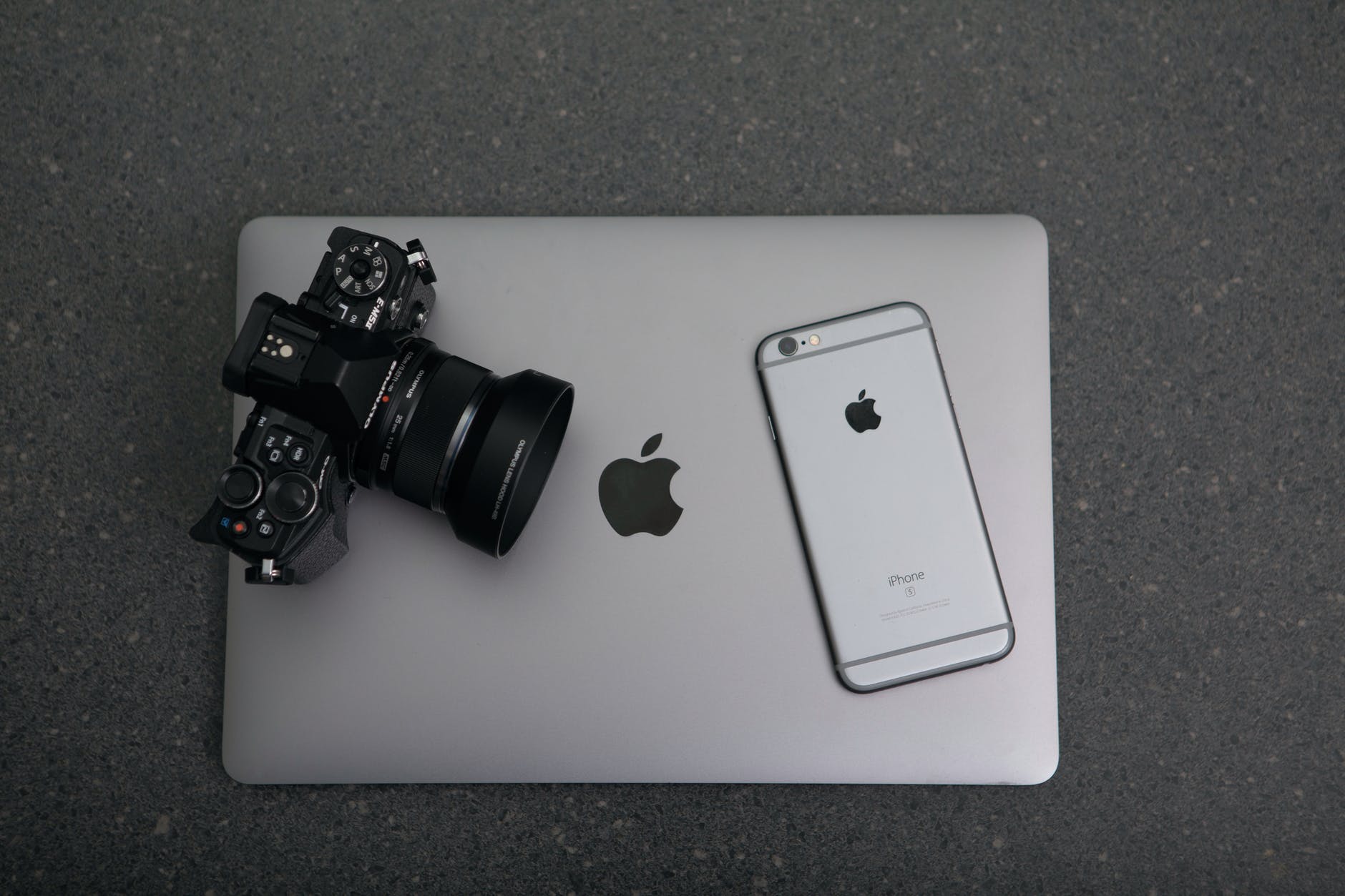
This experiment has made clear that pricing are complicated. So much so, that websites have popped up like the Mac Index, a site that compares Apple product prices from around the world. So many ads for Apple here in this area. According to an analysis done by Tech Insights, the cost to make an Apple iPhone 11 Pro is $490.50. Yet according to The Mac Index, the price to buy one is $1,318 in Japan, $1,477 in the U.S., $1,658 in Mainland China and more than $2,000 in Turkey and Peru. Prices vary across countries due to factors like demand, tariffs and tax refunds. And then there’s the supply chain: the network of people, organizations, activities, information and resources involved in the creation of a product.

close up of camera over black background
Photo by ATC Comm Photo on Pexels.com

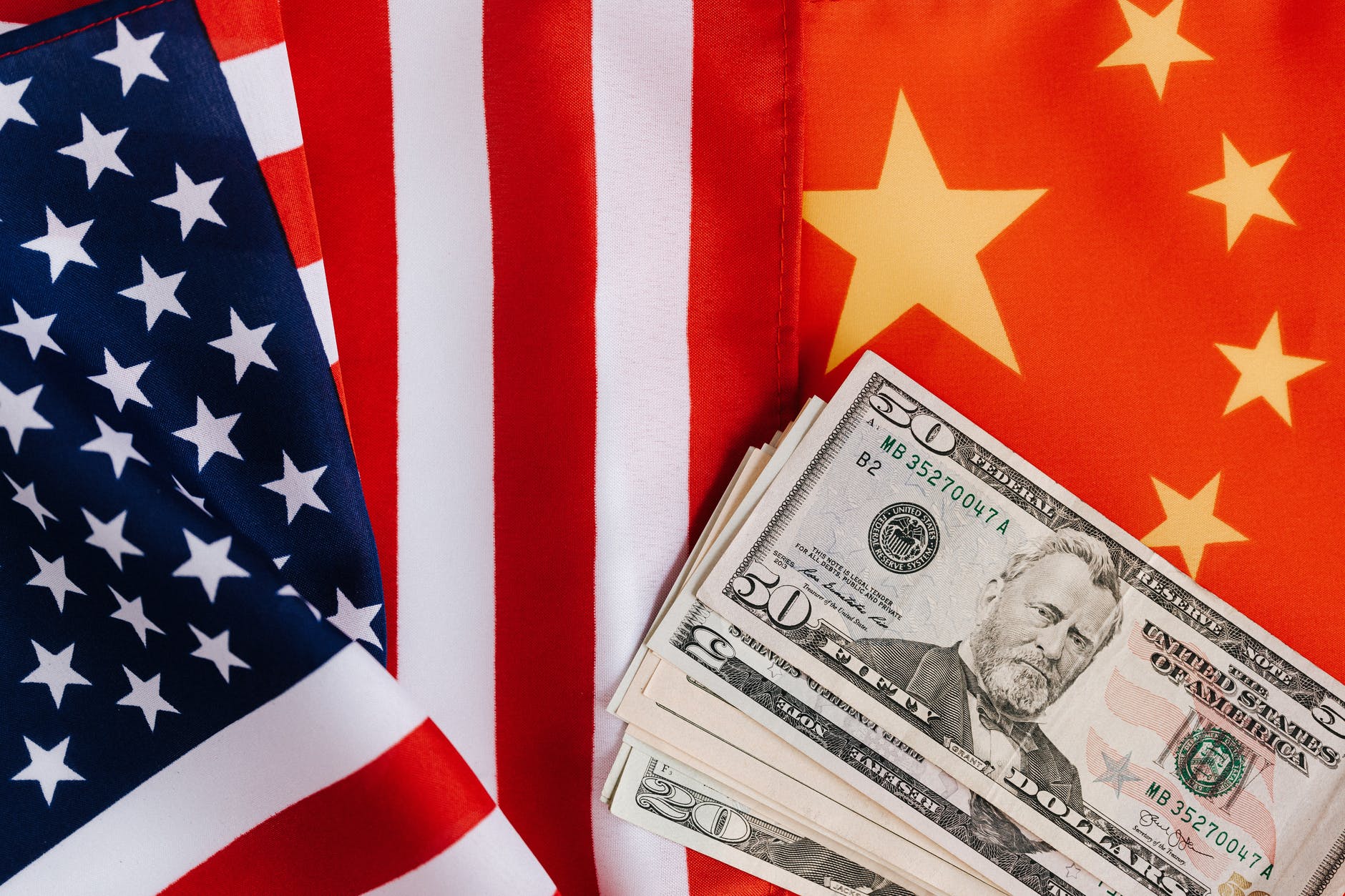
Apple’s current CEO Tim Cook is considered by some to be a mastermind in supply chain. He first joined Apple in 1998 with a mandate to clean up the company’s manufacturing and distribution. Over time, he closed factories and warehouses, instead opting for contract manufacturers in China. That’s great for Apple’s profit margins, but it’s certainly not praised by President Trump, who has asked Apple to make its products in the U.S. If, say, iPhone production was moved to the U.S., instead of China, different analyses show the price for the consumer could go up from anywhere from $30 or $40 to hundreds of dollars to even $30,000-100,000. That’s partially why, despite Apple pledging to invest more money in American manufacturing, it maintains China as its hub for making its gadgets.

american and chinese flags and usa dollars
Photo by Karolina Grabowska on Pexels.com

That’s Omar Slim, a senior portfolio manager at global asset manager, PineBridge. When you hear about made in this country or that country is really quite relative and it’s a simplification of things because it’s most likely made in a number of countries. Here’s an example. Let’s say we want to make lasagna for dinner. If Jeff cooks the ground beef and prepares the cheese, Sarah makes the tomato sauce and layers the ingredients into a pan; and Blair, who bought all the ingredients, puts it in the oven, who gets the credit for making the lasagna? Now, let’s apply that to Apple’s iPhone. While the phone might say ‘Made in China,’ some of its parts come from other parts of Asia, Europe and even the U.S. Even though an iPhone may be assembled in China, it’s still tariffed in China as a U.S. product because Apple is an American company. The brand makes that clear with by, ‘Designed by Apple in California. How they’re treated in terms of customs, they will be treated as a U.S. product. So regardless of where they come, it’s essentially a U.S. product. Same for Chinese products going into the U.S. and same for, for instance, European cars.

India simply cannot afford to boycott Made in China — Quartz India

China became a popular manufacturing hub in the 1980s after it started to open to the world. It became known for its cheap labor costs, lax regulations and business-friendly environment. As China’s manufacturing sector grew, it took the crown from Germany as the world’s top exporter in 2010. While Made in China has become synonymous with cheap and low-quality products, China is hoping to change that. In 2015, it launched a Made in China 2025 initiative, which aims to shift its economy from low-end manufacturing to high-end, high-tech products. In 2017, Tim Cook said China lost its place as a low labor cost manufacturing nation many years ago. The U.S.-China trade war resulted in a tit-for-tat increase in tariffs on many products.

Petition · Political Parties: Boycott 'Made in China' products in ...

With increasing costs being passed on to consumers, many companies are looking to diversify their supply chain, instead of being so reliant on China. That sentiment has only grown, following the coronavirus pandemic’s hit on the global manufacturing industry. Along that supply chain, there will be some companies, that instead of manufacturing it in China, if they could, they could try to replace. In fact, companies including Apple, Microsoft and Google are reportedly looking into moving some of their hardware production from China to Vietnam or Thailand. But that might be harder than it sounds. The other countries will have a hard time to compete along with the fact that the infrastructure is shown that it’s quite good, along with the fact that in certain countries would not want to compromise the relationship with China.

70 Reasons that makes us Proud to be Made In India - Sanjay Dalmia

The reality today is that a product likely has many components which are sourced globally. A phone may be designed in the U.S, but its screen is sourced from South Korea, the sensors and microchips may be from Taiwan or Germany, with its assembly in China. So, the next time you see a product with the words, “Made in China,” remember that the full story is seldom pure, and never simple.