The details of funds utilized under the Air Quality Grant sanctioned by 15thFinance Commission to Million Plus Cities/ Urban Agglomeration as aimed by the National Clean Air Program (NCAP) for performance-based grants for improvement in air quality for the period 2020-21 to 2025-26, city-wise;
The details of funds utilized under the 15th Finance Commission to support the implementation of City Specific Action Plans (CAPs) for improvement of Air Quality under the National Clean Air Programme along with the details for non-utilization of funds by non-attainment cities; and
The details of mobilization of City Specific Action Plans through the convergence of resources for Swachh Bharat Mission (Urban), Atal Mission for Rejuvenation and Urban Transformation (AMRUT), Smart City Mission, Sustainable Alternative Towards Affordable Transportation (SATAT), Faster Adoption and Manufacturing of Hybrid and Electric Vehicle – II (FAME), and other schemes?
Under the 15th Finance Commission air quality performance grant, an amount of Rs. 16539 crores has been allocated to 42 Million Plus Cities (MPCs) (including 7 Urban Agglomerations (UAs)) during FY 2020-21 to FY 2025-26 to implement city action plans to take measures to improve air quality. The details of city-wise utilization are provided at Annexure –I.
131 cities under NCAP have been requested to mobilize resources through convergence of various schemes for the implementation of city action plans. Action plans of all targeted cities under NCAP were approved under Swachh Bharat Mission 2.0 (Urban) for processing of solid waste, construction and demolition waste, remediation of legacy waste and procurement of mechanical sweepers. 107 cities have availed resources from the AMRUT 2.0 for developing green spaces, parks and non-motorised urban transport. 13,11,681 number of electric vehicles have claimed the benefit under FAME II in 20 States/UTs. Under SATAT, 27 Compressed Bio-gas (CBG) plants with the capacity of 146 TPD have been commissioned in NCAP cities.
Annexure-I
Details of release and utilisation of funds to Million Plus Cities under 15th Finance Commission- Air Quality Grant during FY 2020-21 to 2022-23
(amount in ₹ crore)
Sr. No.
City
Amount released
Amount utilisation
1
Vijayawada UA
124.35
27.61
2
Visakhapatnam UA
129.25
0.00
3
Patna UA
288.60
158.26
4
Durg Bhilainagar UA
112.35
31.66
5
Raipur UA
119.35
51.39
6
Ahmadabad UA
359.54
317.91
7
Rajkot UA
83.10
64.61
8
Surat UA
255.18
257.47
9
Vadodara UA
98.18
82.22
10
Faridabad UA
73.53
15.99
11
Dhanbad UA
63.09
53.21
12
Jamshedpur UA
116.85
38.14
13
Ranchi UA
93.50
48.25
14
Bruhat Bangalore UA
535.10
0.00
15
Bhopal UA
173.85
167.42
16
Gwalior UA
92.64
58.31
17
Indore UA
191.75
166.64
18
Jabalpur UA
112.25
108.65
19
Aurangabad UA
68.10
51.36
20
Greater Mumbai (GM) UA
929.09
604.64
21
Nagpur UA
132.60
17.71
22
Nashik UA
91.35
19.03
23
Pune UA
261.85
81.29
24
Vasai-Virar City UA
72.35
20.26
25
Amritsar UA
67.25
60.92
26
Ludhiana UA
91.75
54.94
27
Jodhpur UA
74.34
57.12
28
Jaipur UA
319.85
257.18
29
Kota UA
95.25
59.45
30
Chennai UA
367.00
367.51
31
Madurai UA
72.44
54.85
32
Tiruchirappalli UA
50.35
46.36
33
Hyderabad (HY) UA
443.50
377.35
34
Agra UA
166.47
130.52
35
Allahabad UA
171.33
132.93
36
Ghaziabad UA
136.25
114.57
37
Kanpur UA
239.89
211.48
38
Lucknow UA
376.38
226.26
39
Meerut UA
139.19
93.39
40
Varanasi UA
219.74
107.25
41
Asansol UA
67.60
42.55
42
Kolkata (K) UA
681.25
628.83
Total
8357.63
5465.49
This information was given by Union Minister of State for Environment, Forest and Climate Change Shri Ashwini Kumar Choubey in a written reply in the Lok Sabha today.
The ‘AAINA Dashboard for Cities’ portal www.aaina.gov.in has been made live by Ministry of Housing and Urban Affairs (MoHUA) on 13th November, 2023 where Urban Local Bodies (ULBs) across the country can participate in this pioneering initiative to voluntarily submit their key data on a regular basis, through a simple, easy-to-fill, data entry form on the portal.
The primary objectives of the AAINA Dashboard are to help cities to (i) see how they are faring vis-à-vis other cities, (ii) inspire them by pointing to possibilities and areas of improvement and (iii) providing opportunity to learn and engage with frontrunners. While not ranking the ULBs, the AAINA dashboard would serve as a tool for comparing similarly placed cities and promoting peer learning among cities.
The Dashboard will present the data submitted by the ULBs on the basis of indicators across five broad pillars namely, (i) Political & Administrative Structure, (ii) Finance, (iii) Planning, (iv) Citizen Centric Governance and (v) Delivery of Basic Services. The ULBs will submit their data, including audited accounts, and self-reported performance metrics by logging in to the dashboard’s portal. ULBs would be free to update the information initially provided by them, anytime on the portal as per need. The Dashboard has been envisaged as a permanent platform for ULB related data, that would be updated on a regular basis. With active cooperation of all ULBs, the ‘AAINA Dashboard for Cities’ aims to create a robust database of the key performance metrics of Urban Local Bodies, which could be accessed by all stakeholders, and subsequently would open for public view once it gets populated. The Ministry through Digital India Corporation will provide handholding support to ULBs / States in the data submission process on a need basis.
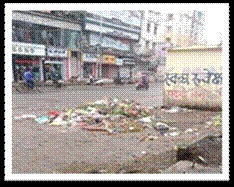
Garbage Dumps and open dumpsites are being transformed rapidly to change and beautify the urban landscape. Under Swachh Bharat Mission Urban 2.0, it was realised that transforming garbage dumps in urban areas was the need of the hour to protect environment and reduce health risks. Many States are taking creative steps to transform and beautify these garbage dumps in urban areas which eventually lead to sustainable development and a healthier, greener future. It has also created avenues for waste reduction, recycling, and reusing, helping in the sustainable use of resources. Bhopal’s exemplary dumpsite remediation is an inspirational example of transformation of urban spaces. Flagged off by Hon’ble PM Sh. Narendra Modi, the Vande Bharat Express travelling between Bhopal to Delhi zooms past a dumpsite-turned-green zone in Bhopal. It was beautified after 37 acres of land was reclaimed.
Navi Mumbai Makes Urban Spaces Usable
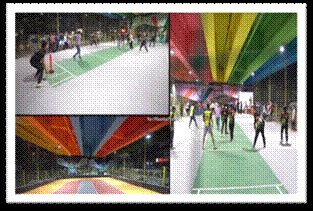
Navi Mumbai Municipal Corporation (NMMC) took an innovative approach to embark on an ambitious plan to convert area under bridges/ flyovers into community recreational facilities. An example of this can be seen in a public sports complex built under the Sanpada flyover in Mumbai. A sports complex was created as per the height of the bridge, where a basketball court, badminton court, box cricket zone, and skating rink were all painted in vibrant colors, creating a visually appealing and attractive space. The complex was also equipped with safety nets to ensure the safety of the players.
The success of the Sanpada flyover project has encouraged Navi Mumbai to plan and execute more such projects in future. The Ghansoli-Talawale bridge has already received a facelift last year with new paintings and lighting. This year, the area will be transformed into a garden and a seating area for industrial workers. The second stretch of the Sanpada Bridge will have a yoga center, and the Seawoods Bridge will undergo a beautification drive along with a sports complex.
The once-neglected spaces have now become thriving centres of activity, fostering social interaction, and promoting a healthy lifestyle among the residents. Not only has it revitalized neglected areas, but it has also improved the health and well-being of citizens.
Surat’s Creative Initiative to Eliminate Garbage Dumps
Surat’s conversion of garbage dumps into seating areas for the public has been a remarkable transformation. To eliminate garbage dumps, the Surat Municipal Corporation (SMC) transformed many of these points into seating areas. Under this initiative, Surat identified the garbage dumps and transformed them into seating area equipped with benches, lights, and trash bins. It has also planted trees and shrubs to create a green environment and promote biodiversity. ‘Sanjay Nagar circle’ is one of the few examples of these transformations, where the garbage dump site has been converted into a beautiful seating area by SMC. The corporation ensures daily coverage of door-to-door garbage collection from the surrounding area to ensure 100% waste collection.
Patna’s Swachhata Journey: Garbage Points to Green Zones
Patna was struggling with the increasing number of garbage dumps for a long time. To transform these garbage dumps into green zones and promoting a sustainable environment, Patna Municipal Corporation began a massive garbage dumps transformation drive in which a total of 630 garbage dumps across the city were cleaned and beautified. The mass garbage dumps removal drive emerged as massive development in the city.
The transformation drive was then conducted in 4 phases including 19 wards from each 19 zones of the PMC jurisdiction. PMC officials conducted awareness activities in which they rallied in the wards playing musical instruments and urging citizens to keep the city clean. The listed garbage dumps were cleaned extensively and the corporation made an appeal to the residents to keep the city clean and wreathed the offenders with garlands made out of disposable cups, bottles, wrappers and kitchen waste.
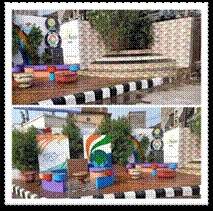
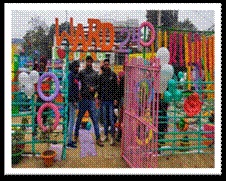
The Transformation of 630 Garbage Dumps Patna Municipal Corporation began its transformation drive of garbage dumps by converting such sites into green zones. The cleaned-up spaces were beautified by planting saplings, paintings, placing benches made out of discarded items like rubber tubes, tires, tins and other plastic materials.
Many of the garbage points were also turned into selfie points. Later, PMC even celebrated various festivals and events on the transformed garbage dumps including Litti Chokha program on New Year’s Eve, Dahi chura on Makar Sankranti and a Kite Festival.
The transformation of garbage dumps into beautiful urban spaces is an excellent example of how innovative ideas and community engagement can help to address environmental and social issues in cities. This process not only improves the quality of life for locals but also creates a sustainable and green environment for all.
The Prime Minister, Shri Narendra Modi flagged off the World’s Longest River Cruise-MV Ganga Vilas and inaugurated the Tent City at Varanasi via video conferencing today. He also inaugurated and laid the foundation stones for several other inland waterways projects worth more than Rs. 1000 crores during the event. In line with the Prime Minister’s endeavour to boost river cruise tourism, the huge untapped potential of river cruises will get unlocked with the launch of this service and it will herald a new age of river cruise tourism for India.
Addressing the gathering, the Prime Minister hailed Lord Mahadev and greeted everyone on the auspicious occasion of Lohri. The Prime Minister emphasised charity, faith, tapasya and faith in our festivals and the role of rivers in them. This makes the projects related to river waterways all the more significant, he said. He pointed out that the longest river cruise from Kashi to Dibrugarh is being flagged off today which will bring to the fore, places of tourism in North India on the world tourism map. He said other projects being dedicated today in Varanasi, West Bengal, Uttar Pradesh and Bihar, Assam worth 1000 crore will give a push to the tourism and employment potential in eastern India.
Underlining the central role of river Ganga in the life of every Indian, the Prime Minister lamented that the area around the banks lagged behind in development in the post-independence period thereby leading to a massive exodus of population from this area. The Prime Minister elaborated on a twin approach to address this unfortunate situation. On the one hand, the campaign to clean Ganga was undertaken through Namami Gange and ‘Arth Ganga’ was taken up on the other. In ‘Arth Ganga’ steps have been taken to create an environment of economic dynamism in the states from where Ganga passes.
Directly addressing the tourists from foreign countries who are traveling on the maiden journey of the cruise, the Prime Minister said, “Today India has everything and a lot beyond your imagination.” He further added that India can only be experienced from the heart as the nation has welcomed everyone with open hearts irrespective of region or religion, creed or country and welcomed tourists from all parts of the world.
Throwing light on the experience of the river cruise, the Prime Minister informed that it has something special for everyone. He added that those seeking spirituality will cover destinations like Kashi, Bodh Gaya, Vikramshila, Patna Sahib and Majuli, tourists looking out for a multinational cruise experience will get the opportunity to via Dhaka in Bangladesh, and those wanting to witness the natural diversity of India will cross through Sundarbans and the forests of Assam. Observing that the cruise will pass through 25 different river streams, the Prime Minister said that this cruise has significant importance for those who have a keen interest in understanding the river systems of India. He also mentioned that it is a golden opportunity for those who want to explore the myriad culinary and cuisines of India. “One can witness the extraordinary amalgamation of the heritage of India and its modernity on this cruise”, the Prime Minister remarked as he shed light on the new era of cruise tourism where new employment opportunities will be created for the youth of the country. “Not just foreign tourists but Indians who traveled to different nations for such an experience can head towards North India now”, the Prime Minister said. He also informed that similar experiences are being readied in other inland waterways of the country to give a boost to cruise tourism while keeping in mind the budget as well as the luxury experience.
The Prime Minister also mentioned that India is entering into a robust phase of tourism as with a growing global profile, curiosity about India is also increasing. That is why, said the Prime Minister, in the last 8 years various steps were taken to expand the tourism sector in the country. Places of faith were developed on priority and Kashi is a live example of such efforts. With improved facilities and the rejuvenation of Kashi Vishvanath Dham, Kashi has seen a huge increase in the number of visiting devotees. This has given a massive boost to the local economy. The New Tent City, infused with modernity, spirituality and faith, will provide a novel experience to the tourists.
The Prime Minister said that today’s event is a reflection of the policies, decisions and direction taken after 2014 in the country. “This decade of the 21st century is a decade of infrastructure transformation in India. India is witnessing a level of infrastructure which was unimaginable a few years ago.” He said from Social infrastructure like houses, toilets, hospitals, electricity, water, cooking gas, educational institutes to digital infrastructure to physical connectivity infrastructure like railways, waterways, airways and roads, all these are strong indicators of the rapid growth of India. In all the fields India is seeing the best and biggest, he pointed out.
The Prime Minister underlined the low usage of river waterways in India before 2014 despite the rich history in this mode of transport in the country. Post 2014, India is harnessing this ancient strength to the cause of modern India. There is a new law and detailed action plan for developing waterways in big rivers of the country. The Prime Minister informed that in 2014 only 5 national waterways were there in the country, now there are 111 national waterways in the country and about two dozen are in operation already. Similarly, there has been a 3 times increase in cargo transportation via river waterways from 30 lakh metric tonnes 8 years ago.
Coming back to the theme of development of eastern India, the Prime Minister said that today’s events will help in making eastern India a growth engine for Developed India. This connects Haldia multimodal terminal with Varanasi and is also connected with India Bangladesh protocol route and Northeast. This also connects Kolkata port and Bangladesh. This will facilitate business from Uttar Pradesh, Bihar, Jharkhand, and West Bengal to Bangladesh.
Emphasising the need for training of the staff and skilled workforce, the Prime Minister informed that a Skill Development Center has been set up in Guwahati and a new facility is also being constructed in Guwahati for the repairing of ships. “Be it a cruise ship or a cargo ship, they not only give a boost to transport and tourism, but the entire industry associated with their service also creates new opportunities”, the Prime Minister said.
Referring to a study conducted, the Prime Minister informed that waterways are not just beneficial to the environment but also help in saving money. He said that the cost of operating waterways is two and a half times lesser than that of roadways, and one-third lesser when compared to railways. The Prime Minister also touched upon the National Logistics Policy and said that India has the potential to develop a waterway network of thousands of kilometres. He also emphasised that India has more than 125 rivers and river streams which can be developed to transport goods and ferry people while also giving impetus to further expanding port-led development. He emphasised the need to build a modern multi-modal network of waterways and informed about the partnerships with Bangladesh and other countries which have strengthened the water connectivity in the Northeast.
Concluding the address, the Prime Minister remarked on the continuous development process of developing waterways in India and said, “Strong connectivity is essential for building a developed India.” The Prime Minister expressed the belief that the river of India will give new heights to water power and trade and tourism of the country and wished a pleasant journey to all the cruise passengers.
Chief Minister of Uttar Pradesh, Shri Yogi Adiyanath, Chief Minister of Assam, Shri Himanta Biswa Sarma, Union Minister of Port Shipping and Waterways, Shri Sarbananda Sonowal among others were present on the occasion.
Background
MV Ganga Vilas
MV Ganga Vilas will begin its journey from Varanasi in Uttar Pradesh and travel around 3,200 km in 51 days to reach Dibrugarh in Assam via Bangladesh, sailing across 27 river systems in India and Bangladesh. MV Ganga Vilas has three decks, 18 suites on board with a capacity of 36 tourists, with all the luxury amenities. The maiden voyage has 32 tourists from Switzerland signing up for the entire length of the journey.
The MV Ganga Vilas cruise is curated to bring out the best of the country to be showcased to the world. The 51 days cruise is planned with visits to 50 tourist spots including World Heritage Sites, National Parks, River Ghats, and major cities like Patna in Bihar, Sahibganj in Jharkhand, Kolkata in West Bengal, Dhaka in Bangladesh and Guwahati in Assam. The journey will give the tourists an opportunity to embark upon an experiential voyage and indulge in the art, culture, history, and spirituality of India and Bangladesh.
In line with PM’s endeavour to boost river cruise tourism, the huge untapped potential of river cruises will get unlocked with the launch of this service and it will herald a new age of river cruise tourism for India.
Tent City at Varanasi
Tent City has been conceptualised on the banks of the River Ganga to tap the potential of tourism in the region. The project has been developed opposite to city ghats which will provide accommodation facilities and cater to the increased tourist influx in Varanasi, especially since the inauguration of Kashi Vishwanath Dham. It has been developed by Varanasi Development Authority in PPP mode. The tourists will reach the Tent City by boats from different Ghats situated in the vicinity. The tent city will be operational from October to June every year and will be dismantled for three months due to the rise in river water level in the rainy season.
Inland Waterway projects
Prime Minister will inaugurate Haldia Multi-Modal Terminal in West Bengal. Developed under Jal Marg Vikas Project, Haldia Multi-Modal Terminal has a cargo handling capacity of around over 3 Million Metric Tonne Per Annum (MMTPA) and the berths are designed to handle vessels up to around 3000 Deadweight tonnage (DWT).
The Prime Minister also inaugurated four floating community jetties at Saidpur, Chochakpur, Zamania in Ghazipur district and at Kanspur in Ballia district in Uttar Pradesh. Besides, the Prime Minister laid foundation stones for the five Community Jetties at Digha, Nakta Diyara, Barh, Panapur in Patna district and Hasanpur in Samastipur district in Bihar. More than 60 community jetties are being constructed along the river Ganga across the states of Uttar Pradesh, Bihar, Jharkhand and West Bengal to boost the economic activities and improve the livelihoods of local communities in the region. The community jetties would play a key role in improving the livelihoods of people by providing simple logistics solutions for small farmers, fishery units, unorganised farm-producing units, horticulturists, florists and artisans focussing on economic activities in and around the hinterland of river Ganga.
The Prime Minister also inaugurated the Maritime Skill Development Centre for North East at Guwahati. It will help hone the rich talent pool in the North Eastern region and will provide for better employment opportunities in the burgeoning logistics industry.
In addition to these, the Prime Minister also laid the foundation stone for a ship repair facility and an elevated road at Pandu Terminal in Guwahati. The Ship Repair facility at the Pandu Terminal will save a lot of valuable time as it takes more than a month for a ship to be transported to the Kolkata Repair facility and back. Moreover, it will also result in huge savings in terms of money as the transportation cost of the ship will also be saved. The dedicated road connecting the Pandu Terminal to NH 27 will enable 24-hour connectivity.
The River Cities Alliance (RCA) has been launched with the objective to provide the member cities with a platform to discuss and exchange information on aspects that are vital for sustainable management of urban rivers, sharing best practices and supporting innovation. The alliance has been launched initially with 30 cities namely Dehradun, Rishikesh, Haridwar, Srinagar, Varanasi, Kanpur, Prayagraj, Farrukhabad, Mirzapur, Mathura, Bijnor, Ayodhya, Patna, Bhagalpur, Begusarai, Munger, Sahibganj, Rajmahal, Howrah, Jangipur, Hugli-Chinsurah, Behrampore, Maheshtala, Aurangabad, Chennai, Bhubaneshwar, Hyderabad, Pune, Udaipur and Vijaywada.
The Alliance is open to all river cities of India. Any river city can join the Alliance at any time.
State Governments are implementing Action Plans for restoration of water quality of the identified polluted river stretches. The implementation is being monitored regularly at State level by Chief Secretary of the respective State/UT and at Central level by the Central Monitoring Committee under the Chairmanship of Secretary, Ministry of Jal Shakti.
In addition, under Namami Gange Programme, the progress and activities are reviewed regularly by National Mission for Clean Ganga (NMCG), State Governments and District Ganga Committees.
RCA is envisaged as a facilitatory platform for initiating river-sensitive planning and development. Namami Gange through its integrated and comprehensive framework has been working towards rejuvenating Ganga river basin. As cities start to implement the river-sensitive development agenda, the River Cities Alliance will support them to learn from each other and inspire others to take up progressive action on this front.
For adjudication of disputes relating to waters of inter-State rivers and river valley thereof, the Parliament has enacted the Inter-State River Water Disputes (ISRWD) Act, 1956. When any request under the said Act is received from any State Government in respect of any water dispute on the inter-State rivers and the Central Government is of the opinion that the water dispute cannot be settled by negotiations, the Central Government constitutes a Water Disputes Tribunal for the adjudication of the said water dispute. Currently, 5 such water disputes Tribunals are active, the details of which are given at Annexure. In addition, Inter State Water disputes has been raised by Government of Bihar in respect of Tilaiya-Dhadhar Diversion scheme concerning States of Bihar, Jharkhand and West Bengal and by Government of Tamil Nadu (TN) in respect of use, distribution and control of Pennaiyar river and its tributaries concerning States of Tamil Nadu, Karnataka, Andhra Pradesh and UT of Puducherry.
This Information was given by the Minister of State for Jal Shakti, Shri Bishweswar Tudu in a written reply in Lok Sabha today.
*****
BY
ANNEXURE
Status of active Inter-State Water Disputes Tribunals relating to the sharing of river water
S. No
Name of Tribunal
States concerned
Date of constitution
Present Status
1.
Krishna Water Disputes Tribunal – II(KWDT-II)
Karnataka, Telengana, Andhra Pradesh and Maharashtra
April, 2004
Report and decision given on 30.12.2010. Further report given by the Tribunal on 29.11.2013.
However, as per Supreme Court Order dated 16.9.2011, till further order, decision taken by the Tribunal on references filed by States and Central Government shall not be published in the official Gazette. As such, matter is sub-judice. Term of the Tribunal was extended for a period of two years w.e.f. 1st August, 2014 to address the terms of reference as contained in section 89 of Andhra Pradesh Reorganisation Act, 2014. Thereafter, the term of the Tribunal has been extended six times for period of one year latest being w.e.f. 01.08.2021.
2.
Mahanadi Water Disputes Tribunal
Odisha and Chhattisgarh
12th March, 2018
The Government of Odisha had filed a complaint dated 19.11.2016 with the Ministry of Water Resources, River Development and Ganga Rejuvenation under Section 3 of the Inter-State River Water Disputes Act, 1956 read with Inter-State River Water Dispute Rules, 1959.
The Central Government has constituted Mahanadi Water Disputes Tribunal vide Notification dated 12.03.2018. Subsequently, the reference was made to the Tribunal under Section 5(1) of the ISRWD Act, 1956 on 17.04.2018. The matter is thus under adjudication in the Tribunal. The Central Government, vide Notification dated 3rd June, 2021 has extended the tenure of the Tribunal for a period of two years upto 11th March, 2023 or till the submission of report, whichever is earlier.
3.
Mahadayi Water Disputes Tribunal
(MW DT)
Goa, Karnataka
and Maharashtra
16th November, 2010 However, vide notification dated 13.11.2014 date of reckoning of the constitution of the Tribunal is w.e.f. 21.08.2013
The MWDT submitted its report under Section 5(2) of the ISRWD Act, 1956 to the Central Government on 14.08.2018. Further references under Section 5(3) have been filed by the party States and the Central Government before the Tribunal. The matter is subjudice. The term of the Tribunal has been extended for a further period of one year w.e.f. 20.08.2021 to submit its Further Report under Section 5(3) of ISRWD Act, 1956.
The Central Government has notified the Award and Final Decision of the MWDT given on 14.08.2018 in the Gazette of India vide notification No. S.O. 888(E). dated 27.02.2020.
4.
Ravi & Beas Water Tribunal
(RB WT)
Punjab, Haryana
and Rajasthan
April, 1986
Report and decision under section 5(2) given in April, 1987. Clarification/explanation sought from the Tribunal under File No.H-11016/134/2021-BM Section-MOWR I/53475/2021 25 Section 5(3) of the said Act by the party States. Presidential Reference 1 of 2004 was made on the Punjab Termination of Agreements Act, 2004. The Hon’ble Supreme Court has pronounced the judgement on Presidential Reference in negative. Further, Government of Haryana has filed IA No. 6 of 2016 in OS No. 6 of 1996 in the matter. The matter is subjudice.
5.
Vansadhara Water Disputes Tribunal
(VW DT)
Andhra Pradesh &
Odisha
February, 2010 However, as per the Supreme Court order the date of reckoning of the constitution of the Tribunal is w.e.f. 17.9.2012
The Tribunal has submitted its report to the Central Government under Section 5(2) of the ISRWD Act, 1956 on 13.09.2017. Further, State of Odisha and the Central Government filed reference under Section 5(3) of the ISRWD Act, 1956 on 11.12.2017 and 12.12.2017 respectively. The State of Odisha has also filed I.A. No.1 of 2019 before the Tribunal and the Tribunal gave its judgement in the matter on 23.09.2019. Subsequently, the State of Odisha has filed SLPC(C) No.27930/2019 before the Supreme Court against Order dated 23.09.2019 which is subjudice. Now, the Tribunal has furnished its Further Report dated 21.06.2021 under section 5(3) of the ISRWD Act.
The midwest is one of the most well-known areas of the country, with an extremely
recognizable culture of neighborly behavior and dairy-laden dishes: but there’s nothing
here quite as amazing as the cities and homes.
This is why the Midwest is an area you’ll fall in love with the moment you arrive: and
these are the top three cities you’ll want to consider moving to!
Why the Midwest?
The midwest is fortunate enough to have mild summers, but the winters can be wild and
turn this entire portion of the country into a winter wonderland. If you’re new to the area,
you’ll be stunned by how fun and inventive the food is, and if you’ve been here before,
you’ll be looking forward to getting a taste of a Culver’s burger while you wash it down
with a cool Vernor’s ginger ale.
The following cities are the best part of the Midwest and are why everyone should
consider moving out here to get a fresh start! Nowhere feels like home quite like this
portion of the country!
Brainerd, Minnesota
Possibly best known for being the location where the movie Fargo is based, Brainerd is
a great area that’s the county seat of Crow Wing County and is one of northern
Minnesota’s largest cities.
From the chilly winters to the incredibly cool and calm summers, this area is lucky
enough to be surrounded by plenty of rivers, lakes, and forests for recreation. Best of
all, this city is incredibly affordable to live in and has a very low unemployment rate. As
a result, this is an amazing place to settle down!
Milwaukee, Wisconsin
On Lake, Michigan’s western shore is the gorgeous city of Milwaukee. Best known for
its sports teams, this metro area boasts a population of over 1.5 million people. You can
enjoy entertainment by visiting the Harley-Davidson Museum or even check out the
large-scale European Village you can walk through in the Milwaukee Public Museum.

Buying property here isn’t cheap, with Milwaukee houses for sale at a higher price than
any other city on this list: but it’s worth it to live here.
Des Moines, Iowa
Des Moines is a mid-sized city with a metro population of over 700,000 people living
there. Countless museums, art galleries, and exhibits ensure that this city captures your
mind and imagination.
Housing here is some of the most affordable in the country, making the harsher winters
so enjoyable. The summers here can get hot, peaking in the low 90s, but the average
home and apartment have an HVAC system that can handle it. This is an amazing
place to move to for anyone ready to settle down.
The
Midwest is a Fantastic Place to Call Home
Whether you’re from a southern state or moving from California, you’ll find that paradise
lives in the midwest. This portion of the country has a lock on heaven from fantastic
food and people to endless things to do and see: don’t be afraid to move here and find
yours happily ever after!
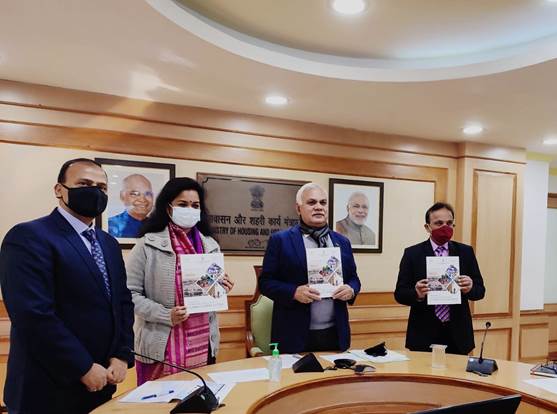
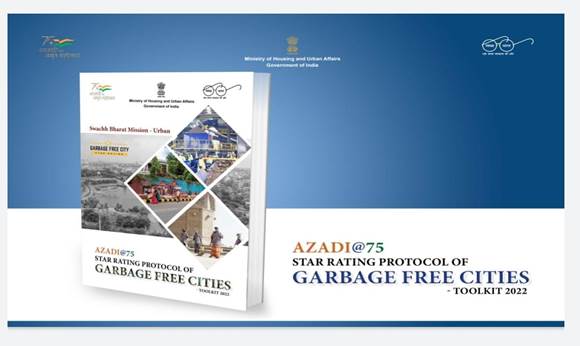
On the eve of “Good Governance Day”, Ministry of Housing and Urban Affairs (MoHUA), Government of India today launched the‘Azadi@75 Star Rating Protocol of Garbage Free Cities- Toolkit 2022′, the most important governance tool of waste management – the Star Rating Protocol for Garbage Free Cities.
On 1st October 2021, the Hon’ble Prime Minister launched Swachh Bharat Mission-Urban 2.0, with the overall vision of creating “Garbage Free Cities” (GFC), thereby placing India on a new trajectory of growth towards an ecosystem of holistic sanitation and waste management. For achieving this vision, a key objective under SBM-U 2.0 is to make every urban local body at least 3-star Garbage Free as per the Star Rating protocol.
In the recently concluded certification exercise for GFC, nearly 50% of ULBs (i.e., 2,238 cities) participated in the certification exercise, of which a total of 299 cities have been certified – 9 cities rated as 5-star, 143 cities rated as 3-star and 147 cities as 1-star.
Seeing the impact Star Rating certification has made to improve on-ground waste management scenario of the cities to become ‘Garbage Free Cities’, release of Government of India funds has been made conditional, subject to a ULB achieving at least 1-star certification. Hence, there is a need to ensure that every ULB participates in and get itself GFC certified, to avail Central funds and to achieve the intended objectives under SBM-U 2.0. To do this, it was felt necessary to revamp the existing GFC protocol and make the assessment process simpler, while retaining its robustness, so that every ULB is motivated to apply for the GFC certification.
Key revisions in the protocol are:
i. the earlier 25 components/ indicators have now been reduced to 24, of which only 16 indicators are mandatory for 1-star and 3-star levels. The remaining 8 indicators are aspirational in nature, and will be relevant for 5-star and 7-star aspirants;
ii. the multi-step calculation of the previous GFC protocol has now been changed to a single step marking, which will help ULB to easily self-assess themselves for applying;
iii. the revised protocol is aligned with SBM-U 2.0 priorities, with higher weightages (50%) allotted to Door-to-Door Collection, Source Segregation, Waste processing & Dumpsite remediation;
iv. the entire process of applying for certification and subsequent assessment have been simplified and made completely digital, paperless; for example, digital declarations, geo-tagged waste-processing facilities, end-to-end digital monitoring of progress;
v. new components pertaining to IEC, capacity building, revenue from sale of waste by-products have been added to encourage cities to build an ecosystem to strengthen the waste management system.
vi. continuous assessment throughout the year to help cities plan assessment
Speaking at the event, Shri Durga Shanker Mishra said that the objective of coming out with the toolkit is to make things simple and easy to understand, while retaining the stringency of criteria. He called upon all the cities to participate in the rating process, with full preparations. Shri Mishra said that simplification of the toolkit will propel all the cities to attain at least 3-star rating, and many of them will try to get higher rating. He said that MoHUA will handhold the cities needing any guidance and training. The Secretary also called upon the City administrators and public representatives to involve people in large number in this mission, and intensify the IEC activities, particularly in the local languages and dialects. He said that achieving the Prime Minister’s vision of making the cities neat and clean will not only increase the land value and investments in the city, but will also make the people proud of their habitats. He said that the Indian cities with high ratings will be comparable to the best in the world.
Elaborating on the Star Rating Certification, the Mission Director Ms Roopa Mishra said that there has been upward and forward movement in the process but many ULBs have to do some catch-up, and this toolkit will facilitate the process.
With the vision of making cities ‘Garbage Free’, SBM-U 2.0 is focused on achieving 100% waste processing along with remediation of legacy dumpsites, construction and demolition waste and plastic waste management. The new protocol combined with the continuous assessment through-out the year will further encourage cities to participate and realise the vision of “Garbage Free Cities”
The concept of space is diverse and is used across different disciplines. However, the article focuses on the everyday meaning of space i.e., physical landscape occupied by animate and inanimate objects alike. With the ever-increasing population and limited land resources ultimately gives way to struggle for space or to find solutions to increase the space. The pursuit to increase space has led to shrinking of green spaces, destruction of habitats among many others. A very unsustainable solution had been adopted by the governments and people to incorporate the beings on the stagnant resource.
The coming up of new cities – new households have also roped in new modern-day problems degrading the quality of living the cities – making the lower income families susceptible to harsh effects of diseases and disasters. Keeping this in mind, UNESCO has come up with 17 Sustainable Development Goals (SDGs). One of the SDGs is Sustainable Cities and Communities (SDGs 11) which is further broken in many different parts. Safe and Inclusive Green Spaces is one of them – the subject of the article.
Why do we need ‘Safe’ and ‘Inclusive’ ‘Green Spaces’? Let’s start with the need for green spaces. It has been estimated that by 2050, 68% of the global population will come to reside in urban areas. Asia and Africa will see the influx of people to urban areas more than ever. However, the quality of living can never be assured. Study suggests that nine million people die every year due to the direct effects of air pollution.
One of the major problems that the urban areas face is the frequent appearances of ‘urban heat island’. Urban Heat Island refers to trapping of heat in between the built-up areas. The presence of built-up areas in close proximity and lack of green spaces disable the proper air circulation – trapping of heat – increasing the temperature by many folds – leading to the severe cases of heat stroke during the summer peak. Studies have confirmed that green spaces can easily mitigate the harsh effect of urban heat island. Other than this, green spaces will allow proper infiltration of rainwater – preventing water logging. It also filters the harmful particles – increasing the longevity of life. Green Spaces is a step towards the creation of harsh climate resilience cities.
The ‘Safe’ and ‘Inclusive’ component of the same is quite self-explanatory and can be interpreted in different ways as well. The article interprets these component as non-discriminatory measures. The cities are not only becoming the hub of crime rates but also of the subtle ways of exclusivity. The Spaces need to be constructed in such a way that it looks approachable for all the genders across all the sections. It should not scare one away and accepts the other. The need for safe and inclusive green spaces is because of the issues that surrounds us – crime rates; the harboring of hate for certain section sections and most important for the sustainable way of living – without fear, with quality.
If we focus on India, urbanization in India has followed quite the same path as other developing countries or some of the developed ones – concentration of population in certain cities of the country. Though the country does not have any primate states, it has primate cities at the regional level such as Ahmedabad, Patna, Mumbai, Delhi. The growing concentration in only certain parts of the country has also led to environmental degradation. Moreover, the paucity of space has led to evolution of cramped houses and walls on the fringes of the cities. The cities are also severely affected by various natural disasters – heatwaves, floods among many other extremes. The frequent changing course of the river in Bihar has been its major cause of worry. The drowning of Mumbai due to few hours of heavy rain yet again points to our lack of sustainable of planning. The death of over 1334 people in Ahmedabad in 2010 due to heat waves should drag our attention to the harsh effect of environmental degradation.
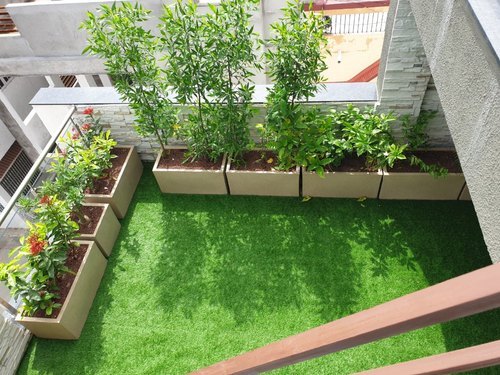
The governments across countries are formulating plans to survive the changing climate – the need of the hour also calls for individual and community level participation. Individually, people can partake in activities such as terrace gardening – contributing to the making of green spaces. Community can come together for the building of green parks, for taking up the work of cleaning alongside each other. An important role can be played by youth – to spread awareness and to bring in practice against littering, against wastage, towards sustainability.
Urban agriculture can be described as the agricultural practices to producing fresh food or other agricultural products in urban areas and their surrounding regions (peri-urban). This can function centrally where plants can be grown and animal husbandry, horticulture, and aquaculture can be practiced. It also involves the processing, packaging, marketing, and delivery of food. In purview urban agriculture extends to establish food production sites within the city’s sphere.
As more land area is getting urbanized and larger number of people are coming to the urban areas to reside. It becomes very critical to properly utilize the space in our cities and suburban areas. Research in the last two decades is has proven that Urban agriculture can be a viable option for food production. It can also help in decreasing the effects of climate change and make the food supply chain more efficient. Proper land use and spatial planning are crucial to practice this effectively. There are various methods to practice urban agriculture including ground-level farming, hydroponic farming, rooftop farming, vertical farming, greenhouses, and other new technologies.
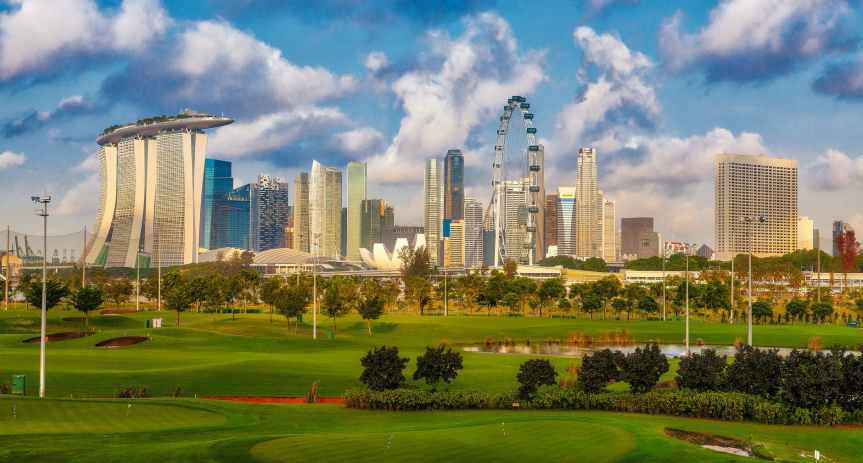
As cities are expanding, this has created new sets of issues like the urban heat island effect, waste management, lack of biodiversity, and high levels of air pollution. With more people moving around the urban space, this has also increased carbon emissions. With urban agriculture, we can try to offset some of the adverse effects of these problems. This kind of agriculture is now being practiced in many cities. Cities like Tokyo, Seoul, and Sao Paulo have their own urban agriculture initiatives. But one of the cities is betting on urban farming in Singapore. The city-state currently imports 90 percent of its food. This also means that any kind of geopolitical tension or a global crisis can severely affect the food supply of Singapore. This means that growing own food becomes critical and essential. Due to this, the Singaporean government has envisioned an ambitious goal to produce 30 percent of its food in the city itself by 2030. This is a special challenge in Singapore’s care due to its tiny land area and highly urbanized population. The city has almost non-existent agriculture land and this is why the focus of food production is on the unutilized urban spaces, on top of shopping malls, hotels, schools, homes, rooftops in parking lots across the city, etc.
In 2009 Singapore government launched a program that incentivizes injecting greenery into development projects across the nation The program was aptly named ‘Landscaping for Urban Spaces and High-Rises’ (LUSH). Their current initiative to build urban food-growing areas within the city will be built upon this program.
Some of the benefits that Urban farming enjoys are immunity from water pollution, a better-controlled environment from the physical forces, and minimal to no use of pesticides and insecticides. But there are some limitations as well. This type of farming can be quite energy-intensive and the outputs can be comparatively lower than traditional farming. This also makes it more expensive.
To make Urban farming more effective governments will also need policies that will make use of the maximum amount of land across the city. Hydroponic farming can be a very effective way to rapidly scale the production where plants are grown with the help of water and the additional nutrients and minerals are added to the water to substitute soil. Additional Urban farming can also help in reducing carbon emissions and making cities cooler. Private firm involvement can also help in stepping up the scale of this kind of farming. This will be the step towards sustainable food production in the cities of the future but to make this happen greater involvement across the citizens and sectors will be needed.
Students are already drowning in student loan and upon that they have miscellaneous expenses to cover. Many of you would have lost hopes of studying in prestigious Universities thinking about the expensive cos of living there. However there are cities in the world which offer cheap and affordable living especially for students.
This article derives results based on the average costs indicated on the Mercer Cost of Living Survey. Each of these cities contain not only cheap living but also some of the top universities one might be delighted to get into.
Kuala Lumpur
Kuala Lumpur, Malaysia’s capital and largest city, ranks second in the world for affordability. Also featuring in joint 29th place overall in the best student cities this year, tuition fees at one of Kuala Lumpur’s five ranked universities will cost an average of only US$2,500 per year for international students. For those looking to live in the city center, a one-bedroom apartment will cost an average of US$568 per month.
Kuala Lumpur also ranks well for affordability in the Mercer Cost of Living Survey, coming 141st of 209 countries in terms of expense.
Bangalore
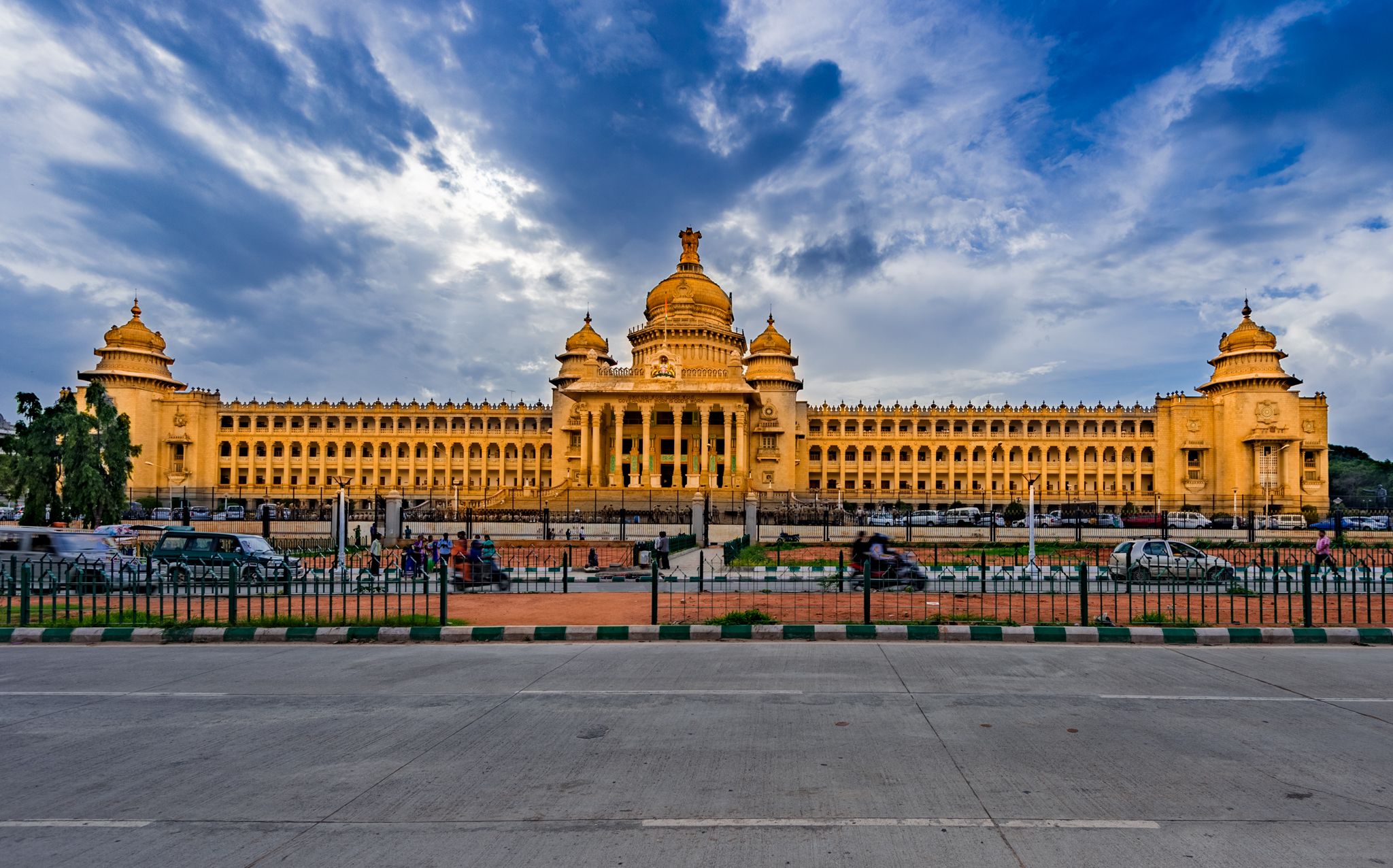
the Indian city of Bangalore, a new entry in this year’s Best Student Cities index at 81st, has the lowest tuition fees of all the cities on this list (only costing US$100 per year on average.) The city also has extremely low living costs , a one bedroom apartment in the city center, for example, will cost you an average of US$250 — this is extremely low compared to cities such as London, where you’d be paying a monthly average of US$2,132.
Bangalore has two universities currently featuring in the world university rankings. It also ranks highly in both the student view indicator and the employer activity indicator, suggesting that Bangalore’s graduates are viewed highly among graduate employers.
Johannesburg
Coming in at ninth worldwide for affordability in 2019, individuals in Johannesburg’s city center can expect to pay an average of US$471 in rent per month for a one bedroom apartment, excluding bills and annual tuition fees of around US$2,300. The city also ranks 185th out of 209 cities in the Mercer Cost of Living Survey (where first place is the most expensive).
This sunny South African city is ranked 78th overall in the Best Student Cities and climbed six places this year in the affordability indicator. The city is home to two institutions featured among the world’s top 550 in the world university rankings.
Budapest
Boasting three world leading universities, and home to over three million people, Hungary’s capital ranks first once again for the affordability category in 2019. Budapest also comes 43rd overall in the Best Student Cities, rising six places his year due to its improved scores in the desirability and student mix indicators (appearing in the global top 60 for both).
Budapest will cost international students an average of US$1,400 in tuition fees per year (much lower than many other study destinations). The city also ranks 164th out of 209 countries in the Mercer Cost of Living Survey.
Tomsk
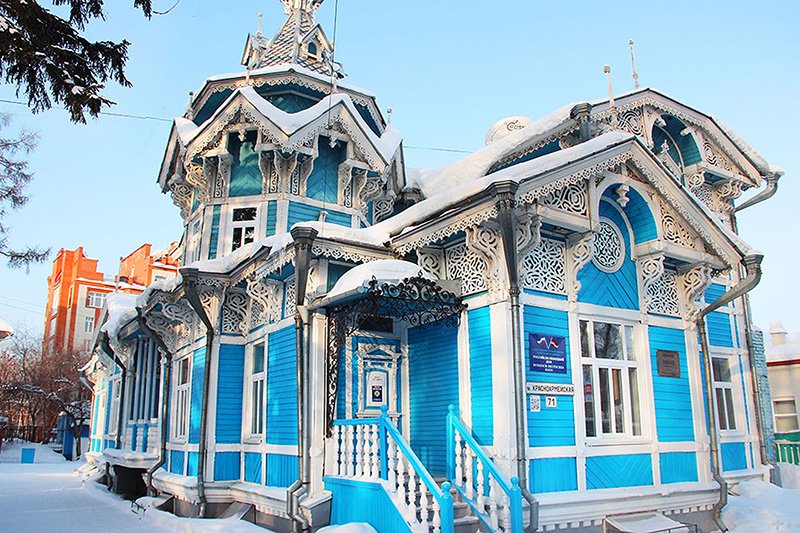
Ranking 73rd overall in the Best Student Cities index, Tomsk places joint fourth for affordability in 2019 along with fellow Russian cities Novosibirsk and St. Petersburg. Tomsk gained the title of the ‘cultural capital of Siberia’ from the 1960s, when it was fill of artists, writers and film directors, and is still known today as a major educational, scientific and innovation center in Siberia.
If you’re interested in studying at one of Tomsk’s leading institutions, international undergraduate tuition fees cost an average of US$2,600 per year.
St. Petersburg
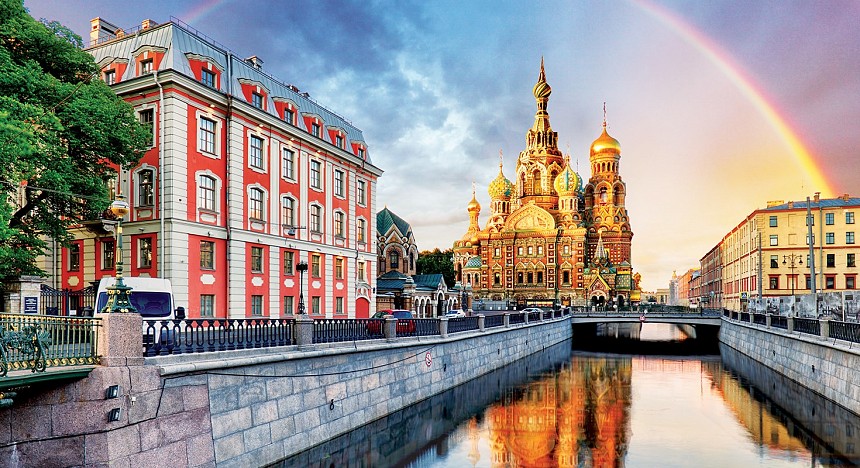
St. Petersburg is Russia’s second largest city (after Moscow, of course) and home to over five million people. Ranked 66th in the city ranking in 2019, it’s climbed four places in the affordability indicator to claim joint fourth place, with tuition fees at its three leading universities costing an average of US$2,600 per year.
Students looking to study in this awe-inspiring city will be pleased to find out that the city’s cost of living is 28.2 percent cheaper than in Russia’s capital, Moscow. And although St Petersburg’s best score overall is for its affordability, its biggest improvement this year is in the student view indicator, rising 16 places in 2019, reflecting its popularity among students.
Manila
The capital city of the Philippines and one of the oldest cities in the world, Manila is ranked eighth in the world for affordability this year, as well as joint 85th overall in the Best Student Cities index. Manila contains four excellent universities, led by the University of Philippines, which places joint 356th in the world.
With tuition fees averaging out at around US$2,400, and the city ranking 109th out of 209 in the Mercer Cost of Living Survey, Manila is a great place to get a top-quality education without breaking the bank. On top of this, Manila earns its best score in Student View this year, based on student’s experiences whilst studying in the city, and their perceptions of the availability and quantity of graduate employment.
Wroclaw
With sensational architecture and a plethora of diverse cafés and restaurants, Wroclaw, the fourth-largest city in Poland, comes third in the affordability indicator and is a new entry in the Best Student Cities index in 2019 at 108th. Students looking to study in Wroclaw will be pleased to hear that higher education is free for Polish students, and for international students willing to take the same entrance exams and to study a course taught in Polish.
However, if you’d prefer to study in English, tuition fees are still much lower than you’ll find elsewhere. The cost of living in Wroclaw is also relatively low, estimating that the monthly rent for a single person living in the center will cost on average around US$597.
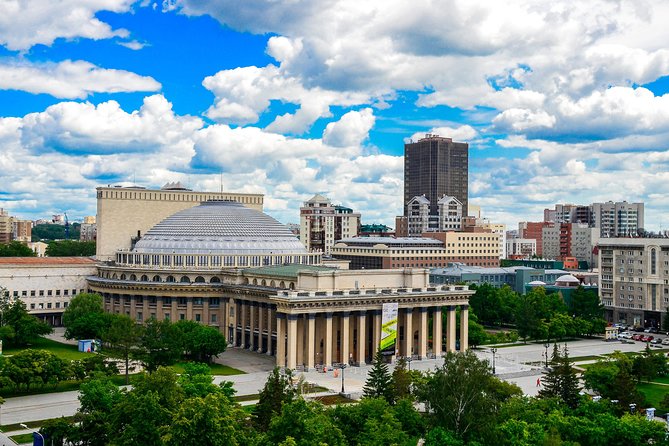
Novosibirsk
Russia’s third largest city, Novosibirsk is packed full of parks and tree lined avenues, as well as being a major manufacturing and administrative center.
It climbed six places to rank 92nd in the Best Student Cities ranking this year and is rated joint fourth for affordability, with tuition fees averaging at US$2,600 per year for international students. Living costs are lower here than in Moscow, with a single metro ticket for example only costing 22 rubles (the equivalent to only 35 US cents).
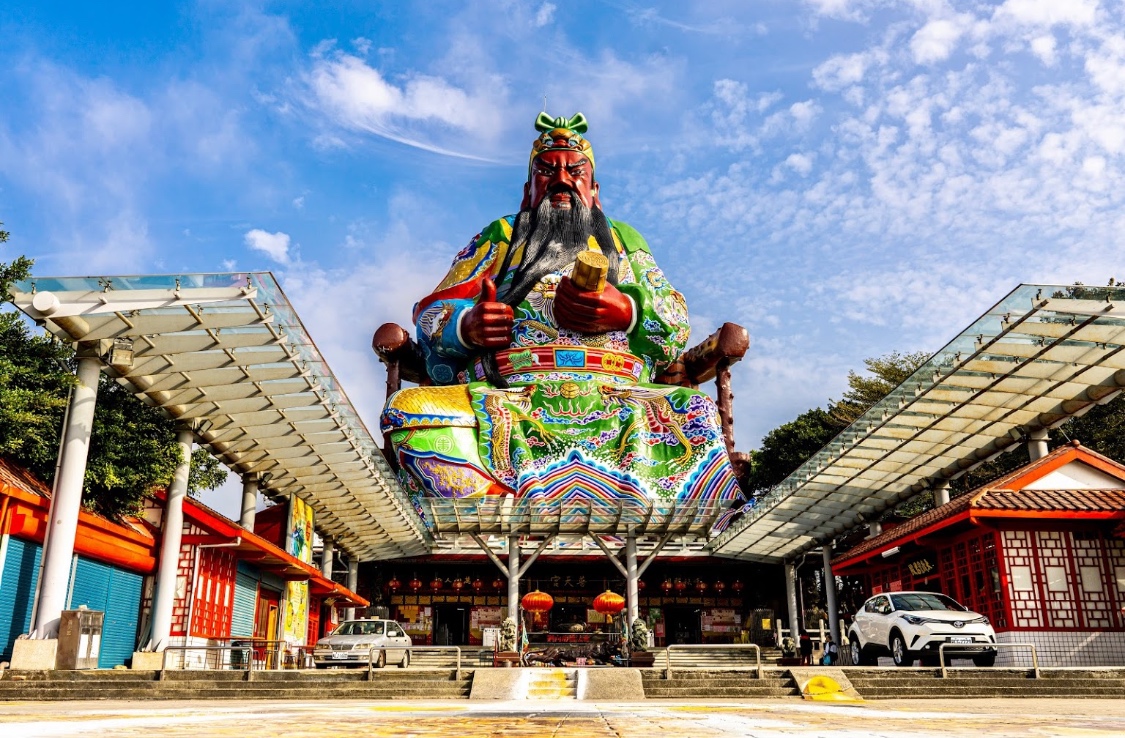
Hsinchu
Perhaps those of you looking for a great place to study abroad will be blown away by Hsinchu, the second city laying claim to the title, ‘The Windy City’ (the first, of course, being Chicago). Coming 10th for affordability this year and joint 68th overall in the Best Student Cities index, Hsinchu is an excellent option for those who want to study in Taiwan without all the hustle and bustle of a big city.







/the-hungarian-parliament-on-the-danube-river-at-sunset-in-budapest--hungary-945207010-5c34c19346e0fb00011d477a.jpg)


 Eduindex