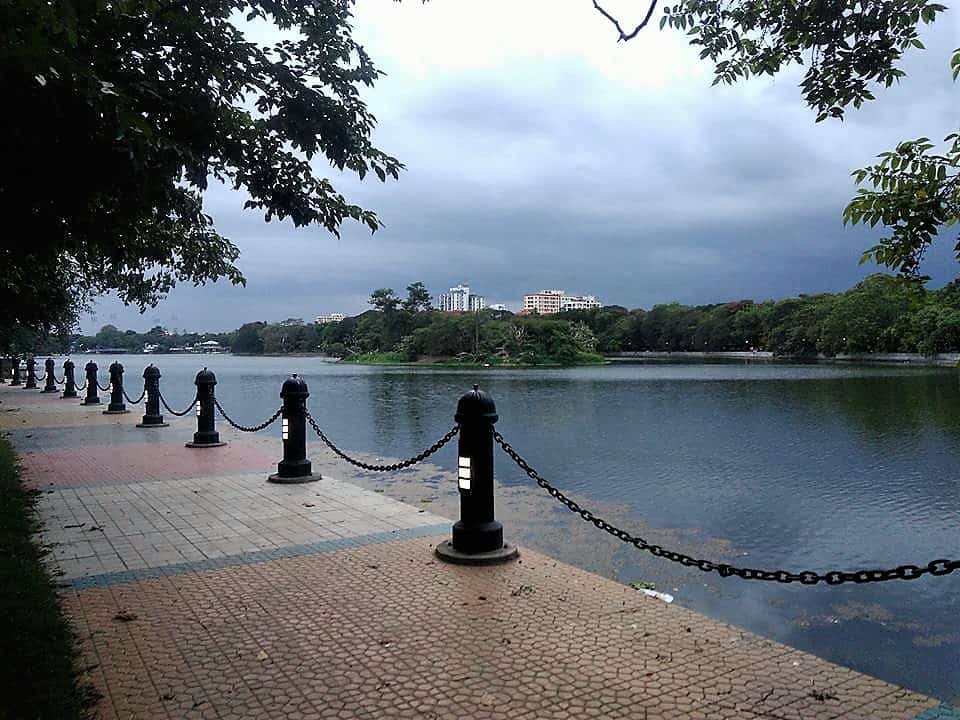
INSPIRATIONAL STORY OF J.K ROWLING

J.K Rowling’s story is one of the most famous insipirational failures to the success story of our time. She had failed in almost everything she attempted to do in her life and at one point she considers herself a major failure.


Most of the people only know her as a woman writer who created Harry Potter, but what people don’t know about the struggle she faces before reaching the stardom.


BIRTH AND CHILDHOOD :
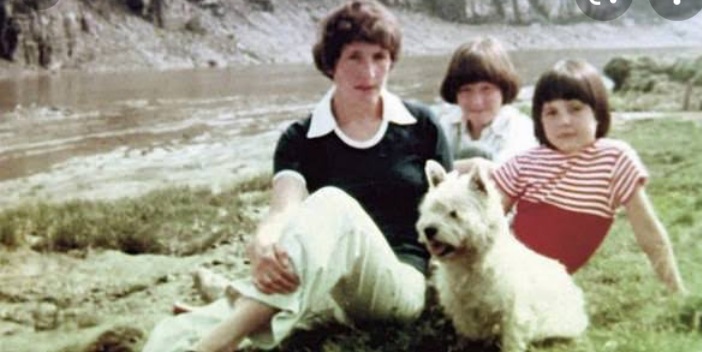

Joanne Rowling was born on 31st July 1965 in yate, Gloucestershire, England to Peter James Rowling and Anne Rowling. Her father was a Rolls- Royce aircraft engineer and mother was a science technician
She had one little sister, Dianne, as a child Rowling loves to write fantasy stories and read them to her younger sister. When she was a teenager she got a chance to read Jessica Mitford ‘s autobiography, from then on Mitford become her heroine and after that, she read all her books.


BOOK INSPIRATION AND MOTHER ‘S DEATH :
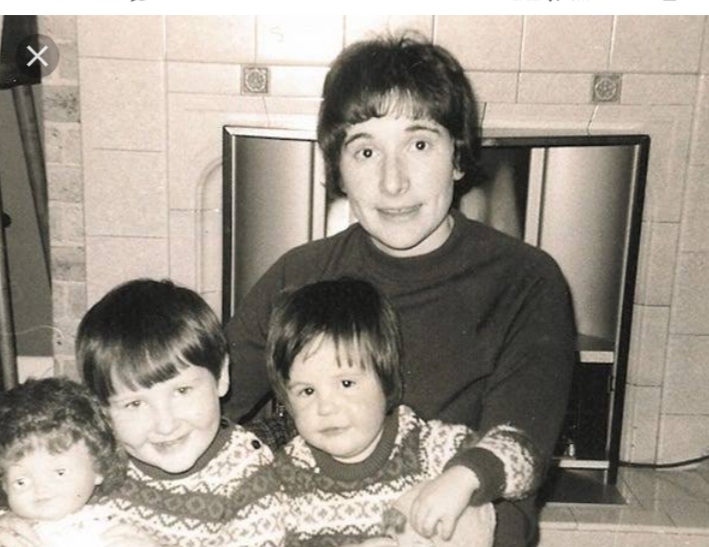

After working for Amnesty International as a researcher and bilingual secretary in London, Rowling moved to Manchester with her then- boyfriend where she worked at chamber of commerce. In1990, Rowling first had the idea for Harry Potter, a story of a young boy who attends a school of wizards, while she was on a 4 hour delayed train trip from Manchester to London.
While travelling the idea fully formed in her mind and when she reached her flat she began writing furiously. However, in December 1990 her mother died after 10 years of complications from Mutiplr sclerosis Mother’s death heavily affects Rowling and leave her extremely distraught and upset. Later she channelled her own feelings of her loss by writing about Harry’s feelings in her first book.


MARRIAGE, DIVORCE AND SINGLE MOTHER:
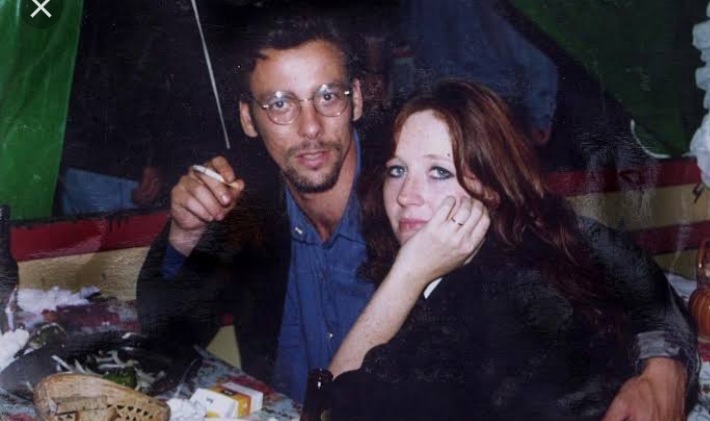

After a few months of her mother’s death, she moved to Portugal to teach the English language. There she met a man, fall in love with him, got married and gave birth to her daughter. In 1993 her marriage ended in Divorce and she with her infant daughter moved to Edinburgh Scotland to be closer to her sister.
This is the most struggling time for Rowling and she saw herself as a complete failure. She was divorced, jobless, no money and a dependent child. Because of all this, she suffered bouts of depression and contemplated suicide. Eventually, she signed for Government-assisted welfare describing her economic status as poor. It was a really difficult time in her life but she kept going on and put all her energy on completing her novel.


HARRY POTTER :
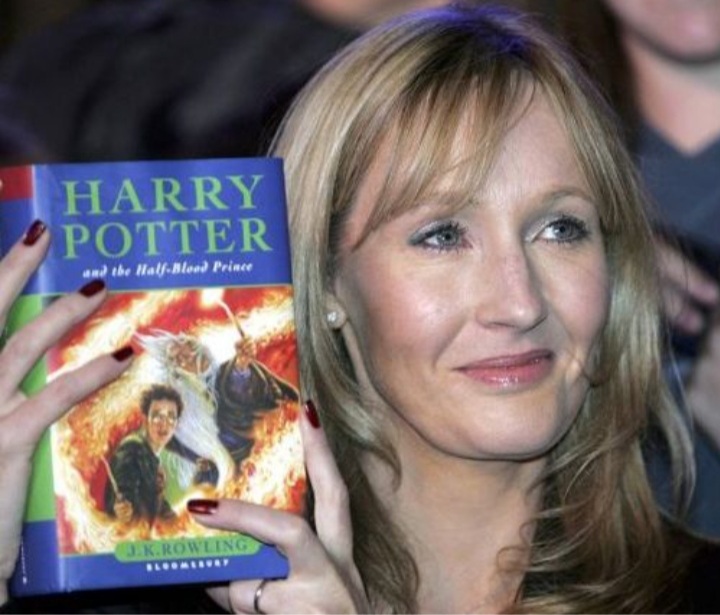

In 1995 Rowling completes her manuscript for Harry Potter and the philosopher’s stone on an old manual type writer. She was so poor at that time she could not afford a computer or even the cost of photocopying the novel, so she manually typed each copy and submitted to twelve publishing house in London.
The manuscript was rejected almost dozens time until she was finally given chance with £1,500 advance by a small London publisher, Bloomsbury after the company’s CEO little 8 years old daughter fell in love with it after reading the first chapter of the book.
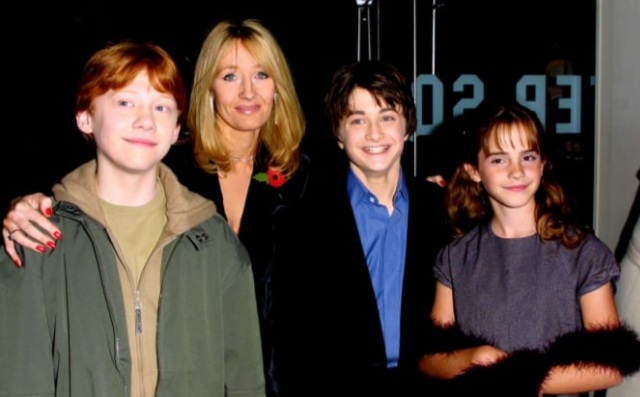

In July 1997 Bloomsbury published first 1000 copies of Harry Potter series out of which 500 copies were distributed to libraries. Just five months later the book won Nestlé smarties Book prize it’s first award . In early 1998 an auction was held in America for the printing rights to publish the novel.
Scholastic INC won the auction for USB 105, 000, later Rowling said in a interview that she nearly died when she heard the news of this amount for printing her novel. Today Harry Potter is a global brand worth an estimated 15 billion dollars.
The last four Harry Potter books have set the records for the fastest selling books in history. The Harry Potter series to talking 4, 195 pages have been translated either in whole or in part into 65 languages. The Harry Potter books series have also gained recognition for creating an interest in reading among the children’s at a time when they were more inclined towards the Internet, computers and television.


FINANCIAL SUCCESS :


In 2001 J.K ROWLING purchased a 19th century killiechassie House, an estate house on the banks of the river tay in Perth. She also owns a £ 4.5 million Georgian house in West London. In 2004 , Forbes named Rowling as the first person to become a us dollar billionaire by only writing books.In 2017, according to Sunday times, Richard list Rowling net worth was approx. £ 650 million.


PERSONAL LIFE :


Rowling and her second husband Neil Murray were married on 26th December 2001. They live in Edinburgh with their 3 children. Rowling was a runner up in 2007. Time’s annual person of the year issue after Russia’s president Vladimir putin.


JK ROWLING’S RULES OF SUCCESS :

  • Failure helps you discovers yourself.
  • Take action on your ideas.
  • You will be criticised
  • Remember where you started
  • Truly Believe in yourself
  • learn from adversity.
    *Visualise to achieve
  • Persevere
  • Dreams can happen.
  • use your creativity.

Health Education

A sound mind lives in a sound body’.

Introduction

Health education is a profession of educating people about health. Areas within this profession encompass environmental health, physical health, social health, emotional health, intellectual health, and spiritual health, as well as sexual and reproductive health education.

Health education teaches about physical, mental, emotional and social health. It motivates students to improve and maintain their health, prevent disease, and reduce risky behaviours. It also focuses on emotional, mental and social health too. Educating students on the importance of health builds their motivation.

Health education is one strategy for implementing health promotion and disease prevention programs. Health education provides learning experiences on health topics. Health education strategies are tailored for their target population. Health education presents information to target populations on particular health topics, including the health benefits/threats they face, and provides tools to build capacity and support behavior change in an appropriate setting.

History

From the late nineteenth to the mid-twentieth century, the aim of public health was controlling the harm from infectious diseases, which were largely under control by the 1950s. By the mid 1970s it was clear that reducing illness, death, and rising health care costs could best be achieved through a focus on health promotion and disease prevention. At the heart of the new approach was the role of a health educator.

Code of ethics

The Health Education Code of Ethics has been a work in progress since approximately 1976, begun by the Society for Public Health Education (SOPHE).

“The Code of Ethics that has evolved from this long and arduous process is not seen as a completed project. Rather, it is envisioned as a living document that will continue to evolve as the practice of Health Education changes to meet the challenges of the new millennium.”

Importance of Health Education .

Health education builds student’s knowledge, skills, and positive attitudes about health. Health education teaches about physical, mental, emotional and social health. It motivates students to improve and maintain their health, prevent disease, and reduce risky behaviours.

Health education curricula and instruction help students to learn skills so that they will use to make healthy choices throughout their lifetime.

Health education teaches people of all ages about how diet and exercise contribute to a healthy lifestyle. It also encourages positive changes in behaviour and lowers the risk of addiction to drugs, alcohol and unsafe sexual practices. The majority of schools around the country have courses aimed at teaching health education to students. These courses often revolve around the body, healthy eating, sex and exercising. Some students are taught basic health and physical fitness early on. More in-depth courses are designed for middle and high school students.

Health education encourages a person to make healthy choices. They are instructed to avoid unhealthy habits. ‘A sound mind lives in a sound body’. Rabindranath Tagore and C.V. Raman, if they were confined to sick bed, could not have won the Nobel Prize. In fact, a sickly student with all his talents and abilities lags behind in the race of life.

Health education also teaches about the emotional and mental health of the student. A healthy person is the happiest person in the world.

Link

A virtual tour to Kolkata’s famous visiting places

Kolkata was initially the capital of the British Raj, which means that several structures constructed by them during the pre-Independence era still stand strong along with other iconic ones in the city. From rajbari and museums to churches places, our City of Joy boasts of many beautiful heritage sites that you must check them out.

Now kolkata (calcutta) is capital of India’s West Bengal state. Kolkata is also known for architecture, art gallery, cultural festival.

1. Victoria Memorial :-

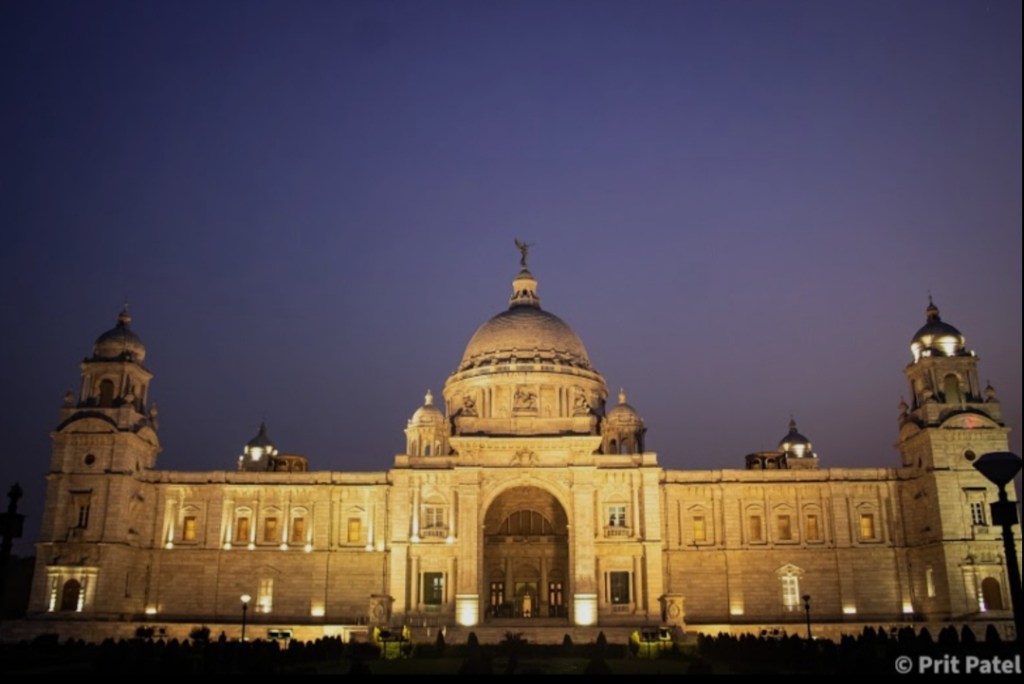
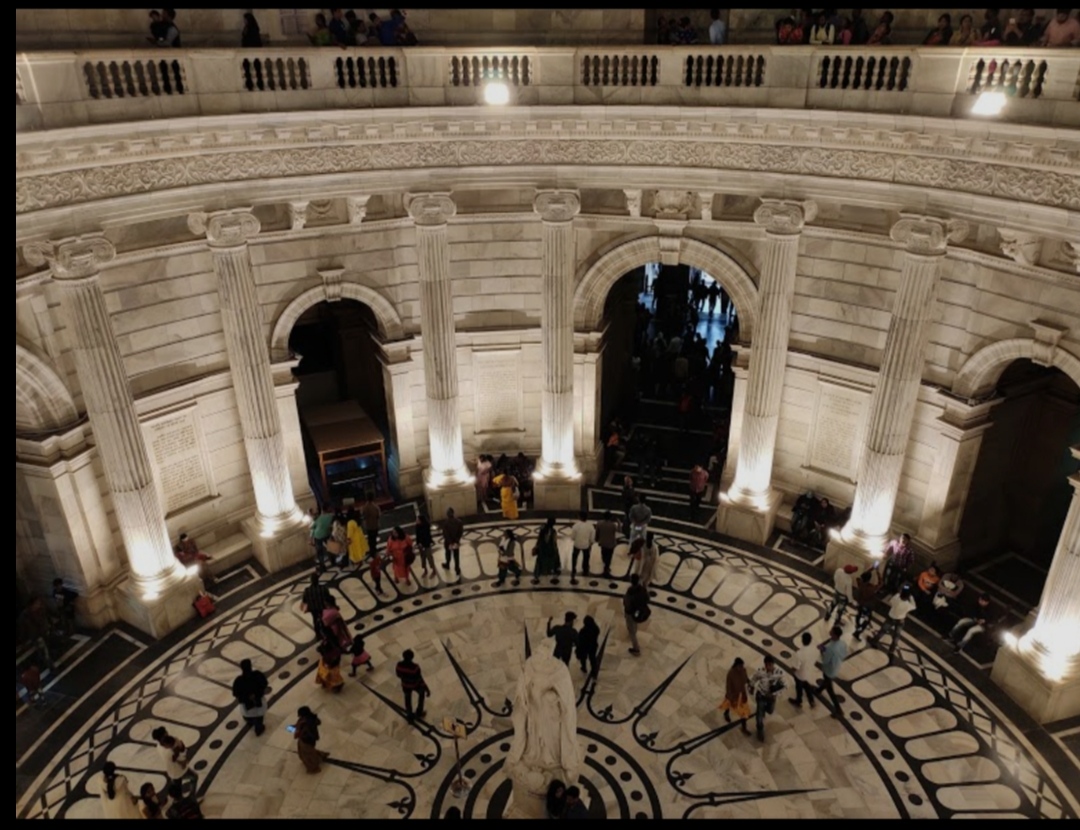
The Victoria Memorial is possibly the most awesome reminder of the Raj to be found in India. It is one of the famous and beautiful monuments of Kolkata.It was built between 1906 and 1921 to commemorate Queen Victoria’s 25-year reign in India. After the Sepoy Mutiny of 1857, the British government gathered the reins of control of the country directly, and in 1876 the British parliament made Victoria the Empress of India. Her reign ended with her death in 1901.


Victoria Memorial

2. Maidan :-

Maydan is a massive green place trails, Riverside, picnic spot including some sports venu. The Maidan (literally, open field), also referred to as the Brigade Parade Ground,is the largest urban park in Kolkata in the Indian state of West Bengal.The Maidan is dotted with statues and architectural works, the most notable being the Victoria Memorial. For the greenery and refreshment this place known as ‘Lungs of Calcutta’. The property of the Indian Army, the Maidan hosts the army’s Eastern zone high command in Fort William.

Maidan, kolkata

3. Nandan :-

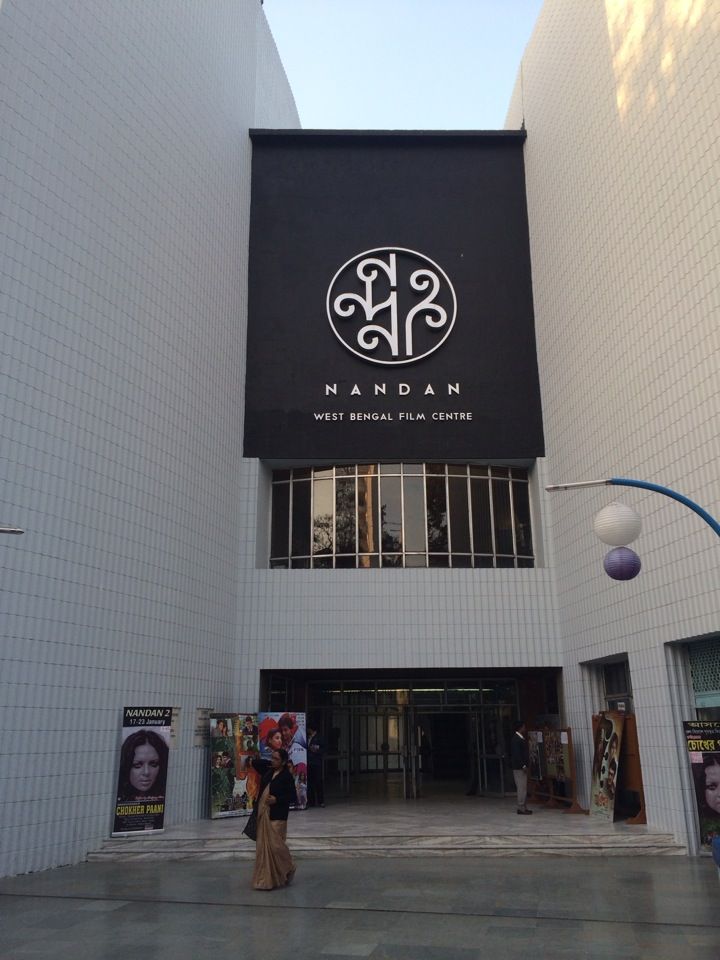
Nandan is one of the main venues of the Kolkata International Film Festival, hosting it till 2010. It is a government-sponsored film and cultural centre in Kolkata, India. The primary aim of the cultural hub is to encourage and facilitate cinematic awareness in society. While in 2011 the opening and closing ceremonies was shifted to Netaji Indoor Stadium, Nandan remains the main centre for the festival.The foundation stone of Nandan was laid by former Chief Minister of West Bengal Jyoti Basu in 1980[3] and it was inaugurated by film-maker Satyajit Ray on 2 September, 1985. Most favorite place of film lovers all around Kolkata.

Nandan, Kolkata

4. South Park-street Cemetery :-

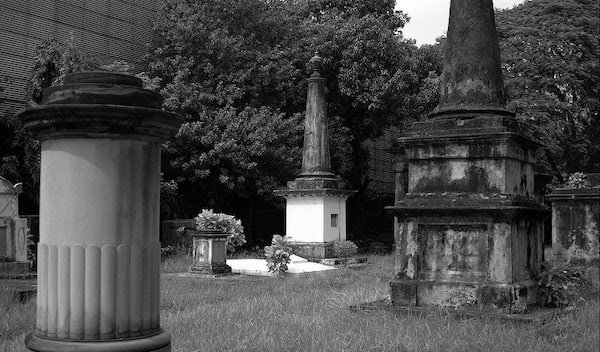
The Park Street Cemetery was one of the earliest non-church cemeteries in the world, and probably the largest Christian cemetery outside Europe and America in the 19th century. Opened in 1767 on what was previously a marshy area, the cemetery was in use until about 1830 and is now a heritage site, protected by the Archaeological Survey of India (ASI). The tombs are an admixture of the Gothic with a rich flavour of the Indo-Saracenic style. Of the latter, mention may be made of a unique and composite brick structure built in the ‘panchyatana’ manner, with a central dome flanked by miniature replicas of Orissan ‘rekha deul’ on four sides. Coupled with this peculiarity, the black basalt carvings on the frontal façade indicate a distinct respect for the Hindu faith.

South Park-street Cemetery, Kolkata

5. Dakshineshwar Kali Temple :-

The Dakshineswar Kali Temple was founded around the middle of the 19th century by Rani Rashmoni.Rani Rashmoni was a Mahishya by caste and was well known for her philanthropic activities. This temple is a Hindu navaratna temple located at Dakshineswar. Situated on the eastern bank of the Hooghly River, the presiding deity of the temple is Bhavatarini, a form of Parashakti Adya Kali, otherwise known as Adishakti Kalika.This temple is one of the most visited temple in Kolkata.

Dakshineshwar Kali Temple

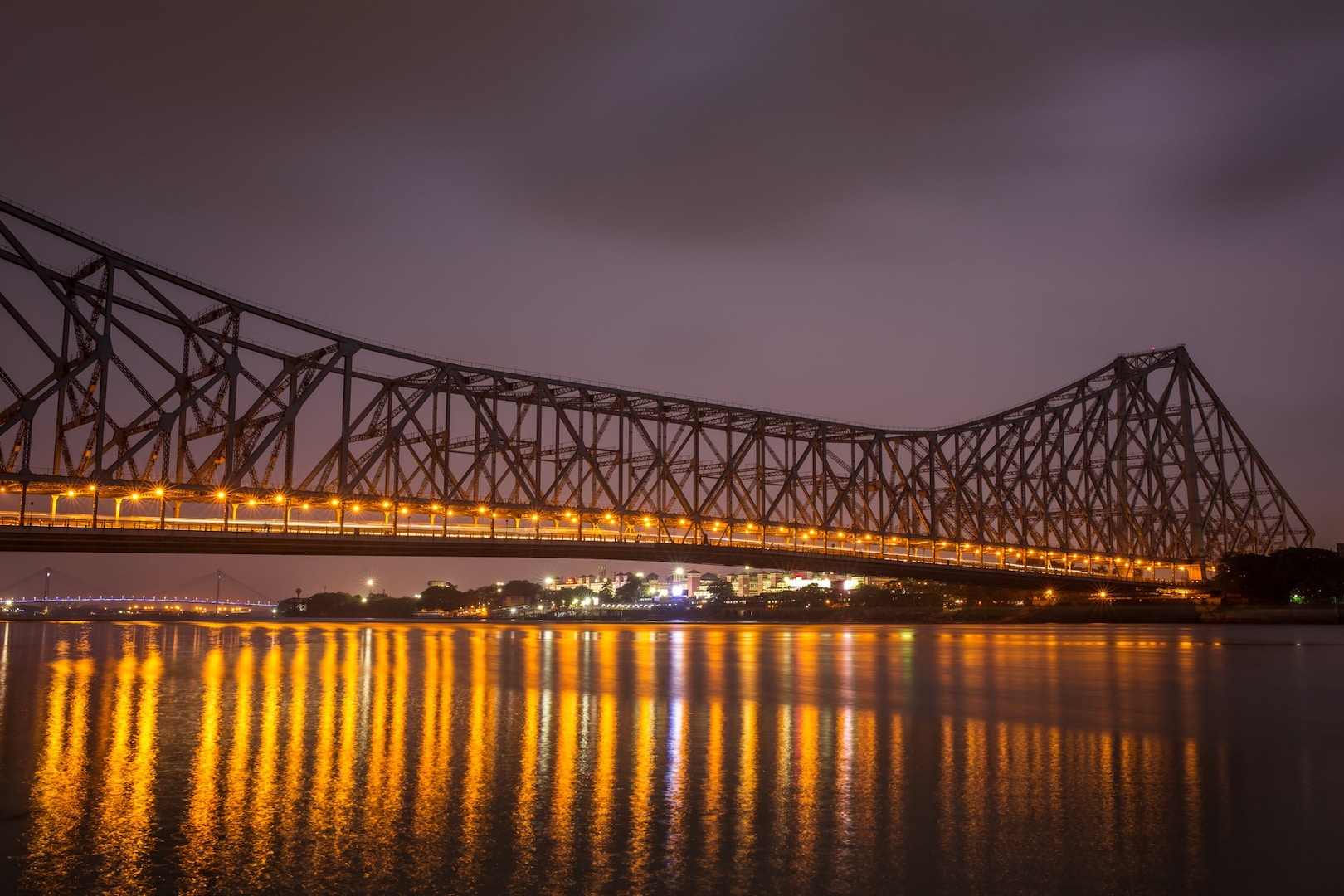
6. Howrah Bridge :-

The Howrah Bridge is one of four on the Hooghly River and is a famous symbol of Kolkata and West Bengal.The Bridge is a balanced cantilever bridge over the Hooghly River in West Bengal, India. Commissioned in 1943,the bridge was originally named the New Howrah Bridge, because it replaced a pontoon bridge at the same location linking the two cities of Howrah and Kolkata (Calcutta). The night lightning of Howrah bridge is mesmerizing.

Howrah Bridge

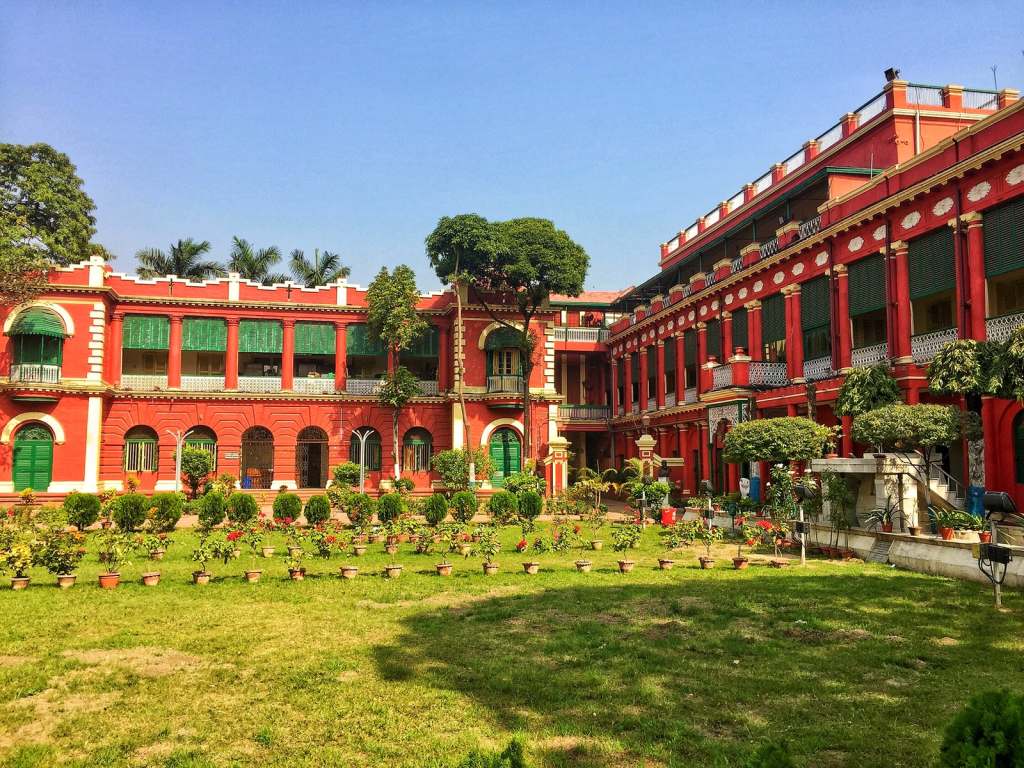
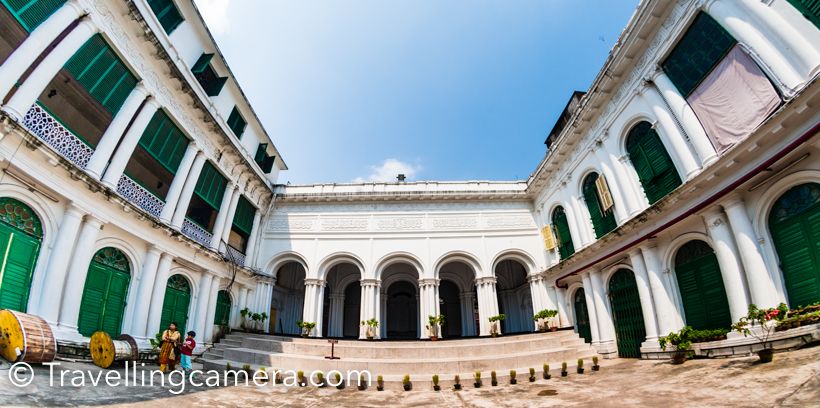
7. Thakur Bari :-

Jorasanko Thakur Bari or House of the Thakurs (anglicised to Tagore) in Jorasanko, North Kolkata, West Bengal, India, is the ancestral home of the Tagore family. It is the place where Rabindranath Tagore was born and spent most of his childhood. It was built in the 18th century on the land donated by the famous Sett family of burrabazar to ‘Prince’ Dwarkanath Tagore (Rabindranath Tagore’s grandfather).The house has been restored to reflect the way the household looked when the Tagore family lived in it and currently serves as the Tagore museum for Kolkata.

Jorasanko Thakur Bari

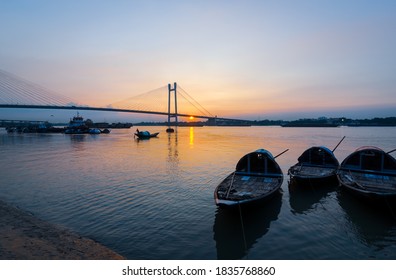
8. Prinsep Ghat :-

Prinsep Ghat was located between the Water Gate and the St George’s Gate of the Fort William, the monument to Prinsep is rich in Greek and Gothic inlays. It was restored by the state’s public works department in November 2001 and has since been well-maintained.The Palladian porch in the memory of the eminent Anglo-Indian scholar and antiquary James Prinsep was designed by W. Fitzgerald and constructed in 1843.Prinsep Ghat is one of the oldest recreational spots of Kolkata.[4] People visit it in the evenings on weekends to go boating on the river, stroll along the bank and purchase food from stalls there.One of the songs in the Bollywood film Parineeta was shot here on the ghats.

Prinsep Ghat

9. Rabindra Sarobar :-

Rabindra Sarobar also known as Dhakuria Lake is an artificial lake in South Kolkata in the Indian state of West Bengal.The lake and the surrounding green cover occupy an area of 192 acres. The water body is of 73 acres while the green cover has an area of 119 acres. It has a unique bio diversity and attracts 107 species of birds, which includes 69 resident birds, 14 local migrants, 23 long distant migrants and one summer visitor. The green cover has 11,000 trees of which 7.500 are over 75 years old. Sometimes there was a opportunity of rowing in this lake for visitors. Many bangali films shooted in this place.

Rabindra Sarobar

After visiting all those place you will definitely agree with that – ‘Kolkata , The City Of Joy’.