Importance of Music in Student’s Life

If I ask you what is music for you? Your answer must be entertainment, time pass or just a hobby. Sometime,  we don’t understand the importance of small things and avoid them without thinking. We listen to music just for entertainment or for refreshing our mind but we have never given a thought about why we feel refreshed after listening to good music. It plays an important role in a Student’s life, work professionals and even housewives. According to various researchers, music students have higher academic exam score than their non-musical peers.

How it helps in concentration?

With no doubt it improves one’s mood and thus it helps students to focus better in their studies. It provides motivation and an urge to learn more. It makes the students positive and most likely to memorise clearly which indirectly boosts memory formation.

Not just for students it is helpful for working professionals as well. They listen to their favourite songs when they feel tired or when they don’t find any motivation to work during their working hours. It helps them concentrate more after with an optimistic approach.

Not just students and employers, housewives also feel better after listening to their favourite track. They make their work joyful by playing songs at the side of the table and runs their daily errands by humming their favourites.

Science behind correlation between music and brain

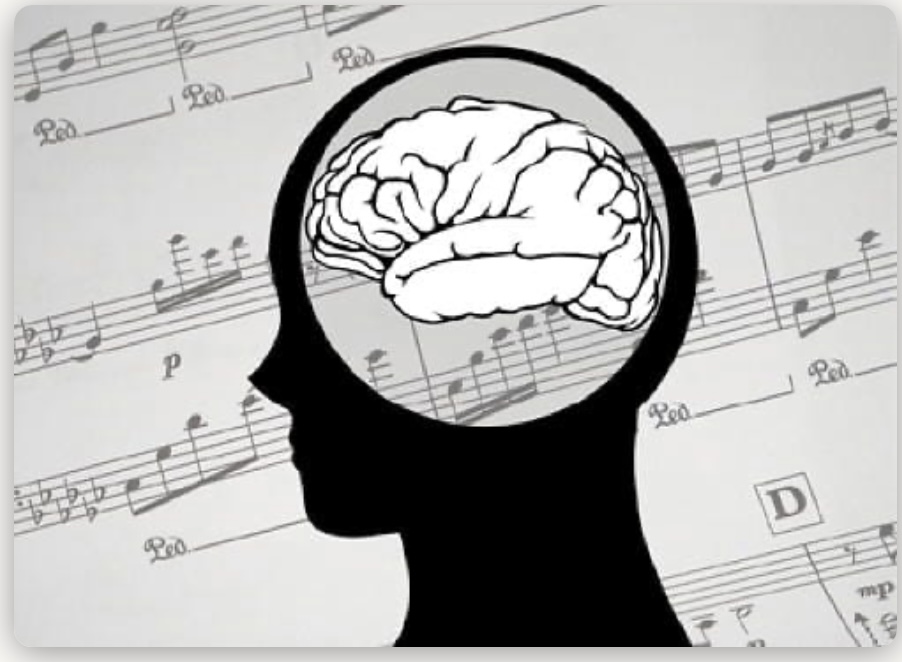
  • Studies have shown that music produces several positive effects on a human’s body and brain. Music activates both the left and right brain at the same time, and the activation of both hemispheres can maximize learning and improve memory.
  • Music is a way to process emotions and strengthen oneself from being overwhelmed.
  • It triggers the release of a chemical called dopamine in a part of the brain called the striatum which helps one feel good.
  • Research has shown that listening to music can reduce anxiety, blood pressure, and pain as well as improve sleep quality, mood, mental alertness, and memory.

Improve your performance

 Music is found to help people perform better in high pressure situations. Studies show that it changes a student from coal to diamond under pressure. For instance there was a research done where basketball player were pressured  and didn’t perform well in the match but the other team which was also under pressure but listened to music before coming to the court performed very well.This is how music plays a very  significant role in a student’s as well as in a human life.This is how music plays a very  significant role in a student’s as well as in a human life.

 Music is found to help people perform better in high pressure situations. Studies show that it changes a student from coal to diamond under pressure. For instance there was a research done where basketball player were pressured  and didn’t perform well in the match but the other team which was also under pressure but listened to music before coming to the court performed very well.This is how music plays a very  significant role in a student’s as well as in a human life.This is how music plays a very  significant role in a student’s as well as in a human life.

 We now understand, that music and memory are strongly linked together in the brain, and that music can be beneficial for studies.Not just the rap or upbeat music but classical music has been proved to be the most effective in treating insomnia and helps one from spending thousands on sleep-inducing meds.

Not just the rap or upbeat music but classical music has been proved to be the most effective in treating insomnia and helps one from spending thousands on sleep-inducing meds.



Surgeon plays music in operation theatre during an ongoing surgery

“One good thing about music, when it hits you, you feel no pain-”Bob Marley.

Adhering to the above quote said by Bob Marley, music proves to be the most powerful weapon for anything related to pain. Beyond the fact that music acts as a relief against pain, it also completely cures any form of sadness that is extensive. The practise of playing music in operation theatres in order to reduce stress for both surgeons and patients is not uncommon. Whereas, not many of us are aware about this amazing practise of surgeons which has helped a lot of surgeries to turn out to be successful.

To be precise, Music has proven to be effective in relaxing stress hormones and reducing blood pressure. Prominently, classic music shows drastic effects and is verified to be beneficial in distress.

Many interesting surgeries were held while music was played in various forms and also performed successfully. One of them includes a surgery where a musician played violin while the surgeons performed Brain surgery to remove her Brain tumour. Well the musician was the patient herself! How amazing it sounds right. Similar to this, in 2017 a musician reported to have played violin, since the surgeon who performed the surgery found relief for his stress during the surgery. Again, the surgery was performed successfully. 

There are many such magnificent incidents like this occurred, which have proved to have more impact on both surgeons and patients. 

Nowadays, stress, depression, anxiety etcetera has become so common that many people started using these words on a daily basis. But one thing that stands out to be a stress relief for everyone is “music”. It has been reported that music releases a hormone in the human body which eases pain and produces a feeling of euphoria. 

One of the biggest incidents of doctors dancing to folk music in order to entertain covid patients stole many hearts and could be considered one of the best gestures ever. Music allegedly makes an aching heart and mind calm and reduces all kinds of emotions which leads to negative outcomes.

One of the most imminent types of music used in operation theatres are classical music. It is said that classical music gives a soothing feeling to the human mind mentally and physically. Listening to music in hospitals has become so common and getting played on a regular basis.

Isn’t it surprising and amazing to know how music plays a vital role in every corner of life and helps in manifesting peace all over. Some of the facts and incidents about music being played in operation theatres would just blow your mind when you get to know more about the phenomena. A patient playing music on an ongoing surgery on herself and doctors being very particular about not to disturb or affect any hormone that is related to control actions of her makes us understand that small things make huge differences and give beautiful results.

Music – Unarticulated yet a Beautiful Language

Photo by cottonbro on Pexels.com

Every living creature living in this universe is divided into different fragments of communities and societies. These societies are present in different countries and parts where we are all unique by the language and culture which we follow which represents our originality.

One thing which we all are united with each other is “Music”. It is one simple form of Art that makes all of us as one human being Community. The beautiful thing about Music is that it doesn’t need any language to be understood neither one tries to understand, rather music is a language of the heart. It is a feeling that everyone connects when they hear music.

Music in Diversity

A language, country, and Culture have always made a bridge among people and created consequences and war between them, but the only thing which unities all humans and breaks these boundaries are the presence of Music.

 In Today’s era, we are all Living in Multicultural communities where we have different types of music tastes and our preferences are unique just like us,  We have people around us who listen to different types of music which don’t match with ours, yet we are all united by music.

Music always creates a sense of belongingness among each other, even though we are unaware of each other’s religion, language and country but through music, it keeps us closer to each other.

We all have some kind of music that connects to our hearts and feelings, we get more connected because the magic a musician uses connects with our own life.

Music is a medium through which our soul remains blissful and we feel stressed from our bustling lives.

For decades, Music is one of those art forms which have revolutionized in many versions but have always gained popularity due to the sense of connectedness between the audiences and the Musicians.

Dated back then, when people used to watch operas which were one of the common elite forms of entertainments, which not only portrayed music but traveled through many stories through the tune of every string played through the music Instruments.

Music took a major role in plays and dramas, which is still Engraved in our magnificent history. It has also contributed a massive hand in legends of  Literature. There were many prominent writers like Jane Austen and Pablo Neruda who claimed music as one of the key factors of human harmony.

Music always renovates as the decades passed by, presently music comes under the Category of Pop Music or Pop culture where many bands are popularizing music by making people aware of how music is important and how it plays a vital role to connect and how even in today’s generation music is helping society to know about the moral attitudes which we all need as human beings.

There are several forms of Music, taking one of the examples is K Pop Music which is gaining worldwide recognition with a high amount of social awareness. We can never forget some great bands like “The Beatles”, who are still considered one of the best Classical bands to date.

BTS“, one of the famously known Boy Bands who are on the top-notch with the extraordinary songs and contribution they are providing to the music industry. There is a fandom for BTS all over the world that shows us that people don’t need any language to get connect rather it’s a heart-to-heart language to understand and feel the music.

Music was never meant to be always vocal, sometimes just a tune is all you need to connect, as rightly some artists like Mozart, Chopin’s explained us through their beautiful music.

Music Is a language that not only connects with a mind and body but also with a soul. No matter whatever the occasion is we humans were bound with music and music has different versions for different situations. The world of Music accepts a very living being that has a soul to connect with.

“We all just need a music to connect, rest the music will ultimately unite us with its alluring tune which strings with our heart forever”.

The Origin of Buddhism .

We are what we think. All that we are arises with our thoughts. With our thoughts, we make the world.
Peace comes from within. Do not seek it without.

Lord Buddha

Introduction.

He was a spiritual personality . An ancient teacher and enlightened many . A founder of world religion Buddhism . He was popularly known as Gautama Buddha (also known as Siddhattha Gotama or Siddhārtha Gautama or Buddha Shakyamuni ) .

The Enlightened One who rediscovered an ancient path to release clinging and craving and escape the cycle of birth and rebirth. He taught for around 45 years and built a large following, both monastic and lay. His teaching is based on his insight into the arising of duḥkha (the unsatisfactoriness of clinging to impermanent states and things) and the ending of duhkha—the state called Nibbāna or Nirvana (extinguishing of the three fires).

Buddhism

Buddhism, one of the major religions and philosophical systems of southern and eastern Asia and of the world. Buddha is one of the many epithets of a teacher who lived in northern India sometime between the 6th and the 4th century before the Common Era.

The title buddha was used by a number of religious groups in ancient India and had a range of meanings, but it came to be associated most strongly with the tradition of Buddhism and to mean an enlightened being, one who has awakened from the sleep of ignorance and achieved freedom from suffering.

According to the various traditions of Buddhism, there have been buddhas in the past and there will be buddhas in the future. Some forms of Buddhism hold that there is only one buddha for each historical age; others hold that all beings will eventually become buddhas because they possess the buddha nature (tathagatagarbha).

According to Buddhist doctrine, the universe is the product of karma, the law of the cause and effect of actions, according to which virtuous actions create pleasure in the future and nonvirtuous actions create pain.

Your work is to discover your world and then with all your heart give yourself to it.

Lord Buddha

History

Gautama Buddha ( born c. 6th–4th century BCE, Lumbini, near Kapilavastu, Shakya republic, Kosala kingdom [now in Nepal]—died, Kusinara, Malla republic, Magadha kingdom [now Kasia, India]).

Buddha is one of the many epithets of a teacher who lived in northern India sometime between the 6th and the 4th century before the Common Era.

Learnings from Gautama Buddha.

1. “Three things cannot be hidden: the sun, the moon and the truth.”

2. “You will not be punished for your anger; you will be punished by your anger.”

3. “You can search throughout the entire universe for someone who is more deserving of your love and affection than you are yourself, and that person is not to be found anywhere. You, yourself, as much as anybody in the entire universe, deserve your love and affection.”

4. “We are shaped by our thoughts; we become what we think. When the mind is pure, joy follows like a shadow that never leaves.”

5. “Believe nothing, no matter where you read it, or who said it, no matter if I have said it, unless it agrees with your own reason and your own common sense.”

Link

Indian classical music

something beyond the mundane through the medium of the arts.
The evolution of poetry, painting and other visual arts has been preserved on stone, leaves and
paper but music being auditory, no such evidence exists. As such it is not possible to listen today
to the music of the ancient times.
Inspite of such a variety of cultural interactions, our music has remained essentially melodic. In
melody, one note follows the other, making for a continued unity of effect, whereas in harmony
musical sounds are superimposed on one another. Our classical music has retained its melodic
quality.

It is usual to begin the history of Indian music with the melodic patterns of vedic chanting. The
oldest music, which possessed a grammar was the vedic. Of course, the Rig-Veda is said to be
the oldest: nearly 5000 years old. The psalms of the Rig-Veda were called the richas. The
Yajur Veda was also a religious chant. But actual music in Northern or Southern India, of
those bygone days could not have only been of this kind. There were non-Aryan people with
their own art. For instance, Santhal music from the Eastern region of India may have been
passed down from them. While the differences are obvious, there is no doubt that such music
of the people contributed to the formation of what we now call Hindustani Classical Music.
Natya Shastra of Bharata is another important landmark in the history of Indian music. It is supposed to have been written sometime
between the 2nd century B.C. and the 2nd century A.D. Some scholars are even doubtful whether it is the work of one author and the
work might well have been a compendium – at least, the version which is available to us. The Natya Shastra is a comprehensive work
mainly dealing with dramaturgy. But a few chapters of this deal with music. Therein we get information on scales, melodic forms, tala
and musical instruments. The then contemporary music recognized two standard scales. These were called gramas. The word grama
is itself perhaps derivable from the idea of group or sect: a village, for instance. This probably lead to a set of svaras or notes being
called grama. This could roughly be translated as scales. There were then two gramas prevalent. One was called the Shadja grama,
the other one was the Madhyama grama. The difference between the two was only in one note, the panchama. To speak more
accurately. we say that the panchama in madhyama grama was one sruti lower than the panchama in shadja grama.

Sa re ga ma pa dha ni
This is the mela aaroh of the modern raga Bilaval. Besides these seven shuddha notes or svaras there are five variants, making in all
twelve notes to a saptak.
Sa re re ga ga ma ma pa dha dha ni ni
There are, of course, finer variations: these are the shrutis, It is better, therefore, to call these 12 tonal regions rather than notes.
All known ragas are grouped within this twelve tone scale. Indeed. it was a Carnatic musicologist –
Venkatmukhi of the 17th century, who gave a system of 72 melas formed out of these twelve tones. Later
on, in the 20th century, Pt. Bhatkhande, chose 10 out of the 72 to classify Hindustani ragas