Eco-Friendly Lifestyle 101

Leading an eco-friendly (ecological/environment-friendly) lifestyle is imperative for healthy and sustainable living in the current extreme climatic conditions and environmental degradation and pollution. All this leads to life-threatening atmosphere because of poisonous air, water and soil, global warming, scarcity of resources, man-made disasters and increased intensity and risks of natural disasters.

Apart from industrial and organizational initiatives towards eco-friendly operations, individual and collective household acts and changes in personal lifestyle choices and living practices of common citizens contribute to sustainable and healthy living.

Environmental friendly living is not that difficult. It can even prove to improve mental health along with physical health and environmental health. Let’s learn about some easy eco-friendly practices.

  1. Resource management: The baby steps. The easiest and the ones which we learned when we were kids, but forget to apply.
    • Limit and manage your water, electricity and fuel usage. Do not make unnecessary usage.
    • Eliminate any kind of wastage. Do not forget to switch off lights and fans when not in use.
    • Bath in shower or use bucket and mug instead of bathtubs.
    • Reuse water. For example- Reuse the water used to wash food items for watering the plants, instead of pouring it into the sink.
    • Brush your teeth with a glass of water. Do not use the tap water.
  2. Resource conservation:
    • Practice rainwater harvesting. We can use this water for bathing and washing clothes, utensils, etc. It is easy to install rainwater harvesting system. Look at these multiple ways to do it.
    • Use solar energy and solar panels if affordable for water heating, cooking, electricity supply, etc.
    • Buy a limited amount of food. Do not depend entirely on refrigeration. Switch it off when not needed, mostly in winters, when food items do not stale for many hours even when kept outside.
  3. Buying essentials:
    • Install LED lights instead of incandescent lighting.
    • Practice biogas cooking, use solar cookers, biogas stoves, etc. You can either buy or build a biogas plant at home easily. See the benefits of biogas here.
    • Use a car fueled with CNG or use battery vehicles. Go on foot, or ride a bicycle to reach nearby places.
    • Use desert coolers or eco- friendly air coolers and do not install air conditioners.
    • Use eco-friendly paper/tree-free paper and buy refilling pens instead of single use pens.
    • Eliminate plastic materials and storage boxes. We can easily live without plastic. There are many alternatives to daily-life plastic materials. Use and carry aluminium bottles and refill them instead of buying plastic water bottles. Use glass containers for microwave and storage.
    • Buy products only from those companies which use eco-friendly methods to manufacture. There are many such alternatives out there. You just need to search the net.
  4. Materialism:
    • Decorate your home with indoor plants, beautiful mud or clay lamps, eco-friendly handicrafts, glass decorative, etc.
    • Install indoor plants which purify the air. Use loads of them.
    • Build a terrace garden or porch garden.
    • Stop the air, water and sound pollution in the name of festivities. Instead, go out on festivals to plant trees in wastelands, empty lands, barren lands, schools, boundaries of roads.
    • Donate to and plant trees and saplings with old-age homes, special schools, orphanages, etc. It will bring happiness to you and to those people too. Do not use firecrackers, river dumpings, etc.
    • Do not buy chemical based beauty, body care and healthcare products. Shift to Ayurved or organic and eo-friendly products. They are healthier, more effective, and have no side effects.


Indoor plant decorations

Image source: ipinimg.com

5. Eating habits:

  • Plant-based diet- Industries which process animal-based products, take-up thousands of more gallons of water and KW of energy for processing. It leads to water wastage, ozone depletion, global warming, etc. There are many health risks involved with an animal-based diet. If not eliminate, try reducing and limiting the intake.
  • Separate and store plastic waste and organic waste. Plastic waste includes milk packets, medicine packets, chocolate and biscuit wrappers, etc. Use the organic waste (vegetable peels, animal waste, food leftovers, etc.) as manure for plants and ingredient for biogas.
  • Shift to Ayurvedic medicine and treatment rather than allopathy.

Start small scale organic farming at home. It is very easy and does take much time and effort. It can be installed in small spaces like a balcony, roof, porch, veranda, and even in a well lit room. Know more about organic home farming here.
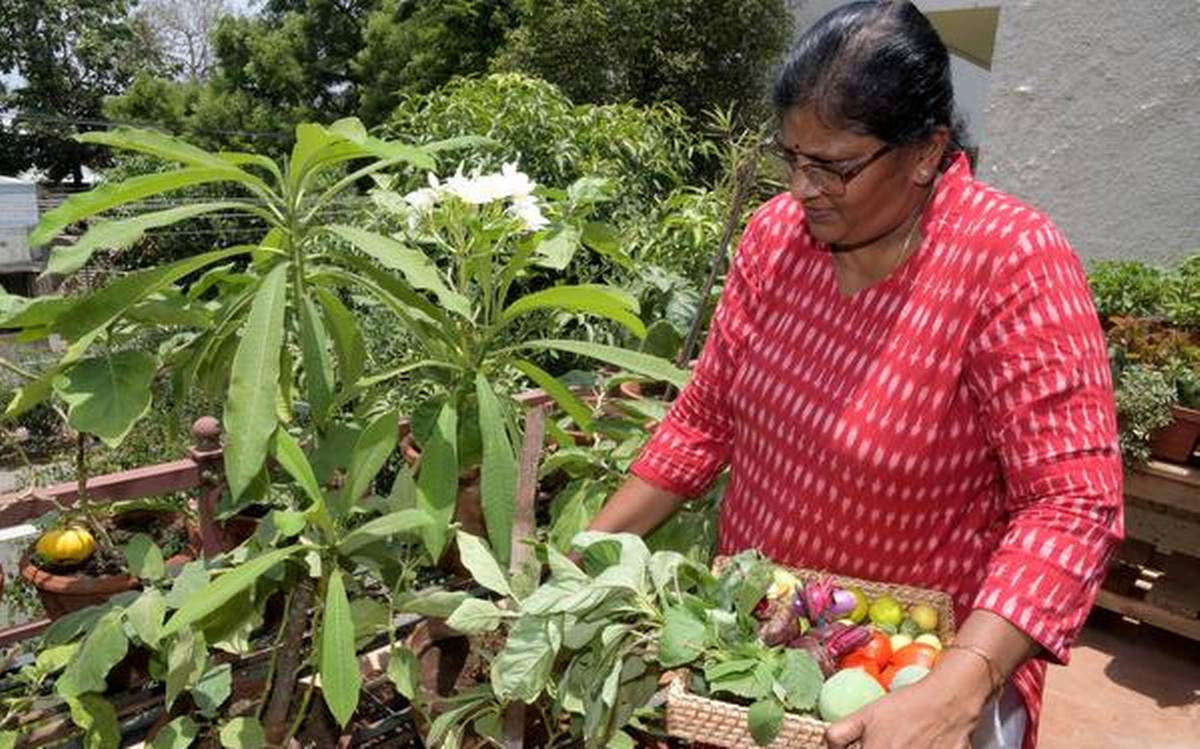

Vegetable, spices, and fruits grown at home.

Picture source: The Hindu, Nursery live, Gardening know how and Balcony garden web.

All this may take some amount of time and effort, but it is worth it. You will experience a positive difference in your life. You can even inspire the people around you. We can start many of these living practices within a village, colony, township or a society to improve effectiveness with collective efforts. Such as rainwater harvesting, solar energy, biogas energy, farming, etc. Take one step at a time and you will find your motivation.
Climate Change

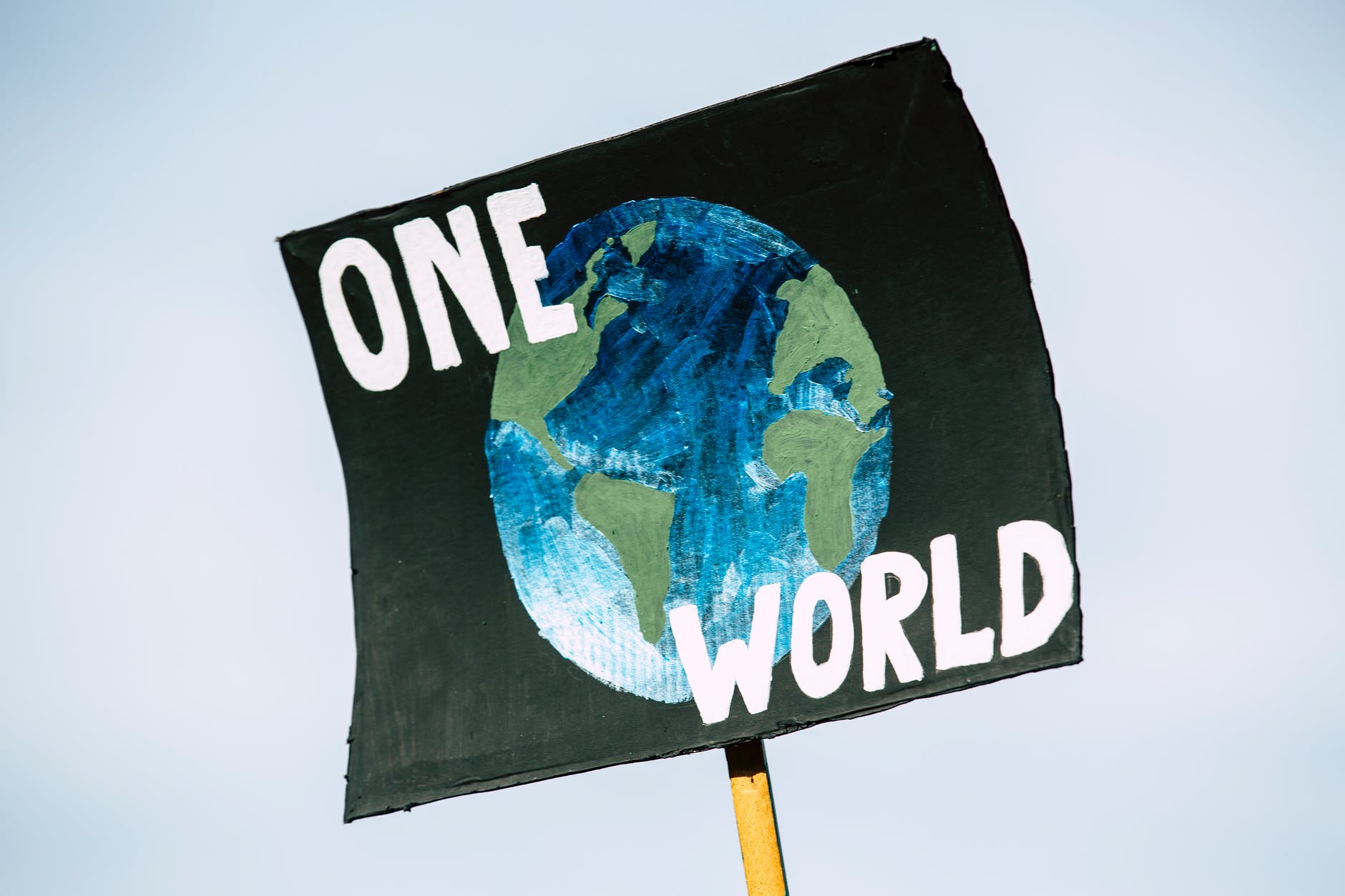
The phenomenon of rising temperatures of the Earth resulting in change of climate, seasons, rainfall patterns etc. Is called global warming. Global warming and its effects are together referred to as Climate Change. While these changes have been seen before but the rate of change has increased rapidly from the middle of the 20th century. Findings from different recognized scientific organizations support these claims. According to the Intergovernmental Panel on Climate Change (IPCC), “human influence on climate has been the dominant cause of observed warming since the mid-20th century”. The emission of greenhouse gases as a result of human activities have been one of the largest causes for this. Fossil fuels, Chloro-fluro carbons (CFCs), deforestation, rise in different forms of pollution are all behind this.

Photo by Markus Spiske on Pexels.com

Temperature change is also accompanied by loss of snow cover, melting permafrost, frequent natural disasters like cyclones. Land surfaces heat more quickly which have resulted in heat waves, forest fires, increase in desert area. These temperature changes are the highest in the Arctic region. Changes in environmental conditions have led to extinction of several wildlife species in forests, coral reefs etc. Rising carbon dioxide emissions lead to rising sea levels, ocean temperatures and ocean acidification. These changes bring in frequent droughts, extreme weather conditions affecting the equilibrium and natural balance.

Almost all countries have come together for climate change under the umbrella of the United Nations Framework Convention on Climate Change (UNFCCC). The convention aims to “prevent dangerous anthropogenic interference with the climate system”. It has instructed policy makers that there is much greater risk to human and natural systems if the warming goes above 1.5 °C compared to pre-industrial levels. Under the Paris Agreement, nations have made climate pledges to reduce greenhouse gas (GHG) emissions, but even after following those, global warming would still reach about 2.8 °C by 2100. To prevent this from happening and limit the warming to 1.5 °C, methane emissions need to decrease to near-zero levels and carbon dioxide emissions should reach net-zero by the year 2050.

Photo by Markus Spiske on Pexels.com

Governments should act immediately and policies should be constructed to reduce fossil fuel emissions, increase reforestation, forest prevention, use of low carbon energy technologies, food preservation. All societies should work together towards dealing with future global warming problems in a scientific way. Development of more resistant crops, better disaster management should also be considered.

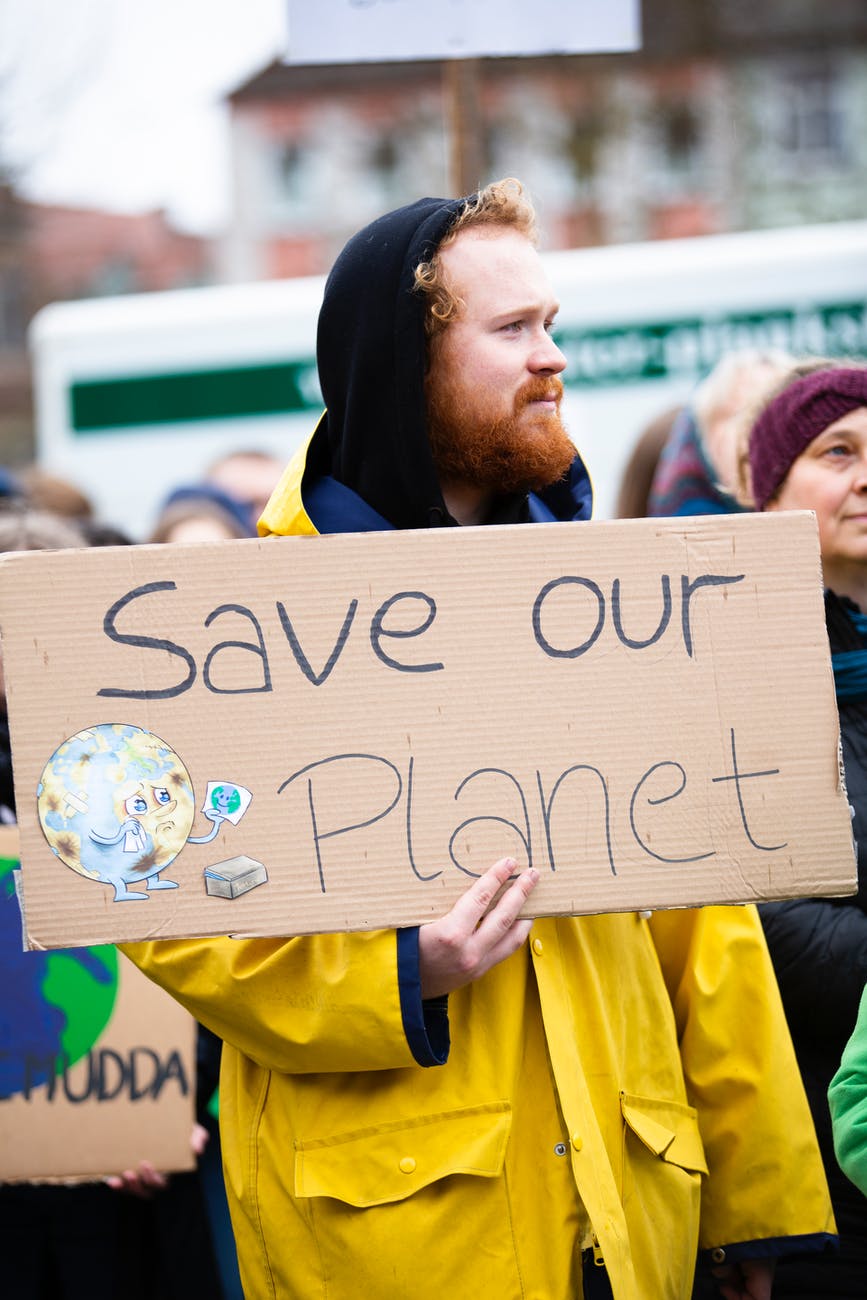
Several international movements have taken place like Fridays For Future where school students take time off from school to aware people and demand climate change action from governments. They demand action from political leaders of the world for the fossil fuel industry to convert to renewable energy and take immediate measures for climate change. This movement was publicised after Greta Thunberg started a protest outside the Swedish parliament with a poster saying “School strike for climate”. She is an environmental activist who has spoken at several internationally recognised platforms. She started her journey as an activist from the time when she had convinced her parents to change their lifestyle for reducing their carbon footprint. She is known for her straight forward manner of speaking at public platforms and criticizing world leaders for their failure to address climate change. She has participated in the United Nations Climate Change Conference (2018) and UN Climate Action Summit (2019). She has also got several awards and made it into the Forbes list of The World’s 100 Most Powerful Women (2019). Though her popularity at such a young age has made her a target of critics, but she continues to work and struggle towards her goal with indomitable spirit.

Sustainable Development goals by corporates: latest in 2020

5 Latest Sustainable Development Goals in the Corporate World. 

Sustainable Development Goals by private firms has increased noticeably since the last decade. Many big corporates like Google, Apple, Dell, Tech Mahindra, Hero MotoCorp, etc. are working with the view of sustainable development since the beginning. Let’s look at some recent sustainable development goals and initiatives by private firms.

1. Microsoft

Microsoft is setting multiple sustainable development goals and adopting different approaches to tackle environmental degradation. The company recently launched its initiative ‘Zero waste by 2030’ focusing on carbon, water, ecosystems, and waste. 

  • Building Microsoft Circular Centers to reuse and repurpose servers and hardware in their data centers.
  • Eliminate single-use plastics in packaging.
  • Improve their waste accounting technology.
  • Invest in circular economy ventures.
  • Help employees to reduce their own waste footprints.
Sustainable development goals Microsoft headquarters, Redmond.
Microsoft headquarters, Redmond. Source: Microsoft

2. Vestas

It is the first renewable energy manufacturer verified by ‘Science-based target initiatives’ for its sustainable development goals. Vestas has earlier made many contributions to environment protection.

  • Vestas announced its green initiative to become carbon neutral, without using offsets, by 2030.
  • IPCC in a recent report, states that limiting the rise in the global temperature to 1.5°C, as stated in the Paris Agreement, will significantly reduce the risk of extreme affects from climate change.
  • Reduce greenhouse gas emissions by 45% within its own supply chain.

3. Dropbox

The file-hosting company laid out some initiatives under the sustainable development goals to achieve by 2030.

  • Carbon neutrality and minimize energy consumption.
  • 100% renewable electricity for offices and data centers.
  • Remote jobs to reduce travel emissions.
  • Support other organizations in their climate actions.
  • Help employees to volunteer for environmental causes.

4. Crown

Packaging firm ‘crown’ laid out their initiative ‘Twentyby30’ containing 20 sustainable development goals aiming to get accomplished by 2025, 2030, and 2050. The initiatives include:

  • Send zero waste to landfill
  • Make aluminum and steel cans 10 percent lighter to reduce the usage of packaging material.
  • Increase the recycling of its plastic strapping by 10 percent.

5. Salesforce

The latest initiative of this AI-based CRM firm is to achieve 100% renewable power by 2022. This renewable energy deal is in collaboration with  Bloomberg, Cox Enterprises, Gap Inc., and Workday, Inc. and with guidance from LevelTen. The sustainable development goal is to provide renewable energy at a small scale, available to everyone. Currently, renewable energy contracts are made at a high scale involving large investments which are not feasible for small-scale organizations and individuals.

“Deserts-A solution for Rising Global Environment Crises”?

Global warming, climate change, melting of ice, earth temperature increasing and many more are some common natural phenomena happening these days with a sure shot affect on our future life. Even today, we acknowledge many examples of these phenomena as well as well researched papers which surely don’t deny the fact that these are surely happening. Countries across the world have been discussing this serious issue of climate change and global warming and have been coming up with brilliant ideas and policies to fight back. These technologies and various steps include a shift from Non sustainable resources to more Sustainable ones so as to reduce carbon emission and from them and getting a better and pure form of energy in endless quantities. Many nations have shifted to wider use of wind energy and solar energy as a mode of generation of power from them in various day to day activities. Many countries have also come up with a policy of carbon tax, which surely is charged from the companies and industries from which the emissions of carbon content is more. Also if any country buys fuel from the other country, carbon tax is included in it, which surely motivates people to cut down usage of these resources and also slow down their extra money cost in the form of fines. 

So we all know that it’s really an important issue and need to work on till it becomes too late. But we do lack some of the technologies which could have a stronger impact on these or the resources which are available like sustainable one, it proves somewhat expensive to most of the countries with low economy so what’s the solution,”Is there any way we could undo and alter these activities and thus make our environment cleaner”. There are various researches and thoughts on these activities which can be done and varius good engineering methods have come into existence to fight these. One of those and widely accepted one is “Afforestation”. The term is self explanatory which means to increase the growth of plants and trees around the world and thus increase their quantity and improve quality of air as these would absorb more of the carbon-dioxide present in air. It’s a well known phenomenon and a lot many countries have been into it for quite a few years. But the main issue with this is, that we humans so lack the availability of land for the same. For trees to be grown, we need the required environment and the important is the space and fresh water resources. But we do lack it’s availability , also for the reason that we require much of our land for building hotels and other commercial activities in response to the growing population. But there are various regions which have large amounts of space and area, and are not used by humans and are widely available. These are the toughest terrain and known as deserts. These deserts have large space and thus can be used to plant trees without much human getting affected. The main issue is how can we irrigate, as we know they are desert because they lack water, then how is it possible. And if it is possible, will it not become desert again?

It’s possible as per many people doing research on this as they believe by the growing technology of desalination of water, we could utilize the water for irrigation. The benefits of utilizing these spaces are that these have lesser people living in it . So selecting the trees which are friendly to these climatic conditions would be the better option. Which could grow easily and used for commercial activities also. The benefit of growing more trees in these areas would be the amount of carbon content absorption would increase. Also we could cut down some of the trees as for the new ones to grow since it wouldn’t affect much this cycle since this would be practising around the world. We would use them for construction activities, for feeding animals and also liquifying most of them to biomass fuel, thus a pure and much better source of power for our other activities also, reducing the carbon content, and increasing economies. Also we know that most of these deserts acquire large amounts of ground water hidden under them, for example- Sahara. Which could initially be used for irrigation initially. Also the power required for the technology for the same could easily be generated from the solar energy trapped in there solar panel 

So it seems according to research being done by various scientists and weather experts. But there are some other problems which could be faced in doing these projects. The water required would be clean, and thus desalination must be done carefully. But it’s output of concentrated salts dissolved in water in oceans could be harmful for the aqua life. Still this is just a thought which might affect the resulting increase in carbon content to reduce down. But still it seems difficult to make these ideas go on since they do require a large sum of money and also success of these are sureshot not acknowledged, since it’s still a question that wouldn’t these lands again transform into deserts again and lead us to big economic loss around the world. 

“Various steps and policies are into actions with faster growing technologies so as to reduce the carbon content from them and shifting towards  pure form of energy which is much cleaner, much cost effective and much safer for our planet”. 

“Nuclear Energy And Fight For Its Credibility”

Humans, since the age of their existence have invested money, efforts and ideas into developing new sources of energy generation. Which earlier focused on mostly focused manual work and manpower or animals usually has shifted to machines making the work more easily and efficiently done. The transition after the industrial revolution and drastic drift towards these technologies gave new origin to energy sources. While initially more of the non sustainable resources like coal were used as a source of energy, be it in trains, or for ironing of clothes or be it for warming oneself from the freezing cold environment. Cutting of woods for fire and cooking was also an opted source of energy in earlier times. But sooner the effects if these machines were seen and how they deteriorated our health, glaciers of the antarctic and most important lead to phenomenon called global warming which has nowadays led to climate change. The need for sustainable and eco-friendly sources of energy was a great demand in the early 40’s and then came the idea of “Nuclear Power Generation”

As soon as the nuclear atomic bomb was used as a weapon, it came into the mind of people,that it has an enormous amount of energy in it and thus could be used so as to generate energy from it and utilize it in a better and peaceful way. It was thought to be a classic idea to fight back every problem , people warriors facing. Nuclear power generation meant the cost of electric utility to go down while it’s production to achieve height,shifting to this house would lead to less consumption of fossil fuel like coal and other sustainable resources like petrol as a source of energy to run vehicles, and thus the problem of global warming could drop. And many other factors which seemed to solve energy related problems for mankind. 

But soon as most of the companies started investing in nuclear plants , it turned out to be totally different as it was assumed to be. The technicality and most important the cost to build it were more as they were right of. Complexities in the design and working were still unknown to many of the scientists. But still most of the counties thought of investing in these plants. The growth of nuclear plants significantly grows as soon as the oil prices hit the stock to highest amounts. Thus nuclear energy was thought of to be the best and better alternative. But it was soon seen that this nuclear power generation was too risky not only for the company but also for their country as well as the whole world, if not properly taken care of, since many accidents were observed in quick span

But still various countries are using nuclear energy as a energy generation with almost covering 10% of total energy demand around the world while most of the power still depending on coal. But the main question which comes to mind is “Do we really need these nuclear plants knowing their harmful effect to humanity”. There have been many accidents which have led man to lose life and still it’s outcome are observed in the future genes. Nuclear energy has enormous power to destroy the population around the world if used in the other way. So “Why do we still focus on nuclear energy rather than investing in other sustainable energy resources easily available with almost the same setup cost”. Also the waste of these plants which are mostly chemicals is very dangerous and the smoke which comes out in the form of emissions is too toxic, which could lead to breathing problems in living beings and also add up to the pollution. 

“The results show the how the disadvantages of these nuclear plants are way ahead of its positive outcomes as being positive being the fact that it leads to reducing of carbon dioxide emissions in the environment or be it providing more jobs as workers in construction and worker in the plant but still seen the bad side of these, it seems to be more dangerous and harmful for the humanity. We believe that it’s high time to think for nature and shift towards more better energy sources like sustainable energy sources which are present in enormous amounts and which do not harm nature , along with the fact of not risking life’s and finding alternatives at the cost of human life”.