Dreadful Climate Change Scenario of India

The first climate change assessment report of India

A research conducted by the Ministry of Earth Sciences a week ago concludes a very dreadful image of climate change and its effect on the nation in the coming decades. It is the first climate change evaluation report developed for India by specialists in the nation’s research institutions.

The research is led by the experts of climate at India Meteorological Department (IMD) and Indian Institute of Tropical Meteorology (IITM). Reports of the UN’s IPCC and different organizations have seen climate change in India as a major aspect of a worldwide phenomenon, and concentrated in some biologically significant areas like the Himalayas.

The report ‘Assessment of Climate Change over the Indian Region’ investigates of all the climate change phenomena in the past few years and is exceptionally exhaustive. Its study and conclusions need an immediate thought and action process. It concludes:

  • The normal temperature in India, before this current century is over, will rise by approximately 4.4 degrees Celsius comparative with the 1976-2005 normal. The normal ascent during the 1901-2018 period was 0.7 degrees Celsius.
  • The ocean surface temperature in the Indian Ocean during the 1951-2015 period was one degree Celsius, which was more than the worldwide normal.
  • There will be an abatement in rainstorm precipitation and a rise in temperatures which will raise ocean levels and cause more serious dry spells and tornadoes.
  • The progressions will prompt a decrease in horticultural yield and freshwater assets and harm the infrastructure.

There are many other dangerous climate change effects which need a serious plan and action step taken by the government and the citizens together to fight the adversities to life and property.
Environment News: India

  • National Green Tribunal (NGT) slams the Ministry of and Forests (MoEF) over its report on Clean Air Programme. They say that the report was against the constitutional mandate under Article 21. It denies the fundamental Right to Life and has no supportive data.
  • People in Visakhapatnam celebrate Ganesh Chaturthi in an eco-friendly way. They make their own idols out of clay and biodegradable substances instead of buying large festival items and idols from crowded and not so eco-friendly markets.
  • This year’s carbon emissions are predicted to fall down by approximately 8% due to the COVID-19 lockdown across India, a senior official of the environment ministry has said.
  • The incidents of hunting and poaching of wild animals and birds, including the endangered chinkara, have seen a high rise in some districts of Rajasthan during the COVID-19 lockdown. The hunters are taking advantage of lesser or no monitoring and less public movement in the remote areas.
  • Experts welcome UN secretary general António Guterres’s advice to India for phasing out fossil fuel usage to fight climate change. Environmentalist and founder of NGO Social Action for Forest and Environment (SAFE) Vikrant Tongad, said that our leaders should take it seriously and the UN should help the developing countries like India and provide technological solutions and funding for the same.
  • Amidst COVID-19, the northeastern state of Assam is now fighting with the Lumpy Skin Disease (LSD). LSD is an infectious viral disease in cattle transmitted by arthropod vectors such as mosquitoes and ticks. The LSD cannot transmit from cattle to humans.

Latest in Environment: Top 10

  1. Scientists in U.S., created a clothing material to keep our bodies cool to the extent which eliminates the need of air conditioning. The fabric does not even need electricity or batteries to work. Read the paper here.
  2. India is investing aggressively in eco theme parks and other tourism sites, which include a Buddhist theme park at Futala, a tourism circuit in Saurashtra and an energy park at Koradi.
  3. A study concludes that children who are raised in greenery and eco-friendly environment have higher IQs than the ones who are not. Pollution adversely affects brain development in children.
  4. California wildfires: More than 752,000 acres got burned, nearly 1,000 structures got destroyed, and 5 citizens lost their lives in the horrific historical fires.
  5. The United States Environment Protection Agency (EPA) paved way for the oil and gas industries to exploit the environment with no hindrance. The trump EPA does so by rolling back an Obama policy of curbing gas leaks at pipelines and wells. The EPA is giving the oil and gas companies the green signal to release much more climate-warming dangerous methane into the atmosphere.
  6. Despite COVID-19 lockdown, Carbon emissions did not reduce. The increase in CO2 levels just slowed down a bit and are still increasing day by day.
  7. The NASA study reveals that ice sheets of Greenland are melting at a speed that even if the global warming stopped right now, they will continue to melt at a significant rate. This is called as no point of return. They are contributing as a single most reason for the rise in ocean levels.
  8. The division of European Union’s Agricultural budget is gravely flawed. It spends money on large farms, without considering environmental contributions of those farms, ignores small farms and farmers and hence, hinders in green recovery from COVID-19. Read the study here.
  9. The scientists at Colorado State University developed a recyclable plastic with the ability to maintain its original qualities after recycling. They do it with a material called PBTL. Read the paper here.
  10. The United Nations E-waste monitor report shows that electronic waste is the world’s fastest growing domestic waste stream. A record 53.6 million metric tonnes (Mt) of E-waste got generated in 2019, and it predicts that this will be 74Mt by 2030.

Floods in India: Urban planning

Grey Infrastructure

It includes drains, pumps and outfalls. They frequently overflow by heavy rainfall or high levels of storm-water runoff from roads and streets. Indian cities like Bengaluru, Bihar, Delhi, Mumbai and Hyderabad are flooding frequently. There are multiple, recurring failures of grey infrastructure in India and other developing countries, for which alternatives are now being sought.

Blue-Green Infrastructure

Natural ecosystems such as lakes, parks, floodplains, forests are nature-based solutions called blue-green infrastructure and offer low-cost and flexible solutions for flood mitigation and management. They offer many other co-benefits.

Urban flood management in India continues to focus only on improving grey infrastructure, rescue and relief, instead of creating sustainable solutions. Cities continue to expand storm-water networks, clean channels and separate the sewage and storm-water drains. These are all important actions and urban areas bear high expenses to build grey infrastructure; but repeated floods mean that these actions are not sufficient.

Major reasons for frequent urban flooding across India

1. Construction on flood pathways.

During the monsoon, urban development and infrastructure such as roads, airports, bus depots, metro rail, etc. which are built on low-lying areas such as floodplains and lake beds, face higher risk of floods.

2. Making way for the floodwater.

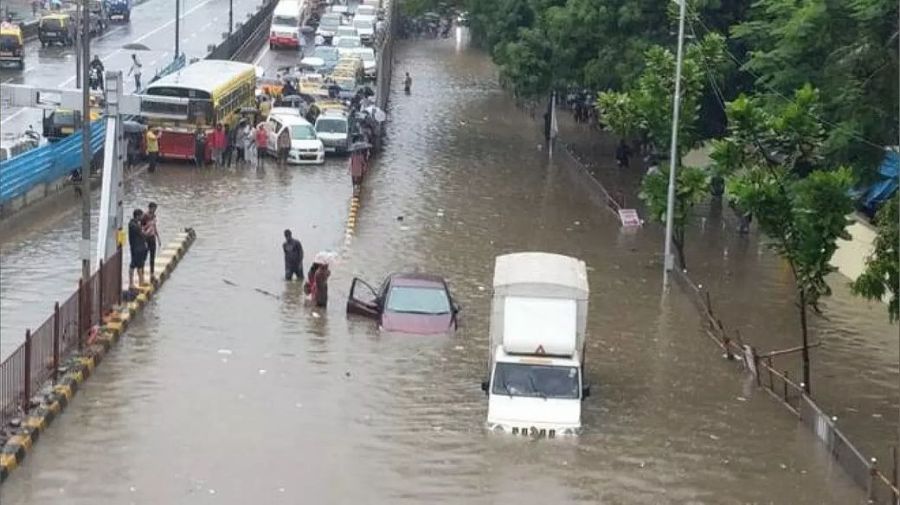
Water penetrates into the ground, flows as surface runoff, evaporates and transpirate into the atmosphere. Urban regions with impenetrable surfaces, avoid water to go underground, decrease evaporation and transpiration. This highly increases surface runoff. Urban India is constantly building structures, streets, flyovers for urban citizens, frequently with inadequate storm-water infrastructure. Enormous volumes of storm-water deteriorate on these impenetrable surfaces, causing continued flooding.

Source: Sentinel Assam MUMBAI FLOODS, 2020

3. Climate change and uncertainty.

The adverse climate change is creating uncertainty in many environmental phenomena. Rainfall variability is increasing because of climate change. Average monthly rainfall is now falling within days. Floods have high economic and social damage. This year (2020) Mumbai had 80% of its average rainfall in eight days.

Forecast, response and resilience.

  • Both grey and blue-green infrastructure expansion and upgrade is needed.
  • Official response to floods needs high-tech rainfall and flood warning systems like in Chennai and Mumbai.
  • Cities are building interactive maps of flood-prone zones (Bengaluru).
  • These measures enable evacuation and support effective deployment of rescue and relief measures, but do not prevent floods and mitigate against loss to life, property and infrastructure.
  • A reassessment of storm-water and cloudburst management is urgently needed in India. Depending solely on last century’s inflexible, expensive grey infrastructure does not manage current and future extreme natural events. Studies prove that the green infrastructure for storm-water management are cheaper and have more co-benefits than upgrading or expanding grey infrastructure.
  • Along with flood planning, we need major steps towards climate change and environmental protection. Much of the adverse natural and man-made events are happening because of collective ignorance towards climate and environment.

Climate Change

The phenomenon of rising temperatures of the Earth resulting in change of climate, seasons, rainfall patterns etc. Is called global warming. Global warming and its effects are together referred to as Climate Change. While these changes have been seen before but the rate of change has increased rapidly from the middle of the 20th century. Findings from different recognized scientific organizations support these claims. According to the Intergovernmental Panel on Climate Change (IPCC), “human influence on climate has been the dominant cause of observed warming since the mid-20th century”. The emission of greenhouse gases as a result of human activities have been one of the largest causes for this. Fossil fuels, Chloro-fluro carbons (CFCs), deforestation, rise in different forms of pollution are all behind this.

Photo by Markus Spiske on Pexels.com

Temperature change is also accompanied by loss of snow cover, melting permafrost, frequent natural disasters like cyclones. Land surfaces heat more quickly which have resulted in heat waves, forest fires, increase in desert area. These temperature changes are the highest in the Arctic region. Changes in environmental conditions have led to extinction of several wildlife species in forests, coral reefs etc. Rising carbon dioxide emissions lead to rising sea levels, ocean temperatures and ocean acidification. These changes bring in frequent droughts, extreme weather conditions affecting the equilibrium and natural balance.

Almost all countries have come together for climate change under the umbrella of the United Nations Framework Convention on Climate Change (UNFCCC). The convention aims to “prevent dangerous anthropogenic interference with the climate system”. It has instructed policy makers that there is much greater risk to human and natural systems if the warming goes above 1.5 °C compared to pre-industrial levels. Under the Paris Agreement, nations have made climate pledges to reduce greenhouse gas (GHG) emissions, but even after following those, global warming would still reach about 2.8 °C by 2100. To prevent this from happening and limit the warming to 1.5 °C, methane emissions need to decrease to near-zero levels and carbon dioxide emissions should reach net-zero by the year 2050.

Photo by Markus Spiske on Pexels.com

Governments should act immediately and policies should be constructed to reduce fossil fuel emissions, increase reforestation, forest prevention, use of low carbon energy technologies, food preservation. All societies should work together towards dealing with future global warming problems in a scientific way. Development of more resistant crops, better disaster management should also be considered.

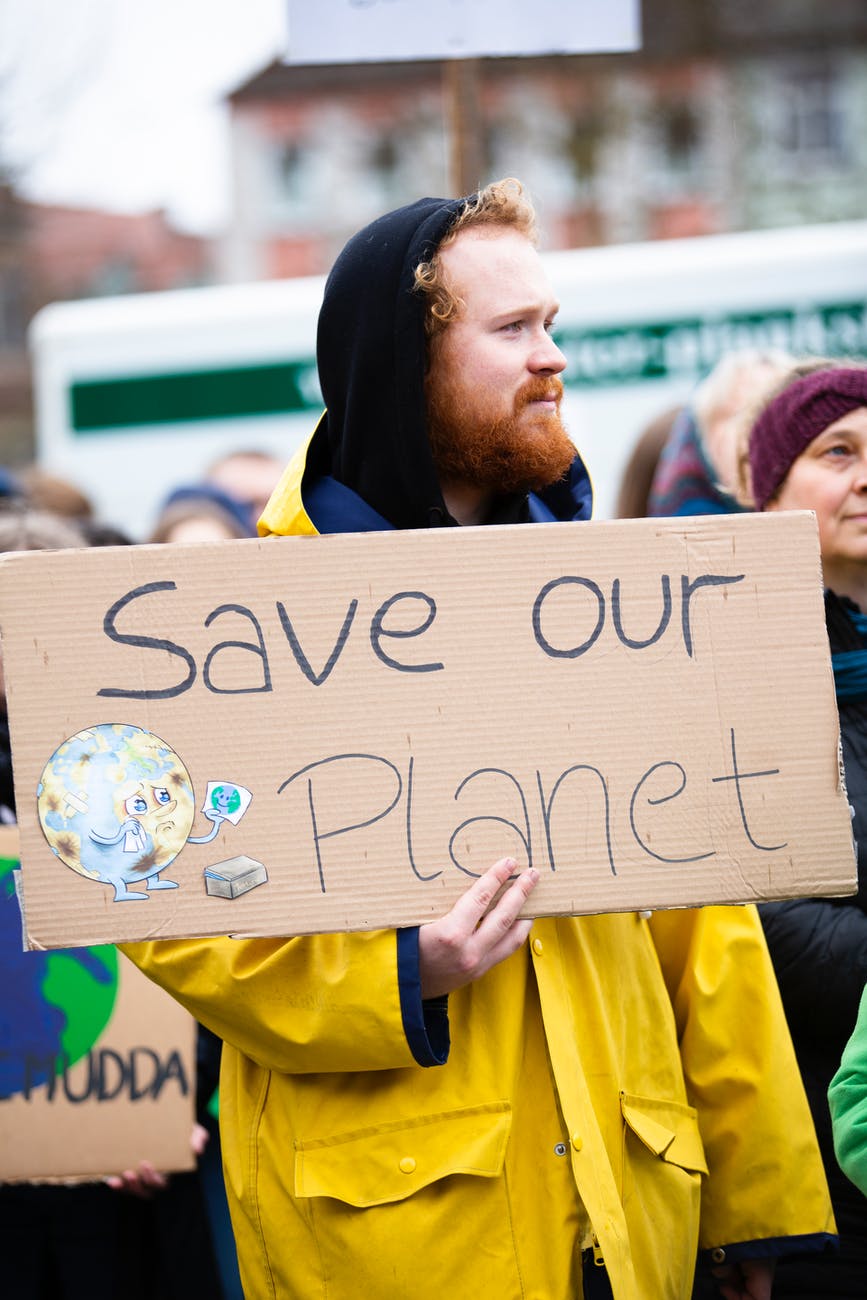
Several international movements have taken place like Fridays For Future where school students take time off from school to aware people and demand climate change action from governments. They demand action from political leaders of the world for the fossil fuel industry to convert to renewable energy and take immediate measures for climate change. This movement was publicised after Greta Thunberg started a protest outside the Swedish parliament with a poster saying “School strike for climate”. She is an environmental activist who has spoken at several internationally recognised platforms. She started her journey as an activist from the time when she had convinced her parents to change their lifestyle for reducing their carbon footprint. She is known for her straight forward manner of speaking at public platforms and criticizing world leaders for their failure to address climate change. She has participated in the United Nations Climate Change Conference (2018) and UN Climate Action Summit (2019). She has also got several awards and made it into the Forbes list of The World’s 100 Most Powerful Women (2019). Though her popularity at such a young age has made her a target of critics, but she continues to work and struggle towards her goal with indomitable spirit.

“Can Human’s Bear the Risk of Terminating Fossil Fuel Consumption?”

 Humans have been working for ages so as to find better food resources, water reserves, better places for shelter and many more.With times and hard work, everything has changed, man doesn’t need to move places in search of most of these resources which are the basic necessities in life. They are available with a minimum of efforts. Science and technologies have helped humans to find more comfort and facilities and thus has made life for most of the humans more easier. The industrial revolution brought humans to a different phase of life, by providing better jobs, product and resources to mankind. But these technologies and industry do require a better source of input to provide the best of their output as efficiency. Humans have been using most of the natural resources and reserves for ages like wood, coal petroleum, natural gas and many for so as to generate power as a fuel. The use of these natural resources and fossil fuels was a better option in earlier days when they were present in heavy amounts and their harms were also less.But as the time has passed, we see these resources getting faded away and also giving birth to various phenomena such as Global Warming and Climate Change. These changes have been recorded, and it’s side effects have been seen in various parts of the world, especially the polar areas, where most glaciers and ice mountains have just turned into liquid water. Many countries have been coming together to fight this problem and have been figuring out their best ways so as to make ourselves and our others better and safe from natural calamity due to these changes. 

So what can we do? The prior and the foremost action which clicks to stop our mind is to stop the consumption of fossil fuel and natural resources and rather shift to better and cleaner fuel, which are more sustainable and pure. But is that easy and how would it affect your life if we stop the usage of these natural resources today?

Possible Results could be:

  1. It seems to put a break in various activities around the world, since we use vehicles to travel , be it cars, trucks, ships or airplanes. All these run on liquid fuel which come from these natural resources.
  2.  Stopping the use would make our travel mostly impossible as we still fight to make most of the vehicle electric.
  3.  Also we do have electric cars, we won’t be able to use them as more than 66% of electricity is generated through burning coal, thus we wouldn’t be able to do so. 
  4. Also some of the countries do have natural power generation plants, but still many countries do lack this technology.
  5.  Most of our work won’t be possible as we would lack electricity to run our PC’s and charge our mobile phones
  6. Also this is more a cheap source of generating power, people have to invest much other money in buying and installing them also the installation and learning how to operate sustainable energy would also require skill, thus could take a while to do so. 
  7. Since carbon dioxide from vehicles and industries do get released in the air and is thus increasing the deterioration of our planet. Global warming and climate change are phenomena which are occurring and most of the resources which have been depleted cannot it be brought back.
  8.  Also many experts suggest that if we do stop the burning of these fossil fuels, it is still expected that earth will take time to recover as temperature will still grow due to trapped heat for several decades, thus increasing the temperature of our earth. 

The facts are really not great to visualize but are true this surely opens our eyes to stop the consumption and utilization of these natural resources so as to control its ill effects. It’s high time to invest money in both sustainable energy resources as well as skilled people to operate them so as to get rid of these fossil fuel consumption forever and shift to a better and purest form of our energy which could help us in future. It’s High time to come together not only for sake of humanity but for the sake of saving our coming generation for the sake of good times and for the sake of saving our planet. 

Impact of Climate Change on International Business Strategies…..

A recent KPMG report, highlights ten “sustainability megaforces” that will shape markets in the decades to come. The list includes population growth, energy and fuel, ecosystems decline, and material resource scarcity, among others. These interconnected trends will create risks and opportunities for business. In response, companies need new strategies, particularly for market impacts relating to what KPMG calls the “megaforce” influencing all others: climate change. Forward-thinking companies are starting to draw links between climate change and other major trends that impact business.

It is the demand of the era that businesses have to do their part in response to the threat of the climate change. Most of the large companies these days see to the managing of the greenhouse gas emissions. They also help in minimizing the level of energy consumption as an integral part of the environment based management practices. Many people have set the targets for the reduction of the greenhouse gas emission. One can work with the suppliers and the consumers for causing a reduction in the rate of emission.

One can consider climate change as the strategic issue. It is the logical conclusion that companies should seriously think about the risks related to the change in climate. This can cause possible danger to the various business opportunities. One should be able to predict in advance that how a change in climate can cause difference in business. Based on the thoughts and the predictions one can decide how to protect the business strategies from the possible climatic risks. This way, one can reduce the downside risks, and there can be augmentation in the upside opportunities.

2019 may be remembered as the year when climate change activism went mainstream. At the end of September, in a series of rallies timed to coincide with the United Nations climate summit, an estimated six million people in more than 180 countries took to the streets to demand far more action to cut greenhouse emissions. This was probably the biggest climate protest in history.  Protests in the form of school walkouts had taken place throughout the world for a whole year. The ‘Extinction Rebellion’ initiative has added a further edge by seeking to demonstrate the potentially catastrophic consequences of inaction.

Central banks and other supervisory authorities are now considering climate change as a risk to financial stability. This has led to the establishment of the Task Force on Climate-related Financial Disclosures (TCFD) in 2015, and the Network for Greening the Financial System (NGFS) in 2017. Both are concerned with enhancing the quality of climate-related awareness, risk management and transparency.

It is important for the companies to develop the sort of corporate data expertise and knowledge based on climate change. There are companies to go furthest in causing integration in the change in climate as part of the various business strategies. This however, can emphasize the amount of time and effort being invested in the testing of the new technicalities and the set of the inventive approaches. However, before making an investment, the companies should understand the several implications made in business.

Hence, the conclusion for the above lines would simply be that of cutting down greenhouse emissions, going green and using resources by means of sustainable development.

Refrences:-

arabessay.com

http://www.wri.org