Coal Production Goes up to 76.26 Million Tonne in May 2023

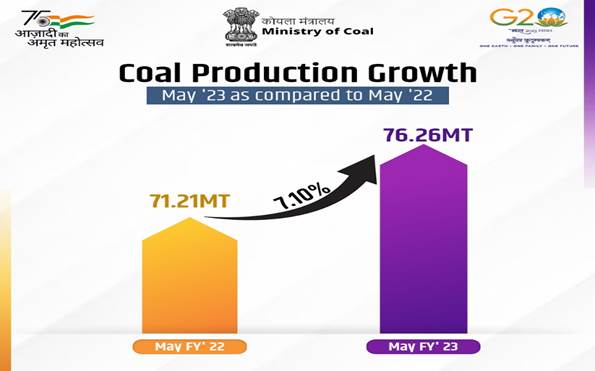
 The Ministry of Coal has achieved a remarkable feat with a substantial surge in overall  coal production during the month of May’23, reaching 76.26 Million Tons(MT), surpassing the figures of the month May’22 of 71.21 MT, representing an increase of 7.10%. The production of Coal India Limited (CIL) has increased 59.94 MT in the month of May’23 as compared to 54.72 MT in May’22 with the growth of 9.54%. The cumulative coal production has seen quantum jump of 149.41 MT in FY’ 23 as compared to 138.41 MT in FY’22 with a growth of 7.94%.

A picture containing text, screenshot, logo, designDescription automatically generated

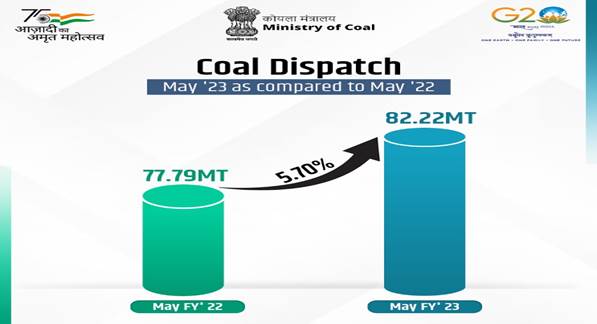
With increased First Mile Connectivity infrastructure,  coal dispatch in the month of May ’23 registered at 82.22 MT as compared to 77.79 MT in May ’22,  growth of 5.70%.  Coal dispatch from Captive and Commercial coal block has reported at 12.23 MT in May’23 in comparison to 10.47 MT in May ‘22 with the growth of 16.84 %. The cumulative Coal dispatch has registered remarkable increment of 162.44 MT in the FY 2023-24, up from 149.76 MT in the FY 2022-23, with an increase of 8.47%.

A picture containing text, screenshot, designDescription automatically generated

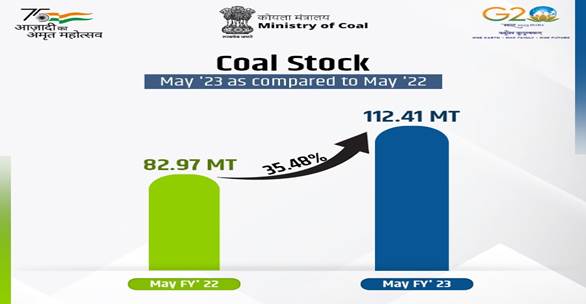
This Impressive upturn in offtake has resulted in a comfortable coal stock position, guaranteeing  reliable and abundant supply of coal lying at pithead coal stock at CIL, SCCL, stock at TPP(DCB) etc. The total coal stock as of 31st May 2023 is 112.41 MT, compared to 82.97 MT on 31st May 2022 with the growth of 35.48%.  The positive coal stock position has strengthened the capability to tackle unforeseen fluctuations in energy demand and ensures meeting the energy demands of the nation.

A picture containing text, screenshot, brand, logoDescription automatically generated

Furthermore, the availability of coal rakes, which play a crucial role in coal transportation, has remained consistently good throughout this period due to the initiative taken by the Ministry to augment rail connectivity infrastructure under PM Gati Shakti to ensure seamless evacuation of coal. This positive trend in rake availability has facilitated the smooth transportation of coal, minimized transportation bottlenecks, and ensured uninterrupted supply.

The Ministry is making constant efforts to augmenting coal production. The Ministry has already moved forward with a comprehensive plan for responsible development, placing strong emphasis on fostering conscientious coal mining practices that   prioritize the well-being of the environment and communities.

****      

Coal Mine Water Benefitting 18 Lakh people of 900 Villages

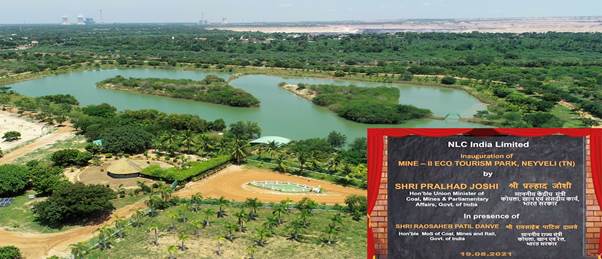
 As directed by the Coal Ministry, coal/lignite PSUs are taking several steps for conservation and efficient use of mine water by supplying the same in its command areas for community usages such as drinking and irrigation. Mine water discharged from the operational mines as well as water available in abandoned mine voids of Coal/Lignite PSUs are benefitting approximately 18 lakh people living in about 900 villages in the proximity of coal mining areas.

 During the current fiscal, coal/lignite PSUs planned to supply around 4000 LKL of mine water for community use of which 2788 LKL has been supplied till December 2022.  From this 881LKL has been used for domestic purposes including drinking. The beneficiaries of mine water are mainly tribal people and those living in remote areas. This endeavour is in line with the Government’s Jal Shakti Abhiyan of water conservation effort. 

In 2022-23, Coal India Ltd. (CIL) has already surpassed its annual plantation target of 1510 hectares by expanding its green cover to 1600 hectares ending December of FY’23. CIL has planted over 31 lakh saplings in the current fiscal till December, 2022.

Greening initiatives inside mine lease area during the last five years in 4392 hectares has created a carbon sink potential of 2.2 LT/year. Coal/Lignite PSUs have covered around 2230 Ha land under plantation in the current fiscal till December 2022 and around 360 Ha under grassing. Use of new techniques like seed ball plantation, seed casting through drones and Miyawaki plantation in its various mines are in place. Mined out areas, overburden dumps and other disturbed areas are concurrently reclaimed as soon as they get delinked from the active mining zones. These afforestation activities and green belt development works are also creating carbon sinks. The dense tree coverage also helps to control air pollution, arrests the suspended dust particles emitted during mining operations.

****

Shortage in Indias Power Supply.

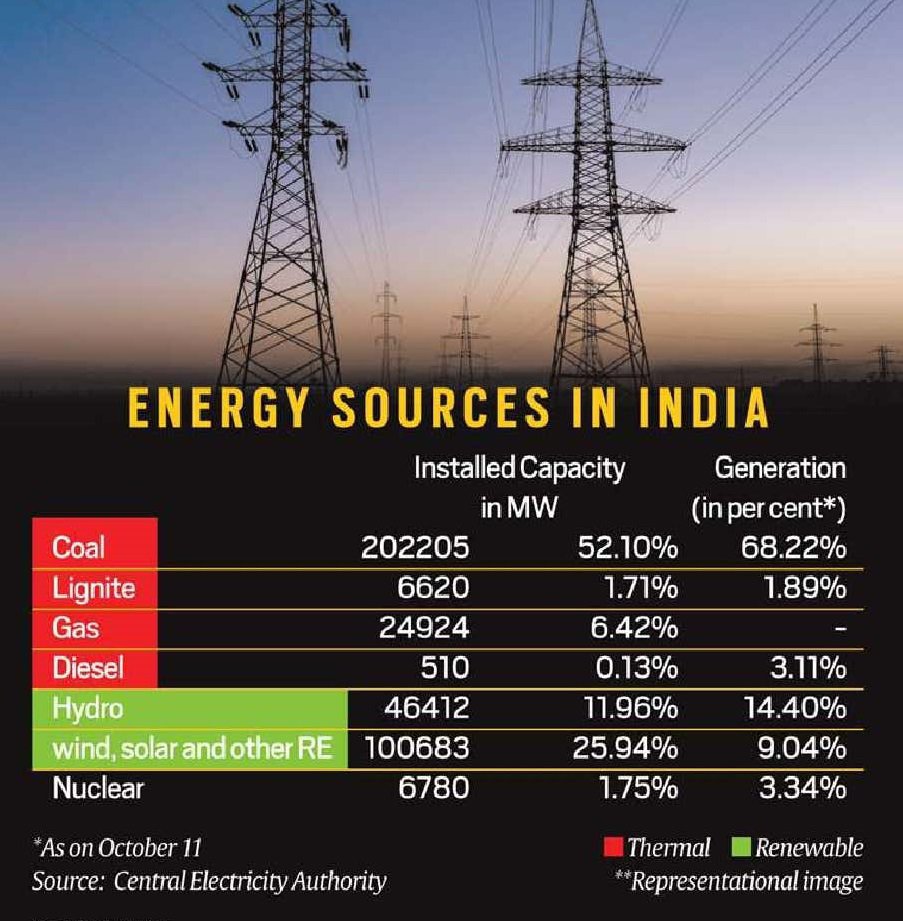
India has the fourth largest coal deposit in the world. It is the second largest fossil fuel producer after China and is home to Coal India, the world’s largest coal mining mine, which accounts for 80% of domestic production. Already allocated coal block mining capacity exceeds expected demand in 2030 by approximately 15% to 20%.


So why are India’s power plants facing coal shortages each year, leading to widespread power outages, exposing parts of the country to darkness and endangering industry?
There are several factors. India has a long time policy of minimizing coal imports. In February 2020, Coal Minister Pralhad Joshi announced that the country would stop importing steam coal from 2023 to 2024.
Mr Joshi said the Ministry of Coal will work with the Ministry of Railways and the Ministry of Shipping to allow Coal India, prisoners and commercial miners to discharge more coal from their supply by 2030. And the coal supply at power plants is running out at an alarming rate. The Department of Energy is currently blaming the decline in coal imports due to the current crisis. In 2018-19, 21.4 million tonnes of coal were imported for mixing, down to 23.8 million tonnes in 2019-20 and 8.3 million tonnes in 2021-22.


Power plant coal inventories have fallen by about 13% since April, reaching pre-summer lows. And for the first time since 2015, Coal India will import fuels used by state-owned and private power companies. The Ministry of Energy said almost all states showed that multiple state bids for coal imports would cause confusion and that the decision was made after calling for centralized procurement by Coal India.
Imported coal costs five times as much as domestic mining, so the center is being pushed back by the state.
Recently, the government has also pressured utilities to increase imports to mix with local coal. Last year, after a two-year break, three tranches of coal auctions were held and nine blocks were successfully awarded.

In September 2021, the Ministry of Coal issued a strict warning to owners of confined coal blocks, stating that their mines should increase production or face restrictions on coal supply by the CIL.
The ministry has discovered that these mines are producing below target.

Of the 43 coal mines outsourced to private companies in the energy, steel and metals sectors, none have met their annual production targets.
On May 6, Coal India announced that it would provide the private sector with 20 closed and abandoned underground coal mines and reopen and operate its revenue sharing model.

According to journalist Shreya Jai the current power supply chain does not seem ready to handle periods of high growth and state discos cannot pay gencos, but the power supply chain starts with state discos and needs repairs. Railroads, on the other hand, are struggling to align the thermal power industry’s demands for faster coal supply with those from other industries. Rakes must be prepared to meet the growing demand for almost all other bulk commodities, from cement and steel to sand and edible grains. By strengthening the value chain of the electric power sector, it is possible to resolve the coal supply-demand mismatch in the long run.

Goa Mollem Protests- The Fight Against Coal

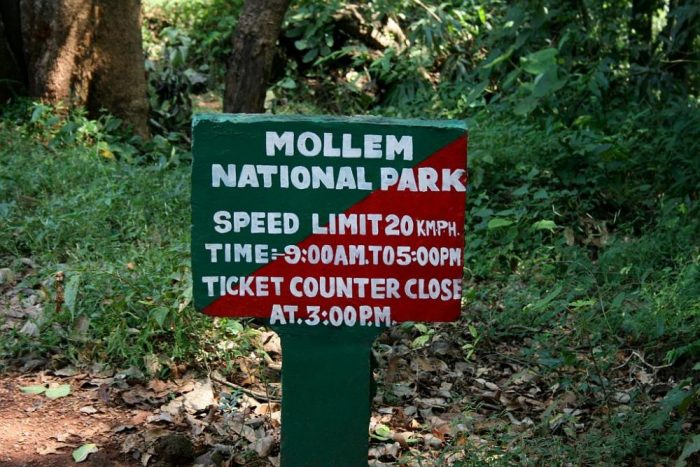
Hello everybody, Chances are that you don’t know about it because it is an issue that hasn’t been talked about much by our national media. For the last many months, thousands of people are protesting against a critical environmental issue, the Mollem National Park. 19th December is celebrated as the Goa Liberation Day because Indian government threw out Portuguese colonisers from Goa on this very day in 1961. So, on this occasion on 18th December, 2020, some protesters stood holding sign boards and wearing t-shirts that said “Save Mollem”. 

Without any provocation, they did not even do anything…there even were some children there standing with their posters, Police detained them. So, let’s get to know why this entire protest is happening in the first place. In simple words, the government in the name of development wants to clear forests in an ecologically sensitive area without consulting the public. In this case, the ecologically sensitive area is the Bhagwan Mahavir Sanctuary and Mollem National Park, the pride of Goa. Spread across 240 sq kms, it is Goa’s largest protected area. It is one of the 8 hottest biodiversity hotspots in the world. 
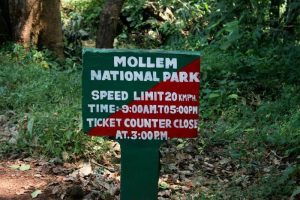
That means a high variety of plant and animal life is found here, the likes of which are found at very few places in the world. There are some great tourist attractions here as well such as the Dudhsagar Falls, Devil’s Canyon. There is a temple too so it is quite a popular destination for tourism as well. So, what is the development that the government wants to do here? There are three projects: one is a highway which the government wants to be four-lane, another one is a railway line and the third is a power transmission line. All these three projects are going through the middle of this wildlife sanctuary. Geographically, if you look at it on a map then these three projects will look this way. 

A railway line is going from the lower region, highway is crossing from the middle and in the upper region is the power transmission line. So, for all the three projects, trees would be cut off. It has been estimated that about 20, 000 trees would be felled for the railway line, 40,000 for the highway and about 5,000 for the power transmission line In total, it is being estimated that 60,000-80,000 trees are to be felled. Now you will ask here, what’s the harm? Some trees will have to be felled for a little bit of development.

 These are three main problems First problem is that prior to approving these projects, the government did not do any assessment, did not follow proper procedure and did not even consult the public. In fact, two of three projects were approved during lockdown due to Covid 19. In the month of March, the National Board of Wildlife approved these projects through video conferencing. When the central government was asked how this was approved then they said that the state panel approved it therefore we approved it as well.

 News is that some 5-6 members of the state panel have alleged that they were not even consulted. In fact they did not even know that clearance had already been given. Omkaar Dharwaskar is naturalist who also attended the State Wildlife meeting has said that they have not given any approval in that meeting. This project was not approved. But the minutes of the meeting say exactly the opposite and the project was subsequently approved after being forwarded to the National Wildlife Board. 

The second problem is that environmental activists and protesters believe that this is not only about a few trees but the entire Goa is being transformed into a coal hub. The extension of the railway line and the highway is not for the convenience of the public but rather for the convenience of big corporations. It is being done so that the transportation of coal is simpler. RTI activist and lawyer Savio Correia says that all three projects are part of the government’s Sagarmala project which was approved by the central government in 2016 for the development of Goa’s port. This project aims to develop Goa into a coal transportation corridor. Mormugao port is a port in South Goa and according to the projections of its trust, by 2030, they wish to import 51.6 million tonnes of coal for Adani group, JSW Group and Vedanta. The names of these groups have come up here although the Adani group denies it. 

This is the reason, many protesters of Goa have pointed out Adani as well. If this railway will in fact be used to transport coal then remember one thing, the coal dust can travel up to 5-15 kms due to the wind and depending on the speed of the train. “-Coal is entering their houses, if you…-in what way? -You just have to ask them for tea and probably you will see that in the saucer and you see that in their kitchen … -There’s coal in their saucer? -Exactly! You see that in the kitchen, the living room. You can’t live in that house. Your children need nebulizers from morning to afternoon In the morning they start brooming, they collect coal in their house and by evening again… -black particles of dust… This coal dust is not only a threat to the environment but also for the fishing industry, agriculture, tourism as well as for the public. 

If Goa really turns into a coal hub then think about it, would you want to go to Goa beaches as a tourist where you will find coal dust in the air? Perhaps this is the reason that in 2013 the then CM of Goa Manohar Parrikar rejected this railway line project in Goa. This is the reason friends that today the protesters stand with banners that say “Goyant Kollso Naka”. Forgive me if the pronunciation is not correct but it basically means that we don’t want coal in Goa. 

The third problem is that if any railway line or highway goes through a wildlife sanctuary then it results in habitat fragmentation which can eventually lead to the extinction of many animal and bird species. Habitat fragmentation basically means that you split a big ecosystem in small pieces due to which animals are not able to interact from one piece to another. This usually happens whenever a highway goes through a wildlife sanctuary. Imagine, there is a squirrel species and it has only 50 members left because it is an endangered species. So, 50 squirrels live in a big forest but if a highway goes right through the middle of the forest then the forest will be divided into two. 

Now, assume that 25 squirrels live on each side. Now animals living in each of these parts cannot go to the other part because of the highway. It is quite difficult for them to transfer from one side to another. The first problem arising out of this is that if the minimum number of any animal does not exist in any part then its entire species will become extinct due to inbreeding depression. You can search about inbreeding depression. It is quite an interesting thing. Secondly, any natural calamity or if any disease spreads that say results in the death of 23 out of 25 squirrels so it is not possible for that species to survive with so few animals. 

This can happen in a big forest as well but if you start splitting the forest from the middle and making fragments of it, then the chances of it happening increase manifold. Overall, the highway and the railway line will split the wildlife sanctuary in three fragments This increases the chances of any animal extinction by three times. The public has expressed its protest through various means. There are different trends on social media on hand while there are protests on ground on the other hand. Even children have participated in these protests. More than 150 scientists have written letters to the government to tell them why this project should not go through. 

The common public has even written emails to the government as to why this project must not be executed. If you want to see the latest updates on this protest on twitter then you can follow this account “Save Mollem campaign”. I will attach the link in the description below. Goa’s youth also wrote letters to their respective MLAs in order to pressurize the government. What was the government’s response regarding all of this? What would you expect? Think about it, what would be the government’s response in such cases? If you are thinking that the way the government responded to the farmers’ protest, they would respond the same way here as well then you are right. Because the government has said that all protests are funded by the opposition and all these protesters are misled. 

The famous leaders of this protest have been booked under several FIRs, detained and like I mentioned in the beginning, even children have been detained by the government. But fortunately, the good news is that the High Court has stayed at least one of the three projects. On 8th December, the High Court stayed the power transmission line project. But for the rest of the two projects, the government can still execute. This is why it is important to raise a voice regarding this, whichever way you can do it. If you live in Goa, you can join the protesters.

 If you are not living in Goa then you can raise your voice on social media by using #SaveMollem Share this video with as many people as you can so that the voice raised reaches the government and pressurizes them to stop these projects for the sake of climate and the public. The good news is that when the public raises a voice then it does create pressure on the government. Remember the Aarey forest case; the final end result has been a positive one. As soon as Uddhav Thackeray was made the CM, he took a decision in favour of Aarey forest by moving the metro rail project elsewhere and saving the Aarey forest. 

India is full of Natural Resources but are we conscious of this fact ?

A country’s economy largely depends on the amount and preciousness of the natural resources it possesses. Yes, industries and agricultural factors do contribute the economy, but these are all secondary factors. If we concentrate on India particularly, we will see that the main economy of India heavily depends on these natural resources. The cultivable land in India almost comprises 57 percent of the whole land area. The water resources are plenty, having several major rivers crisscrossing across the country. However though these are important natural resources for any country, let us concentrate on the mineral resources which are abundantly found in India.  

Here’s a list of some of the mineral resources that are abundantly found in India and their use :  

• Coal (India is the fourth largest producer of industrial and domestic coal) – Mainly used in the power generation sector.  

• Bauxite – Aluminium, whose usage ranges from making planes to utensils, is extracted from this ore.  

• Manganese – This is mainly used in the manufacture of ferromanganese and steel.  

• Titanium ore – Used in the steel industry, among others.  

• Petroleum – Mainly used as a fuel for running vehicles.  

• Limestone – Used in the cement industry.  

• Thorium (the Kerala beaches account for the world’s largest thorium deposits) – Used as a fuel in nuclear power plants  

• Iron ore – Used for manufacturing raw iron which is used for making heavy machines for industries.  

• Mica – Used in condensers, transformers, electronic tubes, and radio or radar circuits.  

• Chromite – Used in the manufacture of stainless steel.  

• Natural gas – Used a fuel for vehicles.  

• Diamonds – Their main usage is for making jewelleries and cutting glass.  

Coal :  

India has the fourth largest coal reserves in the world. The total amount of coal reserves in India is expected to be around 267 billion tons. It is also one of the top nations in the world when it comes to the usage of energy derived from coal in heavy industries. The notable areas in India where coal is found and, as a result mined are – Orissa, Chhattisgarh, Jharia, Nagpur and Chandrapur, Raniganj, Jharkhand, Neyveli, Singrauli and Umaria coalfields. The coal found in India has high ash contents and low calorific coal. However these are combustion friendly and needless to say this is the reason behind the underground fires which occur in a few mining districts. Almost 94 percent of the coal produces is from the Government sector companies. In the 2011-12 period the total production has been reported to be around 680million tons, while the demand was 731million tons.  

This vast use of this singular reserve has led to its depletion in recent years, and it has been predicted that India will run out of its coal reserves within 2040. This stresses the need to employ new mining technologies and the use of alternative fuels to run the heavy industries.   

Petroleum :  

India ranks next to China in terms of its oil reserves in the Asia-Pacific region, china being the leading producer. Most of these reserves are located along the western coast of India, namely Mumbai High and the north-east region of the country. Though underdeveloped, some reserves have been recently found in the Bay of Bengal along the eastern coast of India and in Rajasthan. The sector is dominated by the state-owned enterprises, namely Oil and Natural Gas Corporation.   

The usage is much more than the production, and this result in India having to import oil from foreign nations to meet its rising consumption levels. Statistics show that India is a net importer of oil, as 70percent of its oil needs is imported from countries like Saudi Arabia and Iran. The rest 30percent is produced within the country. This is because the demand for oil is somewhere around 3million barrels per day, whereas the production is only a meagre 500 thousand.   

Natural Gas :  

As of April 2010, India has an approximately 1437 cubic metres of natural gas. Of this a huge percentage comes from the Mumbai High reserves. Assam, Andhra Pradesh and Gujarat also have reserves which produce considerable amount of natural gas. In terms of production volume, ONGC is the leading producer of natural gas in India. Among the private enterprises, Reliance Industries play a big role in this sector due to the large reserve found in the Krishna Godavari basin. India has to import small amounts from Qatar and likewise nations. At this level of production and consumption, the reserves are predicted to last for around 29 years.  

Iron ore :  

Possessing one of the richest reserves of iron ore in the world, India holds a leading position in the world in terms of its iron ore production. The haematite deposits found in India are spread throughout the country, though the huge deposits are concentrated in a few regions like Chikkamagaluru, Singhbhum etc. Many iron and steel industries are located near these mines. The nearness of the industries not only reduces transportation costs but also reduces the times taken to produce the final products. The ores found in Goa are mainly shipped to Japan. Export of iron is mainly done from the ports of Vishakhapatnam, Marma Goa, Paradip and Kolkata. At present the deposits are quite vast, but some calculations indicate that the exponential rise in consumption in coming years may make these reserves seem finite in the near future.   

Bauxite :  

India is one of the leading producers of bauxite in the world. The reserves account for 7.5 percent of the world’s total deposits; however the aluminium output is only 3 percent. This indicates the lack of infrastructure which dominates the Indian market. The state-owned NALCO is the largest company dealing with bauxite ores. The acquiring of INDAL by Hindalco Industries accounted for a steep rise in the aluminium production of the country in the last year.   The extensive deposits will take a long, long time to get replenished.