Communication Skills in Social Work: An In-Depth Exploration

Daily writing prompt
Do you spend more time thinking about the future or the past? Why?

by Kavita Dehalwar

Communication skills are pivotal in the field of social work, as they enable practitioners to effectively engage with clients, collaborate with colleagues, and advocate for change. Social workers must navigate complex situations involving diverse individuals and communities, making the mastery of communication a cornerstone of professional competence.

1. Types of Communication Skills in Social Work

A. Verbal Communication

Verbal communication involves spoken words and is essential for interviewing clients, conducting assessments, and sharing information. Key aspects include:

  • Clarity and Simplicity: Using language that clients can easily understand.
  • Empathy: Showing understanding and compassion through tone and word choice.
  • Active Listening: Engaging with clients by giving verbal feedback, such as paraphrasing or summarizing their concerns.

B. Nonverbal Communication

Nonverbal cues, such as body language, facial expressions, and gestures, often convey more than words. Social workers should:

  • Maintain open and approachable body language.
  • Use eye contact appropriately, respecting cultural sensitivities.
  • Be mindful of physical proximity to create a comfortable environment.

C. Written Communication

Writing is critical for case notes, reports, and correspondence with agencies. Effective written communication requires:

  • Precision: Ensuring accuracy in documentation.
  • Professionalism: Adhering to formal standards and avoiding colloquial language.
  • Confidentiality: Protecting client information in all written records.

D. Digital Communication

With the increasing use of technology, social workers must be adept at digital communication. This includes:

  • Email and Messaging: Using professional etiquette in digital correspondence.
  • Virtual Meetings: Employing video conferencing tools effectively.
  • Social Media: Engaging responsibly and ethically online.

2. Key Communication Techniques

A. Active Listening

Active listening involves fully concentrating on the speaker, understanding their message, and responding thoughtfully. Techniques include:

  • Reflecting emotions to show empathy.
  • Avoiding interruptions or premature judgments.
  • Asking open-ended questions to encourage elaboration.

B. Empathy and Validation

Demonstrating empathy helps build trust and rapport. Validation involves acknowledging clients’ feelings and experiences, making them feel heard and understood.

C. Cultural Competence

Social workers often work with diverse populations, necessitating an awareness of cultural differences in communication styles. This includes:

  • Learning about clients’ cultural backgrounds.
  • Avoiding assumptions or stereotypes.
  • Being respectful of linguistic preferences and needs, such as using interpreters when necessary.

D. Conflict Resolution

Social workers frequently mediate disputes. Effective conflict resolution requires:

  • Clear articulation of the issues at hand.
  • Remaining neutral and unbiased.
  • Facilitating dialogue that promotes mutual understanding.

E. Advocacy Communication

Advocating for clients involves persuasive and impactful communication. Social workers must present arguments convincingly to policymakers, organizations, and other stakeholders.


3. Challenges in Communication

Social workers may encounter barriers that hinder effective communication:

  • Language Differences: Overcoming language barriers requires creativity, such as employing interpreters or translation tools.
  • Emotional Distress: Clients in crisis may struggle to articulate their feelings, necessitating a calm and patient approach.
  • Nonverbal Misinterpretation: Cultural variations in nonverbal communication can lead to misunderstandings.
  • Technology Access: Digital communication may be inaccessible to some clients, requiring alternative methods.

4. Improving Communication Skills

A. Training and Education

Regular training on communication techniques can enhance a social worker’s ability to engage with clients effectively.

B. Self-Reflection

Reflecting on personal biases and communication patterns can help identify areas for improvement.

C. Feedback and Supervision

Seeking feedback from supervisors and peers provides valuable insights into one’s communication strengths and weaknesses.

D. Adaptability

Tailoring communication styles to suit individual clients ensures messages are received and understood.


5. Ethical Considerations in Communication

Social workers must adhere to ethical standards in all communication, which include:

  • Confidentiality: Ensuring privacy and discretion in all interactions.
  • Informed Consent: Clearly explaining services and obtaining consent.
  • Professional Boundaries: Avoiding inappropriate or overly personal communication.

6. The Role of Communication in Social Work Practice

Effective communication is integral to various aspects of social work:

  • Building Trust: Open communication fosters trust between clients and social workers.
  • Problem-Solving: Clear articulation of problems and solutions helps clients navigate challenges.
  • Advocacy and Awareness: Social workers use communication to advocate for social justice and inform the public about pressing social issues.

Conclusion

Mastering communication skills is essential for social workers to fulfill their roles effectively. From empathetic listening to clear advocacy, the ability to communicate well impacts the outcomes of social work interventions significantly. Ongoing development in this area ensures that social workers can continue to empower individuals and communities in meaningful ways.

References

Dinham, A. (2006). A review of practice of teaching and learning of communication skills in social work education in England. Social work education25(8), 838-850.

Forrester, D., Kershaw, S., Moss, H., & Hughes, L. (2008). Communication skills in child protection: How do social workers talk to parents?. Child & Family Social Work13(1), 41-51.

Koprowska, J. (2007). Communication skills in social work. In Social work: A companion to learning (pp. 123-133). SAGE Publications Ltd.

Lefevre, M., Tanner, K., & Luckock, B. (2008). Developing social work students’ communication skills with children and young people: A model for the qualifying level curriculum. Child & Family Social Work13(2), 166-176.

Ogbanga, M. M. (2024). Communication Skills in Social Work. EduPedia Publications Pvt Ltd.

Ogbanga, M. M., & Bukie, B. F. (2024). Traditional Institutions and Conflict Resolution in Nigeria: A Social Work Analysis.

Ogbanga, M. M. (2024). Oil, Gender and Unemployment: Social Issues in the Niger. Eduindex.

Richards, S., Ruch, G., & Trevithick, P. (2005). Communication skills training for practice: the ethical dilemma for social work education. Social work education24(4), 409-422.

Trevithick, P. (2005). Social work skills. Berkshire: Open University Press.

Top 10 professional skills a person should have

 Professional skills 

What are professional skills ?

Professional skills are important to succeed in your career. They are the soft skills a person should have when he or she is contributing towards their company . This skills are not specific to any job but those who knows this skills and understand them they will be more beneficial in their future.

Soft skills such communication, leadership, time management and way of talking, can also help professionals work with the people around them and help them manage tasks.

Top 10 professional skills a person should have 

1. Leadership skills – 

Those who is having leadership quality in them will be more succeed in their life. They should know how to manage people, how to motivate them , how to help others with their work. Many things contribute in the leadership skills . For managers and supervisors, leadership may also involve knowing when and how to delegate tasks and adjusting your management style according to the personality and working style of each employee.

2. Teamwork skills – 

As we know Teamwork skills is important for any company to work efficiently. It’s important for professionals to be able to work effectively as part of a team , which means completing your own tasks while remaining aware of your colleagues abilities and need .

3. Organisation skills – 

You should know how to organise a thing in effective manner so you can complete your task in given timeline. For completing a task every employee has different timeline and different type of task so they work according to their task but always remember you should complete your task in given timeline then only it make sure that you are having organisation skills .
It’s also important that you’re able to prioritise tasks and complete them in an appropriate order, starting with the most important.

4. Communication skills – 

Everyday we communicate with eachother so having communication skills is soo important . If you are not having communication skills then you are lacking in skills . Communication skills include the ability to adapt your delivery or tone of voice to the task at hand . For example, if you are a manager in a company then you should know how to communicate with your employees and if you are employee then you should Kno how to communicate with your manager these things always affect the person mindset.

5. Problem – solving skills –

Every company has their own problems as they work on different purposes so manager always look on those employees who is having problem solving skills on them . 
Imagine a company having some problem related to their sales but you don’t know what to do for inhance their sales then manager will not appreciate you they just criticize you for not knowing the things and not having any problem solving skills .
So it’s important to have this skills .

6. Emotional intelligence – 

Emotional intelligence refers to how we express our feelings, relate to other people and interpret their actions or behaviours. People with emotional intelligence are good at understanding how others feel based on their actions, speech , body language or behaviours. 
If manager understand what employee feels and employees understand what manager feels then it easy to work together in the same company. 

7. Adaptability – 

Adaptability is the quality to adapt the situation whether it is comfortable to them or not . Manager is always looking for the team members who are flexible and able to adapt their work and behaviours to the situation at hand .
If employee adapt the situation and work accordingly it will surely beneficial to the company as well as for the employee also as employee will get appreciation from the manager.

8. Negotiation and persuasion – 

These skills involve the ability to listen to the other person’s perspective and come up with valid compromises that allow both parties to get what they want and feel positive about it . If a person having negotiation skills it will surely help him to make friendly environment in the surroundings. As every company has their own rules and regulations and they don’t want to change it so negotiation will help to come up with a solution which help both the parties having equal value and benefit.

9. Ability to work under pressure – 

Well not everyone having the ability to work under pressure they get frustrated easily which is not good for the company’s environment. Employee should keeping calm and work with the greater extend to get the result . Employers understand everyone gets stressed from time to time , but knowing that you will be able to remain calm and continue working even in high stress situations can give them confidence in your ability, making this is an important professional skill to develop.

10. Confidence – 

Professionals who are confident with their work always get success in their hand . Having confidence in your work not only help you to perform better, but it can also help convince your managers or supervisors of your capabilities and may lead to opportunities for advanced in the future.

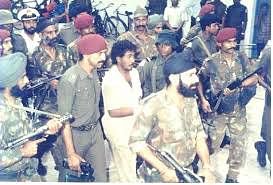
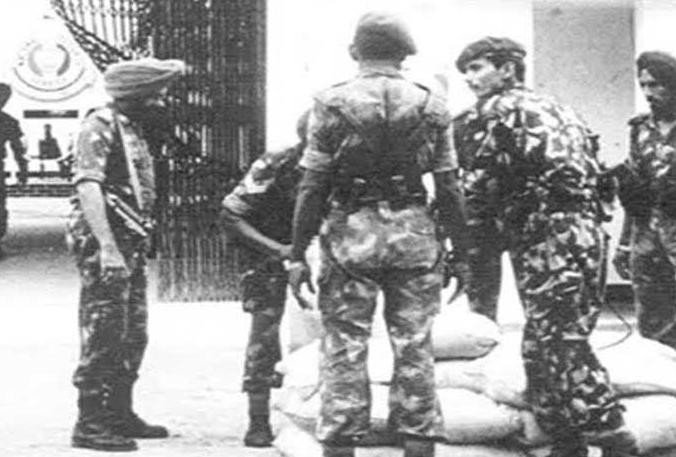
Operation Cactus by Indian Armed Forces which saved Maldives freedom.

Operation Cactus, led by the Indian Armed Forces in 1988, to stop a group of Maldives mercenaries led by businessman Abdullah Rutufi, and armed mercenaries of the Tamil Elam People’s Liberation Organization (PLOTE), a separatist Tamil organization in Sri Lanka. It’s strategy was to overthrow the government in the Maldivian island republic.

Thier were two coup attempr done before 1988.The 1980 and 1983 coup attempts against President Maumoon Abdul Game were not considered serious, but the third coup attempt in November 1988 surprised the international community. About 80 armed PLOTE mercenaries boarded a speedboat from a Sri Lankan cargo ship hijacked in the capital Male before dawn. A similar number has previously invaded Male in the guise of a visitor. The mercenaries soon gained control of the capital. This includes major government buildings, airports, ports, television and radio stations. The mercenaries then marched to the presidential residence, where President Gayoom lived with his family. However, before they arrived at the presidential residence, President Gayoom was escorted to the Defense Minister’s house by a Maldivian national security forces. The Secretary of Defense then took the president to a safe home.

Meanwhile, the mercenaries occupied the presidential residence and managed to take the Maldivian Minister of Education hostage. President Gayoom called on Sri Lanka and Pakistan government to intervene in the military, but both refused to help because of lack of military power. The president then demanded Singapore’s intervention, but Singapore refused for the same reason. He then contacted the United States and was told that it would take a couple of days for the US military to reach the Maldives from the nearest military base in Diego Garcia, which was almost 1000 km away. The president then contacted Britain and who advised them to seek help from India. After that, President Gayoom sought help from the Indian government. India soon accepted their request and an emergency meeting was convened at the Secretariat Building in New Delhi. Within 16 hours of SOS, India was ready for thier missions.

Rejaul Karim Laskar, a member of India’s then ruling party, the Indian National Congress, said that intervention of India in coup d’etat was necessary because without India’s intervention, outsiders powers were tempted to intervene and establish base in the Maldives. . Therefore, India intervened through “Operation Cactus”. On the night of November 3, 1988, the Ilyushin Il-76 aircraft of the Indian Air Force took elements of the 50th Independent Parachute Regiment, the 6th Parachute Regiment Battalion, and the 17th Parachute Field Paratrooper Regiment under Brigadier General Farsala from Agra Air. He flew non-stop for over 2,000 kilometers (1,240 miles) and landed at Male International Airport on Hulhule Island. Indian Army paratroopers arrived in Hulhule nine hours after President Gayoom proceedings.

Indian paratroopers quickly secured an airfield and sailed to Male on a confiscated boat to rescue President Gayoom . Paratroopers handed over control of the capital to President Gayoom ‘s government within hours. Some of the mercenaries fled to Sri Lanka on a hijacked cargo ship. Those who could not arrive at the ship in time were immediately rounded up and handed over to the Maldivian armed Forces and government. According to reports, 19 people died in battle, most of them mercenaries. The dead included two hostages killed by mercenaries. And Operation Cactus took 18 hours for Indian Armed Forces from start to finish. Indian Navy frigate Godavari and Betwa intercepted a cargo ship off Sri Lanka and captured mercenaries. The swift intervention and accurate intelligence of the Indian Army was able to successfully subdue the coup attempted in the island nation.

“Black Tiger” Of India Ravindra Kaushik.

Ravindra Kaushik who served in (R&AW) ,famously known as Black Tiger was born in Sri Ganganagar, Rajasthan on 11 April 1952 in a Brahmin family.
Ravindra during his graduation days used to do drama plays and during this time Kaushik displayed his talent at the national level dramatic meet in Lucknow, Uttar Pradesh, which was witnessed by officials from the Research and Analysis Wing. After which he was contacted and offered a job of being an undercover Operative for Research and Analysis Wing in Pakistan.

After agreeing to work for R&AW Kaushik was given extensive training in Delhi for two years. He underwent circumcision so he could pass as a Muslim. He was taught Urdu, given Islamic religious education and acquainted with the topography and other details about Pakistan. Being from Sri Ganganagar, a city near Rajasthan’s border with Punjab, he was well versed in Punjabi, which is widely understood in Punjab and Pakistan as well., India. In 1975, at the age of 23, He was sent to Pakistan.
Kaushik was given the cover name “Nabi Ahmed Shakir” and entered Pakistan in 1975. He was successful in getting admission in Karachi University and from where he completed his LLB. He then joined Pakistan Army as a commissioned officer and eventually promoted to the rank of a major. While living in Pakistan under his cover he married a local girl named Amanat, the daughter of a tailor in one of the army units, and with whom he fathered a boy .

From 1979 to 1983, while working as an officer, he passed on valuable information to R&AW which was of great help to India. He was given the title of ‘Black Tiger’ by India’s then home minister late S. B. Chavan.

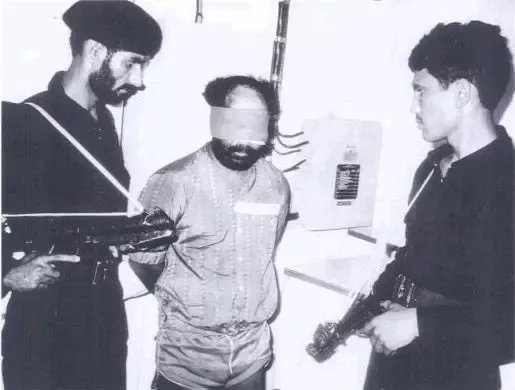
In September 1983, R&AW sent a low-level operative, Inyat Masih, to get in touch with Kaushik. However, Masih was caught by Joint Counterintelligence Bureau of Pakistan’s ISI and blew Kaushik’s cover. Kaushik was then captured, tortured for two years at an interrogation center in Sialkot. He was given the death sentence in 1985. His sentence was later commuted to a life term by the Supreme Court of Pakistan. He was kept in various jails in various cities, including Sialkot, Kot Lakhpat and in Mianwali jail for 16 years. He managed to secretly send letters to his family in India, which revealed his poor health condition and the trauma faced by him in Pakistani jails.He also adresses his thoughts on his country and department. In one of his letters he wrote:
“Kya Bharat jaise bade desh ke liye kurbani dene waalon ko yahi milta hai?” (Is this what people who sacrifice their lives for a big country like India get?”
In November 2001, he was caused with pulmonary tuberculosis and heart disease in Central Jail Mianwali in Pakistan.
He served for Research and Analysis Wing from 1975 to 1983.

“Writing about magic is harder than writing about spies because you’re dealing with something that doesn’t really exist.”

-Anthony Horowitz

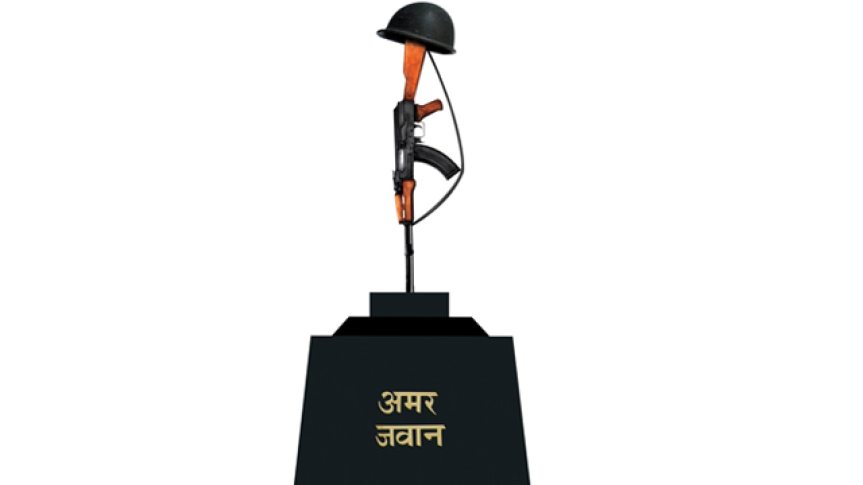
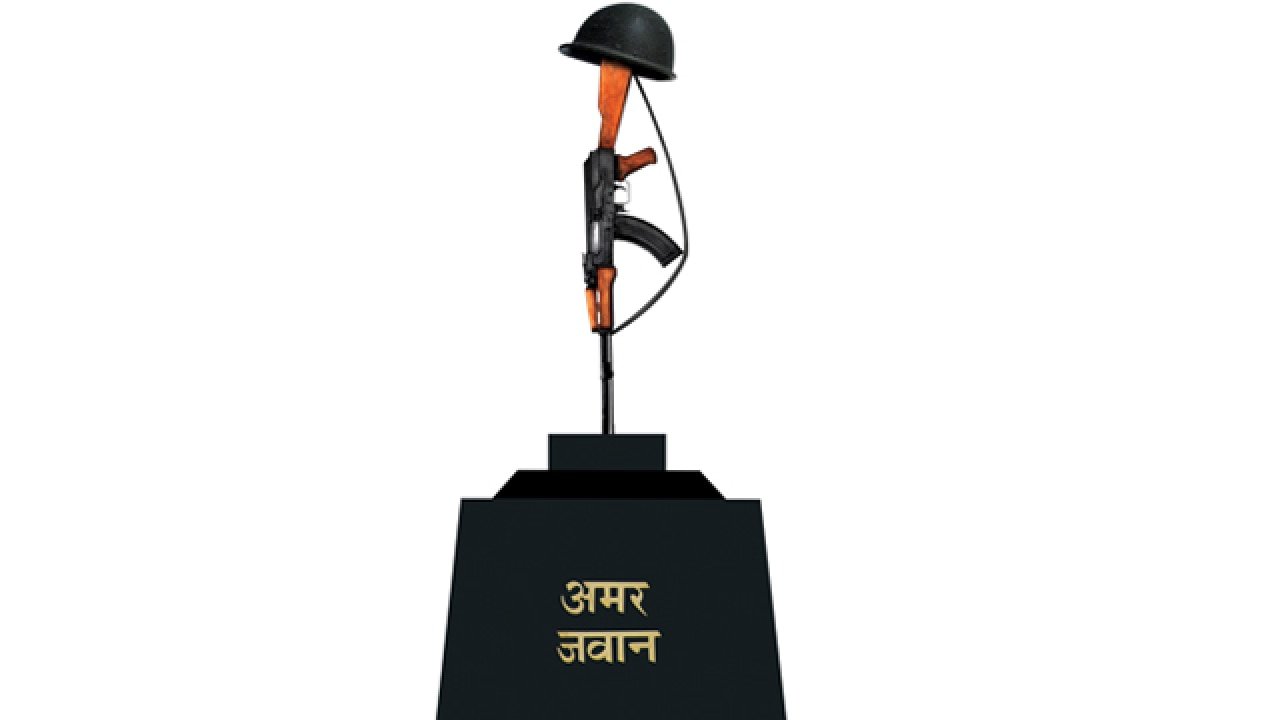
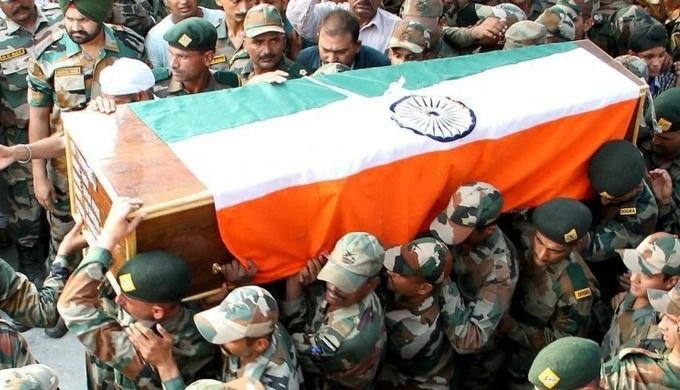
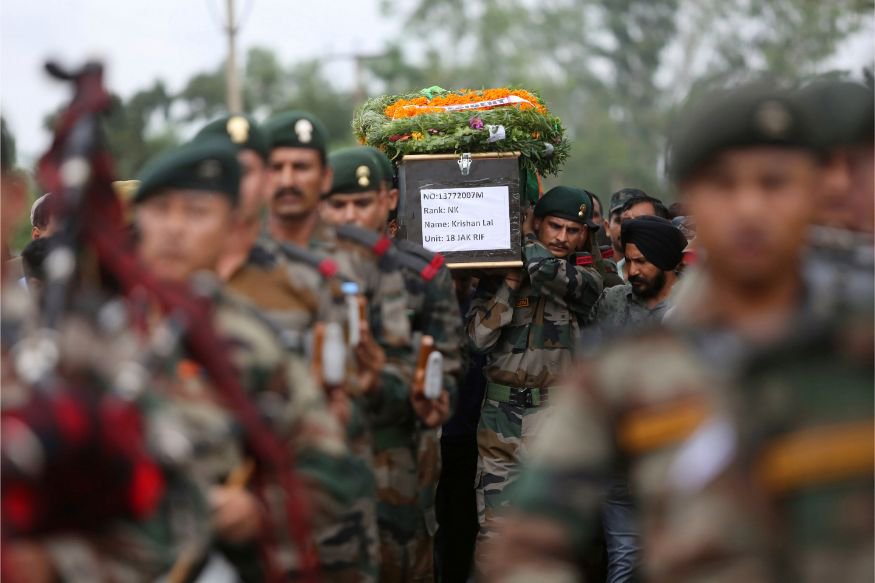
No use of ‘Martyr’ word in Army for death of on duty soldier .

History of the use of the word martyr:
The government has claimed for nearly a decade that the word “martyr” has not been officially recognized. In 2013 and 2014, in response to RTI’s request, the Ministry of Home Affairs revealed that the words “martyr” and “shahid” were not defined anywhere by the Government of India.
In December 2015, then Home Affair Minister Kireen Rijiju said in Lok Sabah that it is advised that the word “martyr” is not refer to any of the victims of the Indian army. He added that such terms were not used by Central Armed Police Forces (CAPF) and Assam Rifles personnel either.
In December 2021, Minister of State Home Nityanand Rai told Rajya Sabha again that there was no formal term like “martyr.”


Objections to the use of martyrs’ words:
The word “martyr” has religious implications and has historically been used to refer to people making sacrifices for their religious beliefs like in Christianity . The word “Shahid”, which is used as a Hindu alternative to the word “Martyr”, also has a religious meaning and is associated with the Islamic concept of Shahadat. The word “martyr” is said to be derived from the Greek word “martur”. In various dictionaries, “martyr” is defined as a person who is willing to die as a punishment for refusing to abandon religion.
Since the Indian army is not affiliated with any religion and does not sacrifice their lives for religious principles, the use of such words for their sacrifice is found wrong,including the supreme leader of the army. Using words like martyr may not be correct in context to armed forces especially in India according to many legal experts and prominent officers of army and retired officers.

Steps Taken By Government To Stop Use Of Martyr Word:
Despite the repeated assertions of the government about the word martyr having no official recognition, it was mostly used in government statements issued by various PR Officers for the defence services and the CAPFs. Many senior serving and retired officers also used it frequently to describe the death of soldiers in action. Thus, the word remained in common use.
The Army in 2022 issued a letter to all its commands asking them to abstain from using the word martyr as it may not be appropriate for soldiers who die in the line of duty. They have been, instead, asked to use phrases such as killed in action, supreme sacrifice for the nation, battle casualty, laid down their lives,veergati etc.

“Either I will come back after hoisting the tricolor, or I will come back wrapped in it, but I will be back for sure. “

-Late Captain Vikram Batra (PVC)

A warrior who can not be forgotten Hav. Gajender Singh Bisht.

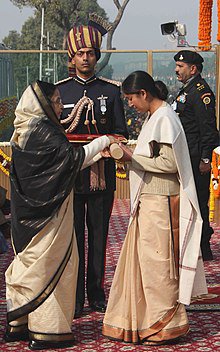
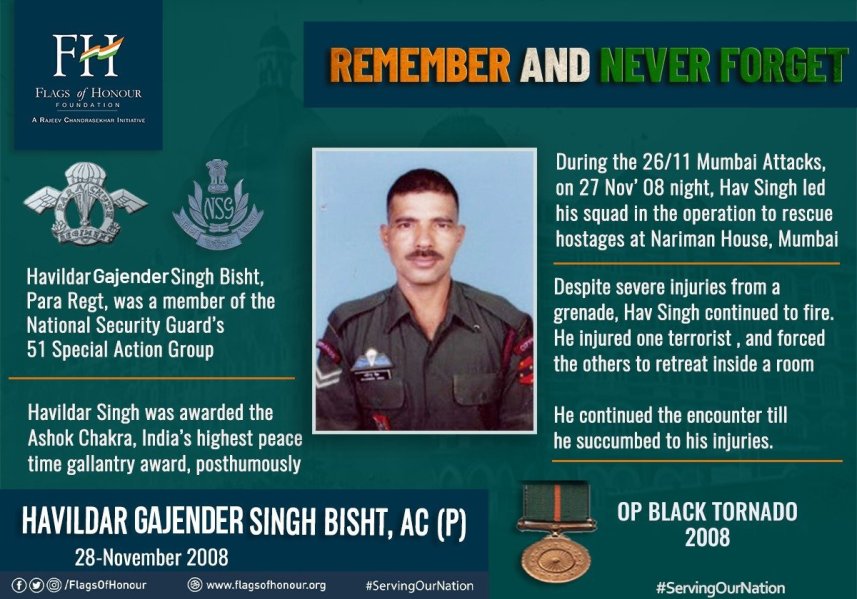
Havaldar Gajender Singh Bisht was an NSG commando who was martyred in the 2008 Mumbai attack. His bravery received the Ashoka Chakra Award from the President of India on January 26, 2009, on the Anniversary of the Republic of India.
He was born on 1 July,1972 in Dehradun, Uttarakhand.

He persued his education from the Janata Inter College in Naya Gaon.As a student he used to participate in every event organised in the school, sports or cultural activities. But he had a particular interest in boxing. Havaldar Gajendra Singh joined Garhwal Rifles in 1991 and later decided to become part of the 10 Para (Special Forces). Havaldar Gajendra also actively participated in Operation Kargil in 1999. Havaldar Gajendra was a trained commander of the Indian Army Special Forces, but he was commissioned to serve the National Security Guard’s Elite Special Action Group.
Gajendra Singh Bisht was a member of the 51st Special Action Group of the National Guard. He was part of a team of NSG Command rushed to the roof of Nariman’s house to neutralize an terrorist inside the building who had at least six hostages.


According to NSG Secretary Jyoti Krishna Dutt, Bisht led one of the teams entering the building. The team was hit by a violent terrorist attack and returned to fire while trying to contain the situation. Terrorists also threw some grenades at Commando. At this point,Bisht had the opportunity to retire with his team. But he realized they needed to seize this opportunity and went forward with thier mission.Instead of turning his back on the militants, he made the way to other troops instead, despite the grenades being thrown. He suffered multiple gunshot wounds in the process, but moved forward and was eventually injured. This allowed his team to secure a dominant position in the encounter. On the night of November 27, 2008, Havildar Gajender Singh Bisht led his army in an operation to rescue hostages from terrorists at the Nariman House in Mumbai. While securing the Nariman House during Operation Black Tornado, Bisht got fatally injured at Jewish center attack and died.

Agnipath Scheme a new vision for future India?


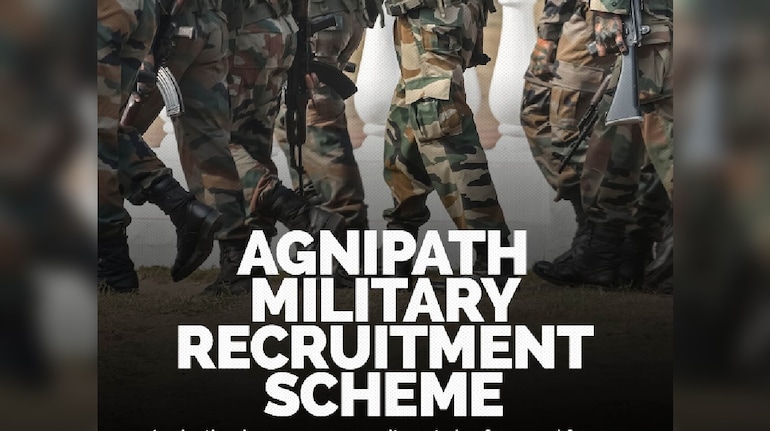
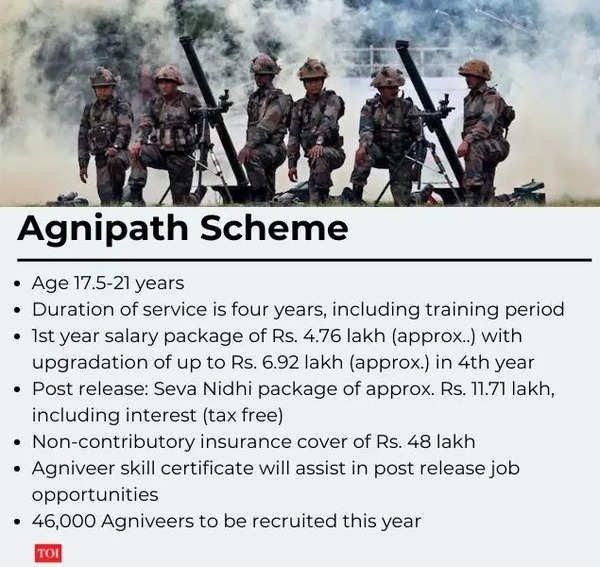
The Agnipath Program is a new program launched by the Government of India on June 14, 2022 to recruit soldiers under Corporal into three armies. The Agnipath program will be the only means of recruiting the military. All new employees will only be hired for 4 years. The personnel hired under this system are called Agniveers, a new military rank. The introduction of this system has been criticized for lack of consultation and open debate. The program is scheduled to start in September 2022. The Agnipath program was approved by the Government of India in June 2022 and will be implemented from September 2022. The announcement was made on June 14, 2022. This program is intended for both male and female applicants between the ages of 17.5 and 21. In widespread protests against the Agnipath program, the central government raised the cap from 21 to 23, but only in 2022. Recruitment under this program is held twice a year by the Indian Army, Indian Navy, and Indian Air Force. The available posts are below the executive list. The Agnipath program is the only way to serve in the army.


New employees, under the Agnipath scheme will be called “Agniveers,”who will have a four-year tenure, including six months of training followed by a 3.5-year deployment. After leaving the service, they have the opportunity to apply to continue in the army. Less than 25 percent of the retired group’s total strength is selected for the permanent roster. Employees who retire after four years of work are not eligible for a pension, but will receive a lump sum of approximately Rs 11,71,000 at the end of their tenure. The Government of India plans to hire 45,000-50,000 new employees each year through this program. In September 2022, 46,000 young people will be hired through this program. Prior to the start of the Agnipath program, soldiers were in the army for more than 15 years of service on a lifetime pension. As of 2019, there was no military recruitment for three years. The Government of India quoted the COVID-19 pandemic in India tye reason for no recruitment. Meanwhile, 50,000 to 60,000 soldiers continued to retire each year, leading to labor shortages and beginning to affect the military’s operational capabilities.


On June 16, 2022, fierce protests took place in several Indian states, where military candidates who were preparing for the armed forces were angry at the new system, demanding its rollback, and damaging public property. By June 17, 12 trains had been fired, affecting the movement of 300 trains. 214 trains were canceled, 11 trains were detoured, and 90 trains ended short of their destination. This scheme does not include long-term holdings, pensions and other benefits that existed in the old scheme. Individuals who wanted to join the army were disappointed with the rules of the new system. Of particular concern were short tenure, no early retirement pension, and an age limit of 17.5-21 years, making many of the current candidates unsuitable for serving in the Indian Army.

On June 20, a national strike called Bharat Bandh was summoned by a protesting organization calling for the withdrawal of the program. The call was made via social media without naming the organization. More than 600 trains were canceled due to a strike. Section 144 was imposed in parts of Rajasthan, Punjab, Uttar Pradesh and Haryana.

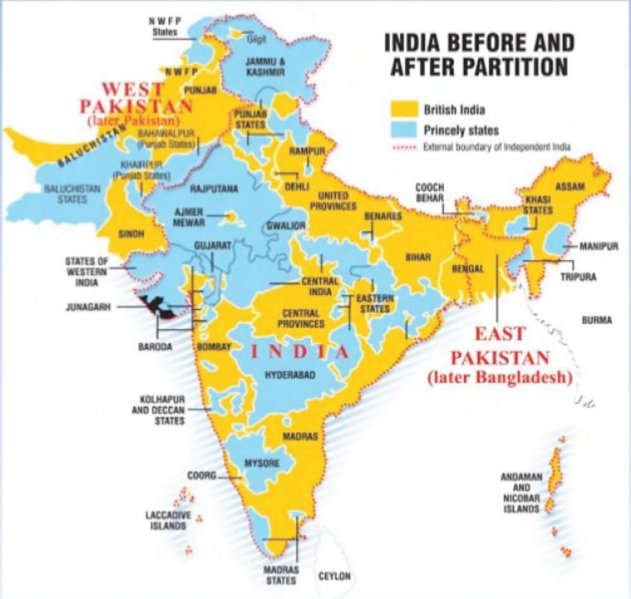
Integration of Indian States of Independent India.

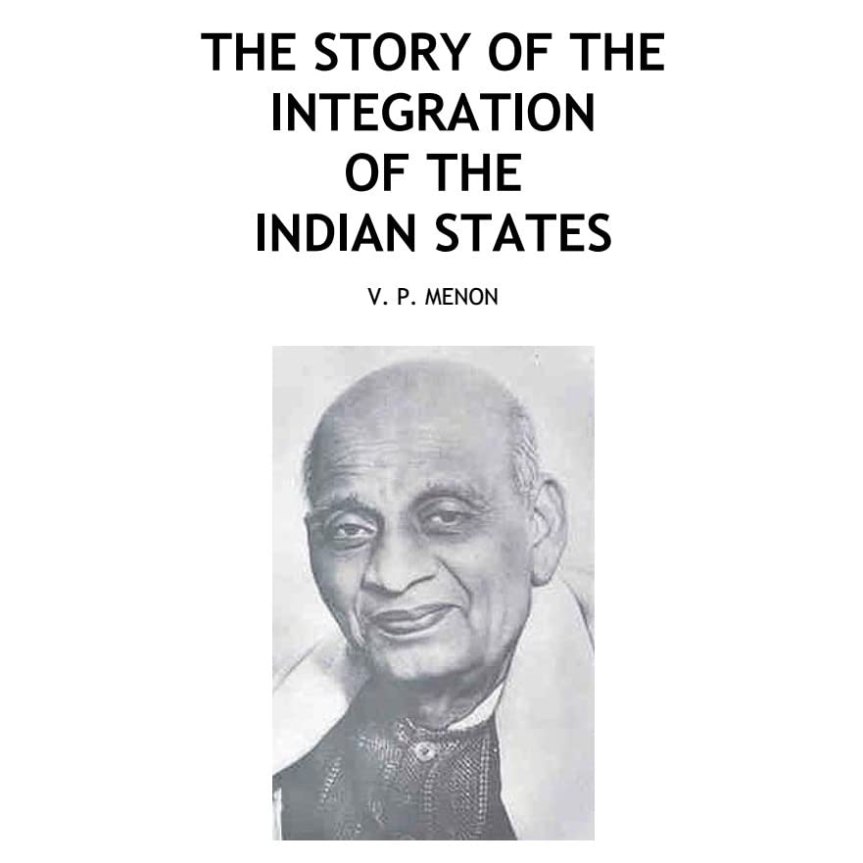
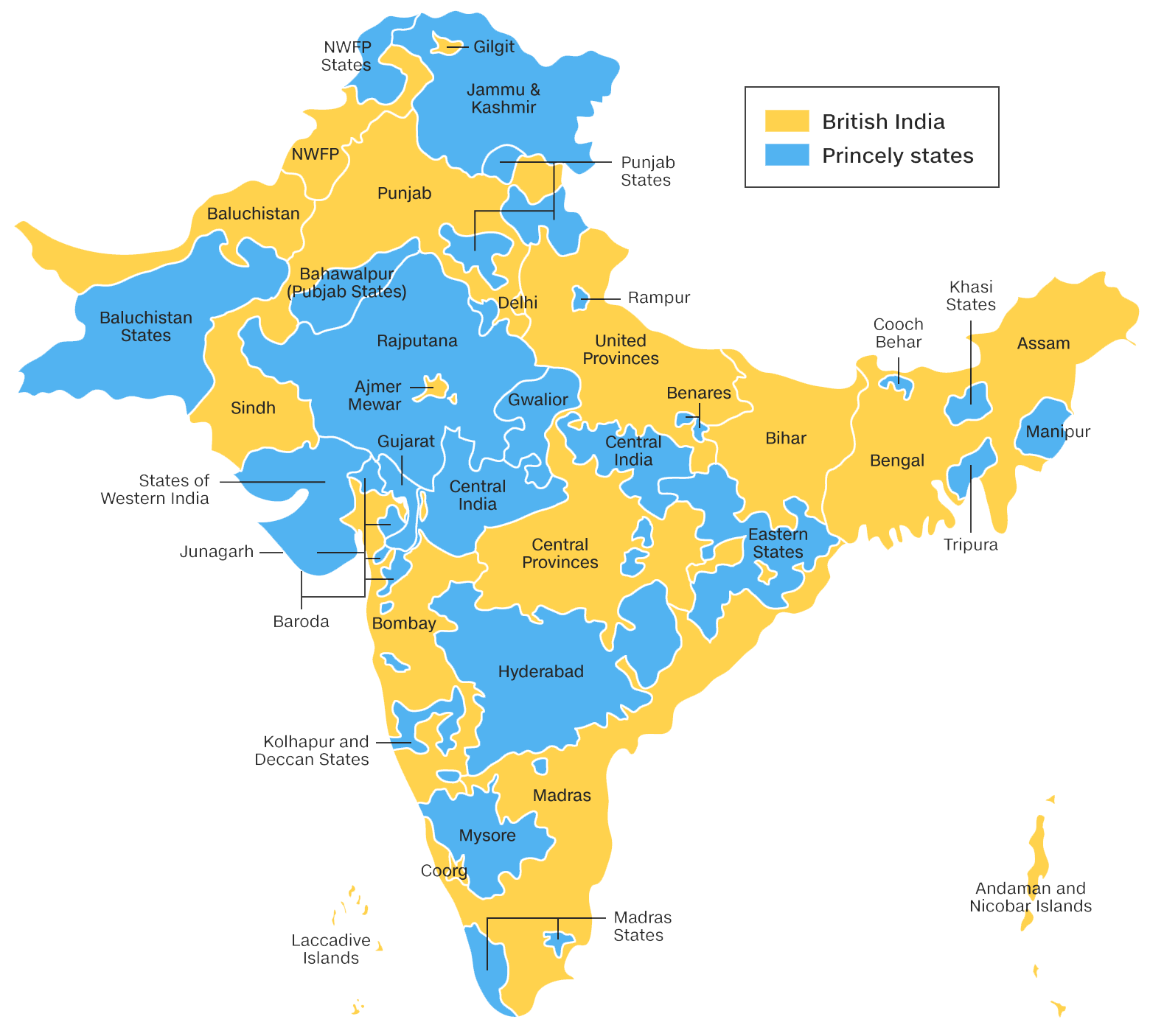
Sardar Vallabhbhai Patel played an important role in the integration of the princely state into the Dominion of India. This achievement laid the foundation for Patel’s popularity in the post-independence era. He is still remembered as the man who united India today. In this respect he is compared to Otto von Bismarck, who united many German states in 1871. The June 3 plan gave more than 565 princely states the option of joining India or Pakistan or choosing independence. Most Indian nationalists and the masses were afraid that most people and territories would be fragmented without the participation of these states. Parliament and British officials considered Patel to be the best man on a mission to secure the conquest of the princely state from Indian rule. According to Gandhi only Patel could solve this problem. Patel had practical insight and determination to accomplish monumental work. Patel asked V.P. Menon, a senior official involved in the division of India, to become his right-hand man as Principal Secretary of State. Patel used a social gathering and informal setting to involve most monarchs and invite them to their home in Delhi for lunch and tea. At these meetings, Patel stated that there was no essential conflict between Congress and the prince’s order. Patel aroused the patriotism of the Indian monarchs and urged them to embrace the independence of their country and act as responsible rulers who care for their people’s future. He persuaded the rulers of 565 states about the impossibility of independence from the Republic of India, especially in the face of rising opposition from their subject. He proposed favorable conditions for the merger, including the creation of a secret purse for the descendants of the ruler. Patel encouraged the rulers to act patrioticly, and to thought about his states people and their futur, but he did not rule out violence. He emphasized the need for the princes to join India in good faith and gave them to sign the membership certificate until August 15, 1947. All but three states were willing to join the Indian Union. Only Jammu and Kashmir, Junagad and Hyderabad were States which were tough to brought under Indian Dominion.


Junagadh being situated in Gujrat it was very important for Patel to bring it under Indian’s dominion. This was also important because there was the super-rich Somnath Temple (a temple where different stones were their including emeralds, diamonds, and gold which were looted by Mohd. Ghazni) in the Kathiawar district. Bieng under the pressure from Sir Shah Nawas Bhutto, a Nawab who joined Pakistan. However, it was far from Pakistan, with 80% of its state population being Hindus.Patel combining diplomacy and power, Pakistan invalidated Pakistan’s accession and demanded that Nawab join India. Patel sent troops to occupy the three principalities of Junagadh to show his determination. After widespread protests and the formation of the civilian government, or Aarzi Hukumat, both Bhutto and Nawab fled to Karachi, and under Patel’s orders, Indian troops and police forces invaded the state. A later organized referendum resulted in 99.5% of the votes in favor of the merger with India. After taking over, Patel, who spoke at the University of Bahauddin in Junagad, emphasized his sense of urgency regarding Hyderabad. He believes this is more important to India than Kashmir.


Hyderabad was the largest of the princely states and which included States parts of which are now Telangana, Arndra Pradesh, Karnataka and Maharashtra. Its ruler, Nizam Osman Ali Khan, was Muslim, but more than 80% of the population of state was Hindu. Nizam called for independence or accession to Pakistan. Under Kasim Razvi, an army of Nizam-faithful Islamic troops called Razakar urged Nizam to confront India and at the same time organize an attack on the people of India’s soil. The standstill agreement was signed by Lord Mountbatten’s in desperate efforts to avoid the war, but Nizam refused to trade and changed his position. At a cabinet meeting in September 1948, Patel emphasized that India should stop speaking and reconciled Nehru and Governor Chakravarti Rajgoparachari with military action. After preparation, Patel ordered the Indian troops to invade Hyderabad (in his position on behalf of the Prime Minister) when Nehru traveled to Europe. This action, called Operation Polo, in which thousands of Razakar troops were killed , but Hyderabad was secured and integrated into the Republic of India. Mountbatten and Nehru’s main goal was to avoid forced annexation to prevent the outbreak of Hindu and Muslim violence. Patel argued that if Hyderabad was allowed to survive as an independent state surrounded by India, the government’s fame would decline and neither Hindus nor Muslims would feel reassured in their empire. After defeating the Nizam, Patel held him as the head of state of the ritual and met with him. India had 562 princely states after addition of Junagarh, Heydrabad and Jammu& Kashmir.

Article 370 & Article 35A

Article 370
The first accession of Jammu and Kashmir, like all other princely states, involved three issues: defense, diplomacy, and communications. All princely states were invited to send representatives to the Constitutional Parliament, which drafted the Constitution across India. They were also encouraged to establish a constituent parliament for their own state. Most states were unable to establish a parliament in time, but some states, especially Saurashtra Union, Travancore-Cochin, and Mysore. The State Department had drafted a model state constitution, but on May 19, 1949, the governors and Chief ministers of each state met in the presence of the State Department and agreed that no separate state constitution was needed. They accepted the Indian Constitution as their own constitution. The state in which the elected constituent council proposed some changes that were accepted. Therefore, the status of all states has been placed on par with the status of ordinary Indian states. In particular, this meant that the subjects available for legislation by central and state governments were consistent and same throughout India.

In the case of Jammu and Kashmir, state politicians have decided to establish a separate constitutional council for the state. Representatives of the Indian Constitutional Assembly applied only the provisions of the Indian Constitution corresponding to the original accession documents to the state, and demanded that the state Constitutional Assembly decide on other matters. The Government of India agreed to the request shortly before its meeting with the other states on 19 May. Therefore, Article 370 was included in the Constitution of India, which provided that other provisions of the Constitution empowering the central government would apply to Jammu and Kashmir only with the approval of the State Constitutional Assembly.This was a “provisional provision” because it was applicable until the State Constitution was enacted and adopted. However, the State Constitutional Assembly was dissolved on January 25, 1957, and did not recommend the abolition or amendment of Article 370. This article was considered an integral part of the Indian Constitution, as confirmed by various recent April 2018 rulings by the Supreme Court of India and the Supreme Court of Jammu & Kashmir.

Article 35A
Article 35A of the Constitution of India was a provision authorized by state to define the “permanent residents” of Jammu and Kashmir State and to give them special rights and privileges. It was added to the Constitution by an Executive Order, the 1954 Constitutional Order (application to Jammu and Kashmir). It was issued by the President of India under Article 370. Jammu & Kashmir has these privileges, the ability to acquire land and real estate, vote and participate in elections, pursue government employment, and receive the benefits of other governments such as higher education and medical expenses. Defined to include. Non-permanent residents of the state were not eligible for these “privileges”, even if they were Indian citizens.

“Language is not only a means of communication but also a tool by which we think”

Language is an essential part of human connection. Although different species have their different ways of communicating, humans are the only ones to have mastered language as a mode communication as it allows us to express share our ideas, feelings, and thoughts with others. So basically humans are made by the language. For most of the people language comes naturally whereas learning a language, say some foreign language means one has mastered the system of complex words, structure, and grammar to communicate efficiently with people of different cultures and societies. Language also plays an important role in the business field as without language one cannot share ideas and grow them into something better. Language also has the power to build or sometimes even destroy the societies.

As language can show our perspective, our understanding, the origin of the nation, our levels of education, and sometimes even our characters. Thus language acts as a mirror of us .Therefore for the communication to well both the parties that involves the sender and the receiver needs to have a proper command over their language.

Language is considered a basic tool of communication but it does not end here as it also acts a tool by which we think. Language indeed influences what we think. One such theory that supports this idea is the linguistic determinism.The concept of linguistic determinism is that language and its structures limit and determine human knowledge or thought, as well as thought processes such as categorization, memory, and perception. This term implies that people’s native languages will affect their thought process and way of thinking therefore people will have different thought processes based on their mother tongues. The differences in the conduction of how the different speakers of different origin such as Mandarin Chinese and English think and talk about time and this was included in one of the illustrations related to this phenomenon. In order to talk about time, the speaker of English origin tends to use terms that explains horizontal changes along the dimension. For example, the phrases used by him were “I’m running behind schedule” or “Don’t get ahead of yourself”. Meanwhile the speaker of Mandarin Chinese explained time in horizontal terms, the vertical arrangement of terms is not unusual to be used. According to the speaker, “up” might be used to describe past and “down” to describe future. It proves that variation in performance is interpreted by the variation language on tests planned with respect to the ordered relation between a mentioned event and an expression of time. The purpose of the test was to evaluate how rapidly one can acknowledge the said relation. Although Language does not completely establishes our thoughts as our thoughts are far too flexible, but habitual use of language can surely influence our habit of thought and action.

Apart from these, the relationship between communication and culture can be noticed from our daily ways of communication or interaction with individuals or a group of people. As the language we use must have been influenced by places we live and the society in which we are born and brought up in which has it own unique culture and identity. Therefore culture in regarded to way of life lived by human beings. Humans learn, think, feel, believe, and even look for whats appropriate according to their culture. Apart from Language, friendships, social and economic activity, politics, and even technologies are based on the various culturals. As for people who speak English, Hindi, Bengali, Gujarati, Telugu etc, this is all because they have been raised in a culture that contains these characteristics. Their actions are a response to their cultural functions. Therefore culture and communication cannot be disassociated as it not only gives an idea about the persons who are having the communication and the topic of communication but also helps to encode the meaning of the messages.

Still there a lot of debate about language being a part of culture and language and culture being different, but they have a very close relationship, so it cannot be separated as most of the things in the culture are reflected in the language as well. If there is diversity in culture, there are also various communication practices. Even the background of a person can also be determined by the language he speaks or the way he speaks. Thus, it can be said that language used is influenced by the culture and vice versa.

Importance Of Effective Communication Skills

Contemporary World
People feel generally competent and confident when discussing matters of communication. Some perceive communication as one of the fundamental differences between human and other animal species, and as the very element that led to human change, development, adaptation, and domination. But to try and define such a broad term is a difficult task – one that many scholars have undertaken. The essence of communication though can be expressed in simple words: communication is the transfer of thoughts, feelings, ideas, and opinions from one person to another (or to a group of others) through specific channels.

The Virtual Scenario
Virtual communication clearly has many advantages including increased productivity, reduced business costs and a better work/life balance of the workforce. However, virtual communication also entails numerous challenges and obstacles which are often neglected in light of the benefits.

When communication is effective, it leaves all parties involved satisfied and feeling accomplished. By delivering messages clearly, there is no room for misunderstanding or alteration of messages, which decreases the potential for conflict. In situations where conflict does arise, effective communication is a key factor to ensure that the situation is resolved in a respectful manner. How one communicates can be a make or break factor in securing a job, maintaining a healthy relationship, and healthy self-expression.

In contemporary virtual scenario, effective communication fosters trust with others. Your ability to listen attentively and embrace different points of view helps others trust that you are making optimal decisions for everyone in the group. The ability to communicate effectively plays a large role in resolving conflicts and preventing potential ones from arising. The key is to remain calm, make sure all parties are heard and find a solution that is ideal for everyone involved. With people feeling more confident in their work and in their understanding of what they need to do, they become more engaged with their work as a whole. To cite a day-to-day example, video-conference with clients on another continent or even replying to a flood of emails for that matter, can be two of the very prominent instances, one may come across quite frequently.


A video-conference with clients on another continent, can be best accomplished only with one’s spontaneous communication skills, virtually. It is definitely not as easy as it may seem in an authentic face-to-face scenario.

The same holds true for online classes as well. Communicating with teachers, and students, virtually, isn’t as fun as it used to be in the past in a non-virtual scenario. To make situations like these more welcoming. One must have good communication skills and must know the right way to make use of it too. Being able to communicate effectively is one of the most important life skills to learn.

Important Skills Everyone Should Learn

Skills are the expertise or talent needed in order to do a job or task. There are many different types of skills that can help you succeed at all aspects of your life whether it’s school, work, or even a sport or hobby. Skills are what makes you confident and independent in life and are essential for success.
1) Sales

Sales are activities related to selling or the number of goods sold in a given targeted time period. The delivery of a service for a cost is also considered a sale.A person who sells goods or service on behalf of the owner is known as a salesman or saleswoman or salesperson, but this often refers to someone selling goods in a store/shop, in which case other terms are also common, including salesclerk, shop assistant, and retail clerk.https://en.wikipedia.org/wiki/Sales

2) Marketing

Marketing is one of the valuable skills to strengthen your passive income. The action or business of promoting and selling products or services, including market research and advertising. Marketing refers to activities a company undertakes to promote the buying or selling of a product or service. Marketing includes advertising, selling, and delivering products to consumers or other businesses. Some marketing is done by affiliates on behalf of a company.https://www.investopedia.com/terms/m/marketing.asp

3) Psychology

Psychology is the scientific study of the mind and behavior. Psychologists are actively involved in studying and understanding mental processes, brain functions, and behavior. There are different types of psychology, such as cognitive, forensic, social, and developmental psychology. A person with a condition that affects their mental health may benefit from assessment and treatment with a psychologist. https://psychology.osu.edu/about/what-psychology

4) Negotiation

A negotiation is a strategic discussion that resolves an issue in a way that both parties find acceptable. … By negotiating, all involved parties try to avoid arguing but agree to reach some form of compromise. Negotiations involve some give and take, which means one party will always come out on top of the negotiation. https://www.investopedia.com/terms/n/negotiation.asp Good negotiations contribute significantly to business success, as they: help you build better relationships. deliver lasting, quality solutions rather than poor short-term solutions that do not satisfy the needs of either party. help you avoid future problems and conflicts.

5) Communication

Communication is the act of giving, receiving, and sharing information — in other words, talking or writing, and listening or reading. Good communicators listen carefully, speak or write clearly, and respect different opinions. https://en.wikipedia.org/wiki/Communication Communication is simply the act of transferring information from one place, person or group to another.

6) Habits formation

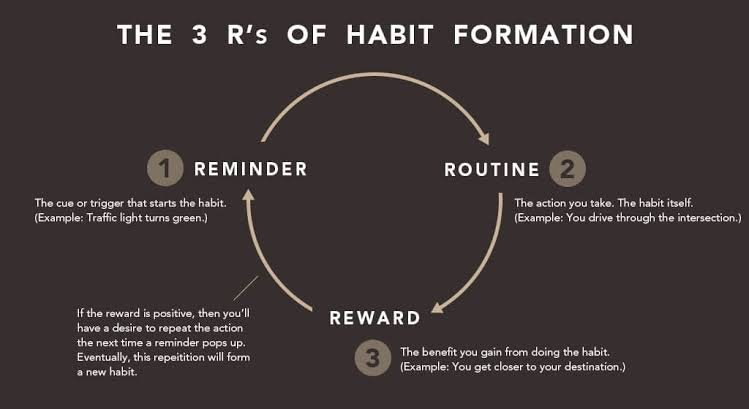
Habit formation is the process by which a behavior, through regular repetition, becomes automatic or habitual. This is modeled as an increase in automaticity with the number of repetitions up to an asymptote. This process of habit formation can be slow. All habits proceed through four stages in the same order: cue, craving, response, and reward. This four-step pattern is the backbone of every habit, and your brain runs through these steps in the same order each time. https://en.wikipedia.org/wiki/Habit

7) Decision Making

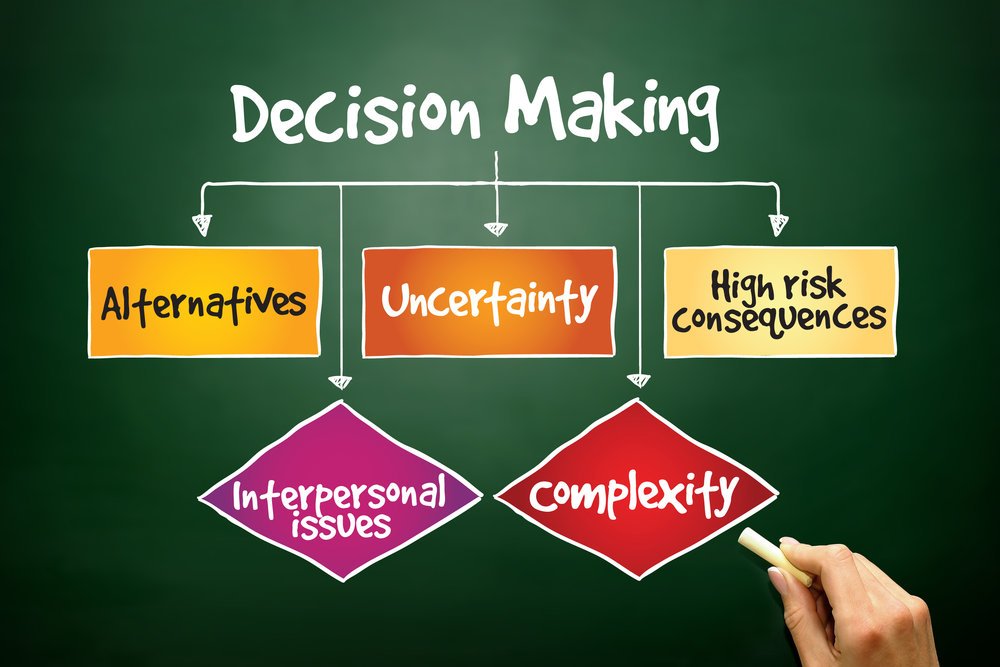
Decision making is the process of making choices by identifying a decision, gathering information, and assessing alternative resolutions. Using a step-by-step decision-making process can help you make more deliberate, thoughtful decisions by organizing relevant information and defining alternatives. Decision making can also be classified into three categories based on the level at which they occur. Strategic decisions set the course of organization. Tactical decisions are decisions about how things will get done. Finally, operational decisions are decisions that employees make each day to run the organization. https://www.umassd.edu/fycm/decision-making/process/

In a world full of speakers, be a listener

Listening- more than a skill

Listening is an important skill that we use daily. You might not give it much thought but it does have a huge impact on your academics, job success and even personal relationships and happiness. Even though it might seem to you that it is a passive behavior as it involves silence, but it is not true.
Sometimes when you’re distressed because of a problem be it work related or a personal issue you just dial your best friend without giving it much thought, have you ever thought why? Most of the times we just want someone to listen to our side of the story patiently without being judgmental. We are not looking a solution for our problems but sometimes it just feels good to vent out that stuff. Everybody has a person to whom they can confide in about anything, for most people it’s their best friend, it’s because they feel understood and not judged.

Good listening is an important skill required in many professions these days. It is one of the main skills required by the people working as counselors and therapists. Because the person feels heard by the counselor, they find it easier to confide into them.


In some cultures, it is taught to emphasize on listening by being a silent communicator when receiving messages from elders or seniors. Buddhism, for instance, has a concept of mindfulness which means devoting your complete attention to the task you’re doing at the moment. It helps in developing longer attention span and good listening skill.

Listening requires a person to be attentive and therefore it is an active skill. Hearing and listening are not the same. Hearing is only a part of listening. When a person actually listens, he/she pays attention to what is being said and if required respond to it. Being a good listener means you listen to others without getting distracted and with their full attention and have the capacity to  analyze and then respond.

Now there are many people out there who listen just to respond without understanding completely the context of what is being said. We must be a patient listener and not be in a hurry to respond. We should refrain from forming an early judgement, prejudices and be open to all ideas.

When in doubt about the meaning of what is being said we should paraphrase it and check with the speaker whether or not they have been clearly understood by you. In the long run, developing active listening skills is sure to help you in various areas of your life.

Interpersonal Skills

Interpersonal skills basically refer to the communication skills. How we deal with others and the mode of our communication. But unlike other skills which can be acquired by the medium of training and experience, interpersonal skills are natural and inherent in a person. The moment we are born, we all start interacting accordingly, and with the growing year if we gain more experience, our interpersonal skill tends to be refined. People with good interaction skills connect with others easily, because they know when to say what, and this makes the communication pleasing and interesting. Interpersonal skills are natural talent possessed by an individual, not something that can be taught in a school.  

When we consider an organization, recruiters will select a person who is blessed with excellent interpersonal skills because of his/her ability to project a positive attitude and seek a smart solution to the problems. But those with poor interpersonal skills will not be considered for the job openings. Management students need to have an excellent command with the interpersonal skills, right from the time when they crack the CAT and other such competitive exams till the interview, management course and finally the campus placements, they should be proper in such skills. This will provide a stepping stone to their career and interpersonal skills of course acts as a confidence booster, which will be really fruitful for them in the job sector.   

What Are Interpersonal Skills ?

Interpersonal skills are the behaviors and tactics a person uses to interact with others effectively. In the business world, the term refers to an employee’s ability to work well with others. Interpersonal skills range from communication and listening to attitude and deportment. Interpersonal skills are often referred to as social intelligence. They depend on reading the signals others send and interpreting them accurately in order to form a response.

Everyone has a personal style and an interpersonal style, but some are more successful than others. While interpersonal skills may be based in part on personality and instinct, they also can be developed.

Understanding Interpersonal Skills

Interpersonal skills can be developed but they cannot be learned solely from a textbook. They come naturally to some people, while others have to work at cultivating them.

In many organizations, employees with strong interpersonal skills are valued for their pleasant demeanor and positive, solution-oriented attitude. These employees are seen as team players, who work well with others to achieve a goal. In more human terms, everyone likes being around them, and that never hurts.

Interpersonal skills are strongly linked to a knowledge of social expectations and customs, whether learned or acquired. People with the strongest interpersonal skills adjust their tactics and communications on the fly depending on the reactions of others.

Interpersonal Skills in the Job Search

Interpersonal skills are highly valued in the business world. Job seekers should use every opportunity to show their interpersonal skills at interviews and on resumes.

Among the interpersonal skills often required in business are active listening—the ability to elicit and fully process information from a speaker. Negotiation is a skill that is prized in sales, marketing, law, and customer service. Other desirable interpersonal skills include public speaking, conflict management, team building, and collaboration.

Improving Interpersonal Skills

Interpersonal skills are best honed by practice. Expressing appreciation for team members and support staff, displaying empathy, moderating disputes quickly, and controlling displays of temper are all good exercises. Active listening can be practiced by repeating back a speaker’s comment to make sure true communication is taking place. If all that isn’t enough, there are courses that teach these skills.

Interpersonal Skills in the Workplace

Strong interpersonal skills such as negotiating, problem-solving, and knowledge-sharing are the main requirements for many jobs. Other skills are seen as essential qualifications for all employees, including :

  • Teamwork
  • Verbal and written communication
  • Dependability
  • Responsibility
  • Empathy

It’s difficult to imagine a company thriving if its employees do not have these interpersonal skills.

This is all based on human psychology and understanding of human behavior. A positive interpersonal skill makes an individual different from the crowd and the organization in which he/she works for, will have more credibility and productivity. Even during adverse situations, those with good interpersonal skills will react appropriately and control their feelings rather than getting overwhelmed by emotional outburst. It is all about the way we behave with people and how well we carry ourselves.  

Interpersonal skills not only mean proper communication but one should also possess good listening ability, balanced attitude and demeanor. Yet there are several programmes and seminars organized on interpersonal skills training and development. In the business domain, interpersonal skills include leadership, strong reliable networking and team work. The other three skills can be only possible if one succeeds in the interpersonal skills. This goes without saying that, interpersonal skills are a prerequisite not only in professional front but in also in the personal. Effective skills will help the employees to overcome challenges in workplace.    

Yet technical ability and intelligence is not all that one requires, interpersonal skills should not be taken for granted. It is required to communicate, counsel, motivate, negotiate and also to deal amicably with senior employees, subordinates and business delegates. Seeing the globalization and cut throat competition in the corporate sector, where things are uncertain, interpersonal skills is the need of the hour. Effective communication and emotional intelligence is an inborn talent and cannot be taught.   

Empathy, good conduct, analytical skills, logic, good presentation skills, finding immediate solution to the problems are the excellent intra personal qualities. It becomes easy to infuse more talent and training to a sharp employee, but it becomes all the more difficult rather impossible to train a dull person who have poor interpersonal skills. If communication is required for an individual to be called a human being, good interpersonal skills is the lifeblood for any given company or organization.   

In most of the cases it has been observed that a hard working employee gets less payment while the other employee in the same post gets more than him, even when the latter is not that technically advanced and skilled in his profession. Now this happens because the latter has good interpersonal and communicative skills and hence he steals the show. Technical expertise is requires but it should be inclusive of good interpersonal skills for a person and organization to be successful and thriving. 

THE ROLE OF COMMUNICATION IN ENHANCING LABOUR MANAGEMENT RELATIONS

INTRODUCTION

Effective communication is essential to comprehensive labour relations. Positive communication can be vital to the existence of an institution and reduces the possibility of conflict and labour strife within the institution.

According to Louis Allen, “Communication is the sum of all things, one person does when he wants to create understanding in mind of another. It involves systematic and continuous process of telling, listening and understanding”.

Katz and Kahn (1978), opined that communication is the exchange of information and the transmission of meaning, it is the very essence of a social system of an organization. It involves the transfer of information from the sender to the receiver with information being understood by the receiver.

Communication is the means by which people in organization exchange information and transmit meaning from sender (encoder) to receiver (decoder) regarding the operations of the organization. It involves some interchange of ideas, emotions and facts between and among people through words, letters and symbols.

Hence, it is the process of sending and receiving information. It is also the sharing of ideas for mutual understanding. For an effective communication, there must be a common frame of reference between the sender and the receiver. In order words, there must be a common understanding of the intent and purposes of the message sent by the receiver. Therefore, communication can only take place when a message is sent, received and well understood by both parties. In essence, for communication to be effective, the message must be meaningful and relevant.

Labour relations is a composite and dynamic discipline and it is all about interface. Labour relations as a three-way relationship has various essential participants involved in the process, namely employees, employers and the state. This relationship is a human relationship, administered by rules and regulations. The parties to the employment relationship should be cheered to communicate and collaborate in resolving differences and in remedying workplace issues in a rigorous labour environment.

WHAT IS COMMUNICATION?

Communication is a means of inter-changing behaviours, perceptions and values, of getting others to act and to sense in a different way, and of forming understanding. . Communication is a fundamental feature in the labour relationship, aimed at guaranteeing that common understanding is achieved in the fulfilment of a desired outcome. Communication is a process whereby a sender sends a message to a receiver, who then interprets the message and donates it with meaning. The receiver may then reply, communicating their own message. The efficacy of the communication is determined by whether the message transferred is interpreted by the receiver as having the same meaning that the sender intended. It is therefore vital that the intended message is passed on.

Communication comprises verbal (both written and oral) and nonverbal communication (kinesics behaviour, object language, proxemics and paralanguage), both of which can be found in the labour relationship. Communication is information in passage and employers and employees need to receive and transmit information to coordinate their actions and perform their tasks. Communication is the procedure through which the receiver’s attitude or behaviour and knowledge are altered or confirmed in some determined manner.

WHAT IS LABOUR RELATIONSHIP?

Labour relations are a very important part of society’s overall behaviour, and one will know the factors affecting labour and their relations. Labour relation as an interdisciplinary area of research deals with the current processes of control of dynamic individual and collective labour relations and organizational leadership. It operates in a wider environment, with a consideration of the conditions under which the work is carried out in such a way that the meets the desires of all parties. The relationship of labour is complex and of both person and collective in nature.

Relationships between labour and management are the most complex set of relationships that any HR Manager can deal with. Effective management of labour relations lets HR Managers create a harmonious atmosphere within the enterprise that in turn lets the company accomplish its goals and objectives efficiently. Well-managed employee ties offer a strategic edge for organization by negating the hassles arising out of labour or union related issues and conflicts. Even though communication remains one of the significant component in the labour relationship, limited organizations and their managers give ample attention, time and resources to ensure that effective communication processes and systems are in order. Communication as a process should receive much attention from both employers and employees and the communication flow should be enhanced to ensure that the message sent and the message received are alike.

EFFECTIVE COMMUNICATION IN ORGANISATIONS

A trustful environment has to be formed in any institution to ensure the finest possible communication. The organization in the institution refers to the alliance of the workforce to reach the objectives of the institution.

4 types of messages used in the communication process in an institution:

1. Maintain healthy relationships

2. Define responsibilities and everyday jobs

3. Providing coaching and instructions

4. Communicate the goals and philosophy of the institution.

Employees should be at liberty to claim their rights, but not at the cost of others. If aggression and the manipulation of other workers can be avoided, the atmosphere should be favourable to people listening to each other and understanding each other. Labour relations are concerned with the worker, not only as a factor of production but also as an individual who brings needs, expectations and goals to the workplace.

Labour relations in the public sector focuses mostly on remunerations and situations of service. However, in practice this relationship includes negotiations and bargaining on issues such as involvement in policy making in terms of issues such as transformation and favourable action. These issues create achievers and losers, new collectivises and alliances, all of which call for new labour relations and communication processes.

The Labour Relations Act, 66 of 1995 (LRA), brought new labour relations procedures in the public sector. Workers were permitted to organise and bargain freely with managers about the establishment of the Public Service Coordinating Bargaining Council (PSCBC), the right to join unions and the right to strike. Union membership improved speedily and a number of agreements were struck. The PSCBC struggles to further good communication between the state as the employer and public servants as the employees. It is a formal communication channel and has the charge of maintaining the authority structure. Proceedings can be validated and official feedback is ensured. The employer and the employee can share information on an official basis.

The International Labour Organisation (ILO) issued a Recommendation[1] on the subject of communication in the labour relationship. The Recommendation reads `it is in the common interest (of employers and employees) . . . to recognise the importance of a climate of mutual understanding and confidence within undertakings that is favourable both to the efficiency of the undertaking and to the aspirations of the workers’.

The ILO regards communication with employees as extremely important and recommends that employees should constantly be consulted when establishing communication channels in an institution, as employee would confirm effective communication and a positive labour relations ambience.

The guidelines for an effective communication policy include the following:

1. The policy of the institution should ensure that ‘information is given and that consultation takes place between the parties concerned before decisions on matters of major interest are taken by management.’

2. The method of communication should ‘in no way derogate from the freedom of association should in no way cause bias to the freely chosen workers’ representatives or to their organisations’. Communication should therefore not be guided through any other person if a representative body has been established.

3. Steps should be taken ‘to train those concerned in the use of communication methods and to make them as far as acquainted with all the subjects in respect of which communication takes place’. Training for shop agents or any other employee representatives should therefore be promoted and given when needed.

4. Means should be made available for employee agents to communicate any information to employees.

 5. Two-way communication should be promoted between management and employee representatives (although direct communication between employees and management is strongly advised), through a proper communication system in the organisation.

6. It is recommended that the communication policy should be ‘adapted to the nature of the undertaking concerned, account being taken of its size and of the composition and interests of the work force’.

7. National practice and the circumstances of each particular situation should be taken into consideration when determining the medium of communication as well as the timing.

CONCLUSION

Labour relations is all about people in the workplace. It involves elements that are part of all human relationships, such as friendship and any other forms of union between people. This dynamic relationship should also be based on what is required to make any relationship work. Therefore, communication as one of the keystones of any effective and successful relationship is also part of the labour relationship. Communication is an essential feature for survival and no institution can exist without it. The labour relationship and communication are composite and involve participants working together to create meaning through switching information in the work surroundings. The rules that an institution must comply with in the labour relationship and communication in an institution are nationally determined through legislation and internationally through recommendations by institutions such as the International Labour Organisation.


[1] No.129 of 1967https://www.managementstudyguide.com/labor-management-relations.htmhttp://www.globalacademicgroup.com/journals/