REPL Global, is an Indian planning firm that specializes in various aspects of urban and infrastructure planning and development. It is a well-established organization that has been involved in numerous projects aimed at enhancing urban environments, real estate development, and smart city initiatives across India. Some key aspects of REPL Global’s activities include:
Urban and Regional Planning: REPL Global engages in comprehensive urban and regional planning, helping cities and regions design and develop sustainable infrastructure, transportation networks, and land use plans. They focus on creating well-designed urban environments that promote economic growth, environmental sustainability, and quality of life for residents.
Smart City Initiatives: The firm is involved in India’s Smart Cities Mission, which aims to transform selected cities into technologically advanced, sustainable, and citizen-centric urban areas. REPL Global plays a role in planning and implementing smart city projects, which may include IoT-based infrastructure, digital services, and innovative urban solutions.
Real Estate Development: REPL Global is also active in real estate development, encompassing residential, commercial, and mixed-use projects. They contribute to the design and execution of real estate ventures, often with a focus on sustainable and environmentally friendly development.
Infrastructure Development: The firm takes on infrastructure projects that involve the construction and maintenance of critical transportation, utility, and public facilities. These projects aim to improve connectivity and accessibility in urban areas.
Consultancy Services: REPL Global provides consulting services in the fields of architecture, engineering, project management, and more. They work with public and private sector clients to bring projects from concept to completion.
J𝐎𝐁 𝐎𝐏𝐄𝐍𝐈𝐍𝐆 at Vacancy at REPL 𝐀𝐏𝐏𝐋𝐘 𝐍𝐎𝐖!! ✅ 𝐏𝐨𝐬𝐢𝐭𝐢𝐨𝐧: – Urban Planner ✅ 𝐐𝐮𝐚𝐥𝐢𝐟𝐢𝐜𝐚𝐭𝐢𝐨𝐧𝐬: Degree in Planning ✅ 𝐄𝐱𝐩𝐞𝐫𝐢𝐞𝐧𝐜𝐞:0-3 yrs ✅ 𝐒𝐚𝐥𝐚𝐫𝐲 : As per experience ✅ 𝐋𝐨𝐜𝐚𝐭𝐢𝐨𝐧 : Odissa ✅ 𝐑𝐞𝐪𝐮𝐢𝐫𝐞𝐝 𝐤𝐧𝐨𝐰𝐥𝐞𝐝𝐠𝐞 𝐚𝐧𝐝 𝐬𝐤𝐢𝐥𝐥𝐬: -Must have a knowledge of GIS based development plan, town planning scheme, local area planning, TOD planning and policy, Knowledge of GIS based application, Report writing ✅ 𝐇𝐨𝐰 𝐭𝐨 𝐚𝐩𝐩𝐥𝐲 : Interested candidates please forward cv to –hr@repl.global
REPL Global, is an Indian planning firm that specializes in various aspects of urban and infrastructure planning and development. It is a well-established organization that has been involved in numerous projects aimed at enhancing urban environments, real estate development, and smart city initiatives across India. Some key aspects of REPL Global’s activities include:
Urban and Regional Planning: REPL Global engages in comprehensive urban and regional planning, helping cities and regions design and develop sustainable infrastructure, transportation networks, and land use plans. They focus on creating well-designed urban environments that promote economic growth, environmental sustainability, and quality of life for residents.
Smart City Initiatives: The firm is involved in India’s Smart Cities Mission, which aims to transform selected cities into technologically advanced, sustainable, and citizen-centric urban areas. REPL Global plays a role in planning and implementing smart city projects, which may include IoT-based infrastructure, digital services, and innovative urban solutions.
Real Estate Development: REPL Global is also active in real estate development, encompassing residential, commercial, and mixed-use projects. They contribute to the design and execution of real estate ventures, often with a focus on sustainable and environmentally friendly development.
Infrastructure Development: The firm takes on infrastructure projects that involve the construction and maintenance of critical transportation, utility, and public facilities. These projects aim to improve connectivity and accessibility in urban areas.
Consultancy Services: REPL Global provides consulting services in the fields of architecture, engineering, project management, and more. They work with public and private sector clients to bring projects from concept to completion.
Television was founded by John Baird. The first television service was started in 1936 by British Broadcasting Corporation (BBC) of Britain . In 1939, television broadcasts began in the United States. In 1953 the first successful programme in colour was transmitted by Columbia Broadcasting System (CBS) in USA. In today՚s world, television has become one of the most powerful means of mass communication . It can impart education, information and entertainment . Television has end up becoming an necessary a part of our lives.
Credit-Youtube
HISTORY India’s first television station was established on October 24, 1951, in the Department of Electronics and telecommunications at Government Engineering College in Jabalpur. Television began in India as an experiment on September 15, 1959. It was first started as two hours programmes a week under the authority of AIR. Early programs of these experimental broadcasts were generally educational programs for children and farmers. By 1975, only seven Indian cities were using television services. The Satellite Instructional Television Experiment (SITE) was an important step by India for the use of television for the development of people and the country. Initially, the show was mainly produced by Doordarshan (DD), who was part of AIR at the time. Transmissions were made twice a day, morning and evening. In addition to information on agriculture, health and family planning, other important topics covered in these programs were audience education and awareness raising. Entertainment was also included in the form of dance, music and cinema. In 1976 Television services were separated from radio . Color television was introduced to the Indian market in 1982.
In the late 1980s, more and more people began to own televisions. There was only one channel, but the TV show was saturated. Therefore, the government opened another channel, partly broadcasting nationally and locally. This channel was called DD2 and was later renamed to DD Metro. Both channels were broadcast on the ground. In 1997, Prasar Bharati, was established.Doordarshan, along with AIR, was incorporated into a state-owned enterprise under Prasar Bharati. Transponders of the American satellites PAS-1 and PAS-4 assisted in the transmission and broadcasting of shows on DD. An international channel called DD International was launched in 1995 and broadcasts programs abroad 19 hours a day to Europe, Asia and Africa via PAS-4 and to North America via PAS-1.The 1980s were the prime time for DD, with shows like comedies such as Hum Log (1984-1985), Wagle Ki Duniya (1988), Buniyaad (1986-1987). Epics like Ramayan (1987–1988) and Mahabharat (1989–1990) brought millions to Doordarshan and later on Chandrakanta (1994–1996). Song-based programs for Hindi movies such as Chitrahaar and Rangoli, and crime thrillers such as Karamchand and Byomkesh Bakshi. Children’s shows such as Tenali Rama ,Vikram Betal and Malgudi Days .
Private Channels influence: The introduction of communication channels was a revolutionary move to reach so many people. It became an opening for Private and Commercial broadcasters in our country. The emergence of private channels began in India in the 1990s after CNN aired the Gulf War. Hong Kong-based STAR (Satellite Telivision Asia Region ) enterned in a contract between an Indian company and Zee TV. It became the first Private Indian Hindi satellite channel. During this time, several local stations have emerged. Apart from local ones various international channels such as Channel, CNN, BBC, Discovery, etc were also available for Indian TV viewers. Their were various categories of channels available for viewers,such as the 24-hour news channel, Religious channels, cartoon channels, movie channels, something for everyone .
Credit-Filmaker Fans
Changes and Evolution: A significant change that has occurred is the use of different methods of delivering television programming. Just a while ago their were satellite-based antennas, but now the mode has converted to dishes. Other shipping methods are are delivery via cable network and direct satellite transmission. Now you can watch TV shows on your mobile phone , the technology behind it is called Internet Protocol Television. The emergence and spread of televisions and computers and the access to content anytime, anywhere, everyone has brought revolutionary change and access to the world of entertainment.
“I always say film is art, theater is life and television is furniture .”
As part of Azadi ka Amrut Mahotsav, Government of India is observing Good Governance Week from 20th to 25th December 2021. In the Good Governance Week, Department for Promotion of Industry and Internal Trade, organized a National Workshop on next Phase of Reforms for Reducing Compliance Burden on 22nd December 2021 at Ambedkar International Centre, New Delhi.
Workshop witnessed wide participation from States, Central Ministries, Industry Associations and Industry Representatives. More than 100 representatives from 27 States/UTs, more than 200 members from Central Ministries, Departments and subordinate organizations and 95 representatives from Industry Associations participated in deliberations of the Workshop.
Context of the workshop was set in the opening session wherein DPIIT made a short presentation on overview of the exercise of reducing compliance burden, status of compliances reduced, initiatives implemented by Ministries and States/UTs to reduce compliance burden on citizens and businesses and next steps of the exercise.
To understand views and seek suggestions from stakeholders, workshop included 3 Breakout Sessions on following themes- Breaking Silos and Enhancing Synergies among Government Departments, Chaired by Shri B.V.R Subrahmanyam, Secretary D/o Commerce. The key points discussed during this session are possibilities of issuance of Master Certificate listing all registrations, merging key business identity numbers into single ID, integration of State Single Window Systems with Central Ministries/Departments, etc.
Single Sign-on for Efficient Delivery of Citizen Services. Chaired by Shri Ajay Prakash Sawhney, Secretary MeitY. The main points discussed during this session are considering integration of all Citizen services at Central and State services on the National Single Sign-On, possibility of UMANG to be the National Single Sign-on (SSO) mobile application along with www.india.gov.in as the National Single Sign-On Webpage
Effective Grievance Redressal, Chaired by Secretary D/o Land Resources. The key points which were deliberated are multiple platforms for raising grievances need to use technology to ensure that the complaints are genuine, use of Artificial Intelligence (AI) for predictive analysis and data filtration
During the concluding session of the workshop, core issues were identified and next steps on respective themes of the Breakout Sessions were presented by respective Chair Secretaries.
Cabinet Secretary acknowledged the efforts put in by Ministries and States/UTs to reduce compliance burden in earlier phase and making life easier for citizens of this country. He added that reducing burdensome compliances is a continuous process. Various policy reforms and programs have been implemented over last few years, however, Ministries and States/UTs need to identify what more can be done. Transformational governance reforms in the 75th year of the country’s Independence would go a long way in unshackling businesses and citizens.
Its been six years of the advent of the Companies Act, of 2013 that obligated companies to contribute over a specific size and profitability, a portion of their profits or benefits towards societal development, discourses about corporate social responsibility, or CSR, is all over the place. There have been workshops, seminars, meetings, newspaper articles, and award distribution ceremonies galore on the matter. Today, CSR has become an important aspect for all companies in contributing towards both, society as well as increasing the brand value reputation of the companies. As corporate social responsibility (CSR) is not compulsory, many companies might not prioritize it or engage in it. However, there are many companies ranging from middle-class companies to highly valued companies who have contributed a lot to CSR and continue to contribute, knowing its importance. The top 6 companies with the best CSR reputation are:
INFOSYS LIMITED
Image credit: Alamy
Infosys Limited is ranked as the top company in India, contributing the most towards CSR. Being an early adopter of corporate social responsibility (CSR) initiatives, its contributions to the environment and society have been key factors in the holistic growth of its business.
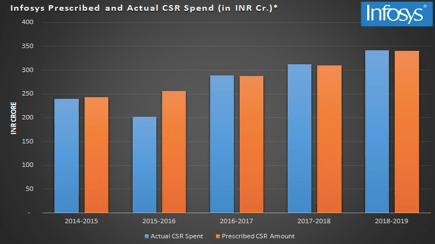
The company spent nearly Rs. 360 crores on various CSR schemes in the financial year 2019-20[1]. It has contributed to many covid relief works and among its main CSR initiatives in the financial year, 2019-20 were a 100-bed quarantine set up in Bengaluru in partnership with Narayana Health City, and another one which had 182 beds for COVID-19 patients for Bowring and Lady Curzon Medical College & Research Institute[2]. This company has also established the Infosys foundation— a nonprofit nodal body aimed at contributing toward community and society development and betterment and also fulfilling its CSR commitments. Infosys Foundation has worked with many non-government organizations for implementing its projects. Highlights of the Foundation’s interventions in the past include the introduction of Aarohan Social Innovation Awards, restoration of water bodies in Karnataka, enabling the pursuit of access and excellence in sports through the GoSports Foundation, and disaster relief efforts in Tamil Nadu, Karnataka, and Kerala[3].
Image credit: The CSR journal
The above graph shows CSR spending of Infosys Ltd. in the last 5 years[4]
ROLEX WATCH CO. LTD.
Image credit: prezi.com
Rolex has been on the top 10 list of the most reputable companies in the world for four consecutive years. Rolex’s success is attributed to the authenticity and longevity of its charity work. By investing in and committing to long-term social enterprise projects, Rolex has an impressive record of over forty years of philanthropic work[5]. The Rolex Awards for Enterprise which were established to commemorate the 50th anniversary of the Oyster Chronometer is a great example of CSR activity carried out by the company. All the individuals who demonstrate leadership and entrepreneurialism in the areas of technology, applied sciences, and the environment are presented with these awards. Since the inception of the Awards, 33,000 people from over 190 countries have applied, and 140 laureates have been selected[6]. These laureates have worked on projects benefitting millions of people in 60 countries across the globe[7]. Several initiatives under the Rolex Perpetual Planet have been taken up for upgrading our environment. These include watching over the Earth’s blue heart, Heroes of the Oceans, and Paula Kahumbu: defending rights for elephants.
MAHINDRA AND MAHINDRA LTD.
Image credit: Avinash Chandra
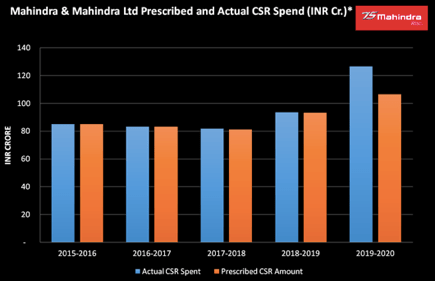
Mahindra and Mahindra ltd. is known for its contributions to climate change and sustainable business practices. The company spent INR 93.50 crores on CSR initiatives during the financial year 2018-19[8]. The biggest CSR project for educating girls in India known as Nanhi Kali was conducted by Mr. Mahindra. This project provides free education to girls, who belong to low-income backgrounds and also empowers their families. The group works closely with non-profits like Naandi Foundation, which feeds over 1.3 million government school children every[9]. This project also encourages environment-friendly farming practices by working with many small farmers. Mahindra and Mahindra Ltd. has also won the award for India’s best CSR project in the Environment and Sustainability category for its green initiative of project Hariyali, which aims at planting 1 million trees on India’s green cover every year. In the financial year 2019-20, Mahindra & Mahindra planted 1.32 million trees, taking the total tally to 17.93 million trees[10]. Of these, 10.78 million trees have been planted in the Araku Valley, which besides greening the environment, also provides livelihood support to tribal farmers growing coffee in the region[11]. The company’s other CSR projects include Mahindra Pride schools: a unique 90-day livelihood training program for youths from socially and financially disadvantaged communities, Integrated Watershed Management Programme, saving a life with safer roads, employee social options, and covid-19 releif[12].
Image credit: The CSR Journal
The above graph shows the CSR Spends of Mahindra and Mahindra Limited for the last five years.
WALT DISNEY COMPANY
Image credit: Money Inc
Considering the Walt Disney company CSR report, it can be said that it is well organized, and consistent, and is in connection with the global reporting initiative (GRI) too. The company has contributed a lot towards renewable energy, workforce investment, community engagement, charitable giving, and diversity and inclusion. In the financial year of 2019-20, Disney brought online a massive 270-acre, 50+-megawatt solar facility onsite in Orlando, in collaboration with the Reedy Creek Improvement District and Origis Energy USA[13]. The facility generates enough power from the sun to operate two of the four theme parks at Walt Disney World annually[14]. This, along with other initiatives, helped to reduce the net emissions by 47% in FY19 from 2012 levels[15].
Disney has also donated a lot towards workforce investment, supporting the long-term career goals of its employees through education.
The company is investing $150 million over the first five years to cover 100% of employee tuition, books, and education fees[16].
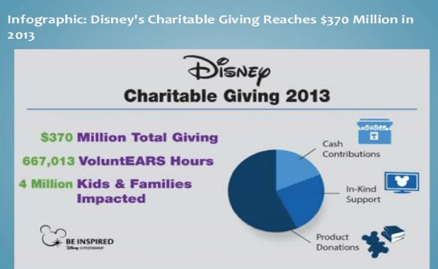
Disney also gave $338.2 million in cash and in-kind donations to non-profit organizations that bring comfort, inspiration, and opportunity to kids, families, and communities around the world[17].
Image credit: Slideshare
COCA- COLA COMPANY
Image credit: India Frontline
Coca-Cola aims to create a sustainable and better future. For this, they follow various activities like Focusing on a World Without Waste, Maximising water conservation, reducing carbon footprint, etc.
In addition to this, all the countries where coca-cola has its market, have increased employment and helped to raise the standard of living which has, in turn, helped to strengthen the national economy.
The company has also launched its project known as the last mile, which aims to expand access to HIV and malaria medicines across Africa. The Coca-Cola Foundation recently awarded a $2 million grant to Project Last Mile—$1 million for South Africa and $1 million for additional countries across the continent—as part of the foundation’s $20 million “Stop the Spread” fund[18]. An additional $500,000 grant from The Coca-Cola Foundation has supported COVAX, a program co-led by the World Health Organization (WHO) to ensure equitable global access to COVID-19 vaccine tests and treatments in the world’s poorest countries[19].
The company also aims at making all its packaging 100% recyclable and also reduce its carbon emissions 25% by 2030 from a 2015 base year[20]
Image credit: research-methodology.net
TATA CHEMICALS LTD.
Image credit: csrbox.org
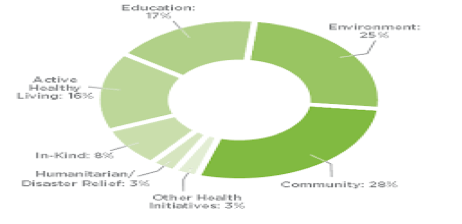
The CSR model of Tata chemicals limited is very unique. Although the prescribed CSR for 2019-2020 was 21.39 Crores, the company went on to spend 37.81 crores on community development projects[21]. Tata Chemicals spends INR 12 crores on CSR annually, and wildlife conservation accounts for 30% of the budget of the TCSRD[22]. The company has also established the Tata Chemicals society for rural development. The company’s CSR agenda also focuses on empowerment, inclusion—especially of women and socially backward communities, volunteering, technology, innovation, etc. At Okhai, the company provides sustainable livelihood to 900 rural women artisans by applying their traditional handicraft-making skills to create marketable products[23].
Blossom: Promotion and development of native handicrafts •Enhance: Overall enhancing the quality of life, Aspire: Education and vocational skill development, Conserve: Investment in Bio-diversity, natural resource, and climate change management leading to increase in environmental sustainability, Nurture: Health care, sanitary solutions, and safe drinking water are some of the other projects taken up by Tata chemicals ltd[24].
Diamonds are allotropes of carbon like graphite. But, the difference between them is tremendous. What makes diamonds so costly ? Well some might say that the extraordinariness, challenges in mining, toughness, cut, clearness, shading, and carat of diamonds make them costly and popular. Gold and silver are likewise uncommon, mining them is additionally troublesome however why just diamond is so costly ? Why people give diamond ring when they propose one another ?
A few years ago it was not a trend to give diamond rings while proposing. There are many stones rarer than diamonds. They are costly as a result of a company called De Beers. Each diamond you find in this world comes from this company not because diamonds are very rare to find. There are numerous diamond mines in this world however this organization don’t let those diamonds to arrive at the market.
At the point when supply of a specific item is less however demand is high, this outcomes in making that item more costly. This company made the stock of diamonds exceptionally less. But, how ? Few years back diamonds were found only in India and Brazil. But then it was also found in Africa and that too in very large quantity. De beers was also one of the company which found a lot of diamonds in Africa. But the other mines company started selling diamonds because the supply of diamonds were increasing which can make them less expensive. They were in loss. De beers would have also done that but instead it started buying those diamonds by taking loans and because of that it became the owner of all mines in Africa. It became a monopoly and a monopoly does what it wants. Soon when other mines company discovered diamonds in Serbia and other countries De beers bought all of them. It became owner of all the diamonds in the world.
Yet, De beers never let people to realize that they have diamonds in exceptionally huge amount because then people won’t buy it. They restricted the stock of diamonds which made them uncommon. They further began promoting diamonds by giving statements like “A diamond is forever”. Because of this, the interest of people towards diamonds increased and they became expensive.
Corporate Governance refers to the framework in a company comprising the generally accepted practices, policies and processes according to which the firm operates and is managed.
Corporate governance has become an essential component in the functioning of a company, and it has the potential of causing an improved or enhanced market performance. Corporate governance primarily focusses on creating transparency, accountability, and disclosure in the corporate environment. In other words, it promotes ethical practices in the company, allows for efficient communication of information, and proper allocation of responsibility. Another important function of corporate governance is to maintain a judicious balance between the interests of the stakeholders and board of directors. The board of directors are primarily responsible for the operational decisions and processes of the company, and it is imperative to outline their authority with respect to the stakeholders to ensure mutual cooperation and corporate success.
With regard to India, corporate governance has been on the up rise mainly due to globalization and liberalization. The SEBI had made the first ever regulations on corporate governance in 2000, based on the recommendations of the Kumar Mangalam Birla Committee Report and Narayan Murthy Committee Report. With the many national and multinational corporations coming up in India in the face of globalization, there was a need to introduce corporate governance so as to confront the competition that has arisen. Therefore, it is apparent that good corporate governance ensures mutual cooperation and protects the long-term interests of the shareholders. The question then arises whether good corporate governance is also proactively helping companies in their regular financial performance.
The Effects of Corporate Governance on Financial Performance
The financial performance of a firm indicates how successful it has been in its business, and whether it has been able to effectively use its assets in generating revenue. The role that corporate governance plays in benefiting financial performance of Indian companies has been studied extensively over the past years, and varying conclusions can be derived from these studies. The many variables and principles of corporate governance have been studied in the Indian corporate environment so as to ascertain their impact on financial performance. These can be consolidated as such:
Board Size: A study conducted by researchers Kathuria and Dash observed the influence of the Board size on financial performance of Indian companies. The results showed that performance improved when the size of the board increased, and that a smaller board of directors was generally not influential in financial growth. Corporate governance principles necessitate that the board of directors collaborate with the other corporate entities so as to ensure better performance.
Board Independence: An independent director is one who does not have any vested interest in the company, and works solely to improve the corporate position and credibility of the firm. They also play a large role in enforcing corporate governance standards. Numerous studies conducted with regard to board independence in the Indian context have showed that a larger proportion of independent board directors is associated with improved financial performance.
Board Meetings and Committees: As corporate governance principles require the company to maintain transparency and disclosure, conduction of regular board meetings is required. It has been found that Indian companies conducting regular board meetings has caused a better financial performance, as there is constant discussion of the company’s operations and decisions are made that positively impact the company.
Therefore, from the research conducted, it is evident that sound corporate governance and its implementation in Indian companies has the potential of positively impacting financial performance and growth. Some of the more general reasons why corporate governance is seen as a stimulant of financial growth are:
Increased access to financing
Higher firm valuation
Improvement in operational performance
Reduced risk of financial crises
Conclusion
Ultimately, it can be inferred that the impact of corporate governance on Indian companies has been known to be favourable for the most part. However, it is important to highlight an important point here. It cannot be concluded that corporate governance has a positive effect on all Indian companies, or for all companies in general. For some there may be an insignificant impact, while for others there might be no impact at all. However, for most companies in most industries, corporate governance implies support in the financial position. Factors mentioned in this paper such as board size, independency, composition, meetings and committees mostly seem to show a positive relationship with financial performance of Indian companies.
The primary goal with which corporate governance is introduced into a company is to increase transparency, disclosure and accountability, which subsequently gives way to other long-term benefits including financial stability and growth. Therefore, many Indian companies are increasingly looking to practice corporate governance. In conclusion, despite the fact that there is no consensus on whether corporate governance has an undeniable positive impact on financial and firm performance, it can be said that it helps the company in many facets regardless.
Today the Indian market has uncountable brands and parent companies. It is a highly competitive world where new brands are trying to establish themselves in the market, the companies are trying to overtake one another and new start-ups with unique ideas are launched frequently. While the Indian customers witness the rise and fall of many companies, some are the golden players who have mastered the art of business and running successfully even today, no other company stands close in competition to them. Here is a list of some of the oldest companies in India-
• Wadia group of companies One of the oldest and most reputed company of India. Wadia group was founded by Lovji Nusserwanjee Wadia in 1736. Initially, the company made contracts with British to start the business and it prospered in the later years. The company has significantly contributed in making Bombay (Mumbai) a port city for trading import export. It is almost 200 years old and was started before India got independent.
• Parry’s Parrys was established in the year 1788 by Thomas Parry’s who bought his business idea to India.The company is based in Tamil Nadu, Chennai where the headquarters is also located. Parry’s deal in Sugar and Nutraceuticals and is functioning for more than 200 years now. They established the first sugar plant in India in the year 1852 also introduced farm centric model for the first time in 1845. They are working at a large scale specially in South India and Parrys Pure is the only sugar brand to receive the status of ‘super brand’ in India. Additionally, they are into fertiliser business as well.
Otis elevator company The King of elevator companies it has achieved great heights and earned fame in the market. It is a joint venture between an Indian and American company. It is in India since 1892 they have installed their elevators in none other than Burj Khalifa located in Dubai, one of the most massive sky scrapers of the world. They are still functioning in India manufacturing elevators. There first project was installation of elevators and escalators in New York city’s world trade centre.
Aditya Birla group Aditya Birla group is an Indian Multinational company. Founder Seth Shiv Narayan started the company in 1857, the starting was based on cotton trading and later the business expanded in the textile sector, as they served during 1850s. After a successful establishment of the name Birla, they went on expanding the business in metals, cement, mining, retail, telecommunication, and other industries. Today, they have highest number of customers and over one lakh employees and number of retail units operating worldwide.
Jindal group Jindal group is another massive industry group whose presence is in different sector, it initially started as Jindal Steels. The success they achieved as steel producer led to the expansion of company in other areas like mining and power generation. Till date they are biggest steel producer known for the quality and large-scale production. Om Prakash Jindal the founder of Jindal industries with Jindal steels and power in 1979.
If you are a student and in search for some best internships in India (Paid & unpaid), then here’s the list of the same. From big MNCs to Government, Indian students have a lot of Internship opportunity. Especially, undergraduate students in India lookout for Summer internships.
Companies like Microsoft, Google, Cadbury, Facebook, Intel, Siemens provides the best learnings. NITI Aayog, AICTE, Lok Sabha and some other Govt departments also call for Internship training.
1.AICTE Internship:
The All India Council for Technical Education (AICTE), invites applications from young and bright candidates for the appointment of part-time paid Interns. The All India Council for Technical Education is the statutory body and a national-level council for technical education, under the Department of Higher Education, Ministry of Human Resource Development.
2. NITI Aayog Internship Scheme:
NITI Aayog, Government of India invites students pursuing Under Graduate/Graduate/Post Graduate degrees or who are enrolled as Research Scholars in recognised Universities/Institutions to apply for internships. Eligibility: Under Graduate/Graduate/Post Graduate degrees or who are enrolled as Research Scholars in recognised Universities/Institutions.
Duration: The internship period shall be at least six weeks but not exceeding three months. Stipend: No stipend shall be paid for this internship.
3. Google Summer Internship:
As a Software Engineering Intern, you will work on our core products and services as well as those who support critical functions of our engineering operations. Depending on your background and experience, you will be working in one of the following areas: Product and Systems Development and Engineering Productivity.
Eligibility: Currently pursuing a BS, MS or PhD degree in Computer Science or related technical field. Experience in software development in one or more general-purpose programming languages. Ability to speak and write in English fluently and idiomatically.
Internship for 2021 is closed, but interested one can search for the same in July- Aug every year.
4. UNESCO Internship for Graduate Students:
UNESCO invites applications for internships in the following areas: Natural Sciences Sector, Culture Sector, Communication and Information.
Eligibility: Completed university studies (bachelor’s degree or equivalent) at a university or equivalent institution prior to commencing the assignment; Enrolled in a graduate programme (second university degree or Master’s degree or equivalent, or higher), at the time of application; or Have graduated with a university degree (first or second degree as defined above), and must start the internship within one-year of graduation.
Duration of contract: From 1 to 6 months
Stipend: UNESCO does not remunerate interns.
5. United Nations Internship Opportunity:
United Nations, New Delhi invites applications for Internships (Public Information) for the year 2020. This internship is located in the United Nations Information Centre in New Delhi, India. UN interns work full-time, five days per week (35 hours) under the supervision of a staff member in the department or office to which they are assigned.
Eligibility: Requirements: (a) be enrolled in a graduate school programme (second university degree or equivalent, or higher); (b) be enrolled in the final academic year of a first university degree programme (minimum Bachelor’s level or equivalent); or (c) have graduated with a university degree (as defined above)
Stipend: The internship is UNPAID.
6. Internship at Paytm:
Paytm are always looking for innovative interns who have a strong passion for understanding people, their needs, their problems and their aspirations. The internship offers you an opportunity to work on various digital products and services such as Wallet, Payments Bank, Movies & Entertainment, Travel, Insurance, Shopping, Chat and many more.
Duration: 8 weeks – 16 weeks
7. Asian Development Bank:
The Internship Program is a project-oriented learning opportunity for graduate students to gain experience through research assignments based on ADB’s current operational needs.
Eligibility: Master’s- or PhD-level program at a school in one of the ADB member nations, both prior to and after the internship assignment;
The application period for the 2020 Internship Program: 1st batch: 1 August to 30 September 2020 and On board: January 2021 onwards 2nd batch: 1 December 2020 to 31 January 2021 and On board: June 2021 onwards.
8. Amazon Internship (Software Development Engineer):
The SDE Intern experience is unique at Amazon. You get to rub shoulders with outstanding software engineers and researchers with industry-leading technical abilities, solving challenging engineering problems that affect millions of Amazon customers.
Eligibility: Programming experience with at least one modern language such as Java, C++, or C# including object-oriented design. Self-driven, quick starters, passionate problem solvers with a curious mind who loves solving very complex, very challenging real-world problems.
9. Internships- Greenpeace India:
Greenpeace India provides opportunities for students from top educational institutions to undertake an internship at their offices in Delhi, Mumbai, Bangalore or Patna.
Eligibility: The applicant should be in his/her 2rd year of study (or higher)
Duration: Interns need to commit minimum 45 days and maximum 3 months.
10. Intel Graduate Intern:
Intel, Bangalore is looking candidates for Internship Opportunity. Intel Corporation is an American multinational corporation and technology company headquartered in Santa Clara, California, in Silicon Valley.
Eligibility: Candidate should be in B.E or Masters in Electronics or Computer Science and well versed with standard Software Methodologies like software design, implementation.
Other than these mentioned companies, many more like P&G, Cisco, WWF, WII offers a great opportunity for engineering and management students. On the other hand, Lok Sabha India also invites interns every year. Whereas looking into this pandemic, many internships companies offers Online/ virtual or work from home internships to students in India.
S&P CNX NIFTY is an Index computed from performance of top stocks from different sectors listed on NSE (National stock exchange). NIFTY consists of 50 companies from 24 different sectors. NIFTY stands for National Stock Exchange’s Fifty. The companies which form index of NIFTY may vary from time to time based on many factors considered by NSE. NIFTY is for NSE similarly SENSEX is for BSE. Some mutual funds use NIFTY index as a benchmark meaning the mutual funds’ performance is compared against the performance of NIFTY. On NSE there are futures and options available for trading with NIFTY as underlying index. India Index Services and Products Ltd. (IISL) owns NIFTY.
IISL is a joint venture of NSE and CRISIL. CRISIL is a subsidiary of Standard and Poor (S&P). And so NIFTY is also called as S&P CNX NIFTY. CNX ensures common branding of indices, to reflect the identities of both the promoters, i.e. NSE and CRISIL. Thus, ‘C’ stands for CRISIL, ‘N’ stands for NSE and X stands for Exchange or Index. The S&P prefix belongs to the US-based Standard & Poor’s Financial Information Services. Nifty stocks represent about 63 percent of the Free Float Market Capitalization. Impact cost of the S&P CNX Nifty for a portfolio size of Rs.50 laks is 0.06%. Market impact cost is the best measure of the liquidity of a stock. It accurately reflects the costs faced when actually trading an index. For a stock to qualify for possible inclusion into the S&P CNX Nifty, it has to reliably have market impact cost of below 0.75 percent when doing S&P CNX Nifty trades of Rs. 50 Lakhs. S&P CNX Nifty is professionally maintained and is ideal for derivatives trading.
S&P CNX Nifty always uses the best stocks possible for its index. The weakest stocks are removed from inside the S&P CNX Nifty and the new stock into it. The world changes, so the index should change. Yet, the change should not be sudden – for that would disrupt the character of the index. S&P CNX Nifty uses clear, researched and publicly documented rules for index revision. These rules are applied regularly, to obtain changes to the index set. Index reviews are carried out every six months to ensure that each security in the index fulfills all the laid down criteria. IDBI was once not listed; SBI was once illiquid; Infosys was once an obscure software startup. The world changes, and one by one, these stocks have come into the S&P CNX Nifty. Each change in the S&P CNX Nifty is small, so the continuity of the index is maintained. Yet, at all times, S&P CNX Nifty represents the 50 most important liquid stocks in the country, the best stocks to build an index out of.
NSE has the best surveillance procedures in India, so the extent of market manipulation is minimum. In NSE, since, the professional staff of the surveillance department has no positions on the market, this elimination of conflicts of interest and generates a more honest focus upon eliminating market manipulation. On a day to day basis millions of shares get traded on the NSE generating huge order flows. Due to the liquidity and order flow from numerous market players manipulation of the closing price becomes very hard. NSE is the most liquid exchange in India. Hence, the prices observed there are the most reliable. NSE has the highest trading intensity and their bid-ask spreads are the tightest.
Sister indexes of NIFTY
S&P CNX Defty
S&P CNX Defty is S&P CNX Nifty, measured in dollars. If the S&P CNX Nifty rises by 2percent it means that the Indian stock market rose by 2percent, measured in rupees. If the S&P CNX Defty rises by 2percent, it means that the Indian stock market rose by 2percent, measured in dollars.
S&P CNX 500
S&P CNX 500 is India’s first broadbased benchmark of the Indian capital market. The S&P CNX 500 represents about 86percent of total market capitalisation and about 78percent of the total turnover on the NSE. The S&P CNX 500 companies are disaggregated into 72 industries, each of which has an index called S&P CNX Industry Index. Industry weightages in the index dynamically reflect the industry weightages in the market. So for e.g. if the banking sector has a 5percent weightage among the universe of stocks on the NSE, banking stocks in the index would have an approximate representation of 5percent in the index. The S&P CNX 500 is a market capitalisation weighted index. The base date for the index is the calendar year 1994 with the base index value being 1000. Companies in the index are selected based on their market capitalisation, industry representation, trading interest and financial performance. The index is calculated and disseminated real-time.
CNX Nifty Junior
S&P CNX Nifty is the first rung of the largest, highly liquid stocks in India. CNX Nifty Junior is an index built out of the next 50 large, liquid stocks in India. It is not as liquid as the S&P CNX Nifty, which implies that the information in the S&P CNX Nifty Junior is not as noise-free as that of the S&P CNX Nifty. S&P CNX Nifty and the CNX Nifty Junior taken together constitute 100 most liquid stocks in India. S&P CNX Nifty is the front line blue-chips, large and highly liquid stocks. The CNX Nifty Junior is the second rung of growth stocks, which are not as established as those in the S&P CNX Nifty. A stock like Satyam Computers, which recently graduated into the S&P CNX Nifty, was in the CNX Nifty Junior for a long time prior to this. CNX Nifty Junior can be viewed as an incubator where young growth stocks are found.
As with the S&P CNX Nifty, stocks in the CNX Nifty Junior are filtered for liquidity, so they are the most liquid of the stocks excluded from the S&P CNX Nifty. Buying and selling the entire CNX Nifty Junior as a portfolio is feasible. The maintenance of the S&P CNX Nifty and the CNX Nifty Junior are synchronised so that the two indices will always be disjoint sets; i.e. a stock will never appear in both indices at the same time. Hence it is always meaningful to pool the S&P CNX Nifty and the CNX Nifty Junior into a composite 100 stock index or portfolio.
CNX MidCap
The medium capitalised segment of the stock market is being increasingly perceived as an attractive investment segment with high growth potential. The primary objective of the CNX MidCap Index is to capture the movement and be a benchmark of the midcap segment of the market. The CNX MidCap Index is a market capitalisation weighted index with its base period of the index being the calendar year 2003 and base value as 1000.The distribution of industries in the CNX MidCap Index represents the industry distribution in the MidCap segment of the market. All companies are evaluated for trading interest and financial performance.
CNX MNC Index
The CNX MNC Index comprises 15 listed companies in which the foreign shareholding is over 50percent and/or the management control is vested in the foreign company. The index is a market capitalisation weighted index with base period being the month of December, 1994 indexed to a value 1,000. Companies in the index should be MNCs and are selected based on their market capitalisation, industry representation, trading value and financial performance.
CNX PSE Index
As part of its agenda to reform the Public Sector Enterprises (PSE), the Government has selectively been divesting its holdings in public sector enterprises since 1991. With a view to provide regulators, investors and market intermediaries with an appropriate benchmark that captures the performance of this segment of the market, as well as to make available an appropriate basis for pricing forthcoming issues of PSEs, IISL has developed the CNX PSE Index, comprising of 20 PSE stocks.
CNX IT Sector Index
With the Information Technology (IT) sector in India growing at a fast rate, there is a need to provide investors, market intermediaries and regulators an appropriate benchmark that captures performance of this sector. Companies in this index should have more than 50percent of their turnover from IT related activities like software development, hardware manufacture, vending, support and maintenance. The index is a market capitalisation weighted index with its base period being December 1995 with base value 1,000. NSE being the leading stock exchange in India, the NIFTY index is not only a prime index for the exchange itself but also it is an indicator of the booming Indian economy. Despite of the recent slowdown in the global economic scene the NIFTY index has sustained a regular growth after overcoming the sudden impact. The index for so many reasons has attracted investors not only from the domestic market but also from foreign countries.
















 Eduindex
You must be logged in to post a comment.