We can’t completely grasp Google’s time crystal discovery since it is so large.

Forget about Fuchsia and Google Search. Researchers from Google, Stanford, Princeton and other institutions could have discovered a computer breakthrough so significant we can’t completely grasp it yet. Even Google scientists aren’t convinced whether their time crystal finding is correct. However, if the report is correct, Google may be one of the first corporations to provide the globe with a critical technical improvement in the future. Quantum computers, which can tackle difficult problems with amazing speed and power using technologies that have yet to be created, will require time crystals as a building component.

What is a quantum computer?

Google isn’t the only business working on quantum computers, and these devices continue to make headlines daily. Quantum computers won’t be able to reach your phone, and they won’t be able to play games with you. Even if they did, Nintendo’s future systems will be completely devoid of the latest computing technologies.

According to The Next Web, we intend to use quantum computers to solve difficult issues. Warp drives, for example, might allow for rapid interstellar travel. And medical technologies capable of curing almost every ailment.

Earlier this year, Google teamed up with Michael Pea for a quantum computing demonstration at I/O 2021:

Quantum computers, on the other hand, are extremely difficult to create, maintain, and even operate. That’s where Google’s time crystals may be useful. Qubits, or quantum computer bits, are now used in quantum computers. When these qubits are seen, they behave differently than when they are left alone. It’s because of this that measuring qubit states is challenging. Because of this instability, using a quantum computer is difficult. That’s when time crystals enter the picture.

Google’s time crystals

The time crystal idea, first proposed in 2012, is a new phase of matter. According to The Next Web, time crystals defy one of Sir Isaac Newton’s renowned principles. “An object at rest tends to stay at rest, and an object in motion tends to stay in motion,” according to Newton’s first law of motion.

There’s something called high entropy in our cosmos (disorder). Energy transfers constantly cause something to happen. When there are no processes, entropy is constant, but it increases when they are present. However, this is not the case with time crystals. Even when employed in a process, they can preserve entropy.

The Next Web gives a fantastic analogy with snowflakes to explain Google’s time crystals. Because the atoms are organized in precise ways, they have distinct patterns. Snow falls, melts, water evaporates, and ultimately turns back as snow. All of these processes entail energy transfers. A time crystal is analogous to a snowflake that can switch between two configurations without consuming or wasting energy. Time crystals can have their cake and eat it too, and they can do it indefinitely.

What does it mean for you and me?

The time crystals that Google uses do not belong to Google. Even the Google crew is unsure if they were developed by them. The study is only available in pre-print form while it is being peer-reviewed.

However, if Google can figure out how to build them, next-generation quantum computers may include time crystals. These computers might be built by anyone. They’d also bring quantum coherence to a region where there’s a lot of decoherence — the restless qubits we talked about before.

Even yet, the development of quantum computers based on time crystals is still in its infancy. Google may have demonstrated that time crystals aren’t simply a theory, but it hasn’t built any.

To develop warp drives or uncover “universally effective cancer therapies,” we may require decades of quantum computing research to produce quantum computers with time crystals. And it will take decades to fully comprehend quantum computers and time crystals. This is the URL to Google’s paper. Furthermore, Quanta Magazine provides a comprehensive overview of Google’s findings, replete with a time crystal animation.
Computer technology, a boon or bane?

Computer is one of the biggest revolution for the human society today we cannot imagine a world without a computer. Computer is one of the major priority for todays world so lets talk about it in some detail one by one.

DISCOVERY OF COMPUTER

In the early 19th century ,an English mechanical engineer made the first mechanical computer and the name of  that person is Charles Babbage and also considered as a father of computer. He work on different engines and then finally invented a engine that fits with his idea of mechanical computer and that how the huge change in human society starts begin.

(source:https://en.m.wikipedia.org/wiki/Computer#:~:text=Charles%20Babbage%2C%20an%20English%20mechanical,in%20the%20early%2019th%20century)

TYPES OF COMPUTER

  1. Mainframe Computer : It is high capacity and costly computer. It is largely used by big organizations where many people can use it simultaneously.

2. Super Computer : This category of computer is the fastest and also very expensive. A typical supercomputer can solve up to ten trillion individual calculations per second.

3. Workstation Computer : The computer of this category is a high-end and expensive one. It is exclusively made for complex work purpose.

4.  Personal Computer (PC) : It is a low capacity computer developed for single users.

5 . Apple Macintosh (Mac) : It is a sort of personal computer manufactured by Apple company.

6. Laptop computer (notebook) : It is a handy computer that can be easily carried anywhere.

ADVANTAGES OF COMPUTER

1.Stores data in digital format: Computers can store millions of pages of information in digital format.


2.Huge storage: We can store huge information. The present day hard-disks can store 100s of Gigabytes (GB) of information. Large businesses store their marketing and sales data in their computer systems. Even sensitive data of customers are securely protected in a computerized environment.


3. Play games: When it comes to games, the choices are almost unlimited.


4. Calculations : Businesses are increasingly using spreadsheets and other software as a tool for performing mathematical calculations.


5.Prepare and store official documents : You can use a word processing software to prepare, edit and save any text document. The concept of paperless offices is finally taking its shape. excel- calculations


6.Presentations : If your office demands that you prepare presentations, you can prepare it in a Power Point.

DISADVANTAGES OF COMPUTER

1.Ever changing technology: The technology that is new today, may soon become obsolete. We need to regularly upgrade the hardware and software in a computerized environment. This involves additional time and cost.


2.Increased manpower cost: The computer needs to be operated by skilled person. This has led to an increase in manpower cost for organizations. Due to the inherent risks, huge expenditure are made ensure data security.


3.Computer stops responding: At times the operating system of the computer may stop responding or functioning. Though this problem is generally solved by restarting the computer, but sometimes you may have to take the support of the technician.


4.Viruses: The threat of virus and malware attack always remains in the computerized environment. To cope up with these risks, various anti-virus software are available in the market. If you are using a good antivirus, you are almost sure that your private information and other sensitive data are secured.

Unveiling of a 100-Qubit Quantum Computing System

Atom Computing, a quantum computing firm, has announced the development of a quantum computing machine with unrivaled capabilities. The Phoenix system, which is in its initial iteration, can hold up to 100 qubits and is touted to be ‘exceptionally’ stable with lengthy coherence periods, allowing for high performance. Separately, the firm reported the receipt of approximately $15 million in Series A investment and the appointment of a new CEO.

With optical tweezers, Atom Computing’s Phoenix can capture 100 atomic qubits (of an alkaline earth element) in a vacuum container. Lasers are then used to alter the quantum states of atomic qubits. Atom Computing’s Phoenix, according to the firm, is ideal for complicated calculations since its qubits are exceptionally robust and have very long coherence times (over 100 ms).

Using optical tweezers to manipulate atomic qubits in a vacuum environment is not a novel concept. Although Honeywell sells similar devices, their quantum computers only have six qubits. According to Atom Computing, their laser technology and platform design enable the scalability of the number of qubits to 100 units. The firm must, however, demonstrate such a system.

“The development of quantum computing has advanced to the point that it is no longer a decade away. Because of our systems’ scalability and reliability, we are certain that we will be able to lead the industry to genuine quantum advantage “Atom Computing’s CEO and President, Rob Hays, stated. “We’ll be able to solve complicated problems that were previously impossible to handle with traditional computing, even with Moore’s Law’s exponential performance improvements and massively scalable cluster designs.”

Atom Computing announced that it has raised $15 million in Series A investment from venture capital companies Venrock, Innovation Endeavors, and Prelude Ventures, in addition to providing the first information about its Phoenix quantum computing system. The funds will go toward the construction of the Phoenix quantum computing system.

Rob Hays has also been named CEO and President of the firm. Hays previously worked at Intel for 20 years, establishing the company’s Xeon roadmap. Later in his career, he worked at Lenovo, where he established the company’s data center product and service strategy.

MULTIMIDEA IN MARKRETING

Services | Enforcer Web Solutions & Multimedia Marketing

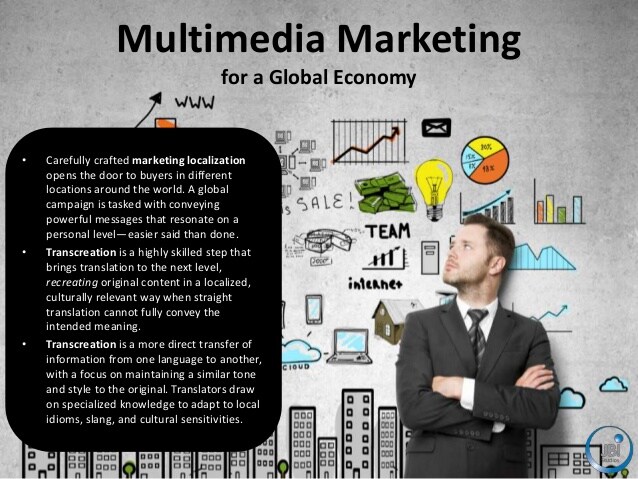
Advertising has become very prevalent in our daily lives , so for a product to stand apart , it is very essential to present it in a dynamic , visually stimulating manner to grab the attention of consumers . The business world is slowly rejecting run of the mill tradition methods (such as placing ads in yellow pages , distributing pamphlets , etc.) and adopting solutions from the electronic era . Only companies with a nerve to radically change their marketing strategies for the new millennium will survive and be able to cater to ever- changing customer’s mindset . Applications of multimedia in the marketing field include the following :

  • Presentations for launching the products of a company . Reaching the target audience with necessary technical services or products requires clear communication stating the benefits and features , outlining its applications and any other product -related details , all presented in a well- designed and interactive manner so that the users can be familiarized faster . Multimedia presentations helps in motivating , informing and captivating audiences via PCs , laptops , plasma screens or kiosks delivered via CD-ROM or the Internet .
  • Multimedia is used to create interactive product catalogues , training tutorials , buyer guides and information directories with adequate search and navigation facilities to guide the user to easily trace the desired information . A buyer guide can list the nearly dealers , a comparison of the top brands , maps of the city and other helpful guest services .
  • E-mail advertising or placing banner ads on the internet is an extremely cost -effective method of launching a product , promoting an event or selling services . Effective use of multimedia in advertising can make potential clients sit up and make notice .
  • Multimedia applications help in building brand loyalty as well as improving sales .Brand loyalty will be improved as the users are provided a custom application which entertains ; informs or assists them .
  • Graphical elements , animations , as well as audio and video can be used to more effectively deliver sales instructional or marketing messages , thereby differentiating a firm from its competitors .