Cyber Crime

N kavya

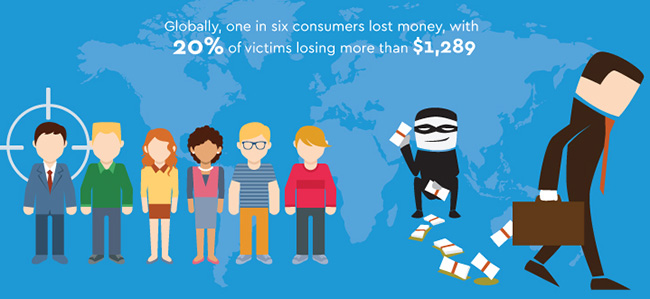
Cybercrime is any criminal activity that involves a computer, networked device, or network. cybercrimes are carried out to generate profit for the cybercriminals, some cybercrimes are carried out against computers or devices directly to damage or disable them. Others use computers or networks to spread malware, illegal information, images, or other materials. Some cybercrimes do both — i.e., target computers to infect them with a computer virus, which is then spread to other machines and, sometimes, entire networks. A primary effect of cybercrime is financial. Cybercrime can include many types of profit-driven criminal activity, including ransomware attacks, email and internet fraud, identity fraud, and attempts to steal financial accounts, credit cards, or other payment card information. Cybercriminals may target an individual’s private information or corporate data for theft and resale. As many workers settle into remote work routines due to the pandemic, cybercrimes are expected to grow in frequency in 2021, making it especially important to back up the data.

The U.S. Department of Justice (DDJ) divides cybercrime into three categories :
1. Crimes in which the computing device is the target
2. Crimes in which the computer is used as a weapon
3. Crimes in which the computer is used as an accessory to a crime

Cybercriminal activity may be carried out by individuals or groups with relatively little technical skill, or by highly organized global criminal groups that may include skilled developers and others with relevant expertise. Cybercriminals often choose to operate in countries with weak or non-existent cybercrime laws to further reduce the chances of detection and prosecution.

Types of Cybercrime -:

1. Cyberextortion: A crime involving an attack or threat of an attack coupled with a demand for money to stop the attack.
2. Crypto-jacking: An attack that uses scripts to mine cryptocurrencies within browsers without the user’s consent.
3. Identity Theft: An attack that occurs when an individual accesses a computer to glean a user’s personal information, which they then use to steal that person’s identity or access their valuable accounts, such as banking and credit cards.
4. Credit card Fraud: An attack occurs when hackers infiltrate retailers’ systems to get their customers’ credit card and/or banking information.
5. Cyber espionage: A crime involving a cyber-criminal who hacks into systems or networks to gain access to confidential information held by a government or other organization.
6. Software-Piracy: An attack that involves the unlawful copying, distribution, and use of software programs with the intention of commercial or personal use.
7. Ransomware attacks are similar, but the malware acts by encrypting or shutting down victim systems until a ransom is paid.
8. Phishing: The most common type of cybercrime as reported to the U.S. Internet Crime Complaint Centre was phishing and similar fraud.
9. Website Spoofing & IOT Hacking.

Cybercrime & Its Impact on Society – : On an individual level, a cyber-attack can lead to a variety of consequences, ranging from theft of personal information to extortion of money or loss of valuable data, such as family photos. Society and systems depend on critical infrastructures, such as power plants, hospitals, and financial services companies. The protection of these and other organizations is essential for the maintenance of our society and support of the relations between countries and international organizations.

How to prevent Cyber Crime –:

Backup all data, system, and considerations: This enables data stored earlier to assist businesses in recovering from an unplanned event.


• Enforce concrete security and keep it up to date: Choose a firewall with features that protect against malicious hackers, malware, and viruses. This enables businesses to identify and respond to threats more quickly.


• Never give out personal information to a stranger: They can use the information to commit fraud.


• Check security settings to prevent cybercrime: A cyber firewall checks your network settings to see if anyone has logged into your computer.


• Using antivirus software: Using antivirus software helps to recognize any threat or malware before it infects the computer system. Never use cracked software as it may impose the serious risk of data loss or malware attack.


• When visiting unauthorized websites, keep your information secure: Using phishing websites, information can easily bypass the data.


• Use virtual private networks (VPNs): VPNs enable us to hide our IP addresses.


• Restriction on access to your most valuable data: Make a folder, if possible, so that no one can see confidential documents.

WOMEN SAFETY

Top 100 Motivational Quotes on Women Safety in 2021

India is a country known for its rich beautiful culture and tradition. Women are given the place of goddess Lakshmi in the Indian culture.Women in India have been given equal rights as men; however, people do not follow this rule. They contribute to the growth and development of our country; still, they are living in fear. Women are now on respected positions in the country, but if we take a look behind the curtains, we see even then they are being exploited. Each day we read about horrific crimes being committed against women in our country like it’s a norm.

CRIMES

The list of crimes against women is quite long, to say the least. Acid attack is becoming very normal is various parts of the country. The criminal throws acid on the face of the victim to destroy their lives completely. Nonetheless, India has a lot of strong acid attack survivors who are battling for their lives and trying to lead their lives independently.

Domestic violence  and honor killings are very common. The wife stays in an abusive relationship because of the fear of society. The family kills their daughters in the name of honor to keep up with the reputation of their family. Similarly, female foeticide is yet another common crime. Due to the regressive thinking, people kill daughters before they are born.

In India domestic abuse, sexual assault and murder are common forms of violence against women. Dowry death is an ultimate form of murder. Indians are still with the psychology that dowry is tradition and girls’ father loses everything to pay it. Domestic violence or domestic abuse is done by one partner with the other partner in a relationship. The rate of domestic violence is increasing in India. 70% of women are victims of domestic violence. It leads to depression and suicides. It’s not a direct murder but it is a cause of murder for sure. Moreover, girls are forced into marriage at a young age. This child bride is not even mature enough to understand her responsibility. Acid throwing is a form of violent assault which ruins the beautiful girl’s life. ‘Cheat in a relationship’ is the other commonly found crime against women. A man easily breaks up with his wife and starts a new life with another bride. 

The list continues as crimes against women are on the rise. Other crimes also include child marriages, child abuse, rape, trafficking and many more.

WAY TO ENSURE WOMAN SAFETY

Quotes about Protect Women (59 quotes)

Although the list of crimes is very long, we can take measures to ensure women’s safety in our country. Firstly, the government must make stringent laws that ensure the punishment of criminals immediately. Fast track courts must be set so the victim gets justice instantly. This will serve as a great example for other men to not commit crimes against women.

Most importantly, men must be taught to respect women from an early age. They must consider women as equals so they don’t even think of harming them. When you consider someone inferior, you tend to oppress them. If this thinking goes away, half of the crimes will automatically end.

In short, crimes against women are stopping the growth of our country. We must not put the blame on women and ask them to be extra careful. Instead, we must ask the men to change their thinking and work to make the world a safer place for women.

FIGHT BACK ! BE ALERT!

CYBER CRIME CASE STUDY IN INDIA

Computer Crime Cyber crime encompasses any criminal act dealing with computers and networks (called hacking).Additionally, cyber crime also includes traditional crimes conducted through the internet. For example; The computer may be used as a tool in the following kinds of activity- financial crimes, sale of illegal articles, pornography, online gambling, intellectual property crime, e-mail spoofing, forgery, cyber defamation, cyber stalking.The computer may however be target for unlawful acts in the following cases- unauthorized access to computer/ computer system/ computer networks, theft of information contained in the electronic form, e-mail bombing, Trojan attacks, internet time thefts, theft of computer system, physically damaging the computer system

Cyber Law is the law governing cyberspace. Cyberspace is a wide term and includes computers, networks,software, data storage devices (such as hard disks, USB disks), the Internet, websites, emails and even electronic devices such as cell phones, ATM machines etc.

Computer crimes encompass a broad range of potentially illegal activities. Generally, however, it may be divided into one of two types of categories

(1) Crimes that target computer networks or devices directly; Examples – Malware and malicious code, Denial-of-service attacks and Computing viruses.

(2) Crimes facilitated by computer networks or devices, the primary target of which is independent of the computer network or device. Examples – Cyber stalking, Fraud and identity theft, Phishing scams and Information warfare.

CASE STUDIES

Case no:1 Hosting Obscene Profiles (Tamil Nadu)

The case is about the hosting obscene profiles. This case has solved by the investigation team in Tamil Nadu. The complainant was a girl and the suspect was her college mate. In this case the suspect will create some fake profile of the complainant and put in some dating website. He did this as a revenge for not accepting his marriage proposal. So this is the background of the case.

Investigation Process

Let’s get into the investigation process. As per the complaint of the girls the investigators started investigation and analyze the webpage where her profile and details. And they log in to that fake profile by determining its credentials, and they find out from where these profiles were created by using access log. They identified 2 IP addresses, and also identified the ISP. From that ISP detail they determine that those details are uploaded from a café. So the investigators went to that café and from the register and determine suspect name. Then he got arrested and examining his SIM the investigators found number of the complainant.

Conclusion

The suspect was convicted of the crime, and he sentenced to two years of imprisonment as well as fine.

Case no:2 Illegal money transfer (Maharashtra)

ThIS case is about an illegal money transfer. This case is happened in Maharashtra. The accused in this case is a person who is worked in a BPO. He is handling the business of a multinational bank. So, he had used some confidential information of the banks customers and transferred huge sum of money from the accounts.

Investigation Process

Let’s see the investigation process of the case. As per the complaint received from the frim they analysed and studied the systems of the firm to determine the source of data theft. During the investigation the system server logs of BPO were collected, and they find that the illegal transfer were made by tracing the IP address to the internet service provider and it is ultimately through cyber café and they also found that they made illegal transfer by using swift codes. Almost has been  The registers made in cyber café assisted in identifying the accused in the case. Almost 17 accused were arrested.

Conclusion

Trail for this case is not completed, its pending trial in the court.

Case no:3 Creating Fake Profile (Andhra Pradesh)

The next case is of creating fake profile. This case is happened in Andhra Pradesh. The complainant received obscene email from unknown email IDs. The suspect also noticed that obscene profiles and pictures are posted in matrimonial sites.

Investigation Process

The investigators collect the original email of the suspect and determine its IP address. From the IP address he could confirm the internet service provider, and its leads the investigating officer to the accused house. Then they search the accused house and seized a desktop computer and a handicam. By analysing and examining the desktop computer and handicam they find the obscene email and they find an identical copy of the uploaded photos from the handicam. The accused was the divorced husband of the suspect.

Conclusion

Based on the evidence collected from the handicam and desktop computer charge sheet has been filed against accused and case is currently pending trial.

Hacking is a widespread crime nowadays due to the rapid development of the computer technologies. In order to protect from hacking there are numerous brand new technologies which are updated every day, but very often it is difficult to stand the hacker’s attack effectively. With some of these case studies, one is expected to learn about the cause and effect of hacking and then evaluate the whole impact of the hacker on the individual or the organization.

ABOUT THE AUTHOR – AGATHA CHRISTIE

Known Mysterious Incident About “the queen of crime” except her famous novels.

Born in Torquay in 1890, Agatha Christie became, and remains, the best-selling novelist of all time.

She is best known for her 66 detective novels and 14 short story collections, as well as the world’s longest-running play – The Mousetrap. Her books have sold over a billion copies in the English language and a billion in translation.

Agatha Christie is one of the greats of mystery literature. For eleven days, she was at the center of her own mystery, that got international headlines. Unlike the plots in her brilliant books, the motives underpinning this particular storyline are rather vague.

The characters of this real and known incidents were the Two of Britain’s most famous crime writers, Sir Arthur Conan Doyle, creator of Sherlock Holmes, and Dorothy L. Sayers, author of the Lord Peter Wimsey series and herself (Agatha Christie” the queen of crime”).

AGATHA CHRISTIE’S DISAPPEARANCE CASE

WHAT DO WE KNOW-

On the December night of 3rd,1926 she drove away from her home in Berkshire and vanished completely. Her car was found abandoned and a huge manhunt was launched. Arthur Conan Doyle, author of the Sherlock Holmes mystery stories and Dorothy L. Sayers, author of the Lord Peter Wimsey series, participated in the search. Their specialist knowledge, it was hoped, would help find the missing writer.

Her disappearance would spark one of the largest manhunts ever mounted. Agatha Christie was already a famous writer and more than one thousand policemen were assigned to the case, along with hundreds of civilians.

Agatha Christie’s disappearance prompted a nationwide search and for the first time in UK history, aeroplanes were employed as part of the search effort.

Newspapers offered rewards for information and her husband Archie was suspected of foul play.

The Home Secretary, William Joynson-Hicks, urged the police to make faster progress in finding her.

It didn’t take long for the police to locate her car. It was found abandoned on a steep slope at Newlands Corner near Guildford. But there was no sign of Agatha Christie herself and nor was there any evidence that she’d been involved in an accident.

Not until 14 December, fully eleven days after she disappeared, was Agatha Christie finally located. Eventually, it was revealed that Christie had absconded to Harrow gate via train, where she spent eleven days hobnobbing with the young social crowd under the name of her husband’s mistress. Christie, upon being discovered, says she had no memory of the events.

The Speculations

  • Agatha Christie rarely talked about the incident, simply putting it down to about of temporary amnesia caused by a blow to the head.
  • The consensus of opinion at the time was that the whole affair (no pun intended) was an act of revenge aimed at her erring husband.
  •  Recent researches on her medical condition suggest that she was suffering from Alzheimer’s disease or other dementia. She died of natural causes in early 1976.

Plight of Victim in Criminal Justice System

                                                        (Photo: The Daily Guardian)

You want to report,
but that could get your family in danger… And if you snitch on a real gang
leader…. they can get you bad… [The] police don’t have your back unless
you’re like someone on the news or whatever, and they will kind of give you
witness protection. But that doesn’t happen in the real world. 

FEMALE,
SACRAMENTO

 The expression
‘victims of crime’ has been defined in section 2 of the code of criminal
procedure, 1973. Initially, the criminal justice system in India was focused on
punishment as part of the crime without much attention on the suffering of
victims of crime. The rights of prisoners were protected even after their
conviction whereas little concern was shown for the rights of victims of crime.
Though there is a wealth of data on victims of reported crime nationally, as
well as various services and programs intending to meet their needs, there
remains a dearth of clear information on how to interrupt cycles of violence
and the persistence vulnerability that keeps such an overwhelming percentage at
high risk of experiencing more crime.

 However, with the
emergence of public interest litigation, the higher courts’ attention was drawn
to this lacunae in the existing criminal justice system by social activists,
and the courts started granting compensatory relief to victims of crime, but
comprehensive legislation on this aspect of criminal justice was still awaited.
In recent times, among the many reforms canvassed for improving the criminal justice
system is the one that advocates a victim orientation to criminal justice
administration. Though there are some provisions under the Indian constitution
and some sections in the code of criminal procedure, 1973 to protect the rights
of the victims and for providing compensation, the criminal courts at the lower
level in India have ignored those provisions for a long time and not utilized
them during their sentencing processes.

 Victim plays an
important role in the criminal justice system but his or her welfare is not
given due regard by the state instrumentality. Thus, the role of high courts or
the supreme court in our country in affirming and establishing their rights
holds much importance. “
Tears shed for the accused are traditional
and trendy but has the law none for the victim of crime, the unknown martyrs
“?
This remark by the Hon’ble Justice VK Krishna Iyer aptly describes the plight
of victims in the criminal justice system in our country. The victim is almost
a forgotten entity in the criminal system rather the irony is that the victim
sets the wheel of justice moving by giving information to the state
instrumentalities without which the entire system would collapse.

 Victims
should come first
“…

 It is of
course an indisputable fact that victims of crime have long been a forgotten
group, a group that suffered for centuries not only from society’s neglect but
also from the exploration of their rightful dias by the state. It is also true
that they had their conflicts stolen by professionals and by the criminal
justice system. However, the exceptional speed with which they were
rediscovered and their cause adopted by the politicians, let alone the
political climate that prevailed at the time of their rediscovery, is bound to
raise questions about the real interests and motives behind what has been
portrayed as a genuinely humanitarian and disinterest cause.

 A comprehensive
legal code for victim compensation is a dire necessity. The time has come for
the legislature to stop shirking its duty. Hence, a comprehensive legal code
should be enacted providing for fair treatment, assistance, and adequate
compensation to victims of crime. Only on embarking on this step can justice in
its more altruistic forms be obtained. It should be made mandatory for the
state to pay compensation to the victims of the crime of not only the private
criminal wrongs but also for the criminal acts perpetrated by its agencies.
This mandatory duty of the state gains importance from two points of view
namely as a welfare state committed to the constitutional goal of social
justice and secondly, for its failure to protect the life, liberty, and
security of its citizens.

 Therefore, I would
like to conclude with this quote-

 “Too
much money…. often resulted in further crimes which were fatal to innocent
victims who need not have been victims if justice had been put first and mercy
second
.” 

Agatha Christie


Shutter Island – book review

About the book

Author : Dennis Lehane

Genre : Gothic, Psychological Horror, Crime

Pages : 380

Publication date : April 15, 2003

Story plot

In 1954, widower U.S. Marshal Edward “Teddy” Daniels and his new partner, Chuck Aule, go on a ferry boat to Shutter Island, the home of Ashecliffe Hospital for the criminally insane, to investigate the disappearance of a patient, Rachel Solando (who was incarcerated for drowning her three children). Despite being kept in a locked cell under constant supervision, she has escaped the hospital and the desolate island.

In Rachel’s room, Teddy and Chuck discover a code that Teddy breaks. He tells Chuck that he believes the code points to a 67th patient, when records show only 66. Teddy also reveals that he wants to avenge the death of his wife Dolores, who was murdered two years prior by a man called Andrew Laeddis, whom he believes is an inmate in Ashecliffe Hospital. The novel is interspersed with graphic descriptions of World War II and Dachau, which Teddy helped to liberate. After Hurricane Carol hits the island, Teddy and Chuck investigate Ward C, where Teddy believes government experiments with psychotropic drugs are being conducted. While separated from Chuck for a short while in Ward C, Teddy meets a patient called George Noyce, who tells him that everything is an elaborate game designed for him, and that Chuck is not to be trusted.

As Teddy and Chuck return to the main hospital area, they are separated. Teddy discovers a woman (in a sea cave he tried to take refuge in) who says she is the real Rachel Solando. She tells him she was actually a psychiatrist at Ashecliffe, and when she discovered the illegal experiments being run by them, she was incarcerated as a patient. She escaped and has been hiding in different places on the island. She warns him about the other residents of the island, telling him to take care with the food, medication and cigarettes, which have been laced with psychotropic drugs. When Teddy returns to the hospital, he can’t find Chuck and is told he had no partner. He escapes and tries to rescue Chuck at the lighthouse, where he believes the experiments take place. He reaches the top of the lighthouse and finds only hospital administrator Dr. Cawley seated at a desk. Cawley tells Teddy that he himself is in fact Andrew Laeddis (an anagram of Edward Daniels) and that he has been a patient at Shutter Island for two years for murdering his wife, Dolores Chanal (an anagram of Rachel Solando), after she murdered their three children.

Andrew/Teddy refuses to believe this and takes extreme measures to disprove it, grabbing what he thinks is his gun and tries to shoot Dr. Cawley; but the weapon is a toy water pistol. Chuck then enters, revealing that he is actually Andrew’s psychiatrist, Dr. Lester Sheehan. He is told that Dr. Cawley and Chuck/Sheehan have devised this treatment to allow him to live out his elaborate fantasy, in order to confront the truth, or else undergo a radical lobotomy treatment. Teddy/Andrew accepts that he killed his wife and his service as a US Marshal was a long time ago.

The ending of the novel has Teddy receive a lobotomy in order to avoid living with the knowledge that his wife murdered their children and he is her murderer.

Review

Have you seen the movie Shutter Island starring Leonardo DiCaprio? If you haven’t yet, read the Shutter Island book first. It was originally published in 2003 by Dennis Lehane, and made into a movie not long ago, 2010 actually. I personally haven’t seen the movie either, but after reading the book I’ve decided I HAVE to see the movie adaptation.

Why was the book so good? Many people will already be familiar with Lehane’s work, he’s a famous thriller/crime novelist, so to start off the book is really well written. Not only that, but the plot is fantastic, with lots of twists that you never see coming, which always makes great for a screenplay as well. The copy of the book that I read was a lent to me by a colleague of mine, so it was an older, well-loved paperback from a while back; a nice change from the brand new books I typically get! Anyway, as mass market paperbacks typically do, it had quotes and blurbs from press reviews all over the cover, and a few of them described the book as ‘cinematic’, meaning the descriptions of the scenery and characters are so vivid that readers can easily imagine these scenes in their mind. Of course these were just predictions at the time, but the book was good enough for Martin Scorsese to take notice, as he was the eventual director of the film.

For those of you who like ‘spooky’ summer time reads, this book is definitely for you, so make some time for some ‘oldies but goodies’ on your shelf, and then clear away an afternoon to watch the movie when you’re done the book.

Environmental and Wildlife Crime

                                                          (Photo: Wildlife Conservation Trust)

Environmental and Wildlife crime is an illegal act which directly harms the environment.

There was a time when people were dependent on the environment and its resources for their existence. As if like they can’t live without it. But with time the situation changed. People started misusing the environment and wildlife for their own greedy purposes which led to a massive destruction of our environment, wildlife and especially our ‘Mother Earth’. As our country is developing, people are becoming greedy and selfish day by day. They have started mismanaging the resources that are actually meant to be used for useful purposes ,and due to this nowadays we are facing many harmful disasters like Tsunami, Earthquake, Flood, Poverty, Economic downfall all over the world. Not only these there are many other problems too.

Coming to the Wildlife, many animals are forcefully placed at zoo in a cage confining their lives within the walls of the zoo. We all know about Deforestation ,that is, “Cutting down the trees and plants”. Thousands of plants and trees are cut down everyday but we never think about the animals like how they will survive as forests are their only home to live in. Many animals are killed leading to the decreasing number of animals in the world. They are left abandoned or some people sell them just to mint money or use their skin to make leather and for many other purposes.

It is a true fact that human activities have a worse impact on nature and wildlife. “The term Environmental and Wildlife crime” should be categorized as crime in the present time. Many factors that influence these crimes are Socio-political and the weak judiciary. As we are all aware that there is no strict implementation of laws in many countries like, India. There are many organizations who works to highlight the issues and work on to prevent but there is no strict implementation not even the judiciary .And people do take benefits from this, and they continue to do these illegal crimes endangering our environment and wildlife. Coming to another factor ,that is, Economy. To increase the economy of the country, many people go after trading of the animals ,selling them at highest price just to mint money. Or even killing it before selling because we know that how expensive animals organs could be and how even just the skin of animals can be used for manufacturing purposes or say for preparing chemicals or weapons. Another factor is supply and demand. As our society is progressing, the demand is also increasing and so as the supply. This also increases an illegal employment opportunity for the people interested and thus, increasing their income.

Environmental and Wildlife crimes have caused a great threat to our environment and stood up with many challenges. Both the crimes have previously not been given importance in most of the countries thus, resulting in the lack of awareness and facilitating these crimes at a high speed which are actually a threat for various countries.

“The wildlife crimes has resulted in the loss of species and we need to start preventing it rather than waiting for the crimes to take place”. The organization has and is facing many problems such as jurisdiction where there is no strict implementation. All these factors have posed a serious threat not only to the environment but also to the organization.

SUGGESTIONS

·       To prevent the Environmental and Wildlife crime, first we need to create awareness about these among mass population.

·       The government shall become strict regarding the implementation of the norms in order to prevent it.

·       National organizations shall work together to keep a record of all the information related to both the crimes and to keep a steady pace with the change.

·       The government shall implement the principle of sustainable development due to the increase in the demands of the people in order to use the resources judiciously.

·       The countries where these crimes are prevalent must join the hands of the national organizations to work as a team for the speedy disposal of the cases.

·       Create a new organization which will deal with both the crimes to prevent any haphazard .This will decrease the burden on the judiciary court and will ensure the speedy disposal of the cases.

·       Organize campaigns and various other programs to educate people about both the crimes and teach them how these crimes are harmful for the society .

·       Involving the people of the society by asking them their suggestions or ideas to prevent the crimes.’

·       Plant more and more trees around your place ,on the streets to curb the pollution.

·       Stricter implementation of the guidelines under Wildlife protection act and Environmental act must be enforced.

Environment and Wildlife are important part of our lives. Environment and society are dependent on each other and we as the members of the society have a responsibility to protect our environment. Many laws and regulations have been made by various countries to protect our environment and wildlife. The protection of environment and wildlife has become a necessity today. Our judiciary looks after the constitutional provisions and reviews its own decisions but the strict implementation of the laws is not yet enforced. And that’s what needs to be changed. Unless and until there is strong and strict implementation, the main objectives of protecting the environment and wildlife cannot be achieved. Also the punishment for harming the environment should be made more strict and the convicts should be made to pay for their deeds. Each and every individual should be made aware towards the environment and wildlife because the government alone cannot fulfil the goals so the involvement of people at a large scale is really important. So it should be remembered that this environment belongs to everyone and the responsibility of conserving the environment and wildlife belongs to everyone.

“True benevolence or compassion, extends itself through the whole of existence and sympathizes with the distress of every creature capable of sensation”.

Human rights and armed conflict

Armed conflicts

Numerous armed conflicts are currently taking place around the globe, cost of which goes beyond the numbers deaths but it also includes the victims of the consequences of war.The number of indirect victims of armed conflicts is much higher than that of direct deaths.  Indirect death is mainly caused by some preventable infectious diseases, undernourishment , and pregnancy-related conditions. In addition to deaths, armed conflicts also lead to undernourishment, increased infant mortality rates, forced migration, refugees, destruction of infrastructure.

International armed conflict, internationalized armed conflict, and non-international armed conflict are the three types of conflicts recognized by International humanitarian law.

Human rights

“Human rights” can be defined as rights of all human beings, regardless of nationality, residence, gender, ethnic origin, race, religion, language or any other status. Everyone is equally entitled to their human rights without any discrimination. This belief is fairly new and it stems from an evolution of the reflection of human dignity over the past centuries.

After World War II, stronger ideas of human rights emerged . People wanted to make sure that they never again be unjustly denied freedom, food, and shelter. The calls for human rights standards to protect citizens from abuses by their governments, came from different parts of the world. These voices played an important role in the San Francisco meeting that drafted the United Nations Charter in 1945. United Nations was then established with the primary goal of maintaining international peace and preventing conflict.

International humanitarian law

Human rights during armed conflicts are infringed upon the most. Therefore, over the years, there has been much focus on the formulation of mechanism aimed at alleviating human suffering armed conflicts. International law of armed conflicts, of which humanitarian law is a part, tries to provide protection to victims of war and crimes.

The frailties of the Indian Criminal Justice system.

  • Sankalp Dubey

In the United Kingdom, a well-known textbook on the foundations of criminal law methodically develops numerous theoretical basis for explaining what should be a crime – that it should include some harm, must be of a particular degree of gravity, and so on. But then, in a single passage, it deconstructs this structure by reminding us that, at the end of the day, criminal law and crimes are whatever the state says they are. This political linkage is probably more pronounced in India: A majority government creates the laws and controls the investigative apparatus, which means it may not only define what constitutes a criminal but also selectively pursue just those offences that it is concerned about, forgetting the rest.

Across India, chaos reigns.

To what end should those offences be pursued, you could wonder. In the end, the concept of “crime” is meaningless without the associated penalty. We are all trained to fear losing our liberty when we are imprisoned. However, it is sometimes overlooked that this punishment may only be imposed upon a conviction at the conclusion of a trial. As a result, there is a synergy between the crime, the investigation, and the accountability of those found guilty, which is referred to as the criminal justice system. And everywhere you turn in India, it’s in chaos.

The heinous events in the Indian state of Uttar Pradesh are only one illustration of how awful things may become. After a confrontation with police, a prominent mobster fled and was subsequently apprehended in another state. Meanwhile, the news was saturated with tales suggesting the accused’s corrupt ties to public officials. An “encounter” occurred when his party was returning to Uttar Pradesh, and the accused was shot and killed.

There had been a crime, perhaps multiple crimes. It was determined to pursue it by the State Police. However, there was no need to wait for a trial to convict and sentence the guilty; punishment was immediately administered by the police. So much so that one ex-Supreme Court Judge said the State’s version of events made it look as though it didn’t care whether or not the encounter account was believed.

The extremities in Uttar Pradesh

If the death of Vikas Dubey indicated a readiness to punish without a trial, Uttar Pradesh has also shown a readiness to condemn without a trial. It enacted a legislation allowing the publication of enormous hoardings including the names and personal information of anyone accused of destroying property during the anti-Citizenship Act rallies. But here’s the thing: all of this happened before a court found them guilty of their crimes. Rather than a judicial ruling, the authority to condemn was derived from the ability to make claims, which is entirely executive in nature. In this way, the cops took on the roles of judge, jury, and executioner.

Of course, there are cases when the state has chosen to pursue alleged criminal activity. Many times, it turns a blind eye to acts of violence, either indefinitely or for a lengthy period of time. When her relatives discovered her on September 14 in the hamlet of Hathras, Uttar Pradesh, she had been viciously abused and left to die. The same family did what any reasonable person would do: they called the cops and took their daughter to the hospital. Despite the obvious injuries, the police did not file a report for many hours, and even then did not mention the major crime of rape. Naturally, when the police refused to file this one instance of rape, they quickly recorded at least 19 cases involving an alleged conspiracy to utilise the incident for political objectives in order to cast the State in a negative light.

Disconnect between the government and the judiciary.

These examples from Uttar Pradesh merely help to highlight that there are definite, obvious patterns. The first is the widening chasm between the government and the judiciary in questions of criminal justice; the second is the boosting of executive authority as a result of this chasm; and the third is the judiciary’s predictable copying of executive-mindedness. As a result, I suggest, the criminal justice system will be transformed into a problem-solving system.

The 2019 Crime in India numbers reinforce a trend that has been seen for decades: our police appear to be super-efficient, but our courts appear to be super-slow. Let’s stick with Uttar Pradesh for a while. Its police have a case pending rate of just over 15%, whereas its courts have a case pending rate of just over 90%. (for IPC crimes). Worryingly, they aren’t the worst data available. This implies that, as police departments continue to add cases to their dockets year after year, the courts’ capacity to conduct trials and make judgements is deteriorating.

The inherent time gap between the incident and any potential punishment is exacerbated, and the role of courts in the criminal justice system is diminished. This gap, among other things, undermines the significance of any conviction based on a trial, since individuals move on and life moves on in virtually all circumstances. It’s impossible to say how much this inclination is amplified in an era dominated by the 24-hour news cycle.

How can a system bridge the gap between an incidence and a final decision? By gradually legitimising the concept of penalties without repercussions or accountability. All that counts is that the situation is solved and that we move on.

The president obtains more authority in this system where judges have less authority. The arrest, not the conviction, is the turning point in the criminal justice system. At times, victims do not even consider proving anything in court; all that counts is arrest and indefinite imprisonment, or even an encounter if the charge is serious enough. At the same time, the government wants to legalise pre-trial detention and incarceration while simultaneously granting itself new powers to punish without conviction, including asset forfeiture.

The presumption of innocence.

When judges attempt to reclaim some of their lost ground by imitating the suddenly popular branch, the transition is complete. At the time of bail, courts are more than willing to examine the facts in great detail. Furthermore, by utilising jail as a negotiating weapon to push wrongly accused individuals to pay amends, judges become more ready to assist in reaching settlements during this stage. Because even courts no longer have the time for the procedure, courts deliberately replace facts established during cross-examination of a witness with her unproven charges that the police opted to pursue. So long as the problem is fixed and a victim is pleased, the assumption of innocence can be ignored.

There has been a soothing background tune playing steadily throughout this outbreak and the spiralling devastation it has caused. This is the systematic disintegration of any criminal justice system worth its name across India, and its gradual replacement with a problem-solving system in which initial accusations and their handling by the executive branch become most important, and values like presumption of innocence and establishing truth through trials have long vanished. The fact that certain states are in the forefront of this growth may be viewed cynically as another indicator of their success that makes many others envy.

The Theory of Broken Windows

The “Broken Windows” policing strategy, which has been used in New York and other large American cities since the early 1990s, has been credited with lowering crime in some areas. According to the hypothesis, stopping, warning, and even prosecuting perpetrators of low-impact crimes such as vandalism and disruptive behavior adds to a more cohesive neighborhood and a setting less likely to attract serious crime. In 1982, James Q. Wilson and George Kelling developed the broken window theory, which used the window as a metaphor for a crime. Their idea focuses on preventing crimes in the first place so that they do not escalate into more serious crimes. According to James Q. Wilson, the degree to which a society governs itself has a profound impact on crime and disorder. The “broken windows” referenced in the theory’s name refers to the belief that where one broken window is left un-replaced, there will be many more. A broken window is a tangible manifestation of the fact that the residents of a specific neighborhood do not care about their surroundings and that low-level criminality is permitted. The hypothesis had considerable impact on policymakers on most notably in New York in the 1990s.

According to this theory, there are several stages of a crime but most importantly:

  • Disorder
  • Crime

It is claimed that disorder is nothing more than little visual evidence of a crime, and that the authorities must regulate those obvious signs in order to minimize the crime rate. Their approach was zero – tolerance policy, in which the criminal justice system took low-level crime and anti-social behavior far more strictly than it had previously. This included “three strikes and you’re out” regulations, under which people may face substantial jail time for repeating minor offenses like unsolicited windshield washing, prostitution, drunk and disorderly behavior, and so on.

The concept was that low-level crime should not be accepted and strong punishments for anti-social behavior and minor infractions should be imposed in order to prevent more serious crime and assure that collective consciousness and social cohesion are maintained through clear boundary enforcement.

As we all know, India has yet to put this idea into practice. One of the most populous countries on the planet, as well as one of the hardest impacted by crime, but if India needs anything like this? Stopping the minor visible disorder, in my opinion, is one method to stop the larger crime. It takes a lot of effort to execute something like this in India, and not just the police, but also societal awareness among the general public, is required to reduce India’s crime rate. We can reach the conclusion that the broken window theory is the best tool for reducing crime rates, but we must keep in mind that instead of a zero-tolerance government policy, we can try to accomplish the financial needs of the country.

Social Control and Self-Control Theory of Crime Causation

Sociologists, psychologists, and criminologists have been attempting to explain delinquent behavior for decades. Despite their tireless efforts and vast expertise, a perfect explanation for delinquent behavior has yet to emerge. Only after a comprehensive examination of the literature dedicated to the search for a single answer does one come to the conclusion that it simply does not exist. Rather, there is universal agreement and evidence that crime is the outcome of a combination of causes rather than a single factor. Whatever its perspective, a comprehensive theory of crime must explain how delinquent patterns of behavior form, what causes people to engage in a delinquent manner, and what sustains their delinquent behaviors. So, Travis Hirschi developed “Social Control Theory” and “Self-Control Theory” in an attempt to encapsulate crime. Hirschi collaborated with Michael Gottfredson to create the latter theory.

Social control theory and self control theory are two theories that explain why some people choose to act on deviant behavior while others do not. Both have opposing yet similar viewpoints on the subject. According to social control theory, people’s behavior is influenced by their social ties; if they have strong ties to society, they will adapt, whereas if they don’t, they will act out or engage in criminal or violent behavior. Individuals are inherently driven to deviate, according to the theory, and will do so unless they are constrained by strong ties to society. This distinguishes the theory from self-control theory, which claims that individuals are socialized to create a personality marked by low self-control throughout their early years of life, and they will have this trait with them for the rest of their life.

According to the social control theory, weak relationships, such as attachment, lead to criminal behavior. Teenagers form strong ties with their friends in some cases, but this type of attachment can be dangerous. They are frequently concerned about being accepted by their peers and will participate in delinquent behavior to acquire acceptance. In example, a lack of parent–child connection during adolescence, especially in the middle, is likely to lead to an increase in peer association. This is also true of the self-control theory, which claims that a child’s level of self-control is predicted by the style of parenting an individual received. Children whose parents provide them with inadequate parental supervision will have low levels of self-control, making them more inclined to participate in criminal behavior. Because commitment is a key component of both theories, the self-control theory and the social control theory are similar. Individuals with poor self-control crave rapid pleasure, and commitment clashes with their drive for the “here and now.” According to these theories, a person who lacks commitment is more prone to engage in deviant behavior. Both the self-control and social control theories point to beliefs as a factor for people not committing crimes. Individuals who are extremely devout may be subjected to stricter constraints in order to combat criminal temptations. Having a strong belief and value system gives significant rewards for self-control, making it easier to resist impulsive behavior temptation. Both theories appear to have survived the test of time and operate concurrently to provide a basic explanation for individual deviant behavior. Although there are some existing inconsistencies and contradictions between the two theories, the depth of their complementary relationship cannot be underestimated, especially since it has not been stated that the Social Control Theory and Self-Control Theory are inherently incompatible.

87 Rape Cases A Day, Crimes Against Women.

India recorded an average 87 rape cases every day in 2019 and 4,05,861 cases of crimes against women during the year — a rise of over seven per cent from 2018 — shows latest data released by the National Crime Records Bureau.

The “Crimes in India -2019” report shows that crimes against women have gone up by 7.3 per cent last year. The crime rate registered per lakh women population is 62.4 per cent in 2019, up from the 58.8 per cent figure of 2018.

The country had recorded 3,78,236 cases of crimes against women in 2018, data shows.

In 2018, 33,356 rapes were recorded across the country, up from 32,559 in 2017, according to the data from corresponding years.

“Majority of these cases under the Indian Penal Code were registered under ‘cruelty by husband or his relatives’ (30.9 per cent) followed by ‘Assault on women with intent to outrage her modesty’ (21.8 per cent), ‘kidnapping and abduction of women’ (17.9 per cent),” the NCRB data for 2019 showed.

Not only women, the figures collated by NCRB also indicate an upward trend in cases linked to crimes against children. From 2018, the crimes against children have gone up by of 4.5 per cent in 2019.A total of 1.48 lakh cases of crime against children were registered in 2019, of which 46.6 per cent were cases of kidnapping and 35.3 per cent cases were related to sexual offences.

The NCRB, which functions under the Union Home Ministry, is tasked with collecting and analysing crime data from across the country. The agency has compiled the three-volume report after collating data from 36 states and UTs and 53 Metropolitan cities

In 2012, the case of young Delhi-based woman Jyoti Singh, christened Nirbhaya (Fearless) by the media, shook the nation. She was abducted by a group of men and repeatedly raped on a moving bus. They also mutilated her body before throwing her from the bus.

Hathras Case2020: The woman died at Delhi’s Safdarjung Hospital. She had suffered multiple fractures, paralysis and a deep gash in her tongue in the assault that drew parallels to the 2012 Nirbhaya gang-rape. #JusticeforManishaValmiki

Cyber Crime: How to tackle it?

INTRODUCTION

The past two decades have witnessed an invasion of technology in almost all the spheres of human life. This has led to an increased dependency on technology. Thanks to information technology,the world has made paradigm shifts from the offline to online domain. Everything,from banking,stock exchange,healthcare, education can be controlled and monitored using technology. But as there are two sides of a coin, technology has also two sides of it i.e. pros and cons. One of the major cons of technology is cyber Crime.

What is cyber Crime?

Cyber Crime is a crime in which the computer is the object of the crime such as hacking, phishing and spamming or is used as a tool to commit an offence such as child pornography,hate crime etc. Cyber criminals may use technology to access personal information, business trade secrets or use the internet for malicious activities such as online monitoring of another person’s activities, unauthorized users who can access their personal and sensitive information.

A person who gains unauthorized access to the system is known as a hacker. Theft involves the download of copyrighted material by violating the copyrights. In the case of electronic funds transfer crime , a person illegally gains access to another person’s bank details and this may lead to financial losses. E- mail bombing involves sending a large number of mails over the network in order to crash th server. A very common cyber Crime act is sending the virus as an attachment via mails. This virus can be used to extract the data from the system and jeopardize it in some cases.

Victims of cyber Crime

National and international financial institutions , banks and security agencies fall victim to the cyber criminals. In many cases,they have to pay a lot of money to the criminals in order to prevent the misuse of their data .The social media is driving the world crazy. But,at the same time,it has become a breeding ground and platform for cyber Crime. Thanks to the sharing culture of social media ,people tend to share a lot over the social media platforms. This information is used by cyber criminals personal and sensitive information of other which can be late later misused on. The impostors create fake social media platforms and post misleading information about the concerned person. This commonly happens with public figures and is an intention to malign and harm the image of the person.

Necessary steps to secure one’s own account

  • People need to be very careful about their acquaintances and the degree to which they divulge in their personal information on social media. It is best to stay away and not accept invites,as well as requests from unknown people.
  • One should avoid sharing personal information such as passwords with anyone. The password needs to be strong enough so that the hacker cannot crack them. In order to increase the strength of password, one can make use of alpha- numeric values and special symbols. In fact,one needs to make sure that there is never a common password for all accounts.
  • It is best to refrain from clicking on the pop ups and unknown website links. One needs to make sure that all the transaction that happen online needs to take place through a secured gateway. One must abstain from saving the bank account details on the websites. The mails which make claims about winning a prize money are malicious and must be ignored. A good – quality antivirus software must be installed on the device.
  • E- mail service provides as well as many other online platforms ,have started multi- step verification process in order to secure the user’s account.

Law against this crime is not strong enough

The biggest concern with regards to cyber Crime is that it gets tough to uncover the identitybof the criminal. A skill law enforcing agency is required to deal with this crime. The Information Technology Act,2000 passed by Indian government deals with the domain of cyber crime. But this act has certain loopholes that need to be plugged in order to strengthen the cyber security. Besides,it is important for the government to create awareness among the people about the exponentially rising cyber crime and ways to deal with it.

GUILTY but FREE – The Ruchika Girhotra Case

“It’s men who trust they will suffer no consequences for their actions, while women suffer no matter what they do.”

Meghan MacLean Weir

The Ruchika Girhotra Case is one to instill fear and hatred towards humanity and the toxic patriarchal mannerism infused into our upbringing and way of living. This case convinces my feministic conditioning that this is indeed a man’s world, and women don’t have a voice. Women might scream, buts it’s never heard.

A quick Google search will tell you that, Law enforcement is an umbrella term for the activities of some members of government who act in an organized manner to enforce the law by discovering, deterring, rehabilitating, or punishing people who violate the rules and norms governing that society. Why is it the opposite in most cases? Why are our protectors becoming our predators?

Custodial Rape and Assault is more common than we think. This year, amidst a global pandemic, a father-son duo, from Thoothukudi (formerly known as Tuticorin) were raped, assaulted, and tortured to death in custody for having their store open past curfew.

The three rape cases that brought about the Anti-Rape Movement in India were all custodial rape cases. 1972: Mathura, a 15-year-old from Maharashtra. 1978: Rameeza Bee, a working-class woman from Hyderabad. 1980: Maya Tyagi, a middle-class woman from Haryana. All three women were raped in police custody.

In a 2017 report, Uttar Pradesh has been labeled the state with the highest custodial rape cases.

In Ruchika’s instance, one set of officials didn’t hold back on the nightmarish counts of torture, while the other hardly reprimanded.

Ruchika was a 14-year-old, Tennis player with a bright future, however, thanks to the mighty patriarchal world, all she is remembered as now is the molested teen who succumbed to the threats and killed herself. Her suicide is not her story. Her story started a little while before but went for a lot longer after. Her story wasn’t hers, it still isn’t. Her story, this story is of Shambhu Pratap Singh Rathore. He stole her childhood, innocence, family, happiness, and finally her will to live and fight.
This is a monster’s story in a monster’s world.

This story began in 1990 when the then IGP (Inspector General of Police) S.P.S Rathore molested Ruchika in his office until her friend Aradhana Prakash intervened. With the help of the then Home Secretary J K Duggal and then DGP Ram Rakhpal Singh, on 3rd September 1990, Rathore was indicted. Despite the orders, Rathore was neither arrested nor fired.

It was the year 1992, and the state government issued a charge sheet against Rathore instead of filing an FIR. Unfortunately, the state government does not hold the power to issue a charge sheet or act on it, so no action was taken.

All while the then ex-MLA Jagjeet Singh Tikka hired a large group of men to harass Ruchika and her family. Ruchika was also expelled from her school Sacred Heart School for Girls under the pretense of non-fee payment.
Multiple false cases were filed against Ruchika’s father, her 10-year old brother Ashu, Aradhana (Ruchika’s friend), and Aradhana’s parents, Anand Prakash and Madhu Prakash. Mr. Pankaj Bharadwaj, the lawyer who initially took up Ruchika’s case too was charged with a defamation case and case for compensation. The journalists who reported on this case were charged too.

Rathore was still free, and was the head of the Haryana State Electricity Board in 1993 and took help from the CIA to illegally confine Ruchika’s brother. The then 13-year old Ashu was mercilessly assaulted by police officials, who are appointed for the safety of citizens. Ashu was again illegally confined 3 months later, on 11th November. Ruchika, on 28th December that year, committed suicide. Rathore celebrated by hosting a party for all those who supported him in this destruction that night. An unconscious Ashu was released only after he and his father were made to sign on blank papers, which was later used as confessions, for crimes they didn’t commit.

Less than a week after Ruchika’s death, the Chandigarh Government closed the case filed against Rathore and Soon after he was promoted to be the DGP (Director General of Police). Ruchika’s family moved out of Chandigarh unable to bear the intimidation anymore.

Anand Prakash, (father of Aradhana Prakash) hadn’t given up. He was fired from his job and his family was constantly under threat. He chased every lead and opening and finally in 1998 filed a petition, and a CBI inquiry was ordered. Only on 16th November 2000, CBI filed a charge sheet against Rathore. With the political influence, the charge sheet did not harm Rathore who continued as a police chief.

Judge Jagdev Singh Dhanjal who in 2001, supported Ruchika’s family and the Prakash family in adding Section 306 (Abetment to Suicide), was forced to take premature retirement in 2003.
In 2002, Justice K.C. Kathuria, of the Punjab and Haryana High Court, dismissed the CBI’s charge sheet and ordered to cancel the FIR (which was never filed in the first place). Rathore was free.

More petitions and cases were filed against Rathore by the Prakash family.

On 5th November 2009, the case was transferred from the Ambala Court to the CBI Chandigarh Court. December 21st, the court gave its final verdict and pronounced a six-month jail sentence and a fine of Rs.1000.00 for Rathore. Within minutes after the sentencing, he was granted bail and was free as always.

After 19 years, since the molestation, Rathore was held accountable but only for 6 months! This didn’t sit well with a lot of people. This case was brought up in multiple debates in the Parliament, by CPI (Communist Party of India) leader Brinda Karat.
In the following 7 years, Rathod’s 6-month sentence turned into an 18-month sentence.

In 2016, the Supreme Court carried out its verdict and found S.P.S. Rathore guilty. However, reduced the sentence back to 6-months and claimed it had already been endured. This verdict was given keeping in mind Rathore’s old age.

Anand Prakash (74), died suffering from Prostate Cancer in 2018. He was robbed of the justice he deserved. Ruchika was robbed of the justice she deserved. Ashu, Aradhana, and Madhu were denied the justice they deserve.

Why was Rathore’s age taken into consideration, when Ruchika’s wasn’t?
Ruchika was 14-years-old.

26 years, molestation, a suicide, multiple false cases, a teenage boy’s torture, families losing peace, fathers losing jobs, mothers being restless, and all it’s come to is no punishment?

26 years, over 40 adjournments, more than 400 hearings, and Rathore is still free with an unsupported guilty tag.

26 years of torture, and no punishment. What justice did the Sessional, High, and Supreme Court of India serve?

26 years and none of the other police officers, politicians, goons, CIA nor judges were held responsible. None of them were charged or fired. Anand Prakash was fired. Judge Jagdev Singh Dhanjal was fired. Everyone who stood with the right paid a price, while the rest got away scot-free.

As I said earlier, this is a man’s world. Only the most powerful man wins, not the best. This should have been Ruchika’s story, but all it ended up being was a Powerful Egoistic Man’s journey of climbing the success ladder and dodging every bullet that justice throws. A man, Rathore molests and only another man, Anand was able to bring justice. Only the powerful win, so Rathore won this game.