

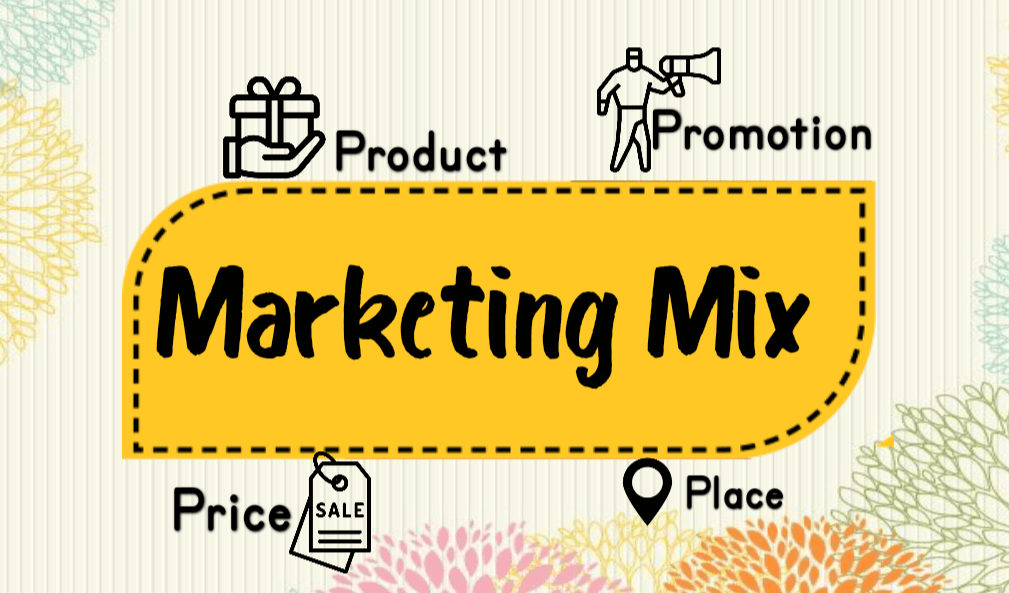
In every business it is important to have an efficient marketing plan or strategy to promote their product, to engage more customers or to understand consumer behaviour, to upgrade their pricing strategy. For this in 1960s, an academic and marketer E. Jerome McCarthy proposed the idea of ‘marketing mix’.
Marketing mix is basically a mixture of 4Ps to enhance business model with Price, Product, Place and Promotion. These 4Ps can be used as marketing tools by any business for achieving their market goals and targets.
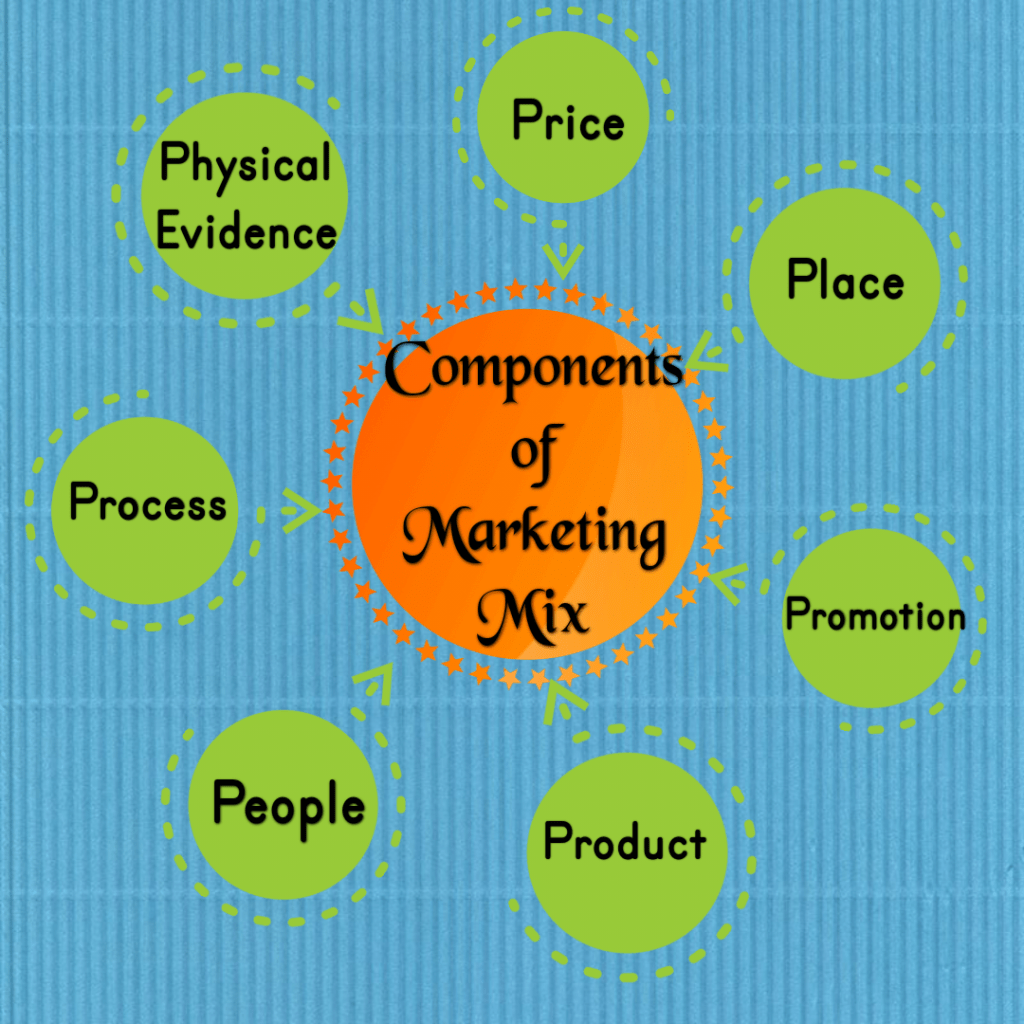
Components of Marketing Mix
- Product
Product means anything which is for sale any physical product or any service rendered to customer. Product should the meet expectations and demand of customers in the market.Some of the marketing decision which every seller should think of such as branding, packaging, product range, product design, packaging and labelling, guarantees and warranties.
2. Place
In marketing mix, place refers that where seller choose to sell his product whether it is warehouse, street market, online platforms, supermarkets, etc. It depends upon the nature of the product i.e. if product is perishable, shops are preferable to sell that product and if product is non-perishable both shops and online platforms are suitable.Marketing decisions related to place includes: market coverage, inventory, transportation, location, distributors, warehousing and franchising.
3. Price
Price is the main aspect for the business and customer. Each and every customer gets affected from price of the product which consumer is selling. Price reflects the cost or value of the product. Seller should set the price as per the demand of customer and the actual cost of the product. Accurate price can change the customer’s preference form one product to another. Other important aspect of pricing is what price has been set by your competitors? This can help any business in setting their pricing strategy. Pricing strategy can make profits for the business or can cause loss to the business if it is not accurate.Price market decisions includes: payment method (card or cash), credit payment, pricing strategy, allowances for distributors and discounts for customers.
4. Promotion
Promotion means to tell or convey about the product to customers through advertising, marketing and sales promotion. It can be through offline mode such as T.V. magazines, newspapers, radio etc. and online mode like websites, ads on social media, etc. It depends upon the seller of the product which way or method he chooses to communicate about his product to customers and according to response from his customers, he should continue with that particular promotion method.Marketing decisions for promotion involves: advertising, sales promotion, public relation, direct marketing, what and how to communicate to customers.
In 1980s Booms and Bitner proposed a model of marketing mix which consist of 7Ps, generally he added 3 more Ps to marketing mix i.e. Process, People and Physical Evidence which is beneficial for Service Marketing.
5. Process
Process describes the chain of delivering the goods or services to the customer. Process examination involves the evaluation of each and every step like procedure of distribution, payment system and relationships with customer. Evaluating, modifying and improving different steps of process will help business to maintain their efforts and to check that methods are new and as per recent trend. Process related marketing decisions involves: blueprint service, process design, checking system failures, monitoring service performance, allocation of resources required.
6. People
In marketing mix, ‘people’ refer to those who all are involved in the process of delivering of goods; managing the process; handle customer relationship, etc. Employees, staff, workers or labour all are included in ‘people’, basically all those who are a part of business. For any business it is necessary to employ right people to manage all the business related process. Marketing decisions related to people includes: staff recruitment and training, attending customers, handling complaints and failures, handling social interactions.
7. Physical Evidence
Physical evidence means evidence of the product which has been purchased by the customer. It can be receipt, brochures, tracking information, invoices, etc. It is beneficial for both customer and seller to have a record or any document of transaction. It also relates to validation of the product, authenticity of the product check by the customer through their websites, logo etc. Here, marketing decisions includes: interior design like furniture and scheme, facilities like equipment access, brochures, stationery, surrounding conditions, and signage.
References:
 Eduindex
You must be logged in to post a comment.