Discover Cities is a fully open access, peer-reviewed journal that supports multidisciplinary research and policy developments across the field of urban science. The journal aims to be a resource for researchers, policy makers and the general public for recent advances in urban research, and the range of interdisciplinary studies that focus on cities and urban life. As a fully open access journal, we ensure that our research is highly discoverable and instantly available globally to everyone. The journal particularly welcomes work that aims to address the United Nations Sustainable Development Goals, especially Sustainable Cities and Communities; Industry, Innovation and Infrastructure; and Responsible Consumption and Production.
Topics
Topics welcomed at Discover Cities include but are not limited to the following:
Smart Cities:
Big data processing and analytics
Machine learning, and artificial intelligence applications
Mobile and wireless sensor networks; location-based services
Internet of Things (IoT); 5G and satellite-based communications
Cloud and edge computing; smart city governance
Digital twin of urban areas and systems
Urban Energy and Sustainability:
Renewable energy sources; energy consumption and carbon emissions
Smart grids and energy management; urban heat island mitigation
Energy transition and decentralization
Energy storage; water-energy nexus; energy communities; zero-energy building (nZEB)
Urban Planning, Design and Transport:
Urban design, development, regeneration and revitalization
Public transportation; pedestrian infrastructure; cycling infrastructure; shared mobility services
Urban public transportation and traffic management
Urban Constructions:
Assessment and retrofitting of existing constructions
Sustainable constructions
Innovative construction materials and techniques
Lifecycle assessment of buildings and building stocks
Urban Climate and Impacts:
Impact of climate on safety and life quality in cities
Extreme climatic events and effects
Effects of climate changes on the urban environment; adaption and mitigation
Built Environment:
Green architecture and building design; urban infrastructure;
Indoor environment
Building information modeling (BIM)
Urban Water:
Urban water infrastructure and management
Urban drainage; urban catchment hydrology and modeling
Urban water storage and contamination
Urban wastewater collection, treatment and recycling
Urban Agriculture and Forestry:
Urban farming; community gardens; rooftop farms
Vertical farming
Planting, maintaining, protecting of urban trees
Urban Economics & Policy:
Urban infrastructure investment and financing; Incentives for renewable energy adoption; energy-efficient building codes; urban housing markets and affordability
Urban poverty, inequality, and social welfare policy
Urban tourism
Urban Health and Well-being:
Healthcare services and facilities in urban areas
Urban health disparities and inequities
Urban environment and its effects on public health
Content types Discover Cities welcomes a variety of article types – please see our submission guidelines for details. The journal also publishes guest-edited Topical Collections of relevance to all aspects of urban science. For more information, please follow up with our journal publishing contact.
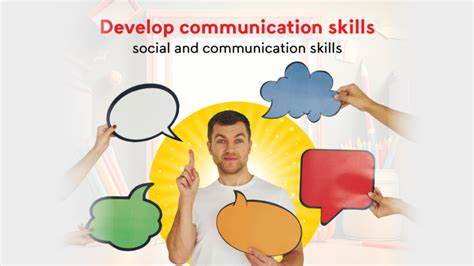
Communication skills are pivotal in the field of social work, as they enable practitioners to effectively engage with clients, collaborate with colleagues, and advocate for change. Social workers must navigate complex situations involving diverse individuals and communities, making the mastery of communication a cornerstone of professional competence.
1. Types of Communication Skills in Social Work
A. Verbal Communication
Verbal communication involves spoken words and is essential for interviewing clients, conducting assessments, and sharing information. Key aspects include:
Clarity and Simplicity: Using language that clients can easily understand.
Empathy: Showing understanding and compassion through tone and word choice.
Active Listening: Engaging with clients by giving verbal feedback, such as paraphrasing or summarizing their concerns.
B. Nonverbal Communication
Nonverbal cues, such as body language, facial expressions, and gestures, often convey more than words. Social workers should:
Maintain open and approachable body language.
Use eye contact appropriately, respecting cultural sensitivities.
Be mindful of physical proximity to create a comfortable environment.
C. Written Communication
Writing is critical for case notes, reports, and correspondence with agencies. Effective written communication requires:
Precision: Ensuring accuracy in documentation.
Professionalism: Adhering to formal standards and avoiding colloquial language.
Confidentiality: Protecting client information in all written records.
D. Digital Communication
With the increasing use of technology, social workers must be adept at digital communication. This includes:
Email and Messaging: Using professional etiquette in digital correspondence.
Virtual Meetings: Employing video conferencing tools effectively.
Social Media: Engaging responsibly and ethically online.
2. Key Communication Techniques
A. Active Listening
Active listening involves fully concentrating on the speaker, understanding their message, and responding thoughtfully. Techniques include:
Reflecting emotions to show empathy.
Avoiding interruptions or premature judgments.
Asking open-ended questions to encourage elaboration.
B. Empathy and Validation
Demonstrating empathy helps build trust and rapport. Validation involves acknowledging clients’ feelings and experiences, making them feel heard and understood.
C. Cultural Competence
Social workers often work with diverse populations, necessitating an awareness of cultural differences in communication styles. This includes:
Learning about clients’ cultural backgrounds.
Avoiding assumptions or stereotypes.
Being respectful of linguistic preferences and needs, such as using interpreters when necessary.
D. Conflict Resolution
Social workers frequently mediate disputes. Effective conflict resolution requires:
Clear articulation of the issues at hand.
Remaining neutral and unbiased.
Facilitating dialogue that promotes mutual understanding.
E. Advocacy Communication
Advocating for clients involves persuasive and impactful communication. Social workers must present arguments convincingly to policymakers, organizations, and other stakeholders.
3. Challenges in Communication
Social workers may encounter barriers that hinder effective communication:
Language Differences: Overcoming language barriers requires creativity, such as employing interpreters or translation tools.
Emotional Distress: Clients in crisis may struggle to articulate their feelings, necessitating a calm and patient approach.
Nonverbal Misinterpretation: Cultural variations in nonverbal communication can lead to misunderstandings.
Technology Access: Digital communication may be inaccessible to some clients, requiring alternative methods.
4. Improving Communication Skills
A. Training and Education
Regular training on communication techniques can enhance a social worker’s ability to engage with clients effectively.
B. Self-Reflection
Reflecting on personal biases and communication patterns can help identify areas for improvement.
C. Feedback and Supervision
Seeking feedback from supervisors and peers provides valuable insights into one’s communication strengths and weaknesses.
D. Adaptability
Tailoring communication styles to suit individual clients ensures messages are received and understood.
5. Ethical Considerations in Communication
Social workers must adhere to ethical standards in all communication, which include:
Confidentiality: Ensuring privacy and discretion in all interactions.
Informed Consent: Clearly explaining services and obtaining consent.
Professional Boundaries: Avoiding inappropriate or overly personal communication.
6. The Role of Communication in Social Work Practice
Effective communication is integral to various aspects of social work:
Building Trust: Open communication fosters trust between clients and social workers.
Problem-Solving: Clear articulation of problems and solutions helps clients navigate challenges.
Advocacy and Awareness: Social workers use communication to advocate for social justice and inform the public about pressing social issues.
Conclusion
Mastering communication skills is essential for social workers to fulfill their roles effectively. From empathetic listening to clear advocacy, the ability to communicate well impacts the outcomes of social work interventions significantly. Ongoing development in this area ensures that social workers can continue to empower individuals and communities in meaningful ways.
References
Dinham, A. (2006). A review of practice of teaching and learning of communication skills in social work education in England. Social work education, 25(8), 838-850.
Forrester, D., Kershaw, S., Moss, H., & Hughes, L. (2008). Communication skills in child protection: How do social workers talk to parents?. Child & Family Social Work, 13(1), 41-51.
Koprowska, J. (2007). Communication skills in social work. In Social work: A companion to learning (pp. 123-133). SAGE Publications Ltd.
Lefevre, M., Tanner, K., & Luckock, B. (2008). Developing social work students’ communication skills with children and young people: A model for the qualifying level curriculum. Child & Family Social Work, 13(2), 166-176.
Ogbanga, M. M. (2024). Communication Skills in Social Work. EduPedia Publications Pvt Ltd.
Ogbanga, M. M., & Bukie, B. F. (2024). Traditional Institutions and Conflict Resolution in Nigeria: A Social Work Analysis.
Ogbanga, M. M. (2024). Oil, Gender and Unemployment: Social Issues in the Niger. Eduindex.
Richards, S., Ruch, G., & Trevithick, P. (2005). Communication skills training for practice: the ethical dilemma for social work education. Social work education, 24(4), 409-422.
Trevithick, P. (2005). Social work skills. Berkshire: Open University Press.






 Eduindex
You must be logged in to post a comment.