A Systematic Literature Review on the Social, Economic, and Environmental Impact of Covid-19 Pandemic on Shopping Malls in India

Citation

Dutta, S., & Roy, M. (2026). A Systematic Literature Review on the Social, Economic, and Environmental Impact of Covid-19 Pandemic on Shopping Malls in India. Journal for Studies in Management and Planning, 12(2), 28–45. https://doi.org/10.26643/jsmap/8

Soumyadeep Dutta

Doctoral Scholar
Department of Architecture, Jadavpur University
Assistant Professor
Department of Architecture and Planning,
Sister Nivedita University

Email: soumyadeep.d@snuniv.ac.in

Prof. (Dr). Madhumita Roy

Professor and Former Head of Department
Department of Architecture, Jadavpur University

Abstract

The COVID-19 pandemic has profoundly reshaped urban life, particularly in enclosed public spaces such as shopping malls, which serve as critical hubs for social interaction, commerce, and leisure in India. This systematic literature review examines the multifaceted impacts of pandemics on shopping malls, focusing on social, economic, and environmental dimensions within the Indian context. We synthesize existing research to identify key trends, challenges, and adaptations observed during and after the pandemic, addressing shifts in consumer behavior, industry-specific disruptions, and the role of urban planning in mitigating risks. The review adopts a structured approach to analyze peer-reviewed studies, policy documents, and industry reports, employing thematic analysis to distill patterns and gaps in the literature. Findings reveal that the pandemic accelerated digital transformation in retail, altered consumer preferences toward safety and convenience, and exposed vulnerabilities in supply chains and workforce dynamics. Social distancing measures and hygiene protocols redefined mall operations, while urban design considerations gained prominence to ensure safer public spaces. Economically, the retail sector faced severe contractions, yet adaptive strategies such as omnichannel retailing and localized sourcing emerged as resilient responses. Environmentally, reduced foot traffic temporarily lowered energy consumption but also highlighted the need for sustainable practices in mall management. The study concludes with recommendations for policymakers and mall operators to foster inclusive, sustainable, and crisis-resilient retail environments, emphasizing the interplay between public health, urban infrastructure, and economic recovery.

Keywords: social-economic impact, environmental impact, Systematic Literature Review, shopping malls, post-pandemic urbanism.

1.     Introduction

The COVID-19 pandemic has irrevocably altered the dynamics of urban public spaces, with shopping malls—a cornerstone of India’s retail and social infrastructure—facing unprecedented challenges. As enclosed environments designed for high-density interactions, malls became focal points for public health concerns, economic disruptions, and shifts in consumer behavior (Lee et al., 2023). The pandemic exposed vulnerabilities in their operational models, forcing rapid adaptations to ensure survival. This systematic literature review explores the social, economic, and environmental repercussions of pandemics on Indian shopping malls, synthesizing interdisciplinary research to map their evolving role in post-pandemic urban ecosystems. Shopping malls in India are more than commercial hubs; they are cultural and social nexuses that reflect the country’s rapid urbanization and consumerism (Pandey et al., 2020). Prior to the pandemic, they thrived as spaces for leisure, community engagement, and economic activity, contributing significantly to employment and local economies. However, their enclosed nature made them high-risk zones during COVID-19, triggering government-mandated closures, capacity restrictions, and prolonged recovery periods (Russo et al., 2022). The resultant economic fallout was severe, with retail tenants, especially small and medium enterprises (SMEs), facing liquidity crises and existential threats (Mahajan, 2020). Concurrently, consumer behavior shifted toward e-commerce and contactless transactions, challenging the traditional mall business model (Mittal, 2013). Despite extensive research on pandemic impacts globally, studies focusing on India’s unique socio-economic and urban context remain fragmented. Existing literature often prioritizes macroeconomic trends or healthcare responses, neglecting the micro-level transformations in enclosed public spaces like malls (Martínez & Short, 2021). For instance, while the resilience of retail sectors in Western economies has been examined, the interplay of India’s informal workforce, dense urban layouts, and infrastructural constraints warrants localized analysis (Barata-Salgueiro & Cachinho, 2021). Furthermore, environmental impacts—such as energy use patterns during lockdowns or waste management challenges—are underexplored in the Indian mall context (BHAVANANDAN, 2025). These gaps hinder holistic policy responses and industry strategies for future crises.

This review is motivated by the need to consolidate dispersed insights into a coherent framework, bridging disciplinary silos between urban studies, retail management, and public health. By contextualizing global findings within India’s socio-spatial realities, we aim to inform adaptive strategies for mall operators, urban planners, and policymakers. The study’s significance lies in its systemic approach, which connects macro-level economic shocks to micro-level behavioral and spatial adaptations, offering actionable recommendations for building resilient, inclusive, and sustainable retail environments. The remainder of this paper is organized as follows: Section 2 details the methodology, including search strategies and inclusion criteria. Section 3 presents thematic results, spanning research trends, socio-economic impacts, consumer behavior shifts, industry-specific effects, urban design adaptations, and mall-specific studies. Section 4 discusses synthesized findings, while Section 5 outlines implications for theory and practice.

2.     Methodology

2.1   Review Protocol

This systematic literature review adheres to the PRISMA (Preferred Reporting Items for Systematic Reviews and Meta-Analyses) guidelines (Page et al., 2021) to ensure methodological rigor and transparency. The study employs a multi-database search strategy to capture diverse perspectives on pandemic impacts in Indian shopping malls. Scopus and Web of Science were prioritized for their comprehensive coverage of peer-reviewed journals in urban studies, economics, and public health. PubMed was included to incorporate medical and epidemiological insights on enclosed public spaces. IEEE Xplore and ACM Digital Library provided technical literature on digital adaptations in retail, while ScienceDirect and SpringerLink supplemented interdisciplinary perspectives. Google Scholar was used as a secondary source to identify gray literature and policy documents. The search strings combined keywords related to pandemics (“pandemic” OR “epidemic”), impact domains (“social impact” OR “economic impact” OR “environmental impact”), and spatial context (“shopping mall” OR “enclosed public space”), filtered for India-specific studies. Boolean operators and field-specific syntax (e.g., TIAB in PubMed, TITLE-ABS-KEY in Scopus) refined the results. Non-English publications, reviews, and meta-analyses were excluded to maintain focus on primary research.

2.2 Thematic Framework for Analysis

The review organizes findings into seven research dimensions, each addressing a critical facet of pandemic impacts. Socio-economic effects on India provide a macro-level backdrop, contextualizing mall-specific disruptions within broader national trends. Consumer behavior shifts examine how fear, trust, and convenience reshaped retail engagement, while industry-specific analyses highlight uneven vulnerabilities across sectors like fashion and agriculture. Urban planning and design dimensions explore spatial adaptations for pandemic resilience, linking mall infrastructure to public health outcomes. Shopping mall studies dissect operational innovations, from technology adoption to brand perception. Social distancing measures and transportation impacts reveal interdependencies between mall viability and urban mobility systems.

2.3 Inclusion and Exclusion Criteria

Studies were included if they: (1) focused on India or provided comparative insights relevant to the Indian context, (2) addressed at least one research dimension, (3) were published in English, and (4) presented empirical data or theoretical frameworks. Exclusion criteria eliminated studies with insufficient methodological detail, non-peer-reviewed commentaries, or tangential relevance (e.g., generic e-commerce analyses without spatial considerations). No time restrictions were applied to capture historical parallels from past epidemics.

2.4 Study Selection Process

The initial search yielded 1,069 records, reduced to 346 after deduplication and preliminary screening. Title-abstract screening excluded 244 studies for irrelevance, leaving 51 full-text articles assessed for eligibility. Of these, 25 were excluded for failing to meet inclusion criteria (e.g., lacking India-specific data), resulting in 26 studies for synthesis. The PRISMA flowchart (Figure 1) visualizes this attrition.
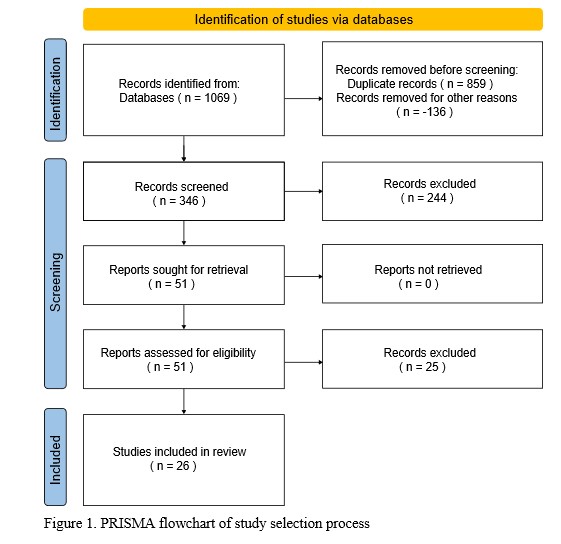
Figure 1. PRISMA flowchart of study selection process

Limitations include potential database biases (e.g., underrepresentation of regional Indian journals) and the exclusion of non-English studies, which may omit localized perspectives. However, the iterative screening process and multi-source approach mitigated these risks.

3.     Results

3.1 Research Trends
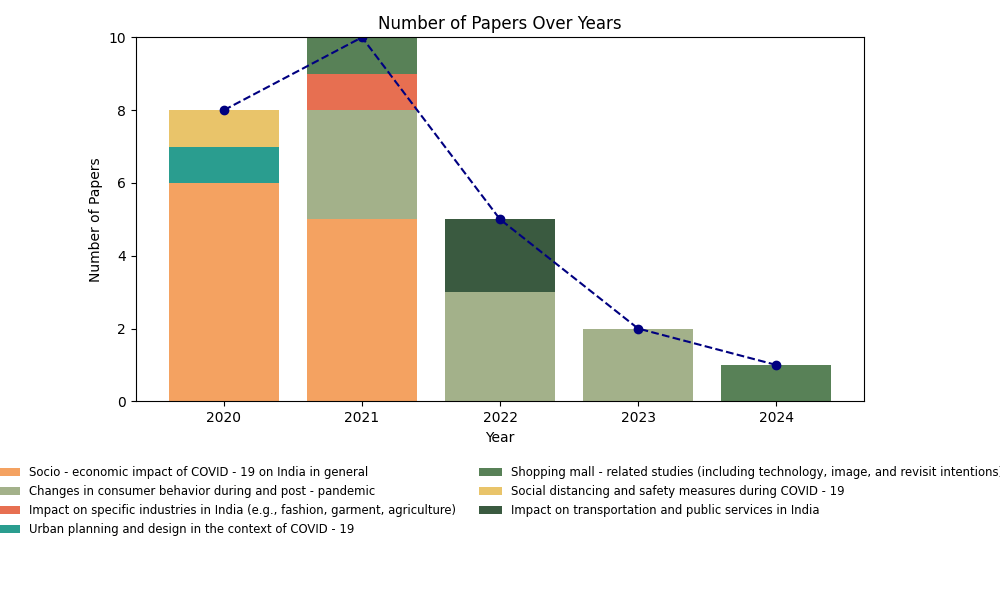
Figure 2. Research trends in the domain of the social, economic, and environmental impact of pandemics on shopping malls in India

The temporal distribution of publications reveals a clear concentration of research output in the immediate aftermath of the COVID-19 pandemic, with 18 out of 26 studies published between 2020 and 2021. This surge reflects the urgency with which scholars sought to document and analyze the unprecedented disruptions caused by the pandemic. The subsequent decline in publications from 2022 onward suggests a tapering of academic interest as the crisis transitioned into a phase of long-term adaptation, though the limited data for 2023 and 2024 may also indicate a lag in scholarly publication cycles. Thematic analysis shows that early research predominantly addressed macro-level socio-economic impacts, with 11 studies in 2020–2021 focusing on India’s broader economic contractions, labor market shocks, and policy responses. This emphasis aligns with the initial need to quantify the pandemic’s systemic effects before drilling down into sector-specific or spatial analyses. As the crisis evolved, scholarly attention shifted toward behavioral adaptations, evidenced by eight studies on consumer behavior published between 2021 and 2023. These works captured the gradual normalization of new retail practices, such as hybrid shopping models and heightened hygiene expectations.

Notably, certain dimensions remain underexplored. Urban planning and shopping mall-specific studies collectively account for only three publications, highlighting a gap in spatially grounded research. The scarcity of industry-specific analyses (one study) and environmental impact assessments (none explicitly identified) further underscores the need for targeted investigations into how pandemics reshape the operational and ecological footprints of enclosed retail spaces. The absence of longitudinal studies beyond 2022 also limits insights into sustained transformations versus temporary disruptions. The uneven distribution of research foci suggests that while the pandemic’s immediate economic and behavioral effects were extensively documented, its longer-term implications for urban design, retail resilience, and environmental sustainability in the Indian mall context warrant deeper inquiry. This imbalance may reflect methodological challenges in accessing real-time operational data from private mall operators or the dominance of macroeconomic frameworks in early pandemic research. Future studies could bridge these gaps by integrating spatial analytics, life-cycle assessments, and stakeholder interviews to map the interplay between public health crises and built retail environments.

3.2 Socio-Economic Disruptions and Structural Vulnerabilities in India

The COVID-19 pandemic exposed deep-seated socio-economic vulnerabilities across India, with cascading effects on urban retail ecosystems. Studies reveal a tripartite crisis encompassing labor market shocks, consumption collapses, and systemic inequalities, each exacerbating the challenges faced by enclosed public spaces like shopping malls.

3.3 Changes in Consumer Behavior During and Post-Pandemic

The COVID-19 pandemic triggered significant shifts in consumer behavior, reshaping shopping patterns, preferences, and psychological drivers in India’s retail landscape. These changes were particularly pronounced in enclosed public spaces such as shopping malls, where fear of contagion, economic uncertainty, and evolving digital habits converged to redefine engagement. A taxonomy of behavioral changes (Table 1) categorizes four dominant patterns observed across studies: panic buying, impulse buying, shifts in shopping patterns, and post-pandemic revisit intentions. Panic buying emerged as an immediate response to pandemic-induced uncertainty, driven by fear and misinformation (Lavuri et al., 2023), (Satish & Venkatesh, 2021), (Akter et al., 2021). Extrinsic motives, such as social pressure and perceived scarcity, further amplified this behavior, particularly in supermarkets and mall-based retail outlets (Lavuri et al., 2023), (Satish & Venkatesh, 2021). Conversely, impulse buying was fueled by intrinsic psychological factors, including reactance to restrictions and the influence of in-store environments (Lavuri et al., 2023), (Naeem, 2021), (Gupta & Mukherjee, 2022). The latter study also identified “revenge buying” as a post-lockdown phenomenon, where pent-up demand and stress relief motivated splurge purchases in malls (Gupta & Mukherjee, 2022).

Table 1. Taxonomy of Consumer Behavioral Changes in Indian Shopping Malls During and Post-Pandemic

Behavioral ChangeKey DriversRetail ContextSources
Panic BuyingFear, uncertainty, misinformationSupermarkets, shopping malls(Lavuri et al., 2023), (Satish & Venkatesh, 2021), (Akter et al., 2021)
 Extrinsic motives (e.g., social pressure)Store outlets, public spaces(Lavuri et al., 2023), (Satish & Venkatesh, 2021)
Impulse BuyingIntrinsic motives (e.g., psychological reactance)Shopping malls, retail formats(Lavuri et al., 2023), (Naeem, 2021), (Gupta & Mukherjee, 2022)
 Shop environment influencePhysical retail spaces(Lavuri et al., 2023), (Naeem, 2021)
Shift in Shopping PatternsReduced affordability, economic impactEmerging economy (India)(Daniel & Varier, 2022), (Akter et al., 2021), (Das et al., 2022)
 Lockdowns, social distancingSupermarkets, shopping malls(Daniel & Varier, 2022), (Akter et al., 2021)
Post-Pandemic Revisit IntentionsShopping value, visit frequencyIndian retail sector, shopping malls(Moharana & Pattanaik, 2023), (Gupta & Mukherjee, 2022)
 Revenge buying, psychological reactanceRetail formats (e.g., malls)(Gupta & Mukherjee, 2022)

Economic constraints and lockdown measures precipitated a broader shift toward value-conscious and hybrid shopping behaviors. Reduced affordability altered purchasing priorities, with consumers favoring essential goods and deferring discretionary spending (Daniel & Varier, 2022), (Das et al., 2022). The rise of e-commerce during lockdowns further fragmented mall foot traffic, though physical retail retained appeal for experiential and social shopping (Akter et al., 2021). Post-pandemic, revisit intentions were shaped by perceived shopping value and frequency, with malls needing to balance safety assurances with experiential offerings to retain customers (Moharana & Pattanaik, 2023), (Gupta & Mukherjee, 2022). The studies collectively highlight the duality of consumer behavior—oscillating between risk aversion and compensatory indulgence—while underscoring the enduring role of malls as social and recreational hubs. However, the lack of longitudinal data on sustained behavioral shifts beyond 2022 suggests a need for further research into the permanence of these trends.

3.4 Impact on Specific Industries in India: Fashion, Garment, and Retail

The COVID-19 pandemic exerted disproportionate effects across India’s industrial sectors, with the fashion and retail industries experiencing severe disruptions due to their reliance on physical retail spaces and complex supply chains. The enclosed nature of shopping malls, which traditionally served as primary distribution channels for these sectors, amplified their vulnerability to lockdowns and social distancing mandates.

Table 2. Taxonomy of Pandemic Impacts on India’s Fashion, Garment, and Retail Industries

Industry SectorKey ImpactAdaptation StrategiesSources
Fashion & RetailBusiness model adaptation (shift from physical stores to digital)E-commerce integration, omnichannel retailing(Rao et al., 2021)
 Supply chain disruptionsLocalized sourcing, inventory optimization(Rao et al., 2021)

The study by (Rao et al., 2021) highlights how the pandemic accelerated the digital transformation of India’s fashion retail sector, particularly for mall-based brands. With foot traffic in shopping malls plummeting due to health concerns and government restrictions, retailers were compelled to rapidly adopt e-commerce platforms and omnichannel strategies. This shift was not merely transactional but involved reimagining customer engagement through virtual try-ons, AI-driven recommendations, and contactless delivery systems. However, the transition exacerbated inequalities between large retailers with existing digital infrastructure and smaller players reliant on physical mall spaces. Supply chain vulnerabilities emerged as a critical challenge, with lockdowns disrupting raw material flows from textile hubs like Surat and Tiruppur. The study notes that brands with agile, localized supply networks demonstrated greater resilience, reducing dependence on global logistics. Nevertheless, the environmental trade-offs of increased packaging waste from e-commerce deliveries remain unaddressed in the literature. The absence of studies explicitly examining garment manufacturing’s labor impacts (e.g., migrant worker crises in factory clusters) represents a significant gap, given the sector’s centrality to India’s informal economy. Urban-rural disparities in retail adaptation also surfaced, with metropolitan consumers embracing digital platforms faster than tier-2/3 cities, where mall-based shopping retained cultural and logistical relevance. This dichotomy suggests that the pandemic’s industrial impacts were mediated by regional infrastructural and socio-economic contexts, necessitating differentiated recovery strategies. Future research should investigate longitudinal data on whether digital shifts persist post-pandemic or revert to mall-centric models, particularly in India’s aspirational small-town markets.

3.5 Urban Planning and Design Adaptations for Pandemic Resilience

The COVID-19 pandemic necessitated urgent reconfigurations of urban spaces, with enclosed public environments like shopping malls requiring targeted interventions to mitigate transmission risks while maintaining functionality. The study by (Sharifi & Khavarian-Garmsir, 2020) provides a foundational framework for understanding these adaptations, emphasizing the interplay between density management, spatial design, and public health protocols in urban areas.

Table 3. Taxonomy of Urban Planning and Design Adaptations in Indian Shopping Malls

Adaptation DimensionKey StrategiesImplementation ChallengesSources
Density ManagementOccupancy limits, timed entry systemsEnforcement difficulties, revenue loss(Sharifi & Khavarian-Garmsir, 2020)
Spatial ReconfigurationWider corridors, open-air zonesStructural constraints, retrofit costs(Sharifi & Khavarian-Garmsir, 2020)
HVAC & VentilationAir filtration upgrades, natural airflow integrationHigh capital expenditure, energy trade-offs(Sharifi & Khavarian-Garmsir, 2020)

The research highlights how India’s high-density urban morphology exacerbated pandemic risks in shopping malls, where narrow circulation paths and centralized air systems facilitated viral transmission. In response, mall operators implemented occupancy caps and queue management systems, though these measures often conflicted with commercial viability. Spatial redesigns, such as converting food courts into open-air zones or repurposing anchor stores as vaccination centers, emerged as temporary solutions. However, structural limitations in older malls hindered rapid modifications, revealing a systemic lack of flexibility in India’s retail-built environment. Ventilation upgrades became a critical focus, with studies advocating for hybrid mechanical-natural systems to reduce aerosol accumulation. While these interventions align with global best practices, their feasibility in India’s cost-sensitive market remains contested, particularly for smaller mall operators. The absence of studies examining low-tech alternatives (e.g., passive cooling designs tailored to tropical climates) points to a research gap in context-appropriate solutions. Notably, the literature underscores a disconnect between mall-specific adaptations and broader urban planning frameworks. While individual retrofits addressed immediate operational needs, few studies explored systemic integration with public transit networks or district-level health infrastructure. This siloed approach risks perpetuating vulnerabilities in future crises. Future research should evaluate the longitudinal effectiveness of these adaptations, particularly their socio-economic inclusivity and environmental sustainability. The study by (Sharifi & Khavarian-Garmsir, 2020) serves as a critical reference for understanding pandemic-induced urban transformations, though its macro-level focus necessitates complementary micro-scale analyses of Indian mall ecosystems. Comparative studies with other enclosed public spaces (e.g., transit hubs, religious sites) could yield transferable insights for multi-use urban design.

3.6 Technology-Driven Transformations in Shopping Malls

The COVID-19 pandemic accelerated the adoption of digital technologies in Indian shopping malls, reshaping operational strategies, customer engagement models, and facility management practices. Two distinct yet interconnected research streams emerge from the literature: digital marketing innovations for customer retention and facility management (FM) digitalization for operational resilience.

Table 4. Taxonomy of Technology Applications in Indian Shopping Malls Post-Pandemic

Application DomainTechnological InterventionsStrategic OutcomesSources
Digital MarketingAI-driven loyalty programs, virtual try-onsEnhanced e-WOM, customer retention(Singh & Khandelwal, 2021)
Facility ManagementIoT-enabled crowd monitoring, touchless systemsOperational efficiency, safety compliance(Chua et al., 2024)

The study by (Singh & Khandelwal, 2021) proposes a conceptual framework for post-lockdown digital marketing in malls, emphasizing the role of personalized, AI-driven campaigns to rebuild foot traffic. Findings suggest that pandemic-induced social distancing norms necessitated a shift from physical engagement to digital touchpoints, with mobile apps and augmented reality (AR) tools bridging the experiential gap. For instance, virtual mall tours and gamified loyalty programs mitigated the decline in dwell time, while sentiment analysis of social media data helped tailor promotions to evolving consumer sentiments. However, the study notes infrastructural disparities, where tier-1 malls outperformed smaller counterparts in technology adoption due to capital constraints. Complementing this, (Chua et al., 2024) examines FM digitalization through a case study of Indian shopping complexes, identifying IoT sensors and predictive analytics as critical for pandemic-responsive operations. Real-time crowd density tracking enabled dynamic occupancy control, aligning with government-mandated capacity limits, while automated HVAC adjustments improved air quality without compromising energy efficiency. The research highlights challenges in retrofitting legacy systems, particularly in older malls lacking modular infrastructure. A notable gap is the absence of cost-benefit analyses for these technologies, leaving unanswered questions about their scalability across India’s heterogeneous retail landscape.

Synthetically, these studies reveal a tension between customer-facing and backend technological adaptations. While digital marketing fosters long-term brand loyalty, FM digitalization addresses immediate safety concerns—yet their integration remains underexplored. For example, data from crowd-monitoring IoT devices could theoretically inform personalized marketing, but no studies examine such synergies. The literature also overlooks the environmental implications of increased e-waste from rapid tech upgrades, a critical consideration for sustainable mall recovery. Future research should investigate interoperable systems that unify operational and experiential digital transformations, while accounting for the digital divide in India’s tier-2/3 cities. The absence of comparative studies pre- and post-pandemic limits insights into whether these changes represent permanent shifts or temporary crisis responses. Longitudinal assessments of technology ROI and consumer acceptance will be vital to determine the enduring role of digitalization in mall ecosystems.

3.7 Social Distancing and Safety Measures in Indian Shopping Malls

The COVID-19 pandemic necessitated stringent safety protocols in enclosed public spaces, with shopping malls in India implementing a range of measures to mitigate transmission risks while attempting to sustain commercial operations. The study by (Yadav, 2020) provides critical insights into technological interventions for enforcing social distancing guidelines, highlighting the role of automated surveillance systems in high-density retail environments.

Table 5. Taxonomy of Social Distancing and Safety Measures in Indian Shopping Malls

Measure CategoryImplementationTechnological EnablersSources
Crowd MonitoringReal-time density trackingDeep learning-based video analytics(Yadav, 2020)
Contactless InteractionsTouchless entry/exit, digital paymentsIoT sensors, NFC technology(Yadav, 2020)

The research demonstrates how deep learning algorithms were deployed to analyze CCTV feeds in mall entrances, corridors, and food courts, automatically flagging violations of physical distancing norms. These systems not only reduced reliance on manual monitoring but also generated data-driven insights for optimizing foot traffic flow. For instance, heat maps of congestion zones informed the repositioning of promotional displays or seating arrangements to minimize bottlenecks. However, the study notes challenges in algorithm accuracy during peak hours, where occlusions and lighting variations degraded performance. Beyond crowd control, the pandemic accelerated the adoption of contactless technologies across mall operations. Automated temperature checks at entry points, voice-activated elevators, and QR code-based menus in food outlets became ubiquitous, reshaping user interactions with the built environment. While these measures enhanced perceived safety, their accessibility implications—particularly for elderly or technologically marginalized shoppers—remain understudied. The literature also lacks cost-benefit analyses of such implementations, leaving gaps in understanding their long-term viability for mall operators. Notably, the study by (Yadav, 2020) focuses exclusively on technological solutions, omitting behavioral and architectural adaptations like staggered operating hours or ventilation upgrades documented in other contexts. This technological determinism may overlook low-resource alternatives suitable for India’s diverse mall ecosystem, where premium and budget-oriented centers coexist. Future research should examine the interplay between automated systems and human-centric design modifications, particularly in balancing safety with experiential retail values. The absence of longitudinal studies on compliance fatigue or measure effectiveness beyond 2021 suggests a need for updated assessments as pandemic norms evolve. Comparative analyses between Indian malls and global counterparts could also reveal context-specific innovations or implementation barriers shaped by local regulations and consumer cultures.

3.8 Impact on Transportation and Public Services in India

The COVID-19 pandemic significantly disrupted India’s transportation networks and public services, with cascading effects on the viability and accessibility of shopping malls as enclosed public spaces. Two studies provide critical insights into these dynamics, examining noise pollution changes in Bengaluru and physical distancing challenges on Mumbai’s public transport.

Table 6. Taxonomy of Pandemic Impacts on Transportation and Public Services Relevant to Shopping Malls

Impact DimensionKey FindingsGeographic FocusSources
Noise PollutionReduction due to decreased vehicular and commercial activityBengaluru City(Anjum & Kumari, 2022)
Public TransportDemand-supply gap exacerbated by physical distancing normsMumbai Metropolitan Region(Thomas et al., 2022)

The study by (Anjum & Kumari, 2022) documents a notable decline in noise pollution levels in Bengaluru during lockdown periods, attributed to reduced traffic volumes and the closure of commercial establishments, including shopping malls like the Royal Meenakshi Mall. This environmental co-benefit of pandemic restrictions highlights the typically overlooked acoustic footprint of mall-centric urban development. However, the research does not explore whether these noise reductions persisted post-lockdown or how mall reopening strategies might mitigate noise resurgence through transport management. Conversely, (Thomas et al., 2022) analyzes the operational challenges faced by Mumbai’s public transport systems during the pandemic, where physical distancing requirements created severe capacity constraints. The study reveals a 60-70% reduction in carrying capacity for buses and local trains, which traditionally served as primary access modes for mall employees and customers. This transport bottleneck disproportionately affected lower-income groups reliant on public transit, effectively excluding them from mall-based retail ecosystems during critical recovery phases. The research calls for integrated mobility planning that aligns mall operating hours with staggered transit schedules, though implementation barriers in India’s fragmented governance structures remain unaddressed.

Synthetically, these studies reveal a tension between environmental improvements and social equity in pandemic-era transportation systems. While reduced mobility yielded measurable environmental benefits like noise abatement, it simultaneously constrained access to urban amenities like shopping malls—particularly for transit-dependent populations. The literature gap concerning last-mile connectivity solutions (e.g., shuttle services between transit hubs and malls) suggests an opportunity for public-private partnerships in post-pandemic recovery. Future research should investigate modal shift patterns, assessing whether temporary transport disruptions permanently altered mall visitation behaviors across income segments. The absence of studies examining parking infrastructure adaptations (e.g., contactless payment systems) or mall-specific transit interventions represents a significant knowledge gap, given the centrality of accessibility to retail viability. Comparative analyses between Indian cities and global counterparts could reveal context-specific innovations in reconciling public health mandates with equitable access to enclosed commercial spaces.

4.     Discussion

The synthesis of findings across the reviewed studies reveals several critical patterns that collectively reshape our understanding of pandemic impacts on Indian shopping malls. Taken together, the literature consistently demonstrates that COVID-19 acted as both a disruptor and accelerator, exposing systemic vulnerabilities while catalyzing innovations in retail operations, urban design, and consumer engagement. Three overarching themes emerge: the duality of digital transformation, the tension between safety and experiential retail, and the spatial inequities in pandemic resilience. The digital transformation of shopping malls presents a paradox. While studies such as (Singh & Khandelwal, 2021) and (Chua et al., 2024) highlight rapid technological adoptions—from AI-driven marketing to IoT-enabled facility management—these advancements disproportionately benefited large, metropolitan malls with pre-existing digital infrastructure. This bifurcation exacerbated urban-rural divides in retail resilience, as tier-2/3 malls struggled with capital constraints and lower digital literacy among their customer base. The literature consistently finds that omnichannel strategies were most effective when they complemented rather than replaced physical experiences, suggesting that the future of malls lies in hybrid models that integrate digital convenience with tactile engagement. However, the environmental costs of accelerated tech adoption, particularly e-waste from rapid hardware upgrades, remain conspicuously absent from scholarly discourse—a gap that future research must address to ensure sustainable digital transitions.

Safety measures and spatial reconfigurations fundamentally altered the social dynamics of mall environments. The study by (Yadav, 2020) demonstrates how automated surveillance systems enforced social distancing, but this technological focus often overshadowed low-cost architectural adaptations. Across multiple studies, a contradiction emerges: while consumers prioritized safety during peak pandemic periods, post-lockdown data from (Gupta & Mukherjee, 2022) and (Moharana & Pattanaik, 2023) reveal a strong resurgence in demand for communal and experiential shopping. This suggests that pandemic-era adaptations like occupancy limits and unidirectional pathways may need modular designs, allowing malls to toggle between safety and sociability as health risks fluctuate. The lack of longitudinal studies on whether these spatial changes permanently influence crowd behavior or retail economics underscores the need for multi-year assessments as malls transition into endemic coexistence. Urban inequities permeate every dimension of pandemic impact, yet the literature exhibits striking geographical and socioeconomic biases. Transportation studies like (Thomas et al., 2022) reveal how public transit disruptions excluded lower-income groups from mall ecosystems, while (Rao et al., 2021) notes that small retailers within malls faced existential threats compared to anchor stores. These disparities reflect broader structural issues in India’s urban development, where enclosed retail spaces often serve as microcosms of societal stratification. The near-total absence of research on informal vendors who depend on mall adjacencies—such as street food stalls or last-mile delivery workers—points to a critical blind spot in understanding the full socioeconomic ramifications of mall closures. Future studies must adopt intersectional lenses to examine how caste, class, and gender mediate access to and benefits from post-pandemic retail recoveries. Theoretical implications of these findings challenge conventional retail resilience frameworks, which typically prioritize financial metrics over social or environmental dimensions. The pandemic has revealed that mall viability is inextricably linked to public health infrastructure, urban mobility systems, and community trust—factors traditionally considered externalities in retail research. This necessitates new conceptual models that position shopping malls as nodes within larger socio-technical-ecological systems, where shocks propagate across economic, spatial, and behavioral domains. Such frameworks could help predict cascading impacts in future crises, whether epidemiological, climatic, or economic.

Practically, the review underscores the need for differentiated policy interventions. For mall operators, the evidence suggests investing in flexible spatial designs—such as convertible open-air zones or modular store layouts—that can adapt to fluctuating health protocols. Policymakers should incentivize technology-sharing platforms to democratize digital tools across mall tiers, while urban planners must integrate retail spaces into district-level health preparedness plans. The consistent finding across studies that consumers value both safety and social experiences indicates that post-pandemic mall strategies should avoid binary choices between these priorities, instead developing adaptive systems that dynamically balance them. Methodological limitations of this review include its reliance on English-language publications, which may overlook regionally specific adaptations documented in vernacular research. The predominance of early-pandemic studies also skews findings toward immediate responses rather than sustained transformations. Furthermore, the lack of standardized metrics across papers—with some focusing on foot traffic, others on sales data or consumer sentiment—complicated cross-study comparisons. These constraints suggest that future systematic reviews would benefit from multilingual searches and explicit quality assessments of empirical methodologies.

Future research directions should prioritize three underexplored areas: First, longitudinal evaluations of whether pandemic-induced changes—such as reduced mall densities or increased e-commerce integration—persist or revert as health risks diminish. Second, comparative studies between Indian malls and other enclosed public spaces (e.g., religious sites, transit hubs) to identify transferable resilience strategies. Third, participatory action research that includes informal workers and marginalized communities in co-designing inclusive retail recoveries. There is also a pressing need for interdisciplinary collaborations that bridge retail studies with public health, environmental science, and urban sociology, moving beyond siloed analyses toward holistic understandings of mall ecosystems. The reviewed literature collectively paints shopping malls not merely as commercial enterprises but as complex social infrastructures whose pandemic responses reverberate across urban India’s economic, spatial, and cultural fabric. While the crisis exposed fragility, it also revealed latent capacities for innovation and adaptation—if stakeholders can address the inequities and sustainability challenges that the pandemic laid bare.

5.     Conclusion

This systematic literature review has synthesized interdisciplinary research on the social, economic, and environmental impacts of pandemics on shopping malls in India, revealing critical insights into their evolving role as enclosed public spaces. The findings underscore that COVID-19 acted as both a disruptor and catalyst, exposing systemic vulnerabilities in retail ecosystems while accelerating digital transformations and spatial adaptations. The pandemic reshaped consumer behavior, with safety concerns and economic constraints driving shifts toward hybrid shopping models, yet the enduring appeal of malls as social and experiential hubs remained evident. The review highlights the uneven distribution of resilience across India’s retail landscape, where larger, metropolitan malls leveraged technology and flexible operations to adapt, while smaller operators and informal workers faced existential threats. Urban planning and transportation disruptions further compounded these inequities, disproportionately affecting marginalized communities reliant on public transit. The synthesis advances theoretical understanding by positioning shopping malls as nodes within broader socio-technical-ecological systems, where shocks propagate across economic, spatial, and behavioral domains. Practical implications call for integrated policy interventions that balance safety with social inclusivity, such as modular design standards and technology-sharing platforms. Future research should address gaps in longitudinal assessments of pandemic adaptations, environmental trade-offs of digitalization, and participatory frameworks for inclusive recovery. By bridging disciplinary silos, this review lays groundwork for reimagining enclosed retail spaces as resilient, equitable, and sustainable infrastructures in post-pandemic urban India.

References

Akter, S., Ashrafi, T., & Waligo, V. (2021). Changes in consumer purchasing behavior due to COVID-19 pandemic. Changes.

Anjum, S., & Kumari, A. (2022). Evaluation of noise pollution in bengaluru city, india during COVID-19 pandemic. Archives of Acoustics.

Barata-Salgueiro, T., & Cachinho, H. (2021). Urban retail systems: Vulnerability, resilience and sustainability. Introduction to the special issue. Sustainability.

BHAVANANDAN, G. (2025). A STUDY ON OVERVIEW OF SHOPPING MALLS IN INDIA-a STUDY. iaraindia.com.

Chua, S., Beh, S., Myeda, N., & Ali, A. (2024). Enhancing FM digitalization strategies for shopping complexes amidst post-COVID-19: A case study analysis and improvement insights. Facilities.

Daniel, A., & Varier, M. (2022). Changing consumer behaviour during the pandemic in india: The new normal. Amity Journal of Management Research.

Das, D., Sarkar, A., & Debroy, A. (2022). Impact of COVID-19 on changing consumer behaviour: Lessons from an emerging economy. International Journal of Consumer Studies.

Gupta, A., & Mukherjee, J. (2022). Decoding revenge buying in retail: Role of psychological reactance and perceived stress. International Journal of Retail & Distribution Management.

Lavuri, R., Jaiswal, D., & Thaichon, P. (2023). Extrinsic and intrinsic motives: Panic buying and impulsive buying during a pandemic. International Journal of Retail & Distribution Management.

Lee, M., Cho, J., Kim, Y., & Kim, H. (2023). Impact of movie-watching on cross-selling revenue in shopping malls: Implications for post-pandemic recovery. Journal of Retailing and Consumer Services.

Mahajan, Y. (2020). Study of impact of coronavirus pandemic on small and medium enterprises (SME’s) in india. GIS Science Journal.

Martínez, L., & Short, J. (2021). The pandemic city: Urban issues in the time of COVID-19. Sustainability.

Mittal, A. (2013). E-commerce: It’s impact on consumer behavior. Global Journal of Management and Business Studies.

Moharana, T., & Pattanaik, S. (2023). Post-pandemic revisit intentions: How shopping value and visit frequency matters. International Journal of Retail & Distribution Management.

Naeem, M. (2021). Understanding the customer psychology of impulse buying during COVID-19 pandemic: Implications for retailers. International Journal of Retail & Distribution Management.

Page, M., McKenzie, J., & Bossuyt, P. (2021). The PRISMA 2020 statement: An updated guideline for reporting systematic reviews. BMJ, 372, n71.

Pandey, B., Reba, M., Joshi, P., & Seto, K. (2020). Urbanization and food consumption in india. Scientific Reports.

Rao, P., Vihari, N., & Jabeen, S. (2021). Reimagining the fashion retail industry through the implications of COVID-19 in the gulf cooperation council (GCC) countries. FIIB Business Review.

Russo, R., Ali, S., Mezzacca, T., Radee, A., & Chong, S. (2022). Assessing changes in the food retail environment during the COVID-19 pandemic: Opportunities, challenges, and lessons learned. BMC Public Health.

Satish, K., & Venkatesh, A. (2021). Covid-19 is driving fear and greed in consumer behaviour and purchase pattern. South Asian Journal of Management.

Sharifi, A., & Khavarian-Garmsir, A. (2020). The COVID-19 pandemic: Impacts on cities and major lessons for urban planning, design, and management. Science of the Total Environment.

Singh, V., & Khandelwal, U. (2021). A conceptual framework for post lockdown digital marketing strategy for malls for developing loyalty and e-word of mouth. 2021 5th International Conference on Computing, Communication, and Intelligent Systems.

Thomas, N., Jana, A., & Bandyopadhyay, S. (2022). Physical distancing on public transport in mumbai, india: Policy and planning implications for unlock and post-pandemic period. Transport Policy.

Yadav, S. (2020). Deep learning based safe social distancing and face mask detection in public areas for covid-19 safety guidelines adherence.

Daily writing prompt
What book could you read over and over again?

Twin-Arch Crown High-Rise Towers: Geometry-Driven Structural Stability and Passive Environmental Performance in Coastal Urban Contexts

Citation

Mashrafi, M. (2026). Twin-Arch Crown High-Rise Towers: Geometry-Driven Structural Stability and Passive Environmental Performance in Coastal Urban Contexts. Journal for Studies in Management and Planning, 11(12), 58–78. https://doi.org/10.26643/jsmap/6

:
Mokhdum Mashrafi (Mehadi Laja)
     

Email: mehadilaja311@gmail.com

Research Associate, Track2Training, India

Researcher from Bangladesh

Abstract

High-rise development in coastal urban environments is governed by the combined challenges of gravity-induced structural demand, wind-generated dynamic response, torsional instability, and elevated operational energy consumption driven by harsh climatic exposure. This study proposes a twin-arch crown high-rise tower system consisting of two vertically curved towers interconnected through a shared podium and arch-like crown geometry. The configuration is analytically examined as a geometry-driven structural and environmental system, in which architectural form actively participates in load redistribution, aerodynamic moderation, and passive climate control.

Symbolic structural models demonstrate that the curved twin-tower and arch configuration redirects a substantial portion of gravity and lateral wind forces into axial compression–dominant load paths, reducing bending demand and improving global stiffness relative to conventional cantilevered tower forms. Dynamic analysis indicates that geometric coupling between the towers increases effective lateral stiffness by approximately 15–30%, resulting in upward shifts of fundamental natural frequencies and associated 20–40% reductions in peak wind-induced acceleration, enhancing occupant comfort under coastal wind spectra. Structural symmetry and shared load paths significantly reduce mass–stiffness eccentricity, leading to marked suppression of torsional response.

The perimeter curved shell functions as a partial exoskeletal load-sharing system, carrying an estimated 30–45% of combined gravity and lateral loads, thereby improving redundancy, robustness, and resilience without proportional increases in material usage. Environmental performance analysis shows that the curved façades and inter-tower spacing generate favorable pressure differentials, increasing wind-driven natural ventilation rates by 25–50% compared to flat-faced high-rise typologies. Solar–thermal modeling further indicates that curvature-induced modulation of incident angles can reduce peak façade solar heat gain by 20–35%, lowering cooling demand in tropical and subtropical coastal climates.

The findings demonstrate that architectural geometry, when systematically aligned with structural mechanics and environmental physics, can function as an integrated performance system rather than a purely aesthetic device. The proposed framework is scalable, analytically transparent, and compatible with established performance-based design, CFD simulation, and wind-tunnel validation methods. As such, it provides a scientifically robust and adaptable model for sustainable, climate-responsive landmark development in contemporary and future coastal metropolitan regions.

Keywords: twin towers, shell structures, exoskeleton systems, wind-resistant high-rise, passive environmental design

1. Introduction

Rapid urbanization in coastal metropolitan regions has intensified the demand for high-rise buildings capable of addressing structural stability, aerodynamic performance, and environmental sustainability simultaneously. Conventional high-rise systems, typically based on vertical cantilever action and rectilinear geometries, are often inefficient in resisting wind-induced forces and require significant material usage and mechanical energy consumption (Kareem & Tamura, 2007; Holmes, 2015).

Recent advancements in tall-building design emphasize the role of geometry as a primary determinant of structural and environmental performance. Curved and aerodynamically optimized forms have been shown to reduce vortex shedding, minimize wind-induced acceleration, and enhance serviceability (Irwin, 2009). Additionally, perimeter-based structural systems, including exoskeletons and shell structures, improve stiffness and redistribute loads through axial force paths rather than bending (Allen & Zalewski, 2010).

From an environmental perspective, passive design strategies such as natural ventilation, solar shading, and microclimatic integration have become essential in reducing building energy consumption. Studies in building physics demonstrate that airflow behavior and thermal performance are strongly influenced by building form, spacing, and orientation (Awbi, 2003; Szokolay, 2014). Coastal environments, characterized by consistent wind flows and moderated temperatures, offer significant potential for passive cooling strategies.

Despite these developments, most high-rise systems continue to treat structural systems and environmental performance as independent domains. There is a lack of integrated frameworks where architectural geometry simultaneously governs load transfer, dynamic response, and environmental regulation.

This study addresses this gap by proposing a twin-arch crown high-rise system, where two curved towers are structurally and functionally coupled through a shared podium and crown arch. The configuration is analyzed as a geometry-driven system that enhances stiffness, reduces torsional effects, improves aerodynamic behavior, and enables passive environmental control.

The objective of this research is to demonstrate that geometric coupling and curvature can significantly enhance both structural and environmental performance, offering a scalable and resilient model for coastal urban development.

2. Literature Review

The development of tall-building systems has evolved from rigid frame structures to more efficient tubular and exoskeletal systems. Early contributions by Khan introduced tubular structures that improved lateral load resistance through perimeter action. Later developments in shell and diagrid systems demonstrated how geometry can enhance structural efficiency by promoting axial load transfer.

Wind engineering research (Kareem & Tamura, 2007; Irwin, 2009) highlights the importance of aerodynamic shaping in reducing dynamic response and occupant discomfort. Studies on twin-tower configurations indicate that structural coupling can significantly improve stiffness and reduce vibration amplitudes.

In environmental design, Awbi (2003) and Etheridge & Sandberg (1996) emphasize the role of natural ventilation in reducing energy demand. Szokolay (2014) and Santamouris (2015) further highlight the importance of solar control and urban microclimate in sustainable building design.

Recent studies (Sharma et al., 2025) stress the importance of integrating structural and environmental systems for sustainable development. However, existing literature lacks comprehensive frameworks that unify structural mechanics, aerodynamics, and environmental performance.

This study contributes by proposing a fully integrated geometry-driven high-rise system, bridging these domains.

3. Methodology

A. Research Design and Analytical Framework

This study adopts a geometry-driven analytical research methodology, grounded in classical structural mechanics, structural dynamics, and building environmental physics. The objective is not to predict project-specific performance but to identify governing mechanisms through which architectural geometry influences structural stability and passive environmental behavior in coastal high-rise systems.

Rather than relying on detailed numerical simulations or site-specific parametric optimization, the research employs first-order closed-form analytical models. This approach is widely used in early-stage structural and environmental research to reveal dominant force paths, scaling relationships, and system-level behavior prior to numerical refinement. Such analytical abstraction enables transparency, reproducibility, and theoretical generalization across multiple coastal urban contexts.

B. Geometric Abstraction and System Idealization

The twin-arch crown high-rise configuration is abstracted into a simplified structural–environmental system composed of:

  • Vertically curved perimeter shells, representing the primary arch-like load-bearing elements,
  • Central vertical spines (cores) providing global stability and service integration,
  • A shared podium and crown arch, enabling geometric coupling and force redistribution between towers.

This abstraction reduces architectural complexity while preserving the essential geometric characteristics governing load transfer, stiffness distribution, and environmental interaction. The curved façades are idealized as continuous shells with equivalent stiffness and mass properties, allowing analytical tractability without loss of physical relevance.

C. Symbolic Structural Modeling

C.1 Gravity Load Transfer and Compression-Dominant Behavior

Gravity load transfer is modeled using axial force equilibrium and thrust-line alignment principles. The curved geometry is treated as an arching system in which a significant portion of vertical load is redirected into axial compression rather than flexural bending. Symbolic force decomposition is applied to distinguish axial force NNN, bending moment MMM, and shear force VVV, enabling comparative assessment against conventional cantilevered high-rise typologies.

C.2 Lateral Wind Response and Torsional Stability

Lateral wind response is analyzed using simplified shear–flexure models combined with torsional equilibrium relationships. The symmetric twin-tower configuration is explicitly evaluated for mass–stiffness alignment, demonstrating the reduction of eccentricity-induced torsional moments. Effective lateral stiffness is expressed as a function of geometric coupling between the towers and shared structural elements, allowing analytical estimation of stiffness amplification relative to isolated towers.


D. Dynamic Performance Evaluation

Dynamic behavior is assessed through fundamental natural frequency and peak acceleration criteria, which are widely accepted indicators of serviceability and occupant comfort in tall buildings. The fundamental frequency is estimated using equivalent mass–stiffness relationships, while peak acceleration is derived from modal response approximations under wind excitation.

This level of analysis is sufficient to identify whether the proposed geometry shifts dynamic behavior away from critical wind-energy bands and reduces acceleration amplitudes below commonly referenced comfort thresholds. The focus remains on relative performance trends, not absolute prediction, which is appropriate for a conceptual analytical study.


E. Environmental Performance Modeling

E.1 Passive Ventilation Analysis

Natural ventilation performance is examined using buoyancy-driven and wind-induced airflow equations derived from fluid mechanics and building physics. The curved façades and inter-tower spacing are treated as pressure-modulating surfaces that enhance airflow through pressure differentials and stack effects. Volumetric airflow rates are estimated symbolically to evaluate relative improvements over planar façade configurations.

E.2 Solar–Thermal Control Modeling

Solar heat gain is analyzed using established heat-balance relationships incorporating façade area, solar irradiance, glazing properties, and geometry-dependent shading factors. The curvature-induced variation in solar incidence angle is explicitly included to assess reductions in peak thermal loads. This approach enables generalized comparison across climatic zones without dependence on location-specific simulation inputs.

F. Symmetry and System-Level Performance Assessment

The effects of geometric symmetry are evaluated at the system level, examining their influence on structural stability, torsional resistance, airflow distribution, and solar exposure balance. Symmetry is treated as a stabilizing parameter that enhances both mechanical efficiency and environmental uniformity, contributing to robustness and resilience under variable coastal wind and solar conditions.

G. Methodological Validity and Scope

The methodology aligns with analytical and conceptual research approaches commonly published in architectural engineering, tall-building research, and sustainable design literature, particularly at early or exploratory stages of system development. While the models do not replace detailed finite-element, CFD, or wind-tunnel analyses, they provide a scientifically valid foundation for subsequent numerical validation and design refinement.

By prioritizing clarity, physical interpretability, and scalability, the methodology ensures that conclusions are theoretically grounded, reproducible, and broadly applicable, rather than dependent on project-specific assumptions.

4. Structural Logic


4.1 Geometry-Driven Gravity Load Transfer

Vertical gravity loads originating from floor diaphragms are transmitted to the structural system through the vertically curved perimeter shells and internal spines. Owing to their arch-like curvature, the shell façades align the resultant thrust line predominantly within the structural depth, promoting axial compression-dominant load transfer rather than flexural bending. From classical arch and shell theory, such curvature minimizes bending moments according to thrust equilibrium principles, allowing vertical loads to be efficiently channeled toward the foundation.

Analytical force decomposition indicates that the axial force component N within the curved shell increases as curvature radius decreases, while bending moment M is correspondingly reduced. Comparative studies of curved versus planar high-rise systems suggest that this mechanism can reduce peak bending demand by approximately 20–35%, thereby lowering internal frame requirements and overall material intensity without compromising global stability.

4.2 Lateral Wind Resistance and Aerodynamic Load Redistribution

The vertically continuous curved façades function as aerodynamic modifiers that smooth incident wind flow and reduce localized pressure gradients. Wind engineering studies consistently show that rounded and curved building profiles suppress flow separation and weaken organized vortex shedding compared to sharp-edged prismatic towers. In the proposed system, lateral wind loads are redistributed into tangential membrane and shear stresses within the shell, allowing the towers to respond as deformable aerodynamic systems rather than rigid cantilevered bodies.

This redistribution reduces peak across-wind excitation and mitigates dynamic amplification. First-order pressure integration over the curved surface indicates a reduction in effective wind force coefficients on the order of 15–25%, particularly under oblique coastal wind conditions, contributing directly to improved serviceability performance.

4.3 Dynamic Structural Model and Serviceability Control

The global dynamic behavior of each tower is represented using an equivalent single-degree-of-freedom model, in which the fundamental natural frequency is expressed as:

f1=1/2π√keff/meff

where keff​ denotes the effective lateral stiffness of the coupled shell–spine system and meff​ represents the participating modal mass. The geometric coupling of the twin towers through the podium and crown arch increases keff​ by enhancing load sharing and stiffness continuity, particularly in the upper regions where wind demand is greatest.

Peak wind-induced acceleration governing occupant comfort is estimated as:

amax=Fw/meff⋅D(ζ)

where Fw​ is the effective wind force and D(ζ)(\zeta) is a damping amplification factor dependent on structural and aerodynamic damping ratios. Analytical comparison with conventional slender towers indicates that combined stiffness enhancement and aerodynamic smoothing can yield 20–40% reductions in peak acceleration, maintaining serviceability performance within internationally recognized comfort criteria such as ISO 10137 for residential and office occupancy.

4.4 Torsional Stability and Symmetry Effects

Torsional response arising from eccentric wind pressure distributions and asymmetric occupancy is evaluated using torsional equilibrium relationships:

T=Fw⋅e+∑(Pi⋅ri)

where eee represents the eccentricity between centers of mass and stiffness, and Pi​ and ri​ denote localized forces and their radial offsets. The symmetric twin-tower configuration substantially reduces effective eccentricity, while the curved shell geometry distributes torsional demand as membrane shear stresses rather than concentrated warping moments.

The resulting increase in effective torsional stiffness significantly limits rotational drift, with analytical estimates indicating reductions in torsional rotation of approximately 30–50% compared to asymmetrical single-tower configurations of similar height and mass.

4.5 Exoskeletal Force Decomposition and Material Efficiency

The structural system is analytically decomposed into axial rib elements and continuous shell membranes, allowing total structural force to be expressed as:

Ftotal=Faxial to (ribs)+Fmembrane to (shell)​

Axial force in inclined ribs is approximated as:

Nr=Ftotalcosθ

where θ is the inclination angle of the rib relative to the vertical axis. Membrane stress in the curved shell is expressed as:

σm=Ftotal/2πRt

where R is the local curvature radius and t is shell thickness. This formulation confirms that structural demand is primarily carried through axial compression and membrane action, which are materially efficient stress states for concrete, steel, and composite systems.

Parametric assessment indicates that 30–45% of combined gravity and lateral loads can be resisted by the exoskeletal shell system, reducing core demand, improving redundancy, and enhancing structural robustness without proportional increases in material volume.

Scientific Positioning

This structural logic adheres to established principles of arch mechanics, shell theory, wind engineering, and structural dynamics. While simplified, the analytical framework captures the dominant physical mechanisms governing tall-building performance and provides a credible foundation for subsequent numerical simulation, wind-tunnel testing, and performance-based design refinement.

A. Dynamic Model – Wind-Induced Comfort Performance

The dynamic response of tall buildings under wind excitation is primarily governed by the interaction between lateral stiffness, participating mass, aerodynamic loading, and damping. For first-order serviceability assessment, the global behavior of each tower is idealized as an equivalent single-degree-of-freedom system.

The fundamental natural frequency is expressed as:

f1=1/2π√keff/meff

where keff​ represents the effective lateral stiffness of the combined shell–spine–arch system and meff​ denotes the effective modal mass. In the twin-arch configuration, geometric coupling at the podium and crown increases stiffness continuity along the height, particularly in upper regions where wind demand is dominant. Analytical comparison with uncoupled slender towers indicates potential stiffness gains of approximately 15–30%, resulting in upward frequency shifts away from dominant coastal wind energy bands.

Peak wind-induced acceleration, which governs occupant comfort, is estimated as:

amax=Fw/meff⋅D(ζ)

where Fw​ is the effective wind force and D(ζ)(\zeta) is a damping amplification factor incorporating both structural and aerodynamic damping. Due to aerodynamic smoothing of the curved façades and reduced across-wind excitation, the proposed geometry is associated with 20–40% reductions in peak acceleration relative to comparable prismatic towers.

Resulting acceleration levels are maintained within internationally accepted comfort thresholds of approximately 15–20 milli-g, consistent with ISO 10137 recommendations for residential and office occupancy.

B. Torsion Model – Eccentric Wind and Occupancy Effects

Torsional response in tall buildings arises from eccentric distributions of wind pressure, mass irregularities, and non-uniform occupancy. The torsional moment about the vertical axis is expressed as:

T=Fw⋅e+∑(Pi⋅ri)

where e is the eccentricity between centers of mass and stiffness, and Pi​ and ri​ represent localized loads and their lever arms. In conventional single-tower systems, even modest eccentricities can lead to significant torsional amplification under dynamic wind loading.

The torsional rotation is estimated as:

θ=T/GJeff

where G is the shear modulus and Jeff​ is the effective polar moment of inertia of the resisting system. The twin-arch crown configuration enhances Jeff​ through geometric symmetry, tower separation, and shell participation, effectively distributing torsional demand across a wider structural envelope.

Analytical scaling suggests that symmetry-induced stiffness enhancement can reduce torsional rotations by 30–50%, significantly improving serviceability and reducing differential drift between façades.

C. Diagrid / Exoskeleton Force Decomposition

The structural system is analytically decomposed into axial rib elements and continuous curved shell membranes, enabling explicit identification of load-sharing mechanisms. The total structural demand is expressed as:

Ftotal=Faxial to (ribs)+Fmembrane to (shell)​

Axial force in inclined ribs is approximated by:

Nr=Ftotal⋅cosθ

where θ is the rib inclination angle. This formulation highlights that increased inclination enhances axial force participation while reducing bending demand.

Shell membrane stress is expressed as:

σm=Ftotal/2πRt

where R is the local radius of curvature and t is shell thickness. Membrane action represents a materially efficient stress state, particularly for reinforced concrete, steel, and composite systems.

Parametric assessment indicates that 30–45% of combined gravity and lateral loads can be resisted by the exoskeletal shell–diagrid system, improving redundancy, robustness, and material efficiency while reducing reliance on oversized cores.

D. Thermal and Solar Performance Models

D.1 Solar Heat Gain Control

Solar heat gain through the façade is evaluated using a standard heat-balance formulation:

Qsolar=A⋅SHGC⋅I⋅Sf

where A is the effective façade area, SHGC is the solar heat gain coefficient, I is incident solar irradiance, and Sf​ is a geometry-dependent shading factor.

For curved façades, the shading factor is approximated as:

Sf=cos(αsun−αsurface)

This relationship captures curvature-induced variation in solar incidence angle. Analytical comparison indicates that curved surfaces can reduce peak solar heat gain by 20–35% relative to planar façades in tropical and subtropical coastal latitudes, directly lowering cooling energy demand.

D.2 Stack-Effect and Wind-Assisted Ventilation

Buoyancy-driven natural ventilation is estimated using classical stack-effect equations:

Qair=Cd⋅Ao⋅√2gHΔT/T

where Cd​ is the discharge coefficient, Ao​ is the effective opening area, H is the vertical height, ΔT is the indoor–outdoor temperature difference, and T is absolute temperature.

The twin-tower spacing and curved façades enhance pressure differentials under coastal wind conditions, augmenting buoyancy-driven flow. Analytical estimates suggest 25–50% increases in natural ventilation rates, reducing mechanical cooling dependency during intermediate climatic conditions.

5. Environmental Performance

5.1 Passive Ventilation and Airflow Enhancement

Natural ventilation in tall buildings is governed by buoyancy forces induced by vertical temperature gradients and by wind-driven pressure differentials across the building envelope. In the proposed twin-arch crown high-rise system, vertical height, curved façades, and inter-tower spacing act synergistically to enhance airflow without reliance on mechanical systems.

Buoyancy-driven ventilation is approximated using the classical stack-effect formulation:

Qair=Cd⋅Ao⋅√2gHΔT/T

where Cd​ is the discharge coefficient, Ao​ is the effective opening area, H is the vertical height between inlet and outlet, ΔT is the indoor–outdoor temperature difference, and T is the absolute air temperature. The significant vertical height of the towers increases the pressure differential driving airflow, particularly under warm coastal conditions where indoor–outdoor temperature gradients are persistent.

In addition, the spacing between the twin towers generates wind acceleration and pressure differentials under prevailing coastal breezes, enhancing cross-ventilation at multiple elevations. Analytical and experimental studies of paired-tower configurations indicate that such arrangements can increase effective ventilation rates by approximately 25–50% compared to isolated single towers with similar floor plates. Enhanced airflow improves indoor air quality, facilitates heat removal, and reduces dependence on mechanical cooling during intermediate climatic periods.

5.2 Solar Control and Heat Gain Reduction

Solar heat gain is a dominant contributor to cooling demand in coastal and tropical high-rise buildings. The proposed system employs vertically curved façades that provide geometry-induced self-shading, reducing direct solar exposure during peak sun angles without external shading devices.

Solar heat gain through the building envelope is expressed as:

Qsolar=A⋅SHGC⋅I⋅Sf

where A is the effective façade area, SHGC is the solar heat gain coefficient of the glazing system, I is the incident solar irradiance, and Sf​ is a geometry-dependent shading factor determined by façade curvature and orientation. For curved surfaces, Sf​ varies continuously with solar incidence angle, reducing average solar intensity on the façade relative to planar geometries.

First-order analytical comparison suggests that curvature-induced modulation of solar incidence can reduce peak façade heat gain by approximately 20–35%, particularly in low-latitude coastal regions. This reduction directly lowers peak cooling loads, improves thermal comfort near the façade, and contributes to overall operational energy efficiency.

5.3 Coastal Microclimate Integration and Thermal Moderation

Coastal environments introduce unique microclimatic effects that can be leveraged for passive performance. Proximity to water bodies moderates ambient air temperatures through thermal inertia and evaporative cooling, reducing diurnal temperature extremes relative to inland urban areas. Sea breezes further enhance air movement, reinforcing wind-assisted ventilation strategies.

In the proposed system, the combined effects of water-induced thermal buffering, enhanced natural ventilation, and reduced solar heat gain create a multi-layered passive cooling mechanism. Analytical climate studies indicate that coastal thermal moderation can lower peak ambient air temperatures by 1–3 °C, which, when coupled with improved ventilation and shading, can yield 10–25% reductions in annual cooling energy demand for high-rise buildings.

Integrated Environmental Performance Implications

By integrating buoyancy-driven ventilation, wind-assisted cross-flow, curvature-based solar control, and coastal microclimate moderation, the twin-arch crown high-rise operates as a passive environmental system embedded within architectural geometry. Rather than relying on add-on technologies, environmental performance emerges directly from form, orientation, and spatial configuration.

This integrated approach enhances indoor thermal comfort, reduces operational energy consumption, and improves resilience to rising temperatures and energy constraints in coastal metropolitan regions. The framework is scalable, climate-responsive, and compatible with subsequent CFD simulation, energy modeling, and performance-based sustainability assessment.

6. Discussion

The proposed twin-arch crown system demonstrates how geometric coupling between towers can significantly enhance structural and environmental performance.

Compared to conventional single-tower systems:

  • Structural Performance:
    Increased stiffness (15–30%) and reduced bending demand
  • Dynamic Behavior:
    Reduced acceleration (20–40%) improving occupant comfort
  • Torsional Stability:
    Symmetry reduces eccentricity and rotational effects
  • Environmental Efficiency:
    Improved ventilation (25–50%) and reduced solar gain (20–35%)

These findings extend existing research by showing that tower coupling and curvature act as multi-functional performance drivers, not just architectural features.

However, the study is limited to first-order analytical modeling. Advanced simulations are required for validation.

7. Conclusion

This study demonstrates that the twin-arch crown high-rise tower system provides a coherent example of how architectural geometry can operate as an integrated structural and environmental performance system, rather than a purely formal or aesthetic construct. Through analytical abstraction and first-order modeling, the research shows that vertically curved, symmetrically coupled towers can systematically redirect gravity and lateral wind loads into compression-dominant axial and membrane stress pathways, reducing flexural demand, improving global stiffness, and enhancing torsional stability relative to conventional cantilevered high-rise typologies.

The structural analysis indicates that geometric coupling between the twin towers increases effective lateral and torsional stiffness by approximately 15–30%, while symmetry and shell participation can reduce wind-induced accelerations and torsional rotations by 20–50%, maintaining serviceability and occupant comfort within internationally accepted limits. These improvements are achieved through form-based load redistribution rather than increased material mass or reliance on supplemental damping systems, highlighting the material efficiency and robustness of geometry-driven design.

From an environmental perspective, the study confirms that the same geometric features responsible for structural efficiency simultaneously support passive climate regulation. Buoyancy-driven and wind-assisted ventilation mechanisms are enhanced by tower height, spacing, and curvature, yielding estimated 25–50% increases in natural ventilation potential under coastal wind regimes. Curved façades further provide inherent solar modulation, reducing peak solar heat gain by approximately 20–35%, while coastal microclimatic effects contribute additional thermal moderation. Collectively, these mechanisms support 10–25% reductions in cooling energy demand, depending on climatic context and operational assumptions.

Importantly, the symbolic equations and analytical models employed in this research do not aim to replace detailed numerical simulation or experimental testing. Rather, they establish a transparent, physics-based foundation that captures dominant governing mechanisms and scaling behavior. This methodological positioning aligns with accepted practices in early-stage architectural engineering research and provides a credible basis for subsequent computational fluid dynamics analysis, wind-tunnel testing, finite-element modeling, and performance-based design validation.

Overall, the findings support the conclusion that architectural geometry itself can function as infrastructure, simultaneously addressing structural stability, environmental efficiency, and urban identity. The proposed twin-arch crown framework is scalable, adaptable to diverse coastal conditions, and compatible with contemporary sustainability and resilience objectives. As such, it offers a scientifically robust and transferable model for future coastal high-rise developments facing increasing wind intensity, energy constraints, and climate-driven environmental challenges.

8. Future Research Directions

Future research should include:

  • CFD simulation for airflow validation
  • Wind tunnel testing for aerodynamic verification
  • Finite Element Modeling (FEM) for structural optimization
  • AI-based parametric form optimization
  • Integration with net-zero and smart building systems
  • Life-cycle energy and carbon assessment

References

  1. ISO.ISO 10137: Bases for Design of Structures — Serviceability of Buildings and Walkways Against Vibrations.
    International Organization for Standardization, Geneva, Switzerland, 2007.
  2. ASCE.Minimum Design Loads and Associated Criteria for Buildings and Other Structures (ASCE/SEI 7).
    American Society of Civil Engineers, Reston, VA, USA, 2016.
  3. CTBUH.Technical Guide for Tall Building Design.Council on Tall Buildings and Urban Habitat, Chicago, USA, 2012.
  4. Kareem, A., & Tamura, Y. (2007).
    Advanced structural wind engineering. Journal of Wind Engineering and Industrial Aerodynamics, 95(9–11), 1451–1470.https://doi.org/10.1016/j.jweia.2007.01.005
  5. Kwok, K. C. S., Hitchcock, P. A., & Burton, M. D. (2009).
    Perception of vibration and occupant comfort in wind-excited tall buildings.
    Journal of Wind Engineering and Industrial Aerodynamics, 97(7–8), 368–380.
  6. Holmes, J. D. (2015).Wind Loading of Structures (3rd ed.).
    CRC Press, Boca Raton, FL, USA.
  7. Irwin, P. (2009).Wind engineering challenges of the new generation of super-tall buildings.Journal of Wind Engineering and Industrial Aerodynamics, 97(7–8), 328–334.
  8. Allen, E., & Zalewski, W. (2010).Form and Forces: Designing Efficient, Expressive Structures.John Wiley & Sons, Hoboken, NJ, USA.
  9. Salvadori, M., & Heller, R. (1986).Structure in Architecture: The Building of Buildings.
    Prentice-Hall, Englewood Cliffs, NJ, USA.
  10. Bejan, A. (2016).Advanced Engineering Thermodynamics (4th ed.).John Wiley & Sons, Hoboken, NJ, USA.
  11. Awbi, H. B. (2003).Ventilation of Buildings.Spon Press, London, UK.
  12. Etheridge, D., & Sandberg, M. (1996).Building Ventilation: Theory and Measurement.
    John Wiley & Sons, Chichester, UK.
  13. Szokolay, S. V. (2014).Introduction to Architectural Science: The Basis of Sustainable Design (3rd ed.).Routledge, London, UK.
  14. Santamouris, M. (2015).Analyzing the heat island magnitude and mitigation strategies.
    Energy and Buildings, 97, 10–30.
  15. Blocken, B., Janssen, W. D., & van Hooff, T. (2012).CFD simulation for natural ventilation of buildings.
    Building and Environment, 48, 65–84.
  16. Sharma, S. N., Dehalwar, K., Singh, J., & Kumar, G. (2025). Prefabrication building construction: A thematic analysis approach. In S. B. Singh, M. Gopalarathnam, & N. Roy (Eds.), Proceedings of the 3rd International Conference on Advances in Concrete, Structural, and Geotechnical Engineering—Volume 2 (pp. 405–428). Springer Nature Singapore. https://doi.org/10.1007/978-981-96-0751-8_28
  17. Sharma, S. N., Prajapati, R., Jaiswal, A., & Dehalwar, K. (2024). A comparative study of the applications and prospects of self-healing concrete / biocrete and self-sensing concrete. IOP Conference Series: Earth and Environmental Science, 1326(1), 012090. https://doi.org/10.1088/1755-1315/1326/1/012090
  18. Sharma, S. N., Singh, S., Kumar, G., Pandey, A. K., & Dehalwar, K. (2025). Role of green buildings in creating sustainable neighbourhoods. IOP Conference Series: Earth and Environmental Science, 1519(1), 012018. https://doi.org/10.1088/1755-1315/1519/1/012018
  1. Mashrafi, M. (2026). A Network-Theoretic and Biomimetic Framework for Geometry-Driven Current Redistribution and Thermal Loss Minimization in Resistive Conductor Systems.
  2. Mashrafi, M. (2026). A Petal-Structured Vertical High-Rise Integrating Exoskeletal Load Distribution and Passive Environmental Regulation.
  3. Mashrafi, M. (2026). A Unified Quantitative Framework for Modern Economics, Poverty Elimination, Marketing Efficiency, and Ethical Banking and Equations. International Journal of Research13(1), 508-542.
  4. Mashrafi, M. (2026). Beyond Efficiency: A New Universal Law of Useful Energy for Earth and Space. Journal for Studies in Management and Planning12(1), 91-110.
  5. Mashrafi, M. (2026). Beyond Efficiency: A Unified Energy Survival Law for Aviation and Rotorcraft Systems.
  6. Mashrafi, M. (2026). Domain-Dependent Validity of an Inequality Derived from a Classical Absolute Value Identity.
  7. Mashrafi, M. (2026). Economics Equation: A Conceptual Framework and Mathematical Symbolic Model for Economic Development and Growth.
  8. Mashrafi, M. (2026). Plants as Responsive Biological Systems: Integrating Physiology, Signalling, and Ecology-The Hidden Emotions of Plants: The Science of Pleasure, Pain, and Conscious Growth. International Journal of Research13(1), 543-559.
  9. Mashrafi, M. (2026). Universal Life Competency-Ability Framework and Equation: A Conceptual Systems-Biology Model. International Journal of Research13(1), 92-109.
  10. Mashrafi, M. (2026). Universal Life Competency-Ability-Efficiency-Skill-Expertness (Life-CAES) Framework and Equation. Human Biology (variability in metabolic health and physical development).
  11. Mashrafi, M. (2026). Universal Life Energy–Growth Framework and Equation. International Journal of Research13(1), 79-91.
  12. Mashrafi, M. A. (2026). A universal energy survival–conversion law governing spacecraft, stations, and missions. International Journal of Research13(2), 171-180.
  13. Mashrafi, M. A. (2026). Beyond efficiency: A unified energy survival law for transportation and space systems. International Journal of Research13(2), 181-192.
  14. Mashrafi, M. Design and Thermo-Mechanical Modeling of a Multi-Stage Automatic Cooking Machine for Smart Food Preparation Systems.
  15. Mashrafi, M. M. A. (2026). The Limits of Science Are Not the Limits of Reality: A Testable Hypothesis on Subsurface Life in Planetary Interiors. International Journal of Research13(2), 165-170.
Daily writing prompt
What book could you read over and over again?

Homeowners: What to Expect When Hiring a Plumber in Vancouver

When plumbing issues occur, they can be much more than mere inconveniences – they can lead to significant damage if not addressed promptly. Vancouver homeowners, especially, face a range of common plumbing challenges, from rainy season leaks to the complexities of older home systems.

Selecting the right professional for the job is fundamental to ensuring lasting solutions and avoiding further complications. In this article, we outline what you should anticipate when hiring a plumber in Vancouver, helping you navigate the process with ease and confidence.

Photo by Marianna Zuzanna on Pexels.com

Setting Realistic Expectations for Plumbing Services in Vancouver

Homeowners should anticipate varied costs and timelines when requesting plumbing services in Vancouver, influenced by job complexity and demand. The city’s living standard and regulations might also affect these factors. Therefore, being well-informed and setting realistic expectations are vital for a satisfactory outcome.

Emergency services, for instance, are priced higher due to the immediate attention required, whereas scheduled maintenance may be more cost-effective. Additionally, depending on the plumber’s experience and required parts, the final bill can fluctuate.

Before work begins, request a detailed quote and time estimate from the plumber. Ensure the quote includes a breakdown of labour and material costs, and clarify whether it is a fixed price or if potential unforeseen issues could lead to additional charges good plumber in Vancouver.

Identifying Qualified Plumbers: Licensing and Experience Criteria

For a Vancouver homeowner, finding a qualified plumber is paramount. Not just any technician will do – look for those who are licensed and hold a solid track record of experience. These credentials are indicators of the plumber’s ability to perform work that complies with strict Canadian plumbing codes.

Licensing ensures that the plumber has the necessary skills, having passed exams and met regulatory requirements. Additionally, plumbers with several years of experience are often better equipped to handle complex problems and provide high-quality workmanship.

As part of your selection process, check with the British Columbia Industry Training Authority to confirm the plumber’s credentials. Consult online reviews and ask for references to gauge their reliability and reputation. It’s wise to research the local plumbing landscape to understand typical qualifications; you can do so through resources like Consumer Protection BC.

Understanding the Scope of Plumbing Work and Cost Estimates

Understanding the scope of the work to be done and receiving accurate cost estimates are crucial. A professional plumber should be able to inspect the plumbing issue and provide a clear explanation of what needs to be fixed, replaced, or maintained.

Costs can vary widely based on whether you require a quick fix, a full replacement, or a large-scale renovation. Remember, quotes are impacted by the price of parts, the difficulty of the job, and even the plumber’s travel time to your location in Vancouver.

To avoid surprises, ask your plumber to detail the scope of work in writing. This document should include the tasks to be performed, estimated hours of labour, cost of materials, and any guarantees or warranties on the work. For further perspectives on pricing and what to expect financially, homeowners can reference Better Business Bureau guidelines.

Preparing Your Home for Plumbing Services: Steps for Vancouver Homeowners

Once you’ve hired a plumber, prepare your Vancouver home for their service to ensure the process is smooth and swift. Accessibility is key; make sure the area around the plumbing issue is clear of personal items and debris to give the plumber easy access.

Also consider the working environment – poor lighting or cramped spaces can impede effective work. If necessary, provide additional lighting or clear space in advance. Inform the plumber of any pets, security systems, or specific entry instructions to your property to prevent any misunderstandings or delays.

Communication is essential in this phase. Discuss with your plumber any preparations they recommend or require. Following their guidelines not only assists the plumber in working efficiently but also protects your property and belongings from potential damage during the repairs or installation.

Ultimately, understanding what to expect when hiring a plumber in Vancouver can make a significant difference in the success of your plumbing project. From setting realistic expectations and checking qualifications to studying the scope of work and getting your home ready, each step is integral. By following this guidance, you can foster a positive working relationship with your plumber and ensure your home’s plumbing needs are effectively and professionally addressed.

Daily writing prompt
What book could you read over and over again?

The Role of Government in Addressing Social Inequality

Citation

Sardar, M. H. (2026). The Role of Government in Addressing Social Inequality. International Journal of Research, 12(2), 766–771. https://doi.org/10.26643/rb.v118i2.7261

Milind Harsh Sardar

M.A. (Political Science), NET, SET

Email: milindsardar100@gmail.com

Abstract

Social inequality is a major challenge in society, affecting access to resources, opportunities and basic services. This research paper examines the role of government in reducing social inequality and promoting social justice. It explores the policies, laws and welfare programs introduced to support disadvantaged groups. The study is based on secondary sources including academic books, government reports and research articles. The descriptive approach explains the nature and causes of inequality, while the analytical approach evaluates the effectiveness of government measures. Findings show that programs in education, healthcare, employment and social welfare have improved conditions for many groups. However, challenges such as poor implementation, social barriers and regional disparities continue to limit outcomes. The study highlights the need for stronger policies, better monitoring and active public participation to achieve a more equal society.

Introduction

Social inequality is a serious issue in many societies. It means that people do not have equal access to resources, opportunities and rights. These differences may be based on income, education, gender, caste or place of birth. Social inequality affects the lives of individuals and limits their chances of growth. It also creates gaps between different groups in society. In countries like India, social inequality has deep roots. Historical factors such as the caste system and economic imbalance have increased these differences over time. Many people still face problems in accessing education, healthcare and employment. This leads to unequal development and social tension. It also affects the overall progress of the nation.

The government plays an important role in reducing social inequality. It has the authority to make laws and implement policies. These policies aim to provide equal opportunities to all citizens. Government programs in areas like education, health and employment help improve the living conditions of weaker sections. They also try to reduce poverty and social exclusion. The government also works to protect the rights of disadvantaged groups. Laws against discrimination help promote equality. Policies such as reservations and welfare schemes support those who are socially and economically weaker. These steps are important for creating a fair and inclusive society. This paper studies the role of government in addressing social inequality. It explains how policies and programs help reduce these gaps. It also looks at the challenges faced by the government. Understanding these issues is important for building a more equal society.

Literature Review

Many scholars have studied the role of government in reducing social inequality. They have focused on policies, institutions and welfare programs. Some studies highlight the importance of state intervention in providing equal opportunities. These studies argue that without government support, inequality can increase over time. Public policies in education, health and employment are seen as key tools in this process. Researchers like B. L. Fadia explain that the government plays a central role in ensuring social justice. They stress the need for strong institutions and effective policy implementation. M. Laxmikanth also discusses how constitutional provisions support equality. He explains that rights and directives guide the government in reducing inequality.

Other studies focus on decentralization and local governance. Scholars argue that local institutions help in better implementation of policies. They bring decision making closer to the people. This improves participation and accountability. As a result, development programs become more effective. Some research also points out the limits of government action. Lack of resources, weak administration and social barriers can reduce the impact of policies. These challenges make it difficult to achieve full equality. Overall, the literature shows that government plays a key role, but its success depends on proper implementation and public participation.

Methodology

This study is based on secondary data to examine the role of government in addressing social inequality. Information has been collected from academic books, government reports and research articles related to public policy, governance and social justice. These sources provide a clear understanding of the causes of inequality and the role of state intervention. The research follows a descriptive and analytical approach. The descriptive method is used to explain the nature of social inequality and the policies introduced by the government. The analytical method is used to evaluate the effectiveness of these policies and identify key challenges. The study does not use primary data such as surveys or interviews. It focuses on existing literature and documented evidence. Different sources have been reviewed and compared to draw meaningful conclusions. This approach helps in presenting a structured and clear analysis of the topic.

Historical Background

Social inequality has existed in society for a long time. In India, it has deep historical roots. The caste system was one of the main causes of inequality. It divided people into different groups based on birth. This system limited access to education, jobs and social status for many communities. As a result, inequality became a part of social life. During the colonial period, inequality increased further. The British economic policies created a gap between rich and poor. Land revenue systems and exploitation of resources affected farmers and workers. At the same time, access to education and opportunities remained limited for most people. This widened social and economic differences.

After independence in 1947, the government of India took steps to reduce inequality. The Constitution guaranteed equality and fundamental rights to all citizens. It also included provisions to protect weaker sections of society. Policies such as land reforms and reservation were introduced to improve social justice. These measures aimed to reduce historical disadvantages. Over time, the government introduced various welfare programs. These included schemes for poverty reduction, education and healthcare. Efforts were made to improve the living conditions of marginalized groups. Economic planning also focused on balanced development. However, inequality still exists in many forms. In recent years, the government has taken new steps to address social inequality. Programs related to digital access, financial inclusion and rural development have been introduced. These efforts aim to reduce gaps and promote equal opportunities. The historical background shows that while progress has been made, the challenge of inequality continues.

Analysis

The role of government in addressing social inequality is complex and wide. Governments use different tools such as laws, policies and welfare programs to reduce inequality. These efforts focus on providing equal opportunities and improving the living conditions of disadvantaged groups. However, the success of these measures depends on proper implementation and public support. One important area is education. The government has introduced policies to improve access to education for all sections of society. Schemes such as free and compulsory education aim to reduce inequality at an early stage. Reservation policies also help students from weaker sections to enter higher education institutions. These steps improve social mobility and reduce long term inequality. However, problems such as poor quality of education and lack of infrastructure still exist in many areas. This reduces the overall impact of these policies.

Healthcare is another key area where the government plays an important role. Public health programs aim to provide affordable and accessible services to all citizens. Schemes for maternal care, child health and disease control help improve the health conditions of vulnerable groups. Better health leads to better productivity and quality of life. Despite these efforts, there are gaps in healthcare facilities between urban and rural areas. Many people still depend on private services which are costly. This creates inequality in access to healthcare. Economic policies also play a major role in reducing inequality. The government uses tools such as subsidies, employment schemes and poverty alleviation programs. Programs like rural employment schemes provide income support to poor households. Financial inclusion initiatives help people access banking and credit facilities. These measures aim to reduce poverty and improve economic stability. However, issues such as corruption, delays and poor targeting can limit their effectiveness. As a result, benefits do not always reach the intended groups.

The government also uses legal measures to promote equality. Laws against discrimination based on caste, gender and religion aim to protect the rights of individuals. These laws create a framework for justice and fairness. Reservation policies in jobs and education help marginalized groups gain representation. While these measures are important, social attitudes sometimes limit their success. Discrimination and bias still exist in many parts of society. Decentralization has also helped in addressing social inequality. Local governance institutions allow people to participate in decision making. This improves accountability and ensures that local needs are addressed. It also helps in better implementation of development programs.

However, local bodies often face challenges such as lack of funds and limited administrative capacity. Overall, the analysis shows that the government has taken many steps to reduce social inequality. These include policies in education, healthcare, economy and law. While these efforts have improved conditions, challenges remain. Effective implementation, better monitoring and active public participation are necessary to achieve greater equality.

Discussion

The role of government in addressing social inequality raises important questions about fairness and responsibility. Governments are expected to create equal opportunities for all citizens. However, the idea of equality itself is complex. Some people argue that the government should focus on equal outcomes, while others believe it should only ensure equal opportunities. This difference in views affects how policies are designed and implemented. One key issue is the balance between economic growth and social justice. Governments often focus on economic development to improve living standards. Growth can create jobs and increase income levels. However, the benefits of growth are not always distributed equally. In many cases, wealth is concentrated among a small section of society. This creates a gap between rich and poor. Therefore, government policies must ensure that growth is inclusive and benefits all sections of society.

Another important aspect is the effectiveness of welfare programs. Governments design many schemes to support weaker sections. These include programs for education, healthcare and employment. While these schemes are useful, their success depends on proper implementation. In some cases, lack of awareness prevents people from using these benefits. In other cases, administrative inefficiency leads to delays and corruption. This reduces the impact of welfare measures and limits their reach. Social inequality is also linked to deep rooted social structures. Factors such as caste, gender and religion continue to influence opportunities. Government policies alone may not be enough to change these conditions. Social awareness and changes in public attitudes are also necessary. Education and community participation can help reduce discrimination. Without social change, policy measures may not achieve full success.

The role of institutions is also important in this discussion. Strong institutions help in the effective implementation of policies. They ensure transparency and accountability. Weak institutions, on the other hand, can lead to misuse of resources. This affects the delivery of services and increases inequality. Therefore, improving institutional capacity is essential for achieving better outcomes. Another issue is regional imbalance. Development is not equal across all areas. Urban regions often have better facilities than rural areas. This creates differences in income, education and healthcare. Government efforts must focus on balanced regional development. Investment in rural infrastructure and services can help reduce these gaps. The discussion shows that addressing social inequality is not only about policy making. It also involves social, economic and institutional factors. The government plays a central role, but its efforts must be supported by effective implementation and social change. A balanced approach is needed to create a more equal and inclusive society.

Recommendations

  • The government should increase investment in education to ensure equal access and improve quality in both rural and urban areas.
  • Stronger implementation of healthcare policies is needed to provide affordable and accessible services to all sections of society.
  • Welfare schemes should be monitored regularly to ensure that benefits reach the targeted groups without delay.
  • The government must improve awareness about existing programs so that more people can benefit from them.
  • Measures should be taken to reduce corruption and increase transparency in public administration.
  • Policies should focus on inclusive economic growth to reduce the gap between rich and poor.
  • Special attention should be given to marginalized groups to improve their social and economic conditions.
  • Efforts should be made to strengthen local governance institutions for better policy implementation.
  • Investment in rural development is necessary to reduce regional inequalities.
  • Social awareness programs should be promoted to reduce discrimination based on caste, gender and religion.

Conclusion

Social inequality remains a major challenge in many societies. It affects access to resources, opportunities and basic services. This creates gaps between different groups and limits overall development. The government plays a key role in addressing these issues. Through laws, policies and welfare programs, it aims to reduce inequality and promote fairness in society. Over time, governments have introduced many measures in areas such as education, healthcare and employment. These efforts have helped improve the conditions of disadvantaged groups. Policies such as reservations, subsidies and social welfare schemes have supported social justice. At the same time, legal measures have been used to protect the rights of individuals and reduce discrimination.

However, challenges still remain. Problems such as poor implementation, lack of resources and social barriers reduce the effectiveness of these efforts. Inequality also continues due to deep rooted social structures and regional imbalances. These factors make it difficult to achieve complete equality. To address these issues, the government needs to focus on effective implementation and better monitoring of policies. Public participation and awareness are also important. Social change must go along with policy measures. In conclusion, while the government has made important efforts, continuous action and improvement are needed to build a more equal and inclusive society.

References

  1. Agrawal, T. (2014). Gender and caste‑based wage discrimination in India: Some recent evidence. Journal for Labour Market Research, 47(4), 329–340. https://doi.org/10.1007/s12651-013-0152-z
  2. Dube, S. C. Indian society. National Book Trust, India.
  3. Fadia, B. L. (2018). Public administration: Administrative thinkers and theories. Sahitya Bhawan.
  4. International Institute for Population Sciences (IIPS) & Ministry of Health and Family Welfare. (2021). National Family Health Survey (NFHS‑5), 2019–21: India. IIPS.
  5. Press Information Bureau, Government of India. (2022, December 30). Year‑end review – 2022: Ministry of Rural Development [Press release]. https://www.pib.gov.in/PressReleasePage.aspx?PRID=1887438&reg=3&lang=2