Essay on Guru Tegh Bahadur Jayanti

Guru Tegh Bahadur Jayanti is observed to commemorate the birth and supreme sacrifice of Guru Tegh Bahadur, the ninth Guru of the Sikh tradition. His life and teachings represent an extraordinary blend of spiritual depth, moral courage, and unwavering commitment to humanity. Known as Hind-di-Chadar, or the “Shield of India,” Guru Tegh Bahadur’s legacy stands as a timeless reminder of the protection of religious freedom, human dignity, and the right to conscience.
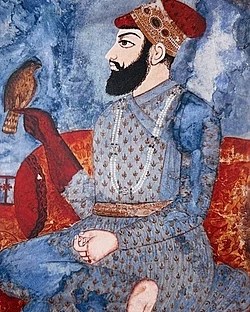
Born as Tyag Mal in 1621 in Amritsar, Guru Tegh Bahadur was the youngest son of Guru Hargobind, the sixth Sikh Guru. From an early age, he was immersed in Sikh values of selfless service, bravery, and spiritual discipline. His valor earned him the title “Tegh Bahadur,” meaning “Brave of the Sword,” after his courageous participation in the Battle of Kartarpur. Yet, alongside his martial training, he developed deep spiritual insight. His hymns—115 of which are included in the Guru Granth Sahib—reflect themes of detachment, compassion, truth, and the constant remembrance of the Divine.

After Guru Har Krishan’s passing, Tegh Bahadur was recognized as the ninth Guru in 1664. He lived an austere and humble life despite holding a revered spiritual position. During his extensive journeys across northern and eastern India, the Guru spread the message of equality, peace, and service. He established centers of faith, initiated community kitchens, dug wells for the poor, and provided support to people across caste, class, and regional boundaries. The founding of Anandpur Sahib, which later became an important center of Sikh philosophy and resistance, was among his major contributions.

The most defining moment in Guru Tegh Bahadur’s life—and the event that makes his Jayanti so significant—was his courageous defence of religious freedom. In 1675, a group of Kashmiri Pandits approached him in Anandpur seeking protection from forced conversions under Mughal emperor Aurangzeb. Guru Tegh Bahadur decided to stand as their protector, not to defend any single faith, but to uphold the universal right of every individual to practice their religion freely. For this principle, he presented himself before the Mughal court, where he was arrested, imprisoned, and tortured. When he refused to convert or perform miracles to prove his spiritual authority, he was publicly executed in Delhi’s Chandni Chowk.

Guru Tegh Bahadur’s martyrdom is unparalleled in world history: a saint-philosopher who gave his life not for his own community, but to safeguard the freedom of others. His sacrifice embodies the highest ideals of humanity—courage in the face of oppression, unwavering commitment to truth, and the defence of justice for all.

Guru Tegh Bahadur Jayanti is therefore not merely a remembrance of his birth; it is a celebration of his moral vision. The day inspires people of all communities to uphold values of harmony, tolerance, and compassion. Gurudwaras across India and the world hold kirtan, community service, and special prayers, reminding devotees of the Guru’s timeless message: that spiritual strength must always be matched by social responsibility.

In today’s world, where societies continue to grapple with intolerance, identity conflicts, and suppression of rights, Guru Tegh Bahadur’s teachings offer a powerful guide. His life shows that the greatest service to humanity lies in standing fearlessly for truth and protecting the dignity of all people, regardless of their faith or background.

Guru Tegh Bahadur Jayanti thus remains a day of profound significance—honoring a spiritual leader, a warrior for justice, and a martyr whose sacrifice continues to inspire generations. His legacy calls upon us to cultivate courage, uphold righteousness, and work toward a world grounded in freedom and compassion. It is celebrated on 24th November every year in India.
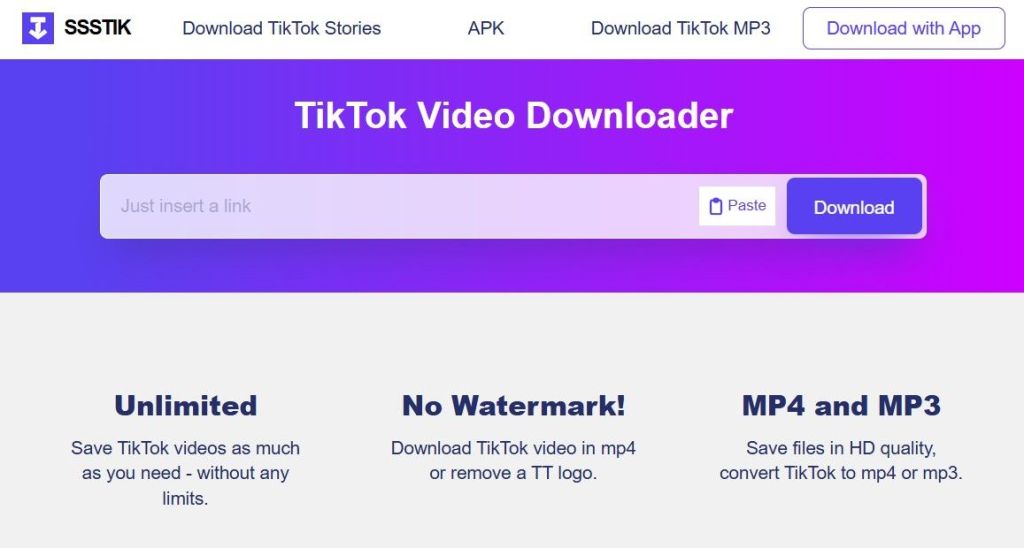
TikTok Downloader Guide Without Watermark Using sssTik Free Tool

Need to save your favorite clips fast? Many people want to download videos from TikTok but struggle with quality, watermarks, or slow tools. You’re not alone. The good news: sssTik solves this in seconds.

This guide shows you exactly how to grab videos without watermarks, compare tools, and avoid common mistakes. Let’s get started.

Why sssTik Beats Other TikTok Downloader Options

When comparing tools, speed and quality matter most. sssTik stands out because it delivers HD and Full HD downloads without forcing you to create an account.

SaveFrom often struggles with slower processing times. Snaptik sometimes fails on newer video formats. TikTokio can lag during peak hours. SaveTT requires extra steps that waste your time.

None of these competitors force account creation, and neither does sssTik. But sssTik processes requests faster, handles MP4 and MP3 formats smoothly, and gives you watermark-free results when available from the source.

Here’s the key difference: sssTik doesn’t strip watermarks artificially. It accesses the original upload version that TikTok stores without branding. If the creator posted a watermark-free version, you get it. Simple as that.

How to Use sssTik in Three Quick Steps

Open TikTok and find the video you want. Tap the Share button and select Copy Link. Your device saves the URL automatically.

Visit sssTik on your browser. Paste the link into the input box at the top. Hit the Download button and wait two seconds.

Choose your preferred quality: 720p, 1080p, or even 4K if the original supports it. Tap Save, and the file lands on your device. Done.

For audio extraction, select MP3, M4A, or WAV format before downloading. The process takes the same amount of time.

Key Features That Make sssTik Reliable

Unlimited downloads with no daily caps. Process as many videos as you need without hitting a wall or paying fees.

Multi-format support includes MP4 for video and MP3 for audio. M4A and WAV options give you flexibility for different uses.

No software installation required. Everything runs in your browser, keeping your device storage free and your privacy intact.

Cross-device compatibility means you can download video tiktok tanpa watermark from phones, tablets, or desktops. Same smooth experience everywhere.

Understanding Formats and Quality Options

Most videos are downloaded in MP4 format at resolutions matching the original: 720p, 1080p, or 4K. Higher quality means larger file sizes but sharper playback.

Audio downloads convert to MP3 by default at 128 or 256 kbps. M4A offers better compression for Apple devices. WAV provides lossless quality for editing projects.

Always choose the highest quality your storage allows. You can compress later if needed, but you can’t add detail to a low-res file.

Watermark Removal and Content Availability

TikTok stores two versions of many uploads: one with a watermark for sharing, one without for creator archives. sssTik retrieves the clean version when it exists on TikTok’s servers.

If the creator disabled download options or deleted the video, sssTik cannot access it. Availability depends entirely on the original poster’s settings and TikTok’s policies.

Private accounts and region-restricted content remain inaccessible. Respect these boundaries and download only public, available material.

Quick Fixes for Common Download Issues

Video won’t download? Clear your browser cache and try again. Old cookies sometimes block new requests.

Getting an error message? Check if the video link is complete. Partial URLs fail every time.

Download stalls halfway? Switch to a stable internet connection. Mobile data hiccups interrupt transfers more often than WiFi drops.

Other Social Media Downloads

Need content from other platforms? sssTik also supports X video downloads and Facebook downloader media saving. Same easy process: copy link, paste, download.

Legal Use and Privacy Protection

Download only videos you own or have explicit permission to use. Respect creator rights and follow the platform’s terms of service.

sssTik doesn’t store your links, download history, or personal data. Everything processes instantly and disappears from servers after transfer.

Use downloaded content responsibly. Commercial use without permission violates copyright laws in most regions. When in doubt, ask the creator first.

Self-shocks turn crystal to glass at ultralow power density

Daily writing prompt
Who are your current most favorite people?

Researchers have shown that utilizing shallow power, a crystalline material called indium selenide can “shock” itself to a glassy phase. This transformation lies at the heart of memory storage in devices like CDs and computer RAMs. It uses a billion times less electricity than the traditional melt-quench process for converting crystal to glass, and the discovery might revolutionise data storage in gadgets ranging from cell phones to computers. 

Glasses function similarly to solids but lack the regular periodic arrangement of atoms. To avoid the glass from getting too organized, a crystal is liquefied (melted) and then rapidly chilled (quenched) during the manufacturing process. This melt-quench technique is also employed in CDs, DVDs, and Blu-ray discs, where laser pulses are used to rapidly heat and quench a crystalline material to the glassy phase in order to write data; reversing the process erases data. Computers use similar materials known as phase-change RAMs, in which information is stored depending on the high versus low resistance provided by the glassy and crystalline phases.

The difficulty is that these devices consume more power, particularly during the writing process. The crystals must be heated to temperatures exceeding 800oC and then rapidly cooled. If it is possible to convert the crystal directly to glass without using the intermediate liquid phase, the amount of power required for memory storage can be greatly reduced. 

 A team of researchers from the Indian Institute of Science (IISc), Bangalore, University of Pennsylvania School of Engineering and Applied Science (Penn Engineering), Pennsylvania and Massachusetts Institute of Technology (MIT), Harvard, USA discovered that when electric current was passed through wires made of indium selenide, a 2D ferroelectric material, long stretches of the material transformed into glass. These breakthrough findings were published in the journal Nature. The research was supported by ANRF (erstwhile SERB) established through an Act of Parliament: ANRF, Act 2023.

The scientists unearthed that when a continuous current is passed parallel to the material’s 2D layers, they slide against each other in various directions. This results in the formation of many domains – tiny pockets with a specific dipole moment enclosed by defective regions that separate the domains. When multiple defects intersect in a small nanoscopic region, like too many holes punched in a wall, the structural integrity of the crystal collapses to form glass locally. 

These domain boundaries are like tectonic plates. They move with the electric field, and when they collide against each other, mechanical (and electrical) shocks are generated akin to an earthquake. This earthquake triggers an avalanche effect, causing disturbances far away from the epicentre, creating more domain boundaries and resulting glassy regions, which in turn spawns more earthquakes. The avalanche stops when the entire material turns into glass (long-range amorphisation). 

Prof. Nukala points out that multiple unique properties of indium selenide – its 2D structure, ferro electricity and piezoelectricity – all come together to allow this ultralow energy pathway for amorphisation through shocks. He further emphasized that the current findings will unlock a wider range of phase-change memory (PCM) applications.

Glass InSe PR2_Akanksha Jain

***

Success of ‘Sagarmanthan’ to Build Consensus for Partnerships of a Prosperous Future of Humanity

Daily writing prompt
Who are your current most favorite people?

The Prime Minister Shri Narendra Modi shared his message on the successful organising of the maiden maritime event – Sagarmanthan, The Ocean’s Dialogue – being held at the national capital. PM Modi called for success of Sagarmanthan to build consensus for partnerships of a prosperous future of humanity.

In his message sent from Camp Office in Nigeria, the PM Modi shared, “Our vision for a free, open and secure maritime network – be it the Indian Ocean or the Indo Pacific region – is finding resonance across the world. The ‘Indo Pacific Oceans Initiative’ envisions marine resources as a key pillar for growth for nations. This dialogue on oceans further strengthen the rules-based world order and enhance peace, trust and friendship between nations. As we strive to realise the vision of a Viksit Bharat by 2047, dialogues such as Sagarmanthan are invaluable to build consensus, partnerships and most importantly, a prosperous future. With the collective efforts of all stakeholders, I am confident that these discussions will resonate far and wide, paving the way toward a brighter, more connected future.”

Highlighting India’s rich maritime legacy & steps to build the sector, the PM Modi shared, “India’s maritime tradition goes back several millennia and is among the richest in the world. The thriving port cities of Lothal and Dholavira, the fleets of the Chola dynasty, the exploits of Chhatrapati Shivaji Maharaj are great inspirations. Oceans are a shared heritage for nations and societies, as well as the lifeline for international trade. Today, the security and prosperity of nations is intimately connected to oceans. Recognising the potential of oceans, several transformative steps have been taken to bolster India’s maritime capabilities. Over the last decade, guided by the vision of ‘Ports of Prosperity,’ ‘Ports for Progress’ and ‘Ports for Productivity,’ we have doubled the capacity of our ports. By enhancing port efficiency, reducing turnaround times and strengthening last-mile connectivity through expressways, reducing turnaround times and strengthening last mile connectivity through expressways, railways and riverine networks, we have transformed India’s shoreline.”

Acknowledging the pioneering role for transformation of maritime sector, the Union Minister of Ports, Shipping & Waterways, Shri Sarbananda Sonowal thanked the Prime Minister for his generous words for the success of the maiden edition of Sagarmanthan – The Oceans Dialogue. On PM Modi’s message, the Union Minister Sarbananda Sonowal said, “Under the dynamic leadership of Prime Minister Shri Narendra Modi ji, India has been witnessing a transformational experience in the maritime sector. The message by the Prime Minister Modi ji encapsulates the very essence that this maiden maritime thought leadership forum – Sagarmanthan – aims to achieve. In his own words, Modi ji shared the framework to a ‘Viksit Bharat’ based on how ‘collaboration and effort can yield the tools and direction we need to ensure prosperity.’ I, on behalf of all whose tireless effort has led to this wonderful forum, want to extend deepest appreciation to the most popular leader of the world, Narendra Modi ji, for his visionary message of rich wisdom, insight & sense for the success of ‘Sagarmanthan – The Oceans Dialogue’.”

****

Atal Innovation Mission unveils fourth cohort of Community Innovator Fellows supported by Capgemini, India

Daily writing prompt
Who are your current most favorite people?

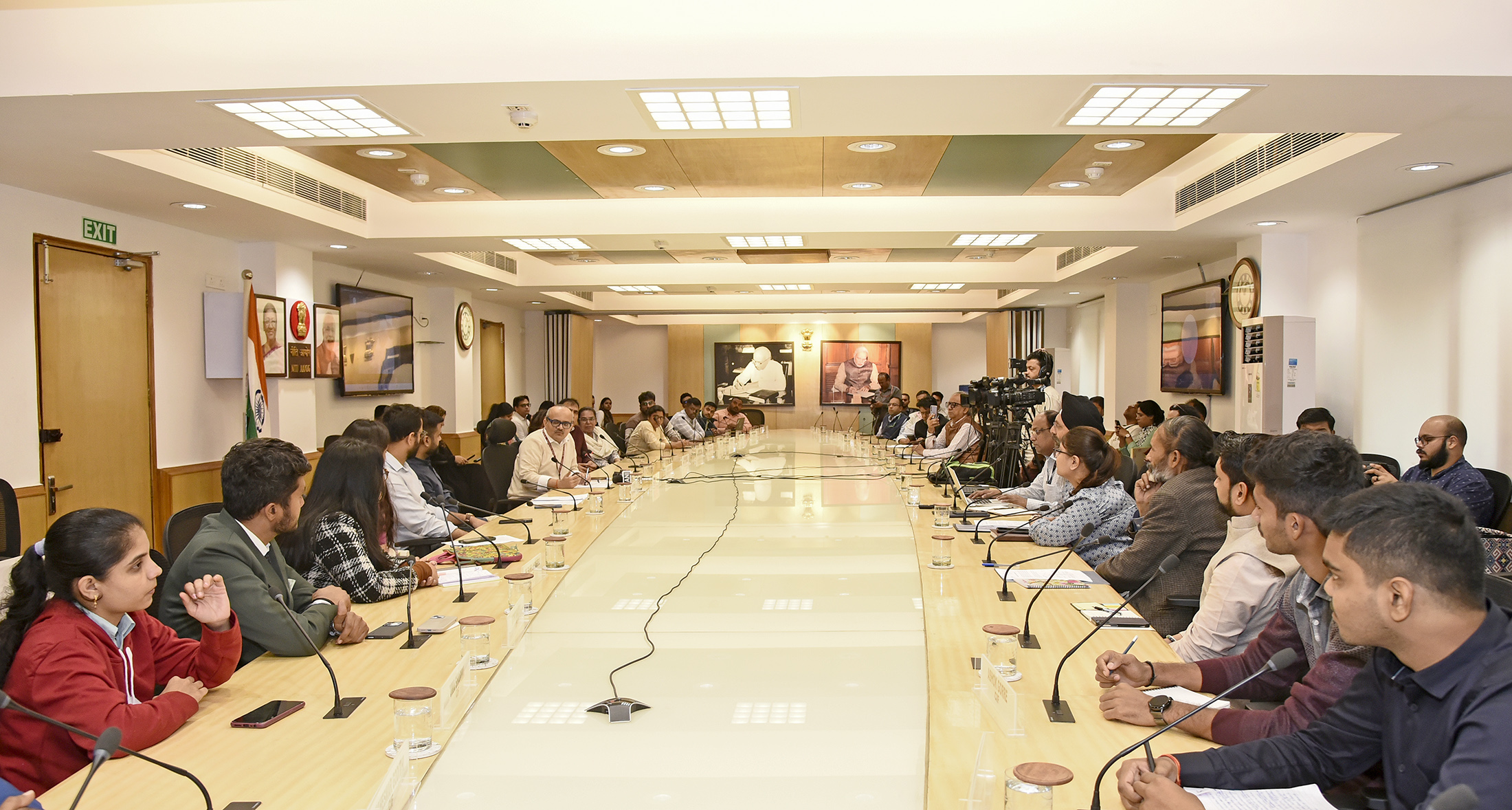
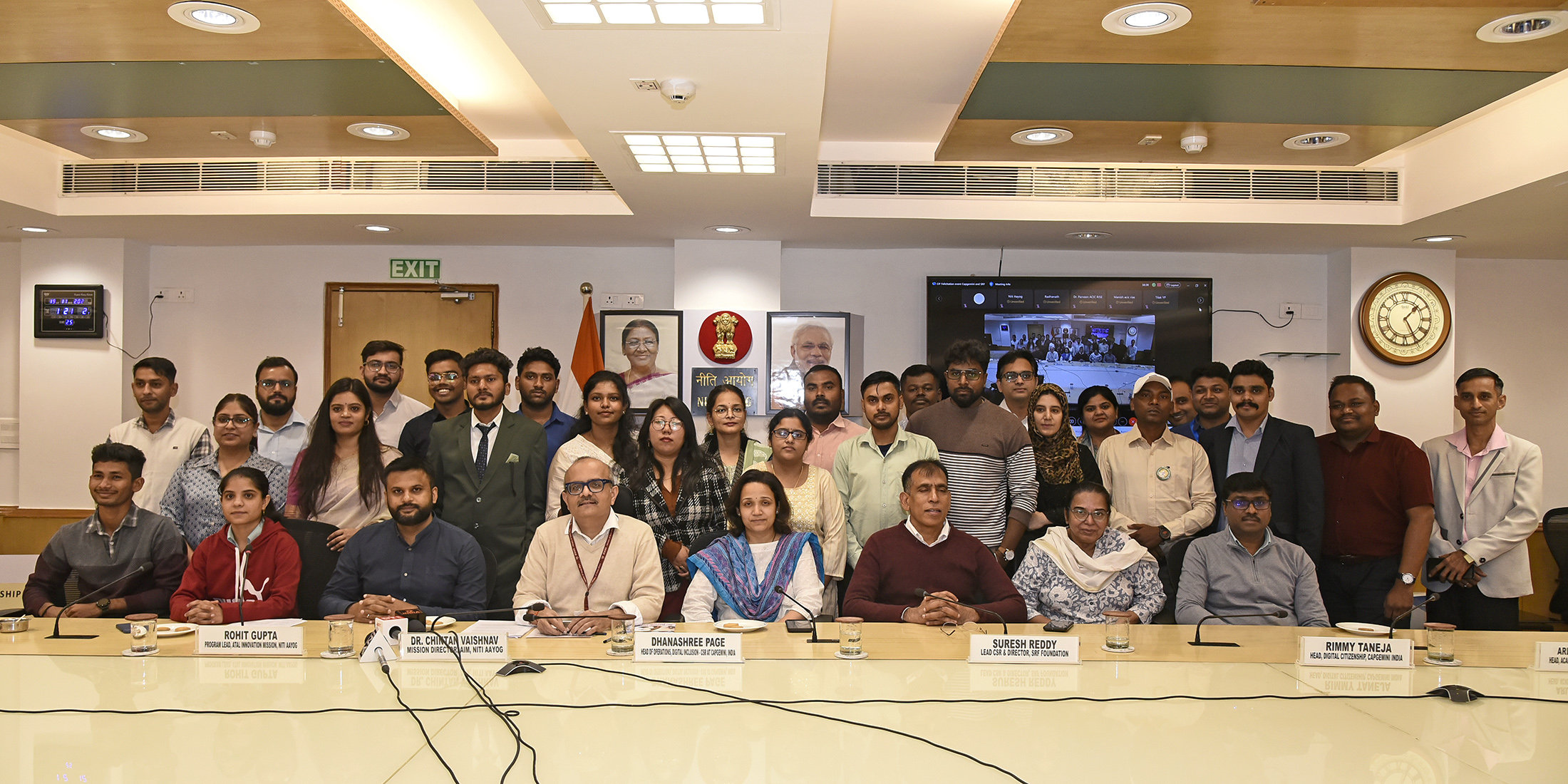
The Atal Innovation Mission (AIM), NITI Aayog marked a significant milestone today with the formal recognition of its fourth cohort of Community Innovator Fellows (CIFs). This year, the program has been further strengthened with the support of Capgemini India, marking a key partnership in fostering grassroots innovation across the country. The CIF initiative continues to empower local innovators, enabling them to address community-specific challenges through creative and sustainable solutions.

In conjunction with the cohort recognition, AIM commenced a two-day intensive bootcamp aimed at equipping these CIFs with the necessary skills and knowledge to scale their innovative solutions as part of AIM’s continued commitment to fostering grassroots innovation and promoting an entrepreneurial ecosystem across India, particularly in underserved regions. AIM, through its Atal Community Innovation Centers (ACIC) program has envisaged to serve the unserved/underserved areas of the country and provide support to every grassroots innovator and work towards accelerating the pathway to reach SDGs 2030.

The CIF Program is a one-year intensive initiative designed to provide aspiring innovators from all socio-economic backgrounds with the infrastructure, training, and mentorship necessary to scale their ideas and build sustainable businesses. Each Fellow is hosted at an Atal Community Innovation Center, where they receive entrepreneurial, SDG-focused, and life skills training while working on solutions tailored to their community’s unique challenges.

Speaking during the keynote address, Mission Director AIM, Dr.Chintan Vaishnav while applauding the program’s role in empowering innovators from Tier 2 and Tier 3 cities said, “The Community Innovator Fellows are uniquely positioned to address community-level problems with solutions that are both relevant and sustainable. This program is aspiring to create a model of excellence, where innovation meets purpose and where community-centric ideas drive national progress.”

He further highlighted the importance of initiatives like the CIF Program in advancing solutions to community level challenges in critical sectors.

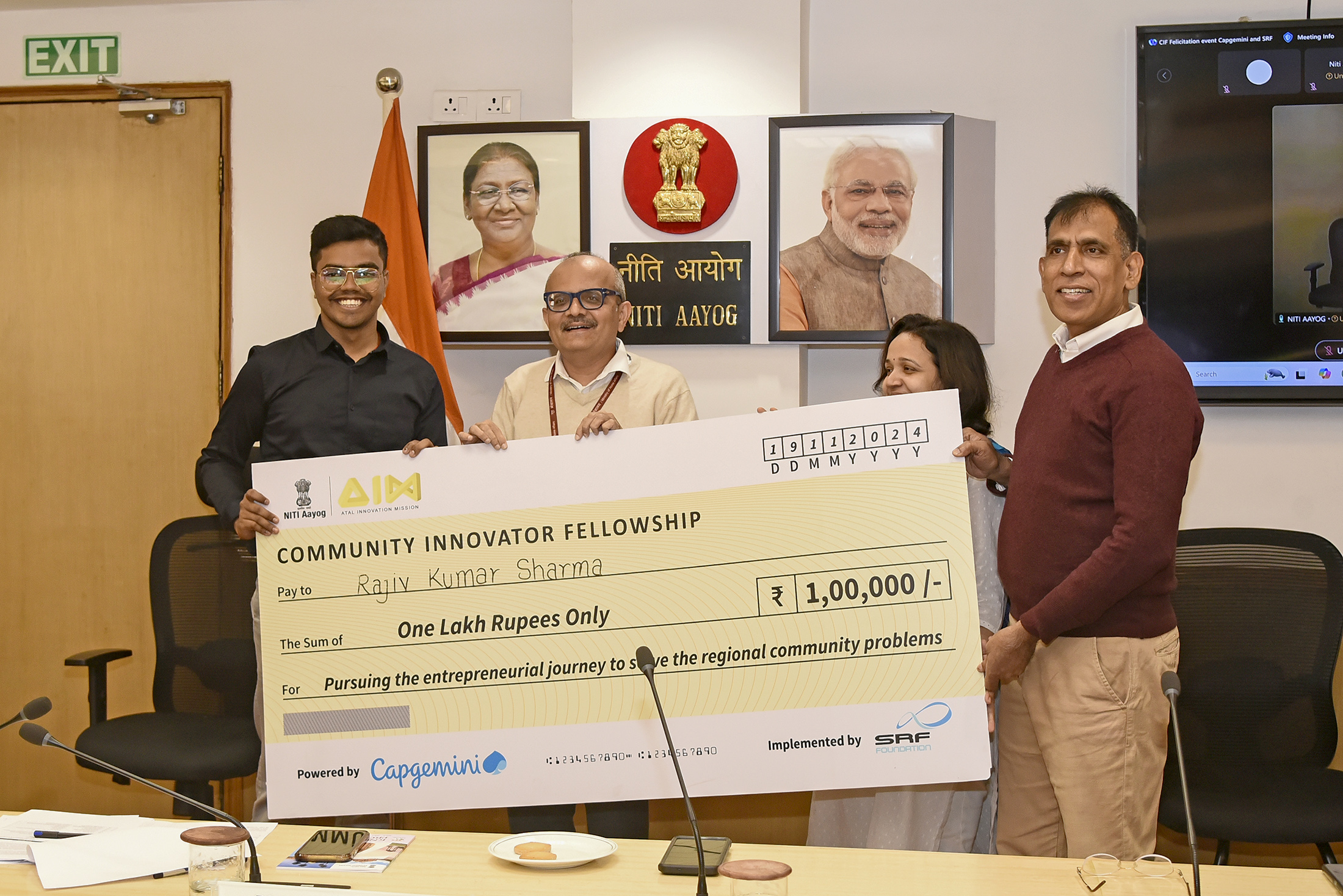
Capgemini India, a global leader in consulting, technology services, and digital transformation, is supporting this cohort by providing grants of INR 1 lakh each to 15 CIFs, helping them scale their innovative solutions. SRF Foundation is leading the program’s implementation in collaboration with AIM and Capgemini.

The event witnessed profound insights from distinguished speaker Dhanashree Page, Head of Operations, Digital Inclusion – CSR at Capgemini India. In her address, she emphasized the power of collaborative partnerships in fostering local innovation and driving societal progress. She remarked, “The CIFs represent the hope and creativity of India’s grassroots innovators. By empowering these individuals, we are enabling real, scalable solutions that can transform communities and drive sustainable change,” She said.

Dr. Suresh Reddy, Lead CSR & Director at SRF Foundation, spoke about the significant impact of social entrepreneurship in solving community challenges. “Today’s event showcases the commitment and ingenuity of the CIFs. They are truly the brightest minds in India, using their innovation to address critical local issues,” he said. “We, at SRF Foundation, remain committed to supporting such transformative initiatives and ensuring that their impact reaches every corner of the country.”

The event culminated with the presentation of grants to the CIFs, marking the beginning of their entrepreneurial journey as they work to scale their ideas and make a tangible impact in their communities.

 *****

All India Institute of Ayurveda (AIIA) organises orientation Program ‘Samskara 2024’ for freshly inducted Post Graduates

Daily writing prompt
Who are your current most favorite people?

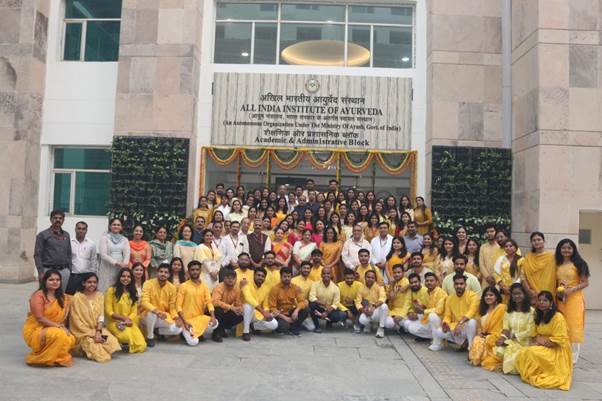
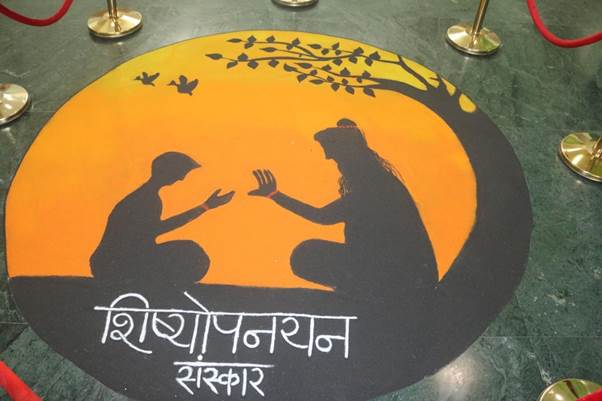
All India Institute of Ayurveda (AIIA) welcomed its 9th batch of postgraduate scholars with a traditional orientation program, ‘Samskara 2024’. The 15-day program commenced with a swearing-in ceremony, where 85 newly admitted students took the Shishyopanayan Pledge.

Prof. (Dr.) Tanuja Manoj Nesari, former Director of AIIA, was the chief guest, while Prof. (Dr.) Sujata Kadam, Director (I/C), AIIA, presided over the event. Other dignitaries who graced the occasion  included Dean PhD Prof. (Dr.) Mahesh Vyas, Dean PG Prof. (Dr.) Yogesh Badwe, Advisor Academic Activities Prof. (Dr.) Anand More, and other faculty members.

Addressing the gathering, Chief Guest Prof. (Dr.) Tanuja Manoj Nesari extended her best wishes to the new students, saying, “I expect this batch to create history in the future.” She emphasised AIIA’s unique selling proposition (USP)—valuing exceptional education and transformative journeys.

AIIA Director (I/C) Prof. (Dr.) Sujata Kadam encouraged students, saying, “Just as gold is refined through numerous tests, these three years will transform you into refined gold, making your journey extraordinary. I expect you to emerge as the best students from this institution.”

The 9th batch consists of 85 students selected from across India who cleared the All India AYUSH Postgraduate Entrance Test (AIAPGET) conducted by the National Commission for Indian System of Medicine (NCISM) under the Ministry of Ayush, Government of India.

Established in 2017, AIIA has treated over 27 lakh patients and attends to more than 2000 patients daily.

****

Bharat NCX 2024 Officially Inaugurated: Strengthening Cyber Defense and Strategic Decision-Making Across India

Daily writing prompt
Who are your current most favorite people?

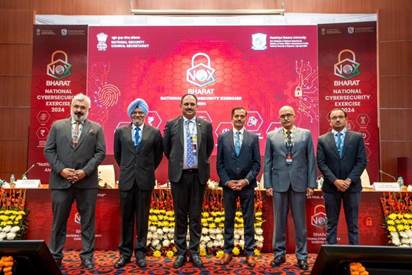
The Bharat National Cyber Security Exercise (Bharat NCX 2024), a landmark initiative to fortify India’s cybersecurity resilience, was inaugurated today at a high-profile ceremony organized by the National Security Council Secretariat (NSCS) in collaboration with Rashtriya Raksha University (RRU). The 12-day exercise is a critical step in preparing India’s cybersecurity professionals and leadership to tackle evolving threats with advanced cyber defense, incident response capabilities, and strategic decision-making.

In his Inaugural AddressLt Gen M. U. Nair, PVSM, AVSM, SM (Retd), the National Cyber Security Coordinator, stated, “Bharat NCX 2024 equips our nation’s cyber defenders and leaders with the skills to mitigate complex threats. From technical exercises to strategic decision-making, this initiative ensures our preparedness to manage crises at all levels.”

Prof. (Dr.) Bimal N. Patel, Vice Chancellor of RRU, delivered the Keynote Address, highlighting the integration of education, research, and innovation in addressing cybersecurity challenges. He remarked, “This exercise not only strengthens technical skills but also prepares leadership to navigate national-level cyber crises through informed decision-making.”

Key Features of Bharat NCX 2024: The exercise includes immersive training on cyber defense and incident response, live-fire simulations of cyberattacks on IT and OT systems, and collaborative platforms for government and industry stakeholders. A Strategic Decision-Making Exercise will bring together senior management from across sectors to simulate decision-making in a national-level cyber crisis, enhancing their ability to respond to high-pressure situations with strategic acumen. The CISO’s Conclave will feature Chief Information Security Officers from government, public, and private sectors sharing insights, participating in panel discussions, and exploring the latest trends and government initiatives in cybersecurity. On the sidelines, the Bharat Cybersecurity Startup Exhibition will showcase innovative solutions from Indian startups, emphasizing their role in enhancing the nation’s cybersecurity infrastructure. The exercise also highlights leadership engagement and capacity building, fostering a unified approach to emerging cyber challenges.

The event runs from November 18 to November 29, 2024, culminating in a comprehensive debrief to consolidate lessons learned and establish best practices in cybersecurity.

*****

NHRC, India organizes a three-day capacity building programme on human rights for the State Human Rights Commission, Arunachal Pradesh

Daily writing prompt
Who are your current most favorite people?

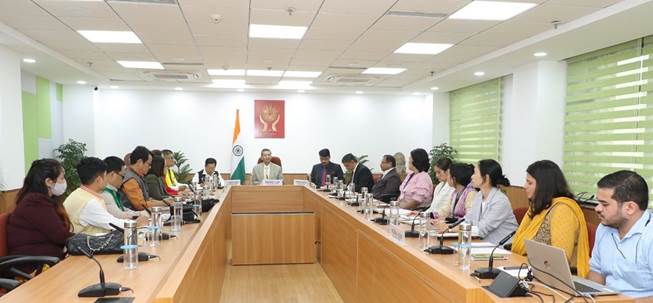
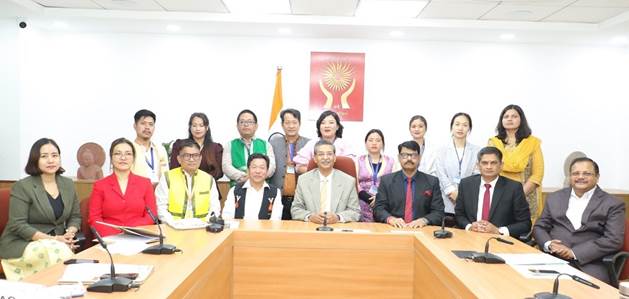
The National Human Rights Commission (NHRC), India is organizing a three-day Capacity Building Programme on human rights for the officials of State Human Rights Commission, Arunachal Pradesh, at New Delhi. The programme is a part of the ongoing initiative of the Commission to reach out and help in the capacity building of the State Human Rights Commissions (SHRCs) for protection and promotion of human rights of all. The NHRC works in tandem with SHRCs and other such bodies to protect and promote human rights in the country.

alt

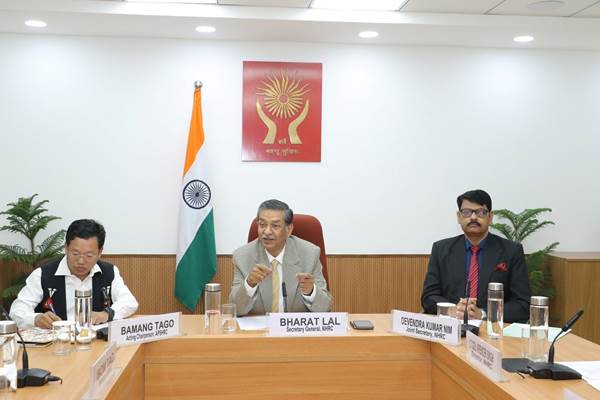
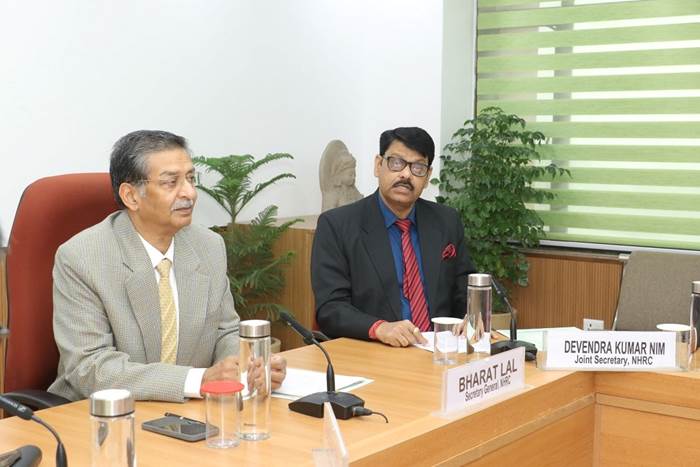
In his opening remarks, Mr Bharat Lal, Secretary General, NHRC emphasized that sensitivity, promptness and responsiveness are important traits to dealing with human rights issues and violations. The NHRC and SHRCs are part of a framework in the country to ameliorate the cause of human rights. The programme has been designed for having interactive sessions.

alt

Mr Lal underscored the importance of proactive and speedy redressal of complaints to provide relief to the victims of human rights violations. This would help people to develop faith in the system. The three-day programme would enable the officers to understand how the system should be functioning. He expressed the hope that the exposure to the structured functioning of the NHRC, within the ambit of the Protection of Human Rights Act, 1993 would be useful for the officers of the APSHRC.

alt

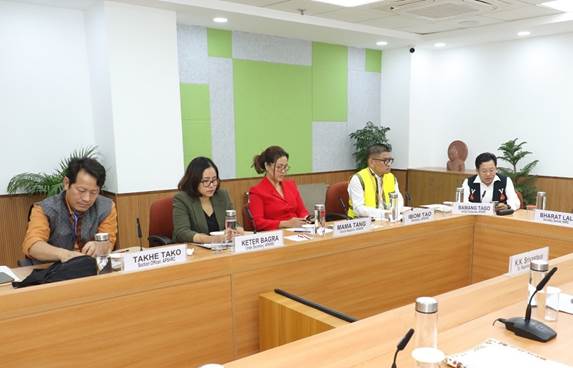
Earlier, the APSHRC Acting Chairperson, Mr Bamang Tago thanked the NHRC, India for organizing this programme. He said that the APSHRC is relatively a new SHRC, therefore, this capacity building programme is crucial for its officers, particularly in terms of learning the handling, registration and disposal of cases from the NHRC given its experience over the past three decades. He expressed the hope that the training would help not only the SHRC as an organization but also each participant individually in deepening their understanding of human values and the rights in the country.

alt

At the start of the 3-day programme, Shri Devendra Kumar Nim, Joint Secretary, NHRC said that it would equip the officers towards promoting and protecting the rights of the people. Their exposure to the functioning of the NHRC which inter alia includes registration and processing of complaints, enquiries, training, research, international mechanism, outreach activities, media and communication, publications, etc. may support them in carrying out their work more efficiently and effectively, to build a shared vision of protecting and promoting human rights in the country.

alt

*****

Grievance Redressal Assessment And Index (GRAI) 2023 Launched On 18 November 2024

Daily writing prompt
Who are your current most favorite people?

Union Minister of State (Independent Charge) Science & Technology; Minister of State (Independent Charge) Earth Sciences; MoS PMO, Personnel, Public Grievances, Pensions, Atomic Energy and Space, Dr Jitendra Singh has launched Grievance Redressal Assessment and Index (GRAI) 2023 in the presence of Shri V. Srinivas, Secretary, Department of Administrative Reforms and Public Grievances (DARPG), Govt. of India.

Grievance Redressal Assessment and Index (GRAI) was conceptualized and designed by the DARPG, Govt. of India based on the recommendation of Parliamentary Standing Committee of Ministry of Personnel, Public Grievances and Pensions with an objective to present organigation-wise comparative picture and provide valuable insights about strengths and areas of improvement regarding grievance redressal mechanism. The first edition of GRAI 2022 was released on 21 June 2023.

Eighty-nine Central Ministries and Departments were assessed and ranked based on a comprehensive index in the dimensions of (1) Efficiency, (2) Feedback, (3) Domain and (4) Organisational Commitment and corresponding 11 indicators. To compute the index, data between January and December 2023was used from the Centralised Public Grievance Redressal and Management System (CPGRAMS).

As part of GRAI, Ministries and Departments are grouped in three groups based on the number of grievances registered in calendar year 2023 at CPGRAMS viz.

GroupsRegistered Grievance RangeNo. of Ministries/Departments
Aregistered grievances > 10,00028
Bregistered grievances 2,000 to 9,99933
Cregistered grievances < 2,00028

Department of Agriculture and Farmers Welfare, O/o the Comptroller & Auditor General of India and Department of Investment & Public Asset Management have topped the rankings in Group A, B and C respectively. A detailed list with top three Ministries and Departments in composite and dimension-wise ranking is as follows:

#Rank 1Rank 2Rank 3
Group A:Grievances > 10,000CompositeDepartment of Agriculture and Farmers WelfareDepartment of PostsMinistry of Cooperation
EfficiencyMinistry of CooperationDepartment of TelecommunicationsMinistry of Labour and Employment
FeedbackDepartment of Agriculture and Farmers WelfareCentral Board of Direct Taxes (Income Tax)Department of Defence
DomainUnique Identification Authority of IndiaMinistry of Home AffairsMinistry of Cooperation
Organisational CommitmentDepartment of PostsDepartment of TelecommunicationsMinistry of Corporate Affairs
Group B:Grievances 2,000 – 9,999CompositeO/o the Comptroller & Auditor General of IndiaDepartment of Land ResourcesNITI Aayog
EfficiencyDepartment of Legal AffairsDepartment of Land ResourcesNITI Aayog
FeedbackO/o the Comptroller & Auditor General of IndiaDepartment of ExpenditureDepartment of Financial Services (Pension Reforms)
DomainDepartment of Land ResourcesMinistry of Parliamentary AffairsMinistry of Drinking Water and Sanitation
Organisational CommitmentDepartment of Empowerment of Persons with DisabilitiesDepartment of Land ResourcesMinistry of Ayush
Group C:Grievances < 2,000CompositeDepartment of Investment & Public Asset ManagementMinistry of Development of North Eastern RegionDepartment of Pharmaceuticals
EfficiencyDepartment of Investment & Public Asset ManagementMinistry of Development of North Eastern RegionMinistry of Mines
FeedbackDepartment of PharmaceuticalsDepartment of Public EnterprisesDepartment of Investment & Public Asset Management
DomainMinistry of Development of North Eastern RegionDepartment of Youth AffairsDepartment of Bio Technology
Organisational CommitmentDepartment of Official LanguageDepartment of Chemicals and PetrochemicalsLegislative Department

In the GRAI 2023report released by DARPG, detailed Root-Cause Analysis has been included with specific inputs on areas of further improvement. This report presents a two-dimensional (vertical and horizontal) analysis of the root causes of effective redressal of grievances of each Ministries and Departments in an easily discernible colour coded analysis. The report also presents brief description of technical partners DARPG has engaged to facilitate the Ministries and Departments to optimally utilize CPGRAMS as a means of effective grievance redressal media.

Over the years, CPGRAMS has become a key tool for enhancing government accountability and transparency by enabling citizens to file and track grievances online. The Commonwealth Secretariat has recognised CPGRAMSas a best practice in Commonwealth Secretaries of Public Service / Secretaries to Cabinet meeting in April 2024.

The GRAI 2023 report presents a clear roadmap with an advisory for the Ministries and Departments to leverage CPGRAMS and its features like IGMS 2.0, TreeDashboard, etc., to enhance grievance redressal. The roadmap for improvement emphasizes integrating advanced technologies like AI and ML for data analysis, predictive analytics and preventive measures while revising ATR formats for better reporting. Capacity building for GROs, enhancing accountability through audits and extending CPGRAMS integration to the third-tier of government are key recommendations.

***