Wildlife Conservation

Photo by Blue Bird on Pexels.com

Wildlife, nature’s gift to mankind, is continuously helping in maintaining the ecological balance of the earth. But, due to some human activities like mass killing of wild animals for their teeth, bones, fur, skin etc along with population growth and expansion of agriculture field reduces the number of wild animals and many species of wild animals have become extinct.Wildlife conservation is a process of protecting all the wild plant and animal species with their habitat. As we know, every living creature in this earth contribute to the ecosystem in their own special way, wildlife conservation has become one of the most important tasks for mankind.

There are mainly two types of wildlife conservation, namely “in situ conservation” and “ex-situ conservation”. 1st type of wildlife conservation includes programs like National Parks, Biological Reserves etc and the 2nd type includes programs like Zoo, Botanical Garden etcWildlife, like trees, is also a domestic asset that not only helps to maintain the ecological balance but also benefits from financial, recreational and aesthetic points of perspective. There was a time when the number of wild animals was quite large when human interference was minimum and there was no issue with their safety or conservation. But, with the development of farming, settlement, industrial and other development activities, and primarily due to man’s greed, the number of wild animals gradually decreased and decreased. As a consequence, several animal species have become extinct and several are on the brink of being so. The Wildlife Conservation Essay is an insight into the requirements of conserving wildlife globally.

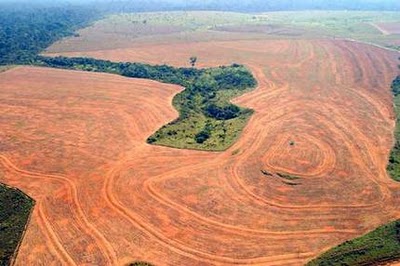
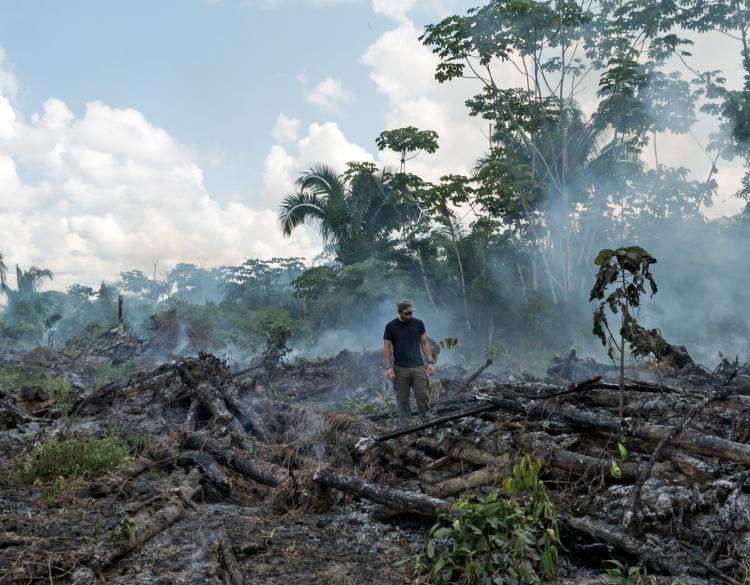
DeforestationDeforestation is also a major cause of wildlife loss. Mass murders of wild animals are taking place all over the globe for their meat, bones, fur, teeth, hair, skin, etc. The need for conservation of wildlife has now become a necessity.Population growth, agricultural and livestock development, urban and road building, and pollution are among the many pressures on wildlife’s natural habitat. In addition to illegal hunting, the decrease of habitat and its degradation has endangered the biodiversity of the widespread areas.Wildlife preservation does not imply blanket protection for all species of fauna and flora; rather, it means adequate, judicious control over the multiplication of crops and animals that communicate to provide a suitable atmosphere for the man whose very life is at risk today.In the past, due to the irrational use of the earth’s natural and biotic resources, most wildlife was demolished after recovery. It is our immediate responsibility to safeguard the ecosystem’s natural splendor and to develop a system of coexistence with every living creature on earth.While the world’s nations must be very specific in terms of wildlife conservation, the amount of wildlife is diminishing day by day. The World Wild Life Fund is a global organization that does a praiseworthy job of encouraging wildlife protection. National agencies are also involved in wildlife conservation.

Steps Towards Wildlife ConservationTo study and retrieve all wildlife data, in particular, the amount and development of wildlife.Habitat protection through forest protection.Delimiting their natural habitat regions.Protecting animals against pollution and natural hazards.Full limitation on wildlife hunting and capture.To impose constraints on the export and importation of wildlife products and to impose serious penalties on those engaged in such activity.Developing game sanctuaries for particular wildlife or world life in particular.Special arrangements should be made to safeguard those very restricted species.To create a general understanding of wildlife protection at domestic and international level.The adoption by trained personnel of a wildlife management system.
China’s 5 Year Plan (2021-2025): Proposed Dam on River Brahmaputra

The five-year plans are a sequence of economic and social development initiatives furnished by the CCP (Chinese Communist Party) since 1949. The five-year plans were inspired by the five-year plans from the USSR and the focus was on launching new schemes, reforms and setting new growth targets.

Since the 11th five-year plan (2006-2010), the Chinese government has mentioned it as ‘Guidelines’ instead of plans. Currently China is on its 14th five-year plan/ guidelines. Unlike the previous five year plans, there is no specific GDP growth target and instead, the government announced that growth would be kept in “reasonable range” and an annual target would be set based on the specific conditions each year. The focus of the current plan is on self-sufficiency as the country had to endure difficulty after the United States had restricted China’s major chip makers from using American technology. Other areas of focus will be on the above 7 percent growth in the research and development spending. The government will also try to raise the urban residents to 65 percent of the population while maintaining green development and increasing the life expectancy by 1 year. Infrastructure will also be an area of priority with a focus on high-quality development of the belt and road initiative.

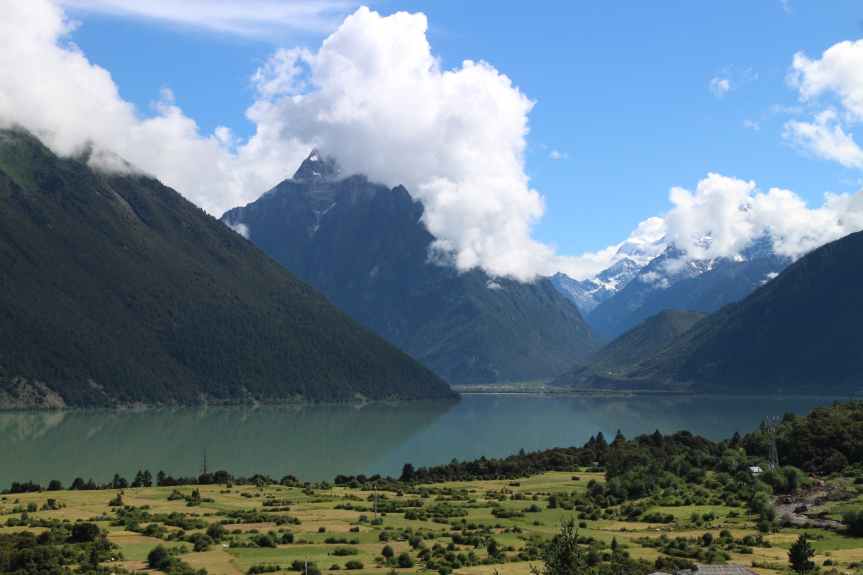
One of the biggest infrastructure projects of the 14th The five-year plan (2021-2025) has been officially approved to build a series of dams in the lower reaches of the Yarlung Zangbo River, as the Brahmaputra is known in Tibet before it flows into India.

The proposed dam would be in Medog, Tibet region will have a maximum possible capacity of 60 gigawatts and could potentially produce 300 billion kWh annually. The location is an area called ‘the great bend’ also known as ‘Yarlung Tsangpo Grand Canyon’ where the river goes through a very drastic U-turn and then the river descents from an elevation of 3000 meters to around 800 meters. Due to the drastic elevation change, the river flow is quite strong and is also an ideal location to build the dam.

The location of the dam could be a strategically risky move by china as it is very close to the Indian border but the other issue is that this proposed dam can undermine the water security of India. India relies heavily on the Brahmaputra River for agriculture and various other purposes.  Due to this, the proposed Dibang Dam by India in downstream (Arunachal Pradesh) might be the solution to offset the effect of the Chinese proposed dam. Although the majority of the catchment area of Brahmaputra is on the Indian side there is still the issue of water flow from the upstream as Assam usually suffers from floods in the rainy season and any additional water flow from the Chinese dam would make the situation worse. The problem will not only affect India but also Bangladesh due to its low-lying land and flood-prone region. Problem is that the region is ecologically diverse and sensitive and any kind of development in this region will negatively affect the ecology of this region. Due to turbulent tectonic plates, there are high chances of landslides and earthquakes as well. India will have to be vigilant and develop its strategy according to the developments on the Chinese side.

References:

The Amazon

The forest is a peculiar organism of unlimited kindness and benevolence that makes no demands for its sustenance and extends generously the products of its life activity; it affords protection to all beings, offering shade even to the axe-man who destroys it.

– Gautama Buddha

Today , let’s feel the presence of fresh air , waterfall , trees , flora and fauna . Being a citizen of a country , which is well known for its resources , different species, mixed economy and different cultures. It is important for us to see the world of flora and fauna.

Well you get to know by the heading , today we are gonna talk about THE AMAZON’S which is well known for its vast species .

Introduction .


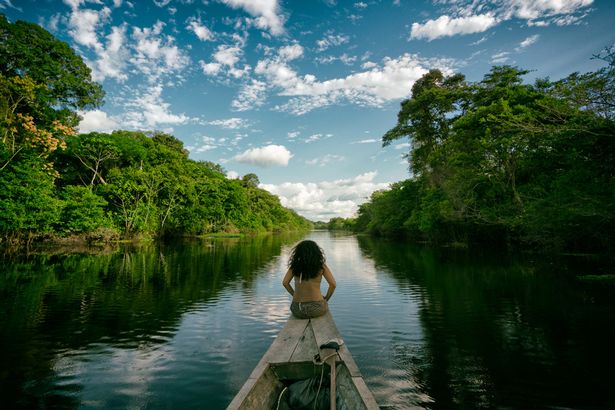
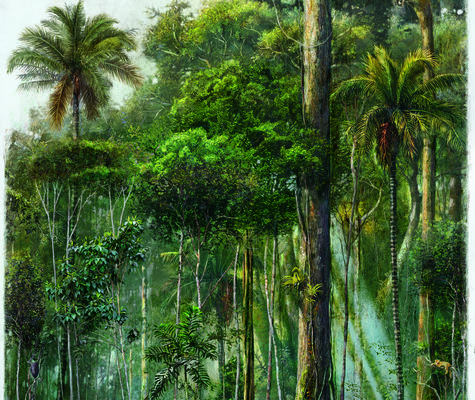
The Amazon jungle or Amazonia, is a moist broadleaf tropical rainforest in the Amazon biome that covers most of the Amazon basin of South America. This basin encompasses 7,000,000 km2 (2,700,000 sq mi), of which 5,500,000 km2 (2,100,000 sq mi) are covered by the rainforest. This region includes territory belonging to nine nations and 3,344 formally acknowledged indigenous territories.

The majority of the forest is contained within Brazil, with 60% of the rainforest, followed by Peru with 13%, Colombia with 10%, and with minor amounts in Bolivia, Ecuador, French Guiana, Guyana, Suriname, and Venezuela. Four nations have “Amazonas” as the name of one of their first-level administrative regions, and France uses the name “Guiana Amazonian Park” for its rainforest protected area. The Amazon represents over half of the planet’s remaining rainforests, and comprises the largest and most biodiverse tract of tropical rainforest in the world, with an estimated 390 billion individual trees divided into 16,000 species.

The name Amazon is said to arise from a war Francisco de Orellana fought with the Tapuyas and other tribes. The women of the tribe fought alongside the men, as was their custom. Orellana derived the name Amazonas from the Amazons of Greek mythology, described by Herodotus and Diodorus.

Flora and Fauna.

Wet tropical forests are the most species-rich biome, and tropical forests in the Americas are consistently more species rich than the wet forests in Africa and Asia.

This constitutes the largest collection of living plants and animal species in the world.

The region is home to about 2.5 million insect species, tens of thousands of plants, and some 2,000 birds and mammals. To date, at least 40,000 plant species, 2,200 fishes, 1,294 birds, 427 mammals, 428 amphibians, and 378 reptiles have been scientifically classified in the region.

The biodiversity of plant species is the highest on Earth with one 2001 study finding a quarter square kilometer (62 acres) of Ecuadorian rainforest supports more than 1,100 tree species.

Human impact on Amazon jungle.

The human impact on the Amazon rainforest has been grossly underestimated according to an international team of researchers. … They found that selective logging and surface wildfires can result in an annual loss of 54 billion tonnes of carbon from the Brazilian Amazon, increasing greenhouse gas emissions.

Lead researcher Dr Erika Berenguer from Lancaster University said: “The impacts of fire and logging in tropical forests have always been largely overlooked by both the scientific community and policy makers who are primarily concerned with deforestation. Yet our results show how these disturbances can severely degrade the forest, with huge amounts of carbon being transferred from plant matter straight into the atmosphere.”

The second author, Dr Joice Ferreira from Embrapa in Brazil, said: “Our findings also draw attention to the necessity for Brazil to implement more effective policies for reducing the use of fire in agriculture, as fires can both devastate private property, and escape into surrounding forests causing widespread degradation. Bringing fire and illegal logging under control is key to reaching our national commitment to reducing carbon emissions.”

The forest is not a resource for us, it is life itself. It is the only place for us to live.

-Evaristo Nugkuag Ikanan

Link

|Ageing Dams|

India is ranked third in the world in terms of building large dams, of the over 5,200 large dams built so far, about 1,100 large dams have already reached 50 years of age and some are older than 120 years.

Minor and medium dam shelf-life is lower than large dams for example Krishna Raja Sagar dam built in 1931 is 90 years old and Mettur dam built in 1934 is 87 years old.

Implications of ageing dams:

In a paper ‘supply-side hydrology last gasp’ Rohan D’Souza writes the siltation rate of Bhakra dam is 130.86 % so at this rate it will function for merely 47 years as against the original estimate of 88 years.

When when the dams ages the soil replaces water, the supply of water decreases and this in turn leads to reduction in the cropped area as  less water is received and which increases dependency on on the rain which is erratic in nature and groundwater is overexploited, the crop yield increases and farmers income thereby decreases.

By 2050 this will pose difficulties such as scarcity of water to feed the ever increasing population.

The flawed siltation rates reinforce the argument that designed flood cushions within several reservoirs across many river basins may have already depleted substantially due to which floods become more frequent downstream of dams. For example the flooding of Bharuch in 2020, Kerala in 2018 and Chennai 2015 a few examples attributed to downstream releases from reservoirs.

Way forward:

The way forward in the situation can be the building of medium or minor irrigation based small storage structures, identifying mechanisms to recharge aquifers and store water underground.

Hence, India will eventually feel difficulty in finding sufficient water in the 21st century to feed the rising population by 2050, grow abundant crops, create sustainable cities, or ensure growth. Therefore all stakeholders must come together to address this situation urgently.