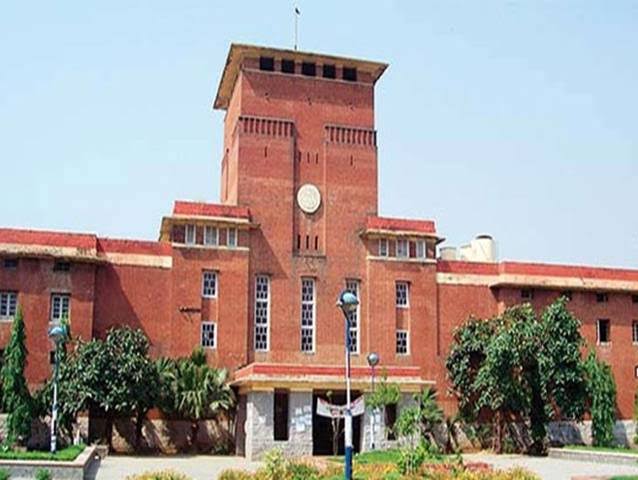
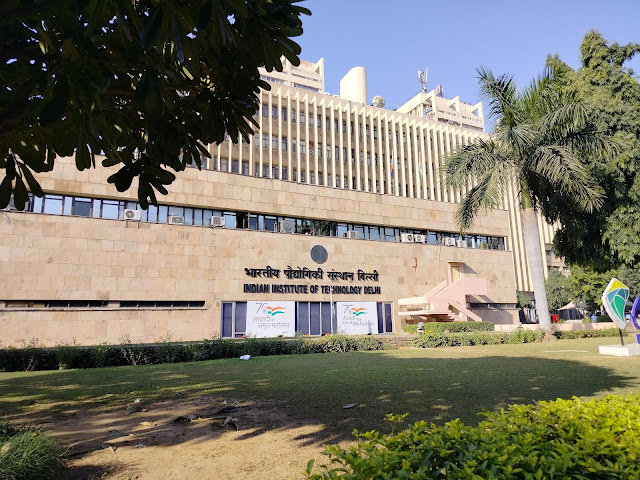
IIT Delhi Department of Management Studies

  IIT Delhi Department of Management Studies was established in 1993 and launched its first MBA program in 1997. It is regarded as one of the best institutes for management studies in India and is placed at the eighth position according to the NIRF rankings.

Learn More about  IIT Delhi Department of Management Studies

The curriculum is designed in order to meet the changing needs of the business environment and the industry. The Institute currently offers a 2 year full time MBA program, a 3 year part time program and a 3 year Executive MBA program. The students are selected after a rigorous screening process which includes performance of the candidate in CAT, followed by a group discussion and personal interview.

Students at DMS, IIT Delhi are trained by eminent faculty who are experienced professionals from India as well as abroad. The placement record of the Department is quite impressive with the 83 offers made for the 2018-2020 batch, which achieved a 100% placement record. The highest salary package offered to the students was INR 33 LPA and the average salary package offered was INR 22.69 LPA. Top recruiters visiting the DMS, IIT Delhi campus were well- known companies like Reliance Industries Ltd., Wipro, Amway, OLA and others.

DMS, IIT Delhi Key Points

  • The Institute provides world class IT infrastructure with facilities like hostels, library, wi-fi campus, hi-tech classrooms and others.
  • The Department of Management Studies is spread across an area of 320 Acres.
  • The Institute has successfully managed to maintain a 100% placement record.
  • Admissions are done on the basis of Selection Index which is computed by taking into account 7 parameters- CATA Score, Bachelor’s degree, 12th marks, 10th marks, Work Experience, Gender diversity and graduation from IIT/NIT.

DMS, IIT Delhi Rankings

  • The Department of Management Studies is ranked 8th in the NIRF rankings 2020.
  • The India Today group and Financial Express ranked DMS, IIT Delhi 9th in 2020.
  • The institute has been ranked 15th by Business Today in 2020.
  • DMS, IIT Delhi falls in the 101-150 rank band according to the QS World University Rankings 2020 in the Business and Management Studies category.

DMS, IIT Delhi Courses & Fees

The institute specializes in management courses and offers 3 related programs in the said field. Admissions to all these courses are entrance based, with students selected on the basis of CAT performance and several other parameters.

The courses offered by DMS, IIT Delhi and their respective details are given below.

COURSES COURSE DETAILS
MBA
  • Specializations – General, Telecommunication Systems Management
  • Fees- INR 4.8 Lakhs per year
  • Eligibility criteria-Passed graduation in any discipline or equivalent examination with minimum 60% aggregate marks (55% for SC/ST) + valid score in CAT + Personal Interview
Executive MBA
  • Specializations- Technology Management
  • Fees- INR 3.6 Lakhs per year
  • Eligibility criteria- Passed graduation in any branch of Engineering/ Technology/ Physical Sciences/ Statistics/ BCA/ Operation Research/ Economics/ Commerce with minimum 60% aggregate marks (55% for SC/ST)+ Minimum 2 years work experience + Personal Interview
Ph.D
  • Specializations- Management
  • Fees- INR 63,900 per year
  • Eligibility criteria- Passed M.Tech/ M.E./ M.D./M.Sc/ MBA/ M.A./MBBS with minimum 60% aggregate marks (55% for SC/ST) / Passed B.E./ B.Tech with minimum 70% aggregate marks + valid score in GATE/ CSIR/ UGC NET/ ICAR/ ICMR + Personal Interview

DMS, IIT Delhi Cut Off

DMS, IIT Delhi shortlisted eligible candidates for the Personal Interview round only if they secure more than the minimum CAT cut off set by the Institute.

Tabulated below are the cut off marks across 3 years and the cut off for different categories in different sections.

Categories CAT 2018 CAT 2019 CAT 2020
Overall Cut Off 90 90 90
Sectional Cut Off 80 80 80

DMS, IIT Delhi Placement

Category VARC DILR QUANT Overall CAT Percentile
General 80 80 80 90
NC-OBC 72 72 72 81
SC 53.3 53.3 53.3 60
ST 53.3 53.3 53.3 60
PWD 53.3 53.3 53.3 60

DMS, IIT Delhi Placement Highlights 

The Institute has a dedicated placement cell called the Campus Relations Team and has successfully managed to maintain a 100% placement record. The placement cell at DMS, IIT Delhi is constantly in touch with the reputed companies and organisations and is responsible for organising pre placement talks and visits on the campus. The resumes of the interested candidates are shared with the organisations and before the campus recruitment process begins. It ensures that the potential employers are constantly involved throughout the year through summer internships, guest lectures, Workshops and other activities.

  • 83 offers were made for the batch of 2020, which comprised 68 students.
  • The highest Salary Package Offered was INR 33 LPA
  • The average Salary Package Offered was INR 22.69 LPA
  • The median Salary Package Offered was INR 20.01 LPA
  • Students from the IT, General Management, Operations & Supply Chain, Finance, Sales & Marketing departments bagged the maximum placement offers.

Top Recruiters

  • Coca Cola
  • OLA
  • Vodafone
  • Deloitte
  • Infosys
  • Airtel
  • TCS
  • Idea
  • Wipro

DMS, IIT Delhi Scholarships

DMS, IIT Delhi does not award any scholarships. However, a scheme for the award of Teaching/Research Assistantship for providing financial assistance to those students who are admitted on full-time basis are considered.

Students under this scheme are required to render 8 hours of teaching/research assistance to the Department outside their normal academic work.The maximum duration for which this can be awarded to any Ph.D. student is 4 years. Continuation of the Assistantship depends on the academic performance, a minimum of 7.50 CGPA in course work each semester and minimum prescribed attendance requirement which needs to be fulfilled.


Vande Bharat Express from Dehradun to Delhi

Governor of Uttarakhand Shri Gurmeet Singh ji, popular Chief Minister of Uttarakhand Shri Pushkar Singh Dhami, Railway Minister Ashwini Vaishnaw, Ministers of Uttarakhand Government, various MPs, MLAs, Mayors, Zilla Parishad members, other dignitaries, and my dear brothers and sisters of Uttarakhand! Many congratulations to all the people of Uttarakhand for the Vande Bharat Express train.

This train between Delhi and Dehradun will connect the country’s capital with Devbhoomi at a faster speed. Now the journey time between Delhi-Dehradun will also be reduced considerably due to this Vande Bharat train. The speed of this train is in its place, however, the facilities are also going to make the journey enjoyable.

Friends,

I have just returned from a trip to three countries a few hours ago. Today the whole world is looking at India with great expectations. The way Indians have strengthened our economy, the way we are fighting poverty, it has instilled the confidence of the whole world in us. Together we succeeded in meeting the challenge of the Corona, whereas many major countries continue to grapple with it. We launched the world’s largest vaccination campaign. Today India is being discussed all over the world. People from across the world want to come to India to see and understand India. In such a situation, this is a great opportunity for beautiful states like Uttarakhand. This Vande Bharat train is also going to help Uttarakhand in taking full advantage of this opportunity.

Friends,

Uttarakhand is Devbhoomi. I remember when I went to visit Baba Kedar, I muttered something spontaneously. These were in the form of Baba Kedar’s blessings and I had then said that this decade would be the decade of Uttarakhand. The manner, in which Uttarakhand is carrying forward the campaign of development, while keeping law and order paramount, is commendable. It is also important to preserve the identity of this Devbhoomi. And I believe that this Devbhoomi will become the center of attraction for the spiritual consciousness of the whole world in the near future. We have to develop Uttarakhand according to this potential as well.

The number of pilgrims visiting Char Dham Yatra every year is breaking all the previous records and setting new records. Right now, we can see devotees thronging to have darshan of Baba Kedar. Crores of devotees from all over the world come to the Kumbh and Ardh Kumbh held in Haridwar. Lakhs of people reach Uttarakhand during the Kanwar Yatra held every year. There are very few states in the country which attract such a large number of devotees. This number of devotees is also a gift and handling such a large number is also a herculean task. The double engine government is working with double the speed and with double the power to make this herculean task easy.

The BJP government is laying special emphasis on the Navratnas of development. The first is the reconstruction of Kedarnath-Badrinath Dham with an estimated cost of Rs 1300 crore, the second is the ropeway work of Gaurikund-Kedarnath and Govindghat-Hemkunt Sahib at a cost of Rs 2500 crore, the third is the Manaskhand Mandir Mala Mission to make the mythological temples of Kumaon grand, the fourth is promotion of home stays in the entire state. I am told that more than 4000 home stays have been registered in the state. The fifth is the development of 16 eco-tourism destinations, the sixth is the expansion of health services in Uttarakhand. A satellite center of AIIMS is also being built in Udham Singh Nagar.  The seventh is the Tehri Lake Development Project costing about Rs 2000 crore, the eighth is the development of Rishikesh-Haridwar as the capital of adventure tourism and Yoga and the ninth is the Tanakpur-Bageshwar Rail Line. Work on this railway line will also start soon. You must have heard a saying – icing on the cake. Therefore, Dhami ji’s government has given new impetus to the infrastructure projects here to string the garland of these Navratnas. Work on the Rs. 12,000 crore Char Dham mega project is going on at a rapid pace. With the completion of the Delhi-Dehradun Expressway, the journey between Dehradun and Delhi will become easier. Along with road connectivity, ropeway connectivity is also being developed in a big way in Uttarakhand. The Parvat Mala Yojana is going to change the fate of Uttarakhand in the near future. For this, our government is ending the wait of the people of Uttarakhand for this connectivity for years.

The Rishikesh-Karnprayag rail project will be completed in two-three years. More than 16,000 crore rupees are being spent on this project. After the completion of the Rishikesh Karnprayag Rail Project, a large part of Uttarakhand will become accessible to the people of the state and tourists. As a result, new opportunities for investment, development of industries and employment will be created here. And in the midst of this grand campaign of development of Devbhoomi, this Vande Bharat train will also prove to be a grand gift for the people of Uttarakhand.

Friends,

Today Uttarakhand is fast emerging as a tourism hub, adventure tourism hub, film shooting destination and wedding destination with the efforts of the state government. Today new places and tourist hubs of Uttarakhand are attracting tourists from India and abroad. They will also get a lot of help from the Vande Bharat train. Now Vande Bharat trains have started running in every corner of the country. Trains are the first choice of people wishing to travel long distances with family. In such a situation, Vande Bharat is now becoming the first choice of ordinary families of India.

Brothers and sisters,

The 21st century India can develop more rapidly by modernizing its infrastructure. Earlier, the parties which were in power for a long time never understood this need of the country. The focus of those parties was on scams and corruption. They were confined to nepotism. They did not have the strength to come out of nepotism. The previous governments also made lofty claims regarding high speed trains in India. Many years have passed since they made these claims. Leave aside the high speed trains; they could not even remove unmanned level crossings from the rail network. The situation of railway electrification was even worse. By 2014, only one-third of the country’s rail network had been electrified. In such a situation, it was impossible to even think of running a fast train. We started all-round work to transform the Railways after 2014. On the one hand, we started implementing the dream of the country’s first high speed train, on the other hand, we started preparing the whole country for semi-high speed trains. When, on an average, 600 km of rail lines were electrified every year before 2014, now 6,000 kilometers of railway lines are being electrified every year. See the difference between 600 kms and 6000 kms. As a result, more than 90 percent of the country’s railway network has been electrified. In Uttarakhand, 100 percent electrification of the entire rail network has been achieved.

Brothers and sisters,

This has been made possible because today there is the right intention for development, policy and trust. The increase in the railway budget in comparison to 2014 has directly benefited Uttarakhand as well. In the five years before 2014, on an average, less than Rs 200 crore was allocated for Uttarakhand. And just now Ashwini ji explained about it in detail. Less than 200 crore rupees for such a remote hilly area and lack of railways! The rail budget of Uttarakhand is 5,000 crore rupees this year. It is a 25-fold increase. This is the reason that today the railway is expanding to new areas of Uttarakhand. Not only railways, but modern highways are also expanding unprecedentedly in Uttarakhand. We understand how important this connectivity is for a hilly state like Uttarakhand. We understand the pain of how villages became deserted in the past due to lack of connectivity. We want to save the coming generation from that suffering. We are working hard today so that employment opportunities are created in Uttarakhand itself through tourism, agriculture and industries. This modern connectivity will also be very useful for easy access to our borders and convenience for our soldiers engaged in the defence of the nation.

Brothers and sisters,

Our double engine government is committed to the development of Uttarakhand. The rapid development of Uttarakhand will also help in the rapid development of India. And the country is not going to stop now as it has now gathered its momentum. The whole country is moving ahead at the speed of Vande Bharat and will continue to move ahead. Once again, many congratulations and best wishes to all of you for the first Vande Bharat Express train of Uttarakhand. And nowadays, people from all over the country are visiting Baba Kedar, Badri Vishal, Yamunotri and Gangotri. The launch of the Vande Bharat Express at the same time will be a very pleasant experience for them too. I once again bow down at the feet of Baba Kedar and greet the Devbhoomi and wish you all the very best. Thank you!


DISCLAIMER: This is the approximate translation of PM’s speech. Original speech was delivered in Hindi.

***

Air India introduces new flights

Air India is one of the most talked about airlines in India. After the takeover by the Tatas, the airline is being put on a road to revival.

The first signs regarding the recovery of this airline are showing up. In October, the airlines got the top spot in terms of punctuality. Tata has three airlines all of which are occupying the top three slots in the punctuality index. Other than that, AI Express is not on the chart because it generally operates on international routes.

In recent developments, Air India is also planning to introduce some international flights to some important destinations.

Flights to New York, Paris and Frankfurt have already been announced. These flights were new on the route chart. Other than these, some non-flights have been introduced on other routes also Vienna, Milan and Copenhagen.

All the new flights are taking the tally of regular flights between India and the US to 47 and it will be around 79 to European countries and including Britain.

The new flights have been introduced and they will be using the new Dreamliners from Boeing. These introductions will ensure that the major cities in India get more connectivity with the other major cities of the world. It will also give people from other countries the to experience the hospitality and the friendly nature that Indians have.

https://unsplash.com/photos/0dvPFzubryE

Apart from all these, there has also been some news that Air India is also planning to hire more foreign pilots to fly its fleet of Boeing 777. It has come as a setback for the Indian-origin pilots who claim that India has sufficient skilled widebody aircraft pilots. A senior pilot also argued that India has no scarcity of able pilots and the pay the Indian pilots get is also lower than the global average.

The new hiring offer is also going to be costlier for the airlines as the foreign pilots usually get 40% extra that their Indian counterparts. According to the latest developments, the offer will be $11500 for a month of service. There will also be an extra payment of $134 for every hour flown above the stipulated limit of 70 hours on ultra–long–haul flights.

It has come at a point when Air India is planning to acquire more flights on lease from other airlines. These flights will ensure to fulfil of the long-haul-flight plans of the Maharaja. There are also some speculations that the prestigious airline is also on the lookout for some well-trained cabin crew for its long-haul- flights.

All of these are coming as a welcome change for the Maharaja. The airlines are currently going through a transition phase. The changes have been planned by keeping in mind a 5-year cycle. These changes will bear fruits for the airline in the long run. But in recent times. These changes will be difficult for some. There have also been some positive changes. For example, the airline is planning to retain some of these experienced pilots for a longer duration. Currently, their pilots retire at the age of 58. But some will be offered to extend their services until the age of 65.

New Delhi – India 's capital


New Delhi is the capital of India. Shahjahanabad is the old name of New Delhi. It is famous for all the historical places, monuments and many more. New Delhi’s famous food is rolls, parantha, butter chicken chat etc. Gulab jamun is the sweet and oldest dresser in Delhi.

So here are some best destinations to visit in New Delhi.

Let’s begin

1. Qutub Minar

Qutub Minar is a 73-metre tall minaret. The tower contains five storeys from which the third is adorned with red sandstone while the fourth and fifth are constructed in marble and sandstone. 

You can visit from 7 am to 5 pm

The entry fee for Indians is INR 30 and for foreigners INR 500.

2. India Gate

India Gate is the symbol of the 70,000 Indian soldiers who lost their lives battling against the foreign army during World War. It is a popular picnic spot on winter afternoons and summer evenings.

It is open 24 hours a day and seven days a week.

Central secretariat, New Delhi is the nearest metro station.

3. Red Fort

Red Fort is constructed by the mughals in 16The red Red gets its name from massive red sandstone walls. It is spread over an area of 254 acres. This architecture looks more beautiful because of the Moti Masjid, Hira Mahal, imperial bath, Peacock throne and step well.

It is open from 9.30 am to 4.30 pm and is closed every Monday.

The nearest metro station is Chandni Chowk, New Delhi

The entry fee for Indians is INR 10 and for foreigners INR 150.

4. Akshardham Temple

It is dedicated to Bhagwan Swaminarayan. It has a step wall-style courtyard and 60 acres of land featuring the bronze statues of Indian heroes.

Its time is 9.30 am to 6.30 pm

The nearest metro station is Akshardham, New Delhi

The entry fee for adults is  INR 170 and INR 100 for children.

5. KidZania

Kidzania is a learning centre for kids. If you want to educate and make a playful mind Kidzania is a must you go? In Kidzania children learns to explore the world and develop their skills. It has playgrounds and many activities to do. Children love Kidzania because it’s the kind of enjoyment they want.

Timing 10.30 am to 6.30 pm and closed on Monday

The nearest metro station is Sector -18 Noida

Tickets INR 1300 (kids), INR 700 (toddlers), and INR 500 (adults).

If you want to visit New Delhi for a vacation then you have taken the right decision to enjoy your time. 

Dialogue and Development Commission of Delhi

 The Dialogue and Development Commission of Delhi is envisioned as a think-tank of the Government of National Capital Territory of Delhi advising the government in finding sustainable, people centric solutions to the critical development challenges facing Delhi.


DDC Delhi has the following four broad functions:

1) Policy Design: Consider ideas, innovations, best practices nationally and globally, evidence of impact in a core set of policy areas and translate them into concrete policy recommendations for the Government of National Capital Territory of Delhi.

2) Support Policy Implementation: Support expeditious implementation of critical reforms by developing innovative models of contracting, model RFPs, leveraging technology and by actively bridging knowledge and capacity gaps, if any.

3) Promote Participatory Governance: Establish platforms that bridge the gap between government and external stakeholders such as the private sector, civil society, academia and communities in effective design and implementation of policies and government schemes.

4) Monitoring, Evaluation and Learning: Promote the use of data, evidence and modern monitoring and evaluation techniques for improved policy-making and better delivery of public services. Further, document the impact of reforms and policy innovations of the Government of National Capital Territory of Delhi to facilitate internal and external learning.

To fulfill its mandate, the Dialogue and Development Commission of Delhi’s work is organized around the following six sectors/verticals:

1) Social Sector: The Social Sector team advises and assists the government’s work in following areas:

  • a. Provide world-class education to every child, from early childhood education and higher education with a particular focus on outcomes of quality education.
  • b. Provide affordable and accessible healthcare facilities for all within the framework of a three-tiered universal healthcare system comprising of Mohalla Clinics, polyclinics and hospitals for tertiary care.
  • c. Ensure the welfare, social security and safety of all vulnerable sections such as children, women, elderly, SCs/STs, transgender, unorganized workers etc.

2) Environment: The Environment team advises and assists the government’s work in the following areas:

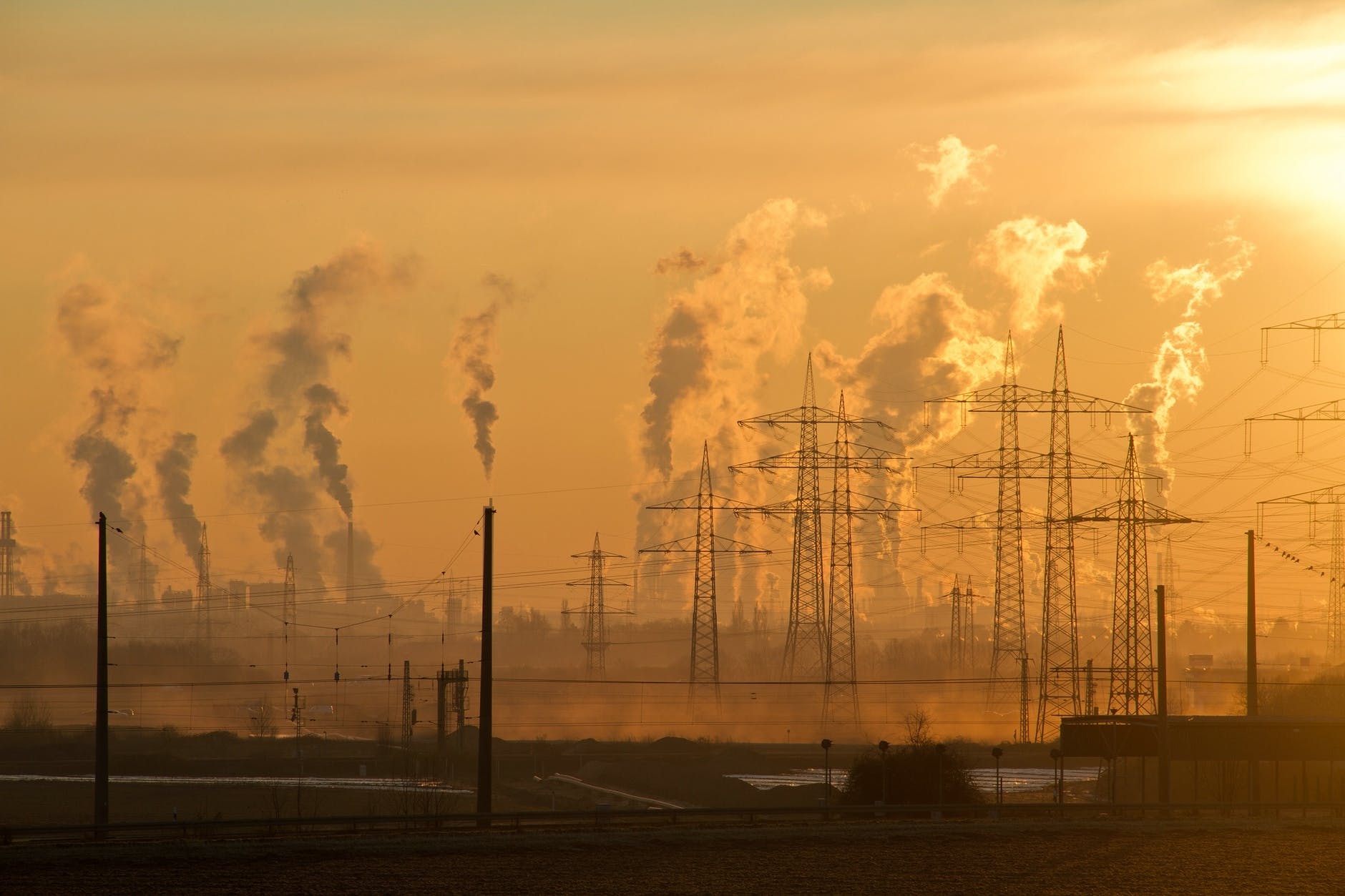
  • a. Reduce air pollution and carbon emissions substantially from current levels by forming a scientific understanding of underlying sources, and implementing innovative, evidence-backed mitigation measures.
  • b. Clean-up Yamuna by ensuring no untreated water flows into the Yamuna and develop a beautiful
  •  river side on the Yamuna, which will play a big role in maintaining the Yamuna  Eco system and creating a new tourist destination.
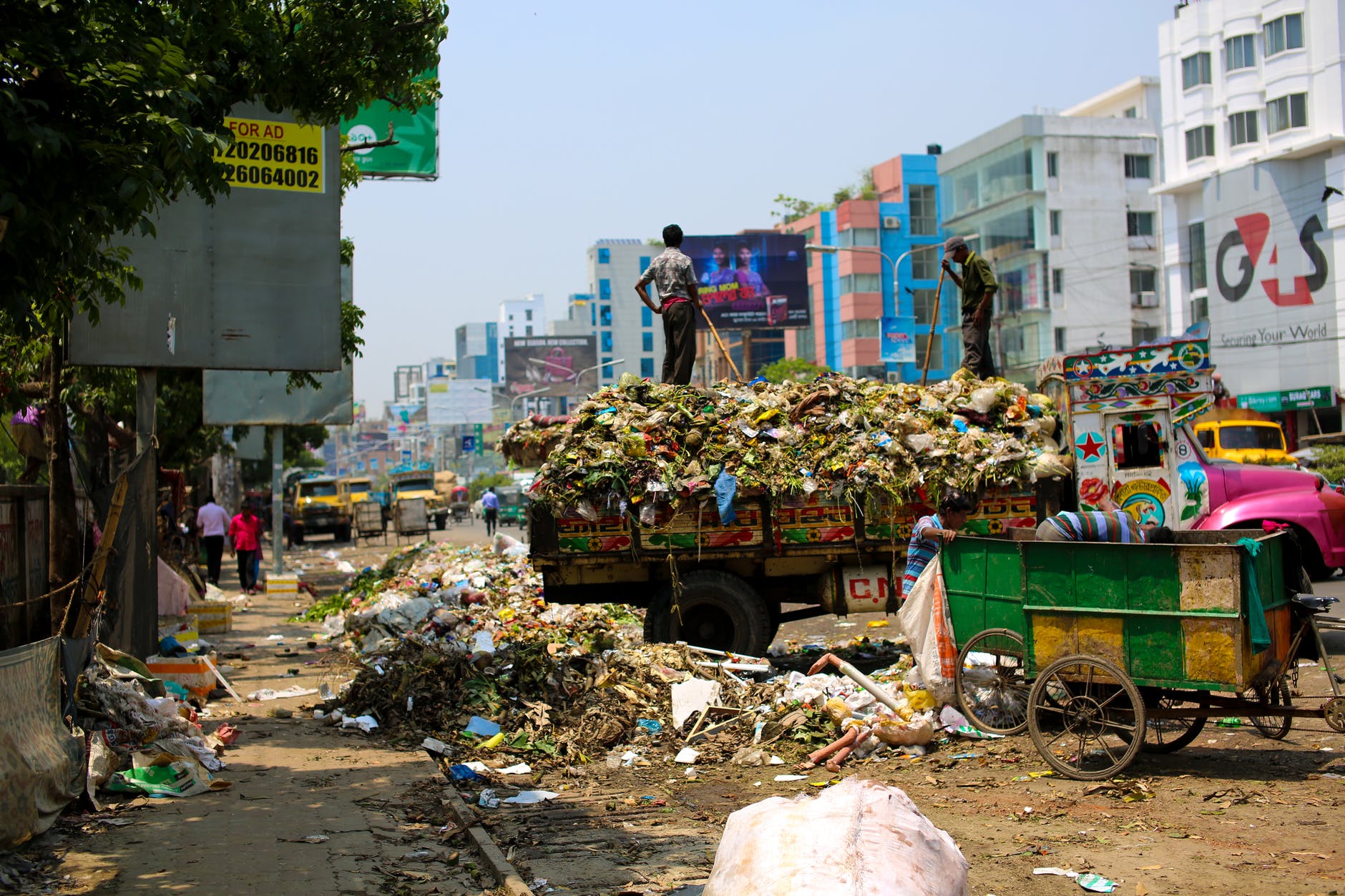
  • c. Make Delhi among India’s cleanest cities by working in close coordination with Municipal Corporations to get rid of open dhalavs and institute modern practices for collection, transportation & disposal of solid waste.

3) Transport and Infrastructure: The Transport and Infrastructure team advises and assists the
 government’s work in the following areas:

  • a. Create a world-class and affordable public transportation system comprising of buses, metro and efficient last-mile connectivity that gives priority to electric vehicles and non-motorized modes of transport.
  • b. Build well-designed, beautifully landscaped and safe roads that cater to the needs of all its users – the essential hallmark of a world-class city.
  • c. Provide dignified housing and essential services to all residents of Delhi with a focus on the needs of slum dwellers and residents of unauthorized colonies.

4) Economy: The Economy team advises and assists the government’s work in the following areas:

  • a. Undertake reform measures for the continued growth of Delhi’s economy including modernization of market and industrial areas, furthering the ease of doing business, nurturing the growth of culture and creative economy and establishing Delhi as the nation’s hub for start-ups.
  • b. Promote the growth of quality jobs and employment opportunities by investing in world-class skill training and better industry-government collaboration in labor-intensive sectors.
  • c. Undertake all possible steps to increase the participation of women in Delhi’s economy, including initiatives that connect housewives with job and business opportunities from or near their homes.

5) Governance: The Governance team advises and assists the government’s work in the following areas:

  • a. Establish and nurture platforms of participatory governance that bridge the gap between government and external stakeholders such as the private sector, civil society, academia and communities ineffective design and implementation of government schemes and policies.
  • b. Undertake appropriate administrative and institutional reforms to ensure that public institutions and governance in Delhi is capable of serving the needs and aspirations of the national capital of 21st century India.
  • c. Encourage the usage of modern IT and e-governance tools for transparent and efficient administration.
  • d. Promote a culture of research and innovation to address the most critical development challenges facing Delhi.

6) Monitoring, Evaluation & Learning: This team advises and assists the government’s work in the following areas:

  • a. Strengthen the use of data and modern monitoring tools such as Outcome budgeting, performance dashboards, 
  • high-frequency monitoring etc. for timely course corrections and improved policy implementation.
  • b. Conduct independent surveys and rigorous evaluations of government schemes and policies, either internally (for small/rapid assessments) or in collaboration with external organizations to generate insights on which programmed work and why.
  • c. Act as a knowledge hub on policy innovations and impact of various reforms of Government of National Capital Territory of Delhi and facilitate internal and external learning by publishing policy briefs, case studies, white papers etc. and hosting seminars and conferences.

Delhi Master Plan 2021 by Delhi Development Authority (DDA or MPD 2021)

 Delhi master plan tries to address numerous problems which are faced by residents in the city and provide policies to solve these problems. Study of master plan of Delhi is also important as it acts as guideline for various other cities and is one of the most comprehensive master plans. It remains one of the largest urban agglomerations in the world. Therefore it becomes important to look at the state of urban planning in the city and to constantly evolve and evaluate the strategies for managing its growth and development. The master plan for Delhi is supposed to be the main policy document for this purpose, a legally enforceable text which lays down the planning strategies and development controls applicable to the city. 

Delhi is the capital city of India and home to a population of almost 16 million people. It remains part of the largest urban agglomerations in the world. This large population makes planning of immense importance for providing good quality of life to its citizens. The history of planning in Delhi is centuries old much before India got independence and after independence the planning has been done by Delhi Development Authority (DDA) which prepared master plans for planned growth of the city. Master plan for year 1962, 2001 and 2021 has been made till now with increase in Urbanized Land and improvement in successive plan and aims at developing Delhi into a world class city. 

Master plan has been prepared while keeping in mind the larger context i.e. National Capital Region for integrated growth of the city with surrounding area. Master plan gives detailed information in form of various chapters such as shelter, transportation, industry, trade and commerce, land use, development code etc. these chapters gives well defined hierarchy, sizes & regulations for various facilities which needs to be provided. Various lower order plans like zonal plan, sub zonal plans, layout plans are made on the basis of policies provided in the master plan. The National Capital Region of Delhi is the 6th largest urban area in the world with a population of about 16 million people. Cities of such huge magnitude, having a population of over 10 million, are in fact now classified as ‘Mega Cities’.

                                                              Delhi master plan regions
But with the growth of such large urban areas also comes the problem of managing them well to ensure good quality of life for the residents. The existence of such large numbers of people densely packed into compact regions leads to ever increasing burdens on the resources available in the cities. Housing, waste management, slums, transportation, have emerged as some of the most pressing problems in urban areas along with the overall issue of effective utilization of land. It is in dealing with such problems that urban planning comes to the fore, in order to provide a comprehensive development strategy for the city with a forward looking approach. The city may thus get divided into administrative and uses based zones with separate plans for the same along with an all-encompassing master plan for the city as a whole.

Need of Master and Regional Plan 

Delhi Metropolitan city, the National Capital, has recorded an unprecedented growth during last several decades. In order to save Delhi from population explosion, it is necessary to regulate growth in the areas around it. The decennial growth rate has been as high as 90% during 1941-1951 and over 50% since 1951-1961 to 1981-1991. The explosive rate of growth in its population has been a cause of serious concerns to the govt. and all the concerned city authorities. The need for Regional approach to planning was felt as early as in 1959 when the draft master plan for Delhi was prepared. A statutory organization called “National Capital Region Planning Board” was set up in March 1985 to plan and promote the balanced and harmonious development of the region. 
The population increase has heavily strained the infrastructural facilities and its resources. Therefore it was felt necessary to invest in selected settlements outside the metropolis at appropriate distance and also, in impulse sectors to relieve Delhi from its present avoidable pressures. In the regional context, it is necessary to adopt a ‘poly-nodal’ model than a ‘mono�nodal’ model one.  

Delhi Master Plan Model 

Comprehensive planning model for the city to achieve balanced growth and built environment. Comprehensiveness in city planning refers primarily to an awareness that the city i.e. a system of interrelated social and economic variables extending over space. 
  • Geddesian triangle model of land use integration in terms of folk, work and place 
  • Integrated in time with reference to having a plan period 
  • Planning having a multi-disciplinary nature covering social and economic aspects
                                                               Delhi master plan 2021 

Conclusions over Delhi Master Plan 2021 

MPD 2021 provides scope for vast development within Delhi through the new land policy involving private participation. The Delhi Master Plan 2021 along with inviting private participation through opportunity for large scale development in Delhi, lays down norms to check unplanned growth and violations by developer entities. Though the land pooling model proposed by MPD 2021 brings in a remarkable change in the way private participation is perceived in the context of Delhi; it can be expected to impact the cost of new housing units. It will be interesting to witness the various parameters of land sharing, infrastructure provisions, mandatory EWS (Economically Weaker Sections) and LIG (Low Income Group) housing provision and premium factor for being located in Delhi impacting the pricing of the MIG (Middle Income Group) and HIG (High Income Group) housing segment. Market participants have been provided with good opportunities. However, the implication of different facets of regulatory and realty market characteristics / occurrences captured in this white paper will need to be analysed further to make an informed decision for benefiting from each opportunity.


Metro Region Concept

 A metropolitan area (metropolis) is a region consisting of a densely populated urban core and its less populated surrounding territories, sharing industry, infrastructure and housing. A metro area usually comprises multiple jurisdictions and municipalities, neighborhoods, townships, boroughs, cities, towns, exurbs, suburbs, counties, districts, states and even nations. As social, economic and political institutions have changed, metropolitan areas have become key economic and political regions. Metropolitan areas include satellite cities, towns and intervening rural areas that are socioeconomically tied to the urban core, typically measured by commuting patterns. 

At first, the ‘metropolitan district’ was used in 1910 in the Census of Population carrying a central city of 50,000 or more population and all adjacent minor civil divisions having a population density of 150 or more persons per square mile. By 1940, the concept of the metropolitan district had lost favour because the possibilities of correlating local data with district data were limited. 

Besides this, the metropolitan district did not truly represent social and economic integration with the central city. Therefore, a new areal unit, the standard metropolitan area, came into vogue in 1949. It was defined as made up of counties instead of minor civil divisions. It was succeeded by the ‘Standard Metropolitan Statistical Area’ (SMSA).It is defined below as it existed in 1970. 

A contiguous county will be included in an SMSA if: 

(a) At least 75% of the resident labour force in the county is in non-agricultural labour sector 

(b) At least 30% of the employed workers living in the county work in the central county or counties of the area. 

A contiguous county which does not meet the foregoing requirements will be included in an SMSA if at least 75% of the resident labour force is non-agricultural and meets two of the following additional criteria of metropolitan character and one of the following criteria of integration. 

(i) Criteria of Metropolitan Character 

(a) At least 25% of the population is urban. 

(b) The county had an increase of at least 15% in total population during the period covered by the most recent two censuses. 

(c) The county has a population density of at least 50 persons per square mile. 

(ii) Criteria of Integration 

(a) A least 15% of the employed workers living in the county work in the central county or counties of the area, or 

(b) The number of people working in the county who live in the central county or counties of the area is equal to at least 15 per cent of the employed workers living in the county, or 

(c) The sum of the number of workers commuting to and from the central county or counties is equal to at least 20% of the employed workers living in the county.

As stated above it seems that metropolis is primarily a demographic concept. But this may be emphasized once again that metropolis is much more than an agglomeration. It possesses distinct character and functions which are not likely to be found either in agglomeration or in conurbation. In metropolitan cities each function has benefited from the conditions which brought about the other functions and has found reasons for developing there itself. 

There the powers of attraction make them bigger and bigger, and consequently enormity of their size increases their power of attraction. This is happening in Mumbai which has grown tremendously during 1901-1991 by 1000 times. Mumbai has simultaneously an international port, one of the biggest commercial marts, an important industrial node of the country and a cosmopolitan centre. After analyzing the conditions of this development, it may be observed that out of 300 cities with population over one million in the world (1991), more than 50% are sea ports. In reality, ports possess immense potentials to concentrate functions, because, on the one hand, they are by definition commercial places, and on the other, they attract manufacturing industries by the materials of all sorts which they receive from various parts of the country. 

Even in the days of the ancient Mediterranean civilizations, and also, during the colonial times, the great commercial connections were then maritime links with the metropolis. The eastern and western sides of the Atlantic in Europe and America therefore, have great ports. Metropolitan cities acquire a sort of permanence and remain evergreen over time.

Metropolitan Cities in India 

The Constitution (74th Amendment) Act, 1992 defines a metropolitan area in India as, an area having a population of ten lakhs or more, comprised in one or more districts and consisting of two or more municipalities or panchayats or other contiguous areas, specified by the Governor by public notification to be a Metropolitan area. 

In India, the Census Commission defines a metropolitan city as one having a population of over four million. Delhi, Mumbai, Kolkata, Chennai, Hyderabad, Bangalore, Ahmedabad, Pune, Surat and Nashik are those Indian cities that have over 4 million people. For these million plus cities the Census definition of an urban agglomeration requires that it should be a continuous urban spread constituting a town and its adjoining urban growths or two or more physically contiguous towns together with adjoining outgrowths. 

There are 53 urban agglomerations in India with a population of 1 million or more as of 2011 against 35 in 2001. As per the preliminary results of the Census 2011, released by the Registrar General of India, Greater Mumbai with a population of 18,414,288 continues to be India’s biggest city, followed by Delhi – 16,314,838 and Kolkata- 14,112,536. These three cities are India’s mega-cities with 10 million plus population. But, when we consider Urban Agglomeration as an extended city comprising built up area of central core and any suburbs linked by continuous urban area, we have a change at the top. Delhi NCR, with the inclusion of Gurgaon, Faridabad, Noida and Ghaziabad becomes the No.1 urban agglomeration with a population of 21,753,486, ahead of 20,748,395. 

As of 2011 census of India, there are 46 metropolitan cities in India and the top ten are, Mumbai, Delhi, Kolkata, Chennai, Hyderabad, Bengaluru, Ahmedabad, Pune, Surat and Visakhapatnam.

Covid Cases on the rise in post-Diwali week


NEW DELHI: The end of the Diwali week marked a steady increase in new Covid-19 infections. India recorded 80,614 new cases of the coronavirus this week. With 10,789 new cases in the last 24 hours.

While cases in the southern states, namely Kerela and Tamil Nadu continue to gradually drop, a number of states observed a significant spike in cases. Jammu & Kashmir recorded a 34% increase in new cases in the past week.


Other states where the count increased in the current week are Karnataka, with a 17% increase, Maharashtra, Punjab, Delhi, Uttar Pradesh, Bengal, Rajasthan. Experts claim the increase in cases is a result of increased contact among people in the festive period. A major credit for the over-all spike can also be credited to increase in population in the markets. As most people connect the festival with an incentive to shop.

-Ananya Kaushal

Why has October been so rainy ?

Explained : Although the monsoon season ends in September, a delayed withdrawal and other factors have been causing severe rainfall in several states.

Western disturbances, which begin to have significant interference in local weather over the extreme northern parts of India, commonly cause either rain or snowfall. Since late last week, Ladakh, the higher reaches of Kashmir and Uttarakhand have reported the season’s first snowfall.

Last week, two low-pressure systems were active simultaneously, one each over the Arabian Sea and the Bay of Bengal regions. Collectively, these triggered severe weather events over Kerala, Tamil Nadu, Andhra Pradesh, Telangana, Delhi, Madhya Pradesh, Uttarakhand, Odisha and West Bengal.

Delayed monsoon withdrawal

The four-month southwest monsoon season normally withdraws completely by early October. During the withdrawal phase, it causes thunderstorms and localised heavy rainfall.

This year, however, the withdrawal began only on October 6 against a normal of September 17. So far, the monsoon has withdrawn completely from the Western, Northern, Central and Eastern India regions. But it remains active over the southern peninsula. Thus, Kerala, Tamil Nadu, Telangana, Karnataka and Andhra Pradesh have had significant rainfall during the last 10 days.

Until Monday, the monsoon had not withdrawn from Manipur, Mizoram, Tripura, parts of West Bengal and Odisha and entire southern peninsular India.

“As there has been a delay in the southwest monsoon withdrawal, good rainfall has continued over Odisha, the Northeast and south India,” said Mrutyunjay Mohaptra, director general, India Meteorological Department (IMD).


Normally, by mid-October, the monsoon winds reverse their direction of flow from the southwest to the northeast.

“Even though the easterlies are beginning to replace the westerlies, the former is yet strengthen and fully establish. The easterly winds indicate the arrival of the northeast monsoon,” said D Sivanand Pai, head, Climate Research and Services, IMD, Pune.

This year, conditions for the onset of the northeast monsoon are expected to develop around October 25.

Extreme rains

For most days last week, at least two low-pressure systems remained active along the east and west coasts and over central India, bringing rains over large parts of the country.

Delhi received 87.9mm (over a 24-hour period) between Sunday and Monday, making it the fourth wettest October day for the national capital since 1901. The month of October has also been the fourth wettest so far. It has received 94.6 mm rains this month so far, which is next only to the 238.2 mm it received in 1954, the 236.2 mm in 1956, and 186.9 mm in the entire Octobers of 1910.

Likewise, Balasore in Odisha recorded 210mm in a day and it was only the second such occasion in a decade for this month.

While Tamil Nadu normally receives good rainfall between October and December, mainly during the northeast monsoon, Coimbatore (110mm) witnessed its wettest October day in a decade even before the onset of the northeast monsoon.

The Western Ghats, northeast and central India are known as high-rainfall receiving regions. However, in recent years, it has been noted that intense spells during a short time span are increasingly becoming frequent.

“Due to climate change, there is definitely a rising frequency in the extreme weather events round the year. But these specific occurrences of heavy to very heavy rains that we are seeing right now can be attributed to the formation of low-pressure systems,” said Mohaptra.

“Whenever there is a low-pressure system, depending on its strength, it results in heavy to very heavy rainfall activity. In addition, when a low-pressure system interacts with western disturbance, further intense rainfall occurs,” he said.

Extreme rainfall in Kerala

A low-pressure system that formed in the east-central Arabian Sea moved and sustained over Kerala between October 15 and17.

Simultaneously, another low-pressure system prevailed over the north Andhra Pradesh coast and southern Odisha. The interaction between them strengthened the southwest winds which brought extreme rainfall over central and southern Kerala during the last weekend.

At some places in Idukki, Ernakulam, Kollam and Kottayam districts, the 24-hour rainfall was over 200 mm. As many of these districts are hilly and covered with dense forests, the water run-off triggered landslides and mudslides.

Rainy days ahead

The low-pressure system that affected Kerala has weakened now. But a similar system is still active over central India, because of which northern India is likely to received good rainfall this week.

Heavy rainfall events are predicted over Western Uttar Pradesh, Uttarakhand and Himachal Pradesh for Tuesday, with a ‘red’ alert having been issued by IMD for these regions.


Another low pressure — located over Northern Odisha and Gangetic West Bengal — is active and its interaction with the moist easterly winds from the Bay of Bengal is expected to bring heavy rain over West Bengal, Odisha, Sikkim, and Bihar until Wednesday. The maximum impact in terms of extremely heavy rain (more than 204 mm in 24 hours) is likely over some places in West Bengal and Sikkim on Tuesday.

Written by : Ananya Kaushal

दिल्ली को अगले 3 साल में प्रदूषणमुक्त कर देंगे: गडकरी

सड़क परिवहन मंत्री नितिन गडकरी ने गुरुवार को कहा कि केंद्र सरकार अगले तीन साल में दिल्ली को वायु, जल और ध्वनि प्रदूषण से मुक्त करेगी। उन्होंने कहा कि मौजूदा समय में प्रदूषण देश के लिए सबसे बड़ी चिंता की बात है।


इंडस्ट्री पीएचडी चैंबर ऑफ कॉमर्स के सालाना कार्यक्रम में गडकरी ने कहा कि उनके मंत्रालय ने सड़क बुनियादी ढांचा विकास पर 60,000 करोड़ रुपये खर्च किए हैं। इस प्रयास से दिल्ली में वायु प्रदूषण को कम करने में भी मदद की। वायु प्रदूषण, जल प्रदूषण और ध्वनि प्रदूषण देश के लिए चिंतित करने वाले मुद्दे हैं। हम दिल्ली को अगले तीन वर्षों में वायु, जल और ध्वनि प्रदूषण से मुक्त कर देंगे।


गडकरी ने कहा कि सरकार सुप्रीम कोर्ट से मंजूरी मिलने के बाद सभी वाहन निर्माताओं के लिए फ्लेक्स फ्यूल के अनुकूल इंजन बनाना अनिवार्य कर देगी। फ्लेक्स-फ्यूल, पेट्रोल और एथेनॉल को मिलाकर बनने वाला एक वैकल्पिक ईंधन है। अब एक एथेनॉल अर्थव्यवस्था विकसित करने पर काम किया जा रहा है। गडकरी ने सुझाव दिया कि सेना को डीजल इंजन वाले वाहनों के इस्तेमाल पर प्रतिबंध लगाना चाहिए और एलएनजी, सीएनजी और एथनॉल पर चलने वाले ट्रकों का उपयोग करना चाहिए। मंत्री ने कहा कि इथेनॉल, पेट्रोल और डीजल की तुलना में काफी सस्ता है।

अनन्या कौशल द्वारा संपादित।

No new fatalities were found in Delhi for the first time

The national capital had reached a milestone on new fatalities were recorded for the first time since March 2 this year. State government records show that single day fatalities peaked on May 3 as the fourth wave of coronavirus in the city.

The positivity rate in the national capital now stands at 0.06 percent after 59,410 tests were conducted. This marks a slight decrease from the 0.07 percent recorded on Sunday, after 51cases were reported.

As Covid-19 cases in the national capital witness a sharp decline since the past few weeks, Delhi on Sunday reported no new virus related deaths in the last 24 hours, according to the daily health bulletin, keeping the death toll since the pandemic outbreak at 25,027. Recoveries reached 14,09,910 with 80 more patients recovering in the 24 hour period.

Active cases in Delhi are at 592

Earlier this week, Chief Minister Arvind Kejriwal had said that governments should take every step to prevent the spread of COVID-19.

Heavy Rainfall next five days

Delhi, UP, Uttarakhand and Himachal to Receive Heavy Rainfall Next Five Days.

The India Meteorological Department (IMD) has predicted heavy to very heavy rainfall at some places of North India, including Delhi, Uttar Pradesh, Himachal Pradesh, Uttarakhand, during the next 5 days. 

The department has also issued an orange alert in Rajasthan and Jammu and Kashmir. It also issued a yellow alert in Himachal Pradesh and Uttarakhand, which are facing heavy losses due to cloudburst. The Metrological department issued a red alert for Madhya Maharashtra and Goa.

The prediction are taken at a time when monsoon has entered in most of the states of the country.

Following are the meaning of the color of the alert issued by authorities::

Green Alert: It means there is no danger as there is no chance of rain.

Yellow Alert: This alert means that there will be rainfall and weather will remain unclear

Orange Alert: This means that there is a full possibility of rainfall and thunderstorms. So one should not go out unless it is absolutely necessary.

Red Alert: Red Alert means warning of dangerous weather. Through this alert, people are warned against going out of their homes.

The moisture-laden winds are advancing from the Bay of Bengal towards all parts of the country due to changes in conditions that promote the advancement of these winds.

FARMERS’ PROTEST: GOVERNMENT’S PLANS TO OPPRESS THE MOVEMENT TAKES A HIT WITH INTERNATIONAL ATTENTION POURING IN

Iron nails, rods, barbed wire, boulders, makeshift walls….. These are not the visuals from a war front. This is how the largest democratic government in the world is preparing the country capital to face its farmers. The Farmers’ Produce Trade and Commerce (Promotion and Facilitation) Bill, 2020 was passed by the parliament followed by the approval of the President in September 2020. Since then, the farmers mainly from regions of Haryana and Punjab are protesting in the outskirts of New Delhi against the bill. Several rounds of discussions between the farmers and the government representatives have taken place but none of them was fruitful. The government had earlier offered to suspend the farmers’ bill as part of negotiations to end the protest but the farmers were loath as they demanded a complete abrogation. 

The protestors took hold of the major highways at Singhu, Ghazipur and Tikri, thereby isolating the national capital. It is in the third month that the protest took a violent turn when protesters and police clashed after thousands of farmers entered Delhi as part of a massive tractor rally, on January 26th. Several injuries were reported and a protester lost his life during the commotion. The police used tear gas and water cannons along with brutal lathi-charge to oppress the rally. Media personals who reported the incidents in favour of the farmers were also arrested with sedition charges. The government has disconnected the fuel, power and water supplies to the protestors as part of oppressing the movement. The shutting down of the internet and the mobile networks by the government in and  around the protest sites in order to “ensure public safety” have further fueled up the rage among the farmers. 

To prevent the protestors from entering the city again, the government has deployed force at the capital borders with Haryana and Uttar Pradesh and have begun blocking the area around the protests by placing large concrete slabs , spools of razor wire, heavy metal barricades , layers of stone boulders and embedding huge iron nails across the breadth of the roads leading to the protest sites. Only few selected vehicles are permitted to go beyond the barricading with media vehicles being strictly prohibited. With the movement gaining international attention and support as many notable faces from across the world vouched support for the farmers, it won’t be easy for the government to oppress the farmers agitation anymore. 

University of Delhi to promote intermediate students with backlog for next semester.

New Delhi: University of Delhi has issued promotion criteria for intermediate semester students of undergraduate and postgraduate courses. According to an official notification, all UG and PG students (except for the Council Mandatory course, including the Non-Collegiate Women’s Education Board (NCWEB) and the School of Open Learning (SOL)), students will be allowed to pursue those subjects , In which they have failed.

“Students will be allowed to pursue subjects in which they failed in one semester or year and will be promoted next year,” an official statement said.

“However, such students may approve the syllabus for the examination in which they failed or in which they were absent, when the examinations are conducted by semester and term next year,” the statement said.

DU said that students in the second semester (part I) or fourth semester (part II) of undergraduate and postgraduate courses are eligible for promotion under the criteria.

Registered with the School of Open Learning and Noncollegiate Women’s Education Board (NCWEB) for second year UG courses under the annual mode and second semester (1 year), first year UG students under Choice Based Credit System (CBCS) Delhi. The university said that the School of Open Learning (SOL) is also eligible for promotion.

University of Delhi further stated that this provision is applicable only for the current academic session (2019-20) in view of COVID-19 epidemic. Courses administered by statutory regulatory bodies or councils will not be covered under this provision.

The real ground reality of the corona treatment

Corona virus, every day its like we are tuned to the same channel spewing the same things like a factory mill on overwork. But be as it may every day, we learn more about this disease that was thrust suddenly to the world, after initially originating from china. There are many a theory afloat that China deliberately kept the onset of this disease a secret to gain from it, and knowing the level the Chinese usually stoop to it would not be farfetched to believe so. Nearly every country is trying to cope up to this disease with drastic level of differences. On one side we have countries like new Zealand who have virtually negligible cases and still effectively trying to combat the situation and on the other end we have countries like USA where the cases have arisen to such a point that their President has announced that he will be slowing down testing to make it seem like the number of cases have dwindled. So where on this spectrum does India lie?

Photo by Anna Shvets on Pexels.com

India is home to a vast population that counts in billions, to safely combat a virus which spreads so easily is a herculean task in itself. However, the front-line workers are continuously working to be the first line of defence, but is it enough. Very often we see on the news and media how heroically our government is fighting the virus, often depicting them as gallant saviours shielding us from the evil virus. The hospitals giving their best in order to help the patients that they get, treating them and sending them back to society so that they may function like before. However,  the ground reality is anything but so, with the influx of corona positive cases of nearly 15000 each day, adding the fact that hospitals are seeing the worst mismanagement that could be done during a pandemic, it is no surprise that to many people going to the hospital seems like a walk towards the gallows. The hospitals launched apps in order to increase their efficiency and help them control the crowd gathering in hospitals, however with the traditional Indian scene of mismanagement this has just poured fuel to the increasing fires. The apps show the hospitals having free beds when there are none, mistreating patients and whatnot. Many a hospital within Delhi, India’s capital city have started to look more like morgue, without enough beds to put the dead bodies in, entire floors have been converted into makeshift morgues with bodies simply piled up unhygienically. This is just the tip of the iceberg that is the inefficiency of the hospital scene in battling corona virus. With the amount that an average corona patient is charged, coupled with the gross mismanagement it can make life a living hell for anyone going to the hospital regarding this issue. During this pandemic bed charges have inflated very much, a general ward bed in super specialty hospitals costs around 11000 a day, due to the covid-19 expenses. The overall amount depends on the time period one I admitted. Adding the mismanagement of the hospital staff into the mix it can go for unnecessarily long periods. Counting in the per day costs of a ventilator in the ICU ward for serious cases it can add an additional 50,000 per day as well. Thus, even if one miraculously survives the ordeal of corona, monetarily they are thrust back way harder than before.

What actions we further take is for everyone to see.