Panchayat system in India

 The Panchayat system is an integral part of India’s democratic structure. A local government is closest to the common citizens and promotes participatory democracy. Mahatma Gandhi believed that India lives in its villages. He cherished the idea of self-sustained villages with effective decentralization of economic and political power through village Panchayats. 

Panchayat means an assembly of five people chosen and accepted by the local people. Traditionally, it was used to settle disputes in the village. The roots of the Panchayat system in India are extremely old. Even during the colonial times, many developments in the direction of local governments can be traced. In 1882, Lord Rippon had established local self-government in India. 


Article 40 of our constitution states that “The state shall take steps to organize village Panchayats and endow them with such powers and authority as may be necessary to enable them to function as units of self-government.”

Several committees were set-up by the Government of India to study the implementation of self-government in rural areas;  Balwant Rai Mehta Committee (1957), Ashok Mehta Committee (1977), GVK Rao Committee (1985), LM Singhvi Committee(1986). 

73rd Amendment

 After the recommendations by a number of committees, the 73rd amendment was passed in 1992. It constitutionally strengthened the power and responsibility of the Panchayat system.  It established a three-tier system popularly known as Panchayati Raj. First was the Gram Panchayat at the village level, followed by the Block Panchayat at the intermediate level, and the district level body known as Zilla Parishad. 

The amendment provided the Panchayat with the responsibility to develop plans for economic development and social justice. The 29 functional responsibilities in the 11th schedule were transferred to the local bodies which includes; rural electrification, poverty alleviation programme, education, agriculture, social welfare, drinking water, women and child development etc. Each state can decide how many of these twenty-nine subjects would be transferred to the local government.  

Members of these bodies are elected directly by the people for a tenure of five years.The State Election Commission has the responsibility for conducting the Pachayat elections. Along with reservation for the Scheduled Caste and Scheduled Tribes, one-third of the Panchayat positions were reserved for women. 

The Gram Panchayat is headed by the Sarpanch. Other than Gram Panchayat, a Gram Sabha was also established. It was an assembly which consisted of all the voters of the village. 

The 74th amendment focussed on urban local government while the 73rd was for the rural local government. Both the amendments promoted democratic decentralization of power. 

The main objective of the Panchayat system is to strengthen the base of democracy at grass-root level. It gives an opportunity to the citizens to participate in the implementation of rural development policies. 

Dahl and Democracy

Paragraph 1

In Democracies and its Critics, Robert Dahl defends both democratic value and pluralist democracies, or polyarchies (a rough shorthand term for Western political systems). Dahl argues convincingly that the idea of democracy rests on political equality—the equality capacity of all citizens to determine or influence collective decisions. Of course, as Dahl recognizes, if hierarchical ordering is inevitable in any structure of government, and if no society can guarantee perfect equality in the resources that may give rise to political influence, the democratic principle of political equality is incapable of full realization. So actual systems can be deemed democratic only as approximations to the ideal. It is on these grounds that Dahl defends polyarchy.

Paragraph 2

As a representative system in which elected officials both determine government policy and are accountable to a broad-based electorate, polyarchy reinforces a diffusion of power away from any single center and toward a variety of individuals, groups, and organizations. It is this centrifugal characteristic, Dahl argues, that makes polyarchy the nearest possible approximation to the democratic ideal. Polyarchy achieves this diffusion of power through party competition and the operation of pressure groups. Competing for votes, parties seek to offer different sections of the electorate what they most want; they do not ask what the majority thinks of an issue, but what policy commitments will sway the electoral decisions of particular groups. Equally, groups that have strong feelings about an issue can organize in pressure groups to influence public policy.

Paragraph 3

During the 1960s and 1970s, criticism of the theory of pluralist democracy was vigorous. Many critics pointed to a gap between the model and the reality of Western political systems. They argued that the distribution of power resources other than the vote was so uneven that the political order systematically gave added weight to those who were already richer or organizationally more powerful. So the power of some groups to exclude issues altogether from the political agenda effectively countered any diffusion of influence on decision-making.

https://www.google.com/url?sa=t&source=web&rct=j&url=https://en.m.wikipedia.org/wiki/Robert_A._Dahl&ved=2ahUKEwilybne7OfxAhVZzDgGHdOUBFoQFnoECAQQAQ&usg=AOvVaw1m7je4vjO_kQPSVhYbQsjr

https://www.google.com/url?sa=t&source=web&rct=j&url=https://www.annualreviews.org/doi/full/10.1146/annurev.polisci.6.121901.085839&ved=2ahUKEwilybne7OfxAhVZzDgGHdOUBFoQFnoECC8QAQ&usg=AOvVaw26r49rfyW0ZAyxHODvBrYt

To whom the world belongs?

Biggest Landowner

Owning a piece of land in the world is a dream for many people. People having their own place for settlement is the daily struggle. Many Country politics are revolving around settlements, refugees and Wars for acquiring other colonies are daily news.
But do you know who own not only a piece of land but multiple countries?

Owner of 16 Countries

The world’s biggest Landowner is Queen Elizabeth II, who legally owns about 16.6% of the Earth’s land surface. She is the only person on the earth who owns multiple countries.
Queen Elizabeth II serves as the Head of State of United Kingdom, Barbados, Antigua and Barbuda, Australia, Bahamas, Belize, Canada, Grenada, Jamaica, New Zealand, Papua New Guinea, Saint Kitts and Nevis, Saint Lucia, Saint Vincent and the Grenadines, Solomon Islands and Tuvalu.
These nations are termed as “Commonwealth Realms”. These nations were former British colonies. The British sovereign retains the position she holds in the United kingdom that of the Head of State. As in Britain, this is largely a ceremonial role from day to day.

Many nations have withdrawn from the Queen’s rule before as like that from these 16 current nations, Barbados has announced that it will remove Queen Elizabeth II as the country’s head of state and become Republic by November 2021.
After which Queen Elizabeth II will own 14 Countries in addition to the home country United Kingdom. 

East Timor: Brief analysis of its history & independence.

East Timor or Timor-Leste is a tiny island country in Southeast Asia nestled between Australia and Indonesia.

For more than 300 years the territory of East Timor was ruled by Colonial Portugal (Portuguese Timor). They set up both commercial outposts and catholic missions. On 28 November 1975, Portugal withdrew from the island territory when the Revolutionary Front for an Independent East Timor had declared the territory’s independence. But this exit from East Timor was not at all smooth and this enraged bitter rivalry between various local groups. Just nine days later in December 1975 East Timor was invaded and occupied by the Indonesian military. Suharto, the Indonesian president at that time didn’t receive much resistance from the western countries due to the left-leaning stance of East Timor at that time (Cold war).  The Indonesian occupation was a brutal and violent period in East Timor’s history with various suppression tactics many people lost their lives during that period.

The following decades were highly violent with many conflicts between the separatist groups known as Fretilin and the Indonesian military. The military fought a continuous guerilla war with the rebels in the island’s interior mountains. There were numerous rights violations and over 100,000 people died under the occupations of Indonesia.

One of the most defining instances happened on November 12, 1991, when the Indonesian military shot and killed over 250 people who had come for the memorial procession in honor of Sebastio Gomez, a pro-independence supporter killed by the Indonesian military. The events occurred in the Santa Cruz Cemetery in Dili, East Timor’s capital. This tragedy is known as the Santa Cruz Massacre. The event gained international media attention. Although the Indonesian occupation did not cede until eight years later in 1999, the Santa Cruz massacre was a defining moment in the island nation’s quest for independence.

In 1998 president Suharto resigned from his position after more than 30 years in power due to growing pressure and protests against him from within the country. His replacement was open towards more open towards the autonomy of East Timor. International pressure for East Timor grew in 1998. During the downfall of the New Order government, as part of Reformasi, a referendum was held in East Timor to ask whether they wished to remain in Indonesia with increased autonomy or become independent. On August 30, 1999, about 78% of the population of East Timorese chose to remain independent.

Following the referendum, violence again erupted in East Timor as Indonesian-backed militias increased their activities across the country. In September UN peacekeeping let by Australia force took control of the situation but a lot of damage was already done. In 2002 Xanana Gusmão was elected as the first president after three years of transitional governance by the UN.

As of today, the country has been relatively stable but the economic conditions have not been improved. Indonesia’s Timor has fared comparatively better than East Timor. It was also discovered that Australia, a country that East Timor considered as their ally had spied on East Timor to gain leverage over negotiations on the exploitation of natural resources in the Timor Sea. On a positive note, the country has comparatively good relations with Indonesia now.

References:

Human Rights

‘A right is not what someone gives you; it’s what no one can take from you.’

We need human rights for protection when our legal rights have been violated by the state or individuals, and to encourage justice and fairness within our societies.

Because of this widely accepted reason human rights are protected by raising both national and international awareness of human rights violations. This can help draw attention and resolve such situations, by creating moral pressure on the government.

Photo by cottonbro on Pexels.com

Constitutional Rights:

The Constitution of India provides for six Fundamental Rights:

  • Right to equality (Articles 14–18)
  • Right to freedom (Articles 19–22)
  • Right against exploitation (Articles 23–24)
  • Right to freedom of religion (Articles 25–28)
  • Cultural and educational rights (Articles 29–30)
  • Right to constitutional remedies (Article 32)

Chronology of events:

1989- Scheduled caste and scheduled tribe act was passed.

1993- National human rights commission established under human rights act.

2001- Supreme court passes extensive orders to implement the right to food.

2005- National Rural Employment Guarantee Act (NREGA) guarantees universal rights to employment.

Latest petitions in Supreme Court:

The Nirbhaya case- to ensure right against exploitation.

Cheap cancer drugs- to ensure right to life.

Curbing the sale of acid- to ensure the right against exploitation.

Photo by Belle Co on Pexels.com

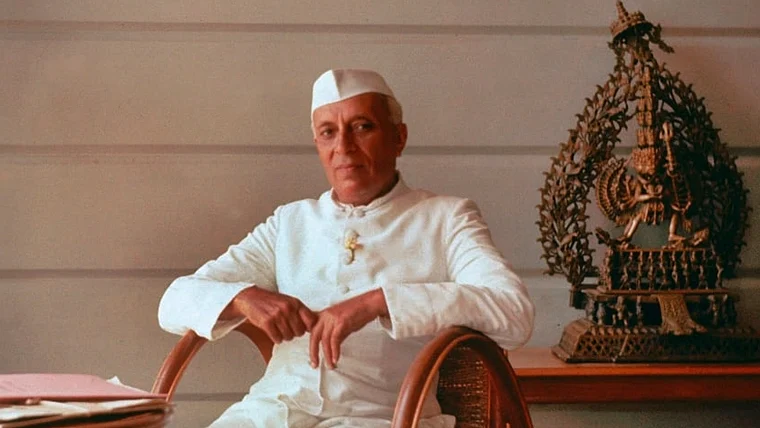
Jawaharlal Nehru faced more setbacks than you think.

File picture of Jawaharlal Nehru

The first Prime Minister of India, Pandit Jawaharlal Nehru gave India a new hope to dream of a free nation. He, along with other leaders gifted us the biggest democracy, the most ambitious republic, a colossal Constitution and an advanced form of secularism. He alsmost single-handedly integrate the entire nation after Indepence from India. He stirred emotions and tears when he said in his speech, “Long years ago we made a tryst with destiny, and now the time comes when we shall redeem our pledge, not fully or in whole measure, but very substantially. At the stroke of the midnight hour when the world sleeps, India will awake to life and freedom.”

Such invoking and inspiring speeches is one of the reason why Jawaharlal Nehru is deeply loved and revered among the Indians. It is said that during the first General Assembly Election 0f 1952, Dr.Nehru addressed almost 1/10th population of India. A brilliant statesman and orator, he is even respected in the global sphere.

However, a successful person is not without failures and setbacks. Nehru was an idealist hence even the slightest contrary caused him discomfort. Though he handled them with grace and elan.

The first setback he faced in his illustrious political career was when Subhas Chandra Bose resigned from Congress. Jawaharlal Nehru had attachment towards Gandhi but he also wanted Subhas to be in the Congress as he was modern and had socialist beliefs. Nehru never wanted this division in the Congress but in vain.

The next major dilemma Nehru faced was the Partition and the horrors of the communal riots and the immigration of thousands of refugees. Nehru always wanted peaceful coexistence and equality of all religions. He had to agree to the Partition to avoid more deaths and a civil war. Though his policy of secularism helped him gather people’s support during the election campaign.

In between of all these political conflicts, he was not without personal losses. He lost his dear wife, Kamala Nehru who was Indian activist. Jawaharlal lost her to tubercolosis in Switzterland in 1936. Nehru recalls in his book, “The Discovery of India” reading out to Kamala when she could no longer read due to her weakness. Nehru recounts in his book that he would look at the moon from his prison window and think of her. Kamala was his strength.

Another major and mammoth task after Independence was the consolidation and integration of the Indian states into the Indian Union. States like Kashmir, Junagad and Hyderabad proved to be troublesome. Though it was the work of Srdar Vallabhai Patel to integrate the states. Nehru gave the Tribal Panchsheel policy to integrate the tribal states using humane and considerate ways. One of his principle was that development should be assessed with qulaities and not statistics. He was successful but had faced immense amount of resistance. Nehru never used the Indian Armed Forces until it was the breaking point.

Nehru has been extremely respected by his opposition parties. Nehru had internationalist views as well. Nehru was the brainchild of the NAM or Non Aligned Movement. He shared his idealist vision with the other leaders of newly independent states of Asia and Africa. When the world was grasping in fear of another war due to the Cold War, he saved us from fear and promoted his non-alignment views. He promoted far more modern ideas like economic assistance, non-interferance, integrity and pecaeful co-existence. But this policy was brutally criticized by the Western theorists as it did not fit into the American view. The policy of NAM was also blatantly violated by even his NAM counterparts.

Last but not atleast, Nehru was badly betrayed by his ally he trusted. He had signed an agreement with the Chinese premier Zhou Enlai only to be attacked badly at the Tibetian fronts during the Indo-China War of 1962. Nehru had never felt this betrayed and the condition of his heart worsened. For the first time he was criticized largely by his oppositions in the Parliament. It was a huge embarrassment for him in the world forum. He only wanted to share good values with the still-developing China but alas.

Many information in this article are from the book The Discovery of India by Jawaharlal Nehru. In the book he has delved deep into the foundation of the Indian society since the Indus Valley Civilization and the Aryan society. He fully embraced Indian culture but mixed it with ancient wisdoms that are relevant even n today’s hostile political climate.

Jawaharlal Nehru believed in the Indian people when the British rulers could not even entrust upon us the task of making a Constitution. His failures made him strong and resilient. He truly was the quintessential administrator and the ‘Chacha’ of the beloved children of his nation.

Upcoming Elections in India

In the new year 2021, as India comes out of a year of lockdown and paused public life, it is going to, by degrees, go back to the pre-coronavirus normalcy. This involves conducting regular elections as well. We can’t expect the new elections to be as difficult to organise and conduct as the Bihar elections of 2020, but elections in a pandemic are yet a new phenomenon and it has to be observed how their handling can impact their results.

This year, we have legislative assembly elections in Assam, Kerala, Puducherry, Tamil Nadu, West Bengal (in April) and later Jammu and Kashmir. There are also a few bye-elections scheduled. Politicians have already begun campaigning aggressively for all these elections – large crowds in West Bengal attend rallies as the top contenders have a fight of ideologies, and Assam sees an increase in the wages of the tea-growers in light of the upcoming election. The field has gotten even more competitive as E. Shreedharan, also known as the ‘Metro Man’ of India, has joined the BJP in light of the upcoming Kerala elections.


The public and media discourse has also greatly moved on from other political challenges and the coronavirus debates to this – and so have the priorities of the political leaders. Even in the union budget of 2021, there was a major allocation of funds to these states for highway projects and other things. Now the only thing left to see is how these very unpredictable elections turn out for all the political actors involved.

What are the farm laws?

Everywhere in the news, there are different refrains about the protests and opinions for and against the new farm laws. But what exactly are these laws and how do they change the status quo? These laws are: The Farmers’ Produce Trade and Commerce (Promotion and Facilitation) Act, The Farmers (Empowerment and Protection) Agreement of Price Assurance and Farm Services Act, and The Essential Commodities (Amendment) Act. They were passed in June as ordinances before being approved by Parliament during the Monsoon Session by a voice vote.

The Farmers’ Produce Trade and Commerce (Promotion and Facilitation) Act provides for setting up a mechanism allowing the farmers to sell their farm produces outside the Agriculture Produce Market Committees (APMCs). Before this law, they could only sell it in the government APMCs or ‘mandis.’ Now, any licence-holding trader can buy the produce from the farmers at mutually agreed prices, which will be free of the ‘mandi tax’ imposed by state governments. Some think this will allow agribusinesses to monopolize the market through initially low prices and exploit farmers, and some think it will result in better prices for the farmers and a more efficient agricultural market because of more choices.


The Farmers (Empowerment and Protection) Agreement of Price Assurance and Farm Services Act allows farmers to do contract farming and market their produces freely. Some think it will result in the wage slavery of farmers but others think it will increase investment in the agricultural sector.


The Essential Commodities (Amendment) Act is an amendment to the existing Essential Commodities Act. This law freed items such as food grains, pulses, edible oils and onion for trade except in extraordinary situations. As such, it is not as contentious as the previous 2 laws.


The main grouse of the protesting farmers with these laws, especially the first one, is the lack of an MSP (minimum standard price) assurance. They believe they will suffer because of big businesses reducing prices after monopolizing the markets. However, the people that oppose this idea believe that the MSP system is inefficient and only results in wastage. Only time can tell who will win this battle of ideas and what will happen to the agricultural sector.

Construction of a Conscious Youth & Society

Article by – Shishir Tripathi
Intern at Hariyali Foundation
In collaboration with
Educational News

In the present times where unnecessary issues are given extra weightage or extra attention by social media houses and the news channels, it has become so important for the youth, for the country men to open up their eyes and start discussing and focusing upon the Vital issues.

Now, what are these vital issues? Some learned people will argue that vital issues for different people are altogether different so the person writing such an article can affix some vital issues for the entire society. This article should be read upon as a piece of informative writing that will be helpful for the nation, for the economy and for the society.

At present, after the slowdown that lasted in the economy in the last quarter of the year 2019 and in the starting of 2020, the economy has really survived a lot. And as the economy was ready to get up and move upon with sane speed as earlier, Corona virus came into the scene and turned the situation even more pathetic. The Nationwide lockdown that happened in the country for slowing down the speed of the virus, turned to be an evil for the employment of daily-wage workers. Workers and laborers are thrown out of the job and due to no work; the unemployed population of the nation is falling into the dark ocean of Depression and Anxiety.

On July 1, 2020, the Railway Ministry announced that 151 trains in 109 pairs of routes will be operated by private sectors. The vital issues like privatization of Indian Railways are needed to be discussed by the youth and the government should be asked by the youth that what are the motives and the vision of the government behind this privatization.

In the monsoon session of the parliament, there was no question hour in the parliament. Question Hour is the first hour of a sitting session of India’s Lok Sabha devoted to questions that Members of Parliament raise about any aspect of administrative activity. The concerned Minister is obliged to answer to the Parliament, either orally or in writing, depending on the type of question raised. Now there will be no one to question the government in its proceedings and actions. It’s like a free hand to government to o anything, anytime without anyone to question it.

The Corona patients are worst hit during these days. The hospitals are not admitting the new patients by arguing the unavailability of beds or ventilators. The middle and lower middle class has to run from one hospital to other but nobody cares because the politicians and the rich people are sitting in their air conditioned cars and offices. Who cares?

Same goes for the fourth pillar of the democracy, the Media. At present, almost 90% of the News channels are focusing upon their TRPs by showing news on unnecessary topics and silly rhyming news. It’s like a brain wash of the people that the media is doing by showing such pathetic news, that too one sided. The news channels and media houses never get tired of praising the governments in power and always news that is in the right of the ruling party. It, like the news has become so toxic to hear that even some people are planning to close their TV sets jut because of the disgusting and useless news debates and all the noise that occurs on the News channels.

No one is at present talking about the issues discussed above. Whether people have started fearing that discussing such issues will make them unwanted by the so called ideal society at present.

Hence, it is an alarming situation for the Indian youth and get up and hold the command of the Nation so that the basic essence of India should not get lost just in the name of advancements and important(in actually silly and unimportant) news. It’s the time to save the nation and the natural heritage too. It’s the time to save India from being psychologically enslaved, politically subjugated and culturally disarmed.

Healthy politics is needed to be played by the leaders so that they can build a new India even stronger with stronger beliefs and ethics.
It’s the time to wake up India and stand for the rights of the nation and the rights of the society.

Environmental Law Principles adopted by India


The Indian courts have successfully adopted specific environmental law principles from international environmental law jurisprudence and have combined a liberal view towards ensuring social justice and the protection of human rights. These principles have been incorporated in the Indian environmental jurisprudence and play a key role in decisions of judges even when not explicitly mentioned in the concerned statute. The principles of Indian environmental law are resident in the judicial interpretation of laws and the Constitution, and encompass several internationally recognized principles, thereby providing some semblance of consistency between domestic and global environmental standards.


1. Precautionary Principle:


A new principle for guiding human activities, to prevent harm to the environment and to human health, has been emerging during the past 10 years. It is called the “principle of  precautionary action” or the “precautionary principle” in short. This principle is controversial and its definition varies in terms of viewpoint. Environmentalists and consumer advocacy organizations that demand bans and restrictions on industrial practices or products would want policy-makers to take no action unless they would do no harm. States and advocates of economic development argue that the lack of full certainty is not a justification for preventing an action that might be harmful.


In India, for the first time in Vellore Citizens Welfare Forum v. Union of India , the Supreme Court explicitly recognized the precautionary principle. as a principle of Indian environmental law. In S. Jagannath v Union of India (Shrimp Culture Case), the Supreme Court Bench headed by Justice Kuldip Singh required the authority to deal with the situation created by the shrimp industry and issued remedial directions consistent with the precautionary and polluter pays principles. In A.P. Pollution Control Board v Prof M.V. Nayudu, the Court drew out the development of the precautionary principle in clear terms.


In the Narmada Bachao Andolan v Union of India, the Court explained that:

When there is a state of uncertainty due to the lack of data or material about the extent of damage or pollution likely to be caused, then, in order to maintain the ecology balance, the burden of proof that the said balance will be maintained must necessarily be on the industry or the unit which is likely to cause pollution.. Refusing to apply the “precautionary principle” used in cases dealing with inherently polluting activities such as heavy industries, the Court accepted the contention of the respondents that the project would have a positive impact by arresting the ecological degradation presently taking place in the drought-prone areas of Gujarat and Rajasthan, leading to sustainable agriculture and spread of green cover. The generation of hydropower would avoid the air pollution that would otherwise take place by thermal generation.


The movement towards adopting the precautionary principle has definitely widened the scope of corporate accountability, but the interpretation taken by the court mitigates the relevance and incorporation of this principle in Indian Jurisprudence.


2. The .Polluter Pays. Principle:


The Supreme Court with the introduction of the principle of absolute liability in M.C Mehta v Union of India calculates environmental damages not on the basis of a claim put forward by either party, but through an examination of the situation by the Court, keeping in mind factors such as the deterrent nature of the award. . This rule has been endorsed in Indian Council for Enviro-Legal action v Union of India and Vellore Citizens welfare Forum v Union of India. However, the Supreme Court held recently that the power under Article 32 to award damages, or even exemplary damages to compensate environmental harm, would not extend to the levy of a pollution fine.


3. Sustainable Development and Inter-generational Equity:


In Narmada Bachao Andolan v. Union of India43 it was observed that: Sustainable

development means what type or extent of development can take place, which can be sustained by nature/ecology with or without mitigation.. Earlier in the Vellore Citizens Welfare forum v Union of India , the traditional concept that development and ecology were opposed to each other was rejected and sustainable development was adopted. In the Taj Trapezium case this principle was accepted and again it was said that development of industry is essential for the economy of the country but at the same time the environment and ecosystem has to be protected.


In State of Himachal Pradesh v. Ganesh Wood Products, the Supreme Court invalidated forest-based industry, recognizing the principle of inter-generational equity as being central to the conservation of forest resources and sustainable development. In the CRZNotification case 46 the courts carried forward the concern for sustainable development by expressing its concern at the adverse ecological effects, which will have to be borne by future generations.

4. Public Trust Doctrine:


The  Public  Trust  Doctrine,  evolved in M.C. Mehta  v.  Kamal Nath,  states  that  certain common  properties  such  as  rivers,  forests,  seashores  and  the  air  were  held  by  Government  in  Trusteeship  for  the  free  and  unimpeded  use  of  the  general public. Granting lease to a motel located at the bank of the River Beas  would interfere with the natural flow of the water and that the State Government had  breached  the  public  trust  doctrine. The Supreme Court enunciated Professor

Joseph Saxs doctrine of public trust in this case to further justify and perhaps extract state initiative to conserve natural resources, held that the state, as a trustee of all natural resources, was under a legal duty to protect them; and that the resources were meant for public use and could not be transferred to private ownership. This doctrine was further reiterated in M.I Builders Pvt Ltd v Radhey Shyam Sahu.

Doctrine of Notional Extension under the Workmen Compensation Act, 1923


There is no problem in detecting that the accident occurred in the course of employment when a workman is injured in the working place and in the working hour and doing his duty. The problem arises when these elements do not coincide together. But a workmen if injured just near the work premises or just before joining the work or in the way to work problem arises. To address this kind of problem and giving some kind of relief to the workmen the theory of notional extension evolved.

“As a rule, the employment of a workman does not commence until he has reached the place of employment and does not continue when he has left the place of employment, the journey to and from the place of employment being excluded. It is now well-settled, however, that this is subject to the theory of notional extension of the employer’s premises so as to include an area which the workman passes and repasses in going to and in leaving the actual place of work. There may be some reasonable extension in both time and place and a workman may be regarded as in the course of his employment even though he had not reached or had left his employer’s premises. The facts and circumstances of each case will have to be examined very carefully in order to determine whether the accident arose out of and in the course of the employment of a workman, keeping in view at all times this theory of notional extension.” 

Wider interpretation of duty:

Court has given a wider and popular meaning of “duty” to expand the scope of this section. The court also talks about the service contract to determine which can be come under the preview of this section. Justice Cozens-Hardy M. R. said “……… it was an implied term of the contract of service that these trains should be provided by the employers, and that the colliers should have the right, if not the obligation, to travel to and from without charge.” In the next case the court has interpreted the term “duty” in stricter sense.

In Weaver v. Tredegar Iron Coal Co.  House of Lords after examining a large number of authorities given a wider meaning of “duty” but did not negated the duty test.In this case lord Atkin said that there can be no doubt that the course of employment cannot be limited to the time or place of the specific work which the workman is employed to do. It does not necessarily end when the “‘down tools” signal is given, or when the actual workshop where he is working is left. In other words, the employment may run on its course by its own momentum beyond the actual stopping place. There may be some reasonable extension in both time and space.” Lord Porter further said that if an accident occurs while coming to the workplace or leaving the place can be out of and in the course of employment if he is bound by the way he proceed under the terms of the contract of service express or implied. Here duty test was confirmed.

Expanding the preview of Service Contract:

In St. Helens Colliery Co Ltd v. Hewlston  the court said that the injury did not occur in the course of employment because the employee was not bound or obliged to travel by that special train and he could have taken other transport. If he were bound by the service contract to travel by that train then it would have been in the course of employment (Lord Buckmaster). It was also added that if the place of work is like that there is no alternative means of transport other than the transport given by the employer then it can be concluded that there is an implied term in the service contract to use that transport (Lord Atkinson). The same view was taken in Mackenzie v. I.M. Issak says that a workman in a colliery is not in course of his employment while using the transport of the employer if he is not bound by the terms of the contract to travel by that transport.

There was a particular situation where employee has to take bus service to reach his workplace from home and vise versa. It was necessary for doing his duty efficiently and punctually which was a condition under his service  . So, travelling in that bus was an implied condition to his duty. It was also said that this doctrine was developed to cover the factory, workshops and harbors but it can be applied in this kind of situation also. Compensation was granted holding that the accident arising in the course of employment. Though the court said what would be the indicator that when the work starts and ceases that depends on case to case basis.

In Union of India v. Mrs . Noor Jahan  a railway gangman was ordered by his employer to go to another place for cleaning and in the way from one place to another accident happened. Justice Sukla observed that the accident has occurred in the duty hour and when he was going to do his duty on behalf of his employer and he concluded that the accident has occurred in the course of his employment.

Public Place and this Doctrine:

There are some situations where this doctrine does not apply. When a workman is on the public road or public place and not there for fulfilling the obligation and his work does not make necessary to be there. The proximity of the work premises and spot of accident become immaterial. The notional extension of the place of work cease when workman come to a public road. There were some clarification made in the next case in this matter.

In Saurashtra Salt Manufacturing Co. v. Valu Raja  Justice Jafer Imam said that,

“It is well settled that when a workman is on a public road or a public place or on a public transport he is there as any other member of the public and is not there in the course of his employment unless the very nature of his employment makes it necessary for him to be there. A workman is not in the course of his employment from the moment he leaves his home and is on his way to his work. He certainly is in the course of his employment if he reaches the place of work or a point or an area which comes within the theory of notional extension, outside of which the employer is not liable to pay compensation for any accident happening to him.”

Laws that a layman should know about


Indian Constitution has provided several rights to the people to protect their fundamental rights, but unfortunately, most people are not aware of their rights. Below are some laws and the rights which not only protect people’s interests but also ease their daily life.

1. If your cylinder explodes you are entitled to Rs. 40 lakh cover!

Many of us are unaware that domestic LPG consumers are entitled to a cover of Rs. 40 lakh in case of loss of life or damage to property due to cylinder explosions.

2. Penalised for receiving gifts? Yes, they can be bribes.

It has become a tradition for companies to send gifts! As these gifts can be carefully veiled bribes, the law is a smart move by the government to avoid situations of bribery.

3. Only female officers can escort women to the police station

Not only do male officers have no right to escort a woman but she can refuse to go to the police station between 6 pm to 6 am. In case of a serious crime, a written permit from the magistrate is required for male officers to escort her.

4. The tax recovery officer can arrest and release you

In case of tax violations, the TRO has the right to arrest you, though a summon has to be sent. The tax commissioner only decides how long can you be in custody, but your release will be decided by the TRO. This has been mentioned in the Income-tax Act, 1961 .

5. No traffic violation laws for non-motorised vehicles

Though it has been clarified that a golf cart is not allowed on the road but there aren’t any penalties against non motor vehicles like a cycles or rickshaws, since they don’t fall under the Motor Vehicles Act.

6. Women can lodge complaints through emails

Guidelines issued by the Delhi Police entitle women to the privilege of registering a complaint via email or even through post if she can’t go to the police station.

7. Live-in relationships are not illegal

Though it is frowned upon in our country, but as long as both the adults are ready to stay together, live-in relationships are not illegal. Moreover, live-in relationships are considered to be ‘equal to marriage’ if certain conditions are met few of which are pooling of financial and domestic arrangements, entrusting the responsibility, sexual relationship, bearing children, socialization in public and intention, conduct of the parties, etc. This is done to protect women under the Domestic Violence Act. Also, children born out of live-in relationships have the right to inherit their parent’s property.

8. Political parties can solicit your vehicle during elections

During the time of elections, a political party can solicit your car or bike for campaigning purposes after deciding a settlement with you. Also, parties cannot offer free rides to and fro from poll booths.

9. If you have been fined once in the day you maybe excused after that

Riding around without a helmet can land you into trouble, but once you are fined for it, the chalaan slip can get you out of being fined for the same till midnight. Yes, but this is not an encouragement to do so. Be safe while driving.

10. You don’t have to pay the MRP, you can buy for less

MRP is the Maximum Retail Price. As consumers, you have the right to bargain for a price below that. However, a seller can not go beyond the MRP.

11. If you aren’t paid, file a complaint immediately

The Limitation Act states that if you aren’t paid by someone who is contracted to pay you, you need to file a complaint within 3 years. After that time period your suit most likely will be dismissed, so being lazy about this is not an option.

12. 3 months in jail for PDA! (Public Display of Affection)

PDA within its limits is allowed but any obscene activity is punishable by law for upto 3 months. Since the word obscene has not been defined, couples are often harassed by policemen.

13. Head constables have limited prosecution power

No head constable can fine you for any offence which has penalty more than 100.

14. A police officer is always on duty, literally

The 1861 Police Act clearly states that a police officers is always on duty. If he or she witnesses an act of crime or if an incident is brought to their knowledge they can’t say “I am not on duty” even if they aren’t in uniform. Of course, they are entitled to some rest because of the the hard work that they put in to their work.

15. The no sex divorce

As funny as it sounds, if a husband or a wife refuse sex post marriage, it can be deemed as ‘mental cruelty’ and is a viable reason for divorce.

Concept of Delegated legislation


Definition:Black’s Law Dictionary defines ‘Delegation’ as ‘the act of entrusting another with authority or empowering another to act as an agent or representative’. E.g. Delegation of Contractual Duties.

Subordinate Legislation’ has been defined as:

Legislation that derives from any authority other than the Sovereign Power in a state and that depends for its continued existence and validity on some superior or supreme authority.

Salmonddefines – “Subordinate legislation is that which proceeds from any authority other than the sovereign power, and is therefore dependent for its continued existence and validity on some superior or supreme authority.”

Delegated legislation is, at times, referred to as “Ancillary”, “Subordinate”, Administrative Legislation or as Quasi-Legislation”. Delegated legislation is a technique to relieve pressure on legislature’s time so that it can concentrate on principles and formulation of policies.


Essential characteristics of Delegated Legislation:

· The rules should contain short titles, explanatory notes, reference to earlier amendments, etc. for clear understanding.

·     No extra-ordinary delay shall occur in making the subordinate legislation.

·   The administrative authority should not travel beyond the powers given in Parent Act.

·      Essential legislative functions cannot be delegated.

·      Sub-delegation (Delegatus non potest delegare) is not encouraged.

·    General rules should not be framed with retrospective operation, unless and until the parent Act instructs to do so.

·       Discriminatory and arbitrary rules should not be framed.

·       Wide and sufficient publicity shall be given so that general public can know it.

·   In appropriate cases, consultation also shall be made for more effectiveness and efficiency.

·   The Sub-ordinate authorities should not use rigid, crux and technical language while preparing the rules, which may cause difficulty to understand by general public.

·      The final authority of interpretation of the subordinate rules is vested to Parliament and Courts. But the administrative authorities are not empowered and authorised to interpret the statutes.

·        A tax or financial levy should not be imposed by rules.

·        Wherever it is necessary, the explanatory notes shall be given.

·        Public interest must be kept in view while delegating the powers, etc.


History of Delegated Leislation in India:

a. Pre – constitutional Position:

The history of delegation of powers can be traced from the charter stage of 1833 when the East India Company was regaining political influence in India. The of 1833 vested the legislative powers exclusively in Governor – General – in council, which was an executive body. He was empowered to make laws and regulations for repealing, amending or altering any laws or regulations, which were in force for all persons irrespective of their nationality. In 1935 the Government of India Ac, 1935 was passed which contained an intensive scheme of delegation. The report of the committee on ministers’ powers was submitted and approved which fully established the case for delegation of powers and delegation of legislation was regarded as inevitable in India.

b. Present Position:

Though, our constitution was based on the principal of separation of powers, a complete separation of powers was not possible hence it maintained the sanctity of the doctrine in the modern sense. The Indian Constitution does not prohibit the delegation of powers. On the other hand there are several provisions where the executive has been granted the legislative powers. For example the legislative powers of the president under the Indian Constitution are conspicuous. Under Article 123 the president has the power to promulgate the ordinances and unrestricted power to frame regulations for peace progress and good government of the union territory under Article 240. The Supreme Court of India has also upheld the delegation of legislative powers by the legislative to the legislative to the executive in the case of Raj Narayan Singh v. Chairman Patna Administration Committee


Growth of Delegation of Power and it’s Reason:

Many factors are responsible for the rapid growth of delegated legislation in every modern democratic state. The traditional theory of ‘laissez faire’ has been given up by every state and the old ‘police state’ has now become a ‘welfare state’. Because of this radical change in the philosophy as to role to be played by the state, their functions have increase. Consequently, delegated legislation has become essential and inevitable.


Some of the reasons of the growth of the Delegation of Powers are as follows:

1. Pressure upon Parliamentary Time:

As a result of the expanding horizons of the state activity, the bulk of legislation is so great that it is not possible for the legislation to devote sufficient time to discuss all the matters in detail. Hence there is need for a delegation of power.

2. Technicality:

Sometimes, the subject – matter on which legislation is required is so technical in nature that the legislator, being himself a common man, cannot be expected to appreciate and legislate on the same, and the assistance of experts may be required. Hence,  this lead to the growth of delegation of power.

3. Flexibility:

At the time of passing any legislative enactment, it is impossible to foresee all the contingencies, and some provision is required to be made for these unforeseen situations demanding exigent action. Hence there is a need for flexibility which leads to the growth of delegation of power.

4. Experiment:

The practice of delegated legislation enables the executive to experiment. The method permits rapid utilization of experience and implementation of necessary changes.

5. Emergency:

In the time of emergency, quick action is required to be taken. The legislative process is not equipped to provide for urgent solution to meet the situation. Hence there is need for delegation of power.


Delegation Legislation : Position under Constitution of India

The Legislature is quite competent to delegate to other authorities. To frame the rules to carry out the law made by it. In D. S. Gerewal v. The State of Punjab, K.N. Wanchoo, the then justice of the Hon’ble Supreme Court dealt in detail the powers of delegated legislation under the Article 312 of Indian Constitution. He observed: “There is nothing in the words of Article 312 which takes away the usual power of delegation, which ordinarily resides in the legislature. The words “Parliament may by law provide” in Article 312 should not be read to mean that there is no scope for delegation in law made under Article312….” In the England, the parliament being supreme can delegated any amount of powers because there is no restriction. On the other hand in America, like India, the Congress does not possess uncontrolled and unlimited powers of delegation.

In Panama Refining Co. v. Rayans, the supreme court of the United States had held that the Congress can delegate legislative powers to the Executive subject to the condition that it lays down the policies and establishes standards while leaving to the administrative authorities the making of subordinate rules within the prescribed limits. 4 Art. 13 (3) Defines law and it Includes ordinance, order, byelaw, rule, regulation & notification having the force of law.

In Sikkim v. Surendra Sharma– it is held that ‘All Laws in force’ in sub clause (k) of Art. 371 F includes subordinate legislation. Salmond defines law as that which proceeds from any authority other than the Sovereign power & is therefore, dependent for its continued existence & validity on some superior or supreme authority.


Responsibility of Media in Democracy

Media refers to the communication tools or channels through which news, music, movies, education, promotional messages, and other information is disseminated. It includes mediums like radio, television, magazines, newspapers, internet, etc. It describes the different ways in which we communicate in the society ranging from a telephone call to the news on television. The term media is used to denote a medium that is designed to reach out to a large audience such as the population of a country.

For instance, in the present times of the pandemic, media is constantly updating us about the scenario of the country as well as of the world regarding the number of active cases, the policies that government has adopted, etc. Along with the news of the pandemic, the media is also regularly updating about the other things happening in the country.

Media plays an important role to inform the public about the social, economic, and political activities happening in the world. It shows the ground reality of the society and portrays what the truth is. Media is the 4th pillar of democracy and plays a vital role in generating a democratic culture that is beyond the politics and helps increase the public consciousness. They are known as the watchdogs of the democracy as they supply the information about various candidates standing for the elections so that the people can choose their representative on those bases.

ROLE OF MEDIA IN DEMOCRACY

The Indian Constitution guarantees the fundamental right of ‘Freedom of Speech and Expression’ to every citizen, which includes ‘Freedom of Press’. For a democracy to function properly, the government and the citizens need to go hand in hand and for this purpose, media works to bridge the gap between them. The judiciary has protected the rights of the media as well as constrained it in the interest of justice as well as the fundamental rights of the others. Media exposes loopholes in the democratic society which helps the government to fill those vacuums and make the system more responsive, accountable and democratic friendly. Media has also helped to shape the democratic society by emphasizing issues such as child birth and care, domestic violence, and sexual harassment, which would have been private. It also helps in molding the public opinion and bringing social change in the society by highlighting issues such corruption in the government or the non functioning of the government. It is also a means for educating people, especially those in the rural areas, by circulating information without any bias.

RESPONSIBILITY OF THE MEDIA

  1. The media has the power to reach the government and expose their real picture to the world so that transparency can be maintained in the government.
  2. A challenging role for the media is to reveal any piece of information or truth to the public in such a way that no particular group of people are agitated from it.
  3. It also has the responsibility to help the citizens nourish and enjoy their rights and also to check that they exercise those rights in a lawful manner.
  4. Media can organise debates to challenge the loopholes in the functioning of the government and also appreciating the good work of the government.
  5. They can also build a sense of patriotism in the citizens who without the fear of any politician can work for the betterment of the nation.
  6. Media should never present any information by deliberately twisting it to create a hype in the people.
  7. It should also not get involved in creating fake news, or promoting a party or a brand just for the sake of money.
  8. Presenting real and important issues should be the main motive of the media, rather than indulging in presenting issues that are of no importance to the general public.