PMeVIDYA DTH Channel for Indian Sign Language

Daily writing prompt
Tell us about your first day at something — school, work, as a parent, etc.

Union Minister for Education, Shri Dharmendra Pradhan, will launch the PM e-VIDYA DTH Channel No. 31 for Indian Sign Language (ISL) tomorrow (6 December,2024) in New Delhi. Union Minister of State (Independent Charge) for Skill Development and Entrepreneurship and Minister of State for Education, Shri Jayant Chaudhary will also grace the event. The programme will witness participation from Hearing Impaired (HI) children, HI achievers, special educators, ISL certified interpreters and organisations working for mainstreaming the Hearing-Impaired community.
This critical initiative supports the objectives of the National Education Policy (NEP) 2020 which recommends promotion of Indian Sign Language to foster a more inclusive educational environment.  Para 4.22 of NEP states that ‘Indian Sign Language (ISL) will be standardized across the country, and National and State curriculum materials developed, for use by students with hearing impairment. Local sign languages will be respected and taught as well, where possible and relevant.’

An exclusive PM e-Vidya channel devoted to the promotion of the Indian Sign Language has been conceptualised to promote ISL as a language as well as a school subject, so that the larger population has access to learning the language. The Channel will disseminate learning content for school children (Central & State Curriculum), teachers, teacher educators and other stakeholders in the area of career guidance, skill training, mental health, class-wise curricular content, communication skills, as well as promotion of Sign Language as a language subject, just like verbal languages like Hindi, English etc., for all.

*****
How To Successfully Care For A Loved One With A Long-Term Disability

 Free photos of Wheelchair

Pixaby.com

Rising costs of care homes often dictate that elderly family members need to find an alternative when it comes to a place to call home. Caring for a loved one requires hard work, patience, and understanding.

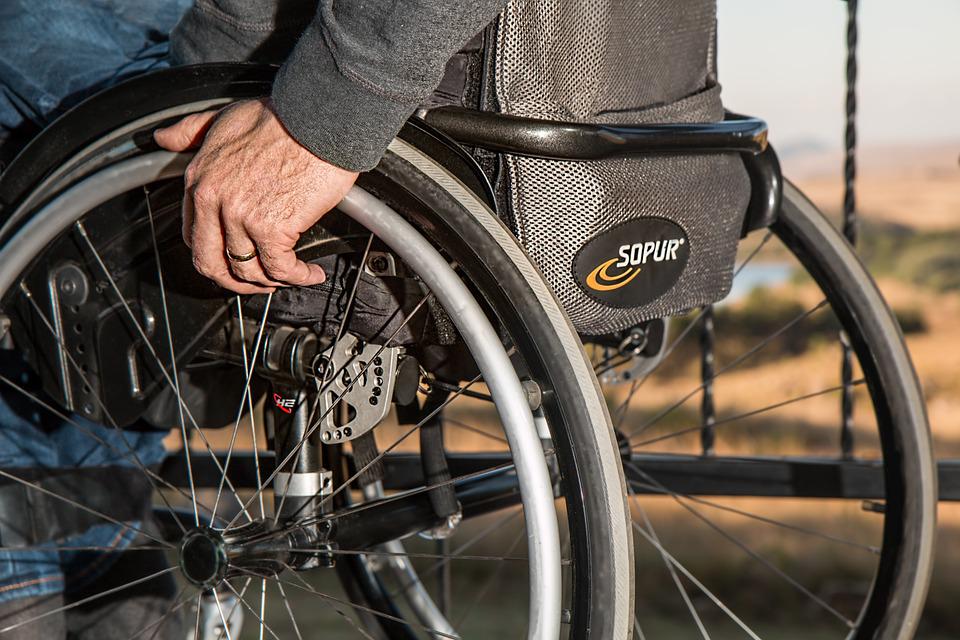
There is also the financial burden of unforeseen expenses along the way. You might have to install ramps around the house to accommodate a wheelchair. In some cases,  minor renovations need to take place to make bathrooms and bedrooms more practical.

However, the family member that you are taking care of might not be considered a senior. It may be a younger member of your family who has been injured in an accident.

If a member of your family or someone close to you is dealing with a long-term disability as a result of an accident, a personal injury lawyer can help to ensure that every effort is made to make sure the injured person gets compensated. This can go a long way in managing the on-going care costs of anyone who has a disability.

Be Present

Free photos of Hospice

Pixabay

There are a few common mistakes people make when caring for a family member or close friend with a disability. One of these is to rush through tasks and not be present. A person dealing with a disability already feels discouraged because they often can’t do things for themselves.

Quite often, despondent patients become depressed and feel helpless. They need someone to sit with them and talk to them. They want conversation and to have a connection either emotionally or physically. Humans have an innate need to be loved and cared for; it is no different from people who suffer from medical conditions.

Be Patient

We live in a world where instant gratification is a reality. Unexpected obstacles throw us off course, and we find ourselves losing our patience with our loved ones. Tasks that seemed simple yesterday are suddenly monotonous and impossible to deal with.

It’s essential to slow down and remember why you are doing what you are doing. Taking care of someone who can’t help themselves is challenging, but it teaches us humility and to appreciate what we have.

Have A Support Network

It’s perfectly normal to reach out to other family members and share the load. Schedule regular family meetings to discuss how you can each work together to provide care and support. Giving yourself time to do the daily tasks needed for your personal care. This will also give the loved one in your care a fresh face to spend time with.

Remember To Take Care Of Yourself

After devoting hours to caring for another, we often aren’t compelled to pamper ourselves and take some time out. Instead, we try to tackle all our other chores and burn the candle at both ends. We end our days feeling exhausted and empty.

Self-care is a gift you can give yourself. To care for someone else, you need to make sure that you are healthy and well. Maintain doing the things that you love. Whether it’s baking or reading or riding a bike, take breaks and enjoy some sunshine and fresh air.

The Bottom Line

There are many ways that you can support loved ones suffering from a disability. It’s perfectly normal to feel frustrated and tired; at times, it’s necessary to allow you to blow off some steam.

Listen to your own body and lookout for signs that you need a break. Let friends and family members in; don’t be afraid to ask for help when you need it.

Cultural diversity and it's types

Cultural diversity and it’s types

Cultural diversity

The things you do and the practices you were taught inform who you become . Culture is a broad term that encompasses beliefs , values , norms , behaviours, and overall can be understood as our ” way of being”. 

Everyone has their own culture and beliefs . In India also people follow different cultures, every state has their own culture even the every place has their own culture and people of that place follow it .

Cultural diversity is about appreciating that society is made up of many different groups with different interests, skills, talents and needs . It also means that you recognise that people in society can have different religious beliefs and sexual orientation to you .

Importance of culture 

Cultural diversity is important everywhere as every person has their own culture so if we work on a company different people of different cultures are present there and all of them has their own cultural belief so it is important to understand everyone culture and work according to that .
As everyone follow their culture their thinking is also different so it gives out creative and innovative ideas when these ideas are combined one more idea will come up with that which provide benefit to the company.

Types of cultural diversity 

1. Cultural diversity – 

This type of diversity is related to each person’s ethnicity and it’s usually the set of norms we get from the society we were raised in our families values. Having different cultures in the workplace is more common in multinational companies.

2. Race diversity – 

Race has to do with a person’s grouping based on physical traits ( despite the dominant scientific view that race is a socialist construct and not biologically defined ) . Examples of races are Caucasian , African , Latino , and Asian.

3. Religious diversity – 

This type of diversity refers to the presence of multiple religions and spiritual beliefs ( including lack thereof ) in the workplace.

4. Age diversity – 

Age diversity means working with people of different ages and , most importantly, generations. For example, millennials, GenZers and GenXers can coexist in the same workplace.

5. Sex / Gender / Sexual orientation – 

Sex and gender can be used in the traditional sense of male and female employees. For example, you may sometimes hear the term “gender balance” used by companies trying to achieve a 50- 50 balance between employees who identify as female. But as gender is increasingly redefined, the term ” gender diversity” may be more appropriate, since there are multiple variations in gender and sexual orientation.

6. Disability – 

There are various types of disabilities or chronic conditions included here, ranging from mental to physical. Companies often make reasonable accommodations to help people with disabilities integrate into the workplace, such as installing ramps for wheelchairs or providing mental health support. Some companies also adjust their hiring process to make sure it’s inclusive. 

The Abled Wings

“I can’t change the direction of the wind, but I can adjust my sails to always reach my destination”
Jimmy Dean
Whenever we hear the word disability, we automatically think of an image of a person , of a human being , but who lacks certain “ abilities” of a human being Which is the reason why they are not even treated with the same dignity and respect as fellow human beings. Anybody who has faced such indignation or knows someone who has, can resonate with the pain. “The look” they get is enough to convey that you feel nothing but pity or sympathy for them; which is something they most certainly don’t need.


According to WHO :

Disability is part of being human. Almost everyone will temporarily or permanently experience disability at some point in their life. Over one billion people – about 15% of the global population- live with some form of disability and this number is increasing.
Disability results from the interaction between individuals with a health condition such as cerebral palsy, down syndrome and depression as well as personal and environmental factors including negative attitudes , inaccessible transportation and public buildings and limited social support.
As per census 2011, in India , out of total population of 121 crore, about 2.68 cr persons are disabled.


The most important aspect of being a human being is the quality of being able to understand other’s pain and to do one’s best to help them out. SDG goal no. 10 mentions about the reduction in inequality within and among countries by empowering and promoting the social, economic and political inclusion of all, including persons with disabilities.
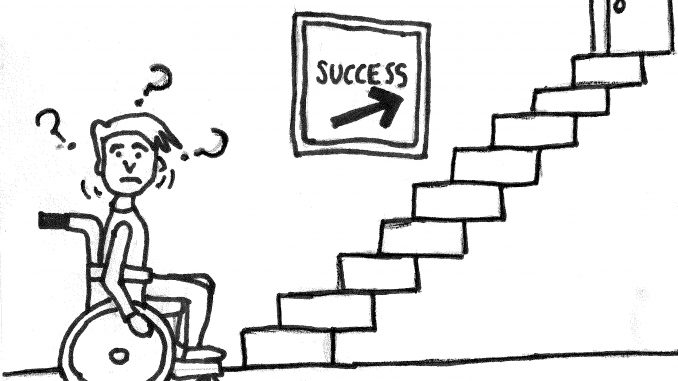
People suffering from certain disability face a lot of discrimination and also fail to achieve equitable representation in normal walks of life. Be it in any professional field, or because of lack of facilities in many colleges and schools fail to provide a pleasant and comfortable environment to them. As simple as constructing a ramp sounds , still very difficult for many public and private places to implement.
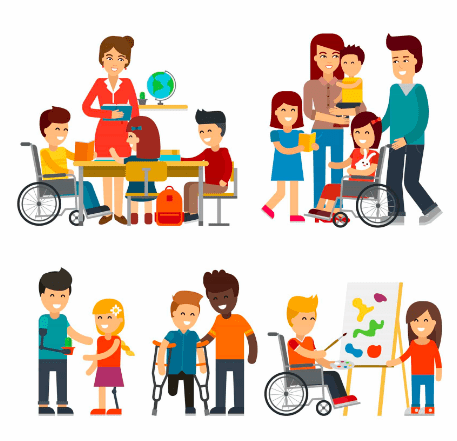
Negative attitudes held by the families of the disabled, and often the disabled themselves , hinder them from taking an active part in the family. Even though many disabled adults are capable of productive work, disabled adults have far Lower employment rates than the general population. Inclusion of children with mild to moderate disabilities in regular schools has remained a major challenge.

Disability is diversity, not detriment: – The Ranger


The health sector especially in rural India has failed to react proactively to disability . Further there are lack of affordable access to proper health care, aids and appliances. Healthcare facilities and poorly trained health workers in rehabilitation centers is another concern.
Some steps taken by government to provide a better living environment for the disabled:


1.Accessible India Campaign : creation of accessible environment for PwDs
2.Deendayal disabled rehabilitation scheme
3.Assistance to disabled persons for purchase of aids and appliances
4.National fellowship for students with disabilities


Many NGOs and schools have came forward to help provide people with disabilities a fair chance at life , which is all they need. I remember my school, has special arrangements for children facing disabilities, having qualified teachers and staff and a very friendly environment for them to grow. We often used to play together during our PT periods feeling no difference between us ,for there was indeed no difference between us.The experience and the lessons those years taught us in school helped me to have a different and more humane perspective towards life and all the people in it.


Let no disability hinder or stop your dreams. Your dreams need wings, and thankfully every human is born with them.


DISABILITY ETIQUETTES

Disability Etiquette - United Spinal Association

Disability etiquette is a set of guidelines dealing specifically with how to approach persons with disabilities . Before knowing about disability etiquettes , it is essential to understand certain basic things such as if someone has a disability don’t assume he/she needs help . In fact , adults with disabilities wants to be treated as an independent persons , So offer help only if the person with disability seems to need it . Physical contact should be avoided . Always speak directly to the person with a disability , not to his/her friend . Persons with disabilities are the best judge of what they can or can’t do .

General Disability Etiquettes

Disability Etiquette | OSU TOPS Program

The general disability etiquettes are stated below :

  • Always put the person first , i.e., say ‘person with disability ‘ rather than ‘disabled person’ . Always avoid the outdated words like handicapped , retarded , physically challenged or differently – abled . For example , refer to ‘person who are blind ‘ rather than ‘ blind person ‘.
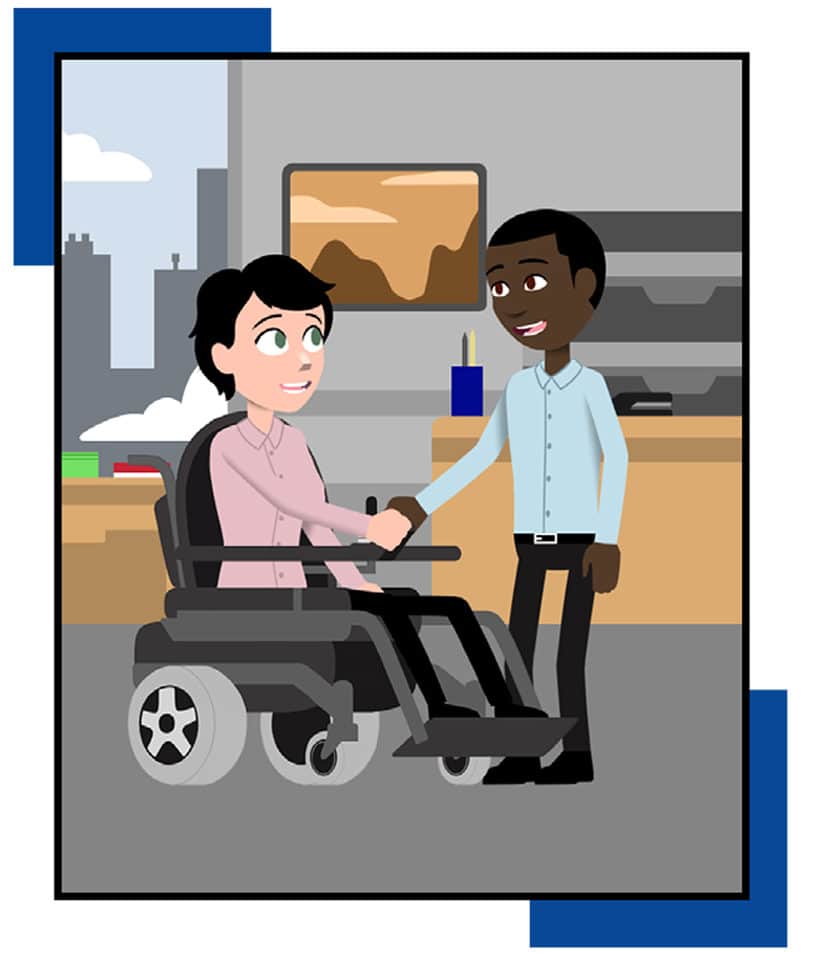
  • In case of introduction to a person with a disability , it is appropriate to shake hands .
  • When you meet a person with a visual impairment , always identify yourself and others who may be with you .
  • Leaning or hanging on a person ‘s wheelchair should always be avoided because such act is generally considered annoying . In fact , the chair is the part of the personal body space of the person who uses it.
  • Always listen carefully as well as attentively when you are having conversations with a person who has difficulty in speaking . Have patience and wait for the person to finish rather than correcting or speaking for that person . Generally , ask short questions that require short time .
  • When talking with a person who is on a wheelchair or person who uses crutches , keep yourself at eye level in front of the person to facilitate the talk .
  • To get the attention of a person who is deaf or having hearing impairment , tap the person on the shoulder or wave your hand . You should look directly at the person and speak clearly .
  • Never patronize person who use wheelchairs by patting them on the head or shoulder .
  • Always introduce yourself to persons who are blind using your name .
  • Always avoid asking personal questions to an individual who is differently-abled .
  • Always give additional time to a person with any disability to do or to say something .
  • Always have conversation at a normal tone of voice . Don’t talk in high pitch to such individuals .
  • Don’t pretend to understand if you are facing problem in doing so .
  • If you need to leave a person who is blind , inform him that you are leaving and ask him if he needs anything before you leave .