Regulation of Drugs, Cosmetics and Medical Devices

 “For India to become the global leader in drugs regulation to match our global reputation of ‘Pharmacy of the World’, we need to have world class regulatory framework matching our scale of operations and international expectations”. This was stated by Union Health Minister Shri J P Nadda, as he reviewed the regulation of drugs, cosmetics and medical devices, here today. Union Health Secretary Shri Apurva Chandra, Drugs Controller General of India (DCGI) Dr Rajeev Singh Raghuvanshi and senior officers of Central Drugs Standard Control Organization (CDSCO) and Union Health Ministry were present at the high level review meeting.

Highlighting the global position of India as the leading producer and exporter of drugs, Shri J P Nadda stressed on CDSCO to draw a roadmap with timelines of achieving global standards in its mandated activities. He stated that the upscaling needs to be systems-based focusing on highest standards of uniformity, technical upgradation and futuristic approach. For export of drugs and pharmaceuticals, the system should be designed for proper intervention to maintain the quality of drugs being exported, he emphasized.
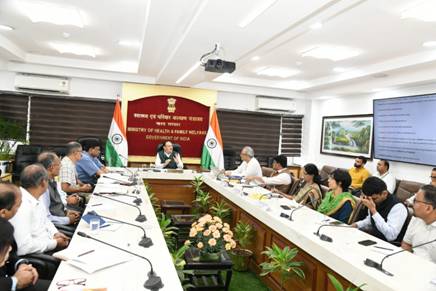
Shri Nadda underscored the importance of transparency in the working of CDSCO. He stated that “In order to achieve global standards, our focus needs to be on transparency of procedures at CDCSO and within the drugs and medical devices industry”. Both the Drugs Regulatory body and the industry should work on highest principles of transparency to ensure that the products manufactured and sold by India meet the highest indices of global quality standards, he said.

The Union Health Minister stated that it is important for CDSCO to be in continuous dialogue with the drugs and medical devices industry to understand their issues and support them to fulfill the quality expectations and standards of CDSCO. “Our focus should be on developing mechanisms that ensure easy of doing business for the drugs industry within the regulatory requirements. For this, CDSCO needs to be a user-friendly organization with state-of-the-art facilities matching global standards”, he stated.    
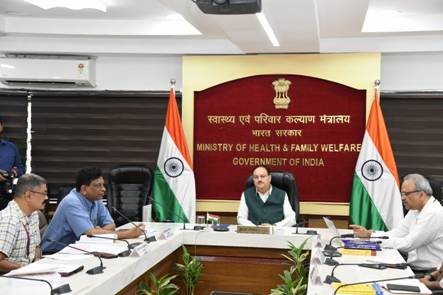
On the topic of Micro, Small & Medium Enterprises (MSME) sector in drugs manufacturing and the issues faced by the small scale industries to meet quality standards, the Union Health Minister “Let us understand the issues faced by MSME sector and support them to strengthen their capacity and quality of products on the one hand, and encourage them to meet the regulatory requirements on the other.”

Shri Nadda was briefed about the mandated activities of CDSCO, its achievements, future plans and various issues and challenges faced by CDSCO. The Minister was also updated on the progress of the Scheme for strengthening state drug regulatory system with a budget of Rs.850 crores which was launched in 2016 during his earlier tenure.

The Union Minister was briefed on the roles and responsibilities of the central and state drugs regulatory bodies, and some of the challenges faced in alignment between them. Noting that the States are integral part of our regulatory value chain, Shri Nadda underscored the importance of working in tandem with the States so as to enhance their skills and capacities, and also encourage them to align with quality standards of the Central Government. “This is especially important in view of upgradation of Good Manufacturing Practices to global level embarked upon by CDSCO”, he added.

****
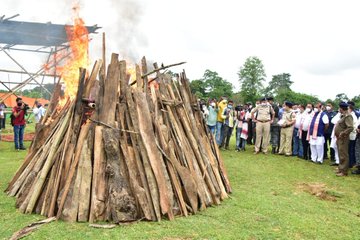
Government’s drive against drug racket in Assam: The drug racket in NORTH EAST

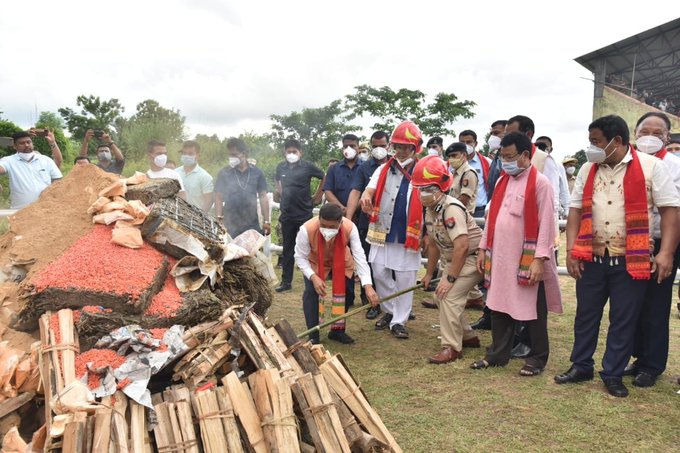
ASSAM STARTED A TWO DAY DRIVE TODAY TO BURN DRUGS WORTH RS. 163 CRORES IN PUBLIC WHICH WERE CONFISCATED IN THE LAST TWO MONTHS . When Himanta Biswa Sarma was sworned in as the Chief minister of Assam , he started taking strict actions to destroy the drug racket in Assam. Within two months, the state police had seized 18.82 kg of heroin, 7944.72 kg cannabis, 67,371 bottles of cough syrup, 12,70,394 numbers of unprescribed sedative tablets, 1.93 kg of morphine, 3 kg methamphetamine and 3,313 kg of opium , all of which worth rupees 163 crores. Sadly, this is just the 20 – 30% of the total narcotics market in Assam which is estimated to worth between 2000- 3000 crores in Indian currency. Under the drive which started today, a segment of the seized drugs was burnt at Diphu and Golaghot while the remaining drugs will be burnt tomorrow in Nagaon and Hojai. The public burning is to drive home the clear message of Assam’s zero tolerance over drugs.

The massive drug racket is not only limited till Assam but is spread in the entire country with the North Eastern states and North Western states providing a gateway linking the country to the Global narcotics industry. This blog will give you the reasons so as to why North East became the hub of drugs which destroys millions of lives.

Why has North East become the hub of drugs

India’ s strategic position places it between the GOLDEN CRESCENT ( Afghanistan, Pakistan and Iran) on the North western side and the infamous Golden Triangle (Myanmar, Thailand, and Laos) on the northeast which are two of the largest sources of illicit drugs in South East Asia. The Golden Triangle is Asia’s main opium producing area and serves as the oldest narcotics supply route to Europe and North America.

The Indian states of Arunachal Pradesh,bNagaland, Mizoram and Manipur shares its border with Myanmar which serves as an entry way of drugs in India through the Eastern side .Drugs produced in the ‘Golden Triangle’ enter India through Mizoram, Manipur, and Nagaland from Bhamo, Lashio, and Mandalay in Myanmar. The route bifurcates and one channel moves northwards through Moreh in Manipur while other moves southwards to enter Champai in Mizoram. Moreh (Manipur), Champai (Mizoram), Dimapur (Nagaland), and Guwahati (Assam) have become the nucleus of drug trafficking industry in India’s northeast.3

The Indo-Myanmar border is guarded by the Assam Rifles (AR), a paramilitary force, under the operational control of Indian Army’s Eastern Command which also serves as an route for the supply of the contaband items. The traffickers chooses the short time when the Army is off the shift or is on rounds to supply the drugs. The information about the army timings is provide by the locals who sympathize by the criminals many of whom are the part of the local terrorist groups of the North East. Further due to friendly Indo- Myanmar relations , The border is not permanently sealed allowing some free movement between the borders for the limited time period in a day which again enables the transfer of drugs as the traffickers develop smart ways to avoid the scanning of their items containing drugs.

Moreover, poor state of education, unemployment, poverty, increasing spread of HIV/AIDS, ethnic conflicts are some of the issues faced here. Children are forcefully used as drug carriers in promise of better livelihood. These issues have seldom featured in policies of successive governments. Criminals use this vulnerability of local population and manipulate their minds into joining criminal ranks. Such fragile situation along the India-Myanmar border jeopardizes the region into becoming a hub of drug trafficking.

The Chief Minister of Assam in a statement said that he has provided full liberty to the police forces to arrest the drug traffickers which also involves the use of gun to stop the trafficker from running or in the act of self defense if the trafficker counter attacks. The shooting of traffickers has invoked much criticism but Sarma said he is not going to compromised on the safety of his officers.

Further drugs were also used for payment by the criminals in exchange of smuggled arms, fake currency and other prohibited items thus causing social problems and crimes. The CM also mentioned that it was important to do this in order to save Assam from being another “Udta Punjab” (reference to the bollywood movie showing drug racket in Punjab).

The action taken by Assam government is appreciable . Only if all the border states work in tandem with each other and take strict actions, only then we can cease the entry of drugs in India and save lakhs of youths from spoiling their lives under its influence.

Drug Abuse.

Drug abuse is referred to the excessive use of psychoactive substances such as alcohol, stimulant, pain reliever etc in the amount that is detrimental to the physical, social as well as emotional well being of an individual. Case of drug abuse is increasing at an alarming rate among teenagers and adults under the age of 30 that affect people all across the globe and from all walks of life. In the United States, the annual death rate due to drug abuse is much more than the road traffic accidents and gunshots combined. Nearly 8% of the States population are trapped in this vicious cycle due to the majority of reasons, considering it as an easiest escape. Overuse of drugs not only affects the brain cells but also do heavy damage to the heart, nerves, limbs etc that often leads to seizure and paralysis, shutting the entire body followed by death eventually.

Cause of Drug abuse.

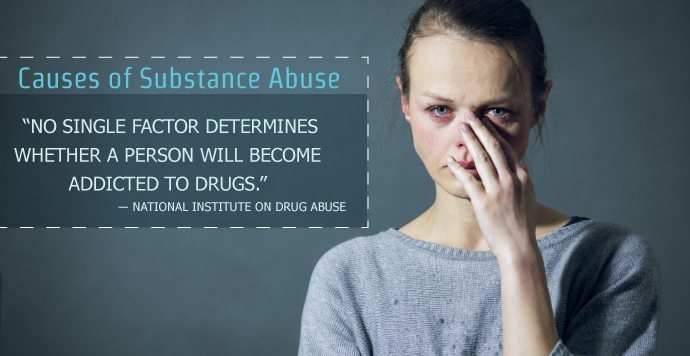
There are several reasons behind drug abuse among which the common causes are listed below.

  • Many people develop drug problems due to mental conditions such as depression, stress disorder, anxiety and other mental illness.
  • Low self-esteem, peer pressure of society, and a chaotic lifestyle are also common reasons.
  • At times, people try certain substances out of excitement that turns into a habit in no time because of its highly addictive nature.
  • Sometimes, prescribed medication usually barbiturates turned into drug addiction and cause serious health problems.

Apart from the aforesaid reason, there can be multiple reasons that lead to such substance abuse.

Types of Drugs:

  • Depressants: It is the most commonly used drug worldwide that works by suppressing the central nervous system and gives momentarily happiness while under the influence. Usage of such dopes develops various symptoms such as sleep, relaxation, drowsiness, anaesthesia, coma and even death.
  • Stimulant: Stimulants are class of drug that creates a sense of euphoria by making body alert and extra awake. It speeds up the brain’s receptive capacity that often leads to a panic attack, anxiety, seizures, aggression and paranoia when used in excess amounts.
  • Hallucinogenic: These are a diverse group of drugs that creates a hallucination and sensations leads to seeing things that seems real due to brain malfunction. People often use such pills to deal with stress or just to feel differently. Commonly used hallucinogenic drugs are LSD, Peyote, DMT etc.

There are millions of different variety of drugs available in the developing and developed world apart from these wide range of drugs mentioned above, that entraps countless youngsters every other day. Uprooting such menace isn’t as easy as we assume because of the withdrawal syndrome that is linked with it. That is why it is absolutely necessary to build up rehabilitation centres and promote drug education at the socio-economic strata.

NARCO-TERRORISM DANGER IN INDIA

 The theory of narco-terrorism stems from the realization that the two phenomena of drugs trafficking, and terrorism are inextricably linked, and that, as a result, a coordinated anti-drug and anti-terror policy can and must be employed to effectively combat both threats. Because of its nefarious partnership with terrorist groups, narcotic trafficking, which began as an organized cross-border crime, has now evolved into a menace to nation states. 

Although it has been known for decades that there is a relationship between the drugs trade and terrorist organizations, as suggested by the name narco-terrorism, the international focus on terrorism after September 11, 2001, has intensified the attention given to the issue of narco-terrorism.

The Golden Crescent is the world’s greatest illegal opium production. In 1999, Afghanistan and Pakistan alone accounted for over 6000 metric tonnes of total illegal output. Because of this high-level production, narco-terrorism is increasingly linked to the reigns of central and southeast Asia. India being the southern part of Asia  is concerned because these narcotics are a key source of money for Pakistani-sponsored terrorism in our nation. Also, India is the sole licit provider of opium to the international pharmaceutical sector, with an annual export income of roughly Rupees 209 crores in 1999. The economy of the Pak-Afghan border is based on poppy and cannabis cultivation. The drug money is being smuggled into the Indian money market in an unorganized but methodical way because of which financial institutions suffer. 

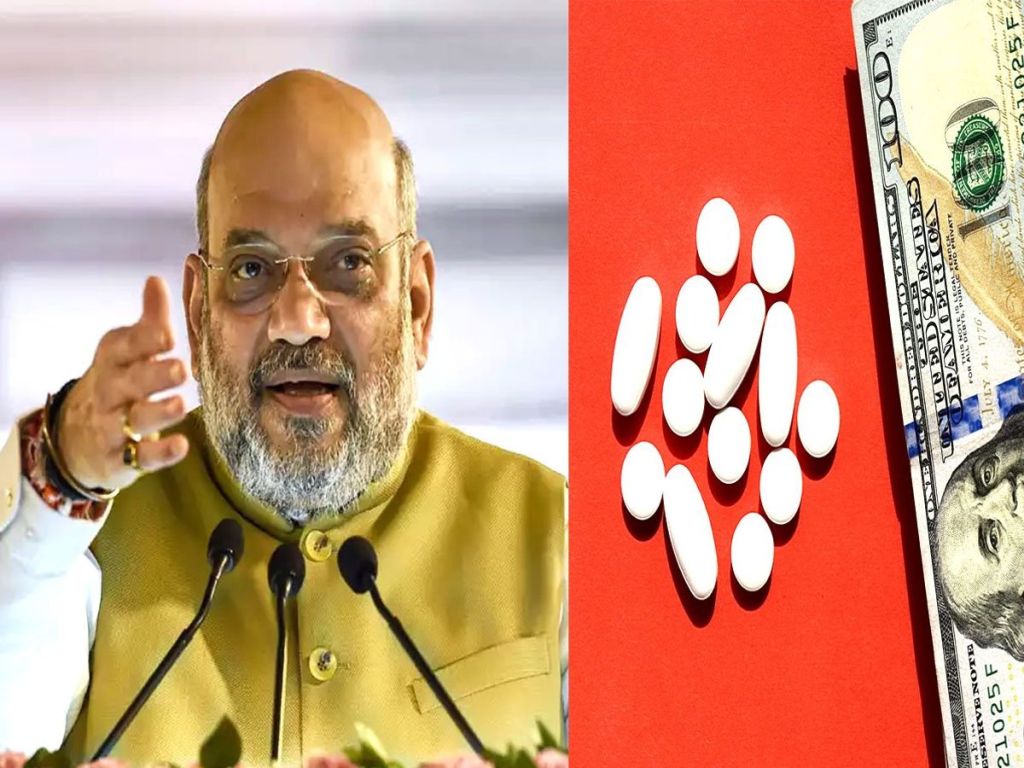
Because of illicit drug trafficking from Afghanistan and Pakistan poses a threat to India’s polity and economy. This issue requires serious attention from policymakers and law enforcement organizations before it is too late to intervene. Similar contention was also made by India’s home minister, Amit shah. He recently visited the National Forensic Sciences University (NFSU) in Gandhinagar to unveil the Centre of Excellence for Research and Analysis of Narcotic Drugs and Psychotropic Substances, which was established during Prime Minister Narendra Modi’s term as Chief Minister of the State of Gujrat. There he announced that India now faces the threat of narco-terror because of the rise of narcotics where drug traffickers and peddlers use drug money to promote their unlawful and disruptive operations. So to tackle this ongoing issue the Government has determined that narcotics would not be let into the nation, and that India will not be used as a transit point. He also mentioned that It is critical to put an end to this threat. 

Talking about the inauguration he said that this Centre was chosen to be connected to Gujarat’s Forensic Science University when the government was constituted for the second time under Prime Minister Narendra Modi because to appreciate the university’s outstanding services, the union government had designated it as a national center of excellence. He further added that the administration emphasized the need of using scientific techniques to conduct faster and more effective criminal investigations. Therefore, Forensic science will play a significant part in this. He also commended the forensic science institution for its contributions to criminal investigations into cyber and drug-related crimes.

The theory of narco-terrorism stems from the realization that the two phenomena of drugs trafficking, and terrorism are inextricably linked, and that, as a result, a coordinated anti-drug and anti-terror policy can and must be employed to effectively combat both threats. Because of its nefarious partnership with terrorist groups, narcotic trafficking, which began as an organized cross-border crime, has now evolved into a menace to nation states. 

Although it has been known for decades that there is a relationship between the drugs trade and terrorist organizations, as suggested by the name narco-terrorism, the international focus on terrorism after September 11, 2001, has intensified the attention given to the issue of narco-terrorism.

The Golden Crescent is the world’s greatest illegal opium production. In 1999, Afghanistan and Pakistan alone accounted for over 6000 metric tonnes of total illegal output. Because of this high-level production, narco-terrorism is increasingly linked to the reigns of central and southeast Asia. India being the southern part of Asia  is concerned because these narcotics are a key source of money for Pakistani-sponsored terrorism in our nation. Also, India is the sole licit provider of opium to the international pharmaceutical sector, with an annual export income of roughly Rupees 209 crores in 1999. The economy of the Pak-Afghan border is based on poppy and cannabis cultivation. The drug money is being smuggled into the Indian money market in an unorganized but methodical way because of which financial institutions suffer. 

Because of illicit drug trafficking from Afghanistan and Pakistan poses a threat to India’s polity and economy. This issue requires serious attention from policymakers and law enforcement organizations before it is too late to intervene. Similar contention was also made by India’s home minister, Amit shah. He recently visited the National Forensic Sciences University (NFSU) in Gandhinagar to unveil the Centre of Excellence for Research and Analysis of Narcotic Drugs and Psychotropic Substances, which was established during Prime Minister Narendra Modi’s term as Chief Minister of the State of Gujrat. There he announced that India now faces the threat of narco-terror because of the rise of narcotics where drug traffickers and peddlers use drug money to promote their unlawful and disruptive operations. So to tackle this ongoing issue the Government has determined that narcotics would not be let into the nation, and that India will not be used as a transit point. He also mentioned that It is critical to put an end to this threat. 

Talking about the inauguration he said that this Centre was chosen to be connected to Gujarat’s Forensic Science University when the government was constituted for the second time under Prime Minister Narendra Modi because to appreciate the university’s outstanding services, the union government had designated it as a national center of excellence. He further added that the administration emphasized the need of using scientific techniques to conduct faster and more effective criminal investigations. Therefore, Forensic science will play a significant part in this. He also commended the forensic science institution for its contributions to criminal investigations into cyber and drug-related crimes.

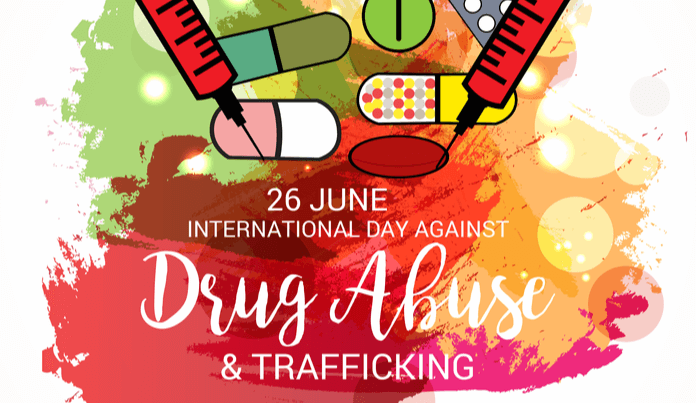
International Day against Drug Abuse and Illicit Trafficking 2021

In this modern world , many people including youths are taking many drugs to get relief from stress. They are saying that , it gives pleasure to them and relives physical and mental stress. But taking drugs may cause social, physical, mental and other job related problems.

International Day against Drug Abuse and illicit Trafficking is observed on June 26 every year in order to create and spread awareness among the people throughout the globe about the problems , to eliminate drug misuse and the issues related to the drugs. Many people are working on it to prevent drug abuse and to save the victims from this evil. It’s main aim is to create an international society free from drug abuse. The problem of drug abuse was recognized by the people throughout the world during the 20th century.

The United Nations Office on Drugs and Crime (UNODC) said that, ” Together, we can tackle the world drug problem!” . UN arm fights against the drug abuse and the international crime related trafficking.

International Day against Drug Abuse and Illicit Trafficking : History

In order to achieve the goal of international society free from drug abuse , the United Nations General Assembly on December 7 1987,declared  June 26 as International Day against Drug Abuse and Illicit Trafficking every year. This day is also known for ‘Lin Zexu’s’ who was trying to destroy the opium business, before the initiation of first opium war started in Humane, Guangdong in China.

International Day against Drug Abuse and Illicit Trafficking 2021: Theme

The theme of International day against drug abuse and illicit trafficking is “share facts on drugs , save lives ” . The main focus of this year is to control the misinformation about the usage of drugs by sharing factual data about drugs. Spreading the health issues by taking drugs and solutions to tackle the problem will help us to make a society free of drug abuse.

The UNODC website says that ” Do your part and combat misinformation by sharing the real facts on drugs — from health risks and solutions to tackle the world drug problem, to evidence-based prevention, treatment, and care” .

International Day against Drug Abuse and Illicit Trafficking : Significance

This day helps to share and created awareness among people through social medias and others . It provides the data about the drug abuse and provides solution to how to overcome from it. On this day the United Nations organises many activities to create awareness among the people and it also shows the unity among the activists, doctors ,governments and others.

Every year, there will be a report released by The United Nations Office on Drugs and Crime (UNODC) which provides facts and datas about drug abuse round the world and it gives solutions to tackle these problems.

Taking this opportunity, our honorable Prime minister, Narendra Modi took social media platform to encourage the achievements and steps taken by the activists and doctors to achieve their goal of drug free India. He also says that ‘ Drug bring with it darkness, destruction and devastation’.

“Stay away from drugs and live a happy life”

Drug Addiction

Drug addiction is one the most serious problems in the country. The use of intoxicants is old practice. People in every part of the world have been using intoxicants in one or other form. In olden times, this practice was mostly adopted but nowadays people make this trend within parties and clubbing. And as time passed life became MORE complex and complicated and use of intoxicants went on increasing. With the progress of science, new types of intoxicants were introduced in the market and in today’s time you can find a large variety of intoxicants drinks and various other intoxicants are readily available in the market. Use of intoxicants and drugs has become so common that it has been a worldwide problem. All rich or poor are so much indulged in this practice that they even forget about their health and life. The poor people have some different problems like problems of food, clothing, and housing etc.and due to this they start indulging into various intoxicants. On the other hand, rich ones have made this trend look super cool by taking these intoxicants drugs and drinks in their parties. The situation is quite alarming. A survey was recently conducted in some universities in India to check and findings were staggering. Drug addiction is catching hold of young boys and girls in big cities especially like Mumbai, pune, Delhi and universities and colleges of the country. Hostels of boys and girls are becoming homes of these drug addicts.

Basically, the use of drugs has come from west of India. Most of the students start taking drugs as a matter of fashion or for thrill but later they cannot stop their use. The market is flooded with different types of intoxicants. Most of these are taken to produce sedation or under strict medical observation and care. But young boys and girls start taking them without medical advice. Most of these who start taking drugs are unemployed youth or frustrated with some other complications in life or social or family problems.

It is the duty of the government to make study of various pros and cons of the problem. Sale of drugs which are open in the market should be banned. The problem of unemployment should be tackled sincerely and taken on priority basis. Some sort of guidance and counseling should be held in universities only to provide advice to the frustrated youth of the country. Various social and voluntary organizations should take steps to maintain this nuisance. The government should use all advertising media to educate people about harmful effects of intoxicating drugs. Medical aid should be provided to those who are badly suffering from this problem. Moral education should be introduced in schools and colleges. All foreigners who visit India and encourage the use of drugs should be put behind the bars.

All these steps can help the country from menace of this drug addiction. In India, this disease is still in a state of infancy but if proper precautions may not be taken then it may take the form of epidemic. We must see the writing on the wall and net before it is too late.

ANTI-CELL WALL ANTIBACTERIAL DRUGS

Selective toxicity is the important characteristic of antimicrobial drugs which means that any drug is selective against a particular microorganism and also selectively act on a particular site. Not all drugs can act on every site. There are many sites at which any drug acts such as cell wall, cell membrane of the bacterial cell. Basically selective toxicity explains that any drug will only act on the pathogen and not on the host.
ANTI-CELL WALL DRUGS
Anti-cell drugs are those drugs which act on the cell wall of the bacterial pathogen and not the host. There are variety of drugs which fall under this category. The major class is of beta-lactam antibiotics among which penicillin is the drug which is studied the most. The drugs can be administered into the patient’s body by different ways like intramuscular, intravenous, or can be applied as topical preparations. But mostly, these drugs are intramuscular or intravenous drugs. The following points explain the further different mechanisms of anti-cell wall drugs.
There are 3 different mechanisms by which anti-cell wall drugs work and thus they are also classified as following:

  1. First classification involves the drugs that directly interact with Penicillin-Binding-Proteins (PBPs) and inhibit the transpeptidase activity which in turn inhibits the attachment of newly formed peptidoglycan subunit to the pre-existing one.
    This is the main mechanism of β-lactam antibiotics. These antibiotics include Penicillin (penams), cephalosporins, Penems, Carbapenems, and monobactams.
    These antibiotics bind to the penicillin-binding proteins which are enzymes present in the bacterial cell wall. Different β-lactam antibiotics bind in a different way. After the antibiotics bind to the enzyme, it changes the morphological response of the bacteria to the antibiotic.
  2. Second classification involves the drugs that bind to the peptidoglycan subunit, blocking different processes.
    The important class of compounds called as glycopeptides are mainly involved in this mechanism of anti-cell wall antibiotics.
    Vancomycin and Teicoplanin are the major examples of glycopeptide antibiotics.
    Vancomycin kills only gram-poitive bacteria whereas Teicoplanin is active against both. The overall mode of action of glycopeptides antibiotics is blocking transpeptidation i.e. similar to β-lactam antibiotics, they also inhibit the transpeptidase activity, and transglycosylation i.e. they being large in size attach to the peptidoglycan subunits thus creating a blockage which does not allow the cell wall subunits to attach to the growing peptidoglycan backbone.
  3. Third classification involves the drugs that block the transport of peptidoglycan subunits across cytoplasmic membrane.
    The main example of such type of drugs is bacitracin, which is a simple peptide antibiotic originally isolated from Bacillus subtilis.
    The mode of action of these class of drugs is blocking the activity of specific cell membrane lipid carriers which act as the attachment surface for peptidoglycan precursors and help in their movement from cell cytoplasm to exterior of the cell. This activity of lipid carriers is inhibited by bacitracin like drugs and they finally prevent the incoroporation of those precursors into cell wall thus inhibiting its biosynthesis.

Although, its route of administration is mostly oral or intramuscular, bacitracin is also known to show its effects when used as topical ointments like Neosporin.

MECHANISM OF DIFFERENT TYPES OF ANTIBIOTICS

Antibacterial Drugs are classified according to their site of action which are as follows :

CELL WALL SYNTHESIS INHIBITORS
There are 3 different mechanisms by which anti-cell wall drugs work and thus they are also classified as following:

  1. First classification involves the drugs that directly interact with Penicillin-Binding-Proteins (PBPs) and inhibit the transpeptidase activity which in turn inhibits the attachment of newly formed peptidoglycan subunit to the pre-existing one.
    This is the main mechanism of β-lactam antibiotics. These antibiotics include Penicillin (penams), cephalosporins, Penems, Carbapenems, and monobactams.
    These antibiotics bind to the penicillin-binding proteins which are enzymes present in the bacterial cell wall. Different β-lactam antibiotics bind in a different way. After the antibiotics bind to the enzyme, it changes the morphological response of the bacteria to the antibiotic.
  2. Second classification involves the drugs that bind to the peptidoglycan subunit, blocking different processes.
    The important class of compounds called as glycopeptides are mainly involved in this mechanism of anti-cell wall antibiotics.
    Vancomycin and Teicoplanin are the major examples of glycopeptide antibiotics.
    Vancomycin kills only gram-poitive bacteria whereas Teicoplanin is active against both. The overall mode of action of glycopeptides antibiotics is blocking transpeptidation i.e. similar to β-lactam antibiotics, they also inhibit the transpeptidase activity, and transglycosylation i.e. they being large in size attach to the peptidoglycan subunits thus creating a blockage which does not allow the cell wall subunits to attach to the growing peptidoglycan backbone.
  3. Third classification involves the drugs that block the transport of peptidoglycan subunits across cytoplasmic membrane.
    The main example of such type of drugs is bacitracin, which is a simple peptide antibiotic originally isolated from Bacillus subtilis.
    The mode of action of these class of drugs is blocking the activity of specific cell membrane lipid carriers which act as the attachment surface for peptidoglycan precursors and help in their movement from cell cytoplasm to exterior of the cell. This activity of lipid carriers is inhibited by bacitracin like drugs and they finally prevent the incoroporation of those precursors into cell wall thus inhibiting its biosynthesis.

Although, its route of administration is mostly oral or intramuscular, bacitracin is also known to show its effects when used as topical ointments like Neosporin.

INHIBITORS OF PROTEIN SYNTHESIS
Protein Inhibitors can be divided into 2 parts:

  1. Inhibitors binding to 30S subunits
    • Aminoglycosides bind to the bacterial ribosome, after which they cause tRNA mismatching and thus protein mistranslation.
    This occurs by mismatching between codons and anticodons, which synthesize proteins with incorrect amino acid. This mistranslated protein, along with correctly translated proteins move into move into the periplasm where most of the mistranslated proteins are degraded and some of them are inserted into cytoplasmic membrane. This causes disruption of the membrane, ultimately killing the bacterial cells.
    • Tetracyclines are bacteriostatic and block the binding of tRNAs with the ribosome during translation thus inhibiting protein synthesis. Most of the tetracycline class of drugs are broad spectrum and are active against wide range of bacteria.
  2. Inhibitors binding to the 50S subunit
    • Macrolides are the large class of naturally produced secondary antibiotics. They are basically broad spectrum, bacteriostatic antibiotics. Their main mode of action is blocking peptide chain elongation and they inhibit the formation of peptide bond.
    Patients allergic to penicillins are recommended erythromycin which is a macrolide.
    • Lincosamides include lincomycin and clindamycin. Though they are structurally different but functionally similar to macrolides. They are specifically known to inhibit streptococcal and staphylococcal infections.
    • Chloramphenicol also inhibits peptidyl transferase reaction inhibiting peptide bond formation. It was the first broad spectrum antibiotic and is very much active against a broad range of bacterial pathogens but is very toxic and can cause side.

INHIBITORS OF MEMBRANE FUNCTION
Biological cytoplasmic membranes are basically composed of lipids, proteins and lipoproteins. The cytoplasmic membrane acts as a selective barrier which allows the transport of materials between inside the cell and the environment.
A number of antibacterial agents work by targeting the bacterial cell membrane. They basically are involved in the disorganization of the membrane. Polymyxins and Lipopeptides are the main anti- cell membrane agents.

NUCLEIC ACID SYNTHESIS INHIBITORS
These drugs inhibit nucleic acid synthesis function by either of the following:

  1. Interfere with RNA of bacterial cell
    Antibacterial drugs of this mechanism are selective against bacterial pathogenic cells.
    For example: The drug rifampin, belonging to the drug class rifamycin blocks the bacterial RNA polymerase activity. It is also active against Mycobacterium tuberculosis and thus id used in the treatment of tuberculosis infection. It also shows side effects.
  2. Interfere with DNA of bacterial cell
    There are some antibacterial agents that interfere with the activity of DNA gyrase.
    The drug class fluoroquinolones show this mechanism. They are borad spectrum antibacterial agents. Some examples of drugs in fluoroquinolone family are Ciprofloxacin, Ofloxacin, Moxifloxacin, etc

INHIBITORS OF METABOLIC PATHWAYS
There are some antibacterial drugs which act as ANTIMETABOLITES and inhibits the metabolic pathways of bacteria.
• The sulfonamides block the production of dihydrofolic acid.
This blocks the production of purines and pyrimidines required for nucleic acid synthesis by blocking the biosynthesis of folic acid. Their mechanism of action is bacteriostatic and they are broad spectrum antibacterial agents. Though humans also obtain folic acid but these drugs are selective against bacteria.
Sulfones are also structurally and functionally similar to sulfonamides.
• Trimethoprim is used in the same folic acid synthesis pathway but at a different phase, in the production of tetrahydrofolic acid.
• There is another drug, Isoniazid which is an antimetabolite only selective against mycobacteria. It can also be used to treat tuberculosis when used in combination with rifampin and streptomycin.

INHIBITORS OF ATP SYNTHASE
There is a class of drug compounds called as Diarylquinolones that are specifically active against mycobacterial growth. They block the oxidative phosphorylation process and finally leading to reduced ATP production which either kill or inhibit the growth of mycobacterial species.