Indian Education System

Education plays an important role in the development of an individual and making him a knowledgeable citizen. It is the education that makes an individual self-reliant, helps to suppress the social evils and contribute towards the development of the society and nation as a whole. Education helps in unravelling the mystery of nature. It enables us to understand and improve the working of our society. It creates conditions for a better life. Education brings out the capabilities to fight injustice happening in society. Every individual has the right to education. 

Indian Education is one of the largest and complex education systems in the world along with China. India is committed to providing basic education to its citizens, the framework of which is defined in the National Policy of Education. Elementary education is now compulsory in India. At the time of Independence, only 14% of India’s population was literate. Now after so many decades since Independence, the number of literates has increased by fivefold.

History of Education System

The history of Indian education system comes from the times of Ramayana and Mahabharata. The historic Indian education system is also called the Gurukula system. There were gurus then who are now known as teachers and shishyas who are called students now. The gurus and the shishyas lived together under one roof in Gurukula until the completion of their education. The shishyas were expected to help the guru in all the daily chores as part of their learning. The children belonging to higher strata of the society were taught all the subjects from Sanskrit to Holy Scriptures and mathematics to metaphysics by the gurus. The Gurukulas during those times focused on the practical aspects of life. The students were taught in the open classroom in the surrounding area of nature. This early system of education in India continued for many years until the modern education system came into the picture in the nineteenth century.

In the early 19th century, during the British period, the modern education system was brought into our country by Lord Thomas Babington Macaulay. The basic strength of this modernized education system was the examinations and a well-defined curriculum, which gave importance to subjects like science and mathematics and subjects like philosophy, metaphysics were given a back seat. The brick and mortar classrooms replaced the open classrooms in the Gurukulas. The essence of the guru shishya bond was taken over by a more formal relationship between the teacher and the student. To understand the progress of any student, examinations were conducted at frequent intervals. The focus of the education system shifted from learning to memorizing of the concepts to score good marks in the examinations.

Problems of Indian Education System

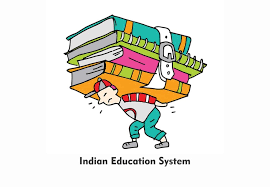
Over a period of time, it has been observed that there are many loopholes in the system of education in India. Instead of understanding the concepts, students started cramming and memorizing the lessons. Knowledge is given a backseat and scoring in high rankings takes importance. The modern parents have tuned their mindsets accordingly and their goal is to ensure that their children score good marks instead of acquiring knowledge right from the primary level. 

Private schools and colleges have been rapidly increasing in the country but the results produced by them are far beyond satisfactory. It has also been observed that the quality of teachers deteriorated with the passing of time. Our examination system is responsible for the wide skill gap. India is producing lakhs of engineers and professionals every year but only a fraction of this number is actually getting employed. This is because the Indian examination system focuses more on scoring good percentages rather than the actual continuous comprehensive evaluation. 

Research and development, which should be the cornerstone of our system, are given the least importance. The private schools and colleges focus on the admission of more students and are least interested in the quality of their education. This is the major reason why the faculties and the teachers lack skills and specialization. This is quite evident from the fact that a single professor is assigned to teach multiple subjects. 

How Can We Improve the Indian Education System?

First and most importantly we should improve the grading system. Rote learning should be discouraged completely. Teachers and faculties should focus more on the analytical skills of the students and grade them accordingly. There should be more focus on comprehensive evaluation instead of scoring only good marks. Workshops must be organized for teachers on a regular basis to keep them updated about the latest developments in the sector of education. At the same time, the curriculum should be reframed according to the present needs of education in India. 

The payroll structure of the teachers and the faculties especially in the government institutions should be improved. This step will help in motivating the teachers to develop their skills and they will take a keen interest in grooming or shaping up a student’s life and career. The government and other entities who are associated with the education sector, need to understand the importance of quality of education. Education should be a holistic process that must focus on the overall development of the physical, emotional, social and cognitive skills of a child. It needs to be a slow and cyclic process and must take place gradually to help the child develop into an autonomous, independent and knowledgeable individual.

Conclusion

An educated individual is an individual who should be able to contribute towards the betterment of the economic and social development of the society as well as the country. The true goal of education must exceed awarding the degrees and certificates to the students. Education is not a tool to earn livelihood but it is a way to liberate the mind and soul of an individual. 
Gig Economy

What Is the Gig Economy?

In a gig economy, temporary, flexible jobs are commonplace and companies tend to hire independent contractors and freelancers  instead of full-time employees. A gig economy undermines the traditional economy of full-time workers who often focus on their career development.

Understanding the Gig Economy

In a gig economy, large numbers of people work in part-time or temporary positions or as independent contractors. The result of a gig economy is cheaper, more efficient services, such as Uber or Airbnb, for those willing to use them. People who don’t use technological services such as the Internet may be left behind by the benefits of the gig economy. Cities tend to have the most highly developed services and are the most entrenched in the gig economy. A wide variety of positions fall into the category of a gig. The work can range from driving for Lyft or delivering food to writing code or freelance articles. Adjunct and part-time professors, for example, are contracted employees as opposed to tenure-track or tenured professors. Colleges and universities can cut costs and match professors to their academic needs by hiring more adjunct and part-time professors.

The Factors Behind a Gig Economy

America is well on its way to establishing a gig economy, and estimates show as much as a third of the working population is already in some gig capacity. Experts expect this working number to rise, as these types of positions facilitate independent contracting work, with many of them not requiring a freelancer to come into an office. Gig workers are much more likely to be part-time workers and to work from home. Employers also have a wider range of applicants to choose from because they don’t have to hire someone based on their proximity. Additionally, computers have developed to the point that they can either take the place of the jobs people previously had or allow people to work just as efficiently from home as they could in person.

Economic reasons also factor into the development of a gig economy. Employers who cannot afford to hire full-time employees to do all the work that needs to be done will often hire part-time or temporary employees to take care of busier times or specific projects. On the employee’s side of the equation, people often find they need to move or take multiple positions to afford the lifestyle they want. It’s also common to change careers many times throughout a lifetime, so the gig economy can be viewed as a reflection of this occurring on a large scale.

During the coronavirus pandemic of 2020, the gig economy has experienced significant increases as gig workers have delivered necessities to home-bound consumers, and those whose jobs have been eliminated have turned to part-time and contract work for income. Employers will need to plan for changes to the world of work, including the gig economy, when the pandemic has ended.

Criticisms of the Gig Economy

Despite its benefits, there are some downsides to the gig economy. While not all employers are inclined to hire contracted employees, the gig economy trend can make it harder for full-time employees to develop in their careers since temporary employees are often cheaper to hire and more flexible in their availability. Workers who prefer a traditional career path and the stability and security that come with it are being crowded out in some industries.

For some workers, the flexibility of working gigs can actually disrupt the work-life balance, sleep patterns, and activities of daily life. Flexibility in a gig economy often means that workers have to make themselves available any time gigs come up, regardless of their other needs, and must always be on the hunt for the next gig. Competition for gigs has increased during the pandemic, too. And unemployment insurance usually doesn’t cover gig workers who can’t find employment.

In effect, workers in a gig economy are more like entrepreneurs than traditional workers. While this may mean greater freedom of choice for the individual worker, it also means that the security of a steady job with regular pay, benefits—including a retirement account—and a daily routine that has characterized work for generations are rapidly becoming a thing of the past.

Lastly, because of the fluid nature of gig economy transactions and relationships, long-term relationships between workers, employers, clients, and vendors can erode. This can eliminate the benefits that flow from building long-term trust, customary practice, and familiarity with clients and employers. It could also discourage investment in relationship-specific assets that would otherwise be profitable to pursue since no party has an incentive to invest significantly in a relationship that only lasts until the next gig comes along.

Property Rights

What Are Property Rights?

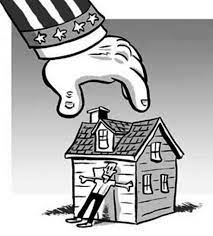
Property rights define the theoretical and legal ownership of resources and how they can be used. These resources can be both tangible or intangible and can be owned by individuals, businesses, and governments. In many countries, including the United States, individuals generally exercise private property rights or the rights of private persons to accumulate, hold, delegate, rent, or sell their property. In economics property rights form the basis for all market exchange, and the allocation of property rights in a society affects the efficiency of resource use.

Understanding Property Rights

Property is secured by laws that are clearly defined and enforced by the state. These laws define ownership and any associated benefits that come with holding the property. The term property is very expansive, though the legal protection for certain kinds of property varies between jurisdictions.Property is generally owned by individuals or a small group of people. The rights of property ownership can be extended by using patents and copyrights to protect:

  • Scarce physical resources such as houses, cars, books, and cellphones
  • Non-human creatures like dogs, cats, horses or birds
  • Intellectual property such as inventions, ideas, or words

Other types of property, such as communal or government property, are legally owned by well-defined groups. These are typically deemed public property. Ownership is enforced by individuals in positions of political or cultural power. Property rights give the owner or right holder the ability to do with the property what they choose. That includes holding on to it, selling or renting it out for profit, or transferring it to another party.

Acquiring Rights to a Property

Individuals in a private property rights regime acquire and transfer in mutually agreed-upon transfers, or else through homesteading. Mutual transfers include rents, sales, voluntary sharing, inheritances, gambling, and charity. Homesteading is the unique case; an individual may acquire a previously unowned resource by mixing his labor with the resource over a period of time. Examples of homesteading acts include plowing a field, carving stone, and domesticating a wild animal. In areas where property rights don’t exist, the ownership and use of resources are allocated by force, normally by the government. That means these resources are allocated by political ends rather than economic ones. Such governments determine who may interact with, can be excluded from, or may benefit from the use of the property.

Private Property Rights

Private property rights are one of the pillars of capitalist economies, as well as many legal systems, and moral philosophies. Within a private property rights regime, individuals need the ability to exclude others from the uses and benefits of their property. All privately owned resources are rivalrous, meaning only a single user may possess the title and legal claim to the property. Private property owners also have the exclusive right to use and benefit from the services or products. Private property owners may exchange the resource on a voluntary basis.

Private Property Rights and Market Prices

Every market price in a voluntary, capitalist society originates through transfers of private property. Each transaction takes place between one property owner and someone interested in acquiring the property. The value at which the property exchanges depends on how valuable it is to each party. Suppose an investor purchases $1,000 in shares of stock in Apple. In this case, Apple values owning the $1,000 more than the stock. The investor has the opposite preference, and values ownership of Apple stock more than $1,000.

E- EDUCATION: AN EDUCATIONAL REVOLUTION

Eeducation or elearning is the delivery of education or training by electronic teaching methods like computers or laptops etc. E- Education means Schools on Web and it consolidates virtual classrooms, laboratories and integrates it with your other enterprise applications. These now supplement the face – 2 – face class room and commonly known as Blended Learning. It is the learning experiences from the online information sources. This E-Learning approach helps the students know, makes them understand how to research more and the students can preserve their online resources posterity. It helps the teacher to provide better materials for the students by doing research on various topics and subjects. It normally works over the internet and provides numerous tools such as for assessment, communications, collaborations, uploading of content etc.

Schools On Web help in connecting people with each other and provides new ways of communications and collaborations with the help of all kinds of information’s being provided by it. The aim is – Learning without Limits- anytime, in any place, and at any pace. It provides a platform where students and parents are connected, administrators are empowered and teachers are inspired.

E- Learning

The technologies of web collaborations helps in real time access to subjects or instructors or topic matters directly from the PC of users. The key communication/ participation tools are: e mail, chat rooms, whiteboards, journals etc.

Some of the key benefits are:

  1. Enable the teaching od new or existing courses wuthin virtual classrooms
  2. Interactive sessions which can be recorded
  3. Effective evaluation of virtual classes
  4. Provide instant accesS
  5. Generate academic reports
  6. Enables to track the progress of individual learner

Experiential Learning

Experiential Learning

Experiential Learning stimulates experiments and boosts the dimensions of interest, involvement, imagination and interaction by virtual laboratories, scenario – based learning activities and tests of different concepts. All these can be incorporated into various teaching approaches as pre-labs, as alternatives to textbooks home work and individual or group activities.

Some of the key benefits are :

  1. Highly Interactive Platform
  2. Provide Learning by Doing
  3. Ensures and promotes high level of cognition and retention
  4. Safety and Security is ensured
  5. Simulates real-life environments

Management System

E-Learning helps in managing fee structure, fee submission, generation of time table and management, library management and other reports. Web based Institute Management software is designed which enables better interaction among students, teachers, parents and managing body. Thus, it helps in customization of the system for respective needs at a reasonable cost.

COVID 19 and E – Education

Countries are at different points in their COVID 19 infection rates and worldwide there are nearly 1.2 billion children in 186 countries who are getting affected by school closures due to the pandemic. With such sudden transition and shift away from the classroom many problems and issues have emerged across the globe. In such situations, online learning and e-learning approaches have emerged as solutions and in response to significant demand, many online learning platforms have also moved forward for offering free access to their educational services. With the help of e-learning and online teaching initiatives many issues which were being faced in the field of education have been sorted out but still there are still lots of problems which are associated with the availability of proper infrastructures etc. at each and every corner of the globe which can enable each and everyone to access the facilities of e-learning.

IS EDUCATION EASIER WITH DISTANCE LEARNING?

Life changes with the passage of time, as does the circumstance. And the perfect example to relate to this phrase is the situation in which we are living today. The ongoing pandemic scenario has altered conventional lifestyles while also bringing remote learning into the spotlight.

So, distance learning is a form of learning in which lectures are broadcast over the air or lessons are delivered through mail, with the learner not having to attend a school or institution. This learning method is not entirely unique to us, but due to the ongoing circumstances it has become a catchword and has lately swept the world by storm. 

Traditional learning, in contrast to distant learning, needs several variables to support education for students, such as infrastructural setups and study materials which in turn elevates the cost level. however, everything has its pros and cons and I’m going to highlight the advantages and disadvantages of traditional learning and distance learning below in order to make a judgment upon the selected topic.

TRADITIONAL LEARNINGDISTANCE LEARNING
ADVANTAGESDISADVANTAGES
It is highly interactive and keeps the student motivatedLack of individual attention and feedback
Access to libraries and research materials Limited scope of practical learning
Lesser chances of distraction Higher chances of distraction
Helps in maintaining interpersonal interactions Don’t help in developing oral skills and social interactions
No technical difficulties Technical difficulties 
  
DISADVANTAGESADVANTAGES
Less affordableIt is much more affordable 
Transportation is needed to attend lectures that will cost the learner money as well as time.No commutation needed to attend classes which saves time and money 
Access to gain multiple  knowledge is challengingEasier access to knowledge 
Cannot work while learningCan work while learning
Does not ensure flexibility with timeEnsures flexibility with time 
Geographical boundary is a barrier to gain knowledge No location restriction to earn knowledge 

After comparing the benefits and drawbacks of online learning and traditional learning it can be said that online learning has certain drawbacks, but as we can see in this information age, we don’t have any other option than to obtain knowledge through online platforms; it may evolve to be user-friendly and become an integral part of human life, just like traditional education. Because in today’s educational system, distance learning is becoming more and more accepted, and the online programs are becoming diversified. With the ongoing technical advances distance learning disadvantages will soon be no longer drawbacks. For example- In today’s world, everyone is getting their education through e-learning, which is a type of distance learning that makes studying more engaging and convenient. It also allows the student to progress at their own speed because e-learning materials may be accessed at any time. When we look at the statistics of e learning, we can see that it is becoming a trend lately in learning and development since it saves time, money, and effort in building up educational institutions and training programs, as well as in delivering content to learners. So therefore, it can be said that distance learning which includes e learning can become the future of education globally and education becomes easier with distance learning.