Republic of Korea’s Economic Development Cooperation Fund (EDCF) loan to India

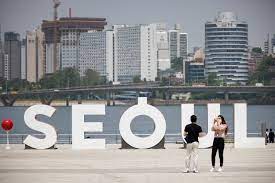
 The arrangement between Government of India and Government of Republic of Korea regarding the Economic Development Cooperation Fund (EDCF) loan of Korean Won 245.081 billion (approx. Rs. 1,495.68 crorefor Establishment of Intelligent Transport System on Nagpur-Mumbai Super Communication Expressway Project was signed here today.

The objectives of the project are to enhance the efficiency in traffic management through establishment of the Intelligent Traffic Management System (ITMS) and traffic centre, to improve the efficiency in toll management through the establishment of the Toll Collection System (TCS) and to establish a sustainable model of ITS and its O&M through transfer of technology from the Republic of Korea.

Republic of Korea was designated as India’s Official Development Assistance (ODA) partner for development cooperation in October, 2016. This is the first project funded by EDCF loan by the Government of Republic of Korea.

The bilateral relationship between the two countries was upgraded to ‘Special Strategic Partnership’ in the year 2015. This further consolidates and strengthens the Special Strategic Partnership between India and Republic of Korea.

[Exchange Rate : 100 Won = Rupees 6.12]

****

HOW DID K-POP AND K-DRAMA BECOME SO POPULAR ?

Prior to going to that point we should concentrate some set of experiences about South Korea also called Republic of Korea. South Korea got it autonomy on 15 August 1947 same as India. However, why it grew so quick that now it is considered as evolved country. At the point when South Korea got it’s freedom around then it was extremely poor. The food that U.S.A used to supply was just sustenance around then for individuals. Pushing forward, in the year 1997 South Korea was confronting major financial emergency. It was such a lot of that individuals didn’t have anything to eat, they were losing their employment and were neglecting to accomplish considerably pitiful assets. Around then Korean government took a credit of 58 billion dollar from I.M.F which should be paid off by 24 August 2001. So without with nothing to do the entire nation comes right into it. They began giving their gold, cash to the public authority.

K-Drama Couples - Free Instagram Stories Template by @itsmariaalyssa |  Korean drama list, Korean drama tv, Kdrama

SETTING UP THE K-POP INDUSTRY

Yet at the same time in the wake of doing that much they had the option to gather just 8 billion dollar actually left with 50 billion dollars. To take care of the remainder of the cash, they set up Korean inventive substance agency(KOCCA)which objective was to put Korean melody on the map in other nation to bring in cash. They got going by playing a Korean show in a Hong Kong’s T.V station free of charge. This didn’t give cash however offered a brief look at Korean culture in western market which as a trade off benefits them. They before long passed a law in which they will give 1% of state financial plan in culture. Three major organizations accepted the open door and they made the Korean Music Industry.

12 Times K-Pop Groups Made History In The Last Decade | Soompi

Korean music doesn’t have any one performer, it comprises of numerous individuals actually like BTS has 7 individuals. To interface with more western crowd they keep their gathering name in English and they additionally have some English verses in their tunes. These gathering individuals are prepared for quite a long time in singing, rapping and dancing. They buckle down since youthful age to turn into a part in a K-Pop group. However, online media likewise assumed a significant part in accomplishment of K-Pop and K-Drama. Gangnam style was the primary Korean music to contact the worldwide crowd. It was the first run through when individuals paid attention to Korean music however bunches like BTS, BLACKPINK and EXO have mainstreamed it. Till now BTS has added 3.6 billion dollar to Korean economy. BTS has additionally started a mission with UNICEF called Love Myself mission and they likewise gave 1 million dollars to BLACK LIVES MATTER.

BTS are encouraging the world to #SpeakYourself in their UN speech

Isn’t it’s extraordinary that the music business which was framed to take care of the obligation turned into the greatest music industry on the planet. This is the primary driver of South Korea’s turn of events.

RESOURCES:

Why Skyscrapers are not that great.

The story of early skyscrapers begins in the late 19th and early 20th century America. Between 1884 and 1945 numerous skyscrapers were built American cities of New York City and Chicago. The two cities competed with each other with many subsequent constructions surpassing the earlier one. The growth of the skyscrapers in the 20th century American cities were mainly fueled by dynamic economic growth as the demand for various new office spaces to hold America’s expanding workforce of white-collar employees continued to grow. With better engineering and construction methods it became easier to construct taller buildings.    

Flatiron Building in New York City finished its construction in June 1902. The 22 floors building was one of the first tallest skyscrapers and later in the subsequent decades even taller buildings were constructed.

But the developments of modern skyscrapers have many challenges and questions that need to be cleared. Though the growth of skyscrapers has not subsided, they are not the most ideal form of buildings. According to engineer Tim Snelson, of the design consultancy, a typical skyscraper will have at least double the carbon footprint of a 10-story building of the same floor area. This tells us that skyscrapers are not environmentally sustainable. Also, any additional methods to minimize the environmental impact will require overcoming the fight of the handicap of being a tall skyscraper in the first place. As the majority of the building is made with glass and steel frame, high-rise buildings are subject to the consequence of the substantial amount of sunlight and a lot of wind on their mostly glass skins. Glass is inherently inefficient in keeping excessive heat out of the buildings in summer or keep heat trapped in the colder months. This also leads to the reliance on continuous Air Conditioning.

The modern construction of skyscrapers in the cities of today is no longer driven purely by economic growth or the need for commercial office space, but instead, it is more driven by glamorous architecture construction and many times the dirty money gets funneled into the construction of Skyscrapers.  High rises also separate people from the street and people lose a connection to nature and the outdoors. The occupants in the tall buildings are often isolated from the street of the city and meaningful contact with ground-level events is often disconnected with taller buildings.  

High-rise buildings also lead to gentrification and inequality. It is no surprise that taller buildings often tend to be luxury units as the higher a building rises, it becomes more expensive to construct. This means that high rises also inflate the prices of the adjacent lands and driving out the affordable properties, thus increasing the inequality. The areas near the skyscrapers are often dark and swept under the shadow of these tall buildings.

Contrary to the popular notion, skyscrapers are not the only way to build high-density construction. The mid-rise buildings are often more able to house more amount of people per area compared to the high rises. Mid rises are also more flexible to affordable.  The mid-rises can work as a good middle ground between the taller buildings and low-density buildings. Instead of blindly building taller buildings we will have to look at the construction of our future buildings that are more sustainable, affordable, and efficient.

References:

Gig Economy

What Is the Gig Economy?

In a gig economy, temporary, flexible jobs are commonplace and companies tend to hire independent contractors and freelancers  instead of full-time employees. A gig economy undermines the traditional economy of full-time workers who often focus on their career development.

Understanding the Gig Economy

In a gig economy, large numbers of people work in part-time or temporary positions or as independent contractors. The result of a gig economy is cheaper, more efficient services, such as Uber or Airbnb, for those willing to use them. People who don’t use technological services such as the Internet may be left behind by the benefits of the gig economy. Cities tend to have the most highly developed services and are the most entrenched in the gig economy. A wide variety of positions fall into the category of a gig. The work can range from driving for Lyft or delivering food to writing code or freelance articles. Adjunct and part-time professors, for example, are contracted employees as opposed to tenure-track or tenured professors. Colleges and universities can cut costs and match professors to their academic needs by hiring more adjunct and part-time professors.

The Factors Behind a Gig Economy

America is well on its way to establishing a gig economy, and estimates show as much as a third of the working population is already in some gig capacity. Experts expect this working number to rise, as these types of positions facilitate independent contracting work, with many of them not requiring a freelancer to come into an office. Gig workers are much more likely to be part-time workers and to work from home. Employers also have a wider range of applicants to choose from because they don’t have to hire someone based on their proximity. Additionally, computers have developed to the point that they can either take the place of the jobs people previously had or allow people to work just as efficiently from home as they could in person.

Economic reasons also factor into the development of a gig economy. Employers who cannot afford to hire full-time employees to do all the work that needs to be done will often hire part-time or temporary employees to take care of busier times or specific projects. On the employee’s side of the equation, people often find they need to move or take multiple positions to afford the lifestyle they want. It’s also common to change careers many times throughout a lifetime, so the gig economy can be viewed as a reflection of this occurring on a large scale.

During the coronavirus pandemic of 2020, the gig economy has experienced significant increases as gig workers have delivered necessities to home-bound consumers, and those whose jobs have been eliminated have turned to part-time and contract work for income. Employers will need to plan for changes to the world of work, including the gig economy, when the pandemic has ended.

Criticisms of the Gig Economy

Despite its benefits, there are some downsides to the gig economy. While not all employers are inclined to hire contracted employees, the gig economy trend can make it harder for full-time employees to develop in their careers since temporary employees are often cheaper to hire and more flexible in their availability. Workers who prefer a traditional career path and the stability and security that come with it are being crowded out in some industries.

For some workers, the flexibility of working gigs can actually disrupt the work-life balance, sleep patterns, and activities of daily life. Flexibility in a gig economy often means that workers have to make themselves available any time gigs come up, regardless of their other needs, and must always be on the hunt for the next gig. Competition for gigs has increased during the pandemic, too. And unemployment insurance usually doesn’t cover gig workers who can’t find employment.

In effect, workers in a gig economy are more like entrepreneurs than traditional workers. While this may mean greater freedom of choice for the individual worker, it also means that the security of a steady job with regular pay, benefits—including a retirement account—and a daily routine that has characterized work for generations are rapidly becoming a thing of the past.

Lastly, because of the fluid nature of gig economy transactions and relationships, long-term relationships between workers, employers, clients, and vendors can erode. This can eliminate the benefits that flow from building long-term trust, customary practice, and familiarity with clients and employers. It could also discourage investment in relationship-specific assets that would otherwise be profitable to pursue since no party has an incentive to invest significantly in a relationship that only lasts until the next gig comes along.

Ways to Manage Stress

Stress is part of being human, and it can help motivate you to get things done. Even high stress from serious illness, job loss, a death in the family, or a painful life event can be a natural part of life. You may feel down or anxious, and that’s normal too for a while. Talk to your doctor if you feel down or anxious for more than several weeks or if it starts to interfere with your home or work life. Therapy, medication, and other stategies help. In the meantime, there are things you can learn to manage stress before it gets to be too much. Consider these suggestions:

Exercise

To start with, physical activity can help improve your sleep. And better sleep means better stress management. Doctors don’t yet know exactly why, but people who exercise more tend to get better deep “slow wave” sleep that helps renew the brain and body. Just take care not to exercise too close to bedtime, which disrupts sleep for some people. Exercise also seems to help mood. Part of the reason may be that it stimulates your body to release a number of hormones like endorphins and endocannabinoids that help block pain, improve sleep, and sedate you. Some of them (endocannabinoids) may be responsible for the euphoric feeling, or “runner’s high,” that some people report after long runs.

People who exercise also tend to feel less anxious and more positive about themselves. When your body feels good, your mind often follows. Get a dose of stress relief with these exercises:

Applications

Property Rights

What Are Property Rights?

Property rights define the theoretical and legal ownership of resources and how they can be used. These resources can be both tangible or intangible and can be owned by individuals, businesses, and governments. In many countries, including the United States, individuals generally exercise private property rights or the rights of private persons to accumulate, hold, delegate, rent, or sell their property. In economics property rights form the basis for all market exchange, and the allocation of property rights in a society affects the efficiency of resource use.

Understanding Property Rights

Property is secured by laws that are clearly defined and enforced by the state. These laws define ownership and any associated benefits that come with holding the property. The term property is very expansive, though the legal protection for certain kinds of property varies between jurisdictions.Property is generally owned by individuals or a small group of people. The rights of property ownership can be extended by using patents and copyrights to protect:

  • Scarce physical resources such as houses, cars, books, and cellphones
  • Non-human creatures like dogs, cats, horses or birds
  • Intellectual property such as inventions, ideas, or words

Other types of property, such as communal or government property, are legally owned by well-defined groups. These are typically deemed public property. Ownership is enforced by individuals in positions of political or cultural power. Property rights give the owner or right holder the ability to do with the property what they choose. That includes holding on to it, selling or renting it out for profit, or transferring it to another party.

Acquiring Rights to a Property

Individuals in a private property rights regime acquire and transfer in mutually agreed-upon transfers, or else through homesteading. Mutual transfers include rents, sales, voluntary sharing, inheritances, gambling, and charity. Homesteading is the unique case; an individual may acquire a previously unowned resource by mixing his labor with the resource over a period of time. Examples of homesteading acts include plowing a field, carving stone, and domesticating a wild animal. In areas where property rights don’t exist, the ownership and use of resources are allocated by force, normally by the government. That means these resources are allocated by political ends rather than economic ones. Such governments determine who may interact with, can be excluded from, or may benefit from the use of the property.

Private Property Rights

Private property rights are one of the pillars of capitalist economies, as well as many legal systems, and moral philosophies. Within a private property rights regime, individuals need the ability to exclude others from the uses and benefits of their property. All privately owned resources are rivalrous, meaning only a single user may possess the title and legal claim to the property. Private property owners also have the exclusive right to use and benefit from the services or products. Private property owners may exchange the resource on a voluntary basis.

Private Property Rights and Market Prices

Every market price in a voluntary, capitalist society originates through transfers of private property. Each transaction takes place between one property owner and someone interested in acquiring the property. The value at which the property exchanges depends on how valuable it is to each party. Suppose an investor purchases $1,000 in shares of stock in Apple. In this case, Apple values owning the $1,000 more than the stock. The investor has the opposite preference, and values ownership of Apple stock more than $1,000.

Financial Literacy

What Is Financial Literacy?

Financial literacy is the ability to understand and effectively use various financial skills, including personal financial management, budgeting, and investing. Financial literacy is the foundation of your relationship with money, and it is a lifelong journey of learning. The earlier you start, the better off you will be, because education is the key to success when it comes to money.

Read on to discover how you can become financially literate and able to navigate the challenging but critical waters of personal finance. And when you have educated yourself, try to pass your knowledge on to your family and friends. Many people find money matters intimidating, but they don’t have to be, so spread the news by example.

Understanding Financial Literacy

In recent decades financial products and services have become increasingly widespread throughout society. Whereas earlier generations of Americans may have purchased goods primarily in cash, today various credit products are popular, such as credit and debit cards and electronic transfers. Indeed, a 2019 survey from the Federal Reserve Bank of San Francisco showed that consumers preferred cash payments in only 22% of transactions, favoring debit cards for 42% and credit cards for 29%.

Other products, such as mortgages, student loans, health insurance, and self-directed accounts, have also grown in importance. This has made it even more imperative for individuals to understand how to use them responsibly. Although there are many skills that might fall under the umbrella of financial literacy, popular examples include household budgeting, learning how to manage and pay off debts, and evaluating the tradeoffs between different credit and investment products. These skills often require at least a working knowledge of key financial concepts, such as compound interest and the time value of money. Given the importance of finance in modern society, lacking financial literacy can be very damaging to an individual’s long-term financial success.

Being financially illiterate can lead to a number of pitfalls, such as being more likely to accumulate unsustainable debt burdens, either through poor spending decisions or a lack of long-term preparation. This in turn can lead to poor credit, bankruptcy, housing foreclosure, and other negative consequences. Thankfully, there are now more resources than ever for those wishing to educate themselves about the world of finance. One such example is the government-sponsored Financial Literacy and Education Commission, which offers a range of free learning resources.

Strategies to Improve Your Financial Literacy Skills

Developing financial literacy to improve your personal finances involves learning and practicing a variety of skills related to budgeting, managing and paying off debts, and understanding credit and investment products. Here are several practical strategies to consider.

Create a Budget—Track how much money you receive each month against how much you spend in an Excel sheet, on paper, or with a budgeting app. Your budget should include income (paychecks, investments, alimony), fixed expenses (rent/mortgage payments, utilities, loan payments), discretionary spending (nonessentials such as eating out, shopping, and travel), and savings.

Pay Yourself First—To build savings, this reverse budgeting strategy involves choosing a savings goal (say, a down payment for a home), deciding how much you want to contribute toward it each month, and setting that amount aside before you divvy up the rest of your expenses.

Pay Bills Promptly—Stay on top of monthly bills, making sure that payments consistently arrive on time. Consider taking advantage of automatic debits from a checking account or bill-pay apps and sign up for payment reminders (by email, phone, or text).

China’s 5 Year Plan (2021-2025): Proposed Dam on River Brahmaputra

The five-year plans are a sequence of economic and social development initiatives furnished by the CCP (Chinese Communist Party) since 1949. The five-year plans were inspired by the five-year plans from the USSR and the focus was on launching new schemes, reforms and setting new growth targets.

Since the 11th five-year plan (2006-2010), the Chinese government has mentioned it as ‘Guidelines’ instead of plans. Currently China is on its 14th five-year plan/ guidelines. Unlike the previous five year plans, there is no specific GDP growth target and instead, the government announced that growth would be kept in “reasonable range” and an annual target would be set based on the specific conditions each year. The focus of the current plan is on self-sufficiency as the country had to endure difficulty after the United States had restricted China’s major chip makers from using American technology. Other areas of focus will be on the above 7 percent growth in the research and development spending. The government will also try to raise the urban residents to 65 percent of the population while maintaining green development and increasing the life expectancy by 1 year. Infrastructure will also be an area of priority with a focus on high-quality development of the belt and road initiative.

One of the biggest infrastructure projects of the 14th The five-year plan (2021-2025) has been officially approved to build a series of dams in the lower reaches of the Yarlung Zangbo River, as the Brahmaputra is known in Tibet before it flows into India.

The proposed dam would be in Medog, Tibet region will have a maximum possible capacity of 60 gigawatts and could potentially produce 300 billion kWh annually. The location is an area called ‘the great bend’ also known as ‘Yarlung Tsangpo Grand Canyon’ where the river goes through a very drastic U-turn and then the river descents from an elevation of 3000 meters to around 800 meters. Due to the drastic elevation change, the river flow is quite strong and is also an ideal location to build the dam.

The location of the dam could be a strategically risky move by china as it is very close to the Indian border but the other issue is that this proposed dam can undermine the water security of India. India relies heavily on the Brahmaputra River for agriculture and various other purposes.  Due to this, the proposed Dibang Dam by India in downstream (Arunachal Pradesh) might be the solution to offset the effect of the Chinese proposed dam. Although the majority of the catchment area of Brahmaputra is on the Indian side there is still the issue of water flow from the upstream as Assam usually suffers from floods in the rainy season and any additional water flow from the Chinese dam would make the situation worse. The problem will not only affect India but also Bangladesh due to its low-lying land and flood-prone region. Problem is that the region is ecologically diverse and sensitive and any kind of development in this region will negatively affect the ecology of this region. Due to turbulent tectonic plates, there are high chances of landslides and earthquakes as well. India will have to be vigilant and develop its strategy according to the developments on the Chinese side.

References:

The Traffic in Bengaluru

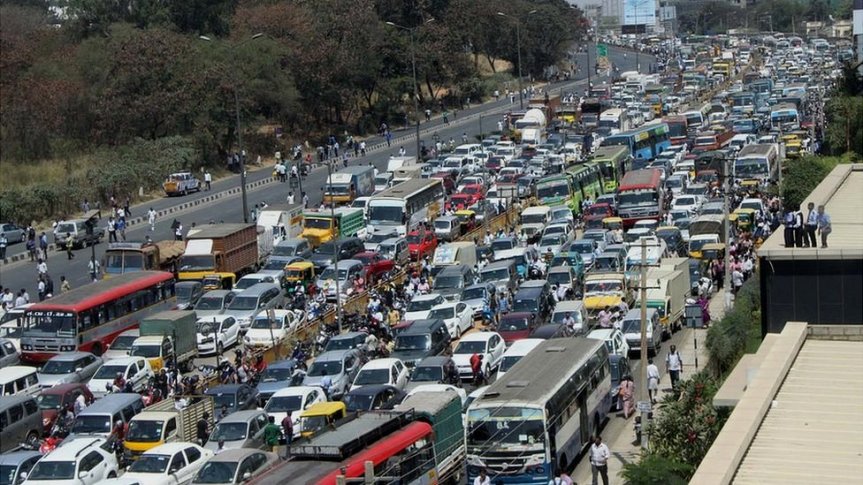
We know that India in general suffers from traffic jams in many different parts of the country. This is essentially due to the population density and thereby, the vehicle density that is prevalent in the country. With so many people using automobiles, there is bound to be traffic and packed roads especially in high populated metropolitan cities. When speaking of traffic in India, people often talk about Mumbai as being the city with the worst traffic. This is understandable as Mumbai is the most highly populated city in India. It is also India’s financial hub and gets a lot of tourism. However, there is one other city that gives strong competition to Mumbai, and which many claim is definitely the city with the worst traffic in India. It is so bad that it can even content to be the city with the worst traffic in the world. That city is Bengaluru. Bengaluru sees constant bad traffic on a day-to-day basis, and every single person that comes from the city can testify on how bad the condition really is. But why is this so?

Why is it so bad?

On average, it is estimated that a Bangalore citizen spends about 10 days in traffic. This is an unimaginable amount for a lot of us from outside Bangalore, who might experience traffic here and there but nothing compared to Bangalore. Furthermore, the average speed travelled on Bangalore roads is only 11 km/h, and it is estimated that it could decrease to 8 km/h if no measures are taken to curb traffic. The unusual thing here is that the speed is low not only with traffic but also without it. This is because the roads in Bangalore, and in generally in India, are multi-purpose public goods serving a wide variety of uses other than motorized transport that slow down travel (hawkers, stalls, parked vehicles, etc.).

The generally agreed reason behind the traffic is that it is because of the rapid and unplanned growth of the city. Bangalore’s traffic advisor M.N. Sreehari himself has said that Bangalore suddenly went from a sleepy village, to a town, to a city. These unforeseen and unplanned changes in the city left it unprepared to deal with the traffic.

Bangalore is often described as the Silicon Valley of India as it is home to the IT industry. Since the early 1990s, with the advent of globalization and privatization, global technology firms began opening offices in Bangalore and a large number of support industries have grown around it, bringing with them a huge influx of people from all over India. Many Indians and NRIs started moving to Bangalore to try building their start-ups, which Bangalore is known for today.

Hence, Bangalore’s population grew from 5.6 million in 2001 to 8.7 million in 2011. Today, it is estimated to have reached 11.5 million. So, the population has grown exponentially, but the infrastructure and roads have not been able to keep up the pace.

Apart from this, even the general road layout is to be blamed for the traffic. Rather than having a grid pattern which promotes the flow of traffic, Bangalore has a star pattern which causes a lot of interceptions and jams. Bangalore used to have grid like roads, but it gradually became more star shaped because of unplanned change and development. Also, the roads themselves are mostly in bad conditions and full of potholes. Potholes are one of the reasons for traffic congestion and road accidents. There is also illegal construction on these roads which narrow them down, causing more jamming.

Furthermore, the public transport like buses carry only about 45% of the city’s traffic and the metro system is still underdeveloped. This means that most people are dependent on their private transport. The city has 6.6 million private vehicles, including one million cars. Every day, another million vehicles enter from outside the city, clogging its already choked streets. Adding to this problem is the fact that one-third of the city roads are taken away by parking and encroachments.

Conclusion

Bengaluru’s traffic is undeniably bad, and measures need to be taken to curb traffic jams and congestion in the city. The traffic has had wide ranging effects on pollution and on the health of people, not to mention it is an immense waste of a person’s time. Even companies in Bengaluru have started pulling out of the city to move to tier 2 and tier 3 cities because the traffic is simply bad for business. It is the statutory and constitutional duty of civic bodies to maintain roads and footpaths. If the administration takes steps to solve the traffic issue in the city, Bengaluru will become a much more popular city and gain a better reputation.

The utterly butterly delicious story of Amul

Over the years, Amul, one of the most beloved brands of our country, has become the taste of India, just as its tagline claims. Every Indian millennial has grown up listening to the jingles of its many dairy products, and the Amul girl, the brand’s mascot in the polka-dotted dress, has become a nostalgia-evoking symbol. Amul has truly come a long way since its founding in 1946.

The beginning

Amul was formed as a part of a cooperative movement against Polson Dairy in Anand, Gujarat, which procured milk from local farmers of Kaira District at very low rates and sold it to the then Bombay government. Everyone except the farmers benefited from this trade. The farmers took their plea to Sardar Patel, who had advocated farmers’ cooperatives since 1942. The result was the formation of the Kaira District Co-operative Milk Producers’ Union Limited in Anand.

The union started pasteurising milk produced by a handful of farmers for the Bombay Milk Scheme and grew to 432 farmers by the end of 1948. The rapid growth led to problems including excess production that the Bombay Milk Scheme couldn’t accommodate. To solve this issue, a plant was set up to process all that extra milk into products such as milk powder and butter.

Amul is born

The late Dr. Verghese Kurien, rightly called the Milkman of India, was Amul’s true architect. His journey at Amul began in 1949 when he arrived in Anand to manage a dairy as a government employee. He went from helping farmers repair machinery to revolutionising India’s dairy industry with the White Revolution (or Operation Flood), the largest dairy development programme in the world.

The new dairy with the milk processing plant was ready for operation in October 1955, the year that also saw a breakthrough in dairy technology —buffalo milk was processed to make products for the first time in the world. The word ‘Amul’, derived from ‘Amulya’, which means ‘precious’ or ‘priceless’ in Sanskrit, was used to market the range of milk products developed by the Kaira Union. It is also an acronym for Anand Milk Union Ltd.

Dr Kurien had a vision. He wanted to offer small-scale dairy farmers quality-control units and centralised marketing, which were missing at the time in the dairy economy. Thus, the Gujarat Cooperative Milk Marketing Federation (GCMMF) was created in 1973 to market milk and all milk products produced by six district cooperative unions in Gujarat. GCMMF is the largest exporter of dairy products in India and Amul is the umbrella for all of its products.

Awards, accolades, and a global presence

Over the years, Amul, together with GCMMF, has won numerous awards. Some of these include the Rajiv Gandhi National Quality Award, 1999; the Golden Trophy for Outstanding Export Performance, 2009-10; Best Marketing Campaign, 2014; and World Dairy Innovation Award, among many others. Amul earned recognition all over the world when GCMMF  introduced it on the Global Dairy Trade (GDT) platform, where only the six top dairy players across the world sell their products.

More than a mere slogan

Amul’s famous slogan, which is now a part of its logo, was created in 1994 by Shri Kanon Krishna of a Mumbai-based advertising agency called Advertising and Sales Promotion (ASP). According to Amul, the Taste of India slogan is more than just corporate positioning or advertising jargon. This slogan lends meaning to the brand’s never-ending commitment to taking quality food and products to the rural man, which he otherwise couldn’t have afforded.

The Butter Girl

Amul did not always have the round-eyed moppet as its mascot. The Butter Girl was born in 1966 when Sylvester daCunha, the then MD of the advertising agency handling Amul butter’s account, created her for its campaign. It was a pleasant change from the dull, corporate ads that the previous agency had come up with. Being a seasoned marketer himself, Dr Kurien gave daCunha complete creative freedom to create and release the ads without taking the company’s permission. 30 years later, the Utterly Butterly Girl still wins hearts wherever she is, whether on a billboard or on the packet of butter.

Amul is not just a brand; it is also a movement that represents farmers’ economic freedom. The name is now a household term that is here to stay, and the chubby-cheeked Amul girl will continue to cast a spell on the public.

Greed vs Generosity: Which Gives a Better Competitive Advantage?

Many people think that in the professional world, selfishness and greed are the characteristics that pay dividends. But the truth is, excepting win-lose situations, that the most successful people in the medium and long term are those who are the most generous in their business and personal lives.

Ambition is a desire to take on more than you can realistically accomplish, to constantly strive for improvement, to grow both personally and professionally, and, of course, the desire to generate more income. However there comes a time when ambition crosses a line, and when that happens it becomes greed. Greed is the desire to chew more than you can eat, a desire that distracts you from realistically possible goals. Greed is wanting to get more than what you have actually earned, obtaining maximum profit at minimum cost, or as an old adage has it: “Grasp all, lose all.”

Today there is an abundance of courses and books on finance, limitless knowledge on hand with a simple click. But to know what is right, to subdue the pirates of greed and to follow your trading plan- this is another story. People who look for easy money invariably find that there is no such thing, paying a heavy price for this lesson. Ego, vanity, and revenge play a part, causing people to fail on their trading accounts. This is one of the factors that explains why people might not fall into the exclusive 10% that ‘win’, and find themselves one of the 90% that lose.

Literature and film are full of greedy and stingy characters, and the moral of films like ‘A Christmas Carol’ or ‘The Wolf of Wall Street’ is always the same: the fate of the greedy is heartbreaking. Their addiction to work means that they live a lonely life, and their search for wealth means that at the end of their lives, they have only the sober memory of their friends from the Stock Exchange.

GIVE AND TAKE

People do not realize that giving without expecting something in return could be a competitive advantage, as well as making ones outlook more positive. Studies have shown that the most successful people are generous. At least this is the affirmation of Adam Grant, a psychologist and professor at Wharton and author of “Give and Take”.

A generous person builds bigger and stronger networks, improves communication with their existing contacts, and also finds it easier to interact with people outside of their core network- this gives them access to new contacts and valuable sources of information. Generous people inspire in others a predisposition, or positive receptivity, to reconnect with them, as well as a greater willingness to collaborate.

Moreover, being a giver encourages persistence because givers are able to enthusiastically motivate people, inspiring confidence, because they are liberal with praise. They create a generally positive environment. Talent is important, but the most important factor in success is persistence. And what’s even more interesting is that being a giver has an energizing effect that increases levels of happiness.

According to Bill Williams, famous trader and writer of “Trading Chaos”, people with a ‘giving’ mindset enjoy more happiness and success. For example, later in his career Bill always traded two accounts, one for himself and one for his charities. The charity account always made more money, even though he traded using the same method with both accounts. In the charity account he never veered from his strategy, while in his own account he would sometimes take a trade based on a “feel”, or get in a trade before the actual signal. This shows us the importance of sticking to a plan, but also the importance of being a ‘giver’.

Giving distracts us from our problems, adds meaning to our lives and helps us feel valued by others. This explains why avidity and egoism are the trader’s worst enemy. Having a benevolent mindset while trading helps the trader to increase performance. Happy people earn more money on average, score higher yields, make better decisions and contribute more to their organizations. Furthermore, traders who are givers are at the top of the most successful trading operations.

THE GREED EFFECT

Focusing only on money results in the ‘greedy effect’, something that all professional traders know. In fact, one of the most common pieces of (rarely followed) advice that newbies receive is to shift their focus from trade results to the trading process, analyzing and following the rules of their trading system. Another suggestion is to start reasoning in pips and ticks instead of dollars. This reduces the greedy mindset and develops a more reliable attitude.

However we can make a further effort to improve our performance by shifting our focus to be more generous. One example is trading for charitable purposes like the aforementioned Bill Williams, another could be simply committing a small part of your monthly or annual profit to microcredits, which promote a world of stability and self-sufficiency, key to overcoming poverty.

Material things can be recovered, but feelings of guilt, helplessness and loneliness cannot be solved with money. If humans would be more understanding of and generous to others, the world would be a very different place. And that is why those who practice generosity, making it part of their daily lives, experience an uplifting of their mental and emotional state, and are generally filled with more satisfaction in their professional and personal lives.

In conclusion, we see that generous people are the most successful in their daily trading performance for the reasons described above. Having a giving mindset helps professionals become part of that exclusive group, the 10% of winners.


Sustainability In India

Pollution is not just an undesirable outcome that causes environmental deterioration in India; it is also a major roadblock to growth and development in the country. It would have a negative effect on economic growth if it is not addressed properly and managed.

This resulted in a major shift in people’s attitudes and political will. Significant advances in clean energy technologies have opened the path for commercial possibilities arising from the ‘green economy transformation.’ Clean technology will be in high demand. Countries that adequately upskill and establish industry sectors to manufacture it stand to benefit greatly. They may earn profit from clean technology exports and earn access to global markets.

While India already is trying to make tremendous progress in the field of sustainability, there seems to be an imperative need to involve our country’s youth in order to fulfil our sustainable development goals.

Sustainability became one of the most defining terms of the twenty-first century, and for valid reason: the contemporary world is now struggling with the consequences of unrestricted consumption and production tendencies. Simply stated, even as our population grows and technology advances at a breakneck pace, our quality of life is progressively deteriorating. India, which is on the verge of a new age of growth, is at an important crossroads in terms of its approach to sustainability. While our nation has some of the lowest per-capita emissions in the world, we are the third-largest emitter globally. The two most significant hurdles to our approach to sustainability are our population and the swift pace of our economic progress.

India, though, has made significant progress as an aspiring change-maker in addressing climate change and developing development plans which are in line with the Sustainable Development Goals, that were implemented in September 2015 and encapsulate the social, environmental, and social dimensions of sustainability, as well as the abolition of all forms of poverty.

To that aim, attempts have been made to include all stakeholders – public and private – in the development of successful guidelines, implementation methods, and best practises. For example, in February 2018, a nationwide seminar on capacity building was organised with the objective of localising the SDGs. In December 2018, the NITI Aayog released the SDG India Index — Baseline Report 2018 to monitor the progress the  states and union territories have made on the strategies and initiatives launched by the central government.

The country was also a significant participant in formulating the Paris Agreement and has implemented a variety of energy-efficiency initiatives. Sustainability is also an important aspect of Indian culture, thought, and beliefs. Rural areas, which accounted for about 70% of the nation’s population in 2011, maintain a modest and inexpensive way of living. According to Greendex, an international study on sustainable living which analyses how individuals respond to environmental issues in their housing, transportation, food, and products choices, India ranks first among 18 countries, including China and the United States.

India has also  had one of the most effective programmes in terms of eliminating single-use plastic and promoting the Swachh Bharat campaign, an initiative launched by the central government. This has aided in increasing awareness beginning in primary school, with children asking their parents about their right to cleanliness.

That being said, as the economy develops and grows, there is a noticeable change in socio-economic patterns. The nation still has to confront several  significant environmental challenges, particularly in terms of building sustainable communities.

Being one of the world’s youngest countries — 42% of India’s population is between the ages of 15 and 35, and this estimate is expected to rise to 55% in the coming 30 years — the youth in our country should be encouraged to develop environmentally friendly economic solutions.