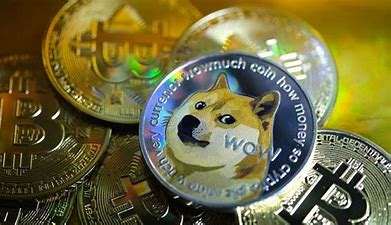
A cryptocurrency is a form of digital asset based on a network that is distributed across a large number of computers. This decentralized structure allows them to exist outside the control of governments and central authorities. Dogecoin is a type of cryptocurrency created by software engineers Billy Markus and Jackson Palmer, who decided to create a payment system as a joke, making fun of the wild speculation in cryptocurrencies at the time. It was initially released on December 6, 2013, and quickly developed its own online community, reaching a market capitalization of US$85,314,347,523 on May 5, 2021.
Dogecoin.com promotes the currency as the “fun and friendly internet currency”, referencing its origins as a joke. It further gained major popularity when founder, CEO, and Chief Engineer at SpaceX and one of the richest person of the world – Elon Musk talked about it. Billy Markus was a IBM software engineer and Jackson Palmer was a Adobe Software engineer.
Palmer had purchased the domain Dogecoin.com and added a splash screen, which featured the coin’s logo and scattered Comic SanMarkus reached out to Palmer after seeing the site, and started efforts to develop the currency. Markus designed Dogecoin prototype based on other cryptocurrencies such as litecoin and Lucky coin using the scrypt technology in their proof-of-work algorithm.
On December 19, 2013, Dogecoin jumped nearly 300 percent in value in 72 hours, rising from US$0.00026 to $0.00095,with a volume of billions of Dogecoins per day. This growth occurred during a time when bitcoin and many other cryptocurrencies were reeling from China’s decision to forbid Chinese banks from investing into the bitcoin economy. But three days later its value dropped by 80%.
The society went through number of shifts in attitude and behavior over the past 80 years and with all these shifts and transitions, the definitions, meanings, lifestyle etc. of people and the life events have also changes. There is change in the beliefs of the people and the meaning of marriage is also redefined and beliefs relating to marriage have also changed significantly. Marriage requires lifelong commitment and is dependent on an individuals fulfillment and satisfaction. With all these shifting’s, the stigma related with divorce has also been eliminated.
With the help of qualitative and quantitative studies it had been seen that there are number of reasons for divorce and some of the major reasons for divorce are lack of commitment, infidelity, and conflict/ arguing. And the most common final straw is domestic violence, infidelity and substance use. In recent decades, there is an increase in number of divorces. The increasing number of divorce is related to various social aspects.
LACK OF PROPER COMMUNICATIONS : Communication is very important when we’re interacting with someone and bad communication can have many impacts on a marriage. It is important to clarify each other’s meanings and concerns, otherwise, it will lead into suspicion, mistrust and arguments and many times it can affect the marriage severely. Arguments in any relationship is not a bad thing and can have healthy results but they can have bad impacts due to lack of communication.
LACK OF COMMITMENT : According to various studies, the major reason behind divorces is the lack of commitment. The commitment gradually erodes until there was not enough commitment for sustaining the relationship and also due to negative events such as infidelity.
ABUSE : When there is abuse in a marriage or in a family then divorce is the best ending and result possible. In some cases it is the husband. While there are some spouses who are able to end and overcome abuse and sometimes with the help of involvement of in laws and elders, the issues can be solved. But everything depends on the attitude and mindset of the person in relationship.
INFIDELITY : Infidelity is considered as a critical turning point in a destroying a relationship and majority of couples end their relationship if they are cheated and due to infidelity. In some cases it is also seen that couples overcome this challenge and find strength to stay together.
ADDICTIONS : Addictions can be in many forms. It can be in the form of alcohol, gambling etc. In many cases it was found that the addicted partner can recover from it and the marriage can be continued but if there is no change and recovery from addictions then it is best for the spouse and children to separate and see if progress is possible. Depending on the circumstance, it can be decided what to do and when to do.
WOMEN’S INDEPENDENCE : Women have become more independent over these years and they are no more dependent on anyone and are no more mere housewives. Women have now become financially, socially, physically and mentally independent and this affects the old aged mentality of many people who believed that women have only one function to play that is nurturing the family. Besides so much advancements, there are many people who have still been hesitant to see women’s progress. And there men who cannot see the progress of women. There are ego clashes which cause dissatisfaction in marriage and lead to divorce.
Postponed by a year due to the pandemic, the Tokyo Olympics is now less than a month away. Last week, the Union Sports Minister Kiren Rijiju urged the people to extend their support to India’s Olympic-bound athletes, the same way they back India’s cricketers. However, India’s abysmal performances at the Olympics is in striking contrast to India’s immense success at cricket. The model of sports governance and financial irregularities are often blamed for the lack of competitive edge in sports other than cricket. So, the most obvious question that comes to our mind is, how much does India invest in the Olympics?
Money allocated for Sports
In the 2020-21 annual budget, the Government of India allocated Rs 2826.92 crore for sports, which meant an increase of mere ₹ 50 crore from the revised estimates of the financial year 2019-20. The Modi government’s flagship sports programme ‘Khelo India’ received a substantial hike of ₹ 312.42 crore and was allocated ₹ 890.42 crore compared to ₹578 crore in 2019-20. On the other hand, the National Sports Development Fund saw a reduction of ₹ 27.15 crore from ₹77.15 crore in 2019-20 to ₹ 50 crore in 2020-21. National Sports Federations saw the highest decrease after Finance Minister allocated ₹ 245 crore, ₹ 55 crore less than the previous financial year, according to The Wire. Even the budget for meritorious sportspersons saw a 40% reduction from the last financial year. It is important to note that the 2020-21 annual budget was presented in January 2020, when the government had no idea of the coming pandemic. It was also supposed to be the year of the Tokyo Olympics.
Target Olympic Podium Scheme
While these are the broad schemes under which Indian sportspersons are funded, the Target Olympic Podium Scheme (TOPS) provides financial assistance to potential Olympic medal winners. Launched in 2014, TOPS is the flagship programme of the Sports Ministry of India. The top-up funding scheme considers the performance of Indian athletes in the past three years. They are provided with personal coaches and other staff fees, cost of travel during competitions, purchase of equipment, and pocket allowance.
Looking Back At The Last Olympics
In the 2016 Rio Olympic, India spent ₹ 36.85 crore under TOPS, as per Financial Express. Nearly half of that amount was spent on shooting, which was India’s most successful Olympic sport in the previous three games. Shooting is also very expensive, which requires importing equipment from other countries. But shooting failed to bring any medal. Athletics received the second-highest funding of ₹ 7.80 crore in 2016, but India failed to make a mark in the sport. Unfortunately, out of the ₹ 36.85 crore, ₹30.49 crore had gone to disciplines that fell short of goals. Only 1.66 per cent of the total TOPS fund went to the fields that brought India two medals – PV Sindhu in Badminton and Sakshi Malik in wrestling.
Comparison With Other Countries
The United Kingdom allocated close to Rs 9000 crore on sports infrastructure and training in the annual sports budget, whereas India spent only one-third of the UK, Rs 3,200 crore, on youth affairs and sports, before 2016. The UK won 67 medals against India’s two at the Rio Games 2016. Abhinav Bindra had also tweeted back in 2016 that a medal cost UK 5.5 million pounds, and that is the kind of investment India needs to make. Otherwise, we cannot expect much. In the USA, a large number of athletes are privately funded. Individual athletes had started their own funding portal for donations from the general public. Therefore, only 10% of the US Olympic Committee’s finance was spent on athletes in Rio 2016, and the USA finished first. China, on the other hand, is known for its aggressive state-sponsored promotion of sports.
Private Investment In India
Before the 2016 Olympics, Indian Olympic Association (IOA) received donations from Reliance Jio, Amul, Tata Salt, Edelweiss Financial Services, Herbalife, Li Ning, and SBJ. Sakshi Malik had also thanked JSW Sport, a foundation funded by the OP Jindal group, after becoming India’s first medal winner in Rio Games, as reported by Hindustan Times.
However, unlike NSDF, where the contributions and sponsorships are open and documented, private funding to individual athletes is not. And most recently, the JSW Group has come on board to be the official sponsor of Team India in the Tokyo Olympics and has agreed to pledge sponsorship support of ₹ 1 crore to IOA. In 2018, the Sports Ministry earmarked ₹ 100 crore for funding of the athletes for the preparation of Tokyo Olympics 2020, which will take place this year. While the number of medals won cannot be equated to the investments made, since medals are not the only measure of success, India nonetheless needs to invest more and put in a new model of sports governance in action. A
To paraphrase a line from Ron Burgundy, the ocean is a big thing. Big enough for scientists to point out that the term “Earth” is a misnomer. Water may be a more accurate name for a world that is nearly 3/4 covered in water, with marine plants contributing a whopping 50 percent or more of the oxygen we breathe. With all of that stated, it’s past time (high tide?) for us to band together to save the resource that has been depleted.
The bad news is that human activity is wreaking havoc on the environment. The good news is that there are several things we can do to help stop (and even reverse!) those detrimental behaviors, which is why this is a message about hope and empowerment rather than doom and gloom.
Plastic pollution is destroying the ocean
A non-profit that works to protect the ocean Every year, 17.6 billion pounds of plastic is estimated to escape into the ocean from land-based sources, according to Oceana. Every 60 seconds, a garbage truck full of plastic is dumped into our waterways. The world’s most renowned (and largest) rubbish dump is located in the ocean.
The Great Pacific Garbage Patch covers 1.6 million square kilometres and contains 1.8 trillion bits of plastic in an estimated 80,000 metric tonne landfill. Plastic garbage in the ocean is believed to kill over one million sea animals each year, including sea turtles, sharks, and coral reef (yes, coral reef is an animal!).
Plastics in the ocean will surpass fish in the ocean (!?) by 2050, according to research, and 99 percent of seabirds will have plastics in their GI tract. Plastic pollution is not only destructive to the ocean; there is also evidence that it is harmful to humans.
Acidification in the ocean
Carbon dioxide emissions absorbed by the oceans over decades have changed the underlying chemistry of our ocean, resulting in an increase in acidity. Acidification causes small decreases in shell density in small creatures, which support entire ecosystems despite their small size.
As the world’s seas warm, species are moving in large numbers to new locations, posing new challenges or simply failing to develop as they should, while millions of people rely on fish as their primary source of nutrition. It’s also causing the Great Barrier Reef to perish. Coral reefs require all of the protection we can provide, given the disastrous effects of climate change.
Because it has the potential to cause the most apparent and immediate human misery, sea-level rise may be the most well-known of these concerns. Low-lying areas such as Miami and the South Pacific islands are growing increasingly vulnerable; 10% of the world’s population lives on the low-lying coast.
Meanwhile, deoxygenation, which is most typically caused by algal blooms fed by nutrient-rich fertilizer run-off, is causing enormous dead zones and suffocating marine life.
Overfishing
Fishing techniques that are illegal, uncontrolled, and unreported are common. Humans have already brought the giant grouper, several skates and rays, and a dozen or more other sturgeon species to the brink of extinction through fishing.
Bluefin tuna is one of the fish species whose populations may never recover as a result of unsustainable fishing techniques. Other apex predators, such as sharks, are among the most endangered.
Places like Monterey Bay National Marine Sanctuary have shown how impactful policy changes can be in helping species rebound.
Ocean conservation isn’t just a hobby for those who enjoy the water. You might not be a scuba diver, a fisherman, or a seaside dweller. Perhaps you have a seafood allergy and despise surfers! Even so, chances are you still breathe air and enjoy life when there is less human suffering.
Plants and trees are oxygen-producing powerhouses. But wait till you see what oceanic greens can accomplish! (Hint: it’s not just trees.) More than half of the oxygen on the earth is produced by marine plants.
Thoughts famous people have about ocean
Jacques Cousteau: “The sea, once it casts its spell, holds one in its net of wonder forever.”
Beyoncé Knowles: “I’m always happy when I’m surrounded by water, I think I’m a mermaid or I was a mermaid. The ocean makes me feel really small and it makes me put my whole life into perspective… it humbles you and makes you feel almost like you’ve been baptized. I feel born again when I get out of the ocean.”
William Wordsworth: “The ocean is a mighty harmonist.”
John F. Kennedy: “We are tied to the ocean. And when we go back to the sea, whether it is to sail or to watch, we are going back from whence we came.”
Step 1: Land and sea are far more intertwined than most people think, and activities taken on land have substantial consequences in the ocean. The good news is that there are a plethora of tools available—Pinterest offers a plethora of ocean-saving categorieS.
2. Opt for Ocean and Earth-Friendly Products
Oceana’s #1 is to demand plastic-free alternatives to items such as plastic water bottles, straws, plastic cutlery, coffee cups, bags, balloons, plastic-wrapped produce, and take-out food containers.
Investment in any form is considered to be the best way of achieving additional income. It’s like waiting for an extra reward. One such word with which we all are familiar is “equitymutual funds”.There’s a large structural growth in equity mutual funds for Indian industries. The Indian Mutual Fund AUM/GDP ratio currently stands at 12% vis-à-vis the global average of 60%.
India has seen a significant growth rate in equity mutual funds investment. Indian investors are usually keen on investing in equity mutual funds because of the risk management. Investing in mutual funds has many advantages. Let’s discuss them briefly.
Return: Mutual funds involves higher risk but generally the return that it gives is greater than in any other investment plan.
ØProfessional Management: Even a person who does not have professional knowledge can invest. They are assured by the experts. The experts manage and operate mutual funds. They allocate it in different securities thereby assuring them profit.
ØFlexibility in Investment amount: There’s no fixed amount to be invested. You can invest even with a minimal amount of Rs 100. This is the most important benefit which the investors get in equity mutual funds.
ØLiquidity: This is also another benefit of investing in mutual funds. It’s not like fixed deposit where you are unable to withdraw amount at any point. You can redeem it at any point. Mutual funds have flexible withdrawal.
ØSafety & Transparency: All the equity mutual funds have now become safe and transparent after the introduction of SEBI guidelines. They’ve a color coding through which the investors can assess the risk level.
ØDiversification:Diversification is another factor which reduces the risk involved in building a portfolio.Mutual Funds consist of many securities, so investor’s interests are safeguarded if there is a downfall in other securities purchased.
ØAccessibility: Mutual Funds are easily accessible. By accessibility, it means that you can buy mutual funds from anywhere in the world. You don’t require a Demat account for it. Mutual funds are very easy to buy.
ØLower cost: In Mutual Fund, funds are collected from many investors, and then the same is used to purchase securities. These funds are however invested in assets which therefore helps one save on transaction and lower its cost. Investors get the savings as lower costs of investing in Mutual Funds.
Mutual Fund is a strong financial tool which has helped in increasing the growth of Indian economy. Mutual Fund have provided financial stability to the Indian economy. The Indian capital market has been increasing significantly during last few years. With the Industrial revolution and reforms of financial sector, the economy has been opened up and many developments have been taking place in the Indian money market and capital market. In order to help the small investors, mutual fund industry has come to occupy an important place in the Indian market.
Although there are many benefits of investing in mutual funds in India, but we must remember that every good thing comes with some flaws. The market condition is very dynamic. Not anyone can invest in mutual funds. One needs to have a proper knowledge to do that. However, one thing which is certain is that there’s no harm in it. India still has many steps to climb.
I think everyone have the memories of your school life which never fades. The most cherished and enjoyed part of our life would definitely be our school life, right? Though, we go to college or job but the happiness might not be equal to the happiness in school life. Am I right guys? But the children these days do not know the happiness of this school life. This would be a great regret in their life. This pandemic has affected our daily lives. This affected our life greatly. Due to this, the children miss their school life and focussed on the online classes which is the greatest regret of the parents these days. The usage of mobile phone in such a young age may develop the habit of laziness in children. They may have eye problems. Let me tell you about school life now and then. Yes, I will share you how I enjoyed my school life. We were the last batch to complete school life before the pandemic started. We feel lucky for that.
School days before Covid-19
As I said, the most unforgettable part in our life is our school days. Yes, school makes one built their character and knowledge of life. The most things can be learnt only in school days. This is a palce where every student tries to be the best in his work and want to use the school life the most to be a successful person. There they learnt to be disciplined and how punctuality matters a lot. Punished for being late teaches them to be a punctual person and this can be applied wherever he goes. Schools shape our character, mold our mental attitudes and fashion the basic principles of life. Most of us would have spent the most happiest days in school only. Think about it.
The children fight among themselves to prove they are the best in the class. The attention of students towards teachers are very high those days. Though they didn’t do their homework or didn’t work hard, during the time when examination dates are announced they show their strength to the fullest. Yes, the competition to be the first is always a fire in their mind. School teaches us how to respect others and befriendly with everyone. School is the place where we first identify our talents. There were many competitions which encourage them to prove themselves. This brings out dancing ability, singing, etc. Some children are interested in sports and teachers help them to be the best in their sports. To say bluntly, teachers are the pillars of school life.
The best companion of School life
The loyal and life long friends can be made only in your school life. Yes, the school friends are the ones who befriend with you without any expectations. Everyone can’t be able to forget the attrocities done with your friend right? At times, getting punishments together or making your friend a scapegoat and these cannot be forgotten. Sharing food and snacks are the best parts. This teaches us to be friendly and generous to the people around us. In every class, there will always be a group of gang and fight between them for silly things are unforgettable. Possesiveness over your friend and ego clashes between them are the most enjoyable things in school life. But the children these days miss the school days and this pandemic has made the situation worst.
Friends
Days goes, trend changes. This pandemic has made things difficult for children. They have become lazy and didn’t know about their school at all. They are studing through online class. Will it cultivate all the good habits ? No, puntuality and other things can only be taught in school. They are sure to miss this. Attending classes online may bring health issues and eye problem etc., But we should adjust this and be safe for now. I hope the pandemic will end soon and the children will be able to attend their live classes and cultivate their character. Doctor advices children to hear the online classes rather than seeing the mobile or laptop for the full day.
Buying and shopping is something, which if preferred my everyone, belonging to all age groups. The buying decisions of men and woman depend on their habit and lifestyle. Habits and lifestyle drive most decisions and it is important for companies to study these habits for understanding the buying decisions of the purchasers. Companies try to focus and study the initial buying decision to gain advantage of them before their decision is overruled by their habit. This ensures that their products and things that they are selling is the beneficiary of the habits of the consumers.
Consumer Buying Process
There is particular buying process through which a customer has to go before purchasing anything. This process is called as Customer Buying Process (also called a buying decision process). This process shows the journey of a customer before buying anything. And it is important to understand this journey to align the products and strategize the entire process of product advertising selling accordingly.
Following things are focused while understanding a buyers mind:
Initial Stimulation of a Need : Companies spend millions of dollars each year to motivate the buyers for purchasing their products and for motivating them to buy the products which are healthier, wealthier, attractive and safer. That’s why, coupons, discounts and sales are also provided. These mainly attract the purchasers. Many purchasers tend to change their habits and lifestyles which further change and shift their shopping habits.
Influence of Third Parties: Third parties are mainly friends, peers or authority who have influence on the habits and lifestyles of people. This further affect the selection of products. Word of mouth marketing is considered more because it provides honest reviews about different products. It is considered to be more trustworthy than individual advertising. That’s why companies try to seek and attract customer endorsements and enlist celebrities as product spokespeople to help gain the attraction and purchasers.
Personal Evaluation : Decisions for buying one product as compared to other similar products is influenced by a number of factors and it includes packaging appeal and the convenience of payment. This process of choosing one product over another helps in making better decisions and better choices.
Hence, consumers should be aware of their habits which are the major deciding factors while purchasing anything. Evaluating and objectively determining every purchase is considered to be impractical and not preferable. Sometimes the outcomes are more critical and there can be significant differences in their price, quantity, quality, durability and utility etc. And for a successful result it is important to make rational purchasing decision.
Shopping always makes us feel good. Even after buying something, the excitement of trying them immediately after getting home excites a lot and in my case, I always have a feeling of achievement after buying a product that I like. We all know that sense of pleasure and joy when be go through different stores and buy something that we want…. It can be a new shade of lipstick, or a hardware or furniture or electronic item or pair shoes or anything else. This is called a retail therapy and it has also been studies scientifically. Scientific studies of retail therapy have shown the effectiveness of buying and shopping something which we need or want.
A country is said to be over populated when the inhabitants of the country exceeds the rate of availability and production of resources. With a present population of approximately 139 crores , India stands at being the second most populous country in the world after China. The large population of the country exceeds the resources it produces, which in turn doesn’t satisfy the needs of all the people living here. Thus, India can be called an overpopulated nation and over population is a big problem here because of the same said reason.
Being a developing country, India needs a less population to resource ratio so that it can satisfy the needs of all the people here. Increasing the production of resources may be impossible at times as one can increase the food production and other things upto a limit only else the balance will be disrupted., This leaves the only option of controlling the population of the sub-continent. This blog will highlight some of the major causes of the over population and the effects which it has on the people.
Causes of overpopulation
CHILD MARRIAGE– The age where a person is supposed to be nurtured and grow, he/she is tied in a responsibility of which they have no concrete idea of. There is a reason why the legal age of marriage is said to be at 18 because it gives ample time to a “child” to grow and prepare themselves for many responsibilities. The orthodox beliefs in India have often led to children being married at as low as 10 years of age. When a child themselves becomes a parent. this is more likely to raise the number of population in the country. Not to mention the negative affects of child marriage which often leads to the death of weak mother or the child.
ILLITERACY AND TABOOS IN THE COUNTRY– India has an illiteracy rate of almost 31%. The lack of knowledge about some major issues like the need of birth control and how to do so, have also led to the rising number of population. Also, since to talk about “sex” openly in India is a taboo, sex education lacks in the people here. They would rather prefer to do it inside the close doors and add to the rising miseries which overpopulation brings than to talk about it and control it.
RELIGIOUS AND ORTHODOX BELIEFS IN THE COUNTRY- People here consider children to be God’s gift like it happens everywhere else, but they refuse to control the number of children they are producing as they feel that it is God’s wish and who are we humans to go against it”. Also, the Indian belief of having a male who will take their family name forward leads couples to birth many children till they do not get a boy.
ILLEGALMIGRATION– Migration of people from Nepal and Bangladesh has also led to the increase in number of population where the condition is such that there is no sufficient food to feed even the natives.
POVERTY- There involves a paradoxical relation ship between poverty and over population. Poverty is one of the outcomes of over population as the number of feeding mouths keeps on increasing for a person with less amount of money. Whereas some people believe that if they produce more children they will have more earning members which in turn will relieve them of poverty.(This is also one of the reason of over a million child labors in the country). However, they forget to keep in mind the fact that , more the number of people more will be the responsibility to feed the members until they grow old enough to earn . Even after the children grow old enough to earn, they are not able to fetch a good amount of money because they have malnutrition.
THE WIDENING GAP BETWEEN BIRTH AND DEATH RATES.– Due to improved medical facilities, the life of an average individual has increased lowering the death rates while the birth rates goes on increasing every moment. By decrease in the death rate it doesn’t mean that people must die to control the population, IT IS JUST A STATED FACT.
POVERTY, MALNUTRITION IN CHILDREN, UNEMPLOYMENT due to rising number of people and less opportunities ,global warming, environmental pollution, habitat loss, the sixth mass extinction, intensive farming practices and the consumption of finite natural resources, such as fresh water, arable land and fossil fuels are the consequences of overpopulation which gives a signal that if the population is not controlled then it can become a curse on us.
The 193km (120 mile) Suez Canal connects the Mediterranean Sea at the canal’s northern end to the Red Sea in the south and provides the shortest sea link between Asia and Europe.
On 28 March, at least 369 ships were queuing to pass through the canal. This prevented an estimated US$9.6 billion worth of trade. On 29 March, Ever Given was partially re-floated and moved by about 80 percent in the correct direction, although the bow remained stuck until the ship was finally freed by Egyptian, Dutch, and Italian tugs at and started moving, under tow, towards the Great Bitter Lake, for technical inspection. The canal was checked for damage, and after being found to be sound, the SCA allowed shipping to resume from 29 March. The vessel was subsequently impounded by the Egyptian government on 13 April 2021 for refusing to pay compensations demanded by the government, a claim deemed to be unjustified by the ship’s insurers. After the incident, the Egyptian government announced that they will be widening the narrower parts of the canal.
The ship has been impounded for three months near the canal city of Ismailia
The container ship was refloated following a six-day salvage operation that involved a flotilla of tug boats and dredging vessels. One person was killed during the operation. Since then, the Suez Canal Authority (SCA) has been seeking compensation from the Ever Given’s Japanese owner Shoei Kisen for the cost of the salvage operation, damage to the canal’s banks and other losses.
The SCA initially asked for $916 million compensation, including $300 million for a salvage bonus and $300 million for loss of reputation. But UK Club – which insured Shoei Kiswn for third-party liabilities – rejected the claim, describing it as “extraordinarily large” and “largely unsupported”.
The SCA later lowered its demand to $550 million. The final settlement, which has not been revealed, was agreed and signed and the ship was released on 7 July, 2021.
The Global economy is undergoing a long-term, structural transformation. In the past few decades, the key sectors responsible for the global output shift are the fall of agriculture, the decline of the manufacturing industry, and the rise in services. Next the capital expenditures are reducing.
Alessandro Magnoli Bocchi an Italian economist clearly stated in one of his books that by relying on the internet cheap interfaces with a large number of customers in other words, by inexpensively putting underutilized resources to use, it creates value with little capital cost. As a result, global net investment is close to its lowest level since the Second World War.
Moreover countries are making their economic structure more protective and are making their countries more self-sustained by encouraging industries in their countries to establish in their own country, therefore decreasing the import supply of goods and increasing their export supply to other countries to improve their economy. Currently, the United States is trying to do so. Decreasing their import supply of goods and increasing their export trade. US are going a step ahead by asking industries not to provide jobs to other nationalities.
Most of the countries are protecting their economies by encouraging their countries to establish industries in their own country. For example, Donald J. Trump went against General Motors for sending Mexican made model of Chevy Cruze to U.S car dealers-tax free across border. He says that General Motors must make in U.S.A or pay big border tax! Narendra Modi has encouraged industries to make products in India.
Data Technology (IT) is one of the greatest and most mainstream businesses as far as building up a profession on the planet today. Industry 4.0 has invited various innovative headways because of which specific IT experts have discovered conspicuousness, in IT organizations as well as in different enterprises. Maybe, the most famous among them is a vocation in online protection.
More than 1 billion network safety experts are required to be sought after over the course of the following 2 years in this field, making it perhaps the most worthwhile profession ways on the planet today. Notwithstanding being a mammoth association, National Health Services couldn’t shield themselves from a huge scope hack. A main nourishment application, MyFitnessPal, likewise went through a monstrous security penetrate where the individual information of more than 150 million clients was taken. The recurrence of these assaults has expanded off-late, making network safety basic in each association.
Huge banks and gems stores regularly enlist proficient hoodlums to endeavor burglaries, to recognize provisos in their security frameworks. Through these preliminaries, these establishments can reliably redesign their security frameworks, to ultimately arrive at a phase of becoming invulnerable. Taking motivation from this interaction, the network protection space has likewise reversed the situation on hacking and made it a legitimized idea through moral hacking.
Moral hacking is a cycle through which experts are paid to hack into an association, to pinpoint weaknesses in the security framework that the association needs to fix. Ill-conceived programmers have likewise discovered lawful conspicuousness in the IT world today because of the developing significance of moral hacking as an idea.
Moral programmers are recruited and prepared to utilize a huge number of methods to attempt to penetrate various associations. They help in the identification of holes inside the security framework as well as during digital assaults.
Government associations wherein digital fighting holds extraordinary unmistakable quality, moral programmers are accustomed to balancing endeavors made by noxious programmers with the expectation of outmaneuvering them, and protecting the information. Another use of moral hacking is of supporting in the examination that follows a digital assault.
Law implementation offices frequently recruit moral programmers to follow the means of a programmer and distinguish the culprit.
Thinking about the incredibly specialized nature of the calling, a basic degree is for the most part insufficient to build up an effective vocation in the field a particular preparing is fundamental. Many driving IT organizations today offer affirmed courses in Ethical Hacking that involve the nuts and bolts of PC organizing as well as intricate methods and driving cycles for keeping up with digital protection.
Think inventively and out-of-the-box:
Aside from these specialized ideas, it is additionally fundamental for moral programmers to have the option to think imaginatively and out of the container. The explanation programmers are developing and can penetrate confounded security frameworks is that they are reliably attempting to concoct new ways and approaches for something very similar.
Another significant quality to have is critical thinking, as the expertise can be fortified after some time, and sharpened with experience and down to earth openness. In this manner, getting ready for a vocation in moral hacking needs to involve a decent blend of both, specialized and reasonable viewpoints.
Be that as it may, there is an exceptionally clear ability hole in the business today, and subsequently, an absence of qualified staff in the field. Attributable to the hole between the interest and supply of moral programmers, this vocation way has gotten very rewarding with monstrous extension later on.
Investing money has become very popular and more common nowadays since it sustains our future. There are innumerous ways through which we can invest money
Stock Market
Stock market is one of the most blooming field for investing money nowadays. You buy a number of shares of a company at a particular price at that time and if the company profits, the price of the shares rise and you can sell them and earn profit. There are risks involved in it since the company might go in loss. Therefore it becomes risky especially when you invest hefty amount.
Cryptocurrency
Cryptocurrencies are one of the newest forms of investing money. They are digital currencies that allow people to send and receive funds without using a third party. Although there are more than 2,000 different cryptocurrencies in existence, Bitcoin is the most well-known, and carries the largest value. Their values can change in a similar way the stock market works.
Gold
It is an older form of an investment which purely depends on the supply demand. Therefore if the demand is more, its price will go up whereas if there is less demand the prices fall. Therefore it is wise to invest in gold only when the prices steeps down.
Real Estate
This type of investment requires hefty amount of money which involves buying properties at lesser rates and when the housing market shoots up, sell at higher rates. It is one of the most safest long term investment.
Mutual Funds
A mutualfund is a type of investment vehicle consisting of a portfolio of stocks, bonds, or other securities. Liquidity is high and tenor is open ended. You invest an amount into the mutual fund, and the fund will buy and sell stocks on your behalf. You’ll pay an annual fee for this.
Fixed Deposit
It is a traditional and safest form of investment that provides a relatively higher rate of interest as compared to savings account. It is very beneficial during long term investments.
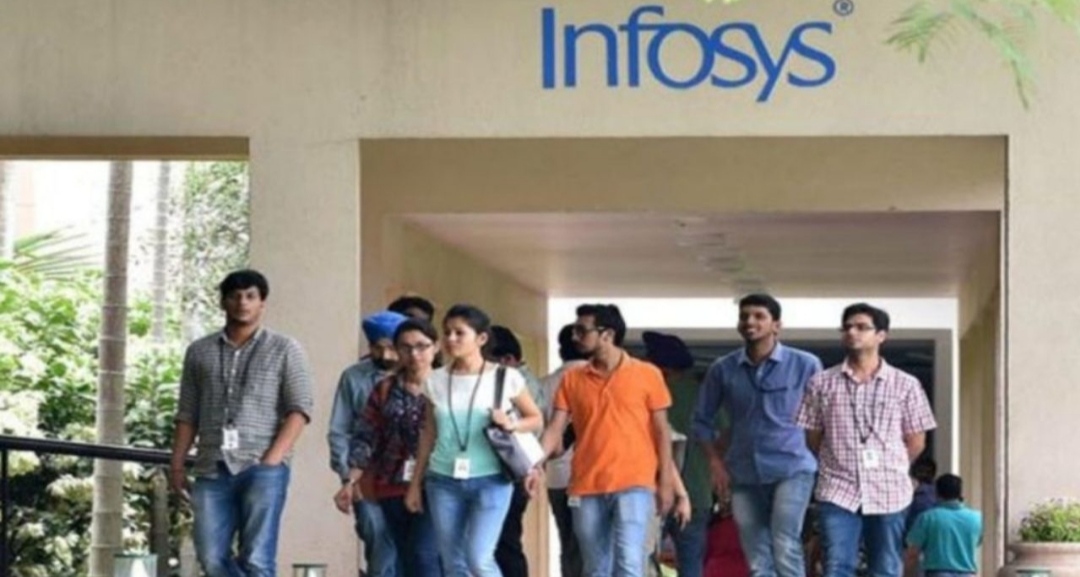
Infosys Ltd told employees last week they could resume work from offices, according to a memo seen by Reuters that offers an early sign of the country’s $190 billion technology services sector moving to get back on track.
Many IT businesses are mass-vaccinating their personnel to ensure that they are protected from Covid, while also preparing them to return to work once the situation gets back to normal, or the pandemic’s impact is reduced.
Most MNC employees have already received their first round of vaccination, and some have also completed their second dosage.
Infosys Ltd Will Resume Work From Offices….!!
Large corporations have allowed their staff to work from home but small businesses and startups are finding it difficult to adapt the work from home due to a lack of resources and technology.
Many corporations planned to reopen offices in full force at the moment, but with the second wave striking and more lockdowns being announced, these plans had to be postponed for a long period.
Infosys said the country’s safety situation seems to be improving, with growing vaccination coverage. Infosys did not respond to Reuters’ request for comment on the memo.
“We have been getting requests from certain accounts to allow their team members to work from Infosys campuses. In addition, some of our employees have also been asking to come back and start working from the office, as a personal preference.”
Infosys had a total employees of 2.67 lakh at the end of the June quarter, as compared to 2.59 lakh in the March quarter.
After reporting results last week, Infosys executives told analysts that roughly 99% of its staff was working from home, and the company would make efforts to get “more and more people to come to office” over the next couple of weeks.
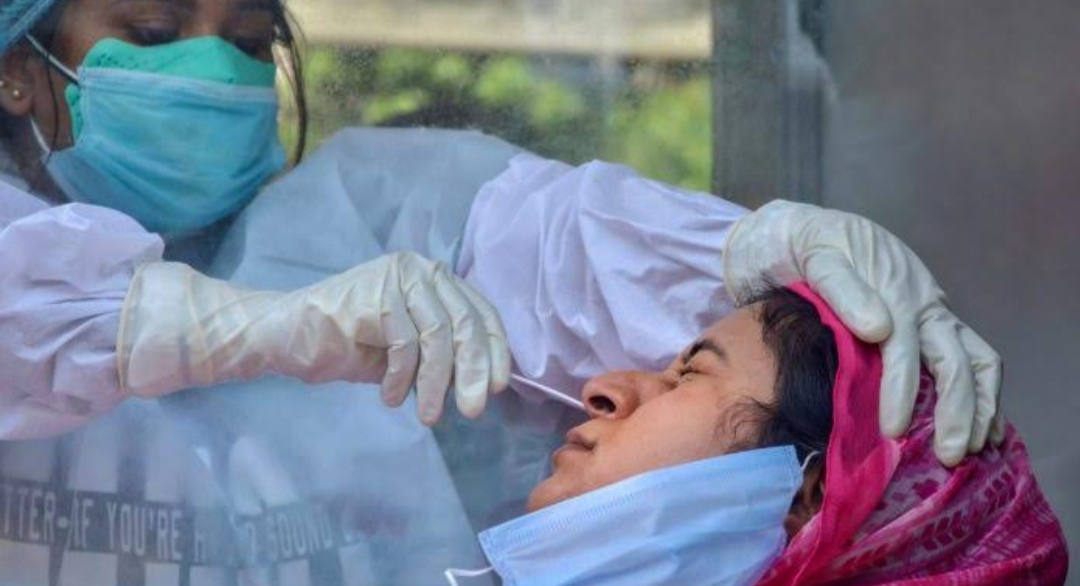
The Covid-19 weekly case positivity rate has finally dropped to below 5% in all districts of the state for the first time in months during the ongoing second wave. Even last week, when Andhra Pradesh’s average weekly positivity rate stood at 3.2%, East Godavari and West Godavari had crossed the 5% positivity rate threshold.
As per the latest weekly case positivity rate statistics between July 12 and 18, Kurnool has the lowest case positivity rate among all districts at 0.74%.
In all, Anantapur, Kurnool, Srikakulam and Vizianagaram have a less than 2% weekly case positivity rate. While the weekly positivity rate ranges between 3% and 5% in five districts, eight districts have a positivity rate less than 3%.
The case positivity rate is a key indicator to gauge the spread of the disease in the community at a certain point in time. The World Health Organisation (WHO), in an advisory released in May last year, stated that less than 5% samples testing positive for Covid-19, at least for two weeks, is an indicator that the disease is under control.
Corresponding with the lowering case positivity rate, the daily new infection numbers have now dropped to about the 2,000 to 3,000 range from the peak of 24,171 cases on May 16. But districts such as East Godavari, West Godavari, Visakhapatnam and Chittoor still continue to contribute a major chunk of the daily infection numbers. This can be gauged from the fact that while the state’s cumulative case positivity rate stood at 8.22% as of July 18, it is as much as 12.43% in East Godavari, 9.88% in Chittoor and 8.59% in West Godavari.
Despite the fall in case positivity rate, the state health department is augmenting infrastructure at all hospitals in its preparation for the anticipated third wave. A special focus has been laid on improving infrastructure to treat paediatric Covid-19 cases based on the assumptions of several experts and reports that the third wave may hit children.
In a gig economy, temporary, flexible jobs are commonplace and companies tend to hire independent contractors and freelancers instead of full-time employees. A gig economy undermines the traditional economy of full-time workers who often focus on their career development.
Understanding the Gig Economy
In a gig economy, large numbers of people work in part-time or temporary positions or as independent contractors. The result of a gig economy is cheaper, more efficient services, such as Uber or Airbnb, for those willing to use them. People who don’t use technological services such as the Internet may be left behind by the benefits of the gig economy. Cities tend to have the most highly developed services and are the most entrenched in the gig economy. A wide variety of positions fall into the category of a gig. The work can range from driving for Lyft or delivering food to writing code or freelance articles. Adjunct and part-time professors, for example, are contracted employees as opposed to tenure-track or tenured professors. Colleges and universities can cut costs and match professors to their academic needs by hiring more adjunct and part-time professors.
The Factors Behind a Gig Economy
America is well on its way to establishing a gig economy, and estimates show as much as a third of the working population is already in some gig capacity. Experts expect this working number to rise, as these types of positions facilitate independent contracting work, with many of them not requiring a freelancer to come into an office. Gig workers are much more likely to be part-time workers and to work from home. Employers also have a wider range of applicants to choose from because they don’t have to hire someone based on their proximity. Additionally, computers have developed to the point that they can either take the place of the jobs people previously had or allow people to work just as efficiently from home as they could in person.
Economic reasons also factor into the development of a gig economy. Employers who cannot afford to hire full-time employees to do all the work that needs to be done will often hire part-time or temporary employees to take care of busier times or specific projects. On the employee’s side of the equation, people often find they need to move or take multiple positions to afford the lifestyle they want. It’s also common to change careers many times throughout a lifetime, so the gig economy can be viewed as a reflection of this occurring on a large scale.
During the coronavirus pandemic of 2020, the gig economy has experienced significant increases as gig workers have delivered necessities to home-bound consumers, and those whose jobs have been eliminated have turned to part-time and contract work for income. Employers will need to plan for changes to the world of work, including the gig economy, when the pandemic has ended.
Criticisms of the Gig Economy
Despite its benefits, there are some downsides to the gig economy. While not all employers are inclined to hire contracted employees, the gig economy trend can make it harder for full-time employees to develop in their careers since temporary employees are often cheaper to hire and more flexible in their availability. Workers who prefer a traditional career path and the stability and security that come with it are being crowded out in some industries.
For some workers, the flexibility of working gigs can actually disrupt the work-life balance, sleep patterns, and activities of daily life. Flexibility in a gig economy often means that workers have to make themselves available any time gigs come up, regardless of their other needs, and must always be on the hunt for the next gig. Competition for gigs has increased during the pandemic, too. And unemployment insurance usually doesn’t cover gig workers who can’t find employment.
In effect, workers in a gig economy are more like entrepreneurs than traditional workers. While this may mean greater freedom of choice for the individual worker, it also means that the security of a steady job with regular pay, benefits—including a retirement account—and a daily routine that has characterized work for generations are rapidly becoming a thing of the past.
Lastly, because of the fluid nature of gig economy transactions and relationships, long-term relationships between workers, employers, clients, and vendors can erode. This can eliminate the benefits that flow from building long-term trust, customary practice, and familiarity with clients and employers. It could also discourage investment in relationship-specific assets that would otherwise be profitable to pursue since no party has an incentive to invest significantly in a relationship that only lasts until the next gig comes along.












 Eduindex
You must be logged in to post a comment.