Ikigai: why is it Important?

I have been fascinated by the Japanese and their culture for at least ten years now and I have learned a lot from them. Some of the things I am most fascinated by about the Japanese are their longevity (the Japanese have the longest lifespans of any race in the world), the high importance they place on teamwork, social connections and social responsibility, and their incredibly healthy diets.

If you ask someone the reason why the average Japanese lives so long, the answer you will probably receive is, “because they have a healthy diet”. And that answer is mostly correct. But, as it turns out, there might be more to it than simply a healthy diet. It may also have to do with the fact that the Japanese believe in and adhere to something called “ikigai”, which loosely means “reason for being” or “reason for waking up”.

The Japanese take their ikigai seriously and this motivates them in many ways. It is somewhat akin to the word “passion” in English. It may relate to a person’s career or job, but it does not have to. In fact, only about a third of Japanese profess that their ikigai is related to the type of work they do.

Very often, the Japanese will cite social connections and responsibility as their ikigai. For example, the older generation is respected and highly appreciated. Their opinions and experience are valued by society and this allows them to feel a sense of purpose and responsibility towards others. In other words, their lives matter.

Unlike in the West where our passions mostly take into account what we love to do, ikigai also involves doing something that we love, but it also places a lot of emphasis on a group and fulfilling a role that benefits that group as a whole. Many Japanese are part of formal groups called “moai” and they consider their connection to these groups to be very important in their lives.

A fisherman’s ikigai might be to hone his craft so that he can help successfully feed his family, his moai, or the town, village, or city. A grandmother’s ikigai may be to impart wisdom to the younger generation. A traditional chef’s ikigai might involve preserving ancient recipes and passing them on so that every new generation can enjoy traditional Japanese food. A man who conducts the church choir every week might cite that as his ikigai.

Interestingly enough, a lot of research shows that the earlier a person retires, the higher the risk of an earlier death. This could have something to do with inactivity and being sedentary. It also could have something to do with losing one’s “raison d’etre”, or ikigai.

Some people in the West compare ikigai to happiness, but the two are not synonymous. Ikigai refers to finding happiness and joy in the small, day-to-day activities rather than reaching some final goal that promises bliss. It encompasses finding meaning in the small things. In fact, a person’s ikigai gives them a reason for living even when they are unhappy or miserable in the moment. It is what Victor Frankl wrote about in his epic book, Man’s Search For Meaning. In other words, one can still experience his or her ikigai during times of hardship or suffering. It fosters resilience.

How to Find Your Ikigai

Simply put, your ikigai is where what you are good at, what you love, and what your values are, intersect. When all three of these factors are in line and congruent, it is likely that you have found your ikigai. Try to recall a time when you were doing something and were so engrossed in it that you lost track of time and forgot to eat lunch or dinner. This is often referred to as being in the “flow”.

When you pay attention to tasks that seem to “flow” to you, you will find your ikigai and even deepen your association with it. You will find your life to be more meaningful and enjoyable. Once you notice the things that have meaning to you, you must then take the additional step of incorporating more of those types of tasks into your life. In other words, it requires some action and will not just happen on its own.

This also involves eliminating some things that are not harmonious with your values, that you are not good at, or that you do not like to do. Of course, this does not mean that you can get rid of every single task or activity that you do not like (some people do not like to brush their teeth, but it needs to be done anyway). But it does reduce the amount of tasks that are meaningless to you. Some people delegate these “meaningless” tasks to others to create more time for the tasks related to their ikigai.

One important point to note is that, once you find your ikigai, it will help you see the bigger picture and make even some mundane tasks more meaningful. For example, helping others by conducting research and writing this blog is very meaningful to me. I often experience “flow” and lose track of time when I am writing a blog post. However, I have also come to see that proofreading and correcting my mistakes (not my favorite things to do) are necessary in order to create an article that my readers like and can benefit from.

Knowing what your ikigai is (you can have more than one, although I would be suspicious if a person had more than four or five) not only creates more happiness and meaning in your life, it also can help you live a longer and healthier life. It makes sense if you really think about it: a person is more likely to jump out of bed each morning with vigor if he knows that the tasks he has to perform will make him more proficient at it, happier, and make a difference in the world. Knowing your ikigai also increases the likelihood of you taking better care of your health because your life has meaning.

Knowing your ikigai can be one of the most rewarding things in a person’s life. What is yours?

Ensure continuity of quality education during the pandemic

The Minister of State for Education Shri Sanjay Dhotre participated in the G20 Education Ministers’ Meeting on 22nd June, 2021. The meeting was hosted in blended mode by Italy. G20 Education Ministers exchanged views on how to progress on the fight against educational poverty and inequalities, especially in context of the Covid 19 pandemic. The ministers also resolved to share innovative experiences implemented during the pandemic to ensure the continuity and quality of learning pathways through blended education

Representing India, Shri Sanjay Dhotre reiterated the country’s commitment towards reducing and eventually eliminating educational poverty, inequalities and early school leaving. Speaking on National Education Policy, 2020, the Minister said it envisages equitable and inclusive education for all, withspecial focus on children and youth, especially girls, from socially and economically disadvantaged groups who are more at risk of being left behind.

Shri Dhotre said that the Indian education system has made steady progress towards bridging gender and social category gaps in all levels of education through multiple interventions. Some of these include increasing intake capacity of schools; tracking out-of-school children; monitoring the learning outcomes of vulnerable students; ensuring physical safety & zero tolerance to breach of child rights;  mid-day meals to ensure health of children; enabling mechanisms for Children With Special Needs ; promoting multiple pathways to learning and strengthening open and distance learning programmes. 

Regarding ensuring educational continuity during the pandemic, the Minister shared that India has promoted blended learning extensively.   Digital educational content has been made available on various e-learning platforms like DIKSHA, SWAYAM and several others which can be accessed by Anyone, Anytime, and Anywhere free of cost. Permissible online component in conventional education has been increased from 20% to 40%. Over 100 top ranked universities have been allowed to introduce full-fledged online education programmes. In order to address the digital divide, India has been making extensive use of the SWAYAM PRABHA TV channels and the Community Radio. The Digital infrastructure is being expanded rapidly. A National Education Technology Forum is being   set up under NEP 2020 to aid technology led education.

The Government also took special care to address mental health issues of students through counseling programmes like Manodarpan and others, he highlighted.

Shri Dhotre said that India reaffirms its support to the collective efforts of the G-20 countries to reduce educational poverty, inequalities and early school leaving. India also supports the collective efforts of G20 countries to further improve and strengthen blended learning initiatives on the basis of the lessons learnt during the pandemic to ensure education continuity.

The Education Ministers adopted a declaration at the end of the meeting

Later in the day, a Joint Meeting of Ministers of Education and Ministers of Labour and Employment was also held virtually. G20 Ministers exchanged views on transitions from school to work. Shri Sanjay Dhotre represented Ministry of Education  in the meeting. Ministry of labour & employment was represented by MoS (I/C) Shri Santosh Gangwar.

Addressing the participants, Shri Dhotre said that it is essential that we, the member countries of G20,   recognize the need to equip our youth well for a smooth transition into the work space after completing their education. This is especially important for learners from socially and economically disadvantaged population groups, who are more at risk of being left behind.

The Minister stated that India is committed to helping its youth develop the knowledge, skills and attitudes necessary for the 21st century global work space. Our approach has been to integrate vocational education with general academic education, with focus on demand driven, competency based, and modular vocational courses, he added.

The Minister highlighted that National Education Policy 2020 provides for early vocational exposure in middle and Singapore international secondary school and its smooth integration into mainstream education.. It aims that by 2025, at least 50% of learners in the school and higher education system would have exposure to vocational education. He further said that the NEP 2020 also provides for vocational education to be aligned to skill gap analysis and mapping of local opportunities. Vertical mobility for students from the vocational stream is being ensured through a National Skills Qualifications Framework. Standards under this framework will be aligned with the International Standard Classification of Occupations maintained by the International Labour Organization”. This Framework will be the basis for Recognition of Prior Learning, and reintegration of dropouts from the formal system, he added. 

Shri Dhotre informed that India is also enhancing post education apprenticeship opportunities for youth by realigning the existing scheme of National Apprenticeship Training Scheme.

He said that India attaches great importance to the collaboration between G20 countries in the field of vocational education and training. He reaffirmed the support of the Government of India to the collective efforts of the G-20 countries to develop strategies to ensure smooth transition from education to work.

G20 Education and Labour and Employment Ministers’ adopted a Declaration at the end of the meeting.

Click here for G20 Education Ministers’ Declaration

Click here for G20 Joint Education and Labour and Employment Ministers’ Declaration

                                                                        ******

Swachh Vidyalaya Puraskar 2021 – 2022

 Shri Subhas Sarkar, Minister of State for Education today virtually launched Swachh Vidyalaya Puraskar (SVP) 2021 – 2022. The event was attended by Mrs Anita Karwal, Secretary (SE&L), and representatives from all States and UTs and UNICEF.

Shri Sarkar while launching the awardsunderlined the importance ofWater, Sanitation and Hygiene in Schools as it plays a significant role in determining the health of students, their attendance, dropout rate, and learning outcomes. The provision of water, sanitation and hygiene facilities in schools secures a healthy school environment and protects children from illness (including COVID-19) and exclusion, he added. Shri Sarkar emphasized that the SwachhVidyalayaPuraskarrecognise, inspire and award the schoolswho have undertaken exemplary work in the field of water, sanitation and hygieneand also provides a benchmark and roadmap for schools to make further improvements in future.

In order to create self-motivation and awareness about sanitation the SwachhVidyalayaPuraskar (SVP) was first instituted by the Department of School Education and Literacy, in 2016-17.

The SVP 2021-22 is open to all categories of schools. i.e. Government, Government aided and Private schools in both rural and urban areas. The schools will be assessed through an online portal & mobile app in 6 sub-categories: Water, Sanitation, Hand Washing with soap, Operation and Maintenance, Behaviour Change and Capacity Building and the newly added category on COVID-19 Preparedness and Response and the system will generate the overall score and rating automatically.The schools have been given sufficient time till March 2022 to apply for the awards so that they can do so at an appropriate and safe time.

Schools shall be awarded at the District, State and National level based on an internationally recognized five star rating system. Also, every school will get a certificate of participation showing the category-wise scores and overall rating of the school. This will help in promoting sustainable practices of improved Water, Sanitation & Hygiene in schools.

At the National level, 40 schools will be selected for awards this year under the overall category. The award money for the schools has been enhanced this year from Rs. 50,000/- to Rs. 60,000/- per school, under Samagra Shiksha scheme. Also, 6 sub-category wise awards have been introduced for the first time, with award money of Rs. 20,000/- per school.


* * * * *

Realize the dream of activating India 2.0, fueled with the spirit of Atmanirbhar Bharat

 National Innovation week will inspire us to work collaboratively to realize the dream of activating India 2.0, fueled with the spirit of Atmanirbhar Bharat, said Shri Subhas Sarkar, Minister of State for Education while addressing the valedictory session of  E- Symposium on ‘Building Innovation Ecosystem in Educational Institutes’ here today.

In his concluding remarks Shri Sarkar said that our goal is to promote innovation, entrepreneurship, critical thinking, and out-of-the-box thinking in our educational system, which is also reflected in the New Education Policy 2020. He further said that Government is committed to enhance the Indian economy and working tirelessly to achieve India’s goal of becoming a 5 trillion-dollar economy by 2024-25. Facilitating investment, fostering innovation, building best-in-class infrastructure, and making India a hub for manufacturing, design, and innovation will help us achieve the Atmanirbhar Bharat in the true sense. 

Click here to see Closing Ceremony of e-Symposium on Building Innovation & Entrepreneurial Ecosystem

Shri Sarkar stressed that the time has come when every Ministry, Government Department, Industry leaders, and all key stakeholders work collaboratively and support our higher education institutions so that they work on creating a holistic culture of innovation, research, and help in nurturing young talent to pursue their dreams as an Innovators and solve the problems faced by society and address upcoming challenges. 

At the occasion, Professor K. Vijay Raghavan, Principal Scientific Advisor (PSA) to the Government of India, emphasized on need of innovation for economic change and sustainability. He said that we need to expand the funding of research and innovation eco-system to position India as a favoured destination for Research and Development. He highlighted on adoption of best global practices for establishing closer linkages with national R&D institutions and academia, talent development and sourcing, strategic partnerships to bolster R&D in India and integrating with the domestic start-up ecosystem. He further added that, innovation must be linked with economic change and market and in synchronization with ongoing policy measures including Swachh Bharat, Made in India etc. etc. He urged Indian youth to come forward in sharing the ideas for country and economic development.

The opening session was followed by two panel discussion titled, “Grey Hairs not mandatory to build greater enterprises” and “Attracting Big Investment for Innovative ideas from Educational Institution” which was well attended by eminent personalities. All the panelists were enthused with such platforms which are much needed for building up the R&D and innovation eco-systems in India.

Prof. M. P. Poonia, Vice Chairman of AICTE had delivered welcome address and appreciated for the overwhelming responses and participation from student and faculty fraternity from educational institutions. The sessions were viewed by more than1.2 lakh attendees online across the globe. All panelists were enthused with e-symposium platforms which is the need of hour for building the R&D and innovation eco-systems in India.

Prof. Rajive Kumar, Member Secretary, AICTE highlighted the role of AICTE in supporting the technical institutions to excel in the field of innovation and entrepreneurship. The event concluded with vote of thanks delivered by him.

******

United District Information System for Education Plus (UDISE+)

 Union Education Minister, Shri Ramesh Pokhriyal ‘Nishank’ today released the Report on United Information System for Education Plus (UDISE+) 2019-20 for School Education in India.

As per the UDISE+ report 2019-20, Gross Enrolment Ratio at all levels of school education has improved in 2019-20 compared to 2018-19. Pupil Teacher Ratio (PTR) has improved at all levels of school education.

According to the report, in 2019-20, enrolment of girls from primary to higher secondary is more than 12.08 crore. This is a substantial increase by 14.08 lakh compared to 2018-19. Between 2012-13 and 2019-20, the Gender Parity Index (GPI) at both Secondary and Higher Secondary levels have improved.

The UDISE+ report shows a remarkable improvement in the number of schools with functional electricity, with functional computers, internet facility in 2019-20 over the previous year.

Another major improvement is seen in the number of schools with hand wash facility. In year 2019-20, more than 90% schools in India had hand wash facility as compared to only 36.3% in 2012-13.

The UDISE+ system of online data collection from the schools was developed in the year 2018-19 to overcome the issues related to manual data filling in paper format and subsequent feeding at the block or district level, which was in practice in the UDISE data collection system from 2012-13. The present publication relates to UDISE+ data for the reference year 2019-20.

Highlights of Report on United District Information System for Education Plus (UDISE+) 2019-20:

  • In 2019-20, total students in school education from pre-primary to higher secondary have crossed 26.45 crore. This is higher by 42.3 lakh compared to 2018-19.


  • Gross Enrolment Ratio at all levels of school education has improved in 2019-20 compared to 2018-19.


    • Gross Enrolment Ratio increased to 89.7% (from 87.7%) at Upper Primary level, 97.8% (from 96.1%) at Elementary Level, 77.9% (from 76.9%) at Secondary Level and 51.4% (from 50.1%) at Higher Secondary Level in 2019-20 (from 2018-19).
    • Gross Enrolment Ratio (GER) has improved by nearly 10% in secondary between 2012-13 and 2019-20. GER for secondary has reached nearly 78% in 2019-20, compared to 68.7% in 2012-13.
    • Gross Enrolment Ratio (GER) has improved by more than 11% in higher secondary between 2012-13 and 2019-20. GER for higher secondary has reached 51.4% in 2019-20, compared to 40.1% in 2012-13.


  • In 2019-20, 96.87 lakh teachers have been engaged in school education. This is higher by about 2.57 lakh compared to 2018-19.
  • The Pupil Teacher Ratio (PTR) has improved at all levels of school education.
    • In 2019-20, the PTR for primary has become 26.5, PTR for upper primary and secondary has become 18.5 and PTR for higher secondary has become 26.1.
    • In 2019-20, the PTR for primary has become 26.5, whereas it was 34.0 in 2012-13. In 2019-20, the PTR for upper primary has become 18.5, whereas it was 23.1 in 2012-13.
    • In 2019-20, the PTR for secondary has become 18.5, whereas it was 29.7 in 2012-13.
    • In 2019-20, the PTR for higher secondary has become 26.1, whereas it was 39.2 in 2012-13.
  • To ensure universal accessibility of education for persons with disabilities, all-out efforts have been made. Enrolment of Divyang students has increased by 6.52% over 2018-19.
  • In 2019-20, enrolment of girls from primary to higher secondary is more than 12.08 crore. This is an increase by 14.08 lakh compared to 2018-19.


    • Gross Enrolment Ratio of girls has increased to 90.5% (from 88.5%) at Upper Primary level, 98.7% (from 96.7%) at Elementary Level, 77.8% (from 76.9%) at Secondary Level and 52.4% (from 50.8%) at Higher Secondary Level in 2019-20 (from 2018-19).
    • Gross Enrolment Ratio of girls at higher secondary level has increased by 13% between 2012-13 and 2019-20. It was 39.4% in 2012-13 and has become 52.4% in 2019-20. The increase is more than that of the boys. GER of boys for higher secondary is 50.5% in 2019-20, it was 40.8% in 2012-13.
    • Between 2012-13 and 2019-20, the GER for girls at both secondary and higher secondary level has increased more than that of the boys.
    • GER for girls at secondary level has gone up by 9.6% to reach 77.8% in 2019-20, it was 68.2% in 2012-13.


  • Between 2012-13 and 2019-20, the Gender Parity Index (GPI) at both Secondary and Higher Secondary levels have improved. Improvement of GPI has been most pronounced at the higher secondary level, which has gone up to 1.04 in 2019-20 from 0.97 in 2012-13.


  • More than 80% schools in India in 2019-20 had functional electricity. This is an improvement by more than 6% over the previous year 2018-19.


  • Number of schools having functional computers increased to 5.2 lakh in 2019-20 from 4.7 lakh in 2018-19.


  • Number of schools having internet facility increased to 3.36 lakh in 2019-20 from 2.9 lakh in 2018-19.


  • More than 90% schools in India had handwash facility in 2019-20. This is a major improvement, as this percentage was only 36.3% in 2012-13.


  • More than 83% schools had electricity in 2019-20, an improvement by almost 7% over the previous year, 2018-19. In 2012-13, about 54.6% schools had electricity.


  • More than 82% schools conducted medical check-up of students in 2019-20, an increase by more than 4% compared to previous year 2018-19. In 2012-13, about 61.1% schools conducted medical checkups.


  • More than 84% schools in India had a library/reading room/ reading corner in 2019-20, an improvement of nearly 4% compared to the previous year. In 2012-13, about 69.2% schools had library/ reading room/ reading corner.


For details, see the link:

https://www.education.gov.in/hi/statistics-new?shs%20term%20node%20tid%20depth%20=394&Apply=Apply


*****

Schemes of the Government to ensure education for all Citizens

 During COVID-19 Pandemic, Government of India has held various consultations with the States and UTs at different levels. Also, a brain storming session was held with Civil Society Organizations (CSOs) in January, 2021 for taking their views/ perspectives to assess and to bridge the learning gap in the Covid-19 pandemic period. 

Education is in the concurrent list of the Constitution and majority of the schools are under the domain of respective State and UT Governments. However, to ensure thatevery student gets continued access to education, a multi-pronged approach has been adopted. A comprehensive initiative called PM e-VIDYA has been initiated as part of Atma Nirbhar Bharat Abhiyan on 17th May, 2020, which unifies all efforts related to digital/online/on-air education to enable multi-mode access to education. The initiative includes: 

  • DIKSHA (one nation, one digital platform) is the nation’s digital infrastructure for providing quality e-content for school education in states/UTs and QR coded Energized Textbooks for all grades are available on it. 35 of the 36 states and UTs have on boarded on DIKSHA platform and contextualised the content as per the local need.
  • One earmarked Swayam Prabha TV channel per class from Class 1 to 12 (one class, one channel).
  • Extensive use of Radio, Community radio and CBSE Podcast- Shiksha Vani.
  • Special e-content for visually and hearing impaired developed on Digitally Accessible Information System (DAISY) and in sign language on NIOS website/ YouTube.

Besides, the Ministry has undertaken a proactive initiative, named, ‘MANODARPAN’ covering a wide range of activities to provide psychosocial support to students, teachers and families for Mental Health and Emotional Wellbeing during the COVID outbreak and beyond.

The Central Government is constantly advising States/UTs through guidelines and meetings with respect to interventions for reducing impact of pandemic on education. The guidelines issued so far are given below:


S.No.

Interventions

Links of Guideline

1.

Guidelines for Children of Migrant Labourers

https://www.education.gov.in/sites/upload_files/mhrd/files/Migrant%20labour%20guideline.pdf

2.

Guidelines for Out of School Children and Mitigation of Loss of Learning

https://www.education.gov.in/sites/upload_files/mhrd/files/guidelines_oosc.pdf


3.

PRAGYATA Guidelines on Digital Education

https://www.education.gov.in/sites/upload_files/mhrd/files/pragyata-guidelines_0.pdf

4.

Learning Enhancement Guidelines for Continuous Learning

https://ncert.nic.in/pdf/announcement/Learning_%20Enhancement_Guidelines.pdf 


5.

Covid-19 Related Health and Safety Sop/Guidelines for School Re-Opening

https://www.education.gov.in/sites/upload_files/mhrd/files/SOP_Guidelines_for_reopening_schools.pdf

6.

Covid Action Plan for School Education

https://www.education.gov.in/sites/upload_files/mhrd/files/Covid_Action_Plan.pdf

7.

Alternate Academic Calendar

Secondary- https://www.education.gov.in/sites/upload_files/mhrd/files/Academic%20Calender%20-%20Secondary%20-%20Eng.pdf

Primary- – https://www.education.gov.in/sites/upload_files/mhrd/files/Eight_Weeks_AAC_Primary_%28English%29%5B1%5D_0.pdf

8.

Guidelines for JNV –Residential Schools 

https://drive.google.com/file/d/1LAc4iKQTqTJkNVDGc5glEDsrDGdAXwC8/view


9.

Guidelines for parents on Home Based Education

https://www.education.gov.in/sites/upload_files/mhrd/files/MoE_Home_Learning_Guidelines.pdf

10.

Guidelines for orphaned Children

In this regard, a joint DO letter No. 13-10/2021-IS-11 dated 16.06.2021 from Secretary DoSEL, MoE and Secretary, MWCD has been issued to all States and UTs.

11.

Guidelines for developing E-content for CWSN

https://www.education.gov.in/sites/upload_files/mhrd/files/CWSN_E-Content_guidelines.pdf

12.

CBSE competency-based assessment framework

http://cbseacademic.nic.in/web_material/Manuals/Safal_handbook.pdf

13.

NCTE Guidelines for TEIs

https://ncte.gov.in/WebAdminFiles/RecentAnnouncement/0_20_08_2020_637335320672297662.pdf


The details of the major schemes to promote education in the country implemented by the Government of India are as follows:

(I) Samagra Shiksha: The Government of India launched Samagra Shiksha-an Integrated Scheme for school education, w.e.f 2018-19, as an overarching programme for the school education sector extending from pre-school to class XII, which aims to ensure inclusive and equitable quality education at all levels of school education, across the country including the rural areas. The scheme has now been aligned to NEP, 2020 recommendations and extended till 2025-26. The scheme provides support to States and UTs for strengthening of infrastructure in schools, universal access, bringing gender equality, promoting inclusive education, quality of education, financial support for teachers’ salary, digital initiatives, entitlements under the Right of Children to Free and Compulsory Education (RTE) Act, 2009 including uniforms and textbooks, pre-school education, vocational education, sports and physical education and strengthening of teacher education institutions. 

(II) Mid-Day-Meal (MDM):  Mid-Day Meal Scheme (MDMS) is an on-going Centrally-Sponsored Scheme which provides nutritional supplement to all school children studying in Classes I-VIII of Government, Government-Aided schools, Special Training Centres including Madarsas and Maqtabs.

(III)     Padhna Likhna Abhiyan:  A centrally sponsored scheme of Adult Education namely, “Padhna Likhna Abhiyan (PLA)” was implemented during 2020-21 with a physical target of imparting functional literacy to 57 lakh adult illiterates in the age group of 15 and above under basic literacy programme. The scheme was extended upto 31.07.2021. 

 (IV)    Rashtriya Uchchatar Shiksha Abhiyan (RUSA): Rashtriya Uchchatar Shiksha Abhiyan (RUSA), a Centrally Sponsored Scheme (CSS) is an overarching scheme, operating in mission mode for funding the State Government Universities and colleges to achieve the aims of equity, access and excellence.The funding to states being made on the basis of critical appraisal of State Higher Education Plans, which describe each state’s strategy to address issues of equity, access and excellence in higher education.

Further, in order to improve the education standards in the country, the Government has taken several steps:- 

  1. Central RTE Rules have been amended on 20th February, 2017 to include reference on class-wise, subject-wise Learning Outcomes at Elementary level. 
  2. National Achievement Survey (NAS) is conducted to enable States/UTs to identify gaps in learning outcomes, and take remedial steps.
  3. A 70 indicator based matrix Performance Grading Index (PGI) has been developed to grade the States/UTs.
  4. NISHTHA (National Initiative for School Heads and Teachers Holistic Advancement), an Integrated Teacher Training Programme has been introduced.
  5. Learning Outcomes for Secondary level have been notified.
  6. The National Institute of Open Schooling (NIOS) was entrusted to conduct teachers training through ODL (Open Distance Learning) mode, which has been completed by about 9.58 lakh teachers.

Also, the National Education Policy, 2020 focuses on improving the standard of education through various measures such as introduction of New pedagogical and curricular structure, Early Childhood Care and Education, Foundational Literacy and Numeracy, Transforming Assessment for Student Development, Experiential and Competency based Learning etc.

Aristotle as a Critic

Crucial to Aristotle’s defense of art is his 

  • Rejection of Plato’s Dualism

Man is not an “embodied” intellect, longing for the spiritual release of death, but rather an animal with, among all the other faculties, the ability to use reason and to create

  • Rejection of Plato’s Rationalism
    We must study humans as we would study other animals to discover what their “nature” is. Look among the species; see who are the thriving and successful and in what activities do they engage? For Aristotle, this is how to determine what is and is not appropriate for a human and human societies
  • Rejection that Mimesis= Mirroring Nature

Aristotle: Art is not useless

  • It is Natural:
  1. It is natural for human beings to imitate
  2. Any human society which is healthy will be a society where there is imitative art
  3. Nothing is more natural that for children to pretend
  • Art production and training is a necessary part of any education since it uses and encourages the imaginative manipulation of ideas
  1. Nothing is more natural than for human beings to create using their imagination
  2. Since art is imitation, it is an imaginative use of concepts; at its heart art is “conceptual,” “intellectual”

Aristotle: good art is not dangerous

A) Art is not deceptive:

  • Artists must accurately portray psychological reality in order for characters to be believable and their actions understandable
  • It teaches effectively and it teaches the truth
  • Convincing and powerful drama is convincing and powerful because it reveals some truth of human nature
  • Introduces the concept of “Organic Unity” – the idea that in any good work of art each of the parts must contribute to the overall success of the whole
  • Just as in biological organisms each part contributes to the overall health and wellbeing of the creature, so too in good works of art reflects or imitates reality
  • Unified action, “with its several incidents so closely connected that the transposal or withdrawal of any one of them will disjoin and dislocate the whole”

B) Sensuous art is not a bad thing:

  • Aristotle did not believe that the mind was one thing and body was something else and therefore Aristotle did not have the bias against physical pleasure that Plato had
  • The only way of acquiring knowledge at all, according to Aristotle, was through the senses and so developing, exercising and sharpening those senses through art was a healthy thing to do
  • Art was not solely concerned with the sensual pleasures, but rather was/should be an intellectual, conceptual affair.

C) (Good) Art is tied to Morality and Truth

  • (Successful Tragic) Drama always teaches morality. When trying to understand how tragedies achieve their peculiar effect (Pathos), he notes the psychology and morality on which they must be based
  • NB: Aristotle believe that drama imitated not only “evens” but actions. As such they imitated intended behaviours, psychological forces and the unseen “inner life” of persons
  • He unwittingly set up two functions for a work of art to fulfil; to imitate nature’s perceptual detail and to imitate nature’s “organic unity.”

Aristotle agreed that art did stir up negative emotions but, he claims it then purged these in harmless, healthy way. This led to the principle of Catharsis

  • Art is neither psychologically destabilizing nor politically destructive
  • Art is a therapeutic part of the healthy life of not only the individual, but of the nation

Aristotle: Mimesis is not equal to imitation

Mimesis is more like

  • Rendering
  • Depicting
  • Construing
  • Idealizing
  • Representing

Aristotle’s Critical Responses

  • Poetry is more Philosophical than History
  • “Poetry is sometimes more philosophic and of graver importance than history (He means a mere chronicle of events here), since its statements are of the nature rather of universals, whereas those of history are singulars”
  • Poetry describes “not the thing that has happened” as Aristotle imagines history does “but a kind of thing that might happen, (i.e, what is possible) as being probable or necessary”
  • Thus history mere “mirrors,” but not art. Art is necessarily conceptual /cognitive.

Aristotle on Tragedy

In the Poetics, Aristotle compares tragedy to such other metrical forms as comedy and epic. He determines that tragedy, like all poetry, is a kind of imitation (mimesis), but adds that it has a serious purpose and uses direct action rather than narrative to achieve its ends. He says that poetic mimesis is imitation of things as they could be, not as they are — for example, of universals and ideals — thus poetry is a more philosophical and exalted medium than history, which merely records what has actually happened.

The aim of tragedy, Aristotle writes, is to bring about a “catharsis” of the spectators — to arouse in them sensations of pity and fear, and to purge them of these emotions so that they leave the theater feeling cleansed and uplifted, with a heightened understanding of the ways of gods and men. This catharsis is brought about by witnessing some disastrous and moving change in the fortunes of the drama’s protagonist (Aristotle recognized that the change might not be disastrous, but felt this was the kind shown in the best tragedies — Oedipus at Colonus, for example, was considered a tragedy by the Greeks but does not have an unhappy ending).

According to Aristotle, tragedy has six main elements: plot, character, diction, thought, spectacle (scenic effect), and song (music), of which the first two are primary. Most of the Poetics is devoted to analysis of the scope and proper use of these elements, with illustrative examples selected from many tragic dramas, especially those of Sophocles, although Aeschylus, Euripides, and some playwrights whose works no longer survive are also cited.

Several of Aristotle’s main points are of great value for an understanding of Greek tragic drama. Particularly significant is his statement that the plot is the most important element of tragedy:

Tragedy is an imitation, not of men, but of action and life, of happiness and misery. And life consists of action, and its end is a mode of activity, not a quality. Now character determines men’s qualities, but it is their action that makes them happy or wretched. The purpose of action in the tragedy, therefore, is not the representation of character: character comes in as contributing to the action. Hence the incidents and the plot are the end of the tragedy; and the end is the chief thing of all. Without action there cannot be a tragedy; there may be one without character. . . . The plot, then, is the first principle, and, as it were, the soul of a tragedy: character holds the second place.

Aristotle goes on to discuss the structure of the ideal tragic plot and spends several chapters on its requirements. He says that the plot must be a complete whole — with a definite beginning, middle, and end — and its length should be such that the spectators can comprehend without difficulty both its separate parts and its overall unity. Moreover, the plot requires a single central theme in which all the elements are logically related to demonstrate the change in the protagonist’s fortunes, with emphasis on the dramatic causation and probability of the events.

After We Fell by Anna Todd

Book Three of the After series—now newly revised and expanded, Anna Todd’s After fanfiction racked up 1 billion reads online and captivated readers across the globe. Experience the Internet’s most talked-about book for yourself!


Tessa and Hardin’s love was complicated before. Now it’s more confusing than ever. AFTER WE FELL…Life will never be the same. #HESSA
Just as Tessa makes the biggest decision of her life, everything changes. Revelations about first her family, and then Hardin’s, throw everything they knew before in doubt and makes their hard-won future together more difficult to claim.
Tessa’s life begins to come unglued. Nothing is what she thought it was. Not her friends. Not her family. The one person she should be able to rely on, Hardin, is furious when he discovers the massive secret she’s been keeping. And rather than being understanding, he turns to sabotage. Tessa knows Hardin loves her and will do anything to protect her, but there’s a difference between loving someone and being able to have them in your life. This cycle of jealousy, unpredictable anger, and forgiveness is exhausting. She’s never felt so intensely for anyone, so exhilarated by someone’s kiss—but is the irrepressible heat between her and Hardin worth all the drama? Love used to be enough to hold them together. But if Tessa follows her heart now, will it be…the end?


5 stars(this review contains spoilers for After and After We Collided)


The After series keeps on getting better and better! After We Fell is by far my favorite of the three!
At the end of After We Collided we were left again on a cliffhanger with a rather unexpected turn of events, Tessa is trying to find a way to break the news of her impending move to Seattle to Hardin when she runs into her estranged father outside a tattoo shop…
I hope you guys are fond of rollercoasters because, this book like its two predecessors, is nothing short of one, so hang on tight! 

It’s no surprise when I tell you that as soon as I started I was already frustrated.Tessa is going ahead with her plans to relocate to Seattle with Vance Publishing, Things are rocky with Hardin though not completely called off.Hardin is wayyyyyyyy frustrating though, when one thinks that he is starting to understand that a relationship takes compromise and that it’s not all about him and what he wants, he turns into the most unreasonable person ever. He doesn’t have a valid reason at all to not want to move with Tessa to Seattle other than his insecurities, but yet even when he knows this he still chooses to be a total idiot about it.Tessa talks him into coming on a weekend trip with her and his family, in an effort to try and mend things and have some fun together.The trip will prove to be anything but fun! I felt like jumping into the book and screaming at Hardin I just couldn’t even process what he was doing!

 Once again the Hardin from the past surfaces and it’s like we took 10 steps backward rather than forward, again he proves he can be overly controlling and inconsiderate. I was seriously pissed with him when I found out the lengths that he went to in order to try and get his way. I couldn’t blame Tessa for being tired of his antics, when over and over he screws things up and then expects her to just forgive and forget.

I was glad though to see that Tessa didn’t give in to Hardin’s wishes, and put herself and her career first. I think Hardin needs to learn that not everything can go his way.Though while super smart for some things Tessa can be soooo dense for others. She gets invited to a “going away” party at the frat house out of all places. Why would she even consider going there and hanging out with all those people that were nothing but horrible to her? I was screaming at the top of my lungs in frustration, ok fine maybe I was screaming into my Goodreads updates, but seriously Tessa!!

This is the point when things start getting really screwy and my heart was racing out of my chest, I mean we have seen betrayal before and I really didn’t think I would see anything that would have me totally flabbergasted again…! I was crying angry tears for Tessa, I had to put the book down and walk away from it for a bit… I was in total and absolute disbelief…

I don’t want to give you tooo many details but just know that there is drama, frat house drama, Tessa’s dad drama, Tessa’s mother drama oh! and if you didn’t guess it? Yeah, there is plenty of Zed drama!I mean I get it Zed is hot, he is nice, he shows up at the right time and at the right place but come on Tessa!!!! How much more are you going to push Hardin? Again I found myself wanting to slap some sense into this girl.

In After We Fell, like After We Collided, we have Hardin’s POV which again is crucial to the story because while he still makes you mad you can understand why he is the way he is. I cant deny the growth in him, trying to control his temper, trying not to be impulsive and especially being much more considerate with Tessa, even his relationship with Landon makes you smile in this book. Again you see the wonderful guy he can be if he can learn to love himself.

But, it’s Hessa we are talking about here so drama doesn’t stay at bay for too long and the last part of the book will prove to be jaw dropping totally unexpected drama, and for this I won’t drop even a hint because you really need to experience this for yourself. All I can say is that it was unexpected and devastating, I’m scared for Hardin and his state of mind and him falling into that downward spiral he seems to often flirt with. What he will face will definitely be a very tough pill to swallow.

The last line in this book left me hyperventilating and in disbelief…

and in need of wine.. lots and lots of wine… 

It has been a very long time since I’ve had a book hangover, years even. I finished After We Fell and couldn’t stop thinking about it, let alone start another book right away.

The fourth and final installment will be hitting shelves on February 24, yup that’s 49 days from today (but who’s counting), I can totally wait, because I’m so not dying to know what happens next….

How to study productively at home

Are you struggling to be productive while studying online? This unexpected situation is not easy for anyone. We each have to create a new temporary lifestyle! Here are a few tips from Les Roches Global Hospitality Education to help you make the most of your time at home.

Create a designated study area

It is important to separate your studying and leisure spaces to avoid distractions. Your ideal studying area should be quiet, organized, free from distractions and comfortable: so avoid studying in your bed as you might be tempted to take a nap!

Manage your time

Create a plan to help you organize your time and keep track of your daily tasks. You’ll be more effective and feel in control of your day. Scheduling breaks is also helpful. Consider separating study subjects with breaks to help you focus.

Prioritize your daily tasks to achieve

At the end of the day, make sure your tasks have been carried out, and if they haven’t, put them back on your to-do list. Carry them out on the next day according to their priority, but try not to fall behind!

Be ready with questions

Keep track of each topic covered and prepare specific questions if needed. You may want to ask your teacher to clarify any unclear points during live sessions or in discussion forums.

Reward yourself

Striking a task off your to-do list is satisfying on its own, but when you finish a task, consider rewarding yourself with something you enjoy to keep yourself motivated!

Stay connected with your peers and teachers

Human connections are essential, so it’s important to create a support network to stay in touch with others. There are many ways to stay in contact virtually. For instance, you can attend virtual classrooms, take part in discussions boards, or organize a videoconference with your peers, for group work, a study circle, or just to hang out and decompress.

Build your routine

If you’re not used to this study from home situation, it’s critical to establish a routine. For instance, set an alarm, wake up, and get dressed to get yourself into a productive mood. Treat your day like any other, whether you’re going into school or not.

Human behaviour is largely a function of learned habits. To build a new routine, you need to start by forming new habits which will help your brain switch to automatic mode. Based on various studies, it often takes around 21 days to form a habit, so start now!

The situation around the coronavirus requires a high-level adaption. It is indeed challenging, but it’s an opportunity for you to learn and practice self-discipline which is a critical skill to have in life. Learn more about how Les Roches Global Hospitality Education can help you develop the skills you need for a great career.

Promoting Investor Education and Financial literacy among youth through Gyan Darshan channel

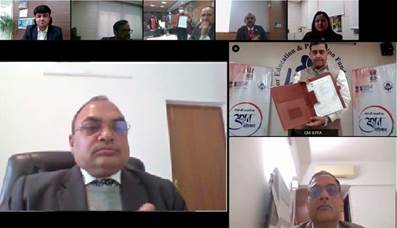
 The Investor Education and Protection Fund Authority (IEPFA) under the aegis of Ministry of Corporate Affairs has signed a Memorandum of Understanding (MoU) with Indira Gandhi National Open University (IGNOU) through a virtual event here today. The objective for signing the MoU is to achieve the mandate of Investor Education, Awareness and Protection by utilizing the tele-lecturing facility of Gyan Darshan Channel.

This association with IGNOU/Gyan Darshan channel will help in propagating the message of Investor Education and Awareness among a large group of present and prospective stakeholders. The panel of resource persons for the lecture series would include experts from professional institutions such as ICAI, ICSI & Senior officials from IEPFA, Ministry of Corporate Affairs and other regulators. The proposed lecture series of 75 episodes will be live tele-lecturing series on 24×7 Gyan Darshan TV channel and is a part of the ongoing celebration of the yearlong activity commemorating the 75th anniversary of India’s Independence under “Azadi ka Amrit Mahotsav”.

26 Episodes of the tele-lecturing series were earlier rolled out in the year 2021 which were appreciated by all stakeholders. The repository of the tele-lectures is available on IEPFA’s official YouTube channel.


      Description: A picture containing text, indoor, wall, personDescription automatically generated


Shri Rajesh Verma, Secretary, Ministry of Corporate Affairs (MCA) and ex-officio Chairperson of IEPFA in his keynote address said, “All of us are here with the common goal of educating people. The entire nation is celebrating 75 years of Azadi ka Amrit Mahotsav to celebrate the spirit of a self-reliant, progressive nation, India has become. This day is also celebrated as National Youth Day to commemorate the birth Anniversary of Swami Vivekananda, the youth ICON and influencer of global stature. With all these noble events falling together, today’s event has become even more apt and relevant. Both IEPFA & IGNOU have the common objective of imparting education and making people aware about subjects affecting their lives. IEPFA intends to create awareness among all the stakeholder groups and specially the youth”.

Prof. Nageshwar Rao, Vice Chancellor, IGNOU, in his remark stated that IGNOU and IEPFA with this initiative shall reach out to youth and other stakeholders at large which would be productive in fulfilling the vision and mission of both the organizations.

Sh Manoj Pandey, CEO IEPFA Authority, Prof. Satyakam, Pro-VC Vice Chancellor, IGNOU, Sh Nihar Jambusaria, President ICAI, Sh Nagendra D. Rao, President ICSI and other Senior officials from IEPFA, IGNOU and Ministry of Corporate Affairs also graced the occasion.

Investor Education and Protection Fund Authority (IEPFA) has been established under Section 125 of the Companies Act 2013 for administration of the IEPF fund as per section 125 (3) of Companies Act 2013. The main objective of the authority includes to promote Investor Education, Awareness & Protection, refund unclaimed shares, dividends and other amounts transferred to it under sections 124 and 125 of the Companies Act 2013 to the rightful claimants. IEPFA works under the administrative control of Ministry of Corporate Affairs.


****

Initiatives of Government in ensuring Safety in Online Education

 Central Board of Secondary Education (CBSE) has launched a ‘Cyber Security Handbook’ to ensure safe and healthy digital habits among students. This module covers topics in cyber safety, such as cyber bullying, including social exclusion, intimidation, defamation, and emotional harassment, online sexual abuse, cyber radicalisation, online attack and frauds, and online enticement. The ‘Cyber Security Handbook’ can be accessed at this link:http://cbseacademic.nic.in/web_material/Manuals/Cyber_Safety_Manual.pdf

Indian Computer Emergency Response Team (CERT-In) under Ministry of Electronics & Information Technology has prepared guidelines to handle the security concerns about various video conferencing apps, which can be found at this link:

https://www.cert-in.org.in/s2cMainServlet?pageid=PUBWEL01

The National Commission for Protection of Child Rights (NCPCR) has also issued advisory to all secretaries at school education department of all states to ensure safety of students in online classes.

PRAGYATA guidelines for school heads and teachers describe the need assessment, planning and steps to implement digital education while ensuring cyber safety and privacy measures. The guidelines can be accessed at:

https://www.education.gov.in/sites/upload_files/mhrd/files/pragyata-guidelines_0.pdf

National Webinar on ‘Indian Knowledge System, Languages, Art & Culture’

 As part of the celebration of one year of transformative reforms under National Education Policy, 2020, Government of India is organising a series of theme-based webinars on different aspects of National Education Policy, 2020. Indian Knowledge System, Language, Arts & Culture being one of the innovative thrust area of NEP, Indian Knowledge System at AICTE under Ministry of Education organised a National Webinar on Transforming Education in the Light of Indian Knowledge System, Language, Arts & Culture today.  Union Minister of Education and Skill Development and Employment Shri Dharmendra Pradhan was the Chief Guest on the occasion. Member of Parliament Shri Tejasvi Surya; Secretary, Higher Education Shri Amit Khare Senior officials from Ministry of Education and AICTE were also present.

Speaking on the occasion Shri Dharmendra Pradhan discussed the relevance of traditional knowledge systems & ancient wisdom in contemporary times and their role in the making of an Aatmanirbhar Bharat. He stated that there is a need to synergise knowledge with art, culture, language with a spirit of Bharatiyata.

The Minister said that no society can thrive without connecting to its roots. Our past is filled with examples of architectural grandeur, engineering marvel and artistic excellence, he further added. He called for conservation, promotion and dissemination of this cultural wealth of India should be the top priority of the country because it is crucial for the country’s identity. 

Shri Pradhan highlighted that the National Education Policy has laid down a roadmap for 21st century India and lays emphasis on our traditional knowledge systems. By taking Indian knowledge traditions forward, we can sow seeds for starting a new era. We must recreate our traditional knowledge with contemporary, contextual relevance to connect with the youth, he added. Shri Pradhan stated that solutions to many of contemporary challenges lie in our traditional knowledge systems

Shri Amit Khare, Secretary, Higher Education in his address shed light on the formulation and fundamentals of National Education Policy, 2020. Shri Khare said that NEP is the medium to fulfil the aspirations of New India and it will play an important role in realising the Prime Minister’s vision of attaining self-relaince. 

Shri Tejasvi Surya expressed his views on the need of new NEP 2020 with respect to Traditional Indian Knowledge in 21st century. He said that Science, Culture, Civilization, Art, various ancient learnings, History etc. are an important part of our glorious tradition and our young generation should we be aware and respect these traditions. He stressed upon value-based education to learners.

Shri Surya also highlighted different aspects of traditional Indian wisdom with respect to NEP 2020 which is being reintroduced in Indian Education. He added that through this NEP 2020, a strong effort is being made to strengthen the departments and institutions of various languages ​​across the country.

The theme wise sessions were conducted followed by the Inaugural Session where the first session of the Webinar was on the theme “Indian Knowledge System” and was addressed by Dr.Shailendra Raj Mehta,President and Director, MICA, Ahmedabad; Dr. A. S. Nene,Board Member, Civil Engg. Dept., Jagatguru Shri Devnath Institute of Vedic Science and Research, Nagpur;Prof. M. D Srinivas,Chairman, Centre for Policy Studies, Chennai.

The second session of the Webinar was on the theme “Languages” and was addressed byShri. Chamu Krishna Shastri, Secretary, Sanskrit Promotion Foundation; Prof. Santosh Kumar Shukla, Dean, School of Sanskrit and Indic Studies, JNU, New Delhi;Dr.Sudha Seshayyan,Vice- Chancellor, The Tamil Nadu Dr. M.G.R Medical University, Chennai.

The third session of the Webinar was on the theme “Arts & Culture” and was addressed by Dr.Sonal Mansingh, Member of Parliament, Rajya SabhaIndian classical dancer and Guru Bharatanatyam and Odissi dancing style; Dr. Anil Joshi, Environmentalist, Green Activist, and the Founder of Himalayan Environmental Studies and Conservation Organization, Dehradun; Dr.Shashibala,Dean, Centre of Indology, Bhartiya Vidya Bhavan, New Delhi.

The Valedictory session was conducted by the concluding remarks of Prof. Anil D. Sahasrabudhe, Chairman, AICTE. He motivated with the thought that the upcoming NEP 2020 by the Ministry of Education is the golden opportunity to awaken the self-respect and self-reliance for all the students.

Career Guidance for Students

 Central Board of Secondary Education (CBSE) organizes a two day capacity building programme for the teachers on career guidance of students. The trained teachers take sessions with senior students in their respective schools. The programme focuses on dimensions of career information, strategies and resources used in imparting career information, setting up a career resources room in a school, role of a teacher in imparting career guidance and understanding career development.

In Kendriya Vidyalaya Sangathan (KVS) services of counselors are engaged on part time contractual basis in all Kendriya Vidyalayas across the country. There is also a provision of inviting experts from different fields to sensitize students about the career options available for them to pursue.

In Jawahar Navodaya Vidyalayas (JNV) career guidance sessions are conducted regularly by the Counselors, Teachers and Vice Principals. Special sessions are also conducted for students in JNVs by inviting eminent experts of various fields.

National Scholarship Portal (NSP) is one-stop solution through which various services starting from student application, application receipt, processing and disbursal of various scholarships to students are enabled. The main objective of NSP is to ensure timely disbursement of scholarships to students and to provide a common portal for various scholarships schemes of Central and State Governments. National Means-cum-Merit Scholarship Scheme (NMMSS) of D/o SE&L is on-boarded on NSP. The details are available on the NSP Portal. The link is as follows: https://scholarships.gov.in


Samagra Shiksha Scheme for School Education

 The Cabinet Committee on Economic Affairs, chaired by Prime Minister Shri Narendra Modi, has given its approval for continuation of the revised Samagra Shiksha Scheme for a period of five years i.e., from 2021-22 to 2025-26 with a total financial outlay of Rs.2,94,283.04 crore which includes Central share of Rs.1,85,398.32 crore.

Benefits:

The scheme covers 1.16 million schools, over 156 million students and 5.7 million Teachers of Govt. and Aided schools (from pre-primary to senior secondary level).

Details:

The Samagra Shiksha scheme is an integrated scheme for school education covering the entire gamut from pre-school to class XII. The scheme treats school education as a continuum and is in accordance with Sustainable Development Goal for Education (SDG-4). The scheme not only provides support for the implementation of the RTE Act but has also been aligned with the recommendations of NEP 2020 to ensure that all children have access to quality education with an equitable and inclusive classroom environment which should take care of their diverse background, multilingual needs, different academic abilities and make them active participants in the learning process.

The major interventions, across all levels of school education, proposed under the scheme are: (i) Universal Access including Infrastructure Development and Retention; (ii) Foundational Literacy and Numeracy, (iii) Gender and Equity; (iv) Inclusive Education; (v) Quality and Innovation; (vi) Financial support for Teacher Salary; (vii) Digital initiatives; (viii) RTE Entitlements including uniforms, textbooks etc.; (ix) Support for ECCE; (x) Vocational Education; (xi) Sports and Physical Education; (xii) Strengthening of Teacher Education and Training; (xiii) Monitoring; (xiv) Programme Management; and (xv) National Component.

Following new interventions have been incorporated in the revamped Samagra Shiksha based on the recommendations of the National Education Policy 2020:

  • In order to enhance the direct outreach of the scheme, all child centric interventions will be provided directly to the students through DBT mode on an IT based platform over a period of time.
  • The scheme will have an effective convergence architecture with various Ministries/ developmental agencies of the Centre and State Governments. The expansion of vocational education will be done in convergence with the Ministry of Skill Development and Entrepreneurship and other Ministries providing funding for Skills. The existing infrastructure of schools and ITIs and Polytechnics will be used to ensure optimum utilization of the facilities, not only for school going children but also for out of school children.
  • Provision of training of Master Trainers for training of Anganwadi workers and In-service teacher training for ECCE teachers.
  • Provision of upto Rs 500 per child for Teaching Learning Materials (TLM), indigenous toys and games, play based activities per annum for pre-primary sections in Government Schools.
  • NIPUN Bharat, a National Mission on Foundational Literacy and Numeracy to ensure that every child achieves the desired learning competencies in reading, writing and numeracy at the end of grade III and not later than grade V has been launched under the scheme with provision of TLM upto Rs 500 per child per annum, Rs 150 per teacher for teacher manuals and resources, Rs 10-20 lakh per district for assessment.
  • Specific   training   modules   under   NISHTHA  by NCERT to train Secondary teachers and Primary teachers.
  • Strengthening of infrastructure of schools from pre-primary to senior secondary, earlier pre-primary was excluded.
  • Incinerator and sanitary pad vending machines in all girls’ hostels.
  • Addition of new subjects instead of Stream in existing senior secondary schools.
  • Transport facility has been extended to secondary level @ upto Rs 6000 per annum.
  • For out of school children at 16 to 19 years of age, support will be provided to SC, ST, disabled children, upto Rs 2000 per child per grade to complete their secondary/senior secondary levels through NIOS/SOS.
  • Financial support for State Commission for Protection of Child Rights @ Rs 50 per elementary school in the state, for protection of child rights and safety.
  • Holistic, 360-degree, multi-dimensional report showing progress/ uniqueness of each learner in the cognitive, affective, and psychomotor domains will be introduced in the form of Holistic Progress Card (HPC).
  • Support for activities of PARAKH, a national assessment centre (Performance, Assessments, Review and Analysis of Knowledge for Holistic Development)
  • Additional Sports grant of upto Rs. 25000 to schools in case atleast 2 students of that school win a medal in Khelo India school games at the National level.
  • Provision for Bagless days, school complexes, internships with local artisans, curriculum and pedagogical reforms etc included.
  • A new component Appointment of Language Teacher has been added in the scheme- components of training of teachers and bilingual books and teaching learning material added, besides support for salary of teachers.
  • Provision made for all KGBVs to be upgraded to class XII.
  • Enhanced financial support for existing Stand-alone Girls’ Hostels for classes IX to XII (KGBV Type IV) of uptoRs 40 lakh per annum (earlier Rs 25 lakh per annum).
  • Training for 3 months for inculcating self-defence skills under ‘Rani Laxmibai Atma Raksha Prashikshan’ and amount increased from Rs 3000 to Rs 5000 per month.
  • Separate provision of stipend for CWSN girls @ Rs. 200 per month for 10 months, in addition to student component from pre-primary to senior secondary level.
  • Provision of annual identification camps for CWSN at block level @Rs. 10000 per camp and equipping of Block Resource centres for rehabilitation and special training of CWSN.
  • Provision for Establishment of New SCERT has been included and new DIETs in districts created upto 31st March 2020.
  • Setting up of assessment cell preferably at SCERT to conduct various achievement surveys, develop test materials & item banks, training of various stakeholders & test administration, data collection analysis and report generation, etc.
  • The academic support of BRCs and CRCs has been extended for pre-primary and Secondary level also.
  • Support   under   Vocational   Education   extended   to Government aided schools also in addition to Government Schools and grant/number of job roles/sections linked to enrolment and demand.
  • Provision of Classroom cum workshop for Vocational Education in schools serving as Hub for other schools in the neighbourhood. Provision of transport and assessment cost for schools serving as spokes has been made.
  • Provision of ICT labs, Smart classrooms including support for digital boards, smart classrooms, virtual classrooms and DTH channels have been provided.
  • Child tracking provision included for students of Government and Government aided schools
  • Support for Social Audit covering 20% of schools per year so that all schools are covered in a period of Five years.


Implementation Strategy and Targets:

The Scheme is implemented as a Centrally Sponsored Scheme through a single State Implementation Society (SIS) at the State level. At the National level, there is a Governing Council/Body headed by the Minister of Education and a Project Approval Board (PAB) headed by Secretary, Department of School Education and Literacy. The Governing Council/body will be empowered to modify financial and programmatic norms and approve the detailed guidelines for implementation within the overall Framework of the scheme. Such modifications will include innovations and interventions to improve the quality of school education.

In order to enhance the direct outreach of the scheme, all child centric interventions will be provided directly to the students through DBT mode on an IT based platform over a period of time.

The Scheme covers 1.16 million schools, over 156 million students and 5.7 million Teachers of Government and Aided schools (from pre-primary to senior secondary level) by involving all stakeholders of the school ecosystem i.e. Teachers, Teacher Educators, Students, Parents, Community, School Management Committees, SCERTs, DIETs, BITEs, Block Resource Persons, Cluster Resource Persons, Volunteers for providing quality, inclusive and equitable education. Further, the scheme will have an effective convergence architecture with various Ministries/ developmental agencies of the Centre and State Governments. As envisaged in NEP 2020, there will be a greater focus on imparting skills among the students. The expansion of vocational education will be done in convergence with the Ministry of Skill Development and Entrepreneurship and other Ministries providing funding for Skills. The existing infrastructure of schools and ITIs and Polytechnics will be used to ensure optimum utilization of the facilities, not only for school going children but also for out of school children.


Major Impacts:

The Scheme aims to universalize access to school education; to promote equity through the inclusion of disadvantaged groups and weaker sections, and to improve the quality of education across all levels of school education. The major objectives of the Scheme are to Support States and UTs in: 

  1. Implementing the recommendations of the National Education Policy 2020 (NEP 2020); 
  2. Implementation of Right of Children to Free and Compulsory Education (RTE) Act, 2009; 
  3. Early Childhood Care and Education; 
  4. Emphasis on Foundational Literacy and Numeracy; 
  5. Thrust on Holistic, Integrated, Inclusive and activity based Curriculum and Pedagogy to impart 21st century skills to the students; 
  6. Provision of quality education and enhancing learning outcomes of students; 
  7. Bridging Social and Gender Gaps in School Education; 
  8. Ensuring equity and inclusion at all levels of school education; 
  9. Strengthening and up-gradation of State Councils for Educational Research and Training (SCERTs)/State Institutes of Education and District Institutes for Education and Training (DIET) as nodal agency for teacher training; 
  10. Ensuring safe, secure and conducive learning environment and maintenance of standards in schooling provisions and 
  11. Promoting vocational education.


AtmaNirbhar Bharat:

Recognizing the crucial role of Foundational skills in the national development, it was announced under the ‘AtmaNirbhar Bharat’ campaign that a National Foundational Literacy and Numeracy Mission will be launched, for ensuring that every child in the country necessarily attains foundational literacy and numeracy in Grade 3 by 2026-27. In this context, “National Initiative for Proficiency in Reading with Understanding and Numeracy (NIPUN Bharat)” has been launched on 5th July 2021 under Samagra Shiksha.

Details and progress of scheme if already running:

The Scheme is being implemented as a Centrally Sponsored Scheme in partnership with State and UT Governments to support  the   States  and  UTs  in  universalizing  access  and improving quality of school education across the country. The achievements of Samagra Shiksha are as follows:


•      During 2018-2019 to 2020-2021, 1160 schools have been upgraded at Elementary, Secondary and Higher Secondary level, 54 new residential schools/ hostels have been opened, 41180 schools have been strengthened (including Additional classrooms), 13.51 lakh schools have been provided library facilities, 13.14 lakh schools have been provided sports equipment facility, 12633 schools have been covered under ICT & Digital initiatives, 5579 schools have been covered under vocational education, 783 KGBVs have been upgraded from class VIII to class X, 925 KGBVs have been upgraded from class VIII to class XII and 11562 separate girls toilets have been constructed.

•      In addition, during 2018-2019, 4.78 lakh out of school children have been provided special training at elementary level, 4.24 lakh children have been provided transport and escort facility, 16.76 lakh children have been covered under Section 12(l)(c) of the RTE Act, 6.96 cr children have been provided free uniforms, 8.72 cr children have been provided free textbooks at elementary level, 0.74 cr children have been provided remedial teaching, 14.58 lakh teachers have been trained, 69173 schools provided self defence training to girls, 3.79 lakh CWSN girls have been provided stipend and 23183 special educators have been provided financial assistance.

•      Also, during 2019-2020, 5.07 lakh out of school children have been provided special training at elementary level, 6.78 lakh children have been provided transport and escort facility, 21.58 lakh children have been covered under Section 12(l)(c) of the RTE Act, 6.89 cr children have been provided free uniforms, 8.78 cr children have been provided free textbooks at elementary level, 1.76 cr children have been provided remedial teaching, 28.84 lakh teachers have been trained, 166528 schools provided self defence training to girls, 3.22 lakh CWSN girls have been provided stipend and 24030 special educators have been provided financial assistance.

•      Also, during 2020-2021, 3.23 lakh out of school children have been provided special training at elementary level, 2.41 lakh children have been provided transport and escort facility, 32.67 lakh children have been covered under Section 12(l)(c) of the RTE Act, 6.57 cr children have been provided free uniforms, 8.84 cr children have been provided free textbooks at elementary level, 1.44 cr children have been provided remedial teaching, 14.32 lakh teachers have been trained, 81288 schools provided self defence training to girls, 3.52 lakh CWSN girls have been provided stipend and 22990 special educators have been provided financial assistance.


Background:

Union Budget, 2018-19 has announced that school education would be treated holistically and without segmentation from pre-primary to class XII. It is, in this context, that the Department launched the Integrated Scheme for School Education, Samagra Shiksha in 2018 by subsuming the erstwhile Centrally Sponsored Schemes of Sarva Shiksha Abhiyan (SSA), Rashtriya Madhyamik Shiksha Abhiyan (RMSA) and Teacher Education (TE). The scheme treats school education as a continuum and is in accordance with Sustainable Development Goal for Education (SDG-4). The scheme not only provides support for the implementation of the RTE Act but has also been aligned with the recommendations of NEP 2020 to ensure that all children have access to quality education with an equitable and inclusive classroom environment which should take care of their diverse background, multilingual needs, different academic abilities and make them active participants in the learning process.

*******

National webinar on Quality Teacher Education, Accreditation, and Teacher Development

 Ministry of Education, AICTE and National Council for Teacher Education organized a national webinar on “Quality Teacher Education, Accreditation, and Teacher Development.”  Dr. Jitendra Singh, MoS (Independent Charge) for Science and Technology, PMO and DOPT was the chief guest for the webinar.

Addressing the participants, Dr. Jitendra Singh  said that in line with the vision of Prime Minister, the National Education Policy 2020 will help in realising the goal of New India. The Minister stressed that there is a strong need of aligning professional degree and career choices. He also spoke of integrity in the selection process of teachers and incentivizing best students to take up teaching as a profession.

The Minister said that since ancient times, teachers have been at the centre of education and contributing to the country’s progress. High quality teaching will improve educational outcomes and will lead to holistic development of students.

Prof. Narendra Kumar Taneja, VC, CCS University; Prof. C.K. Saluja, Rtd., CIE, Delhi University; Prof. M. Jagadesh Kumar, VC, JNU; Prof. Padma Sarangpani, Tata Institute of Social Sciences; Dr. Maitreyee Dutta (Head), Dept of Computer Science & Engg., NITTTR, Chandigarh; Ma. Ramya Venkataraman, CENTA also participated in the webinar.

The webinar featured two  sessions on (i) Quality Education and Teacher Development (ii) Accreditation. Prof. HCS Rathore, Former VC, South Bihar Central University, and Prof. Mahendra P. Lama, School of International Studies, JNU facilitated the questions/answers/interactions and summarized both the sessions.

The webinar focused on Digital Integration in Quality Education, Impact of Language on Quality Education , Maintaining Quality of Education, Holistic Teacher Development, Teachers of the Future, Teacher’s Role in Developing 21st Century Skills, Quality Technical Education and Accreditation and Teacher Accreditation.

*****