What is Capitalism? – How does Money make Money

 Hello everyone, The word ‘Capitalism’ comes from the word Capital which means Money. Or any type of wealth. Whether you have houses, cars on land, they are your capital. In the last video, I gave you the basic definition of Communism. It is a society where every person works according to his ability and receives according to his needs. If we have to define Capitalism similarly, Capitalism is a society where “from each according to his ability, To each according to his capital.” 

A society where every person works according to his ability but they get returns according to their capital. The person with the most capital will get the most profit. After knowing the definition you’d ask me: “What kind of a society is this?” “Where a person who has more money will get more money.” You heard it right, friends. I’ll talk about the exact workings later in the video. Basically, Capitalism is an ideology that promotes privatisation where the means of production like land, fields, factories, and industries, are owned by private individuals. 

In Communism they were owned by the public, everyone owned these. Similar to Communism, Capitalism is a very broad term and ideology. Where there are many subsections of ideologies with differences among them. But if you look at it broadly, there are a few things that are common in all the types. First is the Privatisation. Second, minimal interference by the Government. Most Capitalists believe that the Government has no business to be in business. This dialogue has been used by our Government recently. The third is the Free Market and Competition. and Fourth is something that is easily seen in a capitalist society, “Money Begets Money.” 
Money is earned through Money. I’ll explain this later. First, let’s talk about the history of Capitalism. The oldest example of Capitalism is Feudalism. This can be called the primitive form of capitalism. This was around the 10th century when landlords occupied land, and the farmers and labourers who worked on the land, worked tirelessly to grow crops. But all the profits from the land, was used to be taken by the landlords, and the farmers hardly earned enough to get by. You may wonder how this is an example of capitalism. The land was owned by an individual, the landlord. And to whom did most of the profit from the land go? The Landlord. Capitalism works similarly today. 

Whatever you do at whichever company, suppose you’re an employee at Apple, you work the whole day and get a monthly salary in return. But the company earns profits. Where does the profit go? It doesn’t go to you It goes to the owner of the company. Obviously, there are differences. Today you get workers’ rights and minimum wages and are not exploited, in most of the cases Who is the owner of this Apple company? That person who holds the most number of shares of the company. Even you can become the owner of the company through the share market. 

If you buy some shares Apple, any profits earned by it, you will get a part of. Because you are also an owner of a portion. We live in such a capitalist society today. An employee works in a company for a monthly salary and the profit earned by the company will be distributed among such people who don’t even know the day to day working of the company. You can earn the profit of the company by doing nothing if you invest in the company. And who can invest? Someone who already has the money. As I said, money makes money. 

One with the most money in a capitalist world can make more money easily by investing in such companies and taking their profits. Modern Capitalism started in the 16th-17th century in Britain and Netherlands. The first stock exchange of the world was the Amsterdam Stock Exchange, and the first company to be listed was the Dutch East India Company in 1602. Like there’s Karl Marx for Communism, similarly there’s Adam Smith for Capitalism. Known as the Father of Capitalism. In 1776 he wrote the book The Wealth of Nations. In the book, he talked about a policy Laissez-Faire. It is a French word that literally means ‘leave alone.’ That government should leave the economy alone and should not interfere. From here Free Market Capitalism started. Suppose you want to open a pizzeria and so does your neighbour. 
If a third person does not interfere between the two, there will be a very interesting and fair competition between you. About who can make the better pizza and sell it at a lower rate. Both of you will try to compete with each other and start experimenting. Trying to improve the quality of the pizza. Because of this competition, both of you will innovate and think of new ways. About how the pizza can be improved and sold at a lower price. In the opinion of Adam Smith, this competition was the invisible hand of the free market. Where no one is forcing you to make a better pizza, but the market situation is forcing you to innovate to make a better pizza. You are working only for your self-interest. You want your restaurant to grow and earn more profit and to perform better than your neighbour. 

But your working in your self-interest is also benefiting others. It is also in the interest of society that you work for your self-interest. This is the philosophy of Adam Smith. To increase the efficiency of your pizzeria you’d eventually realise that doing everything yourself was not smart. If you start taking orders yourself and making the pizza, it’ll take a lot of time. It would be better to hire a few people. One to take the orders at the front desk. One who’ll make the pizza and buy ingredients for it. One who will put the toppings on the pizza and put it in the oven. And one whose work would be to deliver the pizza. 

This is the Division of Labour. Every person is specialising in his work and because of the specialisation, productivity and efficiency increase rapidly. Adam Smith talked about this as well. This is one of the major reasons for the success of Capitalism across the world. Everyone realised that if they want to work in a better manner at a better speed, division of labour and specialization is necessary. Take Apple company, if a person wants to build an iPhone, it will take him years. but if there is an assembly line of workers to manufacture these iPhones, where the first person would fit the screen the second will fit the screws, then the assembly line will be able to manufacture numerous iPhones in a day. 

By implementing these ideas Industrial Revolution began. Where large factories were established; but what happened then? I talked but that in the Communism video. The workers were forced to work for hours in terrible conditions. They were getting exploited and eventually communist ideologies started. After hearing this you’d think that Karl Marx and Adam Smith would be sworn Enemies. But this wasn’t so, in reality, Karl Marx has written a book Das Kapital, where he agreed on many viewpoints of Adam Smith. There were definite disagreements between them but it can be said that they were looking at the same situation from different perspectives. 

On one hand, Adam Smith focuses on productivity and efficiency, On the other hand, Karl Marx agrees that productivity and efficiency would indeed increase but his focus is on an individual. He says that a worker would start feeling alienated if he works on repetitive tasks. To do the same for hours and years on end. The worker would not be proud of his work. He would question the purpose of his life. Seeing himself as only a small gear in a piece of large machinery. Karl Marx believed that specialisation would make workers more easily replaceable, and the capitalist would get more power to exploit the workers. The ideas of Karl Marx and Adam Smith are two perspectives of the same situation. Remember that both of them were born in different eras. Adam Smith died in 1790 and Karl Marx was born in 1818. 1790 was a time when the Industrial Revolution had just begun. And Karl Marx grew up seeing the workers being exploited in the factories. 

Maybe if they lived in the same era, their opinions would have agreed. Moving ahead in history, we know that Communism was first implemented in the Soviet Union. When it comes to the implementation of capitalism, in 1902 a significant incident happened. Three large steel companies in the USA, Carnegie Steel, Federal Steel and National Steel, merged together to become The US Steel. This was the first billion-dollar corporation in the world. Elbert H Gary was the chairperson of the company. And in the first year, it manufactured 2/3rd of the total steel manufactured in the US. But there remained some competition in the steel industry. 

So Garry invited all his competitors for a dinner and asked them why they were fighting amongst themselves while someone else was benefitting from their competition. He suggested that they work together and stop competitive pricing. This was how the first billion-dollar company in the world became a monopoly. According to the theory of Adam Smith, the Invisible hand of the free market was supposed to work and set things right. but in reality, this did not happen. Whenever there’s a monopoly for anything or a company, it is terrible for the consumers. Imagine you are stranded in a village late at night, waiting for a taxi. And the nearest city is 100-200 km away.

 But there is only one taxi. You ask the taxi driver to take you to the city, While he charges ₹500 for the distance normally, but he tells you that he would charge you ₹50,000 for taking you. You will not have any option. The taxi driver will have a monopoly here. You are stuck in a situation where the only way out is to, either give in or remain stuck there. You are forced to pay that sum. This extra amount is known as profit in Capitalism. In Das Kapital, Karl Marx talks about this theory, the Theory of Surplus Value. If I run a company that manufactures a product, and you are an employee working in the company that actually makes the product, Suppose I earn a profit of ₹80,000 by selling that product, but I pay ₹8,000 to you as salary.

 The ₹72,000 that we put call profit, Karl Marx called Surplus Value. All the surplus value and profits are taken away by me and you get only a salary. This is often seen in Capitalism. There can be many examples for this. A trader that buys products very cheap from the farmer and sells it at a much higher price The profit or surplus value is taken by the trader. A scientist discovers the formula for a vaccine, but in reality, the pharma companies selling that vaccine get the most profits. A singer that actually sings the song, but it is the music label that takes most of the profit. 

According to Karl Marx, this is a system where everyone is trying to climb a ladder to stop being exploited, but as soon as they reach the top they would start exploiting others. A system where work is not rewarded but money is. If you have the money to establish a company and employ people, you can take away the maximum profits. But obviously, not every company is like this, not every company owner is like this that’d keep on exploiting the employees. In contrast to the companies owned by private individuals are Joint Cooperative Companies such as Amul. More than 36 lakh of farmers are joint owners of Amul Co-operative. This is not a company listed on the stock market. You and I cannot invest our capital in Amul company. The profit earned by Amul and its benefits is distributed among these farmers that have created this company together. 

But obviously, to make such cooperative, one person has to take the lead. In the case of Amul, it was Tribhuvandas Patel who set up the Cooperative in 1946. Under the guidance of Sardar Vallabhbhai Patel. Regarding this there was a film as well called Manthan. It was the first crowd-funded film in India. More than 5 lakh farmers working in Amul contributed ₹2 each to make this film. Anyways, I got too diverted in the story. Coming back to the history of Capitalism, in 1929, capitalism received a huge shock when the stock market crashed terribly and a Great Depression started. The recession has been a very regular feature in Capitalism. 

There were large scale unemployment and poverty in the USA because of this. At this point entered the revolutionary economist Keynes, who altered the history of Capitalism. He believed that the Invisible Hand of the free market does not actually exist. In reality, if the free market is left free, it will lead to depression, recession, monopolies. The theory of Keynes was that governments should interfere and regulate the companies. Small companies should be subsidized, and big companies should be prevented from getting monopolies, there should be strict rules and regulations in place. 

In the decades that followed Keynes, countries all over the world took inspiration from him and implemented a model of Capitalism where rules and regulations existed. The next big shock to Capitalism was in the 1980s when Ronald Reagan in the USA and Margaret Thatcher in the UK reintroduced the free market of Adam Smith to the world. The capitalism implemented in these two countries is known as Neoliberalism. 

The basic foundational idea is of Adam Smith that government should not interfere in the market and market share run itself, and there exists an invisible free hand of the market, The current status is that in the last 40 years, in many countries of the world, especially the USA, we have seen Neoliberalism being implemented. Because of this inequalities have been rising significantly in the US. The rich are getting richer and the poor are not able to improve their situation. The big companies are starting to become monopolies. 

Review of book: Think like a monk

Think like a Monk By Jay Shetty: Jay Shetty is an Indian-English author, former monk, and life coach.

This book revolves around the problems which  a human being faces everyday, from their 9to5 jobs, stress ,depression etc.

Jay shetty has written it so beautifully that you can relate to your life and remedies for it which gives you a new perspective of life
One of the bestsellers in India and other countries let’s see what are the context of the book should you read it?or not

What I learnt from this book-

1.Nothing is permanent in life not even you, life goes on with people you love or without the people you love
2.Never get back to your past it’ll only degrade your mental state
3.Meditate expect 0 from everyone expectation hurts
4.Hustle for your self you got only one life
5.How to overcome from your negativity and fears negativity degrades your life and your mental state you start to feel low every time

6.Purpose of life,if you have a human life everyone has a purpose so he was born on this Earth we have to find the purpose, reason to live and sustain ourselves

Conclusion-

Life is all about up and downs you can’t control it sometimes it’s sunny sometimes it’s storm but it depends on us how we face it how we can live with it without losing ourselves, people comes in ourlife teaches us and leave we can’t hold onto anyone but what can we hold is the purpose for which they come. So Find your purpose in life 

If you are lost in this world read it you’ll find yourself (4.5/5) recommended

Digital Marketing and Its Types

Marketing their products and services is a very important thing for any business and company. Through media outlets such as television, newspapers, and FM radio, some companies market their products directly to homes and attract customers. But despite such marketing methods in this technological world, a method called digital marketing is becoming very popular.

What is this digital marketing? How many types are there? we will find out in this article.

What is Digital Marketing?

Digital marketing is the process by which a company or business makes their products available to the public through the Internet, marketing them, and attracting customers to sell their products. 

In the 21st century, people have been using the Internet more and more actively, especially for a few years. Knowing this, every company knows the needs of the people and adopts the strategy of marketing their products and services through the internet.

You do not need to have vast coding or programming knowledge to enter this digital marketing field. A certain amount of coding knowledge is sufficient. Not only that but an important requirement is to have the ability to understand what customers expect and what their need.

Types of Digital Marketing

1. SEO


SEO is Search Engine Optimization. A business or company will have created a website for them. That website should rank top in search engines like Google. This means that if you search for the name of the company or their products on Google, their website should come in the top rank. To do this, they use keywords or tags when creating the company’s website, and use some coding techniques to bring the website to the top. Not only that but only if the keywords are updated frequently will the company be able to rank in the top rank in the search engine.

2. SMM

SMM is Social Media Marketing. Any company would have created an account for them on social media. I.e. media like Instagram, Facebook, Twitter. They will often update on social media like this about their products. This will increase the chances of attracting customers and selling the product easily.

3. Email Marketing

Every company, they will advertise their products to their customers via email. Each company will advertise their products to their customers via email. For example, if we enter into a website it will ask you to sign up or login. If we put our email ID in and sign up, they will know our email ID. Through this they often advertise their products and services to us via email. 

4. Content Marketing

A company will create blogs and videos about their products and services on their website. When customers see all of this, there is an attraction to their products. So the chances of that company making progress are high.

5. SEM

SEM is Search Engine Marketing. SEM can be said to be the paid version of SEO. A company will pay for their website and make it rank top in the search engine. The company will publish their website on Google AdSense. When customers search for a keyword related to that company on Google it will come up in the top of the search engine.

6. Pay Per Click Ads

It’s something everyone knows. When we enter in to certain websites, apps, we are shown some ads there. Those advertisers will publish their ads on Google AdSense. Related ads will be displayed according to the needs of the customers. Advertisers will pay Google AdSense based on how many customers click on the ads.

7. Affiliate Marketing or Influencer Marketing

A company will select people who have a lot of followers on social media and tell them about their products and services. Tell to people about their products. If someone buys the company’s products through that influencer, the company will pay a certain amount of commission to that influencer. We’ve all seen some of the biggest actors talking about certain products on their social media.

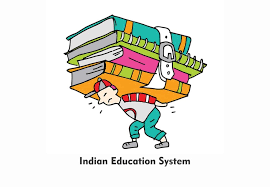
Indian Education System

Education plays an important role in the development of an individual and making him a knowledgeable citizen. It is the education that makes an individual self-reliant, helps to suppress the social evils and contribute towards the development of the society and nation as a whole. Education helps in unravelling the mystery of nature. It enables us to understand and improve the working of our society. It creates conditions for a better life. Education brings out the capabilities to fight injustice happening in society. Every individual has the right to education. 

Indian Education is one of the largest and complex education systems in the world along with China. India is committed to providing basic education to its citizens, the framework of which is defined in the National Policy of Education. Elementary education is now compulsory in India. At the time of Independence, only 14% of India’s population was literate. Now after so many decades since Independence, the number of literates has increased by fivefold.

History of Education System

The history of Indian education system comes from the times of Ramayana and Mahabharata. The historic Indian education system is also called the Gurukula system. There were gurus then who are now known as teachers and shishyas who are called students now. The gurus and the shishyas lived together under one roof in Gurukula until the completion of their education. The shishyas were expected to help the guru in all the daily chores as part of their learning. The children belonging to higher strata of the society were taught all the subjects from Sanskrit to Holy Scriptures and mathematics to metaphysics by the gurus. The Gurukulas during those times focused on the practical aspects of life. The students were taught in the open classroom in the surrounding area of nature. This early system of education in India continued for many years until the modern education system came into the picture in the nineteenth century.

In the early 19th century, during the British period, the modern education system was brought into our country by Lord Thomas Babington Macaulay. The basic strength of this modernized education system was the examinations and a well-defined curriculum, which gave importance to subjects like science and mathematics and subjects like philosophy, metaphysics were given a back seat. The brick and mortar classrooms replaced the open classrooms in the Gurukulas. The essence of the guru shishya bond was taken over by a more formal relationship between the teacher and the student. To understand the progress of any student, examinations were conducted at frequent intervals. The focus of the education system shifted from learning to memorizing of the concepts to score good marks in the examinations.

Problems of Indian Education System

Over a period of time, it has been observed that there are many loopholes in the system of education in India. Instead of understanding the concepts, students started cramming and memorizing the lessons. Knowledge is given a backseat and scoring in high rankings takes importance. The modern parents have tuned their mindsets accordingly and their goal is to ensure that their children score good marks instead of acquiring knowledge right from the primary level. 

Private schools and colleges have been rapidly increasing in the country but the results produced by them are far beyond satisfactory. It has also been observed that the quality of teachers deteriorated with the passing of time. Our examination system is responsible for the wide skill gap. India is producing lakhs of engineers and professionals every year but only a fraction of this number is actually getting employed. This is because the Indian examination system focuses more on scoring good percentages rather than the actual continuous comprehensive evaluation. 

Research and development, which should be the cornerstone of our system, are given the least importance. The private schools and colleges focus on the admission of more students and are least interested in the quality of their education. This is the major reason why the faculties and the teachers lack skills and specialization. This is quite evident from the fact that a single professor is assigned to teach multiple subjects. 

How Can We Improve the Indian Education System?

First and most importantly we should improve the grading system. Rote learning should be discouraged completely. Teachers and faculties should focus more on the analytical skills of the students and grade them accordingly. There should be more focus on comprehensive evaluation instead of scoring only good marks. Workshops must be organized for teachers on a regular basis to keep them updated about the latest developments in the sector of education. At the same time, the curriculum should be reframed according to the present needs of education in India. 

The payroll structure of the teachers and the faculties especially in the government institutions should be improved. This step will help in motivating the teachers to develop their skills and they will take a keen interest in grooming or shaping up a student’s life and career. The government and other entities who are associated with the education sector, need to understand the importance of quality of education. Education should be a holistic process that must focus on the overall development of the physical, emotional, social and cognitive skills of a child. It needs to be a slow and cyclic process and must take place gradually to help the child develop into an autonomous, independent and knowledgeable individual.

Conclusion

An educated individual is an individual who should be able to contribute towards the betterment of the economic and social development of the society as well as the country. The true goal of education must exceed awarding the degrees and certificates to the students. Education is not a tool to earn livelihood but it is a way to liberate the mind and soul of an individual. 

How can online learning influences the education of a Student?

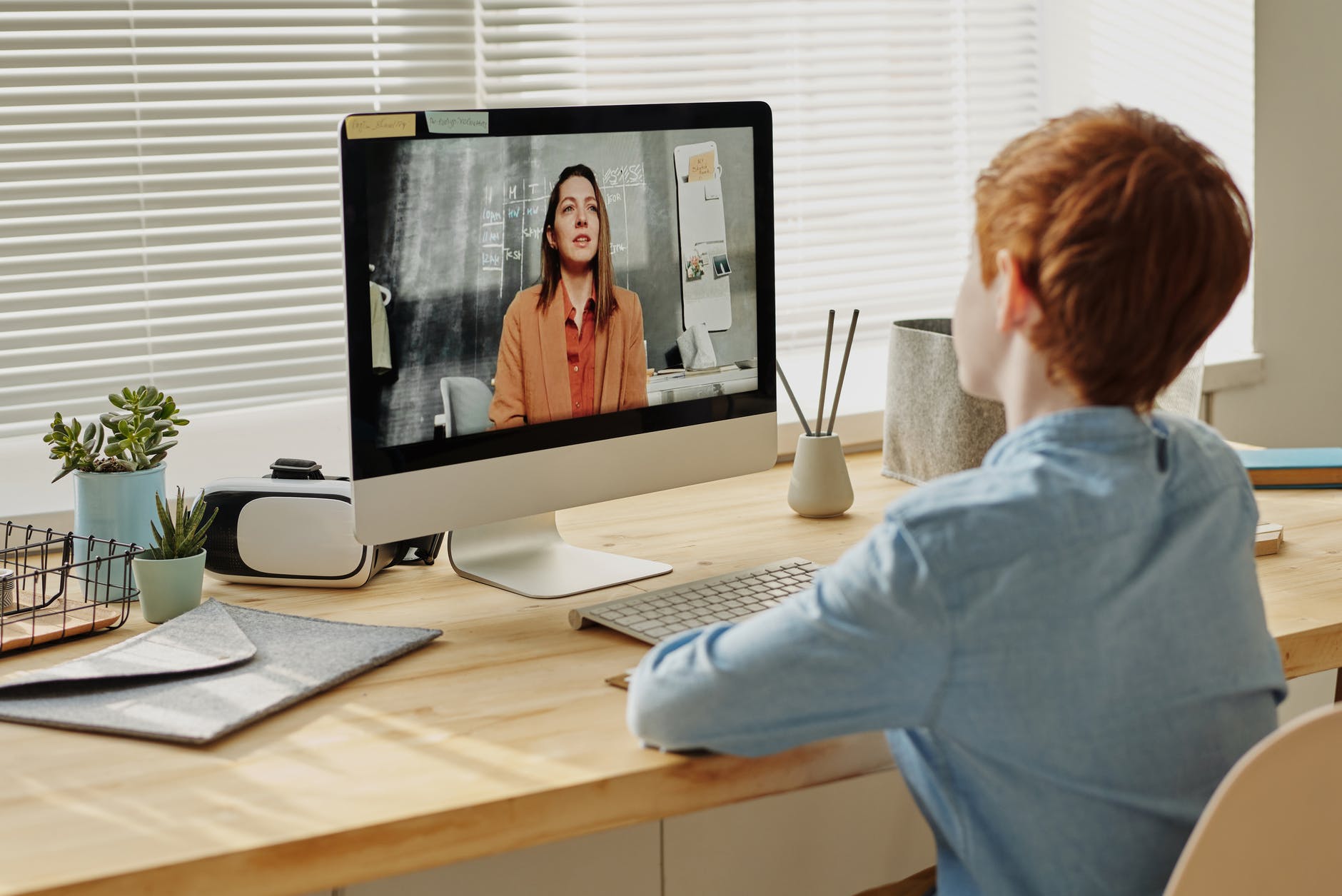
When the world has witnessed one of the most infectious diseases spreading around the globe that affects not only the physical health but also the mental health of people. It was really difficult for any educational institutions, schools, or a college to manage classes physically, But 21st-century technology made it easier and helped institutions with their breathtaking software to conduct online classes and tests.

Photo by Julia M Cameron on Pexels.com

How online education is a new way of learning?

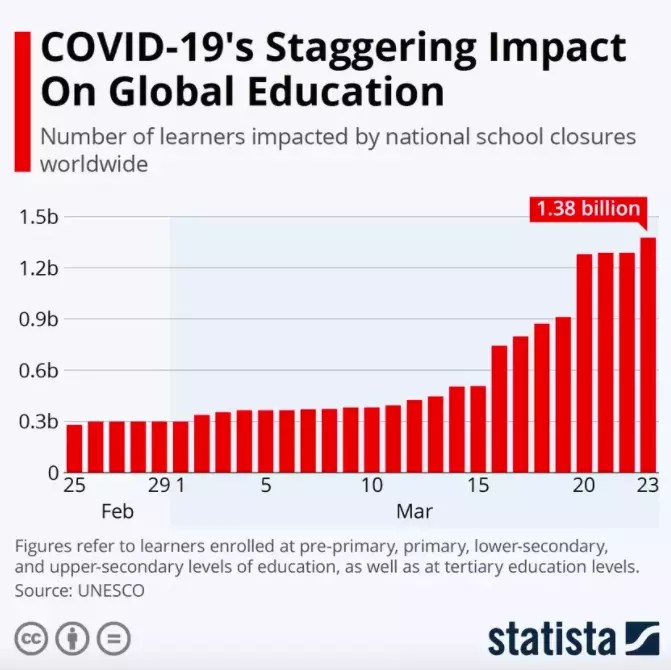
Prior to the COVID-19 pandemic, there were people who used to study on E-platforms, but not often, there were people who didn’t go to school and studied at home. Technology made a click away to explore and learn anything a student wanted to. Now one can carry their textbooks in their pocket, one can meet up anyone face to face on a software, just a click away and one can do learn anything from the internet. After school closed as a result of the pandemic, about 1.8 billion students from 186 different countries, their education was affected, but again technology did not want the student’s life to be ruined by the physical closure of schools. 

Future of Online Education

As per some scholars and economists, it’s highly believed that the overall market for online learning can be up to US $350 Billion in 2025 or more. Parents and students now don’t have to spend extra charges for classrooms, Electricity, or for any other activities that the school asks the students to pay. Parents who used to worry about their kids in school about their bullying, consuming drugs or any other harmful activities now are totally diminished. Now parents can witness their kid’s education during their online classes. Students now can easily study as well as can upgrade their extra skills through e-learning. Many students nowadays do internships, do extra courses, learn new things as well as the technology. Now a 8 year old student knows how to operate a mobile phone or a PC. Some believe that in future online education would be easily available and students don’t have to pay more for their education. “I believe that the integration of information technology in education will be further accelerated and that online education will eventually become an integral component of school education,“ says Wang Tao, Vice President of Tencent Cloud and Vice President of Tencent Education.

As Online education can also put the students in a bad or harmful influence, there are people who don’t want the online education as a major medium of learning.

Reasons why online education can be a harmful influence for the students?

  • Nowadays, most of the school or college students don’t study and cheat on their online exams or tests. It can be a really bad impact on their future and can be the core reason for the lack of their knowledge.
  • The daily and often use of electronic devices can make a person sick and hits their mental health in a really bad way.
  • Students are well aware of the technology and now are highly active on social media networks and making online friends. One can be good, but there are high number of chances to meet a fraud one. Those frauds assault the kids and ask them to do things which a kid didn’t want to.
  • Nowadays students as well as the adults store their personal information on their electronic devices and one don’t know that there are people on the internet named as hackers, who often used to steal the random people information from their cloud and upload them in the Dark web. There is a high number of chances of a kid or high school student could be one of the victims of online frauds and assault.

Reasons why online education can be a good influence for the students?

  • Firstly, the online education can be done in massive numbers at a time, which in physical classes were not possible. A student can know a number of different answers to a same question which is really helpful for a kid to understand that how an answer could be framed for a question.
  • Question answers from textbooks were limited, but in online education one can know more about a question through exploring it on the internet.
  • Technology is our future generation and learning about it since childhood could be an advantage for a student in their future.
  • In a traditional way of learning, one has to stick by a particular teacher and had to adapt their teaching style, but in online education a student can get through a number of teachers and can stick with the one they liked the most.

Disadvantages of Online education

Schools, Colleges are one of the best moments one could live in and online education can totally dismiss it. The other activities in schools like Upgrading leadership qualities through school/college competitions, Outdoor games for physical health of a student, and more things which a student learns through offline education are not possible through online education. The major and the core problem is, not every student or kid have mobile phones or PC and the access to the internet. They all were dependent on government schools, offline classes and free books from the school for their education. Poor family conditions, Bad environment, Poor Electronic facilities could be reason in the future for a student who might lose their interest in their education through E-Learning.

In the end, the conclusion of learning through online education has more disadvantages than their benefits.

Sources:-

https://www.weforum.org/agenda/2020/04/coronavirus-education-global-covid19-online-digital-learning/

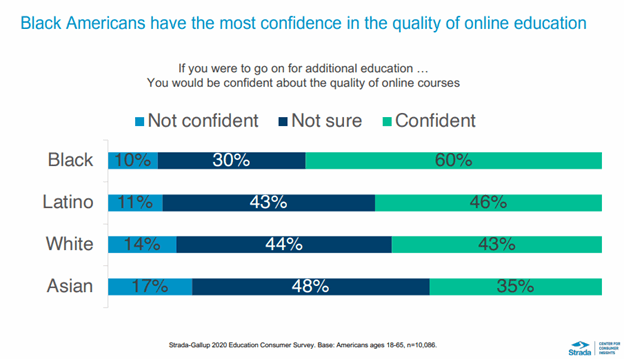
https://www.google.com/url?sa=i&url=https%3A%2F%2Fwww.insidehighered.com%2Fnews%2F2020%2F07%2F30%2Fsurvey-data-reveal-impact-covid-19-perceptions-online-education&psig=AOvVaw28oKObAFVXLJ-UO6vhxiqv&ust=1627984700132000&source=images&cd=vfe&ved=0CAwQjhxqFwoTCKCFmYeKkvICFQAAAAAdAAAAABAK

Reserve Bank Of India

The Reserve Bank of India (RBI) is India’s central bank, also known as the banker’s bank.
The RBI controls the monetary and other banking policies of the Indian government. The Reserve Bank of India (RBI) was established on April 1, 1935, in accordance with the Reserve Bank of India Act, 1934. The Reserve Bank is permanently situated in Mumbai since 1937.

Establishment of Reserve Bank of India

The Reserve Bank is fully owned and operated by the Government of India. The Preamble of the Reserve Bank of India describes the basic functions of the Reserve Bank as;

1)Regulating the issue of Banknotes

2)Securing monetary stability in India

3)Modernising the monetary policy framework to meet economic challenges

The Reserve Bank’s operations are governed by a central board of directors, RBI is on the whole operated with a 21-member central board of directors appointed by the Government of India in accordance with the Reserve Bank of India Act.

The Central board of directors comprise of:
Official Directors – The governor who is appointed/nominated for a period of four years along with four Deputy Governors.
Non-Official Directors – Ten Directors from various fields and two government officials.

Functions of RBI

  1. The Issuer of the Currency: It has the sole authority to produce the currency. It also takes action to stop regulating the passage of fake money.
  2. Banker to the Government: It acts as a financer both to state and central government. It delivers short-term credit. It governs all new matters of government lands, maintaining the government debt unsettled, and taking care of the market for the government securities. It counsels the government on banking and monetary subjects.
  3. Banker’s Bank: It is the bank of all banks in the country as it delivers the loan to banks, rediscounts the invoice of banks and receives the payment of banks.
  4. Lender of Last Resort: All the other banks can borrow from the RBI by keeping qualified securities as a deposit at the time of crisis.
  5. Money Supply and Regulator of Credit: To manage demand and supply of cash in economy by Open Market Actions, Credit Ceiling and much more. It has to meet the credit necessities of the remaining banking system. It requires sustaining price stability and an elevated rate of economic growth.

New Forms of Punishment

Section 53 prescribes five types of punishments to be meted out to a person convicted of a crime under the Code, depending on the nature and gravity of the offence,viz .:

(i) Death; (ii) Imprisonment for life; (iii) Imprisonment, rigorous with hard labour, or simple; (iv) Forfeiture of property; and (v) Fine.

It is suggested to add five new forms of punishment to the existing ones in section 53, IPC with a view to deter particular types of criminals. Such punishments will have more psychological, social and moral impact on the criminals and will go a long way in curbing crimes. The proposed punishments are: (i) Externment, (ii) Compensation to victims of crime, (iii) Public Censure, (iv) Community service, and (v) Disqualification from holding public office.

(i) Externment: Externment or banishment is a form of punishment in which an accused is sent out of the place of his residence to another place for a specified period of time as mentioned in the order issued by the court. This is done to deprive the accused of the company of his family members, friends and associates so that he or she may not indulge in criminal activities. Externment is resorted to primarily in case of anti-social, hardened and habitual criminals.

(ii) Compensation to victims of crime: Unfortunately, the victims of crime in our country do not attract the attention of law makers. Of late, Civil Procedure Code, 1973 in section 357 has empowered the court to award compensation to the victims of crime in very limited cases at the time of passing the judgment. No doubt, the higher judiciary has on times provided compensation to the victims of crime of custodial violence, sexual assault, rape, illegal detention by invoking Article 21 of Constitution, but such instance will not serve the plight of helpless victims.

(iii) Public Censure: Public Censure or social censure is one of the methods of punishment prescribed in some of the countries, such as Russia, Columbia etc., in respect of certain offences of anti-social nature, such as white-collar crimes, tax crimes, food adulteration, etc. In ancient India, public censure was considered suitable punishment for certain class of criminals.

(iv) Community Service: Community service or corrective labour is a form of punishment in which the convict is not deprived of his liberty. Corrective labour is the standard penalty given in those cases where it is considered that the accused need not to be isolated from the society. The period ranges between one month to one year in such cases. This system is used in Soviet Russia with good results. An important feature of this type of punishment is that the accused is not deprived of his liberty and he may go home after the day’s work.

(v) Disqualification from holding public office and contest elections: Disqualification to hold public office and contest election of legislature and local bodies as a form of punishment will have the adequate and desired deterrent sanction, if sincerely implemented. Representation of the People Act, 1951 disqualifies a person convicted for a period of two years or more to contest election for a period of six years. But the provisions are very limited in scope and are being abused with impunity.

Digital Banking

Digital Banking has completely changed the way we bank in today’s times. With Digital Banking, you can transact with higher speed, ease and convenience.

What is Digital Banking? 

In simple terms, Digital Banking means availability of all banking activities online. Here, you have the luxury to freely access and perform all traditional banking activities 24*7 without having to personally go to a bank branch to get your work done. Some of the major online banking activities include-

(1) Money Deposits, Withdrawals, and Transfer
(2) Checking/Savings Account Management
(3) Applying for Financial Products
(4) Loan Management
(5) Bill Payment
(6) Account Services

Many banks also offer other integrated services like investing in Mutual Funds and other investment options online. Thus, making Digital Banking a widely used concept.

Digital Banking in India

Digital Technology has drastically changed the way banks interact with us. Similarly, it has completely changed the way we transact and interact with the bank. This is especially true in the case of a booming technological and financial economy like India, where more and more people are being connected to Digital Banking Platforms with each passing day. 

With Digital Banking you can perform every transaction, from start to end in a seamless, secure manner. You can withdraw money, deposit money, apply for loans, invest in Mutual Funds- all at a click of a button.

With the introduction of mobile banking you can perform transactions on the go. Mobile banking is a convenient and easy way to finish your transactions. For example, you can do over 125 transactions through HDFC Bank’s mobile banking app. 

The latest addition to mobile banking feature is the Mobile Banking LITE app.The HDFC Mobile Banking app can work without an internet connection, italso doesn’t take up too much space and is quick to install over slow connections. It’s a safe and secure way of making transactions on the go.

Digital Banking services are offered by all major retail banks in the country today and have, in fact, become an integral part of their services. So, one can now bank from the ease of one’s home, with the convenience of smartphone screens.

(1) Indian Financial System Code (IFSC)
The Indian Financial System Code (IFSC) is an 11-character code in alphanumeric format to uniquely identify all bank branches within the NEFT, RTGS, and the Immediate Payment Service (IMPS) network within India. This code is printed on every cheque leaf in your personal or company chequebook. To transfer funds to an account electronically, the receiver must share his IFSC code as it identifies the receiver bank and branch.Magnetic Ink Character Recognition (MICR)
Magnetic Ink Character Recognition (MICR) is a technology used to verify the legitimacy or originality of paper documents, especially cheques. A special ink sensitive to magnetic fields is used in the printing of certain characters. Every bank branch has a unique MICR code, which helps the RBI speed up the cheque clearing process, with MICR readers.

(2)Magnetic Ink Character Recognition (MICR)
Magnetic Ink Character Recognition (MICR) is a technology used to verify the legitimacy or originality of paper documents, especially cheques. A special ink sensitive to magnetic fields is used in the printing of certain characters. Every bank branch has a unique MICR code, which helps the RBI speed up the cheque clearing process, with MICR readers.

(3) Electronic Clearing Service (ECS)
Electronic Clearing Service (ECS) is another method of transferring funds from one bank account to another. It is most often used to pay regular bills (telephone, mobile, credit card, electricity, etc, to make EMI payments (Personal, Car, Home Loan), and SIP investments. This is done by invoking the auto debit facility. ECS is also used by entities for payment of salaries, pensions, distribution of dividend interest etc.

(4) Immediate Payment Service (IMPS)
Since NEFT may not be available for use on weekends and bank holidays, you could try using IMPS or Immediate Payment Service. The service is available 24X7. The minimum transfer value is Rs 1 and the maximum value is Rs 2 lakh.
But to use this service, you will need to register via your bank and provide the mobile number and MMID of the beneficiary as IMPS transfer can also be done through mobile phones. Mobile Money Identifier (MMID) is a seven-digit unique number issued by the bank.

(5) National Electronic Funds Transfer (NEFT)
The National Electronic Funds Transfer (NEFT) system allows individuals, companies, and other entities to transfer funds electronically from one bank to another within India. Normally, funds from the remitting bank will be sent to the RBI within three hours of the transaction. However, the time taken to credit the beneficiary bank’s branch account depends on how long it takes the bank to process the transaction. It should be noted that NEFT operates only during business hours on weekdays. NEFT transactions cannot be done on Sundays, bank holidays, and second and fourth Saturdays of the month. The minimum transfer value is Rs 1 and there is no upper limit.

(6)Real Time Gross Settlement (RTGS)
Another method for transferring money electronically, from bank to bank, within the Indian banking system is Real Time Gross Settlement (RTGS) scheme, where the minimum amount for each transaction is Rs 2 lakh and there is no upper limit. The beneficiary account receives the money immediately.
The RTGS system is primarily meant for large value transactions.With effect from 00:30 hours on December 14, 2020, RTGS facility is available round the clock on all days i.e. 24 hrs. India one of the few countries to operate the system 24×7. This comes within a year of the Reserve Bank of India (RBI) operationalising NEFT 24×7. NEFT is the popular mode for small-value transactions. RTGS, which started on March 26, 2004 with a soft launch involving four banks, presently handles 6.35 lakh transactions daily for a value of Rs 4.17 lakh crore across 237 participant banks. The average ticket size for RTGS in November 2020 was Rs 57.96 lakh, making it a truly large-value payment system. RTGS uses ISO 20022 format which is the best-in-class messaging standard for financial transactions. The feature of positive confirmation for credit to beneficiary accounts is also available in RTGS.
Earlier, the RBI had decided not to levy charges on transactions through NEFT and RTGS in order to promote digital transactions, and had asked banks to pass on the benefits to customers. The RBI used to levy minimum charges on banks for transactions routed through RTGS and NEFT. Banks, in turn, levied charges on their customers. RTGS is meant for large-value instantaneous fund transfers, while NEFT is used for fund transfers of up to Rs 2 lakh.
It should be noted that NEFT, RTGS and IMPS impose transaction fees in slab rates.

(7) Society for Worldwide Interbank Financial Telecommunication (SWIFT)
SWIFT is an acronym for Society for Worldwide Interbank Financial Telecommunication. It is an internationally recognised identification code forbanks worldwide, and is usually used for international wire transfers. Only those banks that are SWIFT-enabled can take part in this system. In EU nations SWIFT is also known as BIC or Bank Identification Code. When dealing with international transfers also be aware of IBAN or International Bank Account Number. IBAN (International Bank Account Number) appears in bank statements and the bank’s online systems. IBAN and BIC (Bank Identification Code ) contain your bank account number and sort code written in an internationally recognised format. All these numbers can make your wire transfers happen quickly and securely.

Internet and Mobile Association of India v. Reserve Bank of India

Statement of Facts

  1. On 5th April,2018 Reserve Bank of India issued a press release raising the concern about the consumer protection from trade of virtual currencies. They were of the view that trading in virtual currency also referred as crypto currency are prone to hacking and therefore would lead to money laundering, terrorist activities, etc. In this view RBI asked the banks to not to deal with the transactions related to the trading of virtual currency.
  2. The services which RBI directed the bank not to deal with were – maintaining the accounts, registering, trading, settling, clearing, giving loans against virtual currencies, accepting virtual currency as collateral, opening accounts of exchanges dealing with them and transfer of sale/purchase of virtual currencies.
  3. The matter was challenged by Internet and Mobile Association of India. The Supreme Court of India allowed the petition on the ground of proportionality. Earlier in 2013 the Reserve Bank of India do issued a public caution to the traders and holders of virtual currency in context with the legal and security related risks associated with it.

Issues Raised

  1. Whether the Reserve Bank of India had the jurisdiction to disallow the trade of virtual currency?
  2. Whether the Respondent had the powers to regulate virtual currency as they were not equivalent to money or legal tender?
  3. Whether the circular which was issued by the RBI was proportional?

Critical Analysis of the Case

A step in the right direction was taken by the Supreme Court of India, in the judgment of Internet and Mobile Association v. RBI. The court quashed the circular of the RBI that directed financial agencies to disocciate themselves from entities involved in virtual trading or transactions relating to VC’s. Some of the concerns that led to the issuance of circular include the anonymity of the transactions and the protection of investors when dealing in cryptocurrency. The major apprehension of the RBI was the inherent difficulty in tracking the source of money which has led to an increase in the number of cryptocurrency scams in the country. Still a very volatile technology, we have not had enough discussion around its shortcomings, leading to an adverse preference of this technology in the monetary circuit.

The Petitioner relied on the case of MS Gill v. Chief Election Commissioner, which led that there was an express prohibition of any authority to do anything which may improve its case. The contention of the petitioners rested on the premise that denial of banking services to those activities of trade recognized by law, would be extremely disproportionate, leading to the violation of extremely disproportionate, leading to a violation of Article 19(1)(g) of the Constitution. Therefore, an understanding of whether there was an infringement of this constitutional right was necessary and to this end, the court relied on the case of Md. Yasin v. Town Area Committee, which makes it amply clear that the right under article 19(1)(g) would be affecyted “In effect and in substance” when there is a complete stoppage of a particular business activity, owing to a certain measure that was undertaken. In Keshavlal Khemchand and Sons Pvt. Ltd. v. Union of India, the court pointed out that “Reserve Bank of India is an expert body to which the responsibility of monitoring the economic system of the contry is entrusted, under various enactments like the RBI Act, 1934, the Banking Regulation Act, 1949.”

The judgement of the court has started an effective discussion on lines that were never traversed before, and while that is indeed commendable, we need to look ahead and anticipate the potential risks on the economy. With that in mind, VC’s promise a more feasible future, especially in this era where people are connected through technology in ways previously unimaginable. Various stakeholders have posted many suggestions, particularly with regarding to creating a model that can monitor and regulate crypto currency, without bringing a blanket ban of the same, which ought to be considered by the government in the light of pending bill. What we need to do is find a balance and not discourage startups from adopting this technology, and if this is ignored, India could be handicapped from exploring opportunities that crypto currencies have to offer. Instead of shying away from addressing these concerns, we need to be proactive and have a structured policy in pace to assuage any potential concerns in the future.

Anatula Sudhakar v. P. Buchi Reddy

Statement of Facts

This appeal for special leave is by the defendant in a suit for permanent injuction. Puli Chandra Reddy and Puli Buchi Reddy were the plaintiffs in the said suit. Both the plaintiffs claimed to be the respective owners in possession of the said two sites having purchased them under two registered sale deeds dated 9.12.1968 from Rukminibai. When they were digging trenches in order to commence construction, the defendant interfered with said work. The plaintiffs filed a suit for permanent injuction to restrain the defendant from interfering with their possession. Defendant resisted the suit claiming that suit property measuring 300sq. yards in premises No. 13/776 was purchased by him from K.V. Damodar Rao, brother of Rukminibai. He had also obtained a loan for such construction from the Central Government by mortgaging the said property. According to him, when he commenced construction in the said property, the plaintiffs tried to interfere with his possession and filed a false suit claiming to be in possession.

Issues Raised

  1. Whether the plaintiffs are in exclusive possession of the suit sites?
  2. Whether the defendant has interfered with the possession of the plaintiffs over the split plots?
  3. Whether the plaintiffs are entitled to permanent injunction? And to what relief?

Critical Analysis

A step in the right direction was taken by the High Court in its judgement of Anatula Sudhakar V. P. Buchi Reddy. The High Court by its judgement dated 18.1.1991 allowed the second appeal and restored the judgement and decree of the Irial Court and consequently held that plaintiffs had established their title in regard to the two vacant sites purchased by them and drew an inference that possession was presumed to be with them by applying the principle of possession follows title. The HC also held that it was not necessary to plaintiffs to sue for declaration of title, as the question of title could be examined incidental to the question of possession.

There was some confusion as to what circumstances the question of title will be directly and subsequently in issue in the suit for injunction simpliciter. In Vanagri Sri Selliamam Ayyanar Uthirasomasundareswarar Temple V. Rajanga Asari AIR 1965, Madras High Court considered an appeal arising from a suit for possession and injunction. The defendant contended that the plaintiff had filed an earlier suit for injunction which was dismissed, and therefore the plaintiff was precluded from agitating the issue of the title in the subsequent title suit, being barred by the principal of res judicata. It was held that the earlier suit was only for injunction and the averments in the plaint did not give rise to any question necessitating denial of plaintiffs title by the defendant, and as the earliest suit was only concerned only with possessory right and not title, the subsequent suit was not barred. There are several decisions taking similar view that in a suit for injunction, the question of title does not arise or would arise only incidentaly or collateraly, and therefore a subsequent suit for declaration oof title would not be barred. The judgement by the High Court has stated an effective decision and restoring the decree of the trial court in favour of the plaintiffs that the plaintiffs and their witnesses gave evidence to the effect that Damodar Rao represented that his sister Rukminibai was the owner of the plot and negotiated for the sale of the several portions thereof in favour of the plaintiffs. Further, where title of plaintiffs is disputed and claims for possession is purely based on tiltle, and the plaintiffs have to rely on various principles of law relating to ostensible ownership and section 41 of TPA, validity of an oral gift by way of ‘Pasupu Kumkumam’ under Hindu Law, estoppel and acquiescene, to put forth a case of title, such complicated questions could properly be examined only in a title suit, that is a suit for declaration and consequential reliefs and in a suit for an injunction simppliciter.

State of Haryana v. Bhajan Lal and Others

Statement of Facts

The first Respondent was a minister and subsequently Chief Minister of Haryana State. Later he became Union Minister. Bhajan Lal at the same time of the case was the Union Minister of Environment and Forests and Devi Lal was elected as the Chief Minister of the State of Haryana. In the same election Respondent 2, Dharam Pal lost the election against Smt. Jasma Devi, wife of Bhajan Lal . Owing to various political rivalries and institutions of various criminal cases there was a lot of bad blood between Bhajan Lal and Devi Lal. Consequently, Respondent 2 placed a complaint before the CM, Devi Lal against Bhajan Lal where he alleged that Bhajan Lal possesses disproportionate property or pecuniary resources compared to his indefinite sources of income. It was also alleged that the accumulation of that much property was far beyond his legal means. Special officer on duty in CM’s secretriat passed the message to the office Director General of Police stating that the CM has sought appropriate action in the said case. The complaint was further passed on to the Superintendent of Police (SP) asking for the necessary measure to be taken and report back. The SP asked the SHO (Station House Officer) to register the case and investigate. Subsequently, a case was filed under Sec. 161 and Sec. 165 of the IPC and Section 5(2) of the Prevention of Corruption Act in November 1987. The copy of the FIR was then sent to the magistrate and the investigation was started.

Issues Raised

  1. Whether just the allegations are enough to constitute a cognizable offences and give the power of investigation to the police?
  2. Whether the action of investigating on the part of SHO on just the order of one word “investigate” from SPis enough as per Sec. 5 of Prevention of Corruption Act, 1947?
  3. Whether the HC was justified in quashing the FIR and criminal proceedings and acted under the ambit of Article 226 of the Constitution and Sections 482, 154 and 157 of Cr.P.C., and to what extent the orders suffer from legal infirmity?

Critical Analysis

Cases of corruption against politocal leaders in India are not rare. This is one of such case that notified the alleged corruption carried out by a significant political figure leading to registration of a case against him by his rival. Inevitably the suit underwent the question of legitimacy that led to the appearance of the same before the SC. The case holds importance as it significantly points out the powers and limitations of various authorities at different points of time throughout the trial of matter. It re-emphasized the power of investigation that police hlods and in what nature of cases, the necessity of filing an FIR, and the extent to which High Courts should use their special power of quashing Criminal proceedings. The case re-established that our Constitution is based on the concept of Rule of Law which serves as an aorta of governance in our democratic system and no one or authority is higher than law and that law is supreme. Everybody exclusively and on the whole is undeniably under the authority of law irrespective of the wealth and power they possess. The case likewise relooks at the complete and resultant backlogs of evils like corruption that exist in our country. Therefore this parasite of bribery if not battled against all fronts and at the levels checked and completelly removed, will destabilize the very establishments of democracy and erode the foundations of rule of law and make the whole administration ineffectual and broken.

Pandemic's impact on Education

 The Covid-19 pandemic has altered the lifestyle of everyone completely. Laptop and Smartphone screens have replaced the chalk and blackboard of the classrooms since the announcement of lockdown in March 2020. This transition from offline to online learning was not a simple task for the students as well as the teachers. 

Online Classes: The new way of education 

Initially the task was to learn to use the online medium for education purposes. Some teachers and students faced certain difficulties in handling technology. It also increased the responsibility of the parents especially in the case of small children who could not handle online classes without guidance of their parents. As this new way of learning was being freshly introduced, some batches of students faced a delay in their academic year. This led to a lot of confusion regarding cancellation or postponement of exams. It is also extremely difficult for students to understand the practical concepts which require a lab. 

One of the major problems of online learning is Digital Divide. Every student does not have access to the digital world, which disrupts their learning process. According to a survey by the National Council of Educational Research and Training in the schools of India, 27% students don’t have access to smartphones, laptops or computers. In many remote areas, proper internet connectivity is also not available to attend the classes. 

Due to the worsening financial conditions like unemployment and low income in households, the dropout rates of school students are increasing, especially among girls. Many leave their education to support the family financially. A number of professors and teachers have expressed their concern over this issue and the main fear is that they may never rejoin school after the pandemic. 

The Mid-Day Meal scheme in the government schools was one of the important ways for the students to get nutritious food, especially for the students from the low income families. Mid day meal provision also led to an increase in the enrolment of students in schools. Due to lack of physical access to schools they are facing a loss of nutrition. 

Long exposure to screens has impacted their vision and mental health. It has increased the problems like headache and stress. Lack of face-to-face doubt clearance leaves the students confused. It has also impacted the student’s daily routine where they were physically active. According to UNICEF’s data released in March 2021, 888 million children worldwide, including 247 million in India, continue to face difficulty in learning due to closure of schools. 

But every cloud has a silver lining, and online classes too have their own benefits. It has opened up new ways of digital learning that connects people globally through webinars, online certification courses, etc. The number of webinars conducted for students in schools and colleges has increased over the last year. Initiatives such as educational programmes on television and radio were promoted to help the children learn in an easy manner. 

However, the problems faced by those who cannot access digital learning needs to be addressed. Initiatives that can help them to cope up with this loss of education needs to be promoted. Education is an integral part of development which should not be compromised.


Space Tourism – Jeff Bezos vs Richard Branson vs Elon Musk

Hello everyone , Space Tourism will be possible. Like you go to other counties for a vacation from next year, you can go to space on a vacation. And most importantly, you wouldn’t need to undergo any training No need to become an astronaut to make this happen. Actually, friends, three people are making it possible. 

First, billionaire Richard Branson. The owner of the Virgin Group. His space tourism company is named Virgin Galactic. Second, Jeff Bezos. The owner of Amazon. His space tourism company is named Blue Origin. And third, Elon Musk. The owner of Tesla. His space company is named SpaceX. 
There was a neck-to-neck competition between the first two people to see who would be the first man in the world to go to space in their own rocket. Jeff Bezos had announced that he would do this on 20th July. After that, Richard Branson, who had originally planned to attempt this a few months later, preponed his plan. 
Richard Branson attempted this a few days ago, on 11th July. With two pilots and three other crew members he got into his Unity Spacecraft.
 This Spacecraft flew into the sky. And this mission was successful. Leaving Jeff Bezos behind, he became the world’s first man to go to space in his own spaceship. 
It’s very interesting to get to know the technical details of this feat. Because he wasn’t in a rocket that’s launched from a launchpad. Like you normally see in films or like astronauts usually travel, in a rocket. Instead, it was a kind of an aeroplane. 
You can call this aeroplane a ‘Space Plane’ because it went into space. What happened was, there is a big plane on the runway, you can call it the ‘Mother Aircraft’ this smaller Space Plane is attached to it. It’s named Unity. Initially, both planes take off from the runway together because they’re attached. And when they reach around 50,000 feet altitude, this Unity Space Plane detaches from the Mother Aircraft. And then at supersonic speed, faster than the speed of sound, it goes towards space. And when we talk about going to space here, 
What it exactly means is that it was 88 km above the earth’s surface. If you look out of the window at that height, you’d get to see the curvature of the Earth. This was the view from this flight. And most interestingly, at this height, the passengers of the plane can experience weightlessness.
 Like the astronauts experience it. But the unfortunate thing is that, this plane doesn’t remain at that height for long. This weightlessness can be experienced for only 4 minutes on this Virgin Galactic flight. After that, this plane starts its descend. And lands on the runway like a normal aeroplane. It takes only an hour to complete this journey. And the part from the detaching of the Space Plane, reaching the top to landing back takes only 15 minutes. 
So it’s not a very long journey. We could see all the photos and videos because Richard Branson live-streamed his test flight on the internet. Another interesting thing, Among the 6 crew members, one was an Indian-born woman. This incident is historic for many reasons. 
Even though, Richard Branson wasn’t the first private civilian to go to space. Dennis Tito, an American entrepreneur, had paid $20 Million to be able to sit with the astronauts in the rocket to fly to the International Space Station and stay for 8 days. But that was different. Because he was going with the astronauts in an actual rocket. 
But you can think of this as a private aeroplane. For this reason, you may think that Richard Branson didn’t actually go to space. If you do, then you wouldn’t be the first person to think that. Jeff Bezos’ space company, Blue Origin, they mocked this on Twitter. They said that there will be an asterisk (*) next to Richard Branson’s name because he went up to the height of 88 km only. 
When globally, most scientists believe that space actually begins at the height of 100 km. This 100 km line is known as the Karman Line. Internationally, the astronauts’ organization in European countries they believe that this line at 100 km is the official boundary between our atmosphere and space. 
But in the USA, the US government and NASA believe that the boundary between the atmosphere and space starts at the height of 80 km. So in the defense of Richard Branson, it can be said that according to the US standards, he has gone into space. 
But not according to the International standards. That’s why Jeff Bezos’ company mocked him. And now when Jeff Bezos will attempt to go to space on 20th July, he will try to cross this line at 100 km. The difference is very critical here. When Jeff Bezos will attempt it, it will be in the spacecraft built by his company that’s like a rocket. So he’ll go up in a rocket. 
His company claims that not only will they reach beyond 100 km but also that the windows on this spacecraft will be huge. So that you can enjoy watching the Earth. But the windows on the Virgin Galactic’s spaceplane, were of the size of an aeroplane’s window and so quite small. Second, Blue Origin claim that their spacecraft will have an escape system that was missing in the Virgin Galactic’s spacecraft.
 Third, they claim that their rocket will not have an environmental impact because they’ll use environment-friendly fuel. The exhaust will be only water. But in the case of Virgin Galactic, Nitrous Oxide, which is very harmful, is being released. It is very damaging to the environment. If you find stories about space to be interesting,
I’ll talk about the environmental impact at the end of the video. First, let’s talk about how expensive it will be if you want to go too. What will be the cost? The price of one ticket of the Virgin Galactic’s flight will be $250,000. In Indian currency, it’ll cost around ₹20 million – ₹25 million. (₹2 crore – ₹2.5 crores) It’s up to you whether you can afford it or not. 
Our politicians can definitely afford this. 600 people have already reserved tickets for next year. There are many famous names among them. Like Justin Bieber and the actor Leonardo DiCaprio. They are expecting full commercial service by 2022. 
And Richard Branson says that eventually, the price will be lowered when more people will start using it. He says that eventually, the price of the ticket may be as low as $40,000. Around ₹3 million – ₹3.5 million. (₹30 lakh – ₹35 lakh) Definitely, today it is not something that a common man can afford. 
But once it starts, maybe 10 or 15 or 20 years down the line, I think that normal people will also be able to afford it. On the other hand, we don’t know the exact price of the ticket for Jeff Bezos’s spacecraft. But one ticket was auctioned in June, that was sold for $28 million. 
Same with Elon Musk’s SpaceX, one ticket was auctioned that sold for $55 million. But that’s a bit different because they’re proper rockets. And it’s possible that Elon Musk’s flight may take you to the International Space Station to travel. 
And the ticket cost obviously includes the training and on-flight accommodation. In the beginning when I had said that no training is required, I meant that one wouldn’t need astronaut-level training to do this.
 But you’d still be given some basic training. About how you should behave in zero gravity. And what you should do in case of any emergencies. You’d obviously be told all this. Some people may be scared after knowing all this Because they’d be undertaking a new thing and going to space they may lose their lives if there is any technical problem.
 So how realistic is it to be scared of it? It is very realistic. Because you’re going to space. So it hasn’t been tried out enough. If you do this next year, you’d be one of the first people to do so. So there are many risks. Even Richard Branson acknowledges this. He had revealed his intention of building a spaceplane in 2004. 
He thought space tourism would be possible by 2007. But after so many problems and hurdles, one of his test flights crashed in 2014. In which some people were even killed. Now, this is finally ready in 2021. His test flight has been successful. But there are many risk factors apart from the flight crashing.
 Because generally when Astronauts go into space, they are given severe training to do so. But when space tourists will go to space, they will not undergo any health checkup or fitness checkup. So we don’t know what problems they may have to face. Additionally, the impact of zero gravity on the human body, has never been studied in the long term. Because space travel is a very recent phenomenon. 
Additionally, the G-force that you’d have to face, and the radiation at that level maybe quite high. These are also some factors. Though, the Federal Aviation Administration of the USA has said that the radiation that you might experience at that height will be insignificant and not a cause for worry. But looking at the other risk factors, when you’d go to do this, obviously, they will get a form signed by you like shown in the film Zindagi Na Milegi Dobara. Before skydiving, you need to sign a liability waiver form. If there’s any harm to you, then it is your responsibility.
 The company will not bear any responsibility. Now, let’s talk about the environmental impact. Many people have criticised all three billionaires on this point. That space tourism will be something that only the rich can afford. Only the top 0.1% of people. But it will lead to so much pollution and the environmental impact of this will be so large, that it is very disproportionate.
 The other people will not get the opportunity to do this but the environmental impact on the Earth will have to be borne by the others as well. Talking about Virgin Galactic, the CO2 emissions in a normal flight per passenger per mile is at 0.2kg here you’d get 12 kg of CO2 emissions. 
A difference of 60 times. Apart from this, Nitrous Oxide, when it’ll be released into our atmosphere, it will lead to ozone depletion. You’ve learnt in school how important the ozone layer is in our atmosphere. It protects us from the ultraviolet rays of the sun. 
The second problem is that when these rockets take off from the land so much heat is generated, that the ozone levels increase at ground level. Ozone near the surface is useless. Higher in the atmosphere, it is beneficial. An increase in ozone at the ground level will be harmful to us. Losing ozone from the ozone layer will be harmful to us. And this will be the result of space tourism. 
Ozone will increase near the surface and decrease from the atmosphere. In the case of Jeff Bezos too, even if no harmful gasses are emitted from his rocket, when it takes off from the ground, it will lead to a lot of heat being generated. This again leads to a threat to the ozone levels. These are some points that we’d have to remember in the near future. When space tourism will become more common. And these billionaires will have to come up with their solution.

GATE..IS IT REALLY WORTH?

                             GATE


A dream and goal of many is to clear GATE before completing their B. Tech or B.E. Degrees. But the unfortunate is that only some rare blossoms get through it as the average pass percentage of the exam is approximately 17-20% of all branches. And now some science and humanities branches are also included in the exam. Most of the aspirants who clear GATE with maximum ranks is the third or above attempters. 

The fun is that even some lecturers or professors of tier 2 and 3 colleges attend GATE coaching classes in the training institutes for getting a PSU job while some leave PSU’s and come to coaching institutes and teach for the upcoming batches as they say, it is stressful working there.  Some ultra legends are starting their own coaching institutes as they can earn double the amount of what PSU’s pay if they take efforts to reach out to the aspirants.

STRATEGIES ON YOUTUBE:

   When talking about strategy, the first screen of the mind is YT. there are ‘n’ number of videos in YT on topics like 50 days strategy and full syllabus crash course within 2 months and so on.. there are still some searchers looking for strategies like “HOW TO CLEAR GATE WITHOUT STUDYING!!!?”.. Hey guys where do you all exist? Some aspirants put vlog of their full day studies and earn income which is mostly viewed by the new bloomers of GATE.

WHY SHOULD YOU ATTEMPT GATE?

      It shapes your consistency and boosts your confidence in case you go for placements in core companies. If you are of an average type of college, then go for it and never miss it at any chance. You get a great confidence and believe in yourself for attempting more exams related to the field. 

  REAL PROVED STRATEGIES:

1. Go for syllabus coverage at the first level or get an idea of subjects.

2. List out the major, minor and easy subjects.

3. Categorize your importance and view the weightage of questions on the subjects.

4. Starting increasing your pace for solving the questions.

5. Always pre-plan yourself for the day.

6. Getting alteast two test series is must before appearing for the exam.

7. Dedicate some time for hobbies, too, as they drive more concentration.

8. Avoid getting frustrated in the first attempt.

9. In any case, don’t panic.

10. Focus on one thing, that is your exams for Gate alone, make it your strength you will be able to do it.

HOW DID K-POP AND K-DRAMA BECOME SO POPULAR ?

Prior to going to that point we should concentrate some set of experiences about South Korea also called Republic of Korea. South Korea got it autonomy on 15 August 1947 same as India. However, why it grew so quick that now it is considered as evolved country. At the point when South Korea got it’s freedom around then it was extremely poor. The food that U.S.A used to supply was just sustenance around then for individuals. Pushing forward, in the year 1997 South Korea was confronting major financial emergency. It was such a lot of that individuals didn’t have anything to eat, they were losing their employment and were neglecting to accomplish considerably pitiful assets. Around then Korean government took a credit of 58 billion dollar from I.M.F which should be paid off by 24 August 2001. So without with nothing to do the entire nation comes right into it. They began giving their gold, cash to the public authority.

K-Drama Couples - Free Instagram Stories Template by @itsmariaalyssa |  Korean drama list, Korean drama tv, Kdrama

SETTING UP THE K-POP INDUSTRY

Yet at the same time in the wake of doing that much they had the option to gather just 8 billion dollar actually left with 50 billion dollars. To take care of the remainder of the cash, they set up Korean inventive substance agency(KOCCA)which objective was to put Korean melody on the map in other nation to bring in cash. They got going by playing a Korean show in a Hong Kong’s T.V station free of charge. This didn’t give cash however offered a brief look at Korean culture in western market which as a trade off benefits them. They before long passed a law in which they will give 1% of state financial plan in culture. Three major organizations accepted the open door and they made the Korean Music Industry.

12 Times K-Pop Groups Made History In The Last Decade | Soompi

Korean music doesn’t have any one performer, it comprises of numerous individuals actually like BTS has 7 individuals. To interface with more western crowd they keep their gathering name in English and they additionally have some English verses in their tunes. These gathering individuals are prepared for quite a long time in singing, rapping and dancing. They buckle down since youthful age to turn into a part in a K-Pop group. However, online media likewise assumed a significant part in accomplishment of K-Pop and K-Drama. Gangnam style was the primary Korean music to contact the worldwide crowd. It was the first run through when individuals paid attention to Korean music however bunches like BTS, BLACKPINK and EXO have mainstreamed it. Till now BTS has added 3.6 billion dollar to Korean economy. BTS has additionally started a mission with UNICEF called Love Myself mission and they likewise gave 1 million dollars to BLACK LIVES MATTER.

BTS are encouraging the world to #SpeakYourself in their UN speech

Isn’t it’s extraordinary that the music business which was framed to take care of the obligation turned into the greatest music industry on the planet. This is the primary driver of South Korea’s turn of events.

RESOURCES: