
Did Cleopatra Really Die by Snake Bite?

Cleopatra VII was the last pharaoh of Egypt and is famously known for her death by suicide. Her death is a significant event in history and has been the subject of numerous artistic depictions, including plays, novels, and movies. In this essay, I will discuss the circumstances surrounding her death and the possible reasons behind it.
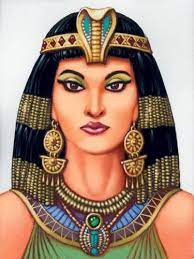

Source – Pinterest

Cleopatra was born in 69 BC and became the queen of Egypt in 51 BC, at the age of 18, after her father’s death. She ruled jointly with her younger brother, Ptolemy XIII, but soon became embroiled in a power struggle with him. Cleopatra fled to Syria and gathered an army to fight her brother, and with the help of Julius Caesar, she regained her throne in 47 BC.

Cleopatra had a romantic relationship with Julius Caesar and bore him a son, Caesarian. However, Caesar was assassinated in 44 BC, and Cleopatra formed a new alliance with Mark Antony, one of Caesar’s generals. Cleopatra and Mark Antony had a passionate love affair and had three children together.

However, their relationship became strained after Mark Antony’s military campaign against Parthia was a failure, and he returned to Alexandria, Egypt. Mark Antony was forced to marry Octavia, the sister of his fellow triumvir, Octavian, who later became the emperor Augustus. Cleopatra, feeling betrayed, fled to her mausoleum and pretended to commit suicide.

Mark Antony, upon hearing the news of Cleopatra’s death, was devastated and decided to follow suit. He fell on his sword and died shortly afterward. However, Cleopatra was not dead but was only in a deep sleep induced by a poisonous snake, most likely an asp. When Cleopatra woke up, she learned of Mark Antony’s death and realized that she had no choice but to take her own life. She instructed her servants to bring her a basket of figs, which she had secretly poisoned with deadly toxins. She then took her own life by ingesting the poison.

Cleopatra died on August 30, 30 BC, at the age of 39. Her death marked the end of the Ptolemaic dynasty and the beginning of Roman rule in Egypt. Her life and death have been the subject of many myths and legends, and her image has been immortalized in countless works of art and literature.

There are many possible reasons why Cleopatra chose to end her life. Some historians suggest that she was afraid of being paraded through Rome as a captive, as many other defeated monarchs had been. Others argue that she was devastated by the loss of her lover and decided to follow him into death. Some believe that Cleopatra was trying to protect her children and prevent them from being used as political pawns by the new Roman rulers.

In conclusion, the death of Cleopatra remains a fascinating and mysterious event in history. Despite the numerous depictions of her death, we may never know the true circumstances that led to her tragic end. However, her legacy as a powerful and intelligent leader, a romantic figure, and a symbol of ancient Egypt will continue to inspire and captivate people for generations to come.
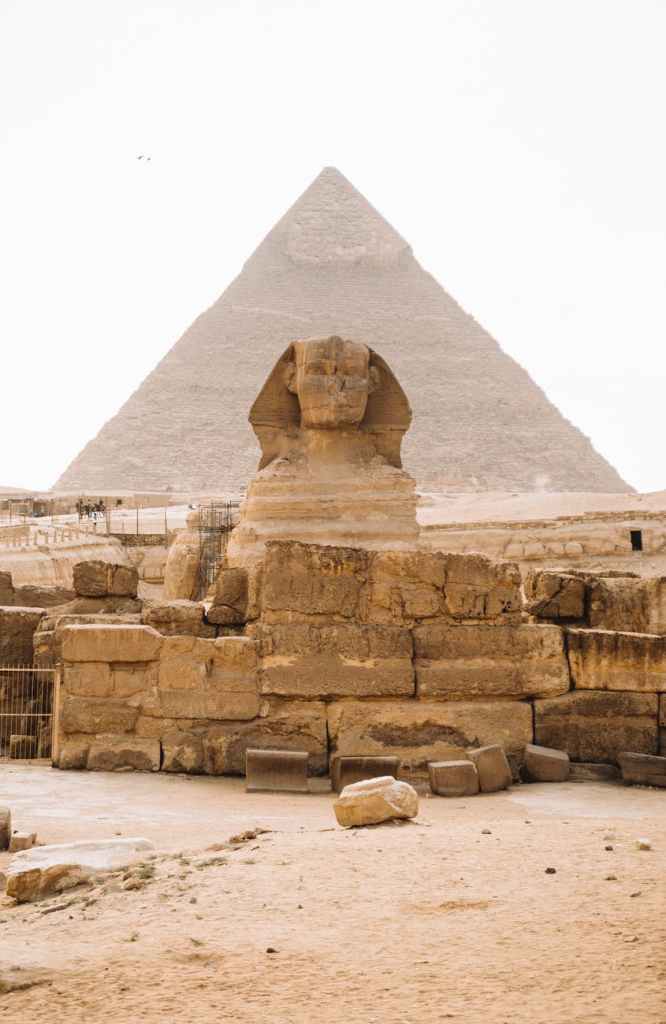
Egypt takes centre stage in West asian affairs

Egypt

• Capital – Cairo.

• Borders with:
 Libya – west
 Sudan – south
 Israel – Northeast

• Strategic location – Hub for trade routes between Africa, Europe, and Asia.
 Enhanced with opening of the Suez Canal.

• Topography – dominated by the Nile River.

• Official language – Arabic

• 2013 – Overthrew its first democratically elected
government.

• $12 billion aid package from Saudi Arabia, the
United Arab Emirates (UAE) and Kuwait. • West Asian deposits – grants for the import of petroleum products.

West Asian politics

• Influenced by the active role played by Saudi
Arabia and the UAE.

• Role of Egypt – reluctant.
• Qatar Blockade – role of Egypt was not much intense.
 2017 – Arab transport blockade against Qatar in order to punish for its ties with radical Islamist groups.
 To pressure reducing its diplomatic and economic relations with Iran.

• Egypt regained influence – Good and abled
management of its economy – facilitated Egypt.
 Egyptian Economic reforms, 2015.
 Foreign exchange reserves of $40 billion by 2018.
 Growth rate of 5.6% in 2019.

Present Developments in West Asia

• Israel-Palestine conflict – negotiations by the
Egyptian diplomats and intelligence officers.

• Turkey – anxious to reopen its relations.

• Tripartite grouping
 Intent to broaden regional engagements.
 For Egypt – opportunity to move beyond its traditional dependence on Saudi Arabia
and to assert its leadership in the region.
 Coalition – near-bordering land mass and a considerable domestic agricultural and
industrial capacity.
 Extensive cooperation in energy connectivity
and reconstruction areas.

Challenges

• Ethiopia’s “Grand Ethiopian Renaissance Dam” on the Blue Nile
 Concern – source of around 95% of Egyptian fresh water.
 Fear – Restrict this access to fresh water – “existential threat”.

 Egypt tackling with
 Diplomatic engagements with Sudan, Uganda, Burundi, Rwanda and Kenya.
 Major dam and hydropower project in
Tanzania.
• Strained relations with Turkey – Libyan peace
process and the East Mediterranean.
 Delineated energy claims in the Mediterranean sea – in conflict with Turkey’s claims. • Present scenario of pandemic
 Unemployment on a rise.
 Economy – slowed down recovery.
 Percentage of workers without adequate income increased.
 Poverty rate – 2% higher than in 2015.
 Concern – might compel Egypt to seek assistance from the Gulf States.

Ancient Egyptian Gods

Ancient Egyptian Society had many different deities which were an important part of the people’s belief system. There were about 2000 deities in the Egyptian pantheon which were an integral part of the culture. The most famous gods were considered as State Deities while others were a part of the rituals of a specific region. Some of the most popular Deities are – Isis, Osiris, Horus, Ra, Bastet, Set, Nephthys, Anubis.

Isis

Isis was the goddess of magic and was a clever and ambitious woman. She was the wife of Osiris and the patron of magicians. She loved her husband very much and encouraged their son to take vengeance on the evil god Set who had Osiris. She is shown as a beautiful woman with colourful wings.

Osiris

Osiris was a wise and good pharaoh and the husband of Isis. He taught men about farming and is said to have built the first cities of Egypt. His brother Set tricked him into getting inside a coffin and made it into pieces and then hid the pieces all over Egypt. Isis spent years searching for him and eventually put all the pieces together when he partially came back to life. He was the god of the underworld and he sat in judgement over the souls of the dead.

Horus

Horus was called as the Avenger and the son of Isis and Osiris. When he grew up, he defeated Set and became the new pharaoh of Egypt. All mortal pharaohs are considered as descendants of him. Falcon is his symbol and he is often pictured as the man with a falcon’s head.

Ra

Ra was the first pharaoh of the world and the God of the Sun. The Egyptians celebrated as Ra would emerge victoriously after sailing the golden sun ship across the sky. After many centuries Ra became old and went back to the heaven after giving his throne to Osiris.

Bastet

Bastet was the goddess of cats and extremely popular in Egypt. She was a protective goddess and people used to wear amulets with her likeness for good luck. She is pictured as a cat fighting with a knife with the serpent Apep. She was the faithful cat of Ra.

Set

He was the god of desert, storms and evil. He is very tricky and the strongest of all the gods. He became the pharaoh after killing his brother Osiris and was later defeated by his nephew Horus. After that he fled into the desert and controlled the harsh lands outside of the Nile valley. In his old age he spent his days sailing Ra’s boat and defending her from the armies of the serpent Apep. He is pictured as a red skinned god with the head of an unknown animal demon.

Nephthys

Nephthys is the kind and gentle river goddess. She is the wife of Set and the sister of Isis. She didn’t like Set and helped Isis to find the pieces of Osiris and put him together. Her son was Anubis.

Anubis

Anubis is the god of funerals and the most important god. He helped Isis make Osiris into the first mummy. He is pictured as a man with a jackal’s head.