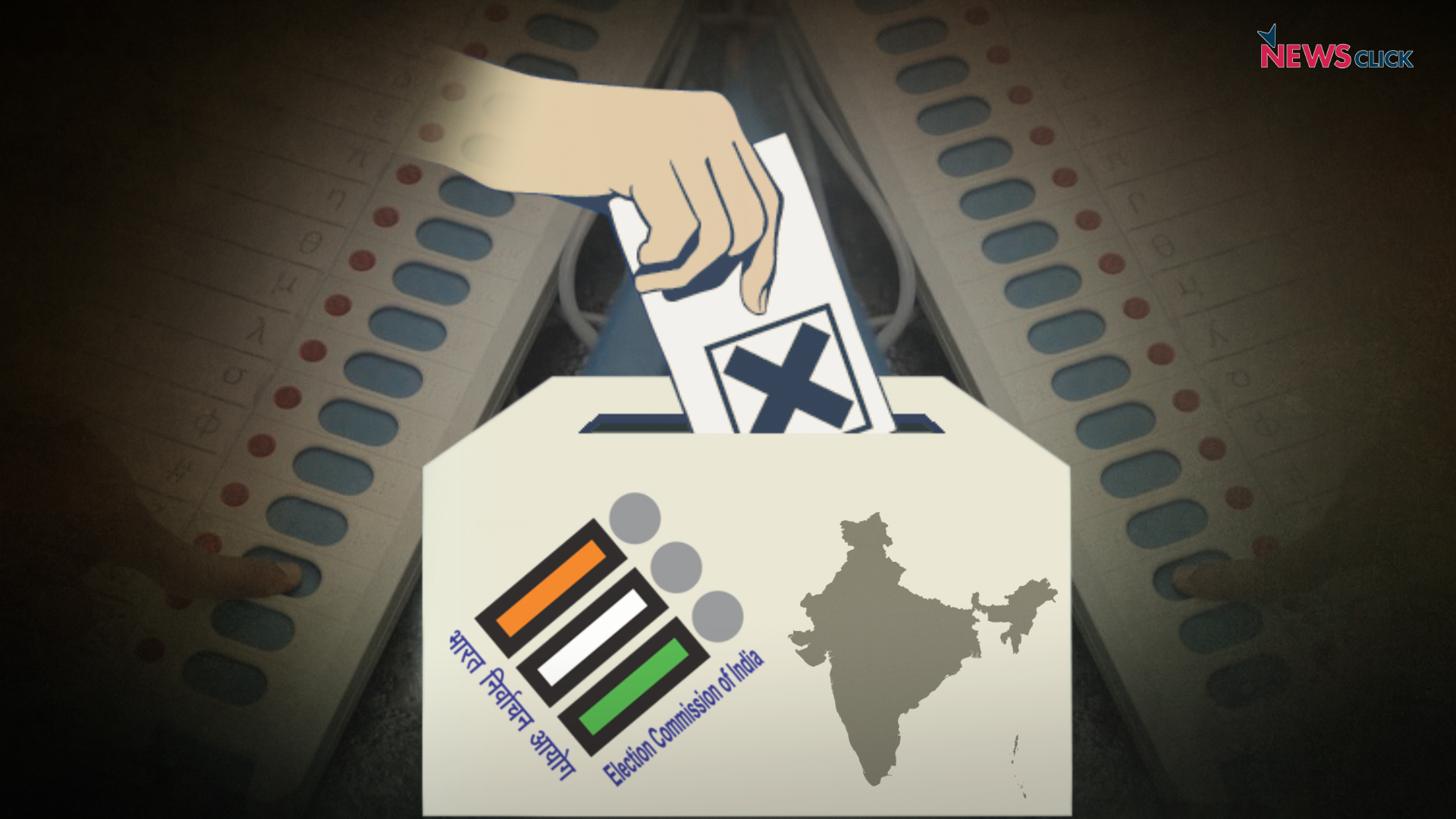
Electoral Reforms In India

Electoral reforms refer to the introduction of the best practices in ensuring better democracy, clean politics, fair elections, ideal members of legislative houses, true representation and so on.

India is the largest democracy in the world. Elections are the most integral and important part of politics in a democratic system of governance. True democracy can function only when elections to the offices of power are held in a free and fair manner.

The requirement of Electoral Reforms:

The need for electoral reforms has also been felt mainly due to removing the malicious people and malevolent activities they are involved in. There are multiple issues plaguing the electoral process in India.

Vote-buying: The rise of illegitimate expenditure on vote-buying has become a matter of great concern as it is making only the rich to be more qualified to become an MP (Member of Parliament) or an MLA (Member of the Legislative Assembly) over a well-qualified public-spirited person.

  • As can be seen, out of 533 candidates elected to the 17th Lok Sabha (2019-present), 475 Parliamentarians (accounting for 88%) are ‘crorepatis’. This reflects the paradoxical situation of poor India with rich Parliamentarians raising concerns about the growing role of money power in politics.

Criminalisation of Politics and Politicization of Criminals

Criminals enter into politics and ensure that money and muscle power wins them elections, so that the cases against them are not proceeded with. Political parties are also happy as long as they have winnable candidates. Political parties field criminals in elections for funds and in return provide them with political patronage and protection.

Misuse of Government Machinery

There is a general opinion that the party in power uses government machinery such as using government vehicles for canvassing, advertisements at the cost of the exchequer, disbursements out of the discretionary funds at the disposal of the ministers, and other such means to improve the chances of their candidates winning.

Non-serious Independent candidates

Serious candidates float non-serious candidates in elections to cut a good portion of the votes that would otherwise have gone to rival candidates.

Casteism

There are cases of certain caste groups lending strong support to particular political parties. Thus, political parties make offers to win over different caste groups, and caste groups also try to pressurize parties to offer tickets for their members’ elections. Voting on caste lines is prevalent in the country and this is a serious blotch on democracy and equality. This also creates rifts in the country.

Communalism 

Communal polarization poses a serious threat to the Indian political ethos of pluralism, parliamentarianism, secularism and federalism.

Money Power

In every constituency, candidates have to spend crores of rupees for campaigning, publicity, etc. Most candidates far exceed the permissible limit of expenses.

Muscle Power

In certain parts of the country, there are widespread reports of illegal and untoward incidents during polling such as the use of violence, intimidation, booth capturing, etc.

Constitutional articles related to electoral reforms:

  1. Article 324-329 deals with elections and electoral reforms.
  2. Article 324 deals with the Superintendence, direction, and control of elections to be vested in an Election Commission.
  3. Article 325 states that no person to be ineligible for inclusion in or to claim to be included in a special, electoral roll on grounds of religion, race, caste or sex.
  1. Article 326 deals with the Elections to the House of the People and to the Legislative Assemblies of States to be on the basis of adult suffrage.
  2. Article 327 provides power to the Parliament to make provision with respect to elections to Legislatures.
  1. Article 328 provides power to Legislature of a State to make provision with respect to elections to such Legislature.
  2. Article 329 provides to create a bar on the court to make any interference by courts relating to electoral matters.

How India’s massive Election System works?

The world’s biggest democracy just had an election. The world’s biggest democratic election It’s a marathon election A mammoth undertaking It’s the world’s biggest exercise in democracy In India, voters picked its central government for the next five years. An eighth of the world’s population was eligible to vote in this election. In the year, 2019, there are 900 million eligible voters in India making this the largest Democratic exercise in the history of humanity.

A vote for reform: Election Commission collaborating with IIT-M on ...

In one of the largest and most populous countries in the world, that isn’t an easy task. India has to reach voters in coastal cities in the south, in the rural regions of the west, and jungles to the east and everywhere in between. And what’s more, they want every Indian citizen to be within 2 km of a voting station. That’s only about 25 city blocks no matter where you are in the country. It’s an incredibly ambitious goal and yet, somehow they’re able to do it. This is the biggest election in the world and I wanted to know how does it work. Every election a team of state officials and security forces, get on a ship within the east of India to require off towards this island. They travel about 100 km to get here, all to securely deliver these Electronic Voting Machines or EVMS, the instrument that logs India’s votes, the heart of this elaborate election process.

Election Commission's crackdown on poll-related monetary ...

India has 2.3 million voting machines for its 900 million voters. So, getting these machines on the brink of every voter may be a big logistical undertaking. That’s why India doesn’t have one polling day , instead, it’s closer to an election month with multiple phases that last weeks. This process takes more than 11 million election officials and security forces, who move from polling station to polling station to polling station from densely populated cities to the rural areas where the majority of Indians live. Once on the island with the EVMs, officials pile on to bike carts and head towards the polling station. Once they arrive, they start setting everything up for the vote.

On Election Day, voters line up, cast their vote, and get their fingers inked to prevent double voting. This is where the process ends for the voters, but for the election officials this is just the beginning. Driving a boat out to a remote island is just one of many ways that officials reach every voter. India’s vast and diverse terrain requires transportation methods of all kinds, like in the jungles of this northern state where elephants transport voting machines to reach a remote town or in the Himalayas where officials hike for hours to bring EVMS for election day. Helicopters, trains, they even use camels. But what makes India’s elections so impressive is not just how they reach everyone in such an enormous country, that’s just half the battle. It’s also the ways they try to include voters of all backgrounds into the process, a challenge that has been a part of India’s elections since the very beginning. India has 22 official languages and hundreds of dialects and when India became an independent nation, less than a quarter of the population could read and write.

Why EC Owes an Answer to the Country Over 'Phantom Votes' | NewsClick

The newly formed Election Commission of India created a range of symbols to correspond to each political party, like an elephant, a lotus, a hand or even an alarm clock so that from the beginning all people regardless of literacy level and language could vote with confidence. Since 1947, the literacy rate has increased significantly, but it’s still only 75 percent, so these symbols are still useful to many when casting a vote. But this is a massive sprawling operation and over the years it’s run into some pretty serious problems like allegations of election rigging and problems with a practice called booth capture, where gangs actually take over polling stations and tamper with the elections. It’s partly because of these problems that the Commission introduced these voting machines in the 1990s.

It also increased security around the elections. These efforts to include all voters and protect elections seem to be working. In 2019, India saw the highest voter turnout yet and for the firsttime women voted just as much as men. India’s elections are only getting bigger and more complicated. India has one among the fastest growing populations within the world. and in 2020, young people will make up more than a third of the country. This is the most important election within the world that takes many officials fanning out across a huge country to assist many millions vote.

Election Commission rejects Opposition demand to tweak VVPAT ...