Electric two-wheelers are getting the push for support

The electric two-wheeler market is one of the fastest-growing markets in our country. This segment is also gaining popularity among the public in a rapid manner. The large number of companies that are currently providing options in this segment are trying their level best to attract more customers to his segment.

But due to some glitches, the segment has been under the scanner for some time now. There have been cases recently that involved some two-wheelers burning up right after coming out of the showroom. So, to make the segment better in terms of quality, the government has released some new rules which need to be followed by the manufacturers. The new features can improve the user experience and can also ensure that the vehicles are safer for general users.

There have been rising concerns regarding the environmental damage that general vehicles are causing. This has caused the general public to steer away from fossil fuels. As a result, electric vehicles are getting more attention. The other reason has been the fewer emissions that electric two-wheelers have. They do not pollute the environment with smoke and keep the environment clean. 

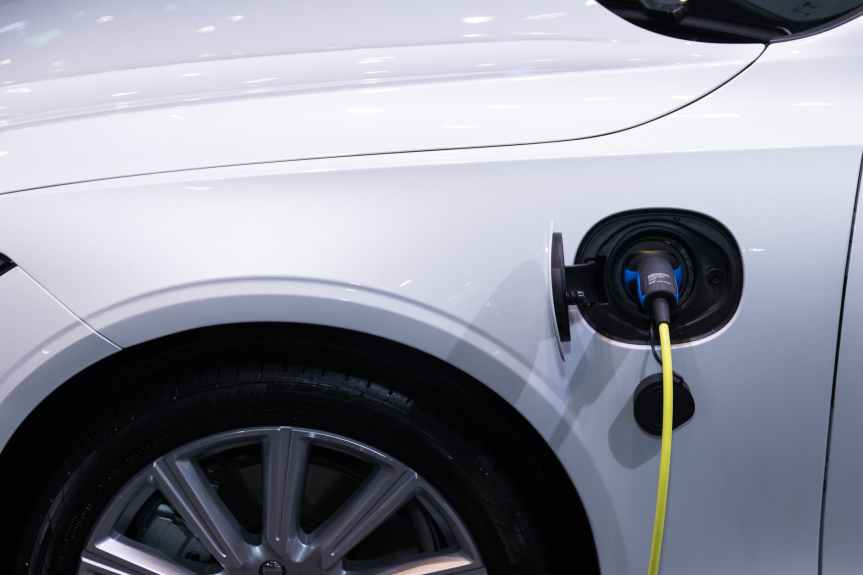
As a plus point, there has been also an increase in the number of charging stations all over the country. There were 1000 charging stations all over the country. Currently, there are around 2000 charging stations. There have also been incentives from the government for EVs and all the other equipment related to it. The equipment includes chargers/ charging stations and the parts that are used in the manufacturing of an electric two-wheeler. 

https://unsplash.com/photos/LN8IwrFW_Ow

But some hurdles need some treatment. The hurdles are like involving the real-estate tycoons to enable the charging options in their skyscrapers. There is also a requirement for charging stations in the residential complexes as well as in the commercial complexes in the parking areas. This will enable more people to adopt electric vehicles in the future.

Now, after looking at all of the above points it is evident that electric vehicles are the future. But the hurdles are still there. There still needs to be some changes in the system that is controlling the entire electric vehicle field. For example, we will be able to see electric two-wheelers that will be fireproof.

There are also some recent efforts from the governments in different states and even the central government. The efforts have resulted in more use of electric public transport vehicles in different cities. The vehicles like electric buses and even the Indian Railways are now trying to promote more use of electric vehicles for transport. This will in turn help in improving the quality f the air that we breathe in. 

In the end, there are several other campaigns like Switch Delhi that are trying to attract people towards electric vehicles. This will ensure that the capital of our country remains clean and safe for living in the future.  So, the various efforts will surely help in reducing global warming which is creating several problems like untimely natural calamities and even the disruption of the natural season cycle in nature. Also, people need to support such initiatives and help the government in making more such efforts to allow electric vehicles to rule our roads. 
Are electric cars the future? The success story of Tesla

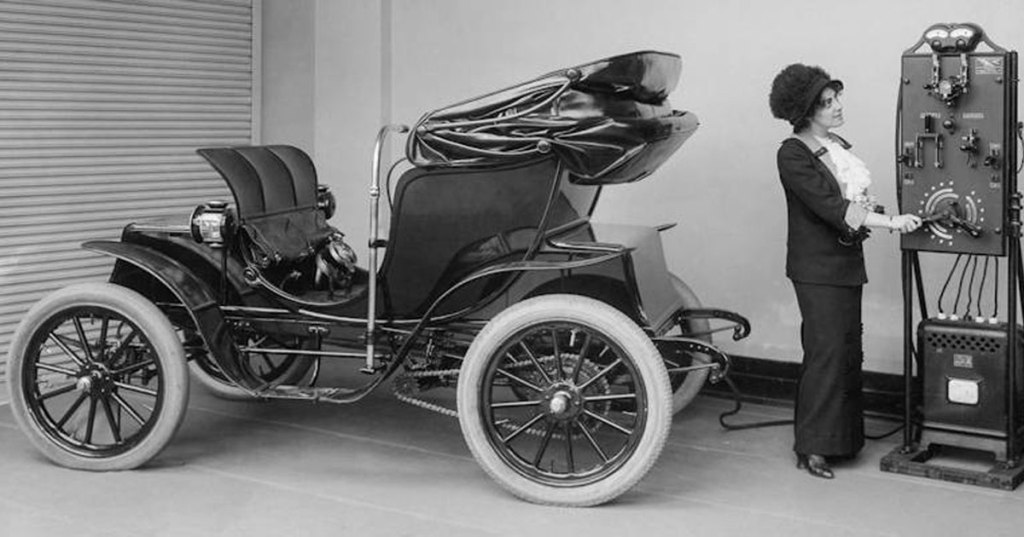
In 1834, Robert Anderson of Scotland created the first electric car carriage. The following year, a small electric car was built by the team of professor Stratingh of Groningen, Holland and his assistant, Christopher Becker. More practical electric vehicles were brought onto the road by both American Thomas davenport and Scotsman Robert Davidson in 1842. Both of these inventors introduced non rechargeable electric cells in the electric car. The Parisian engineer Charles Jentaud fitted a carriage with an electric motor in 1881. William Edward Ayrton and John Perry, professors at the London’s city and guilds institute, began road trails with an electrical tricycle in 1882; Three years later a battery-driven electric cab serviced Brighton.

Electric cars during 1890s in the United States

Around 1900, internal combustion engines were only one of three competing technologies for propelling cars. Steam engines were used, while electric vehicles were clean, quiet, and did not smell. In the United States, electric cabs dominated in major cities for several years. The electric vehicle did not fail because of the limited range of batteries or their weight. Historian Michel Schiffer and others maintain, rather, that failed business strategies were more important. Thus, most moor cars in the twentieth century relied on internal combustion, except for niche applications such as urban deliveries. At the end of the century, after several efforts from small manufactures, general motors’ made available on all electric vehicle called EV1 from 1996 to 2003. In the late 1990s, Toyota and Honda introduced hybrid vehicles combining internal combustion engines and batteries.

How Tesla was created?

Entrepreneur Elon Musk is the man behind many modern innovations. It includes the digital payment service PayPal, the independent space travel company SpaceX, and the electric car company Tesla motors. Tesla motors is named after Nikola Tesla, a Serbian American inventor who contributed to the development f alternating current electricity. In 2003 two Silicon Valley engineers, Martin Eberhard and Marc Tarpenning sold their eBook business for 187 million dollars and started Tesla to build a greener car. Elon musk joined as an early investor leading the series finance and taking on several other roles as well. Tesla’s plan was simple but potentially genius. They focused on lithium-ion batteries which they expected to get cheaper and more powerful for many years. They planned to start their journey with a high margin, high performance sports car. Tesla also planned to integrate energy generation and storage in the home and develop other emerging technologies like autonomous vehicles.

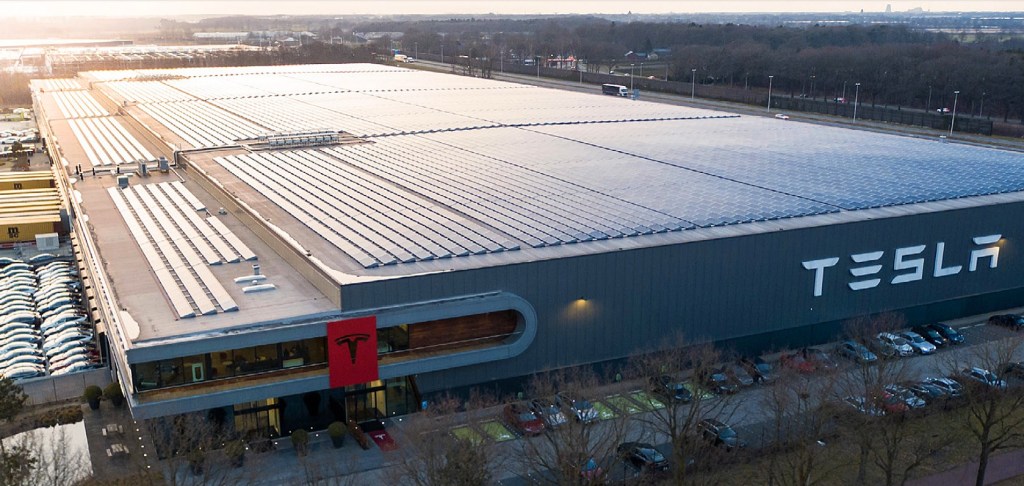
Tesla Gigafactory in Tilburg, Netherlands

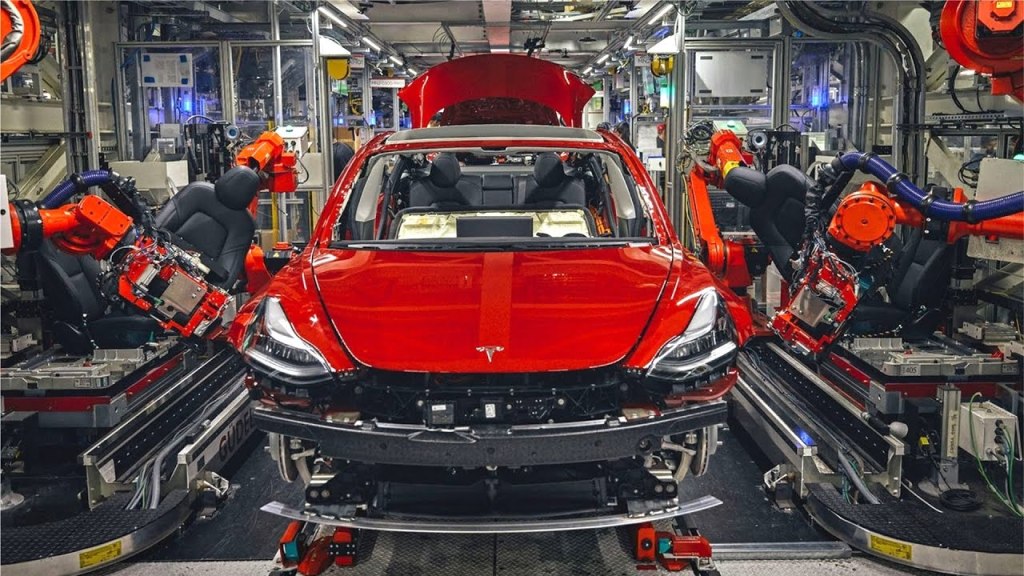
With this plan set, the company was ready to build a high performance low volume sports car, the roadster. Finally in 2008 Tesla motors released its first car, the completely electric roadster. In 2008, Martin and Marc left the company, and eventually Elon Musk took over as CEO. He made drastic changes, raising 40 million of debt financing and borrowed 465 million from the US government. In 2012 Tesla started focusing on two new cars, model S and model X. beginning in 2012, Tesla built stations called supercharges in the United States and Europe, designed for charging batteries quickly and at no extra cost to Tesla owners. These two models were poised for success but the high cost of lithium ion batteries made it a luxury item. To compensate this, in 2013, Tesla began building large factories called Gigafactories to produce lithium ion batteries and cars n large scale. It made Tesla cars ultimately cheaper than gas powered vehicles. Then Tesla gave autopilot system for its model S which gives semi autonomous capacities. By the end of 2017 Tesla passed ford in market value. Tesla released another crossover he model Y, in 2020. The model Y was smaller and less expensive than the model X and shared many parts with the model 3. Tesla announced several models to be released in the future, including a second version of the Roadster, a Semi trailer truck, a Pick-up truck and the Cybertruck.

Climate Change: learning it again after 7 years

Global Warming vs. Climate Change | Resources – Climate Change: Vital Signs  of the Planet
I learnt of Climate change and global warming in high school and just revisited it after 7 years.

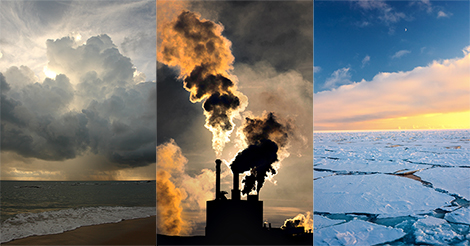
On the 6th of June 2018, Texas was hit by a hail storm – in the middle of a summer. The Artic has lost more than 50% of its ice. Russia, US, Scandinavian countries and many more are already on their way to claim the resource rich seas. The average temperature of the world is higher than ever. The awe that people had when the skies were clearer during the near global lockdown due to COVID-19 was evident. The amazon rainforests are on fire, yes, they still are. The Canadian and European forests are burning faster and earlier than in recorded history. There have been cases of untimely forest fires in India as well, not to forget that a large part of Australian bush wilderness was lost in 2020. To add to this, a million cubic meters of the Gulf of Mexico is dead, Antarctica is browning, Yemen has lesser water than the already no water situation and many countries have brought green energy into their federal budgets. That’s a lot many things happening together.

When I was still a high school student, we had studied about all the important conventions and their goals with regards to the planet – the Kyoto protocol, the Montreal Protocol and so on. Then came the Paris Accords. To add to it was the information that global temperatures must be limited to a degree and half more than the 1950 level or else the planet will go berserk. I don’t know how old the new news is, but the news is that the scientists concluded that there is no way the goal can be achieved. And now we must try to limit the temperature at four and a half degrees above the previously said level to avoid the loss of agricultural lands across the planet.

That is a huge leap of faith for me and maybe for many more people who do not really invest even very small amounts of time to know the news that the planet has to give. We are too occupied with corruption, civil wars and international blame games. To be frank, I try not to waste water, electricity or even throw plastics or dump trash outside a bin or a designated area. I try to walk or cycle and as of now, just lie around in my room for most of the time. And the trouble is, the environmental problems are too large now. Because one, everyone doesn’t carry out the simple acts of being considerate towards the environment and two, the emissions by the rich and the ones not so rich but busy in producing what we consume are too big and have restrictions full of loop holes on them. The environment norms are yet not very sturdy. Sturdy is not strict, rigid and harsh. Sturdy are the ones that help. For instance, to implement rules eliminating the use of fossil fuels based vehicular fuel eliminates the exhaust the vehicles shall produce. However, in most countries, especially the most populated ones in Asia, South America and Africa still produce their energy using fossil fuels. How are these countries going to charge electric vehicles? Using fossil fuels. That in turn means the use of “dirty” energy is itself not eliminated. There are several more examples like the flawed system of Carbon credits and so on.

What can we do? Be more considerate to the world to reduce domestic output of toxins. And to reduce consumption of goods that are harmful to this planet. And google is a sufficient enough aid for knowing which products do that and which don’t.

Longest running light bulb since 1901: The case of Planned Obsolescence

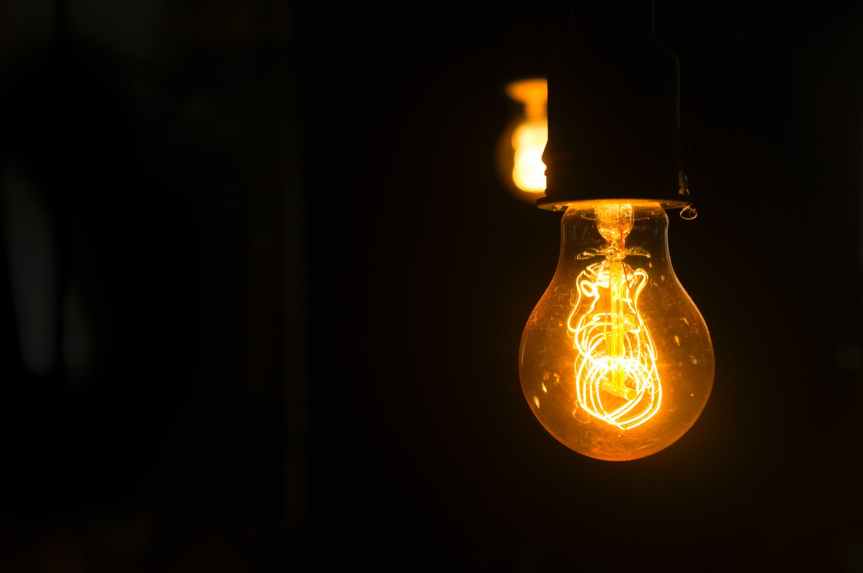
Centennial Light is the longest-running electric light bulb on record. It has been running continuously since 1901 and it has never been switched off. It is located in Fire Station 6 in Livermore, California. The ordinary dim light bulb looks like any other bulb and there is also a camera that live-streams the light bulb onto the internet.

Link for the official website and live webcam of the light bulb.

http://www.centennialbulb.org/photos.htm

It was manufactured in the late 1890s by the Shelby Electric Company, of Ohio, using a design by the French-American inventor Adolphe Chaillet. It has operated for over 100 years with very few interruptions. In 2011, it passed a milestone: One million hours of near-continuous operation. In 2015 it was recognized by Guinness World Records as the world’s longest-burning bulb.

The 60-watt bulb uses a carbon filament. One of the reasons for its longevity is that it seems to have an incredibly durable vacuum seal. There have been some researches done on bulbs manufactured by Shelby Electric Company of that era. But no one really exactly knows how these eternal bulbs were made as they were experimenting with various but the company was experimenting with a variety of designs at the time.

The electric model was quite different when first homes in The U.S had electricity. The servicing was the responsibility of the electric companies and customers would purchase entire electrical systems manufactured by a regional electricity supplier. The companies would also take care of the installation and servicing of any burned out electric bulbs would be replaced for free.

It made more logic for the suppliers to manufacture bulbs that would last longer and would burn out as least as possible. But this business model was later replaced and homeowners were responsible to change the light bulbs. It was soon realized that it would be more profitable to make cheaper bulbs that burned out faster. Since the mid-1900s goods were manufactured with a pre-determined expiry date aimed at forcing consumers into repeat purchases. This phenomenon has only been exacerbated in recent years. This can also be called planned obsolescence.

In 1924, the life span of the light bulbs was at least 2,500 hours. Phoebus cartel was formed in 1925 in Geneva. It comprised of the major incandescent light bulbs manufacturers at that time: Osram, General Electric, Associated Electrical Industries, and Philips. The cartel had directed their engineers to cut the life of the bulbs to 1,000 hours, which the engineers did by adjusting voltage and current. The cartel was intended to operate for 30 years but it was starting to fall apart in the early 1930s after General Electric patents expired and as the cartel faced competition from non-member manufactures from other regions. The cartel ceased its operations after the outbreak of World War II in 1939.

Planned obsolescence is a very critical area it does not only decrease the lifespan of the good but as a consequence, it is also wasteful. It is not sustainable for the environment and the main focus of this practice is to maximize profits. It also reminds us that technological innovations are often not accessible in favor of corporate greed.

References:

The issue of Electric Vehicles and their sustainability

Tesla launched the Model-S in 2012, the luxury car was one of the more mainstream vehicles that accelerated the growth of electric vehicles. Some traditional cars manufacturers also followed the suit to compete with Tesla. Fast forward to a decade later, electric cars have become even more relevant and every major internal combustion engine manufacturer has an electric car model in their portfolio.

The rise of electric cars has been commendable with 75% growth rate and current sales north of 3 million units. But we have to look at the sustainability of electric vehicles realistically. Internal Combustion Engines cars have come a long way from 20 years back. Conventional cars are significantly more fuel-efficient and release less harmful gases to the environment. But still, they are incomparable to electric vehicle zero fuel emissions.

When we talk about electric vehicles, we also have to consider the whole infrastructure that is required to sustain that. The elephant in the room is the batteries. Battery technology has progressed a lot in the past decade but still, there are lots of limitations that have hindered the adaptability of EVs. One of the biggest issues that EVs face is the limited lifespan of batteries. The average lifespan of a typical EV battery is approximately 10 years depending upon the usage. In many EVs, the replacement of batteries is very difficult or almost impossible. Another problem is the case of recycling batteries. It’s not easy to recycle batteries and currently, electric vehicles have a very small percentage of market share. But as more and more people adopt EVs, there will be more EVs that will have to be scrapped and the proper disposal of batteries will be required. This can be a cause of environmental concerns as batteries will accumulate with no proper arrangement for its recycling.

Issues that will have to be addressed

The problem is much more than just battery technology. The power delivery and infrastructure also need to be developed to support the EVs. It’s going to be easier in urbanized areas with a small population, for instance Norway has been moderately successful in adopting EVs as a standard with plans to totally cease the sales of internal combustion engine vehicles by 2025. This target is going to be much more difficult in large countries with large populations and rural populations where distances between cities are larger. It also requires a considerable amount of capital resources to make the transition possible. Currently, traditional gas vehicles are still more viable, practical, and cheaper than EVs. This tells us that EV manufacturers and the government will require much more than subsidies to convince people to convert. EV manufacturers will also need to control the amount of energy that is required to produce a single EV, which is much more than a gas vehicle.

The extraction of lithium is also a contested issue and just as fossil fuels, the elements that are required to make batteries are non-renewable. Lithium can be extracted in a limited capacity and with more demand, it will become even more challenging to supply the raw materials required to build a battery. Building new battery production factories will also require a considerable amount of time and money. Until battery production facilities are not increased, supplying batteries will be a challenge and mass adoption will not be as fast as we would like it to be.

In conclusion, EVs are certainly the future, they are cheaper to operate and have zero emissions. But there are many other issues like infrastructure, battery supply, and proper disposal that would have to be addressed.

References: