Structure of Electrical System

 An electrical system is a network of components that work together to generate, distribute, and consume electrical power. The structure of an electrical system can vary widely depending on the size and complexity of the system. However, there are certain fundamental components that are common to most electrical systems.

Source – https://engineeringnotesonline.com/

Power Source –

The first component of an electrical system is the power source. This is the device that generates electrical power. It can be a generator, a battery, or a solar panel, depending on the application. The power source is connected to the rest of the system through a set of wires or cables, which carry the electrical power to the other components.

Load –

The next component of an electrical system is the load. This is the device that consumes the electrical power. The load can be a light bulb, a motor, or any other electrical device. The load is also connected to the rest of the system through a set of wires or cables.

Switch –

In between the power source and the load, there are several other components that help to regulate and control the flow of electrical power. One of the most important of these components is the switch. A switch is a device that can be used to turn the flow of electrical power on and off. It is often used to control the operation of a load, such as a motor.

Transformer –

Another important component of an electrical system is the transformer. A transformer is a device that can be used to change the voltage of the electrical power. This is important because different devices require different voltages to operate properly. For example, a motor may require a higher voltage than a light bulb. A transformer can be used to step up or step down the voltage of the electrical power as needed.

Distribution System –

The distribution system is also a crucial component of an electrical system. This is the network of wires and cables that carry the electrical power from the power source to the loads. The distribution system is often divided into several different levels, such as the transmission system, the sub-transmission system, and the distribution system. Each level of the distribution system is designed to handle a specific amount of electrical power and to serve a specific geographic area.

Protective Devices –

Finally, an electrical system may also include various protective devices, such as fuses and circuit breakers. These devices are designed to protect the system from overloads and short circuits, which can damage the components and cause fires or other hazards.

You can read more about protective devices here.
Vertical Axis Wind Turbines and its types

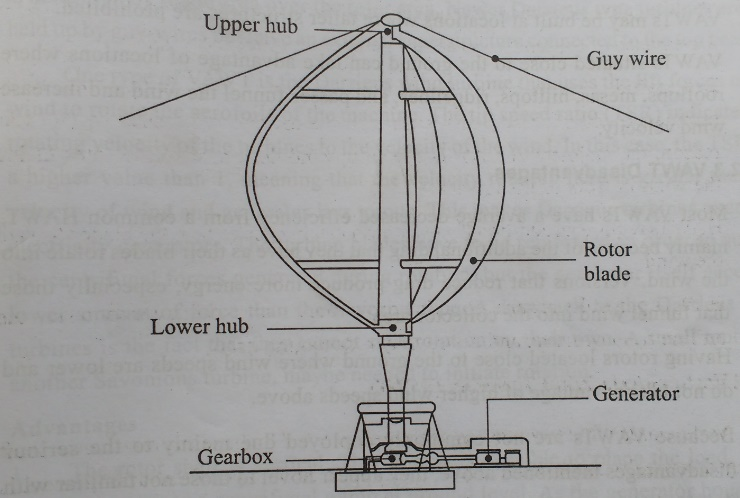
A vertical axis wind turbine (VAWT) is a type of wind turbine that has its rotor shaft oriented vertically rather than horizontally, as in the case of traditional horizontal axis wind turbines (HAWT). VAWTs are relatively less common than HAWTs, but they have some advantages, such as the ability to operate in turbulent winds, and the fact that they do not require a yaw mechanism to keep the rotor facing the wind.

VAWTs can be classified into two main types based on their rotor design: drag-type and lift-type. Drag-type VAWTs, also known as Savonius turbines, have a rotor with a curved blade that resembles an S-shape, which generates torque by using the drag force of the wind. Lift-type VAWTs, on the other hand, have a rotor with blades that are designed to produce lift, similar to the wings of an airplane.

VAWTs have some limitations, such as lower efficiency compared to HAWTs, and the fact that they can generate more noise and vibration due to their proximity to the ground. However, they are still an interesting alternative for certain applications, such as urban and residential areas, where space and height limitations make the installation of HAWTs impractical. 

         
Darrieus Wind Turbine

Darrieus turbine has long, thin blades in the shape of loops connected to
the top and bottom of the axle; it is often called an “eggbeater windmill.” The
Darrieus turbine is characterized by its C-shaped rotor blades which give it
its eggbeater appearance. It is normally built with two or three blades. They
have good efficiency, but produce large torque ripple and cyclic stress on the
tower, which contributes to poor reliability. Also, they generally require some
external power source, or an additional savonius rotor, to start turning,
because the starting torque is very low. The torque ripple is reduced by using
three or more blades which results in a higher solidity for the rotor. Solidity
is measured by blade area over the rotor area. Newer Darrieus type turbines are
not help up by guy-wires but have an external superstructure connected to the
top bearing.

One type of VAWT is the Darrieus wind turbine that uses the lift forces
of the wind to rotate the aerofoils of the machine. The tip speed ratio (TSR)
indicates the rotating velocity of the turbines to the velocity of the wind. In
this case, the TSR has a higher value than 1, meaning that the velocity
rotation here is greater than the velocity of wind and generates less torque.
This makes Darrieus turbines excellent electricity generators. The turbine
blades have to be reinforced in order to sustain the centrifugal forces
generated during rotation, but the generator itself accepts a lower amount of
force than the Savorius type. A drawback to the Darrieus wind turbines is the
fact that they cannot start rotation on their own. A small motor, or another
Savonius turbine, maybe needed to initiate rotation.

         
Savonius wind turbine

The Savonius wind turbine is a
type of vertical-axis wind turbine invented by the Finnish engineer
sigurd Savonius in the 1920’s. It is one of the simplest wind turbine designs.
It consists of two to three “scoops” that employ a drag action to convert wind
energy into torque to drive a turbine. When looked at from above in
cross-section, a two scoop Savonius turbine looks like an S-shape. Due to the
curvature of the scoops, the turbine encounters less drag when moving against
the wind than with it, and this causes the spin in any wind regardless of
facing.

Drag type wind turbines such as
the Savonius turbine are less efficient at using the wind’s energy than
lift-type wind turbines, which are the ones commonly used in wind farms.

A
Savonius is a drag type turbine, they are commonly used in cases of high
reliability in many things such as ventilation and anemometers. Because they
are a drag type turbine they are less efficiency than the common HAWT. Savonius
are excellent in areas of turbulent wind and self starting.

Transients in Power Systems

In power systems, transients refer to short-term disturbances or fluctuations in voltage, current, or power that can occur due to various factors, such as sudden changes in load demand, faults in the system, lightning strikes, switching operations, and generator or load tripping.

Transients can have different time durations, ranging from a few microseconds to a few seconds, and can cause various problems, such as equipment damage, system instability, and power quality issues. Transients can destroy computer chips and TV.

To mitigate the effects of transients, various protective devices are used in power systems, such as circuit breakers, fuses, surge arresters, and voltage regulators. These devices help to limit the magnitude and duration of transients, and protect the system and equipment from damage.

Simulation tools, such as transient stability analysis software, are also used to model and analyze the behavior of power systems during transients, and help to identify potential problems and optimize system performance.

Transients are usually classified into two categories:

  • Impulsive and
  • Oscillatory

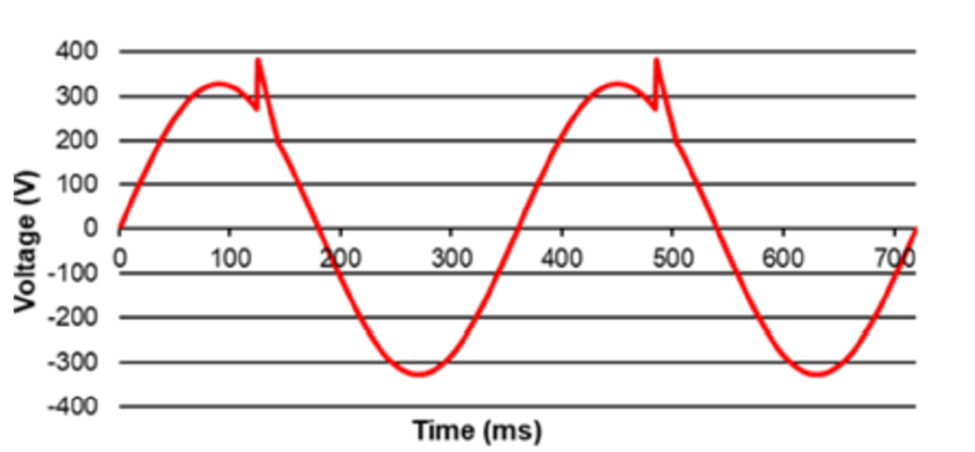
Impulsive transient caused by a lightning stroke.
Switching of lines with power factor correction capacitor banks, poor
grounding, switching of inductive loads, utility fault clearing, disconnection
of heavy loads, and electrostatic discharge. Impulsive transients can be very
fast events (5 ns rise time from steady state to the peak of the impulse) of
short-term duration (less than 50 ns), and may reach thousands of volts, even
in low voltage.

Devices are needed to prevents damage to electrical equipment
caused by impulsive transients from lightning strokes Utilities use lightning
arresters mounted on their transmission and distribution systems and in their
substations, while many utility customers use transient voltage surge
suppression (TVSS).

Fig- Impulse transients

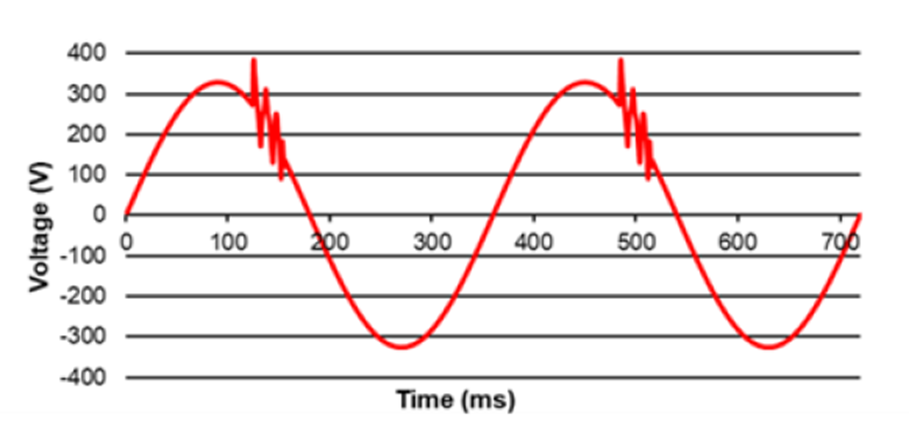
Oscillatory transients occur when switching inductive
or capacitive loads such as motors or capacitor banks. An oscillatory transient
occurs because the load resists the change. Lighting, utility fault clearing
and transformer energization and Ferro resonance could also cause oscillatory
transients.

Oscillatory transients do not decay quickly like impulsive
transients. They tend to continue to oscillate for 0.5 to 3 cycles and reach 2
times the nominal voltage or current. Another cause of oscillatory

transients, besides lightning strokes going into resonance, is
switching of equipment and power lines on the utility’s power system.

Fig – Oscillatory transients

FACT Devices; Statcom & its working

FACT is an abbreviation for Flexible
AC transmission system. It is a system composed of static equipment used for

the alternating current (AC) transmission of electrical energy and is
a power electronics based system.

Series compensation – In this we connect
the fact devices in series with power system. Here, the line impedance is
modified, that means net impedance is decreased and increasing the
transmittable active power.

Shunt compensation – It is used to
improve the power factor. In this we connect the fact devices in parallel with
power system. It also works as a controllable for the current source. Eg-
Statcom (Static synchronous Compensator) and SVC (Static VAR compensator). They
are further classified into two types –

  1. Shunt capacitive compensation: This method is used to
    improve the power factor. Whenever an inductive load is connected to
    the transmission line, power factor lags because of lagging load current.
    To compensate, a shunt capacitor is connected, which draws the current
    leading to the source voltage. The net result is an improvement in
    power factor.
  2. Shunt inductive compensation: This method is used
    either when charging the transmission line, or when there is a very
    low load at the receiving end. Because of very low, or no load–very low current
    flows through the transmission line. Shunt capacitance in the transmission
    line causes voltage amplification (Ferranti effect). The receiving end
    voltage may become double the sending end voltage (generally in case of
    very long transmission lines). To compensate, shunt inductors are
    connected across the transmission line. 

A few advantages of FACT devices
are:
• Helps in improving power transfer capability
• Used for transient and dynamic stability improvement.
• Used for damping of power system oscillations.
• For better voltage regulation.
• For flexible operation and control of the system.

What
is a Statcom?

The STATCOM (or SSC) is a
shunt-connected reactive-power compensation device that can generate and/ or
absorbing reactive power and in which we can vary the output to control the
specific parameters of an electric power system. It is a solid-state switching
converter capable of generating or absorbing independently controllable real
and reactive power at its output terminals when it is fed from an energy source
or energy-storage device at its input terminals. Voltage-source converter that,
from an input of the voltage, produces a set of 3-phase AC-output voltages,
each in phase with and coupled to the corresponding AC system voltage through a
relatively small reactance.

How
does a statcom work?

Now suppose we have a load connected
to the grid; the load takes the power as P + jQ, where P is active power and Q
is reactive power. Now we have to make the Q= 0. So that the power factor is
always unity (PF = 1). For that, we connect statcom at the load, so that the
reactive power is supplied by the statcom and active power is given by the
Grid. This is how a statcom works for reactive power compensation.

The different softwares in which we
can simulate and analyze FACT devices are:
• MATLAB
• PSCAD
• ETAP

Longest running light bulb since 1901: The case of Planned Obsolescence

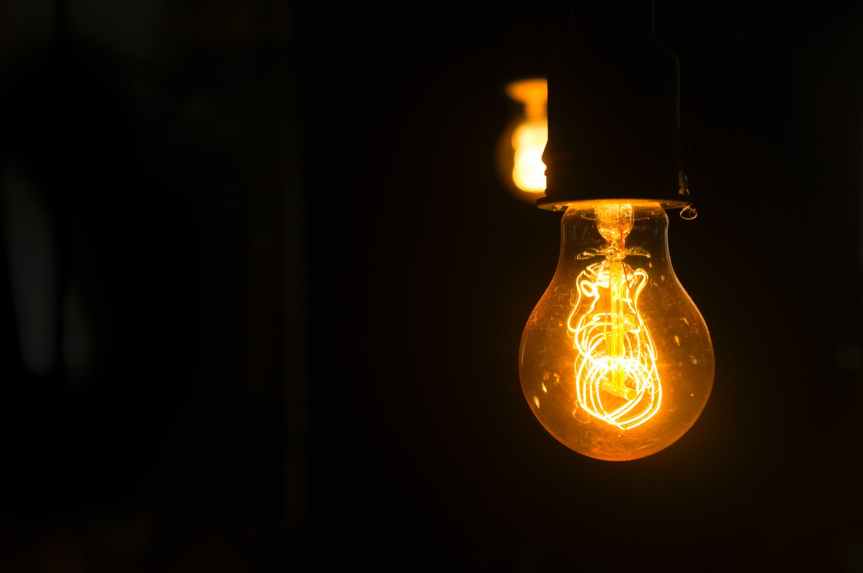
Centennial Light is the longest-running electric light bulb on record. It has been running continuously since 1901 and it has never been switched off. It is located in Fire Station 6 in Livermore, California. The ordinary dim light bulb looks like any other bulb and there is also a camera that live-streams the light bulb onto the internet.

Link for the official website and live webcam of the light bulb.

http://www.centennialbulb.org/photos.htm

It was manufactured in the late 1890s by the Shelby Electric Company, of Ohio, using a design by the French-American inventor Adolphe Chaillet. It has operated for over 100 years with very few interruptions. In 2011, it passed a milestone: One million hours of near-continuous operation. In 2015 it was recognized by Guinness World Records as the world’s longest-burning bulb.

The 60-watt bulb uses a carbon filament. One of the reasons for its longevity is that it seems to have an incredibly durable vacuum seal. There have been some researches done on bulbs manufactured by Shelby Electric Company of that era. But no one really exactly knows how these eternal bulbs were made as they were experimenting with various but the company was experimenting with a variety of designs at the time.

The electric model was quite different when first homes in The U.S had electricity. The servicing was the responsibility of the electric companies and customers would purchase entire electrical systems manufactured by a regional electricity supplier. The companies would also take care of the installation and servicing of any burned out electric bulbs would be replaced for free.

It made more logic for the suppliers to manufacture bulbs that would last longer and would burn out as least as possible. But this business model was later replaced and homeowners were responsible to change the light bulbs. It was soon realized that it would be more profitable to make cheaper bulbs that burned out faster. Since the mid-1900s goods were manufactured with a pre-determined expiry date aimed at forcing consumers into repeat purchases. This phenomenon has only been exacerbated in recent years. This can also be called planned obsolescence.

In 1924, the life span of the light bulbs was at least 2,500 hours. Phoebus cartel was formed in 1925 in Geneva. It comprised of the major incandescent light bulbs manufacturers at that time: Osram, General Electric, Associated Electrical Industries, and Philips. The cartel had directed their engineers to cut the life of the bulbs to 1,000 hours, which the engineers did by adjusting voltage and current. The cartel was intended to operate for 30 years but it was starting to fall apart in the early 1930s after General Electric patents expired and as the cartel faced competition from non-member manufactures from other regions. The cartel ceased its operations after the outbreak of World War II in 1939.

Planned obsolescence is a very critical area it does not only decrease the lifespan of the good but as a consequence, it is also wasteful. It is not sustainable for the environment and the main focus of this practice is to maximize profits. It also reminds us that technological innovations are often not accessible in favor of corporate greed.

References: