Environmental Studies as a subject in school curriculum

Daily writing prompt
What Olympic sports do you enjoy watching the most?

National Curriculum Framework (School Education) 2023 has strongly recommended the inclusion of environmental education as an inter-disciplinary area of study in the school education. Accordingly, Environmental Education has been an integral component of school education, which is evident from the existing curriculum for school education. Concepts and concerns related to environment have been infused appropriately in different subject disciplines at all stages of school education.

Topics related to Environmental Education in the existing science textbooks for classes VI to XII are provided in the following table:

Sl. No.Class & SubjectName of Chapter
1Curiosity Textbook of Science, Grade 6Diversity in the living world, Nature’s Treasures
2VII ScienceForests: Our Lifeline
3VII ScienceWastewater Story
4VIII ScienceCoal and Petroleum
5VIII ScienceConservation of Plants and Animals
6X ScienceOur Environment
7XII BiologyOrganisms and Populations
8XII BiologyEcosystem
9XII BiologyBiodiversity and Conservation

NCERT has also prepared supplementary materials for students and teachers related to environmental education. Some of the resource materials are provided below:

Sl. No.Title of Resource Material
1Project Books in Environmental Education for Classes VI to X (Hindi, English and Urdu version)
2Water: Every Drop Counts (Activity book for Primary, Upper Primary and Secondary Stages) (Hindi and English)
3Teachers’ Handbook in Environmental Education for the Higher Secondary Sage

The Department of Education in Science and Mathematics (DESM), NCERT organizes National Science Exhibition every year wherein the theme or sub-theme invariably includes environment component. This event provides opportunity to students to provide solutions for environmental problems—present and future in the form of exhibits/ models such as on waste management, conservation of resources, green technologies, etc. The DESM also organizes the Rashtriya Avishkar Saptah every year during which students in middle and secondary stages in different parts of the country participate in the event and perform experiments/ activities on the theme assigned for the year such as testing of water quality, soil quality, conservation of water, tree plantation etc. Such experiments/ activities promote learning-by-doing and at the same time develop environmental awareness amongst students.

 The National Education Policy (NEP) 2020 emphasizes the critical importance of integrating environmental awareness and sustainability principles into school curricula. The Policy aims to sensitize students to environmental / climate change concerns and inculcate among students the values, attitudes, behaviour and skills essential to address environmental challenges, thus preparing them to contribute to a sustainable future.

In alignment with this vision, Eco Clubs serve as a critical platform within schools, providing students with the opportunity to develop practical skills and knowledge for the responsible use of natural resources. Through participation in activities such as optimizing water usage, minimizing waste generation, recycling, and conducting plantation drives, students learn sustainable practices that they can implement both within and beyond the school environment. Eco Clubs empower students to act as environmental ambassadors, extending their impact to their families and communities by promoting sound environmental behaviour, such as reducing single-use plastics, conserving water, and participating in eco-friendly initiatives. Through these engagements, students gain a profound understanding of the shared responsibility to preserve and protect our planet, thereby advancing NEP 2020’s objective of nurturing environmentally conscious citizens for a sustainable India. The activities of Eco Clubs have been integrated with Mission LiFE, leading to their renaming as “Eco Clubs for Mission LiFE.” All the activities of Eco Clubs have been aligned with the seven themes of Mission LiFE (Save Energy, Save Water, Say No to Single Use Plastic, Adopt Sustainable Food Systems, Reduce Waste, Adopt Healthy Lifestyles and Reduce E-waste).
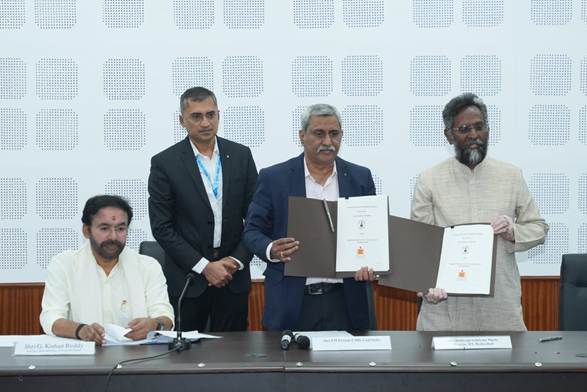
CIL joins hands with IIT, Hyderabad for R&D in clean coal tech

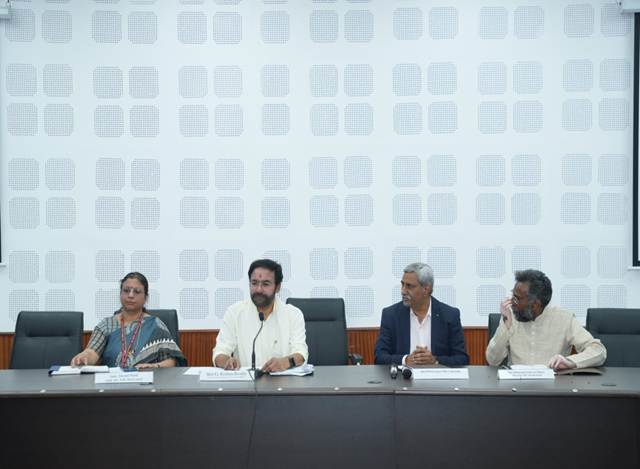
Coal India Limited (CIL) has inked a memorandum of understanding (MoU) with Indian Institute of Technology, Hyderabad (IIT-H), on 7 March, for establishing a Centre of Clean Coal Energy and Net Zero (CLEANZ) at Hyderabad.

The joint initiative between CIL and IITH aims to develop clean coal technologies and diversification in coal utilization. Both the entities will synergize their efforts in developing cutting edge technology readiness level (TRL) for sustainable utilization of Indian coal. This is in line with the country’s Net Zero commitments. The Coal Ministry is also keen in developing research capabilities in coal sector and advised to take up research projects relevant to India’s coal and energy sectors.

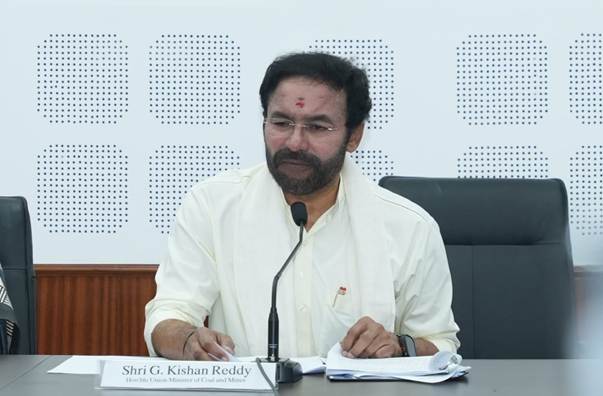
Shri G Kishan Reddy, Union Minister of Coal & Mines was the Chief Guest, and the pact was formally signed in his presence by P M Prasad, Chairman, CIL and Prof. B S Murty, Director, IITH in Hyderabad.

CIL’s management has green flagged a grant of Rs.98 Crores to IITH for a duration of five years for setting up this Centre of Excellence. It is anticipated that the project will be financially self-sustainable beyond the initial five year funding received from CIL.

CIL’s Board earlier in July 2024 has given its nod to focus on providing grants to reputed government institutions and research organizations under R&D expenditure. The objective is to enhance research capabilities and establishment of Centres of Excellence.

The current collaborative model is an R&D endeavour under the umbrella of National Centre for Coal and Energy Research (NaCCER). This is an independent R&D unit of CMPDI, the mine development and consultancy arm of CIL.

CLEANZ envisions net zero utilization with special emphasis on low grade and rejected coal. The thematic areas under CLEANZ are enhanced coal bed methane and coal mine methane recovery, carbon capture technologies, coal gasification and syngas utilization, energy efficiency and conservation, artificial intelligence and machine learning among others.

Other salient features are training and assisting CIL officials in tech adoption, skill and capability enhancement, extraction and beneficiation technologies for critical minerals.

****

A Holistic Approach for Cleanliness of River Ganga

Daily writing prompt
Which animal would you compare yourself to and why?

Namami Gange Programme’, is an Integrated Conservation Mission, approved as ‘Flagship Programme’ by the Union Government in June 2014 with budget outlay of Rs.20,000 Crore to accomplish the twin objectives of effective abatement of pollution, conservation and rejuvenation of National River Ganga.

The Government of India (GoI) launched the Namami Gange Programme (NGP) in 2014-15 for the rejuvenation of river Ganga and its tributaries with a budgetary outlay of ₹ 20,000 crore, for five years, up to March 2021 and has been further extended to March 2026 with a budgetary outlay of ₹ 22,500 crore.

The National Ganga Plan (CS) has been allocated a financial outlay of ₹3,400 crore[1] for the year 2025-26. This investment aims to enhance sewage treatment capacity, improve water quality, and regulate industrial waste discharge to rejuvenate the Ganga River and achieve prescribed bathing standards by 2025.

Ganga: Lifeline of India

The Ganga River, one of the most sacred rivers in the world, faces significant threats from excessive water abstraction and pollution. As a vital part of India’s cultural heritage and a key resource for sustenance, the river’s health is of paramount importance. To address these challenges, the Namami Ganga program was launched with the twin objectives of effectively reducing pollution and conserving and rejuvenating River Ganga.

The Ganga River Basin

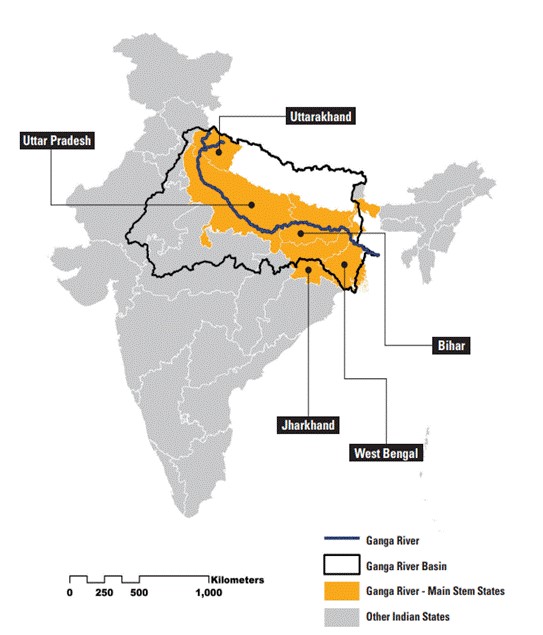
The Ganga River basin is the largest in India, encompassing 27% of the country’s land mass and supporting about 47% of its population. Spanning over 11 states, the basin covers nearly 27% of India’s total geographical area. The majority of the basin, around 65.57%, is used for agriculture, while water bodies cover 3.47% of the area. Despite receiving 35.5% of the total water input in terms of precipitation, the Ganga River Basin is the second most water-stressed basin in India, following the Sabarmati Basin, with only 39% of the average per capita annual rainwater input among major Indian river basins. [2]

Vision

The vision for Ganga rejuvenation revolves around restoring the river’s wholesomeness, defined by ensuring “Aviral Dhara” (Continuous Flow), “Nirmal Dhara” (Unpolluted Flow), and maintaining its geological and ecological integrity. A comprehensive Ganga River Basin Management Plan (GRBMP) was developed by a consortium of seven IITs, emphasizing an Integrated River Basin Management (IRBM) approach with multi-sectoral and multi-agency interventions.

Key Interventions

  • Pollution Abatement (Nirmal Ganga): Addressing and reducing the sources of pollution in the river.
  • Improving Ecology and Flow (Aviral Ganga): Enhancing the ecological health and continuous flow of the river.
  • Strengthening People-River Connect (Jan Ganga): Fostering a deeper connection between the people and the river through community engagement and awareness.
  • Facilitating Research and Policy (Gyan Ganga): Promoting diversified research, scientific mapping, studies, and evidence-based policy formulation

Over the years, concerted efforts made by NMCG are beginning to find success in restoring the pristine glory of the river.

Progress Overview( As of 31 January 2025) [3]

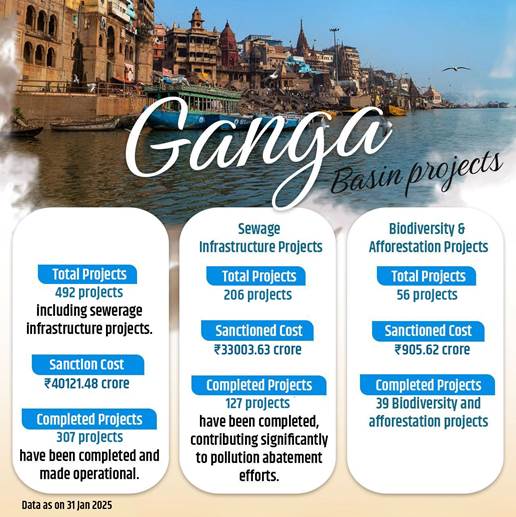
  • A comprehensive total of 492 projects, valued at 40121.48 Crore, have been launched.
  • Among these, 307 projects have reached completion and are now operational.
  • An impressive 206 projects addressing Sewage Infrastructure have been set in motion.
  • A substantial fund of 33003.63Crore has been sanctioned for these sewage infrastructure projects.
  • Of these, 127 sewerage projects have been successfully completed, playing a pivotal role in mitigating pollution.
  • Additionally, 56 projects dedicated to Biodiversity & Afforestation have been undertaken.
  • These projects have received a funding commitment of over ₹ 905.62 Crore.
  • Notably, 39 projects focused on biodiversity and afforestation have been successfully concluded, augmenting the ecological equilibrium of the Ganga basin.

Government’s Recent Initiatives for a Pollution Free Ganga[4]

  1. In a major step towards tackling pollution, the 60th Executive Committee Meeting of the National Mission for Clean Ganga (NMCG) approved the interception and diversion of the Durga Drain and the construction of a 60 MLD capacity sewage treatment plant (STP) in Varanasi, Uttar Pradesh, at a cost of ₹274.31 crore. This project, based on the hybrid annuity model, includes a 75 MLD capacity main pumping station and other essential structures, ensuring long-term wastewater management and pollution control.
  1. Additionally, a significant project was approved to prevent the flow of untreated sewage into Varuna, a major tributary of the Ganga, in Bhadohi. With an investment of ₹127.26 crore, this initiative will establish three STPs with capacities of 17 MLD, 5 MLD, and 3 MLD, along with an extensive sewer network to tap four major drains and prevent pollution. This project follows the Design-Build-Operate-Transfer (DBOT) model, ensuring sustainable operation and maintenance over the next 15 years.
  1. A National Framework for Safe Reuse of Treated Water has been developed by NMCG to guide States in formulating their reuse policies and to establish economic models for the reuse of treated wastewater. NMCG has also issued a guidance handbook for urban policymakers and city officials on safely reusing treated water, which aims to conserve freshwater resources and promote sustainable water management practices. [5]
  1. Seven Biodiversity Parks in seven districts (Mirzapur, Bulandshahar, Hapur, Budaun, Ayodhya, Bijnore and Pratapgarh) of Uttar Pradesh and 5 priority wetlands in Uttar Pradesh (3), Bihar (1) and Jharkhand (1) have been sanctioned.
  1. NMCG, through the State Forest Department, has implemented a forestry intervention project along the main stem of river Ganga. 33,024 hectares area have been afforested with an expenditure of about ₹ 398 crore.
  1. A total of 143.8 lakhs of Indian Major Carp (IMC) fingerlings have been ranched in the Ganga since 2017 to conserve fish biodiversity and prey base for river Dolphins, and ensure the livelihood of fishers in the Ganga basin under the special project implemented by Central Inland Fisheries Research Institute (CIFRI).
  1. A total of 203 number of sewerage infrastructure projects costing ₹ 32,613 crore have been taken up for remediation of polluted river areas with treatment capacity of 6,255 Million Litres per Day (MLD). 127 STP projects with a capacity of 3,446 MLD have been completed and made operational.
  1. For industrial pollution abatement, 3 nos. of Common Effluent Treatment Plants (CETPs) have been sanctioned, i.e., Jajmau CETP (20 MLD), Banther CETP (4.5 MLD), and Mathura CETP (6.25 MLD). Two projects, Mathura CETP (6.25 MLD) and Jajmau CETP (20 MLD) have been completed.

Conclusion

The National Mission for Clean Ganga (NMCG) strives to deploy the best available knowledge and resources globally for Ganga rejuvenation. With significant progress achieved in various interventions, the programme continues to strive towards its goal of ensuring a clean and thriving Ganga for future generations.

1st International Conference on Advances in Water Resources (AWaRe 2025)

Eduindex News Network

Daily writing prompt
What is the last thing you learned?

1st International Conference on Advances in Water Resources (AWaRe 2025)
Date: 10th – 12th June 2025
Venue: Maulana Azad National Institute of Technology (MANIT), Bhopal, India
Website: AWaRe 2025

About the Conference

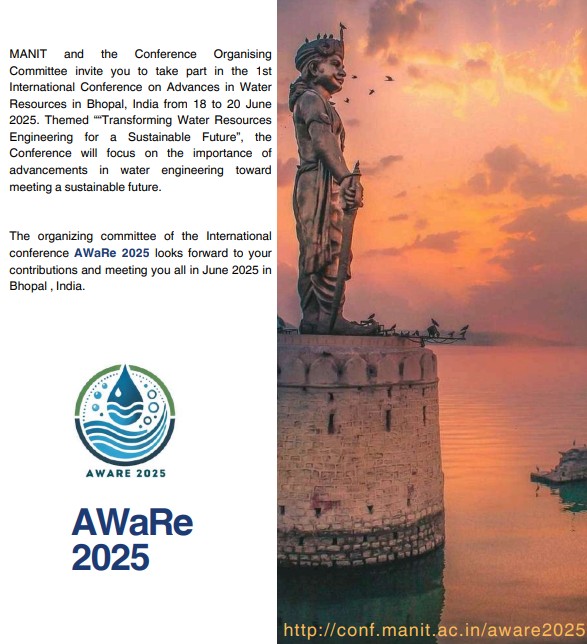
The 1st International Conference on Advances in Water Resources (AWaRe 2025) aims to bring together experts from academia, industry, and research organizations to discuss innovations and challenges in water resources engineering. Organized by the Department of Civil Engineering and the Centre of Excellence in Water Management at MANIT Bhopal, in association with the Central Water Commission (CWC), India, this conference will provide a platform for knowledge exchange and collaboration.

The theme for AWaRe 2025 is “Transforming Water Resources Engineering for a Sustainable Future.” The event will explore cutting-edge research and technological advancements that enhance water conservation, management, and sustainability, ensuring a balance between human development and environmental protection.

Key Themes of the Conference

AWaRe 2025 will cover a wide range of topics, including but not limited to:

1. Innovations in Hydraulics

  • Urban hydraulics and hydraulic structures
  • Computational fluid dynamics (CFD)
  • Environmental and eco-hydraulics
  • Coastal hydraulics and offshore structures

2. Sustainable River Engineering and River Training

  • Sediment transport and river morphology
  • Nature-based solutions for large rivers and lakes
  • Trans-boundary water sharing

3. Catchment Hydrology and Watershed Management

  • Flood forecasting and protection measures
  • Climate modeling and climate change mitigation
  • Integrated watershed management and disaster risk reduction

4. Subsurface Water Dynamics

  • Groundwater resource assessment and planning
  • Seawater intrusion and forensic groundwater hydrology
  • Smart aquifer recharge and management

5. Hydro-informatics and Advanced Data Analytics

  • Big data management in water resources
  • AI-driven tools for decision support
  • Cyber infrastructure for water systems

6. Green and Blue Nexus

  • Water reclamation and reuse
  • Renewable energy and sustainable coastal water management

About the Organizing Institution

Maulana Azad National Institute of Technology (MANIT), Bhopal

Established in 1960, MANIT Bhopal is one of India’s premier engineering institutions. It was designated as a National Institute of Technology (NIT) in 2002 and is recognized for its contributions to technical education and research.

The Department of Civil Engineering, one of the institute’s oldest departments, offers B.Tech., M.Tech., and Ph.D. programs in various fields, including Water Resources Engineering. The Centre of Excellence in Water Management, established in 2021, specializes in research and postgraduate education in water resources engineering and management.

Registration Details

CategoryRegistration Fee
Research ScholarsRs. 2000
Academicians / Scientists / Professional ResearchersRs. 3000
Industry Personnel (Public & Private Enterprises)Rs. 4000
Foreign Delegates / Authors$200

Important Dates

  • Full Paper Submission Opens: 1st December 2024
  • Full Paper Submission Deadline: 15th March 2025
  • Paper Acceptance Notification: 15th April 2025
  • Early-Bird Registration: 15th May – 1st June 2025

Why Attend AWaRe 2025?

  • Engage with Global Experts: Learn from internationally renowned researchers and industry leaders.
  • Showcase Your Research: Present your work to a diverse audience and receive valuable feedback.
  • Networking Opportunities: Connect with professionals, academics, and policymakers.
  • Workshops & Technical Sessions: Gain insights into the latest advancements in water resources engineering.

MANIT Bhopal invites researchers, scholars, and industry professionals to participate in AWaRe 2025 and contribute to shaping the future of water resources management. We look forward to your valuable contributions and active engagement in the conference discussions.

For more details, visit AWaRe 2025 Website.

Celebrating a Decade of Soil Health Cards

Daily writing prompt
Describe a phase in life that was difficult to say goodbye to.

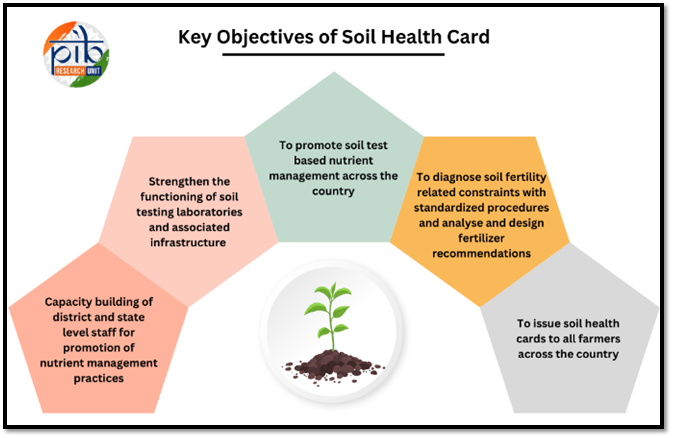
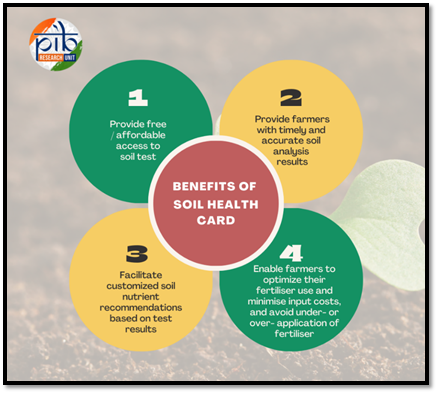
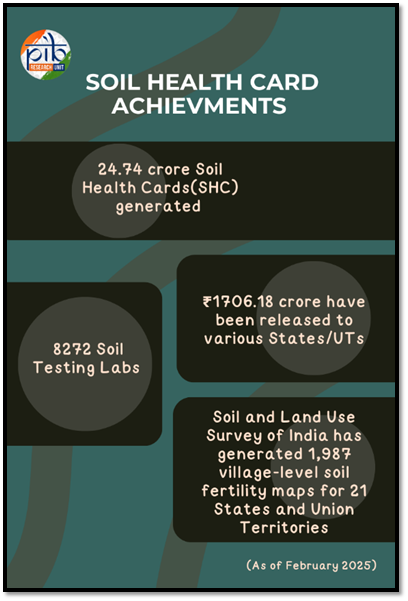
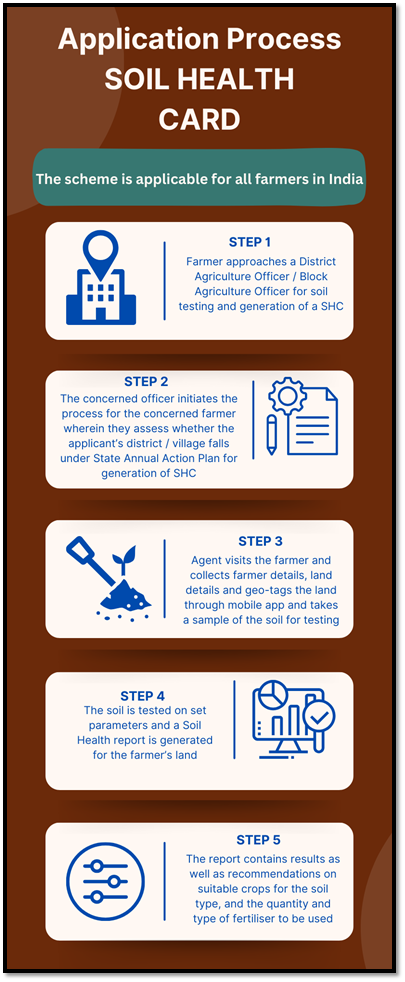
The Soil Health Card Scheme was introduced by Prime Minister Shri Narendra Modi on 19th February, 2015 at Suratgarh, Rajasthan. The scheme was launched to assist State Governments to issue soil health cards to all farmers in the country. Soil health card provides information to farmers on nutrient status of their soil along with recommendation on appropriate dosage of nutrients to be applied for improving soil health and its fertility.

The Soil Health Card Portal (www.soilhealth.dac.gov.in) facilitates generation of Soil Health Cards for the benefit of farmers in uniform and standardized format across country in all major languages and 5 dialects.

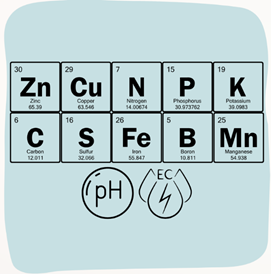
The Soil Health Card contains status of the soil with respect to 12 parameters, namely N,P,K, S (Macro-nutrients); Zn, Fe, Cu, Mn, Bo (Micro – nutrients) ; and pH (Acidity or Basicity), EC (Electrical Conductivity) and OC (Organic Carbon).

Based on this, the card will also indicate fertilizer recommendations and soil amendment required for the farm. Soil Samples are taken generally two times in a year, after harvesting of Rabi and Kharif Crop respectively or when there is no standing crop in the field.

The Guideline of Village Level Soil Testing Labs (VLSTLs) was issued in June 2023. VLSTLs can be set up by individual entrepreneurs i.e. rural youth and community based entrepreneurs, including Self Help Groups (SHGs), Schools, Agriculture Universities etc. The beneficiary/village level entrepreneur should be a youth whose age should not be below 18 years and should not be more than 27 years. Self Help Groups, Farmers Producers Organisation (FPO) can also be enrolled as VLSTL.

As of February 2025, 665 Village-level Soil Testing Labs have been established in 17 States.

School Soil Health Programme

A pilot project on School Soil Health Programme has been undertaken by Department of Agriculture and Farmers Welfare in (DA&FW) collaboration with Department of School Education & Literacy (DSE&L), Indian Council of Agricultural Research (ICAR) and State Governments in 20 schools (10 Kendriya Vidyalaya & 10 Navodaya Vidyalaya) in rural areas. The aim is to make students aware about soil health for sustainable agriculture practices. 20 soil health labs were set up in these schools. Modules for students from class VI to XII and teachers were developed and disseminated. Under the programme, soil samples were collected by School Students and soil testing were also done by students and SHCs were generated Students also educated farmers about the recommendation of Soil health card for judicious use of fertilizer and crop recommendation.

As of 2024, 1020 schools are implementing the School Soil Health Programme, with 1000 soil testing labs set up and 125,972 students enrolled.

Soil Health Card scheme has been merged in Rashtriya Krishi Vikas Yojana (RKVY) scheme as one of its components under the name ‘Soil Health & Fertility’ from the year 2022-23.

Technological Advancements

SHC Mobile App

To further ease the process of obtaining easy access to the Soil Health Card, the Government of India in 2023 made technological interventions in the New Soil Health Card Scheme. The Soil Health Card portal was revamped and integrated with a Geographic Information System (GIS) system so that all the test results are captured and seen on a map. To make the implementation/monitoring of the scheme smooth and to facilitate farmers an easy access to his soil health card, the mobile application has been made robust with the additional features such as:

  • Restrict the sample collection region for the Village Level Entrepreneur/Operator collecting the soil samples
  • Auto selection of the latitude and longitude of the location
  • Generation of a QR code to link with the sample and test results of all samples directly on the portal from the geo-mapped labs, without any manual intervention.

This application provides the graphical information of all over the India and also shows multiple layers State Boundary, District Boundary, Taluka Boundary, Panchayat Boundary and Cadastral Boundary.

The new system was rolled out in April 2023 and samples are now being collected through the mobile application. Soil Health Cards are now generated on this revamped portal.

For digitizing the Soil Health Cards, Web based work flow application Soil Health Card portal has been designed and developed by National Informatics Centre (NIC).

Conclusion

The Soil Health Card Scheme has transformed agricultural practices in India over the past decade. Since 2015, it has empowered farmers with crucial information on soil nutrient status and optimal fertilizer use, promoting sustainable farming and improved crop productivity. Initiatives like the School Soil Health Programme have expanded soil health awareness among students and local communities. With a robust mobile app, the process of obtaining a Soil Health Card has enhanced accessibility, efficiency, and transparency. As the scheme evolves, it continues to play a vital role in fostering sustainable agricultural development and safeguarding India’s soil health for future generations.

References:

Kindlty find the pdf file 

****

MANIT Bhopal to Host 11th International Conference on Transportation Systems Engineering & Management (CTSEM 2025)

Daily writing prompt
What bores you?

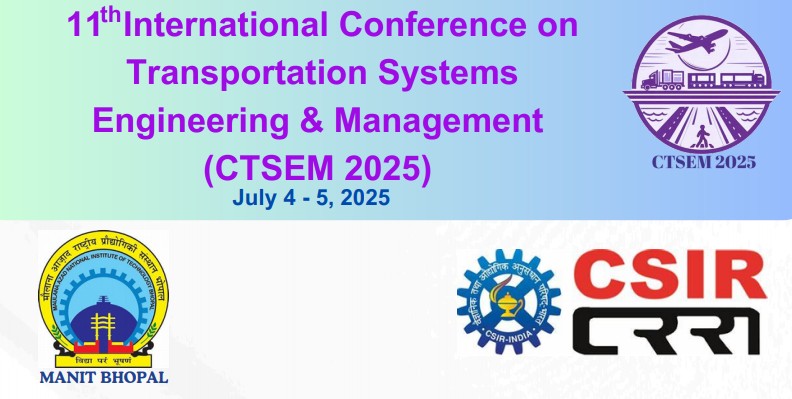
Bhopal, India – Maulana Azad National Institute of Technology (MANIT) Bhopal, in collaboration with CSIR-Central Road Research Institute (CRRI), New Delhi, is set to host the 11th International Conference on Transportation Systems Engineering & Management (CTSEM 2025) on July 4-5, 2025. The conference aims to bring together researchers, academicians, scientists, and transportation professionals to discuss emerging challenges and advancements in transportation engineering and management.

Conference Leadership

  • Chief Patron: Dr. Manoranjan Parida, Director, CSIR-CRRI, New Delhi
  • Conference Chairperson: Dr. P.K. Agarwal, MANIT Bhopal
  • Conference Secretaries:
    • Dr. Siddhartha Rokade, MANIT Bhopal
    • Dr. Pritikana Das, MANIT Bhopal
    • Dr. Bivina G.R., MANIT Bhopal

Conference Highlights

CTSEM 2025 will provide a platform for experts to discuss key issues related to transportation systems, including:

  • Sustainable and Intelligent Transportation Solutions
  • Traffic Management and Congestion Mitigation
  • Road Safety and Infrastructure Development
  • AI, Big Data, and IoT in Transportation
  • Public Transport Planning & Management
  • Urban Mobility and Non-Motorized Transport (NMT)
  • Freight Transport and Logistics

The event will feature pre-conference workshops, networking sessions, technical visits, and best paper awards, making it a valuable gathering for professionals in the field.

Paper Submission and Publication Opportunities

Authors are invited to submit their full papers via the MSCMT platform by April 15, 2025, with final acceptance notifications to be sent by June 1, 2025. Selected high-quality papers will be published in SCOPUS-indexed conference proceedings by Springer, and some outstanding papers will be considered for publication in the Journal of Traffic and Transportation Engineering (JTTE) by Elsevier.

Sponsorship Opportunities

CTSEM 2025 welcomes industry sponsors to participate, with sponsorship categories ranging from Platinum (INR 3 lakhs) to Bronze (INR 0.5 lakh). Sponsors will receive branding and promotional benefits, exhibition space, and recognition during the conference.

About MANIT Bhopal and CSIR-CRRI

MANIT Bhopal, one of India’s premier technical institutions, has been at the forefront of engineering education and research. The Civil Engineering Department is a key center for academic excellence, fostering innovative solutions for urban and rural transportation challenges. CSIR-CRRI, a leading research institute, is known for its contributions to road and transportation planning, playing a crucial role in shaping India’s infrastructure.

Venue and Connectivity

The conference will be held at MANIT Bhopal, located in the heart of Bhopal City, known as the City of Lakes. Bhopal is well-connected by air, rail, and road, with the campus just 20 km from the airport and 8 km from the railway station.

Contact Information

CTSEM 2025 Organizing Committee
Transportation Engineering Division, Civil Engineering Department
Maulana Azad National Institute of Technology (MANIT), Bhopal, India
Email: ctsem2025manit@gmail.com
Website: CTSEM 2025

With a rich history of successful editions hosted by reputed institutions across India, CTSEM 2025 at MANIT Bhopal promises to be an enriching event for professionals in the transportation sector. Don’t miss the opportunity to be part of this significant international conference!

Integrating Social Work into Environmental and Social Issues

Daily writing prompt
List five things you do for fun.

By Eduindex News

Integrating social work into environmental and social issues is a growing necessity as the interconnectedness of human well-being and environmental health becomes increasingly evident. Social workers are uniquely positioned to address the social dimensions of environmental challenges, such as climate change, natural disasters, and pollution, which disproportionately affect vulnerable populations. By incorporating ecological perspectives into their practice, social workers can advocate for sustainable policies, educate communities about environmental risks, and help individuals and groups adapt to changing conditions. This integration fosters a holistic approach to problem-solving, emphasizing both human rights and environmental justice to create resilient communities.

Moreover, social workers can play a pivotal role in bridging the gap between grassroots movements and policy-making to address systemic inequities exacerbated by environmental degradation. For instance, they can work with marginalized communities to amplify their voices in decision-making processes, ensuring equitable access to resources like clean water, safe housing, and renewable energy. By collaborating with environmental scientists, policymakers, and community leaders, social workers contribute to sustainable development initiatives that prioritize social equity. This interdisciplinary approach not only addresses immediate social and environmental crises but also promotes long-term solutions that align with the principles of social justice and environmental stewardship.Social work is crucial in addressing multifaceted issues such as environmental sustainability, health, and gender inequality. Recent studies by scholars like MM Ogbanga have shown how social work can contribute to solving complex challenges faced by communities, particularly in regions affected by environmental and socio-economic crises.

  1. Flooding and Housing Health Impacts in Rivers State, Nigeria
    Ogbanga’s research on the impacts of flooding in Ahoada East and West Local Government areas highlights how natural disasters exacerbate health and housing issues. Social workers play a pivotal role in disaster response, from aiding in community recovery to providing counseling and support to affected individuals.
  2. Gender and Unemployment in the Niger Delta
    Another critical study addresses how oil exploration has worsened gender disparities and unemployment. Social work can be instrumental in advocating for policies that ensure gender equality and offer employment opportunities for marginalized groups.
  3. Energy Poverty and Sustainability Challenges
    Energy poverty is another significant issue in Nigeria, especially in rural communities. Social work interventions that address this challenge include advocacy for better energy access and environmental sustainability.
  4. The Role of Communication Skills in Social Work
    Effective communication is vital in social work practice, and Ogbanga’s work emphasizes how enhancing communication skills can better support communities facing social challenges.
  5. Climate Change and Feminist Environmentalism
    The intersection of climate change and feminist environmentalism in the Niger Delta demonstrates how social workers can use gender-sensitive approaches to address climate change’s disproportionate impacts on women.

Through these and other studies, social work integrates into a broader framework of social justice, community resilience, and sustainable development, proving its relevance in addressing today’s global challenges. Whether addressing the aftermath of flooding, gender inequalities, or the challenges posed by environmental degradation, social workers are central to fostering adaptive responses and building sustainable futures for vulnerable populations.

For further exploration of these issues, check out the works by Ogbanga and others in journals like Nigerian Journal of Agriculture, Food and Environment, International Journal of Social Science and Humanities Research, and African Journal of Political Science and International Relations.

Referenecs

Amadi, L., Igwe, P., & Ogbanga, M. (2016). Talking Right, Walking Wrong: Global Environmental Negotiations and Unsustainable Environmental Consumption. International Journal of Research in Environmental Science2(2), 24-38.

Amadi, L. A., Ogbanga, M. M., & Agena, J. E. (2015). Climate change and feminist environmentalism in the Niger Delta, Nigeria. African Journal of Political Science and International Relations9(9), 361-371.

Briggs, N. D., Okowa, W. J., & Ndimele, O. M. (Eds.). (2013). The Economic Development of Rivers State: In Commemoration of Port Harcourt Centenary Celebration: 2013. Rivers State Economic Advisory Council/Onyoma Research Publications.

Bukie, B. F., & Ogbanga, M. M. (2024). Correctional Institutions (Prison) Congestion and the Health Implication of Inmates in Nigeria.

de Lima, G. N., Zuñiga, R. A. A., & Ogbanga, M. M. (2023). Impacts of Climate Change on Agriculture and Food Security in Africa and Latin America and the Caribbean. In Climate Change and Health Hazards: Addressing Hazards to Human and Environmental Health from a Changing Climate (pp. 251-275). Cham: Springer Nature Switzerland.

Nwakanma, E., & Ogbanga, M. M. Assessing disaster preparedness and Indigenous disaster management systems of at-risk communities in Isoko-South LGA of Delta State, Nigeria.

Ogbanga, M. M. (2024). Communication skills in social work. EduPedia Publications Pvt Ltd.

Ogbanga, M. M., & Bukie, B. F. (2024). Traditional Institutions and Conflict Resolution in Nigeria: A Social Work Analysis.

Ogbanga, M. M., & Sharma, S. N. (2024). Climate Change and Mental Heat. Eduindex

Uzobo, E., & Ogbanga, M. M. (2017). The Role of Civil Registration and Vital Statistics in the Attainment of Selected Sustainable Development Goals in Nigeria. Indian Journal of Sustainable Development3(2), 1-10.

Uzobo, E., Ogbanga, M. M., & Jackson, J. T. C. B. (2014). Socio-cultural factors and attitudes affecting the health status of rural communities: a study of Danmusa, Katsina State, Nigeria. Int J Sci Res3(3), 837-844.

Flash Drought: An Overview

Daily writing prompt
What is something others do that sparks your admiration?

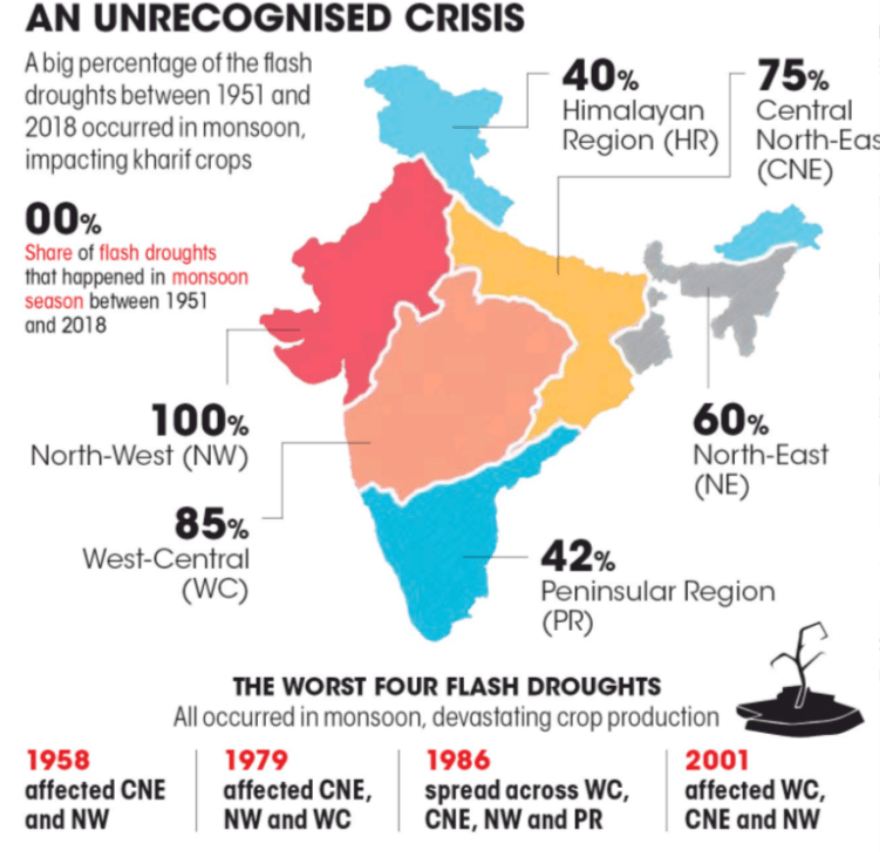
Flash drought is a rapidly developing drought phenomenon characterized by a sudden onset and rapid intensification of dry conditions over a short period, typically weeks to months. Unlike traditional droughts that develop slowly over years, flash droughts emerge quickly due to a combination of factors, including weather anomalies and land-atmosphere interactions. These events can cause significant agricultural, hydrological, and ecological damage due to their abrupt nature.


Key Characteristics of Flash Drought

  1. Rapid Onset: Flash droughts can develop within a few weeks, often catching farmers, water managers, and policymakers off guard.
  2. Meteorological Drivers:
    • High Temperatures: Heatwaves and above-average temperatures increase evapotranspiration rates.
    • Low Precipitation: Sudden declines in rainfall or prolonged dry spells exacerbate moisture deficits.
  3. Land-Atmosphere Interaction:
    • Soil Moisture Loss: Rapid depletion of soil moisture due to high temperatures and lack of precipitation.
    • Vegetation Stress: Plants face water stress, affecting growth and crop yields.
  4. Short Duration: Typically lasts a few weeks to several months but can have lasting impacts, particularly in agriculture.

Causes of Flash Drought

  1. Climate Variability: Changes in atmospheric circulation patterns can disrupt normal weather, leading to reduced rainfall.
  2. Human Activities: Land use changes, deforestation, and over-extraction of water resources exacerbate the risk of flash drought.
  3. Natural Cycles: Phenomena like El Niño-Southern Oscillation (ENSO) influence rainfall patterns and temperature anomalies.

Impacts of Flash Drought

  1. Agricultural:
    • Damage to crops due to sudden water stress.
    • Reduced yields, particularly in rain-fed agriculture.
    • Economic losses for farmers.
  2. Ecological:
    • Stress on aquatic and terrestrial ecosystems.
    • Increased vulnerability of wildlife to habitat degradation.
  3. Hydrological:
    • Rapid depletion of reservoirs and groundwater.
    • Reduced streamflow and water availability for human and industrial use.
  4. Socioeconomic:
    • Food insecurity due to crop failures.
    • Increased costs for irrigation and water management.

Monitoring and Prediction

  1. Satellite Technology: Remote sensing helps monitor soil moisture, vegetation health, and precipitation patterns.
  2. Climate Models: Advanced modeling techniques are employed to predict flash drought risks based on temperature and precipitation forecasts.
  3. Indices:
    • Standardized Precipitation Index (SPI)
    • Evaporative Stress Index (ESI)
    • Soil Moisture Deficit Index (SMDI)

Mitigation Strategies

  1. Improved Forecasting: Investing in meteorological services to provide early warnings.
  2. Water Management:
    • Promoting efficient irrigation techniques.
    • Storing water during wet periods for use during drought.
  3. Agricultural Practices:
    • Using drought-resistant crop varieties.
    • Adopting conservation agriculture practices to retain soil moisture.
  4. Policy Interventions:
    • Developing drought preparedness plans.
    • Subsidizing crop insurance for farmers.

Examples of Flash Drought Events

  1. 2012 United States: A flash drought severely impacted corn and soybean crops, causing billions in economic losses.
  2. 2019 Southeast Asia: A rapid drought affected rice production, leading to food shortages.
  3. 2022 Europe: Unseasonably high temperatures and low rainfall caused sudden agricultural stress in parts of Western Europe.

Conclusion

Flash droughts represent an increasing challenge in the context of climate change. Their rapid onset and severe impacts demand robust monitoring systems, adaptive strategies, and sustainable resource management. By understanding their drivers and effects, societies can better prepare for and mitigate the risks associated with these sudden drought phenomena.

Building Resilient Cities: Strategies for Addressing Disasters and Climate Change

Daily writing prompt
What is something others do that sparks your admiration?

By Shashikant Nishant Sharma

As urbanization accelerates worldwide, cities are increasingly vulnerable to disasters and the adverse effects of climate change. Rising sea levels, extreme weather events, and resource shortages threaten urban infrastructure, economies, and populations. Building resilience—the ability of a city to anticipate, prepare for, respond to, and recover from adverse events—is crucial for ensuring sustainable urban development. This article explores strategies to make cities resilient against disasters and climate change.


Understanding Urban Resilience

Urban resilience encompasses a city’s capacity to:

  • Minimize risks and vulnerabilities.
  • Absorb, recover, and adapt to adverse conditions.
  • Maintain functionality despite disruptions.

The concept of resilience is holistic, addressing physical infrastructure, social systems, governance, and environmental sustainability.


Strategies to Enhance Urban Resilience

1. Adopting Climate-Smart Urban Planning

Cities should incorporate climate change scenarios into their urban planning processes. This includes:

  • Zoning regulations to prevent development in high-risk areas such as floodplains and coastal zones.
  • Promoting mixed-use development to reduce travel demand and associated emissions.
  • Implementing green infrastructure like parks, wetlands, and green roofs to manage stormwater and reduce the urban heat island effect.

2. Investing in Resilient Infrastructure

Robust infrastructure systems can withstand disasters and adapt to changing climatic conditions. Key measures include:

  • Designing flood-resistant buildings and elevated roadways.
  • Strengthening existing infrastructure against earthquakes and other hazards.
  • Developing energy-efficient systems powered by renewable energy sources.

3. Strengthening Early Warning Systems

Timely information about impending disasters can save lives and reduce damage. Cities should:

  • Deploy advanced monitoring technologies for weather and environmental changes.
  • Develop community-based alert systems that ensure everyone, including marginalized groups, receives warnings.
  • Conduct regular emergency drills to improve preparedness.

4. Enhancing Community Participation

A resilient city relies on the active participation of its citizens. Strategies to empower communities include:

  • Community-based disaster risk management (CBDRM) programs.
  • Encouraging local stewardship of natural resources.
  • Conducting public awareness campaigns on disaster preparedness and climate adaptation.

5. Fostering Sustainable Mobility

Transportation systems should be designed to endure disruptions while minimizing emissions. Solutions include:

  • Investing in public transportation and non-motorized transport infrastructure.
  • Promoting electric vehicles and carpooling systems.
  • Developing adaptive transport networks with redundancies to ensure connectivity during crises.

6. Building Financial Resilience

Economic stability underpins urban resilience. Cities should:

  • Establish disaster insurance schemes for public infrastructure and private assets.
  • Create emergency funds to finance recovery efforts.
  • Support livelihood diversification for urban populations to reduce dependency on climate-sensitive sectors.

7. Promoting Nature-Based Solutions

Nature-based solutions harness the power of ecosystems to mitigate climate risks. These include:

  • Restoring mangroves and wetlands to act as natural buffers against storm surges.
  • Implementing urban forests to reduce air pollution and regulate temperatures.
  • Encouraging permeable pavements to enhance groundwater recharge and reduce urban flooding.

8. Strengthening Governance and Policy Frameworks

Resilient cities require strong institutional frameworks. Effective governance includes:

  • Creating integrated disaster management plans.
  • Establishing climate adaptation policies aligned with global frameworks like the Paris Agreement.
  • Encouraging multi-stakeholder collaborations between governments, businesses, and civil society.

Case Studies of Resilient Cities

1. Rotterdam, Netherlands

Rotterdam is a global leader in urban resilience. Its innovative water management system, including flood barriers, floating buildings, and water plazas, demonstrates the city’s commitment to combating sea-level rise.

2. Sendai, Japan

Sendai’s reconstruction after the 2011 earthquake and tsunami showcases a model for disaster resilience. The city emphasized community engagement, robust infrastructure, and sustainable energy systems.

3. Medellín, Colombia

Once plagued by violence and poor infrastructure, Medellín transformed into a resilient city through inclusive urban planning, such as its famous cable cars and green corridors.


Conclusion

Making cities resilient to disasters and climate change is no longer optional; it is a necessity. The integration of innovative planning, robust infrastructure, community involvement, and sustainable practices can enable cities to thrive in the face of adversity. Governments, urban planners, and citizens must collaborate to build cities that are not only safe and sustainable but also adaptable to an uncertain future.

Investing in urban resilience today will pay dividends in securing the wellbeing of future generations.

References

Acuti, D., & Bellucci, M. (2020). Resilient cities and regions: planning, initiatives, and perspectives. Climate Action, 763-774.

Greenwalt, J., Raasakka, N., & Alverson, K. (2018). Building urban resilience to address urbanization and climate change. In Resilience (pp. 151-164). Elsevier.

Jabareen, Y. (2013). Planning the resilient city: Concepts and strategies for coping with climate change and environmental risk. Cities31, 220-229.

Khan, A., Carlosena, L., Khorat, S., Khatun, R., Das, D., Doan, Q. V., … & Niyogi, D. (2023). Urban cooling potential and cost comparison of heat mitigation techniques for their impact on the lower atmosphere. Computational Urban Science3(1), 26.

Orsetti, E., Tollin, N., Lehmann, M., Valderrama, V. A., & Morató, J. (2022). Building resilient cities: climate change and health interlinkages in the planning of public spaces. International journal of environmental research and public health19(3), 1355.

Sharma, S. N. (2018). Review of National Urban Policy Framework 2018. Think India Journal21(3), 74-81.

Recycled & Secondary Materials in the Construction of Roads

Daily writing prompt
What is one thing you would change about yourself?

By Kavita Dehalwar

The use of recycled and secondary materials in road construction has emerged as an essential practice for achieving sustainability in the infrastructure sector. These materials not only reduce the demand for natural resources but also mitigate environmental impacts by repurposing waste products. Below is a detailed examination of the topic, highlighting types of materials, benefits, challenges, and future directions.


1. Types of Recycled and Secondary Materials

Several recycled and secondary materials can be used in road construction, including:

  • Recycled Asphalt Pavement (RAP): Milled material from existing roads, used as a cost-effective substitute for virgin asphalt.
  • Recycled Concrete Aggregate (RCA): Crushed concrete from demolished structures, utilized in sub-base layers or as aggregate in new concrete.
  • Steel Slag: A byproduct of steel production, known for its strength and skid resistance, suitable for aggregates in base layers.
  • Crushed Glass (Glassphalt): Recycled glass incorporated into asphalt mixtures.
  • Rubberized Asphalt: Ground rubber from waste tires mixed with asphalt binders to enhance durability and flexibility.
  • Fly Ash and Bottom Ash: Byproducts of coal combustion, often used as fillers or stabilizers in subgrade soils.
  • Plastic Waste: Melted or shredded plastics incorporated into asphalt mixes to improve durability and resistance to cracking.

2. Benefits

  • Environmental Sustainability:
    • Reduces the need for virgin materials, conserving natural resources like aggregates and bitumen.
    • Diverts waste from landfills and reduces pollution.
    • Lowers greenhouse gas emissions by minimizing the extraction and transportation of raw materials.
  • Economic Advantages:
    • Cost savings from using readily available waste materials.
    • Extended lifespan of roads due to enhanced properties of recycled materials (e.g., rubberized asphalt reduces cracking and maintenance needs).
  • Performance Improvements:
    • Some materials, such as steel slag and rubberized asphalt, improve road strength, flexibility, and resistance to wear.

3. Challenges

  • Material Quality and Consistency:
    Recycled materials can vary in composition and quality, leading to potential performance issues if not properly processed and tested.
  • Technical Limitations:
    • Compatibility of recycled materials with traditional road construction processes can be challenging.
    • Limited research on long-term durability for some innovative materials (e.g., recycled plastics).
  • Regulatory and Standardization Barriers:
    • Lack of universal standards and guidelines for incorporating recycled materials into road construction.
    • Hesitation among contractors and governments due to the perceived risks associated with new materials.
  • Economic Factors:
    • Initial costs of processing and testing recycled materials can be high.
    • In some regions, the availability of virgin materials at low cost reduces the economic incentive to use alternatives.

4. Case Studies

  • Rubberized Asphalt in the United States: States like California and Arizona have successfully used rubberized asphalt in highway projects, reducing waste tires and improving road durability.
  • Plastic Roads in India: Cities like Chennai have pioneered the use of shredded plastic in road asphalt, offering a sustainable solution to plastic waste while enhancing road performance.
  • Steel Slag Roads in Europe: Countries such as the Netherlands have utilized steel slag aggregates for base layers, demonstrating improved load-bearing capacity and lifespan.

5. Future Directions

  • Innovation in Material Processing:
    Advances in processing technologies can improve the quality and consistency of recycled materials, making them more viable for widespread use.
  • Lifecycle Analysis and Circular Economy:
    Conducting comprehensive lifecycle assessments to quantify the environmental and economic benefits of recycled materials will support their adoption.
  • Policy Support and Incentives:
    Governments can promote the use of recycled materials through subsidies, tax incentives, and mandatory quotas in public infrastructure projects.
  • Research and Development:
    Continued R&D into novel materials, such as bio-based binders and composite materials, can provide sustainable alternatives to traditional road construction inputs.

Conclusion

Incorporating recycled and secondary materials in road construction is a promising pathway to sustainable infrastructure development. While challenges exist, ongoing advancements in technology, coupled with supportive policies, can pave the way for broader adoption. This approach not only addresses environmental concerns but also contributes to economic efficiency and enhanced road performance, making it a win-win solution for modern societies.

References

Kassim, T. A., Simoneit, B. R., & Williamson, K. J. (2005). Recycling solid wastes as road construction materials: An environmentally sustainable approach. Water Pollution: Environmental Impact Assessment of Recycled Wastes on Surface and Ground Waters, 59-181.

Marinković, M., Zavadskas, E. K., Matić, B., Jovanović, S., Das, D. K., & Sremac, S. (2022). Application of wasted and recycled materials for production of stabilized layers of road structures. Buildings12(5), 552.

Nunes, M. C. M., Bridges, M. G., & Dawson, A. R. (1996). Assessment of secondary materials for pavement construction: Technical and environmental aspects. Waste Management16(1-3), 87-96.

Petkovic, G., Engelsen, C. J., Håøya, A. O., & Breedveld, G. (2004). Environmental impact from the use of recycled materials in road construction: method for decision-making in Norway. Resources, Conservation and Recycling42(3), 249-264.

Sharma, S. N., Prajapati, R., Jaiswal, A., & Dehalwar, K. (2024, June). A Comparative Study of the Applications and Prospects of Self-healing Concrete/Biocrete and Self-Sensing Concrete. In IOP Conference Series: Earth and Environmental Science (Vol. 1326, No. 1, p. 012090). IOP Publishing.

Sharma, S. N., Lodhi, A. S., Dehalwar, K., & Jaiswal, A. (2024, June). Life Cycle Assessment (LCA) of Recycled & Secondary Materials in the Construction of Roads. In IOP Conference Series: Earth and Environmental Science (Vol. 1326, No. 1, p. 012102). IOP Publishing.

Global Nature Conservation Index

The Global Nature Conservation Index (NCI) 2024 is brought out recently, for the first time, by Goldman Sonnenfeldt School of Sustainability and Climate Change, Ben-Gurion University of the Negev, Israel and BioDB.com. India has been ranked 176 out of total 180 countries undermining the well-recognized efforts of India in Land Management, Threats to Biodiversity, Capacity & Governance and Climate Change Mitigation. NCI has not taken into account the country reported data in respect of many indicators and relied on many other sources leading to unrealistic NCI index. Further, NCI has completely ignored India’s leadership role in international environmental forums such as International Big Cat Alliance (IBCA), Mission LiFE, International Solar Alliance (ISA) and Coalition for Disaster Resilience Infrastructure (CDRI) advocating for global cooperation on biodiversity conservation as well as its leadership role on global climate change agenda.

In recent years, India has taken several measures in areas of land management and threats to its biodiversity which have not been taken into account while deriving NCI. For example, the Government of India enacted Biological Diversity Act, 2002, as amended by the Biological Diversity (Amendment) Act, 2023 (BD Act) together with new set of Rules to conserve, sustainably use and regulate the access of biological resources and knowledge associated thereto. The Act covers various measures under the provisions of the BD Act to conserve biodiversity including the constitution of Biodiversity Management Committees (BMCs), notification for Biodiversity Heritage Sites and notification for threatened species. The notification confers power to the State Biodiversity Boards (SBBs) for regulating access to the notified species and to take measures to rehabilitate and preserve those species.

Some of India’s key achievements in land management and biodiversity conservation are as follows:

  1. India has 1022 Protected Areas in the country, covering an area of 178,640 sq. km, which is about 5.43 % of the geographical area of the country.
  2. Total Forest Cover has increased from 21.23% in 2013 to 21.71% in 2021 .
  3. India has 72.16 lakh Ha of forest cover as per the FAO’s Global Forest Resource Assessment 2020, securing its place among the top ten countries worldwide.
    1. Eco-Sensitive Zones of 487 Protected Areas have been established across India.
    2. Number of Ramsar sites have increased from 26 in 2014 to 85 in 2024.
    3. There are 55 Tiger Reserves in India and tiger population has increased from 2226 in 2014 to 3682 in 2022.
    4. India’s Project Lion has fostered a growing lion population in the Gir Landscape—from 284 in 1990 to 674 in 2020.
    5. India has reintroduced Cheetah in the Indian habitat through the world’s first inter-continental large wild carnivore translocation project.
    6. With 33 Elephant Reserves, India holds by far the largest number of wild Asian elephants, estimated at about 30,000 or nearly 60% of the population of the species.
    7. India’s leopard population is estimated at 13,874 individuals, representing stable population in comparison to the similar area being sampled in 2018 with 12,852 individuals.
    8. The Namami Gange Programe to rejuvenate River Ganga and its tributaries has been recognised as World Restoration flagship project by UN which reflects the commitments of Government towards conservation, rejuvenation and development of natural ecosystems and its services.

India has already submitted its National Targets under the National Biodiversity Strategy and Action Plans on 10th September, 2024 and also submitted its National Biodiversity Strategy and Action Plan (NBSAP) on 31st October, 2024 on the Convention on Biodiversity Portal during the recently concluded CBD COP at Cali, Colombia. Both the National Biodiversity Targets and the Action Plans are fully aligned with the goals and targets set under the Kunming Montreal Global Diversity Framework (KMGBF). KMGBF is to be implemented in accordance with the national circumstances, priorities and capabilities.

India’s National Biodiversity Strategy and Action Plan (NBSAP) envisages  protecting terrestrial and marine areas, restoring degraded ecosystems and reducing biodiversity threats through pollution control as also invasive species management. India emphasizes species conservation, sustainable resource use, wildlife corridors to reduce fragmentation, and community engagement in biodiversity governance.

India has submitted its Long Term Low Emission Development Strategy (LT-LEDS) for reducing GHG emissions to UNFCCC in November 2022 highlighting strategic low-emissions development transitions for the country. The LT-LEDS was prepared in the light of India’s right to an equitable and fair share of the Global Carbon Budget, which is the practical implementation of Climate Justice. The key elements  of the strategy include- Low carbon development of electricity systems consistent with development; development of an integrated, efficient, inclusive low-carbon transport system; promoting adaptation in urban design, energy and material-efficiency in buildings and sustainable urbanisation; promoting economy-wide decoupling of growth from emissions and development of an efficient, innovative low-emission industrial system; CO2 removal and related engineering solutions; enhancing forest and vegetation cover consistent with socio-economic and ecological considerations; and developing strategy on economic and financial aspects of low-carbon development. Some of the initiatives include the Smart Cities Mission (SCM), National Action Plan of Climate Change (NAPCC) promoting climate-resilient and sustainable urban development.

The Adaptation Communication submitted to UNFCCC in 2023 outlines the actions taken for adaptation to climate risks and challenges, and future strategy for the same. India has developed an integrated approach, ranging from food security, energy use efficiency, and water management aiming to address these issues simultaneously through appropriate policies and initiatives.

National Milk Day (NMD) 2024 Celebrations to Honor Dr. Verghese Kurien’s Legacy

The Department of Animal Husbandry and Dairying (DAHD) under the Ministry of Fisheries, Animal Husbandry and Dairying  is celebrating “National Milk Day” on November 26, 2024, at Manekshaw Centre, New Delhi. This event honours the 103rd birth anniversary of Dr. Verghese Kurien, fondly remembered as the “Father of the White Revolution in India,” and highlights the pivotal contributions of the dairy sector to India’s economy and nutritional security. The celebration will be graced by Union Minister for Fisheries, Animal Husbandry, and Dairying, Shri Rajiv Ranjan Singh alias Lalan Singh, as the Chief Guest, along with Ministers of State for Fisheries, Animal Husbandry, and Dairying, Prof. S.P. Singh Baghel and Shri George Kurian and several other dignitaries.

On this occasion, Union Minister Shri Rajiv Ranjan Singh will also confer the prestigious National Gopal Ratna Awards (one of the highest National  awards in the livestock and  dairy sector)  in 3 categories namely Best Dairy Farmer rearing indigenous cattle/buffalo breeds, Best Artificial Insemination Technician, and Best Dairy Cooperative Society (DCS)/ Milk Producer Company/ Dairy Farmer Producer Organization from across the country.  A newly added Special award in each category would also be conferred on winners from  the North Eastern Region. During the event some awardees will also share their experiences, providing valuable insights into the best practices, innovations, and sustainable approaches they have adopted in the sector.

The event will  also witness the launch of two significant publications. The first being the  Basic Animal Husbandry Statistics (BAHS)-2024, which offers vital insights into the livestock and dairy sector trends, underpinning data-driven policymaking. The second is a Manual on the Identification of Elite Cows, designed to guide the creation of a national Milch herd comprising of elitist of elite dairy animals. The same, underlines the government’s focus on evidence-based decision-making and technological advancement in the field of animal husbandry.

A special highlight of the celebration is the culmination of All India Motor Rally, organised by Amul, the leading dairy co-operative in association with Bajaj Auto, which had been flagged off  earlier by  Union Minister of Home Affairs and Cooperation,  Shri Amit Shah on 19th November 2024 from Himmatnagar in Sabarkantha District of Gujarat. The rally groups arriving from various parts of the country will gather at  Dhaula Kuan, New Delhi  for the last leg and will finally arrive at the Manekshaw Centre where they will  be received by Union Minister Shri Rajiv Ranjan Singh.  

The event will also host two thought-provoking panel discussions. The first titled “Women Led Livestock and Dairy Sector” will explore the transformative role of women in the livestock and dairy sector, emphasizing gender inclusivity and empowerment. The second panel discussion themed “ Empowering farmers through local Veterinary support”  will delve into the  strategies for empowering farmers by strengthening local veterinary support systems, a critical component of India’s rural economy.

This mega event will see countrywide participation including  farmers, milk federations, dairy co-operatives etc. National Milk Day 2024 celebrates India’s leadership in the global dairy sector, emphasizing the importance of sustainable and inclusive growth in livestock and dairy industries. It recognizes the dedication of dairy farmers and stakeholders, while also inspiring innovation and fostering stronger partnerships. The event serves as a platform to honour the achievements of those involved, encouraging continued collaboration and progress in the sector.

About “Basic Animal Husbandry Statistics – 2024

DAHD is set to release its annual publication titled “Basic Animal Husbandry Statistics (BAHS) – 2024”. The BAHS – 2024 is an essential publication that provides comprehensive data on the livestock sector, based on the outcomes of the Integrated Sample Survey conducted for the period from 1st March 2023 to 29th February 2024. This survey, unique in the country, generates crucial data on the production estimates of Major Livestock Products (MLPs) such as Milk, Eggs, Meat, and Wool, which plays a pivotal role in policy formulation in the livestock sector. This publication includes state-wise estimation of production and per-capita availability of MLPs including insights into the estimated number of animals involved in milk production, poultry egg-laying birds, animals slaughtered, and sheep shorn. Further, it presents valuable data on veterinary hospitals, polyclinics, gaushalas, state farms, and other infrastructure details, along with the number of artificial inseminations performed, and a global perspective on the livestock sector.

****

Great Nicobar Island Project

The decision on the proposal involving development of Great Nicobar Island project has been taken after due consideration of potential environmental impacts on island ecology and also taking into account the significant strategic, defence and national importance of the developmental projects. As per EIA notification, 2006, as amended from time to time, prior environmental clearance is required for all new projects and/or activities or modernization of existing projects or activities as listed in the schedule to the Notification, 2006. The process of prior Environmental Clearance involves an examination of the project for assessment of impacts and preparation of an Environmental Management Plan through different stages such as screening, scoping, public consultation, and appraisal.

Several studies were conducted to carryout the environmental impact assessment and studies regarding their consequent mitigation measures were undertaken by the top statutory and non-statutory bodies like Zoological Survey of India (ZSI), Salim Ali Centre for Ornithology and Natural History(SACON), the Wildlife Institute of India (WII), Indian Institute for Science(IISc) as a part of the preparation of EIA/EMP report. Independent organization with specialized skill such as Indian Institutes of Technology (IIT), National Institute of Ocean Technology(NIOT), National Centre for Coastal Research(NCCR), National Institute of Oceanography(NIO), etc. were also involved during the appraisal process.

A detailed scrutiny of the EIA/EMP report took place during the appraisal of the project by an independent Expert Appraisal Committee (EAC) having experts from the field of science and engineering. The Environmental Clearance accorded contains as many as 42 specific conditions dealing with each component of the project for the safeguard of marine and terrestrial biodiversity.

Further, three independent Monitoring Committees to oversee the implementation of Environmental Management Plan is also prescribed in the Environmental Clearance letter namely (i) Committee to oversee pollution related matters (ii) Committee to oversee biodiversity related matters (iii) Committee to oversee welfare and issues related to Shompen and Nicobarese.

Further, also a High Power Committee (HPC) was constituted by the Ministry of Environment Forest and Climate Change pursuant to the order of the NGT dated 03/04/2023.

Air Pollution caused by Stubble Burning

Air pollution in Delhi and NCR is a collective result of multiple factors including high level of anthropogenic activities in the high-density populated areas in NCR, arising from various sectors viz. Vehicular Pollution, Industrial Pollution, Dust from Construction and Demolition activities, Road and Open Areas Dust, Biomass Burning, Municipal Solid Waste burning, Fires in Landfills and air pollution from dispersed sources, etc. During post-monsoon and winter months, lower temperature, lower mixing heights, inversion conditions and stagnant winds lead to trapping of the pollutants resulting in high pollution in the region. This is further aggravated due to the emissions from episodic events like stubble burning, firecrackers, etc.

Incidences of paddy stubble burning in the northern states of Punjab, Haryana, NCR districts of UP and other areas in NCR are a matter of concern and  impact the air quality in the NCR, particularly in the period between October and November.

Indian Space Research Organization (ISRO) developed a standard protocols, in consultation with major stake holders including Indian Council of Agricultural Research (ICAR), for recording and monitoring of crop residue burning events and paddy burnt area estimation, to avoid a diverse assessment of fire events/counts. As recorded through the standard ISRO protocol, the number of such incidents of paddy stubble burning, have witnessed a significant decline on year-to-year basis as evident from the following:

Paddy Residue Burning events (Period: 15th September- 18th November)

PunjabHaryanaUttar Pradesh (NCR)
202220232024202220232024202220232024
4848933719965533802052111872108192

The Commission for Air Quality Management in National Capital Region and Adjoining Areas (CAQM) from time to time has appropriately communicated and issued directives & advisories to various stakeholders including the 11 Thermal Power Plants (TPPs) located within 300 km of Delhi, State Governments of Punjab, Haryana and Uttar Pradesh on “Ex-Situ Stubble Management” and to establish an ecosystem and robust supply chain mechanism to boost ex-situ utilisation of straw for tackling the problem of stubble burning. CAQM has also directed coal based TPPs including co-generating Captive TPPs situated in NCR to (i) initiate immediate steps to co-fire biomass-based pellets (with focus on paddy straw utilization) with coal through a continuous and uninterrupted supply chain targeting at least 5% co-firing of biomass pellets. (ii) TPPs to strictly comply with the standards of emissions, at all times and with immediate effect, as stipulated vide MoEFCC’s Notification S.O. 3305(E), dated 07.12.2015 and its amendments from, time to time.

Further, as per revised model contract for use of biomass in TPPs, issued by Ministry of Power, these power plants shall use minimum 50% of raw material as stubble/ straw/crop residue of rice paddy sourced from Punjab, Haryana or NCR. Further, emission standards for power plants have been notified and these are to be enforced by State Pollution Control Boards (SPCBs). As per last co-firing status obtained from MoP till October, 2024, out of targeted 22.64 LMT for FY 2024-25, 11 TPPS within 300 Km of Delhi co-fired 6.04 LMT till October, 2024 (~28%), compared to 2.58 LMT (~14 %) against targeted 18.03 LMT in FY 2023-24.

Ministry of Petroleum and Natural Gas (MoPNG) has launched a scheme to provide financial assistance to Compressed Bio-gas producers for procurement of biomass aggregation equipment for ex-situ management of paddy straw.

Further, Ministry of Agriculture & Farmers Welfare (MoA&FW) in 2018 launched scheme for providing subsidy for purchase of crop residue management machinery and establishment of custom hiring centres (CHCs) in NCT of Delhi and the States of Punjab, Haryana and Uttar Pradesh for in-situ management of paddy straw. During the period from 2018 to 2024-25 (till 15.11.2024), a total of Rs. 3623.45 crores have been released (Punjab – Rs. 1681.45 crores, Haryana – Rs. 1081.71 crores, Uttar Pradesh – Rs. 763.67 crores, NCT of Delhi – Rs. 6.05 Crores and ICAR-Rs. 83.35 crores). The states have distributed more than 3.00 lakh machines to the individual farmers and to more than 40000 CHCs in these 4 States, which also include more than 4500 Balers & Rakes which are used for collection of straw in the form of bales for further ex-situ utilization. MoA&FW in 2023 revised guidelines under the scheme to support establishment of crop residue/paddy straw supply chain, by providing financial assistance on the capital cost of machinery and equipment.

Based on the deliberations and discussions held in series of meetings with the State Governments of Punjab, Haryana, UP, Rajasthan, Government of NCT of Delhi, State Pollution Control Boards of NCR States and Delhi Pollution Control Committee (DPCC) and various other stakeholders viz. ISRO, ICAR, Indian Agricultural Research Institute (IARI), CAQM has provided a Framework to the states concerned for control / elimination of crop residue burning and directed these to draw up detailed state-specific action plans based on the major contours of the framework.

Based on the framework advised by CAQM through Direction dated 10.06.2021 to the concerned State Governments of Punjab, Haryana, Uttar Pradesh, Rajasthan and Government of NCT of Delhi to prepare state specific detailed, monitorable action plans based on learnings from the years 2021, 2022 and 2023. Action plans were reviewed, updated and finalised by the all-concerned State Governments for the year 2024. Accordingly, a statutory direction for strict implementation of the framework and revised action plan for prevention and control of paddy stubble burning during the year 2024, to eliminate the practice through strict enforcement was issued to the respective States on 12.04.2024. The Action Plans, inter-alia, comprises of following components: –

  1. In-situ Crop Residue Management:
  1. Availability and allocation of CRM machinery
  2. High yield and short duration paddy varieties, as substitute of PUSA- 44.
  3. Harvesting schedule staggered to improve machine utilization
  4. Super SMS mandated with Combine harvester
  5. Extensive use of Bio-decomposer developed by IARI
  6. Ex-situ Crop Residue Management

CAQM, vide Direction dated 12.04.2024, has also asked the States concerned for effective implementation of revised action plan for control / elimination of crop residue burning. Further, to ensure effective enforcement mechanism for implementation of the plans of action for prevention and control of Paddy Stubble Burning, CAQM, in exercise of the powers conferred under Section 14(2), vide Direction dated 10.10.2024 has authorised the Deputy Commissioners / District Collectors / District Magistrates in the States of Punjab, Haryana, NCR areas of Rajasthan and Uttar Pradesh and in the NCT of Delhi to file a complaint/ prosecution before jurisdictional judicial magistrate, in case of inaction in respect of officials, including nodal officers and supervisory officers at various levels and Station House Officers, responsible for effective enforcement towards ensuring elimination of paddy stubble burning in their respective jurisdiction.

Various other corrective measures have been taken by the Government to tackle air pollution from stubble burning, which include:

  1. Central Pollution Control Board (CPCB) has framed Guidelines for grant of one-time financial support under Environment Protection Charge funds for establishment of pelletization and Torrefaction plants to promote utilisation of paddy straw. In case of setting up of palletisation plant, Rs. 28 lakhs per tonne per hour (TPH), or 40% of the capital cost considered for plant and machinery of a 01 TPH plant, whichever is lower, is provided as one-time financial assistance with a maximum total financial support of Rs. 1.4 crore per proposal. In case of setting up of torrefaction plants, Rs. 56 lakhs per TPH, or 40% of the capital cost considered for plant and machinery of a 01 TPH plant, whichever is lower, is provided as one-time financial assistance with a maximum total financial support of Rs. 2.8 crore per proposal.
  2. A total of 17 applications for establishment of pelletization and Torrefaction plants under the above mentioned CPCB Guidelines have been sanctioned so far, out of which 02 plants are not coming up. Pellet production capacity of 15 sanctioned plants is 2.07 lakh tonne/annum. These plants are expected to utilize 2.70 lakh tonne of paddy straw per annum.
  3. CPCB has deployed 26 teams (in 16 districts of Punjab and 10 districts of Haryana) for the period 01st October – 30th November, 2024 to intensify monitoring and enforcement actions regarding stubble burning. These teams are coordinating with concerned authorities/ officers deployed at the district level by the State Govt. and reporting to CAQM.
  4. MoH&FW had deputed 31 Central Teams, which have conducted Quality Survey work w.e.f. 1-15th September, 2024 in the States of Punjab, Haryana and Uttar Pradesh and the Teams had visited 275 manufacturers and conducted quality audit of 910 agricultural machines. Further, 10 Central Teams have conducted survey on utilization of machines in States of Punjab and Haryana during 15th October-31st October 2024. A Team comprising members from DA&FW, CAQM and ICAR and other stakeholders had visited to the State of Punjab to witness the activities of paddy straw management on 14th November, 2024.

Ministry of Education in collaboration with NSS organises Swachhata Campaign under theme “Swabhav Swachhata, Sanskaar Swachhata ”at Sri Venkateswara College, University of Delhi

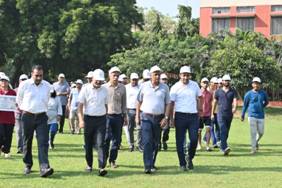
Shri K. Sanjay Murthy, Secretary, Department of Higher Education (DoHE), Ministry of Education, participated in a Swachhata Campaign under the theme of Swabhav Swachhata, Sanskaar Swachhata commemorating the birth anniversary of Mahatma Gandhi and Shri Lal Bahadur Shastri at the Sri Venkateswara College (SVC), University of Delhi, today. The Ministry of Education organised the event in collaboration with the National Service Scheme (NSS).

Additional Secretary, DoHE, Shri Sunil Kumar Barnwal; Joint Secretary (DoHE) Smt. Neeta Prasad; Joint Secretary (DoHE), Shri Ekram Rizvi; Joint Secretary (DoHE), Smt. Rina Sonowal Kouli; Shri Chaitanya Prasad, officials of the Ministry along with Prof. V Ravi, Principal, SVC; Prof. K Chandramani, Vice-Principal, SVC and other faculty members were also present at the event.

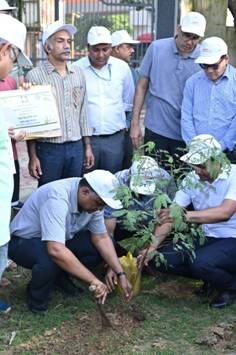
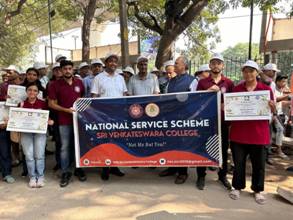
Shri K. Sanjay Murthy and other dignitaries planted five trees under the ‘Ek Ped Maa Ke Naam’ Campaign at the college premises. They also participated in cleaning a black spot/cleanliness target unit (CTU) near the Satyaniketan bus stand near the college. NSS members, NSS volunteers of the college, RWA representatives, social workers and MCD staff joined them in thoroughly cleaning the place.

The Secretary urged the locals to maintain the cleanliness of the place in future and also ensured the help of the College in this regard if needed. He also motivated the students to participate in the cleanliness drive in the future. He also answered their queries regarding the National Education Policy 2020. The students shared their experiences and teaching while working in the NSS. 

*****

SS/AK