
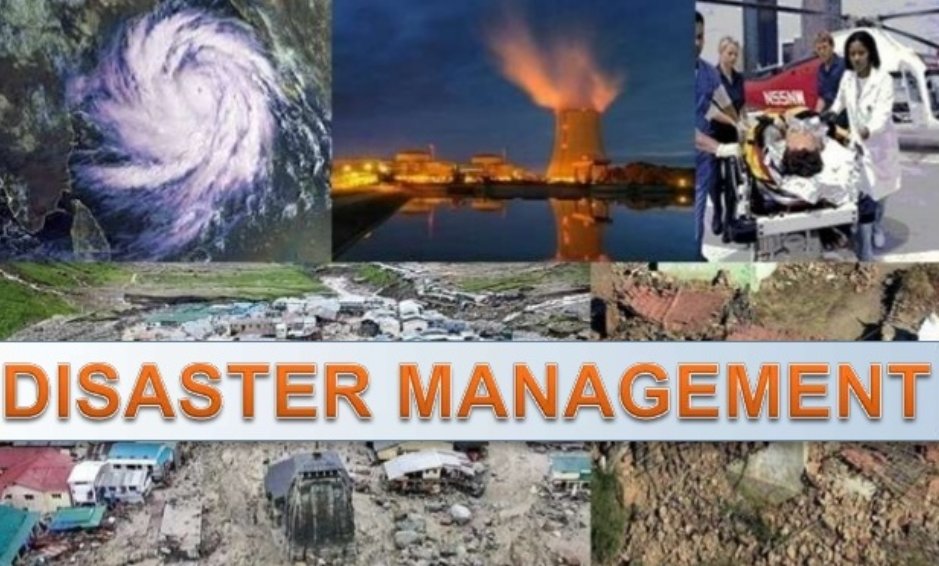
Actions of State and Non State Actors in Disaster Management

Source: lawwn

In contemporary time, Managing disasters is a highly dynamic, complex  and multifaceted affair. It is about to coordinated and contributions by a broad range of actors, including states, international organizations, non – governmental organizations, humanitarian organization, charities, private philanthropists, companies and affected local communities.

State Actors must perform some duties related to provide legitimacy to the operation, ensure coordination of various actors, provide information to needy agencies for Operation purpose, determine sufficient deputation of para military yo ensure smooth rescue and relief operation. Proper post disaster rescue and relief operation.

Contribution of Specialized Agencies in Disaster Management

There are several agencies apart from NDRF that play an significant role in Disaster management and hence they maintained in ‘standard operating procedure’ and prescribed definite role.

Civil Defence performance of some or all of the humanitarian tasks intended to protect the civilian population against the dangers and to help to recover from immediate effects of hostilities or disasters and also provide the conditions necessary for it’s survival.
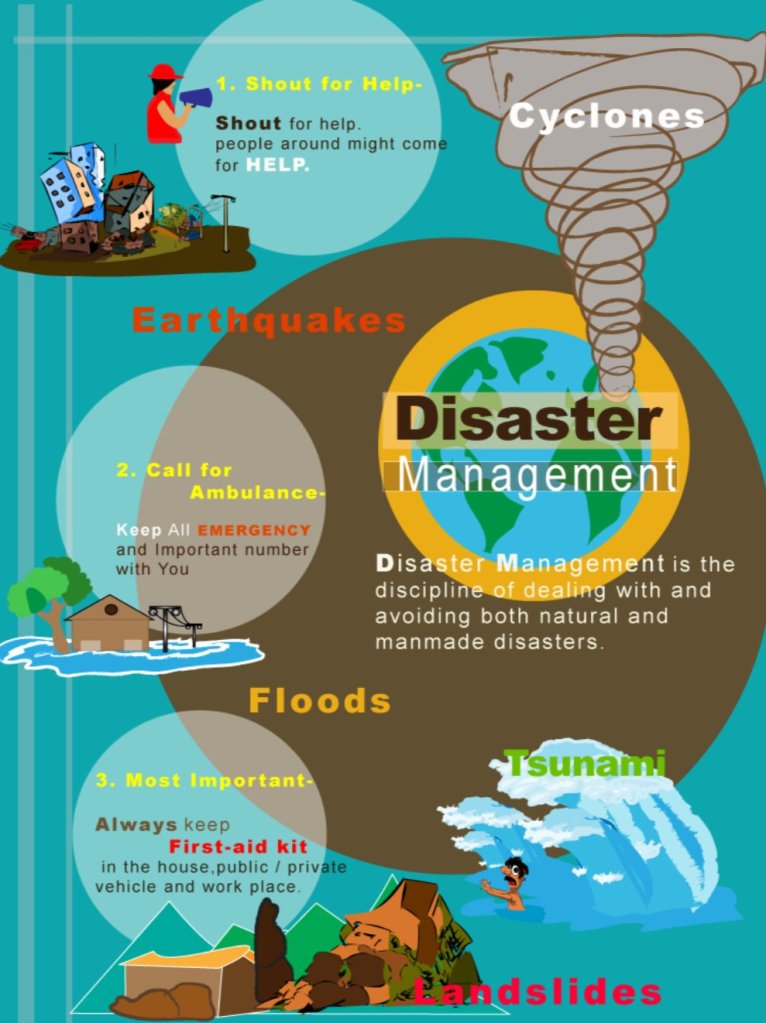
Source: National Health Portal

Management of blackout measures; Rescue, medical services, including first aid and religious assistance, fire fighting are necessary components. Decontamination and take protective measures, emergency accommodation, emergency assistance in the restoration and repair indispensable public utilities. Assistance in preservation of essential objects for survival and complementary activities necessary to carry out any task.

Civil Defence Act 1968, is organized in areas and zones which are tactically and strategically considered vulnerable from the point of aggressive opposite side. Civil Defence activities are restricted to 225 categorized towns spread over 35 States/Union Territories. Civil Defence is primarily organized on voluntary.

The immediate response of any calamity comes straight to Police station. Their immediate help and responsibility is to communicate the information and Provide rescue efforts with whatever resources are available. In disaster management if police is first responder they need to fully equipped with effective resources. Police should involved in the preparation of the local Crisis/Disaster Plan.

The role of home guards is to serve as an auxiliary to the police in the maintenance of internal security, help the community in any kind of emergency such as fire, cyclone, earthquake, epidemic etc help in maintenance if essential services, promote communal harmony and assist the Administration in protecting weaker sections, participation in socio economic and welfare activities and perform Civil Defence duties.

Home guard facility not available in Kerala. Home guards act, rules of the states are the same. They are recruited across the section of the society whoever available for betterment of community. Home guards duties like any other public servant but not in the case of Civil Defence both are like voluntary corps.

Fire services have been set up by the state government with Union government providing technical and financial support. Fire services play prominent role in all types of disaster and fire related crisis. There is an urgent need to train and equip the fire to handle all types of crisis in any multi hazard crisis.

Armed forces have invariably played an important role in rescue and relief operation in all major disasters in the country. The contribution of Specialized NDRF battalions would reduce the pressure on the armed forces. Availability of highly trained dedicated and we’ll equipped human resources and their capability to play a vital role in rescue and relief during all major crises. They should be mobilized for creating a voluntary disaster task force at the local level.

 Contribution of Non State Actors

Non State Actors are those who are first respondents in case of Disaster and considered to perform few tasks like ensuring dissemination of information to the ground level. Promotion of government strategies and policies to counter disaster. Ensure community participation, the corporate or private player must come forward to support the victims financially with the use of corporate social responsibility.

Voluntary services like distributing food, clothes, helping the state in proper rehabilitation work. Full understanding of the disaster and subsequent policies of livelihood of survivors. To aware of human rights to help the survivors without any partisan view.
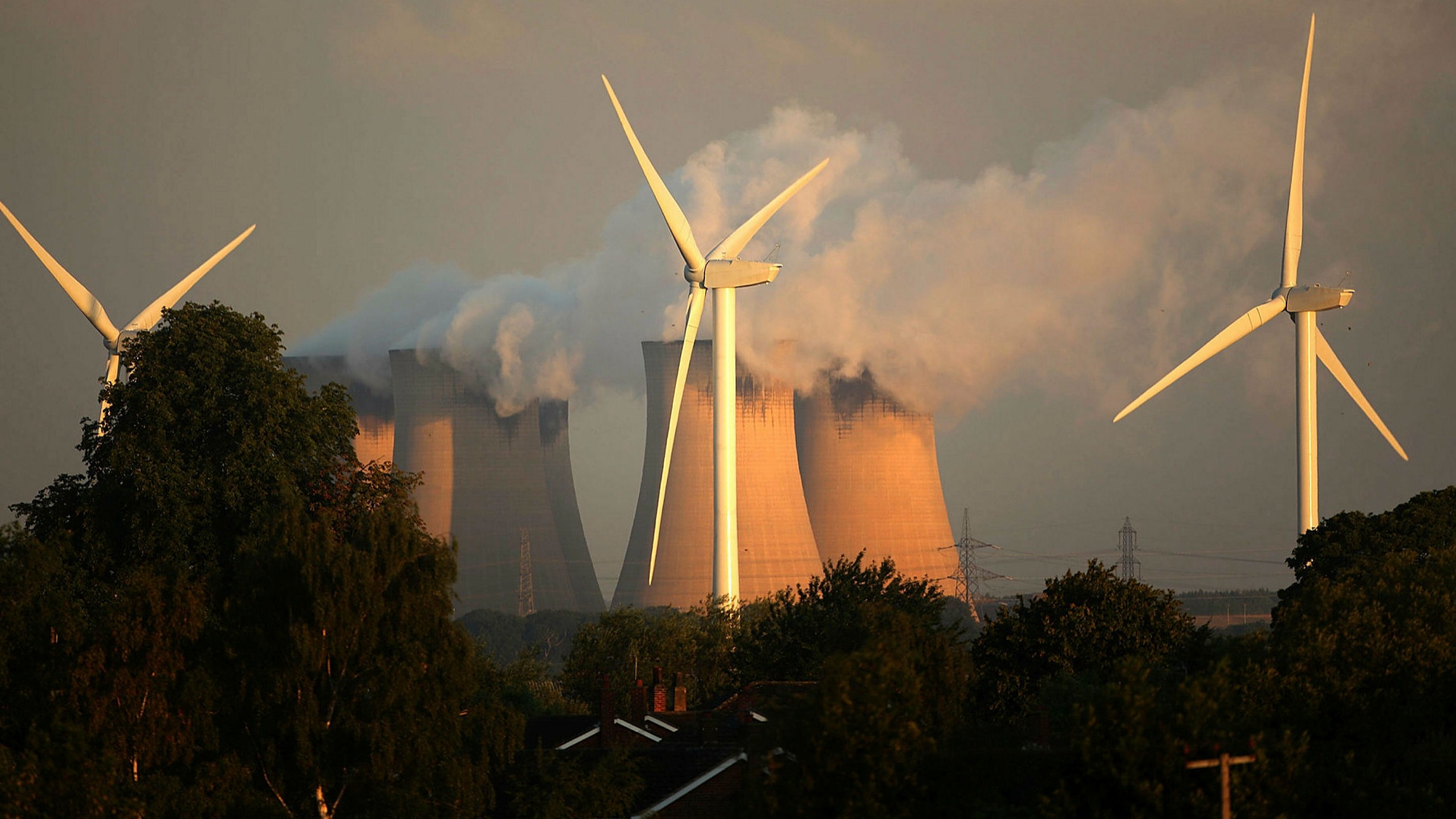
Effects of air pollution

Effects of air pollution

  • Human health
  • Animals
  • Plants
  • Material
  • Stratosphere
  • Environment

Impact on plants

  • Reduced plant growth
  • Damage to leaves of crops plant
  • Susceptible to disease, pest, Frost

Impact on materials

  • Cars
  • Homes
  • Monument, sites

Impact on health

  • By VOCs, suspended particles
  • Lung cancer
  • Headache, dizziness
  • Respiratory diseases
    • Asthma – By SO2, smoking
    • Bronchitis – NO2
    • Influenza, cold- NO2

Effect on human health

  • Irritation of eye, nose and throat.
  • In severe cases, there may be headache, nausea and loss of coordination and concentration.
  • It lowers our resistance to cold and pneumonia.
  • CO has affinity towards hemoglobin which cause disturbance in
    • transportation of oxygen
    • impairing our concentration
    • slow our reflexes
    • make us confused and sleepy
    • feel suffocation.
  • SO2 in the air lead to disease of lung and other lung disorders such as wheezing and shortness of breath.
  • Chronic respiratory disease- lung cancer, heart disease, damage to the brain liver or kidney.
  • Effect of arsenic, Asbestos, Mercury and Benzene can cause mutation, reproduction problems or even cancer.

Effects on plant

  • Pollutant enters through stomata.
  • Pollutant Erode waxy coating of the leaves called cuticle
    • Cuticle prevent excessive water loss and damage from disease pest, drought and Frost.
  • Destroy chlorophyll
  • Affect photosynthesis
  • Damage of leaf structure causes :-
    1. Necrosis – damage to leaf structure.
    2. Chlorosis- loss /reduction of chlorophyll causing yellowing of leaves.
    3. Abscission – Dropping of leave.
    4. Epinasty – Downward curling of leaves.
    5. Death of plants.

Effect on aquatic life

  • Precipitation in the form of acid rain cause high acidity in freshwater lake.
  • Acid rain affect aquatic life especially fish.
  • Some of freshwater lake have experienced total fish death.

Effect on material

  • Due to corrosiveness, particulates can cause damage to exposed surfaces.
  • Ozone causes crackling of rubber.
  • SO2 and water form H2S – corrosion as well as disfigurement of Statue made up of limestone or marble.
  • Oxides of Nitrogen can cause fading of cotton and Rayon fibres.

Effect on environment

  • Visibility
  • Pollutants in the presence of Sunlight produce photochemical smog.
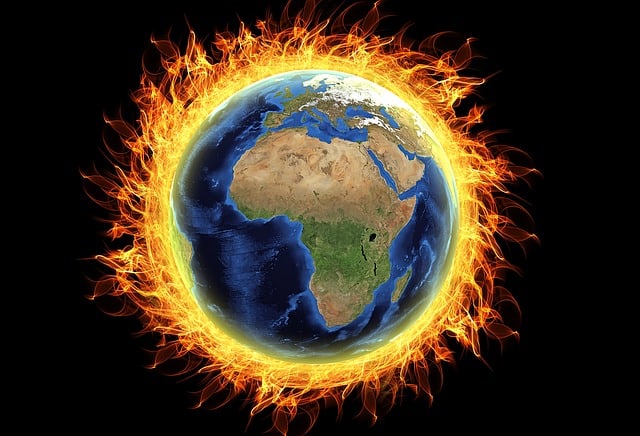
  • Emission of greenhouse gases tends to global warming.
  • Chlorofluorocarbons carbons also cause Ozone layer depletion.

The phenomenon of trapping and reradiating heat by greenhouse gases in the atmosphere is referred to Greenhouse effect.

  • Natural greenhouse effect keep Earth warm .
  • Global mean temperature of earth is + 15 degree Celsius.
  • Water vapour, CO2, H2O, CH4, ozone and cfcs present in minute quantities but maintain the temperature of Earth.
  • In the absence of greenhouse gases, the temperature of earth would be much lower than – 20 degree Celsius.

Enhanced greenhouse effect means global warming.

Ozone hole over Antarctica

Methodology:

  1. Description of the problem.
  2. Cause of the problem.
  3. Analysis of the problem.
  4. Control of the problem.
    Introduction to the problem:
    The stratospheric ozone layer protects life on Earth by absorbing ultraviolet light, which
    damages DNA in plants and animals (including humans) and leads to sunburns and skin
    cancer. Prior to 1979, scientists had not observed atmospheric ozone concentrations below 220
    Dobson Units. But in the early 1980s, through a combination of ground-based and satellite
    measurements, scientists began to realize that Earth’s natural sunscreen was thinning
    dramatically over the South Pole each spring. This thinning of the ozone layer over Antarctica
    came to be known as the ozone hole.

    This is Dobson’s unit of the first observation on September 17, 1979 and the most recent one
    that is on October 12, 2018. The red region is showing the size of the ozone hole. It’s clearly
    visible in the above data that how in the past years the size of the ozone hole on Antarctica
    increased. Due to this hole on the ozone layer uv rays reaches down on the region of the
    Antarctica which result in the melting of glacier and due to which the sea-level increases and
    due to the increased sea-level cyclones, flooding, storms and other natural disasters occurs
    which highly affects the human lives on the earth.

NOTE:– The measurements were made from 1979–2004 by NASA’s Total Ozone Mapping
Spectrometer (TOMS) instruments; from 2005–2011 by the Royal Netherlands Meteorological
Institute’s Ozone Monitoring Instrument (OMI) (which flies on NASA’s Aura satellite); and from
2012-2019 by the Ozone Mapping Profiler Suite (OMPS) on the NASA/NOAA Suomi NPP
satellite. Red and yellow areas indicate the ozone hole.


Cause of the problem:
The ozone hole opened the world’s eyes to the global effects of human activity on the
atmosphere. Scientists found out that chlorofluorocarbons (CFCs)—long-lived chemicals that
had been used in refrigerators and aerosol sprays since the 1930s—had a dark side. In the
layer of the atmosphere closest to Earth (the troposphere), CFCs circulated for decades without
degrading or reacting with other chemicals. When they reached the stratosphere, however, their
behavior changed. In the upper stratosphere (beyond the protection of the ozone layer),
ultraviolet light caused CFCs to break apart, releasing chlorine, a very reactive atom that
repeatedly catalyzes ozone destruction.
The global recognition of the destructive potential of CFCs led to the 1987 Montreal Protocol, a
treaty phasing out the production of ozone-depleting chemicals. Scientists estimate that about
80 percent of the chlorine (and bromine, which has a similar ozone-depleting effect) in the
stratosphere over Antarctica today comes from human, not natural, sources.
Effect of CFCs, HCFC and VOCs on the Ozone layer

•Analysis of the problem:
Serious ozone depletion has been measured every Antarctic spring since the early 80’s. This
ozone depletion is considered to be a result of photo chemical reactions and cat- alytic cycles
resulting from anthropogenic halogen containing gases. In addition, the formation of Polar
Stratospheric Clouds (PSCs) facilitates ozone loss because reac- tive halogen species are
released by heterogeneous reactions on the surface of a PSC particle. Generally, Arctic ozone
depletion is less severe and shows larger variability than Antarctic loss because of the unstable
and warmer condition. However, the Arctic stratosphere has been becoming colder during past
decades and the Arctic ozone loss in the 2011 winter was comparable to Antarctic losses.
Ozone depletion is di- rectly/indirectly linked to the climate because the absorption of UV
radiation changes the temperature field. It is therefore important to quantify the loss for future
climate prediction.
Following picture is showing the concentration of the ozone layer by Dobson’s unit.


Control of the problem:
Ways to prevent the depletion of ozone layer are as follows:-
● Avoid the consumption of gases dangerous to the ozone layer.
● Minimise the use of vehicles.
● Use of any other eco-friendly chemical as a substitution of CFCs in the refrigerators.