Top 10 Scholars of the World

Daily writing prompt
If you could be someone else for a day, who would you be, and why?

here’s a list of ten influential scholars from various fields, although “top” is subjective and may vary depending on criteria like impact, citations, awards, and contributions to their respective fields:

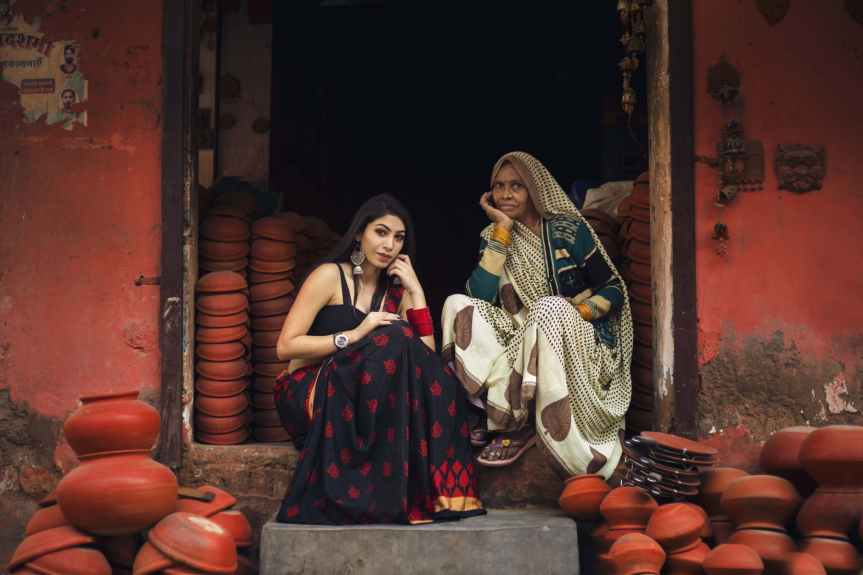
Photo by Davis Su00e1nchez on Pexels.com
  1. Noam Chomsky (Linguistics, Philosophy, Cognitive Science): Known for his groundbreaking work in linguistics, Chomsky is also a prominent figure in political activism and philosophy. His theories on generative grammar have revolutionized the study of language.
  2. Stephen Hawking (Theoretical Physics, Cosmology): Renowned for his work on black holes, Hawking made significant contributions to our understanding of the universe despite battling amyotrophic lateral sclerosis (ALS). His book “A Brief History of Time” brought complex scientific concepts to a wider audience.
  3. Angela Davis (Social Activism, Critical Theory): A scholar-activist, Davis is known for her work in feminism, Marxism, and prison abolitionism. Her writings on race, class, and gender have had a profound impact on social justice movements globally.
  4. Michio Kaku (Theoretical Physics, Futurism): Kaku is a leading theoretical physicist known for his work on string theory and his popular science books exploring the future of technology and humanity. He’s a frequent commentator on science and technology in the media.
  5. Judith Butler (Gender Studies, Philosophy): Butler’s contributions to gender theory and queer studies have reshaped how we understand identity and performativity. Her book “Gender Trouble” is considered a seminal work in feminist philosophy.
  6. Edward Said (Literary Theory, Postcolonialism): Said’s work on Orientalism and colonial discourse has had a profound impact on literary studies, cultural studies, and postcolonial theory. His critiques of Western representations of the Middle East continue to influence academic discourse.
  7. Cornel West (Philosophy, African American Studies): A public intellectual and political activist, West is known for his work on race, class, and democracy. His blend of philosophy, theology, and social criticism has made him a prominent figure in contemporary American thought.
  8. Mary Beard (Classics, Ancient History): A distinguished classicist, Beard’s work on ancient Rome and Greece has brought new insights into the study of antiquity. Her engaging writing style and public engagement have made her a leading figure in popularizing the classics.
  9. Amartya Sen (Economics, Social Choice Theory): Sen’s contributions to welfare economics and social choice theory have earned him the Nobel Prize in Economics. His work on poverty, development, and capabilities has had a significant impact on global policy.
  10. bell hooks (Feminist Theory, Cultural Criticism): An influential feminist theorist and cultural critic, hooks’ work on intersectionality, love, and the politics of representation has been pivotal in feminist thought. Her accessible writing style has made her ideas accessible to a wide audience.

This list represents just a fraction of the many scholars making significant contributions to their respective fields.

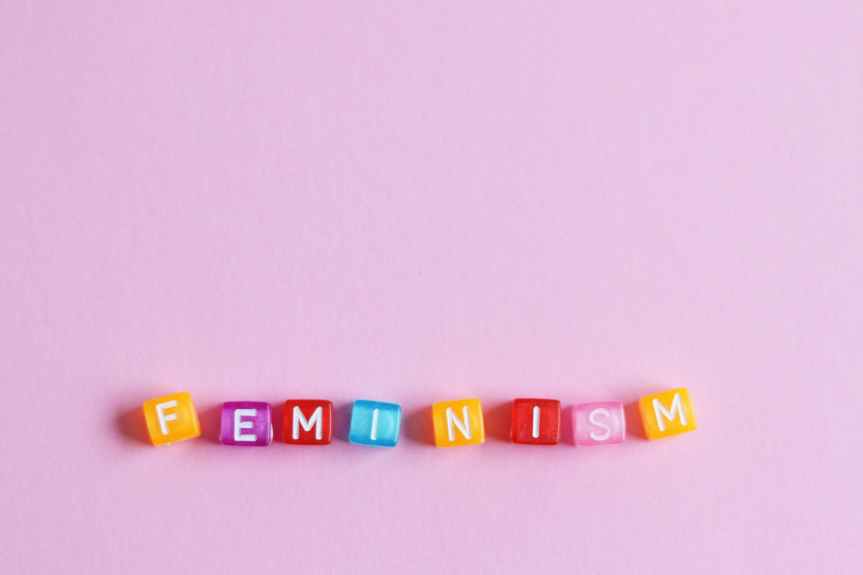
FEMINISM

N kavya

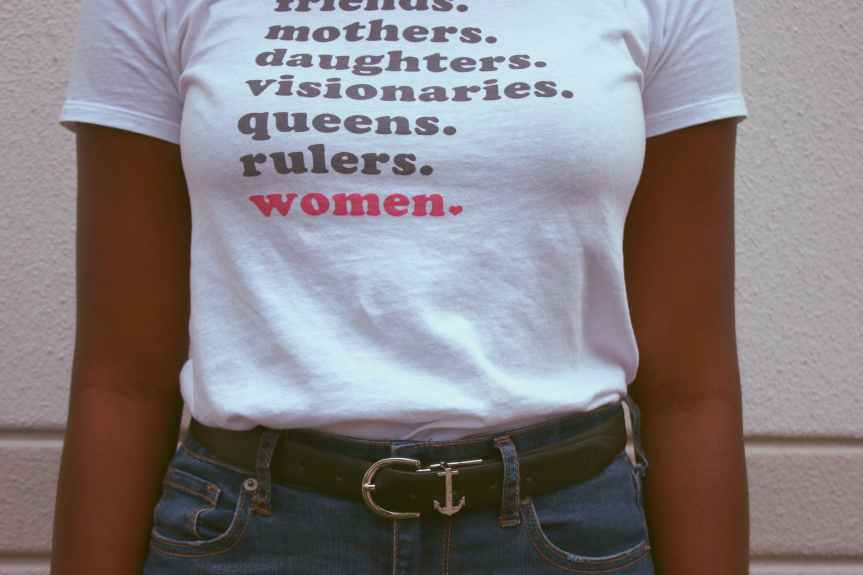
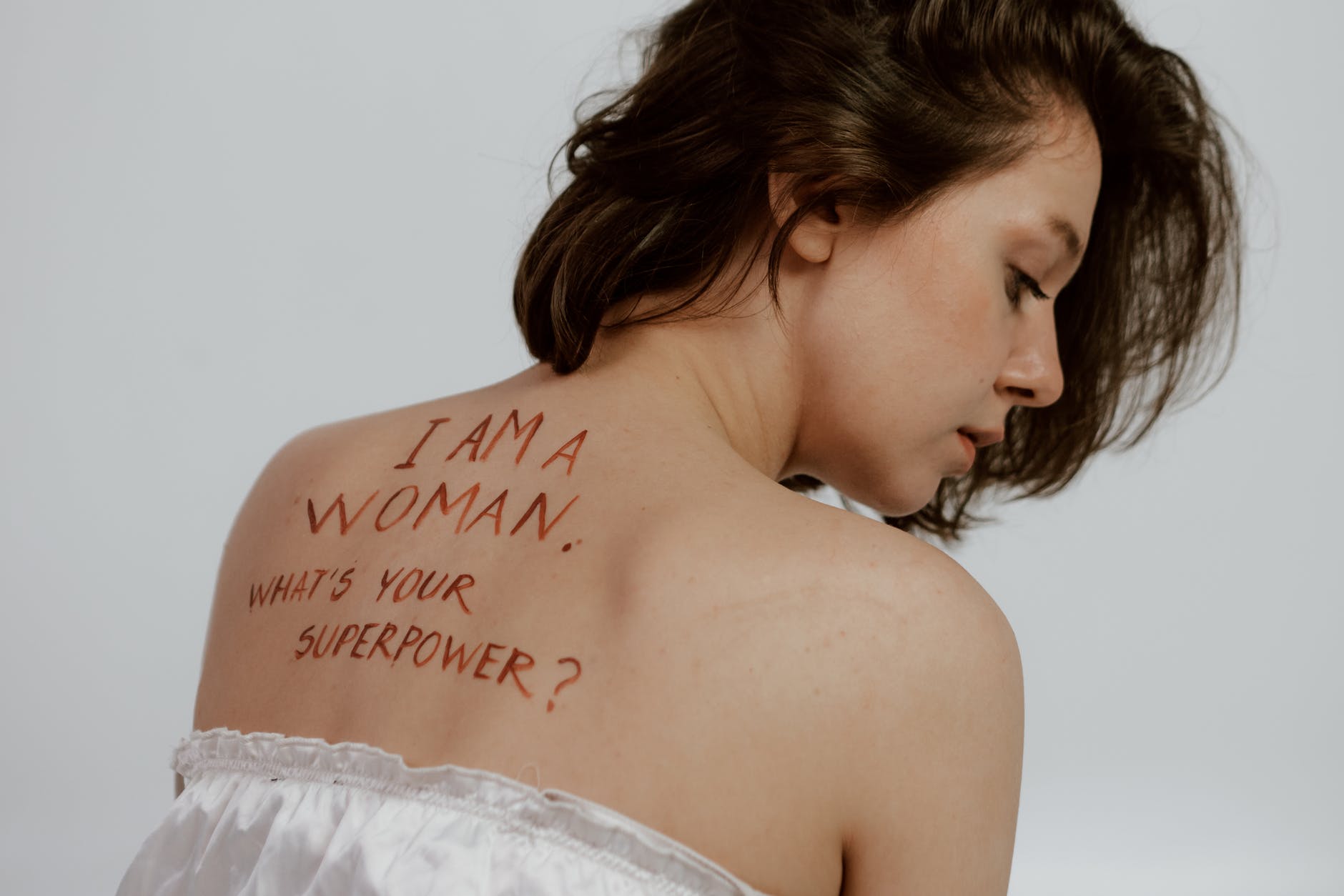
Feminism is a range of socio-political movements and ideologies that aim to define and establish the political, economic, personal, and social equality of the sexes. Feminism incorporates the position that society prioritizes the male point of view and that women are treated unjustly in these societies.

Who started Feminism ?

Mary Wollstonecraft is seen by many as a founder of feminism due to her 1792 book titled A Vindication of the Rights of Woman in which she argues for women’s education. Charles Fourier, a utopian socialist and French philosopher are credited with having coined the word “féminisme” in 1837.

The important aspect of feminism:

1. Feminism is defined as the belief in the social, political, and economic equality of the sexes.


2. The goal of feminism is to challenge the systemic inequalities women face daily.


3. Contrary to popular belief feminism has nothing to do with belittling men feminism does support sexism against either gender. Feminism works towards equality, not female superiority.


4. Feminists respect individual, informed choices and believe there shouldn’t be a double standard in judging a person. Everyone has the right to sexual autonomy and the ability to make decisions about when, how, and with whom to conduct their sexual life.


5. There isn’t just one type of feminism, there are a variety of feminist groups including girlie feminists, third-wave feminists, pro-sex feminists, and so on. All these groups aim to deal with different types of discrimination women, and sometimes men, face.


6. Women earn 78 cents for every dollar a man makes.


7. Only 17% of the seats in Congress are held by women.


8. Although 48% of law school graduates and 45% of law firm associates are female, women make up only 22% of federal-level and 26% of state-level judgeships.


9. Even in the 10 top paying jobs for women, females earn less than men; only one career, speech pathology, pays the same regardless of gender.


10. Despite previous attempts to ratify a UN treaty guaranteeing the elimination of all forms of discrimination against women, the U.S. refuses to support an international bill of rights for women signed by nearly every other nation on the planet.


11. What feminists want the world to know, or at least acknowledge is the different ways men and women are treated, and although there have been great strides towards equality, women and men are far from playing on the same field.

The First Wave of Feminism:

This first wave of feminism activism included mass demonstrations, the publishing of newspapers, organized debates, and the establishment of international women’s organizations. At around the same time, women became more active in communist, socialist and social democratic parties because increasing numbers of women began to work outside the home in factories and offices. Women were first allowed to go to university in the early 20th century, having both a career and a family. In certain countries, when fascist parties gained power the feminist movement was banned. Women started organizing again after the end of the Second World War, and they soon gained equal political rights in most European countries, with women’s emancipation becoming an important aim and most women being allowed to take on full-time jobs, divorce their husbands and go to university.

The Second Wave of Feminism:

The second wave of feminism aimed to achieve ‘women’s liberation, different groups had different ideas about how this should be done. Liberal feminists wanted better equality laws and reform of institutions such as schools, churches, and the media. Radical feminists argued that the root cause of women’s inequality is patriarchy: men, as a group, oppress women. They also focused on violence against women by men and started to talk about violence in the family, and rape. Socialist feminists argued that it is a combination of patriarchy and capitalism that causes women’s oppression. The second wave of feminism also resulted in new areas of science: women’s studies became a discipline to be studied at university, and books began to be published about women’s achievements in literature, music, and science and recording women’s previously unwritten history.

The women’s movement played an important role in the drafting of international documents about women’s rights, such as the Universal Declaration of Human Rights and the Convention on the Elimination of all Forms of Discrimination Against Women (CEDAW, 1979).

The Third Wave of Feminism:

The third wave of feminism mainly refers to the American movement in the 1990s, and was a reaction to the backlash of conservative media and politicians announcing the end of feminism or referring to ‘post-feminism’.t the third wave of feminism can be characterized by increased awareness of overlapping categories, such as race, class, gender, sexual orientation. More emphasis was also placed on racial issues, including the status of women in other parts of the world (global feminism). This was also a moment when several feminist non-governmental organizations were established, but focused on specific feminist issues, rather than claiming to represent general feminist ideas. Third-wave feminism actively uses media and pop culture to promote its ideas and to run activities, for example by publishing blogs or e-zines. It focuses on bringing feminism closer to people’s daily lives. The main issues that third-wave feminists are concerned about include: sexual harassment, domestic violence, the pay gap between men and women, eating disorders and body image, sexual and reproductive rights, honor crimes, and female genital mutilation.

The Fourth Wave of Feminism:

The term cyberfeminism is used to describe the work of feminists interested in theorizing, critiquing, and making use of the Internet, cyberspace, and new media technologies in general. The term and movement grew out of ‘third-wave’ feminism. Cyberfeminism is considered to be a predecessor of ‘networked feminism’, which refers generally to feminism on the Internet: for example, mobilizing people to take action against sexism, misogyny, or gender-based violence against women. One example is the online movement in 2017, which was a response on social networks from women all over the world to the case of Harvey Weinstein, a Hollywood producer who was accused of sexually harassing female staff in the movie industry.

Feminism Activists in India:

1. Aranya Johar. 2. Kamla Bhasin. 3. Aruna Roy. 4. Vandana Shiva. 5. Medha Patkar. 6. Manasi Pradhan. 7. Urvashi Butalia. 8. Laxmi Agarwal. 9. Deepa Malik. 10. Swati Maliwal

Conclusion:

Feminism can be seen as a movement to put an end to sexism, sexist exploitation, and oppression and to achieve full gender equality in law and practice. The women’s movement is made up of women and men who work and fight to achieve gender equality and to improve the lives of women as a social group.

GENDER BASED VIOLENCE AND MENTAL HEALTH COUNSELING

Source: Love Uganda Foundation

Gender-based violence impact the enormously on mental health of person. In this case, mental health counselling has significant role to eradicate gender based violence. Post-violence survivor possibly suffer with depression, anxiety and post traumatic stress disorder. Accurate role of mental healthcare prevent the increasing number of GBV; to reduce negative thoughts. Countries having Gender Based violence prevention based on rigid public health model that do not carry mental health component, though GBV must require concepts, competencies and standards of mental health to interdicte the GBV. Inequality of gender, gender stereotypes & prejudice, difference of feminity and masculinity capabilities,  Upbringing in patriarchal society or mindset aggression, male ego are several elements increasing insensitivity and hideousness and intricate to control the GBV.

Source: International Centre for Research on women

 Listen to and invest believe in survivors because prepetrator is only responsible for actions. Teach in schools what is to be men and make them aware of their emotional side. Call for responses and services require mandate for solution, Understand consent is extremely vital as men hard time to evaluate NO, learn the signs of abuse and how can we help and talk extensively and exclusively of gender based violence. In 2013 UNFPA and UN Women initiated Joint Global Programme on Essential Services giving to people who suffering with Gender based violence; providing access to services and quality of these particularly focus on health, Justice and social science ( such as psycho – counseling, helplines and safe house) and programmes on sexual & reproduction health because health services should be first place that survivors of abuse seek assistance.

Source: OSCE

 1) Mental health professionals well aware of how to help and support the survivors,  what are their emotional & psychological requirements in case of physical,verbal, sexual violences, anxiety and depression mental health professional (MHP) capable to encounter accordingly.

 2) Counselling is a faithful forum where anyone can be vulnerable, survivors can find easy to open up & release themselves emotionally in front of mental health Counselors. MHP can maintain solidarity to survivors, value their experience, understand their needs, ensure faith of confidentiality that no word will go out in fact each word will taken into consideration.

 3) In gender-based violence, survivor evidently confront the issue of acceptance and believing. Professionals competent enough to provide acceptance and build confidence in them

 4) Survivors needs emotional Support as  Counselors understand it  entrust  emotional assistance.5) Mental health counselling significantly help survivors to uplift their lives by feeling confident that help them to know about themselves and find sustainability on financial level. For it, Health professionals must support the idea of high level of self awareness for themselves for more influencial results.

5) Mental health counselling significantly help survivors to uplift their lives by feeling confident that help them to know about themselves and find sustainability on financial level. For it, Health professionals must support the idea of high level of self awareness for themselves for more influencial results.

6) Different Mental health counselling Programs and survey research increase the  efficiency and credibility of Counselling for survivors. Research determine the effectiveness of orientation of work,  conclude the conceptual results that enhance the relevancy and realiability of survey.

 7) Mental health professionals helps survivors to overcome of feeling of unwantedness just by listening and understanding their outputs, that give them  sufficient emotional support.

 8) Mental health counselling must provide 24×7 through E – Governance and from NGOs online portals. Government initiatives become extreme important regarding gender Based violence, their women empowerment Policies must confirm the positive results on society that ultimately helps women socially.

 9) Determining mental health counseling in rural areas is crucial because women especially in marginalized community found far more difficult to come out and express their needs because social structure & norms. Mostly do not aware of what to do in such situations. At this time, mental health counselors untapped them & make them aware of their legal, social and political rights; moreover their human rights.

 10) Gender based violence survivor do not know what to do now it at first, self doubt engraved in them strongly. Mental health professional advisory assistance support them to better their condition by doing counselling sessions and penetrate positivity.

 11) By community Awareness program, self employment, skill development program, self help group , support health care & group insurance support evidently proved to be helpful to the survivors.

Gender based violence anywhere is a threat to peace & security everywhere – John.F.kerry

GENDER BASED VIOLENCE AND MENTAL HEALTH COUNSELING

Source: Love Uganda Foundation

Gender-based violence impact the enormously on mental health of person. In this case, mental health counselling has significant role to eradicate gender based violence. Post-violence survivor possibly suffer with depression, anxiety and post traumatic stress disorder. Accurate role of mental healthcare prevent the increasing number of GBV; to reduce negative thoughts. Countries having Gender Based violence prevention based on rigid public health model that do not carry mental health component, though GBV must require concepts, competencies and standards of mental health to interdicte the GBV. Inequality of gender, gender stereotypes & prejudice, difference of feminity and masculinity capabilities,  Upbringing in patriarchal society or mindset aggression, male ego are several elements increasing insensitivity and hideousness and intricate to control the GBV.

Source: International Centre for Research on women

 Listen to and invest believe in survivors because prepetrator is only responsible for actions. Teach in schools what is to be men and make them aware of their emotional side. Call for responses and services require mandate for solution, Understand consent is extremely vital as men hard time to evaluate NO, learn the signs of abuse and how can we help and talk extensively and exclusively of gender based violence. In 2013 UNFPA and UN Women initiated Joint Global Programme on Essential Services giving to people who suffering with Gender based violence; providing access to services and quality of these particularly focus on health, Justice and social science ( such as psycho – counseling, helplines and safe house) and programmes on sexual & reproduction health because health services should be first place that survivors of abuse seek assistance.

Source: OSCE

 1) Mental health professionals well aware of how to help and support the survivors,  what are their emotional & psychological requirements in case of physical,verbal, sexual violences, anxiety and depression mental health professional (MHP) capable to encounter accordingly.

 2) Counselling is a faithful forum where anyone can be vulnerable, survivors can find easy to open up & release themselves emotionally in front of mental health Counselors. MHP can maintain solidarity to survivors, value their experience, understand their needs, ensure faith of confidentiality that no word will go out in fact each word will taken into consideration.

 3) In gender-based violence, survivor evidently confront the issue of acceptance and believing. Professionals competent enough to provide acceptance and build confidence in them

 4) Survivors needs emotional Support as  Counselors understand it  entrust  emotional assistance.5) Mental health counselling significantly help survivors to uplift their lives by feeling confident that help them to know about themselves and find sustainability on financial level. For it, Health professionals must support the idea of high level of self awareness for themselves for more influencial results.

5) Mental health counselling significantly help survivors to uplift their lives by feeling confident that help them to know about themselves and find sustainability on financial level. For it, Health professionals must support the idea of high level of self awareness for themselves for more influencial results.

6) Different Mental health counselling Programs and survey research increase the  efficiency and credibility of Counselling for survivors. Research determine the effectiveness of orientation of work,  conclude the conceptual results that enhance the relevancy and realiability of survey.

 7) Mental health professionals helps survivors to overcome of feeling of unwantedness just by listening and understanding their outputs, that give them  sufficient emotional support.

 8) Mental health counselling must provide 24×7 through E – Governance and from NGOs online portals. Government initiatives become extreme important regarding gender Based violence, their women empowerment Policies must confirm the positive results on society that ultimately helps women socially.

 9) Determining mental health counseling in rural areas is crucial because women especially in marginalized community found far more difficult to come out and express their needs because social structure & norms. Mostly do not aware of what to do in such situations. At this time, mental health counselors untapped them & make them aware of their legal, social and political rights; moreover their human rights.

 10) Gender based violence survivor do not know what to do now it at first, self doubt engraved in them strongly. Mental health professional advisory assistance support them to better their condition by doing counselling sessions and penetrate positivity.

 11) By community Awareness program, self employment, skill development program, self help group , support health care & group insurance support evidently proved to be helpful to the survivors.

Gender based violence anywhere is a threat to peace & security everywhere – John.F.kerry

Impact of Feminism and Women Empowerment on Indian Society

Feminism came up into being and became operative after India gained freedom in 1947. The Constitution of India then conceded right to equality, religious freedom and freedom from gender or religious discrimination. To provide health, welfare, education and employment to women, a seven five year plans were brought up by the government. The sixth five year plan even declared women “partners in development”.

Although the Indian government has tried their best to terminate inequality in workforce yet women fail to receive equal treatment. However, AIIMS nurses professed gender inequity in Nursing Officers enrollment, providing 80 percent posts to female candidates and remaining to male. Indian women winning international beauty pageants have also demonstrated in the form of pride of nation, such growth have provided considerable sexually self governed and independent women and more authority over their own bodies but some differ in opinion considering that this only portrays female bodies as mere commodities having purpose only to serve man’s desires. Headway is being made in enrollment of female students and teachers in schools, by now the female literacy rate has increased handsomely and great efforts are still being made so that female may receive education in par with male students.

In order to protect the rights of women and in wake to feminism and women empowerment different bills have been passed and various policies have been made by the government, some of them are as follows:

  • In 1986, the National Policy on Education (NPE) was made in India and a program known as Mahila Samakhya was set afloat, the aim is to promote a sense of knowledge to take control of their own lives, learn to demand information and realize their true potential. In 2019, DRDO has launched scholarship programmes absolutely for girls.In Haryana now girls are provided passport along with graduation degree.
  • The Sexual Harassment of Women at Workplace (Prevention, Prohibition and Redressal) Act 2013, is an act of legislature to protect women from any sort of sexual harassment at workplace.
  • The Protection of Women from Domestic Violence Act 2005 is a parliamentary act of India which seeks to protect women from domestic violence.
  • In 1992, the Parliament passed the 73rd Constitutional Amendment Act in which it was ensured that in all offices of election, one-third of the total seats would be reserved for the women. This was applicable in both urban as well as rural areas.
  • During 1991-2000, a national Plan of Action for the Girl Child was brought up to make sure the development, survival and protection of girl child. The terminal aim of the plan was to enhance the future for the girl child.
  • In 2001, a National Policy for the Empowerment of Women was made by the Department of Women & Child Development in the Ministry of Human Resource Development. The policy aimed at the empowerment, advancement and growth of women in various political, social, cultural and political field, by generating awareness among all.
  • In 1992, a National Commission was brought up by the government in order to monitor and examine various matters with regard to the legal and constitutional defences provided for women and also modify the existing codification whenever needed.

Today women are treated equal to men and offered equal opportunities. They are also excelling in their work and in various fields they are even ahead of men, still in many parts of India regardless whether urban or rural region, women are still battling against numerous brutal crimes.

Feminism and Women Empowerment

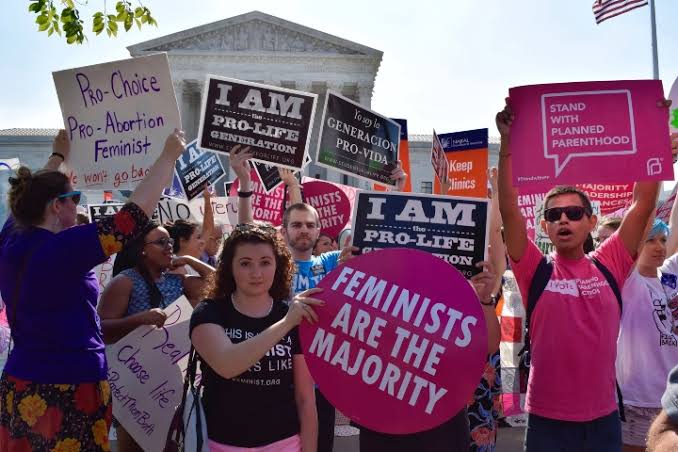
Feminism in general terms can be defined as equality among all genders holding equal rights and opportunities. The word feminism is evident whole around the globe and is concerned with activities mainly indulging women’s rights and interests. It is an approach against inequality  between men and women in this huge man domain world, it can be in form of social, economic, political movement aiming to establish social, economic, political and even personal equality among all. It ensures and encourages women to put forward their ideas, beliefs, utilize their knowledge and strengths and empower them to perceive their true rights. Feminist movements have organized course of action and are still continuing to do so for women’s rights including right to vote, receive education, equal wages, equal sibling property ownership and to safeguard women and girls from any sort of sexual harassment be it rape or domestic violence. These movements also make certain legal abortion and other social reforms for women.

Historically, women faced discrimination on the basis of their gender, they had to fight against the orthodox society with the result being constant failure. Now things have bit changed and such a result is feminism, an initiative to fight against gender stereotypes and bringing about a change in this unhealthy dynamics of society.

Feminism means congeries things to congeries of people, it is not expected to define a particular’s feminism in any way. Its all about cutting the difference between men and women and leveling them on the same scale. Thus, making similar opportunities available to both men and women in life.

Women Empowerment refers to steps taken in order to empower women. The following concept may be understood in a number of ways like, taking into consideration the opinions or views of women, encouraging women to pursue higher education and uphold a high rank in society and also to uplift the position of women through literacy, training etc. It also provides them to take their own life decisions, tackle various problems in society. Women empowerment can also be defined as to encouraging women to realize their self worth, their capacity to discover their own way out and most important their right to bring about effective social change for themselves and society.

In true sense, empowerment of women contributes greatly in the development of society. The advancement of status of women also intensifies their decision making ability at all scales in all volume of life, particularly in the field of reproduction and sexuality. This without doubt is necessary for the long term accomplishment of the population programmes. Women empowerment and ensuring women’s rights have now become a worldwide movement.

In this contemporary age, feminism and women empowerment is the talk of the town. Numerous developments have been seen till date in awake of both the elements. It is right to say that women empowerment is contributing greatly in the advancement of the society and will continue to do so. Gender discrimination has nearly diminished in the last few decades. But today also in some parts of the country such distinction still subsists. Thus, to tackle such situations it’s important for females to understand the true meaning of feminism and it is the essential right of the women to be empowered so as to hold an independent role in the society. But apart from these various developments, women and girls still face discrimination on some or the other ground and are victims to numerous harassments each day in every part of the world.

ECOFEMINISM

Ecofeminism or ecological feminism is the most important approach within ecocriticism and ecological activism. The writings of Annette Kolodny gave impetus to what has come to be called ecofeminism. The term ecofeminism was coined by French feminist Francoise d’Eaubonne in 1974. It is a branch of ecocriticism and feminism that examines the connection between women and nature. Eco feminism can be considered as the analysis of the role attribuntasies of the natural environment, by male authors. It also includes the study of specifically feminine conceptions of the environment in the neglected nature writings by female authors. According to Pramod K Nayar, ecofeminism argue that patriarchal society’s values and beliefs have resulted in the oppression of both women and nature. He also says that it ignores
women’s work, knowledge and situatedness. The situatedness of women is her immediate location in nature, where the relationship of woman with environment is far more intimate than that of man’s. In simple terms this philosophy examines the ways both nature and women are treated by patriarchal society. The earlier binaries in Western thought and literature was that of nature versus culture. Further eco feminists interrogate the effect of gender categories. That is the masculine culture as objective, rational, mind and public and feminine as subjective, emotional, body and private. And these binaries are used in order to demonstrate the ways in which man is equated with culture and woman with nature. Images like “mother nature” indicate two things. They are the naturalization of woman and feminization of nature. Thus it illustrates how men dominate nature and women as exploitable objects. The works of Vandana Shiva, Mary Mellor, Ariel Salleh has generated nuanced readings of the relationship between gender and nature.Ecofeminism can be classified into two, radical ecofeminism and cultural ecofeminism. One of the assumptions of radical ecofeminism is that the dominant patriarchal society equates nature and women in order to degrade both. In fact, in it’s emergence, ecofeminism tends to be radical revealing practices of patriarchal domination of both. So radical ecofeminism targets the historical and cultural
backgrounds that equates the feminine and nature with negative and commodifiable attributes, while men have been elevated as capable of establishing order. Such a socio economic structure easily facilitates the exploitation of women and nature, for cheap labour and resources.
Cultural ecofeminism promotes an association between women and the environment by focusing on the more intimate and organic relationship between them. As per the anthropologically assigned gender roles women are nurturers of family. Culture ecofeminism has roots in nature based religions, goddess and nature worship. It is a way of redeeming both the spirituality of nature and women’s instrumental role in that spirituality. The cultural myths and
spirituality of Native America, Australia and African tribal populace underscores this mutual bonding between women and nature. Because they are built on a mother goddess instead of omniscient father God.
Vegetarian ecofeminism, materialist ecofeminism and spiritualist ecofeminism are some of the new branches of ecofeminism. A major theme within ecofeminism is the belief that there is a strong connection between the domination of women and the domination of nature, and that both must be eradicated in order to end oppression. Vegetarian ecofeminism aims to include the domination of not only the environment but also of nonhuman animals to the list. Materialist ecofeminism connects institutions like labour, power and property as the source of domination
over women and nature. This belief stresses that the sphere of production that is men and factory is dependent on the production of reproduction ( women and family). Materialist ecofeminists thus call for quality in labour distribution, the recognition of the contribution of women’s work.And they suggest to expand the very definition of ‘work’ to include women’s work. In spiritualist ecofeminism, a turn to myth and theology is advocated against materialism because of the
importance given to women, nature and all forms of life. They argue that pre-modern culture have always treated nature with respect and give importance to women’s knowledge, female body and female sexuality. Thus this philosophy turned to Native American religions, godess worship in Hinduism and other native cultures. Vandana Shiva, glorifies Vedic period of Indian History, for its emphasis on symbiotic values in her work Staying Alive (1989).

Feminism in Margaret Atwood’s poem “This is a Photograph of Me”

Margaret Atwood is a well known feminist author who writes about the oppression of women in a patriarchal society. Her poem This is a Photograph of Me also shares this idea symbolically through the image of a photograph. The title of the poem itself shows the passive role of women in society. In a society which is regulated by men the role of women is passive. But without them the society will not survive. Atwood begins the poem by describing the photograph. It is a blurred photograph which was taken some time ago. And throughout the lines she continues the description of the photograph’s each element. There is the branch or part of a tree in the left hand side of the photograph, which has emerged to the right hand side. This branch without any roots can be considered as the role of women in a society who is placed on the left side or weaker side. But on the right hand side of the photograph a frame house is visible which is associated with men. The background of the photograph is a lake which represents the society. And beyond that lake there is low hills. The hills and lakes keep the women in shadow. Margaret Atwood is trying to show that the society and men exploits the true potential of women. The narrator says that I’m in the lake, in the center of the picture. But it is difficult to say precisely where she is. This shows the nature of a patriarchal society. The place of womanhood in a society is mandatory. However the world tries, the women’s place cannot be underwritten. Atwood focuses on this truth by saying that her place in the photograph is not clear. But when we look long enough everyone will be able to see her place in the photograph or the society itself. Through the image of a photograph Atwood strongly presents the oppression faced by women. Photograph stands for history which is not clear. The contribution of women to the society is necessary but the history created by men does not praise of give importance to them. Women are always hidden or drowned as Atwood says. This truth is underlined by Atwood in this feministic poem, This is a Photograph of Me.

PLIGHT OF WOMEN IN AFGHANISTAN

BY DAKSHITA NAITHANI

The Afghan women, maybe more than anybody else, have dreaded the Taliban’s return. There have been many advances in women’s rights over the last 20 years, which appear to be set to erase nearly overnight.

A quick lesson from history…

The Taliban, a political and military force, is said to have started in Islamic schools in Northern Pakistan in the early 1990s. Its aim was to restore order in Afghanistan following the withdrawal of Soviet troops in 1989, as well as to impose a harsh form of Sharia law. By 1998, the organisation had seized 90% of Afghanistan’s territory.

Once in control, the organisation garnered worldwide condemnation for a slew of human-rights violations. The ban on female education above the age of ten as well as harsh limitations on day-to-day liberties, were among the stringent mores imposed on women and its influence has frequently threatened to expand beyond, to places like Pakistan, where the organisation memorably shot teenager Malala Yousafzai in 2012. Women were treated worse than at any previous period or by any other culture throughout its rule (1996–2001). They were prohibited from working, leaving the house without a male escort, seeking medical assistance from a male doctor, and being compelled to cover themselves from head to toe, including their eyes. Women who had previously worked as physicians and teachers were compelled to become beggars or even prostitutes in order to feed their families during the Taliban’s rule.

Following the 9/11 attacks, it was thought that the Taliban were harbouring Al-Qaeda soldiers, thus an US-led international operation was started against Afghanistan. As a consequence, the Taliban were deposed from power, an Afghan government was established, and soldiers occupied the country for 20 years. It destabilised several regions of the nation due to battles with US and UK forces on a regular basis, and Afghan people were continued to be assaulted. Many would agree that the political and cultural status of Afghan women had improved significantly since the Taliban’s collapse in late 2001.

The Bush administration’s acceptance of women’s rights and empowerment as rationale for its assault on the Taliban is long gone. So it was under the Barack Obama administration, when then-Secretary of State Hillary Clinton stated that the Taliban’s repudiation of al-Qaida and promise to support the Afghan constitution and safeguard women’s rights were preconditions for US discussions with them. The rejection of al-Qaida has yet to be declared openly and publicly less than 10 years later; the constitutional order and women’s rights are still subject to intra-Afghan talks and will be influenced by the changing balance of military power.

In February 2020, US-Taliban peace talks were concluded, with the US pledging a quiet departure in exchange for an end to hostilities. Afghan leaders and top military generals have warned that the government will collapse without foreign assistance. It looks like the worst has transpired only weeks before Biden’s deadline of September 11th.

The Taliban rule wreaked havoc on the institutions and the economy, which had already been ravaged by decades of conflict and the Soviet scorched-earth counterinsurgency policy.

The post-Taliban constitution of 2004 granted Afghan women a wide range of rights, and the political epoch brought social and economic progress, which greatly improved the socioeconomic situation. From a crumbling health-care system with almost no healthcare available to women during the Taliban years, the post regime built 3,135 functional facilities by 2018, giving more than 80 percent of Afghans access to a medical facility within two hours’ drive.

 Less than 10% of females were enrolled in elementary schools in 2003; by 2017, that figure had risen to 33%, while female secondary school attendance increased from 6% to 39%. As a result, 3.5 million Afghan females were enrolled in education, with 100,000 of them enrolled in academic institutions. Women’s life expectancy increased from 56 to 66 years in 2017 and maternal mortality fell from 1,100 per 100,000 live births in 2000 to 396 per 100,000 in 2015. By 2020, women made up 21% of Afghan public workers, including 16% of top management positions, and 27% of Afghan parliamentarians.

 These benefits for women have been dispersed inequitably, with women in metropolitan areas benefiting considerably more than women in rural regions. Despite formal legal empowerment, life for many rural women has not improved much since the Taliban era, notably in Pashtun regions but also among other rural minority groups. Many Afghan males are staunch conservatives. Families often let their daughters to complete a primary or secondary education before proceeding with planned marriages. The burqa is worn by the majority of Afghan women in rural regions without any pushing from the Taliban.

What is the situation for women in Afghanistan now?

Women’s rights in Afghan had arguably maintained pace with many other Western countries prior to the 1970s. Women were granted the right to vote in 1919, one year after women in the United Kingdom. In the 1950s, gender segregation was eliminated, and in the 1960s, a constitution was enacted that included women in political life. As the region became more unstable in the 1970s, these rights were steadily eroded.

Only 38% of the international humanitarian response plan for Afghanistan is financed as of August 2021. This gap might result in the loss of specialised protection services for 1.2 million children, putting them at risk of abuse, recruitment, child labour, early and forced marriages, and sex abuse. About 1.4 million females, many of whom are survivors of domestic abuse, would be left without access to safe spaces where they may receive full care.

Females, who have experienced life with rights and freedoms, are among the most exposed as a result of the Taliban’s fast progress in Afghanistan. As the Taliban capture control of Kabul, they risk losing their hard-won achievements.

Those cries for aid may be too late as the capital city falls into the clutches of Islamist rebels. There have been several stories of the Taliban going door-to-door and compiling a list of women and girls aged 12 to 45 who are then compelled to marry Taliban warriors. Women are told that they cannot leave the house without a male escort, that they cannot work or study, and that they cannot wear anything they want. Schools are also being shuttered.

There is a lot to lose for a whole generation of Afghan women who entered public life – legislators, journalists, local governors, physicians, nurses, teachers, and public administrators. While they worked alongside male colleagues and in communities that were unfamiliar with people in positions of power to help establish a truly democratic civil society, they also wanted to pave the way for future generations to follow in their footsteps.

The Taliban offers itself a broad range of possibilities by claiming that they will “protect” women’s rights under sharia but refusing to explain how women’s rights and life in Afghanistan will alter if they achieve their goals. Even if the government did not openly adopt as cruel a system for women as in the 1990s, the Taliban’s dispositions are quite likely to undermine women’s rights, impose cultural prohibitions on women, and reduce socio-economic possibilities for them.

In summary, even with this change in behaviour, the Taliban in power would almost certainly strive to curtail Afghan women’s legal rights, exacerbating their social, economic, and political circumstances. How much and in what manner, is the question.


Feminism in India

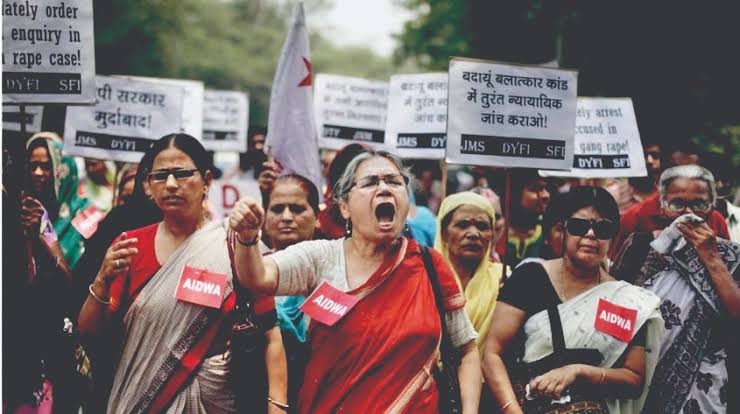
A feminist is anyone who recognizes the equality and full humanity of women and men.”-Gloria SteinemSo, what is feminism? Feminism is an action of the society to bring rights to women and treat them equally regardless of their gender. Feminism is not something that should be endorsed by a woman only ,it can be carried forward by a man too. As said by G.D Anderson,” Feminism isn’t about making women strong, women are already strong, it’s about changing the way the world perceive that strength.” The fact itself is so confusing to understand the imbalance between two genders despite of any human being who is born with the same type of skin and color of blood. A woman deserves the same respect a man has without facing the question about their gender. Needless to say , patriarchy runs deep in our Indian society . A woman is forced to feel weak and small in front of a man and enforced to stay within a certain boundary. The long injustice in the name of gender has led to the topic of  feminism.
The importance of feminism in India is utmost. History has been an evident of feminism culture and its significance. The first and the foremost reason to bring this revolution is to change the mentality and to achieve a society free from male dominance. It has been a long battle for women to fight for their rights even if it’s about their decision. It is sad that till today a girl has to accept a man as her husband without her consent. A married woman is forced to do the household work and do not have the right to have a job hand in hand. Feminism plays an important part in the society because it demands equality among genders. Every year lakhs of female fetus get buried due to the burden of carrying a responsibility and the fear of giving dowry in marriage. Do you know Indian culture also discriminate working profession in regard of gender? Yes, in the past women could only do a job if that is approved by the male society and not judged by her talent. Feminism helps to remove such inequality. Today because people are giving importance to it, women like Mirabai Chanu and Lovlina Borgohain could outshine in their own field. No doubt with different kind of body framework and organs women have to undergo certain changes to meet the reproductive life. Menstruation is a big taboo, where women are considered impure during period cycle. Also there needs to have a stoppage of peoples hindering nature. Needless to say, women sometimes give rise to the inequality they once suffer from. Her mother-in-law force her to behave in a certain way, to cover her face whole life, to dress decently and ultimately it turns to be a social practice in a community.With change in generation and people advancing mindset things are changing and women are getting their rights. Topics like women empowerment, Beti bachao Beti padhao making people aware of the crucial role of a woman in balancing the atmosphere. Now a days, highly restricted states like Haryana is producing Miss world, wrestler like Geeta Phogat and Nirmala Devi. With the hope that one day the country would be free of gender inequality. Thus, people need to carry this journey forward and bring a change where both men and women could walk in the street without having the fear of getting killed or molested as a girl rather with the feeling safety to chase their dreams.

ReplyForward

Feminism In India

The task at hand is twofold : first, to present a schematic account of feminism in India ; second to bring up some theoretical and methodological issues entailed in representing it. This decision to problematize the process of narrating has been prompted by the fact that writing in the second decade of the 21st century implies that we take into cognizance some of the developments in the preceding decades that impinge in a very fundamental way on both the practice and theory of feminism. In other words, I seek to flag some of the changing features of the contemporary context within which I as a resident Indian scholar write about feminism for Western academia. (i) A rich and complex body of feminist writings has emerged over the last forty years which in many ways have become institutionalized within academia as well as within policy making, whether of various states or of international agencies ; (ii) the rise of multiculturalism and postmodernism in the West since the 1980s gave way not just recognition but celebration of diversity and plurality including that of divergent feminisms ; (iii) the rise of postcolonial studies, articulated in the writing of non-Western scholars located in the West on one hand and a predilection towards poststructuralist theory on the other ; (v) finally the greater visibility of India and Indian scholarship in the recent decades of globalization. My central contention is that these developments are not extraneous but constitutive of Indian feminism.

As a resident Indian feminist scholar I feel an acute sense of disquiet when what I have to say is readily slotted as yet another instance of burgeoning postcolonial writings, one more voice of diverse feminism. My discomfort is that postcolonial theory principally addresses the needs of Western academia. “What post-colonialism fails to recognize is that what counts as ‘marginal’ in relation to the West has often been central and foundational in the non-West” . Thus when I privilege British colonialism and Indian nationalism this is not a belated deference to postcolonial theory but a historical fact which Indians have lived and battled with and one within which the story of Indian feminism emerged and grew. Further, the theoretical shift to textual analysis that accompanied postmodernism and post structuralism led to a gross neglect of a historical and concrete analysis of the constraints of social institutions and the possibilities of human agency therein.

I start on this note to make a conscious break with concepts in circulation and a current academic propensity, which invokes ‘difference’ and ‘plurality’, celebrates ‘fragments’ in a manner of politically correct mantras without even being fully aware of the complex and concrete historical processes, which produce and perpetuate these differences and inequalities. Social institutions, production relations, individual and group actions (and reactions), retreat from such analysis while attention is focused on discerning ‘ruptures’ and ‘gaps’ in either textual representations or oral narratives. These ruptures appear like autonomous ‘marks’ awaiting discovery from the analyst rather than real, historically existing social contradictions.

In privileging India’s colonial past, I am not averring to a simple colonial social constructionist position, nor waving the wand of colonial cartography. I begin with the material and ideological dynamics of colonialism within which Indian feminism emerged and developed – a past that makes its presence felt in some expected and many unexpected, unintended ways as this paper would show. I therefore choose to understand the emergence of feminism in India in the following contexts :

history of colonialism and emergent Indian nationalism ;
its subsequent advance within the trajectory of independent India’s state initiated development ;
more recently within the transformed context of globalization and India’s own success story in it ;
and growing assertion of marginalized castes and communities which has led to a complex deepening of the democratization process in India.
While I have often been asked to tell the story of Indian feminism, I have in each instance been acutely aware of the convolution involved. The academic context of knowledge practices within which I write today about Indian feminism for a Western audience is only a part of the complexity. Though Western hegemony is not quite what it used to be, it is not easy to rid ourselves of our ‘captive imagination’ – a point that was driven home to me almost a decade ago as I struggled to write a conceptual story of feminism in India. I realized :

“the obvious but often overlooked fact that while, for western feminists whether or not to engage with non-western feminism is an option they may choose to exercise, no such clear choice is available to non-western feminists or anti-feminists. (…) our very entry to modernity has been mediated through colonialism, as was the entire package of ideas and institutions such as nationalism or democracy, free market or socialism, Marxism or feminism. Any question therefore, had to confront the question of western feminism as well…”
What then is different today ? I would argue that while we had a great deal of interaction with the colonial West, we did not have the kind of increasingly institutionalized global academic interaction which we have today, a world where too often we all appear to speak alike, even when we seek to mark our difference. The earlier Western ideological influence and the opposition to it were both more powerful and explicitly political. The native was speaking but her voice was outside the deemed legitimate intellectual discourse. It was in the political sphere of colonial India that social reformers and nationalists sought to make history, sought to articulate a distinct nationalist and feminist identity (though informed of and often inspired by Western visions). Often this expressed itself as a denial. “I am not a feminist” was a statement heard more often than not from major women public figures. My argument has been that “the sheer persistence of this theme has a story to tell”. And the story is that ambivalence/evasion can be fruitfully read “both as a claim for difference as well as political strategies of the nationalist and women’s movement” (Chaudhuri, 2011b, p. xix). Readers will appreciate that those rough and turbulent struggles of feminist doings in colonial times within which feminism was being theorized were very different from the current, sanitized academic spaces where professionals seek to speak and write, no matter how many times the word ‘political’ is invoked. No wonder I had found it impossible to separate the history of action from the history of ideas, and in an intellectual world so completely subjugated by Western academic norms it took a while to recognize :

“that feminism was being debated, but differently, (…) such attempts at articulating difference were taking place in a context uninformed either by the language of difference or the more recent political legitimacy accorded to it… concepts which have ‘local habitation and name’ today and which slide spontaneously to the tip of the tongue and pen (‘gender construction, ’ ‘patriarchy’, ‘empowerment’, ‘complicity’, ‘co-option’) were couched in different labels a century ago.”
My location as a resident Indian is important even in such times of times of globalization. Not only do I have to engage with the West, but a West with an increasing presence of the non-West and a Western academia, where the ‘native’ has already spoken. Postcolonial scholars of South Asian origin are leading intellectual voices of the non-West in the West, particularly North America. This compounds the matter more, for ‘national’ contexts do still matter in social sciences and humanities. At another level, many of the issues that at one time appeared to be issues of the non-West are now eminently visible in the West, home to increasing and strident cultural diversity. At one time ‘Western-located Indian’ feminists decried the fact that Indian feminism was “self effacing”, that Indian women see their personal desires as unnecessary and were engrossed with larger questions such as questions of community identity, democratic citizenship, religious beliefs, workers’ rights, cultural distinctions, and rural poverty. The question that Western feminisms would ask and we would echo : “Where amidst this din of large issues were the women ?”.

A decade into the 21st century, the terms of the debate seem to have changed entirely in the West. It seems overtly obsessed with questions of cultural identity, of alien cultures and a realization that choices and selfhoods need not be expressed in the language of the Western individual woman. In a world politically more intolerant than ever, in a Western academia more multicultural than ever, the histories of non-Western feminisms no longer appear extraneous, beside the point, or even lacking the ‘authentic’ feminist impulse. Almost lurching to the other extreme, voices of non-Western women are now validated in the West. Alternative modes of agencies are being increasingly imagined. I am a trifle wary of the representation of the third world woman either as “victim subject” or as an “alternate agential self” – catch-all terms that reign in postcolonial Western academia. It is in such a context that it may be productive to shift focus to the ground reality of Indian feminist deliberations such as that of the Thirteenth National Conference of the Indian Association of Women’s Studies (IAWS) 2011, the largest national-level body of Indian feminists. Here we find a context that is far more complex and manifold, and concepts that are far more varied. In contemporary Indian feminism we thus have issues ranging from :

developmental induced displacements to questions of alternative sexuality ;
agrarian crisis to the need to challenge hierarchies of victimhood versus pleasure ;
reproductive health to the question of controlling resources – land, forest and water ;
global capitalism and the localized and diverse articulations of culture to military conflict ;
language, voices representations to new markets and interlocking inequalities ;
rural labour to women in religions ;
starvation to female spectatorship.
The above issues are not exhaustive. They are simply indicative of the unequal and diverse voices WITHIN contemporary Indian feminism .

Inequalities and diversities define Indian society. Various precolonial social reformer movements, the British state, the nationalist and feminist movement have always had to negotiate with this. Thus British colonialism impacted different regions differently both because of the stage of colonialism as well because of the nature of different regions. Thus there were periods of reluctance on the part of colonial rulers’ meddling with India’s social customs such as those related to women, for fear of reprisal, and periods of active involvement to intervene such as the abolition of sati in 1829 or raising the Age of Consent for Women in 1863 which brought forth a furiously hostile reaction, leading again to a phase where the British preferred to rely more on their conservative allies. What one can however infer is that colonial rule, the humiliation of the subject population, the impact of Western education, the role of Christian missionaries, growth of an English speaking Indian middle class all led to an intense and contested debate of the women’s question in the public sphere. This debate itself has been scrutinized carefully from different perspectives. We thus have a question on whether the debate on sati was about women or about reconfiguring tradition and culture ; we have questions on why Dalit  women’s public initiatives and intervention went unwritten; we have arguments that suggest social reforms were more about efforts to introduce new patriarchies than about women’s rights and gender justice. Such rethinking emerges from the challenges posed by social movements and new theorizing emanating from structural transformations within the country.

The Indian feminist is debating in part within the ‘national’ context on ‘local’ issues, even as she is part of the contemporary globalization of academia and of feminist scholarship. That there is such a strong presence of scholars of Indian origin within Western academia who speak for India but within an intellectual world quite distinctively Western, with its own set of empirical and conceptual imperatives, compounds the matter further. Concepts travel thick and fast and are often picked up without any serious engagement with either their contexts or with the theoretical frameworks from which concepts emerge.

Readers will excuse this digression. For I think that, at this present historical juncture where intellectual international exchanges are both intensive and far reaching, one needs to problematize the contexts of production, circulation and reception of intellectual representations. It is necessary therefore to draw attention to the fact that “texts circulate without their context…. and… the recipients, who are themselves in a different field of production, re-interpret the texts in accordance with the structure of the field of reception.” The concepts with which I seek to tell the tale of Indian feminisms needs historicizing. Further, the theoretical frameworks that have sought to analyze the history of Indian feminisms are themselves products of social movements such as the anti-colonial, the nationalist, the feminist, the left and anti-caste. Simply put, much before the theoretical shift to a language of difference, Indian social movements – whether nationalist or feminist – have had to negotiate with both the questions of difference and inequality.

The 20th Century Movement

Prior to the 1990s, the Indian state visualized a state-led development in alliance with national capital (Chaudhuri, 1996). The 1990s altered this paradigm. Transnational capital and the market acquired ascendancy. This shift reconfigured both class and gender in the developmental priority, and therefore necessarily in the national imaginary. Readers will recall how the Indian working class and peasant women were seen as the face of the nation.

This ideological frame changed. The national iconic representation of the working class and peasant women gave way to the new icons of Brand India – the super rich, the beautiful people of the now growing Beauty Business. The buzzword was ‘growth’ and the way towards it an ‘unbridled market’. Structurally, deregulation was the way forwards. One of the corollaries of this pattern of development was an unprecedented expansion of the informal sector wherein a large section of women worked on wretchedly low wages with no security of tenure. Feminists like Mary John and U Kalpagam (1994) have observed how this model has been legitimized by international institutions like the World Bank who have drawn upon feminist scholarship about “the incredible range of tasks poor women perform, their often greater contribution to household income despite lower wage earnings, their ability to make scarce resources stretch further under deteriorating conditions”, but through a crucial shift in signification displayed the findings as no longer arguments about “exploitation so much as proofs of efficiency” (John, 2004, pp. 247-248). Not surprisingly, a great deal of development gender discourse is now exclusively addressed within the micro credit framework, premised upon the idea that women are efficient managers and can be trusted to repay.

Significantly, while most feminists were critical of the state relegating its commitment to the poor and vulnerable, there were contrary views. Gail Omvedt for instance contends that “being anti-globalisation” has become the correct standard of political correctness and argues that “the only meaningful question is, for a Marxist (or dalit, or feminist) activist, what advances the revolution, that is, the movement towards a non-caste, non-patriarchal, equalitarian and sustainable socialist society ?” (Omvedt, 2005, p. 4881) Sections within the Dalit movement itself have aggressively projected the need for dalit capitalism and globalization as the way forward (Chaudhuri, 2010).

I have already alluded to the rise of the Beauty Business which was closely tied to an unprecedented expansion of the advertising and consumer goods sector, which together recast the Indian woman from the frugal to the profligate spender – in keeping with the changing image of India (Chaudhuri, 2000, 2001). It is impossible to capture the finer contours of the feminist debates in this context. A quick reference to the diverse takes on a major Beauty Contest that was organized in Bangalore in 1997 may capture the key points. The contest was marked by protests by the women’s movement against beauty contests on the grounds that “these contests both glorify the objectification of women and serve to obscure the links between consumerism and liberalization in a post-globalization economy”. Processions were held in Bangalore with mock ‘queens’ crowned as ‘Miss Disease’, ‘Miss Starvation’, ‘Miss Poverty’, ‘Miss Malnourished’, ‘Miss Dowry Victim’, etc. in order to highlight the issues of poverty, and lack of nutrition and health care in the country (Phadke, 2003, p. 4573). Shilpa Phadke, a younger generation feminist, argues in this context that “the focus on women as ‘victims’ could well serve to erase images of women as subjects with agency, sometimes suggesting that feminism is a movement devoid of joy”. She further argues that the market rather than the state is better as “a potential turf for negotiation”. For “unlike the state, where the citizen is largely a client, for the market the individual is first and foremost an actor-consumer. Can the women’s movement use the strategies of the market to re-sell itself to a larger audience and reclaim its right to speak on behalf of a larger constituency of women ?” (ibid., p. 4575) It is important to reiterate here that many continue to perceive the state and political parties rather than the market or NGOs as responsible for their “basic needs”, and they approached either the government agency concerned or political parties when they needed resolution of any problem (Chandhoke, 2005). The great Indian middle class may not need the government, but the vast majority of the poor do. The idea of citizenship as both hegemonic and potentially liberating has been very central to Indian feminism (Roy, 2005). Into the second decade of the 21st century, Indian feminism is engaged with a whole host of issues – some global, some not.

The conclusion

The central contention that has informed this paper is that while boundaries (including academic) are increasingly breaking down, there still exist considerable distinctions between the global and local, the West and non West. And here, I am not alluding to any idea of an essential culture, or to notions of pure indigenous concepts, but only to the specificities of history. Western concepts of the state and market, citizen and consumer hold here as much as anywhere else. This paper bears witness to this. What differ are the details that make the stuff of human action and human conceptualization. The context, within which concepts emerge and the contexts where they travel to, needs enunciation. Its significance in an increasingly globalized academia cannot be overstated. Hence the focus here is on both the tale and the telling of Indian feminism. No ready conceptual frame of the postcolonial, even less no seductive binary oppositions, no amount of sophisticated readings of textual representations will suffice. Endless invocation of ‘voices’ and ‘agency’ will not set free the elusive feminist subject. Careful historical analysis may offer a better understanding of the many achievements and failings of Indian feminism.

We Want Independence!-A wide view to DEVELOPMENT

The Independence day is marked on 15th August every year in India with celebrations all across the nation. It was the day during year 1947 when our country attained freedom from the rule of the Britishers and initiated a free life without any force or restrictions held upon.

Since then we have had started to build a strong nation by empowering the citizens of the country to contribute their best towards achievement of common goals. Till now we have developed a great infrastructure to rely upon and set an example for the upcoming generations to never limit themselves. There have been a wide range of development and changes from how our nation used to be at the time of independence. Yes, it took a lot time for our nation to settle and move on from the disturbances created by the British rule but it gradually made way for itself.

But is it enough to have good machines and buildings to label the country as a developing nation ?

Development is a far wider concept than this much.

Though we succeeded in earning freedom for the country but have we been able to secure one for its citizens ?

Today we have long streets but are women free to wander anytime there ? We have laid rights and duties for our policemen but are they able to hold them and exercise them whenever it feels necessary ? There are responsibilities and obligations for the ministers but not all abide by them. There are established rules and regulations for a doctor but are the street clinics following them ? There are innumerable schemes and reliefs for underprivileged sections but do they have knowledge and sources for that ? The answer is NO. We still lag behind other countries in the world for which these are amongst the major reasons. Where is the freedom for the locals when they can’t even live their own way!

People take it as just a topic to discuss about feminism but when will we accept it in our lives is uncertain till date. There is no place where we see women walk on streets during night without any tension even after the advent of this modern era. It is still the case in villages that women be kept within walls or should not speak much or should not show their face to outsiders, etc. The lockdown time recorded more cases of domestic violence which raises the question if it is the women’s fault that the men suffer in their life. No. Females are not meant to be hushed. They do hold opinions and require justified treatment and respect to live their life. People call Bharat- Mata signifying the care and sacrifices of a mother and affection of the children for it. So, are these mere words to show off ? Isn’t it the responsibility of everyone to support and care for the women since they too are human and bear feelings as men do. They too get angry but the difference is they don’t let it become heavy on their mind. Crime against women are the reason that they are being limited by the society far below their potential. It is alarming the need for women empowerment and Yes, it is taking place, though gradually but atleast people are being responsible and ignited by the thought. Women have started to fight, women have started to rise! Only the complete support by the men is lacking..

One reason for our failed administration is loopholes in the administration system itself. The Police holds powers but they are not allowed to exercise them when they need. They can catch the criminal but can’t punish them what they deserve because the law stands in between and thinks for the welfare of those who take undue advantage of it! Also, the cases in courts get lined up in such a long queue that when the turn comes, it is no more required to be solved and we know how well this is being misused. There is always a way out when it comes to criminal offences but no way reaches out for the victims or justice seekers. These failures make up our administration. Above all are the ministers who work for money. They favour crime for their benefit without even being identified publicly. These are some of the many drawbacks that we are not able to grow as individuals. These are well known by everybody but the public is helpless! It gets trapped in the lure of fake promises and elects corruption as their representative. Who would anyway dare to confront their power or if somebody does, will the others follow up or support him ? This directs us to another big issue of “unity” among the people of the country. It is only to show off on official days that we are one and stand for nation but deep within people don’t even care for their neighbours whom we call our “first relatives”. It seems like we only say but never do. Those who does are criticised for breaking or hurting the religion code, as always!

What about those who illegally open shops and clinics without being identified and very easily they succeed in gaining attention of their target sections of the society. These fraudsters sell dangerous products and services to the public, risking lives of many. The shopkeepers selling adulterated items and doctors who are not even doctors (fake), opening clinics in local streets are some infamous examples of cheating and harming the people. Another is regarding the land owners and industry employers who are biased with poor workers and keep them untouched of their rights and reliefs.

Similar to these are many more cases where the citizens demand independence from the rule of the “more powerful”. The crimes are rising and voices being suppressed which hinders future prospects of growth of the country and arises an urgent need of bringing spotlight on the public, the locals, the less-knowns and less-identified.

THE INFLUENCE OF GENDER ROLES ON HEALTH SECTOR INCLUDING REPRODUCTIVE RIGHTS

                                                                          (Photo: Singularity Hub)

  Men form one-third of a typical medical school’s population; Rest of the seats are all occupied by women. The pay gap in the healthcare sector is 25% higher than any other sector. Most women agree to work at low wages because of the financial crises they face. Gender inequality is leading to a shortage of healthcare workers in the sector. Women in India face “extensive gender discrimination” in access to healthcare. Gender inequality is leading to a shortage of healthcare workers in the sector because obviously only one-third of the seats were taken by men. 

Under the National Health Mission, the government has launched several schemes. The most important program launched by the government is Rashtriya Arogya Nidhi which provides financial assistance to the patients that are below poverty line and are suffering from life-threatening diseases.  Rashtriya Swasthya Bima Yojana is a government-run health insurance program for the Indian poor. It aims to provide health insurance coverage to the unrecognized sector workers belonging to the below poverty line.  National AIDS Control Organization was set up so that every person living with HIV has access to quality care and is treated with dignity.  Anganwadi Workers and the ASHA workers are the grassroots level functionaries under the umbrella ICDS Scheme and the National Health Mission respectively.  Both these functionaries being closely connected with the rural and urban poor families, play a pivotal role in addressing their nutrition and health related problems/issues.

How the Government has failed them ?

·        Do not have regular salaries, partly because their work is supposed to be voluntary and part-time.

·        Even though the Code on Social Security, 2020 aims to include formal and informal sectors under a social safety net, it excludes several categories of workers, including ASHA and Anganwadi workers. The Code on Wages, too, has left this constituency out of its coverage, depriving employees of a fixed minimum wage.

·        As per Modi government’s definition, Anganwadi and ASHA workers are not ‘workers’ but only ‘volunteers’, who do not receive any ‘wage’ but only an ‘honorarium’! So the principle of minimum wage would not apply to these scheme workers.”

Also a gender issue

·  Limited space for career progression is linked to low institutional recognition, demotivation, and curtailed opportunities for growth. ASHAs face sexual harassment by other health workers and community members, linked to their mobility and public profile. ASHAs have worked to further women’s interests, particularly in Chhattisgarh state where Mitanins(the name for ASHAs there) have mobilized protests against alcoholism, supported women’s collectives and taken action against gender based violence. ASHAs have begun taking action to mobilize their peers to reduce gender based violence. ASHAs have reported an increased sense of empowerment and personal growth, in part through their belief in the social value of their work.

     Gender as a social determinant of health

  •     The social determinants of health (SDH) are the non-medical factors that influence health outcomes. They are the conditions in which people are born, grow, work, live, and age, and the wider set of forces and systems shaping the conditions of daily life. These forces and systems include economic policies and systems, development agendas, social norms, social policies and political systems.
  •          The SDH have an important influence on health inequities – the unfair and avoidable differences in health status seen within and between countries. In countries at all levels of income, health and illness follow a social gradient: the lower the socioeconomic position, the worse the health.
  •        The following list provides examples of the social determinants of health, which can influence health equity in positive and negative ways:

              1.Income and social protection

              2. Education

              3.Unemployment and Job security

  •      Research shows that the social determinants can be more important than health care or lifestyle choices in influencing health. For example, numerous studies suggest that SDH account for between 30-55% of health outcomes. In addition, estimates show that the contribution of sectors outside health to population health outcomes exceeds the contribution from the health sector.
  •     Addressing SDH appropriately is fundamental for improving health and reducing longstanding inequities in health, which requires action by all sectors and civil .
  •      Social determinants of health are conditions in the environments in which people are born, live, learn, work, play, worship, and age that affect a wide range of health, functioning, and quality-of-life outcomes and risks. Conditions (e.g., social, economic, and physical) in these various environments and settings (e.g., school, church, workplace, and neighborhood) have been referred to as “place.”
  •      In addition to the more material attributes of “place, ” the patterns of social engagement and sense of security and well-being are also affected by where people live. Resources that enhance quality of life can have a significant influence on population health outcomes. Examples of these resources include safe and affordable housing, access to education, public safety, availability of healthy foods, local emergency/health services and, environments free of life-threatening toxins.
     Reproductive rights in India
     Reproductive Rights are rights of individual to decide freely and responsibly the number, spacing and timing of children. It is individual’s right to decide whether to reproduce and have reproductive health. The Supreme Court of India and several state high courts have recognized the importance of reproductive rights and have observed that the denial of reproductive rights is violation of women’s fundamental and human rights.
     Courts have been at the forefront of expanding, protecting, and promoting reproductive rights. court through its various judgements from time to time has promoted and protected the reproductive rights of women. for instance, Puttaswamy judgment, Suchita Srivastava V. Chandigarh Administration, Navtej Singh Johar V. UOI. 
     
     Role of socio-physical environment in health care
     Social determinants of health are the conditions in the environment where people sustain, i.e. they born, live, learn etc., which affects the health, functioning and quality of life outcomes and risks. Health starts from our localities, our homes, schools, communities where it is also examined by our access to social and economic opportunities. So, social determinants of health are designed to identity ways to create social and physical environment that promote good health.


FEMINISM : Good or Bad ?

Feminism is the advocacy of the equality of the sexes. It does not seek exploitation and harassment of men by women in any field as many ‘intellectuals’ think! It only seeks to eradicate the violence against women and their poor treatment by their male counterparts wherever it is happening. People think feminism is giving women another superpower through which they can rule others , but this is not the true side , Feminism means equality in education & professional fields , equality in terms of rights , & this equality is not only for women but for men also . Feminism seeks to achieve the political, economic, personal, and social equality of BOTH the sex & not just females. Societies around the world often give exclusive rights and privileges to men (like standing up for themselves without being branded as being ‘loud’ and ‘bossy’, doing what they love to do, not being responsible for bringing up the kids and many more!) while women, in general, are treated unfairly. Feminism fights against gender stereotypes and seeks equal educational and professional opportunities for women. Feminists work for women’s rights, like the right to work, to remove the gender pay gap, to get an education, to have equal rights and respect within marriage, and to have paid maternity leave , to do what ever they want to , etc.

FIVE REASON WHY FEMINISM IS STILL A NEED OF THE HOUR ARE :

  1. Gender inequality is very bad for women health : Gender inequality is bad for women health , it makes them think that they are not superior to others , which leads to bad mental health . Further mental health leads to many diseases like PCOD, heart diseases, etc.
  2. Equal pay for all genders : Since work hours are same , so should be the pay range is the moto of feminism. Women are often paid less as compare to men & gives the reason that they work less , this belief should be removed & females should be paid equal to men .
  3. Education : Girls are pressurized to marry , then what about their dreams & education ? This is why we need feminism , just like men are asked to study so do women should have been asked too .
  4. Right to work : Still there is this stereotype in our brain that women can not do this job or this job is not meant for women . to remove this thinking from the society , feminisms is the need of the hour.
  5. Have equal rights & respect within the marriage .

At last i would like to conclude this article with a quote , ” Feminism is not a dirty word. It does not mean you hate men. It does not mean you hate girls that have nice legs and a tan, and it does not mean you are a bitch or a dyke, it means you believe in equality.”

– Words of REBBICA WEST