INDIA, FRANCE AND UAE COMPLETE MAIDEN MARITIME PARTNERSHIP EXERCISE

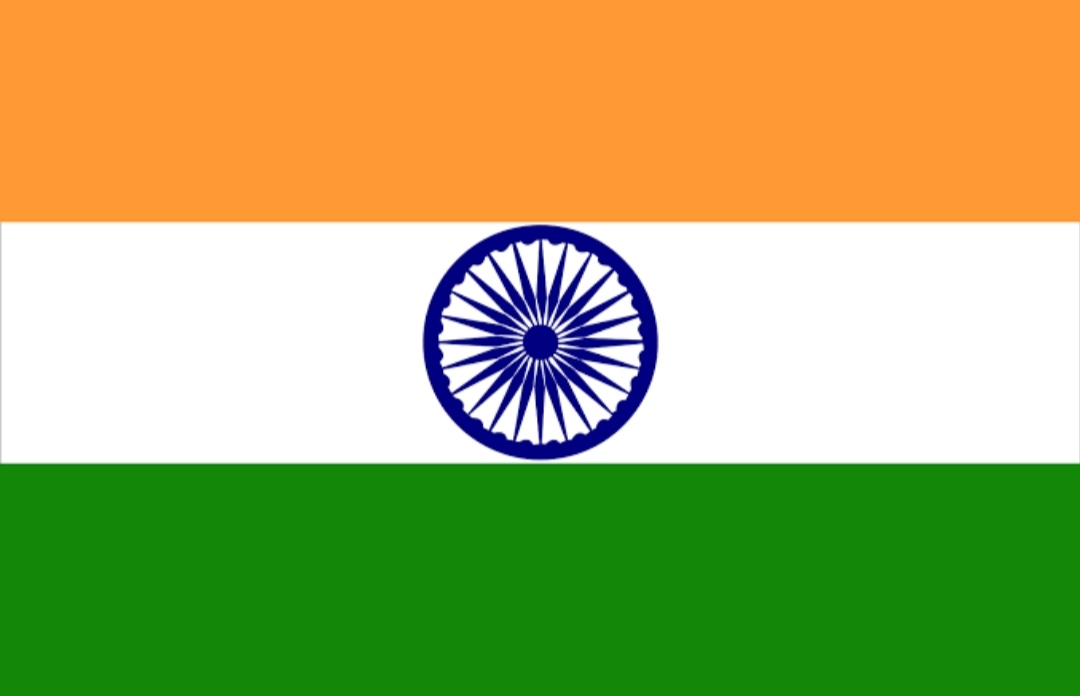
 India, France and UAE trilateral cooperation achieved another milestone in history with successful completion of first ever trilateral Maritime Partnership Exercise between three navies from 07 -08 Jun 23.

During the maiden edition of the exercise, a wide spectrum of operations at sea such as surface Warfare involving tactical firing and drills for Missile engagements, close quarter manoeuvres, Advanced Air Defence Exercise with French Rafale and UAE Dash 8 MPA, Helicopter Cross Landing Operations, Drills for Replenishment at sea were undertaken by the participating units.

The exercise also saw cross embarkation of personnel that facilitated exchange of best practices.

The exercise has further strengthened the maritime ties between the navies and enhanced interoperability to address traditional and non-traditional threats in the maritime environment thus ensuring safety of mercantile trade and freedom of navigation at high seas in the region.

VM/PS                               

Next Summer 2024 Olympics in Paris, France

The Olympics is a major international multi-sport event in which athletes worldwide compete against each other. The first modern Olympic Games were held in Athens, Greece in 1896, and since then, the Olympics have been held every four years (with some exceptions due to war) alternating between the Summer and Winter Games.

The Olympics feature a range of sports, with the Summer Olympics typically including sports like athletics, swimming, gymnastics, and basketball, while the Winter Olympics feature sports like skiing, ice hockey, and figure skating. The Olympics provide a platform for athletes to showcase their skills and compete at the highest level, while also promoting international unity and sportsmanship.

The next Summer Olympics are scheduled to take place in Paris, France in 2024. The Paris Olympics will mark the 33rd edition of the Summer Games and the third time the French capital has hosted the Olympics. The previous two times were in 1900 and 1924. The Paris Olympics are scheduled to take place from July 26 to August 11, 2024, and will feature over 10,000 athletes from over 200 countries.


Source – Olympics

The Paris Olympics will feature 28 sports and a total of 329 events. These sports include athletics, swimming, gymnastics, cycling, fencing, boxing, and more. One of the most exciting events to watch in the Paris Olympics will be the introduction of breakdancing as an Olympic sport. Breakdancing will be making its debut at the Paris Olympics, and it is expected to be a popular event.

It will feature several new venues, including the Paris La Défense Arena, which will host the basketball and wheelchair basketball events, and the Olympic Village, which will be located in the Seine-Saint-Denis area. The Paris Olympics will also feature several iconic venues, including the Stade de France, which will host the opening and closing ceremonies, and the Roland Garros Stadium, which will host the tennis events.

The 2024 Olympics are expected to have a significant economic impact on the French economy. It is estimated that the Paris Olympics will generate over $16 billion in economic activity and create over 240,000 jobs. The Paris Olympics will also provide an opportunity for the city to showcase its culture and tourist attractions, such as the Eiffel Tower, the Louvre Museum, and the Champs-Élysées.

The Paris Olympics will also prioritize sustainability and environmental responsibility. The organizers of the Paris Olympics have made a commitment to carbon neutrality, zero waste, and sustainable sourcing. The Paris Olympics will feature several green initiatives, such as the use of renewable energy, the reduction of single-use plastics, and the promotion of sustainable transportation.

History of Paris

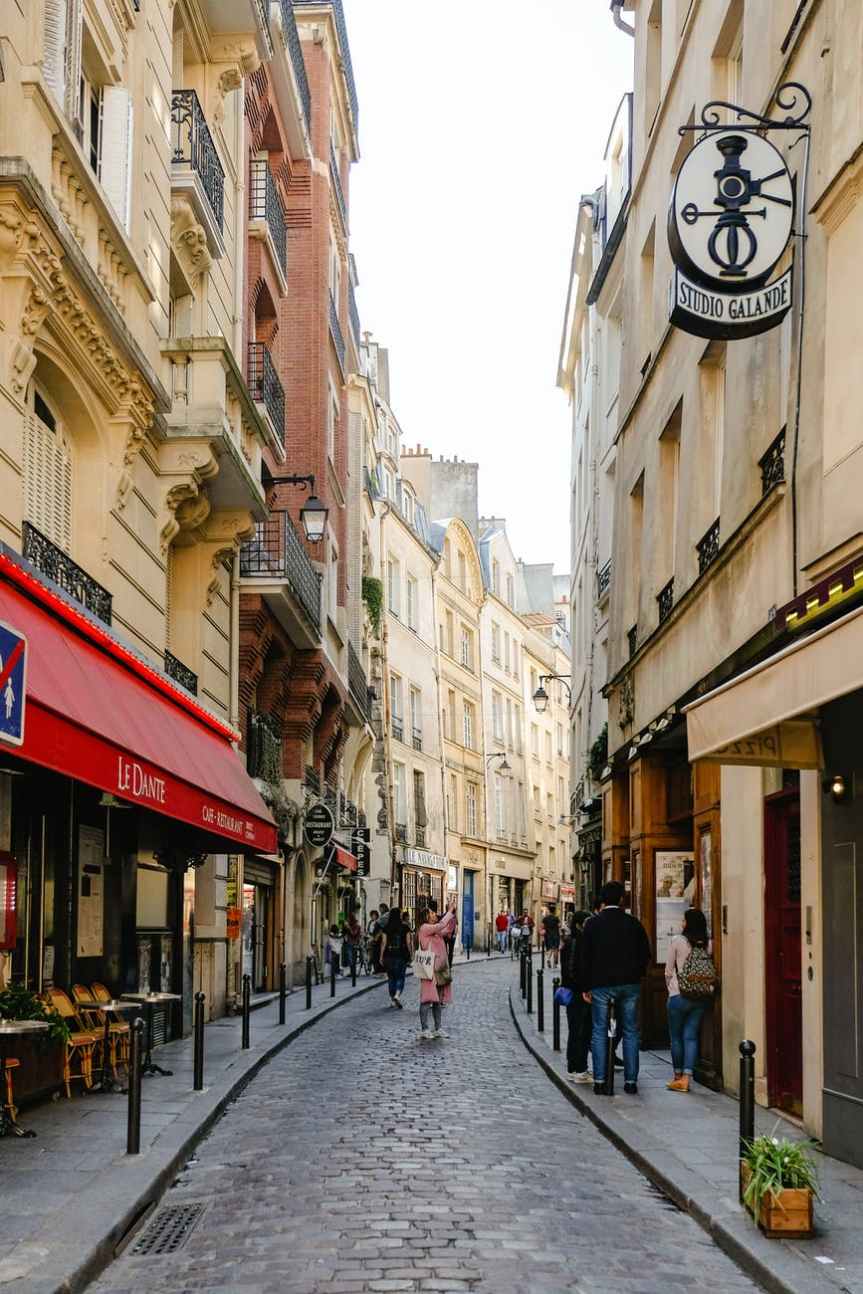
Paris, the capital of France, is a city with a long and rich history dating back over 2,000 years. The city was originally founded by a Celtic people called the Parisii in the 3rd century BC and was known as Lutetia. It became a major city during the Roman Empire when it was known as Lutetia Parisiorum.

During the Middle Ages, Paris became the center of the French monarchy and the Catholic Church. The city grew in size and power, with the construction of famous landmarks such as Notre-Dame Cathedral and the Louvre Palace. In 987 AD, Hugh Capet was crowned King of France in the Notre-Dame Cathedral, which became a symbol of French royalty and power.


Source – Wikipedia

In the 14th century, the Hundred Years’ War between France and England began, and Paris was occupied by the English for several decades. However, it remained an important cultural and intellectual center, with the establishment of the Sorbonne University in 1257.

The Renaissance saw Paris become an important center of art and culture, attracting artists and writers from all over Europe. The reign of Louis XIV, known as the Sun King, saw the development of many grand buildings and the establishment of the French Academy of Sciences. The Palace of Versailles, located just outside Paris, became the center of royal power and extravagance.

During the 18th century, Paris became a center of Enlightenment thought and revolutionary ideas. The French Revolution of 1789 began in Paris, with the storming of the Bastille prison. The Revolution saw the overthrow of the monarchy and the establishment of the First French Republic. Many famous figures of the Revolution, such as Maximilien Robespierre and Georges Danton, were from Paris.

In the 19th century, Paris underwent major changes with the construction of wide boulevards, public parks, and the Eiffel Tower, which was built for the 1889 World’s Fair. The city became a center of the arts, with artists such as Claude Monet and Edgar Degas living and working in the city.

During World War I, Paris was heavily damaged by German artillery, but the city was quickly rebuilt after the war. In 1940, Paris was occupied by Nazi Germany, and many of the city’s landmarks and cultural treasures were threatened with destruction. However, the city was liberated by Allied forces in August 1944, and the Resistance played a key role in the city’s liberation.

Today, Paris is a major global city and a center of art, culture, and fashion. It is known for its iconic landmarks, such as the Eiffel Tower and the Arc de Triomphe, as well as its museums, such as the Louvre and the Musée d’Orsay. It is also a center of international diplomacy and home to many international organizations, including the United Nations Educational, Scientific and Cultural Organization (UNESCO).

Paris has a long and fascinating history, with each era leaving its mark on the city’s architecture, art, and culture. From its origins as a Celtic settlement to its role as a center of the Enlightenment and the French Revolution, Paris has been at the forefront of European history for centuries. Today, it remains a vibrant and dynamic city, beloved by visitors from around the world.


Argentina wins FIFA world cup.

The Lusail Stadium hosted what will go down as one of the greatest, if not the greatest, World Cup finals of all time. Argentina were cruising for much of the match, until Kylian Mbappe converted a penalty and scored a sensational equaliser to force the game into extra-time. That led to more insane football as chances flew around at both ends. Messi scored late in the second-half of extra time to seemingly win it for Argentina, only for them to concede a penalty mere seconds later. The flawless Mbappe converted that as well, thus becoming the first player since 1966 to score a hat-trick in the final of a World Cup. And yet, he ended up on the losing side, with Argentina winning the penalty shootout. Messi finally got his hands on the covetted World Cup trophy in what he said will be his last match in this tournament. 

Mbappe wins the Golden Boot, but Messi bagged the World Cup. It was the battle of the Number 10s, as two titans of the game stepped up and gave it their all. But it was the veteran that stood tall in the end. Nobody expected Argentina to dominate the way they did for the first eighty minutes of the match. Nobody expected them to lose their lead twice in the match. And certainly nobody expected Mbappe to score a hat-trick and still find himself on the losing side. But for all the criticism that Argentina had received over the years for crumbling under pressure, this World Cup has shown that there is none better than them when it comes to penalties, where nerves mattered the most.

2020-21: Fires, Heat and Rains

2020 started with forest fires in Canada, Brazil and bush fires across Australian coast, causing the death of at least two billion animals.

Tourism Australia Bites Back On 'Viral Bushfire Misinformation'
The Australian Bush fires

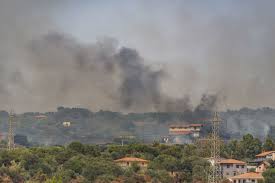
Come 2021, Greek, Turkish and Italian people experienced one of the hottest summers in history in 2021. In the Hellenic Republic of Greece, the temperatures reached 45 degree Celsius on 4th August. While this might be a pretty regularly recorded temperature in the tropic, the Balkans and the Anatolian peninsula recording such temperatures is worrisome. The temperatures led to a spontaneous spread of forest fires in and across Europe, Canada and Turkey – and people across the globe shared the plight of Turkey on social media since Turkey is not habitual with these fires and hence lacks the number of helicopters and jets to control these fires.

Sicily wildfires, August 2021
Turkey battles wildfires for 6th day, EU to send planes
Turkish Wildfires have been unprecedented for the country

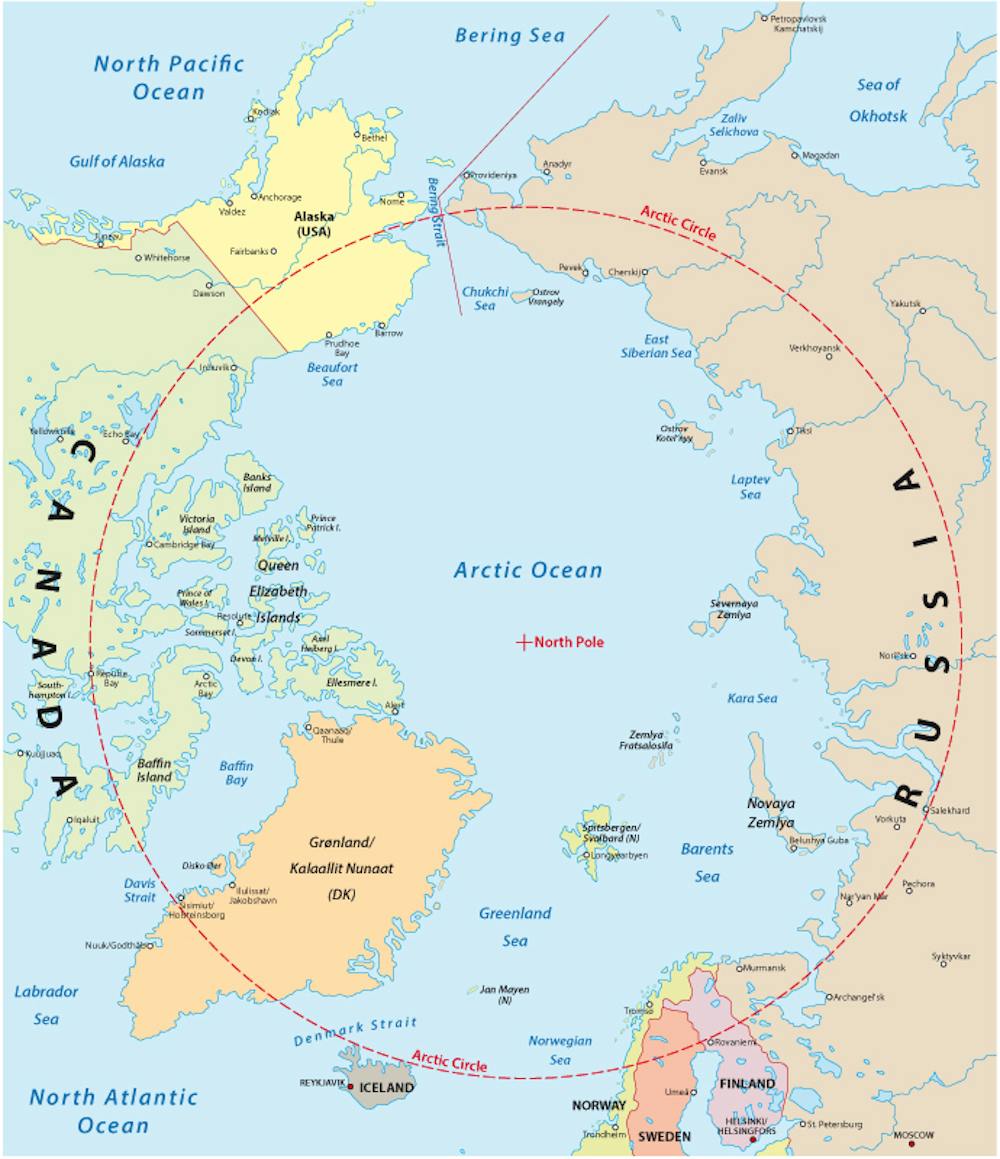
China recorded floods it had never seen in the last 50 years of its history in 2021. A very worst form of excessive rainfalls was recorded in central and western Europe in July 2021 with countries like Germany completely overwhelmed by floods. This is in addition to the already burning Amazons and even Asian countries recording instances of Forest fires in a time not traditionally identified with the same. Russia and Finland and US are also heading towards a quite imminent diplomatic crisis given that the Arctic has already lost more than 50% of its ice opening up the once frozen Tundra and permafrost to petroleum and uranium explorations with the obvious geopolitical control over the area being a chief topic of contention.

Arctic cold war: climate change has ignited a new polar power struggle
Climate change has ignited a new proxy struggle for the domination of the ocean.
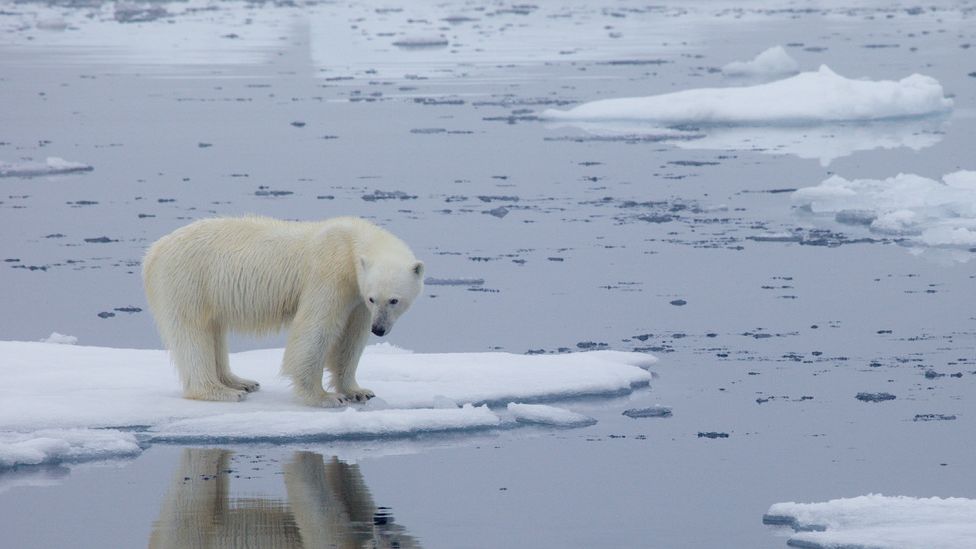
Climate change: Polar bears could be lost by 2100 - BBC News
These might be one of the last generation of the polar bears.

China and India claim to have planted at least a billion trees in the last 5 years with China keen on developing technologies that are associated with building forest towns – a human enclosure built within an artificial forest as the future of dwelling. France announced a closing of all its coal plants 2 years ahead of schedule. But is that all? Global statistics show a massive increase in demand for coal in 2020 and ’21.

Liuzhou Forest City | Stefano Boeri Architetti
The Liuzhou city might be the first forest city on the planet.

The images of environment recovering due to COVID might be fairly short lived.

The Enlightenment – The Great ‘Age of Reason’

Considered as a profound turning point in the intellectual history of the West, the era of Enlightenment was both a movement and a state of mind to those who sought logic and reason to contradict the then ever-present traditional beliefs.

The principal targets of these thinkers were religion (the Catholic Church in France) and the hereditary aristocracy’s hegemony of society. During the early years of the 18th century, a movement parallel to scientific advancement, for political revolution erupted in France. Denis Diderot, for example, linked reason to the conservation of virtue and its ability to check potentially harmful human passions in his writings. Similarly, Jean-Jacques Rousseau’s profoundly influential works argued that man was born free and intelligent, but was imprisoned by the limits imposed on society by governments. True political sovereignty, he believed, remained in the hands of the people as long as the rule of law was properly maintained by a democratically endorsed government: a radical political theory that came to influence the United States later. 

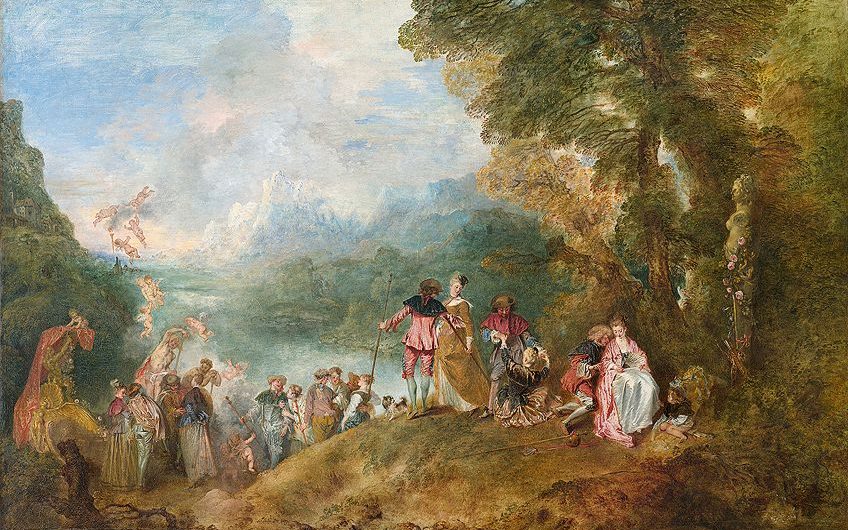
The Enlightenment encouraged people to criticize the monarchy (then King Louis XVI) and corrupt nobles. Philosophers accused Rococo art of being immoral and vulgar because Rococo artists and architects adopted a more humorous, floral and elegant approach to the Baroque style. It was an art form with deep-rooted playful and witty themes, just like a theme borrowed from a classic love story. This motivated the “enlightened” philosophers to promote a new kind of art, which was moral rather than immoral and taught people right from wrong.

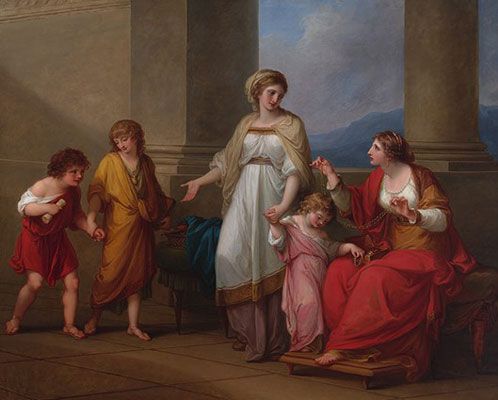
This new art form called “neoclassicism” attempts to present classical ideals and themes in a style derived from classical Greek and Roman origin. The neoclassical painting reflects the frozen shape of ancient relief sculpture, compact composition, and shallow space. Artists and intellectuals inspired by classical history made contributions to early neoclassicism, which was not only a way of looking at the world but was also a visual style. As we know, the two main targets under critical appraisal during the Enlightenment were the government and religious authorities. Many Enlightenment thinkers waged fierce campaigns against restrictions on freedom (such as censorship, discrimination, etc.) and religious interference in public affairs (such as law, education, government). These called for reforms, and they were put forth by some of the most eloquent writers in history, which is why the Enlightenment is also known as the golden age of satire. 

The two main well-renown writers in Enlightenment satire were Voltaire (French) and Swift (English). Voltaire fought against various forms of injustice, including religious and political discrimination, arbitrary imprisonment, and torture. He is mainly known for his many philosophical and satirical works, including novels, short stories and prose. Voltaire was also an accomplished poet, tragedian and historian. The Irish-English writer Jonathon Swift (Jonathon Swift) is perhaps the most famous satirist in history. He wrote many satirical essays covering many topics. His main personal complaint is the abuse of the Irish by the British. Swift’s masterpiece is the novel “Gulliver’s Travels”, which takes a series of wonderful adventures as the background to conduct a comprehensive investigation of morality, politics and society.

In conclusion, the era of enlightenment was the pinnacle of the evolution of modernity and contemporary societal ideals, thus it was an extremely rewarding effort for me to learn more about this intriguing and fascinating time.

France moves India to amber list from red

France has decided to remove India from the red list to amber as COVID cases decreased in India. The French government has classified amber-listed countries as nations where there is active circulation of the virus in controlled proportions, without further spread. After this news, VFS centres in Delhi and Mumbai have now opened and are accepting all visa categories. Also for kids, there won’t be any quarantine mandate in France.

Protocols to be followed

1) Fully vaccinated travellers holding a valid C-type Schengen visa for 3-5 years, can travel without any restriction to France. But the travellers must be vaccinated with any EMA-approved vaccines, which are Pfizer/ Comirnaty, Moderna, AstraZeneca/Vaxzevria/Covishield.

2) Passengers must travel after seven days of getting their second vaccine shot.

3) Travellers need to have proof of vaccination status. They must also have a attest statement saying they don’t have any infection symptoms.

4) The restriction will be applicable to unvaccinated travellers as well as those vaccinated with unapproved (yet) vaccines including Covaxin.

5) Those with ‘talent passports’, (students and researchers), fall under the list of compelling reasons. So they are allowed to travel to France. But they need to show their negative PCR test not older than 72 hours. A negative antigen test, not older than 48 hours before departure, is also acceptable.

French revolution

ALL OF US HAVE STUDIED ABOUT LOUIS XVI FAMOUS STORY. AND THE SAGA OF NAPOLEAN BONAPARTE.LETS HAVE A FLASHBACK TO THE HISTORY

French Revolution


Paragraph 1

Women’s participation in the revolutionary events in France between 1789 and 1795 has only recently  been given nuanced treatment. Early twentieth- century historians of the French Revolution are  typified by Jaures, who, though sympathetic to the women’s movement of his own time, never even mentions its antecedents in revolutionary France. Even today most general histories treat only cursorily a few individual women, like Marie Antoinette. The recent studies by Landes, Badinter, Godineau, and Roudinesco, however, should signal a much-needed reassessment of women’s participation.

Paragraph 2

Godineau and Roudinesco point to three significant phases in that participation. The first, up to mid-1792, involved those women who wrote political tracts. Typical of their orientation to theoretical issues—in Godineau’s view, without practical effect—is Marie Gouze’s Declaration of the  Rights of Women. The emergence of vocal middle- class women’s political clubs marks the second phase.  Formed in 1791 as adjuncts of middle-class male political clubs, and originally philanthropic in function, by late 1792 independent clubs of women began to advocate military participation for women. In the final phase, the famine of 1795 occasioned a mass women’s movement: women seized food supplies, held officials hostage, and argued for the implementation of democratic politics. This phase ended in May of 1795 with the military suppression of this multiclass movement. In all three phases women’s participation in politics contrasted markedly with their participation before 1789. Before that date some noblewomen participated indirectly in elections, but such participation by more than a narrow range of the population—women or men—came only with the Revolution.

Paragraph 3

What makes the recent studies particularly compelling, however, is not so much their organization of chronology as their unflinching willingness to confront the reasons for the collapse of the women’s movement. For Landes and Badinter, the necessity of women’s having to speak in the established vocabularies of certain intellectual and political traditions diminished the ability of the women’s movement to resist suppression. Many women, and many men, they argue, located their vision within the confining tradition of Jean-Jacques Rousseau, who linked male and female roles with public and private spheres respectively. But, when women went on to make political alliances with radical Jacobin men, Badinter asserts, they adopted a vocabulary and a violently extremist viewpoint that unfortunately was even more damaging to their political interests.

Paragraph 4

Each of these scholars has a different political agenda and takes a different approach—Godineau, for example, works with police archives while Roudinesco uses explanatory schema from modern psychology. Yet, admirably, each gives center stage to a group that previously has been marginalized, or  at best undifferentiated, by historians. And in the case of Landes and Badinter, the reader is left with a sobering awareness of the cost to the women of the Revolution of speaking in borrowed voices.

https://www.google.com/url?sa=t&source=web&rct=j&url=https://en.m.wikipedia.org/wiki/French_Revolution&ved=2ahUKEwiEnaOv7ufxAhVbyzgGHSZLB8EQFnoECCYQAQ&usg=AOvVaw1ntUmqXdSYR9ME1L2DAcE8

https://www.google.com/url?sa=t&source=web&rct=j&url=https://www.history.com/.amp/topics/france/french-revolution&ved=2ahUKEwiEnaOv7ufxAhVbyzgGHSZLB8EQFnoECEYQAQ&usg=AOvVaw30-DOOzIkwL94onNDgzDcD&ampcf=1