Globalization and it's effects

 Globalization 

Globalization refers to the spread of the flow of financial products, goods, technology, information, and jobs across national borders and cultures. In economic terms, it describes an interdependence of nations around the globe fostered through free trade .
Globalization is always important for any of the country because every country need to grow financially as well as in other matters also . Now people are aware of this process and tend to increase their knowledge about globalization basically it is beneficial for the country’s people as well as for the country.


Benefits of globalisation

1. Socially, it leads to greater interaction among various populations.
2. Culturally, globalization represents the exchange of ideas, values, and artistic expression among cultures.
3. Globalization also represents a trend toward the development of a single world culture. 
4. Politically, globalization has shifted attention to intergovernmental organizations like the United Nations (UN) and the World Trade Organization (WTO).
5..Legally, globalization has altered how international law is created and enforced.
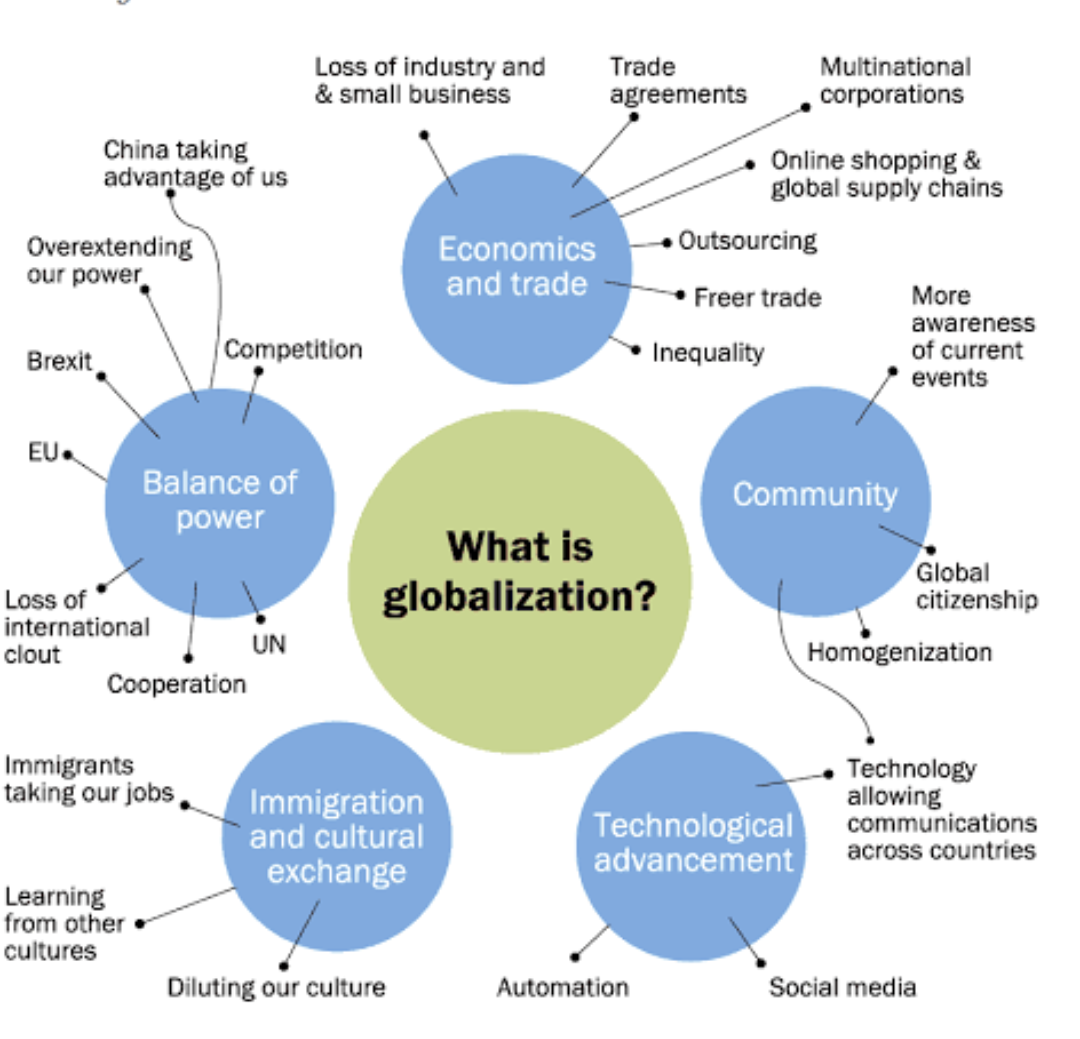
Effects of globalisation

Positive effects of globalisation 

1. Foreign Direct Investment

Foreign direct investment (FDI) tends to grow at a much greater rate than world trade does. This can help to boost technology transfer, industrial restructuring, and the growth of global companies.

2. Technological Innovation

Increased competition helps inspire new technology development. The growth in FDI helps improve economic output by making processes more efficient.

3. Economies of Scale

Increased global trade enables large companies to realize economies of scale. This reduces costs and prices, which in turn supports further growth. However, this can hurt many small businesses trying to compete at home.

Negative effects of globalisation 

1. Interdependence

Interdependence between nations can cause local or global instability. This occurs if local economic fluctuations end up impacting a large number of countries relying on them.5 For example, in 2020, Ukraine was the fifth larger exporter of wheat. When Russia invaded the country, it threatened food supply chains for countries like Pakistan, Lebanon, and Vietnam that import Ukranian wheat.6

2. National Sovereignty

Some see the rise of nation-states, global firms, and other international organizations as a threat to sovereignty. Ultimately, this could cause some leaders to become nationalistic.7
Two prominent examples of the rise of nationalism as a pushback to globalism include the 2016 election of Donald Trump in the U.S. and the British vote to leave the European Union (known as “Brexit”). These events contributed to the anti-globalization movement and stoked anti-immigration sentiments.

3. Equity Distribution

The pros of globalization can be unfairly skewed toward rich nations or individuals, creating greater economic inequalities.8 For example, in the wake of NAFTA, the average net weekly pay for maquila workers was $55.77 in 1998—less than $2 more than the average cost for basic needs in the maquiladora trade zone.9

4. Protectionism Through Tariffs

The 2008 economic crisis led many politicians to question the merits of globalization. In 2007, worldwide capital inflows accounted for more than 20% of the world’s GDP. By 2019, this figure fell to less than 5%.11
The U.S. and Europe introduced new banking regulations that limited capital flows. Many countries put in place tariffs to protect vital industries at home. In the 1990s, the U.S. placed a 127% tariff on Chinese paper clips.12 And Japan has levied tariffs on imported rice as high as 778%.13

5. Future Outlook

Some economists suggest that businesses are not investing across borders to build capital infrastructure. They argue that companies seek countries with low taxes. Some form of globalization may be inevitable in the long run, but the historic bumps spurred by economic crises suggest that change is the only constant.
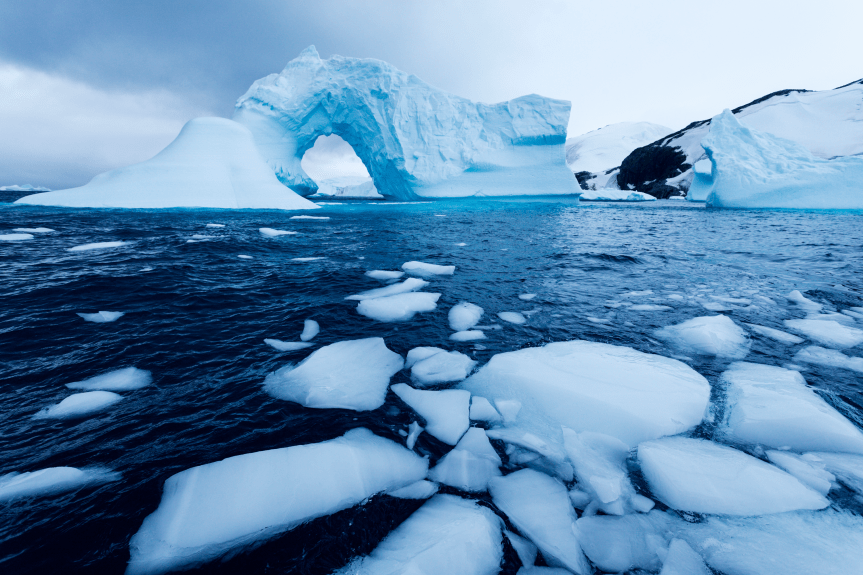
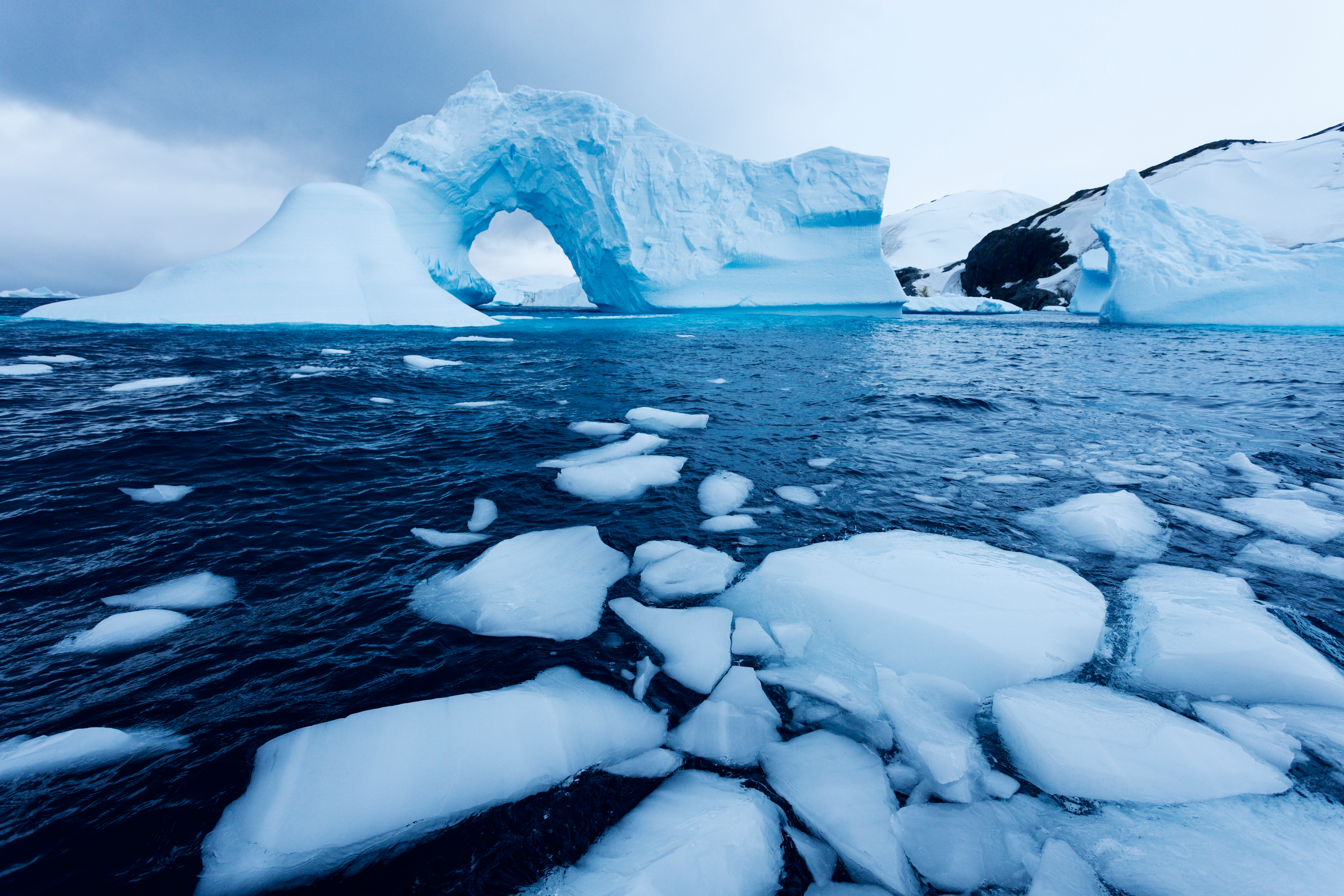
Melting of Glaciers – A topic which should not be avoided.

Glaciers are persistent chunks of dense ice that are constantly moving under their own weight. Glaciers are formed where snow accumulation exceeds its erosion over the years, and often centuries.

Rising global temperatures have undoubtedly been the cause of glacier melting throughout history. Due to the rate at which climate change is occurring today, it can become extinct at record rates.

Some of the other reasons:
Carbon dioxide gases Emissions: Atmospheric concentrations of carbon dioxide and other greenhouse gases (GHGs) produced by human activities such as industry, transportation, deforestation, and burning fossil fuels warm the earth and melt glaciers. Glacier savings can be achieved if CO2 emissions can be reduced by 45% over the next decade before reaching zero by 2050.
Ocean warming: The ocean absorbs 90% of the earth’s heat. This fact mainly affects the melting of sea glaciers near the poles and on the coast of Alaska (USA) and other heavy snow covered areas.

The main consequences of melting glaciers are:
Sea Level Rising- Sea level is rising and covers most of the continental region. This means that which means within years most of the areas can be a complete flooded regions.
Less freshwater – No glaciers also mean less water for population consumption, less hydropower capacity, and less water available for irrigation.
Climate change-The balance between cyclone and anticyclone structure and meteorological patterns is deteriorating.
Food Chain Imbalances-The habitats of some marine and terrestrial species are changing and they may harms to them in maintaining their natural circulation and habitat.

Temperature imbalances, extensive processes of deforestation, and rainfall can be other reasons for global warming that lead to glacier melting.
Glaciologists believe that despite the massive ice loss, there is still time to save the glacier from the predicted disappearance. It can done through to curb climate change and save glaciers from getting extinct. Scientists believe that controlling climate change can prevent glaciers from melting and disappearing.

“The earth has a skin and that skin has diseases; one of its diseases is called man.”

– Friedrich Nietzsche

EFFECTS OF GLOBALIZATION ON INDIAN SOCIETY

Globalization has many meaning depending on the circumstance and on the individual who is talking about. There is one of the term of Globalization is a process of the “reconfiguration of geography, so that social space is not entirely mapped in terms of territorial distance, territorial places and territorial borders.” The simple term of globalization refers to the integration of economies of the world through uninhibited trade and financial flows, as also through mutual exchange of technology and knowledge. Ideally, it also contains free inter country movement of labor.

Indian society drastically changes after urbanization and globalization. The economic policies has direct influence in forming the basic framework of the Indian economy. The government shaped administrative policies which aim to promote business opportunities in every country, generate employment and attract global investment. In which the Indian economy witnessed an impact on its culture and introduction to other societies and their norms brought various changes to the culture of this country as well. The developed countries have been trying to pursue developing countries to liberalize the trade and allow more flexibility in business policies to provide equal opportunities to multinational firms in their domestic market. The International Monetary Fund (IMF) and World Bank helped them in this endeavor. Liberalization began to hold its foot on barren lands of developing countries like India by means of reduction in excise duties on electronic goods in a fixed time Frame.

Globalization has several aspects and can be political, cultural, social, and economic, out of Financial integration is the most common aspect. India is one of the fastest-growing economies in the world and has been predicted to reach the top three in the next decade. India’s massive economic growth is largely due to globalization which was a transformation that didn’t occur until the 1990s. Since then, the country’s gross domestic product (GDP) has grown at an exponential rate.

Indian government did the same and liberalized the trade and investment due to the pressure from the World Trade Organization. Import duties were cut down phase-wise to allow MNC’s operate in India on an equal basis. As a result globalization has brought to India new technologies, new products and also the economic opportunities.

Despite bureaucracy, lack of infrastructure and an ambiguous policy framework that adversely impact MNCs operating in India, MNCs are looking at India in a big way, and are making huge investments to set up R&D centres in the country. India has made a lead over other growing economies for IT, business processing, and R&D investments. There have been both positive and negative impacts of globalisation on social and cultural values in India.

Economic Impact:

1. Greater Number of Jobs: The advent of foreign companies led to the growth in the economy which led to creating job opportunities. However, these jobs are concentrated in the various services sectors and led to rapid growth of the service sector creating problems for individuals with low levels of education. The last decade came to be known for its jobless growth as job creation was not proportionate to the level of economic growth.

2. More choice to consumers: Globalisation has led to having more choices in the consumer products market. There is a range of choices in selecting goods unlike the times where there were just a couple of manufacturers.

3. Higher Disposable Incomes: People in cities working in high paying jobs have greater income to spend on lifestyle goods. There’s been an increase in the demand for products like meat, egg, pulses, organic food as a result. It has also led to protein inflation.

Protein food inflation contributes a large part to the food inflation in India. It is evident from the rising prices of pulses and animal proteins in the form of eggs, milk and meat. With an improvement standard of living and rising income level, the food habits of people changed. People tend toward taking more protein intensive foods. This shift in dietary pattern, along with rising population results in an overwhelming demand for protein rich food, which the supply side could not meet. Thus resulting in a demand supply mismatch thereby, causing inflation.

In India, the Green Revolution and other technological advancements have primarily focused on enhancing cereals productivity and pulses and oilseeds have traditionally been neglected.

Shrinking Agricultural Sector: Agriculture now contributes only about 15% to GDP. The international norms imposed by WTO and other multilateral organizations have reduced government support for agriculture. Greater integration of global commodities markets leads to constant fluctuation in prices.

• This has increased the vulnerability of Indian farmers. Farmers are also increasingly dependent on seeds and fertilisers sold by the MNCs.

Globalization does not have any positive impact on agriculture. On the contrary, it has few detrimental effects as the government is always willing to import food grains, sugar etc. Whenever there is a price increase of these commodities.

• Government never thinks to pay more to farmers so that they produce more food grains but resorts to imports. On the other hand, subsidies are declining so the cost of production is increasing. Even farms producing fertilizers have to suffer due to imports. There are also threats like introduction of GM crops, herbicide resistant crops etc.

Increasing Health-Care costs: Greater interconnections of the world have also led to the increasing susceptibility to diseases. Whether it is the bird-flu virus or Ebola, the diseases have taken a global turn, spreading far and wide. This results in greater investment in the healthcare system to fight such diseases.

Child Labor: Despite prohibition of child labors by the Indian constitution, over 60 to a 115 million children in India work. While most rural child workers are agricultural laborer’s, urban children work in manufacturing, processing, servicing and repairs. Globalization most directly exploits an estimated 300,000 Indian children who work in India’s hand-knotted carpet industry, which exports over $300 million worth of goods a year. The many effects of globalization of Indian society and has immense multiple aspects on Indian trade, finance, and cultural system. Globalization is associated with rapid changes and significant human societies. The movement of people from rural to urban areas has accelerated, and the growth of cities in the developing world especially is linked to substandard living for many.

Sources: https://www.clearias.com/effects-globalization-indian-society/

International Business in Digital Age of Technology

In this Digital age, the market has became more global than ever it has been, the use of internet has been at peak, than it has never before, the small business that were in the street has started to open a wide market through the use of Internet, the local shop has reached to other parts of the world through the use of internet, websites, social media etc., many big multinational company has been facilitating the tools and facilities for the small business owner to come on the much bigger platform than ever before through the internet. Global integration through this medium that remove the barrier of trade, investment, communication, factor flows, bringing the economics together for the development.

There is a global change in the world, in this pandemic, changes in economies, business, technology, communication, politics and many more. This changes make the require the business to adapt to this changes as quick as possible or else they will get outdated, obsolete and might even wind up the business. There are many uncertainties in the business, so the entrepreneur must adapt to this changes, think about the future of the business. There are many other factors that are forcing the business to make changes, like limited resources, limited market, huge competition, highly skilled labor to change from traditional way to alternative way for getting the business more successful and to get in global market.
Advantages of going international:
It can able to take advantage of market opportunities in abroad countries through internet, trade.
It also defends and grips the position of the business from the competitive position in varying technology, and also from domestic rivalry or government policies.
It also enhances their return from the higher revenue and also lowers their cost of production.
It also reduces it imports and try to increase their exports
It breaks the barriers of places, geographical locations through internet.
It also amplifies their relations with the International Diplomats.
It also takes benefits from the international technology, labor and many opportunities.
To get more access to the global markets and get the resources at low price without compromising its quality.
The Domestic business is a business that buys or sells the goods and services within the national boundaries. It gets its resource within the country boundaries doesn’t have any option to search for the better option and even for the markets, it has limited its boundaries in terms of place, markets, resources unlike International business where goods and services are traded across the boundaries of the country, it can be either the countries or between the multinational companies from the different countries. The Domestic business has some limitation that it operates only within the boundaries, limited to narrow markets, no new customer, no customer visibility and reach, scare resources with high price, not good quality, but whereas International business all this limitations are eradicated with the help of technologies which remove the barrier of place, market, time, and new customer with high quality product with reasonable price, and the owner get the raw material with good quality and with reasonable price. In domestic business, the business get a constant threat of competition, rival companies as they don’t have new markets and large reach for their products, it becomes difficult for the domestic business to survive in the market. Many domestic businesses are going in the way of globalization, market integration with the use of technologies and becoming the international business and removing all the hindrance of the small business problems, competition.

Human-wildlife conflict has Climate Change as an emerging Factor

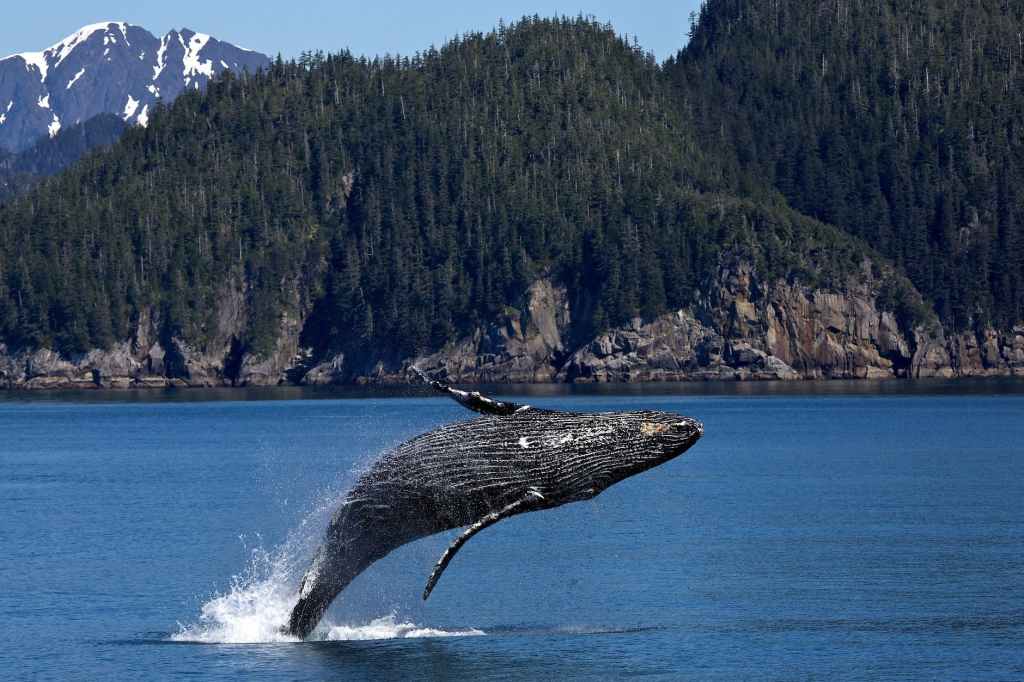
In 2015, the largest marine heat wave in the U.S. hit the Pacific Coast. Whales moved closer to shore to find prey, but they came across something dangerous—they were getting entangled in crab fishing gear.

Crab fishermen and women wouldn’t usually be out at that time of year. But the change in climate was also causing an algal bloom, toxic to crabs. So the fisheries delayed their timing by several months—the same time migrating whales were on the coast.


“It was this double-whammy,” said Briana Abrahms, an assistant professor in the Department of Biology and Center for Ecosystems Sentinels at the University of Washington.

This was one of the topics Abrahms was studying when she realized there hadn’t been much published research on how climate change is exacerbating human-wildlife conflicts. Looking at scientific literature and government reports, she came across only a few dozen. And many of those were either buried in obscure journals or just anecdotal mentions.


In a paper published in Science, she delved deeper into this area and wrote a call to action for managers and researchers to focus on this issue.Abrahms was working on another project at the same time as her whale research that was on completely different species in a completely different area, but seemed to have some similarities when it came to climate and conflict.

In Botswana, a government report cited some of the highest numbers of human-wild conflicts on record, mostly large carnivores preying on livestock. That happened to be during an extreme drought in 2018. “It struck me how different these systems were, but the story was the same,” she said. “I felt like it was really important to tell this story and draw attention since these climate changes and conflicts are likely to increase in the future.”


As part of her paper, Abrahms applauded a new, proactive risk assessment developed by the state of California to help managers figure out when and where to close fisheries under different climate and ocean conditions. “If you understand what the underlying driver is, in this case climate is a factor in these dynamics, you can better prepare to make management decisions and reduce conflict—or avoid it in the first place,” she said.


Abrahms also pushes for more research in these areas, especially where there are geographic and taxonomic gaps. “We definitely need more research and also need to be synthesizing research across everything already out there to understand how much we should be more worried about long-term changes,” she said.

Climate change: Everyone Focused on saving lives till now, time to save livelihood as well:

According to a Climate Central map, hundreds of cities on India’s eastern coast will be under water by 2050. CEEW says more than 80% of India’s population is vulnerable to “extreme climate risks”

According to a map created by Climate Central, hundreds of cities on the eastern coast of India will be under water by the year 2050. Over 27 states and union territories in India and more than 80% of the country’s population are vulnerable to “extreme climate risks”, says a report by the Council on Energy, Environment and Water.

These statistics show that the lives of many communities are put in danger due to climate change, and that a significant number of them lose their livelihood to it as well. Ritayan Mukherjee, a photojournalist, shares that while covering the pastoral nomads in the Himalayas, he came across the Changpa community who take their yak and sheep to grazing grounds that are 10,000-11,000 feet above the sea level. “The livelihood of these people is directly dependent on nature, because they move with their herd from one place to another,” says he.


Mukherjee shares that because of global warming, rising temperatures and the winter months getting shorter, the pastoralists have to take their herds to even higher grazing grounds. A report that Mukherjee worked on for the People’s Archive of Rural India said that the yak population in Leh fell about 57% between 1991-2010, according to the Department of Animal Husbandry and Dairying. A lot of these pastoralists don’t just depend on yak for their economic incomes, but they also use the yak-wool to build traditional tents, called Rebos. However, Mukherjee shares that these residential tents have disappeared over the past few years for reasons that can be attributed to climate change.

According to a Climate Central map, hundreds of cities on India’s eastern coast will be under water by 2050. CEEW says more than 80% of India’s population is vulnerable to “extreme climate risks”.

How many headlines and news articles did you come across in the last month that told you the condition of the climate is deteriorating? That a big chunk of our lives will be lost battling global warming in the next few decades? It’s no secret that climate change is impacting lives every single day, but let’s take a look at how it has been affecting us and what we can do to change its course.

ADVENT OF FAST-FOOD CHAIN IN INDIAN MARKET

                                                                   (Photo: TripAdvisor)


We all are very much familiar with the fast-food
chains. With the revolution in food, the world has become so fast-moving that
it’s very difficult to keep a track. With the demand for fast-food came the entry
of fast-food joints. It has garnered the market to a wide level.

Increasing demand for fast food

Is there anyone who doesn’t like fast-food? It has
become so inevitable and specially among children.  The children specially like burger and pizza
more than dal or roti. Demand for McDonald’s, Subway, KFC has increased rapidly
over the years. Who knew that they will capture the market at such a level?

Why they are so much in demand?

·      
If we see from the customer’s view,
we can say that it’s highly desirable.

·      
The prices are also low as compared
to dine in restaurants.

·      
It is spread across many locations.

·      
The taste is also good and it’s very
convenient.

The fast-food has become very………Fast

If a fast-food restaurant wants to remain in business,
then it has to be very fast. This pace has been very well maintained by the
fast-food chains of Indian market. Many people after work grab their fast-food
while going back to home.

It’s everywhere and that’s why it is very convenient to order.

Smarter
than You Think

Fast-food
chains adopt various approaches to target customers. They mainly target
children as fast-food is more popular among children. For example, the use of
characters such as Ronald McDonald  is a
tactic to emotionally bond with the children. They also organize birthday
parties and offer happy meal. They keep kids hooked up on happy meals. This is
what is called as “SMART PLAY”.

Globalized India

Globalization is a process that encompasses the causes, courses, and consequences of transnational and trans-cultural integration of human and non-human activities. India had the distinction of being the world’s largest economy in the beginning of the Christian era, as it accounted for about 32.9% share of world GDP and about 17% of the world population. The goods produced in India had long been exported to far off destinations across the world; the concept of globalization is hardly new to India.

India currently accounts for 2.7% of world trade (as of 2015), up from 1.2% in 2006 according to the World Trade Organization (WTO). Until the liberalization of 1991, India was largely and intentionally isolated from the world markets, to protect its fledgling economy and to achieve self-reliance. Foreign trade was subject to import tariffs, export taxes and quantitative restrictions, while foreign direct investment was restricted by upper-limit equity participation, restrictions on technology transfer, export obligations and government approvals; these approvals were needed for nearly 60% of new FDI in the industrial sector. The restrictions ensured that FDI averaged only around $200M annually between 1985 and 1991; a large percentage of the capital flows consisted of foreign aid, commercial borrowing and deposits of non-resident Indians.

India’s exports were stagnant for the first 15 years after independence, due to the predominance of tea, jute and cotton manufactures, demand for which was generally inelastic. Imports in the same period consisted predominantly of machinery, equipment and raw materials, due to nascent industrialization. Since liberalization, the value of India’s international trade has become more broad-based and has risen to  63,0801 billion in 2003–04 from  12.50 billion in 1950–51. India’s trading partners are China, the US, the UAE, the UK, Japan and the EU. The exports during April 2007 were $12.31 billion up by 16% and import were $17.68 billion with an increase of 18.06% over the previous year.

India is a founding-member of General Agreement on Tariffs and Trade (GATT) since 1947 and its successor, the World Trade Organization. While participating actively in its general council meetings, India has been crucial in voicing the concerns of the developing world. For instance, India has continued its opposition to the inclusion of such matters as labor and environment issues and other non-tariff barriers into the WTO policies.

Despite reducing import restrictions several times in the 2000s, India was evaluated by the World Trade Organization in 2008 as more restrictive than similar developing economies, such as Brazil, China, and Russia. The WTO also identified electricity shortages and inadequate transportation infrastructure as significant constraints on trade. Its restrictiveness has been cited as a factor which isolated it from the global financial crisis of 2008–2009 more than other countries, even though it experienced reduced ongoing economic growth.

As the third-largest economy in the world in PPP terms, India is a preferred destination for FDI; India has strengths in information technology and other significant areas such as auto components, chemicals, apparels, pharmaceuticals, and jewelry. Despite a surge in foreign investments, rigid FDI policies resulted in a significant hindrance. However, due to some positive economic reforms aimed at deregulating the economy and stimulating foreign investment, India has positioned itself as one of the front-runners of the rapidly growing Asia-Pacific region. India has a large pool of skilled managerial and technical expertise. The size of the middle-class population stands at 50 million and represents a growing consumer market.

India’s liberalized FDI policy as of 2005 allowed up to a 100% FDI stake in ventures. Industrial policy reforms have substantially reduced industrial licensing requirements, removed restrictions on expansion and facilitated easy access to foreign technology and FDI. The upward moving growth curve of the real-estate sector owes some credit to a booming economy and liberalized FDI regime. In March 2005, the government amended the rules to allow 100 per cent FDI in the construction business. This automatic route has been permitted in townships, housing, built-up infrastructure and construction development projects including housing, commercial premises, hotels, resorts, hospitals, educational institutions, recreational facilities, and city- and regional-level infrastructure.

Why are students from International Boards being welcomed by Indian Universities

The world is facing a learning crisis. While countries have significantly increased access to education, being in school isn’t the same. Crisis will affect generations of students without action to boost teaching. Global learning crisis is costing $129 billion a year 10% of global spending on primary education is being lost on poor quality education that is falling to ensure that students learn. This situation leaves one in for young people in poor countries unable to read a single sentence. International students applying to foreign universities have hit a wall due to this global crisis. The dilemma to continuing with their education in India on waiting for universities abroad is faced by many students who are studying in international board. Many studies explored the challenges and hurdles experienced by international students attending institutions of higher education abroad.

Universities and college campuses are places where students live and study in close proximity to each other. They are also a buzzing cultural hubs where students are brought together from Nations around the world. Recently, the foundations of this unique ecosystem have been impacted significantly by the rapid spread of the coronavirus (COVID-19) outbreak, creating uncertainty regarding the implications for higher education.

One of the biggest concerns for the sector at large is the percentage of international students that make up the domestic higher education markets. This pandemic has resulted in an economic slump globally and parents are becoming conscious of the cost of sending the children abroad. As a result, international school students who would have ideally chosen to apply to universities abroad are now evaluating higher education prospects in their home country.

The question we often ask parents is : if their ward is planning to apply to an Indian university, should they opt for a school that offers curriculum from international boards, or stick to conventional Indian boards.

It is believed that it is highly advisable for parents to enroll their child in an international board as the curriculum is global and the skills amasses will ensure that every student becomes an active learner for life. These programs are brilliantly designed to help students become adaptable, thereby helping students to perform with ease in the Indian education system as well as Internationally.

It is important to understand that a rigorous curriculum ensures that students are challenged effectively to think critically and creatively. These skills along with many others these programmes inculcate, are learning for a lifetime. They are also highly sought after by universities and employers both abroad and within India.

International board follows application based teaching – It is also important at this stage to understand that while many curricula focus on teacher-led methodology, the international curriculum is more about an involved facilitation process, in order to allow the student to develop essential independent thinking skills.

Cambridge international AS and A Level is an in-depth program which helps students develop many core higher-order thinking skills that universities are looking for, such as analysis, evaluation, and synthesis. The program also focuses on building research, innovation, reflection, and communication skills in each student. These I believe are essential for the 21st-century learning and a global citizen.

Students adapting to international curriculum – Let us focus on India for the moment. Many parents were often worried if the process of transferring a child from an international curriculum to our national one is easy. Let me reassure you here that there is a smooth progression for the learners who choose to study at universities in India. These learners from international boards acquire knowledge, skills, and adaptability that enable them to enter, or re-enter the Indian education system, without difficulty as they are well prepared for independent study. All reputed indian universities accept and value international qualifications.
The subject knowledge along with the critical thinking and reasoning skills that the Cambridge International AS and A Level programme grants its students is unparalleled. And this has been of immense help to our students who have moved on to various Indian and international universities to study science, technology, law, design, medicine, management, finance, history, math, psychology, literature, research etc.

The international outcomes allow them to apply to all universities including esteemed organisations such as All India Institute of Medical Sciences (AIIMS), Indian Institute of Technology, National Institute of Design etc.

Many students from Podar International School have over the years successfully found placements in renowned universities. I strongly believe that the skills and knowledge that they amass during their years of international education are significant contributors to them being successful in the field of their choice.

Globalisation- The Challenges and opportunities it poses to Business ethics.


“Globalisation is process by which events, decisions, and activities in one part of the world come to have significant consequences for individuals and communities in quite distant parts of the globe”. It refers to a deviation to a more unified, interdependent, consolidated and reciprocal, complementary shift in the world economy. In the past few decades globalization has become the buzz word and the focal point for most global companies. With the advent of globalisation various barriers in the business environment has been demolished with an establishment of direct contact with every part of the world which has resulted in the free flow of goods and services since the World War II with dramatic technological changes and development. This development has resulted in changes in life and living status of people, culture enhancement, easier penetration into markets, better communication, quicker flow of money and information, faster travel, global availability of any goods and services and enormous opportunities for the business and economy. With these advancements issues are raised on how companies will gain competitive advantage. Global brands gain the competitive advantage by being ethical. Though many believe that ethics and business cannot go hand in hand one cannot deny the fact that it is an important element of their strategic business goals taking the primary role in an vision and mission statement of any company. As William C Butcher, Retired chairman , Chase Manhattan Corporation puts it, ” “Ethical decision-making isn’t an option today. It’s an obligation-in business, in education, in government, in our daily lives” . Though every company strives to be ethical, the business industry has faced a plethora of unethical acts such as duplication of products, discrimination, child labor, money laundering, cyber crimes, sexual harassment in workplace, environment damages, stealing parents etc. Therefore many companies now have committed themselves to follow business ethics in order to gain competitive advantage, goodwill and a stand in the world of business.

Ethics helps in drawing the line between right and wrong with by imbibing certain principles, values and beliefs which fall into three categories : code and compliance, values and social outreach and it includes respecting differences culturally, honest communication and trust when posed globally.

Challenges /Threats :
A threat to enlightened self interest :
A major threat that globalization poses to ethics is going against the concept of enlightened self-interest. Enlightened self interest is a philosophy in ethics that states that a person or organization that acts to further the interest of others ultimately serve their own self interest which is simply put as “do well by doing good ” or “do unto others what you would want to do unto yourself “. But what globalization poses as a threat is the unenlightened self interest in other words selfishness or greed. Individuals might profit in the material sense by it but the commons are bound to suffer. Greenwashing is one such example of this unenlightened self interest which global companies follow with “Green” becoming one of the pressing words as the demand for green practices with companies striving to appear more sustainable than they actually are in practice for which they inevitably opt for the easy out by using green washing through marketing and advertisements by misleading consumers regarding the environmental practices of a company in order to appear environmentally responsible. H&M has been one such brand promoting greenwashing with its clothing made of sustainablly sourced material and in-store recycle bins where customers drop off their clothes and get coupons instead which is an ethical jumble since all this might seem like they are being “environmentally friendly ” but what they are actually doing is blurring the line between green and greed since giving more coupons is only going to encourage people to buy more clothes which accounts to profitability for the company but pollution to the environment.

A threat to the legal framework :
The world is a unified market and nations and states and there is a stimulation in the growth of the global economy with the increasing international trade and foreign direct investment (FDI). But liberalisation was also imposed on less developed countries who were unprepared to compete at the international market. As a result, the expected growth did not occur and even if it did, it did not bring benefits to all. Unfair tax regime has been imposed internationally which promote western standards which has led to the increase in inequality among the countries. Therefore only the international corporations are the beneficiaries of globalisation. This poses a disruption of ethics since globalisation not only promotes capitalism as a global system but empowers their role as political actors which ultimately implies “a going beyond the borders of state-nations, or even being above them”.
The government’s power is limited only to its boundaries and when economy transactions and connections is extended beyond regional territories, the more the business is prone to escape the control of the national government. A country tends to have a very different legal framework when it leaves it’s home country which gives the position to the managers when deciding on the right or wrong of any business practice. Business ethics begins where the law ends. A behaviour which is considered ethical in one country may not necessarily be ethical in another country. This also poses an issue in cultural differences. For example, The United States considers child labour as unethical but it is quite common in the Asian countries though there are laws that prohibit it. In the same way in China it is unethical to sack employees when faced with downturns but it is quite common in European countries. Therefore globalisation also poses a threat to the legal framework, for example in the above case, an US company might choose to enforce child labour while establishing a business in Asian countries and an European company might sack employees if needed so. Laws are just codified ethics but not all that is considered ethical becomes a law. Therefore this is threat to ethics in globalisation considering the fact that there is always a choice to decide to be ethical or not. For example, Nike products are produced majorly in the south east Asian countries and despite the enormous profits the company makes, these employees are paid low wages with long working hours. The sum of wages of 20,000 workers annual income ois equal to the amount paid to one of its celebrity promoters. Manufacturing outside home country is not unethical but paying substandard wages (which is considered unethical in the home country) is something that poses a threat to the legal framework and this is where corporate leadership plays a very important role. Other such threats include exploitation of workers, unhealthy labour practices, exploitation of tax loopholes, unethical financial processes etc.


Opportunities :
Ethics and corporate leadership :
Leadership works as a lever that is designed to support ethical conduct .Globalization poses a lot of dangers that require a leadership which is above all collaborative. There will be a destructive impact on the society if the leadership does not adapt to the changing environment created by globalization. Therefore, the role of corporate leadership is to strike a balance between the opportunities and the challenges that globalization extends by providing the type of ethical values that has its focus on addressing the pressing problems.
Ethics can help protect the society even before any law can because the development in technology is rapid and it is impossible for the government to regulate policies in the same pace. But corporate leaders and the corporate world know well in advance of the dangers in any technology therefore in a place where law fails ethics can play a major role. Therefore globalization provides this platform for the leaders in the corporate world to act ethical and protect even before the danger can occur. For eg, a firm managed by an ethical leader will take measures to prevent child labour or pollution even before any law can be regulated. Further more .A corporation is generally influenced by its leaders who are the primary promoters of ethical conduct Leaders. The leaders are responsible for the the code or conduct of the behavior of its employees and are responsible for the norms and codes of conduct that guide employees’ behaviour. This helps prevent hawking poor quality products and makes them compliant with the laws and statutes and develops their concern for the global communities.
Stakeholder vs shareholder :
A debate has always been a part of ethics concerning the shareholder and the stockholder viewpoints. According to the stakeholder a business has various duties towards the society, environmentally and socially in which it carries out its operation. On the other hand the shareholder view, the primary duty of a business is profit which are a part of its legal obligations to increase the wealth of a shareholder though the employer has his contractual duty towards his employees. A stakeholder business is a moral obligation whereas the shareholder model is a legal obligation. This can invariably pose a threat or provide an opportunity to business ethics. If a company chooses to follow the shareholder theory which enhances short term perspectives, then the company might pose a threat in case of ethics since most scandals and mishandling in an organization is caused by these short term perspective. For example, Adelphia communication which invented subscribers or Enron where the losses and debts where hidden in subsidiaries. But a stakeholder model adopts long term perspectives which does not just limit itself to the shareholder value of the company but also goes beyond and takes the value of the stakeholder into account. This is more relevant than the shareholder model since globalisation creates an atmosphere where both direct( like subsidaries in various locations) and indirect (eg, for raw materials) interactions are global, and beyond cultures and societies. An ethical company will help it’s stakeholders have a part in its success. For example, globalization will provide enormous opportunities for employees where they can integrate their goal and the company’s goal, globalization also provides variety of things for the customers to choose from ,suppliers to produce quality goods and services and to have ethical interaction with their customers etc. Therefore globalization can create a threat if the organization chooses to only follow the shareholder theory but a company to succeed in a global market it ought to act economical, ethical and social.

Professor Thomas Piper, an architect of the business ethics program at Harvard says
“Our emphasis is on a three-lens model: an economic imperative; a legal/regulatory imperative that connects to public policy concerns; and an ethical imperative”.
We believe that each lens is very important; no one lens is sufficient.” Therefore what can be understood is that globalization gives the privilege to the business organisations to choose between a threat or an opportunity and it does not pose any threat or opportunity by itself. It all depends on how ethical an organization and it’s leader is. It is in their hands to either change an opportunity into a threat or a threat into an opportunity.