Volcano Eruption

“We are, all of us, growing volcanoes that approach the hour of their eruption, but how near or distant that is, nobody knows- not even God.”

~ Friedrich Nietzsche

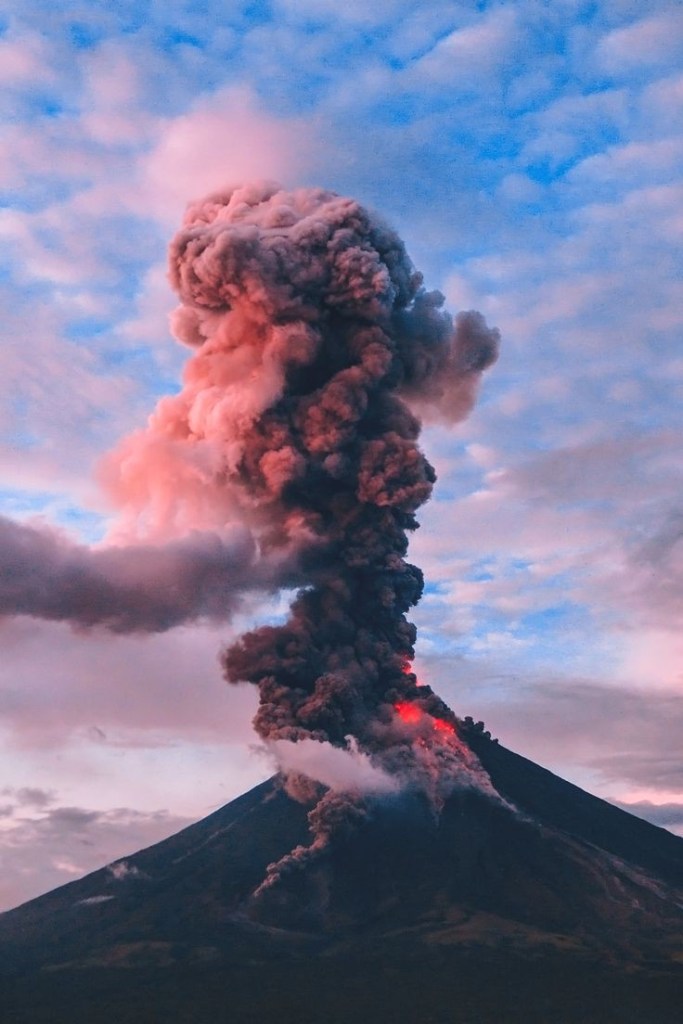
We always talk about , what it would be like to see volcano eruption in front of your eyes ?

How amazing it would be like to find out , how the volcano erupt ?

There are many things that we don’t know exist in our earth 🌍. Do you want to know about it . If yes , than read the editorial .

Introduction

A volcano is a rupture in the crust of a planetary-mass object, such as Earth, that allows hot lava, volcanic ash, and gases to escape from a magma chamber below the surface.

On Earth, volcanoes are most often found where tectonic plates are diverging or converging, and most are found underwater.
The word volcano is derived from the name of Vulcano, a volcanic island in the Aeolian Islands of Italy whose name in turn comes from Vulcan, the god of fire in Roman mythology.

Many ancient accounts ascribe volcanic eruptions to supernatural causes, such as the actions of gods or demigods. To the ancient Greeks, volcanoes’ capricious power could only be explained as acts of the gods, while 16th/17th-century German astronomer Johannes Kepler believed they were ducts for the Earth’s tears.[87] One early idea counter to this was proposed by Jesuit Athanasius Kircher (1602–1680), who witnessed eruptions of Mount Etna and Stromboli, then visited the crater of Vesuvius and published his view of an Earth with a central fire connected to numerous others caused by the burning of sulfur, bitumen and coal.

Types of eruptions
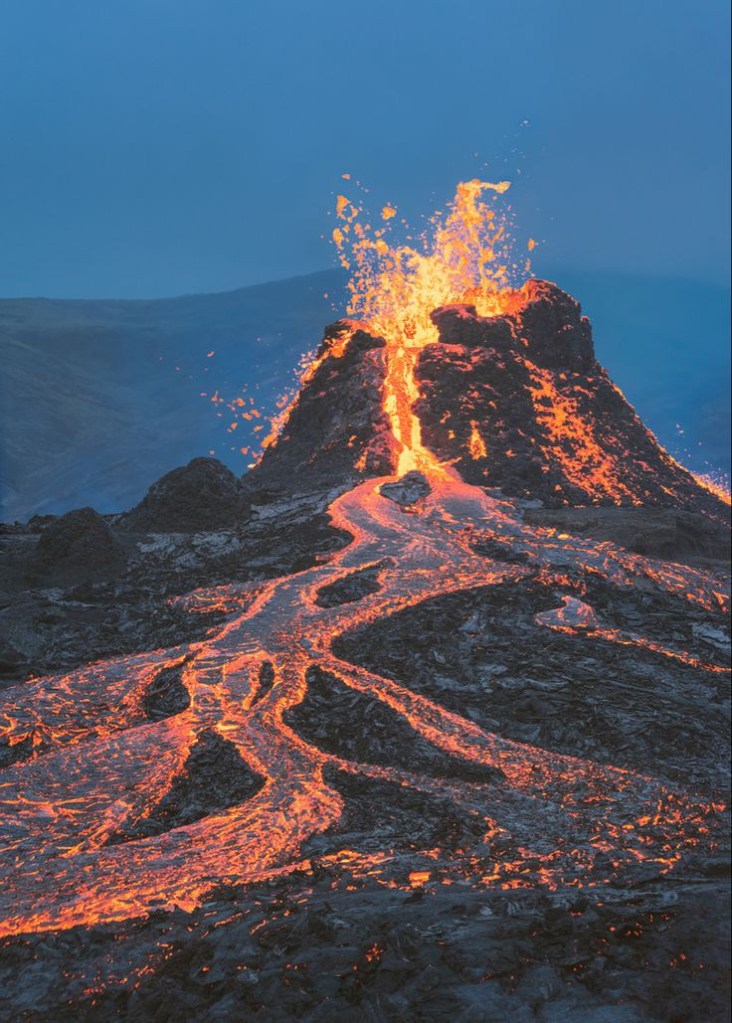
  • Hydrothermal eruption. An eruption driven by the heat in a hydrothermal systems.
  • Phreatic eruption. An eruption driven by the heat from magma interacting with water.
  • Phreatomagmatic eruption.
  • Lava.
  • Strombolian and Hawaiian eruptions.
  • Vulcanian eruptions.
  • Subplinian and Plinian eruptions.

How do volcanoes erupt?
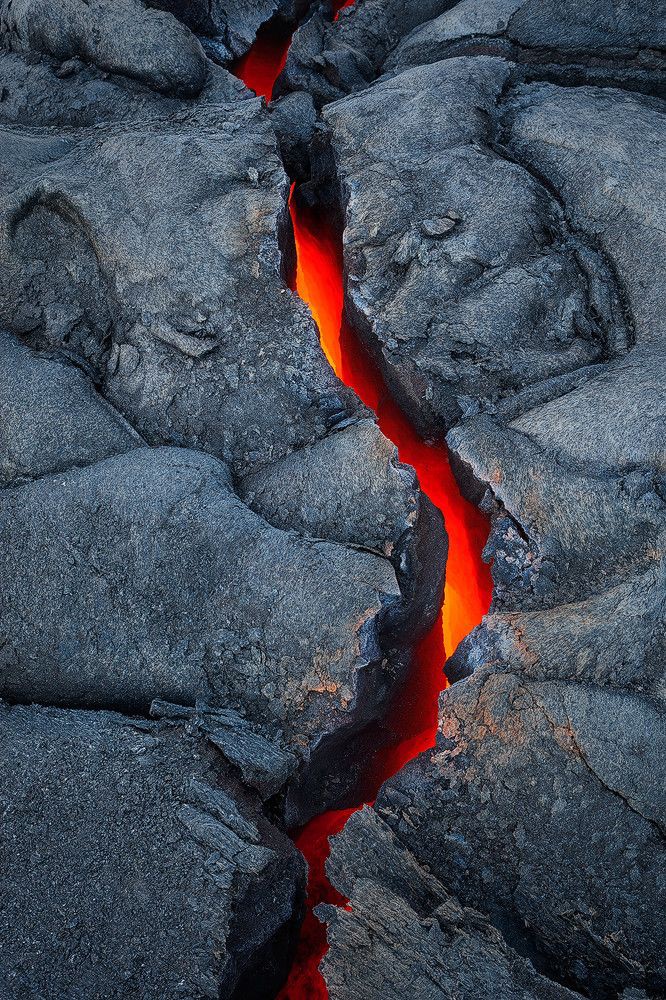
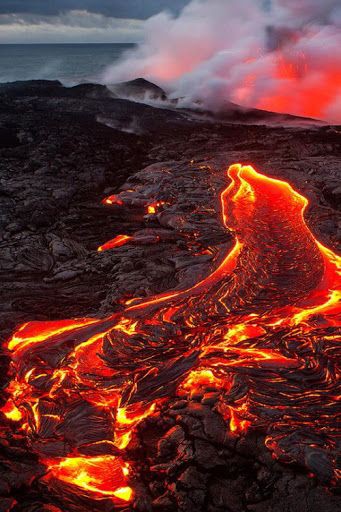
Deep within the Earth it is so hot that some rocks slowly melt and become a thick flowing substance called magma. Since it is lighter than the solid rock around it, magma rises and collects in magma chambers. Eventually, some of the magma pushes through vents and fissures to the Earth’s surface. Magma that has erupted is called lava.

The explosivity of an eruption depends on the composition of the magma. If magma is thin and runny, gases can escape easily from it.
Explosive volcanic eruptions can be dangerous and deadly.

Humans and volcanoes

Volcanic eruptions pose a significant threat to human civilization. However, volcanic activity has also provided humans with important resources.

Although volcanic eruptions pose considerable hazards to humans, past volcanic activity has created important economic resources.

Volcanic ash and weathered basalt produce some of the most fertile soil in the world, rich in nutrients such as iron, magnesium, potassium, calcium, and phosphorus.

Volcanic activity is responsible for emplacing valuable mineral resources, such as metal ores.
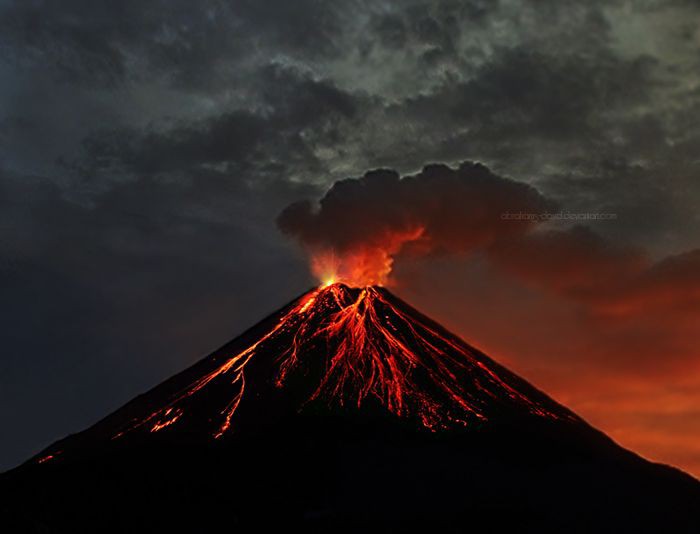
The paradox of volcanoes was that they were symbols of destruction but also life. Once the lava slows and cools, it solidifies and then breaks down over time to become soil – rich, fertile soil.
She wasn’t a black hole, she decided. She was a volcano. And like a volcano she couldn’t run away from herself. She’d have to stay there and tend to that wasteland.
She could plant a forest inside herself.

Matt Haig, The Midnight Library

Link

Astronomical Terms

Astronomy is the branch of science dealing with the study of celestial objects. It requires various scientific terminologies. Here are a few important ones: 

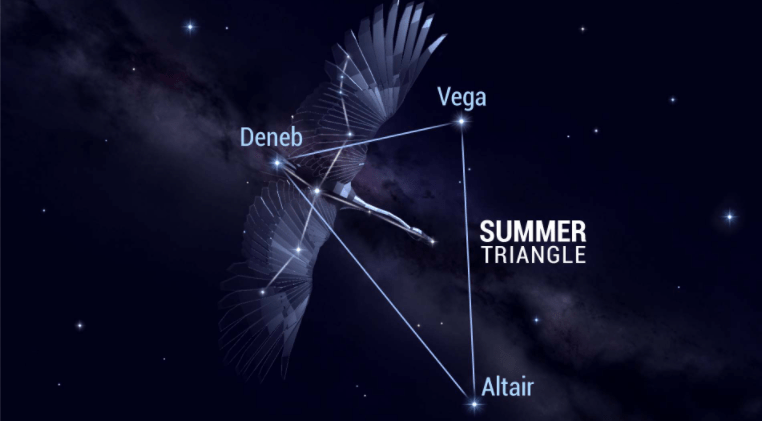
Asterism example
  1. Asterism: Any pattern of stars recognizable in Earth’s night sky.
  2. Albedo:  A measure of the proportion of the total solar radiation received by an astronomical body, such as a planet, that is diffusely reflected away from the body. It is a dimensionless quantity typically measured on a scale from 0 (indicating total absorption of all incident radiation, as by a black body) to 1 (indicating total reflection).
  3. Azimuth: An angular measurement of an object’s orientation along the horizon of the observer, relative to the direction of true north. When combined with the altitude above the horizon, it defines an object’s current position in the spherical coordinate system.
  4. Conjunction: A phenomenon during which two astronomical objects or spacecraft have either the same right ascension or the same ecliptic longitude as observed from a third body (usually the Earth), such that, from the observer’s perspective, the objects appear to closely approach each other in the sky.
  5. Diurnal motion: The apparent motion of an astronomical object (e.g. the Sun, a planet, or a distant star) around the two celestial poles in the Earth’s night sky over the course of one day. Diurnal motion is caused by Earth’s rotation about its own axis, such that every object appears to follow a circular path called the diurnal circle.
  6. Dwarf star: The category of ordinary main sequence stars like the Sun.
  7. Elongation: The angular separation between the Sun and an orbiting body, such as a planet, as it appears from Earth.
  8. Ephemeris: A list or table of the expected positions of astronomical objects or artificial satellites in the sky at various dates and times. 
  9. Extinction: The absorption and scattering of electromagnetic radiation by matter (dust and gas) between an emitting astronomical object and the observer. 
  10. Facula: A bright spot on a star’s photosphere formed by concentrations of magnetic field lines.
  11. Field galaxy: Any galaxy that does not belong to a larger cluster of galaxies and is gravitationally isolated.
  12. Fulton gap: The apparent uncommonness of planets having a size between 1.5 and 2 times that of the Earth
  13. Galactic period: The time a given astronomical object within a galaxy takes to complete one orbit around the galactic center. Estimates of the duration of one revolution of the Solar System about the center of the Milky Way range from 225 to 250 million terrestrial years.
  14. Geosynchronous orbit (GSO): A synchronous orbit about the Earth, i.e. with an orbital period equal to Earth’s rotational period, such that the orbiting object appears to return to exactly the same position in the sky after a period of one sidereal day. All geosynchronous orbits have a semi-major axis equal to 35,786 kilometres (22,236 mi); geostationary orbits are a special case of geosynchronous orbits.
  15. Hypergalaxy: A system consisting of a large galaxy accompanied by multiple smaller satellite galaxies (often elliptical) as well as its galactic corona. The Milky Way and Andromeda systems are examples of hyper galaxies.
  16. Julian year (a): A unit of time defined as exactly 365.25 days of 86,400 SI seconds each. 
  17. Laniakea Supercluster : Also called the Local Supercluster, or Local SCI.- contains Virgo supercluster.
  18. Moving group: Also called a stellar association. A loose grouping of stars which travel together through space. Although the members were formed together in the same molecular cloud, they have since moved too far apart to be gravitationally bound as a cluster.
  19. Nutation: A continuous, gravity-induced change in the orientation of an astronomical body’s axis of rotation which results from the combined effects of small, short-term variations. Nutation is distinguished from precession.
  20. Occultation: A celestial event that occurs when a distant astronomical body or object is hidden by another, nearer body or object that passes between it and the observer, thereby blocking the first object from view. Solar and lunar eclipses are specific types of occultations.
  21. Periapsis: Also called the pericenter. The point at which an orbiting body is closest to its primary. 
  22. Planetesimal: Any solid object (generally larger than 1 kilometre (0.62 mi) in diameter) that arises during the formation of a planet whose internal strength is dominated by self-gravity and whose orbital dynamics are not significantly affected by gas drag. There is no precise distinction between a planetesimal and a protoplanet.
  23. Prograde motion: Also called direct motion. Orbital or rotational motion of an object in the same direction as the rotation of the object’s primary.
  24. Roche limit: The distance from an astronomical object at which the tidal force matches an orbiting body’s gravitational self-attraction. Inside this limit, the tidal forces will cause the orbiting body to disintegrate, usually to disperse and form a ring. Outside this limit, loose material will tend to coalesce.
  25. Sidereal period: The orbital period of an object within the Solar System, such as the Earth’s orbital period around the Sun. The name “sidereal” implies that the object returns to the same position relative to the fixed stars of the celestial sphere as observed from the Earth.
  26. Starburst galaxy: Any galaxy that has an anomalously high rate of star formation.
  27. Synodic day: The time it takes for an object to rotate once about its own axis (e.g. its rotation period) relative to the primary it is orbiting (rather than to distant fixed stars).
  28. Syzygy: The straight-line configuration of three celestial bodies in a gravitational system. The synodic month, or complete cycle of phases of the Moon as seen from Earth, averages 29.530588 mean solar days in length
  29. Transit: An astronomical event during which a body or object passes visibly across the face of a much larger body. 
  30. Zodiac: The area of the sky that extends approximately 8 degrees north or south (in celestial latitude) of the ecliptic, the apparent path of the Sun across the celestial sphere over the course of the year as observed from Earth.

https://en.wikipedia.org/wiki/Glossary_of_astronomy
https://telescopeadviser.com/glossary-of-astronomy-terms/#:~:text=Glossary%20of%20Astronomy%20Terms%201%20Altazimuth%20Mount.%20…,Astronomy.%20…%2010%20Astrophotography.%20…%20More%20items…%20