Mentor young generations to embellish efforts in the march toward Viksit Bharat of 2047

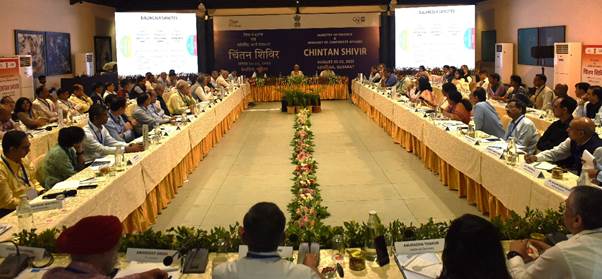
 The three-day Chintan Shivir of the Ministry of Finance and Ministry of Corporate Affairs concluded in Kevadia, Gujarat, today. Union Minister for Finance and Corporate Affairs Smt. Nirmala Sitharaman chaired the Chintan Shivir in presence of Union Ministers of State for Finance Shri Pankaj Chaudhary and Dr. Bhagwat Kisanrao Karad.

The Chintan Shivir was attended by senior officials of Ministry of Finance and Ministry of Corporate Affairs. The Finance Secretary, Secretaries from D/o Economic Affairs (DEA), D/o Investment and Public Asset Management (DIPAM), D/o Revenue (DoR), D/o Financial Services (DFS) and Ministry of Corporate Affairs, Chief Economic Advisor, Chairmen of CBDT and CBIC were also part of the deliberations.
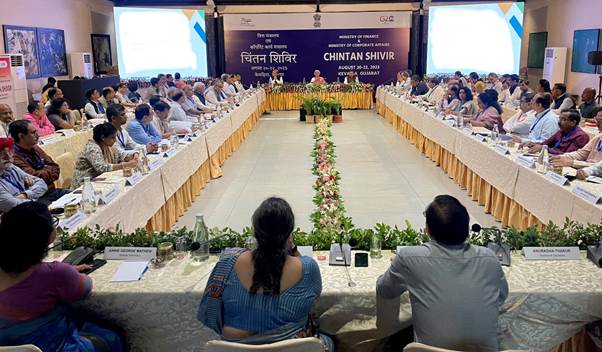
Free and frank discussions were held by more than 100 senior officers of MoF and MCA on how to re-orient to achieve the Amrit Kaal goals by embracing the Panch Pran as envisioned by Prime Minister Shri Narendra Modi.

Interactive sessions were held on the “Role of Ministry of Finance and Ministry of Corporate Affairs in Amrit Kaal”, “Building our Capacities”, and “Improving our Efficiencies”.

Smt. Sitharaman advised the officers to optimally utilise the vast pool of resources and experience at disposal in the Government. The Finance Minister underlined mentoring of young generations to embellish efforts in the march toward Viksit Bharat of 2047 in the Amrit Kaal.
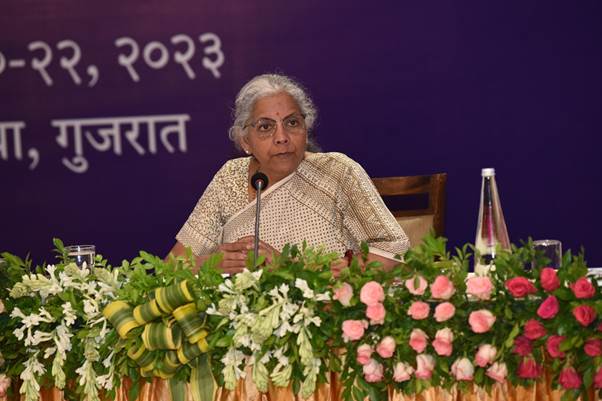
Smt. Sitharaman urged the officers to go beyond to explore frontiers beyond their set roles and make an extra impact on other domains as well so that synergistic thoughts emerge which can be useful for the overall Ministry.

In her concluding remarks during the Chintan Shivir, the Union Finance Minister stated that both effectiveness and efficiency are long-term phenomenon and consistency in reform policy, with focus on both, individual and institutional efficiencies, are vital ingredients in public service delivery.
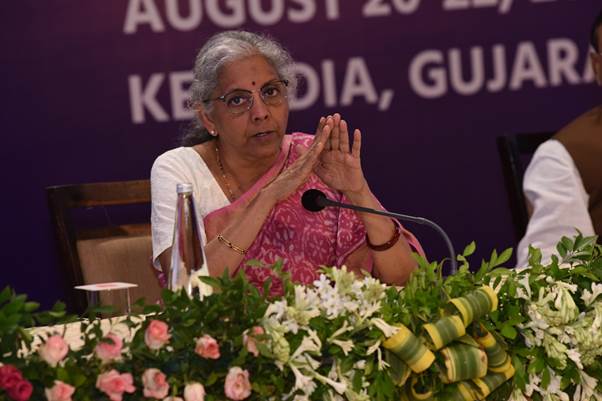
Referring to phenomenon of information overload as counter-productive to effectiveness and efficiency, the Union Finance Minister emphasised that both MoF and MCA must strive for simplification of processes with focus on not just the whole-of-Government-approach, but also whole-of-the-country approach to maximise delivery and engagement.

Smt. Sitharaman urged MoF and MCA senior officers to continuously mentor the new entrants/younger colleagues to develop the wherewithal in delivering results in the Amrit Kaal and beyond making Viksit Bharat by 2047. The Union Finance Minister also emphasised on the need to continuously reorient policy in the cultural context and to instil a sense of ownership in decision-making, to enhance effectiveness with efficiency.

During the discussions, Union Minister of State for Finance Shri Pankaj Chaudhary called for ambitious target-orientation for productively achieving goals towards India’s journey in becoming a developed country by 2047.
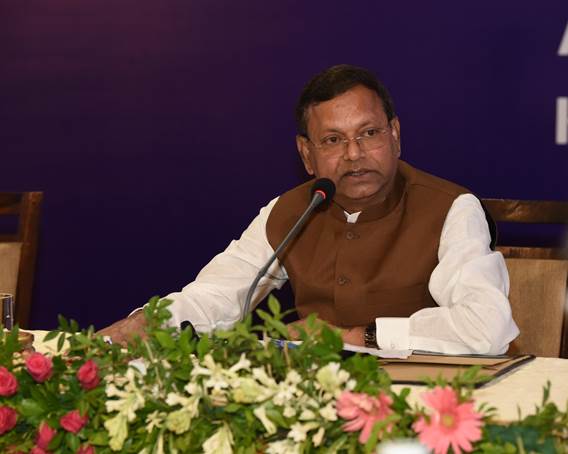
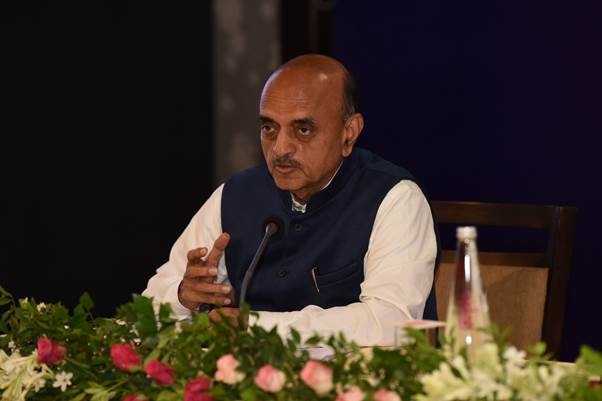
In his remarks during the session, Union Minister of State for Finance Dr. Bhagwat Kisanrao Karad emphasised on building self-confidence through knowledge and skilling. Dr. Karad said that decisions must be made in consultation with knowledgeable partners and stakeholders besides developing appropriate feedback mechanism for real-time assessment of delivery.
The Session on the “Role of Ministry of Finance and Ministry of Corporate Affairs in Amrit Kaal” focused on enabling growth and stability, and focused on the following four themes:

  1. Capital Formation and Retention
  2. Inclusive Growth
  3. Aatmanirbhar Bharat
  4. Strengthening Public Finance

During the session on “Building our Capacities”, discussions revolved around:

  1. Building Professional Capacity
  2. Building Personal Capacity
  3. Work-life Balance Capacity
  4. Institutional Capacity

The discussions during the session were focused on various aspects of capacity-building in the areas of human resource and institutions, role of technology and software-enabled systems, intra and inter-ministerial consultations, importance of training at various levels, and mentoring young blood for leading roles in Amrit Kaal in the journey towards building strong and resilient India Viksit Bharat by 2047.
During the session on “Building our Efficiencies”, in-depth discussions were held on:

  1. Enabling skilled and motivated workforce
  2. Robust internal processes
  3. Coordination and engagement with internal stakeholders
  4. Focus on external stakeholders
  5. Changing organisational culture

The discussions in the session revolved around skilling, maintaining robust organisational processes, streamlining file management systems and expediting decision-making in MoF and MCA, onboarding of stakeholders from the start, citizen-friendly technology tools, leveraging technology and use of AI for future-readiness, whole-of-Government-and-holistic approach towards public service delivery, time-bound delivery of citizen-centric services, removing duplicity of effort, and leveraging technology and use of AI for future-readiness.

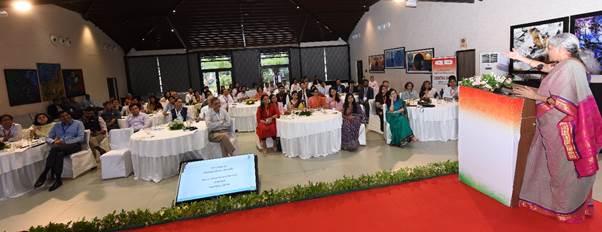
On the sidelines of the Chintan Shivir, Union Finance Minister also interacted with the G20 Finance Track India Team. The G20 Finance Track Team shared thoughtful introspections with Smt. Sitharaman on various aspects of navigating the first nine months of Indian G20 Presidency.
***

Right to Information

The Right to Information Act 2005 requires prompt responses to citizens’ requests for government information. This is an initiative of the Department of Personnel and Training of the Ministry of Personnel, Public Claims and Pensions to provide an RTI portal for citizens to quickly find information on the details of welfare agencies. magistrates, PIOs, etc. in addition to accessing RTI/disclosure related information posted on the web by various public authorities under Government of India as well as State Government.

It includes permissions –
I. check work, documents, records.

ii. notes, extracts or certified copies of documents
or recordings.

iii. certified material sampling.

iv. get information in the form of hard copies, discs,
disc, tape, video tape or anything else
electronic or print.

Purpose of the Right to Information Act:

The fundamental purpose of the Right to Information Act is to empower citizens, promote transparency and accountability in government operations, curb corruption, and make our democracy real. effective for the people. It goes without saying that a well-informed citizenry is better equipped to ensure the necessary vigilance over governance tools and to make government more accountable to those under control. . The law is a big step forward in providing information to the people about government activities.

The RTI Bill was passed by the Indian Parliament on June 15, 2005 and came into force on October 12, 2005. On average more than 4,800 RTI applications are filed each day. In the first ten years of the law’s entry into force, more than 17,500,000 applications were filed.
Although the right to information is not considered a fundamental right in the Constitution of India, it protects the fundamental rights of freedom of speech and expression under Article 19(1)(a) and the right to life and individual liberties under Article 21 are guaranteed by the Constitution. Authorities under the RTI Act 2005 are known as public authorities. The Public Information Officer (PIO) or first appellate body in public agencies performs the quasi-judicial function of adjudicating petitions and appeals, respectively. This law was enacted to strengthen the fundamental right in the Indian constitution of “freedom of speech”. Since RTI is implied in the right to freedom of speech and expression under Section 19 of the Constitution of India, it is an implied fundamental right.

When it comes to RTI, there are watchdogs at many levels to ensure that the law is followed in spirit and in writing. The law adopts a “do or cancel” approach, in addition to setting out a mechanism for disseminating information. Every government organization must appoint a staff member as a Public Information Officer (PIO). When a department receives an RTI request, the PIO is responsible for providing the information to the requester within 30 days. Failure to do so may mean that the PIO may be fined. The longer a PIO causes an applicant to wait, the greater the penalty imposed on them. There have been cases where PIOs were asked to deduct an amount of thousands of rupees as a penalty. Each state has an information committee, consisting of a chief information officer and several information commissioners. Former judges, IAS, IPS officials with unverifiable backgrounds are appointed to these positions. Above them hierarchically are the Central Information Commission and below them are the first and second appeals agencies to ensure that applicants get the RTI information they have requested.

AGNIPATH SCHEME

On 14 June 2022, the central government launched the Agnipath scheme which is a recruitment of soldiers below the rank of commissioned officers into the three services of the armed forces. With this scheme, the central government hopes to fulfill the dream of an individual to join the armed forces and serve the nation. Various other reasons for the government to start this scheme were to reduce salaries and defence pension bill, to increase employment opportunities and higher skilled work force and to provide a youthful profile to the armed forces. One of the important reasons was also to have a large number of military trained and disciplined people in the society. The soldiers recruited through this scheme will be known as ‘AGNIVEERS’.

Under this scheme 45,000 to 50,000 youth aged between 17.5 to 21 years will be recruited annually for 4 years in the Navy, Air force & Armed forces. Enrollment will be based on an ‘All India All Class’ basis. The enrolment of the Agniveers to all the three services will be through a centralized online system, with special rallies and campus interviews at recognized technical institutes such as the National skills Qualifications framework, Industrial Training Institutes. In each batch, 25% of Engineers will be chosen for the permanent cadre in the armed services. The remaining 75% of Agniveers will receive an amount of Rs. 11.71 lakh as Seva Nidhi Package.

The salary per month of the Agniveers is Rs. 30,000 in 1st year, Rs. 33,00 in 2nd year, Rs. 36,500 in 3rd year and Rs. 40,000 in 4th year but the Agniveers contribution to Seva Nidhi will be 30% which means 30% will be deducted from the initial salary which means in hand they will receive 21,000 in first year, 23,100 in second year, 25,580 in third year and 28,000 in fourth year.

The Agniveers will also receive a non-contributory insurance cover of Rs. 48 lakh during the period.

Every demolished AGNIVEER will have a 10% reservation in CAPFs, Assam Rifle recruitment. They are also provided with the Upper age relaxation beyond the prescribed age limit for AGNIVEERS in CAPF & Assam Rifles. Other benefits include:

  • Priority in bank loan schemes in case they want to be entrepreneurs.
  • Many other states including Uttar Pradesh and Madhya Pradesh have stated that agniveers will be given priority in the recruitment of state police officers.
  • Some major companies and sectors like IT, Engineering Security, etc. have also announced that they will prefer hiring skilled, trained, and disciplined Agniveers.
  • It also stated that all those wishing to study further class 12 equivalent certificate and Bridging Course of choice for further studies.

The Upper age limit for recruitment has also increased only for 2022 under the Agnipath scheme to 23 years from 21 years for the first year of the scheme for enrolment of soldiers into the Army, Navy and Air Force.

AIM OF THE SCHEME

  • One of the important aims of the scheme is to make the army a future-ready fighting force with the youth of the nation capable of meeting multiple challenges.
  • To strengthen the national security
  • To provide the youth of the nation to serve the country.
  • To cut down salary and pension bills.
  • To harness the youth potential and make them future ready soldiers.
  • They will be provided with certificates and bridge courses that will help in creating future entrepreneurs.

CRITICISM OF THE SCHEMES

After the announcement of this scheme, there were several protests held throughout the country in several states. Students from throughout the country held riots, burned trains, and caused severe damage to the public as well as private properties. This scheme is criticized on a number of basis such as:

  • The service period that is 4 years is very less and it will provide employment for just 4 years. T
  • he real skills cannot be acquired in such a short period and what about those who want to serve the nation for longer terms.
  • only 25% of the candidates will be taken permanently and the rest 75% will again be unemployed.
  • No pension will be given to these candidates that will be appointed during this scheme.
  • The candidates that will be selected will only be selected for non-commissioned ranks like Naik, Sepoy, and Lance Naik.
  • The recruitment is only for candidates of 17.5 – 23 years of age.
  • After 4 years is over, there will be no job security.
  • Unlike other governments’ jobs no extra basic benefits will be provided to the candidates.
  • The salary will also be deducted for the Seva Nidhi contribution.

With the provided advantages and disadvantages of this AGNIPATH scheme it is way forward for a reform in the Defence policy. This schemes aims to increase employment opportunities with skills and training, to give a better opportunity to the youth who choose to serve the nation and it hopes to have a positive impact on the human resouces management of armed forces and for the country’s development.

Sources: https://byjus.com/free-ias-prep/agnipath-defence-policy-reforms/

What is MSP?

India is an agriculture dominated country. More than 50% of Indian workforce is employed by the agriculture. Farmers strive hard to produce high yield and quality products but their income is less than expenses. Market price is determined by supply and income demand. When there is large supply of crops but less demand , there is sharp fall in farm prices affecting farmers drastically. There is always price fluctuations in agricultural products while farmers get a decent return when there is shortage of supply,the same products fetch them poor price during bumper harvest season.
The government of India has introduced MSP (Minimum Support Price ) to protect producers against excessive fall in farm prices leading heavy loss suffered by the farmers.MSP is the minimum price a farmer must be paid for their agricultural produce as guaranteed by the government of India. If the market price falls below MSP, the government procures that crop from the farmers at MSP. MSP is announced for  22 major crops along with a Fair Remunerative Prices (FRP) for sugarcane. MSP is recommended by Commission for Agricultural Costs and Prices (CACP) but the final decision is taken by the Cabinet Committee on Economic Affairs(CCEA) of union government.

MSP ensures profit of atleast 50% over the cost of production for the farmers.It includes cost of production, domestic and international prices, demand-supply conditions, inter-crop price parity and the terms of trade between agricultural and non-agricultural sectors.
Farmers are free to sell their products to any non-governmental parties, if they get favorable terms to sell their products or better than MSP. The government mainly buys rice and wheat at guaranteed price.

Benefits of MSP:
• It acts as a surety to farmers so that their crops get the fair amount for their produce and helps them sustain their losses and does not affect them drastically
• It helps to keep a floor price which does not let the prices fall below a certain point.
• The government can use these crops to be sold at government fair price shops at a price lower than market rate that will also help the government recover some amount and reduce the losses of the government.
• It safeguard the interest of the consumer by ensuring supplies at a reasonable price.
• Government manages food scarcity by distribution of stored grains at affordable prices.

Drawback of MSP :
It doesn’t increase in proportion to the increase in cost of production.
• There are a lot of farmers who don’t have adequate information about MSP and are exploited by middlemen.
• There are several regions in the country where farmers can’t access to the benefits through MSP.
• Open market workings , which works on supply and demand relations is detrimental for farmers , is disrupted by government intervention.
• Maintenance cost of procuring grains is raised by MSP which affects the investment in agri-infrastructure.

Analyzing Mid-day Meal: India’s School Lunch System

Official Logo of Mid-day Meal Scheme

Introduction

Food is a basic need of life.  And Education is important to make the life affluent. A hungry stomach cannot grasp the teachings of Education at school, there to provide better Education, schools all around the world, offer lunch to the students. In India, the system of school lunch is referred to as Mid-day Meal. In today’s editorial, we’re going to share insights about the system of Mid-day Meal in India.

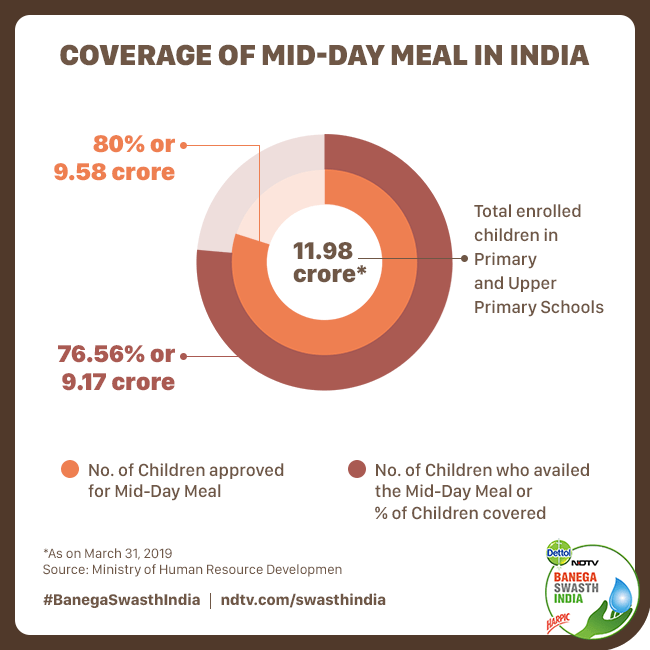
Coverage of Mid-day Meal Scheme in India

Brief Idea of What Mid-day Meal Is

The Midday Meal Scheme, launched in 1995  by former Prime Minister of India, P.V. Narsimha Rao, under the Ministry of Education, is a school meal programme in India designed to better the nutritional  standing of school-age children nationwide. The programme supplies free lunches on working days for children in primary and upper primary classes in government, government aided, local body, Education Guarantee Scheme, and alternate innovative education centres, Madarsa  and Maqtabs  supported under Sarva Shiksha Abhiyan , and National Child Labour Project schools run by the Ministry of Labour. Serving 120 million children in over 1.27 million schools and Education Guarantee Scheme centres, the Midday Meal Scheme is the largest of its kind in the world.

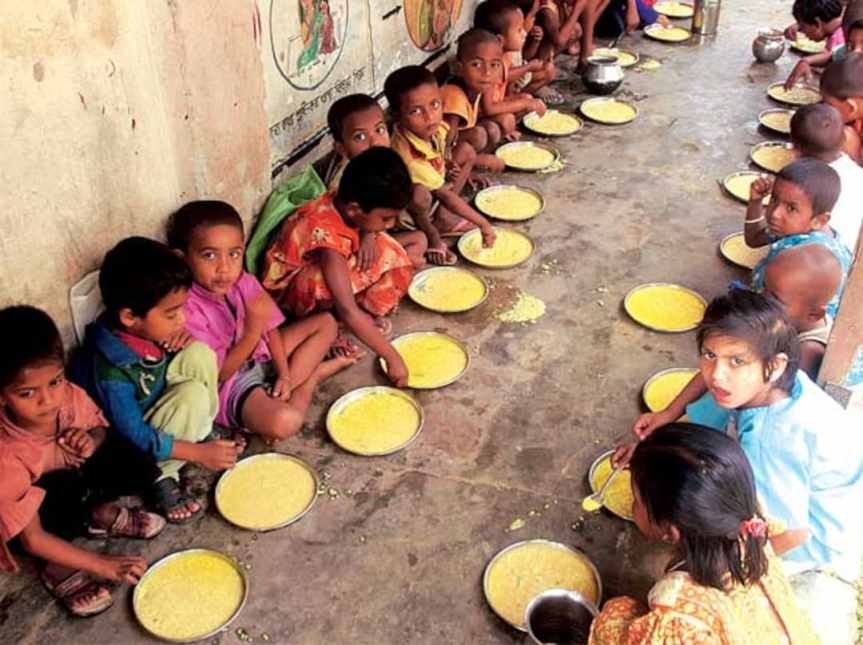
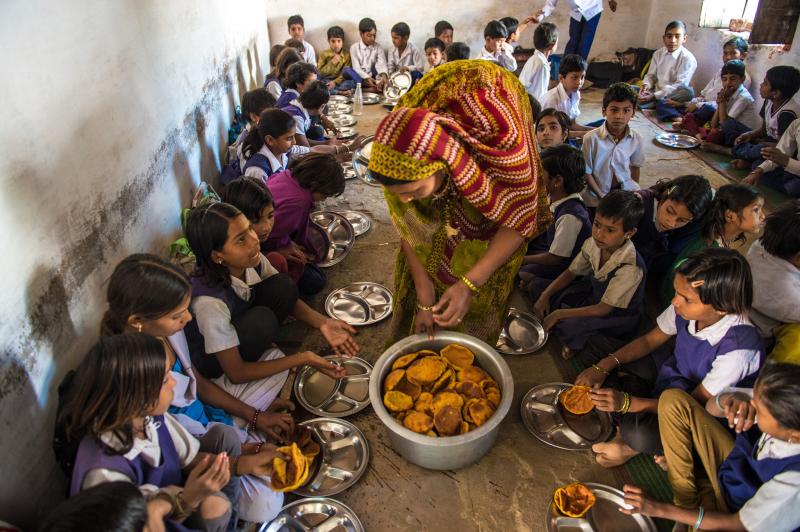
Students having Mid-day Meal at a School in India

Objectives of Mid-day Meal Scheme

  • To increase the enrolment in the schools of children who belong to disadvantaged sections of the society .
  • To increase attendance of students in Government and Government aided schools.
  • To retain the children studying in class I to VIII.
  • To give nutritional support to the children studying in the elementary level, specially in drought-prone areas.
  • To address hunger and malnutrition and increase socialization among the castes.
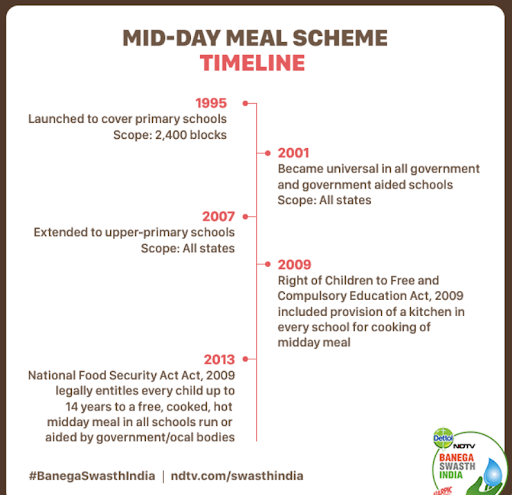
Mid-day Meal Scheme Timeline in India

Features of Mid-day Meal Scheme

  • It is one of the world’s largest school meal programs intended to achieve the goal of universalization of primary education.
  • For the implementation of the scheme, the Ministry of Human Resources and Development is the authorized body to implement the scheme.
  • It is a centre-sponsored scheme, so, the cost is shared between the states and the centre. Where the share of the centre is 60 percent.
  • The first state to implement the midday meal scheme was Kerala in 1984.
  • Till 2002, the scheme is designed especially for the government, government-aided and local body schools. But later on, the benefit of the mid-day meal scheme is extended to those children who were studying in educational guaranteed scheme centres or Alternative & Educational Centres.
  • In 2004, the scheme is again revised, and central assistance is offered for the cooking cost.  Apart from that, the transport subsidy included for all states, maximum of Rs 100 per quintal is provided to the special category states and Rs 75 per quintal for other states.
  • The provision of serving mid-day meals during summer vacation to the children in drought-affected areas was also added.
  • In 2006, the cooking cost was enhanced to Rs 1.80 per child/ school day for states in North Eastern Region and Rs 1.50 per child/ school day for other states and UTs.
  • In 2007, the scheme benefit is also extended to the children studying in the educationally Backwards Blocks.
  • Apart from the calories and food intake, for micronutrients (tablets and deworming medicines), each child is entitled to receive the amount provided for in the school health program of the National Rural Health Mission.
  • Meals provided under the Mid-day Meal Scheme
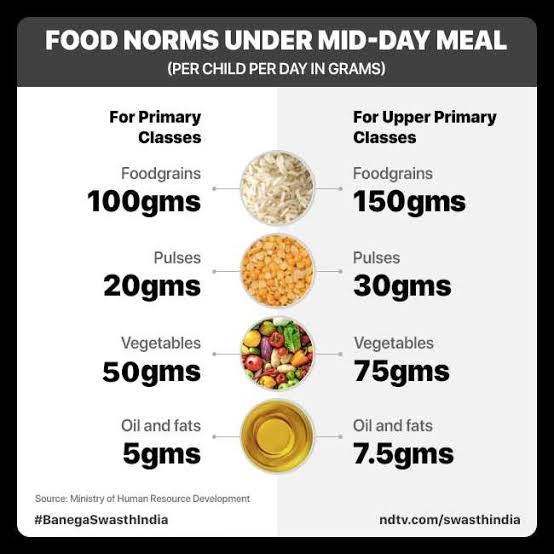
Food Norms under Mid-day Meal Scheme
  • The quantity of food items provided under this scheme per child per school day is as follows:
Food itemsPrimary level (Class I-V)Upper level (Class VI-VIII)
Food Grains100 gms150 gms
Pulses20 gms30 gms
Vegetables (leafy also)50 gms75 gms
Oil & fat5 gms7.5 gms
Salt & condimentsAs per needAs per need
Calories IntakePrimaryUpper Primary
Energy450 calories700 calories
Protein12 grams20 grams
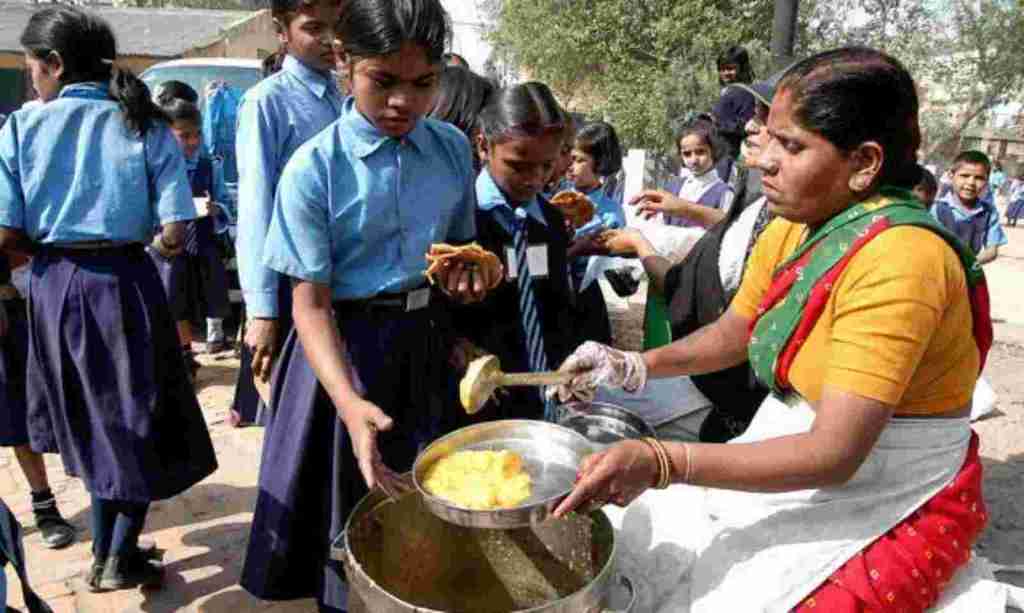
Serving of Mid-day Meal

Advantages of Mid-day Meal

  • It satisfies the hunger of many children.
  • Supplying nutrition to children of the poor section helps them in concentrating on their studies better.
  • Students come to government schools daily and won’t be asked to do labour work.
  • Addresses the issue of malnutrition.
PM POSHAN SHAKTI NIRMAN

Recent Improvisation of Mid-day Meal Scheme

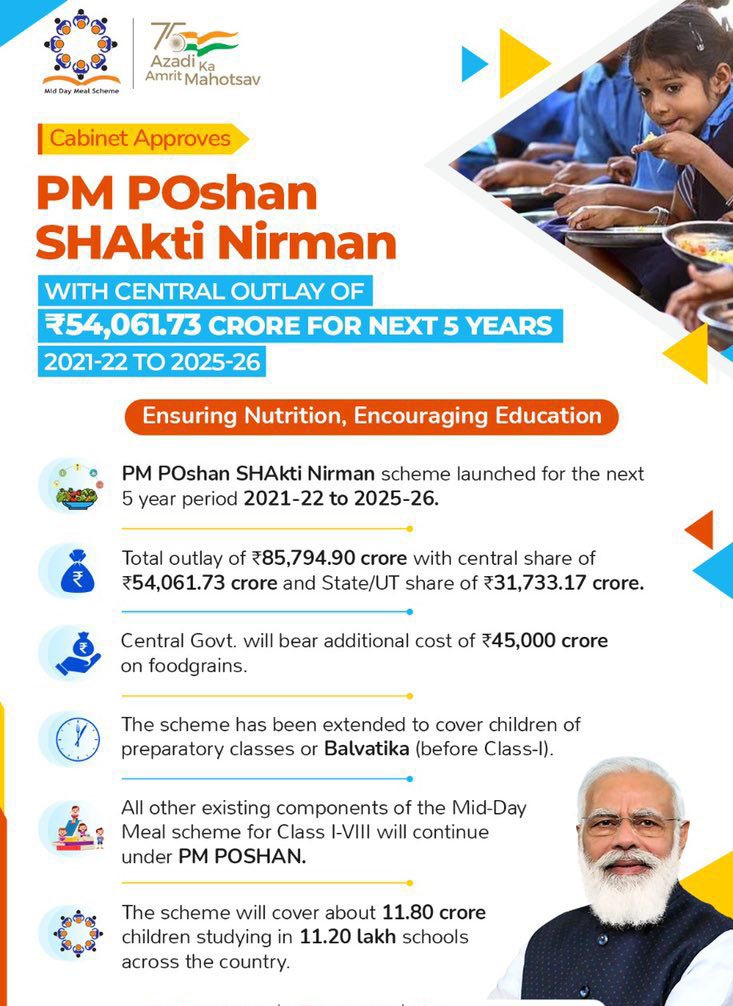
During the celebration of India’s 75th Independence Day as Azadi Ka Amrit Mahotsav, the Cabinet approved for the implementation of PM POSHAN SHAKTI NIRMAN for next 5 years i.e. 2021-22 to 2025-26.

Conclusion

There is no doubt that school is the only place that contributes to the socio-economic development of society. Here children from various backgrounds come together for promoting the culture of unity and brotherhood. The education they receive at school prepares them to achieve their goals and lead a successful life. When we talk about government schools, here children mostly come from economically challenged backgrounds. So, even though education schemes like Sarva Shiksha Abhiyaan are being implemented, the difficult financial conditions force these children to skip school and go on work. In such kind of circumstances,  the real potential of mid-day meal surfaces. Mid-day meal acts as an attractive incentive for parents to send their children to school with the sole hope that the young ones will receive at least one plate full of the meal for the day. 

AATMNIRBHAR BHARAT

Aatmnirbhar is a Hindi word which in English means self-sufficient and no one should depend on others for their success in life. In other words, one should neither depend nor expect help from others in order to run their livelihood. One must be self dependent and self reliant as the person who depends on others never succeeds in life.

Post independence, India was still dependent on others for various resources but today India is becoming self dependent in every field. In May 2020, Narendra Modi, the Prime Minister of India announced a Rs 20 crore economic package under the Aatmnirbhar Bharat Abhiyan in order to avert the probable economic decline during the global Covid-19 pandemic and to spin the catastrophe into opportunity. The self sufficient mission was launched in pursuance to address the pandemic crises and the economy falloff due to subsequent lockdown in India.

The Aatmnirbhar Bharat Abhiyan was promulgated with the aim to make India self-dependent and also apportioned boost to the economy that had slowed down by the pandemic. This package is approximated to be GDP’s 10 percent.

Five Pillars of Aatmnirbhar Bharat Abhiyan

  • Economy: An economy that guarantees a huge bounce instead of gradual change.
  • Infrastructure: It is postulated on the 21st century systems driven by technology.
  • Technology: Such infrastructure would be assisted that would become the cotemporary age’s recognition.
  • Demography which is vibrant: A remarkable Constitution, well-developed democratic institutions and true participation by the people in social governance is the source of our energy for India to be self-sufficient.
  • Demand: The chain of demand-supply will be utilized at its complete potential.

Benefits of Aatmnirbhar Bharat

It aims at aiding India to a become self-reliant nation. The unemployment in the nation will be terminated and growth will be seen in the industries. Thus, ensuring decline in the rate of poverty and will also result in strengthening the economy of the nation. Every citizen of the country will be benefitted by the self reliance. The dependency of India on other countries for different resources will also decreases rapidly. It also aims at making and promoting local products and providing assistance to Indian companies to compete in supply chains globally. Thus, focusing on the idea of ‘ Vocal for Local’. The foreign exchange will also be saved by the import reduction and by exporting additional goods, more foreign exchange could be earned. In order to provide employment and shelter to the migrants, an additional Rs 40,000 crore was allotted to the MGNREGA (Mahatma Gandhi National Rural Employment Guarantee Act 2005). More number of labs and health institutions will be instituted. The industry of Indian Space will also be benefitted by the opening of space exploration for the private sector. The needs and requirements of various sections such as industries, small business, laborers, etc. will all be catered by this economic package.

Criticism

The Aatmnirbhar Bharat Abhiyan is mainly criticized for being somewhat similar to the ‘ Make in India’ campaign. It is argued by the critics that it is the same plan, just implemented with a different name. The fundings allocated are mostly in the same way as the budget in general. The critics believe that the package will not be beneficial enough to rejuvenate the economy of the nation. The employment in the Urban region is seemingly ignored in this package.

It can be concluded that there are a number of challenges before the Aatmnirbhar Bharat Abhiyan but its approach of the target postulates growth inclusively including development in every field and promoting equality and being ready to face all the problems coming ahead.

Twitter blames government for threatening free speech

Twitter started putting allegations on government for threatening free speech, Government counters it is defying Indian laws: On Thursday, amid the tensions between social media platform and government due to new guidelines, Twitter putted some serious allegations on government of “dangerous overreach that is inconsistent with open, democratic principles, ” and further also said that it is being forced to withhold portions of “legitimate free speech” over fears around the employees safety and some threats of financial penalties.

Sources are indicating that these were majorly related to the government’s request to pull down tweets related to farmer protests, as it was believed that these were peddling an anti-India sentiment and was an attempt to ruin India’s image globally and initiate some riots, as well as it is also related due to incidents during corona pandemic. The B1.617.2 variant which was initially found in India was being labelled as Indian variant in this social media platform and this was also ruining image of India globally.

A spokesperson of this giant social media platform gave an statement that, “We maintain that the content reported in the original order constitutes protected, legitimate free speech, under Indian and international law, and we have formally communicated this to the government… Yet, due to the law’s limited scope under Section 69A (of the IT Act) which gives limited room to an intermediary to defend the content, we have been compelled to withhold (block in India) in response to a non-compliance notice. Not doing so poses penal consequences with many risks for Twitter employees.

However, the spokesperson also added and defended himself that Twitter does not take any action on any verified accounts that consist of news media entities, journalists, activists, and politicians in keeping with our principles of defending protected speech and freedom of expression . The statement given by him came one day after the social media platform was deemed to be non-compliant with the new social media intermediary norms under which it is now required to appoint some designated officers to deal with the grievances and compliance apart from having a mechanism for pulling down content where there are maligned individuals or there is any sexually explicit matter.

Twitter said that there were some concerns over “intimidation tactics” by police and was bit critical of the new IT rules. The big social media platform also expressed its displeasure over the new rules taking which according to them is weakening the immunity of social media platforms such as Twitter, Facebook, and Instagram over third-party content. It is making them liable for criminal and civil action.

Just after few hours of allegations imposed by Twitter on Indian government the government replied charging the company with deliberately subverting the law of the land and also trying to “dictate” its terms even while using the term “opaque policies” to “arbitrarily” suspend user accounts and delete tweets without any proper explanation. The government asked the American company to stop beating around the bush and said that “the only instance of scuttling free speech on Twitter is Twitter itself and its opaque policies, as a result of which people’s accounts are suspended and tweets deleted arbitrarily without recourse“. The government further added that “law-making and policy formulation is the sole prerogative of the sovereign and Twitter is just a social media platform, and it has no locus in dictating what should India’s legal policy framework should be” and thus slammed Twitter.


BAD DAY FOR POLITICAL PARTY:PRANAB MUKHERJEE DEATH(1935-2020)

Former President of India(13th) Pranab Mukherjee died on 31st August 2020 at the age of 84 after battling a long illness.In mid-August, he had undergone a brain surgery at the Army Research and Referral hospital in New Delhi. Hours before his death, hospital authorities said his condition had deteriorated and he was in a state of septic shock due to a lung infection.Prior to surgery, he tested COVID-19 positive on 10 August 2020.

His Personal Life :

Pranab Mukherjee was born on 11th December 1935 in the village of Mirati in Birbhum district in West Bengal. His father’s name is Kamada Kinkar Mukherjee, who was an activist in the Indian independence movement. His mother was Rajlakshmi Mukherjee. He married Suvra Mukherjee on 13 July 1957.

His Career :

Pranab Mukherjee took his education at Birbhum. He got MA degree in political science and history and also an LL.B degree from the department of law of the University of Calcutta. He began his career as a clerk in Post and Telegraph Department in Calcutta. He also worked as a journalist with the ‘Desher Dak’ before entering politics.

Pranab Mukherjee became a member of the Rajya Sabha in 1969. He was re-elected to the house in 1975, 1981, 1993 and 1999. He was appointed as Union Deputy Minister in 1973. He was appointed as Cabinet Ministers. He held many important posts in the government. He became the 13

th President of India on 25 July 2012.

His Honours:

National Honour:

1.Padhma Vibhushan-India’s second-highest civilian award in 2008

2.Bharat Ratan Award- India highest civilian in 2019.

Foreign Honours

1- Bangladesh Muktijuddho Sanmanona– Bangladesh Liberation War Honour in March 2013. 

2- Grand Cross of National Order of the Ivory Coast– highest state order of knighthood of the Ivory Coast in June 2016.  

3- Grand Collar of the Order of Makarios II– highest order of Merit awarded by Cyprus. 

Academic Honours

  • Hon.Doctor of Letters degree by the University of Wolverhampton, the UK in 2011.
  • Hon.D.Litt by Assam University in March 2012.
  • Hon.D.Litt. by Visvesvaraya Technological University; Belgaum, Karnataka in 2012
  • Hon.LL.D. by President of Bangladesh and Chancellor Md. Zillur Rahman at the University of Dhaka on 4 March 2013.
  • DCL (Doctor of Civil Law) (honoris causa) by University of Mauritius on 13 March 2013.
  • Hon.Doctorate by Istanbul University on 5 October 2013.
  • Honorary Doctorate from the University of Calcutta in on 28 November 2014.
  • Hon.Doctorate in Political Science by University of Jordan on 11 October 2015.
  • Hon.Doctorate by Al-Quds University of Ramallah, Palestine on 13 October 2015.
  • Hon. Doctorate by Hebrew University of Jerusalem, Israel on 15 October 2015.
  • Hon.Doctorate by Kathmandu University, Nepal on 3 November 2016.
  • Hon. Doctorate by Goa University on 25 April 2017.
  • D.Litt.(Honoris Causa) by the Jadavpur University on 24 December 2017.
  • Hon.D.Litt by University of Chittagong on 16 January 2018.

Other Recognitions

1- Best Finance Minister in World (1984)– a survey by Euromoney magazine. 

2- Finance Minister of Year for Asia (2010)– Emerging Markets, the daily newspaper of record for World Bank and IMF. 

3- Finance Minister of Year (2010) by the Banker. 

4- Honorary Citizenship of Abidjan, the Republic of Côte d’Ivoire in June 2016.

Pranab Mukherjee: Books Written

  1. Midterm Poll
  2. Beyond Survival: Emerging Dimensions of Indian Economy – 1984
  3. Off the Track – 1987
  4. The saga of Struggle and Sacrifice – 1992
  5. Challenges before the Nation – 1992[13]
  6. A Centenary History of the Indian National Congress – Vol. V: Volume-V: 1964-1984 – 2011
  7. Congress and the Making of the Indian Nation – 2011
  8. Thoughts and Reflections – 2014
  9. The Dramatic Decade: The Indira Gandhi Years – 2014
  10. Selected Speeches – Pranab Mukherjee – 2015
  11. The Turbulent Years: 1980 – 1996″ – 2016
  12. The Coalition Years

Internet Theft: Can the government be considered as a white collar criminal?

With the constant rise in digitalization, the computer stores information in binary data form and deeply on the data form which is a way that the device tracks a lot of information in an effective way. Subsequently, with the invention of personal computers and microprocessors the idea of using computers for exclusive use of an individual rose. The process was not only affordable but also made management and storage of information easier. But this evolution has also led to increased interactions and sharing of private data using computer, ultimately leading to illegal activities known as cybercrimes. Identity theft is one such crime. Identity theft refers to a crime when a person fraudulently obtains information of another person and later uses it for economic or personal gain.  The theft happens in a two-step process. Firstly, the personal information gets stolen. Later, the information gets used to impersonate the victim and commit the fraud.  Identity theft has already made its place among the fastest growing sector in not only the developed countries but also the developing countries. The primary reason for US being affected stands firm to the fact that all the personal information is linked to a single social security number. The number allows an individual to avail all government schemes and records related to the individual whose social security number it is. This allows very little safeguarding to the individuals whose number gets leaked. Landing on Indian records, there has been an 11% increase in identity theft and ransom ware, followed by phishing attacks increase to 9%.  India also been ranked amongst top 5 countries to be affected by cybercrimes in 2013.  Problematically, there is a very low conviction rate despite the high levels of cybercrime.

There are provisions in Indian Penal Code, 1860 which governed the crimes of forgery and fraud but it was later amended by the Information technology Act, 2008 as it also included the electronic record, ultimately widening the ambit of such computer data related crimes. Provisions such as section 464 criminalizing forgery, Section 465 criminalizing making of false documents, section 468 criminalizing forgery for purpose of cheating, Section 469 criminalizing forgery for purpose of harming reputation, Section 469 criminalizing the use of a genuine document as forged and section 474 of having possession of a document with intention of using the genuine document as forged were coupled with IT Act. Section 420 could be used in circumstances when the Act requires including unique identification information of any individual. 

In the present scenario, the IT Act, 2000 is the main legislation governing cybercrimes in India. The objective of the Act, however, was to mainly recognize e-commerce and that’s why it did not define cybercrime. Before the 2008 amendment, the Act could impose civil liability for unauthorized access to computer or network which would have facilitated an illegal act under section 43 by way of compensation under the pecuniary limit of one crore. Also, Section 66 criminalized hacking which would result to destruction, deletion or alteration of any resource in the computer. 

The Amendment of 2008 introduced the term ‘Identity Theft’.  Section 66C of the Act governs the crime and provides punishment for the same.

The ‘sensitive personal data’ however required stronger laws to be formulated which could ensure the protection of private data. The ambit of the term has been defined by IT rules, 2011. It involves the data related to one’s password, financial information, sexual orientation, biometric information, medical records. Such a clause would be exceptional to the State or central government for monitoring, surveillance or interception. The same was provided under Section 69 of the Act. 


Data Protection Bill 2019 and Cyber-Crime are often used together these days. Not scholarly but indeed since the bill does come with serious implications for all technological and digital service provider companies and has already generated controversies. Despite India’s attempts to create a complex legal framework with the objective of protecting data but it comes with shortcomings which are inevitable. On a bare reading, there are three serious flaws with the current draft.

Firstly, the section of data localization requires data fiduciaries to store atleast one copy of personal data on a data centre or server which is located in India. However, the centre holds the upper hand to exempt categories falling under the personal data. Also the centre can declare certain datas as critical and require them to be stored in India. In the present, this would allow all the social sites also known as foreign internet services to physically able a user data in the country. This would allow law enforcement easy access to this data, which brings to the second issue.

The law enforcement access to data section would allow processing of data considered personal by an individual in the hands of centre and in the interest of security and public welfare, the state can utilize the information which would not be illegal as it would be according to procedure established by law. Now, this access stands as a threat to the right to privacy that exists in India. If combined with the section of data localization, the government shall have access to information about users in social media.

However, this legal framework for surveillance by the government is governed by the judgment in PUCL v Union of India in which the Apex Court stated rules to concentrate the power to order and review surveillance in the executive body which doesnot require court orders or supposedly, any third party review. The measure intended to act as a stopgap measure by the SC and if any subject falls short of international human rights then there will be very little to safeguard the citizens.

The last section is about the regulatory structure created. The Centre has control significantly over the controls. The bill further gives powers to data protection authority to appoint its members by merely the recommendation of an outside committee. For a person to be an effective regulator of an institution, one must have sufficient time to learn and the bill providing only five years of term seems ineffective.


The term white collar crime has grown to define the fraudulent crimes of business and government professionals over time. The characterization of such a crime is violation of trust, concealment of information, deceit through information and categorically not dependent on any kind of force or violence imposed. White collar crimes end up having huge impacts on the society. There have been various scams in the country like the Havala scam, 2g scam, fodder scam, banking scam and many more. This does not necessarily indicate towards the entire involvement to be criminal but it merely requires one financial fraud in greed of money or power to commit such an act. Cybercrime stands as one of the biggest causes to these types of crime in the country. It is the information that single handedly threatens a person’s security and financial status.

Since the actions of Government have direct impact on the society, it is easily identifiable that when a white-collar group is discussed, the Government is a part of it.

Now, bringing the recent proposed bill and the white-collar crime concept together, the question stands whether the bill in the name of data protection is actually for protection or is merely a tool of mass surveillance by the Government.

The SC in its judgment of right to privacy in K.S Puttuswamy case declared the right as a part of Article 21 guaranteed under the Constitution. The judgment clearly stated that the right is a natural right and is a measure to protect an individual from the scrutiny of the State. Thus, any action by the State would undoubtedly result in violation of such a right and would be subject to judicial review. But the right clarified to have reasonable restrictions which empower the State to impose restrictions in accordance with a law in the interest of State’s need and also the means should be in proportion to the objectives of law.

Even if not called the worst but if the bill is passed, it would bring in major implications especially in areas of national security, foreign investment as well as international trade.


#DigitalAirStrike

“India bans 59 Chinese apps”

New Delhi: Indian Government has blocked 59 apps with Chinese links. Amid the ongoing tension between China and India, GOI has taken this decision, a digital boycott.
Indo-China border tension (Line of Actual Control) and after Indian soldiers were martyred at the Galwan River Valley,Ladakh. Ever since the incident, there has been an uproar on social media to boycott Chinese products, apps. Google play store and App Store has to discontinue it’s functions.
Here is the list of the banned Chinese apps-

  1. TikTok
  2. Shareit
  3. Kwai
  4. UC Browser
  5. Baidu map
  6. Shein
  7. Clash of Kings
  8. DU battery saver
  9. Helo
  10. Likee
  11. YouCam makeup
  12. Mi Community
  13. CM Brower
  14. Virus Cleaner
  15. APUS Browser
  16. ROMWE
  17. Club Factory
  18. Newsdog
  19. Beauty Plus
  20. WeChat
  21. UC News
  22. QQ Mail
  23. Weibo
  24. Xender
  25. QQ Music
  26. QQ Newsfeed
  27. Bigo Live
  28. SelfieCity
  29. Mail Master
  30. Parallel Space
  31. Mi Video Call – Xiaomi
  32. WeSync
  33. ES File Explorer
  34. Viva Video – QU Video Inc
  35. Meitu
  36. Vigo Video
  37. New Video Status
  38. DU Recorder
  39. Vault- Hide
  40. Cache Cleaner DU App studio
  41. DU Cleaner
  42. DU Browser
  43. Hago Play With New Friends
  44. Cam Scanner
  45. Clean Master – Cheetah Mobile
  46. Wonder Camera
  47. Photo Wonder
  48. QQ Player
  49. We Meet
  50. Sweet Selfie
  51. Baidu Translate
  52. Vmate
  53. QQ International
  54. QQ Security Center
  55. QQ Launcher
  56. U Video
  57. V fly Status Video
  58. Mobile Legends
  59. DU Privacy

Meanwhile, Twitter trends with various hashtags #DigitalAirStrike , #ChineseAppsBlocked and various memers are making posts.

A huge backlash and criticism was going on against Chinese applications.
Upon receiving recent credible inputs that such apps pose threat to sovereignty and integrity of India, the Government of India has decided to disallow the usage both [on] mobile and non-mobile Internet-enabled devices,” the Ministry of Electronics and IT (Meity) said in statement.
The Ministry used Section 69A of the Information Technology Act.
“There have been raging concerns on aspects relating to data security and safeguarding the privacy of 130 crore Indians. It has been noted recently that such concerns also pose a threat to sovereignty and security of our country. The Ministry of Information Technology has received many complaints from various sources including several reports about misuse of some mobile apps available on Android and iOS platforms for stealing and surreptitiously transmitting users’ data in an unauthorized manner to servers which have locations outside India. The compilation of these data, its mining and profiling by elements hostile to national security and defence of India, which ultimately impinges upon the sovereignty and integrity of India, is a matter of very deep and immediate concern which requires emergency measures.” -Govt officials said.
The Indian Cyber Crime Coordinate Centre under the Ministry of Home Affairs sent an exhaustive recommendation for blocking these “malicious apps,” the IT ministry. Earlier this ministry many concerns were received from citizens regarding the data security and the privacy issues.

As Prime Minister makes a digital move towards“ATMA NIRBHAR” Campaign.Official boycott of Chinese applications is a step towards Vocal for Local.

HOW MUCH THE CORONA OUTBREAK HAD AFFECTED OUR ECONOMY

COVID-19 cases in India have crossed 200000 mark and death toll crossed 8,000. First Corona case was reported in Wuhan in China on 31st December of 2019. Then it started spreading all over the world. Very swiftly it became a pandemic from an epidemic. Currently more than 200 countries and territories have been reported with novel corona virus pandemic. The corona outbreak has badly affected the world in many ways. The education system, social structure and specially the world economy have got severely affected by this pandemic. Even the first world countries are also suffering. Our country is a third world country which is also badly affected by this virus.

Corona Virus is a new kind of virus which has not been found in human body ever before. It is a large family of viruses that causes illness in human body and the symptoms are very ordinary such as fever, sneezing, respiratory problems etc. Many people are being diagnosed with this virus, who are not even showing any kind of symptoms. The doctors and the scientists are really working extremely hard to provide the vaccine as soon as possible. If the vaccine or medicine can not come any soon, many countries’ economy will be fully destroyed.

The impact of the pandemic has been felt across the industries and the outbreak got declared as a national emergency. Indian economy has got severely affected by this pandemic. The Indian government had issued the first lockdown on 25th March. The lockdown was necessary so that we can stop community spread of the virus in India. But due to the lockdown many business companies are suffering a lot. The poor people who do not have a stable job have lost their livelihoods since they do not have anything to earn anymore. So many poor people and migrant workers took their lives out of depression since they lost their jobs and have nothing to do anymore.

The well to do or the big companies are also suffering and struggling a lot to save their economy in this lockdown. The employers are not getting their salary to provide salary to their employees. So that some of the companies are eliminating some of their employees from the companies to reduce the load of clearing their payment. Some of the companies are even working in this pandemic because they have no options left for them, if they do not work the entire company can collapse. Many jobs are at high risk in this corona outbreak.

Though the government employees are getting their salary inspite of not working on site, there is no certainty how long they will be provided with this facility. Some of the government jobs are also at really high risk. After the government announced the economic package, some of the business sectors got some relief but there are still companies which are still suffering. If not very soon any relief fund is initiated or if they do not get the permission to work on sites then these companies will completely collapse, which will badly affect our economic system.

RTP Mela of NIRD & PR (Government of India) Promotes National Integration

Hyderabad is an important city of India as it is endowed with many historical places, mouth-watering dishes including veg and non-veg biryani, different types of fruits and vegetables, ornamental items (pearl and related items), famous for medical tourism, etc. Hyderabad is also a city of national integration and above caste, creed, and religion all live amicably. As an example, a legendary figure may be mentioned here as known to all that Sarojini Naidu being a Bengali lady was born in Chattopadhyay/Chatterjee family in 1879 in Hyderabad and married to a Telugu man, Dr. Govindarajulu Naidu and finally settled down in Hyderabad. Her parental home was in undivided Bengal.

RTP Mela of NIRD
RTP Mela of NIRD

In this section, a case of national integration promoted by the National Institute of Rural Development and Panchayati Raj (popularly known as NIRD&PR), an autonomous organization of the Ministry of Rural Development, Government of India is presented. The NIRD&PR, apart from its academic activities, has been organizing Mela every year from 2003 where across India, rural artisans mainly self-help group (SHG) members participate with their products for scaling up of selling.

In 2019, 17th Mela held from 29 November to 3 December 2019 was inaugurated by the Governor of Telangana, Dr. Tamilisai Soundararajan on 29 November 2019.  As reported by Mr Md. Khan, Sr. Consultant of RTP-NIRD&PR, in the Mela mainly women members of Self Help Groups (SHG) from 24 states across the country including Arunachal Pradesh, Meghalaya, Mizoram, Manipur, Tripura, Sikkim, J&K participated. The participation of so many states from north-east in other years of the Mela was seldom. Further, around 200 stalls were set up covering various items like veg and non-veg foods, dress materials for ladies, gents and children, different types of ornamental items, etc.

RTP Mela of NIRD
RTP Mela of NIRD

The author interacted during the time of Mela with few members who came with their products from different parts of the country. And all in unison appreciated stay, food, etc. which were provided free of cost to the guests by the NIRD&PR. Of course, travel costs had to be borne by the respective state or organisation or by the SHG may be from their corpus fund.

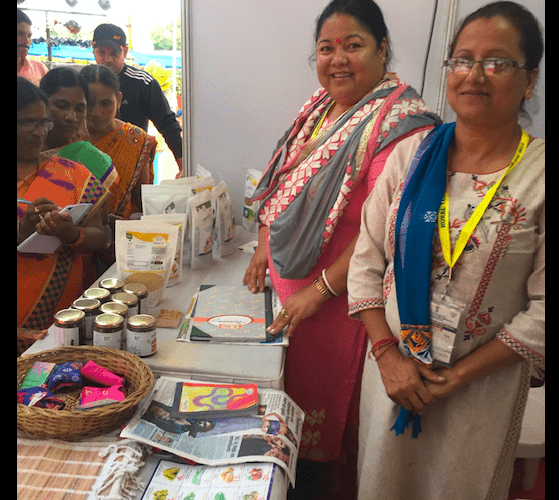
While interacting, Mrs Ronita, a member of Laxmi SHG, from Imphal East district of Manipur observed she (also her woman friend) was absolutely happy as for the Mela both of them could visit Hyderabad. She informed that albeit their SHG was established in January 2018 but earlier did not visit Hyderabad. Their travel cost was borne by the district officials. They brought a special variety of black rice, different types of pickles, fruit candies, etc. Both have enjoyed Hyderabad as a huge city with peaceful environment. Mrs Kamal Kumari Jamatia of Tripura, a member of Golap SHG (10 women members in SHG and all ST) also expressed her happiness as first time she attended the Mela. She brought different types of ladies dresses made by tribal women, craft and bamboo products etc. From Sikkim, two women came first time came in Hyderabad with local products such as ginger powder,   raw turmeric, and other local food products. Also from Haryana two women participated as well as their first visit in Hyderabad. They brought and made in the stall different types of food items and I tasted their delicious ‘laddus’. From West Bengal of Birbhum district, two women with different types of Sarees first time attended the Mela.  Also near Darjeeling area of West Bengal few Lepcha women members came who were well versed with ‘Momo’ preparation. On the spot, they prepared tasty ‘Momo’ and such taste may not be found in other restaurants.  Mrs. Shalini of Kerala also expressed her happiness after participating first time in the Mela. She along with her husband participated Mela with a different types of clay items used in cooking. Although the SHG was established in 2003 with 16 women members this was their first visit.

It is evident that Mela is an important place of marketing of SHGs’ products.  It acts as an important forward linkage as sellers can bring their products from far-flung areas and buyers can get within their area with reasonable price and thus both are benefitted. Further, Mela has been promoting national integration. In view of this, it is suggested that such Mela should be organised across the country more in numbers. NIRD&PR can organise two times in a year.

Dr Shankar Chatterjee
Former Professor & Head (CPME),NIRD & PR ( Govt. of India), Hyderabad,  India
Former Associate Professor, Eritrea

Former Assistant Prof, Govt. Degree College, Tripura, India
Former Senior Planning Officer, Govt of Assam, India