OXYGEN DEBT

Exercise and Oxygen Deficit vs. Oxygen Debt - Oxygen Plus

Oxygen debt means when the demand for oxygen is greater than the supply. It means that when your body works hard you breathe a lot of oxygen but you can not absorb enough oxygen to cope with the level of activity. It is the stage of oxygen debt. As a matter of fact, ATP (or adinosine triphosphate) is the source of energy for muscular contraction . There are three main sources , which provide a continual supply of ATP.

  • Creatine phosphate.
  • Glycolysis
  • Oxidative phosphorylation ( critic acid )

When our muscles remain in resting position, these contain large amount of ATP and creatine phosphate . But, when we start exercise during the first few seconds of muscular contraction, the reserved ATP is used up immediately. During this period , ADP ( or adinosine diphosphate ) levels increase. Creatine phosphate rapidly supplies ATP for the contraction of muscles. The molecule of creatine phosphate contains both energy and phosphate , which are transferred to a molecule of ADP to form ATP and creatine. If the contraction is short , the muscle can drive all its ATP from creatine phosphate. If light exercise is to be done for longer period, other sources of ATP must be available . Glycolysis is the process by which glycogen ( stored from of glucose in muscles ) or glucose from the blood is broken down to  CO2 and H2O by oxidative phosphorylation in the citric acid cycle to produce more ATP . The breakdown of ATP , the combination of creatine phosphate with ADP , and glycolysis can occur both aerobically (in the presence of oxygen ) and anaerobically ( in the absence of oxygen ) . Oxidative phosphorylation is an aerobic process . It means it requires the presence of oxygen . If oxygen supplied to muscles gets exhausted ( during heavy muscular activity ) , the pyruvic acid formed in glycolysis is converted to lactic acid . The accumulation of lactic acid in the muscle causes fatigue. At this stage ,m muscle is in oxygen debt . If exercise is continued , then there will be more debt of oxygen . In oxygen debt , lactic acid diffuses out into the blood and is carried to the liver, where it is reoxidised to pyruvic acid. In the liver , pyruvic acid can enter the citric acid cycle and can be broken down to CO2 and H2O . It can be said that it is reconverted to glycogen . It has been observed that up to the deficit of 2.3 litres oxygen , the lactic acid is not produced in muscles but , after that , if the amount of lactic acid goes on increasing , the deficit of O2 will be increased at the same rate .A complete rest helps in removing oxygen debt . During the rest , ATP is again stored in the muscles for activities . Generally , lactic acid is removed approximately in one hour if cooling down is performed properly . It may also take 2 hours or more if cooling down is not done with gentle exercise .

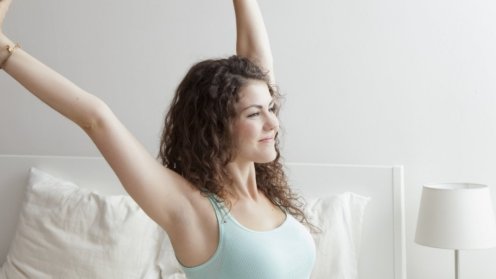
HOW TO TURN INTO A MORNING PERSON

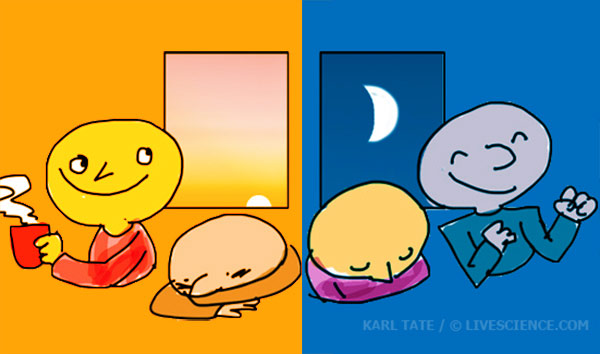
There are two kinds of people: the night owls and the early birds. But if we look at the recent pattern the number of night owls have increased. People prefer finishing their work during their night time when everything around them is quite and there are no distractions. Oh the other hand there are people who believe in the saying “Early to bed and early to rise, makes a man healthy, wealthy and wise”. These people are called ‘larks’ or as more commonly known as a morning person.

Switching from being a night owl to a morning person is easy but it requires a little effort on the part of the person. Let’s look at some tips for the same:

  • TAKE A WALK: After you have had your dinner, go for a little walk. This will serve two benefits, one it is great for your digestion and second it will hep you tire yourself out leading to good night sleep and eventually waking up early.
  • DON’T HIT THAT SNOOZE BUTTON: Snooze buttons are a curse for people who wish to wake up early. That extra 5 minutes of sleep is more relaxing than the 6-7 hours sleep you’ve already had. Something that could help with this little situation is not keeping your phone on your night stand before going to sleep. I advise you to keep your phone away from your bed, so that every time the alarm goes off you have to get up from the bed to turn it off and that is the push you need.
  • CONSISTENT BEDTIME: If your bedtime is consistent, you will develop a healthy morning routine. After a few days you will automatically start waking up early if you go to bed at the same time every night.
  • TRY A DIFFERENT ALARM APPLICATION: There are several mobile applications that are specifically designed to help you wake up on time. For example: the application consists of a bunch of activities you have to perform in order to get the alarm to turn off. These activities include solving a series of math problems or walking a certain number of steps or playing a memory game, etc. Performing these tasks is harder when you are not fully in your senses yet and thus these simple tasks are enough to wake you up from your sleep.
  • REMEMBER YOUR GOAL: Always remember why you started doing something. Always keep your goal in mind. Always remember the reason you took the first step. This will go a long way in ensuring that the first thought in your mind is your goal and that will surely stop you from hitting that snooze button.
  • REDUCE YOUR CAFFEINE INTAKE: Avoid taking caffeine after your lunch. This will help you fall asleep naturally and you wouldn’t have to force yourself to sleep at night.
  • TURN OFF YOUR SOCIAL MEDIA: It is important that you stop scrolling through your social media while laying on the bed. This could consume hours of your time and also cause strain on your eyes and brain. Try to stay off the internet before going back to bed and also avoid checking your social media the first thing in the morning. It’s not good for you either way.
  • MAKE A SCHEDULE: To develop a habit, you must make a schedule and ensure that you stick to it. It takes 21 days to build a habit and if you keep your sleep cycle the same for that duration of time, you will turn into a morning person eventually.

Adopting a new habit is always challenging. However, nothing comes easy. Everything requires an effort. Fixing your sleep schedule is a tough job but once you do that, you will realize that waking up early has it’s own benefits physically and especially mentally. So, if you want to get more work done during the day, you owe it to yourself to give these techniques a try.

Mental Health should be given Importance

In todays time with the ongoing pandemic, mental health should be the concern for everyone. It can affect every aspect of a person’s life.

Photo by Maksim Goncharenok on Pexels.com

Mental illness can have a negative impact on daily life, relationships, and physical health.

This link, however, also works in the opposite direction. Mental health issues can be caused by a variety of causes, including personal circumstances, interpersonal relationships, and physical conditions. Stress, despair, and anxiety can all have an impact on a person’s mental health and disturb their daily routine.

Taking care of one’s mental health can help one’s ability to appreciate life. To do so, you must strike a balance between your daily activities, duties, and efforts to improve your psychological resilience.

Mental health, according to the WHO, is “more than merely the absence of mental diseases or disabilities.” Peak mental health entails not only avoiding active mental illnesses but also maintaining overall well-being and happiness.”

They also underline the need of protecting and repairing mental health on an individual level, as well as in many groups and societies around the world.

Mental health is essential to our ability to think, emote, interact with others, earn a living, and enjoy life on a collective and individual level. On this basis, mental health promotion, protection, and restoration might be considered a critical concern for individuals, communities, and societies all over the world.

What does mental health basically mean:

Mental health is a condition of well-being in which a person recognizes his or her own potential, is able to cope with typical life challenges, is able to work efficiently, and is able to contribute to his or her community.

Photo by cottonbro on Pexels.com

The early signs of Mental Disorder can be :

There is no reliable physical test or scan that can determine whether or not someone has developed a mental disorder. However, the following are probable indications of a mental health condition that people should be aware of.

1)Avoiding activities that they would typically like withdrawing from friends, family, and coworkers sleeping too much or too little

2)Too much or too little food

3)Feeling despondent

4)Having low energy levels on a regular basis

5)Using mood-altering substances such as alcohol and nicotine on a more regular basis

6)Expressing negative feelings

7)Being perplexed

8)Having persistent thoughts or memories that resurface on a frequent basis being unable to execute daily duties, such as commuting to work or cooking a meal

9)Considering harming yourself or others physically

10)Recognising voices

11)Having hallucinations

SELF HELP IS IMPORTANT

A person dealing with mental health issues will almost always need to make lifestyle modifications in order to be well.

Reducing alcohol consumption, sleeping more, and eating a well-balanced, healthy diet are examples of such adjustments. People may need to take time from work or handle personal relationship issues that are negatively impacting their mental health.

Relaxation techniques such as deep breathing, meditation, and mindfulness may be beneficial to people suffering from anxiety or depression.

Having a support network, whether through self-help groups or close friends and family, is extremely important for mental illness rehabilitation.

Photo by Madison Inouye on Pexels.com

TREATMENT AND CARE OF MENTAL HEALTH

Suicide prevention, the prevention and treatment of mental problems in children, the prevention and treatment of dementia, and the treatment of substance abuse disorders all have a number of successful interventions. The mental health Gap Action Programmed (MH GAP) has developed evidence-based guidelines for non-specialists to help them better identify and manage a variety of mental health conditions.

In the framework of national efforts to design and execute mental health policy, it is critical to not only safeguard and promote citizens’ mental well-being, but also to address the needs of people with specific mental diseases.

Sleep-the need

One of the important part of your daily routine, which helps to do all other tasks of the day perfectly is a good sleep. Or we can say quality sleep. Every animals without any discrimination need sleep. It is as essential as food and water. Without sleep it becomes harder to concentrate on the tasks. It is basically essential to keep human being sane. Sleep is also important to functioning of brain. It also influences the communication of nerve cells. Many unwanted things your brain built during the day are removed while you are sleeping. Lack of sleep increases the chances of getting affected by different disorders.

how much a person sleep?

Need for sleep and pattern of sleep differ with age. A newborn sleeps almost 16-18 hours, while a grownup may sleep only for 8 hours. Even sleep pattern differs between individuals of same age group. But an average time is decided by surveys and studies. This not a prescription, but a result of a study. Average school student may need 9 hours sleep. Adults sleep for 7-8 hours. Older people normally sleep less. Children sleep very deep and their sleep will not get disturbed easily. But older people tend to get disturbed and awakened easily.

mechanism of sleep

Two things maintain your sleep mechanism. You may have heard of circadian rhythm. This directs different functions of the body like metabolism, body temperature, alertness, hormone release etc. This rhythm also controls sleep. This rhythm decides when you should be awake and when you should sleep. This rhythm makes you sleepy at night and makes you alert during the day time. This circadian rhythm gets synchronized with your surrounding environment. This may include your habits or weather around you like temperature or intensity of light. But they will work in the absence of these little information.

The other thing is the homeostasis. This keeps a track of your need of sleep. This works as a reminder telling your body to sleep at a certain time. This is the thing that maintains hoe intense your sleep is going to be. If you are deprived of sleep, this makes you sleep longer when you get to sleep.

There are many factors that influence your sleep mechanism. The medications if you are on any, your medical condition, The place where you sleep and your food habits. Exposure to light makes it difficult to sleep because some special cells in the eyes process the light and instructs the brain whether it is daytime or night. The Jet lag people face after a long flight is because of the disturbances in the circadian rhythm. people face problems when there is imbalance between the body clock and the actual clock.

some tips to sleep well
  • Try maximum to be in sync with the natural clock.
  • Try to sleep and getup everyday at same time.
  • Take care about your food habit and eat healthy.
  • Try to make your room completely dark while sleeping but be in bright light in the day time when you are fully awake.
  • Stay away from mobile or television at least 1 hour prior to your sleep.
  • Include exercise in your daily routine.
  • Avoid caffeine or nicotine as the sleep time is approaching near to you.
  • Be as much stress-less as you can.
  • Keep your room quiet.

a good sleep is everyone’s need and don’t allow your busy life to take a toll on your sleep. Sleep well and be healthy and be productive.

Beauty Standards

Beauty is now being an issue for young girls. Growing up, we all remember Barbie. I love Barbie movies. They teach us about kindness, courage, friendship, values, etc. But, they also make young girls who play with Barbie dolls want to be like them. Barbie is the first beauty standard we were exposed to.

We then came to our early teens and were exposed to Victoria’s Secret models and the fashion industry. Early teen is also the place where we go through puberty. We all know puberty is not a pretty place. Trust me, nobody looks good when they are going through puberty.

Now, being exposed to the world of beauty and going through puberty puts us in a tough spot. We start hating ourselves. We know that most people do not look like models. We also know that models have a strict diet plan, they undergo surgeries, and there is constant use of Photoshop to make them look flawless. Our subconscious brain is aware of these facts. We still can’t help comparing ourselves to the pretty models.

We start looking down upon ourselves. We constantly try to become like models. A lot of girls become anorexic to be as thin as the models. A lot of girls also take supplements to reduce fat. A lot of them start saving up for cosmetic surgeries from a very young age. Most of the girls do these surgeries to feel more confident. I do not blame them. But I do blame our society for making them feel like they needed to change.

Our beauty standards are also being white-washed. We are now following western beauty standards. When we think of beauty, we imagine a tall, thin white girl. Even in African and Asian countries, this is what the beauty standard is. This makes people from those countries spend millions of dollars bleaching their skin even when it leads to skin cancer.

Our media makes millions of dollars selling products with the faces of white-washed beauty. These days when we see an advertisement, we look at the models more than the product. Are they selling the product or the beauty standard? 

Now our role in the world of beauty standards is to stop thinking it matters. Unless you want to become a model. People who have zero connection to the beauty industry have to stop worrying about their looks. It is not our work to look like that. So, we all need to end our obsession with beauty. If we are not being paid for being pretty, we do not have to obsess over it.

Next, we all need to stop thinking that every single woman has to be pretty. I know even men go through it. But, the American Society of Plastic surgeons reveals that women have accounted for 92% of cosmetic surgeries and men accounted for 8% of them. About 98% of the women feel immense pressure from external sources to look a certain way.

I really want to change that. So can we all start complimenting each other on qualities other than appearance? Instead of only telling a girl, you are pretty, beautiful, etc. Can we please tell them that they are talented, kind, intelligent, and caring?

I love getting compliments on my work rather than being complimented on my physical appearance. It is not in our control how we look like.    

Can we all start complimenting each other on who we are rather than what we look like?

Beauty Standards

Beauty is now being an issue for young girls. Growing up, we all remember Barbie. I love Barbie movies. They teach us about kindness, courage, friendship, values, etc. But, they also make young girls who play with Barbie dolls want to be like them. Barbie is the first beauty standard we were exposed to.

We then came to our early teens and were exposed to Victoria’s Secret models and the fashion industry. Early teen is also the place where we go through puberty. We all know puberty is not a pretty place. Trust me, nobody looks good when they are going through puberty.

Now, being exposed to the world of beauty and going through puberty puts us in a tough spot. We start hating ourselves. We know that most people do not look like models. We also know that models have a strict diet plan, they undergo surgeries, and there is constant use of Photoshop to make them look flawless. Our subconscious brain is aware of these facts. We still can’t help comparing ourselves to the pretty models.

We start looking down upon ourselves. We constantly try to become like models. A lot of girls become anorexic to be as thin as the models. A lot of girls also take supplements to reduce fat. A lot of them start saving up for cosmetic surgeries from a very young age. Most of the girls do these surgeries to feel more confident. I do not blame them. But I do blame our society for making them feel like they needed to change.

Our beauty standards are also being white-washed. We are now following western beauty standards. When we think of beauty, we imagine a tall, thin white girl. Even in African and Asian countries, this is what the beauty standard is. This makes people from those countries spend millions of dollars bleaching their skin even when it leads to skin cancer.

Our media makes millions of dollars selling products with the faces of white-washed beauty. These days when we see an advertisement, we look at the models more than the product. Are they selling the product or the beauty standard? 

Now our role in the world of beauty standards is to stop thinking it matters. Unless you want to become a model. People who have zero connection to the beauty industry have to stop worrying about their looks. It is not our work to look like that. So, we all need to end our obsession with beauty. If we are not being paid for being pretty, we do not have to obsess over it.

Next, we all need to stop thinking that every single woman has to be pretty. I know even men go through it. But, the American Society of Plastic surgeons reveals that women have accounted for 92% of cosmetic surgeries and men accounted for 8% of them. About 98% of the women feel immense pressure from external sources to look a certain way.

I really want to change that. So can we all start complimenting each other on qualities other than appearance? Instead of only telling a girl, you are pretty, beautiful, etc. Can we please tell them that they are talented, kind, intelligent, and caring?

I love getting compliments on my work rather than being complimented on my physical appearance. It is not in our control how we look like.    

Can we all start complimenting each other on who we are rather than what we look like?

FALSE MEMORIES: THE PAST YOU REMEMBER IS NOT ALWAYS THE TRUTH

We can’t reliability distinguish the true memories from false memories.

False memory is a psychological phenomenon whereby an individual recalls an event that never happened, or an actual occurrence substantially differently from the way it transpired.

In other words, a false memory could either be an entirely imaginary fabrication, or a distorted recollection of an actual event. Moreover, false memories are distinct from simple errors in recollection.

Firstly, an individual who holds a false memory maintains some certitude in the veracity of the memory.  Secondly, a false memory deals not with forgetting something that actually happened, but with remembering what had never taken place.

Instances of this phenomenon may range from the mundane—such as remembering that you ate breakfast when you actually did not, to the serious—such as falsely recalling that you were assaulted by your boss.

HOW ARE FALSE MEMORIES FORMED OR MADE?

The difference between false memory and ones is as same as for jewels: it is always the false ones that looks the most real, the most brilliant.

Memories are complex. While you might imagine a memory as a black or white element, the truth is memories are subject to change, malleable, and often unreliable.

Events are moved from your brain’s temporary memory to permanent storage while you sleep. The transition, however, isn’t absolute. Elements of the memory may be lost. This is where false memories can begin.

IS THERE A GROUP WHICH IS MORE LIKELY TO HAVE FALSE MEMORIES?

people change memory dosnt.

Memory isn’t permanent. Indeed, it’s pliable and often ever-changing. Certain people or events may make you more likely to develop false memories. These include:

Eye witnessing

If you witness a crime or an accident, your testimony is important — but not conclusive. That’s because experts and law enforcement officials know memories and recollections can and do change, whether through suggestion or the passage of time.

Any gaps in events may be filled in by your memory, turning a reliable recall into a faulty one.

Trauma

People who have a history of trauma, depression, or stress may be more likely to produce false memories. Negative events may produce more false memories than positive or neutral ones.

OCD

Individuals with Obsessive-compulsive disorder(OCD) may have a memory deficit or poor memory confidence.

They may be more likely to create false memories because they don’t have confidence in their own memories. This often leads to the repetitive or compulsive behaviors that are associated with this disorder.

Aging

As both you and a memory age, details about that memory may be lost. The gist of a memory becomes stronger, while the details fade away.

For example, you may remember you went to the beach on your honeymoon, but you don’t remember the name of the hotel, what the weather was like, or even the city you stayed in.

Trials of a more precise and comfortable MRI to identify early breast cancer begins in the United Kingdom.

A new, more convenient method of detecting breast cancer has begun testing in the United Kingdom, with the potential to identify tumors at an earlier stage.

At some time in their life, one in every eight British women will be diagnosed with breast cancer. Because malignancies and fibrous tissue both show up as solid white regions on X-ray, mammograms are less effective in younger women whose breasts contain denser, fibrous tissue and less fat because cancers and fibrous tissue both appear as solid white areas on X-ray.

Mammograms may miss malignancies in postmenopausal women with thick breast tissue, who are also more likely to acquire breast cancer in the first place.

Women with a dubious lump may be given an ultrasound scan or a biopsy, and if the diagnosis is still unclear, they may be directed for DCE-MRI, which detects the development of new blood vessels supporting tumors. However, in women with early-stage malignancies, they may not be visible, leading to false comfort.

Multiparametric MRI was first created to evaluate liver disorders without the need for a painful biopsy, and it is now widely utilized in Europe and the United States.

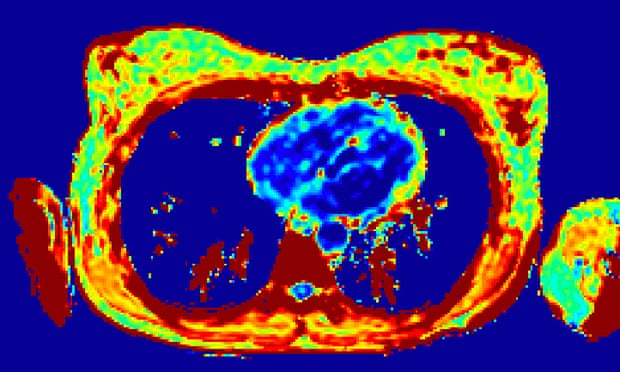
It works similarly to traditional MRI in that it utilizes high magnetic fields and radio waves to excite protons in the tissue, then exploits variations in the time it takes for them to settle to generate a “map” of the various tissues in the breast. Multiparametric MRI, on the other hand, allows an even more comprehensive map to be generated by merging pictures created by multiple MR pulses and sequences.

A scan of healthy breasts with multiparametric MRI. Photograph courtesy of Perspectum Diagnostics

“We believe that if we differentiate the tissue rather than looking at the blood vessels around the tumor, we should be able to spot not only tumors in dense breasts but potentially tumors that aren’t seen on mammograms,” said Prof Sally Collins, a consultant obstetrician and medical lead for women’s health at Oxford-based Perspectum Diagnostics, who herself recently received treatment for breast cancer.

“We’re also working to improve the scanning experience for patients. “Mammograms are awful because they squish your breast on this plate, which is undignified and unpleasant, and MRIs are much worse because you have to lie face down with your boobs dangling in this coil and your arms raised over your head for ages,” Collins added.

“We’re attempting to make it such that women may be fully dressed, respectable, and comfortable while being scanned, which is critical for the patient journey to cancer diagnosis.”

The prospectus has received ethical clearance to enroll 1,030 women in the study, including 10 women who have been diagnosed with breast cancer and 30 to 40 healthy women who are presently being scanned, to see if the technology can properly map their breast tissue while laying on their backs. It is estimated that the study would take two years to complete.

“It will never replace regular mammography screening for postmenopausal women, but we think it will enhance the diagnosis route for women with thick breasts or premenopausal women who are at extremely high risk of breast cancer, eliminating the need for repeated tests,” Collins said.

CHILDHOOD – BEST DAYS

I don’t know when I lost my childhood
I think I lost my childhood
When I started focusing on my studies,
Maybe I lost it
When I start overthinking about tomorrow
Maybe when I get jealous of my cousin
Maybe I lost it when my parents compare me with others
May be when I started doing something to please my parents
Maybe when I feel guilty for saying something
Maybe when I came to know that everything that I learnt in my childhood is just a bookish line
And no one takes that seriously in real life
Not even my parents
Maybe then I lost my childhood

We have to learn from our childhood
●To be happy for no reason
●To always be curious
●To fight tirelessly for something

I think Childhood was the best memories of everyone.

My childhood was also very memorable to me.
I used to play till 7pm without any thought of my homework or my parents.
At that time my father was in Indian army that’s why he couldn’t live with us.I was living with my mom and grandma
Thus whenever I come from school I have to go to market for food supplies or everything that is needed for home.And that’s why I am always onMy angry mood because my friends were playing when I had to go to market
And as a child I also wanted to play.
Thus whenever I return to the market I started playing with my friends till 7 pm.
My grandma is always waiting for me to come back after playing.
My grandma loves me so much.I usually sleep with my grandma and she always sang a song for me, tells bad time stories.She loves to irritate me..
She was my best friend at that time.I think I was closer to my grandma even more than my mom.
My grandma and I were just like friends.
Whenever grandma borrows some money from me then I always get it back with some intrest.

Whenever I went to my maternal grandmother’s home I enjoyed a lot there.My uncle always takes me to a resturant for my favorite foods.He took me to a fair.And in my grandfathers shop I played a lot.I used to irritate every customer but my grandfather never scolds me for that.
In the evening grandmother took me to the tour of village and I enjoyed it a lot.
Best thing is that I was known by my mothers name there.And I am proud of them.

My Childhood was definitely the best memory for me.
There was no tension for homework, assignment, exams career, future
We just enjoy our lives but now everything is the opposite.

We always complete some tasks.Always always always…..
In the morning we wake up and keep doing our work whether we enjoy it or not.As it is our duty and we have to do it because we get paid for it or to get a job we have to study hard.

Some have dreams to achieve it thus they also enjoy their everywork that brings them closer to their dreams
But some don’t have, they are just doing things because their parents want them to do or they want to earn money for their livelihood.

But what do you think about it?Are they enjoying their lives?
Of course not.

So according to my best things for happiness is stop questioning yourself and be proud of yourself for enjoying your life

●You have a roof over your head.

●You ate today.

●You have clean water.

●You have a good heart.

●You wish for others.

●You are breathing.

●Atleast one person care for you.

●You have clean clothes.

Be grateful for the little things…

Sometimes we stress over things that we don’t have and not thankful for the things we already do have.

  • Subjects to be incorporated in the school curriculum
    Education is more than a black board and ahead of the school text books. Woefully education has just been dumped and limited to the curriculum followed in schools which comprises of science, mathematics, social science and languages. These five subjects cannot solely provide the skills required for the career of every individual in the long run. Although the above subjects frame a basic foundation for the students, education is beyond this small circle. It should facilitate quality learning all through the life which should be enduring. Education should be concentrated on a wide range of fields and provide platforms to […]
  • IIT-MADRAS, AVISHKAR HYPERLOOP TEAM QUALIFIES FOR EUROPEAN HYPERLOOP WEEK
    A group of students with team named “AVISHKAR” from IIT Madras have been working tremendously towards the technology behind the future of transportation, HYPERLOOP. The team comprises of forty students from various department of IIT, madras. They have been working on this new prototype hyperloop project since last November. BUT, WHAT IS HYPERLOOP? Basically, hyperloop is a high speed mass transportation system. A hyperloop is a super speed ground-level transportation system in which people could travel in a hovering pod inside a vacuum tube at speeds as high as 760 mph (1220 km/h). While talking about the product, Neel said, “Hyperloop […]
  • 360 Wander Writer
    Welcome to the Festive world The Carnival of Venice This Carnival of Venice is described as one of the best carnivals in the world. It is centered around the Piazza San Marco. The events are held in every towns and cities of Venice. This event also contains boat parades along with the Grand Canal. Its main specialty is about their elaborate masks and a mask parade is done in the Piazza San Marco. It comprises of a special Carnival for Children in the Cannaregio district of Venice. It is kind of annual festival held every year in the city of […]

17 Sustainable Goals by United Nations.

Sustainable development is development that meets the needs of the present without compromising the ability of future generations to meet their own needs. Sustainable development has continued to evolve as that of protecting the world’s resources while its true agenda is to control the world’s resources. Environmentally sustainable economic growth refers to economic development that meets the needs of all without leaving future generations with fewer natural resources than those we enjoy today. Let us know 17 Sustainable Goals set by UN and their progress by now.

1) Poverty Eradication:

The 2030 Agenda acknowledges that eradicating poverty in all its forms and dimensions, including extreme poverty, is the greatest global challenge and an indispensable requirement for sustainable development.

2) ENDING HUNGER:

The total number of persons suffering from severe food insecurity has been on the rise since 2015, and there are still millions of malnourished children. The economic slowdown and the disruption of food value chains caused by the pandemic are exacerbating hunger and food insecurity.

3) Ensure healthy lives and promote well- being for all at all ages

Progress in many health areas continues, but the rate of improvement has slowed and will not be sufficient to meet most of the Goal 3 targets. Globally, an estimated 295,000 maternal deaths occurred in 2017, resulting in an overall maternal mortality ratio of 211 maternal deaths per 100,000 live births, a 4 per cent reduction compared with 2015 and a 38 per cent reduction compared with 2000. The majority of the deaths occurred in low- and lower-middle-income countries, and roughly 66 per cent of them occurred in sub-Saharan Africa. At the current pace of progress, the world will fall short of the target of the Goal.

4) Ensure inclusive and equitable quality education and promote lifelong learning opportunities for all:

At the end of 2019, millions of children and young people were still out of school, and more than half of those in school were not meeting minimum proficiency standards in reading and numeracy.

5)Achieve gender equality and empower all women and girls

The commitment to advancing gender equality has brought about improvements in some areas, but the promise of a world in which every woman and girl enjoy full gender equality and all legal, social and economic barriers to their empowerment have been removed remains unfulfilled.

6)Ensure availability and sustainable management of water and sanitation for all

In 2017, 3 billion persons lacked soap and water at home. In 2016, 47 per cent of schools worldwide lacked handwashing facilities with available soap and water, and 40 per cent of health-care facilities were not equipped to practise hand hygiene at points of care.

7) Ensure access to affordable, reliable, sustainable and modern energy for all

The world is making good progress on increasing access to electricity and improving energy efficiency. However, millions of people throughout the world still lack such access, and progress on facilitating access to clean cooking fuels and technologies is too slow.

8) Promote sustained, inclusive and sustainable economic growth, full and productive employment and decent work for all:

In 2018, the rate of growth of global real GDP per capita was 2 per cent. In addition, the rate for least developed countries was 4.5 per cent in 2018, less than the 7 per cent growth rate targeted in the 2030 Agenda.

9) Build resilient infrastructure, promote inclusive and sustainable industrialization and foster innovation:

In 2019, 14 per cent of the world’s workers were employed in manufacturing activities, a figure that has not changed much since 2000. The share of manufacturing employment was the largest in Eastern and South-Eastern Asia (18 per cent) and the smallest in sub- Saharan Africa (6 per cent).

10)Reduce inequality within and among countries

In 73 of the 90 countries with comparable data during the period 2012–2017, the bottom 40 per cent of the population saw its incomes grow. Moreover, in slightly more than half of those countries, the bottom 40 per cent experienced a growth rate in income that was higher than the overall national average.

11) Make cities and human settlements inclusive, safe, resilient and sustainable:

Rapid urbanization has resulted in a growing number of slum dwellers, inadequate and overburdened infrastructure and services and worsening air pollution.

12) Ensure sustainable consumption and production patterns:

As at 2019, 79 countries and the European Union reported on at least one national policy instrument that contributed to sustainable consumption and production in their efforts towards the implementation of the 10-Year Framework of Programmes on Sustainable Consumption and Production Patterns.

13) Take urgent action to combat climate change and its impacts.

The year 2019 was the second warmest on record and the end of the warmest decade, 2010 to 2019. In addition, with a global average temperature of 1.1°C above estimated pre-industrial levels, the global community is far off track to meet either the 1.5 or 2°C targets called for in the Paris Agreement.

14. Conserve and sustainably use the oceans, seas and marine resources for sustainable development:

Oceans and fisheries continued to support the global population’s economic, social and environmental needs while suffering unsustainable depletion, environmental deterioration and carbon dioxide saturation and acidification.

15) Protect, restore and promote sustainable use of terrestrial ecosystems, sustainably manage forests, combat desertification, and halt and reverse land degradation and halt biodiversity loss:

Forest areas continued to decline, protected areas were not concentrated in areas of key biodiversity and species remained threatened with extinction.

16) Promote peaceful and inclusive societies for sustainable development, provide access to justice for all and build effective, accountable and inclusive institutions at all levels:

Conflict, insecurity, weak institutions and limited access to justice remain a great threat to sustainable development. Millions of people have been deprived of their security, human rights and access to justice.

17) Strengthen the means of implementation and revitalize the global partnership for sustainable development:

Strengthening multilateralism and global partnerships is more important than ever before. The global nature of the pandemic requires the participation of all governments, the private sector, civil society organizations and people throughout the world.


17 Sustainable Goals by United Nations.

Sustainable development is development that meets the needs of the present without compromising the ability of future generations to meet their own needs. Sustainable development has continued to evolve as that of protecting the world’s resources while its true agenda is to control the world’s resources. Environmentally sustainable economic growth refers to economic development that meets the needs of all without leaving future generations with fewer natural resources than those we enjoy today. Let us know 17 Sustainable Goals set by UN and their progress by now.

1) Poverty Eradication:

The 2030 Agenda acknowledges that eradicating poverty in all its forms and dimensions, including extreme poverty, is the greatest global challenge and an indispensable requirement for sustainable development.

2) ENDING HUNGER:

The total number of persons suffering from severe food insecurity has been on the rise since 2015, and there are still millions of malnourished children. The economic slowdown and the disruption of food value chains caused by the pandemic are exacerbating hunger and food insecurity.

3) Ensure healthy lives and promote well- being for all at all ages

Progress in many health areas continues, but the rate of improvement has slowed and will not be sufficient to meet most of the Goal 3 targets. Globally, an estimated 295,000 maternal deaths occurred in 2017, resulting in an overall maternal mortality ratio of 211 maternal deaths per 100,000 live births, a 4 per cent reduction compared with 2015 and a 38 per cent reduction compared with 2000. The majority of the deaths occurred in low- and lower-middle-income countries, and roughly 66 per cent of them occurred in sub-Saharan Africa. At the current pace of progress, the world will fall short of the target of the Goal.

4) Ensure inclusive and equitable quality education and promote lifelong learning opportunities for all:

At the end of 2019, millions of children and young people were still out of school, and more than half of those in school were not meeting minimum proficiency standards in reading and numeracy.

5)Achieve gender equality and empower all women and girls

The commitment to advancing gender equality has brought about improvements in some areas, but the promise of a world in which every woman and girl enjoy full gender equality and all legal, social and economic barriers to their empowerment have been removed remains unfulfilled.

6)Ensure availability and sustainable management of water and sanitation for all

In 2017, 3 billion persons lacked soap and water at home. In 2016, 47 per cent of schools worldwide lacked handwashing facilities with available soap and water, and 40 per cent of health-care facilities were not equipped to practise hand hygiene at points of care.

7) Ensure access to affordable, reliable, sustainable and modern energy for all

The world is making good progress on increasing access to electricity and improving energy efficiency. However, millions of people throughout the world still lack such access, and progress on facilitating access to clean cooking fuels and technologies is too slow.

8) Promote sustained, inclusive and sustainable economic growth, full and productive employment and decent work for all:

In 2018, the rate of growth of global real GDP per capita was 2 per cent. In addition, the rate for least developed countries was 4.5 per cent in 2018, less than the 7 per cent growth rate targeted in the 2030 Agenda.

9) Build resilient infrastructure, promote inclusive and sustainable industrialization and foster innovation:

In 2019, 14 per cent of the world’s workers were employed in manufacturing activities, a figure that has not changed much since 2000. The share of manufacturing employment was the largest in Eastern and South-Eastern Asia (18 per cent) and the smallest in sub- Saharan Africa (6 per cent).

10)Reduce inequality within and among countries

In 73 of the 90 countries with comparable data during the period 2012–2017, the bottom 40 per cent of the population saw its incomes grow. Moreover, in slightly more than half of those countries, the bottom 40 per cent experienced a growth rate in income that was higher than the overall national average.

11) Make cities and human settlements inclusive, safe, resilient and sustainable:

Rapid urbanization has resulted in a growing number of slum dwellers, inadequate and overburdened infrastructure and services and worsening air pollution.

12) Ensure sustainable consumption and production patterns:

As at 2019, 79 countries and the European Union reported on at least one national policy instrument that contributed to sustainable consumption and production in their efforts towards the implementation of the 10-Year Framework of Programmes on Sustainable Consumption and Production Patterns.

13) Take urgent action to combat climate change and its impacts.

The year 2019 was the second warmest on record and the end of the warmest decade, 2010 to 2019. In addition, with a global average temperature of 1.1°C above estimated pre-industrial levels, the global community is far off track to meet either the 1.5 or 2°C targets called for in the Paris Agreement.

14. Conserve and sustainably use the oceans, seas and marine resources for sustainable development:

Oceans and fisheries continued to support the global population’s economic, social and environmental needs while suffering unsustainable depletion, environmental deterioration and carbon dioxide saturation and acidification.

15) Protect, restore and promote sustainable use of terrestrial ecosystems, sustainably manage forests, combat desertification, and halt and reverse land degradation and halt biodiversity loss:

Forest areas continued to decline, protected areas were not concentrated in areas of key biodiversity and species remained threatened with extinction.

16) Promote peaceful and inclusive societies for sustainable development, provide access to justice for all and build effective, accountable and inclusive institutions at all levels:

Conflict, insecurity, weak institutions and limited access to justice remain a great threat to sustainable development. Millions of people have been deprived of their security, human rights and access to justice.

17) Strengthen the means of implementation and revitalize the global partnership for sustainable development:

Strengthening multilateralism and global partnerships is more important than ever before. The global nature of the pandemic requires the participation of all governments, the private sector, civil society organizations and people throughout the world.

Art Therapy

“Art washes from the soul the dust of everyday life.” —Pablo Picasso

“Expressive art therapy integrates all of the arts in a safe, non-judgmental setting to facilitate personal growth and healing. To use the arts expressively means going into our inner realms to discover feelings and to express them through visual art, movement, sound, writing or drama. This process fosters release, self-understanding, insight, and awakens creativity and transpersonal states of consciousness.” -Natalie Rogers

Art therapy is a kind of therapy that uses art as a means of communication and le people explore and express their emotions and thoughts. This therapy is also known as expressive therapy.

In the process of the therapy arts, therapists use fine arts and performing arts to improve physical, mental, and emotional well-being. Fine arts and performing arts include drawing, painting and drama, dance, and movements respectively to improve physical, mental, and emotional well-being. In the process, the therapists work with individuals or groups using arts to create meaning rather than focusing on the end product. This process includes activities like creating stress painting, designing a postcard that one will never send, creating an emotional wheel, collage, doodling and scribbling, finger painting, photography, sculpting, working with clay, etc. Art therapy is more useful for people who cannot verbalize their feelings. This therapy is perfect for people of all ages because of its versatility.

Art therapy can help in treating a wide range of mental disorders and psychological distress.

Certain studies and institutions recommend art therapy for people suffering from schizophrenia (a long-term mental disorder of a type involving a breakdown in the relation between thought, emotion, and behavior, leading to faulty perception, inappropriate actions and feelings, withdrawal from reality and personal relationships into fantasy and delusion, and a sense of mental fragmentation.) and other related conditions. People who face difficulties in learning, art therapy are great for them.

People suffering from Dementia (a chronic or persistent disorder of the mental processes caused by brain disease or injury and marked by memory disorders, personality changes, and impaired reasoning). Due to art therapy, people use creative parts of their brain, which helps them to manage stress levels and restore a sense of personal identity.

People suffering from Autism spectrum disorder (ASD) (a complex developmental condition that involves persistent challenges in social interaction, speech, and nonverbal communication, and restricted/repetitive behaviors). Art therapy helps people to distract and calm themselves and also improve their communication skills.

It also helps prisoners to help in their feelings. It can also be used for people suffering from Post-traumatic stress disorder and depression.

Things to keep in your mind to participate in art therapy

•             People do not need to have artistic ability or special talent. According to some researchers sometimes only the presence of art can play a part in boosting mental health.

•             Art therapy is not the same as art classes. Art classes are focused on teaching techniques while art therapy is more about let people focus on their inner feelings. People do not need to create masterpieces in art therapy but they need to express their feelings with the help of color or anything they feel connected with.

•             People do not need to have experience in arts for participating in art therapy.

In this pandemic like situation people are facing issues like stress, depression and mental health more than ever. To get out of these situations people started to do yoga and many more things. So here is the suggestion you can start art therapy at your home. You just need to practice regularly to overcome the issues. Art therapies can help you open up emotions you have been pushing back. The therapy forces you to notice them and work on them. So start playing with colors or dance or sing in your own way and let yourself express what you feel.

Have you been struggling from social media anxiety?

Maybe you may have been a modest social media user prior to the lockdown, but do you find yourself hooked to your phone, browsing Instagram and Facebook constantly for updates and seeking out on Whatsapp for news or a connection because of the COVID-19 issue swept over our lives? You could be struggling from social media stress without realising it.

First and foremost, recognise that this is an unusual reaction to an unprecedented circumstance. The overwhelming bulk of us have rarely been subjected to a pandemic, let alone one which necessitates such restraint. Our brain wants to make any sense of the confusion — it’s a natural human need — and we do it by gathering more and more content; therefore, the constant browsing on social media platforms.

It’s a method of relieving stress. Many make use of social media to relieve the psychological stress that has built up. People are anxious because the future appears to be ambiguous right now. It is not anxiousness with a specific objective in mind. It is a dispersed anxiousness caused by uncertainty. This type of anxiety requires a continual diversion in order to be kept under control.

As a result, we resort to social media because of its addictive qualities of providing something which captures our interest every few moments, every time we browse.

How does it affect us?

What began as a diversion strategy has evolved into a vicious mood loop in which all information, fact and fiction, serves to increase our anxiety, resulting in mood swings and irritation. It has been thoroughly investigated in study, which discovered that excessive media use dramatically increased social media anxiety and tiredness, which subsequently resulted in heightened stress.

What can we do to avoid feeling anxious as a result of social media?

  1. To combat FOMO, do this test: turn off your phone for two hours. Sure, you will have the want to glance at it every few moments, but resist. We don’t actually lose out on much by avoiding social media for a few hours, but it seems like we do since we are constantly overwhelmed with incoming news at all times.Our minds are constructed by nature to filter material so that we may apply selective attention; nevertheless, we are currently eroding that filter, that may have long-term consequences for cognitive performance.
  1. Recognize and accept your addiction. There is no point in denying that you may be hooked to social media since that is how it is built. You’re not the only one. Accepting, on the other hand, is the very first step towards reclaiming control. Remind yourself that this is a ‘fix’ every time you go for the phone. 
  1. Encourage surfing. Our impulses, especially the ones that cause us to pick up our phones, occur in waves, with each wave ranging around 20-30 minutes, regardless of whether we indulge in it or not. When you sense the need to indulge in these kind of activity, you may feel powerless if you don’t, but remember that the impulse will fade away.

When we are deprived of exterior stimuli such as socialising, commuting to work and vacationing, it is normal to resort to social media for enjoyment. But keep an eye on whether you’re just using or allowing it to dominate you.

Acid Rain!

 In your school or college, we all have once come across the phrase ‘Acid Rain’. Many of us have forgotten about it and many of us do remember the topic in detail. So, in this article, I am going to put some light on the following topics:-

I) What is Acid rain?

II) How much acidic is Acid rain?

IIl) Effects of Acid rain.

V) What can be done?

What is Acid rain?

When gases like nitrogen oxides and sulfur dioxide (produced by the burning of fuels from factories, power stations, or vehicles) react with tiny droplets of water in clouds to form sulphuric and nitric acids. Which is the form of rain that falls from the clouds, which is why that rain is known as ‘Acid Rain’.

How much acidic is Acid Rain?

We all have learned in school about the pH scale, the scale which is used to determine acidity. This scale goes from 0 to 14, where 0 is the most acidic and 14 is the most alkaline and 7 is neutral. Acid rain is very weak in terms of acidity.

Rain is always acidic because of the presence of naturally occurring oxides in the air, for unpolluted rain the pH value is between 5-6. But when the air gets more polluted with the presence of sulfur dioxide and nitrogen oxides in it, the acidity can increase to a pH value of 4. The most acidic rain recorded till now has a pH value of 2. But, even the most acidic rain ever is as acidic as lemon juice or vinegar. 

Now that we know it can’t harm us then why do we worry about it? 

What are the effects of Acid rain?

Though Acid rain can cause skin irritation to some people, there are many effects of Acid rain on the forest, aquatic animals, and water resources. 

Effects on Forest:-

I) It can dissolve and wash away the nutrients and minerals in the soil which helps the trees to grow.

II) Acid rain causes the release of harmful substances such as aluminum into the soil.

III) Acid rain wash away the waxy protective coating of leaves, damaging them and preventing them from being able to photosynthesis properly.

Effects on Buildings:-

I) Acid rain can make the erosion process of materials faster. 

II) Statues and monuments made up of limestone are worst affected by Acid rain.

Effects on Lakes and Rivers:-

I) It can be very harmful to aquatic species.

II) It can also cause toxic substances like aluminum to be released into the water from the soil, resulting in water pollution.

III) It can destroy the ecosystems of lakes and rivers.

What can be done?

Mentioned below are some ways to reduce Acid rain:-

 By installing catalytic converters on our vehicles.

→ Sulfur can also be ‘washed’ out of smoke by spraying a mixture of water and powdered limestone into the smokestack.

 By using renewable energy sources rather than fossil fuels.

 By conserving energy. 

 By carpool or using public transport.

Acid Rain!

 In your school or college, we all have once come across the phrase ‘Acid Rain’. Many of us have forgotten about it and many of us do remember the topic in detail. So, in this article, I am going to put some light on the following topics:-

I) What is Acid rain?

II) How much acidic is Acid rain?

IIl) Effects of Acid rain.

V) What can be done?

What is Acid rain?

When gases like nitrogen oxides and sulfur dioxide (produced by the burning of fuels from factories, power stations, or vehicles) react with tiny droplets of water in clouds to form sulphuric and nitric acids. Which is the form of rain that falls from the clouds, which is why that rain is known as ‘Acid Rain’.

How much acidic is Acid Rain?

We all have learned in school about the pH scale, the scale which is used to determine acidity. This scale goes from 0 to 14, where 0 is the most acidic and 14 is the most alkaline and 7 is neutral. Acid rain is very weak in terms of acidity.

Rain is always acidic because of the presence of naturally occurring oxides in the air, for unpolluted rain the pH value is between 5-6. But when the air gets more polluted with the presence of sulfur dioxide and nitrogen oxides in it, the acidity can increase to a pH value of 4. The most acidic rain recorded till now has a pH value of 2. But, even the most acidic rain ever is as acidic as lemon juice or vinegar. 

Now that we know it can’t harm us then why do we worry about it? 

What are the effects of Acid rain?

Though Acid rain can cause skin irritation to some people, there are many effects of Acid rain on the forest, aquatic animals, and water resources. 

Effects on Forest:-

I) It can dissolve and wash away the nutrients and minerals in the soil which helps the trees to grow.

II) Acid rain causes the release of harmful substances such as aluminum into the soil.

III) Acid rain wash away the waxy protective coating of leaves, damaging them and preventing them from being able to photosynthesis properly.

Effects on Buildings:-

I) Acid rain can make the erosion process of materials faster. 

II) Statues and monuments made up of limestone are worst affected by Acid rain.

Effects on Lakes and Rivers:-

I) It can be very harmful to aquatic species.

II) It can also cause toxic substances like aluminum to be released into the water from the soil, resulting in water pollution.

III) It can destroy the ecosystems of lakes and rivers.

What can be done?

Mentioned below are some ways to reduce Acid rain:-

 By installing catalytic converters on our vehicles.

→ Sulfur can also be ‘washed’ out of smoke by spraying a mixture of water and powdered limestone into the smokestack.

 By using renewable energy sources rather than fossil fuels.

 By conserving energy. 

 By carpool or using public transport.