Why should you have health insurance?

Health Insurance 

Usually, the first thought that comes to mind when entering a hospital is how much lighter your wallet will be when you leave. In a high-tech world, medicine is at the forefront, and technology comes with a cost. It’s not uncommon for routine check-up bills to run into the thousands of dollars. A lengthy hospital stay will inevitably set you back hundreds of thousands of dollars. Having reliable comprehensive health insurance can save you a day and your wallet, at least if you’re in the hospital for treatment.

What is health insurance?

If you choose health insurance, your medical expenses will be covered by your insurance company and you will instead have to pay an annual membership fee called a “premium”. This can also be paid in monthly installments. Depending on which policy you choose and who provides it, health insurance protects your wallet by covering medical bills, hospital bills, ambulance bills, test bills, and other related costs. Some policies also cover lost earnings compensation.

Why should you have health insurance?

A WHO report outlines the need for expanded health insurance coverage in India, which is staggering as 68% of India’s healthcare costs are out-of-pocket (OOP). Also, only 18% of urban and 14% of rural India have health insurance. Getting health insurance at a young age is a wise decision as premiums are much lower. Please note that many policies do not cover pre-existing illnesses or illnesses that occur within 30 days of obtaining the policy, except for accidents.

If you do not yet have health insurance or are considering it, here is a list of reasons why you should recognize the importance of health insurance.

• Cashless treatment: All major health insurance companies have many popular hospitals in their networks, so-called network hospitals. When you get treatment at one of these hospitals, all you have to do is present your health insurance card (or just your insurance number), fill out a few forms if necessary, and then you’re all set. However, if you decide to go to an out-of-network hospital, you will have to pay for treatment and later apply for a refund. Cashless treatment is therefore one of the biggest benefits of health insurance. Because few people can arrange a large amount of money in a short period of time for medical purposes.

• Rising health care costs and illnesses: According to cancer statistics in India, there were 11,57,294 registered cancer patients in 2019. In the last 26 years, cancer incidence has almost doubled in India. Other life-threatening diseases such as tuberculosis and diabetes are also on the rise. With medical and treatment costs continuing to rise, look no further than why health insurance is a must.

• Free Health Checks and Additional Benefits: Many insurers offer their customers free health checks every year (but only if you haven’t filed a claim in the last few years). Some companies do). You are also eligible to receive a No Claim Bonus (NCB). H. If you do not have insurance other than outpatient insurance during the insurance period, the insurance amount will increase by a certain amount. In addition, ambulance costs, pre-hospital and post-hospital costs are some of the other benefits offered by insurance companies.

• Tax Incentives: Section 80D of the Income Tax Act provides tax incentives for health insurance premiums. Under the age of 60, INR 50,000 for parents under the age of 60 (INR 25,000 for self-employed persons, spouses and dependent children and INR 25,000 for parents), for parents over the age of 60 can claim a deduction of Rs 75,000. (Self-employed person, spouse and dependent children Rs 25,000 for her and Rs 50,000 for parents). In total he can claim a deduction of Rs 1,00,000 if both the individual and the parents are above her 60 years of age.

• Peace of Mind: Well-planned back insurance can be a great peace of mind, especially when life-threatening diseases have increased at an alarming rate in recent decades. It can save you and your family during a medical emergency, and most importantly, one less thing to worry about in your busy daily schedule.

Now that you understand the importance of health insurance, let’s take a look at what to consider when choosing health insurance.

Points to note when looking for health insurance 

• As mentioned above, it is better to get health insurance when you are young. Insurance premiums tend to increase with age, as does the risk of health problems.

• Look for insurance that covers terminal illness. These are the things that weigh most on our finances, so it makes no sense not to include them in the covered list.

• Do not choose insurance with expensive copay clauses. Your copay is the part of your bill that you have to pay out of your own pocket in the event of a claim. The insurance company will pay the rest according to the terms of the policy.

• You may select passenger/additional features related to health insurance to contribute to the overall insurance coverage network.

Types of Health Insurance

•Compensation Plan: In this case, the patient pays a fixed amount for hospital expenses and the insurance company pays the rest of the bill. You can choose the doctor you want to see, and your insurance company doesn’t have to decide which hospital or whether you need to see a doctor. But this autonomy is only up to a point. In an emergency, emergency room admission still requires insurance clearance unless you are incapacitated. If you choose a coverage plan, first pay the full amount out of your own pocket and then request a refund. is needed.

•Exclusive Provider Organization (EPO): Members of the EPO plan must use a defined network of physicians and primary care physicians (PCPs) who issue referrals to the network’s specialists for treatment. However, this condition does not apply in emergency situations. You will also be required to make a small donation yourself.

•Point of Service (POS): Similar to EPO Pan, POS also offers PCP with a choice of network providers. In such cases, higher compensation is available. However, if you choose to go to an out-of-network hospital, you may be subject to a deductible (out-of-pocket) and have less insurance coverage. You may also need to prepay and then request a refund.

In summary, the importance of health insurance cannot be overestimated. Get health insurance for yourself, your spouse, your children, and your parents early.

HELPING TO REDUCE TEACHER ABSENCES WITH ELECTRONIC HEALTH RECORDS

 In 2019, over 900,000 K-12 teachers were absent from their classes for the whole school year.

This equates to 28 percent of teachers across the country who are chronically absent.

With the increased number of instructors quitting as a result of COVID 19, this figure is likely to be considerably higher.

Every school year, teachers’ absences reach a tipping point of 10 days, when they cross the line from tolerable to problematic chronic. Teachers are currently absent for an average of 11.8 days each year.

According to the National Bureau of Economic Research, 10 days of teacher absence might result in a considerable drop in student results.

The detrimental impact extends beyond children to their peers and the whole school community.

Students are more likely to observe poor accomplishment levels without consistency in class and high-quality education, increasing their chances of not graduating. Furthermore, when instructors are frequently absent, colleagues are compelled to work harder and take up the slack.

What are the Most Common Causes of Teacher Absence?

Timing, sick days, maternity breaks, personal days, professional development, colleagues’ attendance norms, and caring for children/elderly parents are all factors that impact teachers’ absence decisions.

Others blame the problem on a hostile or permissive school atmosphere. When instructors are unmotivated to go to school, they choose to skip class.

Stress and infections caused by dealing with young children who are prone to sickness are also considered occupational risks.

Absences due to COVID 19

And, as a result of COVID 19, many instructors have decided not to return to work this year. Educators have been applying for retirement or taking leaves of absence in droves in many states.

Some instructors are concerned that schools are not sufficiently devoted to ensuring social separation and that there is insufficient safety equipment for children and teachers.

Others have stated that one of the reasons for their absence was due to technological constraints and the pressure to capture lessons on video.

Teacher absences can be reduced using electronic health records.

To a large degree, schools may use technological solutions such as electronic health records to tackle these issues.

In schools, electronic health records (EHR) can aid in the monitoring of staff health and absence. They are capable of managing healthcare data and assisting in the improvement of care delivery. EHRs are especially important for keeping kids healthy and in school. It’s also a fact that when children in schools are healthy, so are their instructors.

Another advantage is that electronic health data might assist school nurses in analyzing absence trends that may indicate stress or other issues that teachers confront in the classroom. Once the underlying causes of absences have been discovered, school administrators may take the necessary actions to ensure that teachers are working in a safe and happy atmosphere.

Another advantage is that electronic health data might assist school nurses in analyzing absence trends that may indicate stress or other issues that teachers confront in the classroom. Once the underlying causes of absences have been discovered, school administrators may take the necessary actions to ensure that teachers are working in a safe and happy atmosphere.

Students suffer as a result of high teacher absenteeism. In addition, teachers who are frequently absent might cause their courses to stagnate, forcing colleagues to come in as substitutes. EduHealth, an electronic health record software programme, might be a critical investment in turning things around. EHRs ensure the safety of our children and schools. Teachers are safe and present when schools are safe.

How might electronic health records (EHRs) assist in the creation of mandated school health reports?

EHRs are real-time patient-centered health records that make health and medical information available to authorized users promptly and securely. The system includes a broader perspective of a patient’s care than just a record of medical and treatment history. It:

Is a book that keeps track of a patient’s medical history, diagnosis, prescriptions, treatment plans, vaccination dates, allergies, radiological pictures, and laboratory and test results.

Provides physicians with access to evidence-based tools for making decisions regarding a patient’s treatment.

Provider workflows are automated and streamlined.

An EHR system may create a variety of reports, and most systems make it simple for authorized users to enter a requirement and generate a report with only the information they need.

Forms containing student health data are frequently gathered in a school setting around the beginning of the school year, when students can submit a form indicating their health statuses. And the necessary data is extracted and compiled into a report.

While this procedure was previously conducted manually, it has proven to be time-consuming due to the number of steps involved.

How EduHealth assists schools in meeting their reporting obligations

To ensure the safety of children and employees in the school environment, meticulous reporting on student health and collaboration between schools, school districts, local health authorities, and state health administrations are essential. Because the reports generated by EHR systems are standardized, they may be coordinated.

Most common reports are included into EduHealth’s comprehensive reporting module, allowing authorized school health staff to easily assemble this data and send it to the appropriate authorities in a uniform format.

The EduHealth EHR’s standardization of reporting ensures that no information is overlooked. Health officials have accurate and up-to-date health information on kids and staff, allowing them to make critical choices on crucial health-related issues for school systems.


Artificial Intelligence (AI) and Digital Medicine are critical to future healthcare

 Union Minister of State (Independent Charge) Science & Technology; Minister of State (Independent Charge) Earth Sciences; MoS PMO, Personnel, Public Grievances, Pensions, Atomic Energy and Space, Dr Jitendra Singh said here today that Artificial Intelligence (AI) and Digital Medicine are critical to future healthcare.

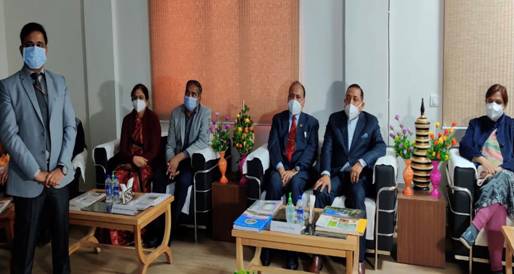
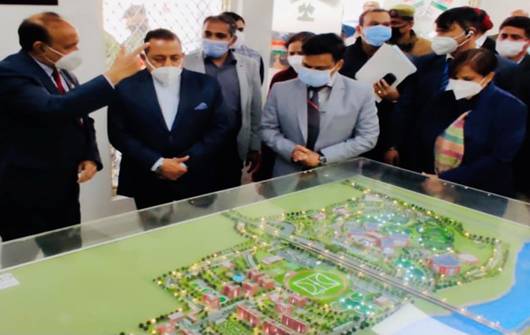
During a visit to the All India Institute of Medical Sciences (AIIMS) Jammu for the inspection of the upcoming new blocks and inauguration of recently developed facilities, Dr Jitendra Singh suggested that in order to develop an exclusive identity for the institution, the focus should be on these futuristic areas. Tele-Medicine and Robotic Surgery have already taken over in a big way and the indispensable utility of these new options was realised during the pandemic times, he added.

Dr Jitendra Singh informed that the OPD services will start immediately in AIIMS, Jammu and the first batch will move and operate from the premises from 1st of June this year and the second batch will continue thereafter. The Minister said that 30 member faculty has already been inducted and the entire six storey AIIMS building will be ready by early next year.

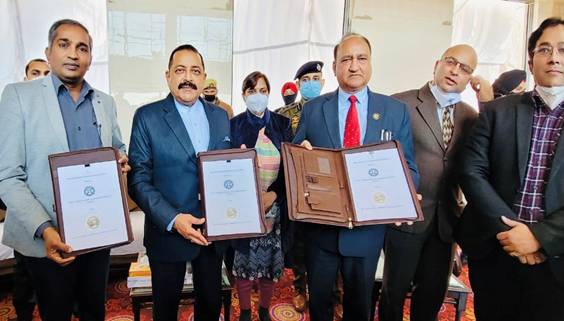
The Minister announced that AIIMS Jammu will function in close collaboration with CSIR-IIIM Jammu. A MoU was signed in the presence of the Minister, between Director AIIMS Jammu Dr Shakti Gupta and Director CSIR-IIIM Jammu Dr. D. Srinivasa Reddy, on behalf of the two institutions.

Speaking on the occasion Dr Jitendra Singh said, it is an irony that CSIR-IIIM Jammu and Government Medical College Jammu existed in the close vicinity of just about 4 kilometres from each other and even though both the institutions were dedicated to medical research, there was hardly any collaboration between the two in the past. He said, every effort would be made to bring in closer integration of IIIM with GMC and also between IIIM Jammu and AIIMS Jammu, both of which happen to be the Central Government institutions.

Dr Jitendra Singh noted that IIIM Jammu is one of the oldest CSIR laboratories in the country and even today it is conducting pioneering research in Cannabis Medicinal Products and host of other drugs, which makes the institute a natural ally of the AIIMS which has also the mandate of research and medical education.

While appreciating the progress made during the brief period since Dr Shakti Gupta took over as the Director of AIIMS, Dr Jitendra Singh suggested that in order to develop an exclusive identity for the institution, the focus should be on futuristic areas like Digital Health and Artificial Intelligence (AI) and AIIMS could be a pioneer in North India in developing AI based healthcare infrastructure.

The Minister said it is because of the personal indulgence of Prime Minister Narendra Modi that Jammu has, in the recent years, developed major centrally funded academic institutions in close vicinity of each other, thus making it an important educational hub in the region. He called for greater integration at different levels that is among the science institutions, then between scientific institutions and non-scientific institutions and finally among all these education institutions put together and the industry and Start-Ups for sustainable growth, development and livelihood.

Dr Jitendra Singh hoped that with the constitutional barriers of the past having been done away with in case of Jammu & Kashmir, the administration and the management will make all efforts to attract the best of the faculty from different parts of the country.

****

PLIGHT OF WOMEN IN AFGHANISTAN

BY DAKSHITA NAITHANI

The Afghan women, maybe more than anybody else, have dreaded the Taliban’s return. There have been many advances in women’s rights over the last 20 years, which appear to be set to erase nearly overnight.

A quick lesson from history…

The Taliban, a political and military force, is said to have started in Islamic schools in Northern Pakistan in the early 1990s. Its aim was to restore order in Afghanistan following the withdrawal of Soviet troops in 1989, as well as to impose a harsh form of Sharia law. By 1998, the organisation had seized 90% of Afghanistan’s territory.

Once in control, the organisation garnered worldwide condemnation for a slew of human-rights violations. The ban on female education above the age of ten as well as harsh limitations on day-to-day liberties, were among the stringent mores imposed on women and its influence has frequently threatened to expand beyond, to places like Pakistan, where the organisation memorably shot teenager Malala Yousafzai in 2012. Women were treated worse than at any previous period or by any other culture throughout its rule (1996–2001). They were prohibited from working, leaving the house without a male escort, seeking medical assistance from a male doctor, and being compelled to cover themselves from head to toe, including their eyes. Women who had previously worked as physicians and teachers were compelled to become beggars or even prostitutes in order to feed their families during the Taliban’s rule.

Following the 9/11 attacks, it was thought that the Taliban were harbouring Al-Qaeda soldiers, thus an US-led international operation was started against Afghanistan. As a consequence, the Taliban were deposed from power, an Afghan government was established, and soldiers occupied the country for 20 years. It destabilised several regions of the nation due to battles with US and UK forces on a regular basis, and Afghan people were continued to be assaulted. Many would agree that the political and cultural status of Afghan women had improved significantly since the Taliban’s collapse in late 2001.

The Bush administration’s acceptance of women’s rights and empowerment as rationale for its assault on the Taliban is long gone. So it was under the Barack Obama administration, when then-Secretary of State Hillary Clinton stated that the Taliban’s repudiation of al-Qaida and promise to support the Afghan constitution and safeguard women’s rights were preconditions for US discussions with them. The rejection of al-Qaida has yet to be declared openly and publicly less than 10 years later; the constitutional order and women’s rights are still subject to intra-Afghan talks and will be influenced by the changing balance of military power.

In February 2020, US-Taliban peace talks were concluded, with the US pledging a quiet departure in exchange for an end to hostilities. Afghan leaders and top military generals have warned that the government will collapse without foreign assistance. It looks like the worst has transpired only weeks before Biden’s deadline of September 11th.

The Taliban rule wreaked havoc on the institutions and the economy, which had already been ravaged by decades of conflict and the Soviet scorched-earth counterinsurgency policy.

The post-Taliban constitution of 2004 granted Afghan women a wide range of rights, and the political epoch brought social and economic progress, which greatly improved the socioeconomic situation. From a crumbling health-care system with almost no healthcare available to women during the Taliban years, the post regime built 3,135 functional facilities by 2018, giving more than 80 percent of Afghans access to a medical facility within two hours’ drive.

 Less than 10% of females were enrolled in elementary schools in 2003; by 2017, that figure had risen to 33%, while female secondary school attendance increased from 6% to 39%. As a result, 3.5 million Afghan females were enrolled in education, with 100,000 of them enrolled in academic institutions. Women’s life expectancy increased from 56 to 66 years in 2017 and maternal mortality fell from 1,100 per 100,000 live births in 2000 to 396 per 100,000 in 2015. By 2020, women made up 21% of Afghan public workers, including 16% of top management positions, and 27% of Afghan parliamentarians.

 These benefits for women have been dispersed inequitably, with women in metropolitan areas benefiting considerably more than women in rural regions. Despite formal legal empowerment, life for many rural women has not improved much since the Taliban era, notably in Pashtun regions but also among other rural minority groups. Many Afghan males are staunch conservatives. Families often let their daughters to complete a primary or secondary education before proceeding with planned marriages. The burqa is worn by the majority of Afghan women in rural regions without any pushing from the Taliban.

What is the situation for women in Afghanistan now?

Women’s rights in Afghan had arguably maintained pace with many other Western countries prior to the 1970s. Women were granted the right to vote in 1919, one year after women in the United Kingdom. In the 1950s, gender segregation was eliminated, and in the 1960s, a constitution was enacted that included women in political life. As the region became more unstable in the 1970s, these rights were steadily eroded.

Only 38% of the international humanitarian response plan for Afghanistan is financed as of August 2021. This gap might result in the loss of specialised protection services for 1.2 million children, putting them at risk of abuse, recruitment, child labour, early and forced marriages, and sex abuse. About 1.4 million females, many of whom are survivors of domestic abuse, would be left without access to safe spaces where they may receive full care.

Females, who have experienced life with rights and freedoms, are among the most exposed as a result of the Taliban’s fast progress in Afghanistan. As the Taliban capture control of Kabul, they risk losing their hard-won achievements.

Those cries for aid may be too late as the capital city falls into the clutches of Islamist rebels. There have been several stories of the Taliban going door-to-door and compiling a list of women and girls aged 12 to 45 who are then compelled to marry Taliban warriors. Women are told that they cannot leave the house without a male escort, that they cannot work or study, and that they cannot wear anything they want. Schools are also being shuttered.

There is a lot to lose for a whole generation of Afghan women who entered public life – legislators, journalists, local governors, physicians, nurses, teachers, and public administrators. While they worked alongside male colleagues and in communities that were unfamiliar with people in positions of power to help establish a truly democratic civil society, they also wanted to pave the way for future generations to follow in their footsteps.

The Taliban offers itself a broad range of possibilities by claiming that they will “protect” women’s rights under sharia but refusing to explain how women’s rights and life in Afghanistan will alter if they achieve their goals. Even if the government did not openly adopt as cruel a system for women as in the 1990s, the Taliban’s dispositions are quite likely to undermine women’s rights, impose cultural prohibitions on women, and reduce socio-economic possibilities for them.

In summary, even with this change in behaviour, the Taliban in power would almost certainly strive to curtail Afghan women’s legal rights, exacerbating their social, economic, and political circumstances. How much and in what manner, is the question.

WHY IS SOCIETY SCARED OF CONFIDENT WOMEN?

INTRODUCTION

Men often consider workplaces like offices and positions of power as their original territory. But unfortunately, a woman walking down the same corridor seems really hurting. Maybe, the patriarchal society does not dare to accept a woman’s success. Society has sadly conditioned men to see women as inferior. Society has suppressed women for the longest time. Men have gotten so used to seeing women as the weaker sex that they cannot see them prosper. The story does not belong to the present day. Society is writing it since ancient times. A legitimate example would be the terror in the hearts of men on seeing Razia Sultan’s regime.

CONSTANT FEAR OF SUCCESSFUL WOMEN

A woman with a solid and confident personality strikes terror in the hearts of men for no fault of hers. Suppose a woman questions a decision or expresses her point strongly. In that case, she is instantly stereotyped as a devil for violating the conventional code of conduct. As a retaliation, men usually title strong women as challenging to work with or get along or tough to handle. This is the most common solution men use when they cannot accept a confident and booming woman. The frustration is so deep that they even derogate the assumption that the woman must have done sexual favors to impress her boss.

The issue is not that superficial as it may seem to be. Instead, it is something much deeper rooted. More than a mere stereotypical gender face-off, it brings out the fickle-mindedness of society.  For long years the community has conditioned men to see themselves as superior and women tolerant of it. The television and film industry is the trendsetter for the country. But unfortunately, in the majority of cases, successful and confident working women are often portrayed as mean, cold-hearted, or harsh. If a man is career-driven, then he is praised for his determination. But if a woman does the same, she’s seen as selfish or irresponsible towards her family. Successful working women are rarely portrayed as affectionate mothers or wives. This brings out a bizarre assumption that a career deteriorates motherhood in a woman.

WHY ARE WE SO INSECURE?

Insecure people do pull down everyone, but when this pulling down does a gender bias, things get ugly. The whole proposition takes a dramatic turn because men often see it as a role reversal. They often look at this role reversal as a threat to their masculinity. Since the earliest times, a man is seen as the breadwinner for the family. This label further cements their superiority over women. This is because it is a certification of the fact that women are dependent upon men. In such a scenario, when women break their cocoons and move out, it scares men to the core. Men are in constant fear of losing their supposed superiority over women. Men cannot accept that women can break their shackles and be on an equal footing to them.

POSITION OF THE SOCIETY

This fear of losing power is so deeply rooted that it is visible even between a husband and a wife. If a wife starts earning equal to or more than her husband, she often hurts her husband’s ego and falls prey to numerous taunts. But this does not mean that only men are at fault, the society has an equal contribution. Very conveniently, society says that behind every successful man, there is a woman. Still, it cannot believe the vice versa. Community respectfully uses the term “working women” for females when they move out of their homes. But it mockingly uses the phrase “house husband” when a husband takes care of the household. This clearly highlights that despite shouting about equality at the rooftops, society is still uncomfortable for it at heart.

THE FINAL THOUGHT

Not liking a woman just because she is successful or confident brings out society’s own insecurities. If a husband supports his wife the same way his wife helps him, things will improve. It is certainly wrong to stereotype that all men are afraid of confident women. Husbands have started supporting their wives to fulfill their dreams. This precious support is unclipping their wings.

Men have begun respecting women at top management levels.  The traditional rigid roles of men being the protector provider and women being dependent ought to be challenged. Masculinity is no certificate of superiority. Equality comes where we judge a person on his merit and not his gender. Gender bias is certainly corrosive to society and progress as well. There is nothing wrong with healthy competition. In fact, it actually brings out the best in a person and helps him to flourish. But when this competition is a pure consequence of the power play between sexes, it does become problematic.

THE INFLUENCE OF GENDER ROLES ON HEALTH SECTOR INCLUDING REPRODUCTIVE RIGHTS

                                                                          (Photo: Singularity Hub)

  Men form one-third of a typical medical school’s population; Rest of the seats are all occupied by women. The pay gap in the healthcare sector is 25% higher than any other sector. Most women agree to work at low wages because of the financial crises they face. Gender inequality is leading to a shortage of healthcare workers in the sector. Women in India face “extensive gender discrimination” in access to healthcare. Gender inequality is leading to a shortage of healthcare workers in the sector because obviously only one-third of the seats were taken by men. 

Under the National Health Mission, the government has launched several schemes. The most important program launched by the government is Rashtriya Arogya Nidhi which provides financial assistance to the patients that are below poverty line and are suffering from life-threatening diseases.  Rashtriya Swasthya Bima Yojana is a government-run health insurance program for the Indian poor. It aims to provide health insurance coverage to the unrecognized sector workers belonging to the below poverty line.  National AIDS Control Organization was set up so that every person living with HIV has access to quality care and is treated with dignity.  Anganwadi Workers and the ASHA workers are the grassroots level functionaries under the umbrella ICDS Scheme and the National Health Mission respectively.  Both these functionaries being closely connected with the rural and urban poor families, play a pivotal role in addressing their nutrition and health related problems/issues.

How the Government has failed them ?

·        Do not have regular salaries, partly because their work is supposed to be voluntary and part-time.

·        Even though the Code on Social Security, 2020 aims to include formal and informal sectors under a social safety net, it excludes several categories of workers, including ASHA and Anganwadi workers. The Code on Wages, too, has left this constituency out of its coverage, depriving employees of a fixed minimum wage.

·        As per Modi government’s definition, Anganwadi and ASHA workers are not ‘workers’ but only ‘volunteers’, who do not receive any ‘wage’ but only an ‘honorarium’! So the principle of minimum wage would not apply to these scheme workers.”

Also a gender issue

·  Limited space for career progression is linked to low institutional recognition, demotivation, and curtailed opportunities for growth. ASHAs face sexual harassment by other health workers and community members, linked to their mobility and public profile. ASHAs have worked to further women’s interests, particularly in Chhattisgarh state where Mitanins(the name for ASHAs there) have mobilized protests against alcoholism, supported women’s collectives and taken action against gender based violence. ASHAs have begun taking action to mobilize their peers to reduce gender based violence. ASHAs have reported an increased sense of empowerment and personal growth, in part through their belief in the social value of their work.

     Gender as a social determinant of health

  •     The social determinants of health (SDH) are the non-medical factors that influence health outcomes. They are the conditions in which people are born, grow, work, live, and age, and the wider set of forces and systems shaping the conditions of daily life. These forces and systems include economic policies and systems, development agendas, social norms, social policies and political systems.
  •          The SDH have an important influence on health inequities – the unfair and avoidable differences in health status seen within and between countries. In countries at all levels of income, health and illness follow a social gradient: the lower the socioeconomic position, the worse the health.
  •        The following list provides examples of the social determinants of health, which can influence health equity in positive and negative ways:

              1.Income and social protection

              2. Education

              3.Unemployment and Job security

  •      Research shows that the social determinants can be more important than health care or lifestyle choices in influencing health. For example, numerous studies suggest that SDH account for between 30-55% of health outcomes. In addition, estimates show that the contribution of sectors outside health to population health outcomes exceeds the contribution from the health sector.
  •     Addressing SDH appropriately is fundamental for improving health and reducing longstanding inequities in health, which requires action by all sectors and civil .
  •      Social determinants of health are conditions in the environments in which people are born, live, learn, work, play, worship, and age that affect a wide range of health, functioning, and quality-of-life outcomes and risks. Conditions (e.g., social, economic, and physical) in these various environments and settings (e.g., school, church, workplace, and neighborhood) have been referred to as “place.”
  •      In addition to the more material attributes of “place, ” the patterns of social engagement and sense of security and well-being are also affected by where people live. Resources that enhance quality of life can have a significant influence on population health outcomes. Examples of these resources include safe and affordable housing, access to education, public safety, availability of healthy foods, local emergency/health services and, environments free of life-threatening toxins.
     Reproductive rights in India
     Reproductive Rights are rights of individual to decide freely and responsibly the number, spacing and timing of children. It is individual’s right to decide whether to reproduce and have reproductive health. The Supreme Court of India and several state high courts have recognized the importance of reproductive rights and have observed that the denial of reproductive rights is violation of women’s fundamental and human rights.
     Courts have been at the forefront of expanding, protecting, and promoting reproductive rights. court through its various judgements from time to time has promoted and protected the reproductive rights of women. for instance, Puttaswamy judgment, Suchita Srivastava V. Chandigarh Administration, Navtej Singh Johar V. UOI. 
     
     Role of socio-physical environment in health care
     Social determinants of health are the conditions in the environment where people sustain, i.e. they born, live, learn etc., which affects the health, functioning and quality of life outcomes and risks. Health starts from our localities, our homes, schools, communities where it is also examined by our access to social and economic opportunities. So, social determinants of health are designed to identity ways to create social and physical environment that promote good health.


Why is healthcare in the U.S. so expensive ?

These days, all it takes is one surprise medical bill to send a patient into bankruptcy. The United States’ health care system operates differently from many others in the world with high costs for the individual as a distinguishing characteristic. In fact, the higher prices mean the U.S. spends more on health care than other “developed countries,”. According to a February 2020 survey, almost one in three Americans worries about affording health care. So, what exactly makes health care in the U.S. so expensive?

The most important reason is that U.S. health care is based on a “for-profit insurance system,” one of the only ones in the world, according to Carmen Balber, executive director of Consumer Watchdog, who’s advocated for reform in the health-insurance market. In the U.S, most health insurance is administered by private companies and individuals must pay for it themselves, even if their employer subsidizes some of it. The underlying motive to make money has a ripple effect that increases prices.

Similarly, Dr. Georges Benjamin, executive director of the American Public Health Association, pointed to a lack of universal health care, where everyone is guaranteed access without undergoing financial hardship, as a primary reason for high costs.”Part of our system is that everybody is … paying for somebody else’s underpayment, whether they like it or not,” he said. “Everybody is trying to figure out who else can pay for it instead of them.”

Pay per service

U.S. health care exists in a system where patients are charged based on the services they receive. In many parts of the healthcare ecosystem, people are paid for volume, and so that fuels an orientation toward, ‘Might as well get an extra scan.’ It’s in the economic interest of the hospital, the physician, the health care system when they’re being paid fee-for service, and the justification is that more is better.

As a result, there’s lower use of primary care, because the fee-for-service model “encourages overutilization.” Instead of taking people in a room, examining them, taking the history and spending the time talking to patients, doctors are quick to jump to getting a CAT scan or a diagnostic test when a history and physical exam would tell the answer. The fee-for-service creates an incentive to provide more procedures, instead of helping patients get healthier so that the nation as a whole needs fewer procedures.

Lack of government regulation

The companies that provide and charge for health care, like hospital systems and drug makers, have more power to keep costs high when they’re negotiating with multiple potential payers, like various private insurance companies. But when they must negotiate with a single payer, like the federal government, there’s more pressure to meet the demand in order to sell their services.

For example, a study found that private insurance companies paid almost two and a half times what Medicare would’ve paid for the same medical service at the same facility.

To make matters costlier, the U.S. government doesn’t regulate what most companies in the health care space can charge for their services, whether it’s insurance, drugs or care itself.

Consolidation of insurance and hospital systems

While the U.S. healthcare system itself may be fragmented, in many parts of the country, there’s only one or two companies providing health insurance or medical care. This means that, again, there’s little to no incentive for them to lower costs since patients don’t have much of a choice.

What’s more, health care providers are paid, on average, much more in the U.S. than in other countries. “Despite the enormous cost that we have in America for health care, we don’t get the same value of our health care dollar as other nations do,” Benjamin added. “If you get sick, this is the place to be, no doubt about that, but … we don’t have a system with everybody in and nobody out.”

KOCHI TO GET AN INFRASTRUCTURAL FACELIFT IN 2021

The year 2021 will be witnessing a grandiose infrastructural facelift of Kochi, the stupendous port city of Kerala. Kochi has undergone a massive transformation during the past decade, with the launch of Cochin International Airport, Cochin Shipyard, Infopark, Kochi Metro etc which has uplifted it from a tiny port city to a metropolitan urban city we see today. Enormous investment in the construction and expansion of roads and bridges has increased the pace of life in the city. 

With the inauguration of the Vytilla and Kundannor flyovers, the two major projects which Kochi has been anticipating for a long time; the city has kickstarted its infrastructural facelift of 2021. The Vytilla Kundanoor flyovers built under the supervision of  Roads and Bridges Development Corporation of Kerala (RBDCK) are expected to reduce the traffic congestion at the busiest junctions of the city. With the completion of the Palarivattom flyover by Delhi Metro Rail Corporation in the coming months, commutation through and within the city will become facile.

The first phase of Kochi Water Metro, a project introduced as an alternative public transport system to reduce traffic congestion within the city with minimal pollution is expected to be completed by mid-2021 under the supervision of Kochi Metro Rail Limited. Kochi will become the first city in the country to have an integrated road, metro rail and water transport system under one roof with the launch of this project. The Phase I extension of the Kochi Metro to Tripunithura is expected to be completed this year. 

Efforts to resolve the waterlogging and flooding in Kochi during monsoon season as a follow up to Operation Breakthrough is said to begin in March 2021. Several innovative projects such as rooftop solar panel projects and Intelligent Traffic Management System have been rolled out by Cochin Smart Mission Limited (CMRL). A walkway development project, an open-air theatre and renovation of Dutch Palace premises in the Fort Kochi area will also be carried out this year.

The Ernakulam Medical College Hospital was transformed earlier this year into a state-of-the-art healthcare hub that the state can be proud of. The commissioning of the GAIL pipeline in January by the Prime Minister marked a historical achievement as the city and the government had to tackle numerous hard knocks to make the project a reality. With the launch of numerous infrastructural and economically uplifting projects, Kochi is expected to become one of the leading metropolitan cities in the coming decade.

What is Healthcare Management?

To help care for a rapidly aging baby boomer population, the healthcare field is expected to grow, spurring an abundance of employment opportunities in patient care, patient treatment and managed healthcare. Healthcare managers are in high demand, since they plan, direct and coordinate health services and manage healthcare professionals in various capacities. If you are interested in the healthcare industry and feel comfortable in leadership positions, a healthcare management program could be right for you.

What do healthcare managers do?

Healthcare managers are compassionate and supportive; like other healthcare professionals, their No. 1 priority is helping other people feel better. Additionally, healthcare managers have good business sense and strong communication skills. As a healthcare manager, you must be equally comfortable working alone or as part of a team, since you’ll often be tasked with making important decisions and upholding the rules and standards of your medical facility or hospital.
Healthcare managers can hold a variety of different positions, such as Health Care Department Manager, Dental Officer Manager, Public Policy Analyst in Health Care, Community Relations Specialist, Clinical Trial Investigator or Health Care Analyst.

What’s the difference between healthcare management and other closely related fields?

There is a lot of overlap in the way people refer to healthcare managers, administrators, and health information managers. There are a few primary differences to consider. Learn more:

How do I become a healthcare manager?

Employers are looking for healthcare professionals who are prepared to become leaders. Employers also want individuals who understand the trends shaping today’s healthcare market and the future role of managed care, which is quickly becoming the industry standard for delivering healthcare benefits. Healthcare management students can pursue degree concentrations in leadership, managed care and medical assisting, among others.
Graduates with a healthcare management degree can gain an added advantage in the workforce by obtaining recognized industry certifications. Herzing University’s healthcare management program offers students the opportunity to earn optional credentials through additional coursework and certification exams, such as:
  • Certified Associate in Project Management (CAPM) exam
  • Lean Six Sigma Yellow Belt Certification
  • Certified Specialist Managed Care (CSMC) exam
As a healthcare management student, you’ll have the option to enhance your academic experience and customize your degree to fit your career goals. Through your leadership, you’ll help improve the quality of patient care at your organization and make a difference in lives of the patients you serve.

How much can I make as a healthcare manager?

How much healthcare managers make depends largely on their level of experience, degree earned, the specific role within a medical facility and the state in which they work.
According to 2018 data from the Bureau of Labor Statistics (BLS), the average salary for healthcare managers was $113,730 per year ($54.68 per hour) across the United States.
Wendyanne Jex has more than 23 years of experience in healthcare and higher education. Her bachelor’s degree is in Political Science and her Master’s degree is in Public Policy Administration; Health Services. She has held roles with large healthcare organizations like Kaiser Permanente and Intermountain Health Care as well as working for public health with the Utah Department of Health Government services division. For the last ten years, she has been working as a Chair managing faculty teaching Health Services curriculum as well as developing curriculum and programs as a System Division Chair in the Health Care Patient Services Programs.