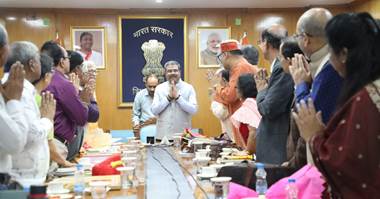
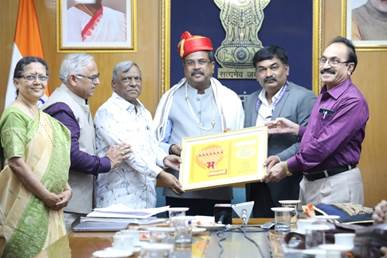
Union Minister for Education, Shri Dharmendra Pradhan, today interacted with the scholars of five newly classified classical languages – Prakrit, Pali, Marathi, Bangla, and Assamese. Chairman, Bharatiya Bhasha Samiti, Shri Chamu KrishnaShastry; Chairman, UGC, Shri M. Jagadesh Kumar; academicians, scholars and officials of the Ministry were also present at the event. The scholars expressed their happiness and thanked Prime Minister Shri Narendra Modi for including these beautiful Indian languages into the list of classical languages. They also extended their support towards promoting and enriching these languages.
Speaking on the occasion, Shri Dharmendra Pradhan said that the government is making all-round efforts to promote learning in Indian languages as well as celebrate, honour, and preserve the linguistic heritage of the country, in line with the spirit of NEP 2020.
Shri Pradhan also mentioned that Prime Minister Shri Narendra Modi has always said that all languages of the country are Indian languages. He said that the Government is taking all steps to strengthen and facilitate learning in all Indian languages. He also said that he would remain committed to facilitating learning in the mother language, boosting multilingualism with equal emphasis on all Indian languages, including strengthening their international presence.
Shri Pradhan also said that the soul of India lives through its languages. The government is also working on building an international presence of Indian languages, he added.
Char Dham Yatra is a pilgrimage tour to four holy shrines of Hinduism, located in the Himalayan region of Uttarakhand, India. These shrines are Yamunotri, Gangotri, Kedarnath, and Badrinath, and the Yatra is considered one of the most important pilgrimages in Hinduism. It is believed to be a means of achieving salvation or Moksha, and devotees undertake this journey to seek the blessings of the Gods and to attain spiritual enlightenment. The Yatra usually starts in the month of May and continues until November, as the harsh winter conditions in the region make it impossible to travel during the rest of the year.
The Yatra begins with a visit to Yamunotri, which is the source of the Yamuna River and is dedicated to the goddess Yamuna. The temple here is located at an altitude of 3,293 meters and is accessible only by trekking or on a horseback ride. The trek to Yamunotri takes you through scenic Himalayan routes, passing by waterfalls, glaciers, and stunning landscapes.
The second destination on the Yatra is Gangotri, which is the source of the Ganges River and is dedicated to the goddess Ganga. The temple here is located at an altitude of 3,048 meters, and it is believed that taking a dip in the holy waters of the Ganges at Gangotri can wash away all sins and grant Moksha.
The third destination on the Yatra is Kedarnath, which is located at an altitude of 3,583 meters and is dedicated to Lord Shiva. The temple here is one of the 12 Jyotirlingas in India and is considered one of the most important pilgrimage sites for Shiva devotees. The trek to Kedarnath is considered the toughest of the Char Dham Yatra, as it involves a steep climb of around 16 km from Gaurikund.
The fourth and final destination of the Char Dham Yatra is Badrinath, which is located at an altitude of 3,133 meters and is dedicated to Lord Vishnu. The temple here is considered one of the 108 Divya Desams or the holiest of holy shrines of Lord Vishnu. Badrinath is also the only shrine among the four that is accessible by road.
Apart from these four shrines, there are also several other holy places and temples that one can visit during the Char Dham Yatra, including Hemkund Sahib, which is a Sikh shrine, and Valley of Flowers, which is a UNESCO World Heritage Site and is known for its rare flora and fauna.
In conclusion, the Char Dham Yatra is a spiritually enriching journey that takes devotees on a pilgrimage to four holy shrines in the Himalayan region of India. The Yatra is considered one of the most important pilgrimages in Hinduism, and it offers a unique opportunity to experience the beauty and divinity of the Himalayas while seeking the blessings of the Gods.
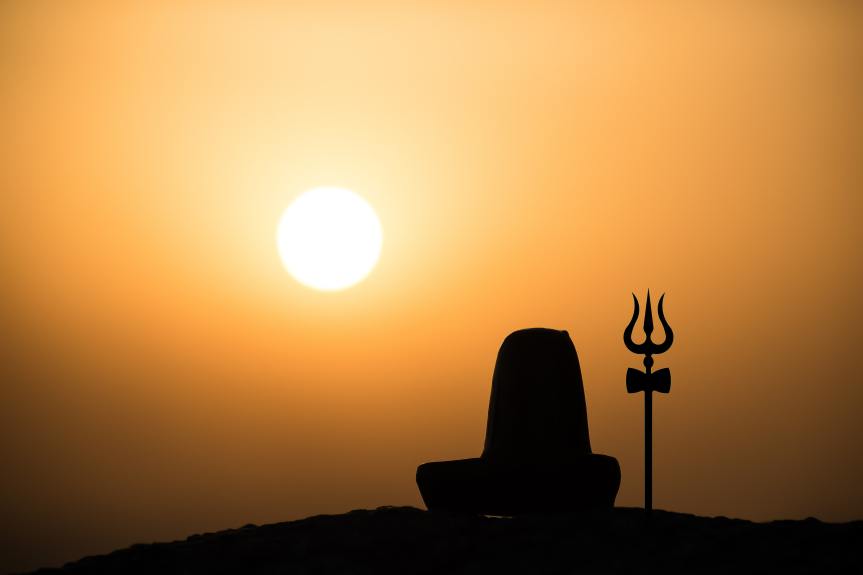
Hindus all around the world observe the night of Maha Shivratri today on the 1st of March 2022. Maha Shivratri (“The Great Night of Shiva”) is celebrated every year on Chaturdashi Tithi during Krishna Paksha in the month of Magha according to the South Indian calendar, or on 13/14 night of Krishna Paksha in Phalguna of the North Indian Hindu calendar. It is said to be the day Lord Shiva performs his heavenly dance (“Tandav“) of creation, preservation, and destruction. According to other legends, it is also the night Lord Shiva married Mata Parvati. So it is considered to be the night of union of Shiva and Shakti – the embodiment of love, power, and oneness. Devotees worship and pray to Lord Shiva, perform all-day fasting, and maintain an all-night vigil on this day. Some visit Shiva temples or go on pilgrimage to Jyotirlingams, the holiest of Shiva temples.
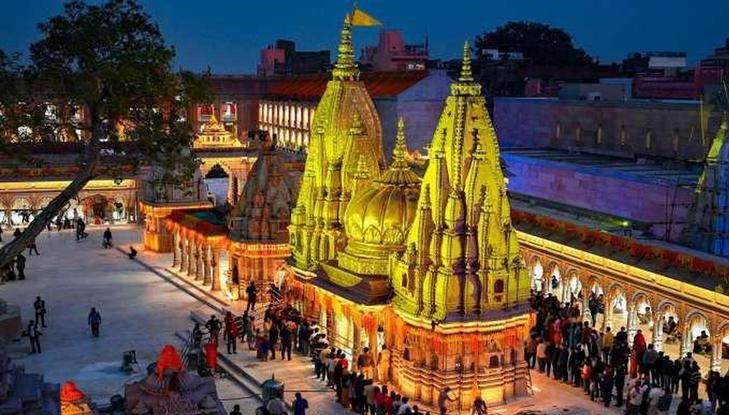
Kashi Vishwanath Temple Source: Republic World
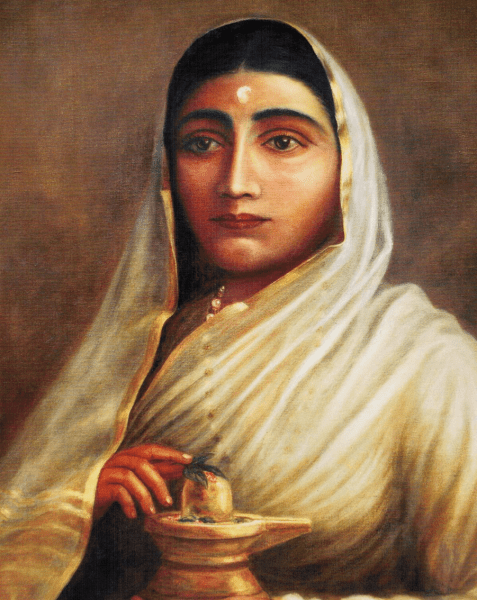
The Kashi Vishwanath temple in Varanasi, Uttar Pradesh is one of the sites of the 12 Jyotirlingams across India. This holy temple is one of the most important places of worship in the Hindu religion, with Vishveshvara or Vishvanath, the Jyotirlinga of Shiva residing inside the temple. The history of this sacred place of worship, however, is one of a cycle of destruction and plunder and re-construction. The original temple was destructed at the hands of Qutb al-Din Aibak in 1194 CE, re-constructed in 1230, and then again destroyed by the Mughal Emperor Aurangzeb in 1669 CE, building the Gyanvapi mosque in its place. It was a great and virtuous queen by the name of Ahilyabai Holkar who re-built the present-day Kashi Vishwanath temple beside the mosque. The story of this little-known noble queen is truly magnificent.
Ahilyabai was born on 31 May 1725 to Mankoji Rao Shinde, the Patil or Chief of Chondi village, Ahmednagar in present-day Maharashtra. Ahilyabai was not born into royal lineage but was married to Khanderao Holkar, after the Lord of the Malwa territory, Malhar Rao Holkar, became impressed by the young girl’s reverence and strong character. She became a widow at 29 when her husband died in the battle of Kumbher in 1754. It was her father-in-law, Malhar Rao Holkar, who prevented Ahilyabai from committing Sati after her husband’s death. Tragedy struck Ahilyabai again when her father-in-law, who was her greatest pillar of support passed away in 1766. This led to Ahilyabai’s only son Male Rao Holkar ascending the throne under her regency. He also died a few months later in 1767 which resulted in Ahilyabai becoming the ruler of Indore on 11 December 1767, despite some objections from the kingdom. She proved all those who opposed her wrong when she protected her kingdom from invaders who wanted to plunder Malwa, barely a year into her rule. She was a learned politician, cautioning the Maratha Peshawa against the British in a letter in 1772, comparing the British embrace to a bear-hug.
During her 30-year rule, she transformed Indore from a tiny village to a prosperous city. She constructed numerous forts and roads in Malwa, sponsored festivals, and donated to many Hindu temples. She built dozens of temples, ghats, wells, tanks, and rest-houses stretching from the Himalayas in the north to the pilgrimage centers in the south. It was in 1780 that Ahilyabai re-constructed the present-day Kashi Vishwanath Temple adjacent to the mosque. The noble queen also beautified various holy sites including Gaya, Somnath, Ayodhya, Mathura, Haridwar, Kanchi, Avanti, Dwarka, Badrinarayan, Rameshwar, and Jaganathpuri as recorded by the Bharatiya Sanskritikosh.
Maheshwar, her capital was a center of literary, artistic, musical, and industrial achievement. She established a textile industry in the city and gained supporters like the Marathi poet Moropant, Shahir Anantaphandi, and Sanskrit scholar, Khushali Ram. Historians write of her kind rule, encouraging all within her realm and her kingdom to do their best.
She was 70 when she died in 1795 and was succeeded by her commander-in-chief and nephew, Tukoji Rao Holkar. As a tribute to her, Indore international airport has been named Devi Ahilyabai Holkar Airport. Similarly, Indore university has been renamed Devi Ahilya Vishwavidyalaya. A commemorative stamp was also issued in her honor in 1996. On 13 December 2021, India’s Prime Minister Narendra Modi inaugurated the Kashi Vishwanath Corridor Project in Varanasi, restoring an array of temples to their past glory. On this day, let us remember the great queen of Malwa and her invaluable contribution to our nation. The legacy of the great queen of Malwa lives on.
In Sanskrit, the term Raksha Bandhan translates as “bond of protection.”
It is observed on the full-moon day, on the 5th month in the Hindu lunar calendar, Raksha Bandhan is a popular Hindu holiday celebrating the love between a brother and sister.
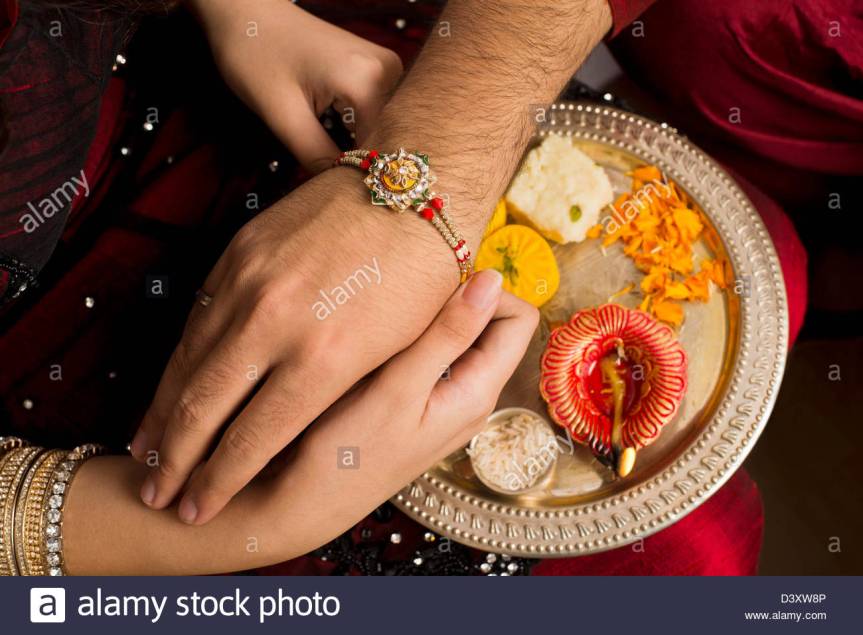
On this day, a sister ties a threaded amulet, known as a rakhi, around a brother’s wrist, honoring their relationship. The bracelet symbolizes the brother’s oath to protect his sister throughout her life, and the sister’s prayers and blessings for protection and wellbeing of her brother.
The origin of this celebration can be found in the Indian epic The Mahabharata, when Lord Krishna cut his finger. Draupadi, wife of the Pandavas who considered Krishna to be like a brother, immediately tore off a piece of her sari and tied the cloth around his bleeding finger. Smiling and grateful, Krishna promised to return the favor to her some day.
Another Legend has it that in 326 BCE, when Alexander the Great invaded India, Alexander’s wife Roxana, out of concern for his safety, had a thread sent to Indian King Porus, requesting him to not harm her husband in battle. Porus is said to have respected her wish, and refrained from killing Alexander during the famed “Battle of the Hydaspes.” Though Alexander ultimately won the battle, Porus had earned his respect, and was thus made a governor of part of his kingdom.
HOW TO CELEBRATE IT ?
Before the festivities begin, a sister first goes out to look for a talisman or amulet, which she thinks her brother might like and would suite his unique personality. A simple activity as such helps to cultivate appreciation for the brother’s personality.
On the D-Day, sister customarily turns on an oil lamp and offers it to a family deity and prays for her brother’s long health and happiness, then she ties the sacred thread to his hand and feeds him a sweet. Then the brother completes the ritual by reciprocating the action of feeding a sweet and giving a present to the sister.
Vishnu Sahasranama is an ancient script, a Sanskrit hymn that literally translates to thousand names of Lord Vishnu who is believed to be one of the most revered Gods in Hinduism. Lord Vishnu is also known as the preserver of this world. ‘Sahasra’ means thousand and ‘nama’ means name. It is said that one of the easiest ways to pray and pay respect to the Lord is by reciting mantras, strotras, and shlokas.
Lord Vishnu is believed to be the supreme power who rules the entire universe, the one who saves lives. The Vishnu Sahasranama or Strotra is written by Sankskrit scholar Sage Vyasa who has written epics like Ramayana, Mahabharata and Bhagwat Gita.
If you are suffering from insomnia, see bad dreams every night while sleeping or have a fear in your mind then reading the strotra helps you fight them all. Reading it helps you have a peaceful mind. Chanting the Vishnu Sahasranama calms down your mind and sharpens your focus in life. Reading every name of Lord Vishnu helps you boost your inner energies which further increases your focus. This helps you meditate better. It is best to read the strotra in the morning after you have taken a bath. However, if you wish to read it later in the day then the best time would be in the evening between 5-7 pm. Chanting the strotra before going to sleep is also said to be beneficial.
There are 108 shlokas in the Vishnu Sahasranama. Even if you find it difficult to read then even listening to it can be really beneficial.
Hinduism is now the third largest religious community with more than 1 Billion followers around the world. After the British rule, the Hindu Religion came to known as Hinduism, but before that Hindu was termed as Sanatana Dharma, Which means the eternal Duty of life, No matter any caste, gender or race. Every Hindu People used to practice the Sanatana Dharam through their whole life. In texts, Sanatana Dharma Was written as a way of living a healthy Life with honesty, Purity, Goodwill, Mercy, & Patience. According to some Scholars, along with Hindu devotees and priests, beliefs that the Hinduism is the oldest religion and has always existed in this world. Around 90% of the total Hindu population lives in India (also Hindustan or Bharat) with different beliefs and culture. India is well known for their mix culture, traditions and the believe in their deities. In Fact, Buddhism and Jainism were also originated in India.
Hinduism Beliefs
As this religion has no specific founder, nobody knows that when and how it was originated, but as per the Hindu priests and many scholars had specified it as an oldest religion. Hindu believes in karma (law of cause and effect). They Worships a single god with a believe in the existence of the other gods or goddess. They believe in soul (Atman) and a pure & gentler way to live. Hindu believes that people should live together without harming any other religion or People in the name of God or as any part of their worshiping. They believe in Moksha (also called as Mukti) which is an Indian Philosophy & Religion, that means release from the cycle of Rebirth. Their Goal of Life is to live with their Dharma in the very proper way the Dharma asks their devotees to live. There many other Interesting beliefs of Hinudusim, one would know if they explore more about it.
Hindu Deities
Devas and Devis are called as the God and Goddess of Hinduism. Hinduism itself is very wide and have different traditions to worship their Deities and that’s the Beauty of this religion. People with different Traditions are united by Hinduism and they live together. Some of the Deities are:-
Lord Brahma
Lord Vishnu
Goddess Saraswati
Lord Shiva
Lord Krishna
Goddess Lakshmi
Many other religions have also adopted the Hindu Deities and the traditions outside the India. In the medieval era the texts of Hinduism describe the Human Body as Temple and the soul as the deities residing it.
The Yugs (Era)
There are 4 different Yugs (Era) Every Yuga is Shorter than the preceding one and in each Yuga the humanity will be found less than the Old Yugas. The 4 Yugs are:
Satya Yug
Treta Yug
Dvapara Yug
Kali Yug
Kali Yug Lasts for 4,320,000 years (12,000 divine years). The Kali Yug (Present Era) is Believed that started around 3102 BCE. In the ancient texts of Purans it was also written that the Kali Yug will be dominated by Hatred, intolerance, lust, and corruption.
Hinduism Origin
The Vedic Period where Vedas Were written was lasted around 1500 BC to 500 BC. At that period rituals Used to make sacrifices, chants, and many other mystical practices of that periodic time. It was really hard to be found the exact time period that when did the Hindu religion was actually originated. As per scholars the birth of Hinduism was found in the Indus River Valley, which runs through Northwest India to Pakistan. It was originated around 4500-5000 BCE. The Indus River Valley was diminished around 1800 BC cause of climatic conditions. It was also named as Sindhu as, a Sanskrit Word. It’s location created a lot of problems because of the Iranian plateau. Around 712 AD, Muslims invaded the The Indus Valley.
Around the 7th century, Muslim Arabs began Invading Areas in India. In 1200 to 1757, Islamic ruler prevented Hindus worshipping their Deities. Some of the Hindu Temples were also destroyed around 1757 to 1947, under British Control. Some Christaniers were also found to convert & westernize the Hindu people, which is still happening around the Country.
Hinduism Holy Books
The Vedas were written around 1500 BC. That Book was filled with prayers and verses written by the Hindu Saints in Sanskrit letters and it includes:
The Rig Veda
The Samaveda
Yajurveda
Atharvaveda
Hindu Festivals
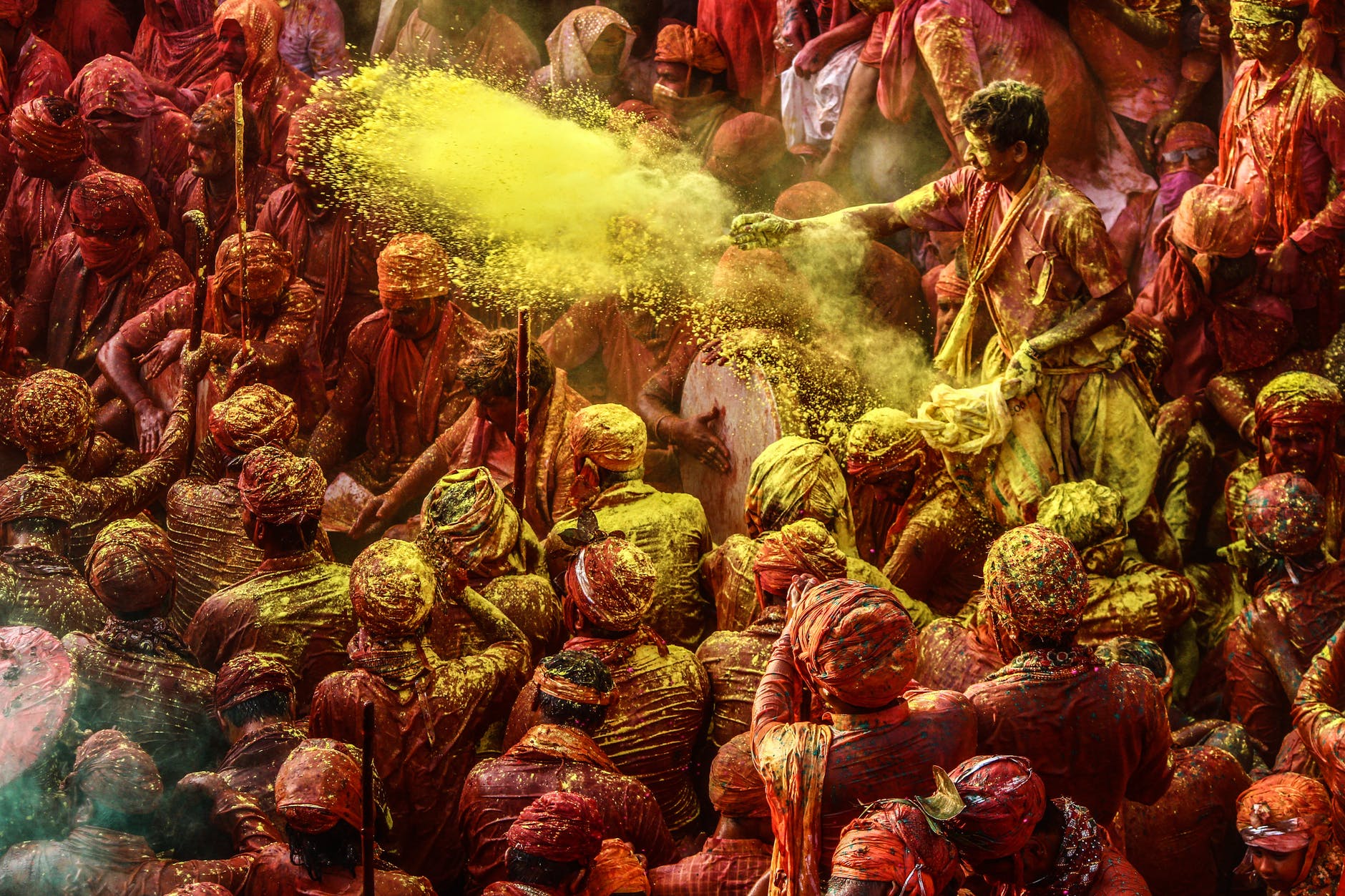
Hindu festivals are well known for the way of believing & celebrating it, with full of Joy and worshipping Hindu deities, Devotees enjoy their festival days. Some Of the Hindu festivals Are:
Hindu Culture is filled with joy, teaches a better way of living, Unites the people, Gives freedom to worship the god that their devotees believe, and always wanted people to live in a better place with their family and to enjoy the worshipping.
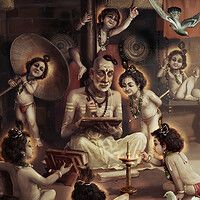
Jnanapana is a devotional Malayalam poem which directly translates to ‘song of wisdom’ or ‘the fountain of divine wisdom’. It is written by Poonthanam, a 16th century bhakti poet who lived in keezhattur in Kerala. He was an ardent devotee of Lord Vishnu, who is considered to be the preserver of life from the Hindu pantheon of gods. Poonthanam was particularly devoted to Vishnu in the form of ‘Guruvayurappa’ (the lord and the presiding deity of the Guruvayur Temple in Thrissur, Kerala.)
According to the legends, Poonthanam and his wife were devoid of any children even after years of trying. The couple was desperate for a child and prayed to the deity in Guruvayur to bless them with an offspring. The couple was elated when they were soon able to bear a boy child. But it so happened that on the day of the celebration of the child’s first birthday, an unfortunate accident occurred. The child had been accidentally buried under a pile of clothes put up by the guests who came to attend the child’s birthday celebrations. Tormented by grief upon the loss of their only child, Poonthanam sought refuge in the Guruvayur Temple to seek penance.
As the legend goes, it is said that Lord Vishnu himself appeared in front of the ardently praying devotee in the form of a young child and blessed the poet-saint with his divine godly graces. Since then, Poonthanam spent his life meditating in the halls of Guruvayur and was devoted to the god like a father to a son. Later, when he wrote Jnanapana, poonthanam says “When Lord Krishna himself dances in my heart, why do I need any other children…” That’s the intensity with which poonthanam adored Krishna and it’s a very powerful and touching statement.
Unlike the other contemporary poet-saints of his time who were well-versed in Sanskrit, Poonthanam wrote most of his poems in very simple verses of Malayalam. This is the reason why ‘Jnanapana’ became popular, as it was easily understandable to the common folks. In fact, when a fellow poet named Melpattur (Who is the author of the reputed devotional song ‘Narayaneeyam’) criticised him for the same, it is said that Krishna himself appeared before him and said “I prefer Poonthanam’s ‘bhakthi’ (devotion) over Melpattur’s ‘vibhakthi’ (scholarly knowledge/input).
Jnanappana is Poonthanam’s magnum opus with over 360 verses of lines. The poet, deeply touched by human beings’ sorry plight in this age of Kali (Kali Yuga), extols the virtues of Jnana (wisdom) and urges them to follow the path of Jnana and to forsake the transient and ephemeral aspects of worldly life through his poem. It is highly philosophical and inquires about the deeper meaning of life and human existence in this world. Yet, the localized language helped the common folks to sing and celebrate this ‘song of wisdom’ for generations to come.
Some of the most philosophical and thought-evoking lines from the poem is as follows:
If God wishes, the people we see now or are with us now, may disappear or be dead in the next moment. Or if HE wishes, in few days a healthy man may be paraded to his funeral pyre.
-Poonthanam
If God wishes, the king living in a palace (malika) today may lose everything and end up carrying a dirty bag on his shoulders and walk around homeless.





 Eduindex
You must be logged in to post a comment.